The success story of Space X – from Falcon 1 to Starship

The Falcon super heavy launch vehicle was designed to transport people, spaceships, and various cargos into space. Such a powerful unit wasn’t created instantly and it also had its predecessors. The history of the Falcon family of vehicles began with the creation of the Falcon 1- a lightweight launch vehicle with a length of 21.3 meters and a diameter of 1.7 meters and a launch mass of 27.6 tones; the rocket could carry 420 kilograms or 926 pounds of payload on board. It became the first private device that was able to bring cargo into low earth orbit. Construction of the Falcon 1 of only two stages, the first of them consisted of a supporting element with fuel tanks, an engine and a parachute system. They chose kerosene as the fuel and liquid oxygen became its oxidizing agent.

The second stage also contains fuel tanks and an engine; though the latter had less thrust compared to the one in the first stage despite the huge launch cost $7.9 million. Totally five attempts were made to send the Falcon 1 beyond the of our planet nut not all of them were successful. During the debut launch of the rocket, a fire started in the first stage engine; this led to a loss of pressure which caused the engine to shut down in the 34th second of flight. The second attempt to start the Falcon 1 incurred a problem with the fuel system of the second stage fuels stopped flowing into its engine at 474 second of flight it shut down as well. The third time of the Falcon 1 went on a flight, it wasn’t alone of the serious cargo the rocket carried onboard the trailblazer satellites and to NASA microsatellites. In phase one with the first stage he flight went normally but when the time came to separate the stages, the first hit the second when it started engine, so the second stage couldn’t continue its flight.

 The fourth and fifth launches shoed good results but that wasn’t enough. The main problem with Falcon 1 was low demand due to its low payload abilities. For this reason, they designed Falcon 9; this device can carry on onboard 23 tons of cargo. It’s also a two stage launch vehicle and uses kerosene and l liquid oxygen as fuel. The device is currently in operation and the cost of its launch is equal to $62 million. The first stage of the rocket is reusable; it can return to earth and can be used again. The Falcon 9 is designed to not only launch commercial communication satieties but also to deliver dragon 1 to the ISS. Dragon 1 can carry a six ton payload from the earth, this drone supplies the ISS with everything they needs and it also takes goods back.

The dragon 2 is designed to deliver a crew of four people to the ISS and back to earth. Now there is an ultra heavy launch vehicle with a payload capacity of almost 64 tones. It is the most powerful and heavier device called the Falcon heavy. This rocket was first launched on February 6th 2018 and the test was successful. The rocket sent Elon Musk’s car into space- a red Tesla Roadster. After this debut subsequent launches were also conducted without problem. The launch cost is estimated to $150 million.

The first stage of the Falcon heavy consists f three parts. There are three blocks contain 27 incredibly powerful engines in nine each one. The thrust created when takeoff is comparable to 18 Boeing 747s at full power. The second stage is equipped with a single engine. It is planned that the device would be used for missions to the moon and mars. Currently, SpaceX working on the starship manned spacecraft.  According to its creators, this device will be much larger and heavier than all of the company’s existing rockets. This device will able to deliver cargo into space weighing more than a hundred tons. The launch of starship into pace is planned for 2022 to mars with a payload. Who knows, one of the mankind’s largest dreams may come true within the next year.

Nikola Tesla’s Inventions – Working of AC current

“I don’t care that they stole my idea, I care that they don’t have any of their own”, said by one of the greatest inventors to have ever lived, the Serbian inventor Nikola Tesla who developed the framework for modern-day electrical engineering. When Nikola Tesla began work at Edison’s DC (direct current) power plant in the United States, his new employer was not interested in his ideas for a new type of power called AC (alternating current). At the time DC was the only electrical supply, but it could only be transmitted across short distances before it lost power. To Edison, AC sounded like competition and he persuaded Tesla to work on improving his DC system by offering him a huge sum of money. But when Tesla had done what he had been asked, Edison reneged on his promise. Tesla resigned and returned to his AC power concepts. DC power is constant and moves in one direction and the resistance in wires causes it to lose power over distance. AC power does not have this problem as it varies in current so the resistance is less, and yet it varies in current so the resistance is less, and yet it delivers the same amount of power.

How AC current works?

In an atom, the negatively charged electrons are bound to the nucleus due to their electromagnetic attraction to the oppositely charged nucleus. But the electrons in the outer most shell called valence shell can sometimes become free due to external forces. These electrons that escape from the valence shell are called free electrons and they can move from one atom to another. This movement is called charge and the flow of electric charge is called electricity. Materials that allows many electrons to move freely are conductors and don’t allow are called insulators. That why copper is a great conductor. Alternating current would flow back and forth 50-60 times per second, this is called the frequency. Even though Thomas Edison one of the famous and powerful men of the 19th century, he tried his best to compete with Tesla. The mathematic formula of the current is P = I×V, with this formula, the same amount of power can be transmitted either at high current and low voltage or low current and high voltage. But when you transmit current through wires, there will be also loss of heat. To overcome this problem, we have to higher the voltage to reduce the heat loss.

In modern electric power grids, electricity is transmitted at hundreds of thousands of volts. But the voltage cannot be this high when it arrives at your home. So a transformer steps down this high voltage to typically between 100 and 240 volts. The step down process of AC current is way easier than the DC current. Transformers require a time varying voltage to function, and since direct current is constant, and only alternating current is time varying, transformers like these only work with AC electricity. In Edison and Tesla’s time, there was no easy way to transform voltage with direct current. And this is the primary reason Tesla’s AC won out over Edison’s DC in the early era of electrical transmission.

AC current – a scientific breakthrough

This made AC power more cost effective, as fewer power plants were needed. Entrepreneur George Westinghouse saw the potential of Tesla’s AC power and bought his patents for AC motors. Edison began a propaganda war in an attempt to keep DC power on top, but it was inevitable that ac power would win. Almost all electricity is now delivered as Tesla’s AC power. Edison’s place in history as an inventor and electrician is secure. But in many ways Tesla went even further. He envisioned fluorescent lights, technology of the radio, and remote control. Nikola Tesla was one of the most forward thinking, and dynamic visionaries that ever lived.

“If your hate could be turned into electricity, it would light up the whole world”. – Nikola Tesla

Elon Musk

World’s Second Richest Person and an Ideal For Many

Elon Musk

Elon Musk or Elon Reeve Musk is an entrepreneur business magnate in today’s world who has totally evolved the technological terms of today . He is the founder, CEO, and Chief Engineer at SpaceX early stage investor CEO and Product Architect of Tesla, Inc. He was born in Pretoria, South Africa. He got his Bachelor’s degree in physics and economics from  University of Pennsylvania. He started his career by co-founding the web software company Zip2. This startup was acquired by Compaq for $307 million in 1999. After this Musk co-founded online bank X.com that same year, which merged with Confinity in 2000 to form PayPal. The company was bought by eBay in 2002 for $1.5 billion.

SpaceX

Then In 2002, Musk founded SpaceX, an aerospace manufacturer and space transport services company, of which he is CEO and CTO. This rocket firm SpaceX, works on building reusable rockets and aspires to land humans on Mars .

Tesla

Then after this in 2004, he joined electric vehicle manufacturer Tesla Motors, Inc. (now Tesla, Inc.) as a chairman and product architect and became its CEO in 2008. Tesla produces super modern cars that run on lithium batteries and are luxurious and have an auto pilot mode which sounds really impossible to normal ears.

Solar City

In 2006, he helped create SolarCity, a solar energy services company that was later acquired by Tesla and became Tesla Energy. This company Solar City develops solar panels and solar roof tiles and aims at making this world to use the purest and cleanest fuels that are highly renewable so that even their infinite use does not exhaust them.

Neuralink

Neuralink is a startup which develops ultra high bandwidth brain machine interfaces to connect human brains to computers to help cure nervous system problems. The company was launched in 2016 and was first publicly reported in March 2017.

Failure

All this was not always as smooth as it looks. The biggest success of PayPal today was once awarded with “World’s worst business concept of the year”. Elon Musk is a person who has experienced some very adverse situations in terms of his personal life. After all, he went through a very public and long divorce process with his previous wife. He stated that this period was consumed by deep depression. As if that wasn’t enough when the 2008 recession depleted the profitability of Space X and Tesla. Elon was almost broke again and facing a decision to axe one of these two companies. In the end, Elon decided to split any remaining funds between the two companies and later that year. He received word that NASA were committing $6 billion to Space X. Needless to say, both companies survived the storm and Elon even married again just a few years later.

Where most people leave , Elon leaned in and poured is money , sweat, blood, tears in making his companies successful and his passion for design, engineering and the future would have him succeed on both the fronts.

Learning

The main thing to learn is that with the acquisition of PayPal his net-worth rose to 123 Million USD and he could have retired early and rode off into sunset and live happily after ” BUT THAT’S NOT HOW LEGENDS ARE MADE” . Instead he took a gamble and invested his newfound millions into his two separate companies – SpaceX and Tesla .

Source – https://www.instagram.com/p/CJ_V9__gvNI/?utm_medium=copy_link

Elon Musk buys a ticket on Sir Richard Branson’s space flight – report

Sir Richard confirmed the purchase in an interview.

E

Elon Musk has bought a ticket on one of rival billionaire Sir Richard Branson’s spaceship flights, according to a newspaper report.

As Sir Richard prepares to fly on Virgin Galactic’s first fully crewed flight to the edge of space on Sunday from New Mexico, The Sunday Times says Mr Musk – who owns rival exploration company SpaceX – has paid for a seat on a future Virgin voyage.

Mr Musk paid a 10,000-dollar (£7,000) deposit to reserve a seat. No date for his flight has been specified.

Sir Richard confirmed the purchase in an interview with The Sunday Times, saying he might reciprocate by booking a ticket on a SpaceX flight in the future.

“Elon’s a friend and maybe I’ll travel on one of his ships one day,” he said.

Amid what has been dubbed the billionaires’ space race, SpaceX has launched dozens of rockets, including manned flights, but Mr Musk himself has not yet flown on any. The company is due to launch its first fully private spaceflight in the autumn.

Sir Richard will become the first owner-astronaut to take part in a mission, beating Amazon founder Jeff Bezos who plans to reach space in his own rocket – through his Blue Origin company – in nine days’ time.

Tourists are expected to pay some 250,000 dollars (£180,000) for a spaceflight on Virgin Galactic, which includes four minutes of zero gravity.

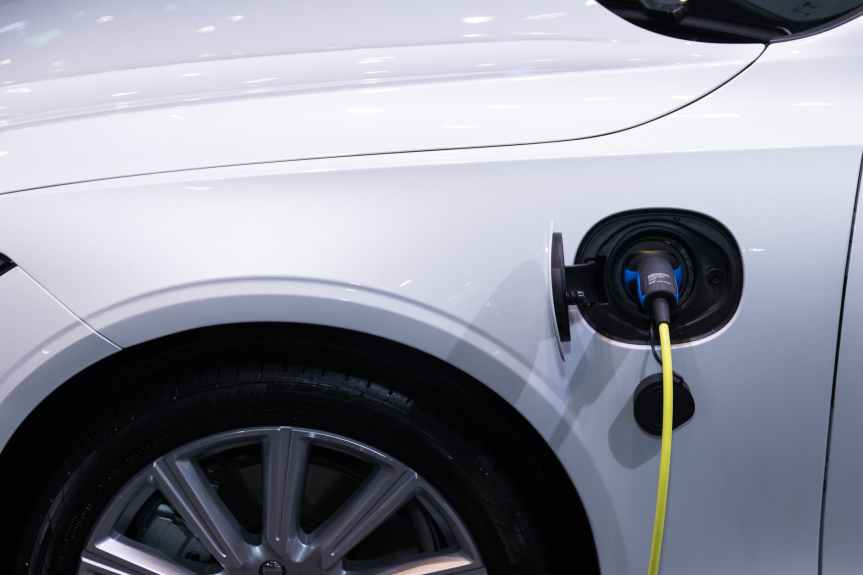
Rachid Yazami, a Moroccan innovator, breaks the world record for charging EV batteries in under 10 minutes.

Electric vehicles are sweeping our cities, and an overwhelming number of individuals are choosing to commute in electric vehicles. Electric mobility is unquestionably the way of the future, given the environmental advantages offered by these vehicles and the commitment of both manufacturers and drivers.

Rachid Yazami, a Moroccan innovator, revealed a few weeks ago:

We broke a new world record a few weeks ago by charging an electric car battery in just 10 minutes. I hope that morocco will succeed in developing and marketing ultra-rapid chargers.

Statement by Rachid El Yazami

Dr. Rachid Yazami, the inventor of one of the most important components of lithium-ion batteries, is working on a method to charge an electric vehicle in less than 10 minutes.

Given the recent technological advancements, electric vehicles still face obstacles in becoming the preferred mode of transportation and replacing combustion engine vehicles. One of the most significant concerns is slow battery charging, however, it appears that this impediment is coming to an end.

Dr. Rachid Yazami, the inventor of the graphite anode, a critical lithium-ion battery component, is working on a method that will allow the electric car to be charged in as little as 10 minutes. A breakthrough in these aspects will be a watershed moment in electric transportation, virtually equating the time spent charging the vehicle’s battery to just the time spent replenishing traditional fuel.

According to The Register, Dr. Rachid Yazami is working on a new quick charging system for electric automobiles that beats any other technology now available. Your technology, according to current testing, can charge a high-density battery in under 10 minutes, which itself is seven times faster than Tesla.

To attain this goal, Dr. Rachid Yazami uses a different loading method than the usual one. Instead of utilizing constant current, they utilize non-linear voltammetry, which adjusts voltage instead of current.

Voltage, according to the expert, should be seen as a sequence of steps on a ladder. Every one of those rungs’ voltage must remain constant until the conditions are met and that the next rung can be advanced. During the charging process, this charging mechanism gives the batteries a break, helping them to last longer.

“Fast-charging technology improves battery life by decreasing stress”, according to Dr. Rachid Yazami. “We can preserve the battery for 10 years instead of five because we charge it in such a way that it is not subjected to high temperatures or current stress. The optimal charging situation for the battery would be 10 minutes of charging time for an 800 km range.

Wireless Energy Transfer-Tesla’s Dream

WPT- Wireless Power Transmission
Wireless Power Transfer holds the promise of freeing us from the tyranny of power cords. This technology is being incorporated into all kinds of devices and systems.

Wireless Power Transfer holds the promise of freeing us from the tyranny of power cords. This technology is being incorporated into all kinds of devices and systems. Let’s take a look!
The Wired Way
The majority of today’s residences and commercial buildings are powered by alternating current (AC) from the power grid. Electrical stations generate AC electricity that is delivered to homes and businesses via high-voltage transmission lines and step-down transformers.
Electricity enters at the breaker box, and then electrical wiring delivers current to the AC equipment and devices that we use every day—lights, kitchen appliances, chargers, and so forth.
All components are standardized and in agreement with the electrical code. Any device rated for standard current and voltage will work in any of the millions of outlets throughout the country. While standards differ between countries and continents, within a given electrical system, any appropriately rated device will work.
Here a cord, there a cord. . . . Most of our electrical devices have AC power cords.


Wireless Power Technology
Wireless Power Transfer (WPT) makes it possible to supply power through an air gap, without the need for current-carrying wires. WPT can provide power from an AC source to compatible batteries or devices without physical connectors or wires. WPT can recharge mobile phones and tablets, drones, cars, even transportation equipment. It may even be possible to wirelessly transmit power gathered by solar-panel arrays in space.
WPT has been an exciting development in consumer electronics, replacing wired chargers. The 2017 Consumer Electronics Show will have many devices offering WPT.
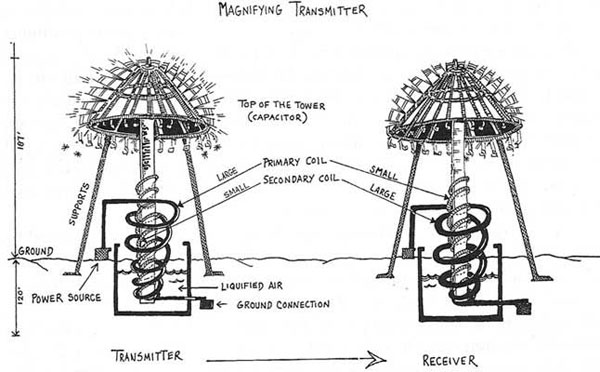
The concept of transferring power without wires, however, has been around since the late 1890s. Nikola Tesla was able to light electric bulbs wirelessly at his Colorado Springs Lab using electrodynamic induction (aka resonant inductive coupling).
 

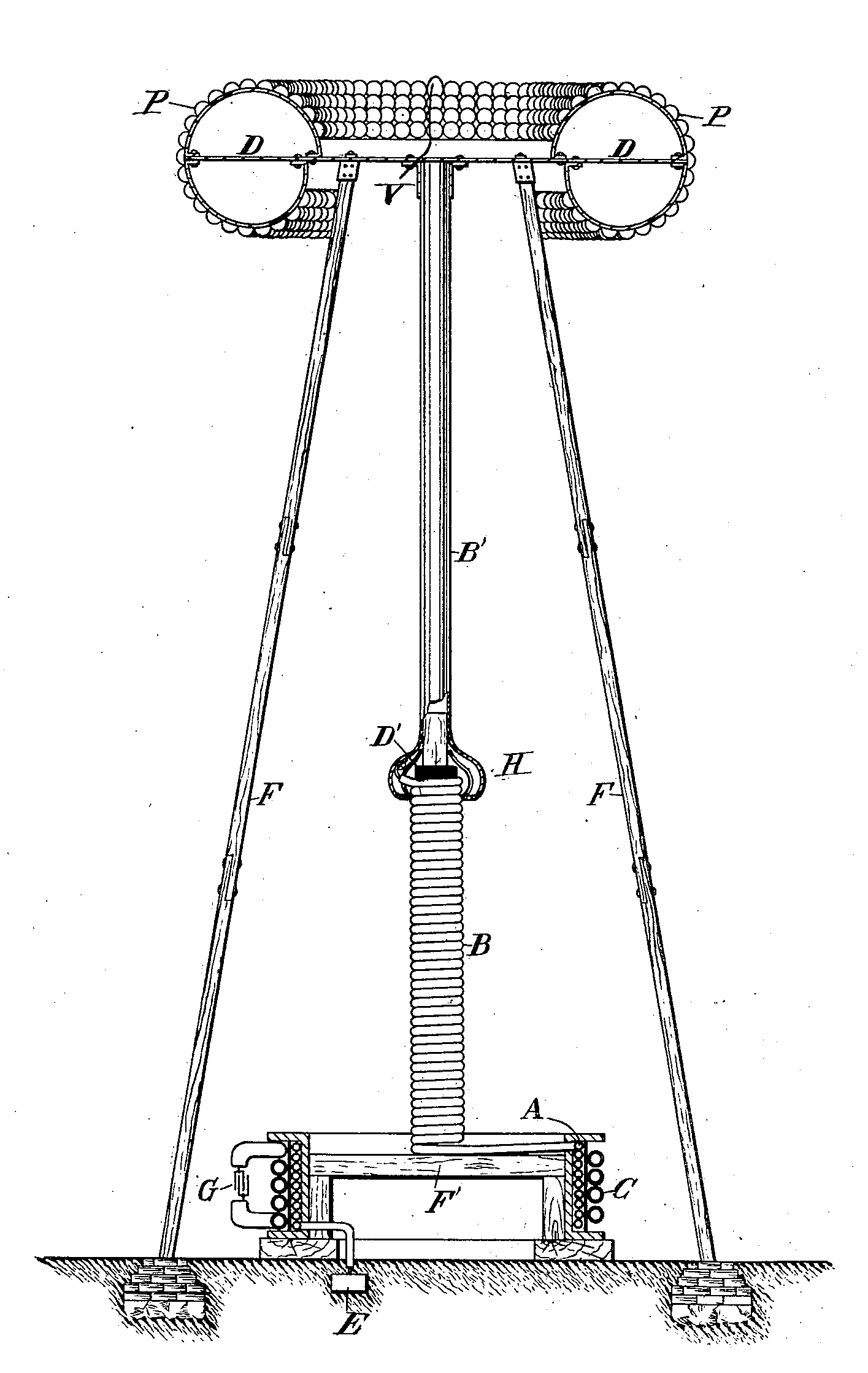
An image from Tesla’s patent for an “apparatus for transmitting electrical energy,” 1907.
 
Three light bulbs placed 60 feet (18m) from the power source were lit, and the demonstration was documented. Tesla had big plans and hoped that his Long Island-based Wardenclyffe Tower would transmit electrical energy wirelessly across the Atlantic Ocean. That never happened owing to various difficulties, including funding and timing.
WPT uses fields created by charged particles to carry energy between transmitters and receivers over an air gap. The air gap is bridged by converting the energy into a form that can travel through the air. The energy is converted to an oscillating field, transmitted over the air, and then converted into usable electrical current by a receiver. Depending on the power and distance, energy can be effectively transferred via an electric field, a magnetic field, or electromagnetic (EM) waves such as radio waves, microwaves, or even light.

 
Qi Charging, an Open Standard for Wireless Charging
While some of the companies promising WPT are still working to deliver products, Qi (pronounced “chee”) charging is standardized, and devices are currently available. The Wireless Power Consortium (WPC), established in 2008, developed the Qi standard for battery charging. The standard supports both inductive and resonant charging technologies.
Inductive charging has the energy passing between a transmitter and receiver coil at close range. Inductive systems require the coils to be in close proximity and in alignment with each other; usually the devices are in direct contact with the charging pad. Resonant charging does not require careful alignment, and chargers can detect and charge a device at distances up to 45mm; thus, resonant chargers can be embedded in furniture or mounted in shelving.
 

The Qi logo displayed on the Qimini wireless charging plate. Image courtesy of Tektos.
 
The presence of a Qi logo means the device is registered and certified by the Wireless Power Consortium.
When first introduced, Qi charging was low power, about 5W. The first smartphones using Qi charging were introduced in 2011. In 2015, Qi was expanded to include 15W, which allows for quick charging.
Only devices listed in the Qi Registration Database are guaranteed to provide Qi compatibility. There are currently over 700 products listed. It is important to recognize that products with the Qi logo have been tested and certified; the magnetic fields they use will not cause problems for sensitive devices such as mobile phones or electronic passports. Registered devices are guaranteed to work with all registered chargers.  
For more information on Qi wireless charging, check out this article, and for an introduction to and technical evaluation of Qi-compatible transmitter/receiver WPT evaluation boards, click here and here.
 
The Physics of WPT
WPT for consumer devices is an emerging technology, but the underlying principles and components are not new. Maxwell’s Equations still rule wherever electricity and magnetism are involved, and transmitters send energy to receivers just as in other forms of wireless communication. WPT is different, though, in that the primary goal is transferring the energy itself, rather than information encoded in the energy.


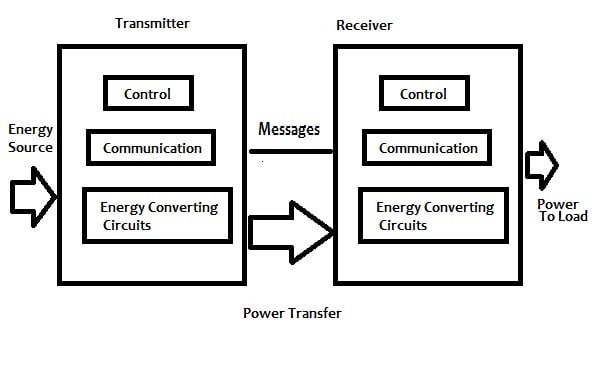
WPT transmitter/receiver block diagram.
The electromagnetic fields involved in WPT can be quite strong, and human safety has to be taken into account. Exposure to electromagnetic radiation can be a concern, and there is also the possibility that the fields generated by WPT transmitters could interfere with wearable or implanted medical devices.
The transmitters and receivers are embedded within WPT devices, as are the batteries to be charged. The actual conversion circuitry will depend on the technology used. In addition to the actual transfer of energy, the WPT system must allow the transmitter and receiver to communicate. This ensures that a receiver can notify the charging device when a battery is fully charged. Communication also allows a transmitter to detect and identify a receiver, to adjust the amount of power transmitted to the load, and to monitor conditions such as battery temperature.
The concept of near-field vs. far-field radiation is relevant to WPT. Transmission techniques, the amount of power that can be transferred, and proximity requirements are influenced by whether the system is utilizing near-field or far-field radiation.
Locations for which the distance from the antenna is much less than one wavelength are in the near field. The energy in the near field is nonradiative, and the oscillating magnetic and electric fields are independent of each other. Capacitive (electric) and inductive (magnetic) coupling can be used to transfer power to a receiver located in the transmitter’s near field.
Locations for which the distance from the antenna is greater than approximately two wavelengths are in the far field. (A transition region exists between the near field and far field.) Energy in the far field is in the form of typical electromagnetic radiation. Far-field power transfer is also referred to as power beaming. Examples of far-field transfer are systems that use high-power lasers or microwave radiation to transfer energy over long distances.
 
Where WPT Works
All WPT technologies are currently under active research, much of it focused on maximizing power transfer efficiency (PDF) and investigating techniques for magnetic resonant coupling (PDF). In addition to the idea of walking into a room equipped for WPT and having your devices charge automatically, much more ambitious projects are in place.
Across the globe, electric buses are becoming the norm; London’s iconic double-decker buses are planning for wireless charging, as are bus systems in South KoreaUtah, and Germany.
Using WiTricity, invented by MIT scientists, electric cars can be charged wirelessly, and those cars can wirelessly charge your mobiles! (Using Qi charging, of course!) This wireless technology is convenient, to be sure, but it may also charge cars faster than plug-in charging can.
 

Graphic of a wireless parking charge setup built into a parking space. Image courtesy of Toyota.
 
An experimental system for wirelessly powering drones has already been demonstrated. And as mentioned above, ongoing research and development is focused on the prospect of supplying some of Earth’s energy needs using WPT in conjunction with space-based solar panels.
WPT works everywhere!
 
Conclusion
While Tesla’s dream of having power delivered wirelessly for everyone’s use is still far from feasible, many devices and systems are using some form of wireless power transfer right now. From toothbrushes to mobile phones, from cars to public transportation, there are many applications for wireless power transfer.

The issue of Electric Vehicles and their sustainability

Tesla launched the Model-S in 2012, the luxury car was one of the more mainstream vehicles that accelerated the growth of electric vehicles. Some traditional cars manufacturers also followed the suit to compete with Tesla. Fast forward to a decade later, electric cars have become even more relevant and every major internal combustion engine manufacturer has an electric car model in their portfolio.

The rise of electric cars has been commendable with 75% growth rate and current sales north of 3 million units. But we have to look at the sustainability of electric vehicles realistically. Internal Combustion Engines cars have come a long way from 20 years back. Conventional cars are significantly more fuel-efficient and release less harmful gases to the environment. But still, they are incomparable to electric vehicle zero fuel emissions.

When we talk about electric vehicles, we also have to consider the whole infrastructure that is required to sustain that. The elephant in the room is the batteries. Battery technology has progressed a lot in the past decade but still, there are lots of limitations that have hindered the adaptability of EVs. One of the biggest issues that EVs face is the limited lifespan of batteries. The average lifespan of a typical EV battery is approximately 10 years depending upon the usage. In many EVs, the replacement of batteries is very difficult or almost impossible. Another problem is the case of recycling batteries. It’s not easy to recycle batteries and currently, electric vehicles have a very small percentage of market share. But as more and more people adopt EVs, there will be more EVs that will have to be scrapped and the proper disposal of batteries will be required. This can be a cause of environmental concerns as batteries will accumulate with no proper arrangement for its recycling.

Issues that will have to be addressed

The problem is much more than just battery technology. The power delivery and infrastructure also need to be developed to support the EVs. It’s going to be easier in urbanized areas with a small population, for instance Norway has been moderately successful in adopting EVs as a standard with plans to totally cease the sales of internal combustion engine vehicles by 2025. This target is going to be much more difficult in large countries with large populations and rural populations where distances between cities are larger. It also requires a considerable amount of capital resources to make the transition possible. Currently, traditional gas vehicles are still more viable, practical, and cheaper than EVs. This tells us that EV manufacturers and the government will require much more than subsidies to convince people to convert. EV manufacturers will also need to control the amount of energy that is required to produce a single EV, which is much more than a gas vehicle.

The extraction of lithium is also a contested issue and just as fossil fuels, the elements that are required to make batteries are non-renewable. Lithium can be extracted in a limited capacity and with more demand, it will become even more challenging to supply the raw materials required to build a battery. Building new battery production factories will also require a considerable amount of time and money. Until battery production facilities are not increased, supplying batteries will be a challenge and mass adoption will not be as fast as we would like it to be.

In conclusion, EVs are certainly the future, they are cheaper to operate and have zero emissions. But there are many other issues like infrastructure, battery supply, and proper disposal that would have to be addressed.

References:

To MARS, Or Not To MARS ?

Strap yourself in, we are going on a trip in our favorite rocket ship, steering through the clouds like little Einsteins. Climb aboard and get ready to explore, the Red Planet- Mars. From hostile deserts, to lonely islands and the highest mountains, wherever there is space to expand into, humans do so.

Hence it is hardly surprising that we are all ready to set foot into Mars and create the first permanent colony outside of Earth maybe even terraform another planet and turn it into a second blue home.

If you don’t know who is Elon Musk, then you better start googling his name and get to know him. Not only is he the billionaire founder of Tesla Motors, this a.k.a. Iron man superhero Tony Stark has ambitious plans to send humans to Mars by 2025.

If this is a trip then like any other, there is a need for a checklist with list of items to be taken to Mars and items we can conveniently leave back on Earth. Let’s get started fellow Martians.

A MARS COLONY CHECKLIST :

  • PORTABLE OXYGEN GENERATOR- You need to breathe. In case of emergency, a standby kit to generate oxygen is required. But considering humans, we might need a mask too because air is our favourite natural element to pollute.
  • PORTABLE SOLAR POWER KIT- Low battery and no charger sounds as scary as the trip itself. Whatever electronics you are bringing, as long as there is no electricity, forget about your entertainment. You don’t want to die of boredom.
  • PORTABLE WATER FILTER- We know there is frozen water on the planet. But we dont know if ita drinkable. All the ice deserves a drink, so bring a filter and soda-making machine if excess luggage permits (check with your airline)
  • PLANT SEEDS- Once you run out of your snacks you should look into farming. Be prepared, bring some seeds and check some tutorials on gardening (preferably in space).
  • LONELINESS- Self isolation might be needed to avoid radioactive exposure, well looks like the year 2020 is indeed a good practice for it. Also aren’t we all lonely from inside (No? just me? Okay…. *crawls back into my hole*)
  • NUCLEAR REACTORS- For creating a safe atmosphere and not the nuclear weapons that Nations own for “defense purposes” Let those weapons stay on Earth along with the people who threaten to use them because there isn’t much spice in their lives.
  • MULTIMILLION DOLLAR SPACESHIP – So large that it could fit the 150 Million homeless around the world, people who have been disappointed by the Politicians and their promises.
  • A HIGH TOLERENCE – A tolerance level higher than what we have to everything on social media and to the lifestyle of new generations.
  • MAA KE HAAT KA KHANA – A nice Tupperware tiffin box with food made by your Moms because, The M.O.M on Mars doesn’t cook or do ALL your work. (M.O.M –Mars Orbiter Mission also called Mangalyaan)

Lastly a desire to get away from it all. Elon Musk is not crazy, but a visionary, a modern adventurer who dares to dream. NASA is behind him by committing to send the first batch of astronauts on his mission. More than 200,000 people have signed up for the one-way ticket to Mars including Leonardo DiCaprio. Musk hopes to send 1 million people to the Red Planet and a ticket is estimated to cost around USD200,000 for each passenger (Hefty I know, but you get to travel with Leo as your travel buddy, hopefully this space- SHIP doesn’t sink).

Well as scary and uncertain as everything sounds it all comes down to one very important factor, Does Mars have Wi-Fi?