Perfume: The Story of A Murderer Book Review

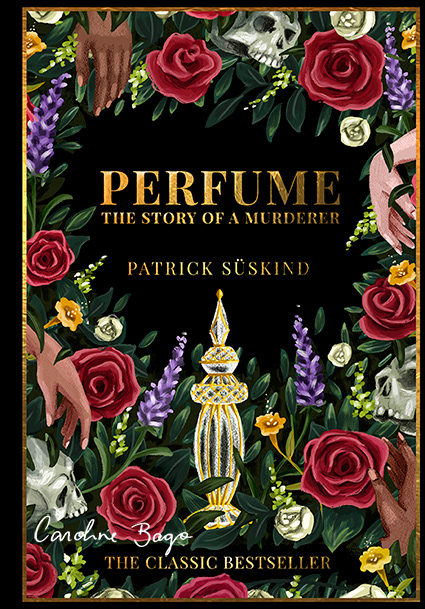
Cover of Perfume: The Story of A Murderer (1985)

Introduction

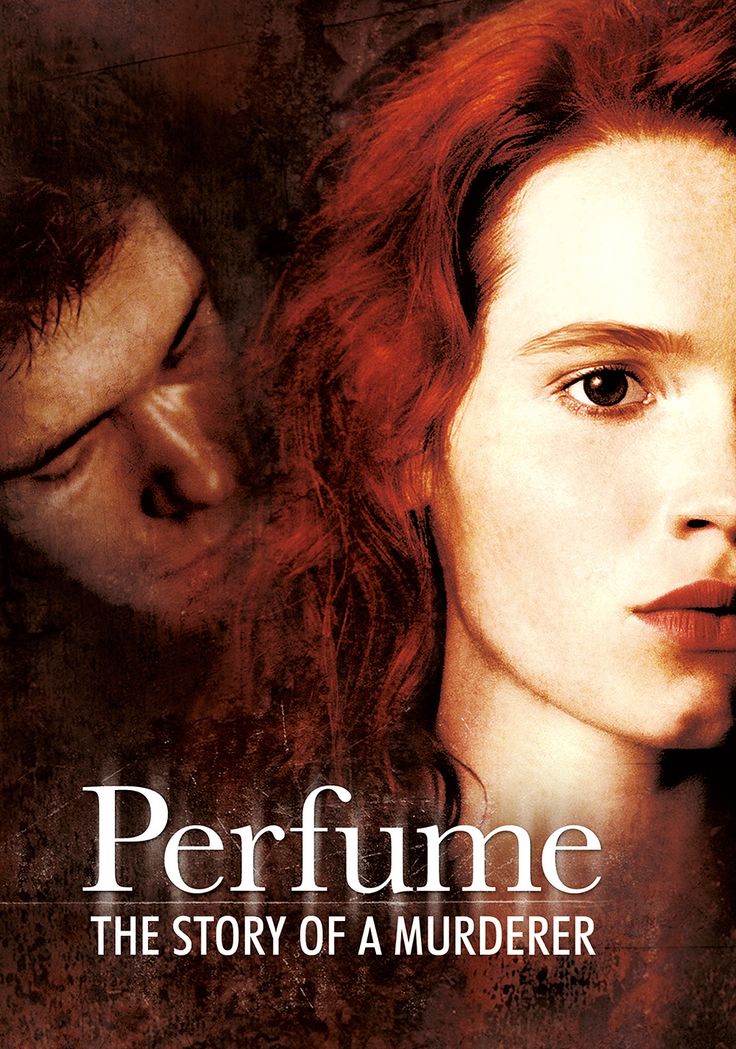
 Perfume: The Story of a Murderer (German: Das Parfum: Die Geschichte eines Mörders ) is a 1985 literary historical  fantasy novel by German writer Patrick Süskind. The novel explores the sense of smell and its relationship with the emotional meanings that scents may have. An acclaimed bestseller and international sensation, Patrick Suskind‘s classic novel provokes a terrifying examination of what happens when one man’s indulgence in his greatest passion – his sense of smell – leads to murder. This novel was later adapted into a famous movie in 2006 with the same name, starring Ben Whishaw, Alan Rickman, Karolina Herfurth and others.
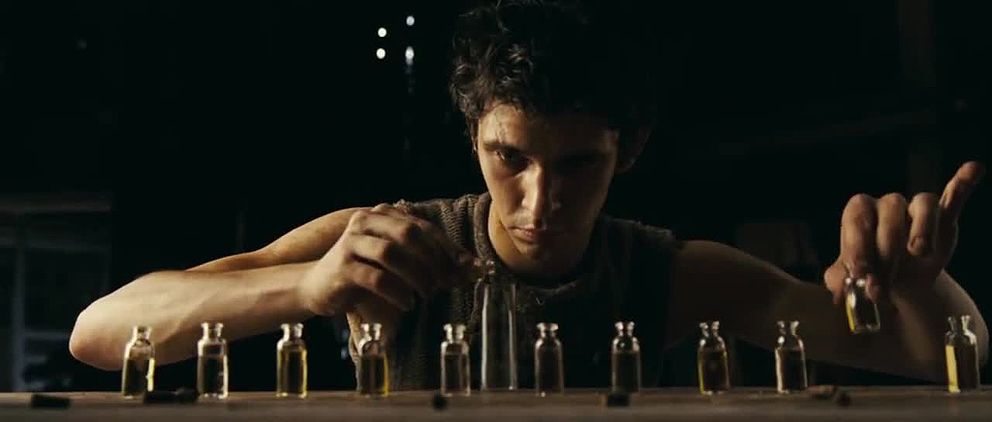
Ben Whishaw as Grenouille in Perfume: The Story of A Murderer (2006)

About The Author

Patrick Süskind ( born 26 March 1949) is a German writer and screenwriter, known best for his novel Perfume: The Story of a Murderer, first published in 1985. Süskind lives as a recluse in Munich, in Seeheim , and in France at Montolieu. After spending the 1970s writing what he has characterized as “short unpublished prose pieces and longer un-produced screenplays”, Patrick Süskind was catapulted to fame in the 1980s by the monodrama Der Kontrabass [The Double Bass, 1981:], which became an instant success and a favourite of the German stage. In 1985 his status as literary wunderkind was confirmed with the publication of the novel Das Parfüm. Die Geschichte eines Mörders [Perfume. The Story of a Murderer], which quickly topped the European best-seller list and eventually sold millions of copies worldwide.The public knows little about him; he has withdrawn from literary society and does not grant interviews or allow himself to be photographed.
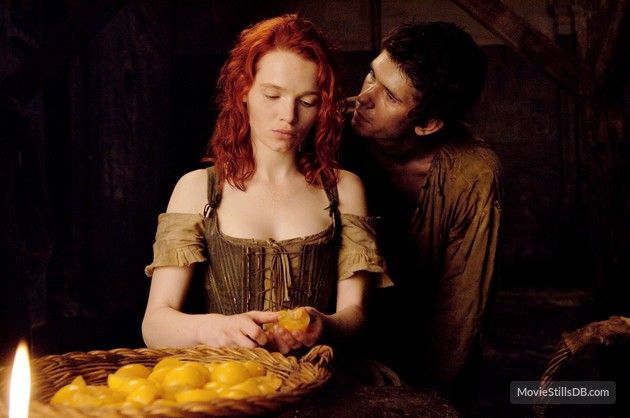
Ben Whishaw as Grenouille and Karolina Herfurth as Girl with Plums in Perfume: The Story of A Murderer (2006)

Storyline of The Novel

The novel is set in Paris in the 1700’s and follows the life of a man named Jean-Baptiste Grenouille who is born with an incredibly strong sense of smell. His nose is so keen that he is able to smell people coming, can locate lost items simply by their scent, and can catalogue smells in his mind. Whilst his sense of smell may be keen, his heart is empty and he seems to be completely unrestrained by everyday emotions. As a young lad, Grenouille encounters the irresistible smell of a young girl entering puberty. He promptly murders her and sniffs every inch of her body to catalogue the unique scent. Believing it is his destiny to bottle such a scent, Grenouille decides to pursue a career as a master perfumer, he works as an apprentice where his unique skills quickly make him the best perfumers in France. The story then follows Grenouille as he becomes a famed perfumer and experiments in scents that allow him to either go unnoticed or incite various emotions among those who smell it. His obsession with scents goes on to reaches a head with extreme consequences for all.
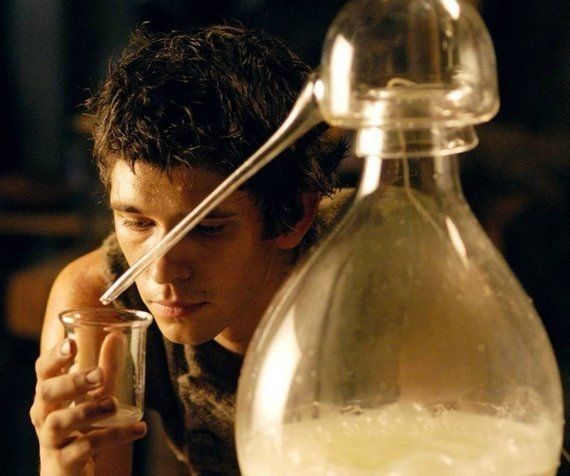
Ben Whishaw as Grenouille in Perfume: The Story of A Murderer (2006)

Analysis of The Storyline

A book about the sense of smell could have been a dull affair, were it not for the excellent way it is written by Suskind. His use of language is beautiful and his descriptions make even some with a dull nose like mine feel like they can smell the essences on the page. It’s not hard to see why this book has become such a modern classic given how excellent Suskind’s prose is. I challenge anyone not to read this and not then start using their nose a little more.
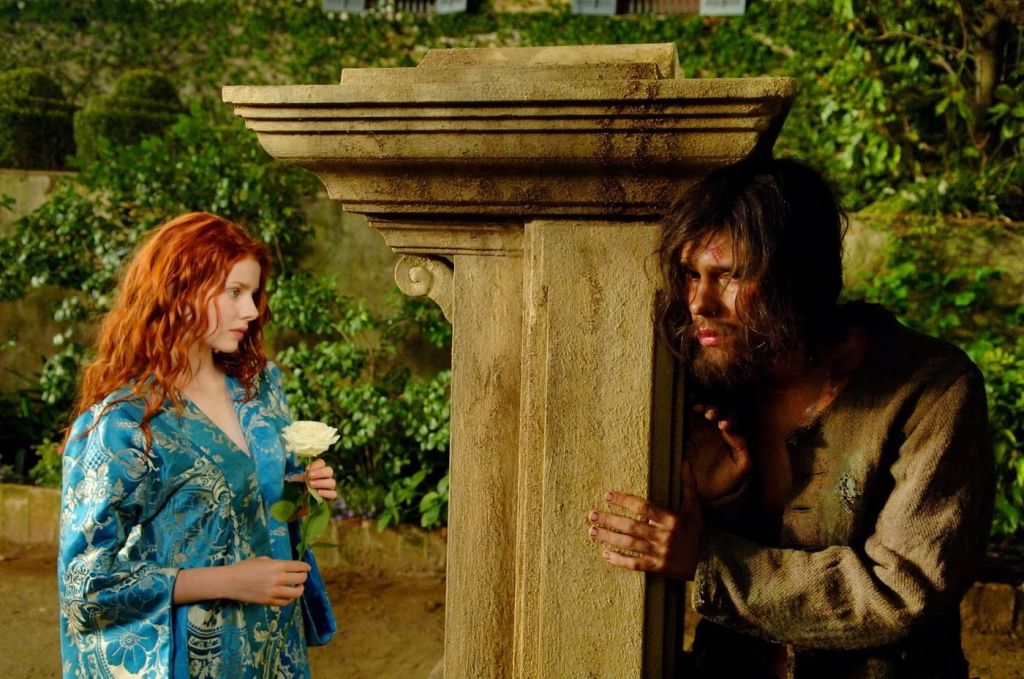
Scene from Perfume:The Story of A Murderer (2006)

The character of Grenouille is both fascinating, sympathetic, and yet also repulsive. In early life he is beat down at every corner and one can’t help but root for the character as he tries to rise above his terrible beginnings. As he becomes more in control of his life, Grenouille quickly becomes insidious and deceptive and there’s something very creepy in the way he is described as living like a tick. Grenouille does indeed live like a parasite, taking whatever he needs from people. As he becomes more unstable, eventually resorting to killing a young virgin, Grenouille turns into a monster, but a compelling one nonetheless. Like Humbert Humbert from Lolita, he’s a character you feel bad for sympathising with, though Grenouille may be a little more redeemable.
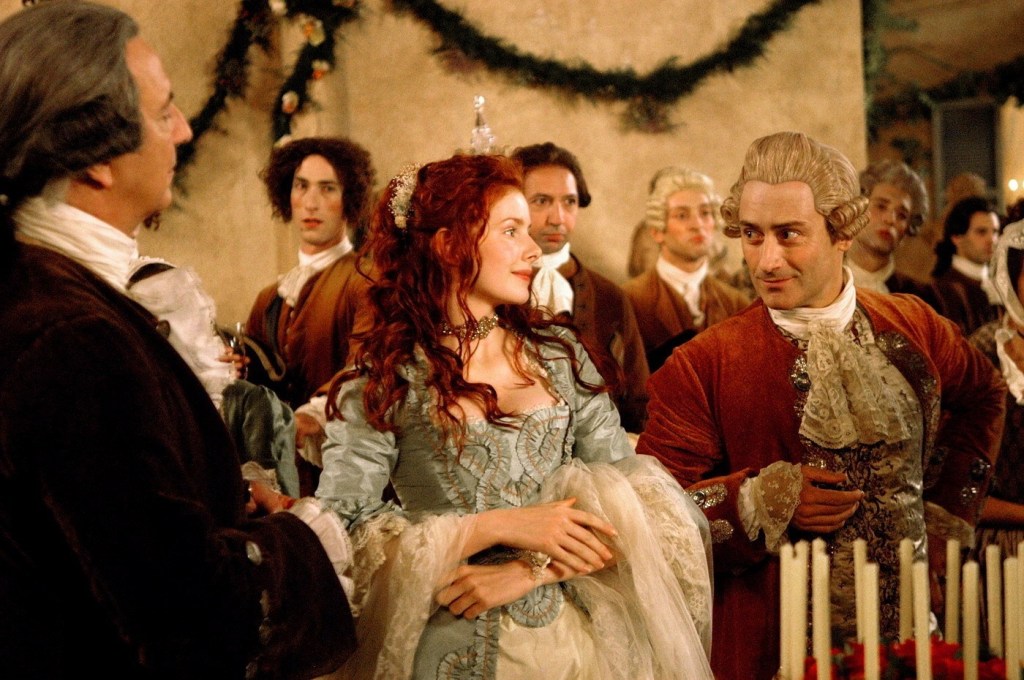
Scene from Perfume: The Story of A Murderer (2006)

Criticism of The Storyline

this is in every sense an olfactory novel gives a striking sensory immediacy to the fiction itself. ”Perfume” is a historical novel but one in which the sheer physicality of its theme lends it an honorary present tense. And if Grenouille is the hero of the novel, his obsessions are also its informing presence. Just as he has difficulty with words ”designating non-smelling objects, with abstract ideas and the like,” so the novel itself creates an elemental world in which such abstract matters are only of token significance. The nose is defined here by a priest as ”the primitive organ of smell, the basest of the senses,” with its powers springing from ”the darkest days of paganism”; but it flourishes in Grenouille, even in an age of ”enlightenment,” and the unspoken message of ”Perfume” is that it flourishes still. The point about genuine historical fiction is that it is primarily concerned with the contemporary world. This is not a historical romance, full of ”Prithees!” and strange objects known as poniards, but a meditation on the nature of death, desire and decay.
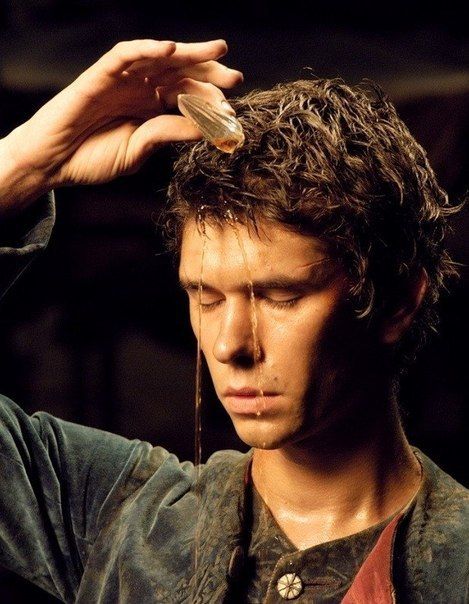
Scene from Perfume: The Story of A Murderer (2006)

Conclusion

The story of perfume made us really re-evaluate the importance of scents and how certain smells can influence us on a subconscious level. It makes one wonder how much of our everyday lives are dictated by scents without us even realising it. Throughout the book, you get the feeling pressure is mounting and it ends in a finale that sees an orgy of scents come together in one hell of an ending that isn’t likely to leave you any time soon.
Dystopian Genre: Analysis and its Significance

The dystopian genre can be categorized into a wide group of literary works of speculative fiction. It usually involves a vision of the future, or an alternate world, which is used by an author to comment on and explore ideas about their own society. It’s has been a popular genre for quite some time. Lets analyze why dystopian literature, in particular, is so important.  

Dystopian literature makes important commentary on the world, societies, and our governments. Humans, since the beginning of the organized society, have always been fascinated by a perfect society which is ‘Utopia’. Since Humans are flawed and our societies mirror that, but it’s also in our nature to strive for better, similar to philosophers who focused on political theory. 

During the medieval age, utopia seemed to be a noble idea among the European authors and philosophers. While its main aim was to depict an ideal society, Dystopia on the other hand was a response where authors argued with the Utopian literature. Dystopias are utopias in the real world as these visionary ideas work well, as ideas. When placed in reality they quickly turn into dystopias.

In order to have an ideal society, humans should be devoid of humanistic values. Writers Depict societies that strive for perfection but ultimately fail as they ignore some vital part of humanity, which makes a convincing dystopian world.

Writers look for flaws that exist in our societies today, grounded in truth, and amplify them. A similar reflection of flaws can be seen in Orwell’s 1984 where it paralleled the problems that were ongoing in that period with the depiction of the overt dictatorial elements present in the Soviet Union and Third Reich. He critically pointed out the Government Surveillance, thought police, the constant change of history, and banning of books, which may seem exaggerated. These elements parallel our society albeit in a more subdued manner. Nevertheless, the parallels are present there, hence 1984 is still a very relevant piece of literature today.    

Similarly in Brave new world, Huxley pointed out that there would be no need for banning books as people will be bombarded with too much information and would be critically incapable to decipher reality with information overload. Where pleasure receptors hijack people’s critical thinking    

Within these two instances, we can interpret that one man’s heaven (Utopia) is another man’s hell (Dystopia). And dystopian writers don’t shy away from being political or radical when they try to describe these phenomena to warn readers.

It has also given rise to many similar genres like science fiction and cyberpunk, dystopian literature can share elements with these themes. In recent times, dystopian literature has also been popularized with the help of Movies, TV shows, and Video Games. 

With the advent of the 20th-century dystopian literature evolved and flourished, many of the revered classic literature in the past century has been a part of this genre. Technology and science progressed and new means of government and bureaucratic institutions were established. This gave writers a new method to introspect the societal trend.   

There is a critical need to academically evaluate these literary writings as its getting more relevant in our present society.

References:

My fellow murder mystery junkie, I’ve got your alibi!

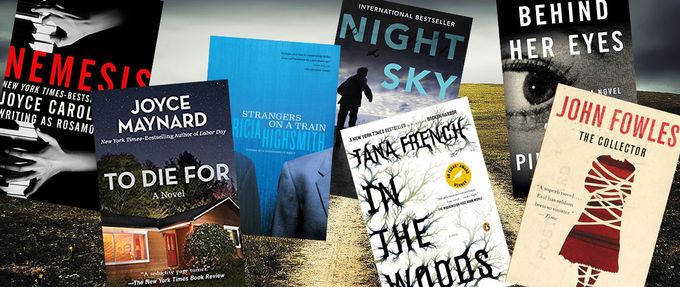
Experiences are always fun to talk about, right? Let’s do a quick refreshing. Adventure, gut-wrenching, adrenaline gush. Try to map these three words to a single entity. Your mind, involuntarily would picture the obvious risk driven bungee jumping or skiing or other such outdoor activities. What if I told you, all I can picture is a cozy couch and a cup of steaming coffee? This sounds calm, not dangerous, you may think. But beware, a good murder mystery or a thriller book clutched within your hold, can shake the living hell out of you!

What happens physically when reading a murder mystery?

Without moving an ounce of your flesh, you get to experience a whirl wind of emotions. Reading a thriller book gives you the best experience. These sort of books give us a unique sensation that books of other genres can never do. They are all packed with suspense, waiting to burst within the hands that  pick them. Let me explain you what happens when you reach the core of a thriller book:

The back of our throat wanting to fill with bile, our stomach flutters, lungs struggle to get more air, our heart racing at a tremendous 120 km/hr. speed. Amidst all this, our brain trying to declutter the plethora of meaning underlying in a single sentence while at the same time, convincing our body that we our still positioned at our room’s couch, not on a wild goose chase of a psychopath of our imaginative, yet so realistic world.

Huh, I am gasping for air for just typing this out!

In addition to the chaos and turmoil bubbling inside, we can actually feel our hands go numb and our spine getting chilled. Its absolute wonder that a mere combination of 26 alphabets of a language can give you such trills. It is an amalgamation of so many things: excitement, terror, horror and what not?

Sonder

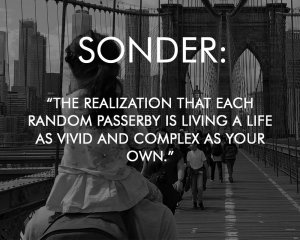
Apart from the train of random feelings, and a rollercoaster of emotions, these books actually provide a deep unfathomable impact and realization of the complexity of life. There exists a beautiful word in English for explaining this feeling and from the moment I heard it, I fell in love with it. Sonder.

sonder meaning
Sonder: Meaning


Movie or book?

Many a times, you may argue that a movie adaptation of a thriller book can give you the same experience. Let me tell you, you will miss one major escapade which can be experienced only by reading books, and not visually seeing a movie adaptation of the same.

When we see a movie, we do not give our brain enough time to contemplate what is going on. We adapt to the perspective of the director instead of developing our own. But when reading about the vivid description of a place, or about the character build, our brain gives life to the book. It tries to imagine the place, gives a face to the character and adsorbs the essence of the scene. This virtualization becomes impossible when we watch a movie as that work is already being done for us.

The good and evil within

Good and Evil
Good and Evil

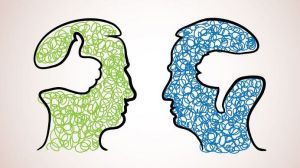
Thriller books and murder mystery books keep us guessing about the suspects and without our knowledge, our mind penetrates into the mindsets of both the protagonist and into that of the villain. This introduces us into the duality of the human mind. We astonishingly try to relate with the good and the bad simultaneously. We try to seek justice for the light and the dark, putting us in a unique juxtaposition.

We are like water, taking the form of whatever we are poured into. It is up to us to stay true to who we are and lead our life absorbing the positive vibes only. So apart from the unique experience, thriller books also convey a beautiful truth about life, good needs evil to survive. Without mistrust, you will not grasp onto faith. Without rain, you will not appreciate the sun. So put your faith in the right things, lead your life with happiness. My dear fellow crime junkie, I’ve got your alibi (Wink).

Good and bad is not black and white but a million shades of grey.