“International Event: OLYMPICS”


The word “olympics” itself is an emotion. The international sports festival which held in every 4 years in about 206 countries of the world. It is the worlds foremost athletic competition among the most promising & commendable citizens of the respective 206 countries. Olympics gives the opportunity to the citizens to showcase their aptitude and ability in every sport despite of any sense of discrimination among them. Olympics gives a friendly nature, a sense of peace and prosperity among the countries. It’s an international level sport which gives justice to each and every citizen to showcase their talent and their earnest nature in the name of their country, showcasing your country on an international level is something beyond reproach, it’s indescribable.
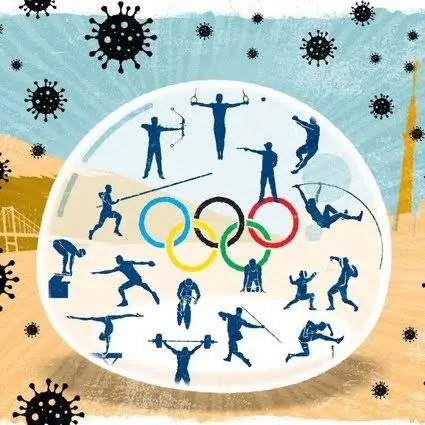
THE 5 RINGS OF OLYMPICS.

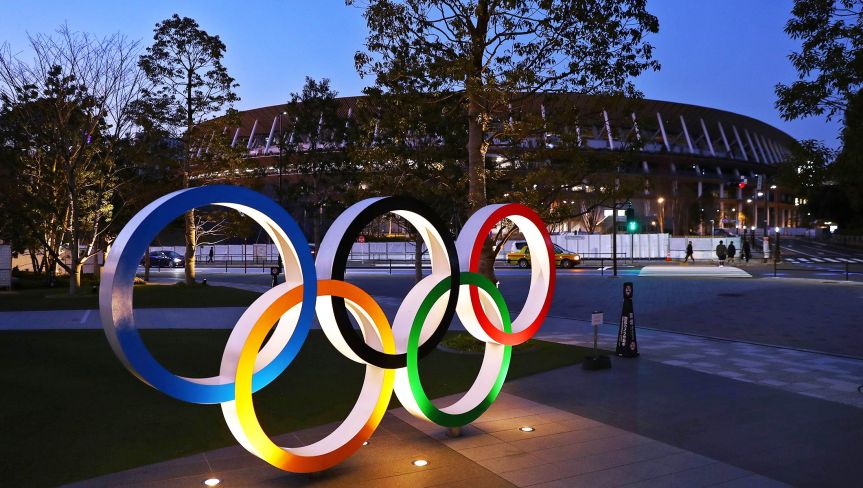
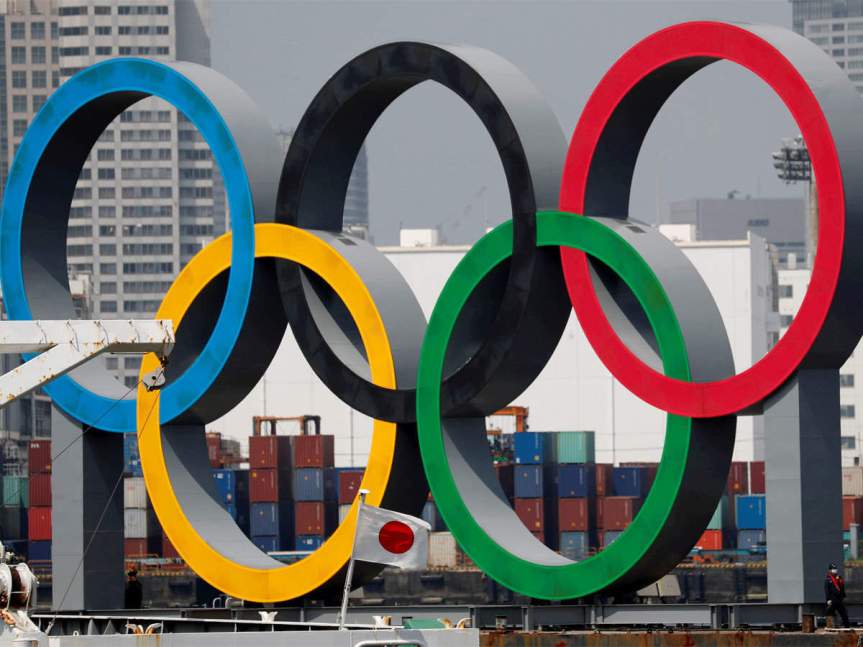
The five rings represent the five continents of the world that participate in “the fruitful rivalries” Of the Olympics games. The colors – blue, yellow, black, green and red – stand out against the white background which shows the sense of unity and togetherness of every colour under the white background despite of measuring the wavelength, tone and frequency in all the 5 colours, which represents that each and every citizen of every country can represent their nation without any sense of discrimination under the same sky.The six colors can be combined in any number of ways to reproduce the flag of every country without exception. It gives the opportunity to the citizens to showcase themselves in the name of their respective nations in different sports without any kind of inequity and bias among them.

IMPORTANCE OF OLYMPICS IN THE MODERN WORLD

As with the changing times, the youth of the world has become more generous and they have the sense of being vocal about their thoughts and their abilities which gives an ever-growing impression in the world. With the modern world, the youth has all the elements to showcase their respective interest in different fields. Since olympics gives an opportunity to the youth to represent their desire and talent in their respective best sport they are in, it gives a learning atmosphere for the youth to inspire and learn through a sport. Representing your culture, your country on a global level gives an indescribable emotion from which the youth seeks the importance of culture, its meaning. 

Young athletes exhibiting their respective countries in 100’s of different sports in an international level competition and earns medals through their hard work, desire and generosity. It’s an unimaginable moment for the athlete who wins on a global level among 206 countries, Olympics truly gives so many of opportunities to the citizens, to earn through their hard work and desire without getting judged or discriminated in any form.

“HISTORY OF OLYMPICS”

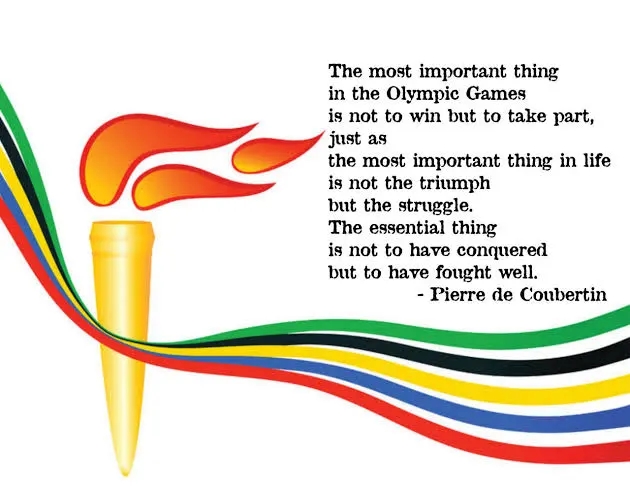
The Olympic Games, which originated in ancient Greece, 3,000 years ago, were revived in the late 19th century and have become the world’s prominent sporting competition. From the 8th century B.C. to the 4th century A.D., the Games were held every four years in Olympia, located in the western Peloponnese peninsula, in honor of the god Zeus. The first modern Olympics took place in 1896 in Athens, and featured 280 participants from 12 nations, competing in 43 events. Since 1994, the Summer and Winter Olympic Games have been held separately and have alternated every two years. The 2020 Summer Olympics, delayed one year because of the COVID-19 pandemic, will be held from July 23 to August 8, 2021 in Tokyo, Japan.

INDIA IN OLYMPICS

India has been participating in Olympics since 1900. Being the most diversified and culturally active country, it has been the most commendable and honoured country in the platform of Olympics as well. No doubt, India in the race of Olympics is not so graceful as compared to other countries, but India being the 2nd most populated country gives cultural competition to many other countries, it has gained prosperity in each and every sector, but in Olympics, India has a little disgraceful exhibition among the several countries.

WHERE INDIA LACKS?

  • Excess importance to cricket

We, as a country, are obsessed with a singular sport and that is cricket. It is only during major events like Olympics when other sports are given a part of the limelight and fan cheering. For the rest of the year, we stay ignorant of who’s who of other sports. They are promoted less, there are fewer sponsors for the other sports, there are even less fans hooting and cheering them to do better and then we go about complaining and trolling athletes when we do not get enough medals.

  • Lack of encouragement

The foremost factor right from the very beginning, youth in India are discouraged from pursuing a career in sports. Our parents are obsessed with the likes of medical and engineering. And for girls, the scenario is even worse with list of drawbacks and hindrances they have to face before they could persuade their parents to allow them to play. Most of them are forced to quit sports in order to do something that would give them better job security. Our success as an academically-oriented people proves that we are excellent at pursuing something that pays well, so does India’s obsession with cricket.

  • Poor administration

There is no proper governing of Administrative issues is the prime concern with Indian sports. Non-Involvement of ex-sportsman in administrative staff is also a major reason why India lacks in this sector. Our economy has been prospering and allotment of funds to different fields of development has been improvising with each year’s budget. However, there is still relatively very less allotment of funds for sports given the sheer number of youths who are willing to take up sports seriously. Enough of IITs and IIMs, when will we get a dedicated sports university?
-SUKHMANI PANESAR

How Much Does India Invest In Olympic Athletes?

Postponed by a year due to the pandemic, the Tokyo Olympics is now less than a month away. Last week, the Union Sports Minister Kiren Rijiju urged the people to extend their support to India’s Olympic-bound athletes, the same way they back India’s cricketers. However, India’s abysmal performances at the Olympics is in striking contrast to India’s immense success at cricket. The model of sports governance and financial irregularities are often blamed for the lack of competitive edge in sports other than cricket. So, the most obvious question that comes to our mind is, how much does India invest in the Olympics?

Money allocated for Sports

In the 2020-21 annual budget, the Government of India allocated Rs 2826.92 crore for sports, which meant an increase of mere ₹ 50 crore from the revised estimates of the financial year 2019-20. The Modi government’s flagship sports programme ‘Khelo India’ received a substantial hike of ₹ 312.42 crore and was allocated ₹ 890.42 crore compared to ₹578 crore in 2019-20. On the other hand, the National Sports Development Fund saw a reduction of ₹ 27.15 crore from ₹77.15 crore in 2019-20 to ₹ 50 crore in 2020-21. National Sports Federations saw the highest decrease after Finance Minister allocated ₹ 245 crore, ₹ 55 crore less than the previous financial year, according to The Wire. Even the budget for meritorious sportspersons saw a 40% reduction from the last financial year. It is important to note that the 2020-21 annual budget was presented in January 2020, when the government had no idea of the coming pandemic. It was also supposed to be the year of the Tokyo Olympics.

Target Olympic Podium Scheme

While these are the broad schemes under which Indian sportspersons are funded, the Target Olympic Podium Scheme (TOPS) provides financial assistance to potential Olympic medal winners. Launched in 2014, TOPS is the flagship programme of the Sports Ministry of India. The top-up funding scheme considers the performance of Indian athletes in the past three years. They are provided with personal coaches and other staff fees, cost of travel during competitions, purchase of equipment, and pocket allowance.

Looking Back At The Last Olympics

In the 2016 Rio Olympic, India spent ₹ 36.85 crore under TOPS, as per Financial Express. Nearly half of that amount was spent on shooting, which was India’s most successful Olympic sport in the previous three games. Shooting is also very expensive, which requires importing equipment from other countries. But shooting failed to bring any medal. Athletics received the second-highest funding of ₹ 7.80 crore in 2016, but India failed to make a mark in the sport. Unfortunately, out of the ₹ 36.85 crore, ₹30.49 crore had gone to disciplines that fell short of goals. Only 1.66 per cent of the total TOPS fund went to the fields that brought India two medals – PV Sindhu in Badminton and Sakshi Malik in wrestling.

Comparison With Other Countries

The United Kingdom allocated close to Rs 9000 crore on sports infrastructure and training in the annual sports budget, whereas India spent only one-third of the UK, Rs 3,200 crore, on youth affairs and sports, before 2016. The UK won 67 medals against India’s two at the Rio Games 2016. Abhinav Bindra had also tweeted back in 2016 that a medal cost UK 5.5 million pounds, and that is the kind of investment India needs to make. Otherwise, we cannot expect much. In the USA, a large number of athletes are privately funded. Individual athletes had started their own funding portal for donations from the general public. Therefore, only 10% of the US Olympic Committee’s finance was spent on athletes in Rio 2016, and the USA finished first. China, on the other hand, is known for its aggressive state-sponsored promotion of sports.

Private Investment In India

Before the 2016 Olympics, Indian Olympic Association (IOA) received donations from Reliance Jio, Amul, Tata Salt, Edelweiss Financial Services, Herbalife, Li Ning, and SBJ. Sakshi Malik had also thanked JSW Sport, a foundation funded by the OP Jindal group, after becoming India’s first medal winner in Rio Games, as reported by Hindustan Times.

However, unlike NSDF, where the contributions and sponsorships are open and documented, private funding to individual athletes is not. And most recently, the JSW Group has come on board to be the official sponsor of Team India in the Tokyo Olympics and has agreed to pledge sponsorship support of ₹ 1 crore to IOA. In 2018, the Sports Ministry earmarked ₹ 100 crore for funding of the athletes for the preparation of Tokyo Olympics 2020, which will take place this year. While the number of medals won cannot be equated to the investments made, since medals are not the only measure of success, India nonetheless needs to invest more and put in a new model of sports governance in action. A

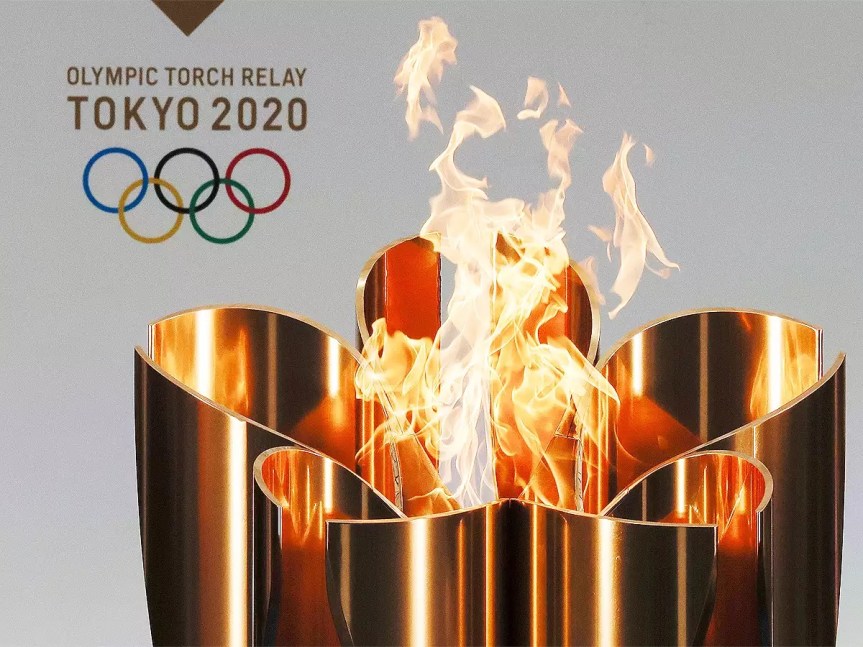
The Olympic flame in Tokyo is the first to be fueled by hydrogen.

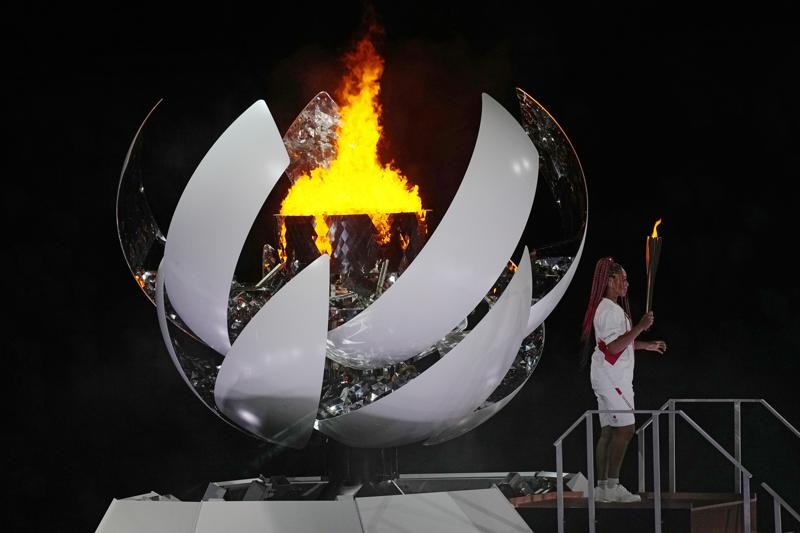
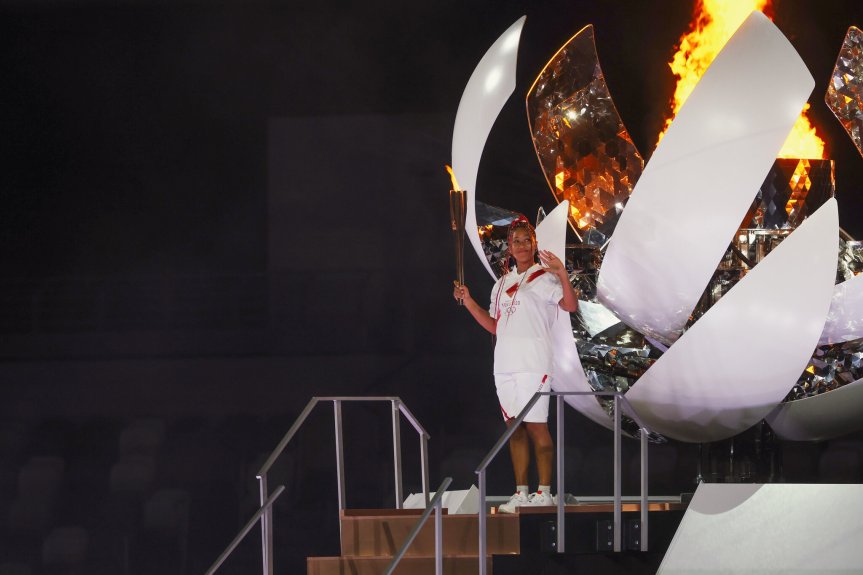
Naomi Osaka stands near the Olympic torch after igniting it during the opening ceremony of the 2020 Summer Olympics in Tokyo, Japan, on Friday, July 23, 2021. (David J. Phillip/AP Photo)

TOKYO (AP) — The Tokyo Olympic cauldron was inspired by the sun and is built to be more eco-friendly.

Throughout the games, the flame at Tokyo’s National Stadium and another cauldron blazing along the waterfront at Tokyo Bay will be fueled in part by hydrogen, marking the first time the fuel source has been utilized to light an Olympic fire.

Since the first contemporary cauldron was ignited at the Amsterdam Games in 1928, propane has been the most common fuel, but magnesium, gunpowder, resin, and olive oil have all been used. Eight years later, for Berlin, the torch relay was inaugurated.

When hydrogen is burned, unlike propane, it does not create carbon dioxide. The Tokyo cauldron is fueled by hydrogen produced by a renewable-energy-powered facility in Fukushima Prefecture. During the torch relay, both propane and hydrogen were utilized.

The London 2012 Olympic Games organizers boasted about their intentions for a low-carbon torch, but they couldn’t get the design perfect in time. Instead, they utilized a propane-butane mixture. In 2016, Brazilian officials ordered a smaller cauldron for Rio de Janeiro to minimize the quantity of fuel required.

Oki Sato, a Canadian architect, created the Tokyo cauldron. His sun-inspired sphere opens like petals from a flower, evoking “vitality and hope,” according to the organizers.

At 11:48 p.m., tennis player Naomi Osaka ignited the torch, with performers throughout the night clutching sunflowers, which are known for blossoming toward the sun.

The first torch for these games was lighted 16 months ago at Olympia, Greece, however owing to the pandemic, the relay was put on hold for much of 2020. Until the relay was formally begun in Fukushima on March 25, 2021, officials displayed the torch across prefectures impacted by the earthquake and tsunami that destroyed the region in 2011.

Before the torch arrived at the National Stadium in Tokyo’s Shinjuku City, several parts of the relay were halted owing to concerns about the spread of the coronavirus.

Tokyo Olympics 2021

Olympics 2021 is finally here! After almost a year delay and many reschedules the Olympics have officially begin. This time the host is Tokyo, and this is the 32nd edition of Olympics game. On Friday night, that is 23 July the opening ceremony was held, and a great sports event had a grand opening ceremony.


This is for the first time that Olympics are taking place on an odd year, with no spectators and very limited number of athletes. The schedule is all prepared and its day one, which is very crucial for every country and its athlete. The key highlights are-
• Naomi Osaka renowned tennis player from Japan light up the cauldron.
She tweeted about the same as she felt grateful and honoured to be a part of opening ceremony calling it her greatest athletic achievement till date.
• The opening ceremony filled the night sky with firework and the use of drone display system. However, the ceremony took place in the absence of audience.
• The Olympic flame was passed to from Paralympic athlete Wakako Tasuchida to children from disaster hit region of Naomi, Osaka to Japanese medical workers and other athlete before it went to Naomi Osaka.
• The Opening declaration was done by Japanese Emperor Naruhito.
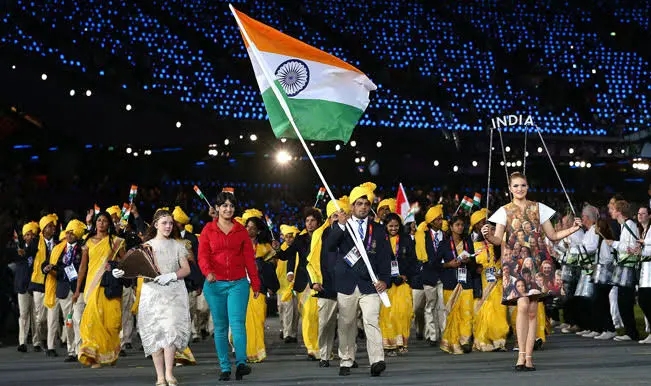
• In the opening ceremony parade 19 people represented India including six times world champion Boxer Marry kom and men’s Hockey captain Manpreet Singh.
• Indian Prime minister Narendra Modi cheered all the Athletes through video conference on representing India at Tokyo Olympics 2021 and wishing all the best to PM Suga and Japan on hosting the Olympics.
• In total there are 127 participants from India who are participating in 18 different sports including two team. The Indian athletes are participating in hockey, shooting, archery, rowing, judo, table tennis, badminton, weightlifting, rowing etc.

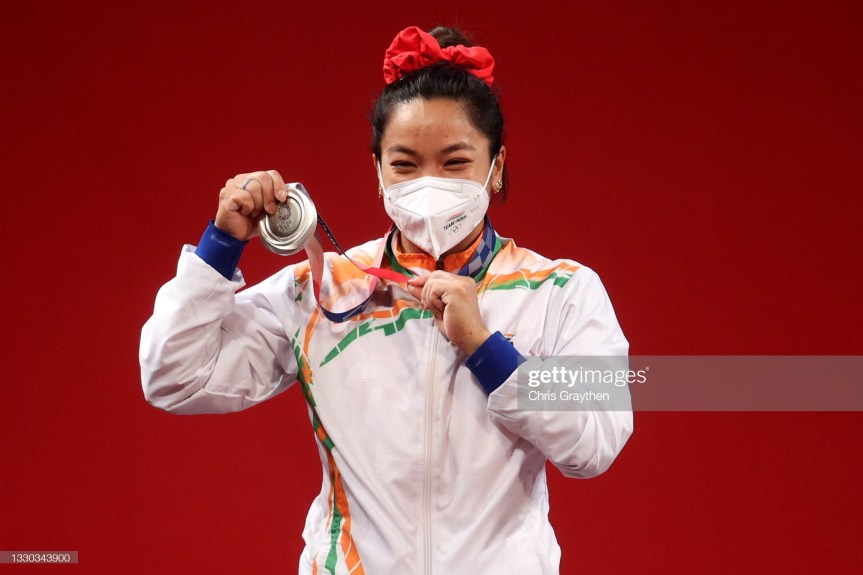
On day one Indian weightlifter Mirabai Chanu bagged a silver medal in weightlifting 49 kg category. With this achievement she becomes the second Indian women to win a silver after PV Sindhu and first athlete to win a medal at 2021 Tokyo Olympics. She belongs to Manipur situated in Northeast and have faced quite a lot of struggles on her way to win a medal today, Mirabai’s achievement has not only made all the Indians proud but, made the first day remarkable for everyone.
Indians have been actively participating in Olympic events and other sports evet from past three to four years in different category of sports and like every year the aim is to win “Gold”, represent the country at an international level and add the charm to the nation. Representing your country at such level is already counted as an achievement, representation brings responsibility and performance pressure which may affect the performance specially for the newcomers. Thus, it is important to keep the balance throughout the event and feel confident about the preparation and hard work an athlete has been doing for past many years. The competitive spirit should be high, and the goal is to be fulfilled.

India win’s its first medal at Tokyo 2020 Olympics

The Olympic flame was lit on 23 July’ 2021 in Tokyo, Japan and the competition for medals and glory is fierce and intense. Mirabai Chanu ended India’s 21-year wait for a weightlifting medal at the Olympics by clinching a silver medal in the 49kg category and opened the country’s account on Saturday. The 26-year-old lifted a total of 202kg (87kg+115kg) to better Karnam Malleswari’s bronze in the 2000 Sydney Olympics.

Who is Mirabai Chanu?

Saikhom Mirabai Chanu was born on 8 August 1994 in Nongpok Kakching, Imphal, Manipur, to a Meitei family. Her family identified her strength from an early age when she was just 12. She could easily carry a huge bundle of firewood home when her elder brother found it hard to even pick it up.

Chanu’s first major breakthrough came at the Glasgow edition of the Commonwealth Games; she won the silver medal in the 48 kg weight category.

Chanu was felicitated by the Chief Minister of Manipur, N. Biren Singh, who presented her with a cash prize of ₹2 million. She received India’s highest civilian sports honour Rajiv Gandhi Khel Ratna for 2018. In 2018, Chanu was awarded with the Padma Shri by the Government of India. In 2019, she won Gold at Qatar International Cup, after lifting 194kg

India’s Medal Count Starts From Todayy!!

Mirabai Chanu marked history today by securing India’s first medal at Tokyo Summer Olympics 2021. She bagged silver medal in weightlifting under Women’s 49 kg. It is more remarkable day for India as it won the medal in weightlifting after 21 years of wait and struggle.

Saikhom Mirabai Chanu was born on 8 August 1994 in Imphal ,Manipur. She was in the field of weightlifting from the age of 12 years. She was also awarded with Padma Shri by Indian Government for her contributions to the sport . She has won several medals in Common Wealth Games and World Championship.

For her win, Prime Minister Narendra Modi personally congratulated her on phone. She took twitter to express her joy , she wrote ,”thank you my coach Vijay Sharma sir”. Many popular figures like Shikhar Dhawan , Gautam Gambhir , Mahesh Babu , Virender Sehwag, Kiren Rijiju also congratulated on her success.

TOKYO OLYMPICS 2020 – INDIA

Japanese tennis star Naomi Osaka on Friday lit the Olympic cauldron to mark the formal start of Tokyo 2020, in an opening celebrated as a moment of global hope. Organisers also paid tribute to medical workers as athletes from across the world paraded into an almost empty stadium. Normally a star-studded display teeming with celebrities is now a  low-key celebration, with fewer than 1,000 people in attendance.

The Japanese Emperor Naruhito, French President Emmanuel Macron and Switzerland President Guy Parmelin were among the many world leaders and dignitaries to attend the breath-taking opening ceremony on Friday.

Six-time world champion Mary Kom and men’s hockey captain Manpreet Singh led the way as India made its way at the Parade of Nations during the Opening Ceremony of Tokyo Olympics on Friday at the Japan National Stadium. India’s Olympic contingent for Tokyo includes 127 participants from 18 sports.

We have many athletes from india who will be participating in the sports which lacked Indian representation for years, like Fouaad Mirza who is the first Indian equestrian to qualify the game in 20 years, Bhavani Devi became the first Indian fencer to qualify, Pranati Nayak is only the second Indian woman gymnast to qualify for the Olympics, Sushila Devi Likmabam will be India’s only participant in Judo  and Mirabai Chanu will be India’s only representative in weightlifting

 So let’s keep our spirits high and support our pride “Team India” to win medals and ever-lasting glory for the nation.

Haryana and Punjab have 4% of India’s population

Haryana and Punjab are the two states that are once again leading the way for the country at the Olympics.

The two states, with just 4.4% share of India’s population, have together sent 50 athletes to the Tokyo Games, accounting for 40% of the Indian contingent. Haryana has 31 athletes in the contingent, nearly 25% of the total, while Punjab has 19.

Tamil Nadu had sent 11 athletes to Tokyo, 8.7% of the contingent. Other states are Kerala and UP each had sent 8 athletes.

For Haryana, nine of 19 women Hockey players, seven wrestlers(four women, three men), four boxers(three men, one women) and four shooters(two women, two men) make up most of the numbers. While for Punjab 11 out of India’s 19 member men’s hockey swell the tally. Two shooters(a man and a women), three from athletics(two men, one women), two women’s hockey team members, and one boxer make up the total.

India is sending its largest ever contingent to the Olympic Games with the total of 127 athletes and will take part in 18 disciplines: athletics, archery, badminton, boxing, fencing, equestrian, gymnastics, golf, hockey, rowing, shooting, sailing, swimming, table tennis, tennis, wrestling and weightlifting.

Kerala, known for its legacy in athletics, has six in track and field events out of the eight it is sending to Tokyo. One each is in swimming and the men’s hockey team.

3 Athletes Test Positive, 2 staying at Olympic Village

Three athletes have tested positive for COVID-19, two of them South African football players staying at the Olympic Village. Organising Committee announced on Sunday adding to the scepticism that surrounds the troubled event slated to open on July 23. It is the first case of athletes staying at the village catching the infection. Their identities were not yet revealed by the organizers but the South African Football Association issued a statement to make that information clear.

“Three members from Team SA’s men’s under 23 football team have produced positive tests for Covid-19 and are in isolation in the Tokyo 2020 isolation facility,” the South African Football Association (SAFA) stated.

“The three members are players Thabiso Monyane and Kamohelo Mahlatsi and video analyst Mario Masha, who produced a positive result in the latest round of daily sputum (saliva) testing,” South African Football Association (SAFA) stated.

The third infected athlete is staying at a designated Games hotel and his/her identity is not yet known.

“A fourth Team SA member, Sevens rugby coach Neil Powell, has also produced a positive result and has been admitted to an isolation facility in Kagashimo where the Sevens squad are currently in at a pre-

Games training camp,” SAFA stated.

The total number of Games-related COVID cases have now risen to 55 as per the OC records. “When there is a positive COVID-19 case- it means action. There is a clear procedure to identify close contacts. A case is not just data in a spread sheet but leads to action, including follow-up testing,” International Olympic Committee’s (IOC) Games Executive Director Christrophe Dubi stated.

A total of 10 cases were detected on the day, including five “Games concerned personnel”, one contractor and a journalist according to the COVID-19 positive list uploaded by the OC.

The Olympic Village on Tokyo Bay will house 11,000 athletes and thousands of support staff.

OLYMPICS 2020: Tokyo

See the source image

After a year’s delay, the Tokyo Summer Olympics appear set to proceed. The world’s best athletes will once again compete in the pool, on the track, around the velodrome and high above the trampoline. But the circumstances will be most unusual. The Summer Games, scheduled for Tokyo in July and August 2020, were delayed for a year because of the pandemic. The Games are currently scheduled to proceed July 23 to Aug. 8, 2021.  The International Olympic Committee and the Tokyo organizing committee are determined to hold the Games after years of planning. They are also eager to hang on to the billions of dollars in television money that they would lose if the Games were canceled. Organizers say postponing again is not possible.

STILL KNOWN AS OLYMPICS 2020: Despite coming a year late, the Games are still called Tokyo 2020. T-shirts, mugs, signage and other branded gear will all reflect that.

Japanese against Olympics

Around 80 percent of people in Japan think the Games should not go on this summer. It has been over a year since Japan proclaimed its first one-month state of emergency back in April 2020. There have been many outbreaks throughout this year as a direct result of the non-existent COVID-19 mitigation measures. For the entire year of the global pandemic, the Abe and Suga governments focused on downplaying the pandemic, doing everything in their power to ensure the Summer Tokyo Olympics will be held this year in July. This includes covering up the realities in the country’s hospitals. As a result , people of Japan are now protesting and demanding to stop Olympics this summer. On 10th July participants in the demonstration gathered in front of a five-star hotel in the capital, where the International Olympics Committee (IOC) President Thomas Bach stays, chanting ‘no more Olympics’.

History

The Olympic Games are an international sports festival that began in ancient Greece. The original Greek games were staged every fourth year for several hundred years, until they were abolished in the early Christian era. The revival of the Olympic Games took place in 1896, and since then they have been staged every fourth year. The ancient Olympics were held every four years between August 6 and September 19 during a religious festival honoring Zeus. The Games were named for their location at Olympia, a sacred site located near the western coast of the Peloponnese peninsula in southern Greece. Their influence was so great that ancient historians began to measure time by the four-year increments in between Olympic Games, which were known as Olympiads. The first modern Olympics were held in Athens, Greece, in 1896. In the opening ceremony, King Georgios I and a crowd of 60,000 spectators welcomed 280 participants from 13 nations, who would compete in 43 events, including track and field, gymnastics, swimming, wrestling, cycling, tennis, weightlifting, shooting and fencing. The official symbol of the modern Games is five interlocking colored rings, representing the continents of North and South America, Asia, Africa, Europe and Australia. The Olympic flag, featuring this symbol on a white background, flew for the first time at the Antwerp Games in 1920.

Have Olympics been cancelled or postponed before?

Since the opening of the first modern Olympic Games in 1896, the international sports competition has never been postponed but only been canceled three times: once during World War I (1916) and twice during World War II (1940, 1944). The 1916 Games were inconveniently scheduled for Berlin when World War I broke out. Those Games, and the Summer Games, which were somehow scheduled for Tokyo, did not happen. The Winter and Summer Games in Italy and Britain in 1944 never happened either.

Tokyo Olympics

The 2020 Olympic games are scheduled to take place in the Japanese Capital between 23 July and 8 August. The Paralympic Games are between 24 August and 5 September. The games were postponed last year because of Covid. The Olumpics will feature 33 sports at 339 events across 42 venues. The Paralympics will feature 22 sports at 539 events across 21 venues.

Covid in Japan : A new wave of infections began in April, but overall the country has had relatively low case numbers. As at start of July, there have been 800,000 confirmed cases and 14,802 deaths. Only just over 8% of Japan’s population of nearly 126 million people is fully vaccinated

Entry to Japan by foreigners from 159 countries is currently banned. No fans from around the world can travel to the games. Up to 10,000 Japanese fans will be permitted to attend, providing crowds do not exceed 50% of a venue’s capacity. They must wear mask at all times.

Covid measures : International atheletes and support staff will be tested before departure and on arrival in Japan. They won’t necessarily have to quarantine, but must stay in bubbles and avoid mixing with locals. Athletes of Great Britain may have to quarantine as there is a surge in number of cases in UK. The athletes also don’t have to be vaccinated. Participants will be tested for Covid daily. However, two members of the Ugandan delgation have tested positive in Japan.

People’s opinion : A recent poll in the leading Asahi Shimbun newspaper suggested more than 80% of the population want them cancelled or postponed. Several towns set to host the athletes have reportedly pulled out because of fears about Covid and extra pressure on the healthcare system.

Outlook India Photo Gallery - Tokyo Olympics: Protesters Hit Games  Preparations In Japan

Olympics be cancelled? : It is possible to cancel the Olympics nut only under very exceptional circumstances. The contract between The IOC and host city Tokyo makes it clear only the IOC can cancel the event. The IOC is thought to make around 70% of its money from broadcast rights, and 18% sponsorship. If the games don’t go ahead, it could severly damge its finances and the future of the Olympics. The budget for the Olympics set by Japan was at $12 billion, although estimates suggest it could be double that. Even though the Olympics are heavily insured, losses would be still high.

Olympics minister and Chief of Tokyo Games Seiko Hashimoto said, “I am very confident we will have these games. We are everything we can.”