
What Is Foreign Exchange (Forex)?

 Foreign Exchange (forex or FX) is the trading of one currency for another. For example, one can swap the U.S. dollar for the euro. Foreign exchange transactions can take place on the foreign exchange market, also known as the forex market.

The forex market is the largest, most liquid market in the world, with trillions of dollars changing hands every day. There is no centralized location. Rather, the forex market is an electronic network of banks, brokers, institutions, and individual traders (mostly trading through brokers or banks).

Understanding Foreign Exchange 

The market determines the value, also known as an exchange rate, of the majority of currencies. Foreign exchange can be as simple as changing one currency for another at a local bank. It can also involve trading currency on the foreign exchange market. For example, a trader is betting a central bank will ease or tighten monetary policy and that one currency will strengthen versus the other.In the forex market, currencies trade in lots, called micro, mini, and standard lots. A micro lot is 1,000 worth of a given currency, a mini lot is 10,000, and a standard lot is 100,000. This is different than when you go to a bank and want $450 exchanged for your trip. When trading in the electronic forex market, trades take place in set blocks of currency, but you can trade as many blocks as you like. For example, you can trade seven micro lots (7,000), three mini lots (30,000), or 75 standard lots (7,500,000).

Images created and referenced from Trade Nation – What time does the forex market open. All distribution rights belong to the publisher and cannot be used without written permission.
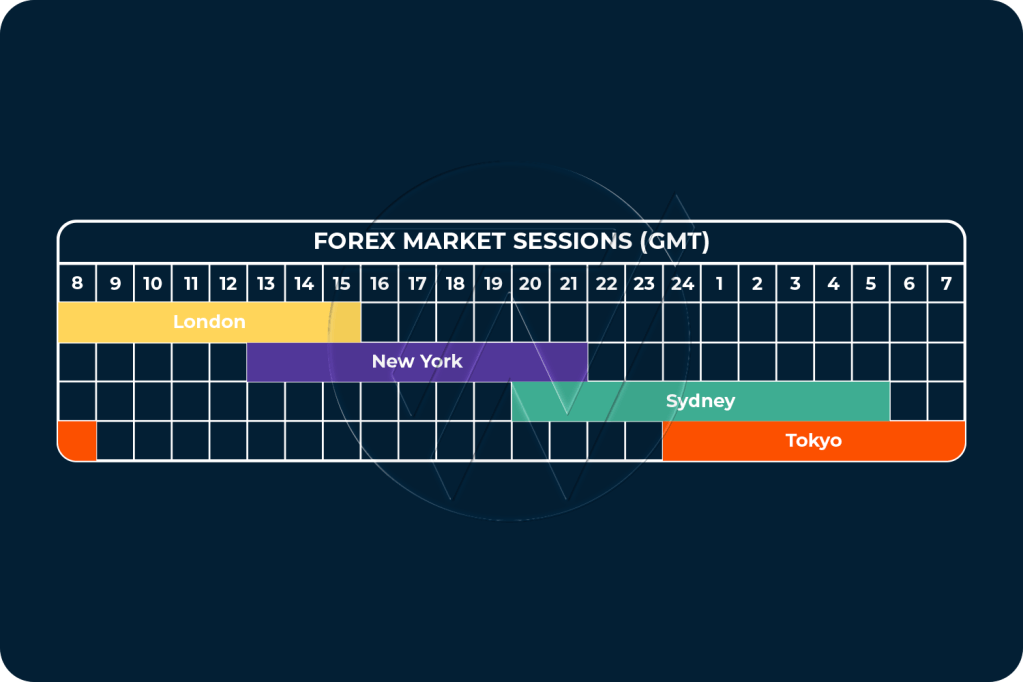
The foreign exchange market is unique for several reasons, mainly because of its size. Trading volume in the forex market is generally very large. As an example, trading in foreign exchange markets averaged $6.6 trillion per day in April 2019, according to the Bank for International Settlements, which is owned by 63 central banks and is used to work in monetary and financial responsibility. The largest trading centers are London, New York, Singapore, Hong Kong, and Tokyo.

Trading in the Foreign Exchange Market 

The market is open 24 hours a day, five days a week across major financial centers across the globe. This means that you can buy or sell currencies at any time during the day.

The foreign exchange market isn’t exactly a one-stop-shop. There are a whole variety of different avenues that an investor can go through in order to execute forex trades. You can go through different dealers or through different financial centers which use a host of electronic networks.

From a historical standpoint, foreign exchange was once a concept for governments, large companies, and hedge funds. But in today’s world, trading currencies is as easy as a click of a mouse—accessibility is not an issue, which means anyone can do it. Many investment companies offer the chance for individuals to open accounts and trade currencies however and whenever they choose.

When you’re making trades in the forex market, you’re basically buying or selling the currency of a particular country. But there’s no physical exchange of money from one hand to another. That’s contrary to what happens at a foreign exchange kiosk—think of a tourist visiting Times Square in New York City from Japan. They may be converting their (physical) yen to actual U.S. dollar cash (and may be charged a commission fee to do so) so they can spend their money while they’re traveling.

But in the world of electronic markets, traders are usually taking a position in a specific currency, with the hope that there will be some upward movement and strength in the currency that they’re buying (or weakness if they’re selling) so they can make a profit. Get the latest 1 US Dollar to Turkish Lira rate for FREE with the original Universal Currency Converter. 

Photo by RODNAE Productions on Pexels.com

Differences in the Forex Markets 

There are some fundamental differences between foreign exchange and other markets. First of all, there are fewer rules, which means investors aren’t held to as strict standards or regulations as those in the stock, futures, or options markets. That means there are no clearing houses and no central bodies that oversee the forex market.

Second, since trades don’t take place on a traditional exchange, you won’t find the same fees or commissions that you would on another market. Next, there’s no cutoff as to when you can and cannot trade. Because the market is open 24 hours a day, you can trade at any time of day. Finally, because it’s such a liquid market, you can get in and out whenever you want and you can buy as much currency as you can afford.

The Spot Market 

Spot for most currencies is two business days; the major exception is the U.S. dollar versus the Canadian dollar, which settles on the next business day. Other pairs settle in two business days. During periods that have multiple holidays, such as Easter or Christmas, spot transactions can take as long as six days to settle. The price is established on the trade date, but money is exchanged on the value date.

Per an April 2019 foreign exchange report from the BIS, the U.S. dollar is the most actively traded currency.3 The most common pairs are the USD versus the euro, Japanese yen, British pound, and Australian dollar.4 Trading pairs that do not include the dollar are referred to as crosses. The most common crosses are the euro versus the pound and yen.

The spot market can be very volatile. Movement in the short term is dominated by technical trading, which focuses on direction and speed of movement. People who focus on technicals are often referred to as chartists. Long-term currency moves are driven by fundamental factors such as relative interest rates and economic growth.

The Forward Market 

A forward trade is any trade that settles further in the future than spot. The forward price is a combination of the spot rate plus or minus forward points that represent the interest rate differential between the two currencies. Most have a maturity of less than a year in the future but longer is possible. Like with a spot, the price is set on the transaction date, but money is exchanged on the maturity date.

A forward contract is tailor-made to the requirements of the counterparties. They can be for any amount and settle on any date that is not a weekend or holiday in one of the countries.

The Futures Market 

A futures transaction is similar to a forward in that it settles later than a spot deal, but is for standard size and settlement date and is traded on a commodities market. The exchange acts as the counterparty.

Example of Foreign Exchange 

A trader thinks that the European Central Bank (ECB) will be easing its monetary policy in the coming months as the Eurozone’s economy slows. As a result, the trader bets that the euro will fall against the U.S. dollar and sells short €100,000 at an exchange rate of 1.15. Over the next several weeks the ECB signals that it may indeed ease its monetary policy. That causes the exchange rate for the euro to fall to 1.10 versus the dollar. It creates a profit for the trader of $5,000.

By shorting €100,000, the trader took in $115,000 for the short sale. When the euro fell, and the trader covered their short, it cost the trader only $110,000 to repurchase the currency. The difference between the money received on the short-sale and the buy to cover it is the profit. Had the euro strengthened versus the dollar, it would have resulted in a loss.

How Big Is the Foreign Exchange Market?

The foreign exchange market is extremely liquid and dwarfs, by a huge amount, the daily trading volume of the stock and bond markets. According to the latest triennial survey conducted by the Bank for International Settlements (BIS), trading in foreign exchange markets averaged $6.6 trillion per day in 2019.2 By contrast, the total notional value of U.S. equity markets on Dec. 31, 2021, was approximately $393 billion.5 The largest forex trading centers are London, New York, Singapore, Hong Kong, and Tokyo.

What Is Foreign Exchange Trading?

When you’re making trades in the forex market, you’re basically buying the currency of a particular country and simultaneously selling the currency of another country. But there’s no physical exchange of money from one hand to another. Traders are usually taking a position in a specific currency, with the hope that there will be some strength in the currency, relative to the other currency, that they’re buying (or weakness if they’re selling) so they can make a profit. In today’s world of electronic markets, trading currencies is as easy as a click of a mouse.

How Does Foreign Exchange Differ From Other Markets?

There are some fundamental differences between foreign exchange and other markets. There are no clearing houses and no central bodies to oversee the forex market which means investors aren’t held to the strict standards or regulations as those in the stock, futures, or options markets. Second, there aren’t the fees or commissions that exist for other markets that have traditional exchanges. There is no cutoff time for trading, aside from the weekend, so one can trade at any time of day. Finally, its liquidity lends to its ease of trading access.

NITI Aayog Organised Workshop on Inclusive Trade for Growth & Prosperity

 NITI Aayog organised a thematic workshop on “Inclusive Trade for Growth & Prosperity which highlighted the need to enhance and widen domestic outreach, ownership and implementation of New Delhi Leader’s Declaration (NDLD) outcomes in the areas of inclusive trade for growth and prosperity, and resilient supply chains. The thematic workshop was organised as a follow up to New Delhi Leader’s Declaration (NDLD) under India’s presidency G20 Summit which emphasised on adopting strong, sustainable, balanced, and inclusive trade for growth and prosperity for all.


Shri BVR Subrahmanyam, CEO NITI Aayog, in his keynote address highlighted the need for a non-discriminatory and inclusive trading system which facilitates trade as an engine of growth and prosperity. Further, he emphasized the need for India to integrate into global value chains (GVCs) and adapt swiftly to emerging trading systems.

Dr. Arvind Virmani, Hon’ble Member, NITI Aayog, addressed the first session titled ‘Mapping Global Value Chains’, and highlighted the need for strengthening key areas such as labour-intensive supply chains, institutional factors for policy framing and simplifying taxation system, and integrating payment, refund and export credit system especially for MSMEs. Dr. Virmani also recognised the need to address various anti-dumping issues and the need to foster FTAs with potential partners.

The session on ‘Mapping Global Value Chains’ focused on strengthening logistics for efficient supply chains, exchange rate management to enhance competitiveness, utilising strategic intervention from MNCs, provision of cumulative Rules of Origin, identification of potentially competitive segments, transparent & traceable GVCs, mapping startups and integrating industrial policy with trade policy to name a few.

The second session on ‘Promoting Inclusive Trade for Growth’ was chaired by Prof. Ramesh Chand, Hon’ble Member, NITI Aayog. The session highlighted the key points including – strengthening capacity and infrastructure development of LDCs; reducing non-tariff barriers; mobilizing resources for scaling up aid-for trade, particularly for MSMEs in developing and least developed countries; digital inclusion in three areas namely infrastructure, skills and data ownership; standard setting; technical advancement; transparency; and incorporating climate principles into trading systems.

The concluding session of the Workshop ‘Addressing challenges to Inclusive Trade’ was chaired by Dr. Harsha Vardhana Singh, Ex DDG, WTO. He drew attention towards enhancing traditional exports of India; increasing female labour force participation in trade; state/district level integration into the supply chain and trade (promoting Districts as Exports Hub); facilitating integration of MSMEs in GVCs; logistics and financial support, access to information for MSMEs; climate resilient agriculture with promotion of Nutri cereals and accelerating services exports; document digitalization with respect to trade; and strengthening focused skill development including reskilling & upskilling.

NITI Aayog is organising a series of thematic workshops on key agendas of New Delhi Leader’s Declaration (NDLD) to devise actionable strategies and plans that can be implemented to provide impetus to growth and prosperity of the country. Other thematic workshops are focused on topics of SGDs, Roadmap for Tourism, Digital Public Infrastructure, India and African Union Cooperation, Data for Development, Women Led Development, etc.


***

India EU Trade and Technology Council

 Union Minister for Commerce & Industry, Textiles, Consumer Affairs, Food & Public Distribution, Sh. Piyush Goyal held a bilateral meeting with the European Commissioner for Internal Trade, Mr. Thierry Breton on the sidelines of the 1st Ministerial meeting of India EU Trade and Technology Council (TTC). During the meeting, both sides underscored the importance of shared democratic values and complementary nature of both India and EU going forward. Both sides agreed that appropriate political commitment can be made to strengthen our bilateral relations taking to new heights.

Sh. Piyush Goyal informed that India has undertaken an ambitious growth trajectory for the next 25 years and has achieved many of the sustainable development goals. The target of having about 40% source of energy from renewables has already been achieved much before the committed timeline of 2030. India has set a further target of creating 500GW of renewable resources to be achieved by 2030. He noted that both our economies have different basis and this provides an opportunity for greater engagement given the current geopolitical scenario. On the suggestion of Mr. Breton for exploring engagement in the space sector, Sh. Goyal informed that India is amongst the major powers in the space sector and that both sides can have deeper engagements in the sector.

Further, the Minister informed that India has become a global leader in respect of fintech with UPI and Rupay. India has also come out with an open network for digital commerce (ONDC) which has capability to integrate all the buyers and sellers across networks. Mr Breton informed that EU is working on new Digital Services Act to which Sh. Goyal said that both sides can collaborate further given India’s status as an IT giant. He further informed that India has the world’s third largest startup ecosystem and has included B20 track in G20 meetings. This provides for greater engagements in digital space and other areas.

On the issue of carbon border adjustment mechanism (CBAM), Sh. Goyal informed that further study needs to be undertaken as to how this could impact enterprises on both sides, impact on trade and the effect on consumers due to increased price of goods and services.

6th India-Canada Ministerial Dialogue on Trade & Investment

 India and Canada held the sixth Ministerial Dialogue on Trade & Investment (MDTI) in Ottawa on May 8, 2023, co-chaired by Shri Piyush Goyal, Union Minister of Commerce and Industry, Consumer Affairs and Food, and Public Distribution and Textiles, Government of India and the Hon’ble Mary Ng, Minister of International Trade, Export Promotion, Small Business and Economic Development, Government of Canada. The Ministers emphasised the solid foundation of the trade and economic relationship between India and Canada and recognized the significant opportunity to deepen bilateral ties and economic partnership.

The Ministers touched on the important discussions taking place at the various meetings of the G-20 being held in India this year under the Indian Presidency. In this context, Minister Ng noted India’s role as a global economy of the future and congratulated the Government of India and the Indian business organizations on the successes enjoyed so far at the G-20 events in India. She expressed her support for India as G20 Chair, and the priorities pursued by India in the G20 Trade and Investment Working Group. Minister Ng indicated that she is looking forward to participating in the upcoming G-20 Trade and Investment Ministerial meeting in India scheduled to take place in August 2023.

In recognition of the critical importance of the Indo-Pacific region for Canada’s prosperity, security, and its capacity to address environmental challenges, Minister Ng noted the rolling out of Canada’s Indo-Pacific Strategy and noted India’s importance in the region.

The Ministers noted the resilience of bilateral trade in 2022 following the challenges of the COVID-19 pandemic and the disruptions caused by the war in Ukraine. Canada-India bilateral trade in goods reached nearly C$12 billion in 2022, a substantial 57% increase over the previous year. The Ministers also underlined the contribution of the services sector in furthering the bilateral relationship and noted the significant potential for increasing bilateral services trade which stood at C$8.9 billion in 2022. Ministers recognized the significant growth of two-way investments and their contribution to deepening economic and trade ties, appreciative of the improvements made by both countries to facilitate business growth and attract investment.

The Ministers noted that the trade-related strengths of India and Canada are complementary and real potential exists for trade in both goods and services to expand significantly in both traditional and emerging sectors. With that goal in mind, the Ministers called for boosting the commercial ties between the two countries through enhanced cooperation and by forging partnerships to take advantage of the complementarities in such sectors as agricultural goods, chemicals, green technologies, infrastructure, automotive, clean energy, electronics, and minerals and metals. The Ministers further asked their officials to discuss trade remedy issues of bilateral importance on a regular basis.

The Ministers emphasized the key institutional role that the MDTI can play to promote bilateral trade and investment ties and to strengthen economic cooperation between the two countries. Recognising the need for a comprehensive trade agreement to create vast new opportunities for boosting trade and investment flows between India and Canada, in 2022 the Ministers formally re-launched the India-Canada Comprehensive Economic Partnership Agreement (CEPA) negotiations. In pursuit of that goal, negotiations towards an Early Progress Trade Agreement (EPTA), as a transitional step towards the CEPA, have been underway and several rounds of discussions have already taken place. The EPTA would cover, among others, high level commitments in goods, services, investment, rules of origin, sanitary and phytosanitary measures, technical barriers to trade, and dispute settlement, and may also cover other areas where mutual agreement is reached.

The two sides also agreed to explore enhanced cooperation through measures such as coordinated investment promotion, information exchange and mutual support between the two parties in near future. This cooperation between India and Canada will be finalized by way of a Memorandum of Understanding (MoU) preferably in Fall 2023.

The Ministers noted that global supply chains remain under the threat of disruption from the fallout of the COVID-19 pandemic, as well as the effects of the ongoing war in Ukraine. In this context, they discussed the continued importance of working together to promote the international rules-based order and supply chain resiliency in critical sectors. They emphasised enhancing cooperation in sectors such as clean technologies for infrastructure development, critical minerals, electric vehicles and batteries, renewable energy/hydrogen, and AI.

Recognising the importance of critical minerals for the future economy and green economy, the Ministers agreed on the importance of government to government coordination to promote critical mineral supply chain resiliency. Ministers also agreed to explore options for business to business engagement on critical minerals between the two countries, and have committed to an annual dialogue between the appropriate points of contact at the officials level on the margins of the Prospectors and Developers Association Conference in Toronto to discuss issues of mutual interest.

Both sides discussed the potential for strengthening the cooperation in the field of science, technology and innovation in priority areas by building on the ongoing work in the Joint Science and Technology Cooperation Committee (JSTCC) and seeking enhanced collaboration in the areas of start-ups and innovation partnerships. The Ministers agreed that there is significant potential to strengthen such cooperation and to enhance collaboration between their research and business communities in support of a sustainable economic recovery and the prosperity and wellbeing of their citizens.

The Ministers recognised the value of further deepening the India-Canada commercial relationship through initiatives such as organized fora for SMEs and women entrepreneurs.

Minister Mary Ng appreciated the visit of the Indian business delegation at the sidelines of the 6th MDTI which has enhanced B2B engagement. To continue the momentum of B2B engagement, both Ministers look forward to the relaunch the Canada-India CEO Forum with renewed focus and a new set of priorities. The CEO Forum could be announced at a mutually-agreed early date. Further, Minister Mary Ng announced that she looks forward to leading a Team Canada trade mission to India in October 2023 which was welcomed by Minister Goyal.

The Ministers noted the significant movement of professionals and skilled workers, students, and business travelers between the two countries, and its immense contribution to enhancing the bilateral economic partnership and, in this context, noted the desire for enhanced discussions in the area of migration and mobility. Both sides agreed to continue to discuss ways to deepen and strengthen the bilateral innovation ecosystem through an appropriate mechanism to be determined. In addition, in accordance with Canada’s Indo-Pacific Strategy, further investments will be made to support industrial research and development partnerships.

In line with the announcement made in the National Education Policy 2020 of India for facilitating foreign universities and educational institutions, India also invited top Canadian Universities to set up their campuses in India.

The Ministers noted that India and Canada have agreed to an expanded air services agreement in 2022 which enhances people to people ties through enhanced commercial flights by carriers of both the countries.

The Ministers reaffirmed their commitment to the rules-based, transparent, non-discriminatory, open, and inclusive multilateral trading system embodied by the World Trade Organization and concurred to work together to further strengthen it.

The Ministers agreed to remain engaged to provide sustained momentum including having an annual work plan which is reported on a regular basis to build linkages and strengthen cooperation across sectors to harness the full potential of the trade and investment relationship between India and Canada.

***

Global South to build resilient supply chains, increase trade and promote tourism

 India hosted a special virtual Summit – “Voice of Global South Summit” under the theme “Unity of Voice, Unity of Purpose” on 12-13 January 2023. The Summit encompassed inaugural and concluding sessions at Head of State / Government level, and hosted by the Prime Minister, and 8 Ministerial sessions hosted by respective Cabinet Ministers of India.

Union Minister of Commerce and Industry, Consumer Affairs, Food and Public Distribution and Textiles, Shri Piyush Goyal, hosted the Commerce and Trade Ministers’ Session, today, on the theme – ‘Developing Synergies in the South: Trade, Technology, Tourism, Resources’. Hon’ble Ministers from 13 countries, namely, Benin, Bosnia and Herzegovina, Burundi, Central African Republic, Côte d’Ivoire, Democratic Republic of Congo, Gabon, Haiti, Malaysia, Myanmar, South Sudan, Timor Leste, and Zimbabwe, participated in the Session.

Delivering his opening remarks, the Minister called upon countries of Global South to forge new partnerships and mechanisms so that the voice of the Global South is reflected on the decision-making table. The Minister said the objective of the Summit is to pay attention to the issues pertaining to the Global South and those issues before key global forums like G20, the UN and other multilateral settings. Touching upon the theme of the Session, Shri Goyal said these are the key pillars for development of the countries of the South.

Highlighting the impact of COVID-19 on global trade and particularly on developing countries, he stressed upon the need to work together to build resilient supply chains. He also emphasised upon the need for de-politicization of the global supply of essential medicines. He said, “At the WTO Ministerial Conference held in Geneva in June 2022, India, South Africa, and other developing countries worked together to obtain the TRIPS waiver decision providing equitable and affordable access to vaccines. We shall redouble our efforts at the WTO to get the TRIPS waiver extended to COVID-19 diagnostics and therapeutics.”

Shri Goyal highlighted that the countries of the Global South are now contributing more than half of the world’s economic growth with South-South trade touching $5.3 trillion in 2021. In this regard, he urged for enhanced trade linkages for the mutual benefit of all our countries.

Mentioning that India is providing unilateral duty-free market access to the least-developed countries (LDCs) since 2008 through the duty-free tariff preference (DFTP) scheme of India, he said that India is also open to enter into Preferential Trade Agreements (PTAs) with interested countries in the South.

Calling Connectivity as a defining factor for success in the developing world, Shri Goyal spoke of India’s National Logistic policy (NLP) and the PM-Gati Shakti as the steps in this direction. He said countries of the Global South can work together to exchange best practices in models of connectivity that we employ in our countries.

Shri Goyal said southern countries are also helping to drive world investment. Indian companies are also investing abroad in a big way, including in the Southern countries. Financial cooperation between developing countries is also enabling developing countries to engage more in the global policy debates and shape the international agenda.

Emphasising on the use of technology for development, Shri Goyal shared India’s experience that an inclusive digital architecture can bring about socio-economic transformation. He cited examples of UPI which has transformed India’s Digital Payment Landscape, CoWIN platform which played a key role in the success of India’s COVID-19 vaccination programme.

On tourism, Shri Goyal noted developing countries are now fast emerging from the impact of covid, and the tourism sector has picked up in the last one year. He called for working together with the countries of the Global south to promote tourism. Shri Goyal noted that many countries of the South have huge deposits of these resources and emphasised that we should work closely to use such resources for the benefit of the South.

Shri Goyal concluded by stating that India is ready to share its development experience with the global South, and are eager to learn from other fellow countries and bring forth the matters of our common concern for further discussion and cooperation towards our joint sustainable and inclusive growth.

******

What is ‘Vostro’ account, initiated by RBI to facilitate smoother trade.

Vostro accounts are accounts a bank holds on behalf of another, often foreign bank, and this forms a key part of correspondent banking.’

In July 2022, the Reserve Bank of India introduced a new mechanism for international trade settlements in rupees, aiming to promote exports and facilitate imports.

Rupee Vostro Accounts keep a foreign entity’s holdings in the Indian bank, in Indian rupees. When an Indian importer wants to make a payment to a foreign trader in rupees, the amount will be credited to this Vostro account, and when an Indian exporter needs to be paid for supplying goods or services, this Vostro account will be deducted, and the amount will be credited to the exporter’s account.

“The banks are acting in a fiduciary relationship and they share a principal-agent relationship. The correspondent foreign bank is a financial intermediary in the transactions that they are involved in. The foreign bank acts as an agent that provides services such as executing wire transfers, performing foreign exchange, enabling deposits, enabling withdrawals, expediting international trade on behalf of the domestic bank. It is most used in settlement of foreign exchanges or foreign trade. No interest will be paid on the vostro account maintained, as per the directives that have been issued by the RBI in India. An overdraft facility can only be availed if it is specifically sanctioned,” explained tax experts at Clear.

“In order to promote growth of global trade with emphasis on exports from India and to support the increasing interest of global trading community in INR, it has been decided to put in place an additional arrangement for invoicing, payment, and settlement of exports / imports in INR,” the RBI had said in a statement.

What is 'Vostro' account, initiated by RBI to facilitate smoother trade.

Vostro accounts are accounts a bank holds on behalf of another, often foreign bank, and this forms a key part of correspondent banking.’

In July 2022, the Reserve Bank of India introduced a new mechanism for international trade settlements in rupees, aiming to promote exports and facilitate imports.

Rupee Vostro Accounts keep a foreign entity’s holdings in the Indian bank, in Indian rupees. When an Indian importer wants to make a payment to a foreign trader in rupees, the amount will be credited to this Vostro account, and when an Indian exporter needs to be paid for supplying goods or services, this Vostro account will be deducted, and the amount will be credited to the exporter’s account.

“The banks are acting in a fiduciary relationship and they share a principal-agent relationship. The correspondent foreign bank is a financial intermediary in the transactions that they are involved in. The foreign bank acts as an agent that provides services such as executing wire transfers, performing foreign exchange, enabling deposits, enabling withdrawals, expediting international trade on behalf of the domestic bank. It is most used in settlement of foreign exchanges or foreign trade. No interest will be paid on the vostro account maintained, as per the directives that have been issued by the RBI in India. An overdraft facility can only be availed if it is specifically sanctioned,” explained tax experts at Clear.

“In order to promote growth of global trade with emphasis on exports from India and to support the increasing interest of global trading community in INR, it has been decided to put in place an additional arrangement for invoicing, payment, and settlement of exports / imports in INR,” the RBI had said in a statement.

EFFECTS OF GLOBALIZATION ON INDIAN SOCIETY

Globalization has many meaning depending on the circumstance and on the individual who is talking about. There is one of the term of Globalization is a process of the “reconfiguration of geography, so that social space is not entirely mapped in terms of territorial distance, territorial places and territorial borders.” The simple term of globalization refers to the integration of economies of the world through uninhibited trade and financial flows, as also through mutual exchange of technology and knowledge. Ideally, it also contains free inter country movement of labor.

Indian society drastically changes after urbanization and globalization. The economic policies has direct influence in forming the basic framework of the Indian economy. The government shaped administrative policies which aim to promote business opportunities in every country, generate employment and attract global investment. In which the Indian economy witnessed an impact on its culture and introduction to other societies and their norms brought various changes to the culture of this country as well. The developed countries have been trying to pursue developing countries to liberalize the trade and allow more flexibility in business policies to provide equal opportunities to multinational firms in their domestic market. The International Monetary Fund (IMF) and World Bank helped them in this endeavor. Liberalization began to hold its foot on barren lands of developing countries like India by means of reduction in excise duties on electronic goods in a fixed time Frame.

Globalization has several aspects and can be political, cultural, social, and economic, out of Financial integration is the most common aspect. India is one of the fastest-growing economies in the world and has been predicted to reach the top three in the next decade. India’s massive economic growth is largely due to globalization which was a transformation that didn’t occur until the 1990s. Since then, the country’s gross domestic product (GDP) has grown at an exponential rate.

Indian government did the same and liberalized the trade and investment due to the pressure from the World Trade Organization. Import duties were cut down phase-wise to allow MNC’s operate in India on an equal basis. As a result globalization has brought to India new technologies, new products and also the economic opportunities.

Despite bureaucracy, lack of infrastructure and an ambiguous policy framework that adversely impact MNCs operating in India, MNCs are looking at India in a big way, and are making huge investments to set up R&D centres in the country. India has made a lead over other growing economies for IT, business processing, and R&D investments. There have been both positive and negative impacts of globalisation on social and cultural values in India.

Economic Impact:

1. Greater Number of Jobs: The advent of foreign companies led to the growth in the economy which led to creating job opportunities. However, these jobs are concentrated in the various services sectors and led to rapid growth of the service sector creating problems for individuals with low levels of education. The last decade came to be known for its jobless growth as job creation was not proportionate to the level of economic growth.

2. More choice to consumers: Globalisation has led to having more choices in the consumer products market. There is a range of choices in selecting goods unlike the times where there were just a couple of manufacturers.

3. Higher Disposable Incomes: People in cities working in high paying jobs have greater income to spend on lifestyle goods. There’s been an increase in the demand for products like meat, egg, pulses, organic food as a result. It has also led to protein inflation.

Protein food inflation contributes a large part to the food inflation in India. It is evident from the rising prices of pulses and animal proteins in the form of eggs, milk and meat. With an improvement standard of living and rising income level, the food habits of people changed. People tend toward taking more protein intensive foods. This shift in dietary pattern, along with rising population results in an overwhelming demand for protein rich food, which the supply side could not meet. Thus resulting in a demand supply mismatch thereby, causing inflation.

In India, the Green Revolution and other technological advancements have primarily focused on enhancing cereals productivity and pulses and oilseeds have traditionally been neglected.

Shrinking Agricultural Sector: Agriculture now contributes only about 15% to GDP. The international norms imposed by WTO and other multilateral organizations have reduced government support for agriculture. Greater integration of global commodities markets leads to constant fluctuation in prices.

• This has increased the vulnerability of Indian farmers. Farmers are also increasingly dependent on seeds and fertilisers sold by the MNCs.

Globalization does not have any positive impact on agriculture. On the contrary, it has few detrimental effects as the government is always willing to import food grains, sugar etc. Whenever there is a price increase of these commodities.

• Government never thinks to pay more to farmers so that they produce more food grains but resorts to imports. On the other hand, subsidies are declining so the cost of production is increasing. Even farms producing fertilizers have to suffer due to imports. There are also threats like introduction of GM crops, herbicide resistant crops etc.

Increasing Health-Care costs: Greater interconnections of the world have also led to the increasing susceptibility to diseases. Whether it is the bird-flu virus or Ebola, the diseases have taken a global turn, spreading far and wide. This results in greater investment in the healthcare system to fight such diseases.

Child Labor: Despite prohibition of child labors by the Indian constitution, over 60 to a 115 million children in India work. While most rural child workers are agricultural laborer’s, urban children work in manufacturing, processing, servicing and repairs. Globalization most directly exploits an estimated 300,000 Indian children who work in India’s hand-knotted carpet industry, which exports over $300 million worth of goods a year. The many effects of globalization of Indian society and has immense multiple aspects on Indian trade, finance, and cultural system. Globalization is associated with rapid changes and significant human societies. The movement of people from rural to urban areas has accelerated, and the growth of cities in the developing world especially is linked to substandard living for many.

Sources: https://www.clearias.com/effects-globalization-indian-society/

Growth of FINTECH SECTOR

 With Fintech adoption rate at 87% against the global average of 64%, India has emerged as one of the largest digital markets in the world. Fintech Sector has huge potential in India, supported by an enabling policy and digital infrastructure framework. 


As per industry estimate, India has over 676 million smartphone users, over 1.2 billion telecom subscribers (wireless + wireline) and 825 million internet subscribers of which approximately 39% belong to the rural areas (as on March 2021).


Further, total number of transactionsrelated to digital payments, a key enabler for expansion of digital markets, has increased from 2,071 crore in FY 2017-18 to 5,554 crore in FY 2020-21. As on date, more than 5179 crore transactions have been reported in the current financial year.


Furthermore, India now hosts the 3rd largest ecosystem for startups globally; 59,593 startups have been recognized by DPIIT across 57 unique industries, of which 1,860 startups belong to the FinTech sector. As of December 2021, India has over 17 Fintech companies, which have gained ‘Unicorn Status’ with a valuation of over USD 1 billion. 


As regards to investment inflow in the Fintech sector, no such data is maintained centrally


Government has taken several measures to increase investment inflows in Fintech sector.The Pradhan Mantri Jan DhanYojana (PMJDY) has been targeted at increasing financial inclusion in India by helping in new bank account enrollment of beneficiaries for direct benefits transfer and accessibility to a host of financial services applications. This has enabled Fintech startups to build technology products to penetrate the large consumer base in India. 


Aadhar, the unique biometric identification system, allows the public to access government digital services thereby improving the availability and transparency for social payments including financial assistance to those in need. 


Unified Payments Interface is single platform that merges various banking services and features under one umbrella and has been built as a scalable payments platform supporting digital payments in India. 


Jan DhanYojana, Aadhar and Mobile (JAM trinity) alongwith Unified Payments Interface have been instrumental in bringing in transparency, integrity and timely delivery of financial benefits and services to the public.  


Key initiatives undertaken by the Government for the Fintech ecosystem in India are listed below:


  1. Jan DhanYojana has been targeted at increasing financial inclusion in India by helping in new bank account enrollment of beneficiaries for direct benefits transfer and accessibility to a host of financial services applications. This has enabled Fintech startups to build technology products to penetrate the large consumer base in India
  2. India Stack is a societal initiative aimed at building public digital infrastructure to promote public and private digital initiatives including accelerated adoption of technology in finance
  3. Aadhar, the unique biometric identification system, has allowed Aadhar Enabled Payment System and Aadhar Payment Bridge System:
  • Aadhar Enabled Payment System allows individuals to conduct financial transactions on a Micro-ATM by furnishing their Aadhaar number and verifying it with the help of their fingerprint/iris scan
  • Aadhar Payment Bridge System allows ease in bulk and recurring Government benefits and subsidy payments, facilitating operations from Aadhaar-linked bank accounts, using the biometric authentication 
  1. Development and roll-out of authentication solutions including digital KYC, video-based customer identification process, and digital signature on documentshas created various safeguards and a hassle-free system for Fintech startups and customers to leverage the technology-enabled solutions in the sector
  • A central repository, Central KYC, has been developed for reducing the hassle of undergoing multiple KYCs for different financial institutions. This allows the KYC process of consumers to be conducted only once unless there are any changes in consumer details
  • KYC and customer on boarding costs have been reduced significantly enabling expansion of financial services to rural India and opening their accounts
  1. Unified Payments Interface has been built as a scalable payments platform supporting digital payments in India
  2. License for Payments Banks has further helped in enhancing the financial inclusion drive in the country by allowing the setting-up of payments banks and expanding the access to payments/remittance services. In a bid to promote digital payments banks in the country, RBI has announced an increase to the maximum end of day balance for payment banks to Rs. 2 lakh
  3. National Automated Clearing House System has been successfully used for making bulk transactions
  4. Bharat Bill Payment System has helped in enhancing consumer convenience to pay bills across utilities and other segments and has been expanded to include all categories of billers who raise recurring bills (except prepaid recharges) as eligible participants, voluntarily
  5. RBI has also developed a Payments Infrastructure Development Fund (PIDF) scheme to subsidise deployment of payment acceptance infrastructure in tier-3 to tier-6 centres
  6. The RBI has created a regulatory framework around Peer-to-Peer (P2P) lending by recognising P2P lenders as Non-Banking Financial Companies (NBFCs), thus providing alternative credit access to the unbanked
  7. IRDAI has undertaken various initiatives towards boosting the insurance penetration, such as permitting insurers to conduct video-based KYC, launching standardized insurance products and allowing insurers to offer rewards for low-risk behaviour
  • Government institutions such as the Health ministry and the NITI Aayog are also supporting the transformation in the insurance industry through the National Digital Health Mission (NDHM), the Digital Information Security in Healthcare Act (DISHA) and the National Health Stack
  1. A world-class Fintech hub has been developed at the International Financial Services Centre (IFSC), GIFT City in Gandhinagar, Gujarat to further strengthen the vision of making India a global Fintech hub


Government has been making continuous effort to promote strong and sustainable industrial development in the country. Some of the key measures undertaken are listed below:


  1. Startup India initiative was launched on 16th January, 2016 to build a strong eco-system for nurturing innovation and startups in the country that will drive sustainable economic growth and generate large scale employment opportunities. As on 26th November, 2021, more than 59000 startups have been recognized by DPIIT. The recognised startups have reported over 6.2 lakhs job created. To incentivize Startups, Fund of Funds for Startups Scheme (FFS), and Startup India Seed Fund Scheme (SISFS) schemes are being implemented by the DPIIT. 
  2. Government has put in place a liberal and transparent policy for attracting Foreign Direct Investment (FDI), wherein most of the sectors are open to FDI under the automatic route. Government reviews FDI policy on an ongoing basis and changes are made in the FDI policy regime, from time to time, to ensure that India remains increasingly attractive and investor-friendly investment destination. Measures taken by the Government on FDI Policy reforms have resulted in increased FDI inflows in the country, which year after year is setting up new records. India registered its highest ever annual FDI inflow of USD 81.97 billion (provisional figures) in the financial year 2020-21. These trends in India’s FDI are an endorsement of its status as a preferred investment destination amongst global investors.
  3. Government is working to reduce compliance burden in order to spur investment in India. Government is also working to reduce compliance burden on citizen and business and the aim of this exercise is to simplify, decriminalize & remove redundant laws. In order to monitor large database of compliances across Central Ministries/Departments and States/UTs, Government has launched the Regulatory Compliance Portal on 1st January, 2021 (https://eodbrcp.dpiit.gov.in/). Based on data uploaded on Regulatory Compliance Portal, more than 25,000 compliances have been reduced by Central Ministries/Departments and States/UTs combined. 
  4. The Reserve Bank of India has come up with Regulatory Sandbox (RS) with the objective to foster responsible innovation in financial services, promote efficiency and bringing benefit to consumers. The RS allows the regulator, the innovators, the financial service providers (as potential deployers of the technology) and the customers (as final users) to conduct field tests to collect evidence on the benefits and risks of new financial innovations, while carefully monitoring and containing their risks. The RS is an important tool which enables more dynamic, evidence-based regulatory environments which learn from, and evolve with, emerging technologies. 
  5. The RBI has also created a Reserve Bank Innovation Hub (RBIH). The aim of Innovation Hub is to promote innovation across the financial sector by leveraging on technology and creating an environment which would facilitate and foster innovation, in collaboration with financial sector institutions, technology industry and academic institutions.
  6. Production-Linked Incentive (PLI) Scheme for 14 key sectors (including Drones and Drone Components): Government has announced PLI scheme to enhance India’s manufacturing capabilities and exports. The schemes have been specifically designed to attract investments in sectors of core competency and cutting-edge technology; ensure efficiency and bring economies of size and scale in the manufacturing sector and make Indian manufacturers globally competitive so that they can integrate with global value chains. The PLI schemes are being implemented by the concerned Ministries/ Departments. There are targeted promotion activities being taken up by concerned Ministries/ Departments for identification of potential global and domestic investors by way of organizing investor networking events, investor roundtables, seminars and one-on-one meetings with potential investors.
  7. PM GatiShaki launched on 13th October, 2021: It is a National Master Plan for multi-modal connectivity. Gati Shakti— a digital platform — to bring 16 Ministries including Railways and Roadways together for integrated planning and coordinated implementation of infrastructure connectivity projects.
  8. Industrial Information System (IIS) – Government has developed an India Industrial Land Bank (earlier known as Industrial Information System) which provides a GIS-enabled database of industrial areas including clusters, parks, nodes, zones, etc. across the country to help investors identify their preferred location for investment. 4507 industrial parks/estates/SEZs in 5.15 lakh hectares have been mapped on India Industrial Land Bank (IILB) along with net land area availability. 
  9. Creating world class infrastructure through developing nodes across various Industrial Corridors. Industrial Corridor Programme is being developed in 04 phases (with 32 nodes) as part of the National Master Plan for providing multimodal connectivity infrastructure for creation of greenfield industrial smart cities with plug and play infrastructure in order to make India a manufacturing hub.

Japan to Counter china

Japan is stressed that US plans to pour billions of dollars into chip fabricating to battle off China might wrap up off what’s cleared out of a Japanese semiconductor industry that once overwhelmed the world.

After “three misplaced decades”, concurring to Japan’s industry service, the country’s share of worldwide chip fabricating has fallen from a half to a tenth because it spilled clients to cheaper rivals and fizzled to preserve a lead in cutting edge production.

As China and the Joined together States, driven by a exchange war and security concerns, incline up back for the fabricating of chips that run everything from smartphones to rockets, authorities stress Japan will be pressed out altogether. “We can’t just continue what we have been doing, we have to be do something on a totally distinctive level,” previous Prime Serve Shinzo Abe told individual administering LDP party individuals in May at a to begin with party assembly to examine how the nation can be a driving advanced economy.

Authorities fear that by attracting Asian chip foundry monsters such as Taiwan’s Semiconductor Fabricating Co (TSMC) to its soil, the Joined together States might entice these firms to follow.

“It’s conceivable for companies to construct in Japan and send out, but the closer you’ll be as a provider the superior, it’s simpler to trade data,” said Kazumi Nishikawa, executive of the IT industry at METI. While the move may not come instantly, “it seem happen over the long term,” he said.

The companies Nishikawa stresses almost incorporate wafer producers Shin-Etsu Chemical and Sumco photoresist provider JSR Corp and generation apparatus builders Screen Property and Tokyo Electron. “We are continuously arranged to reply to arrangement changes in each nation,” said a representative for JSR, which makes light delicate photoresist coatings utilized for etching chips in Japan, Belgium and the Joined together States. When inquired by Reuters, none of the companies said they right now arrange to move generation to the Joined together States.

To hold them, Japan needs chip foundries that will purchase their wafers, apparatus, and chemicals, and will moreover guarantee steady supplies of semiconductors for the country’s car companies and electronic gadget makers.

TSMC, which is looking to extend abroad in the midst of concern around the potential powerlessness of its Taiwan operations to terrain China’s regional aspirations, has set up a investigate and improvement middle close Tokyo. It is additionally looking into a arrange to construct a manufacture plant in Japan.

However, its greatest foreign venture by distant could be a $12 billion (roughly Rs. 89,140 crores) plant it is developing in Arizona within the Joined together States. In a offered to keep up within the innovation race, Prime Serve Yoshihide Suga’s government in June endorsed a procedure concocted by Nishikawa’s group at METI to guarantee Japan has sufficient chips to compete in advances that will drive future financial development, counting fake insights, high-speed 5G network, and self driving vehicles. One init

Trade Cycle

Trade cycle or business cycle refers to cyclical fluctuations in economic activities like employment, income, prices etc. It is a characteristic feature of capitalist system. In a trade cycle, there are alternating waves of expansion and contraction. These waves recur frequently and in similar patterns. It comprises of a period of good trade wherein the prices are high and unemployment is low and a period of bad trade wherein the prices are low and unemployment is high.
A business cycle usually consists of four phases. These phases do not have a definite time intervals or periodicity. The four phases are: recovery, prosperity, recession and depression.
Recovery is the first phase in the trade cycle. It is the revival period. Here entrepreneurs increase the level of investment. This in turn leads to increased employment and income. A increased income level means more purchasing power in the hands of people which leads to more demand for consumer goods. This leads to increase in prices for commodities and eventually leads to profit generation Business expectations improve and optimism prevails.
Prosperity is the second phase in the trade cycle. In this stage, demand, output, employment and income are at the peak levels. Increased profits lead to increased stock market values. There is expansion in economic activities. Demand and prices go up. The production level is very high and known as boom. The economy surpasses the level of full employment to reach the level of over full employment. This leads to inflation and is a sign of end of prosperity.
Recession is the third phase of the trade cycle. It starts when there is a downward descend from the peak. The level of investment declines and consequently the demand for raw materials decline as well. Liquidity preference rises in the economy. The margin of profit declines and a wave of pessimism spreads in the business. Recession can be mild or severe.
Depression is the fourth phase of the trade cycle. It’s characteristic feature is the general fall in all economic activities. Production, employment, income decline. This general decline in economic activities lead to fall in bank deposits. Credit creation declines and bank rate falls. Distribution of national income change and margin of profit declines.

https://www.yourarticlelibrary.com/trade-2/trade-cycle-4-phases-of-trade-cycle-discussed/23414


There are several factors responsible for the existence of fluctuations and trade cycles. External factors like political events, growth rate of population, migrations, discoveries, innovations etc are responsible for the cyclical fluctuations in the economy. As far as internal factors are concerned, mechanisms within the economy give rise to repetitive fluctuations. Over investment is one such factor. It is the credit availability by the banks which leads to over investment in capital goods rather than consumer goods. This eventually brings depression in the economy. Competition may be another reason for fluctuations. The profit motive causes firms to anticipate demand and subsequently do excess production. For this, firms hire more workforce and cost of production increases. This raises the prices of the commodities and decline in the demand for them. This ultimately leads to depression.

https://www.investopedia.com/terms/b/businesscycle.asp

Main Functions of a New Town

 Towns and villages differ from each other where their functions are concerned. Villages are mainly associated with production related to agricultural activities. The surplus is used by the villages in exchange for other commodities, which they themselves do not produce, from other villages or towns. The village, accessible to all others, generally becomes the focal point for exchange of commodities. This village generally develops into a town. Once a town comes up, it acquires one or more of the functions depending on a number of factors. 

1) Processing 

Processing is one of the most basic functions of a town and involves processing of agricultural products, for instance, wheat into wheat flour and oil seeds into oil. The most easily accessible village generally becomes the processing centre. This may have been the reason for the emergence of the earliest towns. 

2) Trade 

After processing, the next level of towns are associated with trade. The towns act as the centres for exchange of processed items or manufactured goods between two or more places. These markets may operate on a daily or weekly basis. Weekly markets are a common feature throughout India. These centres may also specialize in one or more items such as fruits and vegetables, cattle and food grains. 

3) Wholesale Trade in Agricultural Products 

Towns engaging in wholesale trade in agricultural products for the next high level in functional pattern of towns. Transport facility is a crucial factor in such towns. These towns generally fulfill processing functions also. Later, they may develop manufacturing and other services also. They are generally small in size and dispersed, often specializing in one commodity or the other. For instance, Hapur is a wholesale centre for food-grains, Ahmedabad and Tiruppur for cotton, Sangli and Erode for turmeric, Bangalore for silk and Guntur for tobacco. 

4) Services 

In towns, services like education, health, administration and communication, not adequately available in villages, are well developed. Of all these functions, administration is the most important one. A town may be the headquarters of a panchayat union, a state cooperative or a district. Administrative towns also have law courts, police stations, government departments associated with developmental works, etc. Chandigarh is a good example of an administrative town. 

5) Manufacturing and Mining 

Such activities give rise to large towns because manufacturing and mining activities generate large scale employment and give rise to other useful economic activities like trade, services, transport, ancillary industry etc. These activities attract large scale migrations from adjoining regions. Jamshedpur came up around the Tata Iron and Steel Works while Raniganj and Kolar are examples of towns which have come up around mining activities. 

6) Transport 

Transport is a basic necessity for all types of economic activities and for the evolution and further expansion of a town. Many of the towns, therefore, have come up around railway stations or port towns. Railway stations act as the centres for change from road to rail traffic and vice versa and for purposes of trans-shipment, collection, sorting and despatch. Jolarpettai in south India is a good example of a town which has come up at a railway junction. Similarly, the ports act as the centres for change from road or rail to sea traffic. Ports may also develop manufacturing and administrative functions. Kolkata, Mumbai, Chennai, Kandla, Paradip etc., are examples of towns which have come up around ports. 

7) Pilgrimage/Tourism 

Pilgrimage is an important activity associated with travelling and lodging. Thus, at such places transport and lodging facilities also come up. The towns adapt themselves to support a large floating population. Tirupati, Hardiwar, Varanasi, Rameshwaram are some examples of pilgrimage centres while Shimla, Darjeeling, Udagamandalam (Ooty) are some examples of tourist centres.

8) Residential 

Towns with residential functions often come up around big cities where land prices are lower, basic services are cheaper and fast transport links with the main city are available. Sonepat, Faridabad and Gaziabad are examples of such towns around Delhi. These towns have also developed manufacturing functions in recent times. Generally, a town has more than one function, but one or two of these dominate. The functions of a town depend on its location, its infrastructural facilities, and historical and economic factors. The dominant function may be identified on the basis of number of persons involved in that particular activity.