Jaisalmer, otherwise known as the golden city of India, is the crown of the rest of Rajasthan. It is a city with golden sandstone structures, almighty forts, and dunes of sand, as well as a rich culture that is not easily forgotten by the travellers who come to this city to Camp in Jaisalmer. Whether you’re a history buff, an adventurer, or a person needing a relaxing getaway, Jaisalmer Desert Camp has it all.
Be it touring the majestic Jaisalmer Fort or camping off on the sands of Jaisalmer, all is breathtaking and magical in this city. Jaisalmer is worth a visit by every traveler. The reasons are as follows.
A City of History and Culture
The history of Jaisalmer dates back to the 12th century when Rawal Jaisal founded this city. Ancient-looking havelis, temples, and a grand fort that stands over the skyline are still visible in this city, which still holds onto the old-world charm. It feels like you are in a real museum as you walk through its pedestrian streets.
Among major attractions, one can find:
Jaisalmer Fort (Sonar Quila): an entire fort that is a UNESCO World Heritage Site, constructed out of golden sandstone.
Patwon Ki Haveli: This is known because of its grand structure and carvings.
Gadisar Lake: a bright spot for sunset and photography.
Mesmerizing Sam Sand Dunes
The visit to Jaisalmer is never complete without paying a visit to the Sam dunes, only some 40 km away. This is the core of the Thar Desert and the land of golden sands, where stretching endlessly as the sunset is really magical.
Here you will live to taste:
Camel safaris: An ancient and laid-back mode of travelling through the dunes.
Jeep safari: An adrenaline trip on the sandy side.
Cultural Entertainment: Folk dance, music, and local storytelling under the stars.
A luxury desert camp in Sam Sand Dunes is an ideal combination of adventure and comfort that can provide a nice vacation to those who want to get a recharge.
Desert Camping: A Once-in-a-Lifetime Experience
One of the most remarkable things that you can do is live in a camp in Jaisalmer. It is also a good opportunity to live in nature in the premises of desert camps with contemporary conveniences.
Budget Camps
Backpacker and short-stay rates.
Simple tents with simple amenities.
Simple dinners and evening cultural programs.
Luxury Camps
Beautifully designed tents with private lavatories and much room.
Exclusive entertainment and gourmet food.
Personal safaris and astronomy tours.
Looking to get a full-on luxurious experience? Then, a luxury desert camp in Sam Sand Dunes will give the right balance of luxury and the pure nature of the desert.
Thrilling Adventure Activities
Besides camping, Jaisalmer is the gateway to adventure sports in the desert and other modes of unique exploration.
Dune Bashing: Travel in a great 4×4 in the dunes.
Quad Biking: Take a tour of the desert in an ATV.
Parasailing: Feel like a bird and see a landscape of the big desert.
Camel Polo: A weird old sport that is played in certain camps.
Rajasthani Cuisine: A Feast for the Senses
Food lovers would go to heaven in Jaisalmer. Traditional foods are delicious and diverse, from hot to sweet foods. Such dishes are popular: dal baati churma, ker sangri, gatte ki sabzi, and mirchi vada are famous. Most desert camps also provide conventional food in a cultural environment, so eating is an experience by itself.
The Warm Hospitality of Jaisalmer
Among others, the warmth and hospitality of people are one of the factors that make the travellers fall in love with Jaisalmer. Regardless of whether you stay in a city hotel or a desert camp in Jaisalmer, you will be greeted with warm and real smiles, customary greetings, and outstanding service.
Best Time to Visit Jaisalmer
Tourists should visit Jaisalmer in the best season of the year, which is from October to February, when the weather is enjoyable and one can go sightseeing and do other outdoor activities. It is also the most appropriate time of the year to camp out in the desert since nights are cool and comfortable.
Winds Desert Camp: A Perfect Stay in Jaisalmer
Winds Desert Camp is the name that one can rely on to experience the desert in style as a traveller. With a prime location near the Sam dunes, it provides tent accommodation facilities that are both economical and luxurious in the desert camp in the Sam sand dunes.
Why Winds Desert Camp?
Stunning Landscape: Near the dunes, to give magnificent sunsets and sunrises.
Comfort Hygiene: spacious and well-maintained tents with all the basic amenities.
Cultural Evenings: Catch folk music, fire, and original Rajasthani food.
Adventure Ready: Camel rides, jeep safaris, dune bashing, and others.
Planning a quick getaway or luxury holiday? No matter what the occasion is, Winds Desert Camp will make it worth the trip to the desert.
Final Thoughts
Jaisalmer is not a place to just visit; it becomes an experience. Whether it is the golden architecture and the rich history or the fact that one can have the thrill of the desert together with the magic of starlit nights, this city has something to offer to everyone.
There must be something especially touching about staying in a desert camp in Jaisalmer, where you will have an opportunity to get strongly involved in the beauty and culture of Rajasthan. And in case you want to make it even more special, a luxury desert camp in Sam Sand Dunes, like Winds Desert Camp, will help your journey to be as convenient as it can be memorable.
Pack your bag, prepare, and then the Golden City is waiting, and your desert adventure will begin.
Finding the perfect bounce house near me in Sand Springs can transform an ordinary event into an unforgettable celebration. With a wide variety of options available, from colorful inflatable castles to themed jump house rentals near me, knowing what to look for helps ensure fun and safety for all guests. Whether you’re planning a birthday, school carnival, or community gathering, choosing the right inflatable bounce house can make all the difference.
Residents in Sand Springs have access to some of the best bounce house rentals in Tulsa and the surrounding areas. Many of these options are provided by trusted vendors, including the well-known event agency BISON Party Rental. They specialize in safe, affordable, and clean inflatable house rental services for all types of events.
Classic Bounce Houses: Perfect for young children who enjoy jumping and tumbling in a safe environment.
Themed Inflatable Houses: Choose from princess castles, superhero forts, or jungle adventures to match your event’s theme.
Combo Units: These include slides or obstacles, combining fun features into one large inflatable jump house.
Why Locals Prefer BISON Party Rental
The event agency BISON Party Rental has earned a stellar reputation for providing top-tier bounce house hire services. Locals in Sand Springs consistently choose them for their wide inventory, reliable service, and safety standards. Their inflatable rentals near me include a variety of options, from traditional blow up bounce house designs to innovative inflatable playgrounds.
Tips for Choosing a Bounce House
If you’re searching for bounce house rentals near me, there are several important factors to consider. Not all inflatable house options are created equal, and ensuring that your chosen rental suits your space, audience, and budget is essential.
Check dimensions and ensure it fits your event area.
Verify age and weight limits to match your guest list.
Ask about setup and takedown procedures.
Ensure the company is licensed and insured.
Read reviews and compare rental terms from different providers.
Final Thoughts
Whether you’re hosting a backyard birthday or a large festival, a bounce house adds excitement and energy to any gathering. Sand Springs residents are fortunate to have access to high-quality bounce house rentals in Tulsa and surrounding communities. Companies like BISON Party Rental make it easier than ever to plan a fun and memorable event with the perfect inflatable house rental. From classic inflatable bounce house styles to thrilling inflatable jump house combos, the options are vast and customizable. With just a little planning, your event will be a bouncing success!
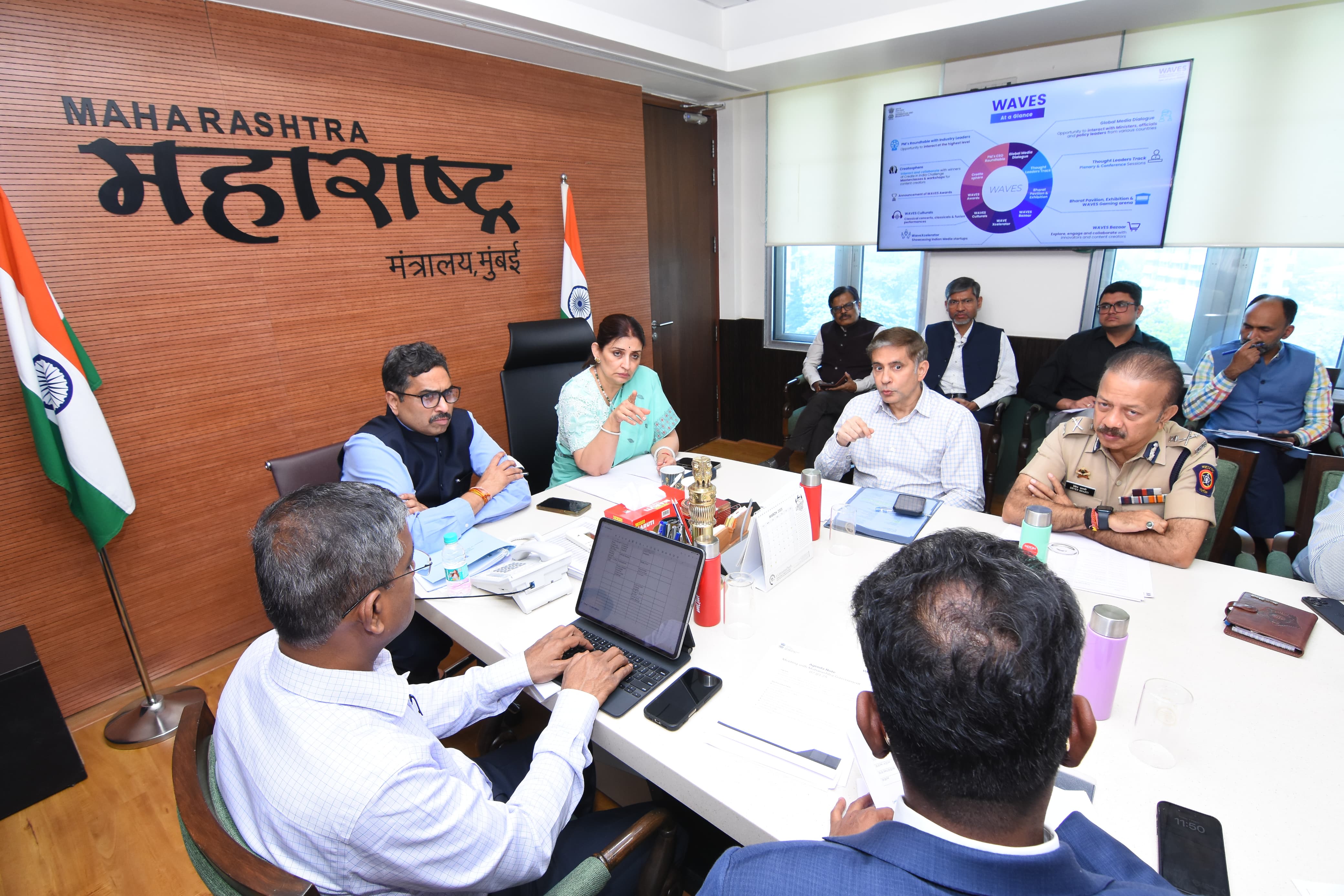
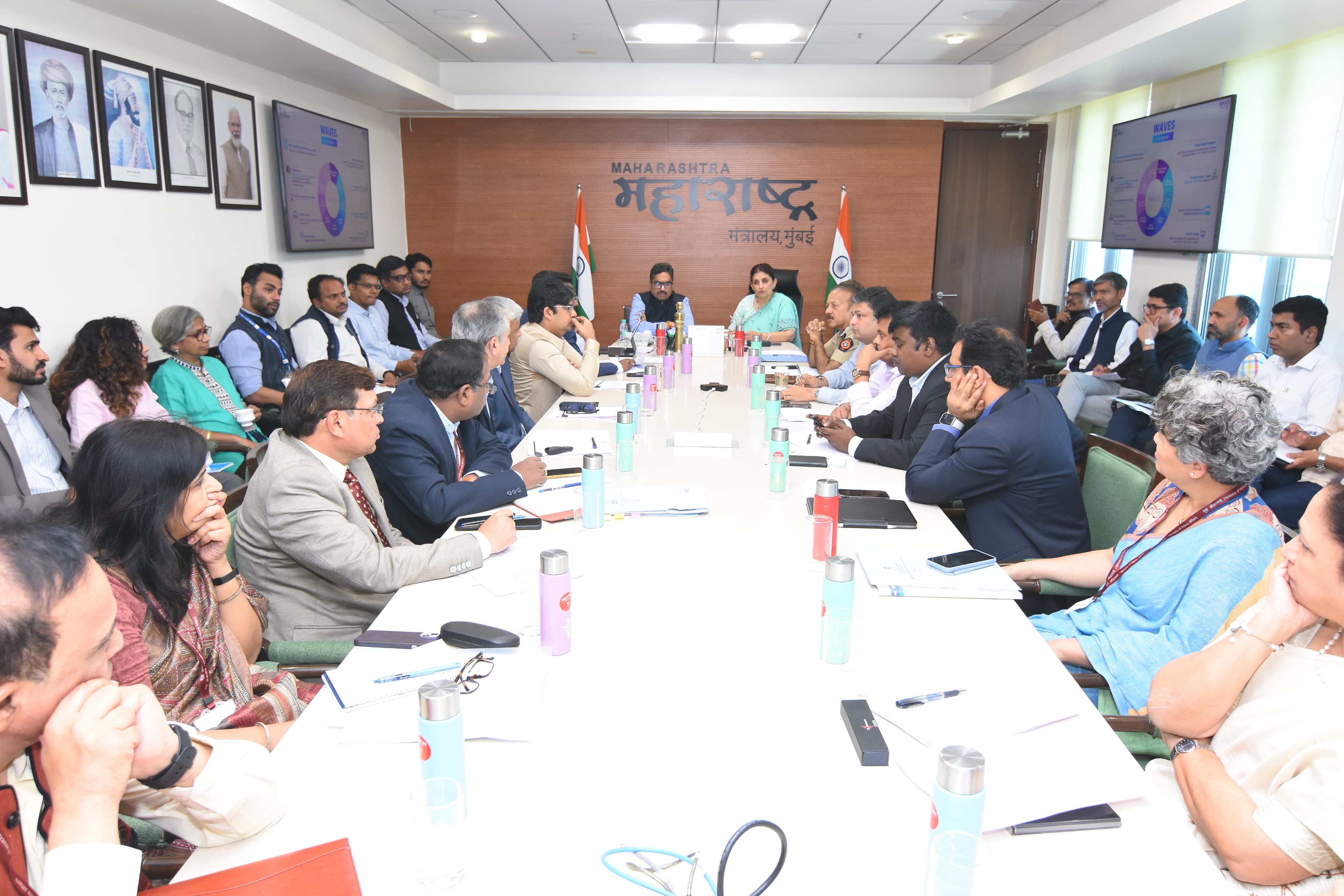
Mumbai is set to host WAVES 2025 Summit, an event poised to position India at the forefront of the global creator economy. Chief Secretary, Government of Maharashtra, Ms. Sujata Saunik and Secretary, Ministry of Information and Broadcasting, Government of India, Shri Sanjay Jaju co-chaired a high-level meeting today, 07th March 2025 with officials from various Government departments for the successful execution of WAVES 2025. The Government of Maharashtra has assured its full support, ensuring world-class infrastructure, hospitality, and logistics to make the event a landmark occasion.
Chief Secretary, Government of Maharashtra, Ms Sujata Saunik directed that a State Level Committee be formed for this global Summit. She also stated that each department of the administration will work in coordination seamlessly for the success of the Summit.
Speaking on the occasion, Secretary, Ministry of Information and Broadcasting, said, “This Summit is a global platform for the Media and Entertainment sector. The main aim of this Summit is to develop the Indian media and entertainment sector by connecting it to its global media counterparts.”
The meeting covered key points such as forming a joint coordination committee and arranging logistics and outdoor publicity. The meeting also formulated a comprehensive outreach plan, with the Ministry of Information and Broadcasting leading the effort to invite global leaders, individuals of eminence and industry representatives. Officials gave special attention to ensuring security, emergency services, and seamless connectivity for all delegates attending the event. A dedicated senior nodal officer will oversee coordination efforts to guarantee smooth execution.
Senior officials from both the Government of India and Government of Maharashtra attended the meeting to establish seamless coordination across logistics, hospitality, cultural activities, and administrative support, ensuring the highest standards of event management and global participation.
Principal Director General, PIB Shri. Dhirendra Ojha, Director General, Central Bureau of Communication, Shri. Yogesh Baweja, Joint Secretary, Ministry of Information and Broadcasting, Sanjeev Shankar, Joint Secretary, Ministry of Information and Broadcasting, C. Senthil Rajan, Joint Secretary, Ministry of Information and Broadcasting, Shri Ajay Nagbhushan and nodal officers from Press Information Bureau, National Film Development Corporation of India, All India Radio, Doordarshan, and the WAVES Council attended the meeting. Officials from the Government of Maharashtra included the Municipal Commissioner of Brihan Mumbai Municipal Corporation, the Additional Chief Secretary of Cultural Affairs, the Principal Secretary of Tourism, and the Chief Executive Officer of MIDC, along with senior officials from various key departments.
Following the meeting, Secretary, Ministry of Information and Broadcasting and senior officials conducted a detailed recce of the logistical arrangements to assess readiness for WAVES 2025.
Keep an eye on this ground-breaking summit, where industry titans will converge to shape the future of the digital and creative economies. https://wavesindia.org/
* * *
PIB TEAM WAVES 2025 | Nikita Joshi/ Dhanalakshmi/ Dharshana |
The first World Audio Visual & Entertainment Summit (WAVES), a milestone event for the Media & Entertainment (M&E) sector, will be hosted by the Government of India in Mumbai, Maharashtra, from May 1 to 4, 2025. Whether you’re an industry professional, investor, creator, or innovator, the Summit offers the ultimate global platform to connect, collaborate, innovate and contribute to the M&E landscape. WAVES is set to magnify India’s creative strength, amplifying its position as a hub for content creation, intellectual property, and technological innovation. Industries and sectors in focus include Broadcasting, Print Media, Television, Radio, Films, Animation, Visual Effects, Gaming, Comics, Sound and Music, Advertising, Digital Media, Social Media Platforms, Generative AI, Augmented Reality (AR), Virtual Reality (VR), and Extended Reality (XR).
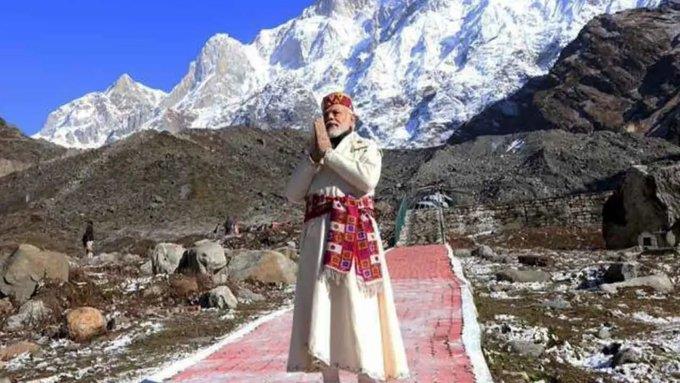
The Prime Minister Shri Narendra Modi participated in the Winter Tourism Program after flagging off a trek and bike rally at Harsil, Uttarakhand. He also performed pooja and darshan at the winter seat of Maa Ganga in Mukhwa. Addressing the gathering, he expressed his deep sorrow over the tragic incident in Mana village and extended his condolences to the families of those who lost their lives in the accident. He said the people of the nation stand in solidarity during this time of crisis, which has provided immense strength to the affected families.
“The land of Uttarakhand, known as Devbhoomi, is imbued with spiritual energy and blessed by the Char Dham and countless other sacred sites”, said the Prime Minister, highlighting that this region serves as the winter abode of the life-giving Maa Ganga. He expressed his gratitude for the opportunity to visit again and meet the people and their families, calling it a blessing. He emphasized that it is by Maa Ganga’s grace that he had the privilege of serving Uttarakhand for decades. “Maa Ganga’s blessings guided me to Kashi, where I now serve as a Member of Parliament”, said Shri Modi, recalling his statement in Kashi that Maa Ganga had called him and shared his recent realization that Maa Ganga has now embraced him as her own. The Prime Minister described this as Maa Ganga’s affection and love for her child, which brought him to her maternal home in Mukhwa village and had the honor of performing darshan and puja at Mukhimath-Mukhwa. Remarking on his visit to the land of Harsil, expressing his fond memories of the affection shown by the local women, whom he referred to as “Didi-Bhuliyas”, Shri Modi highlighted their thoughtful gestures of sending him Harsil’s rajma and other local products. He expressed his gratitude for their warmth, connection, and gifts.
The Prime Minister recalled his visit to Baba Kedarnath, where he had declared that, “this decade would be the decade of Uttarakhand”. He remarked that the strength behind those words came from Baba Kedarnath himself and highlighted that, with Baba Kedarnath’s blessings, this vision is gradually becoming a reality. Emphasizing that new avenues for Uttarakhand’s progress are opening up, fulfilling the aspirations that led to the state’s formation, Shri Modi noted that the commitments made for Uttarakhand’s development are being realized through continuous achievements and new milestones. He added, “winter tourism is a significant step in this direction, aiding in harnessing Uttarakhand’s economic potential” and congratulated the Uttarakhand government for this innovative effort and extended his best wishes for the state’s progress.
“Diversifying and making the tourism sector a year-round activity is important and necessary for Uttarakhand”, said the Prime Minister, remarking that there should be no “off-season” in Uttarakhand, and tourism should thrive in every season. He mentioned that currently, tourism in the hills is seasonal, with a significant influx of tourists during March, April, May, and June. However, he added that the number of tourists drops drastically afterward, leaving most hotels, resorts, and homestays vacant during winters. He pointed out that this imbalance leads to economic stagnation for a large part of the year in Uttarakhand and also poses challenges to the environment.
“Visiting Uttarakhand during winters offers a true glimpse of the divine aura of Devbhoomi”, said Shri Modi, highlighting the thrill of activities like trekking and skiing that winter tourism in the region provides. He stressed that winters hold special significance for religious journeys in Uttarakhand, with many sacred sites hosting unique rituals during this time. He pointed out the religious ceremonies in Mukhwa village as an integral part of the region’s ancient and remarkable traditions. The Prime Minister noted that the Uttarakhand government’s vision for year-round tourism will provide people with opportunities to connect with divine experiences. He underlined that this initiative will create year-round employment opportunities, significantly benefiting the local population and the youth of Uttarakhand.
“Our governments at Center and state are working together to make Uttarakhand a developed state”, said the Prime Minister, remarking on the significant progress achieved in the past decade, including the Char Dham All-Weather Road, modern expressways, and the expansion of railways, air, and helicopter services in the state. He also mentioned that the Union Cabinet had recently approved the Kedarnath Ropeway Project and the Hemkund Ropeway Project. He noted that the Kedarnath Ropeway will reduce the travel time from 8-9 hours to approximately 30 minutes, making the journey more accessible, especially for the elderly and children. Shri Modi emphasized that thousands of crores of rupees will be invested in these ropeway projects. He extended his congratulations to Uttarakhand and the entire nation for these transformative initiatives.
Underlining the focus on developing eco-log huts, convention centers, and helipad infrastructure in the hills, Shri Modi said, “tourism infrastructure is being newly developed in locations such as Timmer-Sain Mahadev, Mana village, and Jadung village”. He added that the Government has worked to ensure the erstwhile emptied villages of Mana and Jadung in 1962, have been restored. He noted that as a result, the number of tourists visiting Uttarakhand has increased significantly over the past decade. He shared that before 2014, an average of 18 lakh pilgrims visited the Char Dham Yatra annually, which has now risen to approximately 50 lakh pilgrims each year. The Prime Minister announced that this year’s budget includes provisions to develop 50 tourist destinations, granting hotels at these locations the status of infrastructure. He emphasized that this initiative will enhance facilities for tourists and promote local employment opportunities.
Emphasising the Government’s efforts to ensure that border areas of Uttarakhand also benefit from tourism, the Prime Minister said, “villages once referred to as the “last villages” are now being called the “first villages” of the country”. He highlighted the launch of the Vibrant Village Program for their development, under which 10 villages from this region have been included. He noted that efforts have begun to resettle Nelong and Jadung villages and mentioned the flagging off of a bike rally to Jadung from the event earlier. He also declared that those building homestays will be provided benefits under the Mudra Yojana. Shri Modi appreciated the Uttarakhand government’s focus on promoting homestays in the state. He highlighted that villages deprived of infrastructure for decades are now witnessing the opening of new homestays, which is boosting tourism and increasing the income of local residents.
Making a special appeal to people from all corners of the country, particularly the youth, Shri Modi highlighted that while much of the country experiences fog during winters, the hills offer the joy of basking in sunlight, which can be turned into a unique event. He suggested the concept of “Gham Tapo Tourism” in Garhwali, encouraging people from across the country to visit Uttarakhand during winters. He specifically urged the corporate world to participate in winter tourism by organizing meetings, conferences, and exhibitions in the region, emphasizing the vast potential of the MICE sector in Devbhoomi Uttarakhand. The Prime Minister remarked that Uttarakhand provides opportunities for visitors to recharge and re-energize through yoga and Ayurveda. He also appealed to universities, private schools, and colleges to consider Uttarakhand for students’ winter trips.
Pointing out the significant contribution of the wedding economy, worth thousands of crores, the Prime Minister reiterated his appeal to the people of the country to “Wed in India” and encouraged prioritizing Uttarakhand as a destination for winter weddings. He also expressed his expectations from the Indian film industry, noting that Uttarakhand has been awarded the title of the “Most Film-Friendly State.” He emphasized the rapid development of modern facilities in the region, making Uttarakhand an ideal destination for film shootings during winters.
Shri Modi underscored the popularity of winter tourism in several countries and emphasized that Uttarakhand can learn from their experiences to promote its own winter tourism. He urged all stakeholders in Uttarakhand’s tourism sector, including hotels and resorts, to study these countries’ models. He called on the Uttarakhand government to actively implement actionable points derived from such studies. He stressed the need to promote local traditions, music, dance, and cuisine. The Prime Minister remarked that Uttarakhand’s hot springs can be developed into wellness spas, and serene, snow-covered areas can host winter yoga retreats, urging the Yoga gurus to arrange a yoga camp in Uttarakhand annually. He also suggested organizing special wildlife safaris during the winter season to establish a unique identity for Uttarakhand. He emphasized adopting a 360-degree approach and working at every level to achieve these goals.
The Prime Minister emphasized that alongside developing facilities, spreading awareness is equally important and appealed to the country’s young content creators to play a vital role in promoting Uttarakhand’s winter tourism initiative. Mentioning the significant contribution of content creators in boosting the tourism sector, Shri Modi urged them to explore new destinations in Uttarakhand and share their experiences with the public. He suggested the State Government to organize a competition of making short films by content creators to promote tourism in Uttarakhand. He concluded by expressing confidence that the sector will witness rapid growth in the coming years and congratulated Uttarakhand for its year-round tourism campaign.
The Chief Minister of Uttarakhand, Shri Pushkar Singh Dhami, Union Minister of State for Road Transport and Highways, Shri Ajay Tamta were present among other dignitaries at the event.
Background
The Uttarakhand government has initiated a Winter Tourism programme this year. Thousands of devotees have already visited the winter seats of Gangotri, Yamunotri, Kedarnath, and Badrinath. The programme is aimed to promote religious tourism and boost the local economy, homestays, tourism businesses, among others.
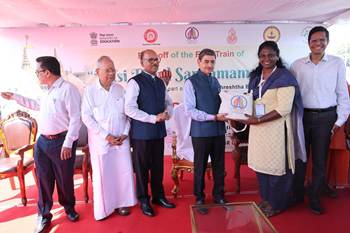
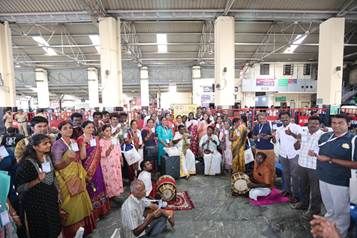
The Governor of Tamil Nadu, Thiru R.N. Ravi, flagged off the train carrying the first batch of Kashi Tamil Sangamam 3.0 delegates—including students, teachers, and writers—today at Dr. MGR Central Railway Station, Chennai. This 10-day-long event is scheduled to take place from 15th to 24th February 2025. Director of the Indian Institute of Technology Madras, Prof. V. Kamakoti and other dignitaries were also present at the event.
The Union Minister for Education, Shri Dharmendra Pradhan, in a social media message, welcomed everyone to embrace the spirit of ‘Ek Bharat, Shreshtha Bharat’ at Kashi Tamil Sangamam 3.0. He emphasized that the event serves to cherish, celebrate, and strengthen the deep-rooted bonds between Kashi and Tamil Nadu—two enduring centers of culture, civilization, and knowledge.
The central theme of this edition of KTS will be Maharishi Agasthyar and Mahakumbh and Shri Ayodhya Dham will be the backdrop. The event will offer a divine experience and bring Tamil Nadu and Kashi—the two timeless centres of our civilisation and culture, more closer.
An exhibition on the different facets of Sage Agasthyar and his contributions to world of Health, Philosophy, Science, Linguistics, Literature, Polity, Culture, Art, particularly to Tamil and Tamil Nadu, etc. and seminars, workshops, book release, etc. will be organised at Kashi during KTS 3.0.
This year, the government has decided to bring around 1000 delegates from Tamil Nadu under five categories/groups: (i) Students, Teachers, and Writers; (ii) Farmers and Artisans (Vishwakarma Categories); (iii) Professionals and Small Entrepreneurs; (iv) Women (SHG, Mudra Loan beneficiaries, DBHPS Pracharaks); and (v) Start-up, Innovation, Edu-Tech, Research. This year, an additional group of around 200 students of Tamil origin studying in various CUs will be a part of this event to enliven the bond between Kashi and Tamil Nadu. Participation of youth in all categories has been encouraged this year. The duration of the tour for the delegates will be 8 days (4 for travel, 4 at site). The first group left Tamil Nadu today and the last group will return to Tamil Nadu on 26th February 2025.
The objective of the Kashi Tamil Sangamam is to rediscover, reaffirm, and celebrate the age-old links between Tamil Nadu and Kashi—two of the country’s most important and ancient seats of learning.
Kashi Tamil Sangamam is being organized by the Ministry of Education, Govt. of India in collaboration with other ministries including Culture, Textiles, Railways, Tourism, Food Processing, I&B etc. and the Govt. of UP. The programme aims to provide an opportunity for scholars, students, philosophers, traders, artisans, artists and people from other walks of life from the two regions to come together, share their knowledge, culture and best practices and learn from each other’s experience. It also aims to make the youth aware and experience cultural oneness. The endeavour is in sync with NEP 2020’s emphasis on integrating the wealth of Indian Knowledge Systems with modern systems of knowledge. IIT Madras and BHU are the two implementing agencies for the programme.
The Government has so far celebrated the Kashi Tamil Sangamam on two occasions earlier; i.e., for one month in 2022 and for a fortnight in 2023 and around 4000 delegates from Tamil Nadu have been a part of this event. In both the editions of KTS, there were overwhelming responses from people of Tamil Nadu and Uttar Pradesh. IIT Madras will be the sender institution and BHU the receiving institution, as in the earlier editions.
Union Minister for Education, Shri Dharmendra Pradhan, launched the registration portal for KTS 3.0 on 15th January 2025. The portal for registration was open till 1st February 2025.
KTS 2.0 was inaugurated by Prime Minister Shri Narendra Modi at Varanasi on 17th December, 2023, with the first-ever real-time, app-based translation of a part of the Prime Minister’s speech in Tamil for the benefit of visiting Tamil delegates.
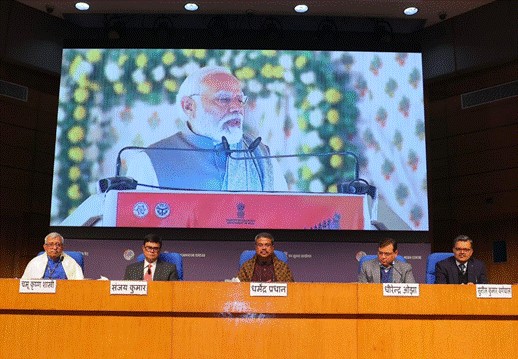
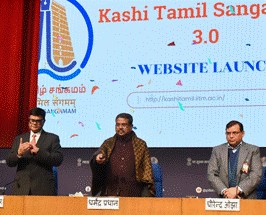
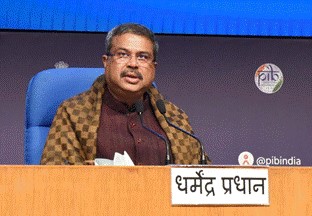
Union Minister for Education, Shri Dharmendra Pradhan, launched the registration portal for the 3rd edition of Kashi Tamil Sangamam (KTS). The Minister, while addressing a press conference, announced that KTS 3.0 will commence on 15th February 2025 in Varanasi, Uttar Pradesh. This 10-day-long event will conclude on 24th February 2025, he added. The portal, kashitamil.iitm.ac.in – hosted by IIT Madras, will accept registrations till 1st February 2025, he added.
Secretary, Ministry of Education, Shri Sanjay Kumar; Principal DG, PIB, Shri Dhirendra Ojha; Additional Secretary, Higher Education, Ministry of Education, Shri Sunil Kumar Barnwal; Chairman, Bhartiya Bhasha Samiti, Shri Chamu Krishna Shastry, and other officials also attended the Press Conference.
Shri Pradhan, while interacting with the media, said that the inseparable bonds between Tamil Nadu and Kashi are set to come alive through Kashi Tamil Sangamam 3.0.
The Minister highlighted that Kashi Tamil Sangamam, a brainchild of Prime Minister, Shri Narendra Modi, is an inspirational initiative to celebrate the timeless bonds between Tamil Nadu and Kashi, strengthen the civilisational links and further the spirit of Ek Bharat Shrestha Bharat.
Shri Pradhan said that Kashi Tamil Sangamam will be a celebration of one of India’s most revered sages—Maharishi Agasthyar. Maharishi Agasthyar’s legacy is deeply woven into India’s cultural and spiritual fabric, Shri Pradhan highlighted. His intellectual brilliance is the bedrock of Tamil language and literature as well as our shared values, knowledge traditions and heritage, he added.
Shri Pradhan said, that this year, Kashi Tamil Sangamam holds a special significance as it is coinciding with the Mahakumbh, and it is also the 1st Sangamam after the ‘Pran Pratishtha’ of Shri Ram Lalla in Ayodhya.
With Maharishi Agasthyar as the central theme and Mahakumbh and Shri Ayodhya Dham as the backdrop, Kashi Tamil Sangamam 3.0 will offer a divine experience and bring Tamil Nadu and Kashi—the two timeless centres of our civilisation and culture, more closer than ever, he said.
Shri Pradhan encouraged people of Tamil Nadu to participate in Kashi Tamil Sangamam 3.0 wholeheartedly.
An exhibition on the different facets of Sage Agasthyar and his contributions to world of Health, Philosophy, Science, Linguistics, Literature, Polity, Culture, Art, particularly to Tamil and Tamil Nadu, etc. and Seminars, workshops, book release, etc. will be organised at Kashi during KTS 3.0. Competitions and other awareness programs in Tamil Nadu prior to KTS 3.0 will be organised in a befitting manner in major cities of India and abroad where there is considerable Tamil diaspora.
This year, the government has decided to bring around 1000 delegates from Tamil Nadu under five categories/groups: (i) Students, Teachers, and Writers; (ii) Farmers and Artisans (Vishwakarma Categories); (iii) Professionals and Small Entrepreneurs; (iv) Women (SHG, Mudra Loan beneficiaries, DBHPS Pracharaks); and (v) Start-up, Innovation, Edu-Tech, Research. This year, an additional group of around 200 students of Tamil origin studying in various CUs will be a part of this event to enliven the bond between Kashi and Tamil Nadu. Participation of youth in all categories will be encouraged this year.
The duration of the tour will be 8 Days (4 for travel, 4 at site). The first group will leave Tamil Nadu on 13th February 2025 and the last group will return to Tamil Nadu on 26th February 2025.
The objective of the Kashi Tamil Sangamam is to rediscover, reaffirm, and celebrate the age-old links between Tamil Nadu and Kashi—two of the country’s most important and ancient seats of learning.
Kashi Tamil Sangamam is being organized by the Ministry of Education, Govt. of India in collaboration with other ministries including Culture, Textiles, Railways, Tourism, Food Processing, I&B etc. and the Govt. of UP. The programme aims to provide an opportunity for scholars, students, philosophers, traders, artisans, artists and people from other walks of life from the two regions to come together, share their knowledge, culture and best practices and learn from each other’s experience. It also aims to make the youth aware and experience cultural oneness. The endeavour is in sync with NEP 2020’s emphasis on integrating the wealth of Indian Knowledge Systems with modern systems of knowledge. IIT Madras and BHU are the two implementing agencies for the programme.
The Government has so far celebrated the Kashi Tamil Sangamam on two occasions earlier; i.e., for one month in 2022 and for a fortnight in 2023 and around 4000 delegates from Tamil Nadu have been a part of this event. In both the editions of KTS, there were overwhelming responses from people of Tamil Nadu and Uttar Pradesh. IIT Madras will be the sender institution and BHU the receiving institution, as in the earlier editions. IIT Madras will call for applications for participation through a portal, which was launched today.
KTS 2.0 was inaugurated by Prime Minister Shri Narendra Modi at Varanasi on 17th December, 2023, with the first-ever real-time, app-based translation of a part of the Prime Minister’s speech in Tamil for the benefit of visiting Tamil delegates.
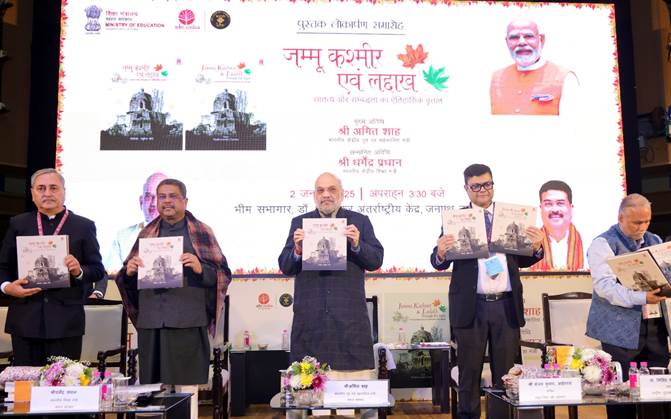
Union Minister for Home Affairs and Cooperation, Shri Amit Shah, will preside over a book release function on 2nd January 2025 in New Delhi as the Chief Guest. Union Minister for Education, Shri Dharmendra Pradhan will be the Guest of Honour. Eminent authors, academicians, officials of the Ministry and other dignitaries will also be present at the event
The book, titled ‘Jammu Kashmir and Ladakh: Through the Ages’ seeks to present the story of Jammu Kashmir and Ladakh. The title attempts to document the story of Jammu Kashmir and Ladakh from a perspective and format that enables an overview for both the subject specialist and those less conversant. It is presented in seven sections that cover over three thousand years of the region’s history. Each illustration selected for inclusion has been done with care, being representative of an age, its importance and contribution to the larger historical canvas of Indian history. Published in Hindi and English, this book is the result of collaborative efforts of the National Book Trust, India, and the Indian Council of Historical Research.
Union Minister for Education, Shri Dharmendra Pradhan, launched the registration portal for the 3rd edition of Kashi Tamil Sangamam (KTS). The Minister, while addressing a press conference, announced that KTS 3.0 will commence on 15th February 2025 in Varanasi, Uttar Pradesh. This 10-day-long event will conclude on 24th February 2025, he added. The portal, kashitamil.iitm.ac.in – hosted by IIT Madras, will accept registrations till 1st February 2025, he added.
Secretary, Ministry of Education, Shri Sanjay Kumar; Principal DG, PIB, Shri Dhirendra Ojha; Additional Secretary, Higher Education, Ministry of Education, Shri Sunil Kumar Barnwal; Chairman, Bhartiya Bhasha Samiti, Shri Chamu Krishna Shastry, and other officials also attended the Press Conference.
Shri Pradhan, while interacting with the media, said that the inseparable bonds between Tamil Nadu and Kashi are set to come alive through Kashi Tamil Sangamam 3.0.
The Minister highlighted that Kashi Tamil Sangamam, a brainchild of Prime Minister, Shri Narendra Modi, is an inspirational initiative to celebrate the timeless bonds between Tamil Nadu and Kashi, strengthen the civilisational links and further the spirit of Ek Bharat Shrestha Bharat.
Shri Pradhan said that Kashi Tamil Sangamam will be a celebration of one of India’s most revered sages—Maharishi Agasthyar. Maharishi Agasthyar’s legacy is deeply woven into India’s cultural and spiritual fabric, Shri Pradhan highlighted. His intellectual brilliance is the bedrock of Tamil language and literature as well as our shared values, knowledge traditions and heritage, he added.
Shri Pradhan said, that this year, Kashi Tamil Sangamam holds a special significance as it is coinciding with the Mahakumbh, and it is also the 1st Sangamam after the ‘Pran Pratishtha’ of Shri Ram Lalla in Ayodhya.
With Maharishi Agasthyar as the central theme and Mahakumbh and Shri Ayodhya Dham as the backdrop, Kashi Tamil Sangamam 3.0 will offer a divine experience and bring Tamil Nadu and Kashi—the two timeless centres of our civilisation and culture, more closer than ever, he said.
Shri Pradhan encouraged people of Tamil Nadu to participate in Kashi Tamil Sangamam 3.0 wholeheartedly.
An exhibition on the different facets of Sage Agasthyar and his contributions to world of Health, Philosophy, Science, Linguistics, Literature, Polity, Culture, Art, particularly to Tamil and Tamil Nadu, etc. and Seminars, workshops, book release, etc. will be organised at Kashi during KTS 3.0. Competitions and other awareness programs in Tamil Nadu prior to KTS 3.0 will be organised in a befitting manner in major cities of India and abroad where there is considerable Tamil diaspora.
This year, the government has decided to bring around 1000 delegates from Tamil Nadu under five categories/groups: (i) Students, Teachers, and Writers; (ii) Farmers and Artisans (Vishwakarma Categories); (iii) Professionals and Small Entrepreneurs; (iv) Women (SHG, Mudra Loan beneficiaries, DBHPS Pracharaks); and (v) Start-up, Innovation, Edu-Tech, Research. This year, an additional group of around 200 students of Tamil origin studying in various CUs will be a part of this event to enliven the bond between Kashi and Tamil Nadu. Participation of youth in all categories will be encouraged this year.
The duration of the tour will be 8 Days (4 for travel, 4 at site). The first group will leave Tamil Nadu on 13th February 2025 and the last group will return to Tamil Nadu on 26th February 2025.
The objective of the Kashi Tamil Sangamam is to rediscover, reaffirm, and celebrate the age-old links between Tamil Nadu and Kashi—two of the country’s most important and ancient seats of learning.
Kashi Tamil Sangamam is being organized by the Ministry of Education, Govt. of India in collaboration with other ministries including Culture, Textiles, Railways, Tourism, Food Processing, I&B etc. and the Govt. of UP. The programme aims to provide an opportunity for scholars, students, philosophers, traders, artisans, artists and people from other walks of life from the two regions to come together, share their knowledge, culture and best practices and learn from each other’s experience. It also aims to make the youth aware and experience cultural oneness. The endeavour is in sync with NEP 2020’s emphasis on integrating the wealth of Indian Knowledge Systems with modern systems of knowledge. IIT Madras and BHU are the two implementing agencies for the programme.
The Government has so far celebrated the Kashi Tamil Sangamam on two occasions earlier; i.e., for one month in 2022 and for a fortnight in 2023 and around 4000 delegates from Tamil Nadu have been a part of this event. In both the editions of KTS, there were overwhelming responses from people of Tamil Nadu and Uttar Pradesh. IIT Madras will be the sender institution and BHU the receiving institution, as in the earlier editions. IIT Madras will call for applications for participation through a portal, which was launched today.
KTS 2.0 was inaugurated by Prime Minister Shri Narendra Modi at Varanasi on 17th December, 2023, with the first-ever real-time, app-based translation of a part of the Prime Minister’s speech in Tamil for the benefit of visiting Tamil delegates.
UNESCO World Heritage is a program that was created by the United Nations Educational, Scientific and Cultural Organization (UNESCO) in 1972. Its aim is to identify and preserve important cultural and natural sites around the world that are considered to be of outstanding universal value.
The program is based on the belief that these sites represent the collective heritage of all people, and that they should be protected and preserved for future generations. UNESCO World Heritage sites can include anything from ancient ruins and historical buildings to natural wonders like mountains and forests.
Currently, there are over 1,100 sites that have been designated as UNESCO World Heritage sites in over 167 countries. These sites are selected based on their cultural or natural significance, and must meet a set of strict criteria to be considered for inclusion on the list.
The designation of a site as a UNESCO World Heritage site brings international recognition and protection to that site, as well as increased tourism and economic benefits to the surrounding area. However, it also comes with a responsibility to ensure that the site is properly maintained and preserved for future generations.
India has a rich cultural and natural heritage, and it is home to a total of 38 UNESCO World Heritage sites. These sites are recognized for their outstanding universal value and are protected and preserved by the Indian government. Here is a list of some of the most famous UNESCO World Heritage sites in India:
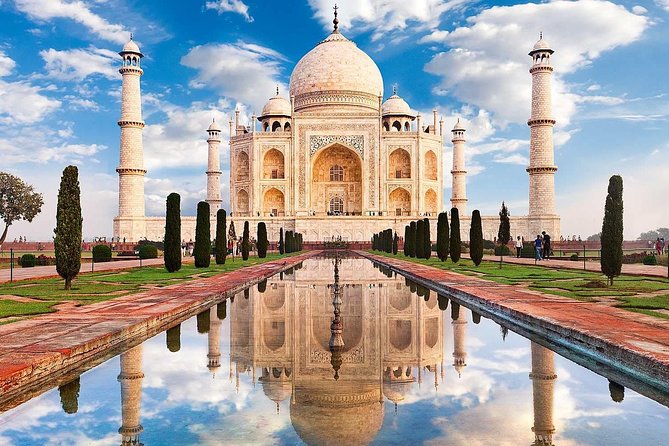
Taj Mahal, Agra
Agra Fort, Agra
Fatehpur Sikri, Uttar Pradesh
Ajanta Caves, Maharashtra
Ellora Caves, Maharashtra
Sun Temple, Konark, Odisha
Group of Monuments at Hampi, Karnataka
Khajuraho Group of Monuments, Madhya Pradesh
Mahabodhi Temple Complex, Bodh Gaya, Bihar
Group of Monuments at Pattadakal, Karnataka
Great Living Chola Temples, Tamil Nadu
Mountain Railways of India (Darjeeling, Nilgiri, Kalka-Shimla), West Bengal, Tamil Nadu, Himachal Pradesh
Qutub Minar and its Monuments, Delhi
Red Fort Complex, Delhi
Humayun’s Tomb, Delhi
Elephanta Caves, Maharashtra
Western Ghats, Karnataka, Kerala, Tamil Nadu, Maharashtra, Goa, Gujarat
Chhatrapati Shivaji Terminus (formerly Victoria Terminus), Mumbai, Maharashtra
These sites are a testament to India’s rich cultural and natural heritage and attract millions of tourists from around the world every year.
Indian knowledge systems offer a unique, complex, and holistic approach to understanding the world, but are criticized for being patriarchal, detached from practical applications, and at risk of cultural appropriation.
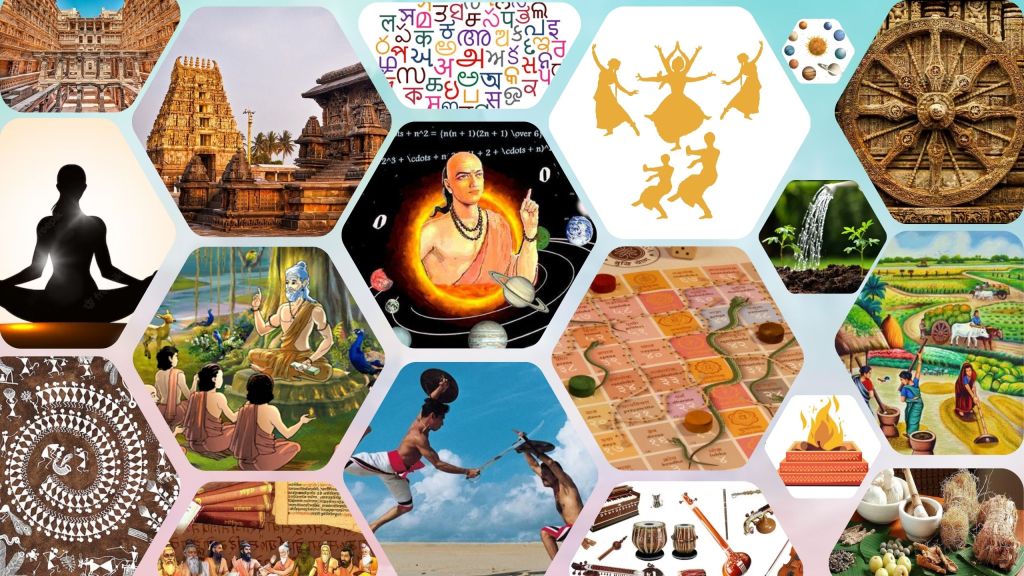
Indian knowledge systems are an amalgamation of diverse, ancient, and intricate philosophical, spiritual, and scientific traditions that have been developed and refined over several millennia. These knowledge systems encompass a broad range of subjects, including metaphysics, ethics, linguistics, mathematics, astronomy, medicine, and yoga. They are deeply rooted in the Indian way of life, culture, and spirituality and have shaped the Indian society, economy, and governance for centuries. Indian knowledge systems are characterized by their holistic and integrative approach, which emphasizes the interconnectedness and interdependence of various aspects of existence. They are also notable for their emphasis on experiential and intuitive knowledge, as opposed to a purely empirical or rationalist approach. Indian knowledge systems have also contributed significantly to the world’s intellectual and cultural heritage, influencing several fields of knowledge and thought, including mathematics, science, literature, and philosophy.
Despite their rich and diverse heritage, Indian knowledge systems have faced challenges in the modern era, including marginalization, misrepresentation, and neglect. However, recent years have seen a renewed interest in these systems, both within India and abroad, as scholars and practitioners seek to rediscover, revive, and reinterpret them for contemporary contexts. This resurgence has led to a growing recognition of the relevance and value of Indian knowledge systems in addressing contemporary challenges, such as sustainability, health, education, and governance, and promoting cross-cultural dialogue and understanding.
Indian knowledge systems, with their rich and diverse heritage, have made significant contributions to the world’s intellectual and cultural heritage. They offer a unique and holistic approach to understanding the world, emphasizing the interconnectedness and interdependence of various aspects of existence. However, there are several criticisms of Indian knowledge systems that should be considered.
Firstly, Indian knowledge systems are often criticized for being too complex and abstract, making them difficult to understand and apply. This complexity is attributed to the system’s emphasis on metaphysical and spiritual concepts that are not easily accessible to the average person. As a result, there is a risk of these systems being perceived as esoteric and inaccessible to modern society.
Secondly, Indian knowledge systems have been criticized for their patriarchal and hierarchical nature, which can lead to the marginalization of certain groups, including women and lower castes. This criticism stems from the fact that these systems have been developed and maintained by male scholars and practitioners, often reflecting patriarchal values and norms.
Thirdly, there is a concern that the study and practice of Indian knowledge systems are often detached from practical applications and modern realities, leading to a lack of relevance and applicability. There is a need for the integration of traditional knowledge systems with modern scientific and technological advancements to ensure their continued relevance and effectiveness.
Finally, there is a risk of cultural appropriation and misrepresentation of Indian knowledge systems, as they become popularized and commercialized in the global market. There is a need for responsible engagement and representation of these systems, ensuring that they are not reduced to superficial or exoticized stereotypes.
In conclusion, while Indian knowledge systems offer a unique and holistic approach to understanding the world, there are several criticisms that should be considered. These criticisms highlight the need for ongoing engagement, critical reflection, and responsible representation of these systems in contemporary contexts.
References
Brodt, S. B. (2001). A systems perspective on the conservation and erosion of indigenous agricultural knowledge in central India. Human Ecology, 29, 99-120.
Dehalwar, K., & Sharma, S. N. (2024). Social Injustice Inflicted by Spatial Changes in Vernacular Settings: An Analysis of Published Literature.
Farooquee, N. A., Majila, B. S., & Kala, C. P. (2004). Indigenous knowledge systems and sustainable management of natural resources in a high altitude society in Kumaun Himalaya, India. Journal of Human Ecology, 16(1), 33-42.
Pollock, S. (2002). Introduction: Working papers on Sanskrit Knowledge-Systems on the eve of colonialism. Journal of Indian Philosophy, 30(5), 431-439.
Puri, S. K. (2007). Integrating scientific with indigenous knowledge: Constructing knowledge alliances for land management in India. MIS quarterly, 355-379.
Rao, S. S. (2006). Indigenous knowledge organization: An Indian scenario. International Journal of Information Management, 26(3), 224-233.
Sharma, S. N. The Usefulness of Animal Husbandry for Improving Livelihoods.
Effective policies and technological interventions play a crucial role in preventing train accidents in India. The government has focused on investing in railway infrastructure, implementing advanced safety systems, and strengthening maintenance practices. Policy measures include the enforcement of safety regulations, skill development programs, and transparent reporting and investigation mechanisms. Technological advancements, such as Positive Train Control (PTC), Automatic Train Protection (ATP), and advanced signalling systems, have been introduced to enhance safety. Additionally, remote monitoring and diagnostics, improved communication systems, and simulation-based training contribute to accident prevention. These combined efforts are essential for minimizing train accidents and ensuring the safety of passengers and railway personnel in India.
Major Train Accidents in India
Train accidents in India have been a recurring concern, with various incidents causing loss of life, injuries, and damage to infrastructure. These accidents can occur due to a range of factors, including human error, infrastructure deficiencies, equipment failures, adverse weather conditions, and inadequate safety measures. The Government of India and Indian Railways have been continuously working towards improving railway safety through investments in technology, infrastructure upgrades, enhanced maintenance practices, and the implementation of advanced safety systems. Despite these efforts, train accidents remain a significant challenge, necessitating ongoing vigilance, regulatory measures, and public awareness to prevent such incidents and ensure the safety of passengers and railway personnel. Here are some major train accidents in India along with their causes:
Gaisal Train Disaster (2000):
Cause: A speeding passenger train collided with a derailed freight train on the same track, resulting in one of the deadliest train accidents in India’s history. The primary cause was determined to be a fractured rail due to inadequate maintenance.
Khanna Rail Disaster (1998):
Cause: A passenger train collided with a derailed freight train due to the failure of the signal system. The accident was attributed to the signal engineer’s negligence and faulty signaling equipment.
Firozabad Rail Disaster (1995):
Cause: An express train collided with a stationary freight train due to dense fog and poor visibility. The accident was primarily caused by inadequate signaling systems and a lack of fog-safety measures.
Gomoh Train Collision (1990):
Cause: Two passenger trains collided head-on due to signal failure caused by a miscommunication between the station master and the signalman. The accident was attributed to human error and communication failure.
Peruman Train Collision (1988):
On 8 July 1988, the Island Express collided with a local passenger train near Peruman, Kerala. The accident caused the death of approximately 150 people (Mallick, 2023, June 3). Two passenger trains collided head-on due to human error by the train driver, who missed a signal. The accident highlighted the need for better signaling systems and stricter adherence to safety protocols.
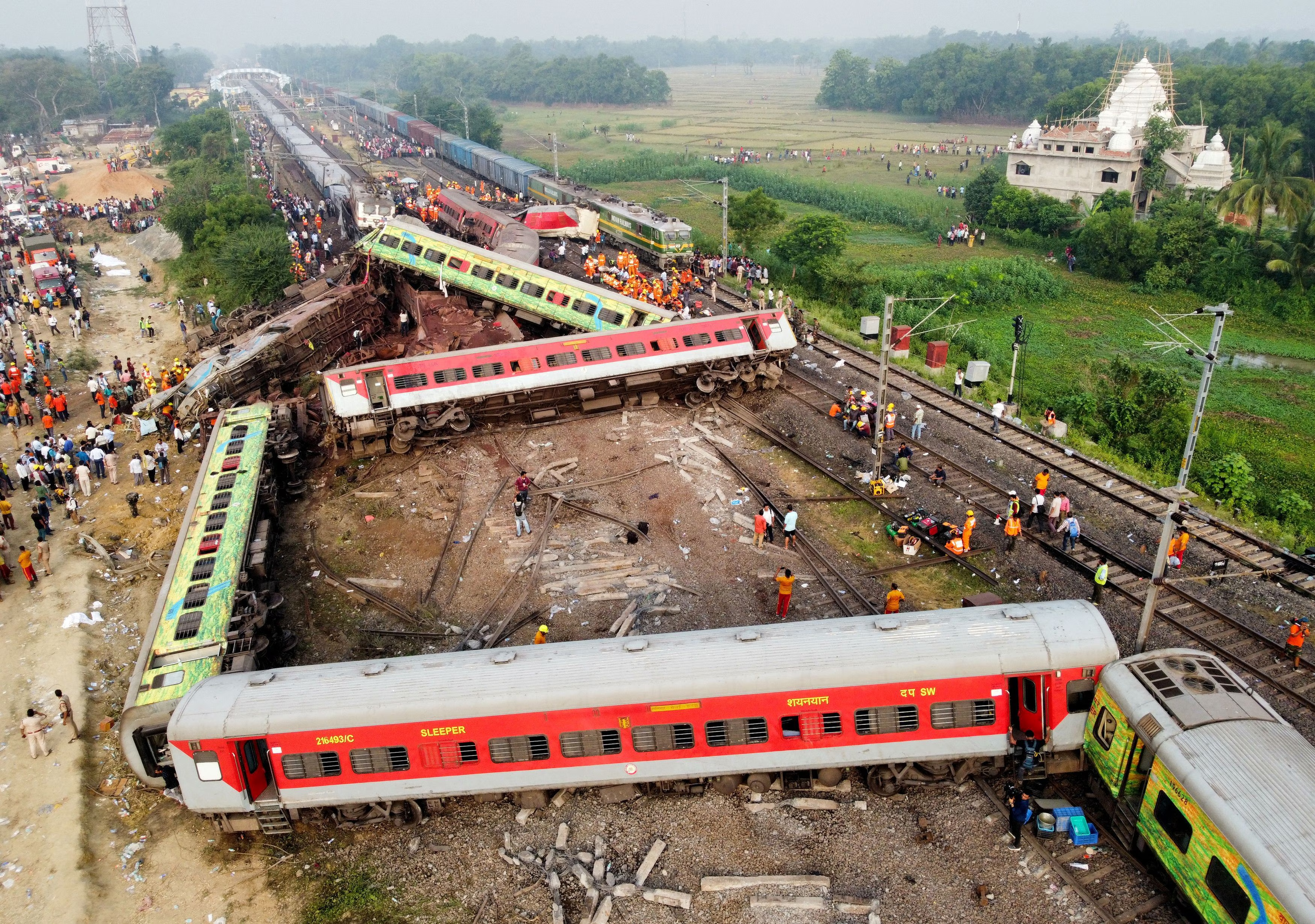
Over 230 people have lost their lives while around 900 injured in the horrific train crash, involving the Bengaluru-Howrah Superfast Express, the Shalimar-Chennai Central Coromandel Express and a goods train (Mondal, 2023, June 3). The derailment of the Rajdhani Express was caused by a cracked rail. The accident was attributed to poor maintenance and lack of proper inspection of railway tracks.
Kanpur Train Derailment (2016):
This train crash killed more than 140. Fourteen coaches of the Indore-Patna Express derailed, resulting in significant casualties. The accident was caused by a fractured rail due to excessive wear and tear and lack of timely maintenance (Narayan, 2016, November 20).
Balasore Train Accident (2023)
According to officials, the deadliest train accident in India in more than 20 years has resulted in the tragic loss of at least 288 lives. The incident occurred when a passenger train derailed and collided with another train due to a signal failure, as stated in a preliminary report. Furthermore, during the accident in the Balasore district of Odisha state in eastern India, one of the trains also struck a stationary freight train, causing extensive damage and leaving 803 people injured. The aftermath of the incident depicted a chaotic scene with mangled train cars (Ellis-Petersen, 2023, June 3).
It’s important to note that the causes mentioned above are based on initial investigations and reports. Official reports and inquiries provide more detailed and comprehensive information about each accident’s causes and contributing factors. Safety measures, maintenance practices, and infrastructure improvements have been continuously emphasized to prevent such accidents and enhance the safety of the railway system in India. Providing timely and needed emergency services in case of accidents is a major challenge (Ikbal et al., 2022).
Common Causes of Train Accidents
Common causes of train accidents can vary, but here are some of the most frequent factors:
Human Error: Human error is a leading cause of train accidents. It can include mistakes made by train operators, engineers, dispatchers, signalmen, and maintenance personnel. Examples include failure to follow procedures, disregarding signals, improper communication, fatigue, and distraction.
Track Defects: Track defects such as broken rails, misaligned tracks, and track buckling can lead to train derailments. Inadequate maintenance practices, lack of inspections, and poor infrastructure can contribute to track defects (Khosla, 2020).
Equipment Failure: Mechanical failures of train components or systems can cause accidents. This includes problems with brakes, couplings, wheels, axles, locomotives, and signaling equipment. Failure to detect and address equipment issues through regular maintenance can result in accidents.
Signal and Communication Failures: Inadequate signaling systems, malfunctioning signals, and communication breakdowns between train operators, signalmen, and dispatchers can lead to collisions, derailments, and other accidents.
Weather Conditions: Adverse weather conditions such as heavy rain, fog, snow, or extreme temperatures can impact train operations and visibility. Poor weather can lead to reduced traction, signal disruptions, poor track conditions, and increased risks of accidents.
Infrastructure Problems: Poorly maintained infrastructure, including bridges, tunnels, and tracks, can contribute to train accidents. Weak structures, inadequate drainage, and outdated or insufficient maintenance practices increase the likelihood of accidents.
Sabotage and Acts of Terrorism: Deliberate acts of sabotage or terrorism, such as tampering with tracks or explosives on trains, can cause significant accidents and endanger lives.
Level Crossing Accidents: Accidents can occur at level crossings when trains collide with vehicles or pedestrians. Factors contributing to such accidents include lack of warning signals, inadequate barriers, driver negligence, and lack of public awareness about safety precautions.
It’s important to note that these causes can interact and overlap in some cases. Preventing train accidents requires a comprehensive approach that includes strict adherence to safety protocols, regular maintenance and inspections, investment in infrastructure improvements, effective communication systems, and ongoing training and education for railway personnel.
Technological Advancement to avert Train Accidents
Technological advancements have played a significant role in enhancing railway safety and mitigating train accidents. Here are some key technological advancements that have been implemented to avert train accidents:
Positive Train Control (PTC): PTC is a technology that uses a combination of GPS, wireless communication, and computerized control systems to monitor and control train movements. It can automatically intervene and apply brakes or take other actions to prevent train collisions, derailments, and overspeeding. PTC helps ensure compliance with speed limits, track conditions, and signal indications.
Automatic Train Protection (ATP) Systems: ATP systems monitor train speed and enforce speed limits. These systems continuously monitor train movements and automatically intervene if a train exceeds predetermined speed limits or violates other safety parameters. ATP systems enhance safety by preventing overspeeding and reducing the risk of derailments.
Advanced Signaling Systems: Traditional signaling systems are being replaced with advanced signaling technologies such as European Train Control System (ETCS) and Communications-Based Train Control (CBTC). These systems provide real-time information about train positions, speeds, and signaling commands, ensuring safe separation between trains and improved overall operational efficiency (Subramanyan, 2001).
Train Collision Avoidance Systems: These systems utilize sensors, cameras, and radar technologies to detect obstacles or other trains on the tracks and provide alerts or automatically apply brakes to prevent collisions. Such systems enhance safety at intersections, level crossings, and areas prone to unauthorized entry onto the tracks.
Remote Monitoring and Diagnostics: Remote monitoring and diagnostics technologies enable continuous monitoring of train components, systems, and track conditions. Real-time data analytics can detect potential faults or abnormalities, allowing for proactive maintenance and reducing the risk of equipment failure.
Improved Track Inspection Technologies: Advanced inspection technologies, such as ultrasonic testing and track geometry measurement systems, help identify track defects, including cracks, misalignments, and weaknesses. Regular track inspections using these technologies enable timely repairs and maintenance to prevent accidents caused by track defects.
Enhanced Communication Systems: Modern communication systems, including radio, satellite, and wireless technologies, facilitate improved communication between train operators, signaling centers, dispatchers, and maintenance personnel. Efficient communication ensures accurate and timely exchange of information, reducing the risk of miscommunication-related accidents.
Simulation and Training Systems: Advanced simulation and training systems provide realistic training environments for train operators, allowing them to practice emergency scenarios and enhance their decision-making skills. These systems help improve situational awareness and response capabilities, reducing the likelihood of accidents caused by human error.
It’s worth noting that the implementation of these technologies requires significant investments, infrastructure upgrades, and ongoing maintenance. However, their adoption has proven to be effective in preventing train accidents, enhancing passenger safety, and improving overall operational efficiency in railway systems.
Concluding Remarks
The Government of India can take several measures to avert train accidents in the future. Here are some key actions that can be considered:
Investment in Infrastructure: The government should prioritize investment in railway infrastructure, including tracks, bridges, signaling systems, and level crossings. Upgrading and modernizing infrastructure can help prevent accidents caused by track defects, poor maintenance, and inadequate safety measures.
Implementation of Advanced Safety Systems: The government should promote the implementation of advanced safety systems such as Positive Train Control (PTC), Automatic Train Protection (ATP), and train collision avoidance systems. Mandating the use of these technologies can significantly reduce the risk of accidents due to human error, overspeeding, and collisions.
Regular Maintenance and Inspections: Ensuring regular maintenance and inspections of railway tracks, rolling stock, signaling systems, and other critical components is crucial. The government should establish stringent maintenance protocols and conduct regular inspections to identify and address potential safety hazards proactively.
Strengthening Safety Regulations: The government can strengthen safety regulations and enforcement mechanisms. Clear guidelines, standards, and protocols should be established for railway operations, maintenance practices, and employee training. Strict enforcement of safety regulations can promote a culture of safety and accountability.
Training and Skill Development: Focus should be placed on training and skill development programs for railway personnel. Train operators, engineers, maintenance workers, and other staff should receive comprehensive training on safety procedures, emergency response, and the operation of advanced safety systems. Ongoing training programs can improve safety awareness and reduce the likelihood of human errors.
Enhancing Emergency Response Capabilities: The government should develop robust emergency response capabilities for railway accidents. This includes equipping railway stations and trains with emergency equipment, establishing well-coordinated response protocols, and conducting regular drills to ensure preparedness for various emergency scenarios.
Public Awareness and Education: Promoting public awareness and education about railway safety is vital. The government can launch campaigns to educate passengers, motorists, and pedestrians about safe practices at level crossings, the importance of following safety instructions, and reporting any safety concerns or hazards promptly.
Collaboration with Technology Providers: The government can collaborate with technology providers and research institutions to leverage innovations and advancements in railway safety. Encouraging partnerships can lead to the development of new technologies, tools, and methodologies for enhanced safety and accident prevention.
Transparent Reporting and Investigation: The government should establish a transparent and independent mechanism for reporting and investigating train accidents. Conducting thorough investigations, sharing findings, and implementing recommendations can help identify systemic issues and prevent future accidents.
International Collaboration and Benchmarking: The government can collaborate with international counterparts to learn from their best practices and experiences in railway safety. Benchmarking against global standards can help identify areas for improvement and implement effective safety measures.
By implementing these measures, the Government of India can work towards a safer railway system, reduce the occurrence of train accidents, and enhance the overall safety of passengers and railway personnel.
Vernacular architecture refers to a style of building that is rooted in local traditions, materials, and construction techniques. It evolves organically over time, reflecting the culture, climate, and lifestyle of the people in a specific region. Unlike modern or formal architecture, which often follows standardized designs, vernacular architecture is deeply connected to its surroundings, embodying sustainable and community-driven practices.
Builders use materials readily available in the environment, such as mud, timber, stone, bamboo, or thatch.
This not only reduces costs but also minimizes the environmental impact.
Climatic Responsiveness:
Structures are designed to adapt to local weather conditions. For instance, thick mud walls provide insulation in hot climates, while sloped roofs are common in regions with heavy rainfall.
Cultural Expression:
Reflects the customs, beliefs, and social practices of the local community.
Ornamentation and layout often have symbolic or ritualistic significance.
Sustainability:
Low environmental footprint due to the use of natural and renewable materials.
Passive cooling and heating techniques reduce reliance on energy-intensive systems.
Adaptability:
Structures are often modified over generations to suit changing needs and lifestyles.
Historical Context of Vernacular Architecture
Vernacular architecture has been practiced since ancient times and varies significantly across the globe. Each region developed its unique style based on:
Geography and Resources: Coastal areas often use shells or coral stones, while mountainous regions rely on stone and wood.
Climate: Hot arid zones feature courtyards and thick walls, while cold regions emphasize insulation and compact layouts.
Cultural Practices: Religious beliefs, rituals, and social structures shape the design and use of spaces.
Examples of Vernacular Architecture Around the World
India:
Havelis of Rajasthan: Intricately carved mansions with courtyards to combat extreme heat.
Kerala Houses: Sloped roofs and verandas suited for heavy monsoons.
Bhunga Houses of Kutch: Circular structures with mud walls, resistant to earthquakes.
Japan:
Minka Houses: Wooden structures with sliding panels and thatched roofs, designed for flexibility and climatic adaptation.
Africa:
Zulu Huts: Beehive-shaped structures made of grass and wood, ideal for the subtropical climate.
Adobe Houses: Mud-brick constructions seen in North African deserts, offering excellent insulation.
Europe:
English Cottages: Stone and thatch houses designed for cold weather.
Alpine Chalets: Wooden houses with steep roofs to shed snow.
South America:
Chilean Rucas: Cone-shaped huts made from natural fibers, used by the indigenous Mapuche people.
Amazonian Malocas: Communal structures using palm leaves and bamboo.
Climatic Adaptations in Vernacular Architecture
Hot and Arid Climates:
Thick walls and small windows reduce heat gain.
Courtyards enhance air circulation and cooling.
Whitewashed exteriors reflect sunlight.
Tropical Climates:
Large overhangs and verandas provide shade.
Elevated structures prevent flooding and improve ventilation.
Cold Climates:
Compact layouts retain heat.
Use of insulating materials like wood or thick stone.
Fireplaces and central hearths provide warmth.
Rainy Climates:
Sloped roofs to drain rainwater quickly.
Raised plinths to protect from flooding.
Modern Relevance of Vernacular Architecture
Sustainability:
With growing concerns over environmental degradation, vernacular practices offer insights into eco-friendly construction.
The use of local materials reduces transportation emissions and costs.
Resilience:
Many vernacular techniques are inherently disaster-resistant, such as earthquake-proof Bhunga houses or flood-adaptive stilted homes.
Cultural Preservation:
Reviving vernacular architecture helps preserve intangible heritage and traditional craftsmanship.
Affordable Housing:
Cost-effective construction methods make it suitable for low-income housing projects.
Challenges in Practicing Vernacular Architecture Today
Urbanization:
Rapid urban growth often sidelines traditional practices in favor of modern construction methods.
Loss of Traditional Knowledge:
The decline in skilled artisans and transmission of traditional techniques poses a significant challenge.
Perception Issues:
Vernacular architecture is sometimes viewed as outdated or unsuitable for contemporary lifestyles.
Material Scarcity:
Depletion of local resources, like timber and clay, affects the viability of traditional practices.
Future of Vernacular Architecture
Vernacular architecture is seeing a resurgence, especially in sustainable design movements. Architects and planners are integrating traditional principles with modern technologies to create hybrid designs that meet contemporary needs while respecting the environment. Some notable examples include:
Earthship Biotecture: Combines vernacular earth-building techniques with renewable energy systems.
Green Roofs and Walls: Inspired by traditional vegetative insulation techniques.
Conclusion
Vernacular architecture is more than just a building style—it is a testament to humanity’s ability to harmonize with nature while meeting functional and cultural needs. As the world grapples with climate change and resource scarcity, revisiting these age-old practices can guide us toward sustainable and resilient built environments. Integrating vernacular principles with modern design approaches will not only preserve this invaluable heritage but also provide innovative solutions for a sustainable future.
To protect, promote & preserve various forms of folk art and culture throughout the country, the Government of India has set up seven Zonal Cultural Centres (ZCCs) with headquarters at Patiala, Nagpur, Udaipur, Prayagraj, Kolkata, Dimapur and Thanjavur. Annual grant-in-aid is released to these seven ZCCs for organizing various cultural activities and programmes on regular basis in their member States.
To promote the tribal culture, various festivals like Hornbill Festival, Octave, Tribal Dance Festival, Adi Bimb, Adi Sapta Pallav, Adi Lok Rang, Adiwasi Mahotsav etc. are organized through Zonal Cultural Centres (ZCCs) of Ministry of Culture to showcase unique forms of folk dances, songs, cuisine, exhibitions and demonstration of traditional skill in painting, art & craft etc. Artists are engaged by ZCCs from tribal areas to showcase their talents in various cultural programmes/ activities organized by them for which they are paid honorarium, DA/TA, boarding & lodging etc. The annual grant-in-aid released to the seven ZCCs for organizing various cultural activities and programmes during the last three year is as under:
(Rs. in lakh)
Sl. No.
Year
Amount released
1.
2021-22
6798.08
2.
2022-23
6572.06
3.
2023-24
11967.57(as on 31st March, 2024)
Ministry of Tribal Affairs is implementing the schemes of “Support to Tribal Research Institutes and Tribal Research, Information, Education, Communication and Events” under which various activities are undertaken to conserve and promote tribal culture, archives, artefacts, customs and traditions of the tribal communities.
Under the Scheme of “Tribal Research, Information, Education, Communication and Events (TRI-ECE)”, reputed research Institutes/ Organizations/ Universities have undertaken various research studies/ publication of books/ documentation including audio visual documentaries etc.
Kerala is a member State of South Zone Cultural Centre (SZCC), Thanjavur (an autonomous organization under Ministry of Culture) which regularly organizes cultural activities/ programmes in the State of Kerala, Andhra Pradesh, Telangana, Karnataka, Tamil Nadu, Union Territories of Andaman & Nicobar Islands, Lakshadweep and Puducherry. During the last three (03) years, funds released to SZCC, Thanjavur for organizing cultural activities/ programmes in its member States are as under:
(Rs. in lakh)
Sl. No.
Year
Amount released
1.
2021-22
1640.48
2.
2022-23
994.87
3.
2023-24
2135.39
A list of programmes organized by SZCC, Thanjavur in the State of Kerala during the last three (03) years is as under
The Ministry of Tourism undertakes various promotional activities in important and potential tourist generating markets with the objective of showcasing India’s tourism potential and promoting tourism to the country, including the state of Himachal Pradesh. Details of promotional activities are as follows:
i. Participation in international travel fairs and exhibitions such as World Travel Market (WTM) London, Feria Internacional de Turismo (FITUR) Madrid, International Travel & Hospitality Show (MITT) Moscow, Asia-Pacific Incentives and Meetings Event (AIME) Sydney, Internationale Tourismusbörse (ITB) Berlin, Arabian Travel Market (ATM) Dubai, International Meeting Exchange (IMEX) Frankfurt, International & French Travel Market (IFTM) Top Resa Paris, Japan Expo, Internationale Tourismusbörse Asia (ITB Asia), Singapore etc.
ii. The Chalo India initiative has been launched by the Ministry to encourage the huge Indian diaspora to become Incredible India ambassadors and encourage their five non-Indian friends to visit India, every year.
iii. A Chalo India portal has also been developed for registration of the Indian diaspora. Further gratis e visa to one lakh foreign tourists, visiting India under the referral program was announced.
iv. Ministry of Tourism has launched the Incredible India Content Hub on the revamped Incredible India digital portal (www.incredibleindia.gov.in) on 27th September, 2024. The Incredible India Content Hub is a comprehensive digital repository of high-quality images, films, brochures and newsletters which can be easily accessed by the industry stakeholders (travel media, tour operators, travel agents) across the globe required to amplify Incredible India in all their marketing and promotional efforts. The revamped Incredible India Digital Portal is a tourist-centric, one-stop digital solution designed to enhance the travel experience for visitors to India.
v. Inviting media personalities, tour operators and opinion makers to visit the country under the Hospitality Programme of the Ministry.
vi. The promotions are being carried out in association with the State Governments and the Overseas Indian Missions including the 20 identified Indian Missions.
Ministry of Tourism, Government of India is not the regulatory authority for deciding the rate structure charged by Tourism Stakeholders.
In order to boost tourism sector in the country during Amrit Kaal, the Ministry of Tourism has taken the following initiatives: –
The Ministry of Tourism undertakes several promotional activities in potential international & domestic markets to promote various tourism destinations and products of the country in holistic manner. This includes release of media campaigns, social media promotions, webinars, participation & support to promotional events, dissemination of information and engagement through website etc. In addition, Indian Missions overseas also undertake various promotional activities to attract more global travellers to various tourist destinations of the country.
Ministry of Tourism launched the Incredible India Content Hub on the revamped Incredible India digital portal which is a comprehensive digital repository, featuring a rich collection of high-quality images, films, brochures and newsletters related to tourism in India. This repository is intended for the use of a diverse range of stakeholders, including tour operators, journalists, students, researchers, film makers, authors, influencers, content creators, government officials and ambassadors.
The Ministry of Tourism under the schemes of ‘Swadesh Darshan’, National Mission on Pilgrimage Rejuvenation and Spiritual Heritage Augmentation Drive (PRASHAD)’ and ‘Assistance to Central Agencies for Tourism Infrastructure Development’ provides financial assistance to State Governments/ Union Territory Administrations/ Central Agencies for the development of tourism related infrastructure and facilities at various tourism destinations in the country.
Ministry has revamped Swadesh Darshan Scheme as Swadesh Darshan 2.0 (SD2.0) with the objective to develop sustainable and responsible destinations following a destination centric approach.
Ministry of Tourism has been providing financial assistance to State Governments/ UT Administrations for organising fairs/festivals and tourism related events.
Ministry is conducting Programmes under the ‘Capacity Building for Service Providers’ (CBSP) Scheme to train and upgrade manpower to provide better service standards.
To enhance the overall experience of tourists by making available a pool of local, trained professionals at tourist sites across the country, Ministry launched the Incredible India Tourist Facilitator (IITF) Certification Programme – a Pan-India online learning program.
Indian Railways have taken various steps to improve the railway network and other infrastructures, which are outlined below:
i) Railway Infrastructure Projects are taken up on the basis of remunerativeness, last mile connectivity, missing links and alternate routes, augmentation of congested/saturated lines, socio-economic considerations, enhancing connectivity to tourist and cultural places etc. depending upon liabilities of ongoing projects, overall availability of funds and competing demands. As on 01.04.2024, out of 488 Railway Infrastructure projects (187 New Line, 40 Gauge Conversion and 261 Doubling) of total length 44,488 Km costing approx. Rs. 7.44 lakh crore, 12,045 Km length has been commissioned across Indian Railways with an expenditure of Rs. 2.92 lakh crore. Augmenting railway infrastructures across Indian Railways is an ongoing and continuous process.
ii) The Ministry of Railways has recently launched the Amrit Bharat Station Scheme for development of Railway stations on Indian Railways. The Scheme envisages development of stations on a continuous basis with a long-term approach. It involves preparation of Master Plans and their implementation in phases to improve amenities at stations, like improvement of station access, circulating areas, waiting halls, toilets, lift/escalators as necessary, platform surfacing and cover over platform, cleanliness, free Wi-Fi, kiosks for local products through schemes like ‘One Station One Product’, better passenger information systems, Executive Lounges, nominated spaces for business meetings, landscaping etc. keeping in view the necessity at each station. So far, 1337 stations have been identified under the Amrit Bharat Station Scheme over Indian Railways.
iii) Under the National Rail Plan (NRP), around 243 tourist destinations in India were identified. Out of these, 111 places are already connected with the existing rail network, 30 tourist places are within a distance of 10 kms from the nearest railway station and 30 are within a distance of 15 kms from the nearest railway station. The remaining 72 locations are primarily wildlife sanctuaries, beaches and areas located in hilly and mountainous terrain where providing rail connectivity is either not advisable or difficult.
Further, with a view to provide enhanced amenities and facilities for tourists, projects for joint development of tourist amenities at 22 railway stations by the Ministry of Railways (MoR) and Ministry of Tourism were sanctioned on cost sharing basis.
Details of month-wise Foreign Tourist arrivals (FTAs) in the country during 2023 and 2024 (till August) are given below:









 /
/

















 Eduindex
You must be logged in to post a comment.