WOMEN EMPOWERMENT

N kavya

Empowerment stands for giving authority and power to women. Thus, Women’s empowerment refers to empowering women to make their own decisions. It means women should have full equality across all fields, regardless of stereotypes. With higher literacy rates and equal pay for equal work, women can thrive economically and rise out of poverty. Protecting women and girls from violence and abuse while challenging the stigmas against reporting crimes would overall create a much safer society.

The Current State of Gender Equality:

On the World Economic Forum’s Global Gender Gap Index of 2021, India ranks 140th among 153 nations, “becoming the third-worst performer in South Asia.” India fell 28 places from its 2020 rank of 112th. The report cites several reasons for this fall. In terms of political empowerment, the number of female ministers declined from about 23% in 2019 to just 9% in 2021. The female workforce participation rate also decreased “from 24.8% to 22.3%.”
Additionally, the “share of women in senior and managerial positions also remains low.” The report also indicates that women in India earn just one-fifth of what men earn.

Furthermore, “one in four women” endure “intimate violence” at least once in their lifetime. Although India has achieved gender parity in educational attainment, illiteracy rates among women remain high. The report indicates that just 65.8% of women in India are literate in 2021 in comparison to 82.4% of men.


Women also endure inequality concerning land and property rights. A 2016 UNICEF report noted that only 12.7% of properties in India “are in the names of women” despite 77% of women in India depending on agricultural work as a core source of income.

Benefits of Empowering Women in India:

As the majority of India’s population, women represent a significant portion of the nation’s untapped economic potential. As such, empowering women in India through equal opportunities would allow them to contribute to the economy as productive citizens. With higher literacy rates and equal pay for equal work, women can thrive economically and rise out of poverty.

Protecting women and girls from violence and abuse while challenging the stigmas against reporting crimes would overall create a much safer society. Improving the female political representation rate would enable more women to serve as role models for young girls and allow a platform to bring awareness to the issues affecting women in India. Overall, gender equality allows for women to live a better quality of life, allowing them to determine their futures beyond traditional expectations.

Women Of Worth (WOW):

According to its website, “Women Of Worth exists for the growth, empowerment, and safety of girls and women” standing “for justice, equality and change.” WOW began in 2008, created by a group of women who longed for change in a society rife with gender discriminatory practices. Its ultimate vision is “to see women and girls live up to their fullest potential.” With a mission of empowering women in India.

The organization has three focal areas:

1. Advocacy Work: WOW utilizes social media platforms to raise awareness of gender inequality and “change attitudes and behavior.”


2. Training and Health Services: WOW provides training to both men and women in schools, tertiary institutions, and companies on women’s safety and rights. It also presents lectures and “keynote addresses” on the topic. Furthermore, WOW provides counseling sessions to improve mental health.
Rehabilitation and Restoration: WOW offers “counseling, life skills training, and therapy” to children and women who are victims of abuse, neglect, and trafficking.


WOW’s efforts have seen success. The organization helped to rescue 200 girls from abusive backgrounds, providing them with rehabilitation services. WOW also gave 11 girls scholarships to continue their education. WOW provided training on gender equality to about 800 working people and “1500 students” along with “200 parents” and 300 educators.


3. Gender equality is a crucial cornerstone in the advancement of any society or nation as it affects all areas of society from economic growth to education, health, and quality of life. Gender inequality in India is a deep-rooted, complex, and multi-layered issue but it is also an essential battle to overcome to see the fullest potential of the nation.

How are women empowered in India?

The Constitution of India has certain provisions that specifically focus on women’s empowerment and prevents discrimination against women in society. Article 14 talks about equality before the law. Article 15 enables the state to make special provisions for women.

Beti Bachao Beti Padhao Andolan has been launched for creating awareness among the people to educate all girl children in the country. The government successfully promotes this scheme by forming District Task Force and Block Task Force. The scheme was launched in the Panipat district of Haryana on 22 January 2015 with initial funding of Rs. 100 crore. Before the launching of this scheme, the Child Sex Ratio of Panipat was 808 in 2001 and 837 in 2011.
Massive publicity is made about the program in print and electronic media, and the logo of this scheme is very common in government buildings such as pillars of National Highway 44, Panipat District Court, bus stand, and railway station of Panipat district, etc.

Financial independence is important for women’s empowerment. Women, who are educated and earning, are in a much better position in our society as compared to uneducated women workers. Therefore, a scheme called working women hostels has been launched so that safe and convenient accommodation should be provided to working women. The benefit of this scheme is given to every working woman without any distinction of caste, religion, marital status, etc. To take benefit from this scheme, the gross total income of women should not exceed Rs. 50,000 per month in the case of metropolitan cities whereas, in the case of small cities, the gross total income should not exceed Rs. 35,000 per month.

The focus of the government has shifted from women’s development to women-led development. To achieve this goal, the government is working around the clock to maximize women’s access to education, skill training, and institutional credit. MUDRA Yojana ( Micro Units Development and Refinance Agency Ltd ) is one such scheme that was launched on 8 April 2015 in which loans up to Rs. 10 lakh are provided to women entrepreneurs, without any collateral. For instance: A woman namely Kamla daily wage laborer from Panipat has taken a loan of Rs. 45,000 from the State Bank of India to start work in a beauty parlor and she is engaged in gainful employment with dignity now.

Conclusion:

Women must have an equal voice, rights, and opportunities, throughout their lives. Gender equality can make a difference to individual lives and whole communities. Economic and Social Empowerment places women and girls in a stronger position. Women’s and girls Economic Empowerment gives a voice in decison making processes. women also should be given equal rights like men to actually empower them. They need to be strong, aware, and alert every time for their growth and development. The most common challenges are related to the education, poverty, health, and safety of women.

Television In India

N kavya

Television is the most powerful medium of mass communication that has ever existed. It has revolutionized our lives in many ways. Isn’t it a wonder that we can witness the events happening all over the world in the comfort of our drawing-room by merely switching on the Television? Today television has become an integral part of our lives. Television is a recent invention. Very few homes had television sets some fifty years ago. Also, till the 1990s Doordarshan was the only channel available to a vast majority of Indians.

Evolution Of Television-:

Today television has become an integral part of our lives. 1939, television broadcasts began in the United States also. Other countries began television broadcasting on a wide scale only by the 1950s. Second World War slowed down the rapid development of the new medium, but the post-war years made up for it. The limitations of the early camera forced the actors and anchors to work with impossibly hot lights. Imagine trying to read news with full makeup under a blazing light. The early television broadcasts were all black and white. The first successful program in color was transmitted by Columbia Broadcasting System (CBS) in the USA in 1953. From being a “radio with pictures” it acquired a unique style of its own. As a result of this, this phase is often called the “golden age” of television.

Important dates -:

1. 1936 – British Broadcasting Corporation (BBC) of Britain began the first television service in the world.
2. 1939 – Television broadcasts began in the US. The 1950s – Other countries began television broadcasting on a wide scale.
3. 1953 – The first successful program in color was transmitted by CBS in the USA.

1959- TELEVISION BEGAN IN INDIA ON AN EXPERIMENTAL BASIS -:

The early programs on these experimental broadcasts were generally educational programs for school children and farmers. Several community television sets were set up in Delhi’s rural areas and schools around Delhi for the dissemination of these programs. By the 1970s, television centers were opened in other parts of the country also. In 1976, Doordarshan, which was All India Radio’s television arm until then became a separate department.

1976- DOORDARSHAN BECAME A SEPARATE DEPARTMENT INDEPENDENT OF ALL INDIA RADIO (AIR) -:

Several community television sets were distributed as a part of one of the important landmarks in the history of Indian television, the Satellite Instructional Television Experiment (SITE). It was conducted between August 1975 and July 1976. Under this program, the Indian government used the American satellite ATS-6 to broadcast educational programs to Indian villages. Six states were selected for this experiment and television sets were distributed in these states.

• Clusters selected for SITE

1. Andhra Pradesh
2. Karnataka
3. Madhya Pradesh
4. Bihar
5. Orissa
6. Rajasthan

1975-1976 SATELLITE INSTRUCTIONAL TELEVISION EXPERIMENT (SITE) -:

SITE was an important step taken by India to use television for development. The programs were mainly produced by Doordarshan which was then a part of AIR. The telecasts happened twice a day, in the morning and evening. Other than agricultural information, health and family planning were the other important topics dealt with in these programs. Entertainment was also included in these telecasts in the form of dance, music, drama, folk, and rural art forms. A major milestone in the history of Indian television was the coverage of the Ninth Asian Games in 1982. In addition to the domestic transmission, Doordarshan was also providing content for the broadcasters of many other countries. After 1982, there was a huge increase in the live coverage of sports by Doordarshan. Doordarshan provided national coverage for the first time through the satellite INSAT 1A. Also, for the first time, the transmission was in color.

1982- DOORDARSHAN PROVIDED NATIONAL COVERAGE FOR THE FIRST TIME THROUGH THE SATELLITE INSAT 1A. -:

By 1983, the government-sanctioned a huge expansion of Doordarshan. Several new transmitters were set up throughout the country. Thus towards the end of the 80s around 75 percent of the population could be covered by the transmitters. Many of the programs of Doordarshan like Hum Log, Buniyaad, and Nukkad were immensely popular.

1983- GOVERNMENT SANCTIONS HUGE EXPANSION OF DOORDARSHAN -:

In 1997, Prasar Bharati, a statutory autonomous body was established. Doordarshan along with AIR was converted into government corporations under Prasar Bharati. The Prasar Bharati Corporation was established to serve as the public service broadcaster of the country which would achieve its objectives through AIR and DD. This was a step towards greater autonomy for Doordarshan and AIR. However, Prasar Bharati has not succeeded in shielding Doordarshan from government control.

1997- ESTABLISHMENT OF PRASAR BHARATI -:

About 90 percent of the Indian population can receive Doordarshan programs through its network. From its humble beginning as a part of All India Radio, Doordarshan has grown into a major television broadcaster with around 30 channels. These include Regional Language Satellite Channels, State Networks, International Channel, and All India Channels like DD National, DD News, DD Sports, DD Gyandarshan, DD Bharati, Loksabha Channel, and DD Urdu.

Conclusion -:

Television as a medium of visual communication offers immense possibilities to overcome the illiteracy barrier and assists in the process of modernization. It has a marked role to play in furthering the cause 2 of education and has a unique advantage over the media. While it provides words with pictures and sound effects like the movies, it scores over the latter by its high intimacy and reaches the largest number of people in the shortest possible time the visual in it has ii an edge over sound broadcasting. It can also deal with topical problems and present known persons who can provide solutions. People learn through the eye and remember things better. periodical surveys about the public reaction to television programs have indicated that most of the programs telecast are rather dull. There is a lot to be done in them. The plays particularly are uninspiring and badly directed.

Criticism against Indian television is that like the All India Radio, it is the mouthpiece of the Government and the ruling party. The News Bulletins in Hindi and English and the news and views programs are heavily colored in favor of the Government and the party in power. Achievements of the Government are highlighted while the weaknesses are ignored. There is hardly any program: which allows free, frank, and straightforward criticism of the Governmental policies and the ruling party politicians. Therefore, there has been a demand for All India Radio and Doordarshan to be turned into autonomous bodies with no control and interference by the Government.

Cultural Pluralism

N kavya

Cultural pluralism is defined as the societal condition in which minority groups within a society can maintain their distinctive cultural identities, values, and practices if they are consistent with the laws and values of the wider society. Institutions and values that support cultural pluralism include political democracy, tolerance for uncertainty, prioritization of secular rational values, and openness to foreign cultures. societies with a demanding climate and high innovation performance, their citizens tend to support democracy, are more tolerant of uncertainty, prioritize secular-rational values, and take more leisure trips outside of their home country.

Significance of cultural pluralism -:

The late nineteenth and early twentieth centuries, which saw the largest surge of immigrant arrivals in American history, an anti-immigrant backlash took the forms of nativism, xenophobia, and other expressions of prejudice. Criticism of the unfamiliar appearances and behaviours of the newly arrived people prompted discriminatory treatment of the new immigrants in education, employment, government programs, housing, and public accommodations. As a result, the advance of industrious and talented immigrants whose efforts could enhance American progress was held back. The concept of cultural pluralism is an alternative to the “melting pot” view that immigrants should assimilate to American culture by abandoning their own cultures, languages, and other traditions. Cultural pluralists insist that different ethnic groups have enriched the American way of life as immigrants and native-born citizens have learned from one another, thereby broadening their views on art, cuisine, education, history, music, and other aspects of life.

Positive Aspects of Cultural Pluralism -:

1. The cultural plurality system is that it is easily understood by voters, provides a quick decision, and is more convenient and less costly to operate than other methods.
2. The plurality method operates best under a two-party system.

Critique of cultural pluralism –:

1. Cultural pluralism has been attacked for justifying cultural separatism—that is, a transformation to a “nation of nations” like what is found in Switzerland or a segregated America of ethnically pure residential enclaves.
2. The cultural pluralists assume that because ethnic traditions are static, they suppress individuality.
3. Cultural pluralists are attacked for a belief that ethnic identity is primary and thus more powerful than other identities. Some critics even see Kallen’s concept of cultural pluralism as rooted in Jewish ideology.

Cultural pluralism is distinct from multiculturalism, which lacks the requirement of a dominant culture. If the dominant culture is weakened, societies can easily pass from cultural pluralism into multiculturalism without any intentional steps being taken by that society. If communities function separately from each other or compete with one another, they are not considered culturally pluralistic. Pluralism is valuable because it provides individuals with alternative ways to live, promotes critical reflection on the culture within which one currently lives, and thus promotes change and growth within cultures generally.

Canada is a country that is often cited as an example of cultural pluralism. This is due in large part to the fact that Canada is home to a diverse range of cultures and ethnic groups.

Cultural pluralism brings diversity as explained by, Cultural pluralists who insist that different ethnic groups have enriched the American way of life as immigrants and native-born citizens have learned from one another, thereby broadening their views on art, cuisine, education, history, music, and other aspects of life.

Shillong The Natural Beauty

N kavya

Shillong the capital of Meghalaya is undoubtedly one of the most beautiful hill stations in India. Known as the ‘Scotland of the East, if one wants to see the natural charm of the North East then there are numerable places to visit in Shillong, the breathtaking greenery, swaying pine trees, cascading waterfalls, azure lakes, botanical gardens, and museums displaying the enriched culture of the Khasis, all make Shillong a perfect holiday destination. Although you can visit the place all through the year, the best time is considered between October to march.

5 Amazing reasons to consider Shillong you’re next holiday destination

1. Visit the mesmerizing waterfalls & lakes

  • umiam lake was initially established as a dam or a reservoir. It is quite popular among tourists and is a perfectly picturesque location to enjoy the stunning views. To the adventure activities that one can do here such as boating, kayaking, etc.
  • Meghalaya is the home to several beautiful cascading waterfalls. The Elephant waterfalls and the Bishop and Beadon waterfalls at Shillong are one of the most beautiful ones. On the outskirts of the city, is a gushing waterfall that looks like an eagle with its wings spread to Eagle Falls. You can even visit the nearby waterfalls such as The Seven Sister Falls, Dainthlein Falls, and Krang Suri.
  • Ward’s lake, locally known as pollock lake or Nan Polok, is an artificial lake in Shillong, Meghalaya, India.

2. Appetizing cafes and cuisines to warm you’re heart and enjoy the incredible Khasi folk tales and cultures

  • • Shillong has an array of appetizing cuisines starting from lip-smacking street food to mouth-watering Khasi dishes. Shillong also has some best and most wonderful cafes where you can have your coffee. Khasis was the worshipper of nature and almost anything related to nature has an interesting folk tale behind it. Both vegetarian and non-vegetarian restaurants here offer delicious food.
  • • Don Bosco Centre for Indigenous cultures provides a very comprehensive overview of the many tribes indigenous to North-East India.
  • • The police Bazar is the most colorful place in Shillong. It has modern shops as well as an array of traditional shops selling exquisite handicrafts from Meghalaya. You can also dress up in traditional Khasi costumes and click some pictures.

3. The Intriguing Living Root Bridges

  • • Once you are in the Shillong and are heading to places like Cherrapunjee or Mawlynnong, the scenic beauty of the roads is unmatched. Deep in the tropical forests of Meghalaya shrouded in rain and cloud, lies these root bridges. These are the roots of ancient rubber trees or Ficus Elastica that have been trained by the Khasi tribesmen to grow in a tangled mess, and then they were intertwined to form single and double-decker root bridges. Mawlynnong is considered to be Asia’s cleanest village.

4. Visit the laitlum canyons and The. Shillong peak

  • • The laitlum canyons are a delight to the eyes, at great heights, it is an edge of the hill surrounded by greenery all around. Our eyes will witness stretches of green all around and laters of rocky hills.
  • • Shillong peak is the highest point in Shillong at a height of 6449ft. you will get a panoramic view of the city from Shillong peak.

5.The ultimate experience of caving & visit the sacred groves

  • Meghalaya has the longest system of caves in the Jaintia Hills. The Mawsmai caves near Cherrapunjee consisting of amazing stalactites and stalagmites are quite a famous tourist spot. Arwah caves for a surreal experience.
  • The Mawphlang Sacred Forest lies around 25km from Shillong. This grove is nature’s museum with rare and amazing plants, orchids, flowering trees, and butterflies.

To reach Shillong the nearest airport and railway station is in Guwahati. Then you can hire a cab as it takes around 2-3 hours to reach there. Enjoy the mesmerizing art work created by mother nature itself.

Women organizations and their role in India

Women’s Organisations emerged in India as a result of the spread of education and the establishment of the notion of the new woman. There was an improved level of communication among women which made them aware of the different problems that they faced and their rights and accountabilities in society. This awareness led to the upsurge of women’s organizations that fought for and signified women’s causes

An exclusive feature of the Indian women’s crusade is the fact that early efforts at women’s liberation were set in motion by men. Social reformers such as Raja Ram Mohan Roy, Maharishi Karve, and Swami Dayanand Saraswati challenged the conventional subservience of women, stimulated widow remarriage, and supported female education and impartiality in matters of religion, among other issues. Mahila mandals organized by Hindu reformist organizations such as the Arya Samaj and Brahmo Samaj encouraged women to go out of the boundaries of their homes and interact with other members of society. Pandita Ramabai, who was considered as one of the innovators of the feminist movement, with the help of Justice Ranade established the Arya Mahila Samaj in 1882. She envisioned creating a support network for newly educated women through weekly lectures and lessons at homes, where women could learn and gain confidence through interactions.

Women’s auxiliaries of general reform associations also served as a ground for women to deliberate social issues, express opinions, and share experiences. The Bharata Mahila Parishad of the National Social Conference was the most protruding among such opportunities. Though the National Social Conference was formed at the third meeting of the Indian National Congress in 1887, the Mahila Parishad was launched only in 1905.

The pre‐Independence period saw women’s issues related to the nationalist agenda at various junctures. In this period, a major enhancement of women was in terms of political participation of women, calling for a redefinition of conventional gender roles. Women began openly demonstrating their opposition to foreign control by supporting civil disobedience actions and other forms of protest against the British. Opportunities to organize and participate in agitations gave women much‐needed confidence and a chance to develop their leadership skills. Cutting across communal and religious barriers, women associated themselves with larger problems of society and opposed sectarian issues such as communal electorates. Political awareness among women grew, owing to a general understanding that women’s issues could not be separated from the political environment of the country. During this period, the initial women’s organizations formed within the historical background of the social reform movement and the nationalist movement were as follows.

•The Women’s India Association (WIA).
National Council of Women in India (NCWI).
•The All India Women’s Conference (AIWC) in 1917, 1925, and 1927 correspondingly.
•Each of these organizations emphasized the importance of education in women’s progress.
•The WIA, created by Margaret Cousins in Madras, worked widely for the social and educational emancipation of women. •Associated with the Theosophical Society, it encouraged non‐sectarian religious activity and did creditable work in promoting literacy, setting up shelters for widows, and providing relief for disaster victims.
•Women in Mumbai, Chennai, and Kolkata through networks developed during World War I work, allied their associations together, and created the NCWI in 1925. A national branch of the International Council of Women, its most prominent member was Mehribai Tata, who aggressively campaigned against inert charity and advised men to support female education.
•The most important of the women’s organizations of the time was the All India Women’s Conference. Though its initial efforts were directed towards improving female education, its scope later extended to include a host of women’s issues such as women’s franchise, inheritance rights.

The Constitution of India enlisted in 1950 which permitted equal rights to men and women. Rights such as the right to vote, right to education, right to enter into public service, and political offices brought in satisfaction among women’s groups. In this period, there was limited activity in the area of women’s rights. Many women’s organizations such as the National Federation of Indian Women (1954) the Samajwadi Mahila Sabha (1559) were formed to work for supporting the cause of Indian women. Since the country was facing a social, political crisis after British rule, many demands of the women activists were not supported by the Government. But during this period from 1945, the Indian women got an opportunity to participate in confrontational politics.

In post-independent India, the women’s crusade was divided, as the common opponent, foreign rule, was no longer there. Some of the women leaders formally joined the Indian National Congress and took a powerful position as Ministers, Governors, and Ambassadors. Free India’s Constitution gave universal adult franchise and by the mid-fifties, India had fairly liberal laws concerning women. Most of the demands of the women’s movement had been met and there seemed few issues left to organize around. Women’s organizations now observed that there was an issue of implementation and consequently there was a pause in the women’s movement.

Some women organizations such as the Banga Mahila Samaj, and the Ladies Theosophical Society functioned at local levels to promote contemporary ideas for women. These organizations deal with issues like women’s education, abolition of social evils like purdah and Child marriage, Hindu law reform, moral and material progress of women, equality of rights and opportunities.

It can be believed that the Indian women’s movement worked for two goals.

•Uplift of women.
•Equal rights for both men and women.

Currently, there are many women organizations in India:

•All India Federation of Women Lawyers
•All India Women’s Conference
•Appan Samachar
•Association of Theologically Trained Women of India
•Bharatiya Grameen Mahila Sangh
•Bharatiya Mahila Bank
•Confederation of Women Entrepreneurs
Durga Vahini
•Friends of Women’s World Banking
•Krantikari Adivasi Mahila Sangathan

The major objective of this organization is:

•Strengthening and building new initiatives, networks, forums, etc., for protecting women’s rights
•Monitoring the Government of India’s commitments, implementing the Platform for Action with special focus on the eight-point agenda discussed at the Conference of Commitment, CEDAW, the Human Rights, and other United Nations Convention.
•Advocacy, lobbying, and campaigning on women-related issues.
•Information Dissemination and Documentation.
•Solidarity and linkages with other regional and global forums.


Another women organization in India is Swadhina (Self-esteemed Women) which was formed in 1986. It is principally a civil society organization focused on the Empowerment of women and Child Development based on Sustainable Development and Right Lively hood. At Swadhina, it is believed that positive social change has a direct effect on the lives of women and that change is possible only through equal and spontaneous participation of Women. Organization members are active in five states across the country in remote tribal districts of Singbhums in Jharkhand, Purulia, and West Midnapur in West Bengal, Kanya Kumari in Tamil Nadu, Mayurbhanj in Orissa, and East Champaran in Bihar.

Due to the women’s movement, several legislations were passed like the Equal Remuneration Act, Minimum Wage Act, Maternity Benefit Act, etc. to ensure equal status to women in society & more importantly at work. However, illiteracy amongst the major women workforce (87% of women are employed in the unorganized sector), fear of losing employment & lack of awareness of the laws enacted to protect them, make it difficult for women to benefit from them.


A girl should be two things:

who and what she wants.

Global Citizen Live 2021

Global Citizen Live is a charity concert organized by the Global Citizen Organization founded in 2008. It hosts an annual music festival, one of the main objectives of the event is to raise awareness of global poverty and climate change.

Broadcasting from sites on six continents, including New York’s Central Park and in front of the Eiffel Tower in Paris, Global Citizen also secured pledges from France for 60 million COVID-19 vaccine doses for developing countries and corporate pledges for planting 157 million trees around the world.

This year’s festival held across six continents, was the largest, part of global citizen’s 2021 Recovery Plan For The World Program. Added to the festival mission was an aim to help bring an end to the COVID-19 pandemic. The main focus was on equity.


Artists and politicians alike from around the world had converged for the cause of the festival. International artists like Shawn and Camilla Mendes, Ed Sheeran, Doja Cat, Billie Eilish, BTS, Metallika, Coldplay, Lizzo, One Republic, Jennifer Lopez, Paul Simon, Demi Lovato, H.E.R., among many others.

Personalities from India included Priyanka Chopra as the host. Others like Amitabh Bacchan, Anil Kapoor, Amit Trivedi, Farhan Akhtar, Badshah, Tanishk Bagchi, Ayushmann Khuranna, Dia Mirza, Hritik Roshan, Sonakshi Sinha also played their considerable part in the event.

Vaccine pledges, which also came from the governments of Croatia and Ireland, followed numerous pleas, including from Prince Harry and Meghan, the Duke and Duchess of Sussex, onstage at Central Park on Saturday afternoon.

“This year, the world is expected to produce enough doses to meet the target of vaccinating 70per cent of people in every single country,” Meghan, the Duchess of Sussex, said to cheers from the Central Park crowd. “But it is wrong that so much of the vaccine supply has only gone to just 10 wealthy nations so far, and not everyone else.”

Written by : Ananya Kaushal

Six unfigured places on Earth

Most of us always wanted to explore the Outer-space to discover various unique planets or Aliens, but have we ever wondered that our planet Earth holds many unexplainable secrets that even scientists couldn’t able to explain. There are many Mysterious places on our planet which we have to still figure out, and those places are:- 

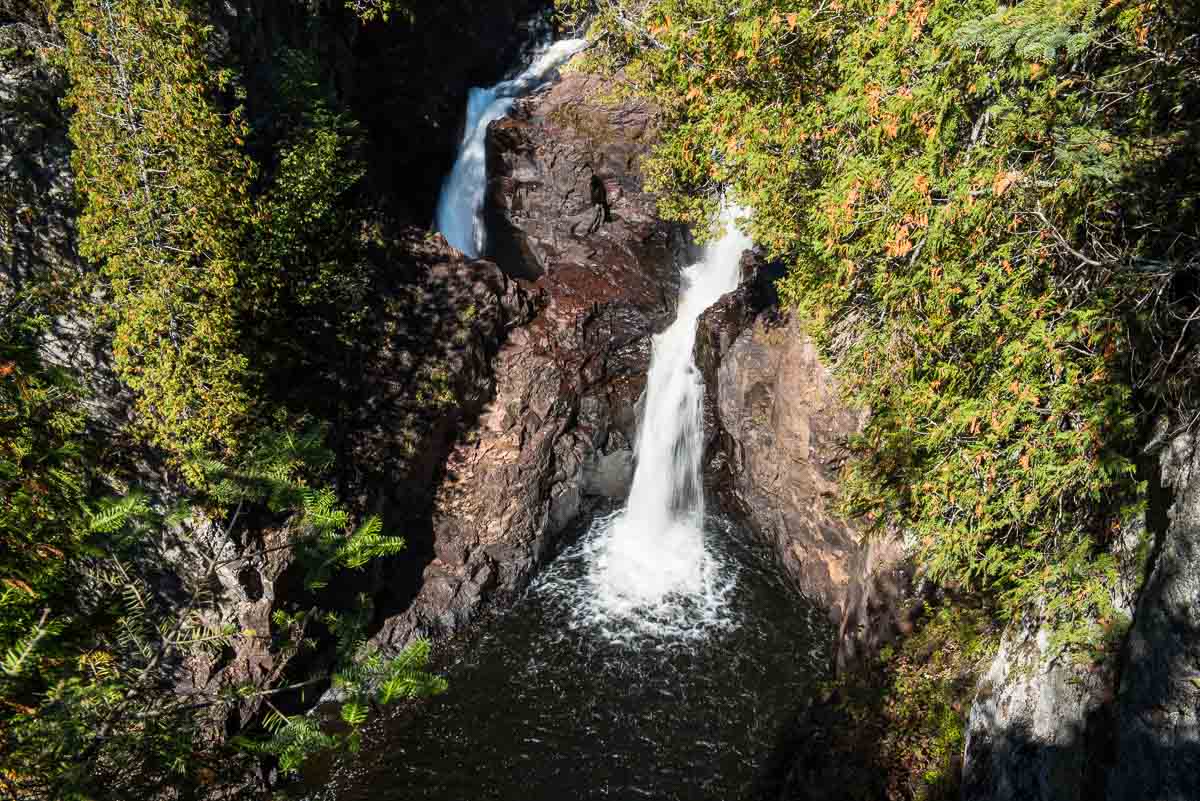
Devil’s Kettle Falls

Photo Credit : MN Trips

There is a place in the United States of America called by the name Minnesota which is known for this mysterious waterfall which is known as Devil’s Kettle Falls. This Waterfall has been puzzling the scientist, geologists and Hikers for many decades because as it looks like an average waterfall that drops about 800 feet of water but the interesting part about this waterfall has two different bodies of falling water. One side of the body of waterfalls on Lake Superior and the other one falls straight into a huge natural hole in the ground, where this water lead is still a mystery. Many researchers or curious people who visited this place has poured many items like dye, sticks, ping pong balls and even logs into the kettle but one of them found any trace of a thing in the water or the nearby area. 

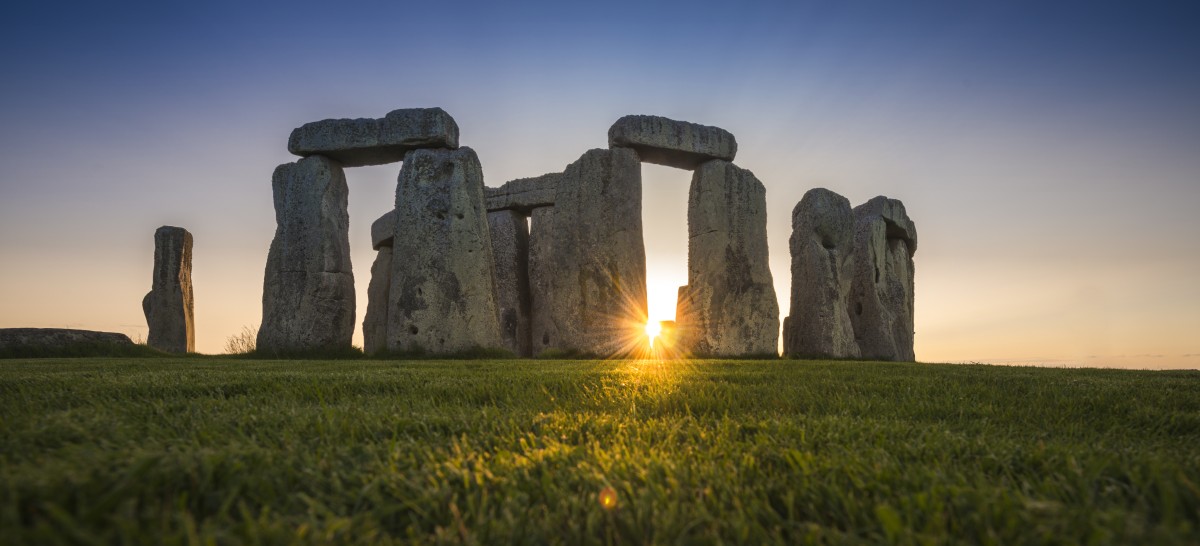
Stonehenge 

Photo Credit : Olympus Europa

It is a unique prehistoric monument on Salisbury Plain located in Wiltshire, England, two miles (3 km) away from the west of Amesbury. It is considered to be one of the architecturally sophisticated and only surviving lintel led stone circles in the world. According to the Encyclopedia Britannica, Stonehenge was constructed in six stages between 3000 and 1520 BCE. Nowadays we have machines that can help us lift heavy materials to build huge buildings and monuments, but back in those days when Stonehenge was built no one had access to this type of technology. Many questions are arising that how can anyone have lifted stones weighing anywhere from four to thirty-seven tons and also that why were they doing this, archaeologists have come up with plenty of theories to explain this phenomenon some guessed that the men who built Stonehenge used a system of sledges rollers and boats others hypothesized that it was built with a weighted levy system well many of these guesses seem to make sense to a certain extent to this day no one has a definitive answer.

The Hessdalen Lights

Photo Credit : Pinterest

This is an unidentified light which are 12 kilometres long located in a Hessdalen valley in rural central Norway. The residents of Hestia land valley Norway have to live with this burning question every single night it has to Lin Valley brightly coloured lights appear in the sky in different colours and shapes for the last four decades and possibly longer. This phenomenon has continued to puzzle scientists, according to some theories these lights could be caused by a nearby radioactive lake emitting particles that light up in the air as they evaporate other scientists think that the base of the valley contains a lot of sulfuric acids when it comes into contact with the water it causes sparks to appear in the sky even though there are many different guesses as to why this town gets their very own light show every night scientists still haven’t come up with a definitive answer.

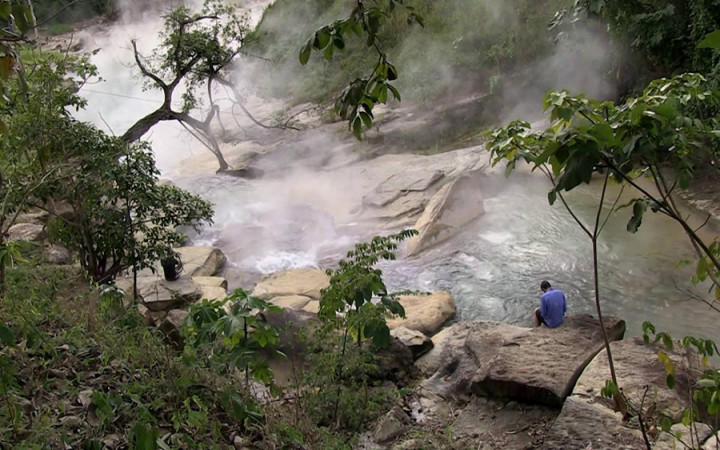
The Boiling River in the Amazon

Photo Credit : Wonderopolis

In the Amazon forests lies a floating river in the forested region of my Mayantuyacu that boasts temperatures so hot that any person or animal that falls into it boils alive from the inside out. This river runs at an unbelievable 196 degrees Fahrenheit dang that’s hot locals used the water to brew tea and sometimes they cook with it well this river’s high temperature is incredibly intriguing what makes this natural phenomenon a mystery is a fact that no one can figure out what makes the water so hot. According to geophysicist Adres Ruzo, boiling waters are typically attached to an active volcano or magmatic system like the boiling River Trail in Yellowstone National Park in the US but in the town of my Mayantuyacu, there are no active volcanoes within 400 miles. Over the centuries residents of this town believed that the river had magical healing powers and used it spiritually and medicinally. Ruzo guesses that hot geothermal waters pour in from cracks in the earth heating the temperature of the river but this has yet to be scientifically proven. 

Movile Cave

Photo Credit : Britannica.

There’s a place on earth with its ecosystem and atmosphere similar to another planet well the name of that place is movile cave which is located in the southeastern part of Romania remain closed in complete darkness for approximately 5.5 million years. It wasn’t until workers discovered the cave when they were looking for a place to build that anyone learned about it scientists carved out an opening to the cave and found that a completely sustained ecosystem was thriving inside as a pathway was carved through the rock past numerous tunnels. Scientists found a lake of sulfuric water that stinks, the air was filled with hydrogen sulfide and had 100 times more carbon dioxide than Earth’s air contains needless to say this air is completely toxic what’s even crazier is that a whole ecosystem has been existing in this cave with 33 species that can’t be found anywhere else on earth this cave gives us a glimpse of what could exist on other planets with completely different atmospheres how it managed to exist on earth all this time is still a question. 

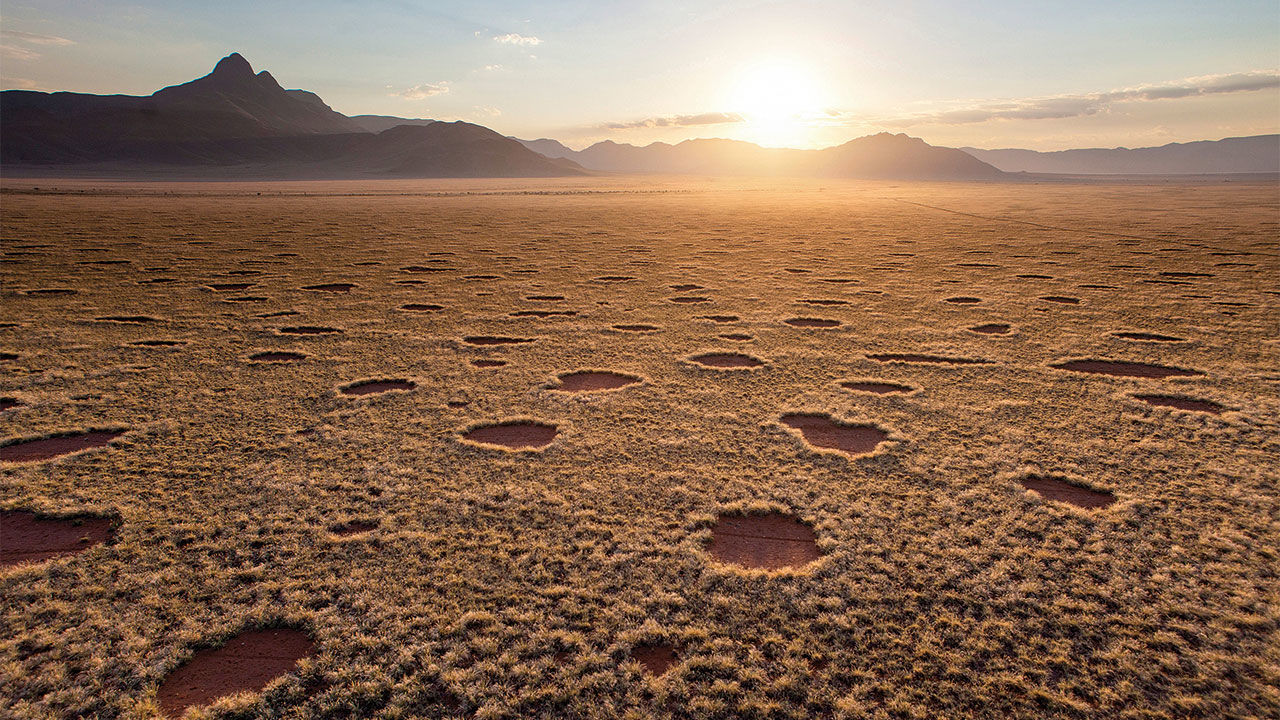
Circles of Namibia

Photo Credit : Science

Namibian deserts are full of elephants, snakes, antelope and also hundreds of evenly placed circles which makes the mysterious part of this desert, this brutally hot desert is home to a vast array of wildlife but even more interesting are the fields of grass with evenly spaced holes and now these circles are almost perfect and range anywhere from 10 to 65 feet in diameter many scientists have offered up theories as to why these circles appear instead of other more random shapes. In 2013 environmental scientist Norbert Juergens hypothesized that termites were the cause of these circles but like all the hypotheses that came before his, it was later disproved.

Five unique jobs no one told you about

If you ask any high school student or a graduate what is their career goal in life, you would get traditional answers like Engineer, Doctor, Lawyer, IAS, Banker etc. These are commonly known careers and as such have quite a large competition in the sector. The market is cut throat in these fields and very few manage to land the job of their dreams.

If you are passionate about these fields then more power to you but if not and you are still searching for your true calling then you can try your hands at these rare jobs not many are familiar with.

Headhunter

In other words professional recruiters, they are hired by organizations to hire employees without any advertisement. Finding a perfect candidate for a particular position is quite a hectic task so to save themselves time from interviewing multiple candidates, some companies prefer to hire a headhunter instead. This is mostly done to recruit higher level employees. It can be much more efficient for organizations to hire headhunters to cut down on the time and expense that goes into the recruiting process. To be successful in this field you need to have a strong professional network and a sharp eye for talent so you can shortlist the best available candidate for the job.

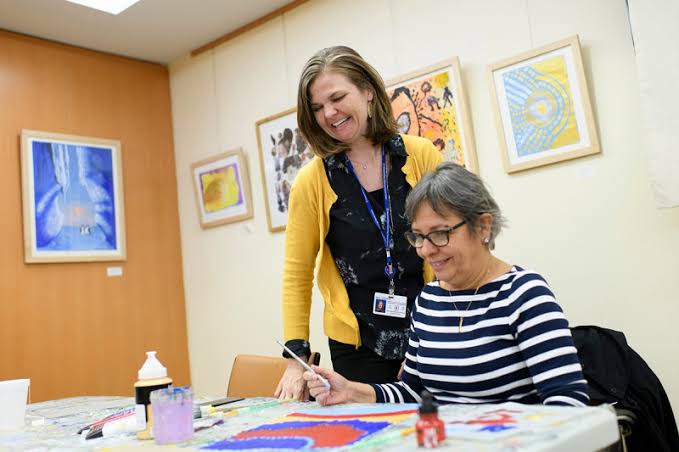
Art therapist

Did you know that art can be used as a form of therapy? Yes, this psychology career uses art to reduce person’s stress, anxiety and improve their self esteem. It’s main goal is to serve as a healing process and provide with many other mental health benefits. So, not only do you provide assistance to people in need, you are also doing something different. This can be useful for people who can’t express themselves verbally. If you are searching for interesting careers in psychology, then becoming an art therapist might fit the bill.

Professional Bridesmaid

You heard it right. Not many people think this could be a career option but it is and quite a successful one may I add. Now you may wonder why would anyone need a bridesmaid? Well answer is simple. Planning a wedding could be very tiresome for bride and her bridesmaids so hiring a professional bridesmaid can relieve them of that stress. As a professional bridesmaid your duty may involve Dress shopping, planning bachelorette party, managing guest list, catering, filling in for uneven number of bridal party. If you are a party planner and love weddings then this might just be a good opportunity for you.

Food scientists

Almost every edible item you consume has a good scientist working on it. They make sure that the food tastes delicious while maintaining the nutritional value of it. They are responsible for coming up with delicious flavors as well as different food processing techniques. They also come up with sustainable food items which can be used when the expenses increase every day.

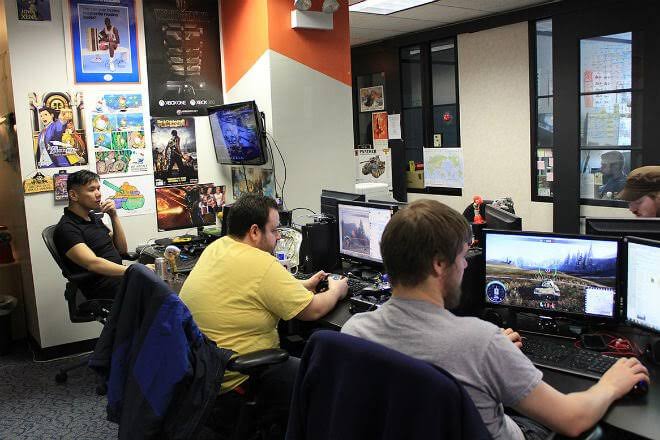
Video game tester

If you are avid gamer you might as well get paid to play it. Tester’s role is to play the games which haven’t been released yet. Your job is to check every element of the game for the developer to make sure there are no glitches or errors.

Top 5 water falls in India

Hello guys !Today’s topic is top 5 waterfalls In India.

Waterfalls are always a sight to see no matter which waterfall it is .They bring peacefulness and refreshing vibes to people when they visit them.
It's like how we use filters to glorify our pictures similarly waterfalls adds beautiful filter to the nature.

1. Jog waterfalls:-

Located :Sagar taluk in Shimoga district of Karnataka state, India.

Speciality: The water thunders down the slope losing contact with the rocks .It is the tallest un-tiered waterfalls.

From:timesofindia.indiatimes.in

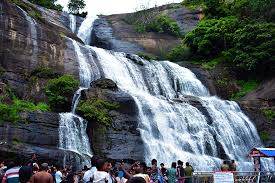
2.Kutralam Five falls:

Location: In Tenkasi district in the South Indian state of Tamil Nadu bordering Kollam district, Kerala.

Speciality: considered to be medical spa as these waters consist of medical smells.

From:tamilnadutourisminfo.com

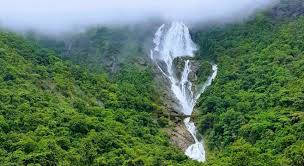
3. Dudhsagar waterfalls

Location: On the Mandovi River in the Indian state of Goa.

Speciality:Called as sea of milk and Dudhsagar Falls is amongst India’s tallest waterfalls .

From:insider.in

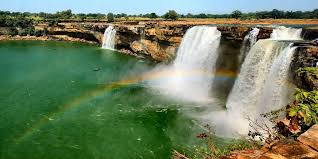
4.Chitrakote Waterfall

Location:On the river Indravati in Bastar district of Chhattisgarh state of India.

Speciality:Also called as Niagra of India, this waterfall is that during the rainy days, this water is reddish, it looks absolutely white during the summer moonlight night.

From:cgps.info

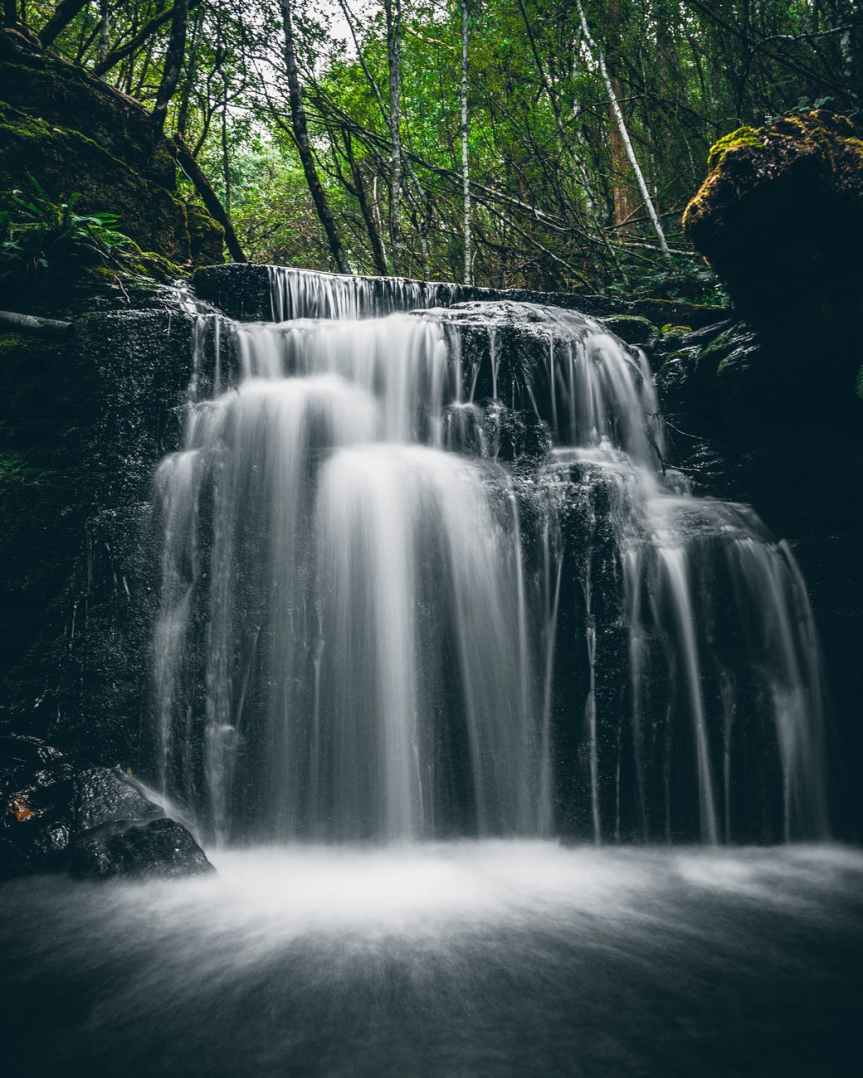
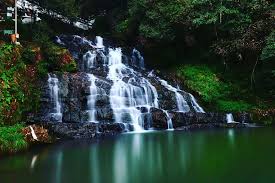
5.Elephant Falls

Location:Falls is situated at the outskirts of the main city of Shillong in the East Khasi Hills District, Upper Shillong.

Speciality: Also called threes step waterfalls ,it is a two tiered waterfall and named after an rock that looks like an elephant near the falls.

From:Tripinvite.com

Thankyou^^

The REAL SMURF village

Hello guys! Have you ever watched the movie “smurfs”. If not definitely watch it it’s a fun film.

But this just an animated movie but there exists a real smurf village in this world!
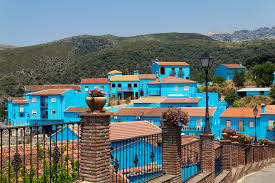
This village is located in juzcar ,spain and can be easily located ,you want to know why? Because it's a blue-tiful village.
From tyla.com

Although the smurfs are not present in this village and is a normal village like any other then why do you think it is called a smurf village .

It is called because the whole village painted their houses in blue dedicating it to the film smurfs.

From ladbible.com

They even have statues located here and there and visiting this “blue-tiful” city you enter into a whole new world.

Like every other village everyone leads their daily lives normally but painting a whole village is something to talk about.

This painting of the whole village in blue colour was something that is intiated to promote the movie "Smurfs " which can captivate people by thinking out of the box .
From:veebrant.com

They chose this village juzcar because they are famous for mushrooms and Smurfs love and live in mushrooms so this place is perfect as this city not only promotes the movie but also can be related to the movie.

This started attracting tourists ,travellers,celebrities  to this city ,this place became a hub for all the smurf fandoms to gather .

Every wall has a smurf painting on it them and evey corner of the city is painted in blue and an astonishing amout of effort has been put in to this.

From hlc edu.in

Although the sponsors offered to paint back the village into white but the villagers liked as it is at present now and declined their offer .

This place gives off an relaxing vibe where one can visit it to just walk through the village and experience the refreshing atmosphere and appreciate the village for its simplicity.

Thankyou^^.

Courses and Career: Peaking Into Some Lesser Explored Ones

Selecting a future line of study and eventually profession can sometimes become a bit stressful. Or bland. If not many options are known. We all, at some point of time, have dreamt of doing something unique, or tread on, as Robert Frost’s poem title beautifully captures, ‘The Road Not Taken’. Hence, you are being presented with a collection of courses of scientific discipline, which is not mainstream, yet.

  • Ethical Hacking: Wait a second before judging this profession! It is hacking, yes, but for a good cause. Ethical hacking, also known as penetration testing, is used to test the security and susceptibility of an organization’s network to a breach. This usually results in data theft, identity thefts and other cyber crimes. So, the job of an ethical hacker is to identify and possibly, help to rectify the more weak openings in a network. Though, this course can be more unambiguously classified under IT, but in recent times, the subject has carved its own niche in the market, with an ever increasing demand. Ethical hacking courses usually also include other forms of security to impart an holistic understanding of IT security.
  • Geology: One common misconception about this branch of science is that this deals only with rocks. But in reality, it does not! Geology aims to provide a more in depth understanding about the physical and structural development of Earth. It inter relates various disciplines of science in relation to Earth. Geology also encompasses the study of materials and components making up the Earth, including living organisms. It is a lesser known fact, but geology is a vast and diverse study, overlapping with various scientific disciplines. Hence, the geologists have no dearth of options to consider while embarking on a professional journey.
  • Urban planning: Unplanned expansion of a settlement leads to many short and long term issues. And in today’s world, space crunch is a very real problem. So large scale developments need to be planned to have optimum utility and also not cause much harm to the surrounding environment. Here comes in the job of urban planner. The individual might be responsible for things like sustainable designing, good connectivity with other locations, optimum structures with respect to geographical location and climatic conditions, land use planning etc. 
  • Astrobiology: Sounds interesting, right? And it is! Astrobiology deals with the study of the scope of extraterrestrial life in the Universe. The study includes origin, evolution, distribution and future possibility of life across the unending stretch of cosmos. Astrobiologists, alongside other individuals from disciplines like astroecology, astrogeology and biochemistry, analyze these possibilities based on whatever knowledge is obtained about other planets and planetary systems.
  • Pisciculture: India, with an abundance of water bodies, also has a large population of fish consumers. And, obviously with growing demand, sometimes it’s hard to keep up with a constant supply. Hence like the Green Revolution, Blue Revolution happened too in India. It aimed at the development of the aquatic industry, for various purposes. Pisciculture, also known as fish farming, focuses mainly at rearing and breeding fishes in an economic manner, usually as a source of food. Optimum use of water bodies (usually fish tanks or enclosures) is also an important aspect, so that maximum cultivation can be done at minimum permissible limits.

What makes someone to write something in a blog rather than writing somewhere¿?

Is Introduction compulsory in every introduction,Is it so¿?If so why did I undo it ¿?Is it to make my Blog writing to look unique¿? If not then why am I mentioning it as unique.Do people who are unique will try to prove them as unique in such an ordinary way¿?To answer such questions would it be necessary to give a glance to this post¿?

What makes someone to write something? Does this happen sometime? To answer this I am questioning myself. Before giving a glance to my writing, you too should pose this question to yourself if at all you have something to write up somewhere sometime or  the other time. People who have a thought of giving a thought about my thought should give a thought. People who wanna write a blog are categorized as follows:(I don’t know whether the blog could be also written in this way…I think the blogger have the rights to write the way he likes)

Type 1: people write about something they think they know(but actually not).They are in a urge to share the information (not the actual information but the information that they knew about something)that they had got it somewhere so that the other peers could know that this guy got something or this guy is something..The fact is that the guy is “SOMEONE who knew SOMETHING”, something only not the whole thing.

Type 2:People wanna write because people write. He writes because she does. This is true because people can’t take it the fact If he or she does why can’t I,Is it good. It is really good if someone tries to write something because of someone then it’s something.But we can’t neglect the fact that he only writes because he only wanted to write not because he wanted to write.They only write to write. Think about your category. If you not belong anywhere then you should  go somewhere because this isn’t your place.

Type 3:Why can’t people be calm about something they knew?If they knew then they better keep themselves rather than telling the whole world? Does this make something to them if someone gonna know that he or she knew something that no one around us never knew it’s existence. Being calm resists your knowledge to yourself so that no one will ever knew what I knew. Knowing the things and keeping it unknown will be known someday or the other. So they will try to take the knowing by revealing the things only in order to reveal and make sure that he had revealed. Telling the things that doesn’t really matter a much rather than telling the actual thing only in order to make us believe that they too had told. Isn’t it good to be jealous of knowledge?It’s good but not faking the knowledge and writing fake blogs to spread the non existence.

Type 4: They knew nothing and act like that the world is running because of them. It is easy to identify such people because their population is more (or) less more. They try to copy or modify the blog and they make us believe that the blog they copied from will become the copier.They think they are smart because they are only thinking to be smart rather than being smart.

        Leave a comment about my category. Do I belong to any of these.If so I may belong to any one of the category,then how could I know about the other categories. Do I belong NOWHERE or only for NOW-HERE?