Stop buying, start adopting.

 At Kotul, Maharashtra, on June 12, 2022. A little kid named Viraj and his sister out for a morning stroll at six in the morning. They were attacked by a pack of stray dogs at a given distance, particularly Viraj. His sister made a valiant effort to save her, but she was unable to stop the dogs from attacking. A pack of stray dogs attacked and murdered Viraj. It sounds ridiculous. There are other incidents documented online, including one that happened on May 27, 2022, when a pack of dogs attacked an alone toddler. After removing the kid from a private hospital unit on June 28, a stray dog murdered the 2-day-old youngster. It is hazardous.

People forget about this issue since it never receives adequate attention. Thus, there are no measures in place to manage this.

Over 30 million stray dogs are said to exist in India. Free-roaming pets is the term used by the World Health Organization (WHO).


A stray dog is a who?


Three categories are used to group this.


  • An unrestricted dog can move wherever they want but is partially dependent on humans for food. This dog falls under category one.

  • An unrestricted dog who is completely independent and not dependent on humans for their food. Those dogs can find their food in the garbage. These dogs fall under category two.

  • The third category of dogs is those who have been abandoned by their owners. 


The canines in groups two and three are very different from one another. The dogs in the second category know how to live, while the abandoned dogs do not. They typically pass away from sickness or in accidents.

India has a far greater percentage of pet abandonment than the rest of the globe, according to the 2021 State of Pet Homelessness Index study. In India, more than 50% of both present and former pet owners admitted to having abandoned or surrendered at least one animal. This explains why there are so many street dogs around.


The issue is not that the government is inaction. The government is requiring them to follow some regulations.


Animal Welfare Board of India (AWBI) strives to stop the mistreatment of animals. Dog feeders were put in place, which give stray dogs food.

What is the solution to these problems?


  • sterilize a dog as a pet, A portion of your pet’s reproductive organ is surgically removed during sterilization to prevent it from reproducing in the future. The majority of animals that are sterilized are male and female dogs, cats, rabbits, and guinea pigs. Castration, the removal of the testicles from male animals, is a widespread practice
  • Please vaccinate your dog as part of the immunization program if you own one. because a variety of disorders may impact it. Therefore always remember that prevention is preferable to treatment.
  • Enforce pet management regulations to prevent dog owners from leaving their animals behind.
  • Habitat management: Stop spreading needless trash if you want to maintain a healthy habitat.
  • control canine reproduction, There are two ways to stop a female dog from going into heat: Ovariohysterectomy (spay) surgery, number one: Recommended. The uterus and both ovaries are surgically removed during an ovariohysterectomy, sometimes known as a spay procedure.
  • Start adopting stray animals; India is home to 30 million strays. There are around 1.3 billion people living in our nation. If a group of at least four people starts caring for at least one dog, then further options are not necessary.

Feed one dog instead of one hundred if you can’t. A stray dog’s existence is an extremely miserable one. They have no hope when they get up since they never know when an accident may claim their lives. They saunter about looking for food and water. To be safe, they never stop observing the goings-on around them. Start adopting them and save them.

Credit:-

  1. Dhruv Rathee.

  2. Canine Distemper (Hardpad Disease) – Dog Owners.

  3. Sterilizing your pet.

  4. Gonad-Sparing Surgical Sterilization in Dogs – Frontiers.
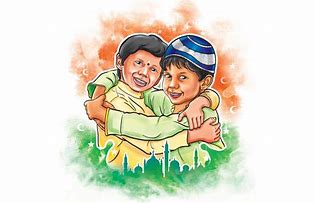
Top 3 Hindu-Muslim Unity Advertisements

Advertisements have the potential to change human thoughts, behaviour and actions. They can do a lot more than just promoting brands. Through visual and auditory modes, advertisements have the competency to bring about a societal change and provoke a positive impact on people. Readers can have a glance at such impactful advertisements through the examples listed out in this blog.

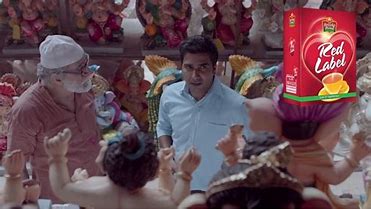
Red Label (Tea Brand)

A man visits a store to place an order for a Ganesh idol (A Hindu God). The shopkeeper exhibits the different idols created by him to the man. While having a conversation with the buyer the shopkeeper also illustrates the meaning behind the different forms of the Ganesh idols. To the buyer, this shopkeeper seems to be a very knowledgeable man, who has much information about the Hindu worship and reverence. While conversing with the buyer, the shopkeeper puts on the Kufi (skullcap worn by Muslims). The Hindu buyer is taken aback after realising that the shopkeeper selling the Ganesh idols is a Muslim by religion. He attempts to cancel his order and go to his workplace. The Muslim shopkeeper offers him a cup of tea before leaving. The vendor explains him that , work is worship too, one need not compulsorily pray. The Muslim man was in fact worshipping God, by creating his idol. The buyer takes a sip of tea and plans to change his mind. He does not cancel his order and amiably buys the idol from that vendor on that day itself. The Brand, Red Label intends to portray that their product attempts to create harmonious relations between different religions.

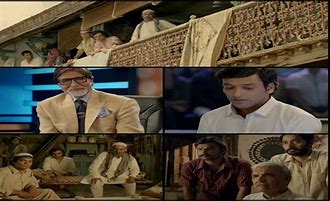
Kaun Banega Crorepati (Reality Game Show)

Six years ago, KBC came up with a phenomenal ad campaign featuring communal unity. In the ad it has been shown that, a Hindu boy had been selected for the episode. His family members were all set to bid him a goodbye as he was about to step out of his home, while his Muslim neighbors were watching him from the floor above. Just as the Hindu boy was about to step out, his neighbor sneezes. Sneezing while someone is about to leave from the doorstep is considered as a bad omen in the Hindu community. The Hindu boy’s family members feel agitated at the neighbor for sneezing and they misinterpret that, he had done it deliberately. Hours later, while facing a difficult question on the show, the Hindu participant decides to use the option of ‘Phone A Friend’ (According to the game’s format, this option is availed to all participants only once, whenever they wish to make use of it). He then rings up the same Muslim family and asks them the question i.e ‘What is the meaning of As-Salaam-Alaikum ?’ The man is overwhelmed by such a trustworthy gesture by the young boy. He answers his question accurately and assists him in winning the prize amount. This advertisement touched the hearts of many Indians. It indeed reflected the idea of communal harmony.

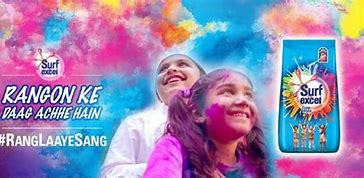
Surf Excel (Cloth Detergent Brand)

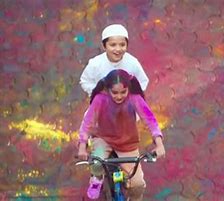
The advertisement broadcasted by this brand, intends to portray how Indian festivals are secular in nature. An individual from any community can enjoy a festivity according to his/her discretion. It is shown that, on the day of the Hindu festival of Holi (people celebrate this festival by applying colour on each other and splashing water with waterguns/waterballoons), a little boy wearing a white robe is hesitant to step out of his house. A girl of the same age as his, notices this and challenges her friends around, to smear all their colours on her. Her friends do accordingly, by throwing all the colour on her, from the floors above, as she waits down on her little bicycle. By doing so, she makes them use all their colour supplies on her and no colours are left out with them. Later, she offers to drop the boy to the place where he wants to go. It is then shown that, she drops him to the mosque, where he wanted to go to offer Namaaz (Islamic prayers). She also jests that, after he’s done with his prayers, the other kids will not leave him without including him in the merry festivities. He agrees to join them in the Holi celebrations after his prayers are done. The ad tagline said, “Rang Laaye Sang, Daag Acche Hai” (colours bind people together, such stains should be cherished). This advertisement depicts how mutual respect for each other’s religion can bring about unity. The principles of unity in diversity must be inculcated in children from their grassroot years, so that peace and harmony prevails in the society.

Advertisements can have a huge impact over the society, in terms of patriotism, unity, cohesiveness and peace-keeping. Various brands are positioning their ad campaigns around the pivot of National Unity in today’s times as the audience nowadays is readily accepting things which were not accepted earlier. Brands thus, not only create a name in the market with their products but also with their ad campaigns promoting social values and messages.

Partition-A challenge to the Nation

Photo by Still Pixels on Pexels.com

It happened years ago when India faced partition be it with Pakistan or within Andhra Pradesh(making of Telangana). These involved change of boundaries and beliefs but moving ahead we all adapted to them and welcomed new beginnings.

Our Independent Nation was believed to be achieving great heights in the coming years of Independence. The hopes were high and so was the joy and enthusiasm among the citizens. They dreamt of a nation where everyone would be his own master; where they will earn their living their own way and where, there would be innumerable possibilities for growth and development. Of course, the excitement was over their mind and the feeling of freedom was another level of peace and serenity. But, did that happened likewise ? Yes we have come far enough and are still moving ahead. Our past position and present scenario are way different in terms of growth which we have had been able to achieve through years of struggle as a nation. Being labelled as a developing country shows the mark we have reached through collective efforts in the areas of infrastructure, economy and livelihood. The focus is now on sustainable development which aims at development at a pace which does not harm the future goals or requirements of the future generations. This appears a fantastic model but the present needs too need attention to the same level now.

The increasing rate of unemployment, poverty and discrimination are amongst the major issues need to be resolved in order to build a strong force serving the nation at its best.

Each human is a resource and can be utilised in a way that contributes not only to the growth of the nation but the world as a whole. There is a lot that is still unexplored or which requires actions to be taken globally. Individual growth is complimentary to this.

Employment opportunities need to be developed creatively. It simply implies there are already many opportunities, what lacks is creativity and innovation. Though we are constantly innovating ideas but they are technology oriented and not human focused. Innovation is required so that there are ample opportunities for all of us to explore and learn. Technology makes us sick when it is used to make even basic tasks of our life, automatic. Hard work should always be encouraged. Technology feels good when it is used to make complex things simple. The boundaries we see between the rich and the poor, the educated and the illiterate, the working and the unemployed, the women and the men; all these make up for the partition India is facing.

As it is said a lot, “rich are becoming richer, poor are getting poorer”, similarly, the distances are widening between the other above stated partitions as well. The discrimination on the basis of colour, caste, religion, region, gender, etc. are parting the country as we go on. It seems they are left behind on the journey towards development. Still there are many places where women are treated lower to men, having no freedom to live their own way. The ‘minority groups’ still don’t have their rights as a citizen. The “untouchables” continue to be unacceptable and what to say about discrimination faced by the transgender. It is not always the government to blame upon. In fact they launch various schemes to help and support all the classes and sections of the society. The dust remains in the mind of the people who are not ready to accept everyone as their equals, the ones who believe in superiority of one over the other even after living in a democratic country. It may also happen due to the past relations. “What we learn being grown up is what we follow”, this can be a reason why people have a fixed mindset which is hard to change. But as we keep moving there arises a need to take up all, together. The nation is one as a whole and these partition need to be erased for the sake of all. There are more issues that need attention by us, therefore the previous ones need to be sorted to focus on the upcoming. If we can bring the whole nation together, not only by words but behaviour as well, we would soon be able to solve our global matters of concern as well; which include pollution, over-population, ozone layer depletion, water management, etc.

The Severance of Unity

Photo by AaDil on Pexels.com

The partition which happened in 1947 still after 75 years at this day of 15th Aug it gets our wound fresh with lots of stories memories and whatnot.

The fear, the uncertainty of again getting dependent on the system which will always give preference based on caste and many things led the thrive of this separation based on a separate electorate for Muslims.

Further, the boundaries and territorial distance of two provinces freshly separated was figured out and we were officially separated on the 14th and 15th of August in 1947.

This Separation left many families ajar, torn, and many wounds that were inflicted for a lifetime, leaving an impact for the generations to come.

Today while we are celebrating the joy of 75 years of Independence, we are also ought to mourn the loss of the families separated during the separation, tears of many for the heart wrecking separation from their loved ones.

Last Minute Mechanism

According to this, the Britishers were able to control our India for the very last minute and giving us the scar for many more years to take on.

Many views are there that suggest that this division and partition was always there even before the 1940s as they were afraid of the political dominance of Hindus that was 80% of the total population over other people.

This Divide and Rule policy of Britishers was made to interest the group, which we’re willing to collaborate with this policy and securing a unitary position for them.

The Legacy which killed and Displaced

After many years of sacrifices and many fights, India got the much-desired independence but it was not the independence only but the start of yet another blood bath where many were tortured, many was killed and many even didn’t make it to their family during the biggest migration that took place.

After the partition of India and Pakistan, many Hindus and Sikhs started to move apart and Muslims too started to move to their respective nation.

Many communities started attacking each other in the terrifying sectarian violence, many casualties took place and millions of people were left without home and family.

Partition Remembrance Day

The partition and its haunting memories can never go down just in pages in history as the deep wound it has on several families either some in that part or some in this part can never be unseen and undo.

To remember our sorrow and joy after 74 years the honorable Prime Minister Modi Ji decided to mourn the 14th of August as the Partition Horror Remembrance Day to always remember the sacrifices of people and their pain.

Many Hindus and Sikhs fled the provinces of the newly made provinces of Pakistan to save their life but a few were able to touch the border of India alive, many also survived the brutal rapes when migrating for their homeland.

Conclusion

Before Muslim and Hindu, we all were a part of our mother India, we all were struggling together for the gift of freedom then how just the fear of something very absurd can make humans so thirsty for the blood of another human in the name of fear, couldn’t they feel the pain they were inflicting on other.

A big loss and a sorrowful ending of brotherhood was all this partition brought on us

Empathy vs Covid-19

The Covid-19 pandemic has affected everyone disproportionately and unfairly. Health care workers face the harsh realities of the virus head-on. Teachers have had to adapt their years of experience gained from conventional teaching to suit online classes. Millions face the harsh reality of poverty and hunger everyday. Millions have lost their hard-earned jobs. Businesses have been forced to shut down. Hate crimes against groups of society that are baselessly and cruelly accused of spreading the virus have drastically increased. Mental health issues have risen and fueled by isolation, anxiety, uncertainty, and fear. More than 150 million people have gone and continue to battle with this invincible enemy. More than 3 million people have lost their lives because of this virus. Families have lost their loved ones and the world has lost countless dreamers. This virus cossets no one.  

Early notions such as the pandemic would be ephemeral and infections were punitive for those who flouted the necessary precautions and rules have diminished during the ongoing second wave of the Covid-19 pandemic. In my opinion, this is due to a rise in empathy amongst the people of India. Simply put, empathy is the ability of a living being to understand and share the feelings of another living being. Colloquially, it is referred to as “putting oneself in someone else’s shoes” 

The Government of India has had no shortage of opportunities to show empathy and alleviate the suffering of Indians. The Government has neglected its duty to serve the country and as Arundhati Roy put it, has committed a crime against humanity. The government has failed on many fronts. I would like to highlight a few that showcase an egregious lack of empathy. 

Firstly, the poorly planned nationwide lockdown, which was imposed with a mere 4 hours of notice, left thousands of migrant workers helpless, stranded, and vulnerable. With no help from the government, these migrant workers bravely decided to walk back to their villages. This lockdown was stained by police brutality and hate crimes against people that just wanted to survive. The lack of condemnation and apology by the government showcases a lack of empathy. 

Secondly, in an attempt to alleviate the suffering of Indians, the government launched the risibly named PM CARES (Citizens Assistance and Relief in Emergency Situations) fund and its primary objective was “to deal with any kind of emergency or distress situation, like posed by the COVID-19 pandemic and to provide relief to the affected”. The fact that a government that has never shied away from repeatedly putting their plans such as “Make in India”, “Swachh Bharat”, “Beti Bachao Beti Padhao”, etc on the highest possible pedestal has created such an opaque and inaccessible fund shows a lack of empathy. 

Thirdly, the government’s actions before the second wave hit can be described as complacent, incompetent, and overconfident. On the 21st of February 2021, a resolution was passed in the BJP National Office Bearers meeting that “unequivocally hails its leadership for introducing India to the world as a proud and victorious nation in the fight against Covid”. Additionally, the government decided to export vaccines to other countries without ensuring adequate supply was available for Indian citizens. This not only leaves Indian citizens in danger but also betrays all the countries that depended on “the pharmacy of the world” as vaccine exports were abruptly stopped. None of this would’ve happened if the government showed empathy towards the people of India and established appropriate contingent plans.

Fourthly, while the second wave virulently spread and claimed thousands of lives, the government showed no empathy. While a strong case can be made to prohibit sitting union ministers from campaigning in elections that they are not contesting during a crisis, a complete stop to the democratic process would have been detrimental. The occurrence of huge rallies during a pandemic is untenable and all politicians are guilty of this. The myopic and unsympathetic nature of the government is accentuated by the needless comments that they have made throughout the pandemic.  

Finally, the iniquitous lack of co-operation between the centre and states to fight this pandemic showcases a pathetic lack of empathy. The failure to come up with a comprehensive and transparent plan for the distribution and supply of oxygen and vaccines has caused unimaginable suffering to the people of India. Any attempt by the government to set aside pride and partisanship, as leaders have done before when facing a crisis, and listen to good advice and imploration would be a sign of empathy. No such attempt has been made. Their lack of action and belated action have had fatal effects, but the government has not shown a sign of remorse or empathy.    

But all is not lost. There have been instances in which the government has shown empathy. Most states have decided to offer a Covid-19 vaccine for free for different age groups. The central government also has plans to allow final-year MBBS students to join Covid duty before completing the NEET exam. This will drastically reduce the strain faced by health care workers taking care of Covid patients. The government of Karnataka also announced that it would form a team of 15,000 civil defence volunteers in Bengaluru for tracking and tracing Covid-19 patients. This is a significantly more empathetic and humane approach to managing the crisis than the sadistic and vicious approach used last year that made victims of Covid-19 feel like criminals.

However, none of these actions are as consequential and empathetic as the profound empathy amongst the ordinary people of India. Early displays of empathy were seen when people started taking care of stray animals during the lockdown. Furthermore, countless rations and donations were given to the stranded migrant workers to help them cope with the dire situation they faced. From providing meals, oxygen, assistance to the elderly and handling cremations, Gurudwaras around the country have been the perfect embodiment of empathy. Conspicuously, the empathy and equanimity shown by the youth of India has truly been remarkable. With the help of social media, the relentless youth are constantly doing their part by helping those in need. 

Empathy also provides a strong basis for our everyday fight against Covid-19. Precautions like wearing a mask, staying indoors as much as possible, social distancing when outside, and getting vaccinated as soon as possible would not be flouted if people were more empathetic. For those of us who have not been directly affected by the virus yet, empathy goes a long way in helping and caring about those who have. 

Perhaps, the most optimistic and quixotic change that we can hope for during this precarious and seemingly inexorable situation is the crippling of traditional barriers that have separated us before. If we, as ordinary citizens of India, continue to disregard gender, caste, religion, wealth, age, ethnicity, language, political ideology, and other barriers when helping those affected by this pandemic, we could truly be united in this fight against the invisible enemy. Together, we shall overcome.  

Is Uniform Civil Code really needed ?

Uniform civil code

Uniform civil code is undoubtedly one of the most debatable topic, which can basically be derived from Indian constitution which mandates to replace personal laws based on the scriptures and customs of each major religious community in India with a common set of rules governing every citizen. Mainly their personal laws like laws of marriage, divorce , adoption , maintenance.

Uniform Civil Code (UCC) is defined in our Constitution under Article 44 of Directive Principles of State Policy. In almost India there is no state to apply these special provisions but In Goa which is the only state which has a common family law and 1954 Special Marriage Act allows any citizen to marry outside the realm of any special religious personal law.

The British Government in 1840 on the basis of Lex Loci report had framed many laws bit personal laws were left out intentionally. This era many reformers were raising voice for the for making laws against the women discrimination like sati etc. so the formation of many laws were done and they refuting themselves would result in the proper dysfunctioning ,which they knew, at the panchayat level .

Then comes the period of 1946 where B.R Ambedkar the chairman of the constitution assembly wants to regulates all these personal laws by uniform civil code but some minority groups and communities like of Muslims protested against it, As a result only one line is added in the Constitution under Article 44 in Part IV of DPSP. The main reason was minority mainly Muslims felt that minorities mainly Muslims felt that their personal laws are violated or abrogated by it.

As the secondary result of these the series of Bills were passed to codify Hindu laws in the form of Hindu Marriage Act, 1955, The Hindu Succession Act, 1956, The Hindu Minority and Guardianship Act, 1956 and the Hindu Adoption and Maintenance Act, 1956, are collectively known as Hindu Code Bill (covers Buddhist, Sikhs, Janis as well as different religious denominations of Hindus). On the other hand, Muslim personal laws are still primarily unmodified and traditional in their content and approach. The Shariat law of 1937 governs the personal matters of all Indian Muslims in India. It clearly states that in matters of personal disputes, the State shall not interfere and a religious authority would pass a declaration based on his interpretations of the Quran and the Hadith.

Some merits of UCC are that it applies this would keep us integrated. No one feel discriminated because he or she comes from another religion. Uniform Civil Code will provide women with the right to equality and justice in courts of law- irrespective of their religion in matters pertaining to marriage, divorce, maintenance, custody of children, inheritance rights, adoption, etc. A unified code is imperative, both for the protection of the vulnerable sections in Indian society(women and religious minorities) and for the promotion of national unity and solidarity.

Some of the demerits are that Due to diversity in India it is somewhere tough to come up with a common and uniform set of rules but our Government is trying to come up with common rules. also, In personal matters, interference of state. As the constitution provides for the right to freedom of religion of one’s choice. But with the codification of uniform rules and it compulsion may reduce the scope of the freedom of religion but altogether UCC is tough task but not impossible.