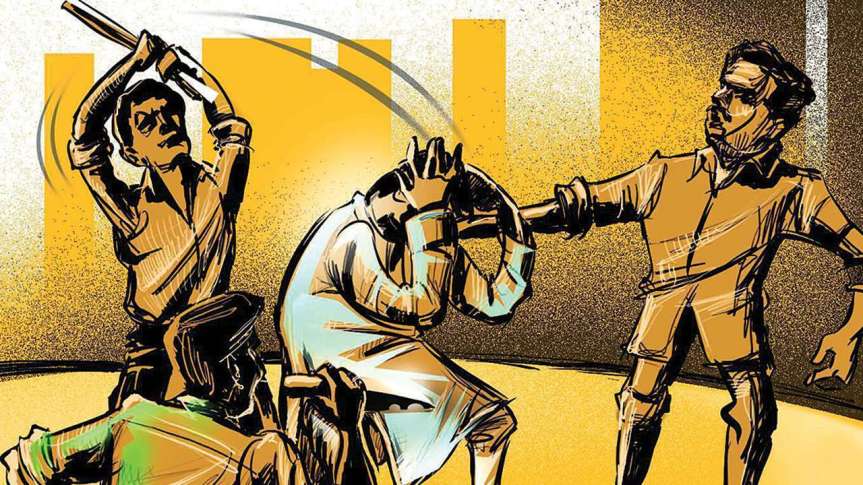
MOB VIOLENCE AND LYNCHING

Mob Violence or Lynching is one of the major challenges to State authority. Though it can be done by group of people in rage, typically it involves vigilante group, i.e. self-appointed doer of justice, who keep watch over people and punish them in their own way (Vigilantism). In both forms, it goes against the rule of law and notion of a civilized society due to the destructive expression of emotions in it for immediate gratification.
About Mob Violence/lynching 

Mob Violence or Mob Lynching is defined as targeted homicidal aggression, including killing, against a person/s by a group of people or mob to Punish for a crime actually committed or mere suspicion based on allegations or misinformation.

Fundamentally, it is seen in two ways as- 

  • Defence of society, i.e. protest against anarchy, due to failure of law enforcement agencies in curbing the issues of cow theft, kidnapping, crimes etc. or 
  • Offence against society, i.e. return of anarchy, as it goes against the fundamental principle of law, i.e. what the law provides must be taken by lawful means. Self-appointed people holds no right to undertake law enforcement 

Ethically, it goes against the moral principles like fairness and reasonableness. If it is not controlled, it may give rise to social hatred with increased tendency of mass criminal outburst, ultimately leading to a state of anarchy.

Reasons behind Lynching

  • Religious Beliefs or Principles: Being a multi-religious society, the religious beliefs or principles play an important role with imposition of one’s beliefs on others.
  • Socio-cultural Influences: This includes the historical socio-cultural norms or moral principles which govern a person’s behaviour or attitude towards an action. E.g. From 2000-2012, nearly 2,097 lynching due to witchcraft were reported from 12 states of India. 
  • Feelings of Fear or Hate: Often, the rumours of being kidnappers or actual action of person/s give rise to lynching. E.g. the killing of Sadhus in Palghar on rumour.
  • Lack of trust in the efficacy of laws: Either due to dissatisfaction from implementation of laws or judicial delays, mob justice is seen by non-state actors as a discharge of public duty.

Solution to Lynching 
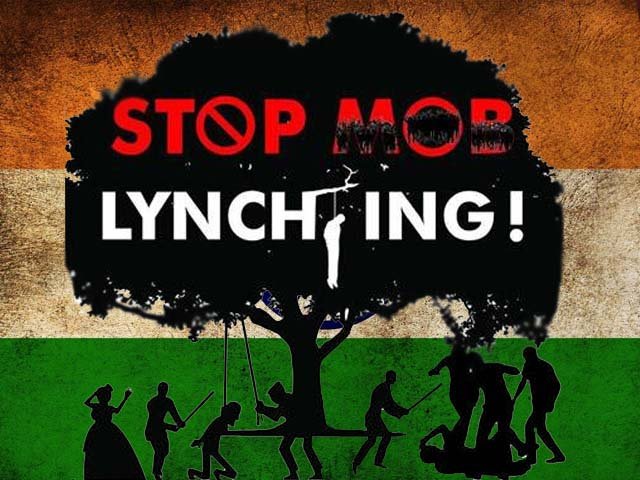
In Tehseen Poonawalla vs UOI (2018), Supreme Court issued preventive, remedial and punitive guidelines to deal with mob violence and lynching . Calling it a “horrendous act of mobocracy”, the Supreme Court also asked Parliament to establish lynching as a separate offence with punishment. Presently, it is mainly dealt under various sections of IPC with a handful of states taking legal initiatives.

  • Societal Approach: Regulation of social behavior is the first step to stop mob violence and protect rights conferred to the citizens.
  • Governmental Approach: Apart from bringing laws and guiding society on social behaviour, the government should apply emotional intelligence to handle conflicts with equal condemnation of social and political violence to avoid revenge tendencies. 
  • People-centric Approach: As the people make society and government, people must seek true freedom through a life based on reason (objectivity or rational will), self-control and virtues of empathy, compassion, and humanity.

Plight of Victim in Criminal Justice System

                                                        (Photo: The Daily Guardian)

You want to report,
but that could get your family in danger… And if you snitch on a real gang
leader…. they can get you bad… [The] police don’t have your back unless
you’re like someone on the news or whatever, and they will kind of give you
witness protection. But that doesn’t happen in the real world. 

FEMALE,
SACRAMENTO

 The expression
‘victims of crime’ has been defined in section 2 of the code of criminal
procedure, 1973. Initially, the criminal justice system in India was focused on
punishment as part of the crime without much attention on the suffering of
victims of crime. The rights of prisoners were protected even after their
conviction whereas little concern was shown for the rights of victims of crime.
Though there is a wealth of data on victims of reported crime nationally, as
well as various services and programs intending to meet their needs, there
remains a dearth of clear information on how to interrupt cycles of violence
and the persistence vulnerability that keeps such an overwhelming percentage at
high risk of experiencing more crime.

 However, with the
emergence of public interest litigation, the higher courts’ attention was drawn
to this lacunae in the existing criminal justice system by social activists,
and the courts started granting compensatory relief to victims of crime, but
comprehensive legislation on this aspect of criminal justice was still awaited.
In recent times, among the many reforms canvassed for improving the criminal justice
system is the one that advocates a victim orientation to criminal justice
administration. Though there are some provisions under the Indian constitution
and some sections in the code of criminal procedure, 1973 to protect the rights
of the victims and for providing compensation, the criminal courts at the lower
level in India have ignored those provisions for a long time and not utilized
them during their sentencing processes.

 Victim plays an
important role in the criminal justice system but his or her welfare is not
given due regard by the state instrumentality. Thus, the role of high courts or
the supreme court in our country in affirming and establishing their rights
holds much importance. “
Tears shed for the accused are traditional
and trendy but has the law none for the victim of crime, the unknown martyrs
“?
This remark by the Hon’ble Justice VK Krishna Iyer aptly describes the plight
of victims in the criminal justice system in our country. The victim is almost
a forgotten entity in the criminal system rather the irony is that the victim
sets the wheel of justice moving by giving information to the state
instrumentalities without which the entire system would collapse.

 Victims
should come first
“…

 It is of
course an indisputable fact that victims of crime have long been a forgotten
group, a group that suffered for centuries not only from society’s neglect but
also from the exploration of their rightful dias by the state. It is also true
that they had their conflicts stolen by professionals and by the criminal
justice system. However, the exceptional speed with which they were
rediscovered and their cause adopted by the politicians, let alone the
political climate that prevailed at the time of their rediscovery, is bound to
raise questions about the real interests and motives behind what has been
portrayed as a genuinely humanitarian and disinterest cause.

 A comprehensive
legal code for victim compensation is a dire necessity. The time has come for
the legislature to stop shirking its duty. Hence, a comprehensive legal code
should be enacted providing for fair treatment, assistance, and adequate
compensation to victims of crime. Only on embarking on this step can justice in
its more altruistic forms be obtained. It should be made mandatory for the
state to pay compensation to the victims of the crime of not only the private
criminal wrongs but also for the criminal acts perpetrated by its agencies.
This mandatory duty of the state gains importance from two points of view
namely as a welfare state committed to the constitutional goal of social
justice and secondly, for its failure to protect the life, liberty, and
security of its citizens.

 Therefore, I would
like to conclude with this quote-

 “Too
much money…. often resulted in further crimes which were fatal to innocent
victims who need not have been victims if justice had been put first and mercy
second
.” 

Agatha Christie


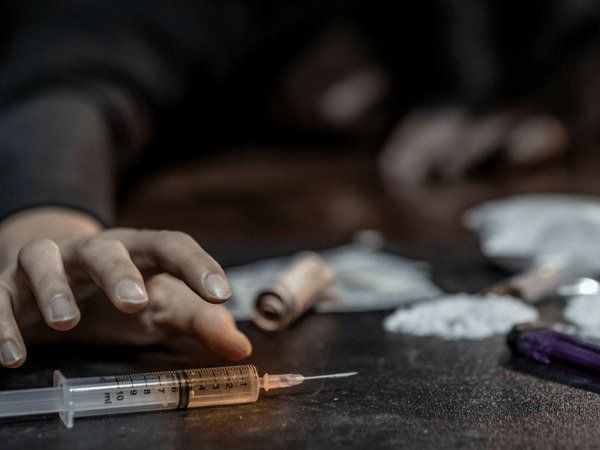
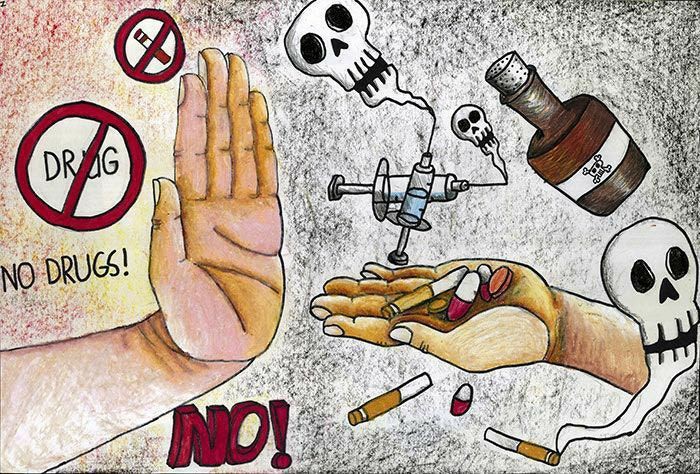
Drugs : you choose , you loose .

Addiction is just a way of trying to get at something else. Something bigger. Call it transcendence if you want, but it’s a rat in a maze. We all want the same thing. We all have this hole. The thing you want offers relief, but it’s a trap.

DRUGS ” A five letter word that is destroying human race. A word that could get you to the cloud nine and than kick you from the top.

What do you think it is ?

Is it a pleasure or a pain ?

Some says ‘it gives you wings ‘, others says ‘it makes you insane ‘ . What would you do , if someone is taking drugs ? Well , I would fly (its a joke ).

Ok , Let’s just get over with the topic .

Introduction

All the suffering, stress, and addiction comes from not realizing you already are what you are looking for.

– Jon Kabat-Zinn

Drugs are substances that change a person’s mental or physical state. They can affect the way your brain works, how you feel and behave, your understanding and your senses. This makes them unpredictable and dangerous, especially for young people.

Drug addiction is a chronic brain disease. It causes a person to take drugs repeatedly, despite the harm they cause. Repeated drug use can change the brain and lead to addiction. That can destroy one’s life .

Signs that shows someone has a drug problem

  • Changing friends a lot .
  • Spending a lot of time alone.
  • Losing interest in favorite things.
  • Not taking care of themselves – for example, not taking showers, changing clothes, or brushing their teeth.
  • Being really tired and sad.
  • Eating more or eating less than usual.
  • Being very energetic, talking fast, or saying things that don’t make sense.
  • Being in a bad mood.
  • Quickly changing between feeling bad and feeling good.
  • Sleeping at strange hours.
  • Missing important appointments.
  • Having problems at work or at school.
  • Having problems in personal or family relationships.

If a person shows these signs than he / she is using drugs . But it’s not , it’s a probability . The person may or may not be using drugs . For the assurance you have to ask the person (well they can lie ) . Take them for the blood test . It will show if the person is taking drugs or not . It’s a simple procedure .

Why can’t people stop using drugs on their own?


Repeated drug use changes the brain, including parts of the brain that give a person self-control. These and other changes can be seen clearly in brain imaging studies of people with a drug addiction. These brain changes explain why quitting is so difficult, even when an addicted person feels ready.

Many people are compelled to enter treatment by the pressure of their family, friends, or a court system. People of all ages with substance use disorders live in fear of what will happen if their drugs are taken away.

Due to the addiction , they experience a variety of physical and emotional withdrawal symptoms, including depression, anxiety, and other mood disorders; restlessness, and sleeplessness . It may lead you to the death bed .

Treatment :

Counseling and other behavioral therapies are the most commonly used forms of treatment. Medications are often an important part of treatment, especially when combined with behavioral therapies. Treatment plans must be reviewed often and modified to fit the patient’s changing needs.

  • Rational Emotive Behavior Therapy.
  • Cognitive Behavioral Therapy.
  • Detoxification.
  • Treatment with Medication.
  • 12-Step Facilitation.

One of the hardest things was learning that I was worth recovery.

Link

Power and Violence

The relationship between violence and politics has always been very problematic and complex. As it is often said- world history is the history of violence. The number of wars that have been fought, the level of violence that has been perpetrated is unthinkable and often the greatest wars that have ever been fought were for political power. However, it cannot be denied that the relationship between violence and power must be re-evaluated in the post-industrial, post ideological and a highly integrated world.

So, what is it about today’s times that violence and politics have almost become impossible to separate? To begin with ultimate hope of the liberals that democracy will reduce violence hasn’t been realised. The paradox here is very hard to overlook as in an era of unprecedented democratization and economic growth, we have also witnessed an unprecedented increase in violence. But why this paradox? It was expected that democracy will give people a safe outlet to voice their opinions. As more and more people get involved in politics, there will be lesser need for them to express their grievances through unconstitutional means. To answer this question, thinkers like Jack Snyder pointed out that as more people took part in politics, ethnic conflict within the country became even more probable. This argument is in line with the fact that although the number of interstate wars have reduced since the second world war, the number of civil wars and ethnic conflicts have increased manifold. While talking about intrastate conflicts, violence during the time of regime transition needs a special mention. In many countries’ violence becomes an integral part of regime transition. While the formal symbols of democracy remain, most countries are threatened by corruption, political pacts etc.

Violence persists in well-established and economically advanced democracies as well. Such violence highlights general trends of internal violence as well as particular national histories. We have seen in many third world nations where severity of violence has diverted a transition away from democracy towards a new form of authoritarianism.

There is also violence in other political arenas which may not be directly related to the state. There is an obvious relationship between economics and violence. Violence has become embedded in the class and market relations among social groups and in the societal effects on global economic trends. In many countries economic polices also trigger violence among classes. Not only economics and states, violence has also become an intrinsic characteristic of inter-societal relations. Such violence maybe caused by state power and policy or as a reaction to it but often takes on its own momentum. Social groups often use violence in their interaction with the state.

Even though governments may often act as major perpetrators of violence, living in a state we are all dependent upon the government to make laws and thus, it is also important for the government to find solution to the problem of increasing violence. It must try to achieve the wider aim of disassociating violence from politics as much as possible no matter how Utopian the idea might seem.

FIRING THE BLAME BULLET

The popular game PUBG has weapon attachments that reduces weapon recoil. It makes life easier for the players. Recoil is the backward movement of a gun when a bullet is discharged. It is helpful to know which attachments help players to shoot better and more effectively without hurting themselves in the process due to the tremendous force at which the shots are fired.

In real life when we point the gun at someone, how badly are we affected?

Well fortunately for us, in India, there exists some tight Gun laws except for the water guns’ kids play with during Holi and Gangsters. Hence here I talk about the abstract gun which fires the Bullets of Blame on others. Pointing finger at anybody who is in sight, was my favorite thing to do in any situation.

The blaming gun can also point upwards or inwards. When it points upwards, we blame the Creator for being unintelligent or uncaring or even non-existent. When it points inwards, we beat ourselves down with self-recrimination, “I am good-for-nothing,” ending up unnecessarily with inferiority complex.

How many of you, like me; are blamers? How many of you, when something goes wrong, the first thing you want to know is whose fault it is? Well Hello there, I’m the former winner of the Miss Blamer Pageant and the magnitude to which I blamed others with respect to everything that went wrong in my life was comical.

I’m in my house. I have on white slacks and a pink sweater. I’m drinking a full cup of coffee in my kitchen. I drop it on the tiled floor. It goes into a million pieces and splashes up all over me. And a millisecond after it hit the floor, right out of my mouth comes this: “DAMN YOU CHINA!” For purposefully making these cups so shiny and slippery. Now my entire kitchen is infected by the tiny pieces of ceramic (China clay). The kitchen has to be quarantined until I clean it up…or somebody else cleans it up, never mind.

Now as I have aged, I realized- I’d rather it be my fault than no one’s fault. BUT WHY? Cause it gives me some semblance of control. Blame is simply the discharging of discomfort and pain. It has an inverse relation with accountability. What is the difference? Well accountability by definition is a vulnerable process wherein I confide to you, “Hey my feelings were really hurt by the things you said/did.” Blaming is simply a way to express anger.

People who blame a lot seldom have the tenacity and grit to actually hold people accountable because we spend all of our energy raging for 15 seconds and figuring out whose fault something is. Blaming’s very corrosive in relationships and it’s one of the reasons we miss our opportunities for empathy. Because when something happens and we hear the story, we’re not really listening, we’re in the place where I was – making the connections as quickly as we can about whose fault it was.

SO, DO I START BLAMING MYSELF FOR EVERYTHING?!

In the spiritual path, self-blame is the most dangerous thing. Firstly, stop blaming yourself and others. We don’t have to point the gun at others or our own heads. Let us drop the gun and never pick it up, ever again.

Secondly, we need to come out of the Destiny’s Illusion. Never focus on what you can’t do, focus on what you can do. If we keep on focusing on what we can do- Then even if you believe in destiny, it will be a good one for you. Blaming your destiny will close doors to all the wonderful opportunities waiting for you.

A child runs a race with his full speed & energy and yet comes last in it. Losing the race was not his fault but taking part in the wrong race is definitely a mistake worth correcting. To simplify- Making a mistake is not your fault but doing it without your interest in it, is a mistake that can be rectified.

To solve the problem, we need; not a blaming bullet, but a helping hatchet. Not a blaming finger but a helping hand. Making mistake is in our nature. Acceptance of mistake shows our culture and correcting the mistake is progress. I do accept that spilling that damn coffee was my fault, however damn you CHINA for making the cup which broke and spread on the entire floor leaving my kitchen dangerous to walk on freely. * Gun drop * I meant MIC DROP…..phew!

Domestic Violence and Abuse

Domestic violence can be referred to as an attempt by an individual either a spouse, in a relationship or a family member to gain power or control over the other . It results in death, serious injury, and chronic medical and mental health issues for victims, their children, the elderly , their communities and is regarded as a serious social evil.

Domestic violence occurs in adult or adolescent intimate relationships where the abuser and the victim are currently or have been previously dating, cohabiting, married or divorced. They may be heterosexual, gay, or lesbian. They may have children in common or not. The relationships may be of a long or short duration. Here, the trauma faced is repeated rather than a singular event , and the effects of the trauma are emphasized due to the intimate nature of the relationship between victim and abuser. Since the victim’s daily routine is known, they can continue to exercise considerable physical and emotional control over the victim’s daily life. Also, his relationship with the victim gives him social, if not legal, permission to use such abuse. Hence the victims of domestic violence must also deal with the barriers to separation from the perpetrator created by the complexity and strength of an intimate relationship. In addition to the devastating effects, there is growing evidence that sometimes violence within the family becomes the breeding ground for other social problems such as substance abuse, violent crimes etc. In order to most effectively and efficiently respond to the individuals experiencing domestic violence, the counselors and therapists must not only understand the nature and analysis of domestic violence, but also understand how violence against intimates affects the victims, abusers, children and community as a whole.

Domestic violence is represented in form of threats, insults, sexual assaults and emotional abuse. The types of abuse or assaults endured include: Physical Abuse – (shoving, slapping, punching, kicking, throttling, biting and assault with sharp objects, guns, knives or any other dangerous weapon) , Sexual Abuse – ( Rape, attempted rape, indecent assault, on-going verbal abuse with sexual slurs such as bitch, whore, slut etc.) , Emotional, Verbal and Psychological Abuse -(the constant insults, ridicule or name calling , repeated threats of violence or death to cause emotional pain and anxiety) , Economic Abuse – ( Selling of shared property e.g. property, livestock without the consent of a victim , accessing a joint bank account for personal use without the consent of a victim) , Intimidation -(sending written or verbal death threats to a victim , sending beheaded dolls, small coffins, dead flowers or dead pets to a victim) , Harassment -(Repeatedly watching a victim outside or near his / her house, workplace, school or business premises or any place where she happens to be, repeatedly phoning a victim or causing any other person to phone his/her whether or not the caller speaks to a complainant) , Stalking – ( constantly approaching a victim and asking or demanding to talk to a victim against his/her will , damage to property may include acts of: breaking a window to gain entry into a victim’s house, cutting, breaking or damaging in any other manner shared furniture, unauthorized entry into the victim’s residence such as using a duplicate key to gain access may also constitute domestic violence.)


Despite numerous laws enacted to minimize domestic violence, the issue is still deeply rooted in the society. Hence, we must all raise our voices against this immorality and work towards eliminating domestic violence and make the world a better place to live in.