Use of METAVERSE in various technologies

The concept of a “metaverse” has been around for some time, but it has recently gained significant attention due to advancements in technology. The metaverse refers to a virtual world where users can interact with each other and with digital objects in a three-dimensional environment.


Source –
https://www.weforum.org/

One of the primary technologies driving the development of the metaverse is virtual reality (VR). VR technology has come a long way in recent years, with companies like Oculus, HTC, and Sony offering high-quality VR headsets. These devices allow users to enter a fully immersive virtual world, where they can interact with digital objects and other users.

Another technology that is important to the development of the metaverse is blockchain. Blockchain technology allows for secure and decentralized transactions, which is important for the creation of virtual economies within the metaverse. Blockchain-based currencies, such as Bitcoin and Ethereum, are already being used in some virtual worlds, and this trend is expected to continue as the metaverse becomes more popular.

Artificial intelligence (AI) is another technology that will be essential to the development of the metaverse. AI can be used to create intelligent agents that can interact with users in a natural way, enhancing the user experience. AI can also be used to create realistic virtual environments and characters.

The development of the metaverse will also require advancements in networking and cloud computing. As the metaverse becomes more popular, it will require massive amounts of computing power and bandwidth to support the large number of users and the complex virtual environments.

One potential use of the metaverse is in education. Virtual classrooms could be created where students can interact with each other and with digital objects in a way that is not possible in traditional classrooms. This could lead to more engaging and effective learning experiences.

The metaverse could also have significant implications for entertainment. Virtual concerts and sporting events could be held in the metaverse, allowing users from all over the world to attend. Virtual reality films and television shows could also be created, offering a new form of immersive storytelling.

Another potential use of the metaverse is in healthcare. Virtual reality therapy is already being used to treat a variety of conditions, and the metaverse could expand the use of this technology. Virtual support groups could also be created, allowing people to connect with others who are going through similar experiences.

8 WAYS Technology is Helping To Fight the CORONA VIRUS 2020

As Corona virus keeps on getting bigger and spreads so is the technology and innovation. It is making peoples life easier in the lockdown by keeping us all virtually connected. Technology is helping the authorities fight this virus.

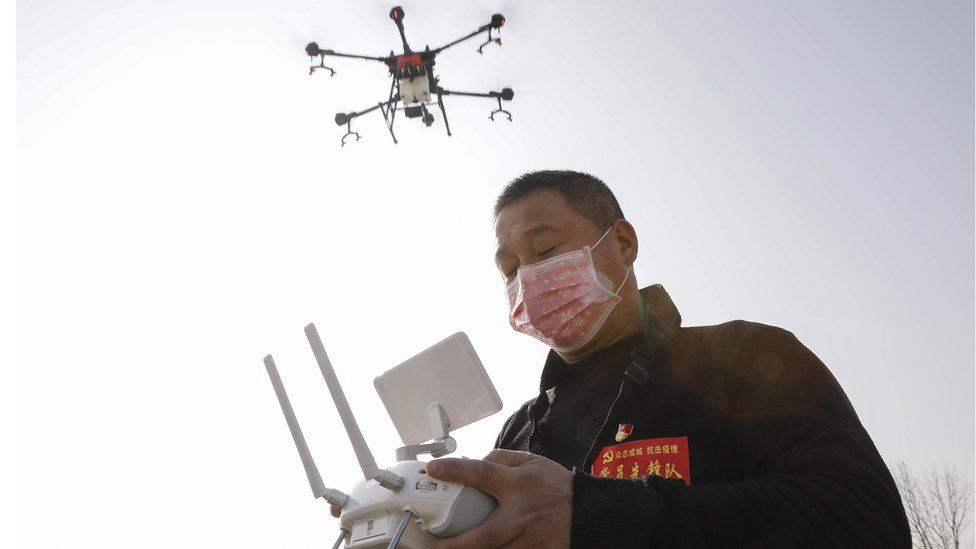
The Drones in the Skies-

These flying camera birds are helping in patrolling and making sure evrybody is maintaining social distancing. They help the officials check on things and also maintain social distancing at the same time. In remote areas agricultural drones were used for spraying disinfectants. In some parts of the country theyare being used to deliver crucial medical supplies.

Coronavirus: China's tech fights back - BBC News

Online Clinics and Counseling-

Due to this one illness other diseases have lost its importance. People suffering from issues like hypertension and arthiritis are being provided with online medical assistance. Many institutes are also offering online psychological counseling service.

How Technology Has Made Online Medical Consultation Possible ...

Robot nurses and Artificial Intelligence scans

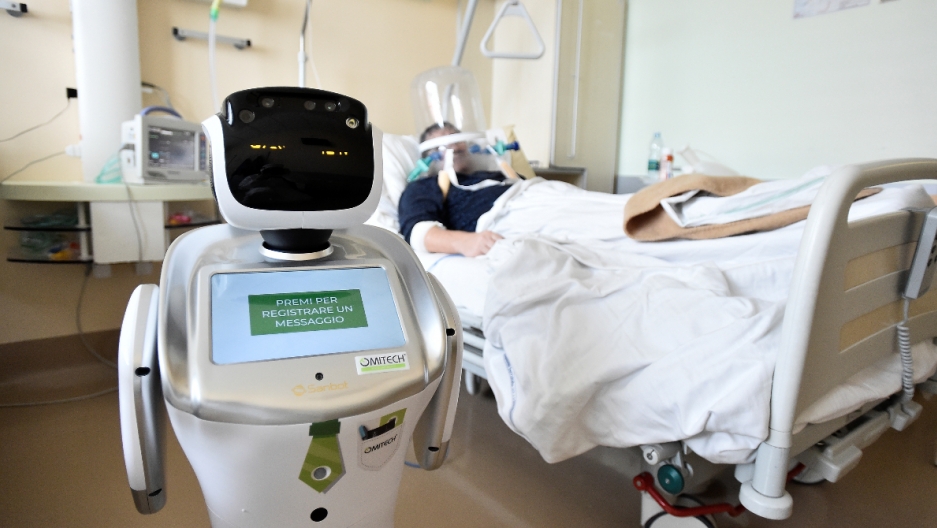
Robots are also used in many Chinese hospitals to deliver food, medicine and other supplies to patients; to disinfect hospitals and other public areas; to check patients temperatures; and to answer common questions. Coronavirus is being   diagnosed using AI, which can read thousands of CT scans in 20 seconds with an accuracy rate of 96%.

Robot nurse helps Italian doctors care for COVID-19 patients

Virtual Classrooms

After weeks of schools being closed, possibly the biggest challenge for parents is keeping children occupied and continuing their schoolwork.  To enable this, many schools have rolled out online learning platforms, where students take courses and teachers give lectures from home, via live-streaming platforms.

With online classes in vogue, schools shift focus to feedback and ...

Research and Development

Within the first few weeks of the virus, China had sequenced the genome. By posting that sequencing online, it trigged a ripple effect in research labs across the world, with a surge in orders for synthetic samples of the virus to build copies of it from scratch. This allowed new treatments to be trialed – even experiments that failed offered vital clues in guiding researchers on where they should focus.

Three TN medical colleges to get virus research labs in 6 months ...

Smartphones and Internet

Smartphones are playing a critical role in reducing exposure. Delivery apps offer contact-less delivery, whereby drivers drop food off at a specific point – including a card stating the temperature of everyone involved in cooking and delivering the food. Another offers users maps marking residential communities with confirmed cases and their proximity to them. Meanwhile, mobile payment apps are reducing transmission along paper money, which can carry viruses for up to 17 days. With the world’s highest penetration of e-wallets and two of the world’s largest mobile pay, Chinese fin-tech is helping to slow the coronavirus spread.

India lockdown throws online delivery out of gear, millions cry

Work From Home

A major challenge during the virus is being able to work.  Several tech companies are offering free online collaborative tools. Other businesses have quickly adopted work-from-home policies, using online meeting software, collaborations platforms and LBS technology to clock in and  ensure employees stay home. At UNDP, the use of Zoom teleconferencing and ERP Platforms have allowed us to keep working.

Coronavirus and Working From Home: How to Keep the Kids Busy - Nelson

Virtually Connected

Compulsory quarantine has disrupted daily life and curtailed social interaction for nearly one fifth of the global population. This is leading millions to meet online instead. Families dine together with relatives in distant cities, raising a glass to each other on camera. Even weddings have been held in Virtual Reality.

Things To Do With Friends While Hanging Out Virtually - Addison ...

While the use of technology can at times present its own challenges, and fuel debates about privacy and public good; in the fight against the coronavirus, it is playing a critical role in offering treatment, information, support, food, schooling and greater safety for many.

Reduction in syllabus and instructional hours

Union Minister of Human Resource Development Mr. Ramesh Pokhriyal ‘Nishank’ said in a tweet that the centre is planning to contemplate the option of reduction in syllabus and instructional hours for the coming academic session. The ministry also appealed teachers, academicians, and educationalists to share their point of view on the sudden crisis. COVID-19 has shaken the grounds of existing procedures in the country in the area of academics and education. Universities and schools across the country have been closed since March 16, when the Central Government announced a nation-wide lockdown as a measure to reduce and limit the growth of COVID-19 in the country. The running CBSE class10 &12 was also halted as an emergency measure. Any sudden and unplanned change in the academic schedule has the potential to create chaos and commotion. Hence Manoj Ahuja recently stated that ”We cannot bring sudden changes in the education system and create confusion and uncertainty. The curriculum reforms are going to be in sync with the learning outcomes”. To make up for the loss caused by the pandemic the ministry thus, plans in reduction of the academic syllabus. This was brought in light after a day after Manish Sisodia, deputy chief minister and education minister of Delhi, requested him to reduce the syllabus by 30%. It is a well known fact that online classes can never be seen as a replacement of learning on campus or in school. ”First of all, we need to assure every child irrespective of age and social class that they are important to us and all of them have equal right to the physical and intellectual space of their schools. The notion of online teaching or older children coming to school first and not the youngest ones should be put to rest”, said Mr. Sisodia.

Online classes

The trend of online classes flourished in the wake of the pandemic. Slowly but constantly schools and colleges started conducting classes online. Despite being a substitute and seemingly fulfilling the purpose, online classes does very little to online education. There are various reasons for the incompetency of online classes, the very first being Internet connectivity. The Indian internet penetration rate in the country stood at around 50% IN 2020. Recently, a girl from Kerala committed suicide due to lack of resources in accessing online classes. This case highlights the inadequacy of online educational infrastructure in the nation. Reasons like slow internet connection adds more to the perils. Apart from this basic deficiency, online classes cannot compensate for the lack of school education especially for kids because of potential dangers of internet exposure. Conducting a fair and systematic exams online will moreover become a herculean task for the academic institutions. Lack of accreditation and low quality also makes certain online courses less reliable and authentic. Online education creates a monologue and not a real dialogue between the instructor and the student and the monologue lacks in a personalised conversation leading to lack of interest. Online education also leads to increase in screen time which carries along numerous health issues from eyes to the spinal cord. It requires an increased requirement of self-direction too. Despite the potential pitfalls, online education has become popular because of the flexibility it offers and especially because of non-availability of traditional and conventional methods of teaching.

Technology as an integral part of education

What is technology?
Well according to the basic definition,Technology is the set of knowledge, skills, experience and techniques through which humans change, transform and use our environment in order to create tools, machines, products and services that meet our needs and desires.
That all put into simple words is using our smartphones,computers,laptops and basically anything that come in the category of machine is technology.

Today in this modern era technology has bought about a huge change in our lives and our day to day habits be it from recharging our phones to sending satellites in earth’s atmosphere anything and everything is somehow related to technology.But a huge amount of population is currently using technology at it’s best in order to learn and educate which has changed our present a lot from our past when education was not only just limited but that too not very easily accessible.

Let’s see how technology has changed the way of learning:
Education can be basically divided into three categories mainly primary,secondary and higher education.

PRIMARY EDUCATION:

Preschools and nursery education is considered to be the foundation of our education as it’s the first time we start to learn about new things and our environment.This is the time our brain is processed to think and analyze certain things and this process could be made creative using technology.At the preschool level, technology can be introduced in several ways at the most basic is the use of computers, tablets, and audio and video resources in classrooms.


SECONDARY EDUCATION:

There’s a transition of a student as he goes from primary to secondary school as his way of thinking changes,this is great time to get the student really into E -LEARNING ,as brain really process information really quickly and faster when information is in the form of visuals combined with audio.E-learning also has been rising as a supplement to the traditional classroom. Students with special talents or interests outside of the available curricula use e-learning to advance their skills or exceed grade restrictions.

HIGHER EDUCATION:

Online college course enrolment has seen a 29% increase in enrolment with nearly one third of all college students, or an estimated 6.7 million students are currently enrolled in online classes.Technology has helped a lot in spreading knowledge across the globe.Colleges like Harvard,MIT,Standford and many more put there online courses with best faculties on online learning platform like udemy,Coursera etc for a minimal price or free of cost.The gist is higher education is now easily and quickly accessible to a larger crowd and the credit goes to Technology.

Some other Ways in which technology is being used as a medium to educate:-

Flipped classroom:

This is an instructional strategy in which computer-assisted teaching is integrated with classroom instruction. Students are given basic essential instruction, such as lectures, before class instead of during class. Instructional content is delivered outside of the classroom, often online. The out-of-class delivery includes streaming video, reading materials, online chats, and other resources. This frees up classroom time for teachers to more actively engage with learners.

Virtual classrooms:

A virtual classroom provides the opportunity for students to receive direct instruction from a qualified teacher in an interactive environment. Learners can have direct and immediate access to their instructor for instant feedback and direction.For example: In India the biggest online learning platform is unacademy.

Augmented Reality:

Augmented reality (AR) provides students and teachers the opportunity to create layers of digital information, including both virtual world and real world elements, to interact with in real time.Augmented reality plays an important role in the future of classrooms.


Disadvantages :


A coin always has two sides”

Here is a list of disadvantages from learning through technology:
1)It could be distracting
2)It disconnects students from a face to face relationship with teacher
3)It may not be all the time the source they are studying from is reliable
4)It can cause major heath issues if a student is exposed to blue light for a prolonged period of time.