Use of METAVERSE in various technologies

The concept of a “metaverse” has been around for some time, but it has recently gained significant attention due to advancements in technology. The metaverse refers to a virtual world where users can interact with each other and with digital objects in a three-dimensional environment.


Source –
https://www.weforum.org/

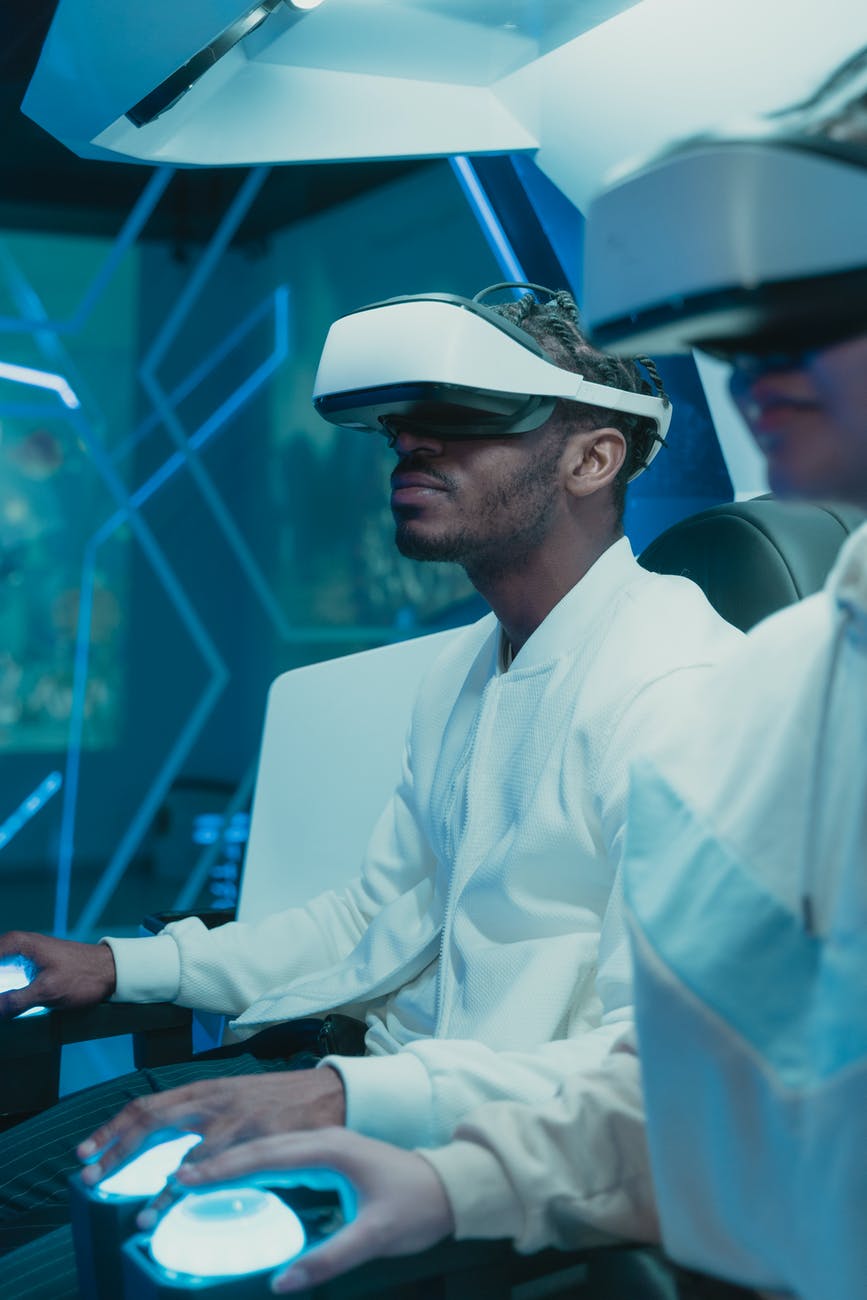
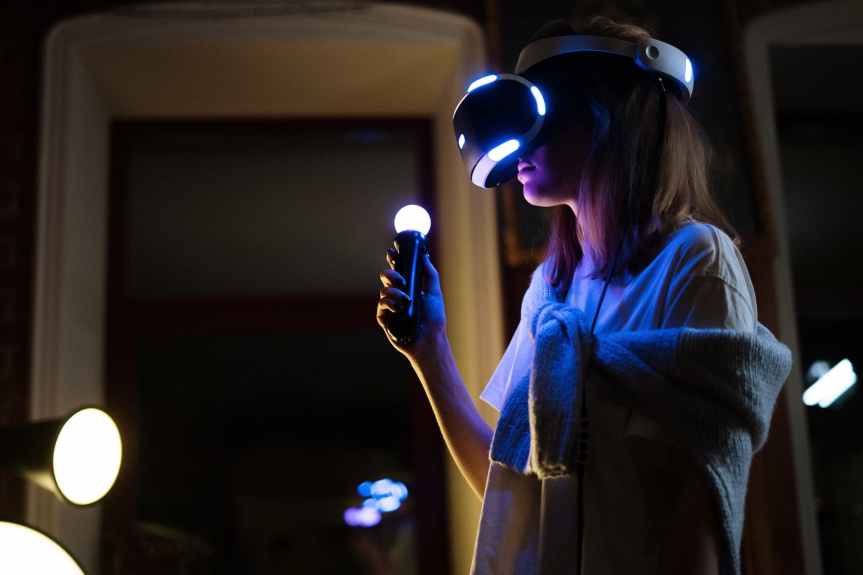
One of the primary technologies driving the development of the metaverse is virtual reality (VR). VR technology has come a long way in recent years, with companies like Oculus, HTC, and Sony offering high-quality VR headsets. These devices allow users to enter a fully immersive virtual world, where they can interact with digital objects and other users.

Another technology that is important to the development of the metaverse is blockchain. Blockchain technology allows for secure and decentralized transactions, which is important for the creation of virtual economies within the metaverse. Blockchain-based currencies, such as Bitcoin and Ethereum, are already being used in some virtual worlds, and this trend is expected to continue as the metaverse becomes more popular.

Artificial intelligence (AI) is another technology that will be essential to the development of the metaverse. AI can be used to create intelligent agents that can interact with users in a natural way, enhancing the user experience. AI can also be used to create realistic virtual environments and characters.

The development of the metaverse will also require advancements in networking and cloud computing. As the metaverse becomes more popular, it will require massive amounts of computing power and bandwidth to support the large number of users and the complex virtual environments.

One potential use of the metaverse is in education. Virtual classrooms could be created where students can interact with each other and with digital objects in a way that is not possible in traditional classrooms. This could lead to more engaging and effective learning experiences.

The metaverse could also have significant implications for entertainment. Virtual concerts and sporting events could be held in the metaverse, allowing users from all over the world to attend. Virtual reality films and television shows could also be created, offering a new form of immersive storytelling.

Another potential use of the metaverse is in healthcare. Virtual reality therapy is already being used to treat a variety of conditions, and the metaverse could expand the use of this technology. Virtual support groups could also be created, allowing people to connect with others who are going through similar experiences.
Startups to leverage " Deep Tech " to build solutions for local & global markets

 The Minister of Commerce and Industry, Consumer Affairs, Food and Public Distribution, Shri Piyush Goyal today called upon the Indian industry to aim for raising 75 unicorns in the 75 weeks to the 75th anniversary of Independence next year.

“We have added 43 unicorns added in 45 weeks, since the start of ‘Azadi ka Amrit Mahotsav’ on 12th March, 2021. Let us aim for atleast 75 unicorns in this 75 week period to 75th Anniversary of Independence,” he said, while releasing the NASSCOM Tech Start-up Report 2022.

Shri Goyal said Startup India started a revolution six years ago and today ‘Startup’ has become a common household term. Indian Startups are fast becoming the champions of India Inc’s growth story, he added.

“India has now become the hallmark of a trailblazer & is leaving its mark on global startup landscape. Investments received by Indian startups overshadowed pre-pandemic highs. 2021 will be remembered as the year Indian start-ups delivered on their promise, – fearlessly chasing opportunities across verticals – Edtech, HealthTech & AgriTech amongst others,” he said.

Shri Goyal lauded the ITES (Information Technology Enabled Services) industry including the Business Process Outsourcing (BPO) sector for the record Services exports during the last year.

“Services Export for Apr-Dec 2021 reached more than $178 bn despite the Covid19 pandemic when the Travel, Hospitality & Tourism sectors were significantly down,” he said.

Shri Goyal said the Prime Minister Shri Narendra Modi has declared 16th January as the National Startup Day, showing his commitment to take the innovation culture to every nook and corner of the country.

“We all celebrated this innovation spirit through Startup India Innovation Week, during the last week as part of ‘Azadi ka Amrit Mahotsav’. PM’s interaction with Startups a week ago has supercharged the courage of our innovators,” he said.

Shri Goyal said the Government has taken several steps to boost startup ecosystem, –

  • Removing problems of ‘Angel tax’, simplification of tax procedure & allowing self-certification and self-regulation towards which we are moving
  • Reducing burden of over 26,500 compliances
  • Decriminalization of 770 compliances

Shri Goyal said the New India is today being led by new troika of Innovation, Technology & Entrepreneurship (ITE), which in a way has grown further from the original ICE (Information, Communication & Entertainment).

“I remember when ICE was introduced many years ago, we were excited about the new information age. Today, that same vibrancy & excitement is witnessed in the way our startups are growing in the ITE areas,” he said.

Shri Goyal said India’s unique digital infrastructure – Aadhaar, Digilocker, Fastag, Cowin, UPI etc. have enabled Access & Affordability.

“The Cowin portal showed the world that Indian could run world’s largest vaccination programme efficiently & effectively, with complete mapping & monitoring done digitally. UPI has helped new age technologies in reaching the common man at affordable prices,” said Shri Goyal.

“The next “UPI moment” will be the ONDC (Open Network for Digital Commerce). The first-of-its-kind globally, ONDC to enable interoperability between eCommerce companies, providing equal opportunity to small & large players, will help control digital monopolies & make industry more inclusive for buyers & sellers alike, empowering MSMEs to unlock innovation & value,” he added.

Shri Goyal unveiled a five-point plan as the way forward for the NASSCOM:

     1. Emphasize on basic & core needs of people, – providing better access to financial          services, education & healthcare; solutions to problems of farmers, etc.

     2. Focus on High growth & Job creating sectors, – Advertising & Marketing, Prof. services, Fitness & Wellness (Yoga becoming popular globally), Gaming, Sports, Audio-Visual services

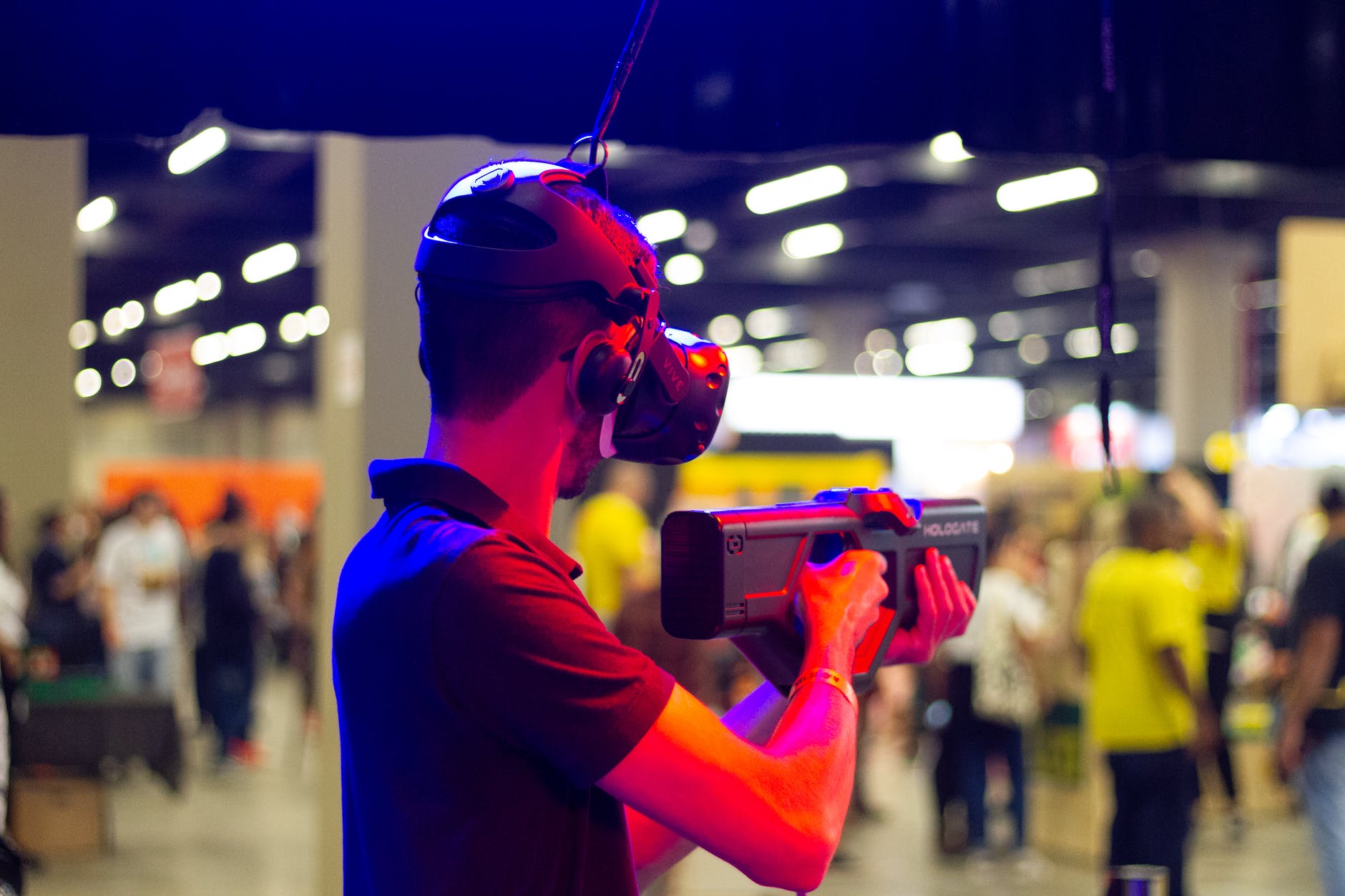
     3. More & more startups should leverage Deep tech to build solutions for local & global markets, – AI, IoT, Big Data, Data Analytics, Blockchain, Virtual Reality, 3D Printing, Drones, etc.

     4. We have a lot of potential in Startups from Tier-2 & 3 cities. If we give them more support & proper mentoring, they could also play a much greater in the years to come.

     5. India will assume G20 presidency in 2023 – suggest ideas on themes resonating with our vision to solve global issues.

Shri Goyal hoped this momentum of the Indian Startup ecosystem will continue in the current year and the years to come.

“While 2021 was a year in which we defied all odds, 2022 will be the breakthrough year which will unlock country’s exponential value. ‘India at 100’ will be renowned as a Startup nation. But as PM Modi said yesterday in his speech- the “Amrit Kaal,” the coming 25 years – are the period of utmost hard work, sacrifice and tapasya,” he said.

*****

What if we are living in a Video Game?

Kids these days are so head over heels into video games, do you ever think what if we are pawns in a video games ourselves, some alien species with the controller?

Rizwan Virk, a computer scientist and video game designer, published a 2019 book, The Simulation Hypothesis, that traces the path from today’s technology to what he calls the “Simulation Point,” the moment at which we could realistically build a Matrix-like simulation.

I know nothing about computer science, but this idea that we’re all characters in an advanced civilization’s video game is, well, kind of awesome.

Pretend I know absolutely nothing about the “simulation hypothesis.” What is the simulation hypothesis?

The simulation hypothesis is the modern equivalent of an idea that’s been around for a while, and it is the idea that the physical world that we live in, including the Earth and the rest of the physical universe, is actually part of a computer simulation.

You can think of it like a high resolution or high-fidelity video game in which we are all characters, and the best way to understand it within Western culture is the movie The Matrix, it’s become a cultural phenomenon now beyond the film industry.

In that movie, Keanu Reeves plays the character Neo, who meets a guy names Morpheus, who is aptly named after the Greek god of dreams, and Morpheus gives him a choice of taking a red pill or a blue pill. And if he takes the red pill, he wakes up and realizes that his entire life, including his job, the building he lived in, and everything else, was part of this elaborate video game, and he wakes up in a world outside of the game, which he did. That is the basic version of the simulation hypothesis.

Are we living in a simulated universe right now?

There are lots of mysteries in physics that are better explained by the simulation hypothesis than by what would be a material hypothesis.

The truth is that there’s much we simply don’t understand about our reality, and I think it’s more likely than not that we are in some kind of a simulated universe. Now, it’s a much more sophisticated video game than the games we produce, just like today World of Warcraft and Fortnite are way more sophisticated than Pac-Man or Space Invaders. They took a couple of decades of figuring out how to model physical objects using 3D models and then how to render them with limited computing power, which eventually led to this spate of shared online video games.

I think there’s a very good chance we are, in fact, living in a simulation, though we can’t say that with 100 percent confidence. But there is plenty of evidence that points in that direction.

Watch season 18, episode 7 of South Park if you haven’t gotten the hint already!

Think of how sometimes when you walk into a room with a purpose but the moment you enter, you forget the reason you walked in for? Who knows some work might have come up so the gamer playing you had to leave? So, you go blank for a few seconds, but when the gamer comes back, you are back on track as well.

Think of how every time you fell down. Who knows that isn’t because the controller from the gamer’s hand maybe because he was balancing his plate of food in his hand while playing?

What if the old people are being played by the gamers with low frame rate and bad internet connectivity?

When I say there are aspects of our world that would make more sense if they were part of a simulation, I mean there are a few different aspects, one of which is quantum indeterminacy, which is the idea that a particle is in one of multiple states and you don’t know that unless you observe the particle.

Probably a better way to understand it is the now-infamous example of Schrödinger’s cat, which is a cat that the physicist Erwin Schrödinger theorized would be in a box with some radioactive material and there was a 50 percent chance the cat is dead and a 50 percent chance the cat is alive. Now, common sense would tell us that the cat is already either alive or it’s dead. We just don’t know because we haven’t looked in the box. We open the box and it’ll be revealed to us whether the cat is alive or dead. But quantum physics tells us that the cat is both alive and dead at the same time until somebody opens up the box to observe it. The cardinal rule is the universe renders only that which needs to be observed.

Isn’t the hypothesis that we’re living in a flesh-and-blood physical world the simpler explanation?

A very famous physicist, John Wheeler, was one of the last physicists who worked with Albert Einstein and many of the great physicists of the 20th century. He said that physics was initially thought to be about the study of physical objects, that everything was reducible to particles. This is what’s often called the Newtonian model.

But then we discovered quantum physics and we realized that everything was a field of probabilities and it wasn’t actually physical objects. That was the second wave in Wheeler’s career.

The third wave in his career was the discovery that at the core level, everything is information, everything is based on bits. So Wheeler came up with a famous phrase called “it from bit,” which is the idea that anything we see as physical is really the result of bits of information. He didn’t live to see quantum computers come into reality, but it’s looking more like that.

So I would say that if the world isn’t really physical, if it’s based on information, then a simpler explanation might in fact be that we are in a simulation that is generated based on computer science and information.

How close are we to having the technological capacity to build an artificial world that’s as realistic and plausible as The Matrix?

There are 10 stages of technology development that a civilization would have to go through to create a hyper realistic simulation. We’re at about stage five, which is around virtual reality and augmented reality. Stage six is about learning to render these things without us having to put on glasses, and the fact that 3D printers now can print 3D pixels of objects shows us that most objects can be broken down as information.

But the really difficult part — and this is something not a lot of technologists have talked about — is in The Matrix, the reason they thought they were fully immersed was they had this cord going into the cerebral cortex, and that’s where the signal was beamed. This brain-computer interface is the area that we haven’t yet made that much progress in, but we are making progress in it. It’s in the early stages.

So my guess is within a few decades to 100 years from now, we will reach the simulation point.

Virtual Reality: Its history and future

Virtual Reality has a brief yet rich history with many ups and downs. Even though the formal name was defined much later, there had been many attempts that resembled the Virtual Reality that we know it as today. Let’s first define the goal of Virtual Reality. It is to trick the brain to believe that something is real with the help of virtual elements, these elements can be auditory (sound) or visual (sight). But there are many parallel definitions of VR but one of the essential differentiating factors of Virtual Reality compared to other forms of media is that VR has some sort of interactivity. Unlike Movies or 3D movies where a person can only view but not interact, VR facilitates the freedom to touch, interact and control what a person sees on their screen.

History of VR

The fascination with VR goes way back to the 1930s when science fiction writer Stanley G. Weinbaum wrote a story where he mentions about Pygmalion’s spectacles. The wearer would be able to experience the virtual world. VR was further popularized by the popular Sci-fi movie, Star Trek: The Next Generation and its Holodeck.  

­One of the first examples of VR HMD (Head Mounted Display) was ‘Sword of Damocles’ developed by Ivan Sutherland and his student Bob Sproull. The HMD was connected to a computer. The contraption setup was intimidating, cumbersome, and heavy. The graphics that were shown if the HMD were quite simplistic and trivial, but it was a convincing step towards the VR we know today. The term ‘VR’ was popularized in the 1980s by Jaron Lanier. By the end of the 1980s, NASA with the assistance of Crystal River Engineering, created Project VIEW. It was a VR simulator that was developed to train the astronauts. The 1990s saw the use of VR in multimedia and mainstream commercial spaces. Numerous virtual reality arcades were introduced in the public spaces where players could play games with immersive stereoscopic 3D visuals. The mid-1990s saw the VR foray by console manufacturers. Nintendo and SEGA both showcased their VR gaming headsets but both were a commercial failure due to technical limitations and lack of software support.

In 2012 Oculus Kickstarter had raised 2.5 million dollars and this gave the startup a monetary jumpstart that previous VR projects were not able to attain. In 2014 Facebook bought the Oculus and this ensured that the VR startup would be adequately funded in their VR developments. 2014 also saw the launch of numerous other VR developments like Google cardboard, Sony PSVR and Samsung Gear VR. In 2016 HTC released its advanced VR headset, HTC Vive. Now the focus was to make VR truly standalone free from the assistance of a dedicated computer or a smartphone.

The Future

The Future of VR looks bright, there are many factors for this but one of the major factors is the price of VR has significantly gone down. There are continual developments in the sphere of VR and various new technological innovations are attempting to make the adoption of VR much more seamless, comfortable and intuitive to use. The use of VR is not just limited to gaming but now VR is also used for many commercial and business purposes. Recently Microsoft signed an agreement with the US government to supply 120,000 semi-custom versions of Hololens VR/AR headsets. VR is increasingly used in the health and manufacturing sectors as well. With a compound annual growth of 21.6% from 2020 to 2027, it seems that VR is only going to get more mainstream in the future.

References:

https://nix-united.com/blog/the-past-present-future-of-virtual-reality/

https://www.vrs.org.uk/virtual-reality/history.html

Steam : PLATFORM THAT CHANGED PC GAMING FOREVER

Steam is a digital marketplace and is owned by Valve Corporation. Valve Corporation was formed by ex-Microsoft employees and after launching critically acclaimed games like Half-Life and Counter-Strike, they set out their eyes on retailing software through the internet.  

History of Steam

Steam was launched as a standalone software client in September 2003 as a channel to provide automatic updates for their games.  It pioneered the digital distribution of the software. Before video games used to be physically owned and any kind of updates and patches were very cumbersome to implement.  As owning music CDs became obsolete similarly owning games in physical media became a rare thing. As internet speeds increased, this meant that downloading games over the internet became easier, and having a single library where the users can access all their purchases has now become the norm.

Later it expanded to provide software by third-party developers to become a full-fledged distribution platform. The developer of Steam is Valve Corporation.  As of today, it is one of the most profitable privately owned corporations in the world.

Steam’s business model is very similar to the model that Apple uses in its app store. It operates a commission-based business model. Steam takes a percentage cut from all the sales made on its platform (30%)

How Steam grew from its initial years?

During In its initial years, Steam provided a freemium model.  It offered its games for a free-to-play model. It helped Steam to reach a wider audience and increase its growth.

Steam has benefited a lot with its network effect. As more and more game publishers and smaller indie game developers joined the platform. Steam increased its titles library. New developers got a medium to publish their games without the hassles and cost of hosting and maintaining the games. With the help of free games and new value units being added all the time, new users joined the platform at an ever-increasing rate as well.  Now consumers could access their whole game library in a single place. Thus benefiting both these sides of the core interaction.

Currently Steam has 100 million monthly active users and over 30,000+ games listed on its platform.

In the initial years Steam solved its chicken and egg problem by providing free games and free demos of games. The strategy of seeding by providing free updates and discounts that were not available in physical media helped Steam to become a viable option. The Same strategy is also followed by the Fortnite developer and Steam rival Epic Games Store which was launched in 2018. It gives away a free game every week. This has helped Epic to get a significant foothold in the market dominated by Steam. Even though Epic games store lacks in the number of feature layers that Steam provides. Valve had realized that its user base is a very valuable asset. To increase the engagement in the platform it added community forums. Where fellow users could discuss and help each other with any topic. Steam also introduced many new features including statistics tracking system and friend list. Now Steam was shaping up like a social media platform over its core interaction as a mere platform.

In 2008 Steam introduced a filtering system. That helps users to better find their desired product. Now the catalog could be browsed according to the genre. In 2012 Steam introduced Steam Guard.  This included two-factor authentications to curb frauds and also launched its mobile app. In 2012 Steam introduced Steam Guard.  This included two-factor authentications to curb frauds and also launched its mobile app. In 2016 Valve introduced the support for VR headsets. It collaborated with HTC to introduce the Vive headset.  Later extending support for Oculus Rift.

Present and Future

Recently Steam launched a new VR title, Half-life: Alyx with the introduction of its new VR headsets. It’s one of the best virtual reality applications to date and the game received critical acclaim from reviewers and users alike. Valve is again trying a paradigm shift for pushing Virtual Reality to the mainstream and so far they have been successful in it.

Steam was one of the first digital marketplaces and they are continually working on improving their platforms. Even with new competitors, Steam has been a relevant force for over 15 years. New technological ventures and platforms can learn a lot from Valve with its drive to be innovative and ambitious in its approach.

References:

IIT Bombay’s convocation ceremony goes virtual

Avatars attended graduation and not let the spirits get dampened by the current pandemic. The students of IIT Bombay showed their technical talent at their virtual reality graduation ceremony held on Sunday, 23 August 2020. Over 2000 graduates attended this ceremony as their own digital avatars. The University created avatars for each student, faculty members and speaker. In computing World Avatar is a digital representation of a person or character. This word had been taken from the concept of Gods having various forms in Hindu mythology. In Sanskrit, Avatar means Descent. In Hindu mythology when Gods come on to Earth, they take different forms of life and these forms are known as Avatars. We can think of VR as near reality. Virtual Reality uses technology to create an experience that seems real but is not actually happening. It stimulates an Environment and users can interact with 3D objects and living things in this virtual environment. Student avatars walked on the podium to receive their diplomas. Afterwards, these students even interacted with each other. Classmates and Colleagues virtually explored the campus. The Director of IIT Bombay, Professor Subhasis Chaudhuri hoped that this effort will inspire Engineers to think big and think innovatively. His words: “providing a virtual reality experience to all our graduates needed not only highly innovative steps but also a tremendous effort by our professors and staff.” Director Subhasis Chaudhuri said students should not be disadvantaged of a convocation ceremony. “The process involved a lot of planning and technology implementation,” he said. With two months contribution and hard work of a team of 20 resulted in making the virtual convocation a reality. The event live telecasted on DD Sahyadri Channel, Institute’s YouTube channel and Facebook page. Live telecasts commenced with speeches and one student saw each from different categories collecting medals and degrees virtually with their names and photos. A mobile application is designed specially only for IIT Bombay students in which they can see their animated personalized avatars graduating and getting his or her degree. IIT Bombay has taken the health of the students as their first priority besides understanding their needs and emotions. “The Institute thought it best to arrange such a VR-convocation for the graduating students so as not to put their health at risk but at the same time, not deprive them of the sense of achievement and pride of passing out of India’s premier engineering Institute,” IIT-Bombay said. By seeing IIT Bombay’s great Innovation, in his speech, Stephen A. Schwarzman said, “India occupies a unique position in the world today, especially when it comes to technology, where it has established global leadership through its talent. Of the 72 Indian-origin engineers who have founded unicorns across the world, 50 per cent are IIT alumni. IIT engineers are defining the global technology landscape and the newest alumni will be the next generation of future global leaders who will advance that mission”. He further said, with a young, ambitious and tech-savvy population, a forward-thinking government that supports entrepreneurship, and the fourth-largest start-up ecosystem in the world, India is poised to stake its claim as one of the world’s great innovation hubs.” Virtual Reality is a wonderful and innovative technology that is able to spread smiles on IIT Bombay graduates without depriving them from their achievements.

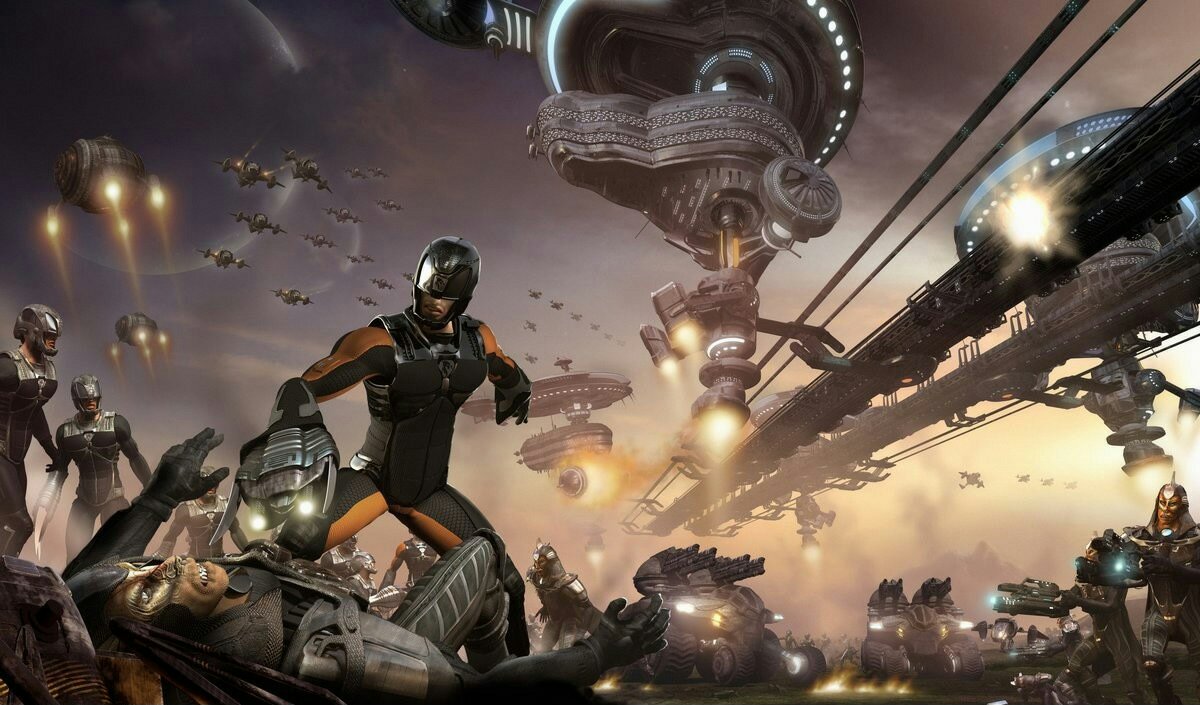
Space Opera: A Virtual World

Science fiction is for real, space opera is for fun – Brian W. Aldiss

SPACE OPERA is a subtype of science fiction which is colourful, dramatic, large-scale and full of scientific adventures, which usually focuses on unreal imagination that has a heroic central character and plot action. It is usually set in the relatively distant future, in space or on other planets. It often involves war, piracy, military virtues, and a very large scale action. In space opera, characters are displayed with powerful energy weapons and other advanced technology. There is a difference between Science Fiction and Space Opera. Science Fiction is generic literature which involves a generalization of scientific, engineering or social theories in futuristic ways in terms of settings, science and technology, space and time travel, parallel universe etc. whereas space opera is simply convectional drama in a futuristic or otherwise science-fiction-like setting. Some popular space opera includes THE MASSIVE FRANCHISE, STAR WARS and other films such as BATTLESTAR GALACTICA and BATTLEFIELD EARTH. Space Opera is a story in which science fiction elements are not critical to the plot and could be replaced by planetary equivalents. It usually emphasizes the effect of progress and inventions where the settings are carefully worked out to obey the laws of Physics, Cosmology, Mathematics, Astronomy and Biology. The thrilling experience of space opera with full of space adventures is stupendous for every sci-fi lover. The most famous representatives of space opera are:

E.E. “Doc” Smith

Brian Herbert and Kevin J. Anderson

Isaac Asimov

C.J. Cherryh

Orson Scott Card

Dan Simmons

Kevin J. Anderson

Michael F. Flynn

Ann Leckie etc.

Current conventions of space opera:

“there is no general agreement as to what [space opera] is, which writers are the best examples, or even which works are space opera”

what used to be science fantasy is now a space opera is entirely forgotten.”

-Hartwell and Kramer

The conventions of space opera have changed quite dramatically over time, and its audience has expanded enormously, peaking with video media like Star Trek and Star Wars.

Apart from the only imagination, we might be surprised that we are also living in a space opera World that does exist without realising it. The best example of it could be none other than the concept of ‘Aliens’, ‘UFOs’ and other supernatural powers that we are not aware of. It’s been for years since we’ve been hearing about UFOs entering our planet, about Aliens and moreover, scientists have also been talking much about the existence of Aliens as well! We have been talking about it all without realizing that all of this has become a part of our universe now. Variety of games about spaceships, aliens have been made until now, which in a way shows us how we are living in a space opera universe. Some news has been flashed out on TV screens about caught of Alien, bizarre creatures, unseen paranormal signs from different places of the World that are sufficient to explain our living in a real space opera World.