World Toilet Day 2024: Ensuring Safely Managed Sanitation for Cities

The challenges posed by rapid urbanization are vast, and safe sanitation in urban India remains one of the most pressing concerns. Under the Swachh Bharat Mission-Urban 2.0, the shift from Open Defecation Free (ODF) to ODF++ is gaining significant momentum, with cities increasingly prioritizing the advancement of safely managed sanitation systems. In line with this objective, the Ministry of Housing and Urban Affairs (MoHUA), in collaboration with the Government of Uttar Pradesh, USAID, BMGF and the WASH Institute, is organizing a two-day workshop on ‘Advancing Safe Sanitation in Urban Areas’ on November 19-20, 2024, in Lucknow.
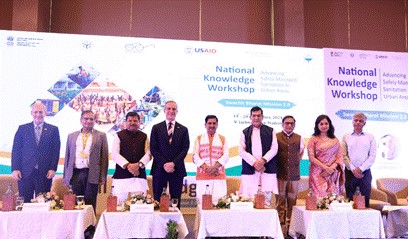
The theme for World Toilet Day 2024, “Toilets – A Place for Peace,” highlights the importance of sanitation and sustainable solutions. MoHUA is hosting a two-day national workshop on “Advancing Safely Managed Sanitation in Urban Areas,” bringing together experts in sanitation, toilet infrastructure, and Used Water Management.

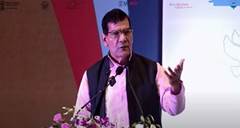
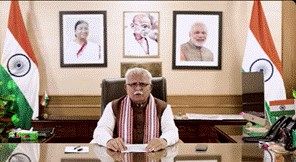
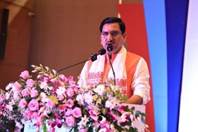
At the National Knowledge Workshop in Lucknow, Shri Manohar Lal, Minister of Housing and Urban Affairs, highlighted SBM’s achievements over the past decade. He emphasized PM Modi’s remarks on toilets improving public health, reducing infant mortality, and empowering women and girls. While acknowledging progress, he noted challenges due to rapid urbanization and called for diverse solutions. Launching the Clean Toilet Campaign 2024, he stressed that cleanliness is ongoing and urged stakeholders to maintain and repair toilets for safe sanitation.

Shri Tokhan Sahu, MoS, MoHUA, spoke on the Swachh Bharat Mission’s sanitation journey that has become a part of our Sanskar and the importance of progressing towards ODF++. Speaking on the Clean Toilet Campaign 2024, Swachh Shauchalaya Humari Zimmedari initiative, he urged the States to ensure clean, safe, and accessible toilets. He acknowledged progress but emphasized the journey is ongoing, encouraging participants to share insights and learn from challenges.
On World Toilet Day, U.S. Ambassador Eric Garcetti lauded SBM’s impact on safe sanitation and empowerment of girls. Shri Arvind Kumar Sharma and Shri Amrit Abhijat highlighted India’s sanitation shift, worker safety, and UP’s progress with mechanization and daily toilet monitoring. While addressing the delegates at the National Workshop, Ms. Roopa Mishra, JS & MD, SBM, MoHUA, stressed on journey from access to safe sanitation to sustaining & strengthening the ODF journey and prioritizing cleanliness and maintenance of urban Toilets.

The Knowledge Workshop focused on safe sanitation access, with leaders from Swachh Bharat Mission-Urban, USAID, BMGF, and the US Embassy discussing their partnership. Experts from Sulabh International, Toilet Board Coalition, and others addressed urban migration, community toilets, and sustainable sanitation. Sessions on “Manhole to Machine Hole” explored mechanization, empowering sanitation workers. MoUs were signed with HUL for a PPP model in community toilets and with Sulabh International for toilets in high-footfall areas. Design guidelines for STPs, faecal sludge management, multi-storey STPs, and PT architecture were also released. The dignitaries also toured the exhibition highlighting key initiatives of SBM-U 2.0, including Toilet 2.0, UWM, and Manhole to Machine Hole.
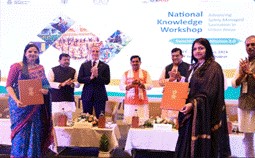

SBM-U rolled out a 5-week long ‘Clean Toilets Campaign 2024’ Swachh Shauchalaya- Humari Zimmedari from 19th November (World Toilet Day) to 25th December (Good Governance Day) 2024 aiming to transform over 70,000 Community and Public Toilets across the country, focusing on cleaning, maintenance, and beautification. The initiative promises to transform all public and community toilets in Urban India.
Hamara Shauchalay: Hamara Samman (HSHS) Campaign

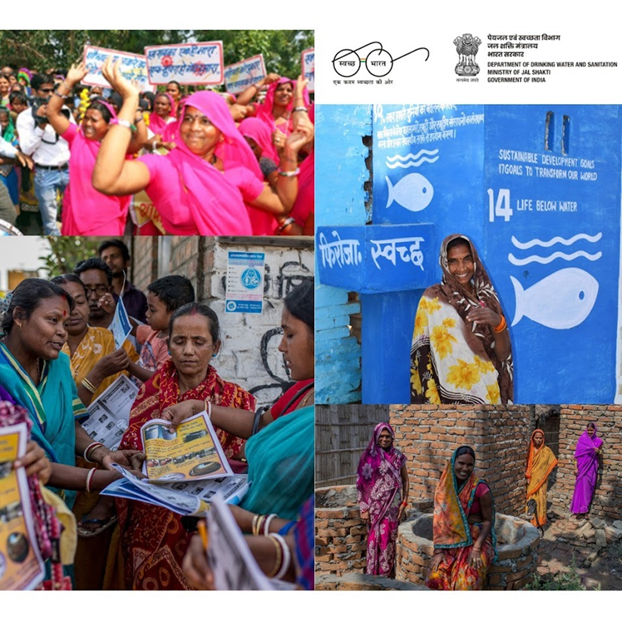
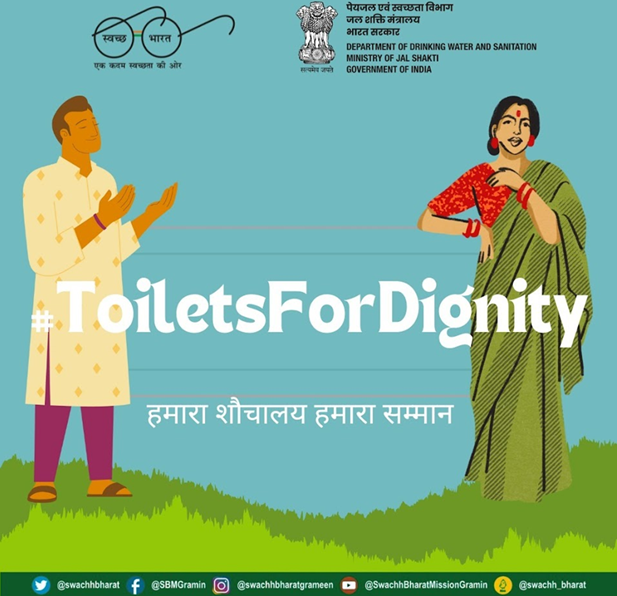
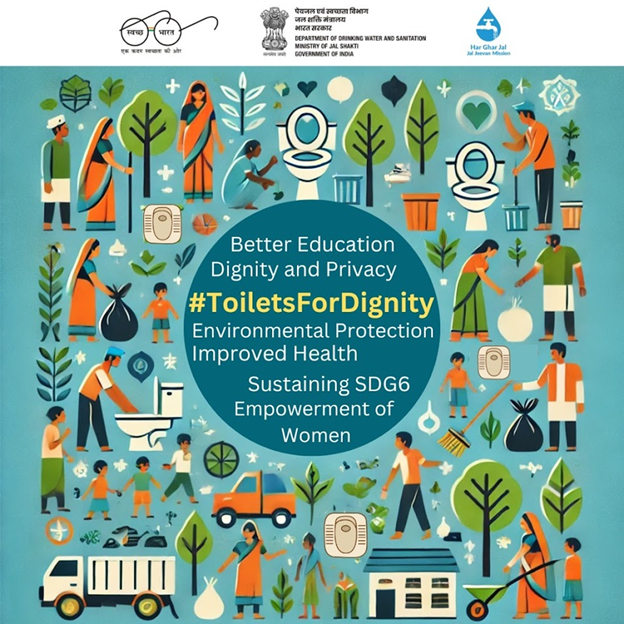
The Department of Drinking Water and Sanitation launched the nationwide campaign “Hamara Shauchalay: Hamara Samman” (HSHS) (हमारा शौचालय: हमारा सम्मान). November 19, World Toilet Day and the campaign will culminate on Human Rights Day, December 10, 2024, emphasizing the critical link between sanitation, human rights and dignity.

The campaign reaffirms India’s commitment to maintaining its Open Defecation Free (ODF) status while promoting behavioral change for cleaner, healthier communities. While India achieved ODF status in 2019, the Phase II of the Swachh Bharat Mission (Grameen) was launched to focus on the creation of ODF Plus Model villages, where the first criterion is sustaining ODF achievements. This aligns with the spirit of World Toilet Day, reminding and ensuring continued toilet usage and maintenance is as important as achieving initial milestones. The HSHS campaign serves as a timely call to action to sustain and build on these efforts.

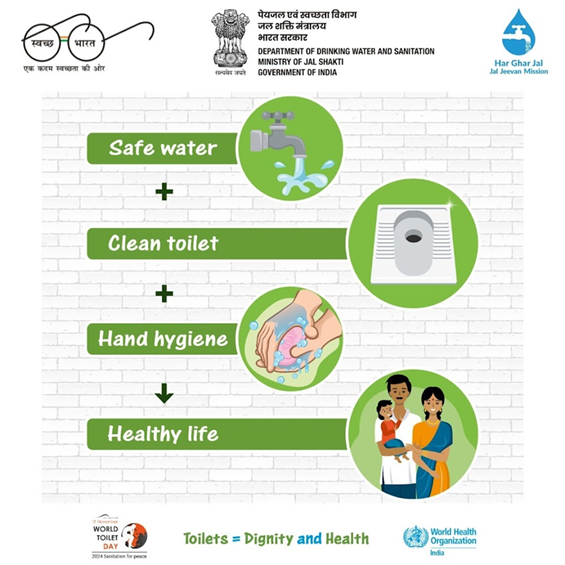
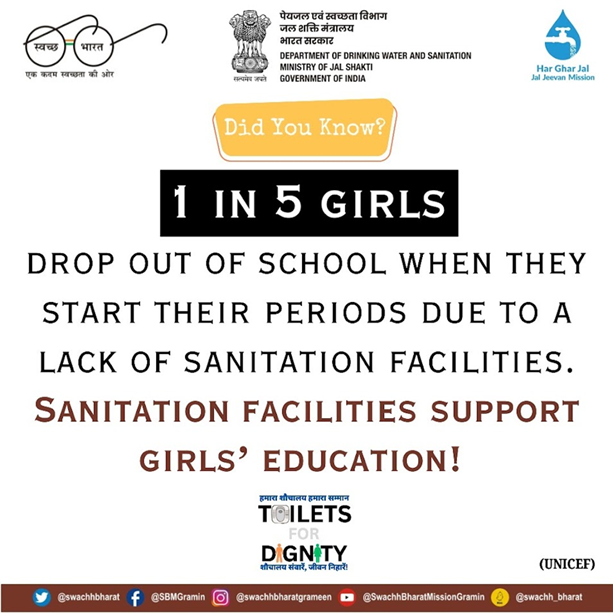
With a strong focus on vulnerable groups, particularly women and girls, this initiative underlines that toilets are more than infrastructure, they are foundational to dignity, equality, and public health aligned with the campaign tagline “शौचालय संवारें, जीवन निखारें”  Speaking of this campaign, Secretary, DDWS, Ashok KK Meena, emphasized the importance of a bottom-up approach in ensuring sustained behavioral change. “Sanitation is a cornerstone of dignity and development. The ‘Hamara Shauchalay: Hamara Samman’ campaign is designed to empower communities, with responsibilities allocated across every level, Gram Panchayats, blocks, districts, and states. This ensures that every stakeholder contributes to sustaining sanitation practices, building pride, and driving long-term impact.” He further added, “On World Toilet Day, as we align with global efforts to achieve SDG 6, India renews its commitment to creating equitable access to sanitation and ensuring no one is left behind.”

Key Campaign Activities

The campaign involves a variety of activities aimed at reinforcing sanitation practices and fostering pride in clean and functional toilets.

  • Competitions will be held to identify and reward the best-maintained household toilets (IHHLs) and community sanitary complexes (CSCs) at every administrative level. These events will recognize efforts in both functionality and aesthetics, encouraging others to follow suit.
  • Community outreach will play a vital role, with initiatives like “Ratri Chaupals”and WASH clubs that will bring together people and inspire change.
  • Sanitation workers will be celebrated through special dignity camps, ensuring their inclusion in welfare programs, and honoring their role in maintaining cleanliness.
  • Citizens will be encouraged to share their sanitation success stories through social media platforms including MyGov using hashtags and .
  • Participation from all levels of governance, with Chief Ministers and State Ministers leading state-level events, while District Magistrates and elected representatives overseeing district-level programs.

The campaign aims to improve sanitation infrastructure, foster behavior change, and strengthen community pride by enhancing the functionality and aesthetics of toilets across the country. By promoting ODF sustainability, it emphasizes that sanitation is not a one-time achievement but a continuous journey toward a healthier and more dignified India.

Department of  Drinking Water & Sanitation (DDWS) under the Ministry of Jal Shakti, appealed everyone to make HSHS a success. DDWS requested the citizen to work together for building sustainable sanitation solutions whilst the nation take forward the legacy of Swachh Bharat Mission.

***

Winners Of ‘Water Heroes: Share Your Stories Contest’

 The Department of Water Resources, River Development and Ganga Rejuvenation, Ministry of Jal Shakti has launched the ‘Water Heroes: Share Your Stories’ contest. The 3rd edition has been launched on 01.12.2021 and will end on 30.11.2022 on MyGov portal. The 1st edition was launched from 01.09.2019 to 30.08.2020. The 2nd edition was launched from 19.09.2020 to 31.08.2021.

The objective of the contest is to promote value of water, in general, and for supporting country-wide efforts on water conservation and sustainable development of water resources. In accordance with the vision of Hon’ble Prime Minister Narendra Modi, a large population should be motivated to adopt the cause of water conservation in the country. The aim of the contest is to create awareness for water conservation by enhancing knowledge and sharing experiences of water heroes; and to create an attitude towards water conservation and management so that a behavioral change can be created amongst all stakeholders.

For the month of August 2022, there are six winners, they will get a cash prize of Rs. 10,000/- and a certificate, details given as below:

  1. Divyansh Tondon:

He is from Meerut, associated with the campaign named “Paani Panchayat” under which they go to various villages, streets, towns, schools, localities and making public aware. He is vice president (Meerut Cantt.) Saarthi Social welfare society.  


  1. Vinay Vishwanath Gawas

He is a Project Director from Goa, campaigning about Rooftop Rainwater Harvesting and borewell recharge in Kelawade village, Keri sattari, Goa. The project is said to be built in collaboration with TERI.


  1. Amit

He is a Gram Pradhan in Malakpura, Jalon, UP and was a Journalist in Delhi. He has done various activities for development such as providing healthy foods in the primary school of the village, working in plantation work, environment protection and Water purification through sedimentation activities.


  1. Babita Rajpoot Ghuwara

She is from Chattarpur, Madhya Pradesh. She is involved in the construction of four check dams and two outlets and made bori bandahan. 


  1. Anurag Patel

Anurag Patel, District Magistrate, Banda in a considerable effort to conserve water ran two significant campaigns- ‘Jal Sanchay, Jeevan Sanchay’ and ‘Jal Kumbhi Hatao-Talab Bachao Abhiyan’. He took the initiative to remove water hyacinth from 126 ponds. He also took efforts to rejuvenate the Chandrawal River by digging up extra miles for renovation purpose. 664 ponds in Mirzapur and 101 in Janpad Farrukhabad was revived under his efforts.


  1. Snehlata Sharma

Snehlata Sharma from Shivpuri District Block Badarwas, Piparodha Village has been doing a considerable and praiseworthy job in field of water conservation and management from the past 1 year. For creating awareness around the village about water and its conservation, she brought women in the forefront. She also generated awareness about the crops that uses less water in the field.


The contest is held monthly and may be seen on MyGov portal. To participate in the contest, one needs to post their success stories on water conservation efforts in the form of 1-5 minutes video, along with a write-up of 300 words and attach some photographs/ photos that depict the efforts. Also, the participants can share their videos (with the link to their YouTube video) on the MyGov portal (www.mygov.in). In addition to this, entries can be submitted at waterheroes.cgwb[at]gmail[dot]com .


Water Crisis in India: The Present and The Future

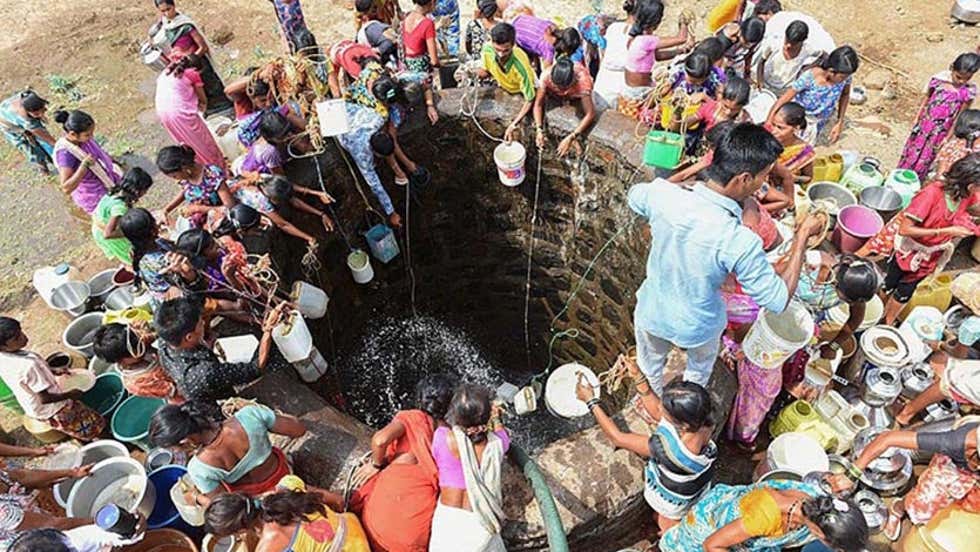
Queue for daily water collection

Introduction

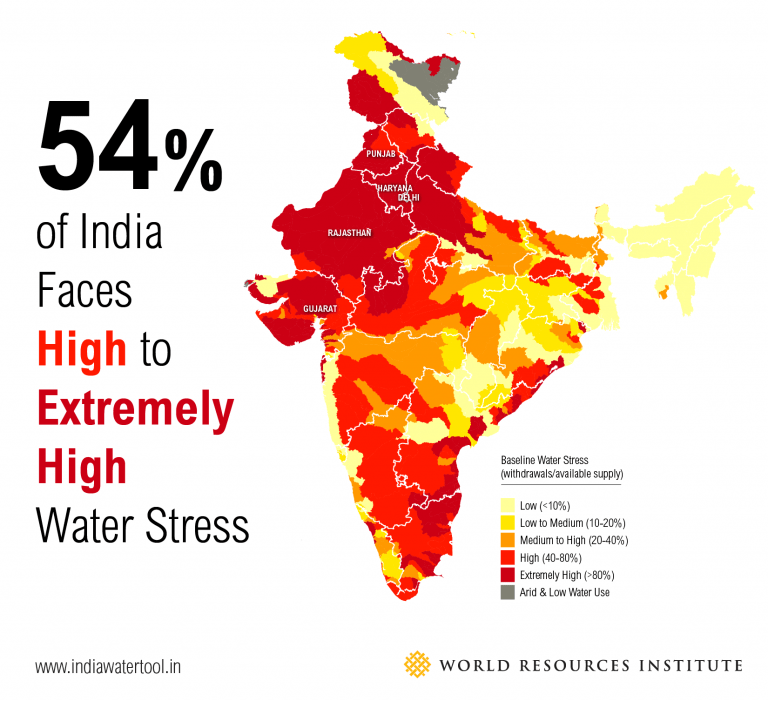
Water is the most essential element of life and livelihood. And India is having a hard time, coping up with the severe crisis of water. India constitutes 16 per cent of the world’s population, but the country has only four per cent of the world’s freshwater resources. With the changing weather patterns and recurring droughts, India is now declared as “water stressed”.

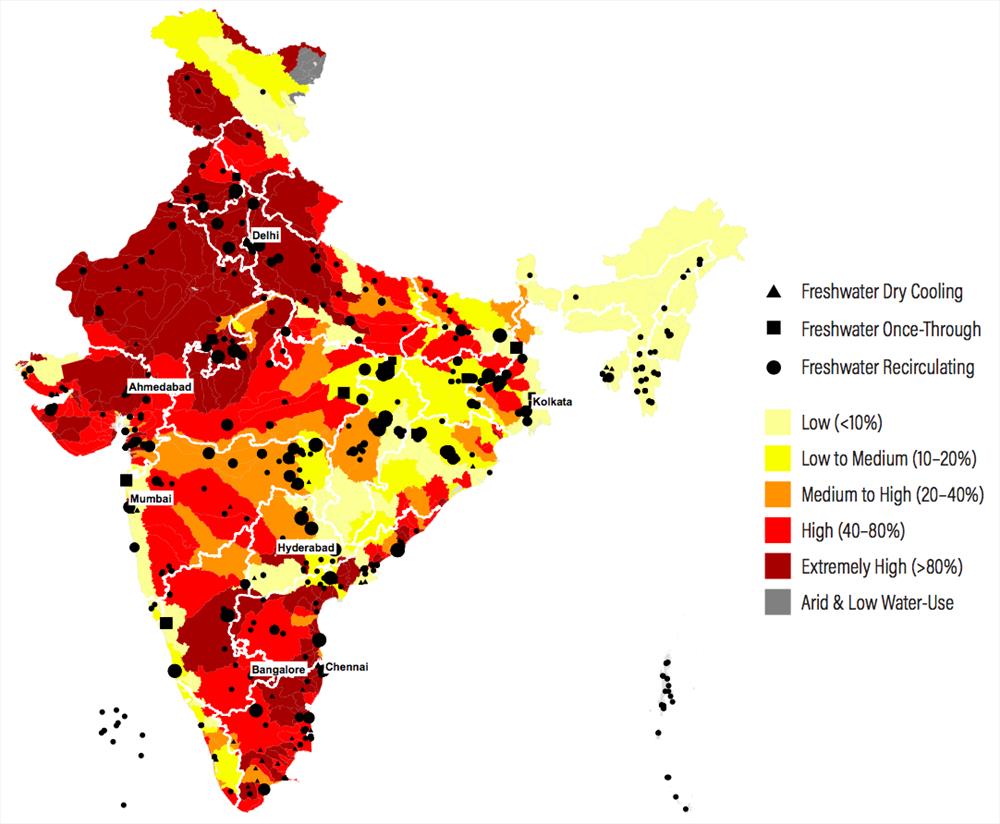
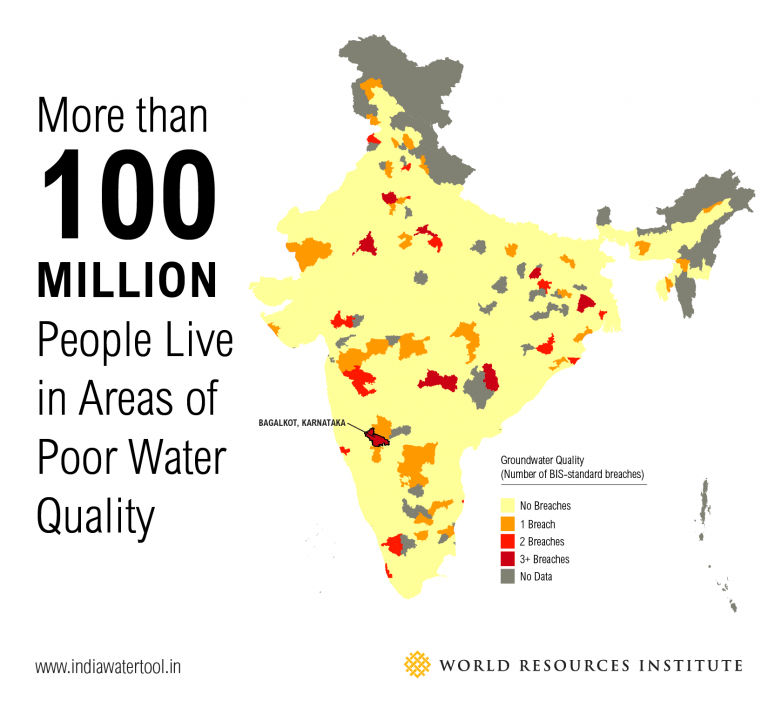
Statistical representation of India‘s Water Crisis

Background

Archaeological researchers had assumed the fall of Great Indus Civilisation was due to a catastrophic water scarcity caused either by shifting rivers or by drastic climate change that forced people to abandon city settlements. And history seems to repeat for present day India again. According to a NITI Aayog report in 2018, about 600 million people, or nearly half of India’s population, are facing extreme scarcity of water. The three-fourths of India’s rural households do not have stable running water supply and rely on sources that can cause serious health risks. The report also stated that India has become the world’s largest extractor of groundwater, accounting for 25% of the total. Moreover, 70% of the water sources were labelled as contaminated .And the conclusion of the report was ‘India is suffering from its worst water crisis in its history.’ It also pointed out 21 Indian cities to be run out of groundwater by 2020.

Reasons behind Water Crisis in India

1. Climate Change : The North-East monsoon is responsible for 10%-20% rainfall of the total rainfall in India, while the South-West monsoon provides approximately 80% of rainfall. In 2018, the North-East monsoon decreased by 44% and the South-West monsoon was deficient by 10%, causing the total rainfall in the area to decrease by 36 percent in comparison to the 50-year average. Because of the lower rainfall, water levels in reservoirs across the country decreased and led to extreme shortages of water in many major cities of India

. 2. Ground Water Extraction: Groundwater meets more than half of the country’s need of water supply and nearly 89% of the groundwater extracted in India is used for irrigation purposes. The traditional techniques of irrigation are also to blame for the water crisis as they result in a majority of water loss and evaporation during the irrigation process.

3. Pollutions in Our Rivers: Due to the lack of long term water management plans, most of the country’s rivers either run dry or have remained polluted over decades. The national river of Ganges is also the one that is most severely polluted, which is mainly resulted from untreated sewage of densely populated cities, industrial waste as well as due to religious ceremonies in and around the river.

4. Wastage of Unmanaged Water : According to the Central Water Commission, even though climate change has resulted in a reduction in rainfall and lack in underground water reservoirs, the country still receives enough rainfall to meet the needs of over 1 billion people. However, India only catches only 8 percent of its annual rainfall due to poor rainwater harvesting. Also for lacking the treatment of wastewater reuse, approximately 80% of domestic wastewater is drained out as waste and ends up flowing into salt water bodies.

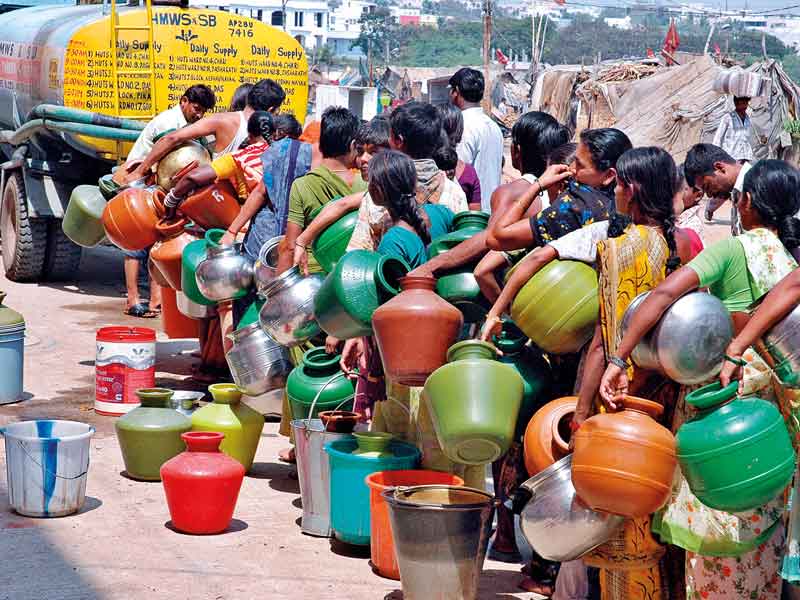
Struggle for daily water collection in water-stressed areas of India

Effects of Water Crisis in India: Where We Stand Today

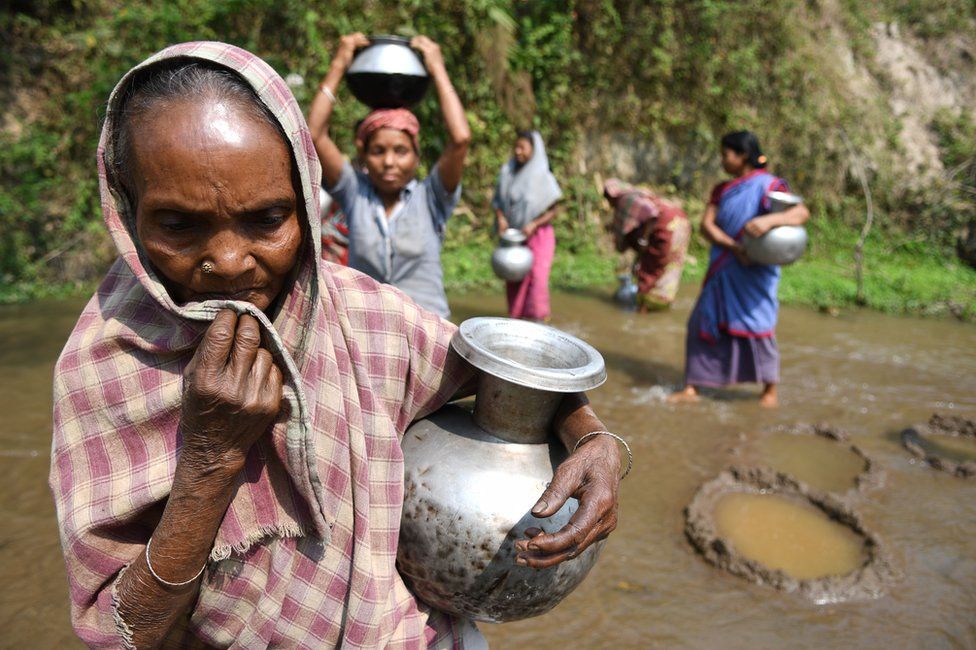
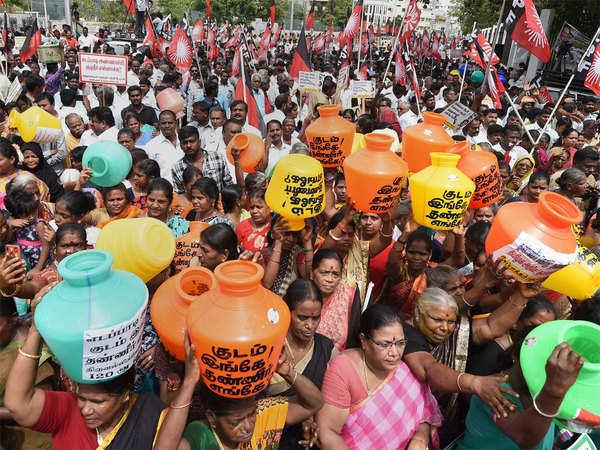
As many as 256 of 700 districts have reported ‘critical’ or ‘over exploited’ groundwater levels, according to a data from the Central Ground Water Board (2017). Fetching water in India has been perceived as a women’s job for centuries, especially in the rural areas. As groundwater resources come under increasing pressure due to over-reliance and unsustainable consumption, wells, ponds drying out fast, escalating the water crisis and placing even greater burden of accessing water on women. A rural woman in Rajasthan walks over 2.5 kilometres to reach a water source, according to a report by the National Commission for Women. Moreover, according to a non-profit named Water, women around the world spend a collective 200 million hours fetching water for their family. In addition to the time spent collecting water, millions may also spend significant amounts of time finding a place to go to relieve themselves. This makes up an additional 266 million hours lost each day. The acute crisis has even led to polygamy in one drought-prone village of Maharashtra. This involves having more than one spouse to collect water. The arrangement is termed as ‘water wives’.

The struggle for women

The Solution to the Crisis: Future Stands

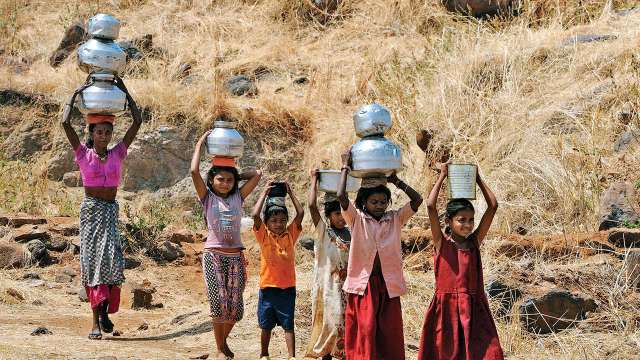
Children also becoming victims of Water Crisis

The Government has taken up the most important role to eradicate the crisis by forming the Ministry of Jal Shakti and launching “Jal Jeevan mission”- Rural in 2019 to promote “Har Ghar Jal” by 2024. Goa and Telengana have achieved the first two Indian states to reach “Har Ghar Jal“, while Andaman & Nicobar Islands and Puducherry became first Indian Union Territories to reach the milestone. In 2021, “Jal Jeevan mission”-Urban was launched to complement the project. “Jal Shakti Abhiyan-Catch the rain” is also introduced to capture and reuse of rain water at the grassroot level as a Jan Andolan. Along with this, for the cleaning and filtration of Ganges river “Namami Gange” had been rolled out as a national flagship mission. Coastal Reservoirs, Desalination of sea water and improved irrigation techniques are now been adopted to address the crisis.

Conclusion

Along with time, active participation from every layer of society in solving the water crisis of India is being witnessed. The youth has come forward with an appealing message to properly addresses the crisis and solve the drawbacks together. Now, the emerging awareness spreading among masses India can hope for a better future to handle the crisis more effectively.

Water resources in India

Water is one of the most essential natural source for us to survive and we have heard it quite a lot time that we cannot survive without it. today I will discuss various resources of water in our country and need to conserve it for future.

In India , we have various resources of water . India receives water from precipitation is about 4000 cubic km. This rain occurs mostly in monsoon seasons with north and northeast getting maximum rain. India has about 4 % of total world’s water resources.

Beside these resources , India has a vast coastline with intended coast in some states. Odisha , Kerala and west Bengal have vast surface water resources in form of lakes. this water is also used for Irrigation of some crops. Irrigation is process of watering of agricultural plants through artificial ways. The availability from surface water ( from lakes , pond , rivers and tanks ) is about 1869 cubic kilometer. Though this level of water is more than enough but , most of the area in India is under tropical climate . About 92% of water is used in Agriculture , 6% for drinking and 2 % for industries. For agriculture , rain is most important resources in India but due to uncertainty of rainfall , uneven distribution of rainfall , crop requirements and nature of the soil, Irrigation is widely used in our country.( source : Jasmine Rachel ,135).

Irrigation are done in India by various ways . It totally depends upon availability of surface and ground water. Various means of irrigation are wells ,tanks , canals and others.

  1. well :- well is a very common source of irrigation we all have seen it in various places. it is a small hole dug in the surface of the earth to obtain water for irrigation. it is a very simple and cheap source of Irrigation.

2. Tube wells : – it is a deeper well at the depth of 20 – 30 m from which water is lifted up for various uses . it can irrigate large area for agriculture. it brings a large amount of underground water. but is little bit expensive.

3. Canals : – canal is the biggest source for irrigation . it is stretched for lakhs of kilometers. Basically ,there are different types of canals that is Inundation canals and Perennial canals . canal irrigation is practiced in Uttar Pradesh , Madhya Pradesh , Rajasthan , Andhra Pradesh and various regions.

Water conservation

Water is a natural resources in our planet . it is a basic need of humans . But due to overuse of it ( increase in population and irrigation) its demand has raised a lot since few years. and amount of water has significantly fallen. some experts also say that world war 3 could be fought due to shortage of water in various countries. we need to conserve water as much as possible . some reasons for it are :-

  1. The overuse of underground water.
  2. Irrigation
  3. The demand of water for industrial use is increasing day by day.
  4. The increase in country’s population.

Water conservation is a very serious mater . fresh water is also declining from earth’s surface. we need to take good steps to conserve water and use efficient measures to conserve water. some techniques to conserve water are rainwater harvesting , water recycling etc.