Paris, the capital of France, is a city with a long and rich history dating back over 2,000 years. The city was originally founded by a Celtic people called the Parisii in the 3rd century BC and was known as Lutetia. It became a major city during the Roman Empire when it was known as Lutetia Parisiorum.
During the Middle Ages, Paris became the center of the French monarchy and the Catholic Church. The city grew in size and power, with the construction of famous landmarks such as Notre-Dame Cathedral and the Louvre Palace. In 987 AD, Hugh Capet was crowned King of France in the Notre-Dame Cathedral, which became a symbol of French royalty and power.
Source – Wikipedia
In the 14th century, the Hundred Years’ War between France and England began, and Paris was occupied by the English for several decades. However, it remained an important cultural and intellectual center, with the establishment of the Sorbonne University in 1257.
The Renaissance saw Paris become an important center of art and culture, attracting artists and writers from all over Europe. The reign of Louis XIV, known as the Sun King, saw the development of many grand buildings and the establishment of the French Academy of Sciences. The Palace of Versailles, located just outside Paris, became the center of royal power and extravagance.
During the 18th century, Paris became a center of Enlightenment thought and revolutionary ideas. The French Revolution of 1789 began in Paris, with the storming of the Bastille prison. The Revolution saw the overthrow of the monarchy and the establishment of the First French Republic. Many famous figures of the Revolution, such as Maximilien Robespierre and Georges Danton, were from Paris.
In the 19th century, Paris underwent major changes with the construction of wide boulevards, public parks, and the Eiffel Tower, which was built for the 1889 World’s Fair. The city became a center of the arts, with artists such as Claude Monet and Edgar Degas living and working in the city.
During World War I, Paris was heavily damaged by German artillery, but the city was quickly rebuilt after the war. In 1940, Paris was occupied by Nazi Germany, and many of the city’s landmarks and cultural treasures were threatened with destruction. However, the city was liberated by Allied forces in August 1944, and the Resistance played a key role in the city’s liberation.
Today, Paris is a major global city and a center of art, culture, and fashion. It is known for its iconic landmarks, such as the Eiffel Tower and the Arc de Triomphe, as well as its museums, such as the Louvre and the Musée d’Orsay. It is also a center of international diplomacy and home to many international organizations, including the United Nations Educational, Scientific and Cultural Organization (UNESCO).
Paris has a long and fascinating history, with each era leaving its mark on the city’s architecture, art, and culture. From its origins as a Celtic settlement to its role as a center of the Enlightenment and the French Revolution, Paris has been at the forefront of European history for centuries. Today, it remains a vibrant and dynamic city, beloved by visitors from around the world.
The New Seven Wonders of the World is a collection of remarkable architectural and engineering feats of the modern world that were chosen through a global vote held in 2007. The campaign was launched by the Swiss foundation New7Wonders, which aimed to promote cultural diversity and encourage the preservation of global heritage sites. The winners were announced on July 7, 2007, in Lisbon, Portugal.
Source – Wikipedia
Great Wall of China:
The Great Wall of China is an iconic symbol of Chinese civilization and one of the most visited tourist destinations in the world. It was built over 2,000 years ago to protect China from invading nomadic tribes. The wall stretches for over 13,000 miles and comprises a series of walls and fortifications.
Petra, Jordan:
Petra is an ancient city located in the deserts of Jordan that was carved into the sandstone cliffs by the Nabatean people over 2,000 years ago. It was an important trading center on the Silk Road and is famous for its impressive rock-cut architecture, including the Treasury and the Monastery.
Christ the Redeemer, Brazil:
Christ the Redeemer is a statue of Jesus Christ located in Rio de Janeiro, Brazil. It was built in the early 20th century and stands at 98 feet tall, including its pedestal. The statue is one of the most recognizable landmarks in Brazil and a symbol of Christianity worldwide.
Machu Picchu, Peru:
Machu Picchu is an ancient Incan citadel in the Andes Mountains of Peru. It was built in the 15th century and abandoned by the Incas a century later. The site was rediscovered by Hiram Bingham in 1911 and is now a popular tourist destination known for its stunning architecture and panoramic views.
Chichen Itza, Mexico:
Chichen Itza is a complex of Mayan ruins located in Mexico’s Yucatan Peninsula. It was built in the 9th century and features impressive pyramids, temples, and observatories. The most famous structure is the Kukulcan Pyramid, also known as El Castillo, which is renowned for its unique acoustic properties.
Colosseum, Italy:
The Colosseum is an iconic symbol of ancient Rome and a popular tourist destination. It was built in the 1st century AD and was used for gladiatorial contests and public spectacles. The Colosseum is the largest amphitheater ever built and could seat up to 50,000 spectators.
Taj Mahal, India:
The Taj Mahal is a white marble mausoleum located in Agra, India. It was built in the 17th century by Emperor Shah Jahan as a tribute to his beloved wife, Mumtaz Mahal. The Taj Mahal is renowned for its stunning beauty and intricate decorative elements, including its marble inlay work and intricate carvings.
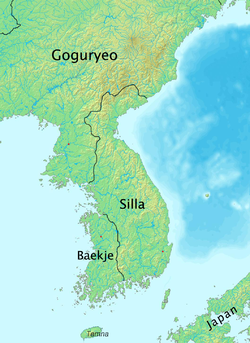
Silla was one of the three kingdoms that emerged in the Korean peninsula during the Three Kingdoms period, which lasted from the 1st century BCE to the 7th century CE. Silla was founded in 57 BCE by Bak Hyeokgeose, who established his capital in the city of Gyeongju, in what is now the southeastern region of South Korea.
Source – Wikipedia
Silla began as a small state in the southeastern part of the Korean peninsula, but gradually expanded its territory through military conquest and political alliances. In the 4th century CE, Silla formed an alliance with the neighboring kingdom of Baekje, which allowed it to take control of much of the Han River basin in central Korea. Silla also fought against the kingdom of Goguryeo to the north, but was unable to conquer it.
Silla’s rise to prominence came in the 7th century CE, when it formed an alliance with the Tang dynasty of China to defeat the neighboring kingdom of Baekje and Goguryeo. This alliance enabled Silla to control the entire Korean peninsula, ushering in a period of political stability and cultural flourishing known as the Unified Silla period.
During the Unified Silla period, Silla became a major center of Buddhism in East Asia. The ruling elite adopted Buddhism as their official religion and built many temples and pagodas throughout the kingdom. Silla also had a sophisticated system of government, with a centralized bureaucracy and a powerful aristocracy that dominated political and economic life.
Silla’s achievements in art and culture were also noteworthy. Silla artisans produced exquisite pottery, bronze sculptures, and gold ornaments that reflected the influence of Chinese and Central Asian styles. Silla literature, including poetry and historical records, also flourished during this period.
However, Silla’s dominance was not to last. In the late 8th century CE, Silla faced a series of rebellions by regional warlords and the rise of a new power in the north, the kingdom of Balhae. In 918 CE, Silla was overthrown by the kingdom of Goryeo, which established a new dynasty that would last for nearly 500 years.
Despite its relatively short lifespan, Silla played an important role in the history of Korea. Its military conquests and political alliances laid the foundation for the unification of the Korean peninsula, while its cultural achievements helped to shape the artistic and literary traditions of Korea for centuries to come. Today, the legacy of Silla can be seen in the many historical sites and artifacts that have been preserved in Gyeongju, including the Seokguram Grotto and the Bulguksa Temple, which have been designated as UNESCO World Heritage Sites.
Australian author Thomas Keneally‘s novel first “Schindler’s Ark” (later republished as Schindler’s List) brought the story of Oskar Schindler’s rescue of Jewish people during the Nazi Holocaust, to international attention in 1982, when it won the Booker Prize. It was made by Steven Spielberg into the Oscar-winning film Schindler’s Listin 1993, the year Schindler and his wife were named Righteous Among the Nations.
Schindler’s Ark later republished as Schindler’s List
About The Author
Thomas Michael Keneally, (born 7 October 1935) is an Australian novelist, playwright, essayist and actor. Keneally’s first story was published in The Bulletin magazine in 1962 under the pseudonym Bernard Coyle. By February 2014, he had written over 50 books, including 30 novels. He is particularly famed for his Schindler’s Ark (1982) (later republished as Schindler’s List), the first novel by an Australian to win the Booker Prize and is the basis of the film Schindler’s List. He had already been shortlisted for the Booker three times prior to that: 1972 for The Chant of Jimmie Blacksmith, 1975 for Gossip from the Forest, and 1979 for Confederates. Many of his novels are reworkings of historical material, although modern in their psychology and style.
Thomas Keneally
Storyline of The Novel
The story of the novel is based on true events, on account of the Nazi Holocaust during World War II. Oskar Schindler, (born April 28, 1908, Svitavy [Zwittau], Moravia, Austria-Hungary [now in the Czech Republic]—died October 9, 1974, Hildesheim, West Germany), German industrialist who, aided by his wife and staff, sheltered approximately 1,100 Jews from the Nazis by employing them in his factories, which supplied the German army during World War II.
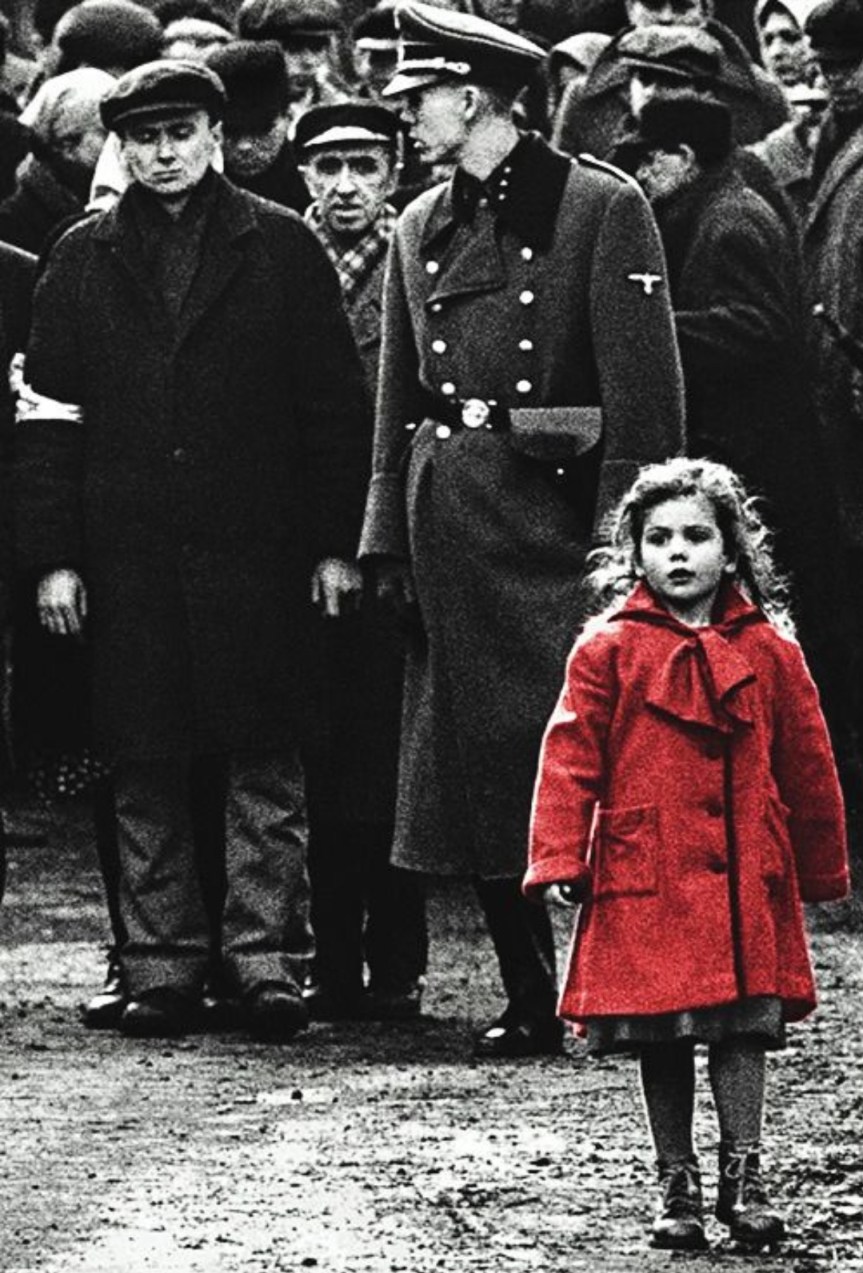
Poster of Steven Spielberg‘s movie Schindler’s List (1993)
In the shadow of Auschwitz, a flamboyant German industrialist grew into a living legend to the Jews of Kraków. He was a womaniser, a heavy-drinker and a bon viveur, but to them he became a saviour. This is the extraordinary story of Oskar Schindler, who risked his life to protect Jews in Nazi-occupied Poland and who was transformed by the war into a man with a mission, a compassionate angel of mercy.
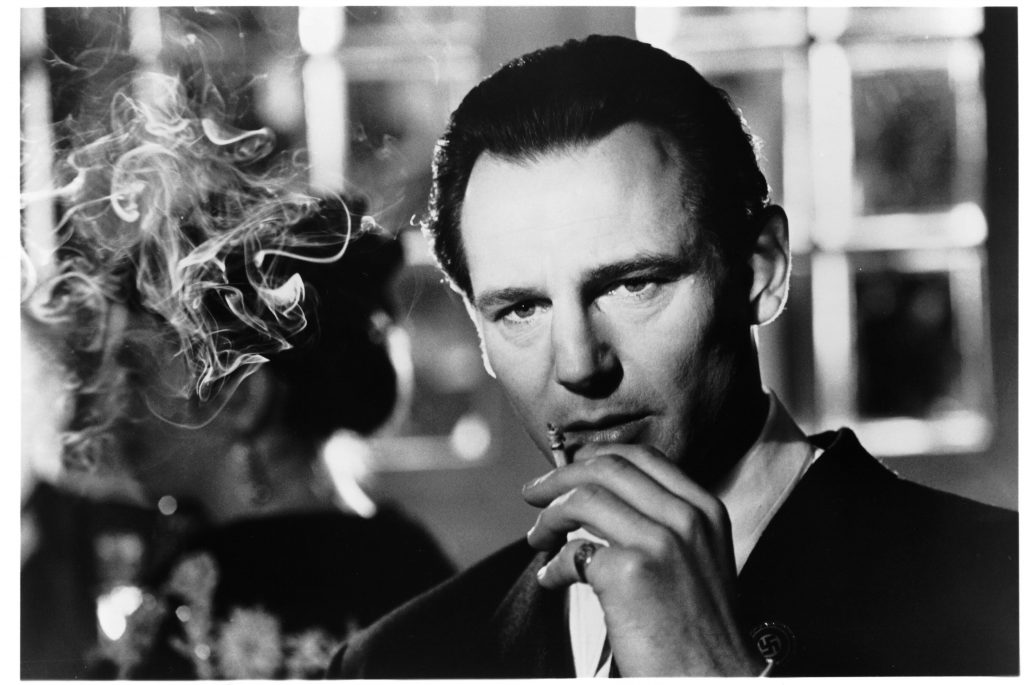
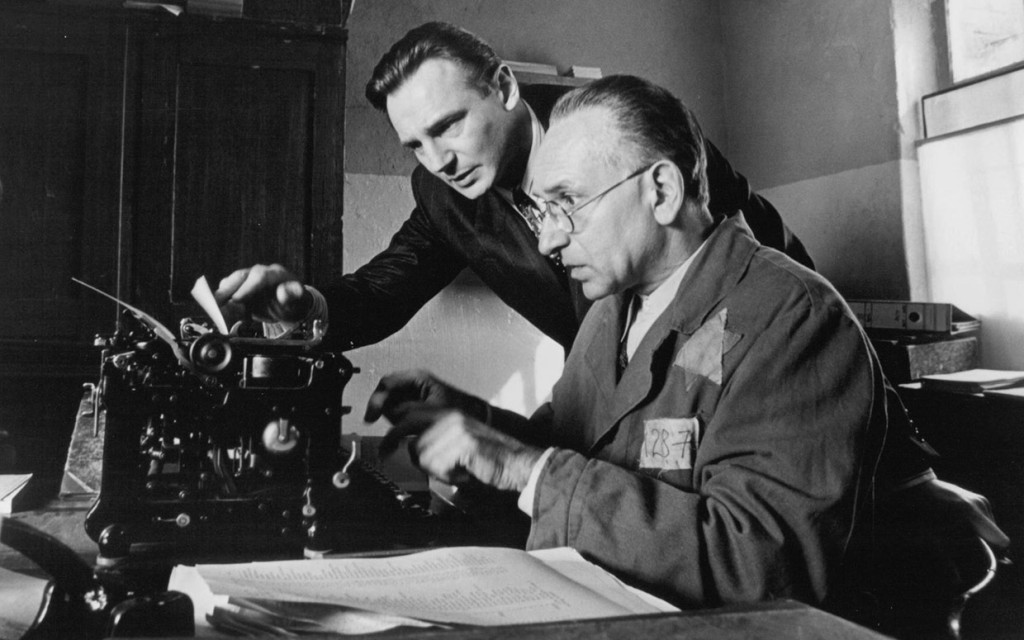
Liam Neeson as Oskar Schindler in Schindler’s List (1993)
Analysis of The Storyline
The novel introduced a vast and diverse cast of characters. However, the focus of the narrative was between Oskar Schindler and Amon Goeth. In the story, there was a dichotomy between what is essentially good and what is evil, that was personified by these two primary characters. Goeth represented everything evil. The war churned out a selfish and heartless sadist who found delight in inflicting pain on the Jews. Ironically, he lusted after his Jewish maid. Schindler, on the other hand, was portrayed as the Good German. He didn’t believe everything that the Nazi regime was saying against the Jews. He was, however, a man of contradictions. Despite being depicted as the epitome of goodness, he lived a self-indulgent lifestyle, which included proclivity towards the bottle and women. His infidelities have been a constant source of pain for his wife, Emilie. He also uses his connections to gain the upper hand in negotiations; it would also be a seminal part of his campaign to save the Jews.
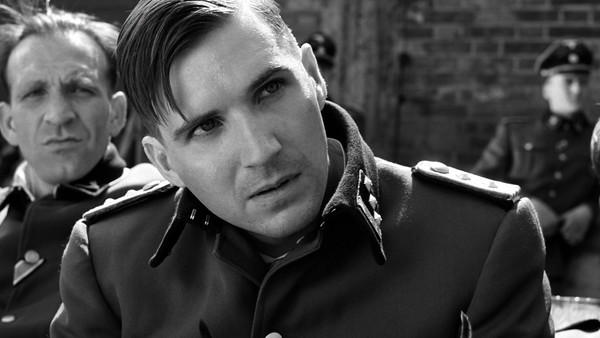
Ralph Fiennes as Amon Goeth in Schindler’s List (1993)
Criticism of The Storyline
The amount of research poured to recreate the story of Oskar Schindler was astounding. And the starting point to this is as interesting as the novel itself. As noted in the Author’s Note, a chance encounter in 1980 led to the novel. Schindler’s motivation for protecting his workers was rarely ever clear, especially at the start. Questions still hound his true intentions. He, after all, brazenly took advantage of the cheap labour the Jews offered at the start of his enterprise. Is Schindler an anti-hero? The answer can be found in Keneally’s extensive research. Through interviews with surviving Schindlerjuden and different Second World War archives, he managed to identify the point in which Schindler decided to protect the Jews. While horseback riding on the hills surrounding Kraków, he witnessed an SS Aktion unfold on the Jewish ghetto below. The Jews were forcefully taken out of their houses. Those who resisted were shot dead, even in the presence of children. Witnessing the atrocious acts firsthand turned Schindler’s stomach. It was then that he resolved to save as many Jews as he can.
Scene from Schindler’s List (1993)
Overall, what didn’t work was the manner in which Keneally related the story of Oskar Schindler. As the story moved forward, it became clearer that Keneally was unsure of how to deliver the story. His resolve to remain loyal to Oskar’s story was commendable. He endeavored to do just that but it never fully came across. The result was an amalgamation of fiction and historical textbook. The strange mix muddled the story and the result was a perplexing work of historical fiction. It is without a doubt that one of the darkest phases of contemporary human history is the Second World War. Nobody expected that the meteoric ascent of Der Führer, Adolf Hitler, in the German political ladder would lead to a devastation of global scale. As the Axis forces march towards and beyond their boundaries, they would leave death and destruction in their wake, stretching from Europe, to the Pacific, and to the Far East. The consequences of the war would resonate well beyond its time. With genocides, concentration camps, and slave labour commonplace, the war was a reflection of the human conditions. Its peak, the Holocaust, exhibited the extent of the darkest shades of the human spirit. It was a grim portrait.
Indeed, the Second World War brought out the worst in humanity. However, in times of darkness, there are those among us who rise to the occasion. One of them is Oskar Schindler whose story was related by Thomas Keneally in his nonfiction novel, Schindler’s List (1982).
Conclusion
While Keneally‘s dramatization of this great man’s exploits is lacking in novelistic shape or depth, the brutality and heroism are satisfyingly, meticulously presented–as plain, impressive, historical record; and if admirers of Keneally’s more imaginative work may be disappointed, others will find this a worthy volume to place beside one of the several Wallenberg biographies.
Dante Aligheiri, the famous Italian poet, is without any debate, one of the most passionate poets of all time who believed in and lived by the true meaning of Love through his exceptional writings . His works are still considered as the Canvases of Human Mind, sparkling and expressing love through words. Though, the love of his own life remained unrequited and that agony fueled his journey of writing as a neverhealed wound, creating some masterpieces of Romantic Literature.
Early Life of Dante
Born in Florence, Italy around 1265, Dante was the son of Alighiero di Bellincione Alighieri and Bella di Abati, and he grew up among Florentine aristocracy. Scholars surmise that he received formal instruction in grammar, language, and philosophy at one of the Franciscan schools in the city.
Dante’s Love : Beatrice Portinari
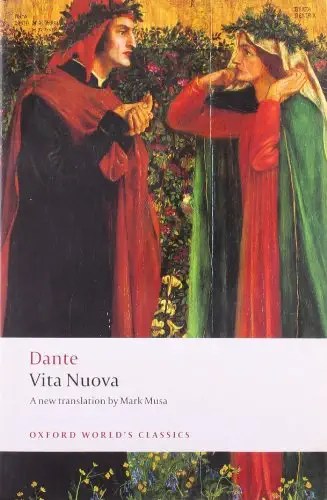
Dante first met Beatrice Portinari, daughter of Folco Portinari, when he was only nine years old and he claimed to have fallen in love with her “at first sight”, apparently without even talking with her. He would later write about his instant love for her in “Vita Nuova”, saying “Behold, a deity stronger than I; who coming, shall rule over me.”
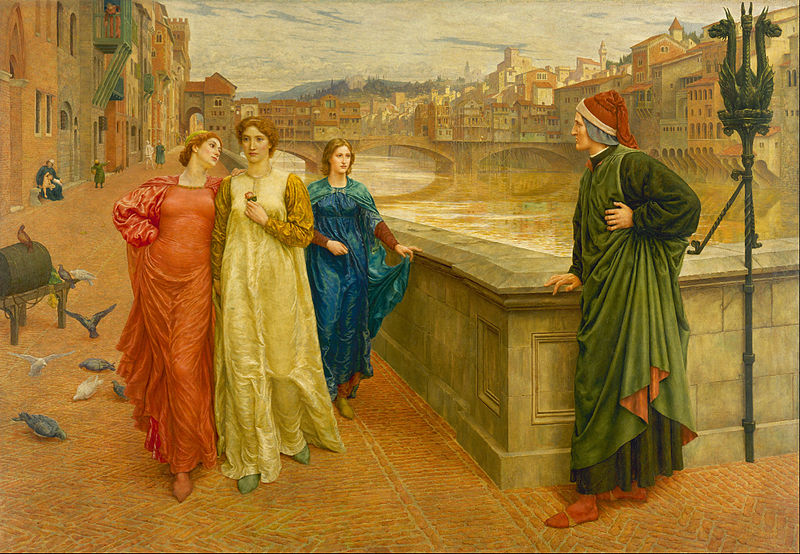
When he was 12, however, he was promised in marriage to Gemma di Manetto Donati, daughter of Manetto Donati, member of the powerful Donati family. Contracting marriages for children at such an early age was quite common and involved a formal ceremony, including contracts signed before a notary. Dante claimed to have seen Beatrice again frequently after he turned 18, exchanging greetings with her in the streets of Florence, though he never knew her well.
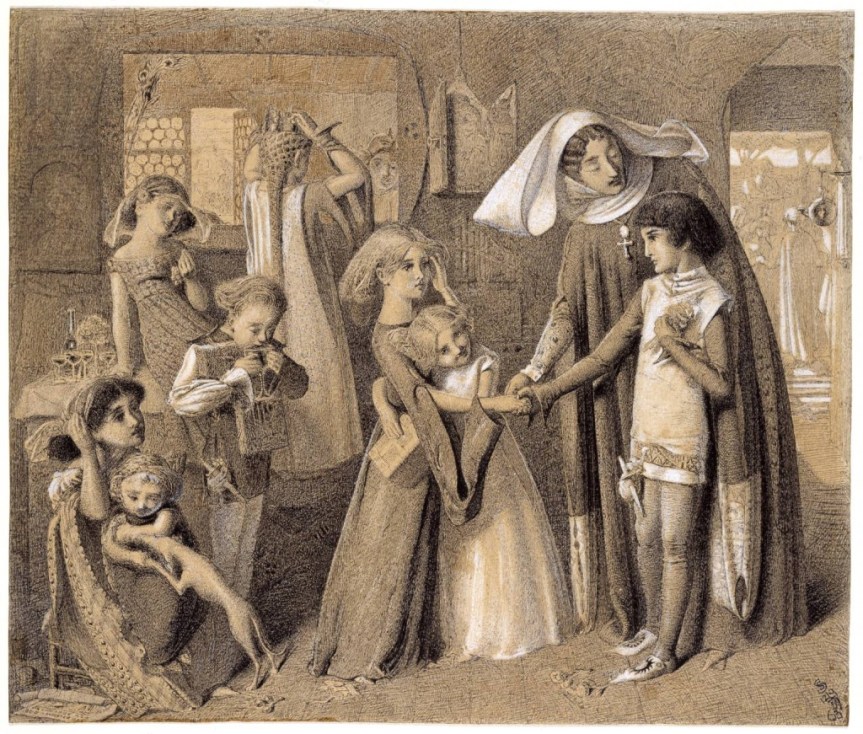
Dante meeting Beatrice for the first time (Art work)
Beatrice’s Death: Presence in Dante’s work
Beatrice died in 1290 at age twenty four. Beatrice probably never had any idea of the depth of his passion for her, yet she was to become one of literature’s most famous figures.
After Beatrice’s death, Dante withdrew into intense study and began composing poems dedicated to her memory. The collection of these poems, along with others he had previously written in his journal in awe of Beatrice, became La Vita Nuova, a prose work interlaced with lyrics. Dante describes his meetings with her, praises her beauty and goodness, describes his own intense reactions to her kindness or lack thereof, tells of events in both their lives, and explains the nature of his feelings for her. She represents an idealized love, the kind of love that transcends physicality. Alighieri included her in both La Vita Nuova and Divine Comedy. She is his salvation; the “gentilissima” (most kind) and “benedetta”(blessed). It is Beatrice who serves as his guide in Heaven in Divine Comedy. La Vita Nuova also relates of the day when Dante was informed of her death and contains several anguished poems written after that event. In the final chapter, Dante vows to write nothing further of Beatrice until he writes “concerning her what hath not before been written of any woman.”
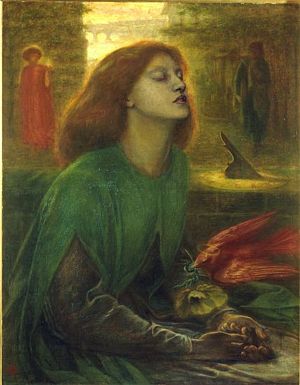
Portrait of Beatrice
Analysis of Dante’s Love and Literature
The promise is fulfilled in the epic poem The Divine Comedy, which he composed many years later. In that poem, he expresses his exalted and spiritual love for Beatrice, who is his intercessor in the Inferno, his purpose in traveling through Purgatorio, and his guide through Paradiso.
Beatrice addresses Dante, the author and a character himself, for the first time in Canto 2 of Dante’s “Inferno”: she descends into Limbo and prays that the poet Virgil can rescue Dante. She then reappears in Canto 30 of Purgatorio, when Virgil disappears.
At first sight of her in Purgatorio, he is as overwhelmed as he was at the age of nine and is dazzled by her presence throughout the journey until she ascends again to her place in heaven, the point closest to God that he is allowed to reach. This expression of sublimated and spiritualized love ends with Dante’s total absorption into the divine. Their last meeting is set among the blessed in Heaven at the end of their journey into the afterlife.
Dante’s work Vita Nuova, heavily influenced by Beatrice
Conclusion
Dante’s love for Beatrice may have been idealized and unattainable, but at the core of that love is admiration, goodness, and respect. That’s a type of love that we don’t see much of in the media of today’s world. We prize the scintillating and love has become synonymous with physical lust.Dante’s love transcends the physical. It is a love of the heart and the intellect. She represented the ideal of beauty and grace, but was also a real woman. Beatrice appeared to Dante as the woman/angel that guides him through Paradise, but also remained a real woman who made his heart beat in the streets of Florence.
6th August 1945. Imperial Japan had refused to surrender even though all the other Axis powers had. Hitler and Mussolini were dead – the Second world war in Europe had come to an end as far as conflicts were concerned (A long age of a partitioned Germany and the Nuremberg trials would happen later). Roosevelt had overseen the construction of secret weapon and Truman, who came to power in the April of that year, ordered for its use.
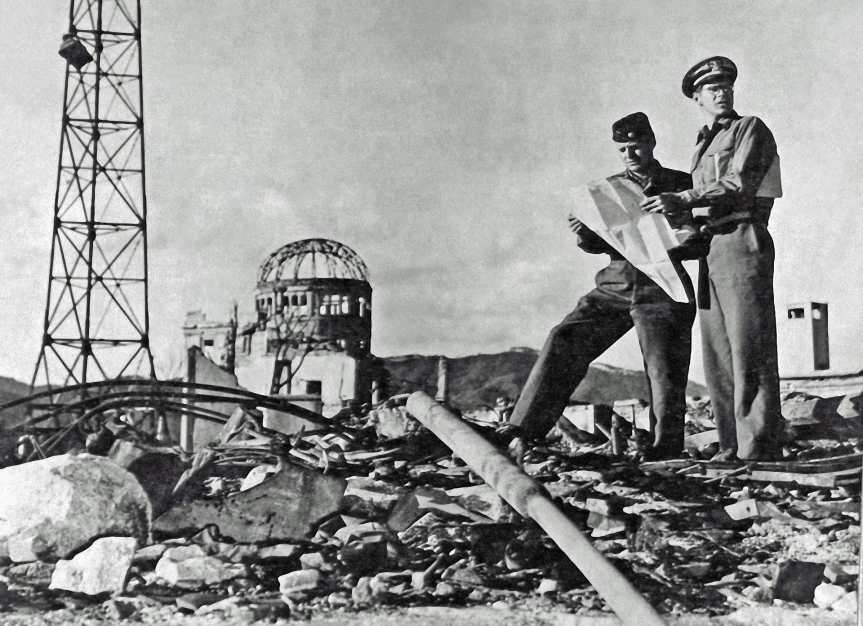
Hiroshima was the first city in history to suffer a nuclear detonation.
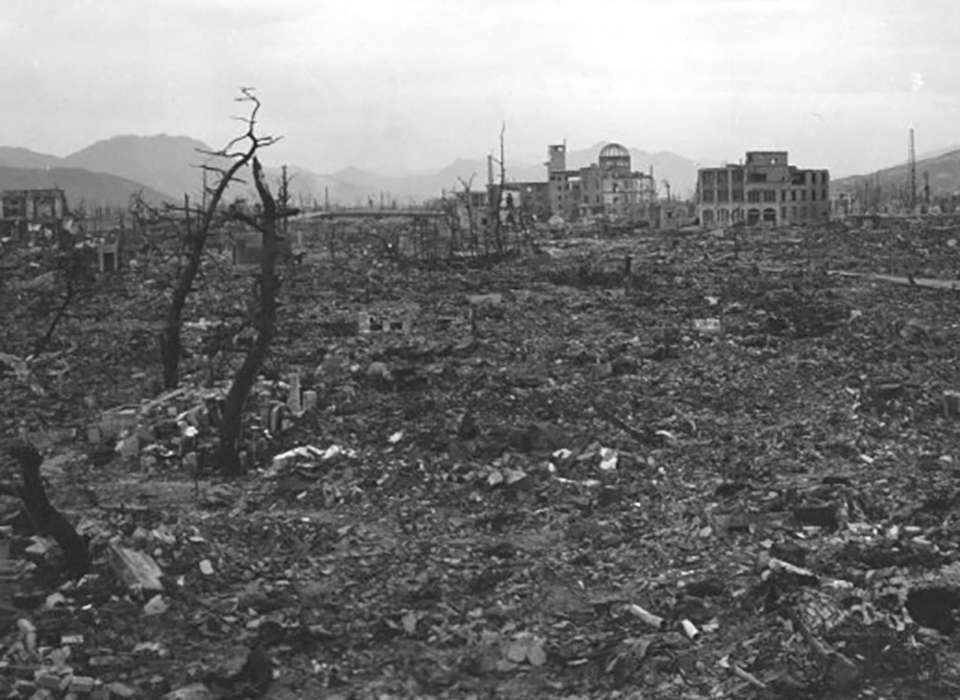
The city of Hiroshima was bombed on the 6th of August 1945 – the first ever atomic bomb attack in human history. 3 days later, another Japanese city – Nagasaki was bombed with the nuclear weapon – forcing Japan to surrender unconditionally and bring the second world war to a decisive end in the favour of the Allied forces. But Truman and most Americans shall never know what it is to be bombed with the weapon. Hiroshima and Nagasaki mark the only instances of atomic bombing recorded. The Allied had failed to bring Japan to its knees and sought the Atom bomb as a quick and effective way. But this quick way, which was a joint plan by the US and its allies – as required by the Quebec Agreement killed a 150,000 people – a 120,000 of them being civilians in Hiroshima alone. And this might have been one of the deadliest attacks on a civilian city by any country involved in a conventional warfare – let alone the US that was trying top be the leader of human rights and civilian liberties.
A 120,000 people and 50sq km of area were eradicated in a matter of seconds.
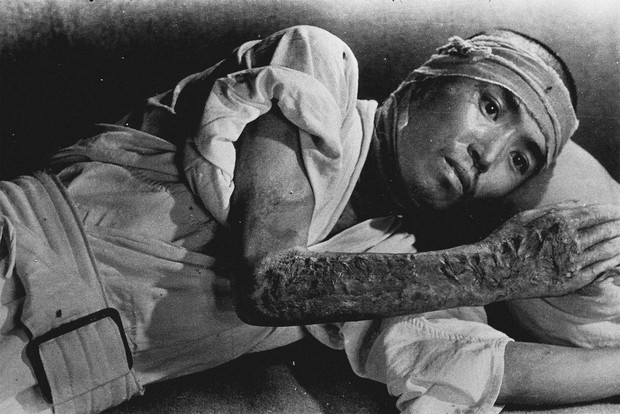
To the Allies, the bomb meant an end to warfare and a sign of American supremacy for the next 5 decades. But to Japan, it meant deaths of 200,000 people in both cities and several decades of nuclear poisoning, radiation induced mutations and cancers that spanned several generations and in some families continue even today.
The University of Texas created a photobook to let the average American – who allegedly yields more pride than sympathy toward the incident – to know of the plight of a nuclear warfare. And people across the world – may it be Chinese, Indian, Pakistani, American, Russian, Israeli or North Korean(if they could read this) would agree that the rhetoric of a nuclear warfare is so blatant in these societies that a bunch of stupid people in the government can lead to a humanitarian and environmental crisis unprecedented in history.
Raditation poisoning killed about 20,000 more people in the later months.
The Hiroshima Day is a reminder of the powers of nature that man has been able to harness and the fact that these powers mean only more responsible behaviour is needed in all of us.
The Hiroshima Memorial Park stands as a testimony to those people who bore the brunt of war between two groups who sought nothing but a global supremacy in trade and diplomacy.











 Eduindex
You must be logged in to post a comment.