LIFE A GUIDED PATH

                                                           LEARN YOUR LIFE BY YOUR WAY/JOURNEY

There is always a conflict between our heart and mind to explore or to cling on with the wise people’s saying before starting our track of life/career. In my opinion I require I both to be implemented in life as not everything can be known to everyone. But choose try your journey to write your novel and recite it to others. An unguided travel will always have various adventures and mysteries to be revealed, “Life is a journey explore your experience by unfolding mysteries”.  

“Life is a stage where men and women are mere players

They come and play their part and leave the stage” – Words told by Shakespeare

 So no one is permanent and don’t depend on others make yourself depended on you. As an infant you try to crawl then try to walk followed by jogging and finally running. Each and every step is taken by you is your effort to grasp things at every level and learn them after you mature every stage in life. Instead of getting guidance try to gain your guidance by making your way of what your mind says. You can do work your thinking tells you as it has never gone wrong. If you learn without training you will never forget your lesson that made you perfect out of the incidence. As you learn without training you improve your skills and your character to understand every aspect in life.

“Not everyone is perfect it is life shaping people in their own destiny”

Help yourself in understanding things without your rage or anger controlling you. You’re thinking and actions in life helps you decide who you are. Trespass your limits and create your path where there is a block. As you move forward you will face every aspect of life understanding factors like adjustments, emotions, sadness, sorrow. The more you explore, the deep you learn and face boldly to overcome your hinderances out of courage. Guidance helps you to travel safely but own path makes you to face the obstacle and how strong you are by heart. And it is an unavoidable fact that still 2 out of 4 children are handled and guided until their old days without they taking their own pavement. “Help children to find paths but don’t travel with their paths as the path will travel and teach them the value of them”.

Sleep-the need

One of the important part of your daily routine, which helps to do all other tasks of the day perfectly is a good sleep. Or we can say quality sleep. Every animals without any discrimination need sleep. It is as essential as food and water. Without sleep it becomes harder to concentrate on the tasks. It is basically essential to keep human being sane. Sleep is also important to functioning of brain. It also influences the communication of nerve cells. Many unwanted things your brain built during the day are removed while you are sleeping. Lack of sleep increases the chances of getting affected by different disorders.

how much a person sleep?

Need for sleep and pattern of sleep differ with age. A newborn sleeps almost 16-18 hours, while a grownup may sleep only for 8 hours. Even sleep pattern differs between individuals of same age group. But an average time is decided by surveys and studies. This not a prescription, but a result of a study. Average school student may need 9 hours sleep. Adults sleep for 7-8 hours. Older people normally sleep less. Children sleep very deep and their sleep will not get disturbed easily. But older people tend to get disturbed and awakened easily.

mechanism of sleep

Two things maintain your sleep mechanism. You may have heard of circadian rhythm. This directs different functions of the body like metabolism, body temperature, alertness, hormone release etc. This rhythm also controls sleep. This rhythm decides when you should be awake and when you should sleep. This rhythm makes you sleepy at night and makes you alert during the day time. This circadian rhythm gets synchronized with your surrounding environment. This may include your habits or weather around you like temperature or intensity of light. But they will work in the absence of these little information.

The other thing is the homeostasis. This keeps a track of your need of sleep. This works as a reminder telling your body to sleep at a certain time. This is the thing that maintains hoe intense your sleep is going to be. If you are deprived of sleep, this makes you sleep longer when you get to sleep.

There are many factors that influence your sleep mechanism. The medications if you are on any, your medical condition, The place where you sleep and your food habits. Exposure to light makes it difficult to sleep because some special cells in the eyes process the light and instructs the brain whether it is daytime or night. The Jet lag people face after a long flight is because of the disturbances in the circadian rhythm. people face problems when there is imbalance between the body clock and the actual clock.

some tips to sleep well
  • Try maximum to be in sync with the natural clock.
  • Try to sleep and getup everyday at same time.
  • Take care about your food habit and eat healthy.
  • Try to make your room completely dark while sleeping but be in bright light in the day time when you are fully awake.
  • Stay away from mobile or television at least 1 hour prior to your sleep.
  • Include exercise in your daily routine.
  • Avoid caffeine or nicotine as the sleep time is approaching near to you.
  • Be as much stress-less as you can.
  • Keep your room quiet.

a good sleep is everyone’s need and don’t allow your busy life to take a toll on your sleep. Sleep well and be healthy and be productive.

Beauty Standards

Beauty is now being an issue for young girls. Growing up, we all remember Barbie. I love Barbie movies. They teach us about kindness, courage, friendship, values, etc. But, they also make young girls who play with Barbie dolls want to be like them. Barbie is the first beauty standard we were exposed to.

We then came to our early teens and were exposed to Victoria’s Secret models and the fashion industry. Early teen is also the place where we go through puberty. We all know puberty is not a pretty place. Trust me, nobody looks good when they are going through puberty.

Now, being exposed to the world of beauty and going through puberty puts us in a tough spot. We start hating ourselves. We know that most people do not look like models. We also know that models have a strict diet plan, they undergo surgeries, and there is constant use of Photoshop to make them look flawless. Our subconscious brain is aware of these facts. We still can’t help comparing ourselves to the pretty models.

We start looking down upon ourselves. We constantly try to become like models. A lot of girls become anorexic to be as thin as the models. A lot of girls also take supplements to reduce fat. A lot of them start saving up for cosmetic surgeries from a very young age. Most of the girls do these surgeries to feel more confident. I do not blame them. But I do blame our society for making them feel like they needed to change.

Our beauty standards are also being white-washed. We are now following western beauty standards. When we think of beauty, we imagine a tall, thin white girl. Even in African and Asian countries, this is what the beauty standard is. This makes people from those countries spend millions of dollars bleaching their skin even when it leads to skin cancer.

Our media makes millions of dollars selling products with the faces of white-washed beauty. These days when we see an advertisement, we look at the models more than the product. Are they selling the product or the beauty standard? 

Now our role in the world of beauty standards is to stop thinking it matters. Unless you want to become a model. People who have zero connection to the beauty industry have to stop worrying about their looks. It is not our work to look like that. So, we all need to end our obsession with beauty. If we are not being paid for being pretty, we do not have to obsess over it.

Next, we all need to stop thinking that every single woman has to be pretty. I know even men go through it. But, the American Society of Plastic surgeons reveals that women have accounted for 92% of cosmetic surgeries and men accounted for 8% of them. About 98% of the women feel immense pressure from external sources to look a certain way.

I really want to change that. So can we all start complimenting each other on qualities other than appearance? Instead of only telling a girl, you are pretty, beautiful, etc. Can we please tell them that they are talented, kind, intelligent, and caring?

I love getting compliments on my work rather than being complimented on my physical appearance. It is not in our control how we look like.    

Can we all start complimenting each other on who we are rather than what we look like?

Impulsive Buying

Every person has to shop things from time to time. Shopping is a part of our day to day life because it is requisite to supply our families with the basic necessities. Some do shopping to escape the stress built within them and they enjoy by doing so. They find it as a way of relaxing from the monotonous life. While some consumers plan the things that they need to buy before hand by preparing the list of items for every week/month, they surf through the price tags to afford the good quality products at the lowest price, there are others who indulge in impulsive buying. It is the tendency of a customer to buy goods and services without planning anything in advance. When a customer makes impetuous decisions to buy products off the cuff, it is usually provoked by emotions and feelings. Impulsive buying is not just restricted to few products it can be observed on a wide range of goods like clothing, electronic devices, jewellery, sports pieces, pastries and so on, by the consumers when they get fascinated with a sudden impulse.

TYPES OF IMPULSE PURCHASES:

  • PURE IMPULSE BUYING – The consumers crack their normal pattern of consumption
  • REMINDER IMPULSE BUYING – When the consumers sees items in the shop that they forgot to add to the shopping list before, they purchase them when he/she is reminded by seeing those things displayed in the stores.
  • SUGGESTION IMPULSE BUYING – When the customers notice things that they never used or seen before they plan to buy them at the moment by a conviction that it would be very obliging.

Dealers try to exploit this behavior of the customers to promote their sales/services. The hyper markets tries to captivate people from the entrance of their space. They provide a great window display which increases the curiosity of potential customers, introduce combo packs using the demand of the primary products for the sale of secondary products, work with brands, offer suggestions with new products and influence the mind of customers and such plentiful tricks. Marketing companies are more likely to get benefitted because of this trait because customers end up purchasing products even without any actual intent of doing so.

Some of the customers even realize this when half of the wallet is swiped off as they return back to home ending up with random products which may not be of a great use to them. A study published in the June 2008 issue of the Journal Of Consumer Research suggests that consumers are more susceptible to impulsive buying from one brand over another when distracted while shopping. Consumers are also likely to make an impulse purchase, when a consumer perceives that the environment is over stimulating. Emotional appeal contributes largely to impulsive buying. Scientists state that this happens because some items help us feel better and temporarily dampen our unhappiness. Some customers want to stock up things even when there is not an immediate need for them. Many get attracted on the spotting of discounts on products and at times our brain get fooled by the idea that we are getting a good deal and get defeated.

How to get rid of impulsive buying ?

  • Design a budget and cling to it. A budget doesn’t all of a sudden save all your money we should sincerely stick to them. If not planned for a budget don’t go in for spending money.
  • Try not to shop when you are emotional. It takes an major part in triggering a person to go for an impulsive buying. We just buy things in the thrill of the moment and later realize the unnecessary investments made. Retail therapy just makes you feel goo at the spur of the moment.
  • Have a clear monitor on the budget and savings and review it every month. By this we can avoid the dispensable products.
  • When shopping on a larger basis find support and accountability which can go a long way in refraining us from impulsive buying.
  • When tempted to buy a new product go through its reviews and we can realize the worth of buying such products.

EDUCATION DEVELOPMENT DAY IN TAMILNADU!!!

Though many National leaders rendered their selfless service to our country, one among them to be noted was the Kingmaker Kamaraj. K. Kamaraj, familiarly known as Kamarajar was an independent activist and the former Chief Minister of Tamil Nadu. He was popularly known as the Kingmaker of India during the 1960s. He supported Lal Bahadur Shastri, to be the President of India after the death of Nehru. After the sudden dismissal of Lal Bahadur Shastri, he supported Indira Gandhi to be the President of India. He was a man of simplicity and known for his best leadership in the development of Tamil Nadu. The Midday Meals Scheme introduced by him was very popular in India. He was popularly known as Karmaveerar, KalviKan Thirantha Mudhalvar, etc.

K KAMARAJ – Former Chief Minister Of TamilNadu

Kamaraj was born on 15th July 1903 at Virudhunagar in TamilNadu to Kumarasamy and Sivagami Ammal. His birth name was Kamatchi and later changed to Kamarajar. He studied primary education in a traditional school and he was to drop out because of his father’s death to support his family. He had a younger sister named Nagammal. He worked in his uncle’s shop and begun to attend political meetings and common meetings related to Home Rule Movement. He developed his interest in politics by reading daily newspapers. In 1920, at the age of 18, he became a very enthusiastic person and joined Indian National Congress. He organized public meetings for leaders in Virudhnagar and was very eager to meet Mahatma Gandhi. As he wished, he met Gandhiji for the first time in the meeting. Kamaraj went to jail for two years for taking part in ‘Salt Sathyagraha’ led by C. Rajagopalachari at Vedaranyam.

At the age of 34, he contested in the Legislative election for the first time and marked his first victory at Sattur in 1937. He stuck by the principle ‘ One should not accept any post/leadership to which one could not do full justice ‘. In 1954, Kamaraj became the Chief Minister of Tamil Nadu. Various schemes and deeds introduced by him as a Chief Minister are as follows:

  • He removed Hereditary Education Policy introduced by Rajaji.
  • He reopened more than 12,000 schools during his leadership as a Chief Minister.
  • Education and trade hiked during his period.
  • Kamarajar aimed to eradicate illiteracy and introduced compulsory education. The literacy rate was 7% during the British period but during his period, the literacy rate increased to 37%.
  • He also introduced the Midday Meals Scheme to provide atleast one healthy meal per day to the poor and needy children. He introduced the uniform scheme to the school children to eradicate the germination of caste-based flaws in young minds.
  • He built several irrigation canals during his period. He built nine dams which are appreciated till now and they are as strong as him.
  • Huge investment industries such as Neyveli Lignite Corporation, BHEL, etc. were started during his period.

He has been the Chief Minister of Tamil Nadu for three consecutive terms, by the victory in 1957 and 1962. His ruling period was known as the Golden Age of Tamil Nadu. Kamaraj was a great follower of Mahatma Gandhi, yet to this fact, he died on 2nd October 1975 during his sleep in his native Virudhunagar. He was awarded ‘Bharat Ratna’ posthumously in 1976. The Chennai Airport is named after him as Kamaraj Terminal.

His birthday is celebrated as ‘ Education Development Day ‘ in Tamil Nadu every year. Though he died, his good deeds remain in the hearts of the people.

Intelligence plus character – that is the goal of Education.

– K Kamaraj.

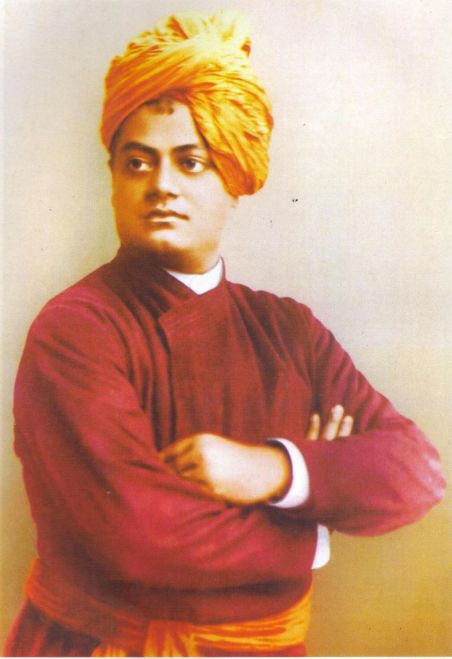
BIOGRAPHY of 'Swami Vivekanand'

Born: 12 January, 1863

Place of Birth: Kolkata, India

Childhood Name: Narendranath Dutta

Father: Vishwanath Dutta

Mother: Bhuvaneshwari Devi

Education: Calcutta Metropolitan School; Presidency College, calcutta

Religion: Hinduism

Guru: Ramakrishna

Founder of: Ramakrishna Mission (1897), Ramakrishna Math, Vedanta Society of New York

Philosophy: Advaita Vedanta

Literary works: Raja Yoga (1896), Karma Yoga (1896), Bhakti Yoga (1896), Jnana Yoga, My Master (1901), Lectures from Colombo to Almora (1897)
Death: 4 July, 1902

Place of Death: Belur Math, Belur, Bengal

Memorial: Belur math, west bengal

About Swami Vivekanand:-

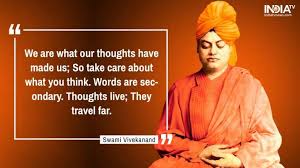
There are some rare men who leave their footprints on the sands of time, becoming a source of motivation for thousands of lost wanderers in the battlefield of life. Swami Vivekananda is one such example. “Come up, o lions and shake off the delusion that you are sheep; you are souls immortal, spirits free, blest and eternal….’ These words of stunning optimism proclaimed the arrival of a prophet- philosopher no less than Swami Vivekananda on the stage of the world. Such were his words that shook the world in the Chicago address on 19 September 1893. A young, educated man, Narendranath Dutta once walked the path of scepticism and even cynicism when it came to religion.

All the powers in the universe are already our. It is we who have put our hands before our eyes and cry that it is dark.”- –Swami Vivekananda

A visit to Ramakrishna Paramahansa changed his life. He challenged Ramakrishna’s claims of having seen God. Ramakrishna put his fingers on Naren’s heart, and in a moment of overwhelmingly powerful spiritual vision, Naren discovered God everywhere- from the rich man in his mansion to the poor rickshaw puller on the streets of Kolkata. God was no more a wishful thinking confined to the Kali temple at Ramakrishna’s Dakshineshwar. He was a living entity beyond all limitations of caste, creed, religion, language, time and space. Thus Narendranath Dutta metamorphosed into Swami Vivekananda, a disciple of Ramakrishna. This, however, was merely the beginning. The master, Ramakrishna, had told him before his passing away that he, Naren, would have to do ‘Mother’s work’, to teach mankind and be like a banyan tree, giving shelter to the tired and weary. In January 1891, he left the company of his brother monks and traversed the country from the North to the South alone with God. He wept to see the suffering and ignorance of the poor, and was disturbed at the material complacency of the affluent classes. The picture of ancient India appeared vividly before his eyes in all its grandeur and glory, and the contrast was unbearable. Swamiji set upon himself the task of rebuilding a new and rejuvenated India.

Learn everything that is good from others but bring it in, and in your own way absorb it; do not become others.” –Swami Vivekanand‘.

Be it his journey to America or the lecture at Chicago or the setting up of the Ramakrishna Mission in 1897, his main aim was service to mankind and the rebuilding of a young, vibrant and educated India. · Ramakrishna Mission today is a giant organisation which dedicates itself to the execution of extensive educational and philanthropic work in India and abroad, and expounds the profound Vedantic philosophy preached by Swamiji. The impact Swamiji had on India and across the world can be best understood by the comment made by The New York Herald about his speech at Chicago; ‘He (Swamiji) is undoubtedly the greatest figure in the Parliament of Religions. After hearing him, we see how foolish it is to send missionaries to this learned nation.

“Take up one idea. Make that one idea your life; dream of it; think of it; live on that idea. Let the brain, the body, muscles, nerves, every part of your body be full of that idea, and just leave every other idea alone. This is the way to success, and this is the way great spiritual giants are produced.”

― Swami Vivekananda

Narendranath Dutta was born on 12 January 1863, and Swam Vivekananda passed away on July 4, 1902. But the lionheart with his piercing eyes, mobile lips, swift movements, clad in yellow and orange, shining like the sun of India in the heavy atmosphere of Chicago, lives on in the memory of millions. He inspires every ma in the world to ‘arise, awake, and stop not till the goal is reached.

You have to grow from the inside out. None can teach you, none can make you spiritual. There is no other teacher but your own soul.”
― Swami Vivekananda

If anyone wants to study the origin of the Vedanta movement in America then study Swami Vivekananda travels across the US. He was a great thinker, great orator, and passionate patriot. It is not wrong to say that he was more than just a spiritual mind.

“Be the servant while leading. Be unselfish. Have infinite patience, and success is yours.”
― Swami Vivekananda

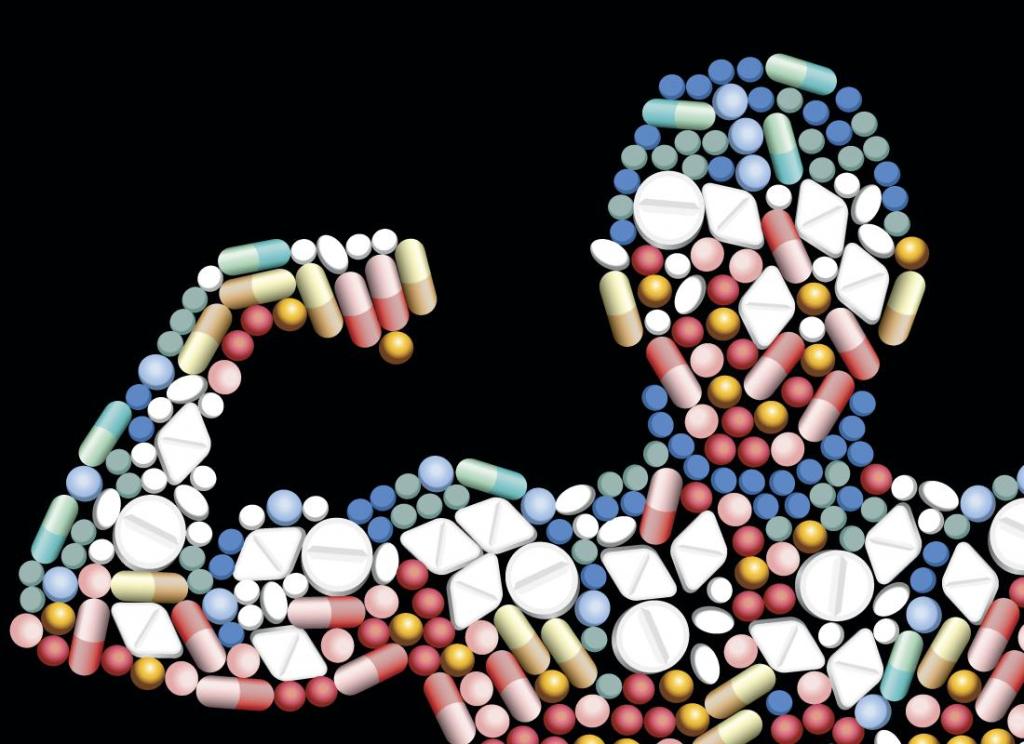
Doping – How is it Affecting Sports?

“Science has learned recently that contempt and indignation are addictive mental states. I mean physically and chemically addictive. Literally! People who are self-righteous a lot are apparently doping themselves rhythmically with auto-secreted surges of dopamine, endorphins and enkephalins. Didn’t you ever ask yourself why indignation feels so good?”

~ David Brin

Introduction

Doping in sport is a widespread problem not just among elite athletes, but even more so in recreational sports. In scientific literature, major emphasis is placed on doping detection, whereas detrimental effects of doping agents on athletes’ health are seldom discussed. Human growth hormone also increases muscle mass, although the majority of that is an increase in extracellular fluid and not the functional muscle mass.

The term doping is widely used by organizations that regulate sporting competitions. The use of drugs to enhance performance is considered unethical, and therefore prohibited, by most international sports organizations, including the International Olympic Committee.

History

According to the World Anti-Doping Agency (WADA), the term “doping” probably comes from the Dutch word “dop,” an alcoholic beverage made of grape skins that was used by Zulu warriors to make them stronger in battle.

Ancient Greek athletes used special diets and stimulating potions to improve performance, and 19th century endurance athletes indulged in strychnine, caffeine, cocaine and alcohol.

The American specialist in doping, Max M. Novich, wrote: “Trainers of the old school who supplied treatments which had cocaine as their base declared with assurance that a rider tired by a six-day race would get his second breath after absorbing these mixtures.”[8] John Hoberman, a professor at the University of Texas in Austin, Texas, said six-day races were “de facto experiments investigating the physiology of stress as well as the substances that might alleviate exhaustion.”

Effects of doping in sports

It builds muscle but causes abnormal growth, heart disease, diabetes, thyroid problems, hypertension, blood cancers and arthritis. Other adverse effects include joint pain, muscle weakness, visual disturbances, enlarged heart and diabetes.

Other side effects include:

  • Heart palpitations.Heart rhythm abnormalities.
  • Weight loss.
  • Tremors.
  • Mild high blood pressure (hypertension)
  • Hallucinations.
  • Stroke.
  • Heart attack and other circulatory problems.
  • Constipation.Skin rash or dermatitis.
  • Diarrhea.
  • Dizziness.
  • Drowsiness.
  • Dry mouth.
  • Headache.
  • Insomnia.

UFC ( Ultimate Fighting Championship ).

In December 2013, the UFC began a campaign to drug test their entire roster randomly all year-round. Random testing, however, became problematic for the promotion as it began to affect revenue, as fighters who had tested positive would need to be taken out of fights, which adversely affected fight cards, and therefore pay-per-view sales.

According to Steven Marrocco of MMAjunkie.com, about 31% of UFC fighters subjected to random testing since the program first started have failed due to using performance-enhancing drugs. That is approximately five failed tests for every sixteen random screenings.

From July 2015, the UFC has advocated to all commissions that every fighter be tested in competition for every card. Lorenzo Feritta, who at the time was one of the presidents of the UFC, said, “We want 100 percent of the fighters tested the night they compete”. Also, in addition to the drug testing protocols in place for competitors on fight night, the UFC conducts additional testing for main event fighters or any fighters that are due to compete in championship matches.

Link

Teen Wolf

Teen Wolf is an American supernatural teen drama television series developed by Jeff Davis for MTV, loosely based on the 1985 film of the same name. Tyler Posey portrays the title character, a young werewolf who defends his California town from supernatural creatures and other threats.

The series premiered on June 5, 2011, and concluded on September 24, 2017, after six seasons. It received generally positive reviews from critics and won three Saturn Awards for Best Youth-Oriented Television Series. The series also received 13 Teen Choice Awards, nine for the performances of Posey, Dylan O’Brien, Tyler Hoechlin, Holland Roden, and Shelley Hennig and four for Choice Summer TV Series.

Teen Wolf premiered on June 5, 2011, following the 2011 MTV Movie Awards.The second season premiered on June 3, 2012, after the 2012 MTV Movie Awards. On July 12, 2012, Teen Wolf was renewed for a third season, which includes 24 episodes and the production location was moved to Los Angeles, California.

The third season premiered on June 3, 2013, at 10 pm, giving the series a new high on ratings.A fourth season premiered on June 23, 2014. On July 24, 2014, MTV renewed Teen Wolf for a fifth season of 20 episodes, which was split into two parts, and premiered June 29, 2015.

On July 9, 2015, Teen Wolf was renewed for a sixth season of 20 episodes. Showrunner Jeff Davis confirmed that Tyler Posey, Dylan O’Brien, Holland Roden, Shelley Hennig and Dylan Sprayberry would be reprising their roles as Scott McCall, “Stiles” Stilinski, Lydia Martin, Malia Tate and Liam Dunbar respectively

Teen Wolf revolves around Scott McCall, a high school student living in the fictional California town of Beacon Hills. Scott becomes the eponymous teenage werewolf of the series after he is bitten by an alpha werewolf the night before his second year of high school, drastically changing his once-ordinary life. The bite forces him to balance his new identity with his day-to-day teenage life and eventually help protect his hometown, which he learns is a beacon for supernatural activity.

The main reason why Teen Wolf got canceled was MTV’s shift away from scripted shows and back towards its roots of music and unscripted content.

Assuming that Teen Wolf season 7 is ordered and does in fact happen, it’s going to be a while before fans would see any episodes. We’re talking about a major revival here, so it’s going to take a lot of time to make it all happen.So, for now, Teen Wolf season 7 likely wouldn’t be released until, at the earliest, 2023.

DEFORESTATION – A REAL DANGER TO ENVIRONMENT

Deforestation

Deforestation is the permanent removal of trees to make room for something besides forest. This can include clearing the land for agriculture or grazing, or using the timber for fuel, construction or manufacturing. 

Deforestation occurs for a number of reasons, including farming, with 80% of deforestation resulting from extensive cattle ranching and logging for materials and development. It has been happening for thousands of years, arguably since man began converting from hunter/gatherer to agricultural based societies, and required larger, unobstructed tracks of land to accommodate cattle, crops, and housing. It was only after the onset of the modern era that it became an epidemic.

Increased Greenhouse Gases

In addition to the loss of habitat, the lack of trees also allows a greater amount of greenhouse gases to be released into the atmosphere. Healthy forests absorb carbon dioxide from the atmosphere, acting as valuable carbon sinks. Deforested areas lose that ability and release more carbon.

Soil Erosion and Flooding

Further effects of deforestation include soil erosion and coastal flooding. Trees help the land to retain water and topsoil, which provides the rich nutrients to sustain additional forest life.

Without forests, the soil erodes and washes away, causing farmers to move on and perpetuate the cycle. The barren land which is left behind in the wake of these unsustainable agricultural practices is then more susceptible to flooding, specifically in coastal regions.

Here are some basic facts about deforestation. These facts are explored in greater depth below.

  • Forests are cut down to clear land for agriculture, livestock grazing, and settlement; for timber; to produce charcoal; and to establish tree plantations.
  • Deforestation occurs across all forest types, but is concentrated in the tropics and boreal regions. Temperate regions are experiencing a net increase in forest cover due to natural regeneration.
  • While deforestation produces food, fiber, and fuel, it can also pose risks to climate, biodiversity, and food security by degrading the ecosystem services normally afforded by healthy and productive forests
  • Scientists estimate that 80% of the planet’s terrestrial species live in forests. Deforestation is therefore one of the biggest extinction risks to many species.

Types of deforestation

The “causes of deforestation” section above focuses on direct drivers of deforestation, but indirect drivers are also important to consider. For example, logging is a major indirect driver of deforestation in the tropics. Logging in tropical rainforests is typically selective, meaning only a few trees are harvested per hectare. But successive logging cycles degrade the perceived economic value of the forest, increasing pressure to convert the forest for intensive use, like agricultural or an industrial plantation (e.g. oil palm, wood pulp, or timber are the most common tropical tree plantations). Logging also usually involves road construction, which facilitates access to remote areas, greatly boosting the likelihood that an area of forest will eventually be cleared or burned.

Drivers of deforestation can be even farther removed however. For example, corruption, governance, and land rights can all be important factors in whether a forest gets destroyed. Corruption can enable companies to circumvent environmental regulations, while poor governance can allow illegal actors to clear forests with impunity since there isn’t any law enforcement. Insecure land rights can spur a free-for-all where forests get cleared because no one has clear stake to maintain them for the public good. Research has shown that forests are more likely to be maintained in indigenous communities that have secure land titles.

|Political parties and Party system in India|

Political parties are voluntary associations for organised groups of individuals who share the same political views and who try to gain political power through constitutional means and who decide to work for promoting the national interest. 

There are four types of political parties in the modern democratic states : Reactionary parties which cling to the old social economic and political institutions, conservative parties which believe in the status quo, liberal parties which aim at reforming the existing institutions and radical parties which aim at establishing a new order by overthrowing the existing institutions.

Characteristics of party system in India:

Multi party system- The continental size of the country, the diversifying character of Indian society, the adoption of Universal adult franchise, the particular type of political process and other factors have given rise to a large number of political parties. In fact, India has the largest number of political parties in the world.

One dominant party system- In spite of the multi party system the political scene in India was dominated for a long time by the Congress, hence Rajni Kothari an eminent political analyst prefers to call the Indian party system as “one party dominance system” or the “Congress system”.

Lack of clear ideology- Except the BJP and two Communist Parties (CPI and CPM), all the parties do not have a clear cut ideology. They are ideologically closer to each other. They have a close resemblance in their policies and programmes.  Almost every party advocates democracy, secularism, socialism and Gandhism.

Personality cult- Quite often, the parties are organised around an eminent leader who becomes more important than the party and its ideology. Parties are known by their leaders rather than by their manifesto. It is a fact that the popularity of Congress was mainly due to the leadership of Nehru, Indira Gandhi and Rajiv Gandhi.

Based on traditional factors- In the western countries, political parties are formed on the basis of socio-economic and political programmes. On the other hand, a large number of parties in India are formed on the basis of religion, caste , language , culture , race and so on. 

Emergence of Regional parties- Another significant feature of Indian party system is the emergence of a large number of Regional parties and their growing role. They have become the ruling parties in various states like BJD in Odisha, Akali Dal in Punjab and so on.

Factions and defections- Factionalism, defections, splits, mergers, fragmentation, polarization and so on have been an important aspect of the functioning of political parties in India. The passion for power and material considerations have made politicians leave their party and join other party or start a new party.

Lack of effective opposition- An effective opposition is very essential for the successful operation of the parliamentary democracy prevalent in India. It checks the autocratic tendencies of the ruling party and provides an alternative government. However, in the last 50 years an effective, strong, organised and viable natural or position could never emerge except in flashes.

Trials of a more precise and comfortable MRI to identify early breast cancer begins in the United Kingdom.

A new, more convenient method of detecting breast cancer has begun testing in the United Kingdom, with the potential to identify tumors at an earlier stage.

At some time in their life, one in every eight British women will be diagnosed with breast cancer. Because malignancies and fibrous tissue both show up as solid white regions on X-ray, mammograms are less effective in younger women whose breasts contain denser, fibrous tissue and less fat because cancers and fibrous tissue both appear as solid white areas on X-ray.

Mammograms may miss malignancies in postmenopausal women with thick breast tissue, who are also more likely to acquire breast cancer in the first place.

Women with a dubious lump may be given an ultrasound scan or a biopsy, and if the diagnosis is still unclear, they may be directed for DCE-MRI, which detects the development of new blood vessels supporting tumors. However, in women with early-stage malignancies, they may not be visible, leading to false comfort.

Multiparametric MRI was first created to evaluate liver disorders without the need for a painful biopsy, and it is now widely utilized in Europe and the United States.

It works similarly to traditional MRI in that it utilizes high magnetic fields and radio waves to excite protons in the tissue, then exploits variations in the time it takes for them to settle to generate a “map” of the various tissues in the breast. Multiparametric MRI, on the other hand, allows an even more comprehensive map to be generated by merging pictures created by multiple MR pulses and sequences.

A scan of healthy breasts with multiparametric MRI. Photograph courtesy of Perspectum Diagnostics

“We believe that if we differentiate the tissue rather than looking at the blood vessels around the tumor, we should be able to spot not only tumors in dense breasts but potentially tumors that aren’t seen on mammograms,” said Prof Sally Collins, a consultant obstetrician and medical lead for women’s health at Oxford-based Perspectum Diagnostics, who herself recently received treatment for breast cancer.

“We’re also working to improve the scanning experience for patients. “Mammograms are awful because they squish your breast on this plate, which is undignified and unpleasant, and MRIs are much worse because you have to lie face down with your boobs dangling in this coil and your arms raised over your head for ages,” Collins added.

“We’re attempting to make it such that women may be fully dressed, respectable, and comfortable while being scanned, which is critical for the patient journey to cancer diagnosis.”

The prospectus has received ethical clearance to enroll 1,030 women in the study, including 10 women who have been diagnosed with breast cancer and 30 to 40 healthy women who are presently being scanned, to see if the technology can properly map their breast tissue while laying on their backs. It is estimated that the study would take two years to complete.

“It will never replace regular mammography screening for postmenopausal women, but we think it will enhance the diagnosis route for women with thick breasts or premenopausal women who are at extremely high risk of breast cancer, eliminating the need for repeated tests,” Collins said.

CHILDHOOD – BEST DAYS

I don’t know when I lost my childhood
I think I lost my childhood
When I started focusing on my studies,
Maybe I lost it
When I start overthinking about tomorrow
Maybe when I get jealous of my cousin
Maybe I lost it when my parents compare me with others
May be when I started doing something to please my parents
Maybe when I feel guilty for saying something
Maybe when I came to know that everything that I learnt in my childhood is just a bookish line
And no one takes that seriously in real life
Not even my parents
Maybe then I lost my childhood

We have to learn from our childhood
●To be happy for no reason
●To always be curious
●To fight tirelessly for something

I think Childhood was the best memories of everyone.


My childhood was also very memorable to me.
I used to play till 7pm without any thought of my homework or my parents.
At that time my father was in Indian army that’s why he couldn’t live with us.I was living with my mom and grandma
Thus whenever I come from school I have to go to market for food supplies or everything that is needed for home.And that’s why I am always onMy angry mood because my friends were playing when I had to go to market
And as a child I also wanted to play.
Thus whenever I return to the market I started playing with my friends till 7 pm.
My grandma is always waiting for me to come back after playing.
My grandma loves me so much.I usually sleep with my grandma and she always sang a song for me, tells bad time stories.She loves to irritate me..
She was my best friend at that time.I think I was closer to my grandma even more than my mom.
My grandma and I were just like friends.
Whenever grandma borrows some money from me then I always get it back with some intrest.


Whenever I went to my maternal grandmother’s home I enjoyed a lot there.My uncle always takes me to a resturant for my favorite foods.He took me to a fair.And in my grandfathers shop I played a lot.I used to irritate every customer but my grandfather never scolds me for that.
In the evening grandmother took me to the tour of village and I enjoyed it a lot.
Best thing is that I was known by my mothers name there.And I am proud of them.


My Childhood was definitely the best memory for me.
There was no tension for homework, assignment, exams career, future
We just enjoy our lives but now everything is the opposite.


We always complete some tasks.Always always always…..
In the morning we wake up and keep doing our work whether we enjoy it or not.As it is our duty and we have to do it because we get paid for it or to get a job we have to study hard.


Some have dreams to achieve it thus they also enjoy their everywork that brings them closer to their dreams
But some don’t have, they are just doing things because their parents want them to do or they want to earn money for their livelihood.

But what do you think about it?Are they enjoying their lives?
Of course not.


So according to my best things for happiness is stop questioning yourself and be proud of yourself for enjoying your life

●You have a roof over your head.

●You ate today.

●You have clean water.

●You have a good heart.

●You wish for others.

●You are breathing.

●Atleast one person care for you.

●You have clean clothes.

Be grateful for the little things…

Sometimes we stress over things that we don’t have and not thankful for the things we already do have.

CHILDHOOD – BEST DAYS

I don’t know when I lost my childhood
I think I lost my childhood
When I started focusing on my studies,
Maybe I lost it
When I start overthinking about tomorrow
Maybe when I get jealous of my cousin
Maybe I lost it when my parents compare me with others
May be when I started doing something to please my parents
Maybe when I feel guilty for saying something
Maybe when I came to know that everything that I learnt in my childhood is just a bookish line
And no one takes that seriously in real life
Not even my parents
Maybe then I lost my childhood

We have to learn from our childhood
●To be happy for no reason
●To always be curious
●To fight tirelessly for something

I think Childhood was the best memories of everyone.

My childhood was also very memorable to me.
I used to play till 7pm without any thought of my homework or my parents.
At that time my father was in Indian army that’s why he couldn’t live with us.I was living with my mom and grandma
Thus whenever I come from school I have to go to market for food supplies or everything that is needed for home.And that’s why I am always onMy angry mood because my friends were playing when I had to go to market
And as a child I also wanted to play.
Thus whenever I return to the market I started playing with my friends till 7 pm.
My grandma is always waiting for me to come back after playing.
My grandma loves me so much.I usually sleep with my grandma and she always sang a song for me, tells bad time stories.She loves to irritate me..
She was my best friend at that time.I think I was closer to my grandma even more than my mom.
My grandma and I were just like friends.
Whenever grandma borrows some money from me then I always get it back with some intrest.

Whenever I went to my maternal grandmother’s home I enjoyed a lot there.My uncle always takes me to a resturant for my favorite foods.He took me to a fair.And in my grandfathers shop I played a lot.I used to irritate every customer but my grandfather never scolds me for that.
In the evening grandmother took me to the tour of village and I enjoyed it a lot.
Best thing is that I was known by my mothers name there.And I am proud of them.

My Childhood was definitely the best memory for me.
There was no tension for homework, assignment, exams career, future
We just enjoy our lives but now everything is the opposite.

We always complete some tasks.Always always always…..
In the morning we wake up and keep doing our work whether we enjoy it or not.As it is our duty and we have to do it because we get paid for it or to get a job we have to study hard.

Some have dreams to achieve it thus they also enjoy their everywork that brings them closer to their dreams
But some don’t have, they are just doing things because their parents want them to do or they want to earn money for their livelihood.

But what do you think about it?Are they enjoying their lives?
Of course not.

So according to my best things for happiness is stop questioning yourself and be proud of yourself for enjoying your life

●You have a roof over your head.

●You ate today.

●You have clean water.

●You have a good heart.

●You wish for others.

●You are breathing.

●Atleast one person care for you.

●You have clean clothes.

Be grateful for the little things…

Sometimes we stress over things that we don’t have and not thankful for the things we already do have.

  • Subjects to be incorporated in the school curriculum
    Education is more than a black board and ahead of the school text books. Woefully education has just been dumped and limited to the curriculum followed in schools which comprises of science, mathematics, social science and languages. These five subjects cannot solely provide the skills required for the career of every individual in the long run. Although the above subjects frame a basic foundation for the students, education is beyond this small circle. It should facilitate quality learning all through the life which should be enduring. Education should be concentrated on a wide range of fields and provide platforms to […]
  • IIT-MADRAS, AVISHKAR HYPERLOOP TEAM QUALIFIES FOR EUROPEAN HYPERLOOP WEEK
    A group of students with team named “AVISHKAR” from IIT Madras have been working tremendously towards the technology behind the future of transportation, HYPERLOOP. The team comprises of forty students from various department of IIT, madras. They have been working on this new prototype hyperloop project since last November. BUT, WHAT IS HYPERLOOP? Basically, hyperloop is a high speed mass transportation system. A hyperloop is a super speed ground-level transportation system in which people could travel in a hovering pod inside a vacuum tube at speeds as high as 760 mph (1220 km/h). While talking about the product, Neel said, “Hyperloop […]
  • 360 Wander Writer
    Welcome to the Festive world The Carnival of Venice This Carnival of Venice is described as one of the best carnivals in the world. It is centered around the Piazza San Marco. The events are held in every towns and cities of Venice. This event also contains boat parades along with the Grand Canal. Its main specialty is about their elaborate masks and a mask parade is done in the Piazza San Marco. It comprises of a special Carnival for Children in the Cannaregio district of Venice. It is kind of annual festival held every year in the city of […]

17 Sustainable Goals by United Nations.

Sustainable development is development that meets the needs of the present without compromising the ability of future generations to meet their own needs. Sustainable development has continued to evolve as that of protecting the world’s resources while its true agenda is to control the world’s resources. Environmentally sustainable economic growth refers to economic development that meets the needs of all without leaving future generations with fewer natural resources than those we enjoy today. Let us know 17 Sustainable Goals set by UN and their progress by now.

1) Poverty Eradication:

The 2030 Agenda acknowledges that eradicating poverty in all its forms and dimensions, including extreme poverty, is the greatest global challenge and an indispensable requirement for sustainable development.

2) ENDING HUNGER:

The total number of persons suffering from severe food insecurity has been on the rise since 2015, and there are still millions of malnourished children. The economic slowdown and the disruption of food value chains caused by the pandemic are exacerbating hunger and food insecurity.

3) Ensure healthy lives and promote well- being for all at all ages

Progress in many health areas continues, but the rate of improvement has slowed and will not be sufficient to meet most of the Goal 3 targets. Globally, an estimated 295,000 maternal deaths occurred in 2017, resulting in an overall maternal mortality ratio of 211 maternal deaths per 100,000 live births, a 4 per cent reduction compared with 2015 and a 38 per cent reduction compared with 2000. The majority of the deaths occurred in low- and lower-middle-income countries, and roughly 66 per cent of them occurred in sub-Saharan Africa. At the current pace of progress, the world will fall short of the target of the Goal.

4) Ensure inclusive and equitable quality education and promote lifelong learning opportunities for all:

At the end of 2019, millions of children and young people were still out of school, and more than half of those in school were not meeting minimum proficiency standards in reading and numeracy.

5)Achieve gender equality and empower all women and girls

The commitment to advancing gender equality has brought about improvements in some areas, but the promise of a world in which every woman and girl enjoy full gender equality and all legal, social and economic barriers to their empowerment have been removed remains unfulfilled.

6)Ensure availability and sustainable management of water and sanitation for all

In 2017, 3 billion persons lacked soap and water at home. In 2016, 47 per cent of schools worldwide lacked handwashing facilities with available soap and water, and 40 per cent of health-care facilities were not equipped to practise hand hygiene at points of care.

7) Ensure access to affordable, reliable, sustainable and modern energy for all

The world is making good progress on increasing access to electricity and improving energy efficiency. However, millions of people throughout the world still lack such access, and progress on facilitating access to clean cooking fuels and technologies is too slow.

8) Promote sustained, inclusive and sustainable economic growth, full and productive employment and decent work for all:

In 2018, the rate of growth of global real GDP per capita was 2 per cent. In addition, the rate for least developed countries was 4.5 per cent in 2018, less than the 7 per cent growth rate targeted in the 2030 Agenda.

9) Build resilient infrastructure, promote inclusive and sustainable industrialization and foster innovation:

In 2019, 14 per cent of the world’s workers were employed in manufacturing activities, a figure that has not changed much since 2000. The share of manufacturing employment was the largest in Eastern and South-Eastern Asia (18 per cent) and the smallest in sub- Saharan Africa (6 per cent).

10)Reduce inequality within and among countries

In 73 of the 90 countries with comparable data during the period 2012–2017, the bottom 40 per cent of the population saw its incomes grow. Moreover, in slightly more than half of those countries, the bottom 40 per cent experienced a growth rate in income that was higher than the overall national average.

11) Make cities and human settlements inclusive, safe, resilient and sustainable:

Rapid urbanization has resulted in a growing number of slum dwellers, inadequate and overburdened infrastructure and services and worsening air pollution.

12) Ensure sustainable consumption and production patterns:

As at 2019, 79 countries and the European Union reported on at least one national policy instrument that contributed to sustainable consumption and production in their efforts towards the implementation of the 10-Year Framework of Programmes on Sustainable Consumption and Production Patterns.

13) Take urgent action to combat climate change and its impacts.

The year 2019 was the second warmest on record and the end of the warmest decade, 2010 to 2019. In addition, with a global average temperature of 1.1°C above estimated pre-industrial levels, the global community is far off track to meet either the 1.5 or 2°C targets called for in the Paris Agreement.

14. Conserve and sustainably use the oceans, seas and marine resources for sustainable development:

Oceans and fisheries continued to support the global population’s economic, social and environmental needs while suffering unsustainable depletion, environmental deterioration and carbon dioxide saturation and acidification.

15) Protect, restore and promote sustainable use of terrestrial ecosystems, sustainably manage forests, combat desertification, and halt and reverse land degradation and halt biodiversity loss:

Forest areas continued to decline, protected areas were not concentrated in areas of key biodiversity and species remained threatened with extinction.

16) Promote peaceful and inclusive societies for sustainable development, provide access to justice for all and build effective, accountable and inclusive institutions at all levels:

Conflict, insecurity, weak institutions and limited access to justice remain a great threat to sustainable development. Millions of people have been deprived of their security, human rights and access to justice.

17) Strengthen the means of implementation and revitalize the global partnership for sustainable development:

Strengthening multilateralism and global partnerships is more important than ever before. The global nature of the pandemic requires the participation of all governments, the private sector, civil society organizations and people throughout the world.


17 Sustainable Goals by United Nations.

Sustainable development is development that meets the needs of the present without compromising the ability of future generations to meet their own needs. Sustainable development has continued to evolve as that of protecting the world’s resources while its true agenda is to control the world’s resources. Environmentally sustainable economic growth refers to economic development that meets the needs of all without leaving future generations with fewer natural resources than those we enjoy today. Let us know 17 Sustainable Goals set by UN and their progress by now.

1) Poverty Eradication:

The 2030 Agenda acknowledges that eradicating poverty in all its forms and dimensions, including extreme poverty, is the greatest global challenge and an indispensable requirement for sustainable development.

2) ENDING HUNGER:

The total number of persons suffering from severe food insecurity has been on the rise since 2015, and there are still millions of malnourished children. The economic slowdown and the disruption of food value chains caused by the pandemic are exacerbating hunger and food insecurity.

3) Ensure healthy lives and promote well- being for all at all ages

Progress in many health areas continues, but the rate of improvement has slowed and will not be sufficient to meet most of the Goal 3 targets. Globally, an estimated 295,000 maternal deaths occurred in 2017, resulting in an overall maternal mortality ratio of 211 maternal deaths per 100,000 live births, a 4 per cent reduction compared with 2015 and a 38 per cent reduction compared with 2000. The majority of the deaths occurred in low- and lower-middle-income countries, and roughly 66 per cent of them occurred in sub-Saharan Africa. At the current pace of progress, the world will fall short of the target of the Goal.

4) Ensure inclusive and equitable quality education and promote lifelong learning opportunities for all:

At the end of 2019, millions of children and young people were still out of school, and more than half of those in school were not meeting minimum proficiency standards in reading and numeracy.

5)Achieve gender equality and empower all women and girls

The commitment to advancing gender equality has brought about improvements in some areas, but the promise of a world in which every woman and girl enjoy full gender equality and all legal, social and economic barriers to their empowerment have been removed remains unfulfilled.

6)Ensure availability and sustainable management of water and sanitation for all

In 2017, 3 billion persons lacked soap and water at home. In 2016, 47 per cent of schools worldwide lacked handwashing facilities with available soap and water, and 40 per cent of health-care facilities were not equipped to practise hand hygiene at points of care.

7) Ensure access to affordable, reliable, sustainable and modern energy for all

The world is making good progress on increasing access to electricity and improving energy efficiency. However, millions of people throughout the world still lack such access, and progress on facilitating access to clean cooking fuels and technologies is too slow.

8) Promote sustained, inclusive and sustainable economic growth, full and productive employment and decent work for all:

In 2018, the rate of growth of global real GDP per capita was 2 per cent. In addition, the rate for least developed countries was 4.5 per cent in 2018, less than the 7 per cent growth rate targeted in the 2030 Agenda.

9) Build resilient infrastructure, promote inclusive and sustainable industrialization and foster innovation:

In 2019, 14 per cent of the world’s workers were employed in manufacturing activities, a figure that has not changed much since 2000. The share of manufacturing employment was the largest in Eastern and South-Eastern Asia (18 per cent) and the smallest in sub- Saharan Africa (6 per cent).

10)Reduce inequality within and among countries

In 73 of the 90 countries with comparable data during the period 2012–2017, the bottom 40 per cent of the population saw its incomes grow. Moreover, in slightly more than half of those countries, the bottom 40 per cent experienced a growth rate in income that was higher than the overall national average.

11) Make cities and human settlements inclusive, safe, resilient and sustainable:

Rapid urbanization has resulted in a growing number of slum dwellers, inadequate and overburdened infrastructure and services and worsening air pollution.

12) Ensure sustainable consumption and production patterns:

As at 2019, 79 countries and the European Union reported on at least one national policy instrument that contributed to sustainable consumption and production in their efforts towards the implementation of the 10-Year Framework of Programmes on Sustainable Consumption and Production Patterns.

13) Take urgent action to combat climate change and its impacts.

The year 2019 was the second warmest on record and the end of the warmest decade, 2010 to 2019. In addition, with a global average temperature of 1.1°C above estimated pre-industrial levels, the global community is far off track to meet either the 1.5 or 2°C targets called for in the Paris Agreement.

14. Conserve and sustainably use the oceans, seas and marine resources for sustainable development:

Oceans and fisheries continued to support the global population’s economic, social and environmental needs while suffering unsustainable depletion, environmental deterioration and carbon dioxide saturation and acidification.

15) Protect, restore and promote sustainable use of terrestrial ecosystems, sustainably manage forests, combat desertification, and halt and reverse land degradation and halt biodiversity loss:

Forest areas continued to decline, protected areas were not concentrated in areas of key biodiversity and species remained threatened with extinction.

16) Promote peaceful and inclusive societies for sustainable development, provide access to justice for all and build effective, accountable and inclusive institutions at all levels:

Conflict, insecurity, weak institutions and limited access to justice remain a great threat to sustainable development. Millions of people have been deprived of their security, human rights and access to justice.

17) Strengthen the means of implementation and revitalize the global partnership for sustainable development:

Strengthening multilateralism and global partnerships is more important than ever before. The global nature of the pandemic requires the participation of all governments, the private sector, civil society organizations and people throughout the world.