Pu La Deshpande – The Wodehouse of Marathi Literature

Pu La Deshpande (Purushottam Lakshman Deshpande) was a renowned Marathi writer, humorist, and actor from Maharashtra, India. He was born on 8 November 1919 in Mumbai and passed away on 12 June 2000. He was known for his contributions to Marathi literature, especially his humorous writings and plays.

He started his career as a teacher, but he soon realized that writing was his true calling. He began his writing career as a journalist and later started writing short stories, plays, and novels. His writing style was unique, and his works were infused with humor and satire. He was also known for his mastery of the Marathi language, and his ability to convey complex ideas in a simple and witty manner.
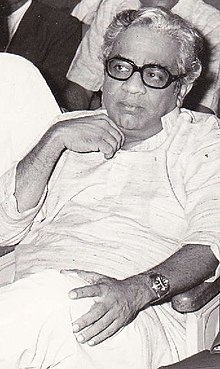
His most famous works include his humorous essays and articles, which were published in various Marathi newspapers and magazines. These essays covered a wide range of topics, from politics to everyday life, and were immensely popular among Marathi readers. Some of his most popular collections of essays include “Batatyachi Chal” (Potato’s Movement), “Vyakti Ani Valli” (People and Relationships), and “Asa Mi Asami” (I am That Name).

Apart from his essays, Deshpande was also a prolific playwright. He wrote several plays, including “Teen Paishacha Tamasha” (The Spectacle of Three Coins), “Pudhcha Paaul” (Next Please), and “To Mee Navhech” (I am not Him). These plays were hugely successful, and are still performed in Marathi theaters today. Deshpande was not only a writer but also an accomplished actor. He acted in several Marathi plays and was also a popular television and film actor. He starred in several Marathi films, including “Gupchup Gupchup” and “Var Dhagala Lagli Kala”. He was also a popular television personality and hosted several TV shows, including “Pu La Deshpandeanchi Mati” (The Soil of Pu La Deshpande).

In addition to his literary and acting career, Deshpande was also a social activist. He was actively involved in various social causes and used his writing and public speaking skills to raise awareness about issues such as education and rural development.

Deshpande received several awards and honors for his contributions to Marathi literature and culture. He was awarded the Padma Bhushan in 1990, and the Sahitya Akademi Award in 1987, for his book “Vyakti Ani Valli”. He was also awarded the Maharashtra Bhushan Award and the Sangeet Natak Akademi Award for his contributions to Marathi literature and theater.

Pu La Deshpande was a beloved figure in Maharashtra, and his contributions to Marathi literature and culture continue to be celebrated today. His unique writing style and sense of humor have influenced generations of Marathi writers and readers, and his legacy remains an important part of Marathi culture.


About that author – Robert Frost 

Robert Frost, most famous among us for his poem The Road not Taken which a lot of us might remember reading in school is one considered as one of the most famous poets in the world.  

Early Life 

Robert Lee Frost was born in 1874, in San Francisco, California and later moved to Lawrence, Massachusetts in 1885 after his father’s death. Frost’s father was a journalist and he died in 1885 due to tuberculosis. Frost’s mother took him and his sibling to their grandparents in Massachusetts.

Frost graduated from high school in 1892 and was at the top of his class. He showed an interest in poetry from an early age which he continued to pursue even after his graduation. 

Robert got into Dartmouth College and in 1894, his first piece of work was published “My Butterfly: An Elegy” in a weekly newsletter named The Independent. Frost dropped out of college in less than a year because the routine was too monotonous for him and he had grown tired of it. In 1895, he married his high school sweetheart Elinor Miriam White who shared the interest of poetry with frost. 

Adult Life 

In 1897, Frost went to Harvard University but was forced to leave 2 years later in 1898 due to illness. Between 1900 and 1909 Frost worked on a farm  near Derry, New Hampshire, which his grandmother had left for him before he died. He also worked as an english teacher in Pinkerton Academy while working on the farm and raising poultry there. During this time Frost wrote a lot of poems which were published later on and later became famous for as well. 

In 1912, Frost and his family set sail for England and settled there. The very next year he published his first book of poetry titled “A Boy’s Will” which included poems such as Storm Fear,“”The Tuft of Flowers”. The next year he published another book of poetry  North of Boston which included  “Mending Wall,” “The Death of the Hired Man,” “Home Burial” and a lot more famous poems of his. 

Publications and Success 

During  World War I the family had to move back to America where an edition of  A Boy’s Will which went on to become the best seller. 

Frost was awarded 4 Pulitzer Prizes throughout his career for  New Hampshire in 1924,  Collected Poems in 1931, A Further Range in 1937 and A Witness Tree in 1943. Frost served as a resident poet in multiple colleges and universities between 1939 and 1963. 

After having an extremely successful career and making a profound impact in the world of poetry he died in 1963 at the age of 88 due to some complications from a surgery. He is survived by his eternal multitude of work. 

Frost’s work revolved around despair that follows existence. His poems are described as poems that are a reflection of common people. He used poetic vocabulary and beautiful metaphors to describe some of the most common yet stark things of human life. He could write about one of the most abject experiences in one of the most beautiful of ways. 

About that author- Oscar Wilde

Oscar Wilde, a writer and a dramatist, this name noticeably sits on the plays that he wrote in the last decade of his life. 

Oscar Fingal O’Flahertie Wills Wilde, was an Irish poet and a playwright born in 1854 in Dublin, Ireland. Oscar’s father, William Wilde was Ireland’s foremost ear and eye surgeon, his mother was an Irish poet who wrote under the pseudonym Speranza which is “hope” in Italian. Wilde was homeschooled till he was 9 and learnt German and French. Later he went to the  Portora Royal School with his brother Willie. At school, Wilde was exceptional, academically and was also popular among his peers for his funny stories.

After attending the Portora School Wilde got into Trinity College, Dublin through multiple scholarships and later to Magdalen College, Oxford.

During his time in Magdalen College he wrote a poem Ravenna which won the Newdigate Prize.

Here is an excerpt from Ravenna

“Taken from life where life and love were new,

He lies beneath God’s seamless veil of blue;

Tall lance-like reeds wave sadly o’er his head,

And oleanders bloom to deeper red,

Where his bright youth flowed crimson on the ground”

He was highly inspired by the likes of John Ruskin, a writer and philosopher of the Victorian era  and Walter Pater, who was a writer and an art critic, just like many others in his time. 

Wilde had established himself in the world of literature in the early 1880s.

In 1881, he published his first book “Poems” , which received quite jumbled reviews. A periodical called “Punch” was at the forefront of this criticism and made him out to be a caricature. 

After a few years of the release of “Poems’ ‘, he went to America to deliver a few lectures and was more accepted by the American readers.

Wilde got married in 1884, to Constance Lloyd and gave birth to two children Cyril and Vyvyan.

He became the editor of Woman’s World,  a fashion magazine in 1887. During his time as an editor he published The Happy Prince and Other Tales (1888), which is a collection of stories for children though it consists of some stories that do not pertain to the young readers. The Happy Prince and Other Tales received positive reviews overall and Wilde was even validated by Walter Pater, who wrote to him praising the book.

In 1889, after giving up the editorship at the Woman’s World Wilde started working on The Picture of Dorian Gray, which is a philosophical novel with witty dialogues, wilde was able to blend gothic themes with French decadence. Despite all his great, articulately written novels his success is attributed to his dramas. He wrote over 10 plays in his lifetime, some of the most famous being Lady Windermere’s Fan (1893), A Woman of No Importance (1893), An Ideal Husband (1899). These plays were all societal comedies, most of them but one Salomé , which offended a lot of people for it’s violent acts and the representation of biblical characters.

After the essay “The Decay of Lying” was published in 1889 , Wilde was accused of indulging in sodomy and was found guilty 4 years later. He was released in 1897, and had gone bankrupt. A year after his release, he died due to acute meningitis followed by an ear infection.

About that author- Virginia Woolf

A woman must have money and a room of her own if she is to write fiction. 

Adeline Virginia Stephen, popularly known as Virginia woolf was born in 1882 in London, England. Her father was a famous literary figure and her mother was someone with artistic connections. Virginia grew up with 3 of her own siblings and 3 half siblings playing and bickering with them. 

In 1891, Virginia and her siblings started Hyde Park Gate News recounting the shenanigans of the Stephen family. Virginia ran this paper until 1895, when her mother died. 2 years later her half sister, Stella Duckworth died as  well. This was also the year when Virginia started keeping a diary. In 1904, her father passed away, after which the Stephen siblings moved away from their half siblings and started living on their own. They would host weekly gatherings. In 1906, her brother Thoby died of typhoid fever, which made Virginia lose her brother to a disease and then later she “lost” Vanessa when she got engaged. 

Virginia was secretly writing “Reminiscences” in which she describes the loss of her mother. This was published in 1908. She had seen a lot of death in her family and was almost always grieving for one of them.

In 1912, Virginia married Leanord Woolf and continued working on her first novel.

her novel the voyage out involves the protagonist going on a trip to south America and finds out about herself. A lot of characters in her novels are based on real life people, mostly her siblings. Her novel “the voyage out” was published in 1915 .

Virginia attempted to kill herself in 1913, because she felt unloved by her sister and her husband and was consumed with self doubt, feeling that she is not a good enough writer. Later in life, she never encountered such thoughts.

In 1917, the wool’s bought a printing press and the same year jointly published Two Stories.

Woolf was a very skilled and innovative writer of the 20th century.  Mrs Dalloway, one of her most famous novels published in 1925, revolves around a day in the life of Clarissa Dalloway. She goes around the city in the morning reminiscing about her youth and pondering over her choices.

In 1927 she published To the Lighthouse , about a family’s visit to Scotland.

Woolf experimented with a lot of genres in her lifetime and her writing is characterized by absolutely fine and also fluid narrative. Her writing style is quite modernist, meaning a style of writing which is characterized by “self conscious  breaks with traditional ways of writing”.

Woolf published a novel Between the Acts in 1941 and received good reviews but despite that she felt that this novel was not enough considering at that time England was at the brink of invasion. This rendered her depressed and unable to write. The thoughts she had encountered during her first suicide attempt all came back to her.

in march, 1941 she walked behind a monk’s house, filled her pockets with stones and drowned herself. Her novel Between the Acts was published posthumously later that same year. 

About that author- Pablo Neruda

Neftalí Ricardo Reyes Basoalto, more popularly known as Pablo Neruda, was one of the most prominent Latin poets of the 20th century. 

Pablo Neruda was born in 1904, in Chile. He started writing poetry at a very early age. He grew up in Temuco. His father did not approve of his poetry, and did not encourage him of it. His father discouraging him could be the reason why he started publishing under the pseudonym Pablo Neruda.

Even though Neruda did not get any support from his father, he wasn’t completely devoid of support. The major source of encouragement for him was Gabriela Mistral, a nobel prize laureate who won the nobel prize a few years before Neruda. Neruda published multiple poems in local newsletters and magazines.

Literary work

Pablo Neruda published his first work, an essay at the age of 13 in a local magazine. In 1921, he left Chile to move to Santiago to study at the University of Chile in order to become a French teacher. He adopted a different lifestyle in Santiago almost that of a bohemian and was able to complete during that time his first collection of poems entitled Crepusculario (book of twilights) in 1923. A year later, he published another book, Veinte poemas de amor y una canción desesperada which when translated into English means Twenty Love Poems and a Song of Despair published in 1924. Both of these books brought him recognition. For the next few years he dedicated himself fully to writing poetry and continued to publish poems.

But unfortunately, he was unable to make ends meet through just his poetry so he worked as a consul in Myanmar for about 5 years. After that he moved to Sri Lanka. By this time he was quite familiar with South Asian culture and wrote a book called Residencia en la tierra meaning Residence onEarth.  In 1932, after spending time as a consul in Indonesia he moved to Chile with a woman he had married, Maria Antonieta Hagenaar. In 1933, he worked in Buenos Aires, Argentina as a consul. The following years Neruda moved around the world and became involved with the communist parties, also during this time he separated from his wife in 1936. He published another edition of Residencia en la tierra in 1935.

Political career 

He moved back to Chile again in 1937 and became associated with the politics of his country. When he returned to his home country in 1943 from Mexico, he ran for senator and won in 1945 and joined th communist party. In  1948, he was exiled from the position of a senate for writing an open letter against the leader and he left the country so as to not get arrested. He spent his exile travelling around the world writing poems, he published Tercera residencia. 

In 1952, he returned to Chile, again and lived there for the rest of his life. There he campaigned for political leaders and wrote a lot more books.

In 1971, he was awarded the Nobel Prize. He was terminally ill and died in 1973 in his home country of Chile. 

About that author- Rudyard Kipling

Rudyard Kipling, a journalist, short-story writer, poet, and novelist who is best known among us for his novel the jungle book, was an eminent  20th century writer. Kipling became the youngest person and till this date is the youngest person to receive the award in 1907, at the age of 41.

Life  

Rudyard Kipling was born in 1865, in Mumbai, India, which was a British colony during that time. He was born to John Lockwood Kipling and Alice Kipling. His father was an artist and an architect who used to work at an art school in Mumbai.

He spent his early childhood in India as an Anglo-Indian and at the age of 6 went to Britain and was vaguely perplexed with his identity, a topic he lightly touches on in his later work. In Britain, Kipling did not live with his parents; instead they left both Rudyard and his younger sister with a foster family. During this time, the couple that were looking after the siblings did not treat him very well. In his autobiography Something of Myself for My Friends Known and Unknown, which was published posthumously , Kipling looks back at this period of  his life with dread. Kipling felt abandoned and isolated throughout his childhood. First he was abandoned by his parents and then he was neglected in his foster home too.

In 1877 Kipling’s mother returned to England and pulled her children out of that foster home. The very next year, he was sent to the United Services College in Devon, where students would be prepared for the army. 

Career 

Towards the end of the school, Kipling dropped out as his family did not have enough money to send him to college so instead his father secured a job for him in India and worked as an editor and a journalist for a newspaper. This was the beginning of his journalistic career. It was in India that Kipling started to publish his collection of short stories. He published Plain Tales from the Hills in 1888 and he published 6 volumes of short stories which included soldiers Three, The Phantom Rickshaw; between 1887 and 1889. By the end of this decade, Kipling gained so much popularity that he was being considered one of the best prose writers of his time.

He left India in 1889 and went to San Francisco during this journey he met The Adventures of Tom Sawyer writer Mark Twain.

In 1892, he married Caroline Balestier and the couple lived in America before moving to England. In this decade Kipling he produced work that he is most known for, like  The Light That Failed in 1891, The Jungle Book in 1894, The Seven Seas  in 1896, a collection of poems,  Captains Courageous in 1897.

In 1907, at the age of 41, he became the youngest and the first Englishman to receive the Nobel Prize for literature. Kipling is thought to be an imperialist; his ideology at that time and even during this time is not accepted by people  and has been long criticized for the same. However, he was a very popular writer of his time.

About that author- Charles Bukowski

“We are here to laugh at the odds and live our lives so well that Death will tremble to take us.”

This very famous quote by Charles Bukowski gives us an idea about the kind of individual he was. He was the kind of poet who wrote whatever was in his heart, whenever it was. He always spoke about a part of himself that exists inside us all but we choose to silence it. Bukowski, afraid of that part, still chooses to give it a voice through his poems.

Life 

Charles Bukowski was a German-American poet, writer known for the violent imagery he tries to depict with his writing. Bukowski left his home in Los Angeles to move to New York to pursue writing. In New York he took up a lot of odd jobs so that he could continue to write, but he did not see much success during that period of his life.

Career 

Charles Bukowski published his first story, titled  “Aftermath of a Lengthy Rejection Slip” in 1944, at the age of 24 in a magazine. He published another story titled “20 Tanks from Kasseldown” about 2 years later in 1946, but unfortunately he failed to make a breakthrough and was left disappointed. Bukowski wrote a lot, was published too little and received even less recognition. This led him to quit writing or rather take a break from writing in the year 1946.

Now, one could say that Bukowski did not do anything during his hiatus but I disagree. During these years Bukowski gathered material for his future work. He moved back to Los Angeles and lived the life of a hippie and wandered around the country staying in cheap places. He would travel. drink alcohol and observe. The observations are talked about in his later published books.

Bukowski talked about the harsh and crude reality of existence and is known for his raw and bare writing.

After a hiatus of almost a decade, Bukowski got back to writing. In the mid 1950s he was hospitalized for a fatal bleeding ulcer. After being released from the hospital he started to write poetry, at the age of 35. Charles Bukowski, in 1957 married Barbara Frye, who later died in India. This incident resulted in Bukowski going back to alcohol and writing poetry.

By this time, Bukowski’s poems were published in literary magazines. But still he was unable to see the success he very much deserved. In the 1960s, he published a lot of poems and short stories and only tasted success in his 50s.

Bukowski spent more than half of his life writing and not seeing any considerable amount of success. He did not give up, in fact there was no point in him giving up because he was not one of the writers who wrote to achieve success, he wrote because he was extraordinarily in love with his art. He did not try to be a writer, in fact he didn’t try to be anything but true to himself and his work. He did not force himself to write, evident by his decade long hiatus. He thought that there had been too many writers in the past who forced themselves to try, whereas in his opinion if you truly love an art form you wouldn’t have to try, it would come to the artist. In his opinion if you had to try to be or do something you shouldn’t try at all. Even his grave has the words “don’t try” engraved on it.

He died in 1994, due to leukemia after living an adventurous and fulfiled life. 

About that author James Baldwin

An American essayist and novelist, born in 1924 in Hampton, James Baldwin who addressed the issue of race in 20th century america. He grew up poor, in a black ghetto and in the 1930s, during a time when racism encompassed the whole of America and Baldwin too was subjected to it all his life.

His work revolves around the racial and social issues that existed in 20th century america.

Early life

James Baldwin never knew his biological father who was a drug addict, owing to this reason his mother left his father and moved to Harlem where she gave birth to James baldwin. Baldwin was the eldest to his 8 siblings. Baldwin figured out his affinity toward writing at an early age and was exceptional at it too. He wrote his first article when he was only 13, this article was published in his school magazine. Throughout his teenage years Baldwin published short stories and essays in local literary magazines. In his young teenage years Baldwin was a youth minister at the church. Bldwin was a devout christian, this could be because his father was a baptist minister. In later years of his life, he refused to being religious however his religious attitude shaped his perception to a great extent.

Throughout his life he faced incidents of racism, some of which he addresses in his work as well. 

Career

In 1943, he moved to Greenwich village to pursue literature and work with other writers and literaries. During his time at Greenwich he was also able to secure a writing fellowship. At this time Baldwin’s short stories were being published and not in local but well recognized and reputed magazines.

About 3 years later Baldwin emigrated to France under another fellowship where he would not be treated with the racist remarks of the American and would be able to make a name for himself beyond his african -american community. In France he was met with his sexual conflict and hoped to come to terms with it and understand it better.

Work

Baldwin wrote his first novel Go Tell It on the Mountain which was published in 1953. a near autobiographical novel which revolves around a young teenager growing up in Harlem, New York and his relationship with his father and the church. The book deals with several issues that prevailed in america. It talks about racism, poverty, Harlem, New York, basically all the things that Baldwin endured in his childhood are mentioned in this work through the eyes of another character.

Giovanni’s Room, was his second novel released in 1954, which deals with the sexul ambivalence of a man, and his relationship with other men  living in paris. Homosexuality was a tabboo during that time and who else could have talked about a topic so contreversial if not Baldwin.

Baldwin’s subsequent novels Another Country and Tell Me How Long The Train’s Been Gone, talk about race and homosexuality.

James Baldwin is known for his thought inducing essays. He had the ability to write about an issue giving the reader another highly intellectual way to look at it. In addition to being an important literary figure of the 20th century he was also an important figure in the Civil Rights Movement.

Baldwin in 1987 died in Saint-Paul-de-Vence, France due to stomach cancer leaving his work enriched with revolution behind.

About that author- Sylvia Plath

If the moon smiled, she would remember you. You leave the same impression of something beautiful but annihilating.

This quote is from one of my favorite Sylvia Plath poems “The Rival”. 

If you read Sylvia Plath you would find that her poetry wasn’t about the beauty that surrounded her, the fruity aroma of the garden flowers or blistering sun shining on her face or the wind sweeping her way. No, it was about none of that. Her poetry style was confessional.

LIFE

Sylvia Plath was born on october 27 of 1932 in Boston Massachusetts. She was a poet and a novelist who shaped American literature to a great extent. Plath published her first poem at the age of 8 in an American newspaper under the children’s section.From then on Plath went on to write  and publish multiple poems in different magazines and newspapers. At the age of 8 Plath also faced a great deal of personal loss, her father passed away due to untreated diabetes. Her father was also a subject for a lot of her poems that she wrote in her later years.

Plath was a good student, she excelled in academics and attended the Smith’s College in Massachusetts. Plath also suffered from depression, which she elaborates in her poems. She underwent electrocution therapy for her depression. We are talking about the year 1950, when mental illness was not a socially acceptable concept. No points for guessing that the electrocution therapy did not work in fact it made matters worse for plath. In 1953, at the age of 21, the feeling of which she describes in one of her works as “blissfully succumbed to the whirling blackness that I honestly believed was eternal oblivion.” plath made her first suicide attempt by taking her mother’s sleeping pills. After this incident she remained in psychiatric care for months. 

Career 

In 1960, Sylvia Plath released a collection of her poems, entitled the colossus and other poems.. In this collection she talks about death, suicide, her father, and her depressive periods and thoughts.

Sylvia Plath’s poetry wasn’t particularly happy and that is because it was confessional or even autobiographical in a sense and Plath herself was deeply depressed. Here is an excerpt from one of her poems called Lady Lazarus;

“Dying is an art,

like everything else. 

I do it exceptionally well. 

I do it so it feels like hell. 

I do it so it feels real. 

I guess you could say I’ve a call”.

If it wasn’t clear until now, then these lines give us an idea of the intensity of torment that her own mind was subjecting her to.

Marriage and the aftermath

Plath married Ted Hughes, a poet and writer in 1956. They had 2 children together. The two later separated in 1962. The couple did not have a great relationship, some controversy and rumors surrounded Hughes even after Plath’s death.

During the last few years of her life Plath published exceptional work, some of the best work ever written. This vey period of Plath’s life is the one that shaped literature and inspired the future confessional poets. Plath poured her heart out on the pages during these years. She published a novel “the bell jar” in 1963 which did exceptionally well. But her career was cut short when at the age of 30, in 1962 after what is described as “a burst of creativity” she took her own life. Her posthumously published collection of poems “Ariel” also attracted a lot of readers and to this day transcends her.

ABOUT THE AUTHOR – AGATHA CHRISTIE

Known Mysterious Incident About “the queen of crime” except her famous novels.

Born in Torquay in 1890, Agatha Christie became, and remains, the best-selling novelist of all time.

She is best known for her 66 detective novels and 14 short story collections, as well as the world’s longest-running play – The Mousetrap. Her books have sold over a billion copies in the English language and a billion in translation.

Agatha Christie is one of the greats of mystery literature. For eleven days, she was at the center of her own mystery, that got international headlines. Unlike the plots in her brilliant books, the motives underpinning this particular storyline are rather vague.

The characters of this real and known incidents were the Two of Britain’s most famous crime writers, Sir Arthur Conan Doyle, creator of Sherlock Holmes, and Dorothy L. Sayers, author of the Lord Peter Wimsey series and herself (Agatha Christie” the queen of crime”).

AGATHA CHRISTIE’S DISAPPEARANCE CASE

WHAT DO WE KNOW-

On the December night of 3rd,1926 she drove away from her home in Berkshire and vanished completely. Her car was found abandoned and a huge manhunt was launched. Arthur Conan Doyle, author of the Sherlock Holmes mystery stories and Dorothy L. Sayers, author of the Lord Peter Wimsey series, participated in the search. Their specialist knowledge, it was hoped, would help find the missing writer.

Her disappearance would spark one of the largest manhunts ever mounted. Agatha Christie was already a famous writer and more than one thousand policemen were assigned to the case, along with hundreds of civilians.

Agatha Christie’s disappearance prompted a nationwide search and for the first time in UK history, aeroplanes were employed as part of the search effort.

Newspapers offered rewards for information and her husband Archie was suspected of foul play.

The Home Secretary, William Joynson-Hicks, urged the police to make faster progress in finding her.

It didn’t take long for the police to locate her car. It was found abandoned on a steep slope at Newlands Corner near Guildford. But there was no sign of Agatha Christie herself and nor was there any evidence that she’d been involved in an accident.

Not until 14 December, fully eleven days after she disappeared, was Agatha Christie finally located. Eventually, it was revealed that Christie had absconded to Harrow gate via train, where she spent eleven days hobnobbing with the young social crowd under the name of her husband’s mistress. Christie, upon being discovered, says she had no memory of the events.

The Speculations

  • Agatha Christie rarely talked about the incident, simply putting it down to about of temporary amnesia caused by a blow to the head.
  • The consensus of opinion at the time was that the whole affair (no pun intended) was an act of revenge aimed at her erring husband.
  •  Recent researches on her medical condition suggest that she was suffering from Alzheimer’s disease or other dementia. She died of natural causes in early 1976.

About that author- Franz Kafka

Franz Kafka is regarded as one of the greatest writers of all time who gave birth to a new manner of writing all while being tormented by his very existence.

Early life 

Kafka was born in 1883 in Prague, the capital city of what is now known as Czech. He was the eldest son to an acquiescent mother and a strong, assertive and highly dogmatic father.

Kafka’s father had an assertive and sturdy personality, his presence alone was enough to intimidate Franz or his mother.

Neither Kafka nor his mother could ever gather enough courage to contradict his father. For even if Kafka did gather it, it would lead to consequences that Kafka was extremely familiar with. His mother too, was too timid to ever try and protect her son. Much of Kafka’s personality is profoundly shaped by his relationship with his father. Kafka grew up with profuse self hatred,anxiety and despair. He was nothing like his father, in fact he was the exact opposite, and for that he was always a target for criticism.

Even as a young child, he had a particular inclination towards writing and literature, he wanted to write but this dream of his was highly detested by his father and his mother too failed to comprehend the intensity of his dreams or preserve them.

Kafka’s relationship with his father 

Kafka did not have a good relationship with his father and the same is well reflected in his novels. In his novels, Kafka often created an authoritative figure that cannot be vanquished.

In his unfinished work, The Trial,he talks about the bureaucracy, politicians and businessmen that hold the power to oppress and push around an office worker, Josef K., whose personality awfully resembled that of Franz’s. In The Trial Josef .K, one morning was arrested for reasons he was unaware of, and didn’t even attempt to find out because in his view he deserved every tiny bit of it. He doesn’t try to protest or push back and is ultimately pronounced guilty.

Relationship with self

Kafka’s most famous novel, The Metamorphosis, published in 1915 acts as a great mirror to understand his relationship with himself. In The Metamorphosis, a salesman, Gregor Samsa, one morning wakes up only to find out that he has turned into an insect. The novel revolves around Gregor’s struggles after this significant change. 

The metamorphosis represents the hatred and disgust that Kafka held towards himself.

Franz Kafka’s most notable works include The Judgement, A Hunger Artist, and a series of short stories, and much of them were left incomplete. Kafka would burn down more than half of what he wrote because he did not like his work. The trial was written in 1914-15 but wasn’t published until after his death by his friend, Max Brod. Kafka left all of his work to Max Brod, instructing him to destroy all of it, but luckily Brod disregarded his wish and went on to publish his work which attracted attention and was regarded as one of the greatest writers of the 20th century.

LEGACY 

Franz Kafka’s most notable works include The Judgement, A Hunger Artist, and a series of short stories, and much of them were left incomplete. Kafka would burn down more than half of what he wrote because he did not like his work. The trial was written in 1914-15 but wasn’t published until after his death by his friend, Max Brod. Kafka left all of his work to Max Brod, instructing him to destroy all of it, but luckily Brod disregarded his wish and went on to publish his work which attracted attention and was regarded as one of the greatest writers of the 20th century.

Franz Kafka, in 1924 at the age of 40, succumbed to tuberculosis, leaving behind some of the best novels ever written. Kafka was a great literary figure, who inspired writers such as Albert Camus, and Jean-Paul Sartre.

Kafka’s world is often characterized by dark but very real themes. His work has a certain melancholy associated with it. It almost seems like a dread filled dream that sticks with the reader and leaves an everlasting impression on them. His work became so profound that it went on to inspire a style of writing called “kafkaesque”, which is often used to describe something with nightmarish, oppressive and despair-like qualities. His world is a place where most people at some point in their life find themselves, and most of them get out of there too but Kafka stayed there for as long as he lived, giving the world something that transcends their imagination.

BLOGGING

How To Become A Blogger?

Since the advent of internet, people have access to all kinds of information as well as global audience. On the one hand there are people who enjoy reading this information and on the other hand there are people who are taking advantage of the access to global audience to communicate their thoughts and knowledge. These people are known as bloggers. Contrary to popular belief, a blogger is not only a person who writes but someone who uses any medium to communicate their thoughts like a photographer for example.

There are billions of people across globe writing about billions of things and you could be one of them. Being a blogger gives you a sense of freedom to express what’s inside you and let people know that they are not alone. In no time blogging has become one of the most popular career choices among youth. Blogging is original, it’s personal. it offers a fresh perspective, so no wonder it is the choice of majority of people. To become a blogger it is necessary to develop interest in writing. No one is born a writer but this habit is developed over time. A successful blogger is an avid reader. One who reads knows how the writers manipulate their words and proceed with their thoughts. In order to be a blogger you must consider the following points:

  • Pick your genre: You must decide the kind of blogger you want to be. You can be a fashion blogger, a food blogger, a travel blogger, a motivational writer, or any other area that is of your interest.
  • Pick a name: Pick a name for your website that resembles the kind of blogs you wish to write.
  • Register your blog: Next step is to get your blog registered on the website of your choice.
  • Write your first post: Now it is time to write your first blog. Make sure it aligns with the theme of your blog and use as many keywords as possible to attract audience. You can be as creative as possible. Remember it only gets better after your first post.
  • Promote your blog: This is the most crucial step if you wish to advance your career as a blogger. Promote the website as much as you can. Put up social media posts, forward it to your friends, do as much as you can. These efforts will only improve your chances of becoming a successful blogger.
  • Handling writer’s block: There will come a time when you would be short of ideas and you would wish to stop but handling that writer’s block is part of being a writer. Don’t let it discourage you. Keep calm and keep going.

The above points might not feel daunting the first time but the moment you make up your mind to follow through, the real challenge begins. There greater the audience, the greater the responsibility to deliver original content. As a writer, your integrity is at stake and you must refrain from copying and stealing someone else’s work unless you plan on giving them due credit. Be true to yourself and most importantly be true to your audience. It takes a lot of research and reading to write a blog and for this reason it is not everyone’s cup of tea. It does not matter if blogging is your side hobby or your career goal, you must choose to become a blogger only if you are fully committed to it. There are a lot of employment opportunities for freshers as well as established bloggers. So, if you have a knack for writing and coming up with original ideas, blogging is the job for you.

How To Describe The Indescribable?

“Describing the indescribable is a work of extreme talent and passion.”

  • Amatullah. P

Salut! Today’s article highlights the ways of describing the indescribable aspects of storytelling.

A writer gains popularity when indescribable facets of a story are described fluently. Of course, this can be done through imagination. This is mainly incorporated in fictional story telling. For instance, in my earlier articles, I have elaborated on the ways of writing fiction which also highlights the creation of ‘alien to the world’ characters. Thus, this is a continuation to that. If you create a bizarre character which is non – existent then you sure will need to provide some description. So, that is how describing the indescribable comes into the picture.

So, let us learn some of the ways of describing the indescribable aspects or characters in storytelling.

Create A Fictional Character That Is Easy For You To Describe Later!

So very important! When you design a peculiar character, you must never forget to keep some description of it in your head through rigorous imagination. Try to jot down some points of description in your notepad in case you are forgetful.

Merge The Description With The Existent Objects!

Try creating a description on the basis of the description or attributes of existent things. You could imagine describing some part of it but also merge it with the description of the describable. For instance, if you have framed a story as your visit to mars and your encounter with aliens there, then you are expected to create a good description of that alien. You could assign it humanlike characteristics (describable entities) and merge it with your own imaginative description. (That is their names are in the form of numbers. The alien you met was named 224). Thus, here you see, human tendency of name has been assigned to a non – existent entity alien and merged with the imaginative concept of numbered names!

Include The Facial Features, Setting, And Imaginative Background Story Of That Indescribable Character!

This would not only enhance the story but also your levels of imagination thereby improving your reputation as a writer. Try not to excessively attribute qualities of existent aspects to the non -existent ones because that doesn’t prove your creativity. Include it just once or twice as an auxiliary branch to your content. Include it to make your work interesting and not to escape imagination!  All I mean is that one can’t escape from including the existent qualities in the indescribable content, but the thing to remember is that the description of that fictional being remains unpopular even with the existent aspects. For instance, the alien 224 has 3 eyes with no retina whatsoever. The eyes are milky white and look creepy. The gender isn’t specified there because they all look the same. The aliens are red in colour as the planet mars.

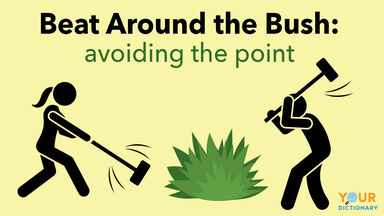
Don’t Beat Around The Bush With Your Description!

Be straight to the point when describing the characters. Don’t twist and turn the story to the extreme level. In short, don’t incorporate much drama. I don’t say that one must completely avoid twisting the story but there sure is a limit to that. Arrive at conclusions faster after twisting the story for quite some time in order to not avoid breaking the alacrity of the audience.

Beat Around the Bush: Meaning of a Medieval Term Still Used Today

Thus, I would conclude stating that describing the indescribable is a work of imagination which can’t be ignored. Fiction writing would be enhanced with the inclusion of this aspect. Of course, in reality the indescribable things can’t be explained because of their real nature but writing provides us the privilege of including unreal aspects as well which is assigned goodness in the form of imagination! The goal is to describe these non – existent entities as existential. So, now that you know some points, why not try doing it? Plunge your notebook out and get imagining!

Happy Writing And Thinking! 😉

How Can Fiction Be Written? Featuring Barbie!

“Imagination and Fiction make up more than three quarters of our life.”

  • Simone Weil

Today’s article discusses an essential factor when it comes to writing fiction I.e how to write it? Barbie aka Barbara Milicent Roberts is our chief guest for today’s discussion.

“Hello Barbie! Warm Welcome Aboard. We are so glad to have you here with us.”

“Thank you for inviting me. I’m pleased to be a part of this discussion as well.”

“So, would you like to tell us the ways of writing fiction? (That for which you are here)”

“Definitely! Fiction is an interesting genre when you come to look at it. It also, comes with a wide range of interesting sub – genres which have been discussed in the earlier article. It can be written insensibly by taking almost any entity that you prefer or make one for yourself by amalgamating two or more entities. There are mostly no constraints in fiction and that is why, writing or working upon this genre doesn’t actually seem a hard task. Yes! I agree that imagining certain factors is a hard task, but we mustn’t overlook the fact that almost everything comes with its own set of hard work! Here, however I am not considering contemporary fiction or that which pertains to reality. I shall be emphasizing on how fiction (fantasy and other related genres) can be written.

Now, let us learn how exactly to write fiction through a step by step approach.

Brainstorm Over The Fictitious Topic You Intend To Choose!

Brainstorming is a process that requires time. So, first and foremost, the thing to be done, is to sit down on your favourite couch and ponder over the best fictitious topic that would definitely seem great if sketched on paper. However, don’t forget to get yourself in the reader’s shoes as stated in our earlier articles. Consider what your readers would love and write in accordance to that.

Think Of The Characters You Wish To Involve!

This is a quintessential factor that makes a story interesting. The characters make a story. However, framing of characters also depends on the sub – genre you choose. If you choose contemporary fiction, then you would definitely make use of real life characters. In such cases, you could ignore this second step and only consider the first. This step is for people who wish to work with the fantasy sub – genre because framing fictitious characters requires certain amount of deep thought processes.

In Case Of Writer’s Block, Approach The Outside World!

  Certain people experience writer’s block while writing fiction because they seem to fall short of ideas. In such cases, it is advisable to approach the outside world as inspiration to your thought processes. Some incident will definitely inspire you to write about it.

Create Strong Characters!

Make sure that the fictitious characters you create are strong enough so that the readers love them. Like, a certain character should show strong traits in personality and not physical strength 😉 Make the characters take risks throughout the story and later help them succeed. This will also deliver a good message and inspire people to take risks! Thus, all that we mean here is, that try creating characters that would also impart a message to the readers. Also, mostly it is advisable to create Round characters. Round characters are those whose traits or personalities throughout the story aren’t easily decipherable. These characters would arouse the interest factor and enhance your write up.

Create Unique Characters!

By this we mean, that when you choose to create fictitious characters, make sure that you don’t use the same repeated mythological supernatural entities revolving around mermaids, aliens and robots. These are widely known and won’t make your story that interesting. You could always create a new character for yourself by amalgamating existent entities, as stated in the earlier article.

Read Other Fiction Books For Ideas!

This is the basic step that would definitely help you to frame your own story easily. Read more and more fiction books by widely renowned authors for amazing techniques of writing a fiction book easily.

Try Fictionalizing Your Daily Life!

This means, fictionalizing your daily chores and duties in an imaginative and creative way. For instance, you are working in the kitchen and see a ladle, now you could create your own fictitious character named Mr. Ladle who could speak throughout the story. He could also be an antagonist or maybe even a protagonist if you decide to create an animated fictitious story.

Be Alert And Aware Of Your Surroundings For Inspiration!

This is extremely important because developing a fictitious story requires complete imagination. So, you need to be alert when you come across such objects which could make your story interesting. After all, if you aren’t alert then that inspiration wouldn’t be accessible to you and would pass you directly, without you acknowledging it. So, remain alert and vigilant.

“These were such essential points to be noted. We heartily thank you for your precious time! Hoping to have you again to speak on such interesting topics in the near future!”

“Please don’t mention it. I’m touched by this honourable gesture of being a chief guest on such an important discussion. Looking forward to yet another invite in the future for sure!”

Thank You So Much Barbie!

Behind The Scenes!

“We all make mistakes, have struggles, and even regret things in our past. But you are not your mistakes, you are not your struggles and you are here now with the power to shape your day and the future.”

  • Steve Maraboli

Today’s article highlights, ‘Behind the Scenes of Article Writing’. Yes! It is similar to the Behind The Scenes shown during shoots for sitcoms and TV serials.

However, there is a difference. There is no shooting here. I shall be discussing the ‘Off screen tasks’ I perform when framing the articles. So, Lights. Camera. Action! Let’s begin.

Thinking Over The Topic!

Greatest struggle everrrrr! Thinking over a relevant topic for my amazing audience out there is a complex task. There have been times when I just sat at the laptop, staring at the blank word document, wondering what to write and then after realizing that I am out of the ‘mood’ factor, I shut the laptop and decide to work over it maybe later! But still, I manage to come up with some interesting topics for all of my enthusiastic readers who show so much love and appreciation towards my work. Thank you for that! 🙂

Making Word Errors!

Another one of my struggles. While writing the articles, there are many such word errors which I make, while typing with excess speed on the keyboard. I know, I know, the solution is to type with a relaxed pace but I just can’t help it. For me, Writing without speed is like writing without passion.

Working On ‘Perfection’!

Perfection is the key to efficient work. So, that’s exactly my motto. I look forward to adding friendly and interactive connotations in order to make reading an easier task for you!

Thinking Over Framing Of Sentences!

Framing of sentences in an accurate manner is so essential. English is rather a complex language and one needs to be careful in choosing proper set of words that don’t sound impertinent. So, yes! Working over it is a task but that doesn’t actually freak me out!

Sitting Alone In Peace While Writing!

That is so important for me. When writing, I shut the door to my room and just breathe, letting fresh air stroke my mind calmly. Then come the topics which pass my mind like a slideshow and I select the appropriate ones for you!

Thinking Over The Topics And Jotting Them Down For Future Reference!

In that slideshow of thoughts, there occur two or more ‘apposite’ topics which I feel the need to jot down and use them later without forgetting the ‘creativity’ factor in them of course.

Pondering Over The Birth Of Various Fictitious Characters!

Since our company recently incorporated Fiction in the publishing options, I felt the need to make some of the writing medium speak ranging from the inkpot to the laptop! It may sound crazy but that is what makes fiction such an amazing genre. This genre allows you to be crazy and senseless!

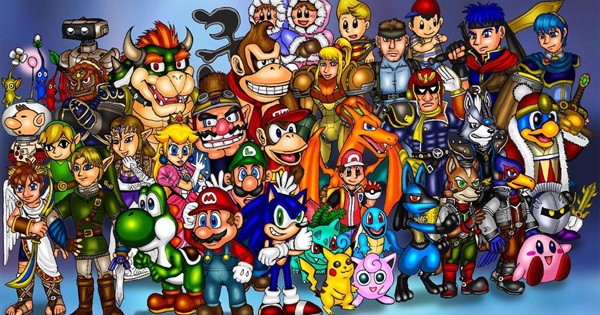
Famous Fictional Characters Everyone Knows

These were some of the steps I take, in order to ensure that good content turns out (specifically for the articles). Thank you for tuning in! You are free to contemplate over the message if you want to! 😉

Happy Writing! 🙂

Thank You For Reading!