Thumb Sucking in Children: When to Worry and How to Help

Daily writing prompt
What’s the oldest things you’re wearing today?

Thumb sucking is a common behavior in young children, often starting as early as infancy. For many kids, thumb sucking provides a sense of comfort and security, helping them self-soothe during moments of stress or tiredness. While it’s generally a harmless habit in the early years, it can become a cause for concern if it continues well into later childhood. Understanding when to worry about thumb sucking and how to help your child break the habit is crucial for their overall well-being.

Photo by Lyudmila Logvinenko on Pexels.com

Why Do Children Suck Their Thumbs?

Thumb sucking is often a natural reflex in infants, starting even before birth. Many babies suck their thumbs while in the womb as a form of self-soothing. Once born, thumb sucking can continue as a way for babies and young children to comfort themselves when feeling upset, tired, or bored. For some children, thumb sucking may also serve as a self-soothing mechanism during sleep, providing them with a sense of security as they drift off.

While most children stop sucking their thumb on their own as they grow older and become more independent, some may continue the habit into their toddler and preschool years.

When Does Thumb Sucking Become a Concern?

For the majority of children, thumb sucking is a temporary phase that will naturally fade as they grow. However, for some children, thumb sucking persists longer than usual and can start to cause problems. Here are some signs that thumb sucking may be something to worry about:

1. Dental Problems

Thumb sucking can affect the development of your child’s teeth and mouth, especially if the habit continues after the age of 4 or 5. Prolonged thumb sucking can lead to dental issues, such as:

  • Misalignment of Teeth: Thumb sucking can cause the upper front teeth to protrude or become misaligned. This is particularly true if the thumb is pressed forcefully into the mouth over a prolonged period.
  • Bite Issues: A child who continues to suck their thumb may develop what is known as an “open bite” where their upper and lower teeth don’t meet properly when their mouth is closed. This can make it difficult for the child to chew and speak clearly.
  • Changes in the Roof of the Mouth: Prolonged thumb sucking can alter the shape of the roof of the mouth, causing it to become more narrow.

2. Speech Delays

If thumb sucking continues for a long time, it can affect the development of your child’s speech. The habit can interfere with normal tongue placement and lead to speech issues such as lisps or difficulty pronouncing certain sounds. If you notice any signs of speech delay or changes in the way your child is speaking, it might be worth considering the effects of thumb sucking.

3. Social Concerns

As children get older, they may begin to feel self-conscious about thumb sucking, especially if it continues past the age of 4 or 5. At this point, children may be exposed to peer pressure or may feel embarrassed about the habit. In some cases, thumb sucking can also cause teasing or bullying from other children, which can affect their self-esteem and social development.

How to Help Your Child Stop Thumb Sucking

If thumb sucking is causing concerns, it’s essential to approach the situation with patience and understanding. Here are some strategies that can help your child break the habit:

1. Positive Reinforcement

Encouraging your child with positive reinforcement is one of the most effective ways to help them stop sucking their thumb. Offer praise when your child goes a day without thumb sucking, or use a reward system such as a sticker chart. Avoid punishment or negative reinforcement, as this can create stress and may make the problem worse.

2. Gentle Reminders

Sometimes, children suck their thumb out of habit or without realizing it. Offering gentle reminders when you notice your child sucking their thumb can help them become more aware of the behavior. You might say something like, “Remember, no thumb sucking,” in a calm and non-critical tone. Over time, your child will begin to associate the reminder with the behavior.

3. Provide Alternatives for Comfort

If your child sucks their thumb to self-soothe, offering alternative comfort objects such as a soft blanket or a stuffed animal can help. Teaching your child relaxation techniques like deep breathing or listening to calming music may also reduce the need for thumb sucking during stressful situations.

4. Create a Comfortable Sleep Routine

Thumb sucking often occurs during sleep or naptime. Establishing a comforting bedtime routine can help your child feel secure without the need for thumb sucking. This might include reading a favorite bedtime story, listening to calming music, or having a special nightlight in their room.

5. Use a Thumb-Sucking Guard

In cases where the habit persists, a thumb-sucking guard or mitt can be a helpful tool. These devices are designed to make thumb sucking uncomfortable or difficult, encouraging your child to stop. However, it’s important to approach this method carefully, as it may cause frustration in some children. Always make sure to use positive reinforcement alongside this technique.

6. Consult a Pediatric Dentist

If your child’s thumb sucking has led to dental problems or is causing concern, it’s a good idea to consult a pediatric dentist in Oregon City. They can assess the impact of the habit on your child’s teeth and offer professional advice on how to address the issue. In some cases, a dentist might recommend a dental appliance to help prevent thumb sucking.

In Conclusion

Thumb sucking is a common and natural behavior for many young children, but when it persists beyond the typical age range, it can lead to dental, speech, and social concerns. The key to addressing thumb sucking is understanding when it becomes a problem and taking a gentle, supportive approach to help your child break the habit. With the right strategies, patience, and positive reinforcement, you can help your child move past thumb sucking and support their healthy development. If necessary, always consult a pediatric dentist or pediatrician for additional guidance.

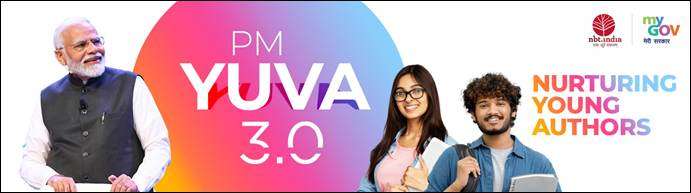
Prime Minister’s Young Authors Mentorship Scheme (YUVA) Scheme

Daily writing prompt
What job would you do for free?

Introduction

The Ministry of Education (MoE) and the National Book Trust (NBT) of India launched the third edition of the Prime Minister’s Young Authors Mentorship Scheme, known as YUVA 3.0, on March 11, 2025. The initiative aims to nurture young writers under 30 years of age, providing them with mentorship and exposure to hone their creative writing skills. YUVA 3.0 builds upon the success of its predecessors, YUVA 1.0 and YUVA 2.0, continuing the government’s commitment to fostering literary talent and promoting reading, writing, and book culture in India. The scheme aligns with the vision of Ek Bharat, Shreshtha Bharat, encouraging the documentation and dissemination of India’s rich cultural heritage and knowledge.

YUVA 3.0: Features and Objectives

Theme and Focus

The Themes of PM-YUVA 3.0 are: Contribution of Indian Diaspora in Nation BuildingIndian Knowledge System; and Makers of Modern India (1950-2025). The scheme will help to develop a stream of writers who can write on various facets of India encompassing the past, present and future. Besides, the scheme will also provide a window to the aspiring youth to articulate themselves and present a comprehensive outlook of contribution of Indians across fields in ancient and present times.

Selection Process

  • The scheme invites applications from aspiring writers through MyGov India’s online portal.
  • A competitive process shortlists 50 young authors based on a well-defined evaluation criterion.
  • The National Book Trust (NBT) will constitute the selection committee.
  • Applicants are required to submit a book proposal of 10,000 words, which is then reviewed by a panel.
  • The shortlisted candidates undergo a multi-stage selection process before the final selection.

Mentorship and Support

  • Selected authors receive a mentorship program spanning six months.
  • The authors undergo workshopsinteractions with mentors, and exposure to India’s literary ecosystem.
  • They receive financial assistance of ₹50,000 per month for six months.
  • Their works are published and promoted by the NBT in multiple languages.
  • Under the mentorship, a National Camp will be held for the PM-YUVA 3.0 Authors during the New Delhi World Book Fair 2026.
  • Selected authors get the opportunity to present their work at literary festivals and international forums.

Background of the YUVA Scheme

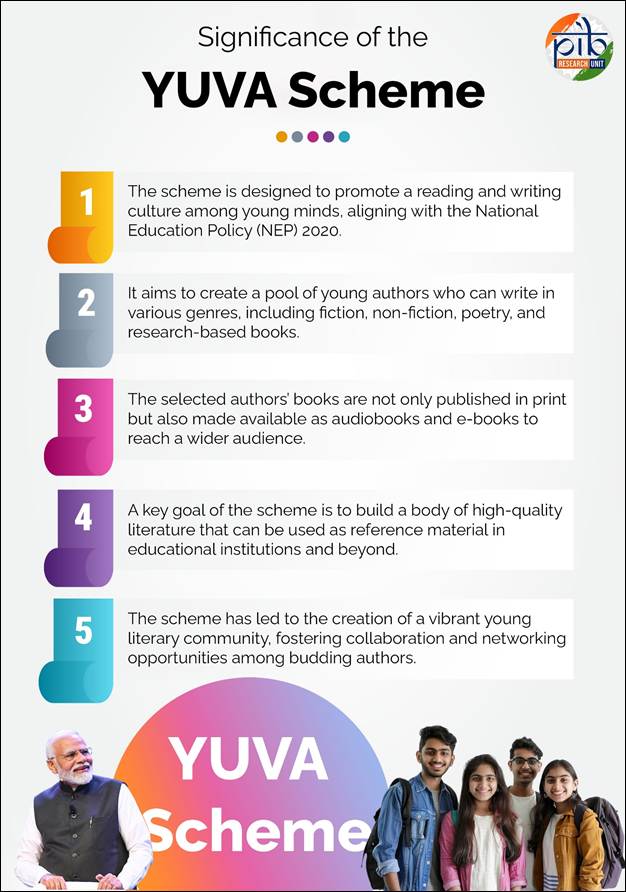
National Education Policy 2020 has emphasized on the empowerment of the young minds and creating a learning eco-system that can make the young readers/learners ready for leadership roles in the future world. India is considered to be a ‘young country’ because 66% of its total population are young and can be tapped for capacity and nation building. In this context, a national scheme for mentoring generations of young authors has proven to be a significant stepping stone for laying the foundation of the future leaders of the creative world. This scheme has been conceptualised on the premise that the 21st century India needs to groom a generation of young authors to create ambassadors of Indian literature and world view. In view of the fact that our country is ranked third in the arena of book publishing and we have a treasure trove of indigenous literature, India must project it at the global stage. The first mentorship scheme was launched on 31st May 2021, then subsequently in October 2022 and now in March 2025.

YUVA 2.0: Expansion and Achievements

Launched in October 2022YUVA 2.0 built upon the foundation of YUVA 1.0 with a renewed focus on ‘Democracy’ as the core theme. The scheme aimed to foster young writers’ engagement with India’s democratic values, traditions, and governance structures.

Theme and Vision

The Theme of PM-YUVA 2.0 was Democracy (Institutions, Events, People, and Constitutional Values). The scheme helped in developing a stream of writers who can write on various facets of Democracy in India encompassing the past, present and future. Besides, the scheme also provided a window to the aspiring youth to articulate themselves and present a comprehensive outlook of Indian democratic values at domestic as well as international platforms.

Selection and Implementation

  • The competition received an overwhelming response, with a diverse pool of participants from across the country.
  • 75 authors were selected through a competitive process. They were also required to submit a book proposal of 10,000 words.
  • The mentorship program included interaction with constitutional experts, historians, and renowned authors.
  • Special training sessions were held to enhance research skills, language proficiency, and storytelling techniques.

Outcomes and Impact

  • The Union Minister for Education launched 41 new books under the PM YUVA 2.0 scheme at the New Delhi World Book Fair 2025 in February.
  • Several books were published in multiple Indian languages, making them accessible to a broad readership.
  • Young authors gained national and international recognition, participating in events like the World Book Fair and literary forums.
  • Many participants had their books included in academic and government libraries for research and reference.
  • Some authors had the opportunity to meet and interact with policymakers and scholars, further enriching their perspectives.

YUVA 1.0: Inception and Legacy

The inaugural editionYUVA 1.0, was launched in May 2021 as part of the Azadi Ka Amrit Mahotsav celebrations to commemorate 75 years of India’s independence. The scheme aimed to empower young authors and provide them a platform to express their perspectives on India’s history and contemporary narratives.

Theme and Inspiration

The theme was National Movement of India with focus on Unsung Heroes; Little known facts about the Freedom Struggle; Role of various places in National Movement; Entries bringing out new perspectives related to political, cultural, economic, or science related aspects of national movement etc. as part of Azadi ka Amrit Mahotsav. This scheme helped to develop a stream of writers who can write on a spectrum of subjects to promote Indian heritage, culture and knowledge system.

Selection and Implementation

  • The contestants were asked to submit a manuscript of 5000 words.
  • 75 young authors were selected, representing diverse linguistic and regional backgrounds.
  • The selection was made by a committee constituted by National Book Trust (NBT).
  • Mentorship included training in writing, editing, and publishing processes.
  • Special sessions were conducted by eminent historians, journalists, and literary figures.
  • A consolidated scholarship of Rs.50,000 per month for a period of six months per author will be paid under the Mentorship Scheme.

Outcomes and Impact

  • The results were announced on 25.12.2021.
  • The books produced under YUVA 1.0 were translated into multiple Indian languages, enhancing their reach.
  • The initiative contributed to India’s literary heritage, encouraging young voices to document historical narratives.
  • Several young authors gained recognition, contributing to mainstream literature and academic discussions.
  • The scheme established a strong foundation for young writers, many of whom went on to publish additional books independently.
  • 10% royalty is being paid by NBT on publication and sale of the books.

Conclusion

The YUVA scheme, in its three editions, has played a crucial role in nurturing young literary talent in India. As the program continues to evolve, it reinforces India’s commitment to promoting creative expression, multilingual literary heritage, and a culture of reading and writing among the youth. The impact of the scheme is evident in the success stories of young authors whose voices have been amplified at both national and international levels. With continued support and innovation, the YUVA scheme will remain a cornerstone of India’s literary and cultural renaissance.

References

Click here to see PDF.

PM’s Scheme for Mentoring Young Authors (PM-YUVA 3.0) launched to promote reading, writing and book culture

Daily writing prompt
If you could be a character from a book or film, who would you be? Why?

The Ministry of Education, Department of Higher Education, launched PM-YUVA 3.0 -Prime Minister’s Scheme for Mentoring Young Authors, an Author Mentorship programme to train young and budding authors (below 30 years of age) in order to promote reading, writing and book culture in the country, and project India and Indian writings globally on 11th March, 2025. In view of the significant impact of the first two editions of PM-YUVA Scheme with large scale participation from young and budding authors in 22 different Indian languages and English, PM-YUVA 3.0 is now being launched.

The launch of PM-YUVA 3.0 (Young, Upcoming and Versatile Authors) is in tune with the Prime Minister’s vision to encourage the youth to understand and appreciate India’s rich culture, heritage and contribution of visionaries in the development and growth of the country.PM-YUVA 3.0 intends to bring to the fore the perspectives of the young generation of writers on the themes:1) Contribution of Indian Diaspora in Nation Building; 2) Indian Knowledge System; and 3) Makers of Modern India (1950-2025) in an innovative and creative manner. This scheme will thus help to develop a stream of writers who can write on a spectrum of subjects to promote Indian heritage, culture and knowledge system.

NEP 2020 has emphasised on the empowerment of the young minds and creating a learning ecosystem that can make the young readers/learners ready for leadership roles in the future world. India tops the chart in youth population being 66% of the total, waiting to be tapped for capacity building and thereby nation building. With the purpose of mentoring a new generation of young creative writers, there is an imminent requirement to take initiatives at highest level, and in this context, PM-YUVA 3.0 will go a long way in laying the foundation of the future leaders of the creative world.

The National Book Trust, India, under the Ministry of Education as the Implementing Agency, will ensure phase-wise execution of the Scheme under well-defined stages of mentorship. The books prepared under this scheme will be published by National Book Trust, India, and translated into other Indian languages, fostering cultural and literary exchange while promoting ‘Ek Bharat Shreshtha Bharat’. The selected young authors will engage with esteemed writers, participate in literary festivals, and contribute to a diverse body of work that reflects India’s rich heritage and contemporary progress.

The scheme aims to cultivate a new generation of writers who can articulate the contributions of the Indian diaspora in nation-building, highlighting their peaceful integration and influence across political, economic, and socio-cultural spheres. It will also emphasise on the role of Indian Knowledge System in preserving historical wisdom, generating new opportunities, and synthesising indigenous knowledge for national development. Through this initiative, young   authors will explore the impact of visionaries in various fields like education, science, economy, social empowerment, etc. thereby presenting a comprehensive narrative of India’s growth and resilience.

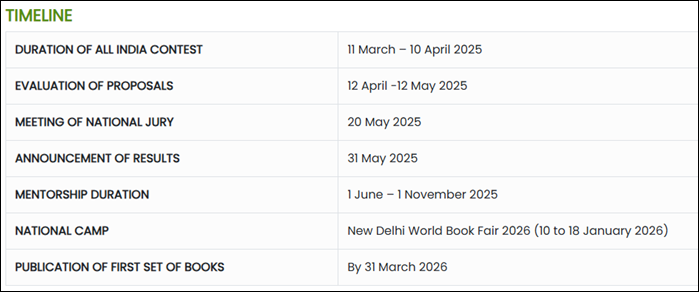
The Schedule of PM-YUVA 3.0 (Young, Upcoming and Versatile Authors) is as follows:

  • Announcement of the Scheme 11 March 2025.
  • A total of 50 authors will be selected through an All India Contest to be conducted through https://www.mygov.in/ from 11 March 2025 – 10 April 2025.
  • The number of authors to be selected as per the theme:

1) Contribution of Indian Diaspora in Nation Building – 10 authors

2) Indian Knowledge System – 20 authors

3) Makers of Modern India (1950-2025) – 20 authors

  • The received proposals would be evaluated in April 2025.
  • The list of selected authors will be announced in May- June 2025.
  • The young authors will be trained by eminent authors/mentors from 30 June – 30 December 2025.
  • Under the mentorship, a National Camp will be held for the PM-YUVA 3.0 Authors during the New Delhi World Book Fair 2026.

*****

Sahitya Akademi will be organising “Festival of Letters 2025”

Eduinde News

Sahitya Akademi, India’s premier literary institution working under the Ministry of Culture, Government of India, will be organizing its annual Festival of Letters at Rabindra Bhavan in New Delhi from 7th March 2025 to 12th March 2025. Union Minister for Culture and Tourism Shri Gajendra Singh Shekhawat, Government of India, will inaugurate the festival. Sri Mahesh Dattani, eminent English Playwright will be the chief guest of the award ceremony in which the prestigious Sahitya Akademi Awards in 23 languages will be presented and Sri Upamanyu Chatterjee, eminent Writer and Scholar will deliver this year’s Samvatsar Lecture.

This is Asia’s Largest Literature Festival with about 700 writers from different parts of the country representing more than 50 languages participating in the festival that spans over 100 sessions. The theme of the festival will be Indian Literary Traditions and a National Seminar on the topic featuring eminent thinkers and writers will be organized during the last three days of the festival.

The festival will feature Young Writers, Women Writers, Dalit Writers, Writers from North East, Tribal writers and poets, LGBTQ writers and poets along with many eminent writers, translators, publishers, poets and distinguished personalities from different walks of life and Festival of Letters continue its status as India’s Most Inclusive Literature Festival since 1985.

A daylong programme for children, Spin A Tale, will be organized on the final day of the festival. Throughout the festival, there will be presentations, readings and discussions by eminent authors, poets, translators, publishers and critics on a wide range of subjects.

On three evenings, cultural performances by eminent artists like Rakesh Chaurasia (flute recital), Nalini Joshi (Hindustani Vocal) and Fouzia Dastango and Ritesh Yadav (Dastan-e-Mahabharata) will be organized. The Festival of Letters is open and free for all the literary lovers and those who wish to taste the flavour of Indian’s longest running Literature Festival.

*****

Daily writing prompt
Write a letter to your 100-year-old self.

Importance of High Impact Research Publications and How to Search Papers

Daily writing prompt
Describe a phase in life that was difficult to say goodbye to.

High impact research publications are pivotal in advancing knowledge and shaping academic and industry landscapes. They serve as the cornerstone for disseminating breakthroughs, influencing policy decisions, and fostering collaborations across disciplines. Here’s a deeper look into their importance and a guide on how to effectively use the research search tool available on Track2Training:


Importance of High Impact Research Publications

  • Dissemination of Innovative Ideas:
    High impact publications are essential for sharing new methodologies, theories, and experimental results. They reach a broad audience, ensuring that innovative ideas are disseminated throughout the scientific community and beyond.
  • Academic and Professional Recognition:
    Publishing in high impact journals not only adds credibility to a researcher’s work but also enhances their academic reputation. It often plays a crucial role in securing funding, tenure, and professional opportunities.
  • Influence on Policy and Practice:
    Research that garners high impact tends to influence policy-making, industry practices, and future research directions. Its findings are frequently cited, guiding further studies and real-world applications.
  • Global Collaboration and Networking:
    High impact research often acts as a bridge for international collaboration. Researchers from various parts of the world can build on each other’s work, leading to collaborative projects that push the boundaries of knowledge.
  • Quality and Rigor:
    The rigorous peer-review process associated with high impact publications ensures that the research meets high standards of quality, reliability, and relevance. This process helps to validate findings and enhances the overall integrity of the research field.

How to Search Using the Track2Training Research Page

The Track2Training research page is a specialized tool designed to help users locate high-quality research publications efficiently. Here’s how to make the most out of it:

  1. Accessing the Search Interface:
    When you visit the research page, you’ll find a clean and intuitive interface. Typically, there is a prominent search bar that serves as the starting point for your inquiry.

  2. Keyword Search:
    • Input Specific Keywords:
      Begin by entering relevant keywords related to your research topic. Whether you’re interested in “machine learning,” “renewable energy,” or “clinical trials,” the search bar allows you to narrow down the vast repository of research papers.
    • Use Boolean Operators:
      For more precise results, you might combine keywords using Boolean operators (AND, OR, NOT). This helps in filtering out unrelated results and focusing on the core aspects of your research interest.
  3. Advanced Search Filters:
    • Publication Date:
      Narrow your search by specifying a range of publication years to access the most current research or historical perspectives.
    • Journal or Conference Name:
      If you are looking for publications from a particular journal or conference, use the filter options provided.
    • Research Area or Discipline:
      Many research search tools, including this one, allow filtering by specific research domains, which can help in locating niche or interdisciplinary studies.
  4. Reviewing Search Results:
    • Title and Abstract Review:
      Once the search results are displayed, scan through the titles and abstracts. This quick review can help you determine the relevance of each paper before diving into the full text.
    • Citation Information:
      High impact research is often indicated by a high number of citations. Look for citation counts or related metrics if available, as they can provide insights into the influence of the research.
  5. Accessing Full-Text and Additional Resources:
    • Link to Full Papers:
      Many search tools provide direct links to the full-text versions of the papers or to their respective publisher pages.
    • Reference Management:
      Some platforms also offer options to download citations in various formats (like BibTeX or EndNote), which can be very helpful when managing references for your own research.
  6. Staying Updated:
    Regularly revisiting the research page or setting up alerts (if the functionality is available) ensures that you remain updated on the latest high impact research publications in your field.

Final Thoughts

High impact research publications not only validate the credibility and relevance of academic work but also drive progress across multiple sectors. By leveraging specialized search tools like the one offered by Track2Training, researchers can efficiently navigate through vast databases, pinpoint the most influential studies, and build upon existing knowledge to foster further innovation.

This approach not only streamlines the research process but also ensures that the most pertinent and high-quality information is at your fingertips.

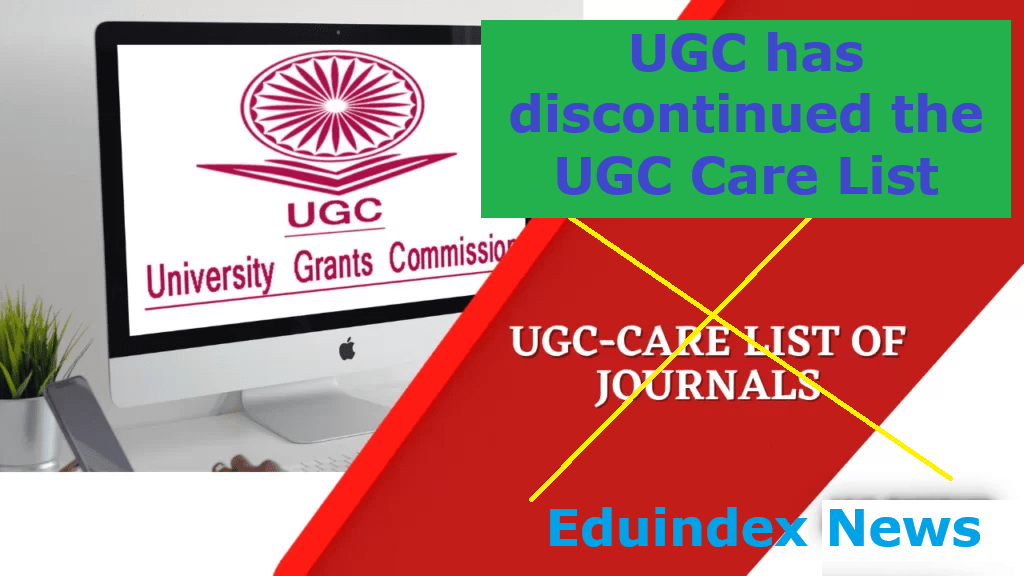
UGC discontinues CARE Journal Listing, suggests new parameters to ensure quality, transparency, and relevance

Daily writing prompt
Share one of the best gifts you’ve ever received.

The University Grants Commission (UGC) has officially announced the discontinuation of its UGC-Consortium for Academic and Research Ethics (CARE) journal listing. This significant shift marks a transition toward a more decentralized and flexible framework for evaluating academic journals.

Introduction of Suggestive Parameters for Journal Selection

In lieu of the UGC-CARE list, the UGC has developed a set of suggestive parameters aimed at guiding faculty members and students in selecting credible and peer-reviewed academic journals for research and publication. These parameters were meticulously crafted by a panel of experts and academicians and have now been made publicly available for feedback. Stakeholders, including Higher Educational Institutions (HEIs) and faculty members, are invited to share their opinions by February 25, 2025, via email at journal@ugc.gov.in.

This decision follows the recommendations made by an expert committee and was formalized during the UGC’s 584th meeting on October 3, 2024. The new guidelines are intended to replace the previous CARE system outlined in the Public Notice dated November 28, 2018.

Focus on High-Quality Research and Institutional Review Mechanisms

To foster high-quality research, HEIs are encouraged to adopt these suggestive parameters and customize them based on their academic requirements. The UGC recommends that institutions establish internal review committees to ensure compliance with these evolving quality benchmarks. This move aims to empower institutions to take ownership of journal evaluation processes while promoting scholarly excellence.

Rationale Behind Discontinuing the UGC-CARE List

Mamidala Jagadesh Kumar, Chairman of the UGC, explained that the UGC-CARE list was initially introduced in 2018 to address concerns over the proliferation of predatory journals and to ensure that only reputable publications were recognized for faculty selections, promotions, and research funding applications. However, the system faced numerous challenges, including:

  • Over-centralization and bureaucratic delays in updating the journal list.
  • Lack of transparency in decision-making processes.
  • Exclusion of respected journals, particularly those in Indian languages, while less credible ones were included.
  • Pressure on researchers to publish exclusively in UGC-CARE listed journals.

NEP 2020 and the Shift Toward Decentralization

The National Education Policy (NEP) 2020 highlighted the need to reduce heavy regulation in academic publishing. In response, the UGC formed an expert committee in December 2023 to review the UGC-CARE scheme. Based on its recommendations, the UGC decided to discontinue the central list and encourage HEIs to develop their own robust mechanisms for evaluating journals.

“This new approach provides institutions with greater flexibility,” stated Prof. Kumar. “It allows them to develop models that align with academic norms and the specific needs of various disciplines. Researchers will no longer be bound by a centralized list of journals.”

Combating Predatory Journals and Protecting Academic Standards

Under the new system, HEIs will bear the responsibility for combating predatory journals by establishing credible evaluation mechanisms. This will help protect the academic reputation of institutions and maintain scholarly integrity. Experienced faculty members are expected to mentor younger researchers in identifying legitimate journals and avoiding predatory ones.

A Step Toward Academic Freedom and Autonomy

The discontinuation of the UGC-CARE list is seen as a step toward restoring academic freedom and institutional autonomy. “By transferring the responsibility for journal evaluation back to HEIs, the UGC has empowered institutions and researchers to make publication choices that best suit their disciplines and target audiences,” Prof. Kumar emphasized.

HEIs will also need to accommodate emerging and interdisciplinary fields by creating dynamic evaluation models that recognize journals beyond traditional indexing frameworks. This adaptability is crucial to addressing the rapidly evolving landscape of academic publishing.

Stakeholder Engagement and Feedback

The UGC encourages stakeholders to carefully review the proposed parameters and provide their feedback before the deadline. This inclusive approach aims to foster a collaborative environment for enhancing academic publishing standards.

For further information, stakeholders are advised to refer to the UGC’s official communications and actively participate in shaping the future of academic journal evaluation in India.

Submit Journal Details for Indexing on Eduindex

Daily writing prompt
What is your mission?

Step 1: Visit the Eduindex Website

  • Navigate to Eduindex.org.
  • Look for the “Submit Journal for Indexing” or “Index Your Journal” section on the homepage or the navigation menu.

Step 2: Prepare the Required Details

Before submitting, ensure you have the following journal information ready:

1. Journal Information

  • Full Name of the Journal
  • ISSN (Print and/or Online)
  • Domain/Field of Study
  • Frequency of Publication (e.g., Monthly, Quarterly)
  • Year of Inception

2. Editorial Details

  • Name of the Publisher
  • Editorial Board Information (including Editor-in-Chief and team members)
  • Contact Information (email and phone number)

3. Publication Details

  • Number of Issues Published to Date
  • Average Number of Articles Published Per Issue
  • Open Access Status (Open Access or Subscription-Based)

4. Journal Website

  • URL of the journal’s official website
  • Direct links to archives, author guidelines, and policies

5. Indexing History

  • List of existing indexing platforms where the journal is already listed (if applicable)

6. Supporting Documents

  • Sample PDF of Published Articles
  • Scanned Certificate of ISSN Registration
  • Any other accreditation or recognition certificates

Step 3: Fill Out the Submission Form

  • Access the submission form on Eduindex.
  • Provide the requested details accurately and ensure all required fields are filled.

Step 4: Submit Supporting Documents

  • Upload the required documents, such as ISSN certificates or sample articles, to validate your journal’s authenticity.

Step 5: Pay Indexing Fees

  • Some indexing platforms may charge a fee for processing. Verify the fee structure on the Eduindex website and complete the payment if necessary. The payment link is given on the right sidebar on the top. Support Eduindex News.

Step 6: Review and Confirm Submission

  • Double-check all provided details before final submission.
  • Once verified, click on the “Submit” button.

Step 7: Wait for Approval

  • Eduindex will review your journal details and validate the information.
  • The review process may take several days to weeks, depending on the volume of submissions.

Step 8: Receive Confirmation

  • Once approved, you’ll receive a confirmation email with indexing details.
  • Your journal will then be listed on Eduindex’s platform, enhancing its visibility and credibility.

Benefits of Indexing with Eduindex

  • Increased Visibility: Your journal becomes discoverable by a broader academic audience.
  • Credibility Boost: Indexed journals are perceived as more reliable and reputable.
  • Citation Impact: Indexed articles often receive higher citations.
  • Global Reach: Expand your journal’s readership across the globe.

Start your submission today and elevate your journal’s standing in the academic community!

Research Paper Editing Services

Daily writing prompt
Are you more of a night or morning person?

Research paper editing services offered by Eduindex.org are designed to assist students, researchers, and academic professionals in enhancing the quality of their research papers, dissertations, and academic articles. Their services focus on improving clarity, grammar, structure, and overall coherence of academic writing, helping to ensure that the final document is polished and ready for submission to journals, conferences, or academic institutions.

Eduindex.org offers a range of editing services, including:

  1. Grammar and Punctuation Check: Ensuring that the research paper adheres to proper grammar and punctuation rules, enhancing readability and professionalism.
  2. Structure and Organization: Reviewing the overall structure of the paper, ensuring logical flow, appropriate headings, and subheadings for easy comprehension.
  3. Clarity and Conciseness: Editing the content to make it clearer and more concise, removing redundant phrases and unnecessary jargon.
  4. Formatting: Ensuring the paper is formatted according to the required citation style (APA, MLA, Chicago, etc.) and meets specific institutional or publication guidelines.
  5. Referencing and Citations: Checking references and citations to ensure they are correctly formatted and consistent with the required style.
  6. Plagiarism Check: Providing a thorough plagiarism check to ensure the originality of the research paper.

How to Contact Eduindex.org for Research Paper Editing:

To make use of their professional editing services, you can reach out to the team at Eduindex.org by sending an email to editor@eduindex.org. You can share your research paper and any specific requirements or concerns you have regarding the editing process. The editorial team will respond with a tailored solution and discuss the next steps, including pricing and deadlines.

By availing of their editing services, researchers and students can ensure that their academic work is of the highest quality, increasing the chances of successful publication or submission.

Ministry of Education organizes workshop on ‘Volunteering for Ullas’

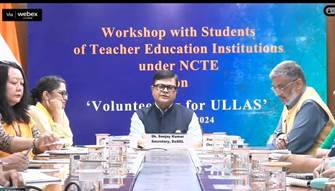
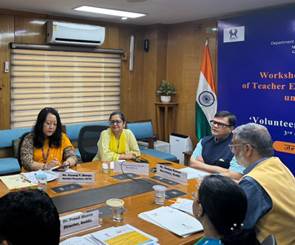
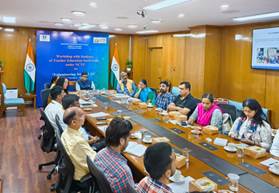
Shri Sanjay Kumar, Secretary, Department of School Education and Literacy (DoSE&L), Ministry of Education presided over a virtual workshop with students of Teacher Education Institutions (TEIs) under the NCTE on ‘Volunteering for Ullas’ today. The workshop aimed at fostering Youth Volunteerism from TEIs to achieve full literacy across India as enshrined in the NEP 2020. Smt. Archana Sharma Awasthi, Joint Secretary, DoSE&L; Prof. Pankaj Arora, Chairperson, NCTE; Ms. Kesang Y. Sherpa, Member Secretary, NCTE; Smt. Preeti Meena, Director, DoSE&L, and other officials were present at the meeting.

While addressing the students and teachers from TEIs, Shri Sanjay Kumar emphasized coming together to pay special attention to promoting literacy across the country in all sections of society. He exhorted that illiterate people in our society should be given the gift of literacy. Teacher Educators and administrators should support and guide the students at their institutes in registering on the ULLAS App, he added.

IMG-20241003-WA0040.jpg

Smt. Archana Sharma Awasthi presented on the agenda of the workshop of ‘ULLAS: Nav Bharat Literacy Programme’ and encouraged the students and teachers to join the program for community service and engagement.

IMG-20241003-WA0080.jpg

Prof. Pankaj Arora highlighted that the National Council for Teacher Education is fully committed to realizing the dream of Viksit Bharat by achieving the goal of ‘Jan Jan Saakshar’.

Ms. Kesang Y. Sherpa presented on the Role of Teacher Education Institutions in ULLAS. While presenting the role of NCTE in the context of the implementation of ULLAS, she highlighted that for the academic session 2023-24, NCTE had directed all Teacher Education Institutions to connect 8-10 students with the ULLAS initiative and motivate them to become volunteer teachers and contribute to nation building cause. The students can earn 2 Credits for Community Engagement & Service for active participation in activities related to ULLAS-New India Literacy Programme (NILP), NSS & Other community activities, she added.

udftr2.jpg

Smt. Preeti Meena gave a detailed presentation on Ullas which also covered the implementation steps of Ullas in TEIs.

More than 18,000 TEIs, faculty and student-teachers were inducted during the session.

*****

ESCI Journals of Clarivate: An In-Depth Overview

Daily writing prompt
Do you or your family make any special dishes for the holidays?

ESCI stands for the Emerging Sources Citation Index, a research database managed by Clarivate, which is a global leader in research analytics. The ESCI was launched in 2015 as part of Web of Science, a platform that includes several well-known citation indices, such as the Science Citation Index (SCI), Social Sciences Citation Index (SSCI), and Arts & Humanities Citation Index (AHCI).

ESCI journals represent a category of scholarly journals that are in the process of being evaluated for inclusion in the more prestigious citation indices, such as SCI or SSCI. These journals are typically emerging or have demonstrated an increasing impact in their respective fields but have not yet achieved the citation levels or broad recognition necessary for inclusion in the more established indices.

In this article, we will dive into the following aspects of ESCI journals within Clarivate’s Web of Science:

  1. What is ESCI?
  2. Criteria for ESCI Journal Inclusion
  3. Differences Between ESCI and Other Citation Indices
  4. Importance of ESCI Journals
  5. How ESCI Affects Researchers and Authors
  6. How Journals Get Indexed in ESCI
  7. List of ESCI Journals and their Scope
  8. ESCI Journals and Academic Career Progression

1. What is ESCI?

The Emerging Sources Citation Index (ESCI) is an index introduced by Clarivate Analytics (formerly Thomson Reuters) to serve as a middle ground between unindexed journals and those included in well-established citation indices like the Science Citation Index (SCI) or the Social Sciences Citation Index (SSCI).

ESCI includes journals that may not yet meet the rigorous standards for the established indices but are still recognized as valuable sources of scholarly content. These journals often focus on emerging fields, new interdisciplinary research, or regional content that may not yet have global visibility but is still highly relevant to specific academic or scientific communities.

Inclusion in ESCI signals that a journal is considered to have academic merit and is on track to potentially gain recognition in broader academic circles. However, it does not yet have the citation impact that journals in SCI or SSCI indices typically do.

2. Criteria for ESCI Journal Inclusion

Clarivate has a set of standards for selecting journals for inclusion in the ESCI. While the specific criteria are not fully disclosed, the following factors are generally considered:

  • Academic Quality: Journals must demonstrate scholarly rigor in their editorial process, peer-review practices, and the quality of articles they publish. This includes having professional editorial boards, following international standards for peer review, and ensuring transparency in publishing practices.
  • Relevance: ESCI journals should have a subject focus that is emerging or growing, offering high relevance to a specific academic community or niche research area. These could include rapidly developing disciplines, innovative interdisciplinary research, or underrepresented geographical or linguistic regions.
  • Citation Potential: Journals are evaluated for their citation potential. Although ESCI journals may not have extensive citation data initially, they are expected to grow in influence and impact. This is a key distinction between ESCI journals and those indexed in more established indices, which typically have higher citation numbers and long-term academic impact.
  • Publication Frequency and Editorial Content: ESCI journals are expected to maintain a regular publication schedule, typically with a certain minimum number of issues published per year. The editorial content must align with scholarly communication practices, including original research articles, reviews, and other accepted types of scholarly work.
  • International Coverage: Clarivate typically prefers journals that have an international scope or appeal, but regional journals that demonstrate a strong impact within a particular academic or geographic community may also be included.

3. Differences Between ESCI and Other Citation Indices

Clarivate’s citation indices, like SCI, SSCI, and AHCI, are highly selective and include journals that have achieved a certain level of citation impact, which is typically a sign of broad recognition and influence within their respective disciplines. ESCI, on the other hand, includes journals that may not yet have reached these citation thresholds but show promise and potential for future growth. Here’s a comparison:

AspectESCISCI/SSCI/AHCI
Citation ImpactEmerging, but lower citation impact compared to SCI/SSCIEstablished journals with high citation counts
Journal SelectionBased on quality and potential for growthBased on long-term citation performance and prestige
ScopeNew or emerging fields, interdisciplinary, or regional journalsEstablished fields with broad global reach and historical significance
Indexing RequirementsJournals must show academic merit but have limited citation historyJournals must demonstrate sustained academic impact and citation frequency
AudienceNiche, emerging scholarly communitiesGlobal, well-established academic communities

4. Importance of ESCI Journals

While ESCI journals may not have the same level of global recognition as those indexed in SCI or SSCI, they play a vital role in the academic publishing ecosystem. Here are several reasons why ESCI journals are important:

  • Supporting Emerging Research: ESCI serves as a platform for emerging or niche research areas that may not yet have significant visibility but are rapidly growing or developing. These journals can contribute to advancing knowledge in areas such as new technologies, interdisciplinary fields, or research that is regionally important.
  • Increasing Journal Diversity: By including journals from different regions and less mainstream disciplines, ESCI helps diversify the global academic publishing landscape. It provides a voice for scholars working in underrepresented fields or regions.
  • Providing Access to Scholarly Work: ESCI journals offer access to high-quality research in emerging fields. This is particularly useful for researchers looking for cutting-edge topics or early-stage developments that haven’t yet been widely covered by established journals.
  • Facilitating Journal Growth: For journals indexed in ESCI, the index serves as a stepping stone to recognition in SCI or SSCI. ESCI inclusion increases a journal’s visibility, helping it attract higher-quality submissions and more citations over time.

5. How ESCI Affects Researchers and Authors

For researchers and authors, publishing in ESCI journals offers both opportunities and challenges:

Opportunities:

  • Early Career Exposure: Researchers, especially those working in emerging or niche fields, can gain early exposure by publishing in ESCI journals. These journals may provide a platform to showcase new and innovative ideas that may not yet fit into larger, more established journals.
  • Increased Visibility: Inclusion in ESCI provides visibility in Web of Science, a globally recognized academic database. Articles published in ESCI journals are discoverable and citable, providing researchers with the opportunity to gain recognition for their work.
  • Potential for Future Recognition: ESCI journals are often viewed as stepping stones to inclusion in more prestigious citation indices like SCI or SSCI. Authors can contribute to the growth and development of these journals, helping them eventually achieve broader recognition.

Challenges:

  • Limited Citation Impact: Due to the emerging nature of ESCI journals, articles published in these journals may not initially receive the same level of citation as those in more established journals. This could affect researchers looking to build their citation profiles early in their careers.
  • Recognition and Prestige: While ESCI inclusion is a positive step, some academic institutions or funding bodies may prioritize journals indexed in more prestigious indices. For authors aiming for high recognition, publishing in ESCI journals may not have the same weight as publishing in SCI or SSCI journals.

6. How Journals Get Indexed in ESCI

Journals that wish to be indexed in ESCI must undergo a thorough evaluation process conducted by Clarivate’s editorial team. This process includes:

  1. Submission of Application: Journals must submit a formal application to Clarivate for inclusion in the ESCI, providing detailed information about their editorial policies, peer-review process, citation practices, and impact potential.
  2. Evaluation: Clarivate evaluates the journal’s editorial content, citation metrics, publishing frequency, and overall quality. This involves an assessment of factors like editorial board composition, adherence to best publishing practices, and the journal’s relevance within its academic field.
  3. Decision and Inclusion: If the journal meets the necessary criteria, it is included in ESCI. Inclusion is based on the overall potential for the journal to grow in citation impact and academic influence.
  4. Ongoing Monitoring: Once a journal is included in ESCI, it is continuously monitored for performance. Clarivate reviews journals on an ongoing basis to ensure they continue to meet the necessary standards for inclusion.

7. List of ESCI Journals and Their Scope

The ESCI includes thousands of journals from various disciplines, including:

  • Sciences: Emerging areas in fields such as biotechnology, environmental science, materials science, and engineering.
  • Social Sciences: New research areas in sociology, anthropology, psychology, education, and business.
  • Arts and Humanities: Journals that focus on niche topics in literature, cultural studies, philosophy, and history.

A detailed list of ESCI journals can be found on the Web of Science platform, where journals are categorized by subject and scope.

8. ESCI Journals and Academic Career Progression

For academic researchers, publishing in ESCI journals can be an important step in their career progression, especially for early-career scholars. ESCI inclusion demonstrates that a journal has academic merit and is being taken seriously within the scholarly community.

Special Book Publication Offer: Publish Your eBook for Just $50 with EduPub

EduPub is excited to present an exclusive offer for authors! For a limited time, you can publish your eBook for only $50. Whether you’re an academic, researcher, novelist, or a first-time writer, this is the perfect opportunity to share your work with the world.

What’s Included in the $50 Offer:

  • Professional Formatting: Your manuscript will be professionally formatted for digital platforms.
  • ISBN Assignment: Get a unique ISBN for your eBook, ensuring it is recognized globally.
  • Global Distribution: Your eBook will be available on leading platforms such as Amazon, Google Play, and other major online stores.
  • Author-Friendly Rights: You retain full copyright ownership of your work.
  • Dedicated Support: Our team will guide you through the entire publishing process, ensuring a smooth and hassle-free experience.

Why Choose EduPub?

EduPub is a trusted name in academic and professional publishing. We are committed to providing high-quality services at affordable rates, making publishing accessible to all authors.

Take advantage of this special offer and make your mark as an author. Submit your manuscript today and reach a global audience with your eBook!

For more details, visit EduPub or contact us directly at support@edupub.org.

Hurry! This offer is available for a limited time only.

The Power of Publishing: Why Getting Your Book into the World Matters

Daily writing prompt
Write a letter to your 100-year-old self.

In the vast landscape of literature, the act of publishing a book holds an undeniable allure. It’s not merely about seeing your name in print or holding a tangible manifestation of your ideas; it’s about the profound impact that your words can have on the world. Whether you’re a seasoned author or an aspiring writer, the journey from manuscript to publication carries immense significance, both personally and culturally.

Photo by Ena Marinkovic on Pexels.com

At its core, publishing a book is an act of sharing. It’s about taking the stories, insights, and knowledge that reside within the depths of your mind and offering them to the world. In doing so, you open the door to connection, conversation, and understanding. Your words have the power to resonate with readers, to evoke emotion, to provoke thought, and perhaps even to inspire action.

One of the key reasons why getting your book published is important lies in its potential to reach and impact others. In a world where ideas are exchanged at lightning speed through digital mediums, the written word still holds a unique and enduring power. Books have the ability to transcend barriers of time, space, and culture, allowing readers to explore new worlds, gain fresh perspectives, and delve into the depths of the human experience.

Moreover, the act of publishing a book can be a deeply fulfilling and transformative experience on a personal level. It’s a testament to your dedication, creativity, and perseverance as a writer. The process of bringing a manuscript to publication involves countless hours of writing, revising, and refining—a journey that demands both skill and tenacity. Seeing your book on shelves or in the hands of readers is not just a moment of validation; it’s a reminder of your capacity to turn dreams into reality.

Furthermore, publishing a book can provide numerous opportunities for growth and learning. It requires you to engage with editors, agents, publishers, and readers, each offering valuable insights and feedback that can help you hone your craft. Whether it’s learning to navigate the intricacies of the publishing industry or developing a deeper understanding of your own voice and style as a writer, the journey to publication is rich with lessons and experiences.

Beyond the personal and professional benefits, the importance of getting your book published extends to its broader cultural impact. Literature has the power to shape societies, challenge norms, and spark movements. Throughout history, books have served as catalysts for change, fostering empathy, tolerance, and social justice. By adding your voice to the collective tapestry of human expression, you contribute to the ongoing dialogue that shapes our understanding of the world.

In essence, the act of publishing a book is not just about putting words on paper; it’s about sharing your voice, your stories, and your ideas with the world. It’s about embracing the power of the written word to connect, inspire, and transform. So, if you’re sitting on a manuscript, wondering whether to take the leap into the world of publishing, remember this: your words matter, and the world is waiting to hear them.

Top 10 Scholars of the World

Daily writing prompt
If you could be someone else for a day, who would you be, and why?

here’s a list of ten influential scholars from various fields, although “top” is subjective and may vary depending on criteria like impact, citations, awards, and contributions to their respective fields:

Photo by Davis Su00e1nchez on Pexels.com
  1. Noam Chomsky (Linguistics, Philosophy, Cognitive Science): Known for his groundbreaking work in linguistics, Chomsky is also a prominent figure in political activism and philosophy. His theories on generative grammar have revolutionized the study of language.
  2. Stephen Hawking (Theoretical Physics, Cosmology): Renowned for his work on black holes, Hawking made significant contributions to our understanding of the universe despite battling amyotrophic lateral sclerosis (ALS). His book “A Brief History of Time” brought complex scientific concepts to a wider audience.
  3. Angela Davis (Social Activism, Critical Theory): A scholar-activist, Davis is known for her work in feminism, Marxism, and prison abolitionism. Her writings on race, class, and gender have had a profound impact on social justice movements globally.
  4. Michio Kaku (Theoretical Physics, Futurism): Kaku is a leading theoretical physicist known for his work on string theory and his popular science books exploring the future of technology and humanity. He’s a frequent commentator on science and technology in the media.
  5. Judith Butler (Gender Studies, Philosophy): Butler’s contributions to gender theory and queer studies have reshaped how we understand identity and performativity. Her book “Gender Trouble” is considered a seminal work in feminist philosophy.
  6. Edward Said (Literary Theory, Postcolonialism): Said’s work on Orientalism and colonial discourse has had a profound impact on literary studies, cultural studies, and postcolonial theory. His critiques of Western representations of the Middle East continue to influence academic discourse.
  7. Cornel West (Philosophy, African American Studies): A public intellectual and political activist, West is known for his work on race, class, and democracy. His blend of philosophy, theology, and social criticism has made him a prominent figure in contemporary American thought.
  8. Mary Beard (Classics, Ancient History): A distinguished classicist, Beard’s work on ancient Rome and Greece has brought new insights into the study of antiquity. Her engaging writing style and public engagement have made her a leading figure in popularizing the classics.
  9. Amartya Sen (Economics, Social Choice Theory): Sen’s contributions to welfare economics and social choice theory have earned him the Nobel Prize in Economics. His work on poverty, development, and capabilities has had a significant impact on global policy.
  10. bell hooks (Feminist Theory, Cultural Criticism): An influential feminist theorist and cultural critic, hooks’ work on intersectionality, love, and the politics of representation has been pivotal in feminist thought. Her accessible writing style has made her ideas accessible to a wide audience.

This list represents just a fraction of the many scholars making significant contributions to their respective fields.

Internship at EduPub

  Interning at www.edupub.org can offer a range of benefits, providing a valuable and enriching experience for individuals seeking professional growth in the field of publishing, education, and research. Here are some key advantages of doing an internship at Edupedia Publications Pvt Ltd:

  1. Insight into Academic Publishing: Gain firsthand experience in the dynamic world of academic publishing. Edupedia Publications Pvt Ltd is a reputable platform, allowing interns to understand the intricacies of the publishing process, from manuscript submission to the final publication.

  2. Exposure to Diverse Content: Work with a variety of academic content, including research papers, books, and educational materials. Exposure to diverse topics and disciplines enhances your understanding of different subject areas.

  3. Networking Opportunities: Connect with professionals in the academic and publishing industry. The internship provides opportunities to build a network of contacts, fostering relationships that can be beneficial for future career endeavors.

  4. Skill Development: Develop and enhance essential skills such as editorial skills, manuscript review, content formatting, and quality control. Interns at Edupedia Publications Pvt Ltd often acquire proficiency in using publishing tools and platforms.

  5. Understanding of Academic Standards: Gain a deep understanding of academic standards and guidelines for publication. This experience is valuable for individuals aspiring to work in academia, research, or related fields.

  6. Portfolio Building: Contribute to real-world projects and build a portfolio showcasing your work. This tangible evidence of your contributions can be a valuable asset when seeking future employment opportunities.

  7. Professional Development: Receive mentorship and guidance from experienced professionals in the field. The internship provides a platform for continuous learning and professional development.

  8. Exposure to Open Access Publishing: Edupedia Publications Pvt Ltd is known for its commitment to open access publishing. Interns have the opportunity to understand the principles and advantages of open access, contributing to the dissemination of knowledge.

  9. Team Collaboration: Work collaboratively with a diverse team, gaining experience in a professional work environment. Learn to effectively communicate and collaborate with colleagues, editors, and authors.

  10. Enhanced Research and Critical Thinking Skills: Engage in the critical evaluation of academic content, honing your research and analytical skills. Interns often find that their ability to assess the quality and relevance of scholarly work improves significantly during their time at Edupedia Publications Pvt Ltd.

Interning at Edupedia Publications Pvt Ltd is a rewarding experience that offers a unique blend of academic exposure and professional development, making it an ideal opportunity for individuals passionate about education, research, and publishing.

The Art of Writing: A Creative Odyssey

By Shashikant Nishant Sharma

 Writing is more than just words on paper; it’s an art form that allows individuals to express their thoughts, emotions, and imagination in a unique and captivating way. The art of writing is a dynamic and evolving process that involves creativity, discipline, and a deep understanding of language. In this article, we will explore the key elements of the art of writing and how aspiring writers can hone their craft.

  1. Embrace Creativity:
    At the heart of the art of writing is creativity. Allow your imagination to roam freely, breaking free from the constraints of reality. Create vivid worlds, intriguing characters, and compelling narratives that transport your readers to new realms. Embracing creativity means being open to unconventional ideas and finding inspiration in the mundane and extraordinary alike.

  2. Master the Craft of Language:
    Language is the painter’s palette, and words are the colors. Mastering the craft of language involves understanding the nuances of grammar, syntax, and vocabulary. Develop a rich and varied vocabulary to paint detailed images with your words. Experiment with different writing styles, tones, and voices to discover your unique literary fingerprint.

  3. Find Your Voice:
    Every writer has a distinct voice that sets them apart. It’s the tone, style, and perspective that make your writing uniquely yours. Finding your voice requires self-discovery and a willingness to be authentic in your expression. Don’t be afraid to experiment until you discover the voice that feels most natural and resonant with your inner self.

  4. Cultivate Discipline:
    While creativity fuels the art of writing, discipline provides the structure. Set aside dedicated time for writing, establish goals, and stay committed to your craft. Discipline is the force that turns fleeting ideas into tangible stories. Whether it’s a daily writing routine or a structured timeline for completing projects, cultivating discipline is essential for consistent and meaningful output.

  5. Edit and Revise:
    The first draft is just the beginning. The true art of writing involves the meticulous process of editing and revising. Be prepared to scrutinize your work, refine your language, and polish your prose. Editing is where the raw material transforms into a polished masterpiece. Embrace feedback from others and be open to making necessary changes to enhance the overall impact of your writing.

  6. Emotionally Connect with Your Audience:
    Great writing is not just about conveying information; it’s about evoking emotions. Whether it’s laughter, tears, or contemplation, strive to emotionally connect with your audience. Infuse your writing with authenticity and vulnerability, allowing readers to relate to the human experience within your words.

Conclusion:
The art of writing is a dynamic and deeply personal journey. It involves a harmonious blend of creativity, language mastery, self-discovery, discipline, and emotional connection. Aspiring writers should approach their craft with a sense of wonder and a commitment to continuous growth. Through the art of writing, individuals have the power to inspire, challenge, and transport readers to new worlds, making it a truly transformative and timeless form of expression.

References

Raimes, A. (1998). Teaching writing. Annual review of applied linguistics18, 142-167.

Sharma, S. N. How to Write a Grant Proposal in an Effective Manner to get Projects.

Weigle, S. C. (2002). Assessing writing. Cambridge University Press.