How to Find a Career You Are Passionate About

Whether you’re looking for your first job or you’re contemplating switching careers, it’s important to take the time to discover your passion.

It can be difficult to find a job you are passionate about. Some people find their niche at an early age, but for most of us, it takes more time. For example, a few years ago I went back to school to pursue a career in healthcare. I wanted a job that was going to be a good fit for me and my family, and I’m confident I made the right choice.

Whether you’re looking for your first job or you’re contemplating switching careers, it’s important to take the time to discover your passion and explore careers that align with those interests.

Here are three tips for finding a career that’s right for you:

1. Reflect on your dreams and goals 

Take the time to reflect on what you want from your life and what you have enjoyed doing in the past. This period of self-reflection can help you determine what you need to do to make your dreams a reality.

My children have always been one of my greatest passions in life. I became a mom at a young age and for many years my life was devoted to caring for my family. Once my children were older and more independent, however, I had more time to reflect on what I wanted from a career. I realized that being a mother had been my identity for so long that I needed to rediscover myself. I needed to become Natasha and not just a mother or a wife.

After some self-reflection, I felt that a career in healthcare would be a good fit for me because I have always had a passion for helping others and I enjoyed my previous experience working as a home and health aid. I recently graduated from Herzing University’s medical billing and coding program and I am excited to get started working in the field.

2. Explore your hobbies and interests

Think about the things you truly love to do — you might be able to fulfill those interests in your future career. College is an ideal place to begin this exploration because you have the opportunity to take a variety of classes, join student organizations and meet new people.

While attending Herzing University, I rediscovered another long-lost passion of mine: writing. I had always considered writing to be one of my hobbies, so I volunteered to write for the Herzing blog. I really enjoyed it and I am now exploring freelance writing opportunities while I work on furthering my healthcare career.

3. Determine what you want from your career

Once you have identified your career interests, determine what your ideal work scenario would be. Do you want to work from home? Do you want a flexible schedule or a fixed schedule? Which careers offer the best fit for your personal goals and lifestyle?

For example, I knew that I wanted a job that was Monday through Friday, and I wanted the opportunity to work from home so I could still be there for my family. I began researching office positions in the healthcare field and came across billing and coding, which seemed like the perfect fit for my criteria.

I encourage everyone to take the time to find a career that fulfills you and makes you happy. If you follow your passion, you can never go wrong. Put your efforts and time into something that matters to you!


Quality education and learning

In a discussion today at work about quality processes I remembered the model of education which has been successful for Athabasca university in Canada. Their enrolments have increased many fold because people can enrol for gap courses to complete qualifications they are taking at other universities etc.
Also students can enrol any time and at any stage of a course. To enable this flexible learning, Athabasca has a well resourced production team which goes through a strict quality control process to create high quality learning resources for distance students. The team comprises designers – educational and graphic, technical staff, editors, content experts, a project manager and others.
Once courses are developed for flexible/online modes, student support is well sychronised and tutors are employed to teach the courses which academics had a hand in developing as content experts. The academic staff merely oversee their courses and spend their time conducting research which increases the reputation of the university. Plus they are spreading the word and helping others to produce quality online learning.
For example, several staff have written a book on the Theory and Practice of Online Learning and it is freely available under a Creative Commons licence at: http://cde.athabascau.ca/online_book/ The book is edited by Terry Anderson and Fathi Elloumi (2003).
It provides an overview of educational theory, strategic approaches and infrastructure, technologies, development of courses, team projects, copyright, teaching, support for discussions and learners, library support, quality.
I guess this model gauges quality by the enrolment rates and the reputation of the university. Academic staff become well known because their ideas and research is of a high standard and they get time to undertake research and present and write scholarly articles. This means they are up to date with current trends and in turn this raises the reputation of the university which then attracts students.
The research reputation of an institution does influence the status of institutions in the international arena and I guess this is what has happened with places such as Harvard, Cambridge, Stanford and Oxford. All you need is a few high status researchers and the place goes up in lights…and of course the ability to attract the rich and famous

More stuff about quality

This picture shows the damage done to the road when the Water of the Leith got out of control in the May 2006 floods. I took this on a sunday walk with the dogs. This illustrates for me that “Quality is about preventing damage in education,not about fencing it off afterwards.”

This week and last we had two visiting speakers which focussed me in on quality again. John Milne from Massey university ran a workshop on eLearning Guidelines (an eLearning Collaborative development funded project). All NZ tertiary educators are invited to contribute to the guidelines and develop their own for practical use in their institutions through a wiki accessible from the eLearn website.

In response to a scenario we developed with a student who joined the workshop, we developed a couple of new and very important guidelines, and found several existing ones which were relevant.

The scenario was:
An off-campus multimedia student is using blended methods (mainly eLearning)in a course. The student has a dial-up connection at home and has difficulty getting on-campus access to the computers and software. Not all computers have the necessary tools/software. The student also doesn’t have them at home and no access from home. The students are given training in using some software in the first week, then no further training and little support from the lecturer. There is no after hours support.

Some people in the workshop found the session a bit wishy washy, but it was a collaborative and consultative exercise which doesn’t suit everyone. Some people just want to be told. Guidelines are guidelines not standards and as such need ongoing discussion be dynamic and continually evolving.

The other speaker was Professor Fred Lockwood, a very experienced academic in the field of open and distacne learning. I went to hear his talk at the university about quality and distance education. I recorded part of the talk and had his permission to use it, though he did seem bemused that anyone would want to listen to it.

In his talk he made several interesting points in the way of questions about what we do in distance/flexible learning. Reading between the lines and through his humour it was clear to me that he thought the university was deficient in many areas – he had just conducted a review of their distance programmes and was helping them with a distance learning strategy.

The points which I identified with were:
1. Learner needs and how important it was to pay attention to them.
2. The need to conduct developmental testing with realstudents and reward them with free fees for such courses, with new flexibly offered courses. Even something as a textbook recommended by a lecturer can be unsuitable in the opinion of the students. This is rarely done at OP.
3. Too much information was a common problem so that students who were expecting to study for 5 hrs a week ended up getting increasingly more stuff to read and hand in until they could end up studying well over the 5 hrs per week. In Fred’s words, “good value for money getting 35 hrs a week of study…”

I brought Fred back to OP to speak with a small group (in the Council room with tea) including some managers and people from EDC and other parts of OP which was good. We had an informal discussion and some good points came out e.g. open courseware. Looking out for the learners – part-time, lifelong learners etc. It was a useful session but I wish I’d asked him to chat about developmental testing so the managers could have got the message.

Fred has also asked me to contact him about putting together a book proposal for something from NZ and across countries too for the Open and Flexible Learning series. Not sure whn I’ll have time to do anything, but it would be good to coordinate something and collaborate to write a chapter.

Quality is very important in not only attracting students but also in helping with retention. Quality starts before students enrol (18% lost before they “register”) and should continue all the way through with the resources offered, access, teacher support/facilitation and should meet learners’ needs.

Unfortunately in the model we appear to be adopting, online and product is being pushed which is shoving us along the inflexible rather than the flexible path. If we were truly to meet learner needs, we would adopt a truly flexible model where learners negotiate their content and their assessments and the way they learn. We are trying this to some extent with the Design course.

How Nursing Students Can Find the Perfect Scholarship

Check out this list of resources to help make it easy to find the right scholarship for your nursing education.

There’s never been a better time to begin or advance your nursing career, but financial pressures might make you hesitant to take the next step. Fortunately, there are a variety of nursing-related scholarships that can help you reach your career goals without added financial strain.

To help, we’ve put together a list of resources that make it easy to find the right scholarship for your nursing education.

How do scholarships really work?

Before you begin your scholarship search, it’s important to understand the different types of scholarships available and the benefits to each. The most common type of scholarship is one that is applied through the college or university you plan to attend. The organization awarding the scholarship works directly with your school to apply the scholarship funds toward your tuition and other expenses, making the process simpler and easier for you.

Some scholarship funds are awarded to the recipient directly. This could be in the form of a direct deposit into a personal banking account, or a check given to you from the awarding organization. Typically, the recipient will then need to sign off on what the money will be used for. The advantage is that you have more freedom to decide how you want to use your funds. For example, you could put money towards other educational expenses besides tuition, such as housing, fees and textbooks.

The terms of each scholarship are different, which is why it is critical to find the scholarship that is right for you.

Here are our tips for finding the perfect nursing scholarship:

1. Search online

There are many nursing-related websites that can be helpful for your scholarship search, including nurse.orgnursejournal.org, and allnursingschools.com. These sites allow you to sort through scholarships based on your education level, experience and the scholarship amount.

2. Work with your university

You can also apply for scholarships through your college or university. Herzing offers various scholarships for students, including several that are specific to nursing. For example, the Nurses Circle of Achievement scholarship is offered to students who are in the Bachelor of Science in Nursing program at various Herzing campuses. Additionally, the Nursing Pathway to Success scholarship is available for graduate students enrolled in an online Master of Science in Nursing program.

Herzing also offers a variety of other general scholarships and grants. Once you have found a scholarship that you want to apply to, Herzing’s financial aid advisors can also help you through the application process, including finding references, updating your resume and reviewing your written statements.

3. Research nursing associations

Many nursing and healthcare associations offer scholarships for those who are looking to begin or advance their healthcare careers. If you are new to the nursing field, you might be eligible for scholarships through the Health Occupations Students Association (HOSA). The American Nurses Association (ANA) also offers a variety of different scholarships for current and aspiring nurses. If you are a member of a minority or underrepresented group, the National Coalition of Ethnic Minority Nurse Associations (NCEMNA) group can help you identify scholarships offered by other minority nursing organizations across the country.

4. Look into local scholarships

Local nonprofits, businesses, churches and clubs are great places to look for scholarship opportunities. Be sure to tap your network of family, friends and colleagues for help. They might have ties to local organizations you’re not involved with, and they can help you find out about scholarship opportunities you might not have discovered otherwise. The library is another great resource, as it typically keeps a list of local scholarships that are available to community members.

5. Check with your employer

If you are currently employed, you could reach out to the human resources department at your company and ask if they offer any scholarships or tuition assistance for employees. Many hospitals aspiring to Magnet Status work with educational institutions to meet the rising demand for nurses with BSN degrees, and provide financial incentives for current nurses to advance their education. Talk with your manager or an HR representative to find out if your employer will cover or subsidize the tuition for your nursing degree.

6. Consider the Nurse Corps program

Nurse Corps is a federal scholarship program for nurses, nursing students and nursing faculty. Recipients are awarded funding for tuition, fees and other educational costs in exchange for their commitment to work at a Critical Shortage Facility (CSF) for a minimum of two years after graduation.

Many Americans in underserved areas go without preventive care and vaccines because there are not enough health care professionals to provide treatment in their communities. The Nurse Corps Scholarship program is designed to improve access to healthcare services in these areas, while empowering aspiring nurses to fulfill their passion for caring for others.

To be eligible for the Nurse Corps scholarship, you must be enrolled in a professional nursing degree program at an accredited nursing school. You can be enrolled in a diploma, associate, baccalaureate, or graduate nursing program.

Additionally, if you are already a licensed registered nurse, advanced practice registered nurse or a nurse faculty member with qualifying nursing debt, you may be eligible for the Nurse Corps loan repayment program. You also must work in a critical shortage facility or an eligible school of nursing in order to apply for the loan repayment program.

Need help getting started?

It’s always a good idea to get to know the financial aid staff at the college you plan to attend. At Herzing University, our financial aid advisors can help you find the scholarships that best fit your needs. Schedule an appointment with our Financial Aid Department to talk through your financial assistance options, and take the next step to invest in your future!

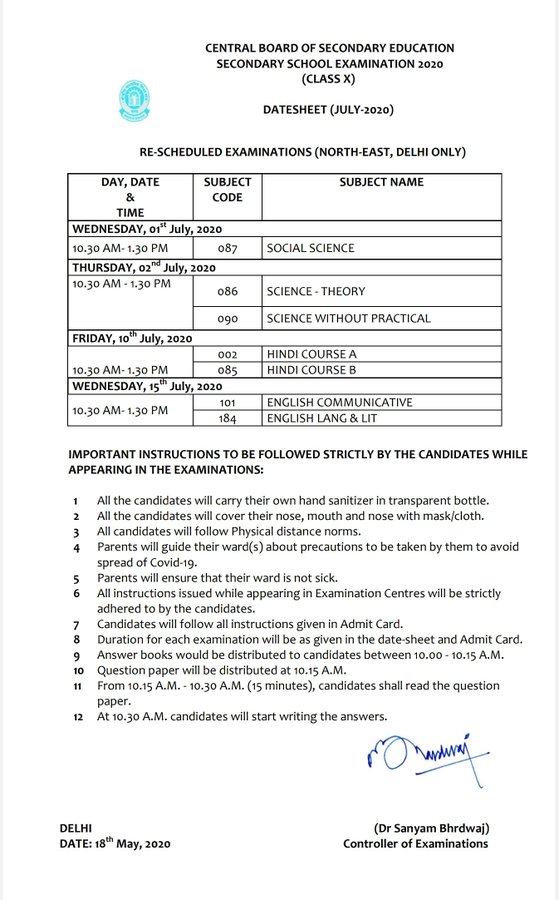
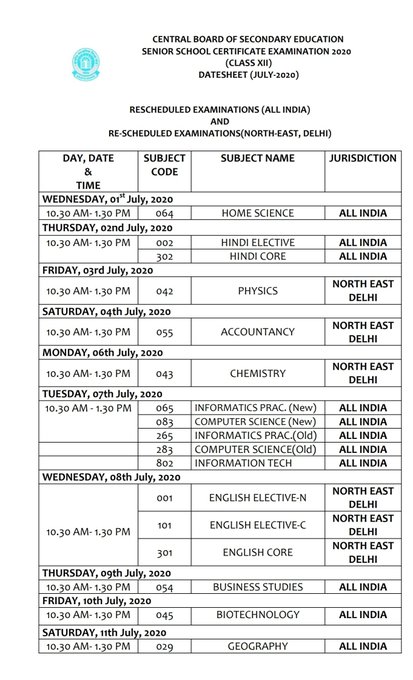
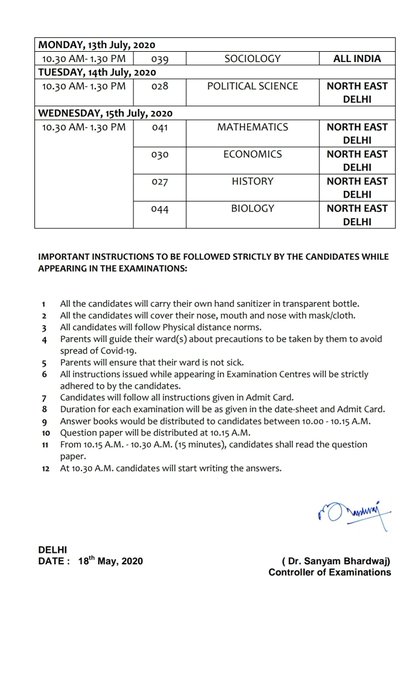
Dates of remaining examinations for class X and XII in 2020

Union Human Resource Development Minister Shri Ramesh Pokhriyal ‘Nishank’  announced the dates of remaining examinations of CBSE Class X and XII in New Delhi today. The Minister said that the examinations of Class X will be conducted for the students of North East Delhi only, while the exams of class XII will be held for students across the country including North-east Delhi. All examinations will be between 10:30 am to 1:30 pm.

Photo by Andrea Piacquadio on Pexels.com

View image on Twitter

Earlier during a webinar interaction with the students on May 5, Shri Pokhriyal  had said that the remaining exams of CBSE X and XII  will be conducted between July 1-15.

On this occasion Shri Pokhriyal  said that the ministry of HRD was fully committed to the fact that while announcing the exam dates, special care will  be taken that the students get plenty of time for exam preparation and now students will be able to concentrate on their preparations. The Minister added that apart from this we have also instructed CBSE to take care of social distancing while conducting examinations so that the health of students and teachers can be ensured. The Minister also extended his best wishes to the students for the examination.

Click here for class X exam date sheet 

Click here for class XII exam date sheet

Shekatkar Committee recommendations related to creating border infrastructure

Government has accepted and implemented three important recommendations of Committee of Experts (CoE) under the Chairmanship of Lt General D B Shekatkar (Retd) relating to border Infrastructure. These were related to speeding up road construction, leading to socio economic development in the border areas.

On the matter related to creating border infrastructure, the Government has implemented recommendation of CoE to outsource road construction work beyond optimal capacity of Border Roads Organisation (BRO). It has been made mandatory to adopt Engineering Procurement Contract (EPC) mode for execution of all works costing more than Rs 100 crore.

The other recommendation relating to introduction of modern construction plants, equipment and machinery has been implemented by delegating enhanced procurement powers from Rs 7.5 crore to Rs 100 crore to BRO, for domestic and foreign procurements. Border Roads has recently inducted Hot-Mix Plant 20/30 TPH for speedier laying of roads, remote operated hydraulic Rock Drills DC-400 R for hard rock cutting, a range of F-90 series of self-propelled snow-cutters/blowers for speedier snow clearance.

New Technology like blasting technology for precision blasting, use of Geo-Textiles for soil stabilisation, cementitious base for pavements, plastic coated aggregates for surfacing, is also being used to enhance the pace of construction. With the empowerment of field officers through enhanced delegation of financial and administrative powers, there has been significant improvement in faster financial closure of works.

The land acquisition and all statutory clearances like forest and environmental clearance are also made part of approval of Detailed Project Report (DPR). Further, with the adoption of EPC mode of execution, it is mandatory to award work only when 90 per cent of the statutory clearances have been obtained, implementing the recommendation of CoE regarding obtaining prior clearances before the commencement of the project.

25 NDRF teams deployed on ground to manage the situation

Prime Minister Shri Narendra Modi chaired a high-level meeting today to review the response measures against cyclone ‘Amphan’ developing in the Bay of Bengal.

Prime Minister took full stock of the situation and reviewed the response preparedness as well as the evacuation plan presented by the National Disaster Response Force (NDRF). During the presentation of the response plan, DG NDRF informed that 25 NDRF teams have been deployed on the ground while 12 others are ready in reserve. 24 other NDRF teams are also on standby in different parts of the country.

The meeting was also attended by Shri Amit Shah, Union Home Minister; Shri PK Sinha Principal Advisor to the Prime Minister; Shri Rajiv Gauba, Cabinet Secretary, besides other senior officers of Government of India. 

*****

Army medical COVID related assistance for Northeast and Jammu & Kashmir

Union Minister of State (Independent Charge) Development of North Eastern Region (DoNER), MoS PMO, Personnel, Public Grievances, Pensions, Atomic Energy and Space, Dr Jitendra Singh has lauded the Army medical COVID related assistance for Northeast and Jammu & Kashmir, and appreciated the Armed Forces Medical Services (AFMS) for responding to step in at the early stage of pandemic, in  order to supplement the diagnostic and treatment facilities in the initial phase of preparedness. 

In the context of Northeast, General Banerji briefed Dr Jitendra Singh about the latest developments and current status. He disclosed that while in Arunachal Pradesh, Military Hospital Tenga had 80 designated beds for COVID and 2 ICU beds, Military Hospital at Likabali has 82 designated beds for COVID and 2 ICU beds. Similarly, at Jorhat in Assam and Shillong in Meghalaya, Armed forces Medical Services had made available 110 and 247 designated COVID beds respectively, in addition to 10 and 4 ICU beds respectively.  

While receiving an update from the Director General, Armed Forces Medical Services (DG AFMS), Lt Gen Anup Banerji,  Dr Jitendra Singh had a special word of praise for the Army Command Hospital in Udhampur which had earmarked 200 designated beds for COVID cases and 6 beds in ICU for critical cases including civilian patients, in the  beginning itself. Similarly, he noted that the Army Hospital in Srinagar had also designated 124 beds and Army Hospital in Rajouri had designated 82 beds for COVID cases in order to supplement the facilities set up by Health authorities of the Union Territory government. In addition, the Command Hospital Udhampur was also providing diagnostic facilities right from the beginning, he added. 

Dr Jitendra Singh appreciated the proactive support in the initial stages of COVID pandemic which had also contributed in reducing the disease burden.  He also mentioned the quarantine  camps and isolation facilities set up by the Armed Forces Medical Sercvices. 

Director General AFMS informed the Minister that the number of such hospitals is being enhanced depending upon the situation and availability of equipment from suppliers. He assured the Minister that in future also, the number of beds will be increased depending upon the situation.

pro-active measures taken by India towards COVID-19

Dr. Harsh Vardhan, Union Minister of Health & Family Welfare participated in the 73rd World Health Assembly (WHA) through Video Conference, here today. India’s response on address of Director General, World Health Organization (WHO), delivered by Dr. Harsh Vardhan is as follows:

“Her Excellency Ms. Keva Bain, President of the World Health Assembly, Dr. Tedros, Director General of WHO & Excellencies,

At the very outset, I wish to express my deepest condolences at the loss of lives across the world due to COVID-19. I also take this opportunity to express my sincere gratitude for the efforts of those who are in the frontline of this battle.

We, in India, undertook the COVID-19 challenge with the highest level of political commitment. Our Hon’ble Prime Minister, Mr Narendra Modi, personally monitored the situation and ensured a pre-emptive, pro-active and graded response, leaving no stones unturned to contain the deadly virus from spreading.

India took all necessary steps well in time, including surveillance at points of entry, evacuation of nationals stranded overseas, massive community surveillance through robust disease surveillance network, strengthening of health infrastructure, capacity building of over two million frontline human resources, risk communication and community involvement. I think we did our best and we did well. We are learning and we are confident of doing better in the months to come. 

Excellencies, today there are compelling circumstances that have forced us all to meet virtually. The 73rd WHA is the first ever virtual health assembly, it is unprecedented, but it’s also perhaps the most important one ever; because as we sit and discuss here, the pandemic continues to kill thousands of people and also causing a deep global recession.

This is the time when humankind must come together. Today, I urge upon all Governments, industry and philanthropy to prioritise the long term and pool their resources, to ensure everyone benefits.

On our part, India is playing a key role in fostering bilateral and regional partnerships. Under our Prime Minister’s able leadership, India has supplied essential medicines to 123 nations as an expression of solidarity.

Therapeutics, diagnostics and vaccines for the whole world is the only way out of this pandemic. Global collaboration is paramount. Governments, industry and philanthropy must pool resources to pay for the risk, the research, manufacturing and distribution, but with the condition that the rewards should be available to everyone, regardless of where they have been developed.

Today, in the two-day deliberations, we should share our learnings from how each one of us has tackled this catastrophe since January, how we can support the financial or technical gaps that some of our member states may have and agree to continue R&D in an aggressive and collaborative way.

In congratulating all those who are striving to save humanity, we welcome efforts to make all International Institutions more reflective of 21st Century realities. India will always stand with such efforts to foster meaningful and broad-based change.

I close my speech today with a loud applause for all those across the world who are in the forefront of this battle against a deadly virus.

I stand here to honour the doctors, the nurses, the paramedics, the scientists, the journalists, the delivery boys, security staff, sanitation staff and the police personnel – the forgotten roles who are today playing ‘super humans’. They are our real heroes.

Many thanks for the opportunity to speak before this august gathering.”

Mega Boost to Cottage & Village Industries Sector

India has taken the first big step towards becoming Aatmanirbhar (self-reliant). Immediately after Prime Minister Shri Narendra Modi’s call for encouraging local products, Home Minister Shri Amit Shah has made it mandatory for all canteens and stores of paramilitary forces to sell only “Swadeshi” products procured from Khadi and Village Industries Commission (KVIC). The move will open great employment opportunities for farmers, unemployed youths and lakhs of people already engaged with cottage and village industries.

An order to this effect has been issued by the Ministry of Home Affairs on 15 May 2020 that will come into force from June 1, 2020. Once it is enforced, only Indian products procured from KVIC will be sold through Central Armed Police Forces (CAPF) canteens. The decision will also positively impact the production and sales of KVIC.

“The Khadi and Village industries Commission with 17 products has been registered with Kendriya Police Kalyan Bhandar (KPKB)…Now the Ministry of Home Affairs, Government of India, has decided that only swadeshi products will be sold through KPKB Bhandars w.e.f 1st June, 2020. In view of the above, all Master Bhandars may place their demands directly to KVIC,” the order read.

KVIC Chairman Shri. Vinai Kumar Saxena has lauded the decision of Home Minister saying this will provide a big boost to the cottage and village industries sector apart from the MSME units. “This decision will directly benefit lakhs of people engaged with manufacturing of various products of village industries.  With this order over 10 lakh personnel of the various paramilitary forces will be added to KVIC’s consumer base. As a goodwill gesture, the KVIC has also decided to supply products to CAPF canteens at a small margin of 3% as against the 20% margin in other cases,” Saxena said.

Notably, there are 20 master bhandars of these forces across the country with an annual turnover of over Rs 1800 crore. The KVIC is likely to get major share of the total turnover. At present, KVIC has registered 17 products for supply to CAPF canteens. These include khadi national flag, eatables like honey, pickles, edible oils, agarbatti, papad, amla products,  cotton towels etc Further, a list of 63 new products like Khadi clothes,  woollen, cosmetics like herbal oil, shampoo, soaps, face wash, tea, coffee and others has been submitted to CAPF canteens to be included in the supply list at these stores.

Quality education and learning

In a discussion today at work about quality processes I remembered the model of education which has been successful for Athabasca university in Canada. Their enrolments have increased many fold because people can enrol for gap courses to complete qualifications they are taking at other universities etc.
Also students can enrol any time and at any stage of a course. To enable this flexible learning, Athabasca has a well resourced production team which goes through a strict quality control process to create high quality learning resources for distance students. The team comprises designers – educational and graphic, technical staff, editors, content experts, a project manager and others.
Once courses are developed for flexible/online modes, student support is well sychronised and tutors are employed to teach the courses which academics had a hand in developing as content experts. The academic staff merely oversee their courses and spend their time conducting research which increases the reputation of the university. Plus they are spreading the word and helping others to produce quality online learning.
For example, several staff have written a book on the Theory and Practice of Online Learning and it is freely available under a Creative Commons licence at: http://cde.athabascau.ca/online_book/ The book is edited by Terry Anderson and Fathi Elloumi (2003).
It provides an overview of educational theory, strategic approaches and infrastructure, technologies, development of courses, team projects, copyright, teaching, support for discussions and learners, library support, quality.
I guess this model gauges quality by the enrolment rates and the reputation of the university. Academic staff become well known because their ideas and research is of a high standard and they get time to undertake research and present and write scholarly articles. This means they are up to date with current trends and in turn this raises the reputation of the university which then attracts students.
The research reputation of an institution does influence the status of institutions in the international arena and I guess this is what has happened with places such as Harvard, Cambridge, Stanford and Oxford. All you need is a few high status researchers and the place goes up in lights…and of course the ability to attract the rich and famous

More stuff about quality

This picture shows the damage done to the road when the Water of the Leith got out of control in the May 2006 floods. I took this on a sunday walk with the dogs. This illustrates for me that \”Quality is about preventing damage in education,not about fencing it off afterwards.\”

This week and last we had two visiting speakers which focussed me in on quality again. John Milne from Massey university ran a workshop on eLearning Guidelines (an eLearning Collaborative development funded project). All NZ tertiary educators are invited to contribute to the guidelines and develop their own for practical use in their institutions through a wiki accessible from the eLearn website.

In response to a scenario we developed with a student who joined the workshop, we developed a couple of new and very important guidelines, and found several existing ones which were relevant.

The scenario was:
An off-campus multimedia student is using blended methods (mainly eLearning)in a course. The student has a dial-up connection at home and has difficulty getting on-campus access to the computers and software. Not all computers have the necessary tools/software. The student also doesn\’t have them at home and no access from home. The students are given training in using some software in the first week, then no further training and little support from the lecturer. There is no after hours support.

Some people in the workshop found the session a bit wishy washy, but it was a collaborative and consultative exercise which doesn\’t suit everyone. Some people just want to be told. Guidelines are guidelines not standards and as such need ongoing discussion be dynamic and continually evolving.

The other speaker was Professor Fred Lockwood, a very experienced academic in the field of open and distacne learning. I went to hear his talk at the university about quality and distance education. I recorded part of the talk and had his permission to use it, though he did seem bemused that anyone would want to listen to it.

In his talk he made several interesting points in the way of questions about what we do in distance/flexible learning. Reading between the lines and through his humour it was clear to me that he thought the university was deficient in many areas – he had just conducted a review of their distance programmes and was helping them with a distance learning strategy.

The points which I identified with were:
1. Learner needs and how important it was to pay attention to them.
2. The need to conduct developmental testing with realstudents and reward them with free fees for such courses, with new flexibly offered courses. Even something as a textbook recommended by a lecturer can be unsuitable in the opinion of the students. This is rarely done at OP.
3. Too much information was a common problem so that students who were expecting to study for 5 hrs a week ended up getting increasingly more stuff to read and hand in until they could end up studying well over the 5 hrs per week. In Fred\’s words, \”good value for money getting 35 hrs a week of study…\”

I brought Fred back to OP to speak with a small group (in the Council room with tea) including some managers and people from EDC and other parts of OP which was good. We had an informal discussion and some good points came out e.g. open courseware. Looking out for the learners – part-time, lifelong learners etc. It was a useful session but I wish I\’d asked him to chat about developmental testing so the managers could have got the message.

Fred has also asked me to contact him about putting together a book proposal for something from NZ and across countries too for the Open and Flexible Learning series. Not sure whn I\’ll have time to do anything, but it would be good to coordinate something and collaborate to write a chapter.

Quality is very important in not only attracting students but also in helping with retention. Quality starts before students enrol (18% lost before they \”register\”) and should continue all the way through with the resources offered, access, teacher support/facilitation and should meet learners\’ needs.

Unfortunately in the model we appear to be adopting, online and product is being pushed which is shoving us along the inflexible rather than the flexible path. If we were truly to meet learner needs, we would adopt a truly flexible model where learners negotiate their content and their assessments and the way they learn. We are trying this to some extent with the Design course.

Which Healthcare Management Concentration Should I Pursue?

The first step to a rewarding, successful healthcare management career is choosing the right concentration.

Healthcare management is becoming an increasingly attractive career option for aspiring healthcare professionals. Not only does a degree in healthcare management offer strong job security, it’s also incredibly versatile, preparing graduates to work in a variety of healthcare settings, from hospitals to healthcare consulting. Learn about what healthcare management consists of from an experienced professional in the industry.
But, with so many different career possibilities to choose from, how do you know which is right for you?
The first step to a rewarding, successful healthcare management career is choosing the right concentration. Consider how each of these two core knowledge areas can help prepare you for the healthcare job you want:

1. Leadership

The healthcare landscape is constantly evolving, and healthcare managers are tasked with helping their organizations keep up with the pace of change. If you’re a forward-thinking problem solver, a leadership concentration might be the right path for you.
In order to lead their companies into the future, healthcare management professionals must possess a strong mix of critical thinking, decision-making and communication skills. In addition to helping organizations meet the growing demand for healthcare services, today’s healthcare managers might oversee how new information systems are integrated into an organization’s existing processes, or lead initiatives designed to improve employee education and enhance the quality of patient care.
Students who pursue a leadership track in their healthcare management program learn the fundamentals of healthcare management from a business standpoint, from change management to administrative law. Graduates can go on to pursue careers as a hospital administrator, medical practice manager, health and social service manager, and much more.

2. Managed Care

If you’re interested in helping to expand access to healthcare services, you might find yourself at home in the managed care field.
In today’s health insurance market, the majority of insurance providers and healthcare organizations provide some degree of managed care, which is a means of delivering healthcare services (such as insurance) in ways that improve quality and control costs. Managed care encompasses more than just insurance, though – you can also find managed care roles in public health, working to fulfill community healthcare needs.
Pursuing a concentration in managed care gives students an advantage in the job market for management and leadership roles at health insurance companies, managed care providers, hospitals, and more.

What you can do with a degree in healthcare management

Jobs in healthcare management range from recordkeeping and secretarial roles to executive level leadership positions in a medical institution. Your first step to achieving your goals is to get the education you need to become qualified. Learn more about how much you can make in healthcare management and the job outlook in coming years from the Bureau of Labor Statistics.
No matter where your interests lie, there’s a healthcare management position for you. Building specialized knowledge through a career-focused healthcare degree program is the key to finding the role that’s right for you and ensuring your long-term career success.

Publishing 3.0 – A new model for independent educational publishing

My New Years resolution this year was to start work on a series of ebooks for iPads, e-readers and other digital devices. This has been my ambition since I published my first book Web 2.0 Tools for Teachers back in 2009, but I’ve never felt that the time, the technology or the market was at the right place.


Significant changes over the last couple of years though have led me to believe that now is the time to look at a new model of ELT publishing, at least for the realm of teacher development books.

The changes I mention above include

  • A proliferation of increasingly low cost e-reading devices and tablets.
  • The development of powerful free software and applications such as iBooks Author for the development of media rich ebooks.
  • The combination of these applications with secure and reliable marketing platforms, such as Lulu and iBookStore.
  • The development of crowd-funding platforms such as KickStarter and Indigogo.


I believe that the combination of these developments is now enabling individual teachers to write develop and launch their own products to the market on a commercially competitive basis with established publishers.

So why is this a good thing?
Well anyone who has ever approached a publisher with an idea for a book will know how difficult it can be to get it accepted. The established publishers are, by necessity, cautious about taking on new, innovative or risky projects. Producing and distributing paper-based books is a hugely expensive endeavor and in the case of teacher development books, the returns are likely to be small for both the publisher and the writer.

The changes I mention above, however, have the potential to liberate writers from the established publishing process and give them the freedom to develop their own projects and products independently.

  • The proliferation of low cost mobile devices such as e-readers, tablets and iPads provides a really useful and accessible medium on which to publish teacher development materials. Instead of having your books at home on the bookshelf you can now carry them around with you on your device so they are on hand at the moment of need.
  • These devices and the applications used to develop content for them are capable of providing a media rich experience with colour interactive images, audio, video and a range of interactive learning apps, none of which is possible in a traditional paper-based book.
  • The combination of these applications with established secure marketing platforms means that writers with the commitment to see their projects through to completion can easily market them internationally and actually get a reasonable financial return on the work they put in.
  • Crowd-funding platforms like KickStarter and Indigogo enable writers to raise the funds they need to develop good quality professional products that the market wants.


I’ve put the crowd-funding platform at the end of my list, but really it should be at the beginning, because crowd-funding doesn’t just supply the money to launch the product, it also acts as a market research tool to see if there really is a market for the product. If the people for whom the product is intended aren’t willing to invest in it to get it created, then it’s likely that there isn’t really a viable market for this product.

So this brings me back to where I started with my New Years resolution. I have launched my own crowd-funding project to try to create the first in a series of ebooks in a series that I intend to call The Digital Classroom. The first of these will focus on the use of online video as a tool for learning.

You can find out more about this project by following this link Digital Classrooms – Online Video or watching the video below.


If you think this is a product you would be interested in having them please do support it buy either buying and advance copy of the book or by sharing the link with others you think may be interested.

You can also get an idea of the kind of content the book will cover and even contribute your ideas for what the book should contain, using the crowd-sourcing questionnaire below. Just add your ideas and vote for the things you would most like included in the book. That way you can ensure that I produce the book that you need to help support and develop your teaching.


powered by tricider

You can also follow the project on Facebook by going to The Digital Classroom and clicking on \’Like\’.

I hope you find the project interesting and that this post gets you started thinking about how you can produce your own book too.