5 Steps to Become a Software Engineer

Interested in pursuing a career a fast-growing industry? Follow these five steps to become a software engineer in the technology field.

Software engineers, often referred to as software developers, design innovative software for businesses and clients. From a personal banking app to a company’s project management workflow system, software engineers are behind many of the essential apps and programs that make business and daily life more efficient.

Companies rely on software engineers to create better online experiences for their employees and customers. The Bureau of Labor Statistics predicts that employment for software engineers will grow by 24 percent between 2016 and 2026, adding as many as 302,500 new jobs.

Due to its reputation as one of the fastest-growing technology jobs today, software development was ranked as the #1 Best Technology Job in America for 2018 by U.S. News & World Report. Discover how much software developers make on average across the U.S. and what it takes to succeed in this high-demand field.

Interested in pursuing a career in this fast-growing field? Follow these five steps to become a software engineer:

1. Enroll in a software development program

The first step to becoming a software engineer is to enroll in a software development degree program. You don’t need to have a background in technology to pursue this degree path – most software development programs begin with foundational courses to help you learn common coding languages and basic programming skills, followed by more advanced courses to prepare you for entry-level roles in software development.

A bachelor’s degree is a requirement for most full-time software engineer positions. However, some students may choose to start out with an associate degree in software development. This path allows you to pursue entry-level information technology roles and gain experience as you work towards your bachelor’s degree.

2. Gain internship experience

Internships allow you to get hands-on experience in your field and put your skills and knowledge from class into practice. They are also great resume-builders and can be instrumental in helping you land your first job after college. Many aspiring software developers will complete an internship to position themselves for competitive entry-level software development jobs.

Working at a few different internships throughout your college career can also help you discover the types of companies you would like to work for after graduation. Software engineers can work in a variety of industries and business settings – such as healthcare, banking and marketing – so it’s important to explore which environment best suits your personal career interests.

3. Choose your specialty

Software engineers will typically specialize in computer applications software or computer systems software. Applications software includes word processors, games and other computer applications that allow users to perform a specific task. Computer systems software includes the computer operating systems, such as file management tools, system utilities and debuggers. The user does not typically interact with computer systems software.

bachelor’s degree software development program will prepare you for roles in either specialty and your internship experiences can help you determine which path you are most interested in pursuing. Both specialties require creativity, as well as advanced problem-solving and critical thinking skills.

4. Pursue industry certifications

A software development degree program will also prepare you to sit for industry certifications, such as the Oracle Certified Java Programmer or the Microsoft Certified Solutions Developer, which are valuable differentiators for entry-level candidates. Pursuing these certifications can help you advance your software development career and allow you to pursue roles with additional responsibility and specialization.

5. Continue your education

With experience, software engineers can advance to information technology project managers who oversee the software development process. A master’s degree may be required for advanced roles. Software engineers can pursue an MBA in Technology Management to develop the leadership and management skills necessary to advance their careers.

What Do Computer Programmers Do?

Programmers write code for computer programs and mobile applications. They also are involved in maintaining, debugging and troubleshooting systems.

The job of a computer programmer is vitally important in today’s digital-focused economy, which is why the number of openings in this field continues to grow.

Programmers write code for computer programs and mobile applications. They also are involved in maintaining, debugging and troubleshooting systems and software to ensure that everything is running smoothly.

Programming skills are essential for many technology disciplines, but are in especially high demand for software and web development roles. According to the US Bureau of Labor Statistics (BLS), web development jobs are projected to grow by as much as 15% over the 2016-2026 period, adding another 24,400 new jobs.

If you’re looking for an entry-level technology job with ample opportunities for career advancement and specialization, computer programming could be the right path for you.

What do computer programmers do?

On a typical day, a computer programmer can be involved in many different coding projects. Daily duties might include:

  1. Writing and testing code for new programs. Computer programmers work closely with web and software developers to write code for new mobile applications or computer programs. In some cases, programmers might have a similar role to web designers, creating the look, feel and functionality of a new software program. Writing new code often involves a lot of trial and error. Computer programmers have strong critical thinking and problem-solving skills, and enjoy using logic to solve complex problems.
  2. Updating existing programs. Programmers also create and install updates for existing software programs. An update might include a bug fix, or enhanced functionality to improve the user experience. Depending on the complexity of the update, these projects can take anywhere from a few days to several months.
  3. Identifying and correcting coding errors. On a daily basis, computer programmers might assist in troubleshooting parts of a website or computer program that are not functioning correctly. Often, problems are a result of an error in the code, and a programmer can help identify and correct the mistake quickly.
  4. Rewriting programs for different operating systems. Often, programmers have to rewrite code in a different languages, so that programs and applications can be compatible with different operating systems. For example, Windows and OS X programs are coded differently. Some programmers are trained to write new applications in SaaS code, which works across both operating systems.
  5. Secure programs against cybersecurity threats. Many computer programmers work in the cybersecurity field, helping to identify malicious software and fix software that could be vulnerable to potential hacks. Additionally, programmers can write code that prevents security breaches and data leaks. As the number and severity of cyber-attacks increases, demand for information security experts continues to rise. In fact, the Bureau of Labor Statistics (BLS) predicts that employment for information security analysts will increase by 28% through 2026, adding 28,500 new jobs.

How much do computer programmers make?

The median salary for computer programmers in 2018 was $84,280, with the highest-paid 10% earning more than $134,630, according to the BLS data. Keep in mind this is not an entry-level wage and you will need to work towards this level of pay after graduating with a degree and earning your first job. Discover the average computer programmer salary by state to determine a closer estimate in your region.

An entry-level career in computer programming offers upward mobility into more advanced and higher-paying roles. In fact, programming skills are the foundation for almost any top-ranked technology job today, such as: 

  • Computer Systems Analyst
  • Database Administrator
  • Security Analyst
  • Hardware Engineer
  • Software Developer
  • Web Designer

What are the benefits of a programming career?

Programming is a valuable skill set that may allow you to pursue opportunities in a variety of fields, including finance, healthcare, graphic design or digital marketing. Programming jobs are growing 12% faster than the average for all occupations, according to recent findings by job market research firm BurningGlass.

Many programmers also enjoy perks such as flexible hours and the option to work remotely, according to the BLS.

How do I become a computer programmer?

A bachelor’s degree in computer programming can prepare you for a broad range of entry-level programming positions. Herzing University’s computer programming bachelor degree program can be completed online in as little as 36 months and provides students with practical training in essential technology skills, such as:

  • Advanced web development
  • Object-oriented programming
  • Software development and testing
  • Mobile applications development 
  • Data warehousing

Continued learning is important for programmers because coding languages are constantly changing and evolving. Many programming professionals will pursue additional certification in specific coding languages, such as C++ or JavaScript. Some technology companies might even have their own vendor-specific coding languages, and require their employees to become certified in those additional languages as well.

What are my opportunities for advancement?

Achieving a masters-level education in a specialized area such as technology management can help programmers advance into management and leadership roles, like IT manager or computer systems analyst. Herzing’s computer programming degree program offers a dual credit option, allowing students to earn up to 12 credits toward an MBA as an undergraduate, saving time and money on both degrees.

Learn more about our technology degree paths and find out how you can get started on your computer programming career today.

How to Write a College Paper

Writing a research paper can be challenging if you aren’t a strong writer. Here are some tips on how to start writing a college paper.

Writing is an important skill for many professions, and long-form writing assignments are just one way your classes can help prepare you for your career. In addition to testing your writing ability, writing assignments allow you to showcase your critical thinking, research and analysis skills, which are also important for your career development.

However, writing a research paper can be challenging if you aren’t a strong writer and don’t really enjoy it. Getting started can be the most difficult part, but it’s important not to procrastinate if you want to get the best grade possible.

Here are some tips for tackling college writing assignments:

1. Do your research

The foundation of any good college essay is research. Fortunately, we live in the information age where all the resources you need are just a few clicks away. In addition to using your course materials and conducting your own online research, you should also take advantage of your school library to find academic research on your topic. All Herzing students have free online access to dozens of databases where you can find scholarly journals, magazine and newspaper archives, books, transcripts, multimedia and more to help with your research.

Don’t be afraid to ask a librarian for help if you’re not sure where to start. Professors often work with librarians to curate resources for specific assignments and research projects, so there might already be a selection of texts set aside for you to look at. Librarians are also available via phone, email and chat for online students who need help navigating the databases.

As you conduct your research, it is very important to document all the resources that you use. If you are taking notes, be sure to write down the name of the source and the page number, as you will need to cite these in your paper later. Copying someone else’s words without citing them is considered plagiarism, which is definitely something you want to avoid!

2. Craft your argument

Most college essays will require you to develop an argument relating to your topic. As you conduct your research, start thinking about what approach you would like to take with your essay. Ask yourself: 

  • What do I want my readers to learn from my paper?
  • What do I want them to understand about my topic?

If you are really stuck, it might help to read other academic essays on the topic. NEVER copy these examples, but you can take notes on how the writer formed their argument, the tone they used, and the examples they cited to support their points. You can use this for inspiration on how to form your own paper without copying anything they have written. For example, maybe you disagree with a prominent author’s point of view on your subject. This can be the basis for your own argument, provided you have the examples you need to support your point.

3. Make a tentative outline

Staring at a blank word document is one of the universal banes of writing. It can be hard to get started if you don’t have a clear direction for your paper in mind. That’s why you should create an outline. Outlines help you develop a logical, coherent structure for your paper, making it easier to translate your ideas into words and sentences. Here’s an example of an outline you might write if your essay is about self-driving vehicles:

  • Reasons why self-driving cars are a good idea
  • Reasons why some people may be against self-driving cars
  • Technological challenges to overcome before widespread use
  • Advances that have already been made
  • Why this is an important part of the future of transportation

You’ll notice that this outline is simple. You can make your outline as detailed as you want, but it helps to define the general framework for your argument first. For more tips on writing the perfect outline, check out this blog post.

4. Just write!

Once you type out your outline, it’s time to start writing. Fill in information in the form of paragraphs for each of your bullet points. You might find that you still need to do some research, or you might decide that you don’t need one of your points after all. That’s fine, and you should free to change your outline as you go.

Even with an outline, it can be very difficult to begin actually writing. You might be asking yourself:

  • How should I write this?
  • What tone should I use?
  • Is this language okay?

However, hovering over these questions too long can hamper your creative process. The best thing to do is just start writing. Don’t worry about how good or bad it is, as you can always revise later. Getting the basic flow of your argument down is most important.

5. Write an introduction and conclusion

Some people like to start by writing the introduction, but others prefer to save it for the end, especially because your argument can evolve as you write. Introductions are a vital part of an essay, and they should do more than give a brief overview of the paper. You want to create a strong hook for your reader so they want to keep going.

Example Hook: “Even though there are still some major manufacturing challenges to overcome, self-driving cars will become a vital source of transportation in the next 20 years.”

This introduction makes it clear that we will discuss some of the issues with self-driving cars and the arguments against them, but also provide solid reasoning for why they are part of the future of transportation. In the conclusion, you can reiterate those points to explain the reasoning for your argument, as well as why it is important to discuss this topic. Check out this blog post for more tips on writing a strong introduction.

6. Revise

No matter how good of a writer you are, you need to edit and proof your work. Make sure you leave yourself enough time for revisions, too. It’s a good idea to try to have your first draft done at least a week in advance so that you can make any necessary edits before the paper is due.

If writing is not one of your strengths, consider setting up an appointment with a Writing Center tutor to revise your first draft. Your tutor can help you identify and fix any logical or structural problems, as well as common spelling and grammar mistakes that could affect your grade.

Once all of this is done, congrats! You’ve officially written a college paper. Be sure to review your teacher’s critiques when you receive your grade, as they will help you perform better on future assignments. If you need additional help or want to focus on developing your writing skills over time, reach out to the Writing Center to set up a regular appointment.

CBSE on Cybersecurity for students, 21st Century Skills and Principals’

Union Human Resource Development Minister Shri Ramesh Pokhriyal ‘Nishank’ today released through video conferencing three handbooks prepared by the Central Board of Secondary Education (CBSE) on measures taken by the Board to adopt value-based global standards of education, in New Delhi today.

cyber security

Releasing  these three booklets, the Union Minister informed that the Handbook  ‘Cyber safety-A Handbook for Students of Secondary & Senior Secondary Schools’ ‘ is prepared to  create awareness about cyber security among the students  from class IX to XII. He said that the booklet will be a perfect guide for  teenagers who use internet and other digital platforms frequently may face variety of security risks.

Shri Pokhriyal further informed that through the booklet  ‘In Pursuit of Excellence- A Handbook for Principals’,  the principals of schools will be made aware of the Board’s systems and other useful information. It will ensure  better coordination between schools and CBSE administration. He added that the  third booklet  is ’21st Century Skills : A Handbook’ through which CBSE will make everyone  aware of 21st century skills and motivate them to use them in their daily life.

Shri Pokhriyal lauded the efforts of CBSE for preparing the booklets to benefit all the stakeholders under the entire education system of the country. The Minister hoped that these booklets will help in developing better understanding of the cybersecurity, improving efficiency,  gaining skills and leadership experience.

Click here to see the link of Cyber ​​Security Handbook : http://cbseacademic.nic.in/web_material/Manuals/Cyber_Safety_Manual.pdf

Click here to see the link of Prinicipal Handbook : http://cbseacademic.nic.in/web_material/Manuals/Principals_Handbook.pdf

Click here to see the link of  21st Century Skills Handbook : http://cbseacademic.nic.in/web_material/Manuals/21st_Century_Skill_Handbook.pdf

*****

Examinations will be announced by UPSC after 5th June meeting

The Union Public Service Commission held a special meeting today to review the situation after the third phase of the nation-wide restrictions, due to COVID-19. Taking notice of the extension of several restrictions, the Commission decided that it will not be possible to resume examinations and interviews, for the present.

exam alert from Eduindex News

The Commission, however, took note of the progressive relaxations being announced by the Central Government and various States and has decided to review the situation once more, after the fourth period of lockdown. With a view to giving some clarity to candidates of various examinations and interviews, which have been deferred over the last two months, the Commission will issue a revised schedule of examinations in its next meeting to be held on June 5, 2020. Details of the new calendar of examinations will be published on the UPSC website, after the Commission’s meeting on June 5, 2020.

                                      <><><><><>

Government Trusts Industry Fully and Comprehensively: CII

Union Minister of Finance and Corporate Affairs Smt Nirmala Sitharaman has stressed that the Government trusts industry fully and comprehensively. She urged industry to plan for engaging labour with a more professional approach and engage in skilling. “Mindsets in industry need to set examples in handling workers in a way that is acceptable to all,” stated the Finance Minister.

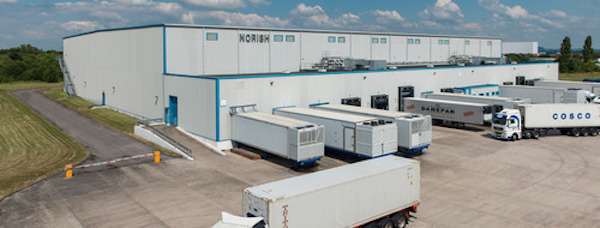
Cold Chain Infrastructure

The Finance Minister was speaking at an interaction through video conferencing with Confederation of Indian Industry (CII) which is marking 125 years of its existence in 2020. Felicitating CII on this milestone, Smt Sitharaman said that CII has played a critical role in the country and its members have played strong roles in their own sectors. She exhorted CII to stand out as an exemplar in the policymaking process.

The interaction had the participation of Shri Ajay Bhushan Pandey, Finance Secretary, Ministry of Finance; Shri Injeti Srinivas, Secretary, MCA, Shri Debasish Panda, Secretary, Department of Financial Service, Dr. T. V. Somanathan, Secretary, Department of Expenditure, Shri Tuhin Kanta Pandey, Secretary, Department of Investment and Public Asset Management, Shri Tarun Bajaj, Secretary, Department of Economic Affairs and Dr. Krishnamurthy Subramanian, Chief Economic Adviser.

Industry needs to reset its relations with workers and plan for labour including unskilled labour, said the Finance Minister. She requested industry to consider a professional manner in the terms for engaging unskilled workers and work towards the skilling of employees at all levels.

On a question regarding the MSME sector, Smt Sitharaman stated that before Covid19 as well, clear handholding was announced for MSME and NBFCs to help enterprises in rural areas. She stated that credit availability for additional term loan and working capital loan was intended to reach all MSME, and hence the Government has provided a guarantee to banks to overcome hesitation in lending. “When Government provides full and partial guarantees with a special purpose vehicle post-lockdown, the banks

hesitation has been addressed,” she said.

Responding to a question on agriculture, the Finance Minister mentioned that comprehensive reforms have been announced. Three model Acts have been shared with State governments. She stated that many states have commenced on land reforms.

The National Infrastructure Pipeline will be given a big push in order to create demand with a multiplier effect, stressed the Finance Minister on a question related to infrastructure. “Large projects will be frontloaded and this will bring in positive energy and sentiments,” said Smt Sitharaman.

The Finance Minister noted that there has been a fair and open interaction on GST which has come to the bottom quarter in inflows. Discussions are underway on this.

She agreed that infusion of liquidity in the power sector of Rs 90,000 crore would be fast-tracked.

Concerns that large industry too is facing a lot of stress, particularly in certain sectors such as tourism, automotives and aviation were also discussed. Discussions need to be undertaken to protect jobs, increase demand, and ensure survival of large businesses, industry requested.

Mr Chandrajit Banerjee, Director General, CII noted that the new definition of MSME has been well received by them as brought out in a CII survey.

Online Master’s Programme in Hindi of IGNOU

Union HRD Minister Shri Ramesh Pokhriyal ‘Nishank’ launched IGNOU’s Online Programme, MA (Hindi) through Facebook Live session today. Speaking on the occasion the Minister said that this would strengthen our “Padhe India Online” initiative and commended IGNOU’s role in promoting online education. He stressed on the role Hindi language plays not in India but in other countries including Mauritius, Fiji, Surinam etc.,

The Minister also said that the initiatives like National Digital Library (NDL), Swayam, Swayam Prabha, Diksha among other platforms are providing digital education to lakhs of learners across India and IGNOU’s step in the same direction will give impetus to this. He reiterated government’s commitment to promoting online education to reach the unreached with affordable education and IGNOU’s part cannot be overemphasized, he added.

Prof. Nageshwar Rao, VC IGNOU gave the introduction of the other online programmes launched by IGNOU and also briefed the minister of the other initiatives taken by the University in the online space for higher education.

Prof. Satyakam, Pro-VC IGNOU said that MA Hindi online programme would not have been possible without the guidance of the the Minister and his constant encouragement. He said that it gives him and his team great pleasure that our education minister is a great proponent of Hindi and its literature.

Apart from MA in Hindi, the university has also launched programmes in MA in Gandhi and Peace Studies, BA in Tourism Studies, certificate course in Arabic, certificate in information technology, certificate programme in Library and Information Science.

IGNOU offers the online courses through its portal www.iop.ignouonline.ac.in. The online programme will include video and audio lectures, tutorials etc. which will be available at a click on the website.

The session was broadcast live through IGNOU’s Gyan Darshan TV Channel, Gyan Dhara, and Facebook page.

******

DoPT exempts pregnant women officials and staff members from attending office

Department of Personnel & Training (DoPT) has exempted pregnant women officials and staff members from attending office. This was disclosed here today by Union Minister of State (Independent Charge) Development of North Eastern Region (DoNER), MoS PMO, Personnel, Public Grievances & Pensions, Atomic Energy and Space, Dr Jitendra Singh. He said, a circular to this effect has been issued and is expected to be followed by different Ministries/Departments as well as State/Union Territory governments.

Yojana
Yojana

Dr Jitendra Singh said, pregnant women employees who are not already on maternity leave will also be exempted from attending office. Persons with disabilities are also to be given similar exemption from attending office.

The latest circular issued by the DoPT also states that Government servants who have underlying Co-morbidities and were undergoing treatment for these ailments before the lockdown, may, as far as possible, be exempted upon production of medical prescription from treating physician as per the CGHS/CS (MA) Rules, as applicable.

What is important, is to strictly observe staggered timings for the arrival and departure of the officers and the staff. In order to avoid unnecessary crowding, all the Heads of Departments have been advised to ensure three sets of timings. These would be 9 AM to 5 PM, 9:30 AM to 6 PM and 10 AM to 6:30 PM respectively.

While officers of the level of Deputy Secretary and above are expected to attend office on all working days, the officers and staff below the level of Deputy Secretary will attend office with 50% attendance every alternative day and those not attending the office should work from home and remain available on telephone and electronically.

Dr.Jitendra Singh appreciated the staff in the Ministry of Personnel for having continued to work with full commitment during the entire phase of lockdown. In fact, he said, some of the staff members were working from home even during the weekends which normally does not happen when the offices are closed.

Every care has been taken to ensure that while offices continue to function, at the same time, the welfare and safety of officials is not overlooked, said Dr Jitendra Singh.

Pradhan Mantri Matsya Sampada Yojana for boosting fisheries sector

The Cabinet in its meeting held today has approved the “Pradhan Mantri Matsya Sampada Yojana – A scheme to bring about Blue Revolution through sustainable and responsible development of fisheries sector in India”with highest ever investment of Rs. 20050 crores in fisheries sector comprising of Central share of Rs. 9407 crore, State share of Rs 4880 crore and Beneficiaries contribution of Rs. 5763 crore. PMMSY will be implemented over a period of 5 years from FY 2020-21 to FY 2024-25 in all States/Union Territories.

Aims and objectives of PMMSY

  1. Harnessing of fisheries potential in a sustainable, responsible, inclusive and equitable manner
  2. Enhancing of fish production and productivity through expansion, intensification, diversification and productive utilization of land and water
  3. Modernizing and strengthening of value chain – post-harvest management and quality improvement
  4. Doubling fishers and fish farmers incomes and generation of employment
  5. Enhancing contribution to Agriculture GVA and exports 
  6. Social, physical and economic security for fishers and fish farmers
  7. Robust fisheries management and regulatory framework

Background

            Fisheries and aquaculture are an important source of food, nutrition, employment and income in India. The sector provides livelihood to more than 20 million fishers and fish farmers at the primary level and twice the number along the value chain. Fish being an affordable and rich source of animal protein, is one of the healthiest options to mitigate hunger and malnutrition.

            The Gross Value Added (GVA) of fisheries sector in the national economy during 2018-19 stood at Rs 2,12,915 crores (current basic prices) which constituted 1.24% of the total National GVA and 7.28% share of Agricultural GVA. The sector has immense potential to double the fishers and fish farmers’ incomes as envisioned by government and usher in economic prosperity.

            Fisheries sector in India has shown impressive growth with an average annual growth rate of 10.88% during the year from 2014-15 to 2018-19. The fish production in India has registered an average annual growth of 7.53% during last 5 years and stood at an all-time high of 137.58 lakh metric tons during 2018-19. The export of marine products stood at 13.93 lakh metric tons and valued at Rs.46,589 crores (USD 6.73 billion) during 2018-19.

            Foreseeing the immense potential for development of fisheries and for providing focused attention to the sector, the Government in its Union Budget, 2019-20 has announced a new scheme, the Pradhan Mantri Matsya Sampada Yojana (PMMSY).

            The scheme intends to address critical gaps in fish production and productivity, quality, technology, post-harvest infrastructure and management, modernization and strengthening of value chain, traceability, establishing a robust fisheries management framework and fishers’ welfare. It would also address issues like low productivity in inland Aquaculture, disease, sustainability of marine fisheries, sanitary and phyto-sanitary matters that impact the competitiveness of India’s exports along with global bench marking.  

Implementation strategy

  1. The PMMSY will be implemented as an umbrella scheme with two separate Components namely (a) Central Sector Scheme (CS) and (b) Centrally Sponsored Scheme (CSS).
  1. Under the Central Sector Scheme Component an amount of Rs. 1720 crores has been earmarked. Under the Centrally Sponsored Scheme (CSS) Component, an investment of Rs. 18330 crores has been envisaged, which in turn is segregated into Non-beneficiary oriented and Beneficiary orientated sub-components/activities under the following three broad heads:
  1. Enhancement of Production and Productivity
  2. Infrastructure and Post-harvest Management 
  3. Fisheries Management and Regulatory Framework
  1. Majority of the activities under the Scheme would be implemented with active participation of States/UTs. A well-structured implementation framework would be established for effective planning and implementation of PMMSY. This inter-alia includes creation of State Programme Units in all States/UTs & District Programme Units and Sub-District Programme Unit in high fisheries potential districts.
  1. For optimal outcomes, ‘Cluster or area-based approach’ would be followed with requisite forward and backward linkages and end to end solutions. Suitable linkages and convergence will be fostered with other centre and state government schemes wherever feasible.
  1. Thrust will be given for infusing new and emerging technologies like Re-circulatory Aquaculture Systems, Biofloc, Aquaponics, Cage Cultivation etc. to enhance production and productivity, quality, productive utilization of waste lands and water for Aquaculture.
  1. Special focus on Coldwater fisheries development and expansion of Aquaculture in Brackish Water and Saline Areas.
  1. Activities like Mariculture, Seaweed cultivation and Ornamental Fisheries having potential to generate huge employment will be promoted.
  1. Focused attention would be given for fisheries development in Jammu and Kashmir, Ladakh, Islands, Northeast, and Aspirational Districts through area specific development plans.
  1. PMMSY envisages promotion of high value species, establishing a national network of Brood Banks for all commercially important species, Genetic improvement and establishing Nucleus Breeding Center for self-reliance in Shrimp Brood stock, organic aquaculture promotion and certification, good aquaculture practices, end to end traceability from ‘catch to consumer’, use of Block Chain Technology, Global Standards and Certification, Accreditation of Brood banks, Hatcheries, Farms, residues issues and aquatic health management supported by a modern laboratory network.
  1. PMSSY envisages development of Coastal fisher communities in a holistic manner through integrated modern coastal fishing villages with necessary infrastructure.
  1. Collectivization of fishers and fish farmers through Fish Farmer Producer Organizations (FFPOs) to increase bargaining power of fishers and fish farmers is a key feature of PMMSY.

l. Aquaparks as hub of fisheries and aquaculture activities with assured, affordable, quality inputs under one roof, post-harvest infrastructure facilities, business enterprise zones, logistic support, business incubation centers, marketing facilities etc. 

m. Insurance coverage for fishing vessels has been introduced for the first time. Annual Livelihood support for fishers during ban/lean period would be provided.

  1. Well-structured extension support services are envisaged under PMMSY. Youth would be engaged in fisheries extension by creation of 3347 Sagar Mitras in coastal fisher villages. Besides, large number of Fisheries Extension Services Centers would be set up in private space to create job opportunities to young professionals.

o. Major investments in construction and modernization of Fishing Harbours and Landing centers for hygienic handling of fish, urban marketing infrastructure to deliver quality and affordable fish, development of state of the art whole sale fish markets, retail markets. E-marketing and E-trading of Fish etc.

  1. Support will be provided for safety and security of fishers at sea, acquisition of technologically advanced fishing vessels for fishermen for promotion of deep-sea fishing, upgradation of Fishing vessels for improving the export competitiveness, communication and/or tracking devices and Bio-toilets in fishing vessels.
  1. Private sector participation, development of entrepreneurship, business models, promotion of ease of doing business, innovations and innovative project activities including start-ups, incubators etc. in fisheries sector.

Major Impact, including employment generation potential 

  1. Enhancing fish production from 137.58 lakh metric tons (2018-19) to 220 lakh metric tons by 2024-25.
  2. Sustained average annual growth of about 9% in fish production
  3. An increase in the contribution of GVA of fisheries sector to the Agriculture GVA from 7.28% in 2018-19 to about 9% by 2024-25.
  4. Double export earnings from Rs.46,589 crores (2018-19) to about Rs.1,00,000 crores by 2024-25.
  5. Enhancing productivity in aquaculture from the present national average of 3 tonnes to about 5 tonnes per hectare.
  6. Reduction of post-harvest losses from the reported 20-25% to about 10%.
  7. Enhancement of the domestic fish consumption from about 5-6 kg to about 12 kg per capita.
  8. Generate about 55 lakhs direct and indirect employment opportunities in the fisheries sector along the supply and value chain.

Intended Beneficiaries:

Fishers, Fish farmers,  Fish workers, Fish vendors, SCs/STs/Women/Differently abled persons, Fisheries cooperatives/Federations, FFPOs, Fisheries Development corporations, Self Help Groups (SHGs)/Joint Liability Groups (JLGs) and  Individual Entrepreneurs.

     *****

Guidelines for Train Services beginning on 1st June 2020

Ministry of Railways (MoR) in consultation with Ministry of Health & Family welfare (MoHFW) and Ministry of Home Affairs(MHA) has decided that train services on Indian Railways shall be further partially restored w.e.f. from 01st June 2020.

Indian Railways will start operations of 200 passenger services as listed in the annexure (attached below). These trains shall run from 1/6/2020 and booking of all these trains will commence from 10 am on 21/05/20.

These special services shall be in addition to the existing Shramik special trains being run since 01st May and Special AC trains (30 trains) being run since 12th May 2020.

Other regular Passenger services including all mail/express, passenger and suburban services shall remain cancelled until further advice.

Train Type: Special trains on the pattern of Regular Trains

These will be fully reserved trains having both AC & Non AC classes. General (GS) coaches shall also have reserved seat for sitting. There will be no unreserved coach in the train.

Fare shall be as normal and for General (GS) coaches, being reserved, second seating(2S) fare shall be charged and seat will be provided to all the passengers.

Booking of Tickets & Charting:

i.          Only online E-Ticketing will be done through IRCTC website or through Mobile App. No tickets will be booked across the reservation counter on any Railway Station. Booking of tickets through ‘agents’, (both IRCTC Agents and Railway Agents) shall not be permitted.

ii.         The ARP (advance reservation period) shall be maximum 30 days.

iii.        RAC and Wait list will be generated as per extant rules however waiting list ticket holders shall not be permitted to board the train.

iv.        No unreserved (UTS) tickets will be issued and no tickets will be issued onboard to any passenger during the journey.

v.         No tatkal and premium tatkal booking shall be permitted in these trains.

vi.        First chart shall be prepared at least 4 hours before scheduled departure and second chart shall be prepared at least 2 hours((unlike present practice of 30 minutes) before scheduled departure. Only online current booking shall be permitted in between first and second chart preparation.

vii.       All passengers shall be compulsorily screened and only asymptomatic passengers are allowed to enter /board the train.

viii.      Passengers travelling by these special services will observe the following precautions :

1.         Only passengers with Confirmed tickets shall be allowed to enter the Railway station.

2.         All passengers must wear face covers/masks at the entry and during travel.

3.         The passengers shall reach the station at-least 90 minutes in advance to facilitate thermal screening at the station. Only passengers who are found asymptomatic will be permitted to travel.

4.         Passengers shall observe social distancing both at the station and on trains.

5.         On arrival at their destination, the travelling passengers will have to adhere to such health protocols as are prescribed by the destination state/UT

Quota Permitted:

All quotas shall be permitted in these special trains as has been permitted in Regular trains. Limited number of reservation (PRS) counters shall be operated for this purpose. However, normal ticket booking cannot be done through these counters.

Concessions: Only four categories of Divyangjan concession and 11 categories of patient concessions are permitted in these special trains..

Cancellation and Refund rule: Railway Passengers (Cancellation of Ticket and Refund of Fare) Rules, 2015 shall be applicable.

In addition following instructions already issued regarding Refund of fare in case passenger is not found fit for travelling due to symptoms of Corona shall remain applicable.

As per MHA guidelines all passengers shall be compulsorily screened and only asymptomatic passengers shall be allowed to enter/board the train.

If during screening a passenger has very high temperature/symptoms of Covid-19 etc., he shall not be allowed to travel despite having confirmed tickets. In such case full refund shall be provided to passenger as under:-

(i)         On PNR having single passenger.

(ii)        On a party ticket if one passenger is found unfit to travel and also all  other passengers on the same PNR do not want to travel in that case full refund shall be granted for all passengers.

(iii)       On a party ticket if one passenger is found unfit to travel however other passengers on the PNR want to travel in that case full refund of fare shall be granted to passenger who was not allowed to travel.

For all the above cases, TTE certificates as per extant practice shall be issued to the passenger at the entry/checking/screening point itself mentioning “Number of passengers not travelled due to symptoms of Covid 19 in one or more passengers”

After getting TTE certificates, online TDR shall be filed for refund of not travelled passengers, within 10 days from the date of journey and the original

TTE certificate issued shall be sent by the passenger to IRCTC as per extant provision and full fare for the part passenger/full who have not travelled shall be refunded by IRCTC in the customer’s account.

For the above purpose, CRIS and IRCTC shall make necessary changes for filing of TDR for non-travelling passengers due to covid-19 symptoms. One option ‘part/full passenger not allowed to travel by Railways due to very high temperature/covid-19 symptoms’ will be available.

Catering:

No catering charges shall be included in the fare. Provision for pre paid meal booking, e-catering shall be disabled. However, IRCTC shall make provision for limited eatables and packaged drinking water on payment basis only in limited trains, having Pantry car attached. Information to this effect shall be made available to passengers during time of booking ticket.

Passengers are encouraged to carry their own food and drinking water.

All static catering and vending units (Multi Purpose stalls, Bookstalls, Misc./Chemist stalls etc) at Railway stations will remain open. In case of Food Plaza and Refreshments rooms etc, cooked items may be served as take away only with no sit-down eating arrangements in place.

Linen and Blanket:

No Linen, blankets and curtains shall be provided inside the train. Passengers are advised to carry their own linen for the travel. The temperature inside AC coaches shall be suitably regulated for this purpose.

Zonal Railways have been instructed to ensure that there are separate entry and exit gates at Railway stations to the extent feasible so that there is no face to face movement of passengers. Zonal railways will be guided by standard social distancing guidelines on stations and trains and observe the safety, security and hygiene protocols.

All passengers must download and use the Aarogya Setu application. Passengers are advised to travel light.

As per MHA guidelines the movement of the passenger(s) as well as the driver of the vehicle transporting the passenger(s) to and fro the Railway Station shall be allowed on the basis of the confirmed e-ticket.

Link of Annexure

5 Steps to Become a Computer and Information Systems Manager

Here are five steps for securing a job as an IT manager (computer and information systems manager) and what you need to know for your career.

As companies have become more reliant on technology for everything from financial analytics to sales lead development, the role of computer and information systems managers have increased as well.
IT managers play a vital role in the future of every organization because they not only lead the teams that manage the expansion of their information systems and oversee cybersecurity initiatives, they also provide the strategic direction for long-term IT needs.

What do computer and information systems managers do?

A computer and information systems manager, or IT manager, leads an organization’s IT department, overseeing all computer-related activities and working with important leaders within the company to assess and constantly improve upon current IT practices. They often provide oversight and direction on technology upgrades and consult with top executives on how to use technology to improve business operations.
The number of information and computer-related managerial positions is increasing every year. In fact, the U.S. Bureau of Labor Statistics predicts that employment for information systems managers will increase by 12 percent from 2016 through 2026, adding more than 44,000 new jobs.

How much can I make?

Pursuing a position in IT management can be a lucrative career choice. According to 2018 data from the Bureau of Labor Statistics (BLS), IT managers earn an average annual salary of $152,860 per year ($73.49 per hour).
Recent graduates just entering the field in an entry level position will need to work their way towards earning a salary in this range. How much you can make depends largely on where in the US you are employed and the responsibilities of the specific management position. Find the average salary for an IT manager by state.

How do I become an IT manager?

Becoming a computer and information systems managers requires a background in technology as well as a passion for solving problems, strong project management skills and the ability to lead and motivate others.
Here are five steps for securing a job as a computer and information systems manager:

Step 1: Enroll in a technology bachelor’s degree program

A bachelor’s degree in computer science or information technology is a requirement for most computer and information systems (CIS) managerial positions. Computer programmingsoftware development, and network administration are all important skills and knowledge areas for computer and information systems managers.

Step 2: Find an internship in the field

Competition for IT jobs is tough, which is why an internship – which gives you real-world experience with CIS managers – is so important. You’ll have hands-on insight regarding network administration, software engineering and more before you even begin your official job search.

Step 3: Gain work experience

Like every profession, securing a managerial position requires some experience. For example, many individuals start out in an IT support or IT help desk role, learning the ins and outs of the organization as they pursue a higher-tier position.
From their experience, they are able to achieve a well-rounded perspective of an organization’s IT needs, and build up their arsenal of strong technical skills in order to become a top-notch information technology manager one day.

Step 4: Continue your education

Many employers require a master’s degree in computer and information systems management. Consider an MBA program that focuses on technical, strategic, and managerial concepts. An MBA in Technology Management is a good option for those who want to advance their IT career. Additionally, look into post-master’s certificate options that explore project management and technology management.

Step 5: Get the job

With the right experience and education, you can become a skilled computer and information systems manager, helping organizations prepare for and respond to the IT needs of the future. Often, computer and information systems managers that start out in mid-level management positions can eventually advance to executive or C-suite roles, such as IT director or CTO.
If you find that a career in IT management isn’t the right fit for you, there are a variety of similar professions that you can explore. Consider opportunities in computer programming, cybersecurity or computer networking – all of which are valuable, high-growth careers that are becoming increasingly important in today’s technologically advanced world.

Making lectures and lessons more interactive with mQlicker

As the traditional lecture has come increasingly under fire for being completely out of touch with modern teaching and learning methods, there has been a move by many teachers, conference presenters and lecturers to make their teaching techniques more modern and interactive. One of the key technologies for enabling this has been a range of audience response systems that provide real time responses to polls, questions and surveys while the speakers is actually presenting.


It’s great that many teachers are taking this step, but some of these response systems like mQlicker can deliver much more than a simple audience response, in fact you can use them to initiate debates, brainstorm ideas or even develop complete units of elearning which can help you to ‘flip’ your classroom and create motivating blended learning materials which encourage and keep track of student engagement.

mQlicker has a number of ways of encouraging interaction and displaying results. To see a live demo of how mQlicker look at: http://www.mqlicker.com/demo.html

Be sure to tab through the different questions types, enter data and use the settings tab to change the way the data displays. I particularly like the word cloud type data display for text and numerical entries.


To set up your mQlicker interactions you need to register and log in on the mQlicker site. This is free to do.

Once you have done this you see the admin user interface. This is much simpler to use than it looks at first glance and the initial field shows you the 6 step instructions for how to create your poll or questionnaire.

Once you have created your questionnaire and launched it, participants just need to go to: https://respond.cc/ enter a numerical code and then input their response.

Here are 3 short video tutorial which show you how to do that.

How to create an mQlicker questionnaire 1


How to create an mQlicker questionnaire 2

How to create an mQlicker questionnaire 3


Why I like mQlicker

  • For a start mQlicker is cross platform compatible so as well as working an app on all the major mobile platforms it will also run in the browser on both mobile and desktop.
  • It has a range of ways of displaying participants responses which you can choose from. I particularly like the one which shows responses to text input as a word cloud.
  • I really like that you only need to set up one fixed URL https://respond.cc/ for responses and that respondents just enter a short digital code. This makes it pretty simple to get people to the right place at an event and they don’t have complex URLs to copy down or registration codes to handle.
  • mQlicker is pretty simple and straight forward just to get started with, but it also comes with a complete manual http://resources.mqlicker.com/doc/manual.pdf that you can download to start digging into the more complex capabilities.
  • You can embed mQlicker chart results into a presentation (PPT) and make it dynamic so that your presentation slide updates automatically when people vote.
  • It’s easy to reuse questions or questionnaires with multiple classes as it collects questions together in a question bank.
  • There are premium services if you want something that looks customized for your company or event.
Some tips for getting the best from audience response
  • Don’t limit participation to the room. Why not send out surveys and polls for response through social networking sites like Twitter and Facebook or through a back channel chatroom, then you can get a much wider variety of opinion and get the people in the room to respond to that.
  • You can use the tool to brainstorm, especially with the word cloud data display. This would be great for brainstorming vocabulary based around topics, or words which collocate with … etc.
  • You can set up before and after votes for in class discussions, to see how many people can be persuaded to change their minds.
  • You can create complete flipped interactive learning, by creating questionnaires with a video embedded into a slide at the beginning and then a variety of questions to get students exploring the video content. Then when you come to class students are prepared and you have some response data to get them working with and thinking and talking about in class. Using videos for flipped learning in this way when you are tracking the responses,  puts more pressure on students to actually do the work and watch the video as they know their responses are being tracked by the teacher.
  • You can create questions based around images, so be sure to take advantage of this feature to help stimulate response from the students.
  • You can allow students / participants to be anonymous, so this is a great tool for doing action research and to collect genuinely honest feedback on your teaching methods or content.
  • You can use it to make your classroom more democratic, by setting up votes to find out which parts of the book or course students most want to study or what kinds of activities they want to do next.
  • It’s great that mQlicker can enable open text input, so make the most of this feature. Participants are often frustrated wit questionnaires or polls that don’t really provide the answers that they want to give. Creating open text questions gives the respondent much more ability to express what they feel. This can though be more difficult for you to analyze statistically
  • And last but not least you can use it for assessment and set micro tests as you class progresses. This can assure you that participants are following and understanding your message.
mQlicker is a great free tool for making your classroom, lecture or conference presentation more interactive. It would be great to see more tools like this being used at conferences and in classrooms, but of course you do need to make sure that your venue or classroom has good connectivity and get people into the habit of coming along ready with devices to participate, but as mobile and tablet penetration grows in the education sector and educational authorities realize that we have to stop banning these devices from classrooms and start exploiting them more fully.

I hope you find mQlicker useful

Related links: