
We used to home school

After twenty-five years of service, the Salvageable Family Home School has closed its doors. That’s not bad news—we celebrate the high school graduation of our youngest child and the successful educational paths they all have chosen.

All have been accepted into colleges. All who are not currently enrolled have completed their Bachelor’s degrees in four years or less. They graduated with honors. Two went on to complete Master’s degrees. All of them are currently employed, even during the virus crisis.

Our decision to home school was not made lightly, but in a sense we were led into it. At the time, I was associated with a church that had a private school, and our children were aware of school children outside the house at various times. They were interested in school, and they were mentally ready, but their birthdays put them just past the starting age as set by the state. I knew that schools sometimes made exceptions regarding those dates, but the school leaders said, “If we make an exception for you, we have to make an exception for anyone else who asks.” They did offer a compromise—two years of half-day kindergarten meant for four-year-olds before entering the full day kindergarten meant for five-year-olds. We declined.

We knew a family in the neighborhood who homeschooled. Two of their daughters sometimes watched our children. They were doing well, and we took advice from them. We agreed that we would evaluate the situation year by year and not commit to home schooling all the way through high school. Little did we know that we would be educating our children for the next twenty-five years.

Starting with a book called Teach Your Child to Read in 100 Easy Lessons, we began to assemble a home school library.  Saxon Math met our needs in that department, and we found other books that did the job. The summer after we started home schooling I had a job offer and we moved, so there was no pressure to put our children into the church’s school. From time to time we participated in home school cooperatives, but it often seemed that we could accomplish as much at home as we could gain from a cooperative.

One advantage of home schooling is being able to work at the child’s pace. Students who pick up a concept easily do not have to wait for their classmates before moving on to something new; students struggling with a concept can have extra explaining and practice before moving on without hampering anyone else’s education. Also, no time is consumed traveling to and from school or waiting for a bus; that gain in time allows more instruction, more leisure time, or more time to contribute to family chores. Life skills such as cooking and laundry become part of the educational plan. Interesting conversations at mealtime are part of home schooling, and field trips are easy to arrange with little or no planning required.

One concern some people have about home schooling is “socialization”: how will home schooled children learn to make friends among their peers? Home school cooperatives are one answer, church activities are another, and organized athletic events are a third. Several of my daughters took up Irish dancing and have reached the championship level. Moreover, not only in my family but in other home school families I have known, the children are more natural at socializing with people of different ages. They have not spent their days in a room with one adult and a couple dozen children their age.

Not every family should home school. Doing so requires a massive commitment of time as well as a financial investment. Public schools and private schools provide a valuable service for our communities. The irony has not escaped me that we finished home schooling at a time when many families are having their first experience of home schooling. Most will return their children to the public or private schools as soon as they open, but some families—including the students—may be finding value in home schooling. They may be considering continuing the home school experience even when schools reopen. For those in that position, I offer encouragement and best wishes. J.

3 Advantages of My Nursing School

Finding the right nursing school to make my nursing career possible wasn’t an easy task. Here are three advantages that helped me choose my nursing school.

Nursing is one of the most rewarding and challenging careers and it brings joy to my heart. We take care of people who are at their most vulnerable and provide support for our patients’ families during trying times.

I chose to become a nurse because I wanted to do more for my patients. I recently graduated from the LPN program at Herzing University and I am now continuing my education in Herzing’s RN to BSN program. My plan is to eventually obtain my MSN and become a nurse educator.

Finding the right nursing school to make all of this possible wasn’t an easy task. I remember being frustrated when researching schools in my area. There were long waiting lists, expiration dates for prerequisite classes, not enough instructors to accommodate nursing student demand, inflexible schedules for the working student and extremely competitive GPA and test score requirements. I felt that it was easy for students – many of whom had the potential to become great nurses – to be turned away from these programs or to become discouraged while applying. I knew what I wanted in a nursing program and I was determined not to give up. I eventually found what I was looking for at Herzing University. Here are three advantages to Herzing’s nursing program:

1. Multiple nursing pathways

I wanted a school that would make it easy for me to advance my nursing degree if I chose to do so. Herzing’s LPN program allows students the opportunity to seamlessly continue their education in the ASN and BSN programs. Even if you did not complete an LPN program at Herzing, you can still receive credit for your prior learning. This allows students to accelerate their nursing education and earn their degrees faster.

2. Flexibility and student support

I was looking for a program that offered online classes, a supportive faculty and small class sizes. I found these advantages at Herzing. The eight-week course terms and online classes offered the flexibility I needed to earn my degree, and these factors continue to make it possible for me to balance my nursing career and my educational goals. The small class sizes have allowed me to build relationships with my instructors and I have felt supported every step of the way throughout my nursing journey.

3. Fast track to MSN

Another awesome advantage of Herzing’s nursing program is the opportunity to earn credit toward your MSN while you are enrolled in the bachelor’s degree program. Even if you aren’t sure if you want a MSN, I highly recommend this route because the tuition rate is the same and you do not have to add any extra classes to your course load. It is a great way to get ahead and save money on your education.

My advice for other students is to really think about what you want from a nursing program, and don’t settle for less! With the right school, it is possible for you to achieve your dream of becoming a nurse.

bronwynhegarty doctorate meanderings

bronwynhegarty doctorate meanderings

I have been reading this work by Hope Hartman:

Hartman, H.J. (2001). Developing students’ metacognitive knowledge and skills. In H.J. Hartman (ed.), Metacognition in learning and instruction. Kluwer, 33-68. Academic Publishers: the Netherlands.

I like the models she proposes:
Executive management metacognition – plan, monitor and evaluate progress.
Strategic metacognitive knowledge – what (facts), when and why (context) and how (procedures).

These models would enable participants to use metacognitive strategies for the three tasks in their course. This would help them develop metacognitive control and knowledge and also reflect.

For each task participants will be asked to plan, monitor and evaluate their progress using self-questioning techniques and reflect using a blog.

Why do I like the models she proposes:
1. Discipline diverse – these models can be used in a number of disciplines as they relate to any type of learning. The examples in the chapter relate to reading, maths, science social studies, writing.

2. Self-questioning is used and this can be modelled to encourage learners to create their own questions. The answers of course are generated by the learner.

3. Critical thinking – the models encourage this and by scaffolding the learning, critical thinking questions can be developed by the students themselves.

I also like the components of the BACEIS model and the internal and external supersystems.B = behaviour
A = affect
C = cognition
E = environment
I = interacting
S = systems

The cognitive system includes metacognition plus critical thinking, creativity and learning strategies. It would make it too big a project I guess to also look at motivation, affective self-regulation and attitudes (affective system) which are also part of the internal supersystem.

The external supersystem includes culture and instructional techniques as well as teacher characteristics etc as influences on thinking but they are not really relevant for this project.

9 Skills Employers Are Looking For

Here are some of the top hard and soft skills employers are looking for in today’s job market.

In an increasingly digital economy, many organizations are seeking employees with technology-focused skill sets. However, HR and talent executives, as well as other people managers, agree that “soft” skills, such as critical thinking and communication, are also crucial to an organization’s productivity. Demonstrating competence in both hard and soft skills will positively influence an individual’s career advancement.

Here are some of the top hard and soft skills employers are looking for in the year ahead:

Top Hard Skills:

1. Cloud Computing

Cloud computing is the top hard skill that employers are looking for in 2019, according to LinkedIn. From project management to mobile app development, many companies are leveraging cloud technology to streamline their internal processes, or to create new technology solutions for their customers. As a result, cloud computing is becoming an essential skill for many technology professionals, including software engineers, network architects and more.

2. Artificial Intelligence

According to data from LinkedIn, the number of AI-related skills on LinkedIn profiles grew 190% between 2015 and 2017. Many industries have already begun to adopt AI technology to streamline processes and improve business results, including healthcare, software, finance and manufacturing. Companies need skilled technology professionals to spearhead their digital transformation, and those with AI experience are in high demand. A career-focused technology program can help you become more familiar with AI technology and other new advancements you need to stay competitive in the field.

3. Data Science

In today’s business environment, data is more important to companies than ever before. Data-driven insights can help organizations improve efficiencies, identify customer needs and strategize for the future. Companies need professionals who are able to analyze and distill data into actionable steps that they can use to drive their businesses forward.

With a data analytics degree, you can position yourself for some of the most rapidly growing jobs today. Herzing University offers a bachelor’s degree in data analytics and a Master of Business Administration (MBA) in Data Analytics program to help you start or advance your analytics-focused career.

Top Soft Skills:

4. Creativity

Creativity is the number one soft skill that employers are looking for in 2019, according to LinkedIn. Keep in mind that creativity doesn’t always correlate with artistic ability. In a professional setting, being creative can mean having a unique thought process or a new perspective. No matter the industry, companies are always looking for new ways to grow their business and differentiate themselves from their competitors. For example, creative thinkers have helped companies like Apple, Amazon and Google become the prominent industry leaders they are today.

5. Collaboration

The ability to work in a team is the most valued skill by employers, according to a survey by the National Association of Colleges and Employers. Advancements in technology have made companies more connected than ever before, and facilitated greater collaboration with employees around the world. As a result, companies are looking for candidates that demonstrate strong teamwork skills, as well as leaders who promote collaboration and creativity from their team members.

6. Analytical Reasoning

From business and technology to healthcare and nursing, analytical reasoning is one of the most important skills for growing and advancing in your career. Many industries are becoming more data-driven, and companies are looking for employees who can analyze trends and draw conclusions from large sets of data. Strong analysis skills can also help you become a better problem-solver, examining all sides of an issue to arrive at the best, most effective solution.

7. Adaptability

It can be difficult for companies to keep up with the pace of change when it comes to technology and the needs of their customers. As a result, companies look for employees who can learn and grow at a fast pace. Adaptability is also important when it comes to project management, as you might have to balance multiple tasks and deadlines at once.

8. Time Management

Time management is an essential skill for any working professional. By improving your level of organization, you can increase your productivity, reduce stress and ensure that you are able to complete all of your tasks on time. Planning ahead and prioritizing are important time management skills you can start developing while in college so that you are prepared for the demands of a fast-paced work environment.

9. People Management

Being able to lead, coach and empower people is crucial if you want to become a manager. An MBA program focused on soft skills, such as leadership, communication and problem-solving, can help you develop the people management skills you need to effectively motivate others and advance in your career.

According to a 2018 report by LinkedIn, the number one priority for employers is training for soft skills. Earning your degree or advancing your education through an MBA program can help you develop the critical soft skills needed to succeed in your field, as well as the leadership and managerial knowledge you need to advance your career. 

5 Daily Habits to Help You Boost Your GPA

By implementing better habits both in and out of the classroom, you can set yourself up for success all year. Here are five daily habits to boost your GPA.

As a college student, one of your top priorities is to maintain a good grade point average (GPA), but when you have work, class, family and so much more to manage, it can be extremely difficult to keep up.

One of the best ways to take control of a busy schedule is to have a routine. By implementing better habits both in and out of the classroom, you can set yourself up for success all year.

Here are five daily habits to boost and maintain your GPA:

1. Take notes

Your professor likely won’t require you to take notes during class, but you need to in order to remember key information at a later date, such as before a test. Some students prefer to type their notes on a laptop, while others will take theirs by hand. There is research to suggest that writing notes by hand is more effective because it requires more focus, making it more likely you’ll remember the information later. If you’re not used to taking notes, it’s OK to experiment with different styles to find what works best for you. Just make sure that you keep all your class notes in the same place so it’s easy to find them later.

Review your notes whenever you have downtime and before important quizzes or exams. You’d be surprised how much regular repetition can help you understand a topic. Reviewing your notes after class can also help you identify areas in which you’re struggling. Be sure to follow up with your professor or research the answers in your textbook. As you prepare for exams and quizzes, you might also find it helpful to rewrite your notes in the form of a study guide.

2. Study on-the-go

Nobody wants to lug their textbooks around all day. Luckily, there are many ways you can take your study materials on the go and have some fun while you’re at it! One example is to make a quiz or flashcards out of your notes. You can do this the traditional way on notecards, or use Quizlet to create an online quiz.

It doesn’t matter which method you choose, but keep your lifestyle in mind. For example, if you don’t often have a laptop or tablet with you, Quizlet might not be the best resource. You should try flashcards or printing out a mock quiz instead. The more accessible you make your study materials, the more likely you are to actually study.

Also, be sure that the study materials you create are challenging enough that they will help you learn, but not overly difficult. A good rule of thumb is to make your quiz questions 75% challenging and 25% easy. The easy questions will keep your memory fresh while providing temporary relief from the difficult questions. A well-balanced study session is key to finding success.

3. Make time for homework each day

Homework is designed to test your brain outside of the classroom. It can be challenging, but that’s the point. The more you work on something, the more likely you are to remember it. It can be tempting to wait until the last minute to get it all done, but this not the best way to handle your homework.

Instead, by making time for homework every day. This way, you will be studying and familiarizing yourself with course material far more regularly, and you will start to understand the material better. Additionally, because you aren’t spending late nights trying to finish your homework at the last second, you can give every assignment the attention it deserves.

4. Take time for yourself

Sometimes students struggle to get their GPA up because they are suffering from test anxiety and going overboard with their study habits. If you study too much and worry too much, you won’t perform as well as you would have if you took some time for self-care.

So, take some time to unwind and relax every day. Turn on Netflix, read a book, or just spend some time with your family – whatever you need to do to relax. Of course, you should still be responsible with your time and make sure you are studying at some point in the day. Find your balance and you will do just fine.

5. Use a planner

Many students use a planner to help find that balance between studying, self-care and other commitments. There are many time management apps – some even specifically designed for students – that can help you plan out your days and manage your to-do list effectively. You can find out more about which type of planner is best for you in this blog post. All are equally great resources for staying on track!

While maintaining a strong GPA is important, try not to put too much pressure on yourself to achieve perfect grades. You might not ace every exam, but you can position yourself for success by practicing good time management habits and taking care of your health. Trust that your hard work will pay off in the end, and focus on doing your best!

Peer editing in digital and mobile environments

For years now I have been happily using EtherPad based services like http://primarypad.com/ and http://sync.in/ to get participants on the training courses I deliver to work collaboratively to create and peer edit texts. Increasingly though I’ve been having problems with the reliability of the free services these companies provide and the lack of reliable compatibility with mobile devices.


At last it seems that now I have a very elegant solution in the form of https://quip.com/.
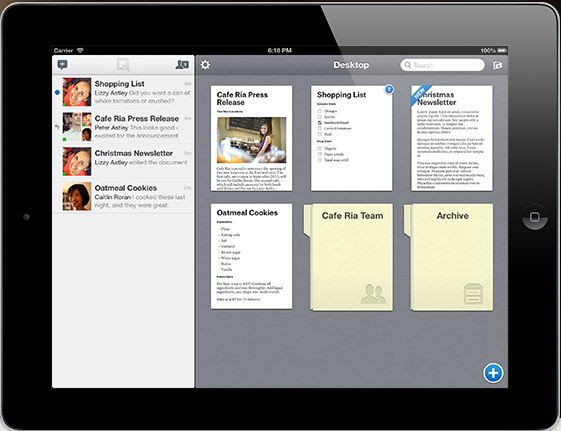
Quip looks a lot like Evernote and has a similar interface with documents contained in notebooks, but one of the big differences is that Quip was designed specifically to enable peer editing and collaboration on documents and has a very clear way of showing and tracking the changes.

Here’s a short tutorial showing you how it works:


Why should we get our students peer editing?

  • It improves their awareness of accuracy
  • It can improve the quality of their writing
  • Pushes students to accept that writing is a process that needs revisions and redrafting
  • The ability to collaborate in digital environments is likely to be an important real world digital literacy


What kinds of peer editing activities can we do with students?

  • We can give them texts with planted errors (10 – 20) in to work on a find and correct together. These could be the lyrics of songs they like or stories or articles they have read.
  • We can get students to correct each others’ compositions before we look at them.
  • We can give them texts with specific features missed out and get them to work together to add them. These could be linking or referencing devices, punctuation, vocabulary words, grammatical features such as prepositions or articles etc.
  • We can get them working together to rearrange parts of a text into a better order or structure.
  • We can give them the bare structure of a story and ask them to embellish it and make it more descriptive and interesting.


What I like about Quip

  • It’s free
  • Nicely designed interface
  • Works and looks well in both tablet  app form and in the browser
  • Clearly tracks and highlights changes to documents by different users
  • It looks secure and enables you to limit who sees and works on the document while editing
  • Has a kind of chat messaging feature which works along side the notes for changes
  • We can use it to get students collaborating and working together outside the classroom


What I’m not so sure about

  • It requires registration, which can slow things down in class, but it does also add a degree of security
  • I haven’t tried it with larger groups yet so I’m not sure how reliably it will function when scaled up to say having a whole class work synchronously on a single document
  • Not sure how long it will stay free (There is a Quip Business already available)

I’m now looking forward to my next course so that I can try Quip out and get a bit more experience with it. I hope you also find it useful with your students. Do drop me a line and let me know how it goes.

Related links:

bronwynhegarty doctorate meanderings

bronwynhegarty doctorate meanderings

I have been reading this work by Hope Hartman:

Hartman, H.J. (2001). Developing students’ metacognitive knowledge and skills. In H.J. Hartman (ed.), Metacognition in learning and instruction. Kluwer, 33-68. Academic Publishers: the Netherlands.

I like the models she proposes:
Executive management metacognition – plan, monitor and evaluate progress.
Strategic metacognitive knowledge – what (facts), when and why (context) and how (procedures).

These models would enable participants to use metacognitive strategies for the three tasks in their course. This would help them develop metacognitive control and knowledge and also reflect.

For each task participants will be asked to plan, monitor and evaluate their progress using self-questioning techniques and reflect using a blog.

Why do I like the models she proposes:
1. Discipline diverse – these models can be used in a number of disciplines as they relate to any type of learning. The examples in the chapter relate to reading, maths, science social studies, writing.

2. Self-questioning is used and this can be modelled to encourage learners to create their own questions. The answers of course are generated by the learner.

3. Critical thinking – the models encourage this and by scaffolding the learning, critical thinking questions can be developed by the students themselves.

I also like the components of the BACEIS model and the internal and external supersystems.B = behaviour
A = affect
C = cognition
E = environment
I = interacting
S = systems

The cognitive system includes metacognition plus critical thinking, creativity and learning strategies. It would make it too big a project I guess to also look at motivation, affective self-regulation and attitudes (affective system) which are also part of the internal supersystem.

The external supersystem includes culture and instructional techniques as well as teacher characteristics etc as influences on thinking but they are not really relevant for this project.

5 Powerful Leadership Traits to Help You Earn a Management Position

In order to position yourself for leadership roles, you’ll need to demonstrate that you have the skills and knowledge needed to do the job.

In the next phase of your career, you might aspire to be a manager or a leader within your organization. With the right skills and mindset, you can effect change, inspire others and create positive outcomes for your team and your company.
In order to position yourself for leadership roles, you’ll need to demonstrate that you not only have the skills and knowledge needed to do the job, but also the right mix of leadership qualities to be an effective manager.
A recent Gallup study found that only 10 percent of working professionals possess the talent to be a great manager.
Here are five traits you’ll need in order to be a part of that top 10 percent:

Communicate with Expertise

Great managers are expert communicators. Not only do they set clear goals and expectations for their team members, they must also keep their managers, and in some instances, company executives, informed on project outcomes, status and strategy.
Look for opportunities to develop your communication skills throughout your academic or professional career. The more practice you have with giving presentations or speeches, communicating with clients, or working with others on a project, the more prepared you’ll be when it comes time for you to lead.

See the Big Picture

You’ll take on more responsibility as you advance to leadership roles, but you’ll likely be less involved with the day-to-day tasks you were once assigned. Now, it’s important to see the big picture and understand how different parts of the business contribute to the company’s overall goals and where you and your team fit into that.
Being able to foresee potential issues or obstacles – or even opportunities for growth and change – is a large part of your job as a leader. When issues do come up, keep a positive attitude and focus on finding a solution. Strong critical-thinking, problem-solving and decision-making skills are all important attributes for a manager.

Manage Projects Effectively

You’ll likely oversee several teams and projects at once. Being able to keep multiple balls in the air and ensure that you meet your deadlines is a crucial skill for success.
Part of delivering on your goals and promises means delegating to your team members, and facilitating collaboration across teams, if necessary. Being able to inspire and motivate others to achieve a common goal – as well as hold everyone accountable for their assigned tasks – is a hallmark of a good manager.

Deliver on Promises

It’s important that you also exemplify the qualities and values that you ask of your employees. Time management, accountability and responsibility are all still equally important in managerial roles as they were early on in your career.
Great managers recognize that their team’s success is their success, and they work to cultivate a respectful and positive work culture. By following through on your promises and the goals you set for yourself and your team, you motivate others to perform and produce quality work – and everyone wins.

Make Transparency a Priority

Be honest with your team members when there is an issue or a problem, but don’t dwell on negative outcomes. Instead, focus on finding a solution to the problem or discuss what can be learned from a situation that didn’t turn out as planned.
It’s up to you to make sure that your team is motivated and engaged. While it’s important to learn from our mistakes, no one is perfect. Help your employees develop the skills and knowledge they need to advance in their own careers by building a culture that is based on learning.
That promotion may not be as far off as you think. By finding ways to develop your communication, critical-thinking and problem-solving skills now, you can prepare and position yourself for the next level of your career.

Peer editing in digital and mobile environments

For years now I have been happily using EtherPad based services like http://primarypad.com/ and http://sync.in/ to get participants on the training courses I deliver to work collaboratively to create and peer edit texts. Increasingly though I\’ve been having problems with the reliability of the free services these companies provide and the lack of reliable compatibility with mobile devices.


At last it seems that now I have a very elegant solution in the form of https://quip.com/.
Quip looks a lot like Evernote and has a similar interface with documents contained in notebooks, but one of the big differences is that Quip was designed specifically to enable peer editing and collaboration on documents and has a very clear way of showing and tracking the changes.

Here\’s a short tutorial showing you how it works:


Why should we get our students peer editing?

  • It improves their awareness of accuracy
  • It can improve the quality of their writing
  • Pushes students to accept that writing is a process that needs revisions and redrafting
  • The ability to collaborate in digital environments is likely to be an important real world digital literacy


What kinds of peer editing activities can we do with students?

  • We can give them texts with planted errors (10 – 20) in to work on a find and correct together. These could be the lyrics of songs they like or stories or articles they have read.
  • We can get students to correct each others\’ compositions before we look at them.
  • We can give them texts with specific features missed out and get them to work together to add them. These could be linking or referencing devices, punctuation, vocabulary words, grammatical features such as prepositions or articles etc.
  • We can get them working together to rearrange parts of a text into a better order or structure.
  • We can give them the bare structure of a story and ask them to embellish it and make it more descriptive and interesting.


What I like about Quip

  • It\’s free
  • Nicely designed interface
  • Works and looks well in both tablet  app form and in the browser
  • Clearly tracks and highlights changes to documents by different users
  • It looks secure and enables you to limit who sees and works on the document while editing
  • Has a kind of chat messaging feature which works along side the notes for changes
  • We can use it to get students collaborating and working together outside the classroom


What I\’m not so sure about

  • It requires registration, which can slow things down in class, but it does also add a degree of security
  • I haven\’t tried it with larger groups yet so I\’m not sure how reliably it will function when scaled up to say having a whole class work synchronously on a single document
  • Not sure how long it will stay free (There is a Quip Business already available)

I\’m now looking forward to my next course so that I can try Quip out and get a bit more experience with it. I hope you also find it useful with your students. Do drop me a line and let me know how it goes.

Related links: