Pipeline Projects under various stages of Implementation by oil & gas companies

Minister of Petroleum and Natural Gas Minister Dharmendra Pradhan on Thursday reviewed pipeline projects worth about eight thousand crore rupees under various stages of implementation by oil and gas companies. Pitching for Aatmanirbhar Bharat, Mr Pradhan called for complete indigenisation in these projects.

brown and white factory building during night time
Photo by Loïc Manegarium on Pexels.com

The Ministry in a statement said that project work along the Pradhan Mantri Urja Ganga, JHBDPL pipeline, has resumed in full swing post lockdown. It is gearing up to connect Eastern India with the West to Central natural gas pipeline corridor for boosting gas-based economy in the country.

The statement said, Indian Oil is implementing 1,450-kilometre long natural gas pipeline project in southern India, with a project cost of over six thousand crore rupees. It has an approximate 1.65 Lakh Metric Tonnes steel pipes manufacturing potential in India at a cost of over two thousand crore rupees in line with the Atmanirbhar Bharat Abhiyan.

The Indradhanush Gas Grid Limited., natural gas pipeline grid being developed in the north-east, will ensure uninterrupted supply of natural gas to all the eight north-eastern states.

FM Nirmala Sitharaman stresses the need to make country self reliant

Finance Minister Nirmala Sitharaman has stressed the need to make the country self-reliant. In an exclusive interview to Doordarshan News, Ms Sitharaman said, the country still has to import goods which help produce both for the country itself and also for exports.

The FInance MInister said, the way the govenrment has designed the package, it would give immediate help to all those who need additional capital in order to kick-start the economy. She said, it will benefit both demand and the supply side.

On the call of restarting the economy during the epidemic, Ms Sitharaman said that she has kept open all options with reassurance that government is ready to help. Finance Minister reiterated that economic package announced by govt will enhance the ease of doing business.

Talking about RBI’s recent decisions, Ms Sitharaman said, they have been very timely and made a lot of difference to the sentiments which prevails and also immediately make available affordable liquidity. Ms Sitharaman also thanked Prime Minister Narendra Modi  for taking bold decisions to free farmers off historical shackles. She said, farmers can now choose to whom they want to sell their produce.

Opposition is raising bogey of J&K “demography”

Lashing out at the opposition political parties, Union Minister Dr Jitendra Singh said here today that the opposition is raising the bogey of Jammu & Kashmir “demography” for vote bank because it is apprehensive that the new Domicile Rules Notification will not enable it to continue thriving on limited pockets of vote bank by exclusion, as they had been doing in the past. 

In an interview to a private news channel on the new Domicile Law for Jammu & Kashmir, Dr Jitendra Singh said, few families had succeeded in maintaining their hegemony in Jammu & Kashmir, generation after generation, by including in the voter list only those whose vote bank they were capable of manipulating, and excluded those who they thought would not be vulnerable to their tactics, and could vote with free will. He said, this conspiracy went on to the extent that they not only deprived anybody from outside from obtaining citizenship or voter rights but also did not allow voting rights to large section of people which had settled in Jammu & Kashmir since 1947, and put up a self-righteous argument that these people were not entitled for citizenship or voting rights because they were refugees from the then West Pakistan. 

In a hard-hitting rejoinder to the votaries of so-called “Demography”, Dr Jitendra Singh asked what moral authority they had to talk of demography when they had themselves committed the greatest assault on demography by remaining silent witness to the mass exodus of the entire Kashmiri Pandit community from Kashmir Valley. Ironically, he said, those who swear by composite culture of Kashmir are themselves guilty of having committed the murder of the composite culture, which was sustained only by the presence of Kashmiri Pandit community in the valley. 

Dr Jitendra Singh predicted that the opposition leaders may be opposed to the new Domicile law, but their children in heart of hearts support this change and would feel blessed in the long run. History will vindicate us, he said. Referring to the various merits of the decision taken in the Union Cabinet meeting, Dr Jitendra Singh said, it was not only inhuman but also against the constitutional propriety and principle of equality that the All India Service officials who put in the prime of 30 to 35 years of their life serving the people of Jammu & Kashmir were, after superannuation, ruthlessly asked to pack up and, go and find a place to live anywhere in the country but not in Jammu & Kashmir.

            Ironically, this was happening at a time when some of the States in India not only facilitated residential settlement of these officials but also provided them plots of land at discounted rates, he added. Even worse was the plight of the children who were born, brought up and did schooling in Jammu & Kashmir but were later not eligible to apply for higher education institutions, which left them nowhere to go. Describing the Union Cabinet decision and the Demographic Notification historic, Dr Jitendra Singh said, this was a miscarriage and anomaly which waited for 70 years to be corrected. May be it was God’s will that only Narendra Modi as Prime Minister should perform this act of redemption.

Despite fortnight delay due to COVID, procurement touches 341.56 LMT

Procurement of wheat by the government agencies surpassed last year’s figures of 341.31Lakh Metric Tonnes (LMT) to touch 341.56LMT on 24.05.2020, surmounting all impediments created due to the spread of COVID-19 virus and the country wide lockdown.  Wheat harvesting generally starts towards end of March and procurement commences in the first week of April every year. However, with the imposition of national lockdown with effect from midnight of   24&25.03.2020, all operations came to a standstill. The crop had ripened by then and was ready for harvesting. Considering this, Government of India gave relaxation to start agricultural and related activities during the lockdown period,and the procurement could start from 15.04.2020 in most of the procuring states. Haryana started little late on 20.04.2020. 

The biggest challenge was to ensure that procurement is done in a safe manner during the pandemic. This was achieved through a multi-pronged strategy of awareness creation, social distancing and deployment of technology. The number of purchase centers was increased substantially reducing the farmer footfalls in individual purchase centers. New centers were set up using every facility available at gram panchayat level and the numbers were increased sharply in the major procuring states like Punjab where it went up from 1836 to 3681, 599 to 1800 in Haryana and from 3545 to 4494 in Madhya Pradesh. Using technology, farmers were provided specific dates and slots to bring their produce which helped in avoiding overcrowding. Strict social distancing norms were followed and sanitization activities were undertaken regularly. In Punjab, every farmer was allotted specific spaces earmarked for dumping of stocks and no one else was allowed to enter those areas. Only people who were directly associated were allowed to be present during daily auctions. 

In addition to the threat of spread of virus, there were 3 major challenges faced by the procuring agencies in wheat procurement. As all the Jute mills were closed, production of Jute bags used for filling of procured wheat stopped, creating a major crisis. This was tackled by using more plastic bags, supplemented by used bags with very strict quality conditions. Through continuous monitoring and timely actions, it could be ensured that the procurement was not stopped due to lack of packaging materials anywhere in the country. 

There were unseasonal rains in all the major producing states leading to wheat getting exposed to water. This posed a major threat to the farmers as such stocks could not be procured under normal specifications. Government of India and Food Corporation of India (FCI) intervened immediately and after conducting detailed scientific analysis, specifications were re-fixed to ensure that no farmer is put to distress while making sure that the produce so procured meets the minimum quality requirements of the consumers. 

Third challenge was the tight labour supply position as well as the general fear created among the masses about the virus. This was addressed by taking a series of confidencebuilding measures at the local level by the state administration. Labourwasprovided with adequate protection safety gears like masks, sanitizers etc. and other precautionary measures were also taken to ensure their safety. 

With the concerted and well-coordinated efforts by Government of India, FCI, State Governments and their agencies, procurement of wheat could be undertaken very smoothly in all surplus states, helping farmers and replenishing stocks in the central pool. The state wise procurement data forwheat procuring states is as below:

Sl. NoName of the stateWheat procuredup to 24.05.2020(in Lakh Metric Tonnes)
1Punjab125.84
2Madhya Pradesh113.38
3Haryana 70.65
4Uttar Pradesh20.39
5Rajasthan 10.63
6Uttarakhand0.31
7Gujarat0.21
8Chandigarh0.12
9Himachal Pradesh0.03
-TOTAL341.56

***** 

NITI Aayog to study the feasibility of drinking water project

The Vice President of India, Shri M Venkaiah Naidu today held a meeting with Shri Amitabh Kant, CEO, NITI Aayog, Shri Parameswaran Iyer, Secretary, Drinking Water & Sanitation, and Shri U.P. Singh, Secretary, Water Resources, River Development & Ganga Rejuvenation and discussed various possible ways in which drinking water and irrigation needs of the drought-prone Udayagiri area, Nellore district, Andhra Pradesh can be met. The Vice President shared with them the concerns of the people of this area.

In the recent past, the Vice President has been talking to people of Udayagiri constituency, from where Shri Venkaiah Naidu, now The Vice President of India was elected as MLA in 1978 for the first time. While enquiring about the general well-being, they informed the Vice President that ground water levels in the area have depleted considerably, most of the tanks/borewells have dried up and various water supply schemes are not serving the water needs to the fullest. They also informed the Vice President that this is the 7th consecutive year where there are no adequate rains. Most of them requested Shri Naidu to find out ways of getting water from Krishna basin or Somasila project.

In today’s discussion with the Vice President, officials suggested that they would explore various options in consultation with the Government of Andhra Pradesh and see what might be the most feasible option.

The Vice President advised Secretary, Water Resources to discuss with Central Water Commission and find out about the technical feasibility. He also suggested that the Detailed Project Report (DPR) and the various ongoing efforts of the State Government to mitigate the water crisis including through the Water Grid project could be studied. 

After a preliminary assessment is made, the Vice President advised that a delegation of senior officials from the Ministry of Jal Shakti as well as from NITI Aayog and Central Water Commission could visit the area and interact with the concerned stakeholders to understand the ground reality and suggest a way forward.

Kazi Nazrul Islam: A Secular Poet Born in India died in Bangladesh

In the month of May 25 in 1899 a great patriot as well as a poet was born in Burdwan District of undivided Bengal which presently comes under West Bengal. He was none other than Kazi Nazrul Islam. Due to his powerful writing mainly through his poems reflecting Hindu-Muslim unity and patriot feeling British was always scared of him as sequel imprisonment him several occasions. Nazrul’s father Kazi Faqeer Ahmed was an Imam and caretaker of a local mosque and mausoleum and his mother Zahida Khatun, was a house maker. Kazi Nazrul Islam studied up to Class X and then joined in army in 1917 at the age of 18 years but left the army in 1920 and settled in Calcutta (present Kolkata), and involved in journalism. . He assailed the British Raj in India and preached revolution through his poems “Bidrohi” (“The Rebel”) and “Bhangar Gaan” (“The Song of Destruction”), as well as his through his publications in “Dhumketu” (“The Comet”). His continuous support in Indian freedom movement antagonized the British and often led to his imprisonment by the British authorities. On April 14, 1923 he was shifted from Alipore jail to Hooghly jail in Kolkata and he began a 40-day fast to protest against ill-treatment by the British jailer. Nazrul broke his fast more than a month later and was released from prison in December 1923. He composed a large number of poems and songs during this period of imprisonment and many his works were banned in the 1920s by the British authorities.  

      He never tolerated any fundamental activities. In his ‘Kandari Husiar” poem he specifically wrote, “Hindu or Muslim should not be an issue. We should fight to save our motherland”. He was a secular and broad-mined person and married to Pramila Devi, (belonged to Brahmo Samaj), on April 25, 1924. Nazrul wrote an editorial in Joog Bani in 1920 about religious pluralism, “Come brother Hindu! Come Musalman! Come Buddhist! Come Christian! Let us transcend all barriers, let us forsake forever all smallness, all lies, all selfishness and let us call brothers as brothers. We shall quarrel no more”. In another article entitled Hindu Mussalman, published in Ganabani on 2 September 1922, he wrote the religious quarrels were between priests and Imams and not between individual Muslims and Hindus.

     He was also feeling for the women and poor echelons of the society which is reflected in his poem ‘Daridro'(Poverty). Few lines may be quoted here (keeping in view of the meaning are translated in English).

“O my child, my darling one
I could not give even a drop of milk
No right have I to rejoice.
Poverty weeps within my doors forever,
as my spouse and my child.
Who will play the flute?”

      In those days in Bengal dowry, exploitation of women etc., were also major issues and keeping in mind of these issues he wrote the poem Nari (Woman), where he has mentioned, “I don’t see any difference between a man and woman. Whatever great or benevolent achievements that have taken place in the world half of that was by woman and the other half by man.”

         His secular feeling is reflected in many of his songs and poems where he explained lucidly about the power Hindu God and Goddess. His poem ‘Indrapatan’ is a marvellous one. In addition, he wrote and composed many devotional songs like Shama Sangeet (about Goddess Kali Mata), Bhajans and Kirtans and while listen these songs by any Hindu person, the person will be astonished whether these are written by a Muslim or a Hindu poet. He equally gave importance to Islamic songs where he explained importance of Islamic practices like Namaz (prayer), Roza (fasting), Hajj (pilgrimage) and Zakat (charity). His poem ‘Eid Mubarak” is awesome creation.  Nazrul’s secularism is reflected in his personal life when he kept his sons name keeping in mind both Hindu and Muslim background-  Krishna Mohammad, Arindam Khaled(bulbul), Kazi Sabyasachi and Kazi Aniruddha.

    Rabindranath Tagore and Kazi Narul Islam had special likings to each other. Tagore called Nazul, “the mutinous child of the Goddess of the Universe”. Nazrul had also special respect for Rabindranath Tagore and was shaken by the death of Rabindranath in August 1941. He composed two poems in Tagore’s memory, one of which, “Rabihara” (loss of Rabi) was broadcast in All India Radio during that time. After creation of Bangladesh, then Government invited him with his family members where Nazrul and his family moved in 1972, and he died on 29 August 1976. He is officially recognized as the National poet of Bangladesh and his song “Chal, Chal, Chal” (move, move, and move) is the national song of Bangladesh. As a mark of respect for his death, Bangladesh observed two days national mourning, and the parliament of India observed a minute of silence.

Dr. Shankar Chatterjee

Former Professor& Head (CPME)

NIRD &PR (Govt. of India),

Hyderabad-500 030

Telangana, India

Email <shankarjagu@gmail.com>

How to Become a Nurse Anesthetist

Becoming a Certified Registered Nurse Anesthetist (CRNA) requires deep specialized expertise in nursing and anesthesiology. Here’s how you can get there.

A nurse anesthetist represents one of the most advanced and qualified specialties in nursing. This special type of advanced practice registered nurse (APRN) is certified and trained in administering anesthesia to patients.

They play a critical role in a variety of healthcare settings, command high salaries and continue to be in demand across the United States. For these reasons and many more, now’s an excellent time to map out your future in nursing—and an extremely rewarding career as a nurse anesthetist. Here’s how to get started.

  1. Understand the responsibilities of a CRNA
  2. Become a registered nurse with a bachelor’s degree
  3. Earn your master’s degree in nursing
  4. Pass the National Certification Exam
  5. Start your career as a nurse anesthetist

How long it takes to become a CRNA depends on where you are in your nursing career. It could take several years of education and working experience to reach such a professional height.

Note: Herzing University does not offer a master’s level CRNA program. However, if you are 1) not yet a nurse or 2) a registered nurse with an associate’s degree, we offer BSN programs to help you take a big step to becoming a nurse anesthetist. See step 2 for details.

1. What is a nurse anesthetist?

A nurse anesthetist is an advanced practice registered nurse (APRN) certified and trained to administer anesthesia for surgery, labor and delivery, emergency care or pain management. It surprises many people to learn that anesthesia services are provided the same way by nurses and physicians (anesthesiologists); they provide the same service for the same procedures in the same types of facilities. The anesthesiologists provide a collaborative oversight of the CRNA’s to ensure best practice for patients.

In fact, according to the American Association of Nurse Anesthetists (AANA), most of the hands-on anesthesia patient care in the United States is delivered by nurse anesthetists.

Commonly called CRNAs (Certified Registered Nurse Anesthetists), the profession got its start during the Civil War when nurses were on the front lines administering chloroform to wounded soldiers. Today, they are the anesthesia providers in nearly all rural hospitals and the main providers of anesthesia to the men and women serving in the U.S. Armed Forces.

Become a CRNA and you’ll discover a vibrant, in-demand career, but you need to have specialized training and an excellent education to pave the way for a future at the top of the nursing profession.

Life as a nurse anesthetist: Career profile

U.S. News and World Report ranked nurse anesthetist #5 on its 2018 list of the 100 best jobs in America and on its list of Best Healthcare Jobs. There are a lot of reasons this career path is attracting the attention of high school and college students as well as RNs ready to advance their practice. For starters, it’s extremely fulfilling to know you’re playing a vital role in patient care. It’s also a job that offers a high salary and a manageable work-life balance.

Where can you work?

With fewer than 50,000 licensed practitioners working today, demand for nurse anesthetists continues to grow across the United States, according to the Bureau of Labor Statistics. Once you become a licensed CRNA, you’ll be needed in many different healthcare environments:

  • Medical and surgical hospitals
  • Outpatient care enters
  • Offices of dentists, plastic surgeons, pain management specialists, and other medical professionals
  • U.S. military facilities

What will your workdays be like?

Whether you end up working in an intensive care unit (ICU) of a busy urban hospital or a walk-in clinic in small town America, your day as a nurse anesthetist will be varied and interesting. Typically, you’ll work in collaboration with anesthesiologists, anesthesiologist assistants, physicians, nurses and other healthcare professionals.

There are numerous tasks you’ll be responsible for, including caring for patients under anesthesia, intubating patients who may require it, monitoring their vital signs, administering medications, managing ventilators or simply talking with them and calming their nerves. As a nurse anesthetist you will:

  • Provide patient care before, during and after surgery.
  • Tend to expectant mothers before, during and after labor and delivery.
  • Participate in diagnostic and therapeutic procedures.
  • Provide trauma stabilization and critical care interventions.
  • Diagnose and deliver acute and chronic pain management.

When you’re not actually tending to your patients, you’ll spend time reviewing their histories, setting up the room where procedures are conducted and organizing the meds that will be required. At the end of the day, you’ll go home knowing you played a vital role in the advocacy and care of the patients for whom you were responsible.

How much can you make as a nurse anesthetist?

Loving what you do for a living is important. Being acknowledged and paid well for your specialized knowledge and training is an added bonus.

According to the Bureau of Labor Statistics, the average annual salary for nurse anesthetists in 2018 was $174,790 per year. Of course, your pay will depend on what state you work in and the type of facility where you are employed, but no matter where you live, becoming a CRNA can be a very lucrative career choice. Learn everything you need to know about how much a nurse anesthetist makes.

There are many different kinds of nurses and anesthesiology represents one of the higher paying specialties in the nursing profession. The cost of a graduate-level education can be a deterrent for some students, but in the case of CRNAs the return on your investment can be substantial.

What is the current job market for nurse anesthetists?

To help meet the growing and consistent need for safe and effective anesthesia care, the American Association of Nurse Anesthetists (AANA) strongly encourages high school and college students to consider this highly rewarding career path. Advanced practice RNs like nurse anesthetists are being increasingly counted on to provide care to patients in a broad range of settings and environments, particularly in medically underserved areas such as inner cities and rural areas.

Here’s how great the need has become for these master’s-educated nursing professionals: The U.S. Bureau of Labor Statistics projects overall employment for nurse anesthetists to grow 16% from 2016­­-2026, faster than the national average for all other occupations.

If you’re looking for a nursing career that comes with a high level of autonomy, professional respect, increasing opportunity and an excellent average salary, you’ll want to consider becoming a CRNA.

2. Become a registered nurse with a Bachelor of Science in Nursing (BSN)

To become a nurse anesthetist, you must have a registered nurse (RN) license and a master’s degree from an accredited MSN program with a CRNA program. While it’s true that you can become an RN after earning your associate degree in nursing, a key requirement for earning your master’s degree and becoming a CRNA is getting your BSN.

Certain BSN programs are specifically set up for future-focused students who’ve set their sights on advanced practice, specialized careers. For example, Herzing University offers a frequently updated BSN curriculum based upon the needs and demands of today’s job market.

At Herzing, there are several different entry points to the BSN program, depending on where you are in your current career and the amount of transferrable credits you already have from prior learning and work experiences.

  • If you are new to nursing, you can pursue a bachelor’s degree program designed to help you become an RN and equip you for a graduate nursing program.
  • If you are already an RN, you can choose an RN to BSN online program that can be completed in 12 months or less.
  • If you already have a bachelor’s degree in a different field, you can choose an accelerated BSN program designed to prepare you for professional nursing practice in just 16 months.

Once you complete your BSN, pass the NCLEX exam and become licensed in your state, you’ll be eligible to practice as a registered nurse. From there, it’s just a matter of gaining enough experience in an acute care setting before you can apply to a nurse anesthesia program and earn your master’s degree.

One significant advantage of choosing Herzing is that the school’s BSN program has six start dates throughout the year, ensuring you can start soon, but allowing enough time to make any necessary adjustments to your personal and work schedules to accommodate your studies.

To make sure you’re on the right track towards a career as a nurse anesthetist, it’ll help if your bachelor’s degree also prepares you for continuing your education. Herzing’s BSN curriculum emphasizes a professional ethic that includes lifelong learning and continuous professional development in an ever-evolving healthcare environment.

3. Gain experience and pursue your master’s degree

After working in an ICU or the emergency room of a hospital or an ambulatory center (usually for 2+ years), you must earn a master’s degree from an accredited nurse anesthesia program, which typically takes between 24 and 36 months to complete (with a BSN as a prerequisite for enrollment). Many MSN programs will allow you to complete a certain amount of coursework online.

Your chosen program will typically include clinical practice near you where you’ll become familiar with a number of procedures requiring anesthesia.

The most prominent accreditation board is the Council on Accreditation of Nurse Anesthesia Educational Programs (COA). The organization grants public recognition to nurse anesthesia programs and institutions that award post master’s certificates, master’s, and doctoral degrees that meet nationally established standards of academic quality.

Admission to accredited programs can be very competitive, so start doing your homework and researching programs as early as you can.

Herzing University does not currently offer a nurse anesthetist program. You can find an accredited CRNA program in your area by searching this list.

4. Get certified as a nurse anesthetist

The last hurdle to qualifying for a nurse anesthetist position will be to pass your National Certification Examination (NCE), offered by the National Board of Certification and Recertification for Nurse Anesthetists (NBCRNA).

The NBCRNA reports about 84% of students pass the exam on their first try, and you’ll need recertify via the Continued Professional Certification (CPC) Program every 4 years. The NBRCNA website offers exam tutorials and practice exams to help you prepare.

5. Start a rewarding career as a nurse anesthetist

Regardless of where you are in your academic and professional life, there’s a clear path to follow that can lead to a satisfying career as a nurse anesthetist. It starts with earning a CCNE-accredited bachelor’s degree from a highly respected school of nursing if you haven’t already done so.

If you’re inspired to learn more, we’re here to make sure your next step will be a sound investment in your future in nursing.


innovation JISC online conference

Innovating eLearning 2006 JISC online conference
A couple of entries really caught my eye and very much match with some of the isssues our institution is currently facing. Peter Miller – University of Liverpool
pointed us to the idea of Shared Learning Contexts (SLCs) which are described in Scott Wilson’s blog at http://www.cetis.ac.uk/members/scott/blogview?entry=20050210014657 The diagram of the SLC illustrates a learner-centred model using open source technologies.

Geoff Stead’s statement summed it up really – “VLE fervor has put shackles on a lot of creativity from people like ourselves who earn a living using technology to service learning. Five years ago we were creating learning tools that assisted low-literacy learners to find their voice and publish themselves online. We created project-based environments to share problems and strategies for dealing with low maths skills. But these things are impossible within SCORM (the standard VLE materials need to comply with) Almost 100% of the demand we get for resources to support learning need to fit into the lowest common denominator of VLEs … namely: a single thread of learning objects, each one insular, curriculum mapped, with no connection to the learning process, no inbuilt dialog / saving / thought origination for the student. So yes, they have provided an excuse for less adventurous staff to hide behind. But they have also imposed a set of standards on all purchasing that have ended out stamping out a lot of creativity that was previously embedded in the resources as well. And all with the best intent! “

Some of the replies to this statement, referred to the usefulness of VLEs for staff new to eLearning. My thought on this is that we have basically trained people up to expect the VLE or Learning Management System approach whereas if the use of a variety of tools could have been “sold” to staff early on – through really good resourcing and support – we wouldn’t all be caught up in using the corporate, expensive, proprietary tools. Tools which suit the company not the teachers and learners.

There was a very good article on one of the discussions – an evaluation of the use of blogging in a course related to technology.

Reflecting on professional practice by Annette Odell, University of East London. “Applications of Learning Technologies” is an accredited professional development course. Assessment is by means of a portfolio of work built up during the course and a key component within this is a reflective log, kept online using a blog.

This presentation describes the use of blogs on this context; briefly discusses different uses of blogs; reflects on personal experience with using blogs for different purposes and why the ‘reflective blog’ appears to be a consistently successful use; discusses factors that promote success and problems to be oversome; and summarises the participants’ perspective on the value of keeping a reflective blog within this course and as part of their professional development record.

Men Share What It’s Like to Become a Nurse

A recent NYU study found that the number of men in the nursing workforce is steadily increasing, growing nearly 5% between 2005 and 2015.

Employment in the healthcare sector is booming, and more men are entering into healthcare professions than ever before. In fact, a recent NYU study found that the number of men in the nursing workforce is steadily increasing, growing nearly 5% between 2005 and 2015.

While it might have been unusual several years ago for men to work in certain healthcare jobs, there’s now a push for more gender diversity in healthcare staff. This is especially true in nursing, as hospitals struggle to find enough qualified nursing staff to meet the growing demand for their healthcare services.

The Bureau of Labor Statistics predicts that employment for registered nurses (RNs) will increase by as much 15 percent by 2026, adding more than 400,000 new jobs.


We sat down with two of our recent BSN graduates, Jonathan Cabrera and Brandon Shaver, to talk about why they chose a career in nursing.


Q: Why did you choose a career in nursing?

Cabrera: I’ve always known that I wanted to help people. As I got older, I wanted to do something in medicine. I considered surgery, massage therapy and chiropractic medicine, but none of those careers felt like the right path for me. I knew that nursing would allow me to make a difference in the medical field and increase my opportunities for employment.

Shaver: After being in the military for four years, I wanted a complete change of pace. I found myself watching shows like Scrubs, House, Grey’s Anatomy, and ER, thinking to myself, “I could totally do that.” I was working as a dental assistant at the time, and one day a coworker mentioned that I should look into becoming a registered nurse. I did some research and immediately knew that was the route I should take.

Q: Despite the increasing demand for nurses, it’s still a profession that is largely dominated by women. Do you feel that this is changing? Why should more men consider nursing as a career option?

Cabrera: It’s not so much about whether you’re a girl or a guy. It’s about what you want to do and how you want to help others. I think a diverse classroom of students brought a good balance to my studies and my clinical experiences. We each brought a unique set of experiences to the table. As a nurse, I find that having a mix of different perspectives helps us find well-rounded solutions and allows us to do our jobs better.

Shaver: It’s not unusual to meet a man in the nursing field. Doctors used to be only men and nurses used to be only women, but we know that those stigmas don’t matter anymore. Nursing is a great line of work to get into, no matter your gender. There are so many options for growth, and if you’re like me and you get bored easily, there are always different specialties to explore and a variety of ways to advance your career.

Q: What did you enjoy the most about your nursing classes/clinical?

Cabrera: I completed a clinical rotation at a local community clinic, and I loved seeing first-hand how much we were able to help people. I enjoyed being a part of the staff and providing medical assistance for people that would otherwise be underserved due to their financial circumstances.

Shaver: My first clinical rotation at a nursing home made me reevaluate if I really wanted to be a nurse. It can be challenging at first, but as the semesters move along and you start making connections with your classmates, you realize that you’re all struggling together. You learn to make the best of the challenging moments and rely on each other. When I think back about all of my classes and clinical experiences, I remember all the people I shared those stressful times with and all the memories we had together.

Q: What do you enjoy the most about the nursing profession?

Cabrera: I’m glad to see that the field is changing. I think I finally found where I’m supposed to be, and I’m grateful not only for my experience at Herzing but for the opportunity to make a real difference in others’ lives.

Shaver: I like knowing that all my hard work has finally allowed me to have a great job, in the specialty I wanted to work in, in a location I wanted to live, working the hours I’d like to work, making the money I think I deserve. Not everyone can say that, but the nursing profession has so many options and opportunities for everyone.

Q: What words of wisdom do you have for those considering a career in nursing?

Cabrera: It doesn’t feel like it’s a woman’s job or a woman’s world. We’re all working together to help care for people in need.

Shaver: Make the leap sooner rather than later. Rely on your friends and family to help you get through the tough moments. Your classmates will get you through the hard times in school. Work with them, not against them, and you will be successful.

Thinking about a career change to nursing? Like Cabrera and Shaver, more men are realizing that nursing isn’t only a viable career option, it’s a job they’d like to do. Whether you’re just beginning your nursing career or looking to advance, Herzing University offers a variety of degree pathways to help you achieve your goals.

Learn more about our nursing programs and get started on your own journey today!

How to Master Online College Classes

Time management, organization and good study habits are even more crucial to your success as an online student.

A quarter of college students are both full-time workers and full-time students, according to a study by Georgetown University’s Center on Education and the Workforce.

To help busy students to fit education into their lives, many universities offer online course options or online degree programs. A third of all undergraduate students are currently taking at least one course online, according to the National Center for Education Statistics (NCES).

Being able to learn at your own pace is a huge perk for online students. Course materials are typically made available through an online portal, allowing you to work on assignments whenever is convenient for you throughout the week. You can also communicate with your instructors through the portal, making it easier for you to get the personalized help you need to succeed.

While online courses offer many benefits, it is a very different learning experience from a traditional classroom environment. Time management, organization and good study habits are even more crucial to your success as an online student.

Here are five tips for mastering your online classes:

1.) Have a plan

Create a weekly study plan right from the get-go. The first step is to determine when you will set aside time to focus on your schoolwork. It could be in between appointments, after work or over the weekend – whatever works best for you. Proactively block off your calendar during this time so you can hold yourself accountable to finishing your work. Another helpful organizational tip is to review the course syllabus and write down all important due dates in a planner or calendar. This way, you can keep track of – and plan ahead for – major deadlines throughout the semester.

2.) Stick to a schedule

As an online student, you have much more flexibility in setting your own schedule. This can be to your advantage, but it can also present a challenge if you don’t have strong time management skills. It might take some time to establish a routine that suits your lifestyle and allows you to get your assignments done well and on time. Once you have nailed down the right schedule, you can use a planner or digital calendar app to keep yourself on track.

3.) Connect with your classmates

Being an online student doesn’t mean you have do everything alone. While you might not get to meet your classmates face-to-face, there are many ways you can connect online and build your own college community. In fact, many online courses require students to engage with each other on class discussion boards in order to facilitate the same kind of thoughtful exchange you’d have in a regular classroom. You could also take the initiative to start a social media group for your class where you can share notes, ask questions and collaborate on assignments.

4.) Set goals for yourself

Setting goals can help you stay motivated throughout the semester. To be successful with goal-setting, it’s important to have a mix of both short-term and long-term goals. For example, a short-term goal could be improving your test score on your next exam. A long-term goal could be improving your writing skills by the end of the semester. This might involve more work and dedication, like setting a standing appointment with a tutor and working ahead on writing assignments.

Once you’ve identified your goals, write them down and track your progress. When you complete one of your goals, be sure to reward yourself! This could be something small like giving yourself an extra study break, going out for dinner, or spending time on another activity that allows you to unwind and relax.

5.) Make the class a priority

Some students assume online classes are easier than regular classes. This is not true. As an online student, you need to make your education a priority and hold yourself accountable to meeting your deadlines. Minimizing distractions like television and social media is a great way to stay focused during your designated study time.

Online classes are a great option for busy students who cannot easily attend an in-person class. With the right amount of planning and prioritizing, it is possible to be successful without having to step in the classroom.

Gamification to encourage learner autonomy

This post tries to pull together a couple of things I have been thinking about recently. The first was a post I saw on the 21st Century Fluency Project blog a few weeks back. The title of the article ‘How I Turned My Classroom into a ‘Living Video Game’ caught my eye and before I even had time to read it I started thinking about how the factors that create motivation in computer games could be applied to the classroom. The article is well worth reading, although this is only one element it touches on.

The other thing I have been thinking about recently is time management and distraction as it is one of the more significant objections which teachers often raise to having students using computers and mobile devices in the classroom, so when I saw ‘HabitRPG‘ I thought it could be a useful tool to help deal with the problems and implement more of a gamified approach to the  classroom.

HabitRPG is a time and task management tool which overlays motivational elements of computer games onto managing time and tasks.

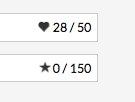
The two major motivational elements are health points, which can be used up and coins which can be earned by doing daily tasks, following good habits and doing jobs from your ‘Todos’ list. These coins can then used to buy rewards.


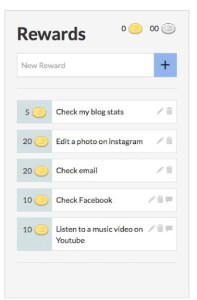
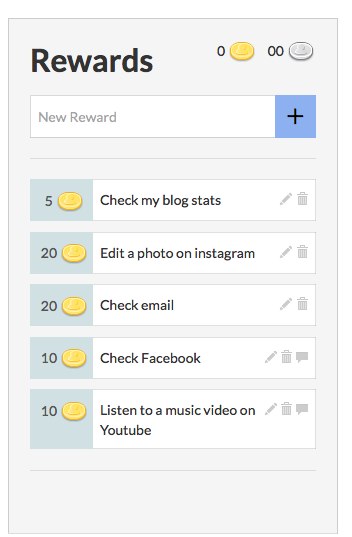
You can define the rewards for yourself. In my case I decided to define the rewards as the things that I usually do to procrastinate, such as check my email or look at facebook updates etc.


Then you can simply add your list of ‘one off’ jobs to the ‘Todos’ list. For me these are things like ‘write an article’, ‘complete a job application’, ‘update my CV’ etc. These become more valuable the longer they are left and so this increase motivation to do them and gain the coins so that you can pay for your rewards.


Then there are my daily chores which I can set up. These are things like ‘update my blog’ , ‘add some links to Scoop.it’ , ‘search my RSS feeds for interesting articles’ etc. If I do these they earn me coins, but if I don’t do them by the end of the day I lose health points.


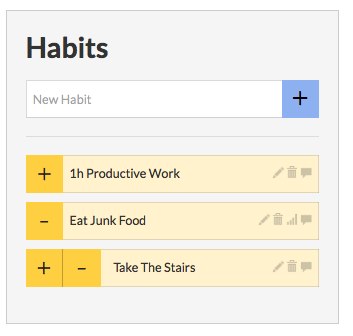
Lastly, there are the habits. These can be positive or negative depending on whether you do them or not, like ‘take a walk’ or ‘have a snack’.


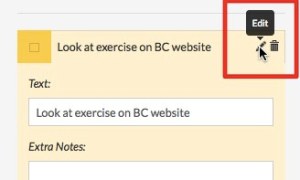
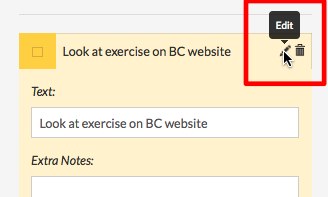
You can edit all of your lists quit simply by clicking on the pen icon, making the changes and then clicking on save and close.


The main thing you may need to edit is the price of rewards and the amount of coins you get for each task.

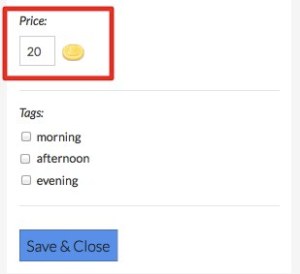
To change the price of the rewards, you just click the edit icon and then type in the price. The default amount for a reward is 20, but you can adjust the price depending on how much time your reward takes.


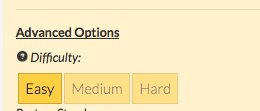
To change the amount of coins you are rewarded for doing each task, you need to go to edit and then go into the advanced options and choose, Easy, Medium or Hard. Doing a hard task will of course earn you more coins.


Once you have your lists set up it becomes quite easy just to click the + and – each time you do a task or have a reward.

Everyone starts off with 50 health points and if they have no coins to buy rewards or if they indulge in bad habits then they have to pay with health points. The challenge is to stay alive and build up enough coins to start buying rewards.

So how would this work with students?

  • Well you could set the rewards as similar things to my own rewards, especially in a connected classroom. You could also add things like play a game or have a few minutes free browsing time online etc.
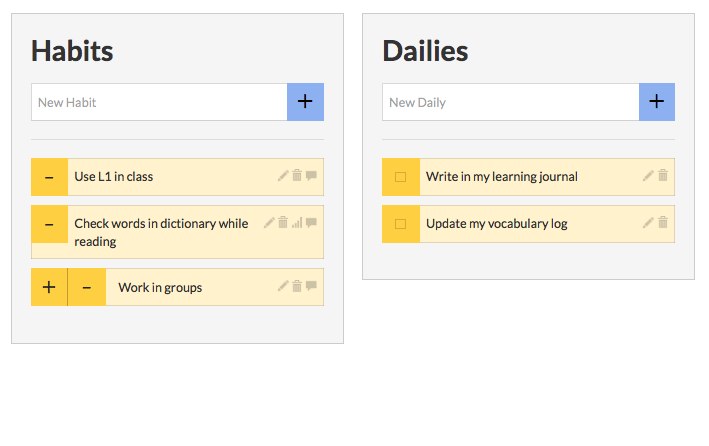
  • Within the habits you could have things like ‘speak L1’, ‘take notes’ or ‘copy an answer’ etc.
  • The daily things could be ‘revise vocabulary’, ‘read a short article’, communicate with someone in English’, ‘do an activity from the course book’ etc.
  • The ‘Todos’ could be a range of homework and autonomous learning assignments.


Here’s what I imagine an ELT students profile would look like.


You’ll need to guide students through the set up process and make sure they understand that for this to work they will need to be honest. You could actually have one page for the whole class, or set a page up for a group of students, but it will probably work better if they manage their own page.

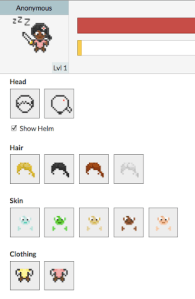
They can also add a few elements of personalisation. If the click on the avatar (top left) there are a range of ways to change its appearance.


What I like about HabitRPG

  • It’s free and easy to use.
  • It can help get students to take responsibility for their ‘bad habits’ and reduce the amount of ‘policing’ you have to do.
  • It can encourage students to work on single tasks with concentration, rather than constantly multitasking.
  • It’s a great way to get students to take responsibility for their own time and learning and have some fun at the same time.
  • It could increase motivation and help your students to be better organised.
  • Students have their own account so they can log in on any computer.


Things I’m not so sure about

  • Each student would need to have a computer or mobile device for this to work effectively.
  • It would be great to see this on mobile, but I think that is being planned and it does run in the safari browser on iPad.
  • There is some down time sometimes.
  • Grouping students would also be great, but again I think this is coming.


If you want to know more about HabitRPG, there is quite a long tutorial below which shows a number of other features that you can unlock by playing the game.


I hope you enjoy HabitRPG and that it helps your students to be more organised and disciplined about they way they use their computer or mobile device for learning.

Related links:

innovation JISC online conference

Innovating eLearning 2006 JISC online conference
A couple of entries really caught my eye and very much match with some of the isssues our institution is currently facing. Peter Miller – University of Liverpool
pointed us to the idea of Shared Learning Contexts (SLCs) which are described in Scott Wilson\’s blog at http://www.cetis.ac.uk/members/scott/blogview?entry=20050210014657 The diagram of the SLC illustrates a learner-centred model using open source technologies.

Geoff Stead\’s statement summed it up really – \”VLE fervor has put shackles on a lot of creativity from people like ourselves who earn a living using technology to service learning. Five years ago we were creating learning tools that assisted low-literacy learners to find their voice and publish themselves online. We created project-based environments to share problems and strategies for dealing with low maths skills. But these things are impossible within SCORM (the standard VLE materials need to comply with) Almost 100% of the demand we get for resources to support learning need to fit into the lowest common denominator of VLEs … namely: a single thread of learning objects, each one insular, curriculum mapped, with no connection to the learning process, no inbuilt dialog / saving / thought origination for the student. So yes, they have provided an excuse for less adventurous staff to hide behind. But they have also imposed a set of standards on all purchasing that have ended out stamping out a lot of creativity that was previously embedded in the resources as well. And all with the best intent! \”

Some of the replies to this statement, referred to the usefulness of VLEs for staff new to eLearning. My thought on this is that we have basically trained people up to expect the VLE or Learning Management System approach whereas if the use of a variety of tools could have been \”sold\” to staff early on – through really good resourcing and support – we wouldn\’t all be caught up in using the corporate, expensive, proprietary tools. Tools which suit the company not the teachers and learners.

There was a very good article on one of the discussions – an evaluation of the use of blogging in a course related to technology.

Reflecting on professional practice by Annette Odell, University of East London. \”Applications of Learning Technologies\” is an accredited professional development course. Assessment is by means of a portfolio of work built up during the course and a key component within this is a reflective log, kept online using a blog.

This presentation describes the use of blogs on this context; briefly discusses different uses of blogs; reflects on personal experience with using blogs for different purposes and why the \’reflective blog\’ appears to be a consistently successful use; discusses factors that promote success and problems to be oversome; and summarises the participants\’ perspective on the value of keeping a reflective blog within this course and as part of their professional development record.

5 Steps to Become a Neuroscience Nurse

As the need for nursing support increases, there are myriad opportunities for new and experienced nurses to advance their careers in specialties.

As the need for nursing support increases, there are myriad opportunities for new and experienced nurses to advance their careers in specialties, such as oncology, the emergency room and even neuroscience.
Neuroscience is one of the most complex areas of study in the healthcare field. Nurses who pursue this specialty embrace the opportunity to make a difference in the lives of patients who are recovering from serious injuries and/or lifelong impairments.

What is a neuroscience nurse?

A neuroscience nurse treats patients with neurological injuries and disorders, including head and spinal trauma from accidents, or illnesses such as Parkinson’s disease, Alzheimer’s, epilepsy and multiple sclerosis. It’s important for these nurses to have a firm understanding of how the nervous system works and how it can affect both the mind and the body.
Patients struggling with a neurological disorder or injury can behave unpredictably. Neuroscience nurses need to be strong, patient and compassionate communicators in order to help patients with chronic or long-term disabilities learn how to live with and manage their situations.

What do neuroscience nurses do?

Neuroscience nurses are involved in many aspects of patient care, including assessing, diagnosing and treating patients. Many neuroscience nurses are part of the neurological unit at a hospital, but they can also work for rehabilitation facilities, homecare agencies and neuroscience specialists.
As a neuroscience nurse, you might be involved in:
  • Performing physical assessments and neurological exams
  • Daily living assistance
  • Physical rehabilitation
  • Surgical or wound care

How do I become a neuroscience nurse?

Think you might be interested in becoming a neuroscience nurse? Follow these five steps to help make it a reality.
  1. Earn your Bachelor of Science in Nursing: The Bachelor of Science in Nursing is quickly becoming the new educational standard for nurses, as it offers more opportunity for employment.
  2. Become a Registered Nurse (RN): If you’re not already a registered nurse, you will have to pass the NCLEX-RN exam, then apply for opportunities in neurological treatment and care. Be sure to use these NCLEX study tips as you prepare for the exam.
  3. Immerse yourself in the world of neurological nursing: Volunteering with a neurological unit at a hospital or specialized facility can help you get first-hand exposure to what neuroscience nursing is all about. You can also demonstrate your commitment and passion to continued education and patient care, both of which can help differentiate you from other candidates if you choose to pursue a neuroscience nursing career.
  4. Become a Certified Neurological Registered Nurse (CNRN): If you want to become a certified neuroscience nurse, you will have to sit for the Certified Neuroscience Registered Nurse (CNRN) exam, which requires at least one year of neurological nursing experience as an RN. The American Board of Neuroscience Nursing, which administers the exam, has many helpful resources for preparing for the exam and continuing your neuroscience education.
  5. Recertification and advancing your career: You’ll need to regularly renew your nursing license and CNRN certification. You can take it one step farther and consider a Master of Science in Nursing for positions as a nurse practitioner or nurse educator, giving you the opportunity to position new nurses for success and help shape the future of patient care.

How much does a neuroscience nurse make?

The average salary for a RN is $70,000 per year, or about $33.65 per hour, according to the Bureau of Labor Statistics—and the average salary for a BSN will be higher compared to a nurse with only an associate’s degree. Your pay will be dictated by the state you work in, your place of employment, and the relative demand for the neuroscience specialty in your area.
Earning your Bachelor of Science degree in nursing means you may also pursue graduate nursing programs to become more qualified in your specialty and pursue jobs in management or administration.

Gamification to encourage learner autonomy

This post tries to pull together a couple of things I have been thinking about recently. The first was a post I saw on the 21st Century Fluency Project blog a few weeks back. The title of the article \’How I Turned My Classroom into a ‘Living Video Game’ caught my eye and before I even had time to read it I started thinking about how the factors that create motivation in computer games could be applied to the classroom. The article is well worth reading, although this is only one element it touches on.

The other thing I have been thinking about recently is time management and distraction as it is one of the more significant objections which teachers often raise to having students using computers and mobile devices in the classroom, so when I saw \’HabitRPG\’ I thought it could be a useful tool to help deal with the problems and implement more of a gamified approach to the  classroom.

HabitRPG is a time and task management tool which overlays motivational elements of computer games onto managing time and tasks.

The two major motivational elements are health points, which can be used up and coins which can be earned by doing daily tasks, following good habits and doing jobs from your \’Todos\’ list. These coins can then used to buy rewards.


You can define the rewards for yourself. In my case I decided to define the rewards as the things that I usually do to procrastinate, such as check my email or look at facebook updates etc.


Then you can simply add your list of \’one off\’ jobs to the \’Todos\’ list. For me these are things like \’write an article\’, \’complete a job application\’, \’update my CV\’ etc. These become more valuable the longer they are left and so this increase motivation to do them and gain the coins so that you can pay for your rewards.


Then there are my daily chores which I can set up. These are things like \’update my blog\’ , \’add some links to Scoop.it\’ , \’search my RSS feeds for interesting articles\’ etc. If I do these they earn me coins, but if I don\’t do them by the end of the day I lose health points.


Lastly, there are the habits. These can be positive or negative depending on whether you do them or not, like \’take a walk\’ or \’have a snack\’.


You can edit all of your lists quit simply by clicking on the pen icon, making the changes and then clicking on save and close.


The main thing you may need to edit is the price of rewards and the amount of coins you get for each task.

To change the price of the rewards, you just click the edit icon and then type in the price. The default amount for a reward is 20, but you can adjust the price depending on how much time your reward takes.


To change the amount of coins you are rewarded for doing each task, you need to go to edit and then go into the advanced options and choose, Easy, Medium or Hard. Doing a hard task will of course earn you more coins.


Once you have your lists set up it becomes quite easy just to click the + and – each time you do a task or have a reward.

Everyone starts off with 50 health points and if they have no coins to buy rewards or if they indulge in bad habits then they have to pay with health points. The challenge is to stay alive and build up enough coins to start buying rewards.

So how would this work with students?

  • Well you could set the rewards as similar things to my own rewards, especially in a connected classroom. You could also add things like play a game or have a few minutes free browsing time online etc.
  • Within the habits you could have things like \’speak L1\’, \’take notes\’ or \’copy an answer\’ etc.
  • The daily things could be \’revise vocabulary\’, \’read a short article\’, communicate with someone in English\’, \’do an activity from the course book\’ etc.
  • The \’Todos\’ could be a range of homework and autonomous learning assignments.


Here\’s what I imagine an ELT students profile would look like.


You\’ll need to guide students through the set up process and make sure they understand that for this to work they will need to be honest. You could actually have one page for the whole class, or set a page up for a group of students, but it will probably work better if they manage their own page.

They can also add a few elements of personalisation. If the click on the avatar (top left) there are a range of ways to change its appearance.


What I like about HabitRPG

  • It\’s free and easy to use.
  • It can help get students to take responsibility for their \’bad habits\’ and reduce the amount of \’policing\’ you have to do.
  • It can encourage students to work on single tasks with concentration, rather than constantly multitasking.
  • It\’s a great way to get students to take responsibility for their own time and learning and have some fun at the same time.
  • It could increase motivation and help your students to be better organised.
  • Students have their own account so they can log in on any computer.


Things I\’m not so sure about

  • Each student would need to have a computer or mobile device for this to work effectively.
  • It would be great to see this on mobile, but I think that is being planned and it does run in the safari browser on iPad.
  • There is some down time sometimes.
  • Grouping students would also be great, but again I think this is coming.


If you want to know more about HabitRPG, there is quite a long tutorial below which shows a number of other features that you can unlock by playing the game.


I hope you enjoy HabitRPG and that it helps your students to be more organised and disciplined about they way they use their computer or mobile device for learning.

Related links: