Month: May 2020
Managing behaviour in the digital age
If you ask most teachers, especially newly trained ones, what one of the biggest challenges of teaching is, they would probably say managing student behaviour. Especially as class sizes grow and more students are bringing along potentially distracting digital devices, making sure you are keeping students on task is becoming ever more important. If this is something that concerns you, then read on.
ClassCharts could be the solution to your problem. ClassCharts is a digital management tool which can help you, your students and their parents to track and improve student behaviour across the whole school.
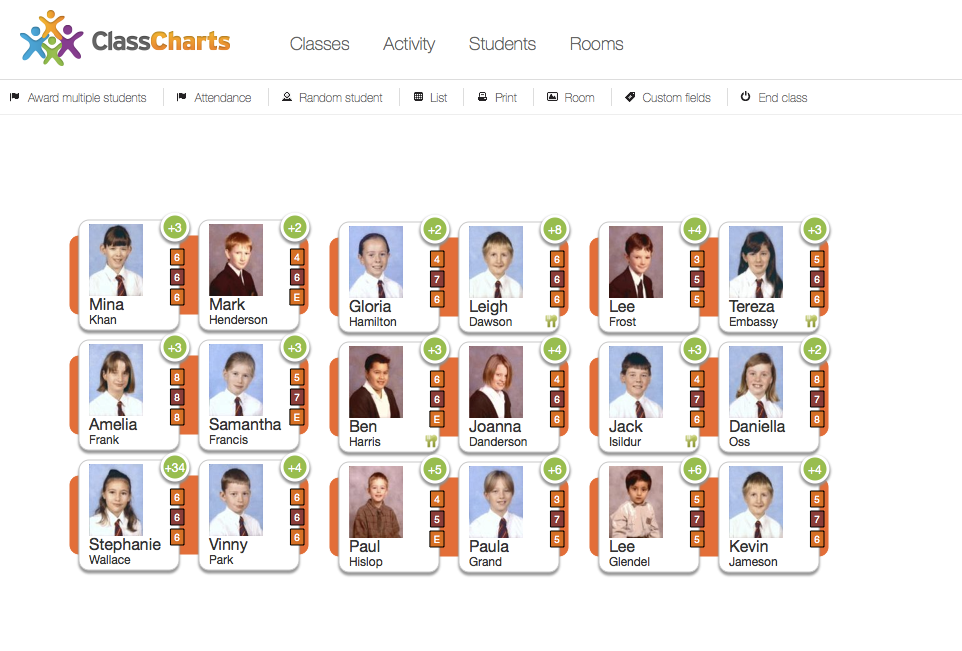
Using ClassCharts you can set up seating charts for every room in your school and create a profile for each student. Teachers can then use ClassCharts to monitor and reward positive behaviour as well as track negative behaviour. As the teacher builds up data across classes they can start to understand how different seating arrangements and student pairing and grouping can impact on behaviour, then generate seating charts for students that group them in ways that help them to work more efficiently and harmoniously.
So how does it work?
Well one of the first things to do is to add seating plans of your rooms. This is easy to do and you can drag the virtual desks around into whatever configuration you have in your classroom.
Then you also need to upload your students. What I really like about ClassCharts is that you can also upload a photograph of each one, and this can be really useful if you have large classes and lots of students names to remember, especially when it comes to writing reports.
You can then either manually assign seats or generate a random seating chart. During the class you can use ClassCharts acknowledge a range of positive and negative behaviours. These behaviours are all customisable so you can create your own or use the default ones.
ClassCharts uses html 5 so should run in any modern browser whether it’s a laptop, iPad or Android tablet, so the teacher can use an tablet during the class to instantly update behaviours.
Either before or during the class the teacher can also shuffle the class seating depending on a number of criteria from things like attainment targets to gender or previous behaviour.
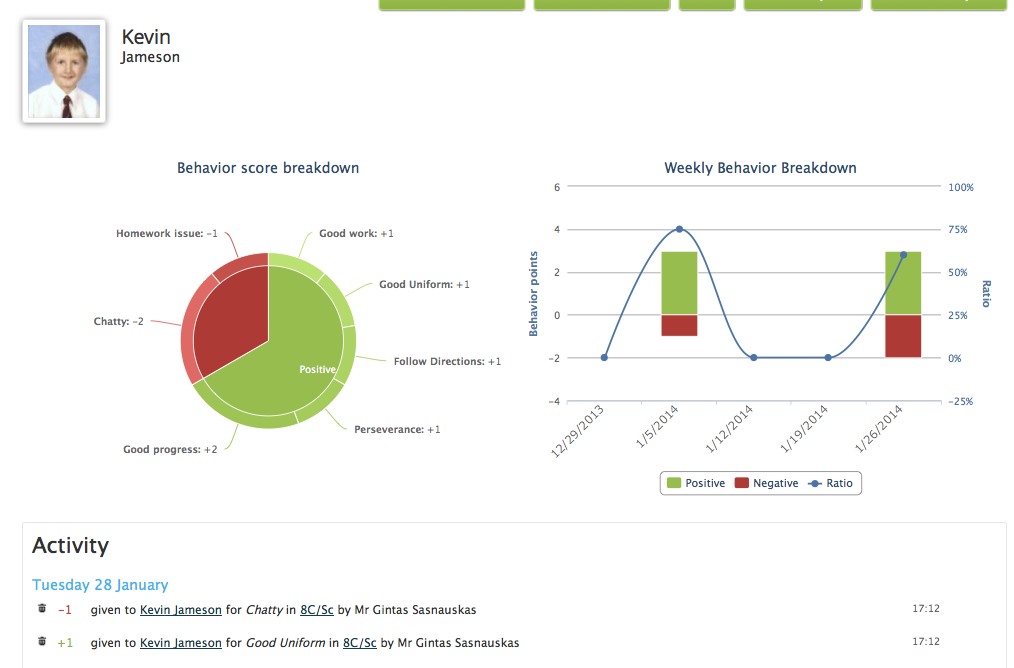
One of the real time-savers of ClassCharts though is when it comes to report writing time. Each students’ behaviour has been tracked through their various classes and teachers can get a detailed report, including dates when different behaviours were recorded.
Both students and parents can also access live reports and monitor progress throughout the term, so students and parents know how they are doing and parents don’t have to wait until the end of term to find out what’s been going on with their child.
This helps to share responsibility and makes it much easier to get parents involved in dealing with any negative behaviour at the earliest possible date.
Although ClassCharts is free and has been designed so that a single teacher can set it up to track their own classes independently, the real power of the platform is its ability to work across the school and track student behaviour in every class. To make this easier ClassCharts also interconnects with a range of other educational management software systems, from simple tools like Edmodo to more complex ones like SIMS and PowerSchool.
What I like about ClassCharts
- I’m really impressed by the fact that such a powerful and well designed tool is free.
- It’s great that a system like this and the data it collects can be applied and shared across a whole school.
- I really like that you can see the student and access a range of information about them from targets, to behaviour and even a little about their background.
- Great to get parents involved and students monitoring their own progress.
What I’m not so sure about
- This is quite a complex tool and creates a lot of data, so I think it’s going to take a bit of getting used to for teachers and perhaps a bit of training too.
- It does produce a lot of data and you can easily get a bit too tied up in this and forget about the person.
- Digital books for teacher development
- Making lectures and lessons more interactive with mQlicker
- Evaluating authentic mobile apps for learning
- Publishing 3.0 – A new model for independent educational publishing
- The Digital Classrooms on Indiegogo
- Digital Classrooms on Facebook
- Digital Classroom on Flipboard
Photographs and genealogy
Years ago, when I first saw this picture in the family collection, it puzzled me. I knew that the little girl to the left was my grandmother, and I suspected the other two children on the floor were her brother and sister. I assumed that the man to the left was her father and that the woman in back was her grandmother? But who is the other boy in the room? My family and I dubbed him Heathcliff, remembering that he joined the Earnshaw family by adoption when he was a young boy (Wuthering Heights).
This spring I’ve had the opportunity to go through family photographs and also to research my family tree. I deduced that this picture was taken Christmas 1905. The extra boy is a cousin to my grandmother. These same people were still in the same household at the 1910 census. The grandmother, by the way, is the mother of my grandmother’s mother, mother-in-law to the man in the picture.
Here’s another picture of the same family taken a few months earlier. The younger woman is my great-grandmother; she died in June of 1905. The man with the cigar is probably Heathcliff’s father, and the two additional girls are Heathcliff’s sisters.
Why are those sisters missing from the Christmas picture? According to the 1910 census, they were boarding at the Chicago Industrial School for Girls. Later records show that both grew up, had jobs as clerks, and got married.
Here’s Heathcliff and his sisters—possibly taken at their school. On the desk is a cube with the date: Wednesday December 27. Historians, archivists, and genealogists love clues like that hiding in photographs. (December 27, 1905, was a Wednesday.)
And what became of Heathcliff? He also got married. He and his wife had a son who lived only three months and a daughter who eventually grew up and married. In 1917, when Heathcliff registered for the Great War, he was a clerk supporting wife and mother (possibly mother-in-law). In 1920, he was living with his wife, in-laws, and infant son. In 1930, though, he was divorced and living alone in Chicago. October 1930 saw him incarcerated at Leavenworth, Kansas—I have no idea why. By 1942, when he registered because of the second World War, he was back in Chicago, working for Keller & Sons. He died in 1959, at the age of 63.
“Heathcliff’s” real first name was the same as his father and his grandfather. By coincidence, my wife and I chose the same name for our son. After skipping several generations, it’s nice to have the name return to the family, even though the previous holder of that name was a crook. J.
5 Tips to Improve Your Mental Health and Wellness This Year
Taking the time to nourish your mind and soul can help you put your best self forward at work, school and in your interactions with others.
Being healthy is about more than just eating right and exercising. Your mental health also has an effect on your overall well-being, productivity and your motivation. Taking the time to nourish your mind and soul can help you put your best self forward at work, school and in your interactions with others.
College can be a stressful period for many students, especially for those of us who are balancing work, family and other demands on our time. Recently, researchers at Harvard Medical School surveyed college students across from more than 100 schools across the country. They found that college students today experience higher levels of stress, anxiety and depression, sometimes to the detriment of their mental and physical health.
I recently graduated from Herzing University’s online medical billing and coding program. As a mother of two, I know how difficult it is to find time for school along with everything else. I learned that if you want to strike a healthy balance, you need to know your limits and make time for yourself.
Here are my tips for improving your mental health and overall wellness in the new year:
1. Make time for the things that bring you joy
There’s lots of advice out there on how to achieve happiness, but there’s no one answer for everyone. I’m happiest when I am doing something I love with the people I love. It can be something as simple as spending time with my kids or reading a book. Think about the things in your life that make you feel good, and make those things a priority!
2. Disconnect
In the age of social media, it’s hard not to compare yourself to others and their accomplishments. I cannot tell you how many times I’ve been scrolling through Facebook and suddenly I realize that I no longer feel good about myself. It’s important to remember that everyone’s journey is different, and everybody achieves their goals at their own pace. Focus on yourself and your journey, and periodically take a social media break if you need to.
3. Establish healthy coping mechanisms for stress
While stress is an inevitable part of life, there are ways that you can manage it so that it doesn’t negatively affect your health. Practicing good time management is one way that you can minimize stress and stay on top of all of your to-dos. Some days are going to be crazy, and that’s okay. Just don’t make a habit of letting stress derail your routine. Make sure you are taking care of yourself by eating right and getting plenty of sleep.
4. Schedule a “me” day
Finding a moment to yourself might seem impossible, but taking time to de-stress is essential if you want to avoid burnout and feel your best.
I’ve found that spending time alone helps me process my thoughts and clear my head. I recommend setting aside some time for yourself every week and doing something that helps you reset, whether that’s hanging out with your pets, a walk or even a drive out of town. Learn to enjoy the peace and use the time to get to know yourself and your thoughts. I cannot express how much spending time alone has helped me feel more centered and focused.
5. Lean on your support system
We all have days when we feel stressed out and overwhelmed. Don’t be afraid to ask for help when you need it. If you don’t have a support system at home, remember that your professors and advisors are there for you and can help you navigate whatever you’re going through, whether that means scaling back your course load for one semester, or just getting some extra help on an assignment.
No matter what you hope to accomplish in the year ahead, it’s important to prioritize your mental health and well-being. These tips will help you stay healthy, focused and energized so you can feel your best.
initial planning FLLinNZ third round
- competency-based apprenticeships
- qualifications recognised across Aus
- maximum flexibility in system – impacts on quality
- grow private training orgs with effective competition
- school-based apprenticeships
- RPL – want to improve uptake
- industry wants to control knowledge base – web 2 does not fit
- training providers not keeping pace with rapid technological change – important
- costs, flexibility and access
- need training to meet needs of lifelong learners – skills shortages, shiftworkers, contractors, mature learners, just-in-time and to suit learners
- need to build capability – respond to physical and online environment
changing role of education and training
often fail to equip people with skills to be able to problem solve and think forthemselves.
- more of the following:
- distributed networks
- social networking
- blended and flexible models
- facilitation driving pedagogy not instruction
- innovation
- market changes e.g. full employment
- Less occurrence of the teacher teaching many.
Manager of 2020: multigenerations, longer later, more teams, flexible working, performance emphasised, innovation
Overview of pressures on the NZ tertiary education sector can be seen on the concept map (to be loaded).
Facilitator talked about Australian Flexible Framework and how we could have links with Australian projects. Learnscope and Knowledge tree online journal. eLearning networks project is running a September Online Event: Tapping into Resources for E-learning 6 – 8 September 2006
What You Need to Know About Becoming an Assisted Living Nurse
If you’re interested in working in a long-term healthcare environment, you might be considering a career as an assisted living nurse.
Assisted living is one of the long-term care options for elderly individuals and those with disabilities. For many seniors, assisted living communities can help with the transition to a new phase of life, one in which they need more assistance with daily activities and management of their personal health.
In an assisted living community, nurses and other healthcare professionals provide 24-hour supervision and a variety of personal care and health services for residents. As demand for long-term healthcare services increases, many assisting living providers are dealing with workforce shortages, particularly for registered nursing roles.
If you’re interested in working in a long-term care environment, you might be considering a career in assisted living. Here’s what you need to know about this growing nursing specialty:
Who can work in assisted living?
There are many types of nurses who can work in an assisted living setting, including registered nurses (RNs), licensed practical nurses (LPNs), certified nursing assistants (CNAs) and even nurse practitioners (NPs).
Some assisted living communities might serve residents with specific medical conditions, such as Alzheimer’s or dementia. As a result, nurses who work in a long-term care setting might choose to specialize in a particular area of care, such as geriatric nursing or pain management.
What are the responsibilities of an assisted living nurse?
Assisted living communities do not provide the same level of skilled nursing care as a nursing home or hospital. In an assisted living setting, nurses typically help residents with daily activities, such as:
- Personal care. A nurse or CNA can help disabled or physically impaired residents with daily needs such as bathing or dressing.
- Medication management. Nurses can help residents monitor and manage their pain levels. They may also assist with the administration of medicine, or supervise residents to ensure they take their medications as prescribed.
- Memory care. Nurses may provide individualized care for residents with Alzheimer’s, dementia, or related illnesses. This could include pain management and psychiatric care, as well as general assistance during meals and social activities.
- Exercise and general wellness. A nurse might help residents create a wellness program to maintain or improve their health or mobility. They may also assist residents with physical therapy or rehabilitation exercises, as prescribed by a physical therapist.
- Corresponding with family members. Nurses may also regularly correspond with a resident’s family members. They help the family understand their loved one’s evolving needs and level of care and keep them informed in the event of any emergencies.
What skills are required to work in assisted living?
Soft skills, such as critical thinking and communication, are essential to your success in a long-term care environment.
“Our nurses need to be exceptional communicators and emotionally intelligent, as they often have to have difficult conversations with residents and their families,” says Pam Klein, co-founder of Fresh Coast Partners, an assisted living provider with communities in Kenosha, Wisconsin. “We also look for problem-solvers. We have to be able to pivot to a new approach when current strategies are not working.”
Patience and compassion are also important. Some patients could be dealing with chronic pain or conditions such as dementia or Alzheimer’s, and may be prone to irritability, anxiety and depression as a result. Nurses can help minimize these negative experiences for their patients by remaining calm in difficult situations and understanding the daily challenges their patients are facing.
Are there advancement opportunities in assisted living?
Yes. As more new nurses join the workforce, experienced nurses will have the opportunity to move into specialized roles and leadership positions.
“There will certainly be a growing need for leaders in the healthcare industry, especially within the assisted living field,” Klein said. “Nurses can play important roles as leaders and can benefit from further education to help them hone those skills.”
Graduate degree programs can help nurses expand their careers into advanced practice nursing, nurse education and nurse management. Herzing University offers three MSN degree pathways, as well as two post-master’s certificate options for nurses looking to take their careers to the next level.
How can I prepare for a career in assisted living?
Generally, registered nurses with a Bachelor of Science in Nursing (BSN) will have better job prospects than those without one, according to the Bureau of Labor Statistics. A hands-on BSN program that exposes you to a range of clinical settings can help you determine if assisted living is the right nursing environment for you.
Herzing University alum Kim Bonn honed her clinical skills in geriatric and community health nursing through clinical rotations at the Milwaukee VA Center and Horizon Hospice in Menominee Falls, Wisconsin. Through these experiences, she developed a passion for working with seniors and learned valuable skills that would prepare her for a career in long-term care.
“My courses and clinical experience helped me develop the critical thinking skills that allowed me to be successful,” Bonn said. “I’ve been able to take on new responsibilities and become more autonomous in my current role, and that’s because I am trusted by our residents.”
What Does a Family Nurse Practitioner (FNP) Do?
An FNP’s scope of practice may vary depending on the state and place of employment, but day-to-day duties can include performing exams, prescribing medication
If you’re looking to advance in the healthcare field and play a greater role in patient care, consider becoming a Family Nurse Practitioner (FNP).
Similar to nurse practitioners (NPs), FNPs are Advanced Practice Registered Nurses (APRNs) that provide patient care across the lifespan. Their scope of practice ranges from diagnosis to treatment, disease management and health prevention. FNPs can work across different specialties, in various healthcare environments and care for patients of all ages.
As the baby boomer population ages and demand for healthcare services grows, FNPs play an increasingly vital role in providing primary and specialty care for their communities. In some areas, FNPs provide services for which patients would have historically waited weeks to see a physician, especially in rural areas where there is a shortage of primary care providers.
Interested in learning more? Keep reading to find out what a family nurse practitioner does and what you need to do to become one.
What are the official responsibilities of a Family Nurse Practitioner (FNP)?
An FNP’s scope of practice may vary depending on the state and place of employment, but day-to-day responsibilities generally include:
- Performing physical exams. FNPs can perform routine checkups to assess a patient’s health and they can also be involved in diagnosing and treating various health problems.
- Developing care plans. If a patient requires treatment, FNPs can develop and implement a care plan. They can also provide general health counseling to help patients and their families lead healthier lives or learn how to manage their illnesses and injuries.
- Prescribing medications. In most states, FNPs are able to prescribe medication. They may also monitor a patient’s response to different medications so that they can determine the best option for treatment.
- Consulting with other healthcare professionals. FNPs may consult other healthcare professionals as they develop or contribute to a patient’s existing treatment plan. However, they often work independently and they can serve as a patient’s primary care provider.
- Ordering and performing diagnostic tests. FNPs can order diagnostic tests to help evaluate a patient’s condition. They may conduct additional tests throughout treatment to evaluate whether the current care plan is working or if adjustments are needed.
What are the benefits of becoming an FNP?
On the fence about whether or not a career as an FNP is right for you? There are numerous benefits to this career path:
- It’s fast growing. There’s never been a better time to become an FNP. The career is in high demand due to the growing need for healthcare services, with the Bureau of Labor Statistics (BLS) estimating a 28% increase in employment from 2018 to 2028.
- It’s a sought-after career. U.S. News & World Report ranked FNPs as #5 in the Best Health Care Jobs for 2019 and #7 on the list of 100 best jobs in America.
- There’s high earning potential. Registered nurses (RNs) earn an average annual salary of $71,730, while the median annual wage of FNPs is $113,930, according to the BLS. The top 10% of FNPs earn more than $182,750.
- There are a variety of paths available. While the title “family nurse practitioner” makes it seem as though you’ll be working in family practice, you can choose from a variety of specialties that fit your interests and skills, including pediatrics, urgent care, internal medicine and more.
- You can build your leadership skills. As an FNP, you’re the primary care provider for your patients, which means you’re delegating responsibilities and managing nurses and other members of the healthcare team.
How do I become an FNP?
If you’re interested in becoming an FNP, your path will depend on whether you’re already in the healthcare field.
- Earn your degree. If you’re already an RN and have your Bachelor of Science in Nursing (BSN), you can earn your Master of Science in Nursing (MSN) degree in Family Nurse Practitioner in 20 months. With Herzing University, you can complete your degree online, allowing you to learn at your own pace and on your own time. This means you can continue working full time or raising a family without putting your career goals on hold.
- For RNs with an associate degree, you’ll have to earn your BSN, which can be done with Herzing University’s RN to BSN program. If you’re not in the healthcare field at all, you can start by earning your ASN or BSN to become an RN and then work toward your MSN in Family Nurse Practitioner.
- Build your skills. In addition to a degree, it helps if you’re skilled in communication and critical-thinking, as FNPs must clearly communicate with patients and healthcare professionals, and must make decisions regarding plans of action for patients. Learn more about the qualities of the best nurse practitioners.
- Get licensed. Once you earn your degree, you’ll want to become licensed in the state you plan on working. Licensure requirements differ and are dictated by each state’s board of nursing.
Learn more about Herzing University’s online MSN FNP program to find out how you can get started on the path to becoming a family nurse practitioner.
initial planning FLLinNZ third round
- competency-based apprenticeships
- qualifications recognised across Aus
- maximum flexibility in system – impacts on quality
- grow private training orgs with effective competition
- school-based apprenticeships
- RPL – want to improve uptake
- industry wants to control knowledge base – web 2 does not fit
- training providers not keeping pace with rapid technological change – important
- costs, flexibility and access
- need training to meet needs of lifelong learners – skills shortages, shiftworkers, contractors, mature learners, just-in-time and to suit learners
- need to build capability – respond to physical and online environment
changing role of education and training
often fail to equip people with skills to be able to problem solve and think forthemselves.
- more of the following:
- distributed networks
- social networking
- blended and flexible models
- facilitation driving pedagogy not instruction
- innovation
- market changes e.g. full employment
- Less occurrence of the teacher teaching many.
Manager of 2020: multigenerations, longer later, more teams, flexible working, performance emphasised, innovation
Overview of pressures on the NZ tertiary education sector can be seen on the concept map (to be loaded).
Facilitator talked about Australian Flexible Framework and how we could have links with Australian projects. Learnscope and Knowledge tree online journal. eLearning networks project is running a September Online Event: Tapping into Resources for E-learning 6 – 8 September 2006
5 Reasons You Should Earn Your MBA
1. Networking
2. Earning potential
3. Leadership skills
4. Real-world training
5. Specialized knowledge
Why Bedside Care is So Important
What does competent bedside care involve?
How do I provide competent bedside care?
Student Story: IT Degree Leads to Career Reboot
Looking for a change
A fresh start
New opportunities
6 Tips to Help You Find Your Nursing Specialty
1. Work as a Certified Nursing Assistant (CNA) at a hospital or nursing home.
2. Position yourself for new experiences.
3. Work on different units.
4. Know your academic weakness, strengths.
5. Do research online.
6. Don’t put too much stock in what other people say.
Find the specialty that\’s perfect for you.
5 Tips from Our Graduates
1. Trust the process
2. Get help when you need it
3. Start preparing for your job search BEFORE you graduate
4. Make your education work for YOU
5. Don’t get discouraged
How to Care For Your Mental Health as a Busy College Student
1. Take time out for yourself
2. Talk to a trusted individual
3. Develop a strong support system
Grammar Lesson: Comma Splices


You must be logged in to post a comment.