DEPRESSION…a serial killer !

Why do we wait for something big and devastating to happen that opens our up eyes for issues that are serious and should be taken care of ?

Recently with the famous actor Shushant Singh Rajput passing away, as he committed suicide shook the whole nation about how a person who was so happy, excelling in his career, what made him take such a step? Suddenly I see whole of the social media getting flooded with things on mental illness, depression , anxiety , importance of it and so on .….

This issue isn’t something new that has born recently. It has always been a serious issue which all of us in some way or the other have neglected. There are plenty of people out there who have, and who are still suffering from mental disorders severely and some acutely. Mental health is something we all need to take care of.

MENTAL ILLNESS AND DEPRESSION

Clinical depression has been linked to other mental illnesses, such as anxiety disorders, panic disorder, social phobia, and generalized anxiety disorder.
MY EPIPHANY…

Depression is debilitating.

Some people acknowledge it, some think it’s an attention call. For me, depression is like that bundle of laundry that you don’t want to show in your Instagram pictures. I never want to show my heap of laundry to the world, I want my life to seem content and put together, as if I folded and put away all my laundry right out of the dryer.

Depression can be the hardest when others just don’t understand you. Never ask anybody how they can be so sad that they could contemplate suicide. Because honestly most of the people in that situition don’t know. How did they make it to this moment? What did they do to deserve this sorrow?

Nobody really knows how to explain depression to someone. It’s so different for everyone and comes in so many different forms. Some people explains their depression as a weight that holds them down. Others describe it as a shadow that looms in the back of their mind, always taunting and trying to tear them down and then sometimes, depression is described like they are sinking. It’s like dabbling in an ocean of poison and barely catching your breath before you’re dragged back under. I don’t think people understand that depression is persistent. Some days it doesn’t feel as burdensome, it doesn’t tug and pull as hard. And other days, it knocks you down before you can even get out of bed.

I am always fighting this constant battle with myself past many years .. Yes! Me I may smile and laugh and seem happy, but know that, somewhere, in the back of my mind I’m struggling. It makes me feel like a failure, no matter what my successes. I feel worthless and like I’m a burden on everyone around me. After entering my teenage years till now I’ve been aggressive, argumentative used to reacting quickly on situations without understanding them, used to getting upset on small little things and have been called dramatic. It has become one of my biggest triggers, because most of my life I haven’t had that fight to defend it.

I get sad without any reason so often that I’ve created safe spaces. Currently, my safe place is my bathroom floor. Probably about at least 1 time in a month you can find me locked in my bathroom on the floor, crying. The lock on that door is the only form of power I feel I have when I feel everything is parting away.
Many times I have found myself on that bathroom floor contemplating life and how to make it past that very moment, will I? I have to say how thankful I am that I haven’t followed through. Life is so hard. Sprinkle on some depression, heck, dump it on – and life is now even more hard. Sometimes the low gets so low that it seems to take over, overwhelming you in a way that you could not have imagined beforehand.

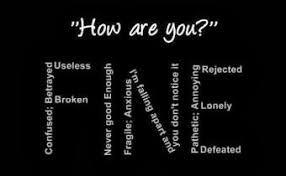
Dressed from Penny to Gucci it’s a misconception that smile is the finishing touch to most outfits.We all give off the impressions that we are happy but this can be a very inaccurate representation of what we are actually experiencing.
People always say you should talk to someone, tell someone,but how do you put words on something so hard to even understand yourself? How do u explain someone that u want to live your life in peace but also you don’t know how you can? How do u explain that this no longer feels like a choice, that it controls you not the other way around.

Of course we are encouraged to TALK more these days but some of us including me wont even know where to start. some of us will Feel like we don’t have anyone to talk to and others will simply be sick of talking. Sometimes we do so much talking and thinking about whats going in our heads that we get even more confused by our own thoughts. This often leads us to say ‘ENOUGH’ and once again putting back on the brave face and deluding smile. By this we fail to get to the roots of our suffering. I am guilty of smiling so many times when I am actually freaking out from inside.
Why is it so hard to accept our own sufferings ? Well its not facile to accept your suffering because of thoughts in your head and ultimately your ego believes that you shouldn’t be suffering. That makes suffering and challenges we experience in life so much more daunting, arduous and scary.

Depression doesn’t have a face. you never know who is the girl around you always happy and cheerful must be struggling from inside or the boy who shows himself so tough maybe he needs someone to listen to him or be there for him. Nobody really knows how much the other person is hurt. We could really be beside someone who’s world is falling apart and we wouldn’t even know.
THE BIGGEST MISCONCEPTION OF THOSE WHO ARE SUICIDAL

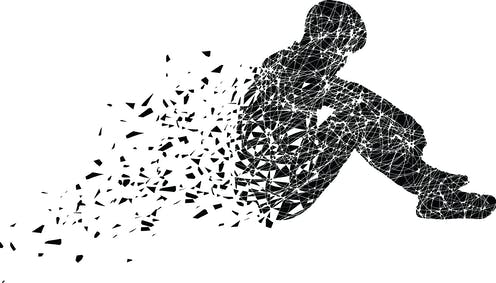
People who believe those are suicidal are selfish- that they only think about themselves and not their loved ones. This is wrong ….. often those who are suicidal truly believe their loved are better off without them because they are such a burden.

Ergo, its important to be kind and tell others how much they mean to you even on their bad days. Often, people tend to not give enough importance to the person who’s suffering from mental issues and rather than giving a smile or telling the person that ‘they understand’, ‘they’re listening’ and that ‘they are there for the person’ they slightly bob their head, as if they understood yet they don’t.

There are people who often say that we can talk to them and they are always there, but when the time comes and we actually need help , they tell us to help our selves or often come to the conclusion that ‘we are in the problem because of our own wrong doings’.This far more worsens the situation for the person going through it. We are nobody to judge which  problem is big or small because we all are different and feel different emotions.

I HOPE YOU CHECK UP ON PEOPLE OFTEN EVEN IF THEY HAVE A BRIGHT SMILE, BECAUSE OFTEN BEHIND THAT BRIGHT SMILE THEY MIGHT BE FIGHTING THEIR OWN HIDDEN BATTLES.

Whenever someone says you have hurt them, don’t shut them out. You don’t get to decide if u have hurt them or not. Don’t make them feel like a fool for expressing their feelings. Don’t always be self-righteous and think you can never make a mistake. If knowingly or unknowingly your actions hurt someone, avoid doing it. You can save someone just by being kind and being there for them.

WHAT TO SAY :

  • You are not alone in this
  • You are important to me
  • You have me! And prove them not just saying it for heck of saying
  • I am not going to leave in your tough times
  • Tell them you care for them and what worth they hold
  • Tell them you understand ( only if you really do)
  • Assure them they are not weak or defective
  • Emphasize that there’s hope

It’s possible that you can say all the “correct” things and your friend will still become upset with you. Each individual have their own unique thoughts and feelings, and being irritated and upset is the nature of depression. Sometimes people will take it out on those trying to help them because they are hurting and don’t know where to direct those bad feelings. Whoever is nearby becomes a convenient target. If this happens, try not to take it personally. Stay serene and continue to do what you can to love and support your friend in whatever way they will allow.

WHAT NOT TO SAY :

Avoid saying such phrases

  • Don’t think about it
  • Be positive
  • I know how you feel – never say this because nobody really knows how the other person feels or is going through
  • Count your blessings
  • Your mood is bringing everyone down around you
  • Just smile and let it go
  • Its all in your head
  • No one ever said life was fair

Many people with depression think they are just feeling sad, and that it will go away with time. For some people, it does just that. But for 15 million others, depression is a constant feeling that does not go away on its own. In fact, WHO found that depression is the second greatest reason for disability in the world. 

I know everyone out there may not have depression, but everyone definitely have something hard they’ve experienced, everyone have something to share and everyone have something to relate to. We are nobody to judge someone else’s problem no matter how big or small it is. Well small issues only take a bigger step and why wait for that oblivious stage to come,why not lend a hand in the initial stages.

Let’s be vocal about our hard times, it’s healing, not embarrassing.

WE SHOULDN’T IGNORE WHAT IS HAPPENING IN OUR HEAD BECAUSE  ITS WHERE ALL OUR HOPES AND DREAMS LIVE.

The future of Information Technology

The future of information technology(IT) is very bright and promising. We are already living in IT revolution era. It is one of the trends which is emerging very rapidly. Huge amount of development is expected in future in the sector, but as the world develops, new emerging information technologies will pop-up on the market for business to gain competitive advantage.

The biggest challenge to IT in future is security. Security could negatively impact to public network. The biggest problem isn’t the machine, its the people involved at every level, inside & out.

Something should be done to solve these problems. However, more technologies will be developed to simplify the way we use it at work, home and everywhere in our life.

More technologies will emerge as the world develops, because of our demands will change with time. So it is up – to – us to be literate and learn how to take advantage of future information technology.

The Greatest Religion – National Integrity.

The problem of National Integration is universal and it involves reconciliation of all diversities to build up national solidarity. Nationalism and regionalism do not go together. If Nationalism represents the ‘forces of unity and cohesion’, regionalism is a symbol of ‘Particularistic identity’.

The process of National Integrations, therefore, tries to achieve both —the forces of national unity, solidarity and cohesion and the regional identity and freedom. In brief, national integration helps building up the national character out of the individual character. It involves national cohesiveness through territorial unity. Amidst socio-cultural, regional, religious, linguistic and economic diversities, national integration aims at the process of uniting together various parts of the society into a “functions whole”, where in there shall be “reduction of all barriers and tolerance of all differences unity, shared values and consensus.”

However, national integration lacks a precise definition. To a common man, the term ‘integration’ implies ‘the process of becoming a whole’. It is more a psychological, behavioural and emotional concept. In a limited sense, it (National integration) believes in a sense of territorial nationality which overshadows or eliminates the subordinate parochial loyalties .

National integration is highly necessary in a multi-religious, multi-ethnic, multi-caste, multi-regional society like India. Realizing the need of it, the National Integration Conference organised in 1961, had suggested a code of conduct for political parties. Besides the suggestions of the National Integration Conference, some other steps can be recommended for securing high level of national integration.

(1) Promotion of Secularism:

The spirit of secularism is highly necessary in Indian multi-religious society. For this reason the National Integration Conference of 1961, suggested that no political party should indulge in any activity aggravating the differences or causing any tension between various castes, communities or linguistic groups. There is a demand to ban all communal parties and communal organisations by which the danger of communalism can be made less serious. Any sorts of activities creating communal reactions in the public mind should be prohibited. No discrimination among the people on the grounds of religion should be made.

2) Cultural Integration:

Recognizing the existence of a wide range of groups, inter-group relations should be promoted in India. Though not uniformity, yet unity among the people can be created with a common set of values. National goal or national objectives generate cultural integration which partially favours emotional integration of the nation.

(3) Economic Development:

Regional imbalance in economic development and acute poverty of certain section of the people impose serious impediments in the achievement of national integration. Despite the adoption of five-year economic planning’s and a number of socio-economic welfare measures, poverty continues as a serious problem. A great chunk of people remain far away of national mainstream. Economic development means the development of whole people and the development of entire nation. Special efforts are necessary in this direction to ensure common national prosperity.

Education:

Illiterate and ignorant people cannot be conscious of the values of national integration. Education only can promote faith in the integrity and the moral worth of the individual. The educational institutions can play important role as forums for arousing the spirit of national integration.

The study and solution of various social problems can be assigned to the educational institutions. In case of higher educational institutions like colleges and universities, exchange of teachers and students from one institution to another for lectures or seminars can promote national integration. Reading materials used by students in schools and colleges should be properly examined to avoid communalization of text books.

Political and Administrative Measures:

Since India is a federal-democratic country, its integration in all respects should also be done on a democratic basis. Each ethnic, caste, tribal, religious and linguistic group should have freedom for protecting and promoting their own culture and traditions. Analyzing the process of national integration in India, Prof. Rasheeduddin Khan has observed that it means cohesion not fusion, unity but not uniformity, reconciliation but not merger, agglomeration but not assimilation, solidarity but not regimentation of the people constituting our political community. Emotional integration with the development of a strong brotherhood among the people, discourage the growth of separatism, regionalism or secessionism.

The agencies of media both electronic and print should be used for inculcating a national outlook. Academic seminars and entertainment programmes on the theme of communal harmony should be organised. Cultural Academies should be established and they should work for strengthening the movement for unity.

Non-Government Organisations:

Besides the govern­mental steps, non-government social service organisations can play an important role in strengthening the process of national integration. These organisations can create necessary social awareness for bringing social reforms and change in the mind set of the people. Emergence of awareness can subsequently promote national integration .

SOCIAL MEDIA:A BOON OR A BANE FOR SOCIETY AND INDIVIDUALS!

WHAT IS SOCIAL MEDIA?

SOCIAL MEDIA is a platform which connects you with your friends and other users in a very convenient way, you can upload a profile, create and share your contents with other users.

HISTORY OF SOCIAL MEDIAL.

The first Social Media Site was created in 1997, named as SIX DEGREES. After this invention, social media became famous, sites like LinkedIn and MySpace gained popularity in the early 2000s, and two photo-sharing sites came in the market, named, Photobucket and Flickr. In 2005, an unprecedented thing came, and that is still eminent; YOUTUBE! In Youtube, users can create their profiles, create videos, watch videos, comment on other videos. In 2006, FACEBOOK and TWITTER made headway and gained users throughout the world. These sites are still the most popular SOCIAL NETWORKING SITES.

WORKING OF SOCIAL MEDIA?

There are many social networking sites available for the users, and each has billions of users. The very first step, the users are supposed to do is to create their profile, by providing name and an email address in the social networking site. Once the user creates his/her profile, they can create content, share contents, and share pictures with a caption. Apart from this, social media users can find the other users and add them to their friend list, or follow them. In Facebook users add friends, In Instagram and Twitter users, follow other users, In Youtube users subscribe to another user’s channels.

DIFFERENT TYPES OF SOCIAL MEDIA.

Social Networks: Facebook and Twitter are social networking sites, LinkedIn is a professional social networking site. These sites are used for connecting and exchanging thoughts.

Media Networks: Instagram and Youtube are media networking sites. These sites are used for distributing contents like photographs and videos. One user can create and upload their video or photo, and the other user can like or dislike the same.

Discussion Networks: Reddit is a discussion network. Users leave their responses in the comment section, and, users can respond directly to those comments.

Review Networks: Yelp and TripAdvisor are review networks. These sites add social media aspects to users reviews of products and services.

SOCIAL MEDIA: A BOON!

Connects Friends and Relatives: You can connect your old friends, relatives, make new friends, through Social Media. We live in an era of busy life, these platforms provide us with the chance to stay connected with our loved ones and build relationships with whom we are not able to meet personally.

Job Purpose: As we know, over 90% of the recruiters’ visits and review the social media profile of the job seeker, and they judge them based on their social activities as one’s profile tells about his/her likes and dislikes, hobbies, and skills.

Communication Barrier is Reduced: In social media, we are free to share our views, here, we can communicate with a large number of audiences and put our point. We can make groups, add the users of our choice, and can have conversations or can share information, and many more.

Educational Benefits: In today’s world, every second person is an active user of social media, it provides several chances for self-learning. Heaps of information are there, one may follow or subscribe to suitable pages or channels.

Updated: Pages available on social media are of different categories, which provide different information and news. The pages are updated 24/7, which give the fresh news always.

SOCIAL MEDIA: A BANE!

Addiction: Excess of everything is bad, many studies have shown that the excessive use of social media leads to addiction! The users make this a goal to post a picture every day, to chat with friends for the whole night.

Health Issues: In research, it is found that one negative post of a person will influence 1.3 negative posts by friends, this chain continues and leads to stress and negative moods. Excessive use of social media causes sleep disturbances.

Isolation: Human interaction is suffering because of the rapid increase of social media usage, people hide their actual identities behind their online identities. Face to face communication is reduced.

Reducing Productivity: A lot of chatting is one of the biggest blunders, students spend hours while chatting with their friends, and, waste time. They could have used this time for doing some creative work, learning something new or studies. Wired.com posted studies, which shows the damage to productivity caused by social media.

Privacy Issues: Few people get so much attached to social media, they share all the not required information in their profile. Sometimes your data may be misused for cyber-bullying or defamation.

Social Media is good to the extent when you use it for a good purpose, for gaining knowledge, for being connected with your friends and families. Don’t be dependent on it, don’t make this your life, don’t set your limit inside social media only. MAKE GOOD USE OF IT!

Almost 21 years to Kargil. How much you know about this Indo-Pak war?

KARGIL WAR also known as the KARGIL CONFLICT was an armed clash between India and Pakistan that took place starting from May 3 1999 to July 26, 1999, and lasted for about 2 months 3 weeks and 2 days. In Kargil District of Kashmir and in the Line of Control (LoC, military control line between India and Pakistan), the northern part of Jammu and Kashmir. For the Indian army, this was known as Operation Vijay (Vijay means Victory) and for the Indian Air Force, it was known as Operation Safed Sagar.
What you need to know before?
In the 1947-48 war, the northern area of Jammu and Kashmir was divided by LoC(during the first Kashmir war) and in 1998 both the countries India and Pakistan had nuclear powers. It was decided to avoid nuclear race and unexpected use of nuclear weapons, to evade non-conventional and conventional conflicts. Also, both the two countries agreed on CBM i.e. Confidence Building Measures which means if anyone tests for Missile, it has to be informed pre-testing. Just before the Kargil, in February 1999 Indian Prime Minister Atal Bihari Vajpayee visited Lahore and India-Pak signed the Lahore declaration(bus diplomacy).

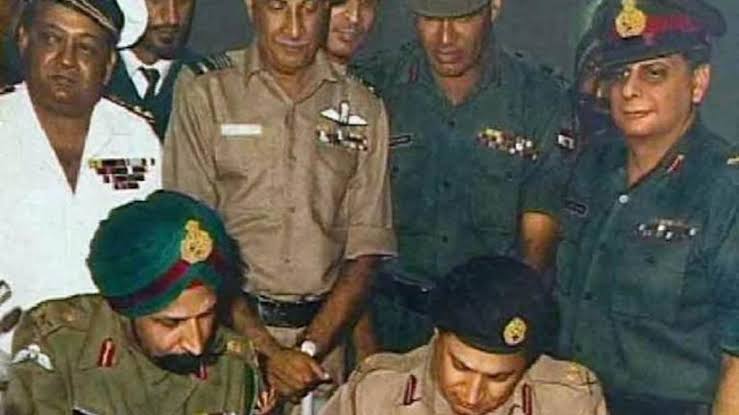
Pic of Indo-Pak war of 1971.(Credits: INDIA TODAY)

What led to war?
Between February and May 1999, the Indian Military posts on LoC were occupied by Pak army units(Pakistan later declared such), and this information was informed by local shepherds to the Indian Army. The major aim was to detach the link between Kashmir and Ladakh, cause India to withdraw from the Siachen Glacier, urging India to negotiate a compromise of the Kashmir dispute. But our heroes ie Indian Army and Indian Air Force launched their attacks on Pakistani positions in the sector to recapture the higher posts. In the meantime, PM of Pakistan Nawaz Sharif went to the US to ask for help where president Bill Clinton instructed PM Sharif to bring troops back behind the LoC i.e. into Pakistan’s region. This was a turning point in American foreign policy with India as the US specified that Pakistan had intentionally disobeyed and violated the LoC near Kargil, President Bill Clinton blamed Pakistan for gambling a broader war.
Until 4 July the Indian army had captured strategic peaks like Tiger hill and many more. The army and navy fought at extreme temperatures of 10°C to 15°C. On 26 July 1999 India celebrated its victory by regaining the lost regions.
Highlights.
● India first time used BOFORS FH-77B in war. This turned out to be a massive help in winning the battle.
● Israel helped India with drones (UAVs).
● Some reports also suggest that the US denied GPS help. This could have been a crucial help, knowing the location of the army post and check post would be so profitable which later resulted in the development of the IRNSS system.

Post-war.
● After the war, Atal Bihari won elections in October 1999 and he was applauded for his successful dealing of the situation.
● The blame game started between General Parvez Musharraf and Prime Minister Sharif. PM Sharif resists that he didn’t even go to the US, also he came to know about the attack by India itself(CBM) and blames it as Musharraf’s plan.
● About years later PM Sharif in an interview said that Pakistan lost about 4000 soldiers in Kargil including the Shepherds who entered LoC.
● India appreciated every official’s harsh efforts by awarding the Param Veer Chakra to Manoj Kumar Pandey, Vikram Batra(Dil Mange More), Yogendra Singh Yadav and Sanjay Kumar.

EVERY YEAR ON JULY 26, INDIA CELEBRATES KARGIL VIJAY DIWAS REMEMBERING THE KARGIL HEROES WITH SAME PATRIOTISM.

Revisiting history of phones

From plants to tress and animal to men all, species communicate in their all manner and style. We as a human are capable of spoken language. Effective communication compromises of technology since its start in primitive times as communication is essential for variety of reasons. Human as a society use communication to inform, educate, entertain, inspire, establish power, buff and control the ambience around.

Communication

Communication is a way to imparting and exchanging information and messages. Communication is of two types and the important one is verbal communication that helped us in developing as a society.  It is not hard to imagine about the kind of life without any means of verbal communication.  Simply, non-progressive is what comes to the mind. However non-verbal communication has been the oldest mode of communication and exited before written and verbal but we couldn’t have achieved advancement with non-verbal.

Various mode

Advancement of communication did not happened in a day.  From nonverbal to verbal, it’s been long and hectic journey to form a developed civilization. One can imagine a world with no verbal communication in it.  One can’t even think about it.  Communication has mostly done a good for human existence’s and assisted it in good ways, often.  Communication has always exited in different forms. And it was only be possible through verbal communication as it gives human a chance to express and connect. It is such an important element of human survival and business success.  From print to electronic and to wireless mode, communication has witnessed a gradual change with passing time.  Many of these methods that are also called the initial stage to communicate were a unsystematic form of sign and symbols.  And it took around 3 million years to communicate in an intentional and manufactured format.  Among all the sets of language at their primitive stage, the most well-known is the painting being painted on cave walls by using fruits and animal bloods. Homo sapiens used to communicate to each and send signals through these paintings. This can be considered as the baby stepping in the world of communication.

Mode of communication

Print

 Johann Gutenberg is the man behind the invention of printing press in 1448. Technology utilized was a vision for a device that would utilize movable type using blocks with pre-printed text. Success of this vision allowed printing of books to be mass-produced and with effective cost cutting as well. Invention of printing press took the world with printing of pamphlet, books, magazine and the newspaper.

Electronic

People desire to progress quick and accurately lead to invention of electronic mode of communication.  Radio is another powerful and popular mode of communication. It was a new and portable form of communication and entertainment. It began to serve as communication with short wave length during First World War that turned as the hottest technology for communication and was invented in 1920s.


   Television

Termed as an idiot box, television was invented in 1939. With both audio and video, it gained popularity in no time. It can educate, entertain or inform audiences worldwide. With discovery of satellite, television has made world a global village. it now easy to get and witness information and happenings of one place sitting in another corner of the world. Technology of TV sends electronic transmissions that evident themselves on receiving devices as either sound or video in it. . There are many mode of communication that we use to connect with people around. It

Telephone to cell phone

In 1876, Alexander Bell, invented telephone by transmitting vibration through air and received the same vibration in another place. It was transmission of sound and pitch through a wire. bel applied the same concept as it is composed of many complex sound vibrations.

Michael Faraday wanted to check if space could conduct electricity and invented the first portable handset. Now cell phones have become an integral part of our life. It has become hard to think of existence without cell phones.

Communication simply is a technology that is essential to create social sense of cohesion. People have used the communication and technology to develop the society making it a global, village. Every day, new invention in the field of communication is enhancing behavior of mankind in different ways. Communication has morphed into an endless variety of ways to express oneself to other humans

Dangers of Smoking!

Smoking is one of most addictive lifestyle behaviors having life-changing implications. It is a habit which many individuals find difficult to quit causing both physical and mental addiction and has been termed as one of the most significant health challenges that health organizations are facing today. Most people smoke for different reasons at different times. Reasons for smoking include psychological issues, habits, social pressures, and physical dependence on tobacco (which contains nicotine, a highly addictive drug).

Smoking is a general lifestyle behavior among young people. People engage in the practice as a way of having fun. Peer pressure is one of the leading factors that drive people to smoke. Parenting style also contributes to the chances of one becoming a smoker. Most people underestimate the health risks associated with smoking. Smoking leads to lung cancer, blindness, heart disease, strokes, asthma and wide variety of other diseases. Smokers experience more coughs and colds as compared to non- smokers and it can have a negative impact on others around smokers. Other health effects attributed to smoking includes affecting bone health, affecting the health of your teeth and gums and can cause tooth loss and causes general adverse effects on the body, including inflammation and decreased immune function . Also pregnant women who are exposed to cigarettes smoke have an increased risk of having abnormal baby. 

Smoking today can cost you in the future. Hence it is important to quit smoking as it is a great way to improve our health and the health of those around us. The first step towards being a nonsmoker is deciding to quit smoking. Quitting smoking is hard work. Even with the best intentions, people who have moderate or severe nicotine addiction will have difficulty stopping tobacco use without help. A person who is nicotine dependent will usually need medical help and support in order to stop tobacco use and stay quit. Aside from the physical addiction, many regular smokers report that smoking is part of their everyday routine. A person needs to make changes in their normal routine and that can be hard. But you can be successful. Think about when you smoke and what you are doing when you smoke. Try to do things differently or do things that don’t remind you of smoking. For example, if you always smoke after a meal, try doing something else like clearing your mind, meditation or taking a walk. Also physical activity is an excellent way to release tension and overcome smoking urges. If we exercise on a regular basis, we will look, feel better and gives us more confidence about our decision to quit smoking.

Getting help and support from family and friends makes it easier to quit smoking. Don’t be afraid to talk to others about how you feel. Let people know why you want to quit smoking and how important it is for you to succeed. Tell them what they can do to help you. Also counseling , medications and therapy greatens our chances of successfully quitting smoking and can help you learn how to live a tobacco-free life.

.

VALUE OF GOOD HEALTH IN LIFE

 Good Strength Health Calm Mind.Good health is the real wealth means money which has capability to help us always. Good health is most important part of our life without which we are incomplete and living unhealthy life. Good health is really better than wealth and other things in this whole world.The common saying Health is Wealth fits to everyone’s life. 

Calm mind brings inner strength and self-confidence, so that’s very important for good health. “Dalai Lama”

For getting fit we need to maintain standard and healthy eating. We should follow the regime like “Early to bed and early to rise makes a man healthy wealthy and wise”, “Time and Tide waits for none”, etc. We should brush our teeth daily two times a day to keep our mouth clean and free of diseases. We should clean our hand with soap and water every time before eating food. We should maintain our good personal hygiene in order to get healthy. We should daily take bath with fresh water and go for morning walk to have some fresh air

It is very true that Health is Wealth. As, it is only our good health which stay with us in any bad or good circumstances. Nobody in this world can help us in bad times. So, if our health is good, we can bear any bad circumstances in our life. If one is not healthy, he/she would definitely suffer health related or other difficulties in life instead of enjoying the life.

Good health cannot be bought, it can only be, wrought. Acquisition of good health calls for certain concrete steps. According to many doctors and health specialists three basic factors bring about good health. They are: (a) clean environment, (b) good habits and (c) clean mind.

One of the basic requirements for good health is to live in a clean and healthy environment. Unfortunately, this is becoming almost impossible today. Our whole environment is polluted. The water that we drink is polluted.The food that we consume is contaminated. The air that we breathe is full of dirt and poisonous elements. Unless and until this pollution is prevented our chances of acquiring good health may remain a distant dream.

Secondly, good personal habits go a long way in helping to acquire good health. Good habits, such as, getting up early, maintaining personal cleanliness, temperance in eating, doing physical exercises, proper sleep and rest, etc., are major elements which help in the acquisition of good health.

Thirdly, the importance of clean mind for the acquisition of good health cannot be undermined. Mind, to a great extent, controls the body. Many doctors say that the mind is so powerful that it can dispel even the most incurable ailments of the body, if it, so desires. Optimistic outlook, serene mentality, joyful spirit, laughter, clean thoughts, etc. have unfathomable impact in bringing about good health.

There are certain things which are bad for health . We should guard overselves against them.Smoking is injurious to health . Eating too much spoils one’s digestive system . If a man is irregular in his habits , he is likely to lose his health.Lack of excercise also results in ill – health.

Stay healthy in this period, think positive stay positive. Don’t lose hope. Beasuse Every problem has its solution. This life is very precious and appreciate that.

Desperately Seeking Cure: COVID-19 and the Race for Vaccine

“We are not talking about an immunity booster. We are talking about a cure.”

Yes, you read it right. One branded company has claimed a cure of the dreadful COVID-19 virus without any supportive statement from the Union Health Ministry and ICMR.

The Managing Director of Patanjali, Acharya Balkrishna claimed today that the Patanjali Ayurveda Limited has developed an Ayurveda medicine as a cure. It is, he pointed out, will be successful in curing patients within five to fourteen days. The company has also claimed that it has appointed a team of scientists who have done the stimulation first and identified the compounds which can fight the virus. It is also reported that the company has received “hundred per cent positive solution”. Patanjali is supposedly conducting controlled clinical trials at present and announcement is expected to be made next week more specifically about the evidence.

Baba Ramdev has also claimed that the consumption of Coronil has resulted in full recovery among the infected patients as they in later examinations have all received “negative” reports. The medicine, we are informed, is made of Ayurvedic components like Ashwagandha, Giloy, Tulsi and many more components. There is a definite dose by which it is to be taken twice daily, morning and evening.

Shripad Y Naik, the Union Minister of State in the Ministry of Ayurveda, Yoga and Naturopathy, has recently reported that India is currently working on four traditional medicine formulations. Recently the Maharashtra government has officially announced that the homeopathy medicine, Arsenic Album 30, may be taken as a prophylactic against the virus for an immunity booster.

But when it comes to hardcore scientific research in biotechnology and pharmaceutics the leading bio-tech and research teams of the world do not show any haste in claiming cure for coronavirus. There are lots of stages of intensive research and also the essential process of peer recognition for a vaccine to attain legitimacy. Reports suggest that more than hundred potential candidate vaccines are in the pipeline but only six of them are at present in preliminary testing stage. Oxford University researchers have already informed about making fair progress in research but they do want to go through a rigorous process before making the final claim.

The major pharmaceutical companies like Gilead Sciences, AstraZeneca, Pfizer, Moderna and many more are rushing and struggling to find a successful vaccine and some of them have claimed to have made some “impressive progress”. A vaccine normally takes years to develop and attain curable status. During this COVID-19 situation most researchers are hoping to achieve the same amount of work within few months with endless hours in the lab. Some of them think that a vaccine is likely to become available by mid-2021.

Pandemic invariably causes panic. Almost everybody wants to be the first to avail any possible cure to get rid of the fear of being infected by deadly infection. In such times various claims of ‘sure cure’ and ‘guaranteed prevention’ come to be publicised. The Union Health Department is making repeated announcements cautioning the public not to fall for rumours about any possible cure including self-medication, cow urine and many more. Specialised scientists are fighting hard to develop the potential cure for the virus. Unless anything is properly certified by appropriate authorities we need to be very careful. In innovating vaccines for such a dreaded virus the slow and steady wins the race.

Life after corona…

In amidst this global pandemic,life has become very harsh for many poor and middle class people. This lockdown has also locked the earnings making them struggle everyday to meet their daily needs. The biggest question of the hour has turned out to be”when will this pandemic meet an end?”.But it is necessary that we must focus on life after corona.

This corona virus has taught us many things ,it has helped in integration of people not only in the country but also worldwide. This virus has taught us that discrimination of people on basis of caste,religion,region has no sense. It has also became agent of mother earth wherein it brought the pollution levels significantly down all over the world. 

It is clear indication that we must start using non-conventional energy sources after this crisis. It is clear that we must understand that humanity is the only religion and serving needy is next to serving god. 

We should maintain social distancing at least for following year and help needy. If we all stand United and act wisely we will surely be victorious in this situation and once again we can live that golden days enjoying railway rides, shouting for our favourite team in stadiums and the birds chirping in the forest without our intervention, but for now we must stay home stay safe. 

THE PAIN OF ONE SIDED LOVE

I’m not saying that I think of you constantly, but I can’t deny the fact that each time my mind wanders, it always finds some way back to you.

One sided love indeed is painful. However, this shouldn’t stop us from loving someone every single day. We need to understand that sometimes, love is unconditional. It doesn’t expect anything in return. Love is something we should be able to give freely. It’s not going to be easy, no one said it is, but it is what makes love true and pure. Don’t let one-sided love affect your self-esteem and make you unhappy with yourself. Instead, make that person an inspiration to always be better and happier in life. One thing about love is, if you don’t love yourself first, you will never know how to love other people right.

One-sided love is not love. It’s torture.
It’s waiting for something that might never happen. It’s looking at someone who doesn’t see you. It’s thinking about someone day and night while you probably never cross their mind. It’s looking at your phone hoping they’d text you or call you as they call someone else. It’s reaching out to them with so much fervor as they respond with indifference.

One-sided love is not love. It’s a battlefield.
You’re battling your emotions. You’re battling your feelings. You’re battling reality. You’re battling everything people are telling you and believing your fantasies. You’re battling your own intuition. Your gut. Your logic. Your heart. It’s a battle you can’t win. A war you can’t stop. It’s losing over and over again. It’s surrendering to something that will eventually destroy you.

One-sided love is not love. It’s heartbreak.
It’s one person giving and the other one is taking. It’s one person loving and the other is not even moved. It’s one person always hoping for something more while the other is avoiding the subject altogether. It’s one person willing to do anything to make it work and the other is not even thinking about it. It’s one person always crying and the other one is always laughing.

One-sided love is not love. It’s self-destruction.
It’s questioning your self-worth every night. It’s constantly wondering why you’re not enough, why you never get picked, why you’re never the chosen one. It’s amplifying every minor flaw. It’s looking at yourself and not liking anything about you. It’s lying in bed overthinking everything you’ve said and done because it must have been something you said, it must have been you. It’s feeling like you’ll never be loved because no one was able to love you back. No one you wanted truly wanted you.

One-sided love is not love. It’s a crush. It’s infatuation. It’s obsession.
It’s liking the idea of someone. But real love is never one-sided. Real love is reciprocated. Real love is patient. Real love is understanding. Real love is two people embarking on a wonderful journey together with all its ups and downs. It’s two people willingly choosing each other. It’s two people trying to accept each other and love the worst parts of one another. It’s two people promising to be there for each other in sickness and in health.

It’s loyalty. It’s reassurance. It’s commitment. It’s intimacy. It’s depth. It’s strength. It’s a reason to live longer. It’s a reason to have faith in life. Real love heals. One-sided love breaks. Real love is the only love you need to look for. One-sided love is anything but love. It’s a poetic term for heartbreak. A poetic term for suffering.

The pain of one sided love

Words that I couldn’t speak,
Things that I always keep.
Secrets were hiding in this ocean deep,
Only you is what I wanted to seek .
Little did you know that I was dying at the very end.
You killed me with that everyprecious look.
My heart melted and my knees shook.
It started with a hello,
And my heart didn’t let it go,
The angelic face I saw in you,
Couldn’t get out of my head in a single blow.
I could hear a sound deep within me,
Calling your name in a very special way,
In my dreams there is you and me,
Day after day it’s you only that I see.
If those sweet dreams will turn into a reality.
I want you to know that my love will last till’ eternity
I always wanted more than that,
But I guess it wasn’t meant to be.
But you’ll never truly know how much you meant to me.
You were always there
And wiped away every tear.
I just wish you would’ve waited, stayed here.
I still dream about you,
It’s hard to breathe without you,
Like a suffocating dove.
I wish you loved me the way I loved you,
I wait for a sunrise that brings you in.
But at this moment your memories are mine,
Maybe tomorrow, things may or may not remain the same,
Maybe something would happen that you don’t remain yourself,
maybe something would happen that I don’t remain myself.
But for know I sleep with this blanket of your memories.
My phone rings to its maximum intensity,
My heart skips a beat.
All of a sudden My world came to a screeching halt,
I rushed down in my daily pyjamas.
I could feel the land sliding down .
I closed my eyes.
My tears rolled straight to the floor,
All I wanted was to feel something more.
I was torn inside.
When I came to know that you were about to die.
I wished I was dreaming,
But all I could hear was the faint sound of your screaming.
Knowing I would never see you again.
I just kept feeling this terrible pain,
I stood beside you,
In utter dismay.
And then You called me closer,
And whispered I love you.
My happiness and grief couldn’t balance each other.
And Now I stand alone on this sandy beach,
where we made castles are now sinked,
Now
With my tears flowing into the sea
because I know you’re out of reach
and no longer here with me
You look so beautiful laying there
In that eternal sleep forever
The pain I hide here is too much to bare
All I wanted was us to be together.

When Cupid flies in the wrong direction, shoots the arrow without looking and hits the wrong person, an unrequited love begins. One-sided or unrequited love is more
common when you are young, because that’s the time when you form a utopian image of your ideal partner. But sometimes, mature adults fall in one-sided love, too, which they find intensely painful. “Teenagers are most vulnerable to unrequited love and heartbreak, but I also find that they are a resilient lot and move on faster. Some people who face unrequited love suffer acute depression. The hurt runs deeper. Sometimes, it involves a long-term relationship, where one partner develops feelings for someone else, only to get a rude shock that the person doesn’t love him or her back. Such people are vulnerable to suicidal thoughts and depression

Accept the reality and move on
If someone you like doesn’t show signs that they are interested in you, it’s better to come to terms with it. When you feel strongly for a person, who doesn’t reciprocate the same feelings, you feel rejected. This hurts, because you may start to believe that something is wrong with you. Romantic rejection not only leaves behind emotional scars, but also physical pain. Research suggests that those who suffer heartbreak or a relationship breakdown are at an elevated risk of heart attack and physical pain.
“For those who face a no, we work in therapy on handling rejection with grace. Unhelpful behaviours are grovelling, threatening, coercing and emotionally blackmailing. I help the person see that rejection can happen anywhere in life (not just a relationship). While it’s a tough pill to swallow, it doesn’t have to be taken personally

Distance yourself from them
If you have suffered because of one-sided love, you would know how difficult it is to communicate with the one you love after being turned down by him or her. “He was my friend for almost a decade. When I shared my feelings with him and didn’t get any reciprocation, I decided to distance myself from him. Yes, the fact that I didn’t have my closest friend anymore did hurt, but I had to take the tough call. What pricked me more was that he got married to my best friend, who knew about my feelings for him since day one. Experts say that not speaking to your love interest frequently, not checking their social media handles every second minute, not asking your common friends about them and not visiting the places you visited with them may help. If the person is out of sight, he or she will get out of your mind, sooner or later. Whether it’s distancing yourself completely or seeing them less often, you should do what makes you feel better. Focus on other things
While dealing with unrequited love, it’s easy to get stuck at home, pondering on what happened to you and wishing to change it, but this is not going to help
you. Indulging in your favourite hobbies — sports, dance or painting, watching your favourite TV series or spending time with friends — might help you escape boredom,” When you are happy, your body produces endorphins, hormones that help reduce pain. Though you might not be up for it, but meeting new people or hanging out with friends can be helpful. “Digital world helps you control the devastation in your life. Social media helped me connect with new people, because of which I managed to move on. When I started travelling and hanging out with new people, the old memories started to fade away,” says Randhir Roy, business head of an event firm in the city, who experienced unrequited love during his engineering days. If you are feeling negative and angry, it’s hard to think about anything else but your situation. It’s important to focus on new things and start setting future goals. If you have things to work towards (personal or professional goals), focusing on achieving them can be a great distraction. It’s important to open up.

Reaching out to people who care about you and telling them what happened, might help you start afresh and move on. If you speak to your family or friends, they can treat you a lot better than you may treat yourself. Apart from reminding you of your positives, they are likely to suggest the best ways of dealing with the situation. Experts say that family and close friends encourage you to do whatever makes you feel happy. Even if that means meeting more people and bonding with a new relationship prospect, you must give it a try. “It’s important to see options.

Why Mental Health Of Actors From a Non-Filmy Background is Still a Taboo

The sad demise of Kai Po Che actor Sushant Singh Rajput sent shockwaves to the entire world. God alone knows the real reason behind such a drastic and brave step taken by Sushant to depart from the world into eternal peace.

Now, Rajput being from a non-filmy background created a lot of stir in the film industry. As everyone is well acquainted with the knowledge of Bollywood star kids and nepotism, a synonym connected to a certain privilege, most succumb to success easily deny. 

The actor was often bullied and trolled by the Bollywood’s most successful and popular bandwagon including well-established directors and mainly actress student Of The Year starlet Alia Bhatt for nearly belittling and falling short of all empathy for the actor.

It seemed as if the needles were straight targeted towards Sushant because of his background. 

However, the recent developments suggest that the actor was undergoing a mental health treatment for the past 6-months which the industry was unaware. An hour before he passed away, two recent calls made to his rumoured girlfriend Rhea went unanswered. 

Director Karan Johar and Alia Bhatt were called out for bullying the actor and is being touted as the main cause for his recent developments of feeling indifferent. In one of the eps of Coffee With Karan, Alia made a rude reference to Sushant, saying ”Who Sushant”, answering to one of the rapid-fire rounds. 

While so much has happened. It was Kangana Ranaut who spoke the reality of filmy world plastered by invisible crudeness. May Sushant rest in peace and let us all pray for his soul to be in a better place.

The Saga of Prakrit Language

As soon as we hear the name Prakrit, the only thing that strikes our mind is that of environment or nature and what we do is to use the words nature and Prakrit synonymously. What Prakrit actually means is Natural; all those objects that have naturally emerged are put in the category of Prakrit.

As far as the linguistic studies are concerned, Prakrits are the oldest languages till now. Also it’s pertinent to mention here that Prakrits are set of language and not one language. As a matter of fact, Prakrit hails from Indo-Aryan Branch of linguistics family.

Prakrit was existing in many forms, including:-

Shauraseni – was spoken in and around the ancient kingdom of Shurasena (Mathura). It serves as the reference point for most Prakrit grammarians.

Pali – was spoken in the Eastern region of the Gangetic plains.

Paishachi – was spoken in the Bahlika (modern day Balkh; at that time Balkh was called as Bahlika) regions such as Punjab, Sind, Baluchistan, Quetta, Afghanistan and other parts of Northwest India.

Magadhi – was spoken in the region of Magadh.

Ardhamagadhi – was spoken in the Western region of the Gangetic plains. Maharashtri – a later form of Prakrit that was spoken in the Western region of the Deccan plateau, preferred by Prakrit poets.

Apabhramsha – last form of Prakrit that was in use in the Northern India. It was later divided into Khadi Boli, Braj, Avadhi, Bundeli, Dhundari, etc.

These were the major six categories of Prakrit, that were used in various regions of India in various phases of time.

Ashokan edicts are the oldest inscriptions found in India. They are engraved in the Magadhi Prakrit, and written in the Brahmi and Kharoshthi scripts.
So Ashokan edicts= Magadhi Prakrit language+ Brahmi/ Kharoshthi scripts.

Prakrit inscriptions on an Ashokan pillar at Lumbini in Nepal.

Presently, Prakrit is restricted largely to learned Jain scholars, who learn Prakrit through the teacher-pupil tradition. Also, there exist some ancient and medieval texts describing Prakrit grammar in great detail, that have been written in Sanskrit only. The most famed one is that of Jain scholar Hemchandra’s Prakrit Grammar text. Prakrit is used by the Jain community in their daily worship rituals, currently.

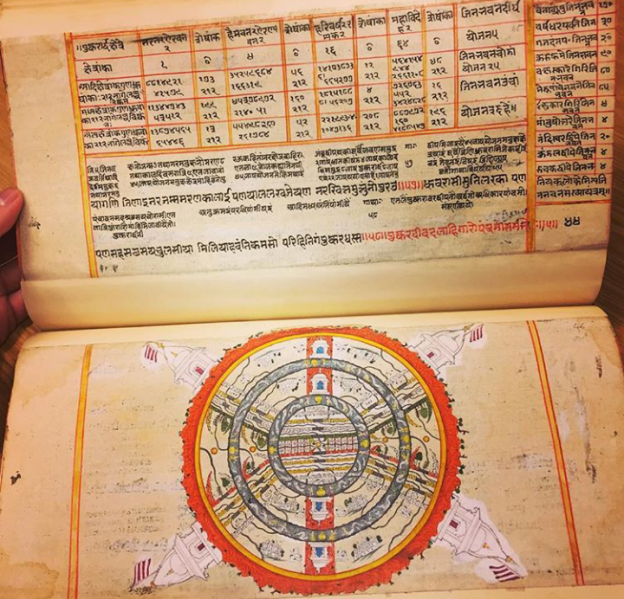
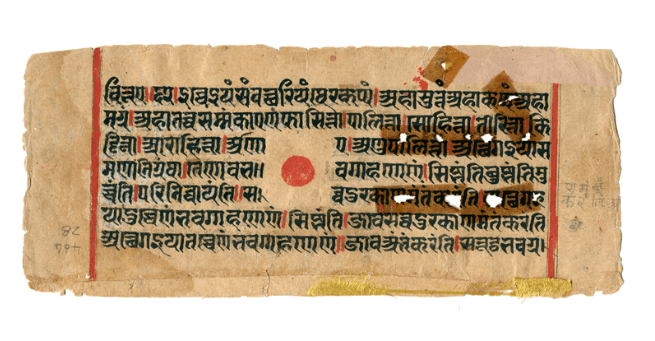
Laghusetrasamas– a Jain cosmological text written in Prakrit by the monk Ratnashekharasuri in the 14th century.
Kalpasutra (or Book of Rituals) – a 14th century Jain text

Recently, in the excavation of Babhaniyav Village near Varanasi (Uttar Pradesh), the team of archaeologists have found an inscription dating back to the period of the Kushans . The language of the inscription is Prakrit mixed Sanskrit, whereas the script is Brahmi.

The inscription unearthed from Babhaniyav Village.

On the very other note, Mirza Khan’s Tuhfat al-hind (1676) describes Prakrit as the language of “the lowest of the low”.

As a suggestive part of the topic, it should be mentioned that since Prakrit – as an entire linguistics branch, has met its ill fate without getting ample amount of attention from the mass through the passages of time. It is rather suggested that young generations must study the language, adding a feather in their cap, for becoming a multi lingual folk as well as protecting the linguistic heritage side by side.

Earthquakes in a row, Is it a warning!!!!

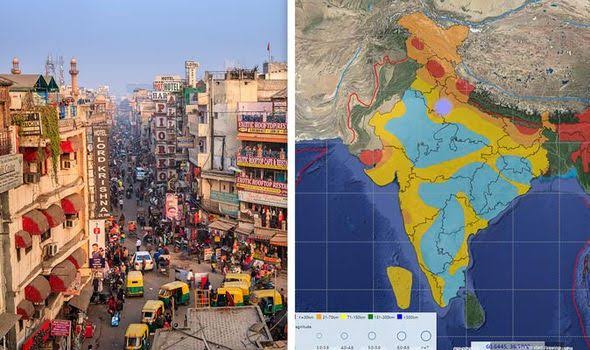
Recently in Gujarat, a 4.5 reactor earthquake hitted there. From the earlier few weeks, the no of earthquakes are going very high in numbers. It is really terrible fact that out of all the earthquakes 60% are origin from India. This is really shocking.

This type of scenario depicts the danger which can hit the nation in coming days. Scientists are studying why all this had been happening. A major earthquake comes through Delhi, and the epicenter of earthquake also same there. And the Delhi , the capital of India, where nearby 2.5 crore peoples resident. It is really terrible.

We all should be aware of earthquake. Also make ourself ready for it. A quick drill also must be followed at resident society. If we prepared for it, surely we will survive in this disaster, afterall it is very dangerous as it comes without giving any clues to us.

THE NEED OF THE HOUR

Your mental health influences how you think, feel, and behave in daily life. It also affects your ability to cope with stress, overcome challenges, build relationships, and recover from life’s setbacks and hardships.

Strong mental health isn’t just the absence of mental health problems. Being mentally or emotionally healthy is much more than being free of depression, anxiety, or other psychological issues. Rather than the absence of mental illness, mental health refers to the presence of positive characteristics.

People who are mentally healthy have
A sense of contentment
A zest for living and the ability to laugh and have fun.
The ability to deal with stress and bounce back from adversity.
A sense of meaning and purpose, in both their activities and their relationships.
The flexibility to learn new skills and adapt to change.
A balance between work and play, rest and activity, etc.
The ability to build and maintain fulfilling relationships.
Self-confidence and high self-esteem.
The relationship between resilience and mental health
Having solid mental health doesn’t mean that you never go through bad times or experience emotional problems. We all go through disappointments, loss, and change. And while these are normal parts of life, they can still cause sadness, anxiety, and stress. But just as physically healthy people are better able to bounce back from illness or injury, people with strong mental health are better able to bounce back from adversity, trauma, and stress. This ability is called resilience.

People who are emotionally and mentally resilient have the tools for coping with difficult situations and maintaining a positive outlook. They remain focused, flexible, and productive, in bad times as well as good. Their resilience also makes them less afraid of new experiences or an uncertain future. Even when they don’t immediately know how a problem will get resolved, they are hopeful that a solution will eventually be found.

Whether you’re looking to cope with a specific mental health problem, handle your emotions better, or simply to feel more positive and energetic, there are plenty of ways to take control of your mental health—starting today.

Anyone can suffer from mental or emotional health problems—and over a lifetime most of us will. This year alone, about one in five of us will suffer from a diagnosable mental disorder. Yet, despite how common mental health problems are, many of us make no effort to improve our situation.

We ignore the emotional messages that tell us something is wrong and try toughing it out by distracting ourselves or self-medicating with alcohol, drugs, or self-destructive behaviors. We bottle up our problems in the hope that others won’t notice. We hope that our situation will eventually improve on its own. Or we simply give up—telling ourselves this is “just the way we are.”

The good news is: you don’t have to feel bad. There are practices you can adopt to elevate your mood, become more resilient, and enjoy life more. But just as it requires effort to build and maintain physical health, so it is with mental health. We have to work harder these days to ensure strong mental health, simply because there are so many ways that life takes a toll on our emotional well-being.

Why are we often reluctant or unable to address our mental health needs?
Our inability to address our mental health needs stems from a variety of reasons:

In some societies, mental and emotional issues are seen as less legitimate than physical issues. They’re seen as a sign of weakness or somehow as being our own fault.
Some people mistakenly see mental health problems as something we should know how to “snap out of.” Men, especially, would often rather bottle up their feelings than seek help.
In the modern age, we’re obsessed with seeking simple answers to complex problems. We look for connection with others by compulsively checking social media instead of reaching out to people in the real world; to boost our mood and ease depression we take a pill, rather than address the underlying issues.
Many people think that if they do seek help for mental and emotional problems, the only treatment options available are medication (which comes with unwanted side effects) or therapy (which can be lengthy and expensive). The truth is that, whatever your issues, there are steps you can take to improve the way you feel and experience greater mental and emotional well-being. And you can start today!
Make social connection a priority—especially face-to-face
No matter how much time you devote to improving your mental and emotional health, you will still need the company of others to feel and function at your best. Humans are social creatures with emotional needs for relationships and positive connections to others. We’re not meant to survive, let alone thrive, in isolation. Our social brains crave companionship—even when experience has made us shy and distrustful of others.

Why is face-to-face connection so important?
Phone calls and social networks have their place, but nothing can beat the stress-busting, mood-boosting power of quality face-to-face time with other people.

The key is to interact with someone who is a “good listener”—someone you can regularly talk to in person, who will listen to you without their own conceptions of how you should think or feel. A good listener will listen to the feelings behind your words, and won’t interrupt, judge, or criticize you.

Reaching out is not a sign of weakness and it won’t make you a burden to others. Most people are flattered if you trust them enough to confide in them. If you don’t feel that you have anyone to turn to, there are good ways to build new friendships and improve your support network. In the meantime, there is still a great benefit to interacting face-to-face with acquaintances or people you encounter during the day, such as neighbors, people in the checkout line or on the bus, or the person serving you your morning coffee. Make eye contact and exchange a smile, a friendly greeting, or small talk.

Tips for connecting to others
Call a friend or loved one now and arrange to meet up. If you both lead busy lives, offer to run errands or exercise together. Try to make it a regular get-together.
If you don’t feel that you have anyone to call, reach out to acquaintances. Lots of other people feel just as uncomfortable about making new friends as you do—so be the one to break the ice. Reconnect with an old friend, invite a coworker out for lunch, or ask a neighbor to join you for coffee.
Get out from behind your TV or computer screen. Communication is a largely nonverbal experience that requires you to have direct contact with other people, so don’t neglect your real-world relationships in favor of virtual interaction.
Be a joiner. Join networking, social, or special interest groups that meet on a regular basis. These groups offer wonderful opportunities for meeting people with common interests.
Don’t be afraid to smile and say hello to strangers you cross paths with. Making a connection is beneficial to both of you—and you never know where it may lead!
Staying active is as good for the brain as it is for the body
The mind and the body are intrinsically linked. When you improve your physical health, you’ll automatically experience greater mental and emotional well-being. Physical activity also releases endorphins, powerful chemicals that lift your mood and provide added energy. Regular exercise or activity can have a major impact on mental and emotional health problems, relieve stress, improve memory, and help you to sleep better.

But what if I hate to exercise?
Well, you’re not alone. Pounding weights in a gym or jogging on a treadmill isn’t everyone’s idea of a great time. But you don’t have to be a fitness fanatic to reap the benefits of being more active. Take a walk at lunchtime through a park, walk laps in an air-conditioned mall while window shopping, throw a Frisbee with a dog, dance to your favorite music, play activity-based video games with your kids, cycle or walk to an appointment rather than drive.

You don’t have to exercise until you’re soaked in sweat or every muscle aches. Even modest amounts of physical activity can make a big difference to your mental and emotional health—and it’s something you can engage in right now to boost your energy and outlook and help you regain a sense of control.

Tips for starting an exercise routine
Aim for 30 minutes of activity on most days. If it’s easier, three 10-minute sessions can be just as effective. Start now by taking a walk or dancing to a favorite song.
Try rhythmic exercise that engages both your arms and legs, such as walking, running, swimming, weight training, martial arts, or dancing.
Add a mindfulness element to your workouts. Instead of focusing on your thoughts, focus on how your body feels as you move—how your feet hit the ground, for example, the rhythm of your breathing, or the feeling of wind on your skin.
Learn how to keep your stress levels in check
Stress takes a heavy toll on mental and emotional health, so it’s important to keep it under control. While not all stressors can be avoided, stress management strategies can help you brings things back into balance.

Talk to a friendly face. Face-to-face social interaction with someone who cares about you is the most effective way to calm your nervous system and relieve stress. Interacting with another person can quickly put the brakes on damaging stress responses like “fight-or-flight.” It also releases stress-busting hormones, so you’ll feel better even if you’re unable to alter the stressful situation itself.

Appeal to your senses. Does listening to an uplifting song make you feel calm? Or smelling ground coffee or a favorite scent? Or maybe squeezing a stress ball works quickly to make you feel centered? Everyone responds to sensory input a little differently, so start experimenting now to find what works best for you. Once you discover how your nervous system responds to sensory input, you’ll be able to quickly calm yourself no matter where or when stress hits.

Make leisure time a priority. Partake in your favorite activities for no reason other than that they make you feel good. Go to a funny movie, take a walk on the beach, listen to music, read a good book, or talk to a friend. Doing things just because they are fun is no indulgence. Play is an emotional and mental health necessity.

Make time for contemplation and appreciation. Think about the things you’re grateful for. Mediate, pray, enjoy the sunset, or simply take a moment to pay attention to what is good, positive, and beautiful as you go about your day.

Take up a relaxation practice. While sensory input can relieve stress in the moment, relaxation techniques can help reduce your overall levels of stress—although they’re likely to take more time to learn effectively. Yoga, mindfulness meditation, deep breathing, or progressive muscle relaxation can put the brakes on stress and bring your mind and body back into a state of balance.

Manage emotions to relieve stress
Understanding and accepting your emotions—especially those unpleasant ones many of us try to ignore—can make a huge difference in your ability to manage stress and balance your moods. HelpGuide’s free Emotional Intelligence Toolkit can show you how.

Eat a brain-healthy diet to support strong mental health
Unless you’ve tried to change your diet in the past, you may not be aware how much of what you eat—and don’t eat—affects the way you think and feel. An unhealthy diet can take a toll on your brain and mood, disrupt your sleep, sap your energy, and weaken your immune system. Conversely, switching to a wholesome diet, low in sugar and rich in healthy fats, can give you more energy, improve your sleep and mood, and help you to look and feel your best.

People respond slightly differently to certain foods, depending on genetics and other health factors, so experiment with how the food you include in—or cut from—your diet changes the way you feel. The best place to start is by cutting out the “bad fats” that can damage your mood and outlook, and replace them with “good fats” that support brain-health.

Foods that adversely affect mood
Caffeine
Alcohol
Trans fats or anything with “partially hydrogenated” oil
Foods with high levels of chemical preservatives or hormones
Sugary snacks
Refined carbs (such as white rice or white flour)
Fried food
Foods that boost mood
Fatty fish rich in Omega-3s such as salmon, herring, mackerel, anchovies, sardines, tuna
Nuts such as walnuts, almonds, cashews, peanuts
Avocados
Flaxseed
Beans
Leafy greens such as spinach, kale, Brussel’s sprouts
Fresh fruit such as blueberries
Don’t skimp on sleep—it matters more than you think
If you lead a busy life, cutting back on sleep may seem like a smart move. But when it comes to your mental health, getting enough sleep is a necessity, not a luxury. Skipping even a few hours here and there can take a toll on your mood, energy, mental sharpness, and ability to handle stress. And over the long-term, chronic sleep loss can wreak havoc on your health and outlook.

While adults should aim for seven to nine hours of quality sleep each night, it’s often unrealistic to expect sleep to come the moment you lay down and close your eyes. Your brain needs time to unwind at the end of the day. That means taking a break from the stimulation of screens—TV, phone, tablet, computer—in the two hours before bedtime, putting aside work, and postponing arguments, worrying, or brainstorming until the next day.

Tips for getting better sleep
If anxiety or chronic worrying dominates your thoughts at night, there are steps you can take to learn how to stop worrying.
To wind down, calm the mind, and prepare for sleep, try taking a warm bath, reading by a soft light, listening to soothing music, or practicing a relaxation technique before bed.
To help set your body’s internal clock and optimize the quality of your sleep, stick to a regular sleep-wake schedule, even on weekends.
Make sure your bedroom is dark, cool, and quiet. Curtains, white noise machines, and fans can help.
Find purpose and meaning in life
Everyone derives meaning and purpose in different ways that involve benefitting others, as well as yourself. You may think of it as a way to feel needed, feel good about yourself, a purpose that drives you on, or simply a reason to get out of bed in the morning. In biological terms, finding meaning and purpose is essential to brain health as it can help generate new cells and create new neural pathways in the brain. It can also strengthen your immune system, alleviate pain, relieve stress, and keep you motivated to pursue the other steps to improve mental and emotional health. However you derive meaning and purpose in life, it’s important to do it every day.

What gives you meaning and purpose?
Engaging work that provides meaning to yourself and others. Partake in activities that challenge your creativity and make you feel productive, whether or not you get paid for them. Some ideas are gardening, drawing, writing, playing an instrument, or building something in your workshop.

Relationships. Spending quality time where you give of yourself to people who matter to you, whether they’re friends, grandkids, or elderly relatives, can support both your health and theirs, while also providing a sense of purpose.

Caring for a pet. Yes, pets are a responsibility, but caring for one makes you feel needed and loved. There’s no love quite as unconditional as the love a pet can give. Animals can also get you out of the house for exercise and expose you to new people and places.

Volunteering. Just as we’re hard-wired to be social, we’re also hard-wired to give to others. The meaning and purpose derived from helping others or the community can enrich and expand your life—and make you happier. There’s no limit to the individual and group volunteer opportunities you can explore. Schools, churches, nonprofits, and charitable organizations of all sorts depend on volunteers for their survival.

Caregiving. Taking care of an aging parent, a handicapped spouse, or a child with a physical or mental illness is an act of kindness, love, and loyalty—and can be as rewarding and meaningful as it is challenging.

When to seek professional help
If you’ve made consistent efforts to improve your mental and emotional health and still aren’t functioning optimally at home, work, or in your relationships, it may be time to seek professional help. Following these self-help steps will still benefit you, though. In fact, input from a caring professional can often help motivate us to take better care of ourselves.