Procrastination.

If you’ve ever put off an important task by, say, alphabetizing your spice drawer, you know it wouldn’t be fair to describe yourself as lazy.

After all, alphabetizing requires focus and effort — and hey, maybe you even went the extra mile to wipe down each bottle before putting it back. And it’s not like you’re hanging out with friends or watching Netflix. You’re cleaning — something your parents would be proud of! This isn’t laziness or bad time management. This is procrastination.

If procrastination isn’t about laziness, then what is it about?
Etymologically, “procrastination” is derived from the Latin verb procrastinare — to put off until tomorrow. But it’s more than just voluntarily delaying. Procrastination is also derived from the ancient Greek word akrasia — doing something against our better judgment.

“It’s self-harm,” said Dr. Piers Steel, a professor of motivational psychology at the University of Calgary and the author of “The Procrastination Equation: How to Stop Putting Things Off and Start Getting Stuff Done.”

That self-awareness is a key part of why procrastinating makes us feel so rotten. When we procrastinate, we’re not only aware that we’re avoiding the task in question, but also that doing so is probably a bad idea. And yet, we do it anyway.

“This is why we say that procrastination is essentially irrational,” said Dr. Fuschia Sirois, professor of psychology at the University of Sheffield. “It doesn’t make sense to do something you know is going to have negative consequences.”


She added: “People engage in this irrational cycle of chronic procrastination because of an inability to manage negative moods around a task.”

Wait. We procrastinate because of bad moods?
In short: yes.

Procrastination isn’t a unique character flaw or a mysterious curse on your ability to manage time, but a way of coping with challenging emotions and negative moods induced by certain tasks — boredom, anxiety, insecurity, frustration, resentment, self-doubt and beyond.

“Procrastination is an emotion regulation problem, not a time management problem,” said Dr. Tim Pychyl, professor of psychology and member of the Procrastination Research Group at Carleton University in Ottawa.

In a 2013 study, Dr. Pychyl and Dr. Sirois found that procrastination can be understood as “the primacy of short-term mood repair … over the longer-term pursuit of intended actions.” Put simply, procrastination is about being more focused on “the immediate urgency of managing negative moods” than getting on with the task, Dr. Sirois said.

Stop Letting Modern Distractions Steal Your AttentionMarch 26, 2019

The particular nature of our aversion depends on the given task or situation. It may be due to something inherently unpleasant about the task itself — having to clean a dirty bathroom or organizing a long, boring spreadsheet for your boss. But it might also result from deeper feelings related to the task, such as self-doubt, low self-esteem, anxiety or insecurity. Staring at a blank document, you might be thinking, I’m not smart enough to write this. Even if I am, what will people think of it? Writing is so hard. What if I do a bad job?

All of this can lead us to think that putting the document aside and cleaning that spice drawer instead is a pretty good idea.

[Like what you’re reading? Sign up here for the Smarter Living newsletter to get stories like this (and much more!) delivered straight to your inbox every Monday morning.]

But, of course, this only compounds the negative associations we have with the task, and those feelings will still be there whenever we come back to it, along with increased stress and anxiety, feelings of low self-esteem and self-blame.

In fact, there’s an entire body of research dedicated to the ruminative, self-blaming thoughts many of us tend to have in the wake of procrastination, which are known as “procrastinatory cognition.” The thoughts we have about procrastination typically exacerbate our distress and stress, which contribute to further procrastination, Dr. Sirois said.

But the momentary relief we feel when procrastinating is actually what makes the cycle especially vicious. In the immediate present, putting off a task provides relief — “you’ve been rewarded for procrastinating,” Dr. Sirois said. And we know from basic behaviorism that when we’re rewarded for something, we tend to do it again. This is precisely why procrastination tends not to be a one-off behavior, but a cycle, one that easily becomes a chronic habit.

Over time, chronic procrastination has not only productivity costs, but measurably destructive effects on our mental and physical health, including chronic stress, general psychological distress and low life satisfaction, symptoms of depression and anxiety, poor health behaviors, chronic illness and even hypertension and cardiovascular disease.

But I thought we procrastinate to feel better?
If it seems ironic that we procrastinate to avoid negative feelings, but end up feeling even worse, that’s because it is. And once again, we have evolution to thank.

Procrastination is a perfect example of present bias, our hard-wired tendency to prioritize short-term needs ahead of long-term ones.

“We really weren’t designed to think ahead into the further future because we needed to focus on providing for ourselves in the here and now,” said psychologist Dr. Hal Hershfield, a professor of marketing at the U.C.L.A. Anderson School of Management.

Dr. Hershfield’s research has shown that, on a neural level, we perceive our “future selves” more like strangers than as parts of ourselves. When we procrastinate, parts of our brains actually think that the tasks we’re putting off — and the accompanying negative feelings that await us on the other side — are somebody else’s problem.

To make things worse, we’re even less able to make thoughtful, future-oriented decisions in the midst of stress. When faced with a task that makes us feel anxious or insecure, the amygdala — the “threat detector” part of the brain — perceives that task as a genuine threat, in this case to our self-esteem or well-being. Even if we intellectually recognize that putting off the task will create more stress for ourselves in the future, our brains are still wired to be more concerned with removing the threat in the present. Researchers call this “amygdala hijack.”

Unfortunately, we can’t just tell ourselves to stop procrastinating. And despite the prevalence of “productivity hacks,” focusing on the question of how to get more work done doesn’t address the root cause of procrastination.
O.K. How do we get to the root cause of procrastination?
We must realize that, at its core, procrastination is about emotions, not productivity. The solution doesn’t involve downloading a time management app or learning new strategies for self-control. It has to do with managing our emotions in a new way.

“Our brains are always looking for relative rewards. If we have a habit loop around procrastination but we haven’t found a better reward, our brain is just going to keep doing it over and over until we give it something better to do,” said psychiatrist and neuroscientist Dr. Judson Brewer, Director of Research and Innovation at Brown University’s Mindfulness Center.

To rewire any habit, we have to give our brains what Dr. Brewer called the “Bigger Better Offer” or “B.B.O.”

In the case of procrastination, we have to find a better reward than avoidance — one that can relieve our challenging feelings in the present moment without causing harm to our future selves. The difficulty with breaking the addiction to procrastination in particular is that there is an infinite number of potential substitute actions that would still be forms of procrastination, Dr. Brewer said. That’s why the solution must therefore be internal, and not dependent on anything but ourselves.

One option is to forgive yourself in the moments you procrastinate. In a 2010 study, researchers found that students who were able to forgive themselves for procrastinating when studying for a first exam ended up procrastinating less when studying for their next exam. They concluded that self-forgiveness supported productivity by allowing “the individual to move past their maladaptive behavior and focus on the upcoming examination without the burden of past acts.”

Another tactic is the related practice of self-compassion, which is treating ourselves with kindness and understanding in the face of our mistakes and failures. In a 2012 study examining the relationship between stress, self-compassion and procrastination, Dr. Sirois found that procrastinators tend to have high stress and low self-compassion, suggesting that self-compassion provides “a buffer against negative reactions to self-relevant events.”

In fact, several studies show that self-compassion supports motivation and personal growth. Not only does it decrease psychological distress, which we now know is a primary culprit for procrastination, it also actively boosts motivation, enhances feelings of self-worth and fosters positive emotions like optimism, wisdom, curiosity and personal initiative. Best of all, self-compassion doesn’t require anything external — just a commitment to meeting your challenges with greater acceptance and kindness rather than rumination and regret.

That may be easier said than done, but try to reframe the task by considering a positive aspect of it. Perhaps you remind yourself of a time you did something similar and it turned out O.K. Or maybe you think about the beneficial outcome of completing the task. What might your boss or partner say when you show them your finished work? How will you feel about yourself?

What are some other, healthier ways to manage the feelings that typically trigger procrastination?
Cultivate curiosity: If you’re feeling tempted to procrastinate, bring your attention to the sensations arising in your mind and body. What feelings are eliciting your temptation? Where do you feel them in your body? What do they remind you of? What happens to the thought of procrastinating as you observe it? Does it intensify? Dissipate? Cause other emotions to arise? How are the sensations in your body shifting as you continue to rest your awareness on them?

Consider the next action: This is different than the age-old advice to break up a task you’re tempted to avoid into bite-sized chunks. According to Dr. Pychyl, focusing only on the “next action” helps calm our nerves, and it allows for what Dr. Pychyl called “a layer of self-deception.” At the start of a given task, you can consider the next action as a mere possibility, as if you were method acting: “What’s the next action I’d take on this if I were going to do it, even though I’m not?” Maybe you would open your email. Or perhaps you would put the date at the top of your document. Don’t wait to be in the mood to do a certain task. “Motivation follows action. Get started, and you’ll find your motivation follows,” Dr. Pychyl said.

Make your temptations more inconvenient: It’s still easier to change our circumstances than ourselves, said Gretchen Rubin, author of “Better Than Before: What I Learned About Making and Breaking Habits.” According to Ms. Rubin, we can take what we know about procrastination and “use it to our advantage” by placing obstacles between ourselves and our temptations to induce a certain degree of frustration or anxiety. If you compulsively check social media, delete those apps from your phone or “give yourself a really complicated password with not just five digits, but 12,” Ms. Rubin said. By doing this, you’re adding friction to the procrastination cycle and making the reward value of your temptation less immediate.

On the other side of the coin, Ms. Rubin also suggested that we make the things we want to do as easy as possible for ourselves. If you want to go to the gym before work but you’re not a morning person, sleep in your exercise clothes. “Try to remove every, every, every roadblock,” Ms. Rubin said.

Still, procrastination is deeply existential, as it raises questions about individual agency and how we want to spend our time as opposed to how we actually do. But it’s also a reminder of our commonality — we’re all vulnerable to painful feelings, and most of us just want to be happy with the choices we make.

Now go finish up alphabetizing that spice drawer before it becomes your next procrastination albatross.

Declutter your life!

It’s no secret that a home in disarray creates a less-than-ideal living environment.

The task of decluttering your closets (and therefore minimizing your wardrobe) can feel overwhelming, but taking time to create a peaceful, enjoyable living space improves more than just your aesthetic—it could also improve your overall sense of well-being. Not only is clutter linked to overall life dissatisfaction, but a disorganized household can also induce a cortisol response, negatively impacting mental and physical health.

And then there are the other, less tangible messes. From the digital clutter on our phones to a chaotic calendar, disorganization in other areas can lead to the same feelings of stress and overwhelm.

But where’s the best place to start? Have no fear: We’re here with a comprehensive, step-by-step guide to decluttering your life and improving your sense of well-being—one section at a time.


Declutter Your Digital Life
It may be less concrete (and visible) than other forms of clutter, but a cluttered phone or computer both zaps your device’s battery and takes up valuable storage space—not to mention makes your work and communication less efficient.

  1. Back up everything stored digitally
    Backing up photos and important documents not only speeds up your device and frees up memory; it also ensures that if your phone or computer crashes, your information (and memories!) are safe. Enter cloud storage. Take some time to backup the files you want to save on iCloud, Google Photos, or a paid cloud service with more storage space. You can also set your device to automatically back your files up periodically.
  2. Delete what doesn’t serve you
    When was the last time you used that karaoke app you downloaded last year on a whim? Deleting what you haven’t used recently (a good rule of thumb is anything that hasn’t been opened within the last month) is a great way to de-clutter your devices. Just like you’d throw away trash in your home or office, get rid of any apps, blurry selfies, and text threads that don’t add to your digital well-being.
  3. Organize files and apps
    Now that you’re left with only the most useful and beneficial items on your phone, it’s time to organize. How you move things around is up to you—you could try organizing by category or color—but either way, you’ll find that having an organized device streamlines your digital experience. We all need less screen time, right?


Declutter Your Home
Your home is where you spend most of your time, but what if it doesn’t feel like “home”? Reducing clutter in your living spaces and storage areas will simplify navigating and using your things and add an element of peace to your living environment.

  1. Toss the trash
    This is the fun part. Before you can organize the items you want to keep around, you literally need to trash the stuff that doesn’t belong. To begin the process of decluttering your home, walk through each room with a trash bag. Be ruthless with all the knick knacks, papers, and crusty cosmetics that are occupying valuable space. Of course, if there’s anything you can donate or recycle, keep that in a separate pile.
  2. Store specialty or seasonal items
    If your kitchen cabinets are cluttered, think about moving specialty cookware you use less frequently to a storage area. The same principle holds for seasonal home items. If it’s warm where you live, store your heavy blankets and flannel sheets in a designated area to free up storage space.
  3. Get rid of anything expired
    From your bathroom cabinet to your kitchen pantry, you’ve probably got some expired items lurking. Go through your medicine cabinet, cosmetics and toiletries, kitchen pantry, fridge, and freezer, and get rid of anything that’s either past its prime or unsafe to use.


Declutter Your Closet
Under the reign of Marie Kondo, we’re all inspired to simplify our closets. But decluttering your wardrobe goes beyond just getting rid of what doesn’t spark joy.

  1. Separate by seasons
    Storage space is hard to come by. Maximize your closet and dresser real estate—and make choosing what to wear much simpler—by storing all out-of-season items in under-the-bed bins or plastic storage totes. When seasons change, simply switch out your wardrobe.

Donate what you don’t wear
Go through all your clothes, lingerie, shoes, socks, and accessories. If anything doesn’t fit, has holes, or hasn’t been worn in the last three months (seasonal items notwithstanding, of course), it’s time to donate or toss it.

Create a uniform or capsule wardrobe
Want to go a step farther in decluttering your closet? Creating a capsule wardrobe or a uniform will naturally minimize wardrobe disarray and make outfit planning more efficient. Plus, you’ll probably save money and reduce impulse purchases by only buying what you know you’re going to wear.

  1. Go digital when you can
    Does your bank or cable company have a paperless option? If so, carving out some time to sign up for e-statements and bills is a simple way to reduce clutter before it starts. Similarly, if you have papers or documents accumulating in drawers, and you’re sure you don’t need hard copies, scan them in and store them electronically.
  2. Shred or recycle anything outdated
    No use in hanging on to outdated receipts or bills you paid last year if they’re just sitting around collecting dust. Collect all the papers you don’t need, recycle the ones that aren’t sensitive, and shred the ones that are.
  3. Invest in some storage and organization staples
    Organization in the office doesn’t have to be complicated. A magazine file, a simple pen cup or flatware organizer, and an accordion file could do wonders for keeping your desk or work space uncluttered (and more aesthetically pleasing).

Declutter Your Life
From routines and habits to relationships and social commitments, if it’s adding stress (or simply not contributing to your well-being), it might need to go.

  1. Conduct a calendar audit
    We’ve all said “yes” to things that don’t serve us. If your life feels unbearably full and your routines don’t seem to be working, look at your commitments. Does that stressful, monthly networking event actually help you succeed at work? What about that standing double date with friends you don’t feel connected with? By mindfully freeing up calendar space, you’ll not only reduce stress and chaos in your routines; you’ll also create more room for the things you do love.
  2. Find a planning system that works for you
    You know what they say: Fail to plan, and plan to add clutter. To keep your social life, finances, and other routines in order, find a planning system that works for you. There’s nothing wrong with an all-analog approach to calendaring and planning if a digital datebook stresses you out, and if you’re not into bullet journaling, try Evernote or iCal. But whatever planning method you use, be consistent.
  3. Set goals and work backwards
    The best way to declutter your life is to take time to think about what you value. Where do you want to be in 1, 5, or 10 years? Plan an afternoon to camp out at your favorite coffee shop and dream about the future. Then, work backwards from your goals by coming up with three measurable, timely action steps for each one. When you know where you want to go, it’s so much simpler to make good decisions in the here and now — and reduce the chances of a cluttered life.

The world’s first commercial airline was found in early 19th century.

The human fantasy for travelling in air took several centuries to become true. It was not until Jean-francois and Francois Laurent took off with the first manned free balloon on 21 November 1783, embarking the history of human aviation. Balloons that run on hot-air and light gases were largely used for adventure and army reconnaissance but were not suitable for transport service.

The founder of Zeppelin

German general, Count Ferdinand von Zeppelin developed interest in building a rigid airship for transport of humans. After joining hands with the Union of German Engineers and the industrialist Carl Berg, he began the construction of the first Zeppelin(or rigid airship) in 1899. After building various versions of zeppelin, the third version of Zeppelin named LZ 3 was considered truly successful which made an 8 hour flight

The Founding of Luftschiffbau Zeppelin

After the success of LZ 3 German army showed interest in buying Zeppelin but they demanded a zeppelin capable of flying for 24 hours straight. So LZ 4 was made to meet the expectation of the military but the attempt for a 24 hour flight ended when it had to make a landing because of a mechanical problem. During the stop, a storm led to the destruction of LZ 4. Following this accident they received huge donations from the public which led to the founding of the company, Luftschiffbau Zeppelin, a rigid-ship or zeppelin manufacturer.

The world’s first Airline

Luftschiffbau Zeppelin was finding it difficult to obtain orders from the military. So, the business manager of Zeppelin Luftschiffbau, Alfred Colsman thought of exploiting the public enthusiasts by starting a commercial passenger carrying company. But, Von Zeppelin refrained himself from commercializing his idea while Alfred Colsman continued to raise investment for starting the company. He sought the help of Albert Ballin who was later responsible for the one-fourth total capital raised. He found DELAG on 16 November 1909 which was the world’s first airline.

Operation history

DELAG operated the rigid airships manufactured by Luftschiffbau Zeppelin. LZ-7 named Deutschland was the first zeppelin to be built for DELAG. The ship had a capacity of 24 passengers while the cruising speed was 51 km/hr. Due to the low speed DELAG gave up the idea of providing inter-city passenger transport service and offered only cruise flights. But it was destroyed when it took off with a group of journalists that intended to generate publicity. This left the company with only one airship LZ 6 that was built for the army. The company modified it for the commercial purpose. This ship made several successful cruise flights until it was destroyed in fire when stationed in its hangar. The luck of the company changed when LZ 10 was delivered to the company which made intercity passenger transport possible. LZ 10 is considered as the first commercially successful passenger-carrying aircraft. LZ 10 was first flown on 26 June 1911 and was inducted into the service on 16 July 1911. In its career it made a total 218 flights while carrying 1553 passengers. By July 1914, DELAG had transported 34,028 passengers on 1558 commercial flights, the fleet of the company completed 3176 hours of flight covering 1,72,535 kilometers.

End of DELAG

The company DELAG flew its last airship named ‘Graf Zeppelin’ before the successor to DELAG, Deutsche Zeppelin Reederei was founded in 1935.  

History of Internet…

internet is a global computer network providing a variety of information and communication facilities, consisting of interconnected networks using standardized communication protocols. It connects millions of computers together globally, forming a network in which any computer can communicate with any other computer as long as they are both connected to the Internet. the full form of the internet is  Interconnected Network, firstly the Internet has its origin in the efforts to build and interconnect computer networks that arose from research and development in the United States and involved international collaboration, particularly with researchers in the United Kingdom and France.

Fundamental theoretical work in data transmission and information theory was developed by Claude Shannon, Harry Nyquist, and Ralph Hartley in the early 20th century. Information theory, as enunciated by Shannon in 1948, provided a firm theoretical underpinning to understand the trade-offs between signal-to-noise ratio, bandwidth, and error-free transmission in the presence of noise, in telecommunications technology. With so many different network methods, something was needed to unify them. Robert E. Kahn of DARPA and ARPANET recruited Vinton Cerf of Stanford University to work with him on the problem. By 1973, they had worked out a fundamental reformulation, where the differences between network protocols were hidden by using a common internetwork protocol, and instead of the network being responsible for the reliability, as in the ARPANET, the hosts became responsible. Cerf credits Hubert Zimmermann and Louis Pouzin designer of the CYCLADES network and his graduate students Judy Estrin, Richard Karp, Yogen Dalal, and Carl Sunshine with important work on this design.

800px-Internet_map_in_February_82

During the first decade or so of the public Internet, the immense changes it would eventually enable in the 2000s were still nascent. In terms of providing context for this period, mobile cellular devices like smartphones and other cellular devices, which today provide near-universal access, were used for business and not a routine household item owned by parents and children worldwide. Social media in the modern sense had yet to come into existence, laptops were bulky and most households did not have computers. Data rates were slow and most people lacked means to video or digitize video; media storage was transitioning slowly from analog tape to digital optical discs (DVD and to an extent still, floppy disc to CD). Enabling technologies used from the early 2000s such as PHP, modern JavaScript, and Java, technologies such as AJAX, HTML 4, and various software frameworks, which enabled and simplified speed of web development, largely awaited invention and their eventual widespread adoption.

The Internet was widely used for mailing lists, emails, e-commerce and early popular online shopping (Amazon and eBay for example), online forums and bulletin boards, and personal websites and blogs, and use was growing rapidly, but by more modern standards the systems used were static and lacked widespread social engagement. It awaited a number of events in the early 2000s to change from a communications technology to gradually develop into a key part of global society’s infrastructure.

The first Internet link into low earth orbit was established on January 22, 2010, when astronaut T. J. Creamer posted the first unassisted update to his Twitter account from the International Space Station, marking the extension of the Internet into space..) This personal Web access, which NASA calls the Crew Support LAN, uses the space station’s high-speed Ku band microwave link. To surf the Web, astronauts can use a station laptop computer to control a desktop computer on Earth, and they can talk to their families and friends on Earth using Voice over IP equipment.

Communication with spacecraft beyond earth orbit has traditionally been over point-to-point links through the Deep Space Network. Each such data link must be manually scheduled and configured. In the late 1990s, NASA and Google began working on a new network protocol, Delay-tolerant networking which automates this process, allows networking of spaceborne transmission nodes, and takes the fact into account that spacecraft can temporarily lose contact because they move behind the Moon or planets, or because space weather disrupts the connection. Under such conditions, DTN retransmits data packages instead of dropping them, as the standard TCP/IP Internet Protocol does. NASA conducted the first field test of what it calls the “deep space internet” in November 2008. Testing of DTN-based communications between the International Space Station and Earth has been ongoing since March 2009 and is scheduled to continue until March 2014.

As the Internet grew through the 1980s and early 1990s, many people realized the increasing need to be able to find and organize files and information. Projects such as Archie, Gopher, WAIS, and the FTP Archive list attempted to create ways to organize distributed data. In the early 1990s, Gopher, invented by Mark P. McCahill offered a viable alternative to the World Wide Web. However, in 1993 the World Wide Web saw many advances to indexing and ease of access through search engines, which often neglected Gopher and Gopherspace. As popularity increased through the ease of use, investment incentives also grew until in the middle of 1994 the WWW’s popularity gained the upper hand. Then it became clear that Gopher and the other projects were doomed to fall short.

In recent years, it’s become very clear that the internet is key to living in the modern age. Basically, everyone is expected to have an internet connection and everyone is expected to use that internet on a daily basis. The idea of doing something as simple as finding work without the internet is alien to most Europeans. I remember entering a job center in Norway and seeing the staff completely baffled and out of ideas when I informed them I was temporarily out of the internet. I also found it near impossible to manage here without some form of daily internet access, I think everyone who has been without it for more than a day will realize how much they rely on it, not just ‘want’ it.

However, when people think, “free internet” I don’t think they mean “we should have free WiFi hotspots everywhere.” I think they instead mean that you should not have to pay for WiFi to be wired to your house, and you should not be charged by a company to provide you the internet. I agree with this fully, the internet should not be a paid commodity like it’s simply something you can go without, it simply is too important. Like water and electricity, most developed countries monitor these services consistently and try to ensure they’re as cheap as possible, otherwise, the cost of surviving is simply too high, that’s why you can often find electricity and water for rather cheap prices. Internet, however, can be damned expensive, and the packages and contracts that must be signed are sometimes akin to signing a contract with the devil. Sometimes the companies won’t even deliver your modem, or they will purposely throttle you in order to ensure you upgrade your package. Internet providers can be, and often are, thieves, it’s almost completely unchecked.

In 2015, Google started the ‘Station’ program to bring free public Wi-Fi to 400 busiest railway stations in New Delhi, India, Google has decided to gradually wind down the service globally as it believes that better data plans and improving mobile connectivity have made it “simpler and cheaper” for users to get online. Google explained that it took the decision to end the program because it was becoming difficult to scale up and to make a sustainable business. The company had worked with various partners in each market where it offered the Station service, but each had different technical and infrastructure requirements. In India, it worked with RailTel, Indian Railways, and Pune Smart City, for example, while in South Africa it worked with Think WiFi. However, Google isn’t the only company to have tried to make it easier for users in developing markets to get online. Facebook founded the Internet.org project in 2013, and in 2016 it launched Express Wi-Fi In India after its previous internet service was banned in the country.


Prioritize!!!

“What can I start doing today to make my life happier and more fulfilling?”

This is one of the most common questions readers ask us via email, blog comments, and social media.  So today I want to share some simple, actionable ways to improve your happiness and wellbeing on a daily basis.

In the seven years of this blog’s existence, Angel and I have had the pleasure of meeting, coaching and interacting with hundreds of truly inspiring, happy, prolific people.  And the more we have interacted with people like this, the more we realize the similarities in how they prioritize their lives, and how their priorities align with our own.

What becomes evident is that, to sustain happiness, we must focus our attention on the right things, in the right ways.  Every growing human being (that means all of us) has resource constraints: limited time and energy.  It is critical that we spend our resources effectively.

Here are 10 ways to prioritize your life and your to-do lists for increased happiness and fulfillment:

1.  One thing at a time, with full presence.

In other words, make the thing you have chosen to do the number one priority while you’re doing it.  Focus with your full attention.  See the value in where you are, while you’re there.  Enjoy what’s happening, while it’s happening.

In the end, you will come to realize that the best days are the days when you don’t need anything extreme or special to happen to make you smile.  You simply appreciate the moments and feel gratitude, seeking nothing else, nothing more.  That is what true happiness is all about.

2.  Family and close friends are at the top.

Nurture your important relationships in such a way that when you tell the people you care about that you care about them, you’re simply reinforcing what they already know based on how you have prioritized people in your life.

Give them your full attention.  Let them see their own beauty in your eyes.  Let them find their own voice through your listening ears.  Help them discover their own greatness in your presence.

Make the people you love a top priority, always.

3.  Focus on importance, not urgency.

As Johann Wolfgang von Goethe once said, “Things which matter most must never be at the mercy of things which matter least.”

Truthfully, the most important thing in life is knowing what the most important things in life are, and prioritizing them accordingly.  Sadly, most of us spend too much time on urgent things and not enough time on important things.

So do yourself a favor and implement these three action steps every time you’re building or sorting your to-do list:

  1. Think about the difference between what is urgent and what is important.
  2. Review all the obligations on your list.
  3. Do what’s important first.

Sometimes everything on your list will look important, which might be true to an extent.  But as you practice prioritizing, you will get better and better at it.  And eventually you will know, without question, when to set aside the important things in order to accomplish the vital ones, like spending quality time with loved ones. 

4.  Keep your efforts aligned with your purpose.

Getting anything worthwhile done is a matter of connecting with why you have chosen to do this thing in the first place.

Don’t allow others to confuse you.  Don’t let them convince your heart what is right for you.  Your heart already knows.  Listen to it.  Don’t let anyone else dilute the power of your inner voice.  You’ve got to stand up for something specific, on your own two legs, or you will achieve nothing worthwhile in your own mind’s eye.

Within you there is a formidable and undeniable sense of purpose.  Happiness comes from making a solid and persistent connection to that purpose.  When your intentions are supported by a “why” that has meaning, you will find the “how” to bring them to life.

5.  Play to your strengths and delegate when it makes sense.

When it comes to tackling big projects, you can try to do everything yourself, or you can reach out and find the right people to help you.  The first choice will raise your stress and blood pressure; the second choice will raise your consciousness and effectiveness.

Choosing the right perspective is so important; you CAN see life’s challenges as opportunities.  When an unexpected obstacle is suddenly standing in your way, don’t get overwhelmed.  Take a breather and regroup.  Someone else nearby knows how to get around it.  Find and engage them.

For example, if your website is suddenly having glitches with a new web browser, don’t read a giant book on web design.  Hire a professional web designer.  See the problem as an opportunity to delegate.  Life is trying to teach you that most long-term, worthy endeavors are team efforts, and so much more palatable when shared with others.  Every unexpected obstacle in life is a lesson on teamwork in disguise, solvable with the right team of people.

6.  Socialize and share with peers.

Regardless of what you’re trying to accomplish, it’s always easier if you have a group of people who understand what you’re doing, why you’re doing it, and what challenges you’re facing.  Staying in touch with these people and sharing ideas with them will accelerate your effectiveness and happiness.  Best selling author, Seth Godin, refers to these people as your tribe members.

A tribe is a group of people connected to one another via an idea, movement or common goal.  For millions of years, human beings have been part of one tribe or another.  Godin says, “A group needs only two things to be a tribe: a shared interest and a way to communicate.”

Every single one of us craves the feeling of being part of something bigger than ourselves.  By nature, we are tribal, but oftentimes we become disconnected from our tribe.  We know our people are out there – somewhere – but we feel lost and disconnected from them.  If you’re feeling disconnected, open up to your peers and initiate a conversation. 

7.  Give what you can, as you seek what you desire.

In many ways, life is a circle – what you put in to it comes back around.  When you make a positive impact in the world, the world will have a positive impact on you.

If you want to be rich, be generous.  If you want to make friends, be friendly.  If you want to be heard, listen.  If you want to be understood by others, take the time to truly understand them.  If you want to live an interesting life, be interested in the happenings around you.

You won’t always get back exactly what you wanted or expected, but when you give what you can you almost always receive what you need.  (Read The Secret.)

8.  Leave the past behind as you plan ahead.

Let old problems remain where they belong – in the past.  No matter how many times you revisit the past, there’s nothing new to see.  Don’t let what once happened get in the way of what is happening.  Just because you’ve made mistakes doesn’t mean your mistakes get to make you.  If something important didn’t work yesterday, figure out what changes can be made today.

Tame your inner critic; let go and move on productively.  You must make a conscious effort to do this, it won’t happen automatically.  You will have to rise up and say, “I don’t care how hard this is.  I don’t care how disappointed I am.  I’m not going to let yesterday’s problems get the best of me.  I’m taking the lessons and moving on with my life.”

9.  Commit to self-respect, regardless of the issue at hand.

Whenever you catch yourself in a rambling bout of negative self-talk, stop and ask yourself, “If I had a friend who spoke to me in the same way that I sometimes speak to myself, how long would I allow this person to be my friend?”

Remember, the way you treat yourself sets the standard for others, and the world at large, to follow.  Above everyone else, YOU deserve YOUR respect.  So make sure your decisions, behaviors and actions reflect your self-respect as you carry out your plans.  

10.  Leave room to breathe.

Things don’t always go as planned.  Good things can’t always be planned.  Be flexible and open to life’s twists and turns.

Organize, but don’t agonize.  Keep your space and time ordered, but your schedule under booked.  Create a foundation with a soft place to land, a wide margin of error, and room to think and breathe…

Freeing yourself from an overbooked schedule lets you experience more of life’s good surprises, and also provides you with flexibility when the unforeseen disrupts your foresight.

Afterthoughts

So, in summary…

Focus on your priorities, but take things in stride.  Make decisions, not excuses.  Live one moment at a time.  Count your blessings, not your troubles.  Let the wrong things go.  Look for lessons in unforeseen obstacles.  Ask for help.  Give as much as you take.  Make time for those who matter.  Laugh when you can.  Cry when you need to.  And always stay true to your values.

Your turn…

Which of the ten points above do you need to work on?

What other happiness tips are on your to-do list?

We would love to hear from you.  Please leave a comment below and share your thoughts and insights with the community.

Inspirational Tips for Students Motivation

One of the most important features, as well as challenges of a student is motivation. All people need motivation to keep up with their daily tasks and obligations, but, for a student, the need to be constantly motivated is enhanced.

In order to build a good career for yourself, you need to be consistent with your academic efforts. To do so, you need to be motivated not only to choose your field of study, but to actually finish your day-to-day tasks in time.

In spite of knowing this, most students aren’t thrilled about their academic obligations. There’s probably not a single student in the world who hasn’t felt lack of motivation to get up for class or do his homework. For most students, this is an almost every day experience. The tiredness and pressure can make you lose your motivation to study. Thankfully, there’s such a thing as self motivation, which means that you are the one responsible for your productivity and success.

  1. Change the Perspective

None of the motivational tricks and tips will ever work unless you change your perspective toward learning or finishing projects.

Seeing how students learn a variety of subjects and work on versatile projects to build several skills they’ll need in life, it is only natural that you won’t be interested in every topic you come across.

Even so, you’ll still have to study that topic or write a paper on it. Therefore, the best answer I can give you to the question how to get motivated is simply to accept this as something beneficial to you.

Even if you don’t like math, the skill you’ll obtain by studying will serve you a lot in life. Those who don’t like writing, see their written homework as a torture, but writing is a crucial skill to succeed in today’s world.

The sooner you change your perspective, the more willing you’ll be to do your assignments.

  1. Focus on Your Areas of Interest

You can’t love every subject you’re studying. It is unnatural and no one does. But, while you have to work on all your skills and study for all subjects, you can focus most of your efforts on the things you love. After all, pursuing something you love is the best thing you can do for your future career.

Don’t slack off in terms of other subjects, but try to turn your favorite area of study into your hobby. Research the field, get involved in it, and simply build a healthy study habit by using your area of interest.

If you do this often, you’ll be more productive to study. Focusing on the things you love can keep you productive and build a fine study habit for you, which is something that will keep you in the mood when you have to study for the other subjects.

  1. Reward Yourself for a Job Well Done

Even the smallest accomplishment can give you a sense of satisfaction. The goal of every student is to graduate, but, to get there, you need more than just one big goal.

Give yourself small goals to keep you motivated to work on them. When you are finished with a task successfully, reward yourself for it. It doesn’t have to be anything big. A night out with friends, some time in front of the TV watching your favorite TV show, or a day spent with family – every idea you like is good enough.

Learning and Motivation
If a big project gave you a lot of trouble, but you finally made it through, you deserve your reward.
4.Get Some Support

There are plenty of places where you can get support and motivation. Work with your friends and peers, ask others for help, and look for motivation in different places. When you lose focus from your studies, a bit of a competition will keep you running.

Ask your teachers for help, find and hire a professional, or simply tell your family that you feel exhausted. Having support is crucial during busy times such as your student years.

Conclusion
The constant workload and academic pressure can cause tiredness and overwhelm in every student. To keep yourself motivated to finish your studies and perform well, you need these motivation tips and tricks. Try to practice them throughout your education.

New announcement made by Madhya Pradesh government

From a long time there has been many conflicts regarding the conduction of college exams. Madhya Pradesh government had already denied the general promotion for college students. Chief minister of Madhya Pradesh had said that students studied really hard for their exams and it would be unfair with them if exams won’t be conducted.

But now, Madhya Pradesh government took a big decision in the favour of students. Yesterday, Higher education department, Madhya Pradesh, tweeted that there will be no exams for college students due to this corona virus pandemic. They announced that undergraduate students of first and second year and post graduate students of first year don’t have to give exams, they will be given marks on the basis of their previous semester result. Meanwhile, students pursuing final year in graduation and Post graduation will also don’t have to give exams and will be marked on the basis of highest marks obtained in previous semesters and those who will not be satisfied with their marks can write exams which would be conducted offline in the future and can be an opportunity to score better.

Schedule regarding reopening of the schools is not yet decided and is said to be decided after reviewing the conditions. For those students who didn’t gave 12th class exam due to some reasons, exams will be reconducted. It is possible that, the result will be announced soon for class 10th and 12th students in July.

The government didn’t gave much detailed information on this issue to the public but hope it will be cleared soon.

Depression in Men

Men are often seen as strong beings that are in control of their emotions. They try to act tough whenever they feel overwhelmed by despair or hopelessness by trying to deny it or covering it up like nothing. But depression has become a common problem today affecting the daily lives of many. It is taking a heavy toll on the work and home life of people all the while expecting them to tough it out.

Depression affects millions of men of all ages and backgrounds targeting even those who are close to them – partners, family, and friends. But it is a treatable health condition, not a sign of emotional weakness. However, male depression affects your life deeply, changing the way you think, act, and feel. Sometimes it can be intense and unrelenting all the while affecting your relationships, sleep and diet patterns, and overall sense of enjoyment in life.

Depression in men often gets overlooked since they tend to be less adept at recognizing symptoms than women. This can result in it going untreated which can have serious consequences.

depression

Signs of Depression:

The classic signs are despondent mood, disturbance in weight and sleep, and concentration problems. The overlooked or stealth signs include physical pain, anger, and reckless behavior. Men often feel agitated and turn to substance abuse. They lose control over negative thoughts and feel hopeless and helpless.

How to deal with depression:

It takes courage to seek help though, be it from a loved one or a professional. Most men suffering from depression respond well to self-help steps.

  1. Connect socially
  2. Maintain a healthy lifestyle
  3. Seek help from a professional

man up

  1. Connect socially: The first step involves finding people you can really connect with, someone with whom you can share your feelings without any fear of judgment from them. Understand that you already have a non-verbal communication with those who are close to you but fighting depression needs actual words. Improve your social network and push yourself for social activities. This will help you interact with people acting as a diversion for your mood. Sometimes solving others’ problems gives a better boost to your morale than solving your own.
  2. Maintain a healthy lifestyle: The second step is maintaining a healthy lifestyle at any given time. Aim for a good night’s sleep at least eight hours long. Identify your stress triggers and find ways to regain control of your life by overcoming them. Practice relaxation techniques or meditation. Yoga helps keep your body active and soothes your mind. Indulge in more activities that interest you like taking a walk or listening to music. A positive lifestyle also includes regular exercise and a balanced diet.
  3. Seek help from a professional: Lastly, you could also seek help from a mental health professional. Even to the most skeptical males, therapy often does wonders by bringing a sense of relief to the mind. After all, there is nothing unmanly in talking to a stranger about your problems if it is doing well to you in the end.

Image Courtesy: GOOGLE

The SuperNova, the dreamer, the photon in a double slit and the achiever,a self-made man ~ Sushant Singh Rajput 🔭

A person’s death caused so many of us to become observant about the facts related to him. Where from he started his career, where did he land, about his possessions, about his family, about his relationships, about his bucket list, about his travels, about the dreams he fulfilled, how good he was as a person, about the rejections he faced, about his abandonment, about the way he was humiliated or boycotted, his interviews and what not?

Okay so imagine, you being exceptionally wonderful in your academics, cracked the engineering entrance holding a single digit rank, you get into one of the reputed colleges of your country, you are about to get your degree and you suddenly are struck by the thought of dropping engineering and following your passion although you are not sure about how successful you will be in it or will you even be able to get into that stream where you will be attacked by Nepotism. Tough decision, ain’t it? which requires alot of courage and understanding. You need to convince yourself and most importantly your family that you will surely reach heights and will not give them any chance to point out a finger at your decision. And then imagine, your family not being that good financially but you still took that decision.
You did theatres, you danced behind those famous star kids, you got a big break through a   TV series, you made a debut through a movie, you fairly did well, you gave some hits, you rejected some movies because you wanted to do a movie of your choice, you where never called to parties, you where denied the acknowledgement by your other fellow stars, you were not awarded for the movies which made crores on boxoffice, then your where boycotted not because of your skills but because of the choices you made, the movies you signed with the directors where taken away from you, lockdown hits, you are alone at your house thinking that no one tried to see the potential you got, no one tried to figure out the hardships you went through to reach where you are and people denying that they don’t recognise you. Today people are claiming that these humiliations and rejections made him fall into depression, killed his mental health, made him emotionally weak and forced him to commit a suicide?

You seriously think so? I wrote this long paragraph so that we can analyse where we are going wrong. Rejections and humiliations are a part of life and I agree that it shatters some part of you but it will never make you step into your coffin. What actually harms you is no one being around you to discuss about your problems, what breaks you is the decision that you made. You remorse about it, you are surrounded by the thoughts of what you would have been if you continued with your academics, you see yourself in dark, you get those negative feelings of you never getting a chance for any other movie because you have no godfather, people will stand against you, no one will watch your movies and so your career is finished, you failed. You let down your family, you let down your mother who was watching you from above, you could not meet their expectations, you will be bullied for your decisions because you could not become a STAR and so you finally choose to become a ⭐. Not the rejections but the repentance brings you to a situation where you just don’t have answers for those questions in your mind,   even nobody else bought you the answers and so you just want to end up thinking, you don’t want to face the cruelty prevailing outside and you want yourself out of this trauma and put a full stop to your pain.

Acceptance and dignity is what every human being craves for. Sushant Singh Rajput was not a special case. So, if his sudden demise still does not changes you, your opinions, your mindset and your choices, then that day is not far away when few among we audiences will certainly take the same step. Start respecting you near ones decision, start appreciating their  efforts, don’t humiliate them for their mistakes, give them positivity, serve them optimism, talk to them, make sure they never feel low. Stay connected because boycotting the star kids is incomplete till you start appreciating the work of the talented ones. Make sure that the journalists realise how pathetically they had put the camera on that numbed person’s face who is yet to digest his son’s loss, who is still trying to figure out where he went wrong and who is still regretting that he could have been there for his son patting his back.

We can’t have him back but we can make sure that no one else has to use ‘.’ punctuation ever in their life.

You will be the brightest among all those stars in the sky
And we will be here, gazing at you
So that you don’t have to think again that why,
those few denied of having no clue
About you!
Rest in peace dear SSR💜

Still I can’t believe that he attempted suicide. Daily something new comes up ! I am unable to move on ! Still its a question it was a suicide or a murder ?

ORGANISING


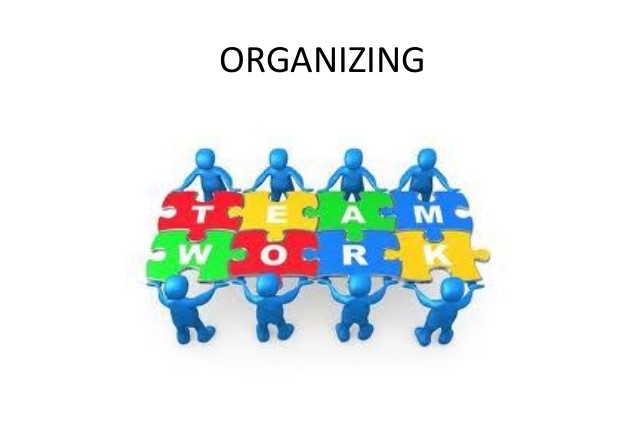
The organisation provides a framework where duties are identified, define tasks are allotted to suitable persons, and interrelationships of personal are made certain and the joint efforts made by different persons become more productive, effective and economical if a well-knit organization is provided by the management and the purpose of establishing an organization, this is to enable its personnel to work more effectively as a unit and no wonder organisation serves as the backbone of management and it is very foundation of most of the steps of operating management.

Organising can be defined as “Organisation is a harmonious adjustment of specialised parts or the accomplishment of common purpose or purposes” by Haney. The organisation is the process of identifying and grouping the work performed, defining and delegating responsibility and authority and establishing a relationship to enable people to work together in accomplishing common objectives.

NATURE OF ORGANISING

1. Division of work

The setting of an organisation involves division of the total work into various activities and functions and assigning the tasks to different persons according to their skill, ability and experience.

2. Chain of command

The superior-subordinate relationship established in an organisation is based on the authority which flows from the higher levels of management to the immediately lower of management and thereby forming a hierarchical chain and is known as the chain of command.

3. Plurality of Persons

The organisation is a group of many persons who assemble to fulfil a common purpose and a single individual cannot create an organisation.

4. Common Objectives

There are various parts of an organisation with different functions to perform but all move in the direction of achieving a general objective.

5. Group of people

An organisation comes into existence when a group of people combine their efforts for some common purpose and willingly contribute towards their common endeavour.

6. Common Purpose

Every organisation comes into existence based on goals of the enterprise which are separate from the personal goals of the people employed and it is the common purpose of the organisation which provides the basis of cooperation among its members.

7. Vertical and Horizontal Relationships

An Organisation creates cooperative relationships between different departments and divisions as well as between superiors and subordinates. The duties and responsibility of superiors and subordinates in each department or division are also unified to serve the purpose of their joint efforts.

8. Organising is a universal process

Organising is needed both in business and also in non-business organisations and nor only this, an organisation will be needed where two or more than two people work jointly. Therefore, an organisation has the quality of universality.

9. Dynamics of organisation

Besides the structural relationships among people which are based on their activities and functions, there exists an organising interaction based on sentiments, attitudes and behaviour of individuals and groups and they are subject to change from time to time.

According to Chester Bernard, Communication, Cooperation and Spirit of service and common objectives are the main elements of the organisation.

Role of Technology in Lesson Planning…

We live in a highly advanced digital world. Technology is an essential part of all different fields of life and same goes for the education sector. It has been almost 20 years since the first computers arrived in the country’s classrooms. Schools across the nation have spent zillions of dollars on introducing technology to the schools since then. Integrating technology into Education sector and lesson planning has facilitated us thoroughly. The perspectives on how technology can be utilized in the Education sector are many. We believe that technology has become a vital part of our education system. Today, we witness that students have access to systems, gadgets, and internet on schools and campuses. 

Technology can help teachers create lessons that will allow the quickly moving students to delve deeper into the subject or explore related topics while allowing the slower students more time to understand the material.Technology has revolutionized the way humans interact and connect with each other, and modern classrooms, homes, and offices are drastically different from how they were just 20 or 30 years ago. Students today need to prepare for a workplace more exposed than ever to social media, television, video games, and other technological advancements. By bringing technology into the classroom, teachers help prepare students to handle the professional world of the future.

Seven ways in which teachers can leverage Internet to enhance classroom learning:-

  1. The amount of information available. With the use of Internet there would be limitless opportunities.
  2. The modern languages opportunities. These are extremely valuable in professional world.
  3. Access to new norms of education.
  4. Individualised lessons.
  5. Adding new meaning to student’s projects.
  6. The chance to learn and explore many different cultures of the world.
  7. Student collaboration opportunities.

The penetration of digital education into the hinterland / rural market is evolving fast. Affordable high-speed internet and direct to device technologies are empowering rural students to study courses online and improve their skills and knowledge. Digital learning is at least as effective as classroom courses. The motivation and expectations of the learner are critical to retention and successful completion of a digital course.

Impact:-

Technology can be used to organize, demonstrate, acquire, and communicate information. Technology integration makes the lesson planning process something similar to curriculum planning. The main difference comes as to how the students essentially acquire skills and knowledge. Technology also makes a difference in how they apply and demonstrate their acquired skills and knowledge. It also helps in assessing and evaluating their learning. Incorporating the use of computer influences the basic structure of a lesson plan.

Making best use of technology:-

Planning ahead is always a good practice. It helps you figure out and brainstorm effective methods of teaching and introducing technology in creative ways. In addition to this, many technology utilities essentially facilitate the teachers, other than assignments and evaluation. Teachers can save their time and energy and can use them in other creative activities in the classroom. They can use technology in creating attendance spreadsheets instead of using the long, conventional ways of keeping attendance tracking. Having easy-to-access and well-organized folders containing student information, contact information, grades, and assignments also helps teachers in storing class-related information digitally. This essentially reduces the clutter on their desks and improves their focus.

Age and maturity are likely to be significant factors in successful completion of a digital course. The proliferation of digital technologies is bringing radical changes in the way education is being delivered and received. The outreach of educational programs is improving day by day with the digitalization of education. Digital education is providing both teachers and students new opportunities to teach and learn thereby ensuring greater participation in the overall learning process.

Technology can be utilized to improve teaching and learning and help our students be successful. Through the use of learning management systems students can access online resources to get assistance on demand beyond the physical reach of their teacher. Technology can also extend education in another way.

Refrences:-

resilienteducator.com

Can Life Have Too Much Meaning?

I’m suspicious of those things where more is always supposed to be better. Nature prefers moderation, so good things can harm you when you get too much of them. Drinking more water is good. Too much and you’ll drown.

I think “meaning” is one of those things that is usually good, but that can cause you problems when there is too much of it.

What Meaning Means

Meaning is a slippery word, so it’s hard to be clear we’re using it the same way. However, we all know when a person, thing, goal or idea feels significant to us, and when those same things feel ordinary. The difference is meaning.

In addition to being a feeling, meaning is also an idea. When someone asks you what something means, they’re asking for you to explain it in words. They want its definition, cause or likely implications. Meanings are words and ideas you weave together in your head.

More meaning tends to be better. A complete absence of meaning usually (although perhaps not always) feels awful. Similarly, a lack of meaning in the conceptual sense is confusion and ignorance. We’d prefer to say what things mean and believe it, than to simply shrug our shoulders and say, “I don’t know.”

How Can You Have Too Much Meaning?

I think there’s two ways you can have too much meaning.

First, you could feel too strongly about the significance of something. We’ve all had anxiety and fears when something is so important to us that we’re unable to function. That relationship that you wanted to hold onto even though the other person wasn’t in love with you. That job which meant everything to you—until you got fired. That conviction you held to desperately, until it started to unravel.

Feelings are mental tools. They put our minds into a state that allows certain ideas, actions and thoughts to flow more easily than others. However, to allow some ideas to flow more easily, that must necessarily mean you’re blocking others. The feeling of significance therefore will be useful in some contexts and harmful in others, just like anger, fear, optimism, joy, love, sadness and everything else you feel.

The second way you can have too much meaning is related to the intellectual idea of meaning. If you have a strong set of ideas about what something means, either in terms of its definition, explanation or implied effects, that can “lock” you into a certain way of seeing things. Too much meaning can prevent you from seeing something in another way, and other perspectives may be necessary to solve certain problems.

How to Tell if You Have Too Much Meaning


I suspect that the anxiety and fear we often feel in our daily lives is a result of too much meaning, rather than too little. It’s a combination of a strong feeling of significance, along with a perceived lack of control.

If you follow politics, you may feel like the world is going mad, and that the battles over who leads the country and what policies they implement is extremely significant. Yet, at the same time, you may feel nearly powerless to control the results.

Similarly, in your personal life, there may be situations where there isn’t much more you can do to overcome a problem, but you can’t stop thinking about it. Although people don’t often see their anxieties and fears as resulting from an excess in meaning, it follows that this is the case because if you genuinely didn’t feel the situation was significant you wouldn’t worry about it.

Intellectually an excess of meaning can result in an overly rigid and fixed way of viewing the world. Your ideas, explanations and reasoning about the world is so tight, that you get stuck when you encounter situations that fail to make sense for you.

Is Mindfulness the Relaxation of Meaning?


I have an explanation of meditation and mindfulness and why it seems to be so popular.

Mindfulness, particularly the body-scanning methods popular among Vipassana retreats, are effectively, a way of reducing the emotional and intellectual excesses of meaning.

A common experience when you’re practicing, for instance, is to have a pain somewhere in your body. At first this feels very significant and something that you ought to do something about. After twenty minutes though, the pain starts to turn into something more abstract, perhaps an odd pulsation or throbbing that has changing characteristics.

At one level, I think what has happened is similar to how if you repeat the same word over and over again (say the word “meaning” a few dozen times out loud to get what I mean). By repetitive attention something that would be processed at a level of meaning dissolves into parts that lack that meaning and you start experiencing something that seems to lack connection to the meanings you had previously.

I hesitate to say this is entirely what’s going on with meditation. Many meditators will note the opposite experience: that suddenly the world feels filled with a hidden specialness that was invisible before.

However, I also suspect that this may be a consequence of the thorough de-meaning-ization of your regular experience. Dehabituate your normal filters for processing meaning and new ones will start forming again in the vacuum. Those new ones may not have the same obstacles as the old ones and the fresh perspective may be more enjoyable.

Should You Take Time to “Relax” Your Meaning of Life?


I think meanings, especially intense ones, are an important part of living life well. Don’t confuse what I’m saying for arguing we should all live nihilistically.

Rather, I think what’s necessary is that, from time to time, you are able to temporarily “relax” your meanings in life. This relaxation may be necessary to get out of ruts where your current way of viewing the situation is frustrated and can’t allow you to live your best life.

These meaningness relaxations may be related to specific situations (i.e. how you think about your future career) or it could be more global (i.e. should you find meaning in ambition at all?).

I also suspect that there is no perfect state of meanings, no eternal viewpoint that will be good for all things. Therefore, relaxation of meaning is probably a necessary adjustment that needs to be done every once in awhile. The new meanings you get to may not be any better (in an absolute sense) than the ones you went in with, but they may help you see around obstacles that keep you from living a good life.

Global COVID-19 cases exceed 90 lakhs

At the global level, the number of confirmed COVID-19 cases have exceeded 90 lakhs, with nearly four lakh 70 thousand fatalities.

According to data compiled by Johns Hopkins University, 90 lakhs six thousand 757 cases of Novel Coronavirus have been reported across the world.

The United States continues to remain the worst-hit with 22 lakh 91 thousand 353 cases and one lakh 20 thousand 106 deaths, followed by Brazil 10 lakh 83 thousand 341 cases and over 50 thousand deaths and Russia reported five lakh 84 thousand 680 cases and over eight thousand deaths. Other countries with over two lakh cases include India, Britain, Spain, Peru, Italy, Chile and Iran. 

3 Brain Training Apps to Try out Now

Just like you can train your body to get stronger, there are ways to give your brain even better capabilities. Working out at a gym allows you to tone your muscles and improve your cardiovascular stamina, while brain training apps can sharpen your brain, making it easier for you to focus and learn new skills.
It all comes back to the idea of neuroplasticity, which is the brain’s ability to create new connections in response to certain circumstances or changes in your environment. Neuroplasticity helps you to retain memories, make fresh ones and even master unfamiliar skills.
Brain training apps use the process of neuroplasticity through games in an effort to help reshape the brain. According to Nadine Kaslow, Ph.D., professor and vice chair at Emory University’s Department of Psychiatry and President of the American Psychological Association, reports that apps can boost mental health through games that have been specifically designed to improve brain function. Next time you pick up your smartphone, consider downloading any of these three best brain training apps that will put your mind to the test:

Lumosity

This app is designed by a team of scientists and designers, and has more than 50 cognitive games that are tailored to different brain goals such as problem-solving, attention, processing speed and memory. Lumosity allows you to track your mental progress with each game and even compares your performance to the other 70 million people using the app. According to developers, just one session a day on the app may improve mental skills.

Elevate

Just like Lumosity, this brain app offers more than 35 mini games that target skills such as focus, math, speaking abilities, comprehension and memory. However, the app is a bit more personalized than its competitors. Elevate keeps track of how many times you log-in regularly and even tweaks the games to become more challenging as your mind becomes sharper.

Fit Brains Trainer

The designers of this app were able to make brain training both fun and challenging through more than 60 games and in-depth performance reports so you can track your progress. Fit Brains Trainer works to target all areas of the brain, including concentration, language and visual-spatial, memory and speed of thinking. However, it also focuses on the development of other skills, including self-control and social awareness. This app will even send you training reminders so you can constantly stay mentally sharp.

Medical curriculum will have to adapt itself in post-COVID era, says Union Minister Dr Jitendra Singh

Union Minister of State in the Prime Minister’s Office Dr Jitendra Singh has said that there is going to be renewed focus on the study and management of infectious diseases in the post-COVID era. He said, the medical curriculum will have to adapt itself accordingly.

Dr Jitendra Singh was addressing a Virtual Conference with the Heads and representatives of National Medical Teaching Institutes, including All India Institute of Medical Sciences (AIIMS) New Delhi, PGI, Chandigarh, Regional Institute of Medical Sciences (RIMS), Manipur, North Eastern Indira Gandhi Regional Institute of Health and Medical Sciences (NEIGRIHMS), Shillong and Sher-e-Kashmir Institute of Medical Sciences, Srinagar yesterday.

Dr Jitendra Singh said, in the last three decades, the disease spectrum in India shifted to non-communicable diseases and hence the medical teaching focussed more on metabolic and vascular disorders like Diabetes Mellitus and coronary heart diseases while the infectious diseases took a back seat.

Dr Singh said, COVID, however, has suddenly awakened the whole world, particularly the medical fraternity, to realize that the age of infections is far from over. Dr Jitendra Singh said, Indian medical fraternity has an advantage over their western counterparts because here the practice of medicine was inherently tuned to preions based on hygiene and prevention of cross infections. He said, in the wake of COVID also, Indian medical fraternity was quick to reorient itself to the new norms of medical management.