How to deal with Telephobia?

Telephobia or phone-phobia has become a major problem for introverts and ambiverts of this generation. Telephobia primarily refers to the tendency of being scared to take or make phone calls. It does not take place in one day. The fear takes time to become a disorder. It is a gradual process through which the anxiety makes its root in an individual and makes them nervous to have conversations on phone.

Introverts, who already have a hard time taking initiatives in making conversations are more likely to have this disorder. A constant fear of forming sentences correctly , the fear of whether or not they would be able to answer properly to the other person, or saying something inappropriate are the most common fears telephonic people face. The amount varies from person to person and everyone faces it in a different way. For some people it is something that is not serious and they can easily get over it if they want to. At the same time, it becomes a huge problem for many people who start ignoring important calls on a daily basis that affects their personal and professional life.

However, a few preparatory steps can be taken in order to make the phone conversations better and less exhausting.


1. Maintain a script

This may sound unusual but having a script prepared before making or taking a phone call can actually make a huge difference in the conversation. If not a detailed and descriptive write-up, a few points can also be helpful for people who feel really nervous to take phone calls. Supposed questions are to be kept in mind and their answers can be jotted down as bullet points in order to have successful phone conversations.

2. Practice with close friends

Telephobic people find it really intimidating to talk to unknown people on phone, therefore, the exercise to have small talks and conversations with people they are comfortable with can be a good start. Those people would already be aware of their issue and hence it they would be extra cooperative. Once the habit of talking on phone enhances, it will be less awkward and way more comfortable to have phone conversations.

3. Maintain flexible gestures

Many people often tend to have a static and stiff attitude while having a phone conversation. It really makes the conversation more awkward and less spontaneous. Telephobic people however, have to start maintaining a flexible and fluid body movement in order to have a better conversation. A smile, flexible hand gestures can really go a long way and make the conversation way better.

4. Mirror conversations

Many people tend to find having a mirror conversation helpful. Before making a phone call, practicing a bit in front of the mirror of talking on phone while having a mirror in front of them can be really helpful and make a huge difference in maintaining a good conversation.

These are some of the basic methods that can be taken up by people who tend to suffer from telephobia. However, those who suffer from extreme anxiety or nervousness would be recommended to visit a psychiatrist for it may lead to different dangerous consequences if not taken care properly.

-Suvasree Bandyopadhyay.

What you need to get the best out of you.

The Goal is Not the Point

Imagine, for a moment, that your life is like a treasure hunt.

It’s not much of a leap, really. Like any good treasure hunt, you have a map to guide you. In life, the map is your corner of the universe. Some of the areas on the map you know quite well. These areas are the places and people and things that you’re familiar with and that are part of your daily life.

Other areas of the map are foreign to you. These yet-to-be-explored regions are home to the milestones in life that you can imagine reaching, but that have eluded you thus far. This undiscovered portion of the map is where your hopes and goals and dreams live. These goals are like little pieces of buried treasure that are hidden somewhere out on the map, somewhere that you hope to get to soon.

One day, a particular goal grabs your attention and you decide to set out on a treasure hunt.

Searching for Buried Treasure

You begin the long hike toward your treasure and encounter a challenge or two along the way. Already the actual path is starting to look different than the buried treasure that you had been imagining. Things get worse when you finally arrive to the spot of the treasure.

This whole time, you had been imagining a chest filled with gold. After uncovering the treasure, however, all you can find are a few scraps of silver and some antique relics. These items are valuable in their own right, for sure, but they were not what you were thinking about this whole time.

You say to yourself, “This doesn’t look like the treasure I was envisioning! I must be on the wrong path. I wasted all this time!”

After thinking for a few moments, you wonder, “Hmm… maybe I should switch goals? I bet there is bigger treasure elsewhere.”

Theory vs. Practice

I’ve certainly experienced situations similar to the treasure hunt described above. Perhaps you have too.

I’m talking about situations where the goal we were excited to pursue—getting a degree, starting a new exercise routine, making a career change—turns out to look very different in practice than in theory.

It’s natural to feel a sense of disappointment or confusion or frustration when this occurs, but I think the deeper problem is rooted in how we approached the treasure hunt in the first place.

Goals as a Compass

The problem with a treasure hunt is that most people spend all of their time thinking about the treasure. The fastest way to get to a particular spot, however, is to set your compass and start walking.

The idea here is to commit to your goal with the utmost conviction. Develop a clear, single-minded focus for where you are headed. Then, however, you do something strange. You release the desire to achieve a particular outcome and focus instead on the slow march forward.

Pour all of your energy into the journey, be present in the moment, be committed to the path you are walking. Know that you are moving unwaveringly in one clear direction and that this direction is right for you, but never get wrapped up in a particular result or achieving a certain goal by a specific time.

In other words, your goal becomes your compass, not your buried treasure. The goal is your direction, not your destination. The goal is a mission that you are on, a path that you follow. Whatever comes from that path—whatever treasure you happen to find along this journey—well, that’s just fine. It is the commitment to walking the path that matters.

New Solutions vs. Old Solutions

We have a tendency to undervalue answers that we have already discovered. We under utilize old solutions—even if they are best practices—because they seem like something we have already considered.

Here’s the problem: “Everybody already knows that” is very different from “Everybody already does that.” Just because a solution is known doesn’t mean it is utilized.

Even more critical, just because a solution is implemented occasionally, doesn’t mean it is implemented consistently..

We assume that new solutions are needed if we want to make real progress, but that isn’t always the case.

Use What You Already Have

This pattern is just as present in our personal lives as it is in corporations and governments. We waste the resources and ideas at our fingertips because they don’t seem new and exciting.

There are many examples of behaviors, big and small, that have the opportunity to drive progress in our lives if we just did them with more consistency. Flossing every day. Never missing workouts. Performing fundamental business tasks each day, not just when you have time. Apologizing more often.

Of course, these answers are boring. Mastering the fundamentals isn’t awesome, but it works. No matter what task you are working on, there is a simple checklist of steps that you can follow right now—basic fundamentals that you have known about for years—that can immediately yield results if you just practice them more consistently.

Progress often hides behind boring solutions and underused insights. You don’t need more information. You don’t need a better strategy. You just need to do more of what already works.

How to Live on Twenty-four Hours a Day

How to Live twenty four hours a day accomplished exactly what Arnold Bennett had hoped it would. It made people keenly aware of the value of time aware of the time, and especially the importance of using leisure time to some advantage instead of just frittering it away. It encouraged many to budget their time and spend it more wisely, to use hours they formerly wasted to advance themselves, to improve their minds, their personalities, their careers, and their lives – to add to their happiness.


The little book was an immediate success. It made thousands of eager, enthusiastic converts to Arnold Bennett’s method of self discipline and self direction. Letters began to pour in from people who had organised their time as he suggested, and had joyfully discovered it gave extra zest and interest to all their daily activities. The idea of budgeting time like money, and using it as carefully, was widely discussed in the press and from the lecture platform. How to live on Twenty Four Hours a Day became more than a title ; it became one of the most familiar and inspiring Phase of that period.


Bennett himself was amazed at the ever increasing interest in his idea. “I have received a large amount of correspondence concerning this small work!” he marvelled in his preface to one of the later editions. He was to marvel even more in later years when it remained one of his most popular books – in spite of such famous works as The Old Wives’ Tales, Clayhanger, Riceyman Steps, and The Vanguard.


How to live on Twenty-Four Hours a Day has become a little classic on self improvement, and is still one of Arnold Bennett’s best known books. An old time favourite, it continues to make new friends; for it provides the inspired a answer to all who complain they “haven’t a minute spare” or “just can’t find the time.” It proves that the time is there, twenty-four golden hours of it every day; and that all one has to do is spend it wisely and well to secure the greatest returns in happiness and contentment.


Taken from Light from many Lamps by Lillian Eichler Watson.

India reels from police brutality

Police brutality, ever since the death of George Floyd, the world had been reeling from the inhumane way police treat the “suspects”. Since then a number of protests have surged throughout the world regarding the brutality of police and thus moving to the broader spectrum of overall racism faced by the African-American community in America. While such a movement has done a lot of good, it has also spread a false sense of ease, projecting that such cases of the police brutalizing people is limited to America only. However, that is not the case, in countries such as India the problem is much larger and much more multi-faceted. Here the police do not target by race but by the Social status of a person, i.e. your monetary worth determines how the police treat you.

Photo by NEOSiAM 2020 on Pexels.com

People are often seen chanting the same old things such as know your rights, no one can arrest you without a warrant after such cases, however the problem is, that it isn’t the case of ground reality. Very often at the mere mention of their rights, the “alleged suspects” are beaten to an inch of their lives. Less than a month since the killing of George Floyd, another incident has the world reeling at the blatant lack of humanity within those who call themselves police. The case of P. Jeyraj and J. Fenix shows how these uniformed thugs terrorise the common folk. The cause of their arrest was an alleged violation of Covid-19 Curfew; however, several eyewitnesses deny to that as the arrest took place 30 mins before that. After the arrest of his father, Fenix reaches the station to inquire and is taken into custody. The father-son duo is beaten, nay brutalized by the police. They are tortured beyond imagination and after three days of constant torture the two succumb to their injuries. However, in order to cover up their crime the police file a hospital notice that the two allegedly fell and rolled over and had a subsequent hearth attack, however upon a closer look at the bodies by eyewitnesses that was no the case. The two had injuries throughout their bodies, their chest hair had been ripped out in tufts, their knees completely smashed by lathis, their faces pushed against the walls and blows rained upon their backsides and buttocks until they bled and ripped and subsequently the were stripped naked and thrown into jail. This is way to excessive just for a curfew break and just for this, the responsible police should have been sentenced to the maximum. However, this was not the case as the two were tortured way beyond this by someone who shouldn’t even be considered human. Their cries were heard throughout the time they were tortured. Behind the bars, where there are no CCTV cameras, these goons did their evil deed, they showed up iron tipped lathis or batons up their buttholes several times and their genitalia and backsides were completely ripped and mangled. Three times during the course of this torture, their blood-soaked clothes were sent back to their homes and fresh ones were demanded and then they would be sent back and so on. After a phony trial with a magistrate by the police, the two were taken back to custody and the torture upon their bodies and souls resumed. Two days after the phony trial the two were admitted into a hospital, and were pronounced dead due to heart failure and fever. This shows that even the medical practitioners hand out fake reports for the police. Since this issue came to light even after the blatant trying of Tamil Nadu police to cover it up, a mere two sub inspectors have been suspended and a few have been transferred. That seems like way below the bare minimum that the responsible authorities could do. To define how small the heinous crime’s punishment is, let us compare it to the sentencing of any given rapist. Nirbhaya case’s culprits dragged their cases for eight years. People arguing no matter how irrefutably inhumane their crime was they deserved the treatment of human beings. How is it that Indian society gives better treatment to bloody rapists than lower middleclass working people? How is it that even a terrorist is treated with better respect than a common folk. This wasn’t just a murder, this was a brutalizing work of psychopaths, who have no shred of human morality. No one should be treated like this, much less people who have “allegedly” committed such a small crime. We as a society must question ourselves that how can we progress further if we turn a blind eye to such events.

I feel that I speak about a vast majority of people who are going to see something like this, feel sad for about a minute or so and forget about it because it hasn’t happened to them. However, to them I say, you are even worse than these scums because the only one worse than someone who commits such a crime is someone who can act upon it but doesn’t.

India as a country has rotten to its core, rape, murder and now torture has become common place. In today’s India, Might makes Right. It is up to us, the future generation to change it, but by the looks of it we don’t have the ability to do so.

STOP WASTING YOUR TIME!!

We think nothing of spending two hours on scrolling the social media and also spent almost half of day in front of TV.But if we spend money on any device or we are not using after few weeks, then we start feeling guilty about this. why we don’t think about waste our precious time. Or by using this time we can achieve our goal. Instead wasting time on useless thing we can follow our dreams, passion, hobby.

your greatest asset is time, but someone think or beliefs that their greatest assets are money. They are wrong absolutely. If you can give something to your special one or loved one a very precious thing, it is your time which means a lot for your family and loved one. If you wanna achieve something , so you have to give your very precious thing which is time. It doesn’t matter how much money you have if you have no time to enjoy it. You will never be able to take your money with you when you finally run out of time.

What does wasting time really mean? A good way to measure this is to look at how you are spending your time each day for doing any useful thing. Before sleeping just you have to calculate your time period which you spend in your work, study etc. Which matters for you. Then you automatically know how much time you are wasting or using for doing any fruitful things. When you are wasting your time you don’t even realize how much of your precious time you just waste on some silly or meaningless thing. But when you are focusing on your work you start checking your watch start calculating time.

If you are going through each day aimlessly—waking up at late, complaining for going school , college, or your work place, go unhappy to your workplace or not taking interest in your studies or work, in lunch break just tell to your friends or colleagues about how much you hate work or study or about your boss or teachers, returning home at the end of the day to sit exhausted on the sofa while consuming hours of pointless entertainment on your TV or phone you are wasting time.

If you feel your day has been wasted, then it probably was. You are not making the most of your time each day.

1. Have a Plan for the Day

The biggest time waste is not having any kind of plan for the day or week. When we don’t have a plan for the day, we just drift through the day reacting to anything that comes our way and not making any progress towards our goals or purpose.

We watch the news and let politicians anger us and then get involved in political discussions with people we don’t know who do not share our views. These ‘discussions’ frustrate us, cause our negative emotions to rise and leaves us feeling angry and empty.

If you stopped and asked yourself why you were getting involved in such discussions, you would probably discover there is no reason at all. It is just a waste of time. You are not likely to persuade a person who does not share your political beliefs to change theirs.

2. Be Aware of Your ‘Time Suckers’

Being aware of where your ‘time suckers’ are is the first step to making the most of your available time. Starting with the basics, we should be doing work that inspires us. If your current job does not inspire you, investing some time to find a vocation that does inspire you would be a good use of your time.

Watching how much time you are spending on social media is another area to be aware of. Are you spending too much time scrolling through your social media feeds? If so, perhaps you should be limiting the amount of time you spend there each day.

Time Management: How to Stop Wasting Time

  1. Set Goals. How do you get to where you want to go in life? …
  2. Track Your Time. Some people are good with managing budgets, knowing how much money they earn and what their monthly expenses are. …
  3. Establish Priorities. …
  4. Keep to a Schedule. …
  5. Tackle Tough Stuff First. …
  6. Take Notes. …
  7. Allot Time Carefully. …
  8. Keep Yourself on Accountable

Importance of Reading Books

“There is more treasure in books than in all the pirate’s loot on Treasure Island.” – Walt Disney

Reading exposes us to new things, new ways, new understanding, new information, new ways to handle situations and new ways to solve them. It develops positive thinking and gives you a better perspective of life. It also enhances your knowledge, improves our concentration and makes us more confident. The importance of reading books is that it is giving you time to take a break from all your troubles. Once you get back to the real world, all those problems are much easier to tackle as your mind has been refreshed. Hence, it is important to develop the habit of reading not only for the sake of knowledge but also for personal growth and development.

Reading books makes us more knowledgeable and also enhances our memory power. With all our knowledge, vocabulary and grammar skills gained from reading, our confidence gets a huge boost and it helps us grow in all aspects of our life whether personal or professional. Reading can help us grow and give a new perspective about life. The benefits of reading books is that reading involves plots and character personalities, as well as events and human emotions. It also means remembering all these details to enable you to get through the book. Hence reading benefits the brain by forcing it to increase its ability to remember and improving our memory. Reading books is also vital for learning new languages as it helps non- native speakers alleviate, gain exposure and fluency in the language. Reading also improves our concentration because while we are read, we focus only on what is there in our book and nothing else. Hence it increases our attention span and improves our reasoning and logical skills. There’s a reading genre for every person on the planet, and whether our tastes lie in classical literature, poetry, fashion magazines, biographies, religious texts, young adult books, self-help guides, street lit, or romance novels, there’s something out there to capture our curiosity and imagination. Books enable us to have a glimpse into cultures, traditions, arts, history, geography, health, psychology, several other subjects , aspects of life and reading good books can influence us positively and guide us towards the right direction in life.

Reading habits develop vivid imagination, knowledge and vocabulary. It exposes us to the world of imagination as it gives us different ideas and understanding. As our imagination improves, so does our creativity and our ability to relate to things in new ways. As we read more and more, we are exposed to new things and new ideas. Our creativity and our way of inter-relating things improve. This leads to creative thinking. It also helps relieve stress as a good, engaging book will distract us and keep us in the present moment, letting tensions drain away and allowing us to relax. It is important to read a good book at least for a few minutes each day to stretch the brain muscles for healthy functioning. Hence, it is very important to develop good reading habits.

Cooking and Cleaning as Life Skills, nothing to do with Gender.

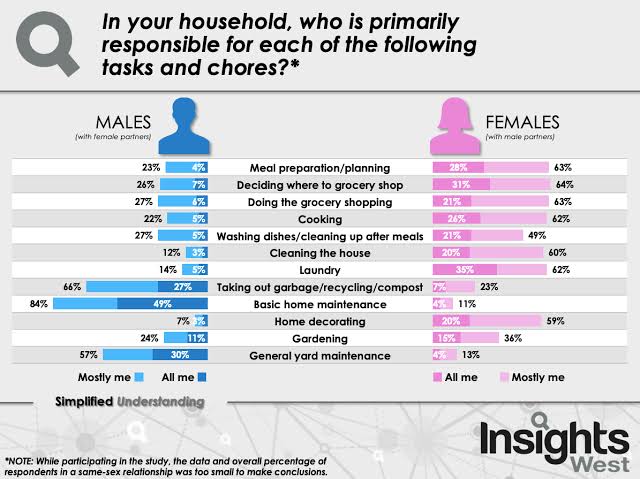
Taking care of your stuff is a life skill and it shouldn’t be embarrassing to do so. The girls mostly are indulged in household chores irrespective of boys. Girls between 5 and 14 years old spend 40 percent additional time, or 160 million more hours a day, on unpaid household duties and collecting water and firewood compared with boys of their age, according to a report released by UNICEF ahead of International Day of the Girl on 11 October. This appropriate data shows the disproportionate burden on girls that begins at an early age of 5. Girls between 5 and 9 of age devote approximately 40 million more hours a day in the household tasks as compared to boys. As the age increases, the time spent also increases with girls of 10 to 14 years old contributing 120 million more hours each day. 

Deepening gender gap as household works are girls responsibilities!

“The overburden of unpaid household work begins in early childhood and intensifies as girls reach adolescence,” said UNICEF’s Principal Gender Advisor Anju Malhotra.  “As a result, girls sacrifice important opportunities to learn, grow, and just enjoy their childhood. This unequal distribution of labor among children also perpetuates gender stereotypes and the double-burden on women and girls across generations.” The report also states that the efforts of girls are less valued and even not noticeable by the society. They can’t enjoy their life, socialize and devote time to studying as that of boys. 

Story of a girl who was raped while traveling to the market.

Heading to or from the market, collecting firewood and water often leaves women and girls at risk of rape. A sixteen-year-old girl who was raped while traveling from her village to Nyala, the capital of South Darfur, described the attack on Human Rights.

[I was with] a group of girls traveling from our village to Nyala….I had a brother working in the market and I wanted to collect some goods from him. Some of us were traveling on donkeys and others were walking. Suddenly the Janjaweed attacked us; they took our money and our donkeys. The majority [of the girls] managed to escape; me, my cousin and my sister were captured. They took all our topes and veils, they left us only with our dresses. We were screaming. I was taken with my younger cousin to the wood; I don’t know where they took my sister. One of them forced me on the ground and all the time I was resisting them….all the time one of the Janjaweed kept his gun pointed at my head. They started raping me. I was bleeding heavily but could do nothing. It was so painful, but fear was even more than pain. Four of them raped me.

The point is, there are numerous crimes of sexual assault that are committed when girls and women go for collecting firewood or water.

Safety and responsibilities begin at home!

A college in Spain introduced ‘Home Economics’ as a compulsory subject.

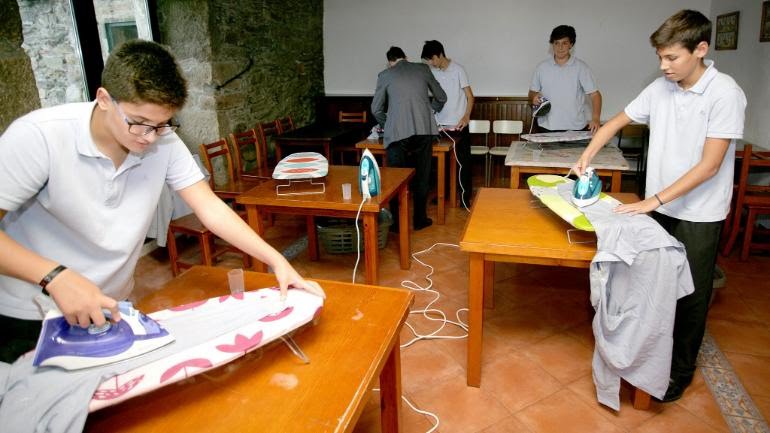
This idea of household chores as women’s responsibility is not anymore completely true. This Spanish school is attempting to improve this thinking by introducing”Home Economics”. Colegio Montecastelo, an institute located in Vigo, a town near North-Western Spain. The initiative was started as just a cooking class but later it was appreciated and hence skills of washing, ironing, and keeping a tidy house were added. Now, Colegio Montecastelo is intending to expand access to this course while different institutions in Spain have begun to develop their example by giving such classes to develop everyday life skills for students.

Will this initiative become a big win for gender equality?

Why Joy Is Important for Healing Developmental Trauma


“We all have everything we need within us to create our fullest potential.” ~Abraham Maslow

Did you grow up with a critical, distant, or ignorant mother?

She probably made sure that your physical needs were covered, but she never noticed or understood your emotional needs. If she was anything like my mum, she may even have shamed you for having them!

You’re an adult now, and you have everything you need to be happy. So why aren’t you? Instead, you feel unworthy, disconnected, and lonely even when you’re with people you love. There’s this constant emptiness inside that makes you angry and sad at the same time.

Maybe you still long for a loving mother like you did when you were young, hoping that one day she’ll show up, or maybe you’ve given up hope that your mother will ever change.

Either way, she left open wounds inside your entire being—invisible traces of the trauma that you sustained. And you need to heal these wounds so that you can rediscover your true nature, activate your full potential, and live a life of your choice—a life filled with joy.

Healing is crucial for your health—mental, physical and spiritual alike. The good news is, you don’t have to live in misery waiting for the “perfect” day to start being happy. In fact, bringing more joy into your life now will help you heal.

Think about it this way: Joy is like the sun that eats away grey clouds and opens up the skies. Everything it touches brightens up and fills with the energy of growth.

Joy helps minimize the stress of the fight-or-flight reactions that you grew accustomed to because of to your traumatic past. It activates positive patterns in your brain instead, helping you heal and thrive.

Just like it helped me.

How I Learned to Speak Joy
I was thirty-one when I made the life-changing decision to move abroad, far away from the stress of the strained relationship with my mum. On the outside, I was a confident adult woman, the mother of a seven-year-old boy. But inside, I felt like a scared little girl longing for a safe place to hide.

Moving to a new country brought much positive change into my life. But, like nearly everything in life, with the good came a challenge.

Running from my narcissistic mum, I left behind everything I knew—everything I had built in my life. I also left Mum alone with my dear sick father in the age before the Internet, when international phone calls could bite holes in a family budget. What I wanted was a break from the pain inflicted by Mum’s behaviour, but I never stopped worrying about her and my dad.

I swapped my career in one of the country’s best medical centers for the life of a housewife, surrounded by strangers who spoke a language I didn’t understand. I uprooted my little boy and brought him to an unfamiliar place far away. We both felt like two survivors who had landed on another planet, and I needed all my strength just to stop myself from falling apart.

So how did I step beyond merely surviving, and begin to thrive? By making a conscious decision to live in the now and enjoy what I have.

As simple as it seemed, it was a challenge in itself. You see, Mum taught me that life was serious business, and neither fun nor joy belonged there. Fortunately, the healthy part inside of me knew what I needed: to master another “foreign” language—the language of joy. Fortunately, I listened.

“Even when you didn’t have the mother you needed, there’s a place inside your heart that totally knows how to love.” ~Jette Simon, psychotherapist

So, there I was, learning to enjoy mundane chores like vacuuming and cleaning bathrooms—what could be less joyful than that? But I would turn on MTV, sing along, and swing my hips to the tunes blazing out of the big black box of a TV we had back then. And that simple trick drizzled my life with positivity, helping me to turn boring, everyday stuff into pleasurable activities.

After that small success, I learned to seek and find joy in everything I did.

You may be unable to change every challenging circumstance of your life, but you can bring more balance to your emotional inner world.

Being a food lover, I experimented with local recipes, enjoying tickles of creativity and sharing the results.

My mother-in-law, Kirsten, who called me every day, clearly cared about us. Unfortunately, we didn’t speak a common language, and I needed something to make those conversations come alive. So, I made a list of the stuff I was usually doing—I’m vacuuming, reading, helping my son with his homework, and so on—and my husband translated it for me. This list became not only my first lesson in Danish, but it also brought joy to our connection and deepened our relationship.

I loved spending quality time with my son with no stress attached and enjoyed the growing feeling of closeness between us. I did my best to help him cope with new people and our new life, and in turn, he helped me.

I enjoyed my time alone, too—a walk with the dog (another language to learn!), sunbathing on the terrace, or reading a book. For the first time in my life, I could sit there doing nothing, and no one would criticize me for being “lazy” as Mum used to!

Spice up your daily activities to expand a flow of positivity and minimize reactivity patterns.

Looking back, I clearly see that I learned to be in the moment, pay attention to what I was doing, and do it with joy.

Gradually, my overall mood began to improve, and I could see my life in a brighter light. Each day started to look more like an adventure, with endless possibilities for joy presenting themselves.

It didn’t heal my trauma, of course, but it helped me get the best out of a turbulent time of change and prepared me for a healing journey.

Your Brain Still Remembers
The chronic stress of developmental trauma has a long-lasting impact on the brain. Overloaded with negative bias, some parts of your brain are overwhelmed and “acting out,” while others are numb, taken out of the game. You need to calm the loud ones and reactivate those that have gone quiet. By doing so, you re-center yourself and find a healthier emotional balance.

When you laugh, have fun, or simply enjoy the moment, troubles and worries step aside, and you enter another realm where you feel connected, safe, and loved.

Joy is inside you as a natural part of your true being. You simply need to find and reconnect with it.

Here’s how you can increase your ability to feel joy.

Acknowledge your current situation.


Put in words what you’re struggling with, why, and how it’s negatively impacting you—not to punish anyone but to clarify the challenge. Remember, denial keeps you stuck, but acknowledging things for what they are opens doors for personal growth, healing, and joy.

Now, knowing where you stand, ask yourself what you want your life to be and what you can do to get there. Possibilities for moving forward always exist; even small steps will take you closer to your goal.

Find balance in a state of control.


Either too much or too little control means co-dependency. Many people try to overcontrol their lives. To overcome this, let go of things that are beyond your control, like changing other people. Instead, focus more on self-growth.

In other cases, people allow their circumstances to dictate their lives, resulting in too little control or even no control at all. If that’s the case for you, it means taking matters into your own hands. Start with easier things like taking care of your well-being and choosing things that bring you joy. After that, work on saying no and building and defending strong boundaries.

Learn to tolerate difficult emotions.


To achieve a peaceful and joyful state, you must first learn to tolerate your difficult emotions. It’s not easy, but staying with your grief, anger, or shame can turn things around and free space for positive emotions. If you push these difficult feelings away, they will almost certainly eat you alive. Do you want to miss out on all the good stuff in life? I didn’t think so.

Validate your feelings instead of suppressing them, denying them, or pushing them away. You have the right to all of them! How could you not be angry, sad, or in mourning when you grew up without the loving mother you longed for as a child?

Working through painful feelings on your own can be tough, so ask your partner, a friend, or a therapist to support you during this time.

Live in the moment.


Did you know that multitasking is one of the biggest enemies of joy? It’s true! Taking on multiple tasks at once keeps your mind and body overloaded, and it’s impossible to enjoy yourself when you’re constantly changing activities. Focusing on one thing, on the contrary, allows joy to surface and bloom.

Learn to calm yourself.


Nobody is happy or relaxed all the time, but you can learn the skills and techniques to calm yourself when you need to. By doing so, you help your brain build more positive connections and open up for joy.

Mindfulness and mediation are two excellent techniques that help you to slow down and focus on the moment. If sitting silently cross-legged on a cushion isn’t for you, don’t worry, there are other ways to get the benefits of these practices. Anything that helps you focus, pay attention, and be present will do the trick.

Engage yourself fully.


No matter what you do, get completely involved in it. Even when you do something out of necessity, it’s possible to find joy in the action. Fully engaging in everything you do helps you discover new, exciting sides to boring stuff from your to-do list. And sometimes, adding fun to dull, repetitive activities like washing the dishes or waiting for the bus solves the problem and awakens joy.

Help or share.


Social connections bring lots of joy into your life, even if you’re just connecting on Zoom. Help people, or share something with them—a cup of coffee, a smile, or a passion of yours. For example, I like to bake, and blend facial tonics and creams; it helps me relax. But sharing my passions with others is what brings me profound satisfaction and joy.

And the effect stays for days and weeks—I promise!

Choose joy.


More joy means lower levels of inflammation in your body, better health, and greater happiness. You’re no longer a prisoner of your emotions and can consciously choose where you want to use your energy and how.

Activating joy helps you reconnect with an authentic, wise part inside of you that knows how to love. It means finally feeling like yourself and safe inside your skin—no matter what traumas you have endured throughout your life.

“Every moment, if it’s really inside of you, brings you what you need.” ~Rumi

Choose joy!

Ingredients and Benefits of Alpha Femme Keto Genix

Ingredients of Alpha Femme Keto Genix Canada
Ingredients play a key role in determining the quality of the product. The ingredients in this formulation are completely safe, causing no harmful effects to the body. Natural and herbal ingredients guarantee a safe way of losing weight. The ingredients in this supplement are-

  1. Beta hydroxyl butyrate- it is responsible for starting the process of ketosis in the body. It plays a major role in the entire process of ketosis as it cuts away fat quickly and effectively. It keeps you active and energetic throughout the day.
  2. Bioperine- it plays a key role in assuring no more deposition of fat in the body. Often removal of existing fat brings new fat. Bioperine takes care of this problem. It makes your weight loss a permanent process.
  3. Moringa extracts- it is grown across the United States. It is completely organic in nature and possesses unique fat burning abilities. It naturally reduces fat content.
  4. Turmeric extracts- these extracts are famous for their anti-bacterial and anti-inflammatory properties. It protects you against any problem while you’re on ketosis.
  5. Lecithin- it plays a role in cleansing your digestive tract of all toxins. This automatically leads to a boosted metabolism. A boosted metabolism leads to a faster and more effective weight loss in a natural way.
  6. Garcinia Cambogia- it is a fruit extract which is rich in hydroxycitric acid. Hydroxycitric acid works towards cutting of fat cells. Moreover, it suppresses appetite and boosts metabolic rate of the body. All of these lead to an effective weight loss.
  7. Green tea extract- it detoxifies the body. A faster detoxification occurs when the metabolism is fast. When the metabolism is fast, fat cells burn faster. It also maintains good amount of energy for the body to work. It is the most sensitive ingredient.
  8. Lemon extract- lemons are full of citric acid which plays a role in faster detoxification of the body. A faster detoxification means effective weight loss.
  9. Silicon dioxide- it prolongs and maintains the ketosis process. Because of this ingredient, ketosis goes on longer than other supplements.
  10. Raspberry ketone- it aids weight loss by creating more number of ketones in the body. A good measure of ketones in the body adds to its capacity of burning fat.

Benefits
• Cutting of stubborn fat.
• Provides high endurance throughout the day.
• Boosts the metabolism of the body.
• Suppresses food cravings.
• Induces ketosis in the body.
• Stops production of citrate lyase enzyme.
• Tones your body.
• Eliminates toxins from the body.

Pros
• 100% organic pill.
• Permanent weight loss.
• Effective fat melting.
• Suitable for both males and females.

Cons
• Not fit for use by pregnant women.
• Avoid consumption of alcohol during use of this supplement.
• No results if you skip dosage.

Does Alpha Femme Keto Genix Canada have any side effects?
No. This supplement doesn’t have any side effects as it contains only natural and herbal ingredients. It has proven to be a boon for obese people.
Where to buy Alpha Keto Genix?
You can buy these pills easily from its original website. Register yourself first, make an easy and safe online payment and boom! You will have this excellent product at your doorstep.

How to use Alpha Keto Genix Canada?
This product comes in a package of 60 capsules. You should consume 2 capsules daily without any skip. Ensure a time gap of 12 hours between both the doses. Do not skip any dose and see the results in 30 days.

Intermittent Fasting

Intermittent fasting has recently become very popular these days and are in health trend. It’s claimed to cause weight loss, improve metabolic health, and perhaps even extend lifespan. With several methods of changing eating pattern it is said to be effective. Here are 6 popular ways to do intermittent fasting in order of their popularity

The 16/8 method

The 16/8 method is the popular method that involves fasting every day for 14–16 hours. In this one has to restrict daily eating window to 8–10 hours. One can fit in two, three, or more meals. Also known as the Lean gains protocol and was popularized by fitness expert Martin Berkhan. Not eating anything after dinner and skipping breakfast.

 For example, if someone finishes meal at 8 p.m. and don’t eat until noon the next day, that person is  technically fasting for 16 hours, for woman it is  14–15 hours of fast  because they seem to do better with slightly shorter fasts..

The The 5:2 diet  involves eating normally 5 days of the week . It is way of  restricting your calorie intake to 500–600 for 2 days of the week. Also popular as Fast Diet and is termed by British journalist Michael Mosley. On the fasting days, it’s recommended that women eat 500 calories and men 600.Here is an example, you might eat normally every day of the week except Mondays and Thursdays and for those two days you eat two small meals of 250 calories each for women and 300 calories each for men. As critics correctly point out, there are no studies testing the 5:2 diet itself, but there are plenty of studies on the benefits of intermittent fasting.

3. Eat Stop Eat

Eat Stop Eat involves a 24-hour fast once or twice per week. This method was popularized by fitness expert Brad Pilon and has been quite popular for a few years. By fasting from dinner one day to dinner the next day, this amounts to a full 24-hour fast.

For example, if you finish dinner at 7 p.m. Monday and don’t eat until dinner at 7 p.m. the next day, you’ve completed a full 24-hour fast. You can also fast from breakfast to breakfast or lunch to lunch — the end result is the same.

Water, coffee, and other zero-calorie beverages are allowed during the fast, but no solid foods are permitted. If you’re doing this to lose weight, it’s very important that you eat normally during the eating periods. In other words, you should eat the same amount of food as if you hadn’t been fasting at all. There are several different versions of this method. Some of them allow about 500 calories during the fasting days. Many of the test-tube studies showing health benefits of intermittent fasting used some version of this method. A full fast every other day can seem rather extreme, so it’s not recommended for beginners.

https://www.healthline.com/nutrition/6-ways-to-do-intermittent-fasting

Masks: The Kid-Item in Consumer Town

Even the worst crisis ever has its silver lining. If one has to choose items which have gained the status of the most sought-after consumer goods mask would occupy the front rank. In the pre-pandemic times mask had a very limited use. The doctors, nurses and to some degree community health workers would use medical masks for safety reasons. Wearing mask in public was very unusual except for patients prone to infection. Another group to use mask for a specific purpose would be snatchers and robbers. But even masks have their day. COVID-19 has made masks ‘popular’ beyond imagination. After initial hesitation, with day-to-day increase in incidents of infection and relentless warnings masks have become omnipresent. Not wearing a mask in public places lands us up in lot of trouble. In course of time, it has become a status symbol too.

Indian cities have now visible shops and kiosks selling variety of masks. The markets look so colourful with fabric masks hanging prominently. The demand is not short lived. It is here to stay. One reason is that masks have a limited lifecycle because they are mainly made from cloth. The market for masks is further bolstered by advice by doctors and epidemiologists that old masks are to be discarded after a reasonable period of use. Gauging the market mask manufacturers are resorting to some creative actions. Kerala has been a pioneer in designing masks with 3D printers. These masks have the exact impression of one’s face under the nose to make oneself easily recognizable. Now such masks are found in different parts of India. Some mask producers are also putting up social messages like ‘Combat COVID’ on masks. Some have even gone further in making what they call fun masks with messages like ‘I am a Virus Myself!”.

Several textile industry representatives predict that in near future festivities and celebrations requiring new garments would simultaneously unleash major demand for masks. In Kolkata, for instance, with Durga puja few months away there is a rush for production of designer masks. Already marriage ceremonies are taking place in which bride, groom and relatives are seen wearing attractive masks, matching with their dress. Several top-end textile and fashion industries are producing expensive masks, including those made with expensive silk and Benarasi. The Hindu on 24 May reported that leading textile and fashion brands such as Shoppers Stop, Fabindia, VIP Clothing, Zodiac, and Aditya Birla Fashion and Retail brands such as Peter England, Allen Solly, Louis Phillipe and Van Heusen are all piling up their respective mask collections. Some fashion shows have already taken place with prominent models doing the catwalk wearing masks. Online shopping websites for trendy t-shirts and mobile covers are also attracting customers with masks covering catchy and funny phrases. They also have certain discount offers with t-shirts and mask combo packs.

The emergence and expansion of the mask market has also done an important economic service to some small businessmen who incurred heavy loss during the lockdown. They have started selling masks and are earning enough to survive. A number of NGOs are training people to make masks for a living. Though this cannot be a lasting solution it is at least for the time being providing some relief to those who are otherwise in severe distress from loss of livelihood thanks to the pandemic. In a gendered angle many rural girls and women are now utilising their sewing skill in creating masks for the market. In an indirect manner their cause has been promoted by constant official warnings about the need to wear masks to resist coronavirus. The celebrities, who are also publicizing masks in social advertisements and ‘lockdown’ period- plays and short films are indirectly boosting the mask market.

In a sudden, unexpected but interesting development masks are thus becoming a new source of sustenance to some at the bottom of the economic ladder on the one hand and becoming part of fashion statement to upper middle class and elite sections of our society. On both counts economy is benefitted. One can hardly think of any other consumer good having played such dual role in the past. Let there be masks as long as the pandemic lasts. In the post-pandemic era, if it ever happens, they would remain part of our history!

Feeling intresting in uninterested

I don’t know what made me to listen to my online class today. Intrest is not what you feel, it’s what you think. Intrest in something that I thought to be intresting only makes me feel intrested in something that I already feel intrested. Intresting is not always interesting but we have to make it interesting.

The moment we think it to be intresting it becomes interesting. It is us who make it interesting. The feel we have on our thought should change. I became determined to listen the class, the rest became intersting. I fixed my mind not to listen to those classes because I felt it was tough and that is why it’s uninteresting. Easy things are always interesting because those are easy. Difficulty is never intresting. We can’t accept the fact that we can’t and try to frame it intentionally uninterested. The moment we accept the fact is the moment the word intrest comes into play. Uninterested is never difficult, it is us who feel it so. Difficulty lies only in writing it’s spelling. If we feel difficult, absolutely it becomes difficult. Infact it is not difficult, our feeling towards it make it appear difficult. The way we feel should change if we have to make uninterested as intresting.

I felt the subject to be difficult without knowing it’s difficulty. It became uninterested for me because it’s not intresting for my friend. It is difficult for me because it’s not easy for my mate. It is him who is manipulating your mind. You can’t feel the way he feel. May be he is also feeling the way his friend does. Your feeling is the feeling of others feeling. You should feel the way you feel. Try to think and push yourself towards feeling the other way. Supress your feeling because it’s not your feeling. Try to feel the way you want it to be felt. If you want to feel like studying even though you don’t feel like doing so, then try to feel like studying. Try to control your thoughts. Try to do exactly the opposite way what your mind tries you to do. Then you can slowly learn to control your thoughts. Having control over thoughts makes you feel the way you want your brain to feel. You can’t think the way you want but you can change the way you think.

Try to remove the watermark from your brain. It’s difficult because you feel it that way. It’s easy because you feel it that way. Feeling matters. Try to push yourself to listen to it. I pushed myself too far for 3 days, but it didn’t work. I never thought of doing it the next day because I forgot it. But something made me listen to the class. Slowly I developed intrest because it seemed to be intresting. Nothing is interesting because it is us who makes it so. Give a try and become what you thought to become. Don’t stop since it’s you who is stopping it. Our thoughts stop the process because action never does. Actions will always listen to thoughts. So change your thoughts and build your actions.

Push yourself into what you feel can’t be done. Some time or the other time you should stop believing yourself. Don’t believe yourself because what we believed is just a belief. Trust yourself and push yourself and do the impossible. Doing the things that can’t be done will be done in the process of doing. So never stop doing. For that stop believing the fact because the word fact is developed after the process of doing the things.

Soft coral garden found in Greenland deep-sea

A deep-sea coral garden ecosystem is discovered with an outstanding depth of 1500m by a scientist from UCL, Zoological Society London and Greenland. Scientists of the UK and Greenland have found the Greenland sea coral garden habitat the first kind of habitat that has been recognized using an inventive and low-cost deep-sea video camera.

The study has shown that the economically important deep-sea trawl fisheries are adjacent to the habitat. The researchers hope that the United Nation recognized the 486 Km2 regions under the ‘Vulnerable Marine ecosystem’ so that it can be preserved and maintained. The soft coral garden found by the Uk-Greenland team exists in total darkness and where the pressure is 50 times greater than at the surface.

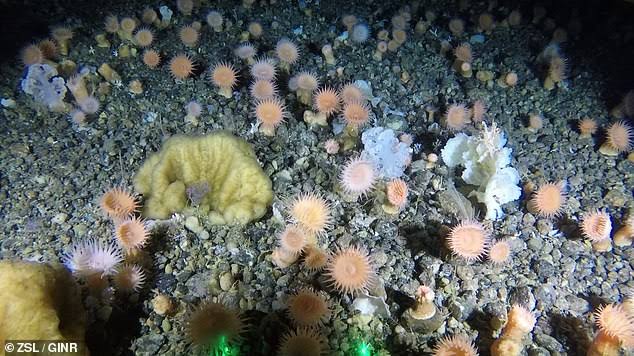
Coral gardens are characterised by collections of one or more species, that sits on a wide range of hard and soft bottom habitats, from rock to sand, and support a diversity of fauna,’ said Chris Yesson of the Zoological Society of London. The gardens are made of non-reef coral species, spotlighting mainly cauliflower corals, sponges, anemones, brittle stars and hydrozoans and other organisms.

PhD. Researcher (UCL) and ZCL first authors said that despite our earth is covering about 70% of the deeps we hardly mapped it. The inventions of the low-cost tools carry numerous probabilities in discovering and maintaining marine ecosystems. Since discovering the deep-sea is very costly and difficult since the pressure increase by one atmosphere as we go 10m deep. However, the innovative and low-cost video camera is able to discover the new ecosystem where the pressures is fifty times greater than at the surface.

The researchers have successfully developed the towed video sled using a steel frame on which they mounted a GoPro video camera, lights and lasers to provide an understanding of scale (made by integrating high power laser pointer made by UCL’s Institute of Making) in pressure-proof housings. The video sledge which was made as of the size of mini copper-on the seafloor for around 15 minutes at a time took footage from 18 different sites across the seafloor taking out 1239 photos from the video footage for further investigation.

Me long said ‘A towed video sled is not unique. However, our research is certainly the first example of a low-cost DIY video sled led being used to explore deep-sea habitats in Greenland’s 2.2 million square kilometres of sea, ‘

Continued by Dr. Yesson saying “Given that the ocean is the biggest habitat on earth and the one about which we know the least, we think it is critically important ti develop cheap, accessible research tools. These tools can be used to explore, describe and crucially inform management of these deep-sea resources.”

Greenland virtually is unexplored, although more than 2000 enormous species have been known till now contributing in making complex and diverse habitats. Greenland’s economy depends on a small number of fishers trawls on the seabed despite knowing very less about the marine habitat and hoping that studies on the deep sea will increase the understanding of ecological relationship said by Mr.Martin Blitcher.

Environmental Pollution: Health Effects and Operational Implications for Pollutants Removal


Environmental pollution is reaching worrying proportions worldwide. Urbanization and industrialization along with economic development have led to increase in energy consumption and waste discharges. The global environmental pollution, including greenhouse gas emissions and acid deposition, as well as water pollution and waste management is considered as international public health problems, which should be investigated from multiple perspectives including social, economic, legislation, and environmental engineering systems, as well as lifestyle habits helping health promotion and strengthening environmental systems to resist contamination.

Environmental pollutants have various adverse health effects from early life some of the most important harmful effects are perinatal disorders, infant mortality, respiratory disorders, allergy, malignancies, cardiovascular disorders, increase in stress oxidative, endothelial dysfunction, mental disorders, and various other harmful effects. Though, short-term effects of environmental pollutants are usually highlighted, wide range of hazards of air pollution from early life and their possible implication on chronic non-communicable diseases of adulthood should be underscored. Numerous studies have exposed that environmental particulate exposure has been linked to increased risk of morbidity and mortality from many diseases, organ disturbances, cancers, and other chronic diseases. Therefore it is time to take action and control the pollution. Otherwise, the waste products from consumption, heating, agriculture, mining, manufacturing, transportation, and other human activities will degrade the environment.

Based on the strength of the scientific knowledge regarding the adverse health effects of environmental pollution and the magnitude of their public health impact, different kinds of interventions should be taken into account. In addition to industrial aspects, the public awareness should be increased in this regard. Likewise, health professionals have an exclusive competency to help for prevention and reduction of the harmful effects of environmental factors, this capacity should be underscored in their usual practice.

This special issue is dedicated to increasing the depth of research across all areas of health effects of pollutants in air, water, and soil environments, as well as new techniques for their measurement and removal. The goal of the special issue is to familiarize the readership of the Journal of Environmental and Public Health with the potential for different aspects of environmental pollution. We expect this special issue would appeal to researchers, public health practitioners, and policymakers.

The Murder Bag

If you’re someone who demands absolute reality in the way the police operate, then The Murder Bag probably won’t bear too close a scrutiny. And there’s a vaguely distracted air to the whole narrative that might not be to every reader’s taste. The story opens with not one, but two prologues. The first is set twenty years in the past and describes the appalling and degrading gang rape and murder of a young woman. As a reader, you thirst for revenge on her behalf.  The book kicks off in gruesome style with what appears to be the gang rape and murder of a teenage girl. It then cuts to the present day where police are shadowing a suspected suicide bomber. And it’s here that we realize that the central character, Max Wolfe, has maverick tattooed on his forehead. The central character, DC Max Wolfe. Wolfe by name, lone wolf by nature – without giving away the thrilling end of a chapter which is almost a short story in its own right, it’s fair to say that Max instincts to go it alone will make him an unpredictable maverick. The book is short on convincing characterization – Max lacks any real depth and the journalist Scarlet Bush is little more than a caricature. Max Wolfe is a hugely likeable companion throughout this book and Parsons gives him some terrific scenes. Then the story proper begins: Max is moved from counter-terrorism surveillance to Homicide and the killing begins. Lots of killing, Lots of blood, be warned the gore quotient goes off the scale before the end of chapter three.  This is a good old fashioned, machine-gun paced thriller from the get-go, albeit one with the trademark Parsons Wit and edginess. Some things he can’t leave behind. It’s solid but unremarkable, and the ending certainly isn’t anything out of the ordinary – although the final page twist had me sitting up in bed a couple of hours and with a disappointment in the end ” he could have spotted that way back in the previous parts”!

Happy Reading!