A glimpse at the most famous medical practitioner.

Biology, a term that defines the study of all living things. A major branch of biology is anatomy or the branch of biology concerned with the study of the structure of organisms and their parts. The study of anatomy has led early doctors and physicians to know more about the body and how to mend it or reduce its ailments. Almost all branches of the practice of medicine can in some way trace their origins to the study of anatomy. One of the most renowned physicians of medical history is Galen of Pergamon, who is also the most notorious. This towering figure in the field of medicine had doctors all of the world fearing and revering him not only during his lifetime but nearly 1300 years later as well. He was a Greek physician, author, and philosopher, working in Rome, who influenced both medical theory and practice until the middle of the 17th century CE.
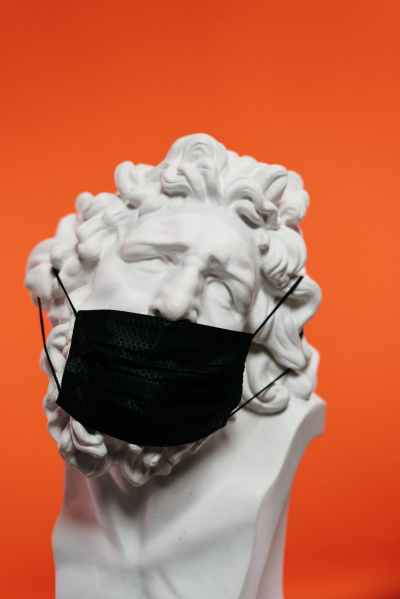
Photo by cottonbro on Pexels.com

As a teen Galen left his hometown to pursue his love of medicine to the Mediterranean. When he returned, he was now seemingly an expert in anatomy and a very gifted surgeon. Ever the showman, he would enter public anatomy contests to show up his fellow physicians. HE did a lot of things which were outlandish and in taunting his rivals, he made them lose their reputations. He once made a pig lose its voice by tying of its nerve, in another instance he disembowelled a monkey and then did a surgery to repair it. A meticulous man, he milked the branch of anatomy for all its worth. While his peers would discuss symptoms and origins of various diseases, Galen was focused on anatomy. But since he was a physician in the roman era, and the roman law prohibited the use of human cadavers, he had to make do with animals. He carved up nearly every kind of animal he could find in his pursuit to realize his theory, that each organ had its own function. He did numerous experimentations and despite his handicap of not being able to use human cadavers, he produced some remarkable results. Galen was the one who proved that it was the brain that controlled the body and not the heart. he did so with one of the most outlandish experiments ever, which needed someone to be crazy and zealous as well as insanely talented according to those times. Fortunately, for Galen, he checked all the boxes. To prove this theory, cracked open the cranium of a cow while it was alive and prodded different parts of it to link to various functions. However, these experiments also resulted is misconceptions which were way off the actual truth. He thought that the liver and not the heart pumped blood and it would deplete completely in a one-way trip. He also gave his overwhelming support to a dreadfully wrong theory of the Four Humors. This stated that that the body functioned through the balance of four body fluids. This created a lot of problems and resulted in many unnecessary deaths. Galen, being ever so vain, penned down each of his discoveries ranging from anatomy to nutrition to bedside manner. Galen’s books became a staple for anyone pursuing the medical science. He was so revered that even when doctors would open up human cadavers, they would repeat Galen’s mistakes despite seeing clear evidence against it. He was so popular that the few practitioners who contradicted them were either ridiculed, ignored or silenced. It wasn’t until the !7th century that renaissance anatomist Vesalius who contradicted him, and successfully changed the mind of people. Even then it took nearly 300 years for the misguided works of Galen to fade away.

This serves as a reminder that science is evolving every day, what might be considered a plain fact today, might be a gross misconception tomorrow.

PROBLEMS OF SLUMS IN OUR CITIES

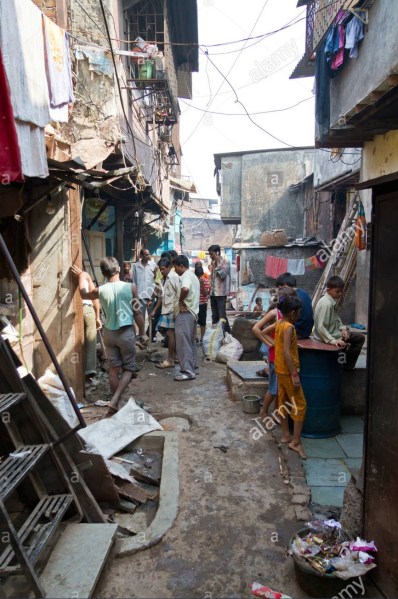
Slums refer to makeshift housing or shanties found especially in urban areas, and are characterised by lack of basic facilities, squalor and overcrowding.  There is no regular supply of water, electricity or proper sanitation facilities. Slums are generally built on government land that is lying unclaimed or vacant. They are mostly occupied by migrant workers, unskilled labour, domestic workers and other such persons who cannot afford proper housing in the cities. Almost 49% of the total population in Mumbai lives in slums. Hence, its widespread prevalence is unquestionable.l

Conditions in slums

The conditions in slums are deplorable. The settlements are built in small, congested areas, near airports, railway lines and industries, rivers and other water bodies, and markets. The settlements are built with whatever material people there can find be if corrugated sheets or gunny bags or polythene bags. This is not only unhygienic but also creates complications during monsoon when there is flooding during heavy rains.

There is no regular supply of water through pipes. This makes obtaining clean drinking water very difficult. Used and dirty water is not properly disposed off through covered pipes, but is just roughly directed away from the settlements. Since there is no proper sewage or waste disposal system, garbage is accumulated near the slums or thrown into the water bodies in case the slums are near a water body. There are no proper sanitation facilities, and people tend to defecate in public. There is no regulated supply of electricity in slums, making living conditions very poor. In conclusion, the standard of living is extremely poor.

It should be realised by the society and the government that these slum dwellers are also human beings like us. The affluent section of the society must try to alleviate their sufferings. Health, education, proper, housing, electricity, water, sanitation, and jobs are some of the problems of the slum dwellers.poverty is their enemy one. Poverty leads them to indulge in many crimes. They should be provided basic amenities. Free accomodation, subsided rations, health care and education are a must to bring them back to social folds. Some persons do not like to leave slums. They dispose of the free land alloted to them by the state and prefer to move to other shanties. This tendency is to be checked. Precautions can help them change their attitude.

The elementary school classroom in a slum – By Stephen Spender Far far from gusty waves these children’s faces. Like rootless weeds, the hair torn round their pallor: The tall girl with her weighed-down head. The paper seeming Boy, with rat’s eyes. The stunted, unlucky heir Of twisted bones, reciting a father’s gnarled disease, His lesson, from his desk. At back of the dim class One unnoted, sweet and young. His eyes live in a dream, Of squirrel’s game, in tree room, other than this.

Voice for SSR: Outsider’s Fight with Bollywood Nepotism

Picture Courtesy: Google

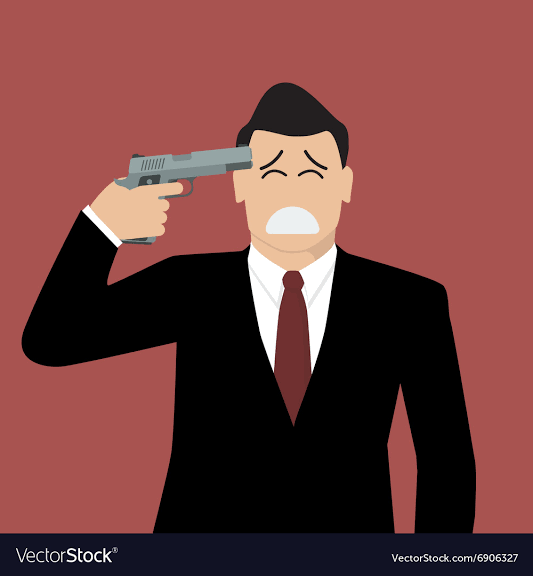
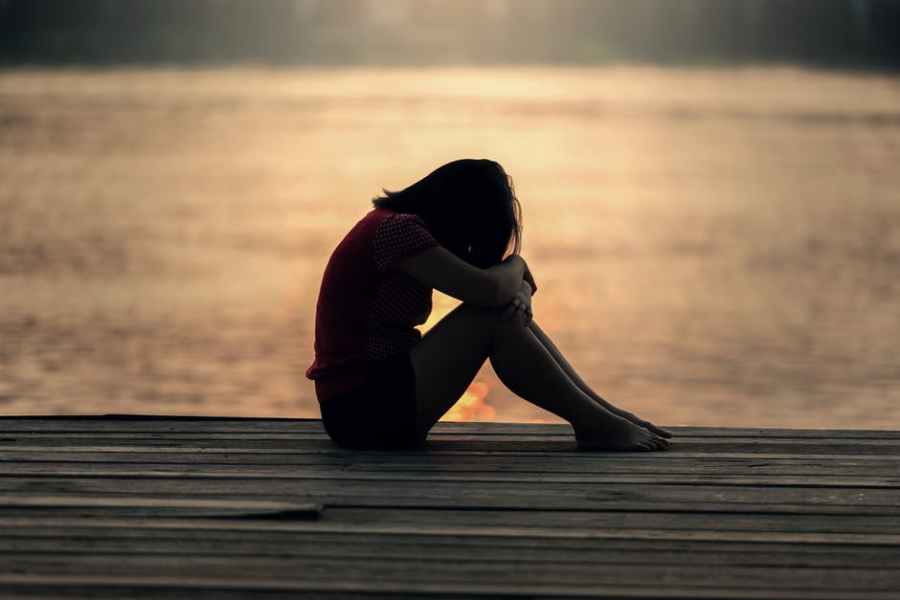
The issue of Bollywood nepotism has been allegedly sprung up with the death of 34 years old Bollywood actor Sushant Singh Rajput on 14th June in Bandra, Mumbai. The young actor hanged himself from the ceiling in his flat. Clinical depression has been rectified as the cause of his suicidal run. Fans and admirers of Sushant Singh Rajput have dismissed the condolence of many Bollywood stakeholders by identifying them as peddlers and their condolence as the weeping of crocodiles. Many from the industry are handling the front gear to fight against Bollywood nepotism also. Kangana Ranaut and Abhinav Kashyap are from those who have spoken against Bollywood nepotism.
One twitter reply of Sushant Singh Rajput has taken all the attention in which the actor accounted that Bollywood would throw him out if people do not watch his movies in theaters. He added that he had no Godfather in Bollywood and considered his audiences as God and father altogether. Social media has been flooded by the hatred post against Karan Johar and Alia Bhatt for bullying Sushant Singh Rajput virtually. A report says, near about 7 movies got out of SSR’s hand in the last few years. Bollywood nepotism has been rectified as the career backlash of SSR and the prime cause of his depression. Moreover, the report says he has been banned from many production houses like Yash Raj Films, Dharma Production, and so on. According to the report, there was a deliberate force to keep SSR stuck to TV serials and Web series.
On, 17th June, a case has been filed against 8 Bollywood lawmakers, Karan Johar, Sanjay Leela Bhansali, and Ekta Kapoor along with Actor Salman Khan, Aditya Chopra, Bhushan Kumar, Sajid Nadiadwala and director Dinesh by Sudhir Kumar Ojha as a criminal case, under IPC section 306, 109, 504 and 506 in a local court of Muzaffarpur, Bihar, reported by ANI. IPC Section 306 includes abetment of suicide which calls for the punishment of 10 years imprisonment and fine. 109 secures the punishment for abetment. 504 says if a person deliberately insults other person knowing that his/her word can harm the other person’s public peace, can break the person’s mental harmony which eventually can lead the person to an offense, shall be punished under this section with either two years of jail terms or fine or the both. Section 506 secures the punishment for criminal intimidation which is two years of jail or fine or both. The renowned actress Kangana Ranaut has been registered herself as the witness of the case filed. The first hearing date is July 3. The protesters have come down to the streets with placards written #Boycott nepotism, #Boycott Karan Johar, Youth Army to fight against Bollywood nepotism. A teenage fan of Sushant Singh Rajput couldn’t bear the pain of losing favorite actor and have committed suicide in the same way SSR did and left a letter saying if Sushant can do, he also can do it.
It is noteworthy that the police have not found any suicidal note or any clue yet that can polarize the allegations. There is a record of 4 phone calls that the died actor made before the night of his suicide, but unfortunately, no conversation happened to any one of the 4 persons. But the police have found out four diaries and expecting some clues from those. People like Sonam Kapoor, Swara Bhasker, and others have become vocal about the virtual attack happening against Bollywood personas and Rhea Chakraborty (girlfriend of Sushant Singh Rajput). All the decisions are being made by interconnecting the flow of events. Many actors and directors are offended and disheartened by the non-co-operative and dominating gesture of some Bollywood elites who are been labeled as flag bearers of nepotism and ‘Bollywood Mafia’.

CLAT: Common Law Admission Test

What is CLAT…..?

CLAT is a national level exam controlled by central government. Through this exam one can get admitted into any Natinal Law University out of twenty two.

Various colleges and other institutes also fill their seats on behalf of the CLAT score. These Universities and colleges offer UG and PG courses for Law. Usually the exam was being conducted in online computer based till 2018 but due to technical glitches body decided to take exam in offline mode from 2019 and onwards.Exam is conducted by a permanent body established by NLUs. Exam is held once a year.

Eligibility..

for UG:

candidate should have passed/ appeared 10+2 with 45% (40% in case of SC/ST).

there is no age criteria for the candidate and no specified no of exam attempts.

For PG:

candidate should have hold LL.B or equivalent degree with at least 55% marks(50% for SC/ST).

Exam pattern:

time given: 120 minutes

question:150 each of one mark

negative marking of 1/4

total five sections

english-30 Gk-37 mathematics-15 logical reasoning- 30 logical aptitude-38

candidates selection is based on this exam pattern .candidate has to fill preferences for colleges and by that list merit list is prepared.

all the best…

thanks.

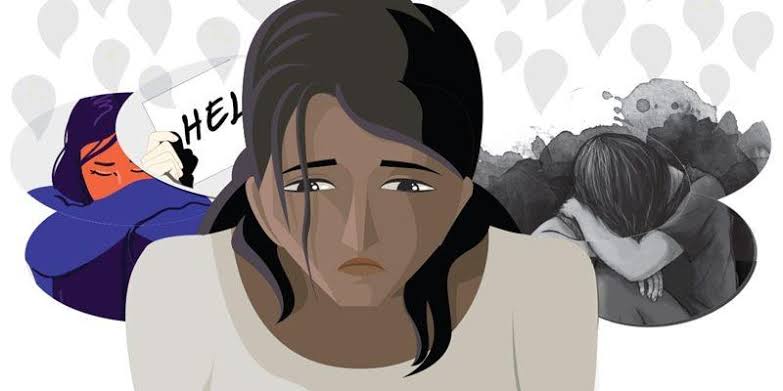
Commiting Suicide never be a option!

How the people are trying to suicide it’s make a way for them to rush out from the problem. But other question arises is it really commiting Suicide can be a solution for this. Probably not, but how the people are nowadays commiting Suicide it is really a tensed situation. As the social media platforms are there, but it seems like it is just making double pressure on a person.

As recently News, the actor who has around 9 million followers on Instagram. He committed suicide without writing a single word anywhere , it is really heart breaking.So, we really need to get the root of this problem. The youngsters are the majors who commits suicide.

The parents have to now make the different way of parenting through which they interact more thoroughly with their child. Also they should check his social platform activities and also support him morally. Moreover if the child gets into depression, they should go to physicatrist without any hesitation.This is the need of this era.

This is the time we have to take some really positive action and also cherish ourselves too. We should also endulge ourself in the process of hobbies which we like specifically. It really makes the mood and low down the mind pressure.

Vocabulary:Ameliorate it!

A good vocabulary lets one gain an excellent command over language, it allows for free flow of words, one can gain an immense amount of confidence over the particular language and can even improve their writing skills greatly.

One of the best ways to improve vocabulary is to read. Reading everyday can help in gaining knowledge over new words and this would help when we read and write. Starting by reading just five pages a day can help one greatly, as time passes one should increase the number of pages that one reads every day from five to ten to twenty and so on, if one continues this for twenty one days without a break in between it will lead to the development of a good reading habit. Specially novels and newspaper articles, these are the two best ways and also improve one’s knowledge on various topics.

  1. Writing-

Writing can also help you increase your vocabulary, as one would make more use of the words and this will help one gain confidence, you can write paragraphs, short stories or descriptive write-ups, it can be about anything a movie, your day today or some instance which moved you, writing not only benefits in increasing vocabulary but can also improve your writing skills and increase your overall writing speed.

2. Referring to a dictionary/thesaurus-

 One of the other ways to improve vocabulary is by referring to a dictionary and a thesaurus, whenever you come across a new word one can always look it up in the dictionary, these days pocket dictionaries or online dictionary applications are easily available and one can than write the word along with its meaning for future reference.

3. Creating a list of words-

To create a list of all the new words one comes across along with their respective meaning is a great way as well, but on should keep on revising the list every now and then, this list needs to be upgraded regularly and the minute you come across a new word you can jot it down in the list, example: brutal- harsh to see and cruel

4. Conversing and talking-

Conversing and talking more in the respective language you need to improve in will help greatly in improving one’s vocabulary, you can talk with your friends and family, it can be a conversation in any topic and this will also help you improve you speaking skills in that particular language.

5. Synonym List-

To create a synonym list, the word along with it various synonyms needs to be written and a list can be created, this can help in introducing one’s self to new words. Eg- beautiful – good-looking, pretty, sublime, delightful, pleasing, attractive, charming etc.

6. Vocabulary learning applications-

Living in the age of technology, one should definitely take that into consideration and take control of this fact, there are numerous vocabulary improving applications to choose from based on your preferences and they are very handy and easy to use, plus they can be accessible any time as they are part of the data in your phone.eg-Mangoosh Vocabulary Builder, Vocabulary.com, Anki or Quizlet etc.

Quizzing one’s self or playing word games is also a great way to improve vocabulary.

There are many ways to improve your vocabulary, and with some time an effort one will be able to conquer their power over a strong vocabulary.

Mysteries and Controversies of famous art masterpieces…

Almost every well-known piece of art has a mystery behind it, a unique story that we want to reveal. Even the masterpieces that everyone knows about have their own secrets.Whether a Picasso or Da Vinci, every canvas holds brushstrokes that might conceal something else: a secondary painting, perhaps, or a mystery. Every art tries to deliver a message though some can create big controversies too.

Lets look at some of the paintings by these great artists of all times and unfolding the mysteries and controversies attached to these paintings.

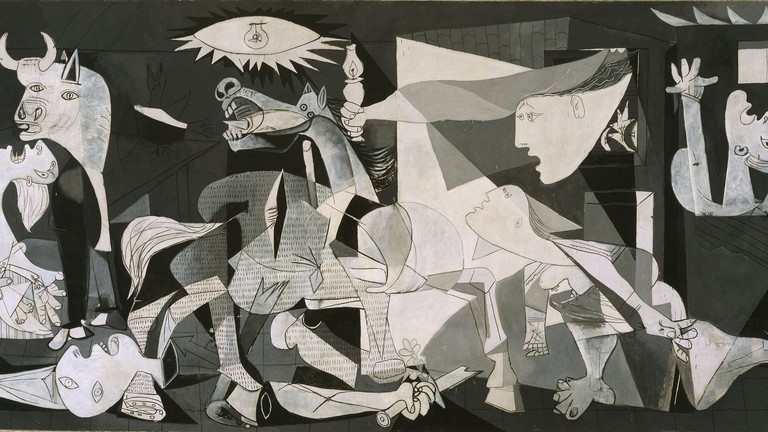
1. Guernica by Pablo Picasso, 1937

Pablo Picasso’s huge 1937 mural Guernica, which depicts the massacre of a Basque village in 1937, has since become a representation of every city ever bombed. It is one of the most powerful artistic decries against fascism, and has been a point of contention throughout the years due to its strong, critical message. Picasso refused to have it on display in Spain until justice had been restored there, and when it was on display at the MoMa in 1967, artists petitioned for it to be removed as a protest against the Vietnam War. In 2003, a tapestry version of Guernica was covered up at the United Nations. Probably Picasso’s most famous work, Guernica is certainly the his most powerful political statement, painted as an immediate reaction to the Nazi’s devastating casual bombing practice on the Basque town of Guernica during Spanish Civil War.Guernica shows the tragedies of war and the suffering it inflicts upon individuals, particularly innocent civilians.

2.Piss Christ by Andres Serrano, 1987

Piss Christ is a 1987 photograph by Andres Serrano, depicting a small plastic crucifix submerged in a glass tank of Serrano’s urine. The piece caused a huge scandal and outrage from senators because Serrano had received taxpayer-funded support from the National Endowment for the Arts, and because many found the piece to be unholy. In this period, Serrano received death threats and hate mail. In 2011, a print of the piece was vandalized during an exhibition in Avignon, France.

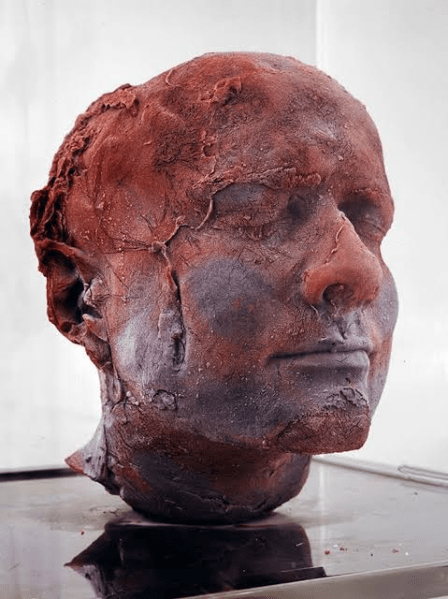
3.Self by Marc Quinn, 1991

Self is a self-portrait of Marc Quinn. However, it is one created by using the artist’s own blood in a cast of his head. Every five years, over the course of five months, Quinn pours five litres of his own blood into the cast. As such, he created an ongoing self-portrait that takes into account change and the passing of time. Many people consider this work to be hair-raising and gruesome. Others herald it for its bold contribution to the self-portrait genre.

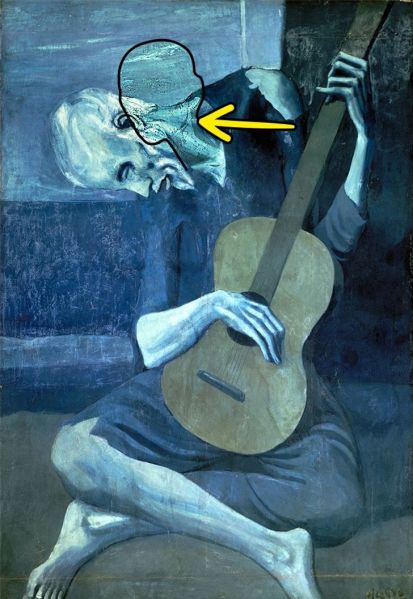
4.The old guitarist by Pablo Picasso

If you look closely at The Old Guitarist by Pablo Picasso, you can see a dim female silhouette behind the man’s head. After taking infrared and X-ray images of the painting, researchers from the Art Institute of Chicago discovered a few other shapes hidden underneath. Most likely, the artist didn’t have enough money to buy new canvases and had to paint over old ones.

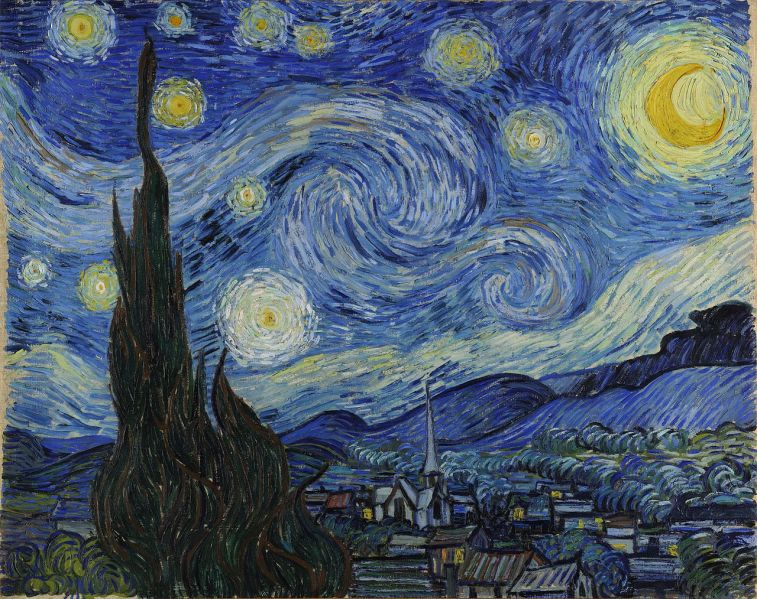
5. The starry Night by Vincent Van Gogh

The famous Dutch painter Van Gogh painted The Starry Night while in an asylum in Saint-Rémy, is believed to be, not only one of the best works from the artist, but also one of the most significant pieces of western art. But it was only recently that experts found out that Van Gogh didn’t just draw a beautiful sky.

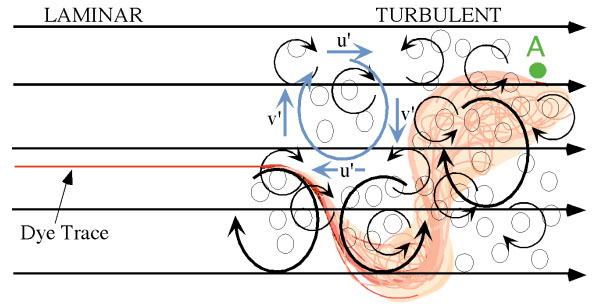
Scientists found a distinct stormy structure amazingly close to a math equation hidden in many of Van Gogh’s works. Somehow, he was able to perceive and portray one of the most complicated concepts nature has ever created (the turbulence concept). In fluid dynamics, turbulence, or turbulent flow, is fluid motion when a powerful vortex appears which leads to the appearance of smaller vortexes and so on. It is hard to express this phenomenon in math but it can be drawn, which is what we see in the painting.

6.Who is Banksy?

Banksy is an anonymous England-based street artist .The artist, Banksy, has been around since the early 1990s, creating striking and highly recognizable street art in public places His satirical street art and subversive epigrams combine dark humor with graffiti executed in a distinctive stenciling technique. His works of political and social commentary have been featured Yet their identity remains a mystery. Who is Banksy? “Over the years several different people have attempted to ‘unmask’ Banksy,”.

7.Scott Tyler, Dread, 1989

In 1989, Scott Tyler was just a high school student at the Art Institute of Chicago. There, he presented his first artwork titled what is the appropriate way to display the American flag? The US flag was displayed lying flat on the floor. It was placed in a strategic way so that patrons wanting to read the hanging manual would have to step on the flag.

Several visitors were arrested for outrage and, of course, the artist himself. He was violating the Flag Desecration Amendment. Even President Bush criticized the artwork as shameful, as did many others. However, there were opinions of all kinds. With this work, Scott Tyler wanted to demonstrate the weakness of one important human right: The freedom of expression.

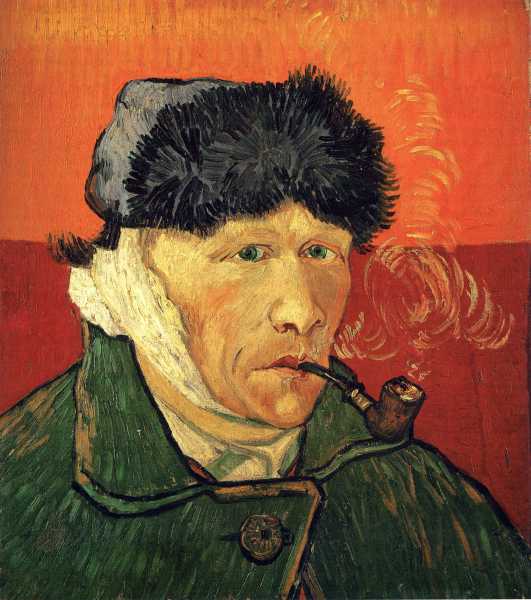
8. Self portrait of Bandaged ear by Vincent Van Gogh

Vincent van Gogh’s Self-Portrait with Bandaged Ear depicts the artist with an injured right ear. In reality, he cut off his left ear. The discrepancy is explained by the fact that van Gogh used a mirror to create the picture of himself.

Lockdown Puts Non-Human Species in a World of their Own

The pandemic lockdown has a contradictory impact insofar as some species are concerned. On a positive note, we see some changes in the environment for the better because of the coronavirus lockdown. COVID-19 has killed thousands of people in the world but it has saved the Mother Earth from another angle. There has been perceptible change in our surrounding, be it land, air or water. The pollution levels had gone down and animals were freely roaming around, even in city roads. The change was evident for three months. The air was fresh enough to breathe, river water was cleaner and with vehicles much less the sound pollution came down considerably. Some experts were elated to find reappearance of rare species.

A report in The Hindu mentions that one of the spectacular things that happened in the nature is the spotting of a rare dragonfly for the first time in nine decades. The name of the insect is awkwardly longish: ‘Megalogomphus superbus Fraser’. It is grass-green, yellow and reddish-brown in colour with bottle-green eyes. The naturalists, Ravindran Kamatchi and S Gopala Krishnan, caught this dragonfly on camera for the first time. It is found in the birding outing at a farm near Kallar Garden in Mettupalayam, Coimbatore. The naturalists were out in the farm taking pictures of the resident birds of the Western Ghats known as Solaipaadi, woodpecker and flycatcher. Suddenly they saw the unseen dragonfly which is much bigger in size from the other dragonflies. They did not think about anything else and they clicked many pictures. They posted the picture on WhatsApp group and later realized that it is one of a rare kind. It is a rare discovery by them. BBC in an extensive report observes that animals in urban areas are exploring emptied streets and waterways, and delighting human inhabitants along the way. Human restrictions gave them the confidence to go deeper into our cities and stay for longer.

In an interesting coincidence the National Endangered Species Day this year was observed on 15 May— during the lockdown. The day is observed to pointedly publicise awareness about endangered species and the need to protect them. When the whole world, no less India, is witnessing a decline and even extinction of species the day assumes much significance. One would remember the video and picture of a small Indian civet which was spotted in Meppayur, Kozhikode district, Kerala. It became viral and attracted lot of positive and appreciative comments.

But the problem is that the important surveys by the Zoological Survey of India were hampered because of the lockdown. These surveys are vital in identifying new species and fauna. The main months of surveys in the Western Ghats are from March to May, which were during the peak lockdown season. The surveys require lot time and patience. The lockdown has in general affected the taxonomists and biologists in severe ways for the strict restrictions within the country. But when we were seeing the fascinating pictures of animals confidently roaming around without the fear of human beings we could perhaps hear them saying ‘what a wonderful world!’

The cover drive masters…

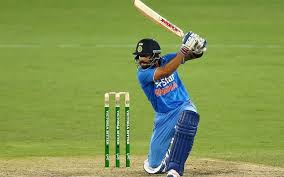
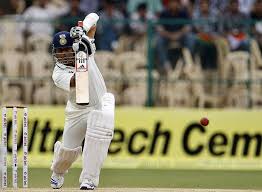
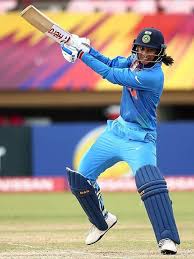
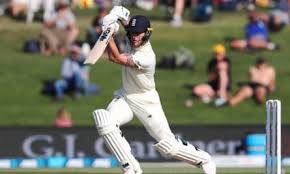
The cover drive is a special type of shot which requires fine wrist work and well-timed striking of ball to hit the ball into the cover-side area which is towards off side of batsmen. This shot is historically a famed one and the players who have mastered it are considered to be finest players of the game.

The stroke became historically famous during the golden era of cricket in nineteenth and early-twentieth century when cricket England started classifying players as Amateurs and Professionals. The amateurs mastered the off side shots while professionals practiced the leg side shots like flicks around the wicket.

When it comes to cricket, many interesting stats arise, one such is of playing cover drive in tests which has derived almost 40909 runs. Over the years the legacy of playing this shot has been passed on from legends like Mark Waugh, Micheal Vaughan, Sourav Ganguly to current stars like Virat Kohli, Rohit Sharma, Steve Smith, Kane Williamson and many more. 

The Leaders by Average:

While playing cover drive though Virat has scored 1038 runs off this shot and is the only player to do so ,he has been dismissed 14 times while trying to play it taking the average to 74.1 runs per dismissal. This is quite healthy average but interestingly he ranks 25th among top 45 batsmen who have scored 300-plus runs off this shot. 

The leading are South Africa’s Aiden Markram ,Faf du Plessis and pakistan’s Asad shafiq. Markram has scored 338 runs off cover drive without a single dismissal and Faf du Plessis has scored 542 runs of 2 dismissals giving him fantastic average of 270. 

Right vs Left- who plays it best:

The stats are revealing that left-handers are better players of the shot than right handers. It is clear that left handed players are edging the righty players for playing the shot. In fact the stats reveal that from over last 40-60 years left handers have edged right handers over the average runs per dismissals while playing the shot.
PERIODRIGHT-HANDERS’ AVERAGELEFT-HANDERS’ AVERAGE
1965-7435.9339.54
1975-8435.0937.06
1985-9435.6938.87
1995-28.7434.86

It is not wrong to say that left are right in this case.

Conclusion:

It is very interesting that cricket analytics have each and every information right from dot balls played by a player to the sixes he has bet.The cover drive has been always difficult as well as favourite shot of many legends. 

Track2Training NGO – An initiative for Development

NGOs or the Non-Governmental organizations are generally non-profit organizations working independent of the government. Their main aim is to provide basic amenities to the needy or the people living in poverty. They basically work towards uplifting the society. There are many sectors of the society that do not get the representation and are left to deal on their own. This is where NGOs come into play. They take up social responsibilities and raise awareness about these issues and organize fundraisers so that donation can be collected to meet the standard services. There are various programs being organized by the government itself for the poor people but it is hard to believe that the benefits will be able to reach each and every marginalized member of the society. There are certain other forces needed to make this come true. They shed light on the unacceptable conditions of living. Through their various programs, they create opportunities for the children to learn and grow. Providing education and giving them vocational training or skill-based training can create a diverse work force in the future. It will also help to mitigate the issues of unemployment. Apart from providing free education, they are also involved in large scale distribution of food, clothing items and even strive to provide shelter to many. NGOs try to branch out using microfinance, sustainable development and holistic programs as the foundation. They can also focus on providing health care or medical facilities in general to the people as well as sanitation needs should be dealt with. Many people feel that NGOs may not add much to the society as they are expected to. There are some benefits and advantages to all and there may be places where NGOs fail to play their part but their multi-sector approach is underestimated. They have helped people deal with certain issues that were usually not talked about. They have established a complex and dynamic approach to poverty and many of them have been doing great in terns of their objectives and goals. There are certain NGOs in India itself that strive to eradicate poverty, or work towards helping children dealing with malnutrition. NGOs are able to see the shortcomings of the current system and understand the needs . This poverty alleviation will require a lot of time. It is a lengthy and tedious process but NGOs have taken a step for the implementation of this initiative. They promote community sustainable development. Track2Training is working for the development of rural areas and skills in youth for future jobs.

Era of a New Revolution – #HindiCheeniByeBye

For the last few days, severe tensions have been generated in the India- China border, that led to the martyrdom of our Indian soldiers. Yesterday, the grievous attack by the China PLA (People’s Liberation Army) leading to the death of 20 Indian Army in Galwan Valley of Ladakh, left us shattered because this was perhaps one of the deadliest event in the history of India- China border issues.

According to the media reports, several Chinese troops have made their way forcibly into the Galwan valley in Ladakh, the disputed region in the Kashmir Valley.

The reports say that in the month of May, Chinese forces began putting up tents, dugging trenches and moving heavy equipments through some underground passages, that had been regarded as an area of Indian territory by India. This was a aftermath result when India built a several kilometres long road, connecting to a high-altitude forward air base. Apart from this, the Galwan River has become a hotspot as here,the LAC (Line of Actual Control) is closest to the new road built by India along the Shyok River to Daulet Beg Oldi (DBO),the most remote and vulnerable area along the LAC in Ladakh.

Considering a heinous act done by China PLA (where they killed our 20 soldiers), the citizens of India, as a reaction to it, took an initiative in boycotting Chinese products. The Indians have now started coming out of their homes and burning the Chinese products on the roads. In fact, a buzz have been created by people on the social media platforms,where they are using a very trending hashtag called #HindiCheeniByeBye in order to boycott the things made in China. This was done after the Zee News came up with the idea of #HindiCheeniByeBye initiative.

An enraged mob.

In addition to this, Taiwan has also come forth in support of India. In its national daily – The Taiwan Times, Taiwan media has shown Shri Ram with His dhanush (bow) aiming towards the dragon (a symbolism for China).

The cover page of the Taiwan Times.
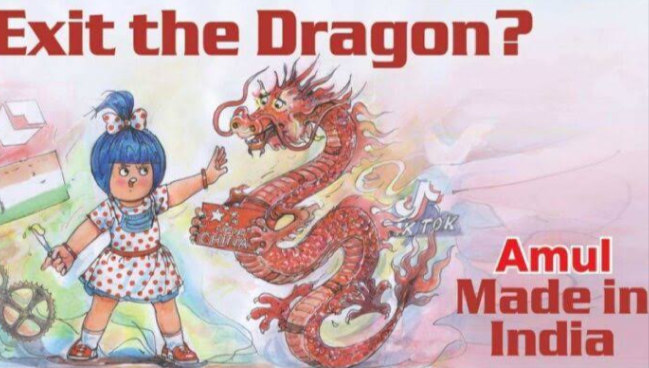
Even Amul- the leading Indian brand, has came up with boycotting Chinese products.

Historically speaking, this act is a resemblance of the event when people of British India boycotted the Britain products. In this main scenario, Mahatma Gandhi emerged as a leading protagonist and encouraged Indians to boycott British goods as well as to buy Indian goods instead.This helped to regain the local economies in India along with reducing the British economy. This was the Swadeshi Movement indeed.

In the current scenario, we can see that Swadeshi Movement 2.0 has begin again, boycotting all the products that are made in China. Shunning China from the mainstream economy will boost up our own economy, that will pave the way for economic development of India. This will be an act of paying gratitude and respect towards the Indian Army too, who have been killed by the Chinese militants. So, as an ending note, it’s purely accurate to say that #HindiCheeniByeBye has emerged as a new mode of revolution in the 21st century India, hence.

Can robot replace human teachers?

With the advent of technology we ofteb heard that robot should teach in the schools. But if we think about this, is it really possible or justifiable to replace human teachers by robots. I think NO.

In a classroom the role of the teacher is not to just teach the children a particular topic at his/her own pace and leave the class. Teacher also analyse children’s behaviour, talk about their issues, give them moral support which is never possible by a robot. And if we talk about learning only then also teaching can change her method according to the comfort and understanding of children. He/she can use easy language help the child to understand the concepts by real life instancea but if we talk about robots they can teach what we program in then in a single way only. Robots also don’t able to recognise whether the child is understanding whatever they are trying to teach.

Apart from this, we humans are social animals. We learn by seeing other people doing things, discussing among each other. But if we replace human teachers by robots than learning become passive or one sided in which just robot is teaching and students are listening and can sometimes ask their enquiries. There is no interaction like as in classroom with teachers and students.

If we see the assessment of students it is true that robots can do assessment in a fast and efficient way and they can also tell students where they are lacking but robots can never understand individual needs. Whereas if we see a human teacher assessing even after referring to an exam sheet , she think about if a child made a progression or not. She also think about the previous assignment and discuss the improvement with children which is impossible with a robot teacher.

So for teaching we not only need knowledge, and efficiency but also understanding, emotions and engaging capabilities which is possible only in human beings.

So, we may take the help of robots in our school but we cannot replace them by teachers as learners need a direction to learn which is more important than lectures and a lots of human emotions which can be provided by a human teacher only.

SC Allows Woman With Twin Pregnancy To Medically Terminate One Foetus With Down Syndrome

In an interesting turn of events, we saw how just recently on June 16, 2020, the Supreme Court went ahead to allow a woman bearing 25 weeks old twin pregnancy, to undergo procedure for foetal reduction on the grounds of “serious foetal abnormalities”. It must be mentioned here that a three Judge Bench of Supreme Court comprising of Justices R Banumathi, Indu Malhotra and Anirudha Bose allowed the special leave petition preferred against the order of the Bombay High Court, whereby the petitioner was denied relief. It must also be mentioned here that termination of pregnancy on the ground of “physical or mental abnormalities” of the unborn child as envisaged in Section 3(2)(ii) of the Medical Termination of Pregnancy Act, 1971 clearly states that a pregnancy may be terminated by a registered medical practitioner where the length of the pregnancy exceeds twelve weeks but does not exceeds twenty weeks, if not less than two registered medical practitioners are of opinion, formed in good faith that there is a substantial risk that if the child were born, it would suffer from such physical or mental abnormalities as to be seriously handicapped.

                              Truth be told, we see that here in the present case, the women was 25 weeks pregnant, i.e. beyond the threshold provided under the Act. The women needed permission of the Court to do what she wanted. She had to therefore approach the Court seeking permission to terminate the pregnancy.

                               To start with, the ball is set rolling in para 1 wherein it is stated that, “We have heard Mr Colin Gonsalves, learned senior counsel appearing for the petitioner.” It is then stated in para 2 that, “The petitioner who is now pregnant by about 24-25 weeks, had sought permission for foetal reduction of one foetus which is affected with down syndrome.”

                                While elaborating on the background of the case, the Bench then points out in para 3 that, “By order dated 22.05.2020, the High Court had declined to grant permission for foetal reduction. The High Court was of the view that it may not be safe for the mother, and secondly foetal reduction of one foetus, may affect the other normal foetus.”  

                                           Going forward, the Bench then brings out in para 4 that, “By order dated 10.06.2020, we had directed the same Medical Board to be re-constituted, and submit an additional report on two issues: (i) To give further opinion whether the abortion of one foetus will affect on the life of the petitioner-mother; (ii) Whether the abortion of one foetus will have an effect on the surviving second foetus.”

                                       To be sure, the Bench then recalls in para 5 that, “We had further directed that an Additional Member be included in the Medical Board, who is a specialist in Foetal Medicine. The Medical Board included Dr. Purnima Satoskar, MD, a Full Time Professor, Department of Obstetrics and Gynecology at Seth G.S. Medical College and Head of Unit & Foetal Medicine Department at Nowrosjee Wadia Maternity Hospital, Mumbai, who has examined the petitioner – Komal Hiwale and has given the following opinion:

“After going through all the reports, I conclude that she has dichorionic diamniotic twin pregnancy. Today she is around 25 weeks pregnant. One foetus is affected with trisomy 21. The other foetus (fetus A) is chromosomally and structurally normal.””

                                       It would be worthwhile to mention here that it is then laid bare in para 6 that, “Dr. Purnima Satoskar has referred to the Guidance Note for Medical Boards for Termination of Pregnancy beyond 20 weeks Gestation as recommended by the Ministry of Health and Family Welfare, Government of India, which permits selective foetal reduction and gave her opinion as under:

“Note on trisomy 21 (Down Syndrome)

This is a chromosomal abnormality and has no treatment. The baby will suffer from significant mental retardation, intellectual disability and may also have other health conditions like heart disease etc. in the affected person. Thus, leading to severe limitations on the patient who needs a full time caregiver and causes mental, logistical and financial challenges to the parents.

It is classified in the list of substantial and serious abnormalities by the MDHFW in its Guidance Note for Medical Boards for Termination of Pregnancy beyond 20 weeks Gestation.””

                                         More crucially, it is then very rightly underscored in para 7 that, “Dr. Purnima Satoskar, in her conclusion, has opined that there is no direct risk of the procedure to the normal twin and opined as under:

“In dichorionic twins, there is no direct risk of the procedure to normal twin as the circulations of the twins are separate.

The procedure carries negligible risks similar to amniocentesis to mother and is proven extremely safe and large series with no maternal deaths.

After discussing this at length with the mother, she voluntarily came up with selective foetal reduction as her preferred choice after fully understanding the risks and benefits and has submitted a handwritten letter expressing the same.

In conclusion, I find no medical reason not to provide the treatment of foetal reduction converting the twin pregnancy with one twin affected with Down syndrome to singleton pregnancy.””

                                   Furthermore, it is then pointed out by the Bench in para 8 that, “We have gone through the earlier report and also the present report submitted by the Medical Board.”

                                      Finally and most crucially, the three Judge Bench of the Apex Court while disposing of the special leave petition and considering all the facts of this particular case holds in para 9 that, “In view of conclusion of the Medical Board, the impugned order of the High Court is set aside and the petitioner – Komal Hiwale is permitted to undergo foetal reduction as per the procedure stated by Dr. Purnima Satoskar. The petitioner – Komal Hiwale as well as her husband shall give their individual consent for selective foetal reduction. A copy of the two affidavits shall be filed before this Court and the same shall form part of the record.”

                        In conclusion, the three Judge Bench of the Apex Court has very consciously, very convincingly and very commendably permitted a woman who was bearing 25 weeks old twin pregnancy to undergo procedure for foetal reduction on the grounds of “serious foetal abnormalities”. There can be no denying or disputing it! It goes without saying that it is just a mere coincidence and nothing else that the two Judges out of the three who delivered this latest, landmark and extremely laudable judgment – Justice R Banumathi and Justice Indu Malhotra are themselves woman!   

Sanjeev Sirohi, Advocate,

s/o Col BPS Sirohi,

A 82, Defence Enclave,

Sardhana Road, Kankerkhera,

Meerut – 250001, Uttar Pradesh.

Cyber bullying in India

Cyber bullying has emerged to be one of the most significant problems teenagers seem to face online on a daily basis in some way or the other. It affects people mentally and may lead to long term psychological problems in the future. There are many forms in which bullying can take place. However, cyber bullying was not a prevalent issue until the end of 2000 around which internet services were widely spread across the globe and needless to mention it brought about a plethora of positive as well as negative repercussions in the society.

Cyber bullying basically covers bullying that occurs using digital advancements which include but are not limited to mobile phones, tablets, laptops and desktops. Social media plays a significant role in helping cyber bullying to be a growing issue amidst the other societal ones in this generation. Although anyone can become a victim of cyber bullying, teenagers seem to be the most affected ones among all age groups.
Cyber bullying covers a wide range when it comes to the form in which it takes place starting from hateful comments, abusive text messages, negative and false information, character assasination to doxing i.e puclicly posting private conversations/ information without a proper permission from their side. Creating fake profiles with a picture and information of someone else without their permission is also a form of doxing which at times can be really dangerous to deal with.

Triggering certain religious beliefs and values can also be considered as a form of cyber bullying which is mainly seen in countries like India and Bangladesh which have a drastic range of diversity and differences of religious believers residing within them. This issue can get really ugly sometimes and it may also lead to real life violent instances if not taken care of from the very beginning.

The graph of cyber bullying in India seems to have taken a sudden spike in the scenario due to its wide availability and access to various internet services that have been made available for almost everyone across the country. Statistics show 7 out of every 10 people face harassments online in the form of online insults and abuses and misusing of personal pictures.

Although anyone can become a victim of cyber bullying regardless of their gender and age, teenage girls happen to be the ones who are more likely to be harassed on a daily basis.
There have been many instances where these kinds of harassments have led to heinous crimes like murder, rape and suicide. According to a recent report(TOI), a 17 year old committed suicide after her friend morphed her picture and uploaded it on social media. In 2018 a boy from UK killed himself after being subjected to cyber bullying. In the same year a 25 year old woman killed herself after being subjected to constant bullying over WhatsApp by her acquaintances due to her friendship with a muslim man. Gurmehar Kaur, an Indian woman had been subjected to online harrassment in the form of abusive comments, text messages as well as murder and rape threats. Her fault was she dared to express her opinions on concepts like War, politics and Peace.There are hundreds of other similar incidents that are allegedly growing day by day.

Considering the current scenario, it seems like more safety tools and apps need to be recommended to everyone in order to create a safe online environment for everyone. Privatization should be enhanced in every way possible so that it helps in making a difference which is highly needed in our society.

– Suvasree Bandyopadhyay

SIGHS RESULT FROM MANY SIGNALS TO ONE BRAIN CIRCUIT

Sighs get their start in one group of neurons, but instructions from various areas of the brain depend on the reason, research with mice finds.

Humans and other mammals sigh automatically once every few moments to maintain proper lung function. This so-called basal sighing is part of the normal breathing process and happens automatically, without us having to think about it. But beyond serving an essential physiological purpose, sighs also occur as behavioral responses to emotions ranging from stress and annoyance to relief.

We want to understand how all of these diverse inputs, both emotional and physiological, lead to the same behavioral output,” says Peng Li, a physiologist and assistant professor at the University of Michigan Life Sciences Institute.

Understanding the brain’s control of emotions is a central goal of neurobiology and psychiatry, but it is difficult due to the challenges in teasing out emotional brain states and their complex outputs.

Because sighs offer a simple, measurable output from the brain, Li and his colleagues use them to learn more about how neural circuits communicate to regulate behavioral responses. They investigate how distinct neural circuits enable the brain to control sighing and breathing in different contexts, by studying the circuits in mice—which also exhibit both basal and emotional sighing and have brains that are architecturally similar to those of humans.

Previously, Li and colleagues identified the neurons and pathways that regulate basal sighing. In this newest study, the researchers traced up from these so-called NMB-neurons (short for neurons expressing Neuromedin B) to see what signals they were receiving when mice were under stress and found a dozen forebrain regions that send direct inputs to the sigh-control center.

When the mice were confined to a small space, inducing a claustrophobic-like state, their sighing rate increased by two to three times. Using genetic tools, the researchers identified another type of neurons in one of the forebrain regions, called hypocretin-expressing (HCRT) neurons, that were firing under stress and sending signals to the NMB-neurons. The researchers then artificially activated the HCRT-neurons, without confining the mice, and saw the same change in sighing rate.

When the researchers silenced the NMB-neurons, both basal sighing and stress-induced sighing drastically decreased in the mice. When they silenced only the HCRT-neurons, however, only the stress-induced sighing decreased while basal sighing was unaffected.

The researchers found that HCRT-neurons also were responsible for an increased breathing rate when the mice were under confinement stress. Since NMB-neurons only control sighing, and not regular breathing, this finding indicates that the HCRT-neurons are sending signals to other parts of the brain simultaneously to activate different stress-induced behaviors.

“So we’ve found the circuit that regulates all types of sighing, but activates sighs for different reasons using input signals from different parts of the brain. And we found another group of neurons that induces sighing in response to this claustrophobic stress, but also regulates other claustrophobia-related outputs,” says Li, who is also an assistant professor at the University of Michigan School of Dentistry and Medical School.

These findings give us clues about how the brain is wired to control various behavioral and physiological responses to emotions.”

The findings will appear in Cell Reports.

Support for the research came from the Howard Hughes Medical Institute, the University of Michigan, the Walter V. and Idun Berry Foundation, and the Francis Family Foundation. Coauthors are from Stanford University and the Howard Hughes Medical Institute.

The work performed for this study was approved by the U-M Institutional Animal Care & Use Committee and the Stanford University Administrative Panel on Laboratory Animal Care.

Emotions are distinct patterns of behavioral and physiological responses triggered by stimuli that induce different brain states. Elucidating the circuits is difficult because of challenges in interrogating emotional brain states and their complex outputs. Here, we leverage the recent discovery in mice of a neural circuit for sighing, a simple, quantifiable output of various emotions. We show that mouse confinement triggers sighing, and this “claustrophobic” sighing, but not accompanying tachypnea, requires the same medullary neuromedin B (Nmb)-expressing neurons as physiological sighing. Retrograde tracing from the Nmb neurons identified 12 forebrain centers providing presynaptic input, including hypocretin (Hcrt)-expressing lateral hypothalamic neurons. Confinement activates Hcrt neurons, and optogenetic activation induces sighing and tachypnea whereas pharmacologic inhibition suppresses both responses. The effect on sighing is mediated by HCRT directly on Nmbneurons. We propose that this HCRT-NMB neuropeptide relay circuit mediates claustrophobic sighing and that activated Hcrt neurons are a claustrophobia brain state that directly controls claustrophobic outputs.