EVOLUTION VS CIVILIZATION

Humans are gradually developing themselves since the very beginning of the creation. They are continuously evolving. What is most important while evolving is to maintain the civilization, so that the society in which a person lives, does not get harmed or affected. Today, we have come a long way in terms of evolution but the question is, would we be able to protect the civilization?


Animal abuse by humans is not a new thing. Though cruelty to animals is a punishable offence, we, the so-called civilized humans cannot resist ourselves from tormenting those helpless and innocent creatures, just for mere entertainment. Our planet is blessed with diverse species, but because of the cruelties caused upon them some of the very beautiful species are on the verge of extinction. The humans have threatened their existence to such an extent that the Earth is no more a safe place for the animals to live. Being the strongest species in the entire eco system, humans are going beyond their limits to commit brutality on the pure and beautiful animals.


Recently, in a small village called Malappuram, in Kerala an extremely heinous crime was attempted by some of the villagers on a 15 years old pregnant elephant, who came into the village in search of food. The innocent elephant was fed a pineapple loaded with firecrackers by some of the villagers. The crackers exploded in her mouth causing severe injury to her tongue and jaws. To get some relief and to save her unborn child the elephant ran to a river nearby and stood in the water for a long time, but inspite of her brave attempts, she could not save herself and her child. These people do not deserve to be called civilized. How much regression is needed to commit such an atrocious crime to a guiltless, pure animal, is really not known. Since the humans have been thinking from a very long time now that they are the superior species amongst all, so, they can do anything they want and most of the times they even do not get punished for these mischievous acts. Being the superior creature, humans should be venerated for what facilities they have got. Instead, some of them are acting as demons by misusing those advantages and heading towards destruction.


Though it is not proved yet, if anyone deliberately fed the crackers stuffed pineapple to the pregnant elephant, they are still at fault. Even if the pineapple was lying on the road and the elephant ate it accidentally, how could anyone keep fruits stuffed with firecrackers on the roads knowing that animals can eat them? Human behavior will always remain an enigma. Elephants are the most expressive animals. There are conjectures that elephants’ mind react to humans the same way humans’ mind reacts to puppies. If the humans do not cause discomfort to them or torment them, they do not harm anyone. The innocent elephant trusted humankind and delightfully ate the food she got at the vicinity. As a result, she got deceived. Even in writhing pain, while running towards the river, she did not harm a single human. She knew the value of lives more than any human out there. May be because, she herself was creating a life inside her.


What happened with the innocent and voiceless elephant in Kerala, was really shameful as well as reprehensible. Yet the enlightened humans across the world are politicizing this incident and also quoting Kerala’s literacy rate since it has the highest literacy rate in India. What they have forgotten is literacy rate has nothing to do with animal maltreatment. Humanistic values do not come entirely from formal education. Humanity and literacy do not go in hand in hand. Many illiterate people may have more humanistic values than some highly educated people. More than being empathetic to the poor animal, some so-called educated people of our society are showing their hypocrisy by targeting and taunting Kerala for its highest literacy rate.


These incidents point out how we are evolving. From throwing stones or water to the stray dogs to feeding fruits loaded with explosives to a pregnant elephant, humans have shown how they have retained their civilization. May be, the animals have not evolved much, that is why corruption could not enter into their world. The speechless, innocent animals are already suffering a lot for the humans’ unending experiments and adventures. Our planet is as much theirs’ as ours’. Together we have to make the Earth a safe place for the animals to live on. Only then we will be able to evolve with the civilization in right means.

Food hygiene and Food safety- Not an abate issue

undefined The main motive of food safety is to keep up the necessary produced food from production to consumption without contamination. Not only safety but adequate amounts of nutrients that are essential for a healthy survival should be stocked. Apart from food, the most common source of spreading diseases is sipping polluted water. According to WHO, at least 2 billion people use a drinking water source contaminated with scat.
Why food safety?
Contaminated food can transmit pathogens which can result in being diseased, unhealthy, and can even cause death. Compared with lesser developed countries, developed countries follow strict standards for food preparation whereas the countries yet to be developed don’t follow such norms and standards for food practices.

How the advancement of biotech in agricultural production affects food?

  • By altering the genes that control nutritious constituents of food yields.
  • Extending production with the help of pesticides.
  • By modifying the genes that affect the levels of naturally occurring toxins in food crops.
    Some stats-
  • 1). As stated by the Kellogg Company in 1981, “Through the advances
    afforded by genetic engineering, grains will become more widely accepted
    because of improvements in taste, texture, form, and total nutritional
    profile”
  • 2)The Rockefeller Foundation, in its continuing commitment to the genetics
    of rice improvement, has made major research grants to develop through
    genetic engineering a variety of yellow rice that would produce carotene
    in the grain to help fight vitamin A deficiency in developing countries
    where diets consist primarily of rice (Rockefeller Foundation, 1985).
  • 3)Phytogen, a biotechnology subsidiary of J.G. Boswell Co., one of the
    nation’s largest farms, is attempting to “increase the nutritional quality of
    the protein” in the Russet Burbank potato with recombinant DNA
    techniques (Anderson, 1984, p. 6).
    https://www.ncbi.nlm.nih.gov/books/NBK235027/

The five key principles of food hygiene, according to WHO, are:
● Prevent contaminating food with pathogens spreading from people, pets, and pests.
● Separate raw and cooked foods to prevent contaminating the cooked foods.
● Cook foods for the appropriate length of time and at the appropriate temperature to kill pathogens.
● Store food at the proper temperature.
● Use safe water and safe raw materials.

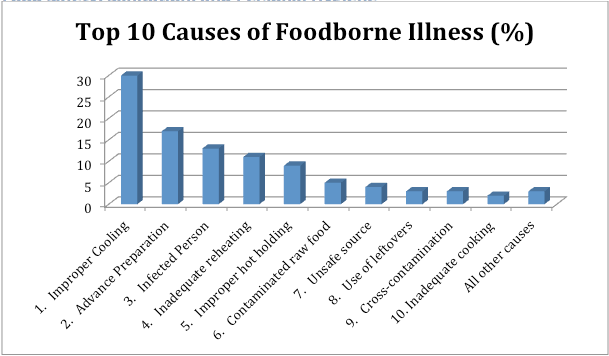
Food contamination can happen at any stage, from production to consumption. The contamination can be physical (foreign objects like hairs and residuals of plants), biological (bacteria, virus, microorganisms), chemical (pesticides, additives). According to FSA, the 4 C’s that are cross-contamination, cleaning, chilling and cooking are food safety regulations that have to be taken seriously. Inappropriate practice, improper heating such as undercooking, cooking, again and again, poor hygiene, and the re-use of leftovers, are responsible for causing 14% of these diseases. These small things have to be considered seriously as they can cause severe illness.
What are foodborne diseases?
Commonly known as food poisoning, these are caused by the consumption of inappropriate or contaminated food and water. The microbes that cause foodborne diseases generally enter through the GIT and cause diarrhea, vomiting, etc. According to 2011 data from the Centers for Disease Control and Prevention (CDC), it was estimated that in the United States, one out of every six persons was infected with foodborne illness (48 million people) and that foodborne illnesses resulted in 128,000 hospital cases and 3000 deaths.

FOOD SAFETY FIRST FOR HEALTHY CITIZENS!

Indian Ocean Sea Trade and the Archaeology Associated with It

History of Indian Ocean Sea Trade-
The Indian Ocean, used, explored and travelled by the navigators for over 5000 years, is the
oldest sea in the records of history till now. It is believed that Indian Ocean is the third largest maritime space in the world. It is a well known fact that Indian Ocean has remained a major route of maritime trade since the ancient times.
Basically the Indian Ocean is too related with the history of the maritime trade in Asia
predominantly. The strength and efficiency of the navy belonging to an Indian Ocean power varied widely with respect to the value of the sea borne trade the ruler’s
income. It was from the period from Augustus up to the early 3rd century CE of the Principate that represents a high point for the direct Mediterranean involvement in the Indian Ocean
trade.. Also, on conquering Egypt, the Roman Empire secured direct access to the centuries-old Indian Ocean trade network that in Roman times brought together China,India, Arabia, Parthia and other regions. In addition to this, the archaeological evidences allow the scholars and historians to observe as well as analyse the peak of Roman involvement in the Indian Ocean sea trade during the 1st century CE.
A lot of cities near the Indian Ocean trade route came into being, of which few of them are
Aden, Jeddah, Arikkamedu, Zanzibar and much more.
The maritime explorations as well as trade through the Indian Ocean have remained in focus
from a very long time and to this date as well, it acquires a great position in terms of worldly
trade networks.

Various sites from Indian Ocean Sea Trade Network having Archaeological Remains-
Site 1 (the ancient site and the oldest known till now): one of the oldest sites is an ancient
port of Muziris (present day Pattanam), near Kochi in India, belonging to an early historic
period of 2nd century BCE. Archaeological
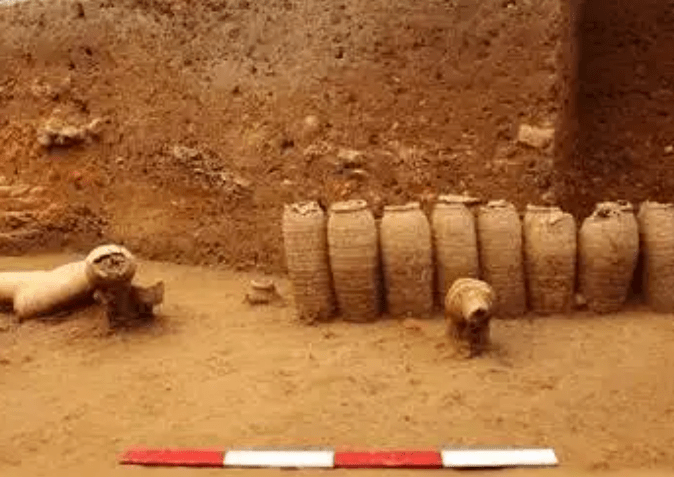
evidences suggest that Roman amphorae, pottery shards, precious gem stones, early Chera
coins, turquoise glazed potteries, semi precious stone with lion figure measuring 2cm
etc.were unearthed from the site.

https://www.thehindu.com/news/national/other-states/tubular-jars-excavated-at-pattanam-puzzle-researchers/article7271893.ece/amp/ In this link one can find about the excavation of the site of Pattanam that took place few months ago.

Tubular jars found at the site of Pattanam.

Site 2 (one from the medieval times): one of the major sites from the medieval period is
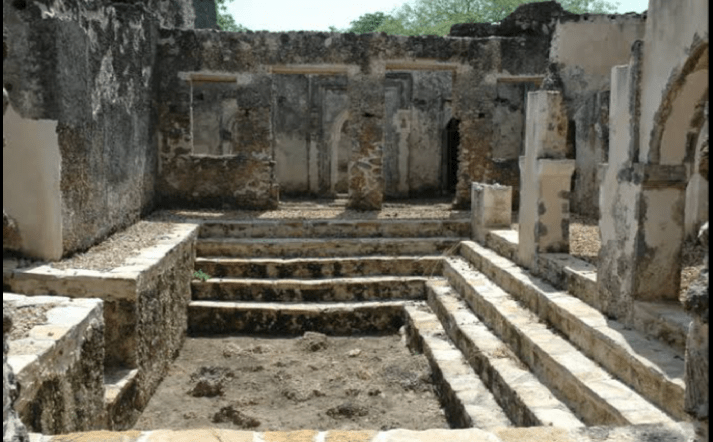
Kilwa Kisiwani, one of the Swahili towns of eastern coast of Africa. Here, several architectural remains can be found, that shows it was one of the trading cities lying in
the Indian Ocean Sea trade route. Constructions such as the warehouses, mosques, wells and merchant houses have been found here, that were built in 14th to 15th centuries. It was also evidently analysed that from 13th to 16th centuries, the
merchants of Kilwa dealt in gold, silver, pearls, perfumes, Arabian crockery and much more
through Indian Ocean trade network. At present the Kilwa Kisiwani is under the
UNESCO world heritage site list along with her sister port named Songo Mnara.

Ruins of Kilwa Kisiwani and Songo Mnara.

Site 3 (from recent times): during the early modern period, the port town of Aceh emerged
as one of the important ports in the northern part of Sumatra.It became an
important port town from the early 17th century. Archaeological evidences
includes of material such as medieval ceramics, old stone grave markers, and the ruins of
structures and fortifications. This tells about Aceh history prior to the 17thcentury in the
Indian Ocean. As an archaeological remain, an inscription dated 1088 that
refers to the members of a major commercial guild of India of the South, the Ayyavole guild,
relating to rights to pay by the merchants visiting the place of Aceh, have been
found. Aceh emerged as a crucial centre of pepper trade in the 16th
century.

Colonial influence on the Indian Ocean sea trade –
The Indian Ocean trade began with the sea voyages and explorations by the Iberian nations, i.e, Portugal and Spain during the colonial times (from 13th century onwards) and it was
through the early sea voyages by Vasco da Gama and Christopher Columbus, that Portuguese
were able to set up a colony in various regions including India, Macao,Brazil, Madiera etc.
However, the trade network in the Indian Ocean too observed a colonial influence since the
times of French, Dutch as well as British, apart from the Spanish and Portuguese sea voyages.Through trade of commodities as well slaves, they all wanted to dominate India
along with Indian Ocean; originally their main motive was to control trade through Indian
Ocean to various regions of the world. The Portuguese also claimed as lords of the sea, the right to control, direct and tax all trade in the Indian Ocean. Imperial conquests, notably the extension of British power into the western Indian Ocean in
the second half of the 19th century, would seem to fit, as would the Omani, French, and
Portuguese imperial ventures.
Indian maritime trade was little affected by the Portuguese as they relied more on the customs of the Indian shipping. Subsequently,Gujarati ships enabled Goa to earn
about a sixth of its entire revenues from the surplus of Diu in the 17th century and henceforth, Diu became an Indo-Portuguese entrepot of importance. The Dutch were more interested in slave trading as well as Coromandel cloth trading while the Britishers
focussed mainly on commodities of export to Europe such as indigo, pepper, cardamom,
clove, precious stones, cloth and mercantile and much more. So this was how colonialisation impacted the Indian Ocean maritime trade during the colonial times, hence.

Conclusion-
As a conclusive part of this topic, it can be said that the Indian was itself a vast component and a factor in facilitating trade. This was due to the fact that Indian Ocean proved to be a better means for promotion of trade via various segmentary routes for distance trade. Also, the nature of the trade in the Indian Ocean has changed a lot as well. And these days the Indian Ocean is in the news as due to lockdown, the shipping traffic declined and in turn,less noise pollution has been noted. Just like in
ancient times, the trade in recent times from Indian Ocean is extracting out a huge variety of
commodities along with generating economic growth of all the countries involved in the sea trade via this ocean, henceforth.

Some Stats and Some Truth…

CORONA…CORONA…CORONA…!!!

The most negative word of 2020 is +ve.

Yes, you caught it right the most negative word of the year is +ve, didn’t get?

No worries, It tells that if there is +ve in terms of affected via corona the it is the most worrying and dangerous situation specially if it is in our surrounding. The cities are under great pressure due to novel corona virus. Many of the residents of urban area are now heading towards their hometown as seeking for a safe place, but this can be completely opposite to as there are many chances of delivering novel corona virus with them to their home town without their notice and also threatening their lives as well as of their relatives. So, it will be beneficial as there will be minimum travelling along the country. For a while

“let corona stay out and you stay in”

This are some recent data of COVID-19

Corona virus cases total- 6,850,614

Total death- 398,244

Total recovered cases- 3,351,249

Total active cases- 3,101,121 ( Serious cases- 53,619; stable cases- 3,047,502)

Daily around 125k and more cases are being added to the list and daily around 7.5k deaths are occurred due this powerful virus.

India stands at 6th position with total cases of 236,781; total deaths- 6,649; total recovered cases- 114,073; total active cases 116,059 with serious cases of 8,944 and rest with stable condition. If the same situation will continue without any vaccine than it would become very difficult to even breath.

It is very very important to follow the guidelines given by our government and to maintain social distancing with mask. It is

“Now or else forever situation”

If we fail to follow guidelines of our government than this situation will remain forever and unfortunately we have make social distancing and wearing mask as our part of life. If we are able to follow this for at least till the vaccine are discovered than the coming part of our life can be eliminated, or else we have to live our life with fear of death in every breath.

STAY HOME, STAY SAFE

TECHNO-UTOPIANISM

Technology has been both a boon and a bane for us, we completely rely on technology and the machinery for almost everything be it cooking, cleaning or even passing some free time (leisure).

We have become quite dependent on it and look forward for further technological advancements in the near future. Most of us have started criticising technology for the leisure seeking beings it has made us into, specifically mobiles and laptops, we do enjoy each and every component of technology but somewhere or the other are uncomfortable with the drastic changes it has made in our life.

Techno-utopianism or technological-utopianism is a theory which states that technological advancement will lead to a world of perfection which is free from any kind of flaws or will lead to a world where mankind will find all or any one of the prefect pleasures which life has to offer.

In a techno utopian society which is free from human suffering, humans would be exposed to the best features be it excellent governance for the people or a life which is human friendly, a world free from the pangs of human pain and all the favourable and pleasure seeking components.

Technology is viewed as a saviour and as the life changing development, technology will give the people of the new world a positive outlook and it will be the final game changer and a hope towards a hassle free future. Technology would be worshipped and will be given a positive outlook, be it new developments in various fields like economic development or developments catering to the societal wants or even technological development which makes life much easier to live. The development would be seen in all spectrum that is social ,economic or philosophical areas.

Currently in the twenty first century we are still developing and currently in a stage where we have a long way to go to become completely technologically dependent, we are currently exposed to the least amount of technological resources and we live in the age where a technological revolution is taking place and we can partially say that we are living in a techno-utopian society in the twenty first century.

Technology will be seen as a benediction which would foster growth, fulfil peoples’ wants and will cater to better communication and will strengthen community ties. Due to the technological advancement one will be able to free themselves form the squabbles, the commotion and the tumult which the daily life offers. It will strengthen societal ties and increase the relation between humans (communities).Technology has brought people closer, we have been able to connect with people overseas via video calls and phone calls and other applications.

The one point which is super advantageous is that it will reduce financial inequalities amongst people and will also aid in access to better skills and knowledge, people will be free to express their thoughts and views without any inconveniences. Techno utopianism will eventually change mind sets, we will become open minded human beings and we will also become practical decision makers.Already our lives have become more easier with devices that do our works with just a few clicks be it mobiles, laptops or even the smart T.Vs.

But many critics feel that we will never be able to reach a stage where each idea is fulfilled to call ourselves a techno-utopian world. As to achieve techno-utopianism in a  society which is still developing or underdeveloped it’s an impenetrable and inflexible task. As firstly all the countries don’t have the same requirements, some still hardly have any technological advancements and even if they are exposed to the advancements it would take time for them to adapt themselves in such a techno-savy  society.

Further as new technological inventions are taking place we are looking forward to drastic changes which would just turn the tables and we would be living a smart life with the smart use of super technological devices and advancements.

Abdhi Upadhyay

The Great Chola Empire

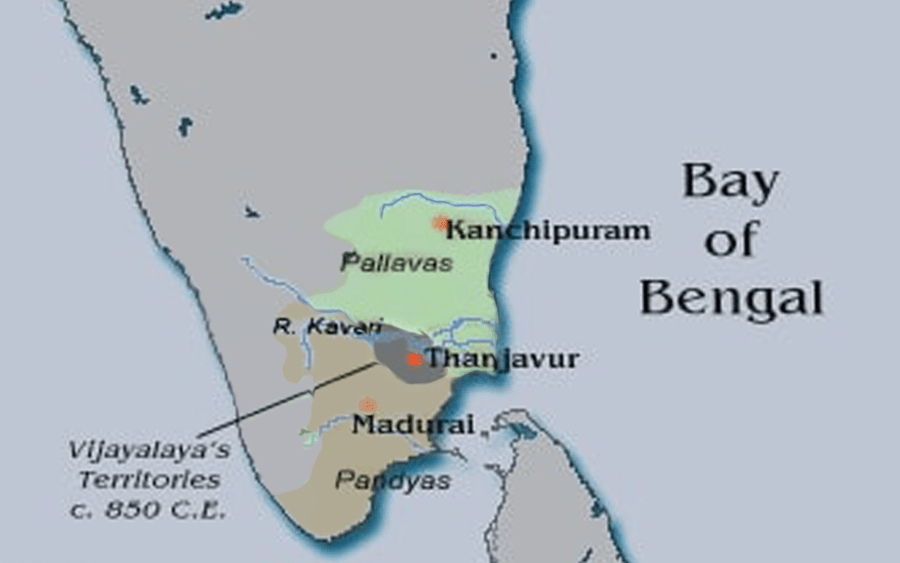
The Chola Dynasty is one of the finest and longest-ruled dynasties in India, it was the Tamil Kingdom and has a vast empire, it was first established in 300 BCE during the Sangam period but the real existence was known from Ashoka’s inscription on three great Tamil kingdoms in the southern part of India and it is one of the Three crowned kingdoms in south India along with the Pandyas and Cheras. The Chola dynasty was not during the earlier times i.e., during the Sangam period as the evidence was washed away due to natural calamities and but the known and the first king of Chola dynasty was Vijayalaya who was a feudatory to the Pallava Dynasty and took the opportunity to capture Thanjavur as there was tension prevailing between the Pandyas and Pallavas and Thanjavur was ruled Mutharaiyar a small community and established the Chola dynasty and in the present day of Thanjavur.


The above picture depicts the region occupied by Vijayalaya and after the demise of Vijayalaya his son Aditya I ascended the throne and brought the downfall of Pallavas and defeated the Pandyas in Madurai and annexed some parts of the Kannada territory and had ties with Western Ganga kingdoms. After him, his son Parantaka I defeated Rashtrakuta Dynasty in the battle of Vallava and he also annexed parts of Sri Lanka.
The two great rulers of the Chola kingdom under whom the Chola dynasty flourished in trade, governance, and power were the great Rajaraja Cholan and his son Rajendra Cholan I under whom the Chola dynasty attended the zenith of power.

Rajaraja Cholan

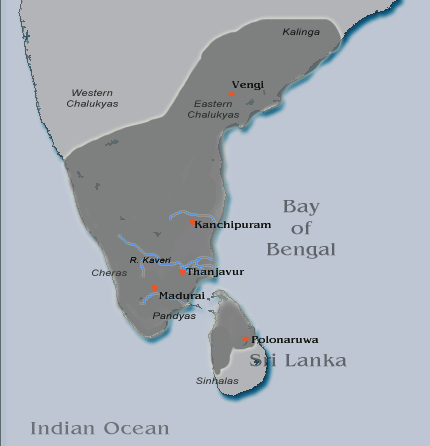
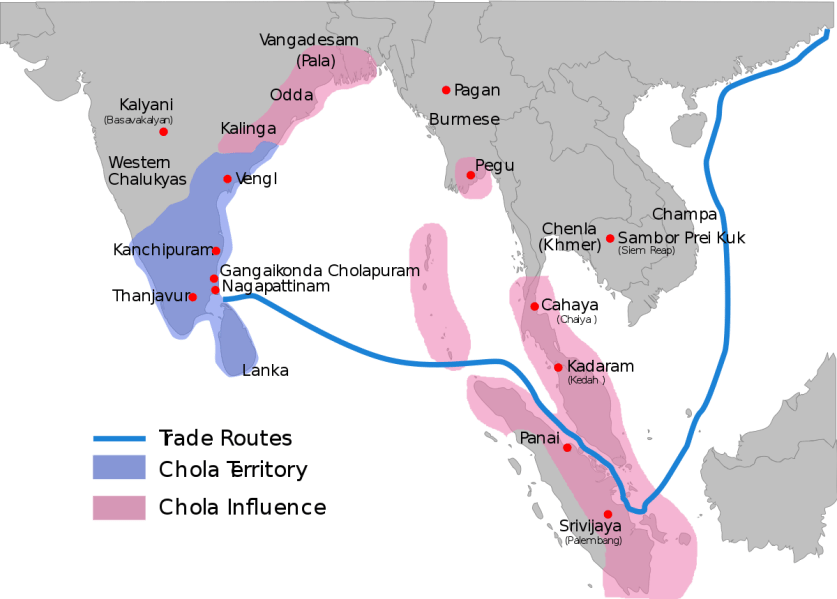
Rajaraja Cholan was born as Arulmoli Varman but changed has to Rajaraja Cholan after ascending the throne in 985 CE and ruled until he died in 1014 CE. He was a great king and an exceptional military solider who expand his kingdom to vast areas. When he ascended the throne the kingdom was relatively small in area and did not have the resources to build the kingdom and was recovering from the Rashtrakuta invasion and Rajaraja Chola was abled administrated and an efficient king who took the task of rebuilding the kingdom and succeeded in it. He restructured the Chola kingdom by taking land surveys and utilizing the resources to great extend and on the military side, he led and successfully captured and annexed various kingdom including Madurai and the Cheran region of parts of Kerala and led an invasion into Sri Lanka and successfully capturing parts of Sri Lanka and captured the kingdoms belonging to Rashtrakuta, Western Chalukyas, Hoysalas, Kalinga and various other kingdoms. He led the successful expedition into the Maldives and this act was deemed as the power of the Cholan Naval Fleet. He was an able administrator and build a powerful and well-structured society and was Succeeded by his abled and fearsome son Rajendra Chola.

Rajendra Cholan I

Under Rajendra Chola, the Chola kingdom was at the power of prosperity and became the most powerful kingdom in the southern region. He ascended the throne after the death of his father in 1014 CE. He led the conquest that his father left for him with the help of his abled and fearsome warrior son Rajadhiraja Chola who is known as Military king as he leads his army from the front and fights along with his soldiers and the other warrior is his commander-in-chief General Senapati Narakkan Sri Krishnan Raman both who was fierce in the battlefield and have helped his father to expand to other parts of Sri Lanka, Maldives, the South-Asia and other regions including Kalinga and some parts of Bengal. He was always supported by his fearsome son Rajadhiraja in every battle and the father-son due ruled the kingdom together, until his death in 1044 CE and was succeeded by his son Rajadhiraja I.

Is unlock 1 is right?

When there is increment in corona patient then our government announced the unlock 1 .The question is what this is right time for unlock 1?

After the announcement of unlock 1 the number of positive patient is increase with very high rate.But the funniest part is that we Indians are not taking it seriously. Currently the number of corona patient is near about 250000 but now our government think about economy of country and releases approx all boundations .And we the public think that corona is no more in India and not taking any precaution and no doubt it is bad for our community.

After the announcement of unlock1 approx all public places are open without any precaution so the number of patients increase with the speed of light.In public places no one follow the rule that is social distancing they meeting with each other as in any festival.Public celebrate unlock as festival and avoiding social distancing.

After unlock1 all religious places are now open and no doubt the number of cases will increase automatically because we know that the social distancing will not follow by our intelligent Indians.

After all the current situation demands a strict lockdown otherwise the result is so bad which we can’t imagine.

Re-evolution 2020?

Why did I end up keeping a question mark at the end of the title? Is it in order to start my introduction with a question mark by questioning the title or which made me to write this sentence. The answer to this question is a question. Indian Education Future turns out to be a question mark and remains to be question for more far. Our future lies in the past and the past remained as a past and hence future will remain as a future. Past shouldn’t be past in order to make future as a future. Past should change so that our future will not change. Our children’s future can be ours but theirs shouldn’t be theirs which will be cycle and makes the future to be seen only in future’s future.

The change to change the educational system should change which is only possible by changing the mind sets of unchanged. This is only possible by changing the methods of bringing the awareness. Education is the only weapon which can change the change(money) of the unchanged.” Uneducated should be treated as a criminal and illiteracy must be treated as a crime which is the only way to increase the literacy rates”. Education should be mandatory which makes them to read since the only option left to them is it. Fear is the thing which wemake them to feel and the rest is automatically done. Fear for benefit will benefit the society. Before they overcome this fear at least they could have finished secondary education. As soon as they realise it, we make them to understand the importance of education. “If you can’t love to study, fear will make it so”. The feelings are different but the feeling is same. To make the future possible we should take action in the present.

Revolutionary decisions must be made in order to bring a revolution else the only thing we hear about it is “sun is revolving around the sun”.The harsh decisions that you take will make them hard and in turn shine like a diamond. Education can bring the change and in turn make the change like a unbreakable chain. If good has to happen then making bad decisions to make it is not at all a bad decision. Severe tax should be impelled on the parents who are not willing to send their children for the study and that tax will be utilised for the education of that child.

Corona Vaccine Update!!!

The situation in the world are very worse and so our hope for vaccine also. Scienticts are trying hard and hard to discover the vaccine. Scientist and pharma industry from all over the world are in danger in terms of health and wealth.

Here are some updates related to corona virus vaccine;

Moderna Therapeutics‘ invented mRNA-1273 vaccine prototypes which is heading towards success with high speed. The vaccine, is currently in its second phase of testing is more likely to be tested ahead on its third phase of clinical testing, Moderna therapeutics plans to involve about 30,000 participants between the ages of 18-55 and those who are at high risk of corona virus. If the trials are successful than it would be much relief for the people all around the world, by the time, Moderna promised to manufacture 100 million doses of the vaccine. The third phase of the testing is most likely to start in July.

Oxford University & AstraZeneca of Brazil which is worst affected country due to COVID-19 are jointly working to develop the corona virus vaccine. Once they tried to develop the vaccine but it failed in testing, now after much of research and time they again got hope and now they are soon ready to begin the trails on humans. To speed up the development of vaccine and minimizing the clinical trial time they are conducting both phase I and phase II trials at the same time.

Serum Institute of India (SII) India is also leading in development of  vaccine it has already tested for 18-55 age but side effects were observed and is again under development and testing. If India is able to development the vaccine first than India will become super nation as India will show to world that still India can do better in health sector and obvious youth is also at great potential so, ultimately it will attract many of the MNCs to India.

Order Convening General Court Martial Can Be Challenged Before AFT: SC

 In an interesting and significant development, the Supreme Court in Union Of India & Ors. Vs. P.S. Gill in Criminal Appeal No. 404 of 2013 decided on November 27, 2019 has held clearly and convincingly that an order convening a General Court Martial (GCM) can be challenged before an Armed Forces Tribunal (AFT). While differing with an order of the AFT, the Union of India had approached the top court claiming that an order by which the GCM was convened cannot be the subject matter of an appeal before the Tribunal. It was also contended that the jurisdiction of the Tribunal is only for adjudication of complaints and disputes regarding service matters and appeals arising out of the verdicts of the Court Martial.  But it got no relief on this and the top court made the picture clear by holding clearly and convincingly what has been stated above. It merits no reiteration that this should now certainly put to rest all speculations on this important topic.

                                       To start with, the ball is set rolling in para 1 of this noteworthy judgment authored by Justice L Nageswara Rao for himself and Justice Hemant Gupta wherein it is observed that, “The Union of India is in Appeal against the judgment of the Armed Forces Tribunal, Principal Bench, New Delhi (hereinafter, ‘the Tribunal’) quashing the order dated 23.02.2010 by which General Court Martial was convened against the Respondent.”

                                To recapitulate, it is then pointed out in para 2 that, “In the year 2005, the Chief of the Army Staff directed an investigation by the Court of Inquiry into the allegations pertaining to irregularities in procurement of ration, as a result of which the quality of supplies for the troops was compromised. A Court of Inquiry was convened on 10.10.2005 by the General Officer Commanding-in-Chief (GOC-in-C) Western Command to identify the Army personnel responsible for the aforementioned irregularities. Twenty-three witnesses were examined by the Court of Inquiry. The Court of Inquiry identified Twelve Army personnel who were prima facie responsible for the said improprieties. The Respondent who was working as the Chief Director of Purchase (CDP), Army Purchase Organisation, Ministry of Defence was one out of the twelve persons against whom a prima facie case was found. Disciplinary action was also initiated against the Respondent by the GOC-in-C, Western Command on 14.06.2006 which was challenged by the Respondent by filing a Writ Petition in the High Court of Delhi. By an order dated 11.01.2007, the High Court quashed the Court of Inquiry on the ground that Rule 180 of the Army Rules, 1954 (hereinafter, ‘the Army Rules’) was violated. However, an option was given to the Appellants to either hold a fresh Court of Inquiry after complying with Rule 180 of the Army Rules or to proceed directly under Rule 22 by hearing the charge without relying on the Court of Inquiry. The Court of Inquiry was re-constituted pursuant to the option given by the High Court. Later, the Appellants sought a modification of the order dated 29.07.2008 and informed the High Court that proceedings would be initiated under Rule 22 of the Army Rules since most of the officers involved had already retired and that it would be difficult to re-constitute a Court of Inquiry. The High Court permitted the Appellants to proceed under Rule 22 with the condition that no reliance can be placed on the old Court of Inquiry. The order of the Chief of the Army Staff by which cognizance was taken of the offences and the attachment order issued on 26.09.2008 were the subject matter of another Writ Petition filed by the Respondent in the High Court of Delhi which was dismissed on 03.10.2008.”      

                                   While elaborating further, it is then enumerated in para 3 stating that, “A hearing of the charge under Rule 22 against the Respondent was convened on 08.12.2008 and recording of summary of evidence under Rule 23 of the Army Rules was ordered against the Respondent on 24.12.2008. The Commanding Officer of the Respondent i.e. General Officer Commanding (GOC), 15 Infantry Division found that no offence was prima facie made out against the Respondent. The said view was approved by the GOC, 15 Corps on 28.04.2009. In the meanwhile, the Respondent retired on attaining the age of superannuation on 31.05.2009. However, Section 123 of the Army Act, 1950 was invoked by the Appellants to continue the proceedings against the Respondent. The GOC-in-C, Western Command examined the matter and the recommendations made by the GOC, 15 Infantry Division and GOC, 15 Corps and arrived at a conclusion that a prima facie case was made out against the Respondent. An attempt was made by the Respondent to challenge the findings of the GOC-in-C, Western Command, but in vain. The General Court Martial was convened by a letter dated 23.02.2010. The Respondent filed O.A. No. 147 of 2010, assailing the validity of the order convening the General Court Martial. He also sought for quashing the proceedings of the Court of Inquiry, summary of evidence and the conclusion of the GOC-in-C, Western Command holding him prima facie guilty. He further questioned the invocation of Section 123 of the Army Act against him to continue the proceedings even after his retirement. He also sought promotion to the rank of Major General along with his batchmates.”

                                         As it turned out, para 4 then holds that, “The Tribunal held that a prima facie case to proceed against the Respondent by a General Court Martial was not made out. The Tribunal was of the opinion that even if the entirety of evidence of the prosecution is taken to be true, no offence was made out against the Respondent. The Appellants made an attempt to obtain leave to Appeal under Section 31 of the Armed Forces Tribunal Act, 2007 (hereinafter, ‘the Act’) to approach this Court, which was not entertained. Aggrieved by the judgment of the Tribunal, the above Appeal is filed.”

                                   Be it noted, para 13 points out that, “At the outset, it is relevant to note that the O.A. was filed both under Sections 14 and 15 of the Act. Section 15 confers jurisdiction and power on the Tribunal to entertain appeal against any order, decision, finding or sentence passed by a Court Martial.”

                                   To put things in perspective, it is then pointed in para 14 that, “Section 15 (2) of the Act provides for an appeal which can be filed by the person aggrieved by an order, decision, finding or sentence passed by a Court Martial. The order challenged in the OA in this case is a proceeding by which the General Court Martial was convened. As there was no order, decision, finding or sentence by the Court Martial, an appeal under Section 15 per se is not maintainable.”

                                          While explaining the purpose of Section 14, it is then made clear in para 15 that, “Section 14 enables a person aggrieved to make an application to the Tribunal in any service matter. ‘Service matters’ are defined in Section 3 (o) to mean all matters relating to the conditions of their service, which shall include termination of service, inter alia. There are some matters which are excluded from the purview of the definition of ‘service matters’. There is no dispute in this case that the said exclusions do not come into play.”

                                      Of course, it is then also made clear in para 16 that, “Any matter relating to the conditions of service falls within the definition of ‘service matters’ under Section 3 (o) of the Act and can be the subject matter of an application filed before the Tribunal. ‘Conditions of service’ mean those conditions which regulate the holding of a post by any person right from the time of his appointment till his retirement and even after his retirement including pension etc. Therefore, conditions of service also include dismissal from service [State of Maharashtra v. Marwanjee Desai, (2002) 2 SCC 318].”

                                        To put it succinctly, the foregoing discussion leads the Bench to hold in para 18 that, “It is clear from the above that any proceeding which leads to an order of termination would fall within the expression ‘relating to conditions of service’. In any event, the proceedings initiated against the Respondent cannot be said to be not related to his service. A final order to be passed by the General Court Martial, apart from the imposition of other penalties, might have led to the termination of the service of the Respondent.”

                                      More importantly, the Bench then very rightly holds in para 19 that, “We have no doubt in our mind that Section 14 of the Act which confers jurisdiction over service matters of the Army personnel should receive wide construction. This Court had held that an interpretation which confers jurisdiction should be preferred over an interpretation which takes away jurisdiction. [Mantri Techozone v. Forward Foundation, 2019 SCC Online SC 322 (3JB).”

                                 Most importantly, it is then observed in para 20 that, “We are also conscious that the object with which the Act was made is to provide adjudication of complaints and disputes regarding service matters and not only appeals against the verdicts of the Court Martial. It is trite law that statement of objects and reasons can be used as a tool for interpretation. [S.S. Bola v. B.D. Sharma (1997) 2 SCC 522, State of Maharashtra v. Marwanjee F. Desai, (2002) 2 SCC 318]. The sequitur of the above discussion is that the impugned judgment of the Tribunal does not suffer from lack of jurisdiction.”

                                   Going ahead, it is then held in para 21 that, “Regarding the charges sought to be framed against the Respondent, we do not find any error in the approach of the Tribunal. The material on record was perused by the Tribunal to come to a conclusion that no prima facie case is made out against the Respondent. We do not see any reason to interfere with the said findings.” Finally, it is then held in the last para 22 that, “Accordingly, the Appeal is dismissed.”

                                      To summarise, we see that the Apex Court Bench in this latest, landmark and extremely laudable judgment very rightly upholds the AFT order. It has been very rightly held that an order convening a GCM can be challenged before an AFT. It was also rightly submitted by Mr K Ramesh that jurisdiction of the Tribunal cannot be curtailed on pedantic grounds and the order by which General Court Martial was convened was rightly set aside by the Tribunal. No wonder that the Apex Court Bench comprising of Justice L Nageswara Rao and Justice Hemant Gupta very rightly upheld the bona fide submission of the learned counsel Mr K Ramesh and emphatically ruled in his client’s favour while rejecting the submissions made by Ms. Diksha Rai who was the learned counsel appearing for the Appellant who contended that the judgment of the Tribunal is vitiated due to a jurisdictional error! There can be no denying or disputing it!    

Sanjeev Sirohi, Advocate,

s/o Col BPS Sirohi,

A 82, Defence Enclave,

Sardhana Road, Kankerkhera,

Meerut – 250001, Uttar Pradesh.

How to delete cookies in Android and IOS.

What is a cookie?

First let us know what cookies actually are so a cookie is some sort of a message which is sent by the server to the web browser. It is generally a small piece of mechanism or data which is sent by the website you have visited. It generally stores the information like the items you have added in your shopping cart or when you allow the website to remember your password, the pages you have a visited etc.

How to delete the cookies in various browsers?

Chrome.

Chrome for andriod.

1 – First obviously you have to open the Google Chrome app in your android device.

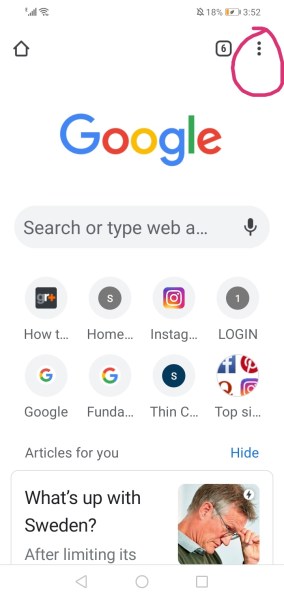
2 – Then click to the right of your address bar which indicates 3 dots vertically and then select the option of settings.

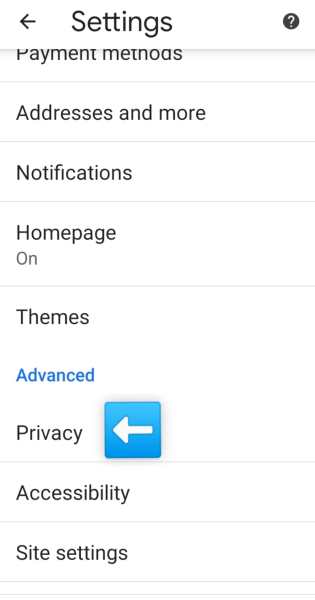
3- After clicking settings move on to the privacy category and then select “clear browsing data”.

4- After that you can select the column of cookies and delete it permanently.

That’s how you clear cookies in your android device as your browser chrome.

Chrome for IOS.

IOS has somewhat similar process to remove cookies.

  • Firstly open the Google Chrome app on your Apple device.
  • Moving on you have to click the 3 vertical dots on the right of the web address bar and then click “settings”.
  • Then move on to privacy and after that click “Clear browsing data”.
  • Then choose the column of cookies and unselect the remaining columns.
  • Lastly select Done.

Firefox for android.

Let’s see how can we delete the cookies using Firefox in an andriod device.

Click on the menu icon representing the 3 vertical dots located at the top right corner. On older Android devices you’ll have to press the hardware menu key and then tap “More.”

  1. Go to the “Settings” after clicking on menu.
  2. On the settings menu, look for “Privacy & security” and select “Clear private data.”
  3. Then you will proceed to a list of what can be cleared and where you can select “Cookies & active logins.”
  4. Select cookies , tap the “Clear data” button to finally delete cookies.

Firefox for IOS.

  1. Move on to the “Settings” menu.
  2. On the settings menu, click “Privacy & security” and then select “Clear private data.”
  3. Then you will proceed to a list of what can be cleared where you select “Cookies & active logins.”
  4. Then after selecting the right column , tap the “Clear data” button to finalize. deleting cookies.

Safari for IOS.

  1. Move to the Settings menu on your device.
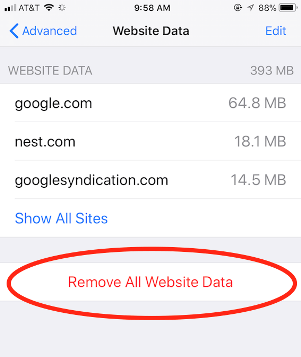
  2. Scroll down to “Safari,” then “Advanced,” then “Website Data”
  3. Tap on “Clear history and website data” to clear cookies it is that simple in this format.

Now regarding the Tablet operating system as it is run on Google Andriod system the process to delete the cook

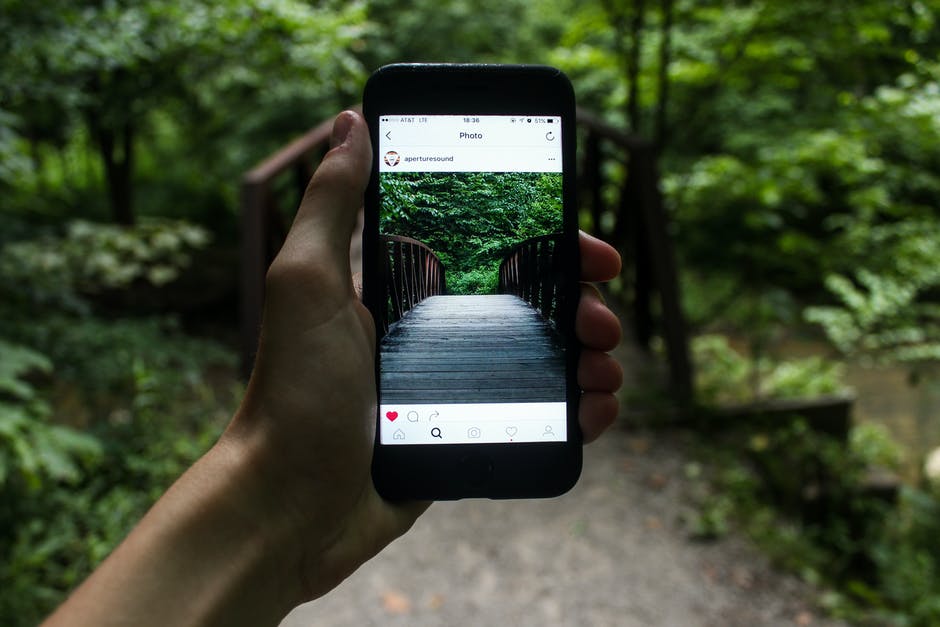
How to become an Instagram Influencer

With the growing advancements of this digital era, apps like Facebook, Instagram, Twitter have taken over our life in a huge way. Instagram has become one of the most essential and influential apps of today’s world among teenagers and adults who simply find it fascinating as to how the app works and also helps many of them become influencers with thousands of followers. Sounds amazing, right? This article aims at representing the major steps and strategies that should be followed by anyone and everyone in order to become an Instagram influencer in today’s world.


1. Stick to a Genre.


Choose the genre/ subject that your instagram account would be based on. If you have a fascination towards food, make an account with quality food pictures, delicious food recipes, remarkable restaurant reviews/locations and on. If you are an enthusiast traveller, make an account and start posting travel pictures along with distinctive locations of tourist spots, your experiences, write blogs about your journey so on and so forth.

2. Use a Good Camera.


No matter whether your aim is to become a fashion influencer or a travel blogger or a food blogger, always use a relatively good camera with a good picture durability. The more you put an effort to post clear and better pictures, the more engaging your account will get. Even many mobile phone cameras have good picture quality these days. All you have to do is to pick a good device that will help you post good pictures!

3. Make it Aesthetic!


There is a common misconception that only writers/poets/authors have aesthetic instagram profiles. If you are an aspiring food/ travel blogger and if you try your hand at aestheticism, you will surely get more followers in less time than people whole do not have an in-dept aesthetic and artistic touch in their feed.

4. Use proper Hashtags!


Hashtags bring more engagement to your feed. It helps your post reach to people from different countries and different tastes which eventually makes the post more engaging. And remember, more engagement leads to more followers! Maximum numbers of hasgtags to use in a single post is 30 (currently). Take some time to do your research on the popular hashtags that are related to your content and then use them properly!

5. Communicate With Your Followers!


Simply replying to some of the comments on your posts can bring nore engagement to your account. Try responding to some direct messages in free time. It will help in developing the numbers of followers in your account.

6. Put an Impressive Bio.


Whoever comes across your profile will notice your bio first bio first before anything else(yes, even that special post you put so much effort before uploading). Hence, do not make the mistake of putting a bio in a casual manner that makes no sense. Think, take your time and come up with an entertaining, humorous and impressive bio. Do not forget, bio is the first impression that you would be giving out!

7. Shift to a Business Account.


Making your account a business account will simply turn it into a public profile. Public profiles reach to people way faster than the private ones. Once it is a business account you will be offered to work with different brands which will eventually bring you more followers!

8. Put Thoughtful Captions.


Captions play a major role in the development of your instagram account. Take sufficient time to think of an impressive yet humorous caption related to your post that will engage your audience for 2-3 minutes minimum.

9. Go Out of The Box!


Posting similar things for a long period of time may create a sense of monotony in your audience. Therefore, come up with surprises. Go out of the box. Put up different content occasionally to bring about a shock value which will help in creating more engagement and traffic to your feed.
There are various ways that you can explore in order to become a successful instagram influencer, and these are some of the easy yet effective steps that will definitely work out if followed in a proper way. Good Luck !

– Suvasree Bandyopadhyay.

Educational Minister Sisodiya thinking of reopening of school in july in Delhi

Manish Sisodiya wants to open school for class 4 onwards students

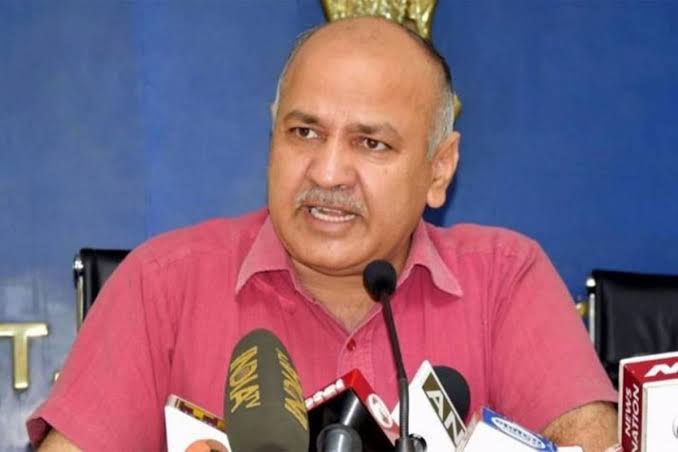
The Educational Minister Manish Sisodiya in the latest interview talk about the reopening of School in July for senior students. He told Union Minister that they are thinking about school reopening because for the students of class 4 onwards they really need offline classes to go through about their academics.

But the situation under Corona disease , it can’t be tolerated as the students might be going to do social gathering between them. So, how they will manage social distance.And also for the students school management also needs a lot of changes in rule of conduct. But afterall the question arises are really student follow the guidelines.

All the students also have to be check regularly for thermal screening , that is really a tough work as well as the maintenance of social distance among them also can’t be possible.The Minister had to really go back on his decision and rethought the process of reopening of School.

We can conclude that in today ‘s scenario it is too hard to make this type of thing possible. Because afterall students would be going to hangout with their friends. Also the social distance also a type of impossible task. So Government had to just closed the school till the situation comes under control.

COVID-19 and Creativity

Covid-19 outbreak has created a complex sphere for everyone across the globe with different consequences and repercussions in terms of psychological, physical, social and economic domains as long as human existence is concerned. Apart from infecting around 6.6 million people from different parts of the world, it has also caused several other issues followed by a transformation that is gradually taking place in the society.


The Pessimistic Side


With the growing number of infected cases throughout the whole world, a sense of tension has taken over the mindset of people. The prolonged lockdown period has caused several mental and psychological issues that everyone at some point or the other has faced since the beginning point.

Due to the instructions from the government and the unpredictability of the situation everyone has refrained themselves from stepping out of their house which eventually led to the gradual downfall of economy and financial status of several countries and states. Along with that, a sense of nothingness has grasped around with the passage of time. Monotony and boredom have taken over and it has caused mental disturbances in people from time to time.

Having mentioned the aforementioned points, it should also be mentioned how it has gone to affect the aestheticism and creativity in a larger scale. Many lost their jobs, artists, actors and the others belonging to professions where their wage is depends on daily productivity are suffering quite a lot.

This prolonged period of lockdown across the globe has caused ‘a great depression’ that has eventually taken over our lifestyle. It has been extra harsh on people with mental illness. Those in need of therapists have had to stop their visits due to the lockdown protocols and needless to mention it has led to the deterioration of their mental health.

Lockdown has been really harsh for extroverts who generally find it really difficult confine themselves in a same place for a long period of time. Artists are suffering due to the current situation and with very little hope for their future. In order to maintain a minimum financial stability, several artists have taken up different freelance jobs, which is far from their comfort zone and preferences.


The Optimistic Side

However, despite of the depressive monotony caused by the lockdown, it has also provided us with a great opportunity to work on ourselves more than ever before. Painters, singers, digital artists, writers and others with the same kind of professional roles have found this time really helpful to work on their art works.

Art needs time to develop. Research activities and innovative ideas take time to be brought forth. This period of lockdown has provided these people with a huge amount of free time that they would never get anywhere else. For instance, writers are finding it really helpful and they are making use of the opportunity to write as much as possible which was nearly impossible in the pre-lockdown period with the monotonous hectic life schedules.

Even common people who are not associated with art works and aestheticism, are finding this time really useful. It is a great opportunity to work on ourselves. It has also been helping people to retrospect about literally anything and everything. Everyone has been working a lot in order for them to be better versions of themselves. Therefore, a psychological, mental, sociological and socio-political transformation is taking place due to this deadly virus. In other words, it has been an eye opener for many.

What’s Next?


Although nothing is as unpredictable as our life is right now, it would not be too hard to guess the future, or at least a supposed glimpse of it. This prolonged lockdown period has provided everyone with a huge amount of time which has caused a transformation in everyone at one way or the other. The post-lockdown period will be a new beginning for everyone. It will demand a new system with a fresh mindset of people along with an enthusiastic sense of belongingness. Everyone will be working on their respective professional roles but with more determination, hard work and passion.

Therefore, it can be said that it will go back to normal, but this ‘normal’ will be a different one than what it had been before. Along with the habit of cleaning and purifying ourselves with hand sanitizers and soaps a tendency of living in a purer way will also take place in an eventual manner. The usage of masks can be described in a metaphorical way to be a tool to keep ourselves away from the pollution in the form of negativity and pessimism. A ray of hope therefore is developing in the minds of people to make it a better tomorrow, and the world a better place for each and every organism residing in it.

– Suvasree Bandyopadhyay.

Age of motherhood, imperatives of lowering MMR, improvement of nutritional levels

The Government of India in a gazette notification issued on 04th June 2020, has set up a Task Force to examine matters pertaining to age of motherhood, imperatives of lowering MMR, improvement of nutritional levels and related issues.

Union Finance Minister, during her Budget Speech for 2020-21 in the Parliament stated that “Women’s age of marriage was increased from fifteen years to eighteen years in 1978, by amending erstwhile Sharda Act of 1929. As India progresses further, opportunities open up for women to pursue higher education and careers. There are imperatives of lowering MMR as well as improvement of nutrition levels. Entire issue about age of a girl entering motherhood needs to be seen in this light. I propose to appoint a task force that will present its recommendations in six months’ time..” (Ref.: Para 67 of the Budget Speech for FY 2020-21).