

Government has decided to open all the Centrally protected monuments by completely abiding with safety protocols from today.
Union Tourism Minister Prahlad Singh Patel has said, only those monuments and museums which are in the non-containment zones will be opened for visitors. He said, all Centrally protected monuments and sites will be bound by the protocols like sanitization, social distancing and other health protocols issued by the Health Ministry. Mr. Patel said, any specific orders of the State and District Administration shall also be strictly implemented. Our correspondent reports that these monuments were closed in the wake of COVID-19 pandemic.
A total of three thousand 691 Centrally protected monuments come under the Archaeological Survey of India. Out of which, 820 monuments which have places of worship were opened on 8th of last month. The entry tickets will be issued by e-mode only and no physical tickets will be issued. Only digital payment is allowed at parkings and cafeterias. All Sound and Light Shows and film shows at monuments will remain suspended. The visitors have to follow social distancing and use of face cover or mask is mandatory.
Thermal scanning provisions and hand hygiene at the entrance is mandatory. Only asymptomatic persons will be allowed to enter the premises. No group photography, food and eatables will be allowed inside the premises.
Day: July 6, 2020
Position of interstate trade in india
Introduction
“Democracy is the art and science of mobilising the entire physical, economic and spiritual resources of various sections of the people in the service of the common good of all.” To an extent the Article 301 of the Indian Constitution could be said to the derived or influenced from such a philosophy with the objective to protect the National integrity and unity with the help of hassle free flow of trade throughout the country. An intention to unify different fields and different regions with the help of this freedom guaranteed in Art. 301 Even then for all practical purposes this freedom could not have remained absolute in order to ensure that a privatized market Grab economy does not further exploit the already starving population of India. Therefore this freedom was made subject to the other provisions of this Part (Part XIII). But as the researcher proceeds with the analysis of the position of inter-state trade it becomes clear that these provision which act as restrictions on this freedom bestowed by Article 301 is been severely hinders it . And therefore the Concept of Free Trade as envisaged by the constitution makers has remained a concept only with the amount of barriers and complications involved in interstate trade today. The free flow of trade and commerce are sine qua for the economic enhancement domestically as well as internationally has not given to the Indian Markets. The European Union is an amazing example of such a trade union which has opened up trade barriers among the countries of the union and has shown dramatic advancement in the field of trade and commerce. It is time for India to overhaul its current taxing system and central as well as state policy towards free trade.
Thus in this project the researcher will analyse the case laws which are responsible for the current position of the interstate trade and also the effect of Part XIII on them to determine how effective the provisions have been to strike a balance between the economic development and advancement of the country on one hand and the protection of the majority who were likely to the exploited and starved if the free market was allowed to thrive at the whims of capitalists.
An Analysis Of The Provisions And The Case Laws
The Constitution Makers have borrowed the concept of freedom of trade from the Australian constitution (Section 92) but the Indian version has a couple of changes in the scope of its application, and they are
- that the freedom guaranteed is not limited to among the states but ‘throughout the territory of India’ and,
- the privilege of trade being free is not qualified by the adverb ‘absolutely’ as in the Australian constitution.
And the reasons for these changes in the adaptation of this Article, from the Australian constitution, lies in the rest of the Articles of the Part XIII starting from Article 302 till 307. The Freedom is not absolute as the rest of the provisions impose several restrictions and exceptions to this freedom. Another very important aspect of the Part XIII of the Constitution is that it is not subject to any other part or provision of this constitution. In the simplest sense any kind of tax that is levied on any particular activity which involves interstate transaction can be taken to be a restriction on the freedom of trade. But as taxes are also necessary for the functioning of the Centre and the State all of them cannot be treated as restrictions violating the Article 301. This question was first brought up in the Atiabari case in which the Apex court held that tax laws are not outside the scope of ‘the Freedom’. And therefore the Assam State Legislature had to amend the provision as to meet the requirements of the exception in Article 304(b) so that the tax that it imposed did not amount to a direct and immediate impact of the movement of the goods. This case has also gone into the historical background of the Making of this constitution in which it discusses that the makers of the Constitution were fully aware of the fact that economic unity was an absolute prerequisite for the stability and progress of the federal polity. Considering the possibility that there might be several political parties in the future, unlike the only congress majority then, with different ideologies and following different ‘isms’ for pursuing socio-economic goals is likely to give rise to a mechanism wherein the regional pull (by regions with higher influence) will affect the economic policy which in turn will have negative impact on the overall development of the economy of the nation as a whole. Thus the object of Part XIII to avoid such a possibility and to ensure that the political freedom won and political unity which had been accomplished by the Constitution, had to be sustained and strengthened by the bond of economic unity. But this harsh approach towards the taxing power of the state was later review by a larger bench in the Automobiles case. Therefore to ensure that this freedom of trade did not evolve to be an absolute one legitimate restrictions like compensatory taxes or regulatory measures will not be taken into account as restrictions hampering the trade and thus would stay out of the purview of the Article 301. The court also dilated further on the issue raised in Atiabari about the problem of economic integration due to diversity in several fields. The two questions however stood out:
“ first that how to achieve a federal, economic and fiscal integration, so that economic policies affecting the interests of India as a whole could be carried out without putting an ever-increasing strain on the unity of India, particularly in the context of a developing economy. And 2nd that how to foster the development of areas which were under-developed without creating too many preferential or discriminative barriers”
“first, in the larger interests of India there must be free flow of trade, commerce and intercourse, both inter-State and inter-State; second, the regional interests must not be ignored altogether; and third, there must be a power of intervention by the Union in any case of crisis to deal with particular problems that may arise in any part of India.
Scope Of Articles 301, 302 & 304 Vis-A-Vis Compensatory Tax:
Considering the above doctrine dilated by court, it is clear that whenever a law is challenged on the ground of violation of Art. 301, the court has also to determine the effects of the operation of the impugned law on inter/intra state trade in addition to applying the doctrine of pith and substance to determine the basis of the Levy.The Vijayalakshmi Rice Mills Case is another recent case which deals with the ability of the state legislatures to the levy of cess without violating Art. 301. It was contended that the cess levied under the Act (Andhra Pradesh Rural Development Act, 1996) did not correspond to any of the entries in List II or III of the Seventh Schedule and this rendered the cess invalid andmoreover the there was no quid pro quo in the levy of cess, and hence could not be said to be a fee. On the argument of the respondent that it was in fact a fee and therefore it came under Entry 66 of List II. But the court on this ground made it clear that co-relationship between the totality of the fee and the totality of expenses of the services was indispensible even though mathematical precision wasn’t necessary between the service rendered and the fee realised. Thus a fee levied for rendering to the service of rural development was held viable and the validity of the act was upheld. Thus with this position of the case laws on the Freedom of trade and commerce, the following is the likely procedure to be followed while deciding a case. First is to check whether the law, be it taxation or non-taxation, violates the Freedom in Art. 301. And to do that first it is necessary to know the scope of operation of such law, whether the operation of the act of that law affects movement of trade, commerce or intercourse throughout the country.
If it is so then the next question is: What is the effect effect of operation of the law on the freedom guaranteed under Article 301? If the effect is to facilitate free flow of trade and commerce then it is regulation and if it is to impede or burden the activity, then the law is a restraint. After finding the law to be a restraint/restriction one has to see whether the impugned law is enacted by the Parliament or the State Legislature
GST: To Strengthen The Unified And Integrated Domestic Trade.
The Goods and Service Tax Bill which was supposed to be enacted by now is still pending as a bill due to various complications. The GST if enacted would have drastically impacted the inter-state trade and it is likely so that whenever in the future the GST will be enacted it will do its job. One of the several advantages of the GST is that it will not only replace the existing Sales tax by central and the state governments but also subsume most of the indirect taxes on the supply of goods and services. It includes central excise duties, additional custom duties, cesses levied by the union and surcharges in case of the Centre. And in case of the States it would replace purchase tax, state excise duty, luxury tax, octroi, entry tax in lieu of octroi. Under the GST regime the CST was to be reduced to zero by 1st April of this year! But the States have lobbied against it as after that the Centre alone would levy IGST and the exporting state will transfer to the centre the credit of SGST used in the payment of the IGST Purohit in his article says that the implementation of the IGST mechanism would prove to be a daunting task as all statewise exports and imports would have to be recorded. Moreover he says that “the importing state will have to give set-off as soon as the import takes place and will get it back only after a delay of a month or so. Given the fiscal scenario of the states today, the states exporting goods may not find it possible to fulfil their commitment to transfer the tax amount promptly to the central pool.”
Thus this model seems to be built on various assumptions which might require more time, efforts and planning than anticipated.
Kerala extends COVID-19 regulations till July 2021; Week-long lockdown comes into force in Thiruvananthapuram
The Kerala government has amended the State Epidemic Disease Ordinance to extend the Covid-control regulations till July 2021. This means, people will have to wear masks, maintain social distancing and avoid large gatherings till July 2021. The District Collectors have been instructed to ensure due compliance of the regulations.
Meanwhile, the week-long stringent lockdown in Thiruvananthapuram came into force this morning. The shutdown comes after the capital city recorded 22 of the 38 Covid-19 patients who were infected through local transmission in the state yesterday. The state has been seeing a surge in coronavirus cases through unknown sources of infections, especially in the capital.
All roads, except for an entry and exit road, leading to the capital will be shut. Grocery stores, banks, medical stores, hospitals and other essential services, will be allowed. But all other non-essential services will be shut.
All public transport will be shut in the city. The state’s official headquarters, called Secretariat, will also be shut.
The shutdown will be a triple lockdown. The Lock-I will restrict movement of all people in the district. The Lock-II will be enforced in hotspots of infection, where people will be mandatorily asked to stay-at-home. And the Lock-III will be enforced in the houses of primary and secondary contacts of covid-19 patients to be in compulsory room-quarantine.
A brief history of Cannibalism

Cannibalism, a frowned upon act which society vehemently opposes or so we think. Cannibalism is the act of consuming another individual of the same species as food. Organisms from the animal kingdom practice cannibalism on a regular basis in fact more than 1,500 species alone practice it. Even as society frowns upon it, human cannibalism is well documented, both in ancient and in recent times. So how did this start? The word cannibal is dated back to the time of Christopher Columbus, which he may even have coined himself. It was first recorded in Columbus’s reports to the queen of Spain. He described the indigenous people as friendly and peace loving but sparked rumors about a group called Caribs, who apparently raided, plundered and ate their prisoners. The queen granted permission of capture and enslaving of anyone who ate flesh. However once Columbus found that he would not get gold from any of the locals, he began labeling any who resisted him as a Caribe. As the term reached Europe, somewhere along the way it had transformed from Carib to Canibe to Cannibal.

It was first used by colonizers to dehumanize indigenous people; it has since been applied to anyone who eats flesh. The term comes from an account with no hard evidence but it does have a real and complex history. Throughout the course of history, it has taken diverse forms such as 15th century Europeans believed they had hit upon a miracle cure: a remedy for epilepsy, hemorrhage, bruising, nausea and virtually any other medical ailment. It was a brown powder known as “mumia,” and was made by grinding up mummified human flesh. It had a large demand in 15th century Europe so much so that the stolen mummies from Egypt used to keep up with the mumia craze started dwindling. This opened up avenues for opportunists to use stolen bodies from European cemeteries to keep up with the craze. The use of mumia was so widespread that it continued for hundreds of years. It was even listed in Merck index a popular medical encyclopedia into the 20th century. During various famines, sieges and wars there have been accounts of survival cannibalism as the only options were starving or eating the dead. But various cultures saw a normalization of consumption of human flesh even in ordinary circumstances. Blood in liquid or powdered form used to treat epilepsy, human liver, gall stones, oil from human brains and pulverized hearts were popular medical concoctions back in the day. In china the written record of socially accepted cannibalism goes back to 2000 years. One form of cannibalism was filial cannibalism where adult sons and daughters provided a piece of their flesh to their sick parents and often seen as a last-ditch effort to save them. Cannibalistic funerary rites were yet another form of culturally sanctioned cannibalism. The best-known example came from the Fore people of New guinea. Through the mid-20th century, members of the community would, make their funerary preferences known in advance, often requesting family members to consume their flesh after death, however even though this honored the dead it bore the spreading of a deadly disease known as Kuru throughout the community.
Between fictionalized stories, verified facts and big gaps that still exist in our knowledge, there is no one history of cannibalism, however one thing we can be sure of that humans throughout the course of history have eaten and volunteered to be eaten by their fellow man. As Michel de Montaigne wrote “Everyone gives the title of barbarism to everything that is not in use in one’s own country”.
COVID recovery rate improves to 60.77 pct in country
Government yesterday said that due to collective and focused efforts for containment and management of COVID-19 by the Centre along with the States and Union Territories, the number of recovered cases rose to over four lakh nine thousand.
During the last 24 hours, a total of 14 thousand 856 COVID-19 patients have been cured. Union Health Ministry said, there are over one lakh 64 thousand more recovered patients than COVID-19 active cases.
This takes the national recovery rate amongst COVID-19 to 60.77 per cent. The Ministry said, there are over two lakh 44 thousand active cases and all are under active medical supervision.
The testing lab network in the country continues to expand. As of now, a total one thousand one hundred laboratories across India have been given approval to conduct Covid-19 tests including 786 government laboratories and 314 private laboratory chains. During the last 24 hours around two lakh 49 thousand samples have been tested. The cumulative number of samples tested, so far is more than 97 lakh 89 thousand.
Electronic mail
We use electronic mails in our everyday lives, it has become a mode of an etiquette way of conveying messages if formality is required. Nevertheless we can use electronic mails to send our friends a message, it also serves the purpose for an informal yet important messages to be delivered. It is seen most of the people use it to transfer files from mobile to computer though there are other ways like Google drive and bluetooth but E-mail is a more convenient and efficient way to do this. It is said that over 3.9 million people all over the world use e-mail every day. Even after so many years of its Invention this method of exchanging messages is still prevalent.
Ray Tomlinson was the person who invented it in 1971, he was an American computer programmer . He implemented the email such that it could be sent from one user to many different users in ARPANET. ARPANET was the basis of internet which was developed by the U.S advanced research process agency (ARPA). Its initial purpose was to serve as a medium to share and exchange messages but it required that users could only send to the receiver when he or she is online like the instant messaging. The first e mail was sent in 1973 which was very similar to that of the basic email sent today. What is obvious is many things are upgraded and yes there are many search engines being developed like Yahoo, google, hotmail to facilitate ourselves.
What is SMPT?
As you know that whenever we are using computer which understands binary language and internet which is a very complex thing, there are some specific rules to use them because these electronic items do not understand our language so we have to actually follow some rules so as to make our work done. So there are some set of protocols to be followed which are called the SMPT which is simple mail transfer protocol. SMPT sets up rule for the servers, it moves and forwards your mails to the servers. It can also send networks outside the internet. When we write our email with “@ ” symbol we are actually creating a definite address what is more interesting is that if you write a receivers address with the same symbol, it automatically connects you to the address if it exists, if it does not exist then is may not send your email at all. SMPT takes care of all the process from sending the composed mail to the receiver and to the right address.
Now a days it is even simpler to send mails to different domains, you may ask what are domains? domains are used to identify one or more IP address that is internet protocol address. Not clear yet, in simpler terms @ gmail.com, @ yahoo.com and many more. they are used to identify different web pages or we call it search engines.
So E- mails have a long history which should be admired, it has made our lives so easier and simpler . So the next time you use the electronic mail , it should come to your mind that what minds were behind the invention of this great thing and we should be grateful for it
PATIENCE!

Hello everyone so today we are going to talk about Patience. Patience is something that is in everybody but some utilizes it some not. We can say that patience is nothing but the ability for being bearable such as in pain, or waiting in any type of circumstances. This is the most important thing in our life which brings later on big chances in our life.
You must have heard the quote Mahatma Gandhi said that ” if you lose your patience you will lose your battle “. There are also many quotes in patience. Patience is something which changes us to a better person in our life. For example if we having any problem we suddenly take any decision it may affect our present life so in this type of situation we must have patience to take decision otherwise it will make feel guilt for whole life.When we desire for something or want to achieve something we must first have some patience and a positive attitude for fulfilling our dream or achievement.In Chinese proverb there is a quote about patience i.e ” One moment of patience may ward off great disaster. One moment of impatience may ruin a whole life”. This is very most important Chinese proverb about patience.
We all are involved in different relationship, but sometimes in relationship we get frustrated,irritate,defensive because we lose patience. It’s very common things happens in everybody relationship but we must have patience to overcome from this type of situation.Most of the time we don’t realize that patience plays an important role of key in our life, but if we keep going losing patience it will mostly harm our life and also who are attached to us.
Patience helps you to have a positive attitude in every type of situation also it make us empathetic. It helps us to grow healthier in our life and also when different situation comes and challenge us the patience helps us to overcome every type of challenging situation.

Let’s know some fact about Patience.
1.In Psychological studies say that the people who have more patience are more successful in their life.
2.It state that if we use patience while stressful and upsetting situation we will experience less depression.
3.If you have more patience then you are the most calm person in the world.
4.Patience helps us to improve our health by keeping us Positive.
So this are some facts of Patience. I searched in google but I found less facts about Patience.
In my opinion I can say that Patience plays a important role in overcoming from any situation.It also allows us to make correct judgement for our better life because what we decide in present will have impact on future so for better life it helps us to make overcome the challenging situation.
I hope you all like my article.Let me know in the comment box how patience had help you all!
And remember always try to have patience in listening or any type of situation.
Thank you for reading the article and have a nice day.
History Blast from the Past : ISRO’s 20 Satellites in One Go through PSLV C34 Achievement >>>>>>>>>>>
SALUTE TO ISRO AND OUR GREAT SCIENTISTS
Sometimes rewind the moments related to country pride has quite satisfactory. In the post, I am recalling the ISRO’s historical moment of 2016 … 20 satellites in one go.
Isro scripted history on Wednesday by launching 20 satellites, including those from the US, Germany, Canada and Indonesia, from its Satish Dhawan Space Centre in Andhra Pradesh’s Sriharikota in one go.
The Indian Space Research Organisation used its flagship rocket Polar Satellite Launch Vehicle (PSLV) C34 — standing 44.4 metre tall and weighing 320 tonne — for the lift-off that was lauded by Prime Minister Narendra Modiji.
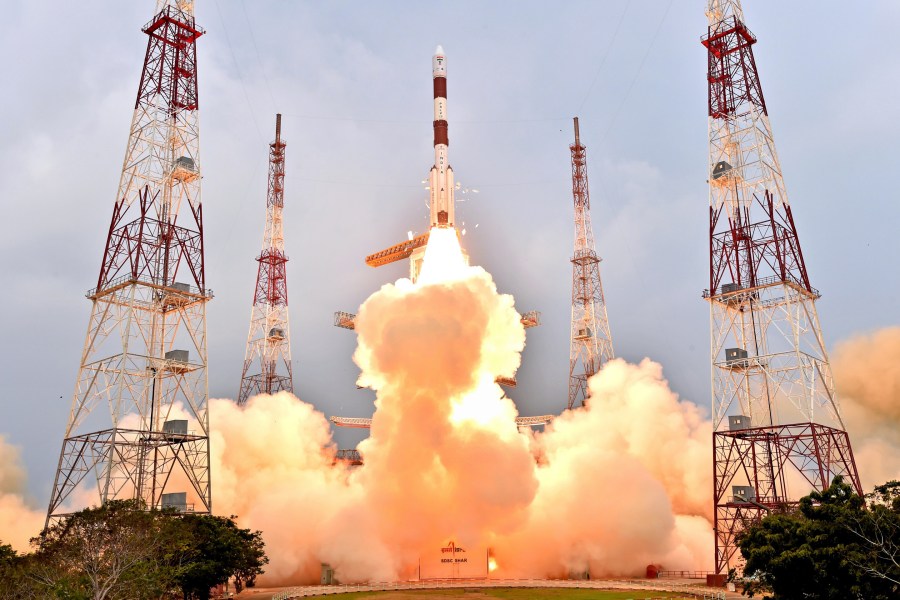
“Our space programme has time and again shown the transformative potential of science & technology in people’s lives,” he posted after the rocket tore into the morning skies at 9.26 am with a growl breaking free of the earth’s gravitational pull.
“Over the years we developed expertise & capability to help other nations in their space initiatives. This is the skill of our scientists.”
The 20 satellites weighed 1,288kg. The rocket’s main cargo is India’s 725.5kg Cartosat-2 series satellite for earth observation. This satellite is similar to the earlier Cartosat-2, 2A and 2B.
The other 19 satellites weighing around 560 kg are from the US, Canada, Germany and Indonesia as well as one satellite each from Chennai’s Sathyabama University and College of Engineering, Pune. The whole launch mission was over in around 26 minutes.
Isro chairperson AS Kiran Kumar congratulated his team on the successful launch ‘in record time’ and said “PSLV C-34 has done its job”.
“We have the current generation of earth observation satellite of Cartosat 2 series,” ISRO said, and added the space agency had done a “wonderful job”.
Tweet
The images sent by Cartosat satellite will be useful for cartographic, urban, rural, coastal land use, water distribution and other applications.
The 110kg SkySat Gen2-1 belonging to Terra Bella, a Google company, is a small earth-imaging satellite capable of capturing sub-metre resolution imagery and high definition video, Isro said.
The Planet Labs Dove Satellites are also earth-imaging satellites. A total of 12 Dove satellites each weighing 4.7kg are carried in this mission inside three QuadPack dispensers, the space agency said.

The PSLV rocket also carriedf 85kg M3MSat from Canada. The technology-demonstration mission was jointly funded and managed by Defence Research and Development Canada and the Canadian Space Agency.
The other foreign satellites on board were: 120 kg LAPSN-A3 of Indonesia, the 130 kg BIROS, from German Aerospace Centre, and the 25.5 kg GHGSat-D, Canada.
The 1.5 kg Sathyabamasat from Sathyabama University will collect data on green house gases while the 1kg Swayam satellite from College of Engineering, Pune will provide point-to-point messaging services to the HAM radio community.
In 2008, the Isro had launched 10 satellites with the PSLV rocket. Till date India has launched 57 foreign satellites successfully.
Reference – https://divyanshspacetech.wordpress.com
Curiosity
“When you’re curious, you discover many interesting things to try to to .”
– Walt Disney
Why does one need curiosity, and what does one gain out of it?
Curiosity is that the key to knowledge and to improvement. A curious person wants to understand the explanations behind things, and if he’s not satisfied with the answers, his curiosity will lead him to hunt it in other ways and in other places.
Curiosity has many benefits and brings interest, enthusiasm and therefore the desire to understand into one’s life. It makes life more interesting and expands one’s horizons.
Curiosity has also a negative side, when it turns into prying into other people’s life, seeking some dark or unsavory facts about them and using it during a way that hurts people.
I am not talking about this kind of curiosity, nor about reading the gossip columns, or seeking unimportant information. In this post, I am talking about the positive and useful benefits of curiosity.
Amazing Facts about Curiosity You Need to Know
- A curious person never feels bored
Do you sometimes feels bored, and zip seems to be interesting?
A curious person seldom gets bored. There is always something new to know, to learn, to explore or to fix. Life for a curious person is always interesting
A curious person can find interest and enthusiasm at any place or time, in the most boring place, and in the most exciting place.
- Curiosity at Work
As a curious person, you’ll show more interest in your work. Being curious, you’ll ask questions, learn, read and expand your knowledge concerning your job. This will lead you to be more efficient and expert in your work, and would bring you success and promotion.
- A curious person is an interesting and an open-minded person
Curiosity opens your mind to new facts and knowledge , understanding people, and learning about cultures, other ideas, and other ways of doing things. It makes you inquisitive and desirous to explore new ideas and new ways of making things.
A person with an inquisitive mind has more knowledge and information, looks for answers and solutions, and brings interest, enthusiasm and liveliness into a conversation.
- Curiosity brings creativeness into one’s life
When you are curious, you become creative, because you’ll see things during a different or broader way. This is most useful for a writer, a painter and for any kind of artist. It is also useful in business and in any kind of job, since you’ll be seeking creative and new ways of doing things.
In order to create new things or do things in a different way, you need to look around you, see what other people do, ask questions, and then do it differently and better.
- Popularity and gaining friends
When you are curious, you show interest in people, ask questions, and let them talk about themselves, rather than making the conversation revolve about you. This causes you to a more pleasant, popular and friendly person.
It might seem strange, but when you ask questions, show interest in the others and encourage them to speak about themselves, people regard you as a most friendly person, even if you hardly talk.
- Curious people have a singular way of watching things
A curious mind is more inquisitive, and needs to understand and understand what people think and why.
Curious people got to know the “why”, “how”, “where” and “when” of each subject they explore. This gives them a wider perspective on life, events and straightforward facts. This curiosity opens new vistas and ways of looking at life, helps them see things from other points of view, and broaden their mind and knowledge.
These aren’t the sole reasons why you would like to develop curiosity, but they’re a couple of of the important ones.
How Can You Cultivate Your Curiosity?
Usually, we are all interested by things that we truly love and care about, but hardly show real interest in other things. This attitude prevents us from acquiring important information and experience that can help us in many ways.
Would you like to cultivate your curiosity? It is simple and within your reach.
- Become more interested in people and in the world around you
Ask questions, ask other people’s opinion on various topics and listen to what they say. Show real interest in people and the world around you.
Listening is the key to improving curiosity.
Don’t be afraid or shy to ask questions and seek answers. Show interest and desire to acquire knowledge and understanding. This will make your life more interesting, exciting and fulfilling.
- Make a conscious decision to explore things you don’t care about
It might not be easy to explore things that you don’t care about, but it could be a very rewarding experience.
For example, if you don’t care about football, basketball or soccer, start getting interested in one of these sports. Ask questions, read about them, and go see one of them.
If you dislike classical music, start listening to that music. Explore the music of the classical composers. Listen to their music and find one that you like more, and start listening to his music, and even read about his life and his music.
Try to examine science, astronomy or geography and the other topic. Even if these topics don’t interest you now, you would possibly discover new doors to something interesting and exciting. You need to make the first step and show interest.
- Read books about diverse topics
Read books about topics that interest you, and even on topics that do not interest you. Read nonfiction books about various topics, not only stories and novels. This will broaden your visions, increase your knowledge, and help you in many areas of your life.
I am sure that opening your mind to new interests and new knowledge will broaden your horizon, help you cultivate your curiosity, and make you a more interesting and knowledgeable person.
Knowing Your Purpose and Passion in Life
Knowing Your Purpose and Passion in Life
Have ever thought about your purpose? It is most likely that you have one, even if you don’t know it.
What about your passion? Do you have one? Perhaps you’ve got never considered that either, but knowing your purpose and keenness in life can completely change your outlook. When there’s a purpose, it gives meaning and hope to who we are, while a passion can create satisfaction and a way of accomplishment .
It is important to point out this isn’t about the purpose of life in general, but your purpose to your life. Both these might be the same, but they will be different. The purpose of life has been debated for many centuries. It depends on various beliefs, on religion, and on whether you are a non-believer.
There might not be a purpose that is common to all mankind, but if there is, it’s most likely to be to enjoy life and be happy. It isn’t selfish to think in those terms, because being happy and enjoying life can encompass everything good, like helping others, providing, protecting your family or contributing to make the world a better place. It might even be a pathway to an afterlife, who knows.
What about you? Forget a standard purpose for a flash , what’s your purpose, and does it link to a passion you have?
Purpose vs Passion
Purpose and keenness aren’t necessarily an equivalent , they can be, but don’t need to be. If you have a passion in your life, you will probably know what it is. It will be something you care about considerably and fasten your emotions thereto . A purpose, on the opposite hand, doesn’t require emotion. It is self-perpetuating just because it exists.
You can have a purpose and a passion, and they don’t need to depend on one another. A person may for example, have a passion for playing tennis and reaching the top in that game, but may feel his or her purpose is to help underprivileged children. Both the eagerness and purpose are completely different during this case. However, they can be linked.
By following the passion, and becoming a top tennis player, this person could work into a position where he or she had some extra spare time and cash. They could then give that extra time and money towards their purpose of helping underprivileged children.
The purpose and passion are linked but it’s important to see how they are different from each other. When both are the same thing for a person, it can result in a focus and dedication to just one thing in life. Whether your purpose and passion are linked or do not link does not matter. It is just that knowing what they are can help you to define yourself.
Effects of Knowing Your Purpose and keenness in Life
It’s quite likely your purpose will follow your passion but don’t assume that it will be that way. As you experience life, things may occur that open up your purpose. You might see wrongs and want to right them. Perhaps you see injustice and need to cause justice, otherwise you may even see possibility and need to form it reality.
If you search for it, your purpose will happen to you. There is a good chance it was formed by beliefs and past experiences held within your subconscious. This is what makes your purpose unique to you.
Once you’re on the trail of knowing your purpose and keenness in life and taking action to form it happen, you’ll cause changes. Not just changes to yourself but to the universe, because you are a part of it.
At its basic state, the universe and all that is part of it, is made up of vibrations. These vibrations resonate at different frequencies and cause the formation of “things” and that includes you. As well as being in the universe, you are a part of it, which means you are connected to it.
You are like a cog, a nut or a bolt, which is a crucial part of the “whole”. Without you, it would be very different and wouldn’t work in exactly the same way.
Your actions, however small, cause reactions that make change, or steer the course of the universe. For example, if you happened to be at the scene of an accident and saved a person’s life, the result would are very different if you probably did not exist. That person may have died, which would have had an effect on many other lives and events that turned out differently because there was no you to save that person.
Do not underestimate your importance as a part of the functioning of the universe.
Purpose and Passion in Life’s Perspective
The universe is constantly changing and expanding because of the vibrations that occur. You are an important part of this, a piece of the jigsaw and it is important to remember that changes and growth caused by your vibrations are permanent. This means that a part of you continues forever, it will always be there even after you are gone.
Viewing your life as having permanence thereto might cause you to think differently about your purpose and even your passion. Expressing your life through your purpose and following your passion will affect how the universe develops, changes and grows, forever.
Even if you’re taking no action, the thoughts in my mind, printed here, have reached yours for a flash . That is a minor change, which could never have happened if I did not exist.
Knowing your purpose and keenness in life carries a responsibility, because whatever they cause you to try to to can’t be undone. When you think of it in this way, it demonstrates how your existence, as part of the universe, is as important as any other part of it, and may be a purpose in itself.
Who is Shiva: Man, Myth or Divine?
Shiva refers to both “that which is not,” and Adiyogi because in many ways they are synonymous. Explore the stories and legends that surround this most prominent figure of Indian spiritual traditions.
Meaning of Shiva
When we say “Shiva,” there are two fundamental aspects that we are referring to. The word “Shiva” means literally, “that which is not.”
Shiva is Nothingness
Today, modern science is proving to us that everything comes from nothing and goes back to nothing. The basis of existence and the fundamental quality of the cosmos is vast nothingness. The galaxies are just a small happening – a sprinkling. The rest is all vast empty space, which is referred to as Shiva. That is the womb from which everything is born, and that is the oblivion into which everything is sucked back. Everything comes from Shiva and goes back to Shiva.
Shiva is Darkness
So Shiva is described as a non-being, not as a being. Shiva is not described as light, but as darkness. Humanity has gone about eulogizing light only because of the nature of the visual apparatus that they carry. Otherwise, the only thing that is always, is darkness. Light is a limited happening in the sense that any source of light – whether a light bulb or the sun – will eventually lose its ability to give out light. Light is not eternal. It is always a limited possibility because it happens and it ends. Darkness is a much bigger possibility than light. Nothing needs to burn, it is always – it is eternal. Darkness is everywhere. It is the only thing that is all pervading.
But if I say “divine darkness,” people think I am a devil worshiper or something. In fact, in some places in the West it is being propagated that Shiva is a demon! But if you look at it as a concept, there isn’t a more intelligent concept on the planet about the whole process of creation and how it has happened. I have been talking about this in scientific terms without using the word “Shiva” to scientists around the world, and they are amazed, “Is this so? This was known? When?” We have known this for thousands of years. Almost every peasant in India knows about it unconsciously. He talks about it without even knowing the science behind it.
Meaning of Adiyogi – The First Yogi
On another level, when we say “Shiva,” we are referring to a certain yogi, the Adiyogi or the first yogi, and also the Adi Guru, the first Guru, who is the basis of what we know as the yogic science today. Yoga does not mean standing on your head or holding your breath. Yoga is the science and technology to know the essential nature of how this life is created and how it can be taken to its ultimate possibility.
One and the Same
So “Shiva” refers to both “that which is not,” and Adiyogi, because in many ways, they are synonymous. This being, who is a yogi, and that non-being, which is the basis of the existence, are the same, because to call someone a yogi means he has experienced the existence as himself. If you have to contain the existence within you even for a moment as an experience, you have to be that nothingness. Only nothingness can hold everything. Something can never hold everything. A vessel cannot hold an ocean. This planet can hold an ocean, but it cannot hold the solar system. The solar system can hold these few planets and the sun, but it cannot hold the rest of the galaxy. If you go progressively like this, ultimately you will see it is only nothingness that can hold everything. The word “yoga” means “union.” A yogi is one who has experienced the union. That means, at least for one moment, he has been absolute nothingness.
When we talk about Shiva as “that which is not,” and Shiva as a yogi, in a way they are synonymous, yet they are two different aspects. Because India is a dialectical culture, we shift from this to that and that to this effortlessly. One moment we talk about Shiva as the ultimate, the next moment we talk about Shiva as the man who gave us this whole process of yoga.
Money!!!!!
Money is the cause of most of the problems that plague modern society. It has an intoxicating effect that goes into the head of it’s beholder. It makes them arrogant and selfish.
Money is not the end of all and be all of our existence. There is no denying the fact that money brings with it prosperity,which has a psychological and social dimension.
Undoubtedly money is essential to life. However it’s endless pursuit, does more harm than good. This is because happiness that comes from the love ones are more lasting and essential and they cannot be purchased.
Money is essential to live. ‘Money can’t buy happiness,but neither can poverty.’
Role of International Business and Sustainable Development!!
The shift in the perceived role of corporations as solely profit generators to agents for positive change has become clearer than ever before with the new UN Sustainable Development Goals (SDGs). The SDGs focus on the greatest challenges faced by humanity with the aim of ending poverty and hunger, misery and war, unfairness and inequality. Clearly, governments alone cannot achieve this big agenda, nor should they. Businesses have enormous power, resources and knowledge to assist. Corporate responsibility is no longer about doing less harm, or giving money to charity.
The SDGs include 17 global goals (and 169 related targets), replacing the Millennium Development Goals (MDGs). Adopted by the UN on September 25, they seek to encourage government, business and other players to focus simultaneously on the three dimensions of sustainable development: economic prosperity, social inclusion and environmental sustainability. According to the UN, the SDGs clearly define the better and more just world we want – applying to all nations and leaving no one behind.
Business, from micro-enterprises to multinationals, has a vital role to play in achieving each of the SDGs. The UN is very explicit about the expectations placed on the for-profit sector around the world.For business, this means fostering “a dynamic and well-functioning business sector, while protecting labour rights and environmental and health standards”.
Firstly, business can help by ceasing to create problems that governments have to fix. Some businesses create pollution and poverty, violate human and children’s rights and have supported war and conflict, all in the name of shareholder value. If we are to collectively achieve the SDGs, these practices must stop. Moreover, businesses can proactively collaborate with others to achieve each of the SDGs through sustainable business operations, responsible investment and innovation. International trade may be part of the solution, using supply chains as a powerful mechanism to also provide aid and resources to the developing world.
The SDGs do not only present business with duties, they can be seen as great opportunities. Successful implementation of the SDGs will strengthen the environment for doing business and building markets. Even the most responsible companies struggle to thrive in communities marked by instability and conflict, to find skilled labour where adequate education is lacking, or to withstand natural disasters stemming from climate change.
The UN and others are not naive. We all know profit will continue to be the main motive for many companies and some will still need to be monitored. While some call for more radical measures, such as taking out “economic prosperity” as one of the three underlying goals of the SDGs, others understand that working within the existing business environment could achieve a better commitment.
The SDGs present business with unprecedented duties and opportunities to change our world beyond recognition, but this time for the better. They offer a blueprint for what our society should look like 15 years from now. If achieved, the world would be better for all of us — including for businesses.
Refrences:-
Home

Day to Day Sings & Symptons…DAY 1 to 22
Day to Day Signs and Symptoms of Coronavirus DAY TO DAY SYMPTOMS OF COVID-19 Before proceeding, please note that this general overview is compiled for initial self-assessment only and should vary for each individual. If you are not feeling well, you ought to immediately consult a medical man to possess an accurate diagnosis and proper treatment of COVID-19. The typical daily symptoms are concluded from the study of 138 patients at Zhongnan Hospital of Wuhan University and another study involving 135 patients from Jinyintan Hospital and 56 patients from Wuhan Pulmonary Hospital.

These symptoms are broken down into:
DAY 1 to DAY 2 the start symptoms are almost like the cold with a light pharyngitis and neither having a fever nor feeling tired. Patients can still consume food and drink as was common .
DAY 3 The patient’s throats start to feel a touch painful. Body temperature reads at around 36.5° celsius. Although it’s uncommon, other symptoms like mild nausea, vomiting or mild diarrhea are possible to set in.
DAY 4 Throat pain becomes more serious. Other symptoms like feeling weak and joint pain start to manifest. The patient may show a temperature reading between 36.5° to 37° celsius.
DAY 5 to DAY 6 Mild fever starts. The patients show a temperature reading above 37.2° celsius. The second most common symptom, dry cough, also appears. Dyspnea or breathing difficulty may occur occasionally. Most patients during this stage are easily feeling tired. Other symptoms remain about the same. These four symptoms are among the top five key indications of COVID-19 according to the final report of the initial outbreak conducted by the joint mission of China and WHO.
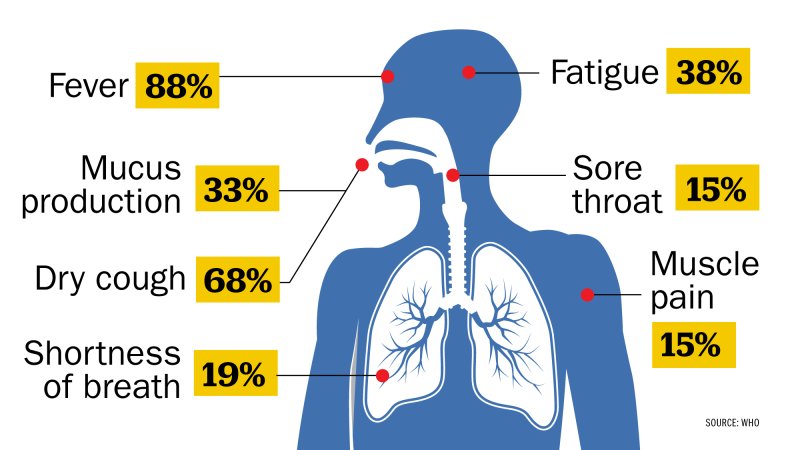
DAY 7 get more serious coughs and breathing difficulty. Fever can get higher up to 38° celsius. Patients may develop further headache and body pain or worsening diarrhea if there’s any. Many patients are admitted to the hospital at this stage.
DAY 8 to DAY 9 On the 8th day, the symptoms are likely to be worsened for the patient who has coexisting medical conditions. Severe shortness of breath becomes more frequent. Temperature reading goes well above 38°.
DAY 9 is that the average time when Sepsis starts to affect 40% of the patients.
DAY 10 to DAY 11 Doctors are ordering imaging tests like chest x-ray to capture the severity of respiratory distress in patients. Patients are having loss of appetite and should be facing abdominal pain. The condition also needs immediate treatment in ICU.
DAY 12 to DAY 14 For the survivors, the symptoms can be well-managed at this point. Fever tends to urge better and breathing difficulties may start to cease on day 13. But Some patients should be suffering from mild cough even after hospital discharge.
DAY 15 to DAY 16 Day 15 is the opposite condition for the rest of the minority patients. The fragile group must prepare for the possibility of acute cardiac injury or kidney injury.
DAY 17 to DAY 19 COVID-19 fatality cases happen at around day 18. Before the time, vulnerable patients may develop a secondary infection caused by a new pathogen in the lower respiratory tract. The severe condition may then lead to blood coagulation and ischemia.
DAY 20 to DAY 22 The surviving patients are recovered completely from the disease and are discharged from the hospital.
STAY HOME & STAY SAFE

Another Silver Lining in COVID Fight: Scientists Discover Proteins Which May Reduce Acute Inflammatory Response…

New Delhi: In yet another discovery concerning Coronavirus infection, sientists have found a new drug which according to their claims could be useful in fighting aggravated immune response in respiratory illnesses such as COVID-19. The therapeutic is called TAT CARMIL1, and is actually a combination of two naturally occurring small proteins, or peptides, as per description in the journal Cell Reports.
As per scientists, when the two peptides are combined, they work together to penetrate a cell’s membrane in order to dampen an acute inflammatory response. In the current study, they said the peptide reduced degradation of the protein called collagen by up to 43 per cent.
If deployed early enough, the scientists said, the peptide could reduce some of the worst damage caused by acute inflammatory responses.
They said acute infections, such as those caused by the novel coronavirus, can cause inflammatory responses known as “cytokine storms,” — a term that has gained in popularity during the COVID-19 pandemic. The researchers explained that when the body becomes overwhelmed by infections, such as those caused by influenza, H1N1 or COVID-19, it can release an unregulated flood of molecules called cytokines into the body.
They said when the body becomes overwhelmed by infections such as those caused by influenza, H1N1 or COVID-19, it can lead to the unregulated release of a flood of cytokines into the body — a natural defense response to an acute infection.
Under such cases, the study noted that infection-busting cytokines can cause severe damage in the body — everything from holes in the lung tissue to vascular damage and blot clots, with the most acute cases causing death.
According to the scientists, the peptide combines a segment of a naturally occurring protein, CARMIL1, with a peptide “vehicle,” TAT, that brings the CARMIL1 directly into the cell. They said this enables the CARMIL1 to calm the inflammatory storm.
“The CARMIL peptide effectively blocks a family of cytokines, called interleukin1, from signalling and reproducing in vast quantities,” the researchers noted in a statement to the press. They said the study gives the first indication of how these CARMIL proteins are involved with this pathway.
The TAT CARMIL1 peptide, according to the scientists, targets two receptors, sticking to both the cell’s surface and its cell substrate, where it adheres to other cells.
“The two receptors necessary for it to work supplies an unusual level of specificity,” explained Chris McCulloch, a co-lead of the study from the University of Toronto.
“We think the unusual nature of this pathway might restrict its side effects,” McCulloch said. The scientists believe the therapeutic could be an unusually strong candidate as a potential drug. Since molecules designed to work in conjunction with this peptide would need to target cells at both receptors, they said it narrows the potential field of candidates from tens of thousands to hundreds.
The research team hopes to track the peptide’s effectiveness and working mechanism further in lab studies.
 Eduindex
You must be logged in to post a comment.