Schooling Is Not Education

Mark Twain once said” Don’t let schooling interfere with your education.”

Schooling isn’t proposed to admonish the world rather it plans to grant information and create knowledge. Schooling has two social point as a primary concern get ready to assume one’s job on the planet’s work and assist in helping society in the wake of tutoring is finished.


Schooling alludes to the straightforward demonstration of sending a child to a school with the goal of bestowing information and getting taught. Education then again is about the way toward learning and building up one’s scholarly capacities from an all encompassing perspective, for which tutoring is neither an adequate nor an important condition.

The insignificant demonstration of sending a kid to class doesn’t naturally convert into instruction. The expectation for the benefit of various partners like school specialists, guardians, educators, the youngsters themselves and the administration strategy creators assumes a significant job.

The school specialists need to guarantee legitimate framework in school like quality instructors, writing boards, classes, toilets and so on. The instructors need to appropriately oversee the understudies and set up an affable relationship which energizes addressing, understanding and learning. . Guardians need to give a helpful domain particularly at home so kids get the chance to concentrate without getting occupied by other work. Government strategy producers need to motivating force the schools to convey best training to all youngsters without separation based on social, monetary or sexual orientation status.

In developing nations like India, governments have made education essential free and obligatory. This has guaranteed access to schooling . Be that as it may, by and by, the learning results are poor particularly among provincial youngsters and those with a less privileged foundation. Such youngsters sooner or later dropout or are elevated to higher classes without securing any huge instruction. Along these lines, the simple demonstration of tutoring doesn’t convert into training in regard of such youngsters. in numerous schools educator non-attendance is a significant issue. Indeed, even the nature of educators is inadequate. Numerous schools exist on paper without considerably appropriate framework. In the Schooling procedure there is an excess of spotlight on repetition learning instead of spotlight on basics. Genuine instruction would come just when the understudies create basic reasoning and imaginative resources.

Recently a decent schooling has been deciphered as a decent order over English language, even at the expense of a kid’s native language. This makes a feeling of inadequacy in the youngster towards their own nearby language. Not simply that, this is done at the expense of redirecting consideration from increasingly significant subjects like maths, sciences and so on. Therefore, we get an informed workforce useful for section level, low innovation occupations in BPOs, as agents and officials in MNCs, government workplaces, yet not sufficient researchers and specialists in the genuine sense who can review novel papers and accompany licenses.

By and by, a furious rivalry has begun among guardians to get their children educated at an exceptionally youthful age. The children are given colossal measure of schoolwork and need to convey large, overwhelming sacks. There isn’t sufficient spotlight on outside games. Sports are required for learning estimations of cooperation, authority or more all to build up a solid body and brain. Tutoring would convert into instruction when a balanced character is created by fusing sports and extra-curricular exercises in the prospectus.

Finally, schooling necessities to concentrate on instilling virtues and quality of character in understudies. The valid, comprehensive instruction ought to incorporate building up a city sense and an awareness of other’s expectations towards one’s nation and society. Along these lines we will get instructed residents who are an advantage.

A portion of the approaches to guarantee schooling prompts genuine instruction could be things like guaranteeing higher instructor understudy proportion, occasional preparing of educators so they know about new academic methods and devices, following the training excursion of an understudy utilizing on the web apparatuses, expanding consumption on essential and auxiliary instruction as a level of GDP, reasonable(free schooling) and so on.

The popular film 3 Idiots had a similar idea in it. Sonam Wangchuk the individual from whose life Aamir Khan’s character was roused is Guinness record holder from maximum number of inventions. Mark Zuckerberg a school drop out made a program that is presently a virtual reality where new individuals are going along with it regular.

Schooling isn’t planned to lecture the world rather it means to give information and create knowledge. Schooling has two social point as a top priority get ready to assume one’s job on the planet’s work and assist in helping society in the wake of tutoring is finished.

Death Penalty

“An eye for an eye makes the whole world blind,” said Mahatma Gandhi

The death penalty is the punishment of death which is for the most part granted to those liable of deplorable wrongdoings, especially murder and kid assault. In India, this discipline is known as “hanging by the neck” till the passing of the lawbreaker. In different nations, shooting, hot seat, and so forth., are the different gadgets utilized for the reason. As of now 58 countries effectively practice it, and 97 nations have abrogated it.

The designer of the Constitution, Babasaheb Ambedkar, conceded in the Constituent Assembly that individuals may not follow peacefulness by and by however “they absolutely hold fast to the rule of peacefulness as an ethical command which they should see the extent that they can.” With this at the top of the priority list, he stated, “the best possible thing for this nation to do is to nullify capital punishment through and through.”

The Indian Penal Code perceives the death penalty under eight areas (121, 132, 194, 302, 303, 305, 307, and 396) for various offenses. Article 21 of the Indian Constitution gives that “no individual will be denied of his life and individual freedom with the exception of as indicated by the method built up by law.” Annulment of capital punishment is to a great extent observed as a stage in light of a legitimate concern for human poise in accordance with Article 5 of International Covenant on Civil and Political Rights, 1966 and its convention in 1989, in addition, obviously, Article 3 of Universal Declaration of Human Rights.

It has been said that death penalty is severe, that it is as indicated by the law of wilderness – “tit for tat”, and “tooth for a tooth”. It is called attention to that there can be no more spot for it in an edified nation. Also, judges are not faultless and there are occasions where honest individuals have been hanged to death because of some blunder of judgment. Sociologists and abolitionists call it is as “legal homicide”. Human traditionalists contend that there are a few reasons why the death penalty must be nullified.

Right off the bat, it supports a “culture of brutality”. Furthermore, it has no hindrance esteem: its utilization has not been appeared to have achieved a noteworthy diminishing in wrongdoing. It is the assurance of discipline that has the impact of hindering wrongdoing, not the quantum of discipline. Thirdly, it is unavoidable; when done, it can’t be fixed.

The Supreme Court says that psychological oppression is the root motivation behind why the death penalty despite everything exists in India. The beast of fear mongering has spread its bleeding wings in a large portion of the nations. Psychological oppression remains on a by and large extraordinary plane and can’t be contrasted with murders submitted due with individual enmity or over property and individual questions. The supporters of capital discipline contend that, it is an inescapable and an essential discipline to be granted to those infamous hoodlums with no mercy. Ajmal Kasab and Afzal Guru are the two latest fear mongers worth referencing.

The milestone situations where the capital punishments were granted in India are Ranga Billa case, Indira Gandhi and Rajiv Gandhi Assassination case, Laxman Nayak case and most as of late in 2004 Hatab instance of West Bengal where blamed Dhananjoy Chatterjee was held tight 14 August, 2004. It is said that capital punishment is minimal more than judicially endorsed murder. Equity K.T. What might be compared to life detainment.

In spite of the distinctions of suppositions, it is ordinarily concurred by both the gatherings of supporters and abolitionists of the death penalty that it ought to be granted to the guilty parties in the “rarest of the rarest” cases and sadly, since India has become the simplest objective of numerous fear based oppressor gatherings, the time has not yet sought India to annul the death penalty.

The world is moving ceaselessly from utilizing capital punishment. The European Union has made “abrogation of capital punishment” an essential for enrollment. The 65th United Nations General Assembly casted a ballot in December 2010, for the third time, for abrogating capital punishment and required a worldwide ban on executions. Acquittal International reports that 140 nations — more than 66% of the world — don’t utilize capital punishment any more. India needs to perceive this worldwide pattern, and act in sync with it. President Dr. A.P.J. Abdul Kalam proposed that Parliament ought to consider the abrogation of capital punishment through and through.

How India’s Democracy is Like No Other Nation

Indian democracy though not the oldest but still the largest of all democracies around the globe. It has its own sets of merits and demerits to which we would like to shed some lights on. The Indian political diaspora is unlike any other political system being quite complex with its 100s of national and state wise political parties. A system so diverse, that would always have some room for new political parties making it extreme difficult to choose from, for the citizens with voting rights. Political groups mostly based on caste or creed, religions or regions, are spread across the nation with dedicated voters who would never turn them down.

Now this can’t be concluded that Indian democracy is a bucket of flaws, it’s just that it has too much flexibility and has scope for all measures. A ferocious criminal would have equal citizen rights just as an innocent law abiding citizen would have. The Indian judiciary never sees any accused with public or news media’s perspective; everyone would go through same court trial. The Indian judiciary says “Doesn’t matter how many culprits are left unpunished but under no circumstances an innocent be punished”.

The many political party system on one hand obstructs the formation of decisive actions for the betterment of nation, it basically slows the overall process of national development but on the other hand it also ensures that no such bill/law to be passed that is unacceptable even to the super minorities of the country. Multiple party systems also ensure that representative of all castes or creeds, religions or races are present in the law forming parliament house. A good opposition is equally responsible for national growth as like a good running government.

A good democracy also ensures that no military gets above the political power and this situation remains likewise forever. We have many examples of failed/ collapsed nations who had military power above the political will, these countries being Syria, Lebanon, Iraq, Yemen and Pakistan. These countries had been victims of military hijack, where its citizens lost all their fundamental rights and political system could not do anything. In ministry of defence, Governors, President poses all political and decision making rights above all security forces, be it Army, Air Force, Navy or Police.

An army’s general would seek indirect permissions from the Prime Minister of India and not the President alone. Political leaders elected directly by the common crowd of India possess much more power than any government official or a representative further elected by the elected members.

This basically protects the idea of free India, a place for all and a place where every opinion matters. We do understand that Indian democracy is designed such that it would take greater time to incorporate changes, because when you have to bring together a crowd of 1.4 Billion with their agreeable opinions, it will take time.

Indian democracy isn’t just the largest, it has room for all. As mentioned earlier in this article, it takes time to initiate changes for the good but the good stays forever and for a law abiding citizen would be able to protect his dream for the better and safe tomorrow.

E-Learning

Now a days everything is going Digitize even study. Everyone use internet in these days . It’s likely that anyone who uses eLearning will tell you how impactful and convenient it is. In today’s “always-on” world, eLearning offers many benefits to both learners and organizations. 

Whether you’re an eLearning expert or beginner, there’s no denying its popularity has skyrocketed over the past decade. For employers, it offers an affordable, time-efficient way to train employees. In return, employees benefit from convenient training that enhances their skills and knowledge. It’s also used by organizations to train their partners and customers to increase adoption, retention, and ultimately, revenue.

What is e-learning ?

eLearning, or electronic learning, is the delivery of learning and training through digital resources. Although eLearning is based on formalized learning, it is provided through electronic devices such as computers, tablets and even cellular phones that are connected to the internet. This makes it easy for users to learn anytime, anywhere, with few, if any, restrictions.

Basically, eLearning is training, learning, or education delivered online through a computer or any other digital device.

The history of e-learning

To better understand how eLearning benefits organizations today, it’s helpful to look at its past. Elliott Maisle coined the term “eLearning” in 1999, marking the first time the phrase was used professionally. In the years since, eLearning’s reputation has gone from strength to strength. But what factors have facilitated eLearning in becoming the most popular way to deliver training today?

some of these factors included:

The Internet : Prior to the rise of the internet, many relied on printed manuals, CD-ROMS and other restrictive methods for learning and training. The rise of the internet allowed organizations to abandon one-dimensional practices and utilize the flexibility of eLearning.

Development of multimedia : As eLearning progressed, the ability to integrate elements such as images, videos, audio and graphics proved to be a more reliable way of keeping learners engaged compared to traditional learning.

Affordable Digital Devices : Considering the first IBM Computer the equivalent of almost $5000 today, it’s understandable that eLearning popularity rose as digital devices became more affordable. Mobile learning also hugely facilitated the growth of eLearning.

How to deliver e- learning : Implementing eLearning into your organization is beneficial and easy to do. Whether you want to use eLearning to keep your employees up to date on company policies, or to help your customers better understand your product, there are a number of eLearning methods you can use.

Use of LMS : A LearningManagement System(LMS) is a software application that is used to deliver online training. A great LMS will go beyond this, by providing you with the features and support you need to execute your eLearning strategy perfectly. Selecting an LMS can be daunting at first, but analysing your training needs and defining your requirements, should narrow your search significantly. There are several different types of LMS’s that you can choose from, such as cloud-based, open source, commercial, and installation-based.

A good cloud-based LMS should allow you to easily scale your training delivery and be backed by a superb customer success team whose sole objective is to ensure you succeed.

SCORM : The good news is that using SCORM provides your learner with a more interactive, engaging experience, and allows you greater control over the time spent on your courses.

SCORM is an acronym that stands for Shareable Content Object Reference Model. But don’t let that bewilder you! SCORM is a set of technical specifications that were developed to provide a common approach to how eLearning content is developed and used. It standardizes the way in which eLearning courses are created and launched. Most SCORM courses are developed using popular authoring tools and therefore follow a similar structure.

xAPI : Over the past couple of years, xAPI has become the popular new standard for delivering online training. xAPI is often described as the next evolution of SCORM, as it has redefined some of the fundamental practices of tracking learning experiences. It adds extra performance to SCORM and removes a lot of the restrictions of older specifications.

Types of E learning training

People use elearning for a variety of reasons. Whether it’s to develop new skills or learn remotely, convenience and accessibility elearning offers is huge. Here, some training are mentioned:

Employee training : It  is the most frequent type of eLearning organizations use an LMS for. Organizations utilize employee training for numerous reasons, such as onboarding new hires and improving employee performance. Training employees using an LMS formalizes training delivery and makes it more efficient.

Compliance training : It is a necessity for most organizations. It informs your employees on the laws or regulations applicable to their role and industry. Compliance training is mandatory and tackles topics such as health, safety, and dignity in the workplace.  Some examples of compliance training include:

Diversity Training

HR Law

Anti-Harassment Training

Customer training : The idea of training your customers may seem like an odd notion. But it has profound value! Customer training  programs help your customers use and understand your product or service. This type of training is especially popular with software providers.

As well as raising the customer experience, customer training benefits the organizations that run them too. You will experience better customer onboarding, increased engagement with your product or services, and improved customer retention.

Partner training: Also known as reseller trainig, partner training gives your partners the tools they need to be successful members of your network. Types of training include product information training, sales training, support training, marketing guidance, etc. Often certified training is a prerequisite to becoming a partner.

Partner training presents many benefits; it can help you engage partners, reduce support costs, scale growth, and protect your brand.

Benefits for e- learning for your organisation :

▪︎ cost effective

▪︎ saves time

▪︎improves performance and productivity

▪︎Lower environmental impact

Rights of a Consumer


Every year 15th of March is celebrated as National Consumer Rights Day marking the day when Bill for Consumer Rights were moved in the US Congress. The Consumers International (CI), recognizes eight rights, which in a logical order reads:

1. Basic Needs
2. Safety
3. Information
4. Choice
5. Representation
6. Redress
7. Consumer Education and
8. Healthy Environment.

However the Consumer Protection Act (COPRA) in 1986 in India recognises only six of these eight rights:

1. The right to be protected against marketing of goods and services which are hazardous to life and property i.e. Right to Safety:
The Consumer Protection Act 1986 defines this right as the ‘right to be protected against marketing of goods and services which are hazardous to life and property’. The right are significant in areas of healthcare, food processing and pharmaceuticals and spans across any domain that could have impact on consumers health or well being. Violation of this right is mostly in medical malpractice lawsuits in India. Every year in India not less than millions of Citizen are killed or severely hurt by unscrupulous practices by hospitals, doctors, pharmacies and the automobile industry yet the Indian Government due to its callousness fails to acknowledge this fact or make an attempt at maintaining statistic of these mishaps. The Government need to have world class product testing facilities to test drugs, cars, food, and any other consumable that could potentially be life threatening.

In developed countries such as the United States, stalwart agencies oversee the safety of consumer product. The Food and Drug Administration (FDA) for food and drugs, the National Highway Traffic Safety Administration (NHTSA) for automobiles and the Consumer Product Safety Commission (CPSC) for all other consumer products, just to name a few. This right requires each product that could potentially endanger our lives to be marketed only after sufficient and complete independent verification and validation.

2. The right to be informed about the quality, quantity, potency, purity, standard and price of goods or services, as the case may be, so as to protect the consumer against unfair trade practices:
This consumer right is defined as the ‘the right to be informed about the quality, quantity, potency, purity, standard and price of goods or services, as the case may be so as to protect the consumer against unfair trade practices’ in the Consumer Protection Act of 1986. In the Indian market place, consumers get consumer information through two popular, yet unreliable means, namely advertising and word of mouth. Due to this, the consumers in India seldom have accurate and complete information to assess the true value, suitability, safety or reliability of any product. Mostly we find out hidden costs, lack of suitability, safety hazards and quality problems only after we have purchased the product. Another right again trumpeted by our government on paper, this right should ideally ensure that all consumable products are labelled in a standard manner which contains the cost, the ingredients, quantity, and instructions on how to safely consume the product. Unfortunately, even the medicines in India do not follow a standard labelling convention. Unit price publishing standards need to be established for consumer market places where costs are shown in standard units such as per kilogram, or per litre. We, as consumers, should be informed in a precise yet accurate manner of the costs involved when availing a loan. For benefit to the society from this right, advertisers should be held against the product standards in the advertisements, pharmaceuticals need to disclose potential side effects about their drugs, and manufacturers should be required to publish reports from independent product testing laboratories regarding the comparison of the quality of their products with competitive products, just to name a few.

3. The right to be assured, wherever possible, of access to a variety of goods and services at competitive prices:
Consumer Protection Act, 1986 defines this right as ‘the right to be assured, wherever possible, to have access to a variety of goods and services at competitive prices’. Competition, invariably, is the best regulator of a market place. Existence of oligopolies, cartels and monopolies are counterproductive to consumerism. Our natural resources, telecommunications, liquor industry, airlines have all been controlled by a mafia at some point. Coming from a socialistic background, tolerance of monopolistic market forces are ingrained in the blood of Indian Consumers. It is not very often we can say we are going to switch the power company, when we have a blackout at home! Interestingly, even micro markets such as the fish vendors in particular cities have known to collude to drain the bargaining power of the consumers. In any size, any form, or any span, collusion of companies selling a similar type of product is unethical, less illegal. India has about 20 years more of stride to empower our citizens fully in this right.

4. The right to be heard and to be assured that consumers’ interests will receive due consideration at appropriate forums: According to the Consumer Protection Act 1986, ‘the right to be heard and to be assured that consumer’s interests will receive due consideration at appropriate forums’ is referred to as the right to be heard. This right is supposed to empower Indian consumers to fearlessly voice their complaints and concerns against products and companies to ensure their issues are handled efficiently and expeditiously. However, to date the Government of India has not created a single outlet for the consumers to be heard or their opinions to be voiced. If a consumer makes an allegation about a product, the onus is on the dealer, manufacturer or supplying company to disprove that the allegation is false. In other words, the consumer is heard, and the burden of proof rests with the company. Feeble attempts have been made by the government to empower our citizens with this right.

5. The right to seek redressal against unfair trade practices or restrictive trade practices or unscrupulous exploitation of consumers:
The right ‘to seek redressal against unfair trade practices or restrictive trade practices or unscrupulous exploitation of consumers’ is defined as the right to redressal in the Consumer Protection Act 1986. The Indian Government has been slightly more successful with respect to this right. Consumer courts such as District Consumer Disputes Redressal Forums at the district level, State Consumer Disputes Redressal Commissions and National Consumer Disputes Redressal Commissions have been established through the consumer protection act. Each of these consumer grievance redressal agencies has fiduciary and geographical jurisdictions to address consumer cases between consumers and businesses. Consumer cases less than 20 lakhs are heard in the district consumer forum, between 20 lakhs and one crore are heard in the state consumer court and cases more than one crore are heard in the national consumer court. On paper these sound nice; but hold on before you rejoice. Once started as the guardians of consumer protection and consumer rights in India, these courts have today been rendered ineffective due to bureaucratic sabotages, callousness of the government, clogged cases and decadent infrastructure. Very few of the district forums have officials appointed in a timely manner, and most of them are non-operational due to lack of funding and infrastructure. Estimates put the open legal cases in India at 20-30 million, which will approximately take 320 years to close. With the legal system in this manner compromised, consumer cases that form mere civil litigations will be pushed down the bottom of the priority list.

6. The right to consumer education:
The right of each Indian citizen to be educated on matters related to consumer protection and about his/her rights is the last right given by the Consumer Protection Act 1986. This right simply ensures that the consumers in India have access to informational programs and materials that would enable them to make better purchasing decisions. Consumer education may mean both formal education through school and college curriculums and also consumer awareness campaigns run by both governmental and non governmental agencies (NGO). Consumer NGOs, with little support from the Indian government, primarily undertake the ardent task of ensuring this consumer right around the country.

covid-19 update

Telangana has crossed 50 thousand corona cases,the cases are increasing day by day,on wednesday 1560 positive cases was recorded.chief minister chandrasekhar rao said “the cases are increasing becauses of more tests”.

Kerala, for the first time on Wednesday, breached the 1000-mark in covid19 cases in a single day after it declared 1038 more positive cases on Wednesday. Out of this, 785 cases are due to local transmission. While addressing a press conference, 

India, the third ranked country, reported 37,724 new cases of the novel coronavirus and 648 deaths in the 24 hours ending 9 am Wednesday, the Ministry of Health and Family Welfare said. This took the country’s tally to 11,82,915, including 4,11,133 active cases, 7,53,050 recoveries and 28,732 deaths.

In other news, the Jammu and Kashmir administration has announced a six-day lockdown in the valley, except for Bandipore district, to stem the spread of virus. Bhopal will also be under lockdown  from July 24 to August 3.

Know yourself first

To know yourself is your first priority! you should understand yourself first then only you can understand others.

How can you realistically set goals, go about life and have successful relationships if you don’t know who you are or what you want?  You really can’t.  

Not knowing yourself will lead to confusion and wasting much time in hit and miss situations.

We tend to underestimate the importance of knowing ourselves. Many of us go through each day reacting to events and just getting by rather than making conscious choices based on who we are and what we want.

When we don’t know where we are headed it’s hard to set goals, get motivated and determine the best course of action. Before we can do any of these things we must establish who we are.

  • Become aware of how these moods and emotions affect your state of mind
  • Examine how you interact with others
  • Observe how your environment affects you

Take a moment to find yourself. Take a moment to get to know yourself and who you truly are. By being present within the now, it allows us to disregard everything that is outside of ourselves. We rid ourselves of the past, we stop looking into the future, and we disconnect from the external world and society that plagues our being.If you know you are an alcoholic and you don’t like that about yourself you stay away from places and situations where there will be alcohol. If you know that you have a short fuse and no patience with stupidity then don’t watch politics. If you like fixing things maybe become a mechanic or handyman.Knowing yourself is important to be happy and to become the best YOU that you can be. Remember that in all creation there is only one you. You may have things in common with others but all individuals, even from the same family, have unique experiences which help them develop individuality. Perspective is unique to each of us and if you allow it “God” can guide you into places and situations where your uniqueness is needed. I put God in quotations because I don’t wish to offend anyone and some may not believe or call Him by different names but the principle is sound.

Self-awareness is a trait–or maybe “practice” is the more accurate way to put it–that everyone can always improve at. It is part emotional intelligence, part perceptiveness, part critical thinking. It means knowing your weaknesses, of course, but it also means knowing your strengths and what motivates you.

Happiness and satisfaction are more easily attained when you are able to use your strengths in the service of a cause you believe in. We are all uniquely talented and have the greatest capacity for growth and development in areas we already excel in. It thus follows that we have the greatest opportunities for learning and achieving excellence when we engage in work that allows us to utilise our respective strengths and abilities. 

This is why it is important to understand who you are, what you’re good at and what you want before you even begin to consider your scholarship options. This will help you confidently make the right decision – one that will eventually help you derive long-term fulfilment in school and in your future career. 

“The hackers targeted the employees of the xomy to hack into these accounts”says twitter

New Delhi. Recently, Micro blogging website Twitter was hacked. Accounts of famous personalities and companies like Kanye West, Kim Kardashian West, Former US President Barack Obama, Uber, Apple and many more were hacked for a cryptocurrency fraud. After such a big hack, questions are arising all over social media regarding twitter’s Privacy and security. After this, twitter had started investigating the matter. In their reports, twitter has revealed that the hacker accessed the tool of an employee of the company for this hacking.

News Agency ANI’s Information reveals that according to Twitter, hackers used twitter’s own ‘Your Twitter Data’ to hack those accounts. Account information was downloaded through this tool. And they are reaching out directly to the owner of accounts because they know it is true.

Other than this, twitter clarified in this case of hacking and said- ‘We know the hackers used the tools available to our internal support team to target 130 Twitter accounts. Out of those, they were successful in accessing 45 accounts, resetting their passwords, log in to them and share tweets.’

While clarifying on the bitcoin scam, the company has also admitted that the hackers targeted the employees of the company to hack into these accounts. According to a report Twitter says that ‘we believe that hackers targeted some of our employees through social engineering scheme. To access Twitter’s internal systems they manipulated in the number of employees and tried to access Twitter’s internal systems through our two-factor protection. ‘

After this hacking, Twitter locked all the accounts and information which were hacked. Although the account owner can restore them but they will only be restored when they are convinced about the original twitter security. Apart from this, the company has also taken steps for limited access with its internal systems and tools on a large-scale.

Most UNDER-RATED Holiday DESTINATIONS in INDIA

Osian, Rajasthan

Adventure Activities & Sports in Rajasthan - Rajasthan Tourism

Osian village in Jodhpur district in Rajasthan is a delight for those who love historical architecture and the fact that you get to see all of it in an oasis in the Thar Desert makes it a double whammy. The 8th to 11th century temples there make this village a must-visit destination.

Tarkarli, Maharashtra

MTDC RESORT TARKARLI (Maharashtra) - Resort Reviews & Photos ...

Frankly, almost any beach on the Konkan coast could have qualified for this spot. Tarkarli, in Sindhudurg district in Maharashtra, with its pristine waters, long and narrow beaches with Shuru trees in the background, managed to earn some extra points. It’s one of the most peaceful and non-commercialized beaches in India.

Gavi, Kerala

Gavi, Kerala - Wikipedia

We usually associate trekking with mountains and hills. But this is one wildlife trek you wouldn’t want to miss. Located in Pathanamthitta district in Kerala, on the highway connecting Kollam and Madurai, Gavi is part of the Periyar Tiger Reserve. It is said that the only two gopher trees in India can be found in Gavi.

Kasar Devi/Crank’s Ridge, Uttarakhand

Kasar Devi Temple Almora - Timings, Entry Fees, Location, Facts

If you’re interested in the hippie-way of life but are tired of the huge number of tourists in Himachal Pradesh, you need to make it a point to visit Kasar Devi village near Almora in Uttarakhand. Crank’s Ridge, or Hippie Hill as the locals call it, on the way to Kasar Devi temple is also a historical place for hippies. Legends like Allen Ginsberg, Bob Dylan and Cat Stevens are some of the few people who visited this place during the peak of the Hippie movement in the sixties.

Lonar Crater, Maharashtra

Lonar Crater Lake | District Buldhana, Government of Maharashtra ...

Located in Buldana district in Maharashtra, the Lonar Crater Lake was formed around 570,000 years ago due to a meteor impact. Owing to its high concentration of carbonate salts it’s categorized as a saline soda lake. So, it’s a soda lake formed by a crater.

Krem Mawmluh & Krem Ri Blai, Meghalaya

Travelstruck - Krem Mawmluh & Krem Ri Blai, Meghalaya... | Facebook

Cave exploration hasn’t taken off in a big way in India, which is really surprising considering there are so many options to do so in this country. Krem Mawmluh and Krem Ri Blai, in Mehgalaya, are natural horizontal and vertical caves respectively. Make it a point to visit them at least once in your life.

Ziro, Arunachal Pradesh

Arunachal Pradesh Itinerary Service - Dibrugarh Ziro Pasighat ...

Ziro is a town in the Lower Subansiri district in Arunachal Pradesh and it has been hosting the Ziro Festival of Music for the past three years. But here’s the thing – the quaint little town is so attractive, that even without a crowd pulling event, it would find a spot on this list.

Wayanad, Kerala

GRASSROOTS WAYANAD (Kalpetta, Kerala) - Guesthouse Reviews, Photos ...

This piece of trivia goes out especially to those trying to escape the city life for a while – Wayanad district is only 3.79% urbanized. Yep, lots of greenery here. Ancient history geeks can also trip out on the Edakkal caves where they can see actual pictorial writings from the Neolithic period.

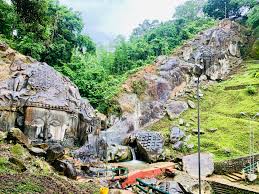
Unakoti, Tripura

Unakoti - Wikipedia

The stone carvings in Unakoti in Tripura are one of the most detailed ones in India and yet, this place is rarely visited. As per Hindu mythology, when Lord Shiva was going to Kashi along with one crore gods and goddesses, he made a night halt at this location. He asked all of them to wake up before sun rise. It is said that in the morning, except Shiva himself, no one else woke up on time. So Shiva set out for Kashi on his own cursing the others to become stone images. Perfect for both spirituality and history enthusiasts, this is truly one of the most underrated places in the country.

INTERNET HARMFUL FOR CHILDREN

WE all are now connected by the internet, like neurons in a giant brain
The internet is the decisive technology of the Information Age and with the explosion of wireless communication in the early 21st century, we can say that humankind is now  almost entirely connected,albeit with great levels of inequality  in bandwidth,efficiency and  pride.our current “network  society” is a product of  digital revolution and some major sociocultural change. The reach of the internet is  indeed worldwide. It reaches all over countries and places. Kids are also nowadays getting addicted to  this internet. Internet causes children / teenagers not doing well in school. Over last decades almost 20% more kids get increased in socila media . 
This internet addiction gave rise to aggression, disordered eating, behaviour and  academic performance. Internet access affects children in health, affects children psychologically, as soon as they start accessing violent  and dangerous video games and software.
The use of internet especially at age 13  have increased too much. More than thirty million children visit  online sites . The use of internet became a very essential part of  homes, schools ,libraries etc.
Merits –
 If seen in positive way, children can make effective use of internet in positive way. Through wikipedia children may come to know much more about topics with taught in school. Reading many types of documents and   researches , children can improve skills. Their creativety also found in way they play games  via online. The internet have created a platform for studying, introducing e-mails,  social media thus created a ground for  communication. It increases communication skill and thus increasing efficiency in  making friendship.
DEMERITS-
 The internet had also effected children communication. As people are using  internet   it abodons children  face to face interactions. It has led to damage relationship with families ,friends, and other relatives. While using internet for long hours, it effect their health too and eye vision which may become poor. It may give rise to headache. This internet make children unsocial and  give habit to live alone.
The constant  use of hated  messages on the internet, the presence of pornographic  videos and images misleads children and make them addicted and negative vibes created.
Internet usage enslaves the current generation of children who are underage. It  increases knowledge, creativety. similarly it  makes children addicted to  this things affecting their studies.

Top Highest Paying Jobs in India 2020- TRENDING AFTER CORONA VIRUS PANDEMIC

Finding the highest paid jobs in India for freshers might seem a little difficult. But once you’ve found them, your task will get a lot easier. You’ll then know what you should focus on. And to help you in that regard, we have prepared the following list of the top jobs in India.

Well you need skills and alot of hard work too, to earn the highest pay that any field is offering. These options can however be one of the motivating factor for you. If you dont find the field of your interest then remember that –

Photo by Kampus Production on Pexels.com

“Earning money is possible in any job if one is passionate about the kind of work and hence hustles hard enough to reach the top of their game.”

The List to top highest paid jobs in India are as follows:

Blockchain developer

Much like how a normal web developer uses the protocols and design structure set up by a core web architect to build web apps, blockchain software developers build decentralized applications or Dapps using blockchain technology. Their roles include: Development of Smart Contracts

There’s a wide base of knowledge to help you become a blockchain developer. If you’re interested in joining the field, it’s an opportunity for you to make a difference by pioneering the next wave of tech innovations. It pays very well and is in high demand.

The banking sector, the insurance industry, governments, and retail industries are some of the sectors where blockchain developers can work. If you’re willing to work for it, being a blockchain developer is an excellent career choice.

Cybersecurity specialist

Cyber Security Specialist is responsible for providing security during the development stages of software systems, networks and data centers. The professionals have to search for vulnerabilities and risks in hardware and software. They manage and monitor any attacks and intrusions

Security analysts spend their days studying the devices in use, analyzing network structure, and testing security measures like firewalls and software permissions. They look for weak points and aim to shore up defenses. They also report regularly to upper administration and may have to present findings and recommendations before management. Security analysts sometimes work with other departments to ensure their colleagues understand the organization’s best practices for information security.

Digital marketing specialist

digital marketing analyst is responsible for analyzing statistics and looking for ways that the company can improve its online marketing efforts. These efforts include things like social media ads, website banner ads, and online branding. Many businesses know that digital marketing is essential to their success.

Customer success specialist

Customer Success is an integration of functions and activities of Marketing, Sales, Professional Services, Training and Support into a new profession.  There are three necessary building blocks for this emerging profession: an in-depth knowledge of the customers, effective expertise in the product being sold, and extensive domain expertise.

Growth manager

he Growth Manager function typically lives at the intersection of marketing and product development, and is focused on customer and user acquisition, activation, retention, and upsell. The Growth Manager usually reports either to the CEO, the vice president of Product Management, or the vice president of Marketing.

Artificial intelligence specialist

Artificial intelligence (AI) specialists program computers to “think.” Some AI specialists work in cognitive simulation, in which computers are used to test hypotheses about how the human mind works. For example, the AI specialist might develop a computer program to simulate the way the human brain might recognize a face. The computer’s ability to recognize a face would then be compared to a human’s ability.

Data Analysts 

A good number of companies are leveraging Big Data in order to pull out the most vital and beneficial data. This practice has paved the way for augmented productivity not only for the companies but also for their employees.

So, what do Data analysts do? Well, they translate trajectories, trends, and numbers into digestible chunks of information. Businesses gather data such as inventories, profit margins, transportation costs, logistics, and sales figures, etc.

Data analysts collect that data and help the companies to go with workable business decisions. The primary job of a data analyst is to resolve the issues that increase the company’s costs and to make better decisions for the expansion of the business. 

Robotics engineer

India might be a little slow when it comes to technology advancements, nut we have some of the most brilliant minds in this country. Machines have started to replace people in dangerous jobs such as defense, space, nuclear power plants, etc.

A career in robotics is a career of the future and is a high paying career to adapt for.

Robotics Engineer deals with the design, building structure, and the applications of robots and computer and their manipulation and processing. Robotic science has a tremendous scope as a career option as robots play an important role in the industrial sector. 

Keep all future jobs in your mind now and start developing your skills in the one that excites you. Start finding your passion also starts working on it today. It really does not matter what career option you choose, but the key factor of getting the desired position lies in your resume writing skills. ensure that you have a professionally written resume along with sharpening your career, that 10x your chances to land your DREAM JOB.

Yesterday will not repeat

Believe in your future if you had a bad past. If you are going through worst present then remember your sweet memories from past. You can’t decide your future with one incident because it ruins your whole future. Give more time to your future because we can’t know when is the time that changes our fate. Believe in yourself if you want a better future. It’s you who should have a hope on you. The confidence on you is the confidence on your future.

The yesterday is bad, then think of better present, if today is worse, then think of better future. Time changes the way it does. Believe in it. Everyone will have a good time but the time for everyone is not same. Be good and do good to have good. It’s not in our hands to decide our future but it’s we who have to make it from whatever it happens. Making form worse is the best thing. Have hope to create yourself from scrap. Nothing goes in vain, if you want something from nothing it take time. Believe yourself and keep on working. One day will definitely become the someday that you dreamt off.

Remembering bad incident is easy because it’s never not forgotten that easy. Cherishing happy moment is not done so often because it’s momentary. Celebrate the life by cherishing happy moments and by forgetting sad. Beleive in long life because it’s way more to live. Never settle as though believing in short life. Life keeps on going if you keep on exploring. It’s never too late to get out of your sadness. Thinking of it makes us to think more and leaves us in a cycle where we can’t escape because our mind never makes us to think out of it. So believe in having a great destiny and live accordingly.

Racism

The marginalization and/or oppression of people of color based on a socially constructed racial hierarchy that privileges white people.

Refers to the categories into which society places individuals on the basis of physical characteristics (such as skin color, hair type, facial form and eye shape). Though many believe that race is determined by biology, it is now widely accepted that this classification system was in fact created for social and political reasons. There are actually more genetic and biological differences within the racial groups defined by society than between different groups.

Racism, also called racialism, the belief that humans may be divided into separate and exclusive biological entities called “races”; that there is a causal link between inherited physical traits and traits of personality, intellect, morality, and other cultural and behavioral features; and that some races are innately superior to others. The term is also applied to political, economic, or legal institutions and systems that engage in or perpetuate discrimination on the basis of race or otherwise reinforce racial inequalities in wealth and income, education, health care, civil rights, and other areas. Such institutional, structural, or systemic racism became a particular focus of scholarly investigation in the 1980s with the emergence of critical race theory an offshoot of the critical legal studies movement. Since the late 20th century the notion of biological race has been recognized as a cultural invention, entirely without scientific basis. By the 19th century, racism had matured and spread around the world.

Racism elicits hatred and distrust and precludes any attempt to understand its victims. For that reason, most human societies have concluded that racism is wrong, at least in principle, and social trends have moved away from racism. Many societies have begun to combat racism by raising awareness of racist beliefs and practices and by promoting human understanding in public policies.

Because, in the popular mind, “race” is linked to physical differences among peoples, and such features as dark skin colour have been seen as markers of low status, some experts believe that racism may be difficult to eradicate. Indeed, minds cannot be changed by laws, but beliefs about human differences can and do change, as do all cultural elements.

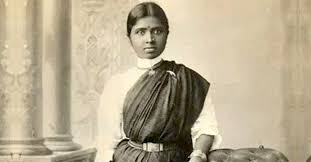
Death anniversary of Dr Muthulakshmi Reddy

Here's The Inspiring Story of India's First Woman Legislator ...

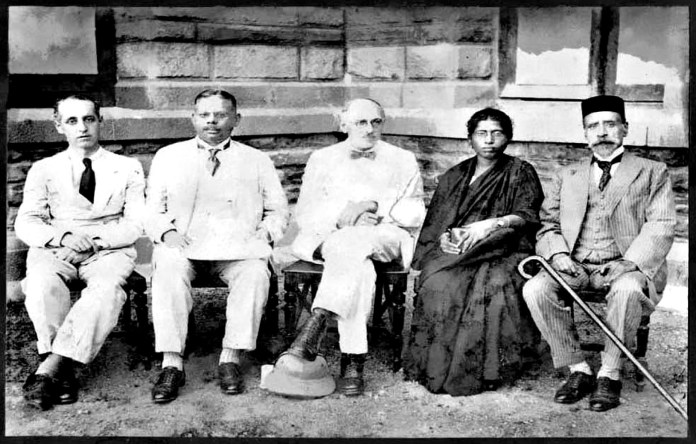
Today 22nd july, the death anniversary of Dr Muthulakshmi reddy. A surgeon, an educator, a social reformer and much more, Dr Muthulakshmi Reddy was a multitalented human and a campaigner of women’s rights. Google Doodle honoured Dr Muthulakshmi, India’s first woman legislator and one of the first women doctors in India on her 133rd birth anniversary.

EARLY LIFE

Dr Muthulakshmi was born on July 30, 1886. She was the daughter of a Devadasi Chandrammal who was married to Narayanaswamy, the principal of Maharaja’s College in Pudukkottai. She was born in an age where the phrase ‘women must be seen and not heard’, was often bandied about and used as an excuse to subvert the true potential of women. Muthulakshmi was intimate with Devadasi culture and norms. Right from a young age, her keen mind and quick ability to grasp things made her a roaring success at school. Upon reaching maturity, she continued her education through home-schooling.

STRUGGLE TOWARDS HER DETERMINATION

Later, she defied her parent’s decision to get her married, choosing education instead. But being a woman, her dream to pursue education invited the silent outrage of the conservative society. Because of the strong social pressures, the Maharaja college refused to admit her despite the excellent academic record. It was only when Martanda Bhairava Thondaman, the forward-thinking Raja of Pudukkottai stepped in and ordered them to take-in Muthulakshmi, that the college grudgingly accepted her application. Thus, breaking all the stereotypes of that time, Muthulakshmi became the first woman ever to get admission to Maharajah College which was a men’s college in Pudukottai. But it was just a beginning. After completing her under-graduation, she sought admission to the Madras Medical College. She was also the first and only woman candidate in the Medical College in 1907. It was during her college years that Muthulakshmi formed a deep friendship with Sarojini Naidu and Annie Besant, two individuals whose personal philosophies would go on to influence many of her future endeavours. She became the first woman House Surgeon in the Government Maternity and Ophthalmic Hospital, Madras.

Later, she went to London to pursue Higher Education. Muthulakshmi came back to India upon a request from the Women’s Indian Association – an organisation she helped establish in 1918, to enter the Madras Legislative Council in 1927. She was elected to the post of Vice-President, making her the first Indian woman member of a Legislative Council. This event also marked her entry into politics and legislation after which, she made efforts to improve the lives of all women everywhere. In her capacity as a legislator, Muthulakshmi helped raise the minimum age for marriage for girls. Concerned about human trafficking, she pushed the Council to pass the crucial Immoral Traffic Control Act.

She was aware that even after the devadasi system was abolished, the deeply-ingrained prejudices against women still existed. In 1930, three devadasi girls knocked at her door seeking shelter and that’s when she realized that she needed to create a haven for countless young girls like them so she built Avvai Home. Today, Avvai Home has grown to include an educational complex that houses a primary school, a secondary school, a higher secondary school as well as a teacher’s training Institution. The home was primarily started for devadasis but now, its doors are open to all women who need assistance.
Having witnessed her sister’s untimely death due to cancer, she decided to open up a specialized cancer hospital. She dreamed of a place where anyone suffering from cancer would receive treatment, irrespective of social and economic status. In 1954, after overcoming several hurdles, Muthulakshmi’s dream came to life with the Cancer Institute. It was the second specialised cancer centre in India and the first in South India at the time. Today, Adyar Cancer Institute has 450 hospital beds, a full-fledged research division, a preventive Oncology department, and the Dr Muthulakshmi College of Oncologic Sciences. A countless number of cancer patients have been treated here and the numbers continue to grow.

Cancer Institute(WIA) Foundation, Inc. 100% Affliated with Cancer ...


For her countless contributions to society, she was awarded the Padma Bhushan in 1956. Muthulakshmi passed away in 1968 at the age of 81.

“Constantly breaking barriers throughout her life, Reddy was a trailblazer, who devoted herself to public health and the battle against gender inequality, transforming the lives of countless people, especially young girls”, Google said in its description on the occasion of her birth anniversary.

The Tamil Nadu government announced ‘Hospital Day’ celebrations to be held every year on July 30, the birth anniversary of one of the country’s prominent successful woman doctors in the early 20th century and the State’s first woman.


Though she is no longer with us, her legacy still lives on in every strong woman who fights for education and equality. Let us salute the woman whose vision and values have inspired and changed many lives for good!

17 Essential Tips for Young Entrepreneurs

Youth is the biggest resource of the Nation. Today’s generation is not only smarter but also ahead in innovation and dare to build their own empire at the prime of their youth. Though it takes a lot of efforts, a right amount of motivation and guidance can help the young budding entrepreneurs go a long way. Well who learn from than the experienced businessmen who started out at your age and now are known as the Young minds who made it to Big Shots.

Here are 17 essential tips for young entrepreneurs inspired by 17 people who made it under 17 years of age:

  • Dare to Dream:

Dr.A.P. J Abdul Kalam once rightfully said, ‘Dream is not what you see while sleeping, it is something that doesn’t let you sleep.’ Your dreams don’t have to look like anyone else’s. You get to define what success looks like in your life. Dare to dream your own unique dream of what living well looks like.

  •  Have a Vision:

The founder and CEO of Tumblr, David Karp, notes that an entrepreneur is someone who has a vision for something and a desire to create it. Keep your vision clear at all times. Having a vision means we have a clear sense of purpose.

It means we have a much larger picture of our business, than simply setting and reaching short term goals and tackling problems as they come along. In business, having a clear vision is absolutely critical. It is an extremely powerful tool to achieve the results you want.

  •  Do what you are Passionate about:

Where you care about DOING that thing, rather than what you get at the END of doing that thing. The dictionary definition of passion is “a strong feeling of enthusiasm or excitement for something or about doing something” The spark of passion when gets action it fires up and lights the way ahead.

  •  Take Action:

The world is full of great ideas, but success only comes through action. Walt Disney once said that the easiest way to get started is to quit talking and start doing. That’s true for your success as well. Work in silence, let your success make the sound.

  •  Face your Fears:

Overcoming fear isn’t easy, but it must be done. Arianna Huffington once said that she found fearlessness was like a muscle — the more she exercised it, the stronger it became.

  •  Take the Risk:

We never know the outcome of our efforts unless we actually do it. Jeff Bezos said it helped to know that he wouldn’t regret failure, but he would regret not trying.

  •  Believe in Yourself:

As Henry Ford famously said, “Whether you think you can, or think you can’t, you’re right.” Believe that you can succeed, and you’ll find ways through different obstacles. If you don’t, you’ll just find excuses.

  •  Rome was not built in a day:

No one succeeds immediately, and everyone was once a beginner. As Steve Jobs wisely noted, “if you look closely, most overnight successes took a long time.” Don’t be afraid to invest time in your company.

  •  Plan for raising funds & capital:

Richard Harroch, a venture capitalist, has this advice for upcoming entrepreneurs: “It’s almost always harder to raise capital than you thought it would be, and it always takes longer. So plan for that.”

  • Set goals and targets:

Ryan Allis, co-founder of iContact, pointed out that having the end in mind every day ensures you’re working toward it. Set goals and remind yourself of them each day.

  • Learn from your mistakes:

Many entrepreneurs point to mistakes as being their best teacher. When you learn from your mistakes, you move closer to success, since learning from failure is the first step towards succeeding.

  • Adapt to the market:

Bill Gates once said that your most unhappy customers are your greatest source of learning. Let unhappy customers teach you where the holes in your service are.

  • Put customer needs at the top:

“Customer is the king,” is the first rule of any market and business organizations.

  • Manage Energy, not Time:

Your energy limits what you can do with your time, so manage it wisely. Plan a proper schedule keeping your physical and mental potential as priority.

  • Invest your money wisely:

Investing your money can allow you to grow it. Most investment vehicles, such as stocks, certificates of deposit, or bonds, offer returns on your money over the long term. This return allows your money to build, creating wealth over time.

  • Be Consistent and determined:

       Consistency in your business is far more important that you can imagine. Being consistent allows you to establish awareness, build trust and deliver your services efficiently and profitably.

Whether you are establishing your brand or determining the course of your sales and marketing strategy, you have to recognise the power of consistency. Give yourself an advantage over fickle competitors by becoming consistent in how you operate your business, and what you present and offer to your customers.

  • Deliver more than expected:

Google’s Larry Page encourages entrepreneurs to deliver more than customers expect. It’s a great way to get noticed in your industry and build a loyal following of advocates.

Being a successful entrepreneur takes a lot of work, a lot of vision and a lot of perseverance. These 17 tips, from entrepreneurs who have already found success, will help you navigate the path much more easily.