

The Prime Minister Narendra Modi has launched Aatmanirbhar Bharat Innovation Challenge to identify the best Indian Apps that are already being used by citizens and have the potential to scale and become world class Apps in their respective categories.
Prime Minister Narendra Modi has urged people of tech community to participate in Aatmanirbhar Bharat App Innovation Challenge. This will run in two tracks- Promotion of Existing Apps and Development of New Apps.
In a LinkedIn post, Mr Modi said, for promotion of existing Apps and platforms across the categories of E-learning, Work-from-Home, Gaming, Business, Entertainment, Office Utilities, and Social Networking, Government will provide mentoring, hand-holding and support.
Track one will work in mission mode for identifying good quality Apps for the leader-board and will be completed in around a month. For incubating new Apps and Platforms, Track two initiative will work to help create new champions in India by providing support in ideation, incubation, prototyping and roll out along with market access.
The Prime Minister added that the outcome of this challenge will be to give better visibility and clarity to existing Apps to achieve their goals, and to create tech products to find solutions to tech conundrums with the help of mentorship, tech support and guidance during the entire life-cycle.
Month: July 2020
PM Modi calls for adoption of organic and natural farming in cluster based approach
Prime Minister Narendra Modi has called for adoption of organic and natural farming in a cluster based approach. He said, Indian Council of Agricultural Research (ICAR) has developed a geo-referenced Organic Carbon Map of India and identified 88 bio control agents and 22 Bio pesticides which can promote organic agriculture.
Mr Modi reviewed the progress of agriculture research, extension and education in India through video conference yesterday. Prime Minister directed that start-ups and agri-entrepreneurs need to be promoted to ensure innovation and use of technology in Agriculture and allied sectors. He highlighted the need to leverage information technology to provide information on demand to the farmers.
Mr Modi directed that Hackathons may be organized twice a year to solve identified problems and meet design needs for tools and equipment that can reduce drudgery if farming activity, given that a large number of farm workers are women. He exhorted the need to create awareness regarding inclusion of millets like Jowar, bajra, ragi and several other minor millets in diet to ensure healthy diet.
Mr Modi said ease of access to farm equipment and transport facility from field to markets shall be ensured. In this regard, the Department of Agriculture, Cooperatives and Farmers Welfare has launched an app – Kisanrath. In order to enhance water use efficiency, Prime Minister desired that awareness and outreach programs be conducted.
Mr Modi said that study of grasses and local fodder crops should be undertaken to understand their nutritive value. He highlighted the need to study use of sea weeds for their impact on soil health apart from exploring commercial applications in nutraceuticals.
WHY EDUCATION IS MORE IMPORTANT?
Education is an effort of the senior people to transfer their knowledge to the younger members.Hence an institution, plays a vital role in integrating an individual with the society and in maintaining the culture.The influence exercised by the adult generation upon those who are not yet ready for adult life.Society can survive only if there exists among its members a sufficient degree of homogeneity. A child through education learns basic rules, regulations, norms and values of society.Education thus is an essential prerequisite of modernization. It enables people to know the world beyond their own surroundings. It also transforms them to become rationalist or humanist in outlook and world view.
The traditional education system of India was quite different from the contemporary one. In traditional Indian society, the number of educational institutions were too small and the content of education was esoteric and essentially related with religion, philosophy, metaphysics and scriptural subjects.The education was confined to the ‘twice-born’ castes and the upper classes.The lower castes, particularly the scheduled castes, were denied education. Shisha Mandirs also have religion and tradition as parts of curriculum.
Modern education is exoteric, open and liberal. The world-view is scientific-rational; the theme consists of freedom, equality, humanism and denial of faith in dogma and superstitions. Science and technology, grammar and literature, history and culture, geography and ecology comprise the vast range of subjects which are taught in schools, colleges and universities.The modern education lays emphasis on the subjects like freedom, nationality, law, human rights, democracy. The other parts of education are the co-curricular and extra-curricular activities, which are often organized for total personality development of an individual.

The modern education is change-oriented and courses are modified time and again corresponding to the changes taking place in society with the needs of the changing situations in the wake of fast-changing industrial society.The present industrial society has opened up a multiplicity of occupations and professions and each one of them is associated with scientific knowledge and skills.The modern education fulfills needs of the industrial economy. A vast range of subjects like medicine, health, engineering, management etc, have become hot areas of professionalization and specialization at present.

Workplace Wellness
The life of most of the working people basically revolves around their office and work. We go to huge buildings, sit at our desks all day, immerse ourselves in those laptops, and try to work relentlessly. Even when we reach home, all we can think about is the deadlines and targets that we have to achieve at work and what steps we are going to follow the next day to complete the tasks. Since most of us spend the majority of our time at work, it is given that the workplace environment plays an important role in both, our physical health as well as our mental health.
 A healthy workplace is identified as the one where individuals feel valued and heard; a place that provides a positive workspace, and shows respect for all its members. As an employee, a manager, or even a CEO, you never should feel the toxicity oozing out of the place you have made your second home. Whereas a negative working environment is generally associated with depression and anxiety, harassment, and bullying among people in their prime years.
Risks to Mental Health at Workplace
- Workplace Stress – Workplace stress is caused due to rigid working hours. It could also be when the employees are unclear about the organizational goals they have to achieve and the tasks they have to accomplish or there is limited participation of employees in the decision – making and they have little or no control over their area of work.
- Lack of support – Colleagues often don’t support each other in decision making, there is poor communication between them. Even unproductive management practices and leadership qualities affect the employees in an organization.
- Inadequate health and safety policies – Managers and leaders often neglect the health and safety of their employees by overlooking the provision of necessary health policies.
Can we create a Mentally Healthy Workspace Environment?
In reality, creating a mentally healthy workspace environment is not as difficult as it seems. Good mental health is the key requirement for workplace wellness.
- Mental health should be promoted; there should be awareness and employees and employers should be able to talk freely about it.
 Employees should be provided with a clean, functional, and well-lit space and have a good working relationship with all staff. Employees should feel respected, appreciated, incentivized, and rewarded. Signs of intimidation, bullying, sexual harassment, and fear should be immediately checked out and necessary action taken.
- If a person has taken some measures to improve his mental health, others should support him. They could even take inspiration from him, and work on their own mental health.
- Counseling sessions could be organized for the employees letting them know where they could find help if required.
- There should be a provision of a comprehensive health insurance plan including smoking-cessation, weight-loss, and substance abuse programs.
- It takes two to make a healthy workplace. Employees should be in a position to be held accountable for their actions. They should come with a “can-do” attitude and be willing to support each other as well as management.
Image Courtesy: GOOGLE
Health tips….
10 Healthy Lifestyle Tips for Adults
Last Updated :
1.Eat a variety of foods.
2.Base your diet on plenty of foods rich in carbohydrates.
3.Replace saturated with unsaturated fat.
4.Enjoy plenty of fruits and vegetables.
5.Reduce salt and sugar intake.
6.Eat regularly, control the portion size.
7.Drink plenty of fluids.
8.Maintain a healthy body weight.
9.Get on the move, make it a habit!
10.Start now! And keep changing gradually.
- Eat a variety of food:. For good health, we need more than 40 different nutrients, and no single food can supply them all. It is not about a single meal, it is about a balanced food choice over time that will make a difference!
A high-fat lunch could be followed by a low-fat dinner.
After a large meat portion at dinner, perhaps fish should be the next day’s choice?
- Base your diet on plenty of foods rich in carbohydrates:
About half the calories in our diet should come from foods rich in carbohydrates, such as cereals, rice, pasta, potatoes, and bread. It is a good idea to include at least one of these at every meal. Wholegrain foods, like wholegrain bread, pasta, and cereals, will increase our fibre intake.
- Replace saturated with unsaturated fat:
Fats are important for good health and proper functioning of the body. However, too much of it can negatively affect our weight and cardiovascular health. Different kinds of fats have different health effects, and some of these tips could help us keep the balance right:
We should limit the consumption of total and saturated fats (often coming from foods of animal origin), and completely avoid trans fats; reading the labels helps to identify the sources.
Eating fish 2-3 times a week, with at least one serving of oily fish, will contribute to our right intake of unsaturated fats.
When cooking, we should boil, steam or bake, rather than frying, remove the fatty part of meat, use vegetable oils.
- Enjoy plenty of fruits and vegetables:
Fruits and vegetables are among the most important foods for giving us enough vitamins, minerals and fibre. We should try to eat at least 5 servings a day. For example, a glass of fresh fruit juice at breakfast, perhaps an apple and a piece of watermelon as snacks, and a good portion of different vegetables at each meal.
- Reduce salt and sugar intake:
A high salt intake can result in high blood pressure, and increase the risk of cardiovascular disease. There are different ways to reduce salt in the diet:
When shopping, we could choose products with lower sodium content.
When cooking, salt can be substituted with spices, increasing the variety of flavours and tastes.
When eating, it helps not to have salt at the table, or at least not to add salt before tasting.
Sugar provides sweetness and an attractive taste, but sugary foods and drinks are rich in energy, and are best enjoyed in moderation, as an occasional treat. We could use fruits instead, even to sweeten our foods and drinks.
- Eat regularly, control the portion size:
Eating a variety of foods, regularly, and in the right amounts is the best formula for a healthy diet.
Skipping meals, especially breakfast, can lead to out-of-control hunger, often resulting in helpless overeating. Snacking between meals can help control hunger, but snacking should not replace proper meals. For snacks, we could choose yoghurt, a handful of fresh or dried fruits or vegetables (like carrot sticks), unsalted nuts, or perhaps some bread with cheese.
Paying attention to portion size will help us not to consume too much calories, and will allow us to eat all the foods we enjoy, without having to eliminate any.
Cooking the right amount makes it easier to not overeat.
Some reasonable serving sizes are: 100 g of meat; one medium piece of fruit; half a cup of raw pasta.
Using smaller plates helps with smaller servings.
Packaged foods, with calorie values on the pack, could aid portion control.
If eating out, we could share a portion with a friend.
- Drink plenty of fluids:
Adults need to drink at least 1.5 litres of fluid a day! Or more if it’s very hot or they are physically active. Water is the best source, of course, and we can use tap or mineral water, sparkling or non-sparkling, plain or flavoured. Fruit juices, tea, soft drinks, milk and other drinks, can all be okay – from time to time.
- Maintain a healthy body weight:
The right weight for each us depends on factors like our gender, height, age, and genes. Being affected by obesity and overweight increases the risks of a wide range of diseases, including diabetes, heart diseases, and cancer.
Excess body fat comes from eating more than we need. The extra calories can come from any caloric nutrient – protein, fat, carbohydrate, or alcohol, but fat is the most concentrated source of energy. Physical activity helps us spend the energy, and makes us feel good. The message is reasonably simple: if we are gaining weight, we need to eat less and be more active!
- Get on the move, make it a habit!
Physical activity is important for people of all weight ranges and health conditions. It helps us burn off the extra calories, it is good for the heart and circulatory system, it maintains or increases our muscle mass, it helps us focus, and improves overall health well-being. We don’t have to be top athletes to get on the move! 150 minutes per week of moderate physical activity is advised, and it can easily become part of our daily routine. We all could:
use the stairs instead of the elevator,
go for a walk during lunch breaks (and stretch in our offices in between)
make time for a family weekend activity.
- Start now! And keep changing gradually.
Gradual changes in our lifestyle are easier to maintain than major changes introduced all at once. For three days, we could write down the foods and drinks we consume throughout the day, and make a note of the amount of movement we made. It won’t be difficult to spot where we could improve:
Skipping breakfast? A small bowl of muesli, a piece of bread or fruit, could help slowly introduce it into our routine
Too few fruits and vegetables? To start with, we can introduce one extra piece a day.
Favourite foods high in fat? Eliminating them abruptly could fire back, and make us return to the old habits. We can choose low fat options instead, eat them less frequently, and in smaller portions.
Too little activity? Using the stairs daily could be a great frist move.
COVID19….
Coronavirus live: India latest news – 4 July 2020

India Covid-19 update: 06:30 IST on Sunday 5 July (03:00 CEST)
According to the latest figures published by John Hopkins University,11,199,698 cases have been detected worldwide, with 528,953 deaths and 6,037,614 people recovered.
In India, there have been 648,315 cases confirmed, 18,655 people have died and 394,227 people have recovered from the virus.
WHO team in China …
WHO team in China next week to investigate coronavirus origins.
A team from the World Health Organisation will visit China next week to investigate the origins of coronavirus and its subsequent spread to human beings. In an exclusive interview with ANI, Dr Soumya Swaminathan, Chief Scientist, WHO said that a “thorough investigation” needs to be done into the origins of the virus.
“What is needed now is a good investigation going back before December to find out where and how it jumped from animal to human. Was there any intermediate animal or not or it directly jumped from bat to humans which are also possible? Bats have been implicated in other viral diseases — Nipah for example. It is possible it came directly. It is also possible that there was an intermediate animal-like in the case of SARS. That thorough investigation still needs to be done,” she said.

ATTITUDE v/s EGO…The real life stories…!!!
Attitude is a huge thing and small part of Attitude is EGO, Example if Attitude is a Continent then Ego is just a small country in it Attitude can be divided into two parts first Right attitude and Second is Wrong attitude people get confuse between ego and attitude because ego is the part of wrong attitude but the best part is that you can be a good attitude person without having an ego. Likewise, Every Indian is an Asian, but every Asian will be an Indian is not compulsory similarly,
“every Egoistic person will for sure have Attitude, but person who has Attitude doesn’t have Ego”.

Hence even you should be a person who has attitude you shouldn’t be a person who is egoistic or who has a bad attitude (wrong attitude) Now let’s talk about definition, Attitude shows what we think about other things How we feel and how we respond in any situation whereas Ego always allow us to think about our self-esteem and self-importance for example, person who has a Good Attitude will say No matter what happens I will win whereas an Egoistic person will say, that no matter what happens no one can beat me Good attitude person will live life as if he is the king of the world. Whereas bad attitude person lives a life as if everyone is their slave and everyone should always obey them.
Now let’s talk about today’s Book summary which is related to this Topic Author Ryan has accomplished huge successes in a very young age he was only 19 years when he became the youngest executive in the Talent Management Agency who later did signing of big rock bands, and also did consulting for many books which was sold in millions at the age of 21 he was the marketing director of an amazing Company AMERICAN PAREL. At the age of 25 he was also the best selling author everything was so perfect, but suddenly one day time changed and everything changed in his life he lost everything, he started failing in his life, he made a tattoo in his hand, he tattooed the most important reason of his failure in his hand so that he never forget that and should never repeat that same mistake in his life and can avoid such failure again.

The tattoo which he made in his hand was “EGO IS THE ENEMY” because his ego was the main and the most important reason for his failure and that reason he never wanted to forget Ryan defines Ego as an unhealthy belief which make us obsessed about self-importance. Ryan says that ego is “something which converts our Confidence to Arrogance Ego is that dangerous thing which ruins or destroys our long term goals by just giving us short term satisfaction, and by making us feel; superior from others for just for short time and such ego is not at all right”. Author says that every person in their lives always stays in one stage out of three first stage is ASPIRING, second is SUCCEEDING and third is FAILING:
- Either person is aspiring, means working on something in order to achieve something in his life wanted to become something in his life.
- Either person has already achieved in his life, means he already faced success.
- Either person is failing in his life, he is not able to achieve anything huge in his life.
Now the biggest obstacle which stands firm in front of us during all three stages to defeat us is nothing but our OWN EGO. Now let’s see how EGO Comes between all three stages to destroy our goals:
1.Aspiring, Rohit has seen a video related to body building he loved that video, hence he decided that he will for sure become a bodybuilder no matter what happens after deciding. On first day he started posting workout pictures on social media pages by NO PAIN NO GAIN #WORKINGONMYDREAMS with this he started showing off more than his actions, he do less and show more after few days his entire motivation goes down, and he return to his normal life. Well this happens to many people and the reason for this is EGO Our Ego always makes us think what others are thinking about us therefore instead of taking maximum action for our goal completion. We started doing easy things to impress others such has we started talking more, we start uploading pictures on social media pages which in reality nor impress others not even allow us to complete our goals because in show off and talking same resources are required which is needed to complete our actual goals, which is our time, mental physical health /energy and our will power and mostly we use all these and finish it just by showing off and talking. Hence it will be best if you avoid wasting your energy on talking and in thinking about it all day, start using that same energy in taking action and in completing your goals.
2.Succeeding, at age 18 Howard Hughes took the biggest decision. He gave money to his relatives and bought 100 percent shares of his family business and became owner of that company. It was an Oil drill bit company this was the very bold decision because he wasn’t much aware about the business but still it proved to be the most brilliant move of his, Hughes shifted that company from 1 million dollar to 1 billion dollar he became very successful. His overconfidence or can say his Ego destroyed his success his ego made his career the most embarrassing the most dishonest and waste career in the history. The first huge Success of Hughes made him believe the he is very talented and he can be successful in any business, hence he get into Aviation field, film making and in stock market, and in every field he faced a huge loss in fact a biographer has shown Hughes end life in his book like he was sitting in his favorite chair naked, without taking care of his health, without bathing he was fighting with lawyers with investigators, investors by hiding his every wrong doings. So, that he doesn’t lose his everything Hughes Ego was the reason for his embarrassing end even after getting success he failed miserably most of the time when people get success, then their ego shift them from humble and learning person to overconfident person about their capabilities therefore they failed to maintain their success and hence they lose everything in their lives.
3.Failing, after many scandals and 300 million loss, company gave two options to American Apparel Founder Dove Chaney, first option to resign as a CEO from the company and to work as Creative Consultant and for that he will get a good pay or salary, and second to resign and completely leave the company at that Time Dove rejected both options and chose the third and the worst option which was to FIGHT. He filed a case against his company, he sue his company, instead of searching a better CEO for a company. He made that company to reach to bankruptcy his ego didn’t allow him to think better for his company instead he destroyed his company as well as himself because after that case his life was so devastated that he used to sleep on his friend couch because he was bankrupt, had no money. Ego is something which never allow us to understand our own shortcomings and faults just like an alcoholic who feels the whole world is doing wrong with him. He himself does the worst for himself, without realising that he is the biggest enemy of himself. Similarly, when we fail to achieve something, at that time instead of taking responsibility our ego starts making excuses starts blaming world and others our ego blames and make excuses so that our respect doesn’t decrease hence we do everything but never realize our mistakes and shortcomings because of which we fail to overcome it and fail to get success and achievements in our lives.
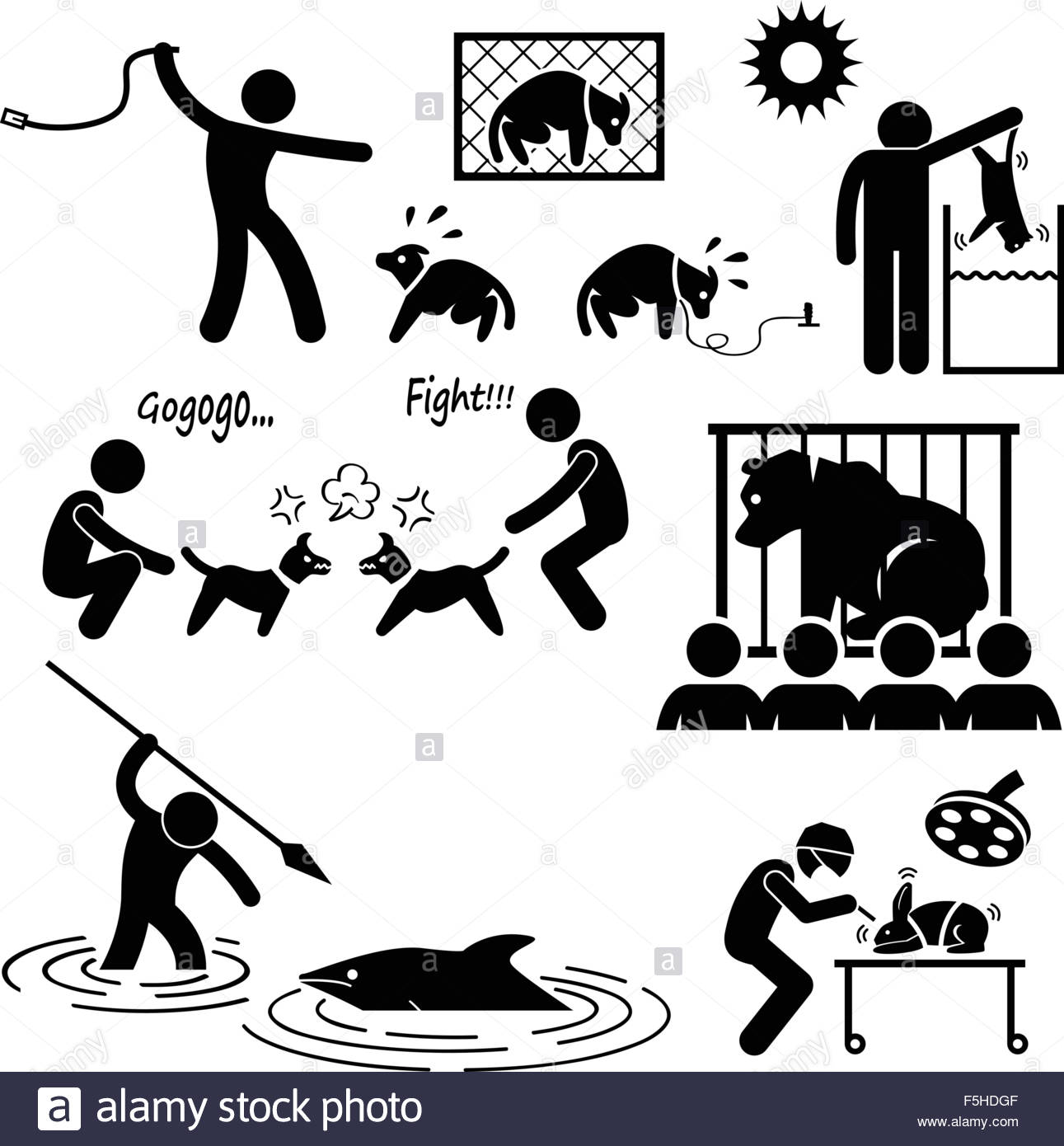
Should Animals be Used for various Experiments/ Testings??
Animals, from the fruit fly to the mouse, are widely used in scientific research. They are crucial for allowing scientists to learn more about human biology and health, and for developing new medicines. The use of animals in scientific research has long been the subject of heated debate. On the one hand it is considered morally wrong to use animals in this way solely for human benefit.
On the other hand, removing animals completely from the lab would impede our understanding of health and disease, and consequently affect the development of new and vital treatments. Although sometimes these studies do reduce the quality of life of these animals, thorough regulations are in place to ensure that they are carried out in a humane way.
Millions of mice, rats, rabbits, primates, cats, dogs, and other animals are locked inside barren cages in laboratories across the country to be used in experiments. They languish in pain, suffer from extreme frustration, ache with loneliness, and long to be free. Instead, all they can do is sit and wait in fear for the next terrifying and painful procedure that will be performed on them. The lack of environmental enrichment and the stress of their living situation cause some animals to develop neurotic types of behavior, such as incessantly spinning in circles, rocking back and forth, pulling out their own fur, and even biting themselves. After enduring pain, loneliness, and terror, almost all of them are killed.
There are many non-animal research methods that can be used in place of animal testing. Not only are these non-animal tests more humane, they’re also more relevant to humans and have the potential to be cheaper and faster. Each of us can help prevent animal suffering and take a stand against vivisection by buying cruelty-free products, requesting alternatives to animal dissection at school, donating only to charities that don’t experiment on animals, and demanding the immediate implementation of humane, effective non-animal tests by government agencies and corporations.
Proponents of animal testing say that it has enabled the development of numerous life-saving treatments for both humans and animals, that there is no alternative method for researching a complete living organism, and that strict regulations prevent the mistreatment of animals in laboratories.
Opponents of animal testing say that it is cruel and inhumane to experiment on animals, that alternative methods available to researchers can replace animal testing, and that animals are so different from human beings that research on animals often yields irrelevant results.
Despite the use of over 115 million animals in experiments globally each year, only 59 new medicines were approved in 2018 by the leading drug regulator, the U.S. Food and Drug Administration. Many of these are for rare diseases. The US drug industry invests $50 billion per year in research, but the approval rate of new drugs is the same as it was 50 years ago.Only 6% of 4,300 international companies involved in drug development have registered a new drug with the U.S. Food and Drug Administration since 1950.
Diseases that are artificially induced in animals in a laboratory, whether they be mice or monkeys, are never identical to those that occur naturally in human beings. And because animal species differ from one another biologically in many significant ways, it becomes even more unlikely that animal experiments will yield results that will be correctly interpreted and applied to the human condition in a meaningful way.
What can we do to stop experiments on animals:-
Tell research-funding agencies to kick their animal experimentation habit.Virtually all federally funded research is paid for with your tax dollars. NIH needs to hear that you don’t want your tax dollars used to underwrite animal experiments, regardless of their purpose. When writing letters, be sure to make the following two points:
• Animal experimentation is an inherently unethical practice, and you do not want your tax dollars used to support it.
• Funding for biomedical research should be redirected into the use of epidemiological, clinical, in vitro, and computer-modeling studies instead of cruel and crude experiments on animals.
Refrences:-
Home
Do These Things When You Are 30, and You Will Enjoy Them at 50
Do not Smoke, and if you’ve started, stop
Smoking is dear , smells gross, and it’s 100% bound to cause health problems. There is no other way around. If you would like to be cancer-free at 50, it’s crucial that you simply stop smoking while you’re 30.
Stop eating food
When you have money, you can buy the whole world. The one thing you can’t buy is health, which is that the one thing that matters. Stop eating junk food, fast food, and easily put, crap. Processed foods are even as dangerous as smoking for our health.
Maintain relationships with parents and siblings
Too many families have been driven apart nowadays. People forget how important family is. Chances are you are doing not see eye to eye with a number of your siblings, cousins, or maybe maybe parents. But family can assist you learn valuable lessons, the way to get along side people you are doing not accept as true with on many issues.
Do not go out in the sun without sunblock
You might think, “the sun doesn’t do me any damage now”. But wait until you’re 50, and you’ll see the results of all that sun exposure. Do you want a wrinkled skin or clean skin? Well, if you would like the latter, limit sun exposure, and don’t leave without sunblock.
Exercise regularly
Lately, exercise has become a well-liked trend and topic. And rightfully so. Exercising is one of the best ways to improve the quality of your life. If you build a lively lifestyle while you’re in your 30s, you won’t have troubles maintaining it in your 50s. Try to not gain weight, as weight does all types of bad things for your body.
Start saving money, even tiny bit
It might be boring, trite, and unsexy suggestion, but it’s one among the foremost valuable ones. Save money in your 30s, when you have a lot of disposable income. Some of that income can easily be put aside to be used later in life.
Be content with what you have
Happiness is what matters the most. If you’re content with what you’ve got , you’ll be a touch less likely to finish up a millionaire. But you will definitely have a happier life. And if you somehow become a very wealthy person, there is no reason why not, you will be more happy. But don’t crave millions only for having millions.
Get some sleep
Make sure to take care of a correct and healthy sleep management. If you would like to sleep well, use sleep shades which will block out light. Try to stay away from bright screens before bedtime. Go to bed at an equivalent time, and awaken at an equivalent time. That is healthy sleep schedule.
Do not delay life goals
If you want to buy a house, go for it. If you would like to write down a book, do it. If you would like to urge a second degree or a complicated degree, absolutely choose it. And if you would like to vary your career, don’t delay pursuing that life goal also . Start today, and stop putting things off.
Take care of your teeth
Go to the dentist on a regular basis. Make sure to get cavities fixed as they come up. Dental problems only worsen with times, and things like crowns and implants are uncomfortable, and admittedly , expensive.
Give something back
Give to others, as not all are happy enough to possess what they have . Give to those in need. However you give, roll in the hay with full heart and soul. Do not expect anything in return.
Collect memories, not things
Do not waste your life gathering possessions. Memories, unlike things, don’t dissolve and can’t be burned during a fire. They stay with you forever.
Be curious, and try to do one thing that scares you
Get out of your comfort zone. Get out of the house and have a honest adventure. And do it right now. Make it as big as you’ll manage, and take as many pictures as you’ll . The activity needs to be measured in days, not hours or minutes. You will laugh about it when you are old.
Read 10 books per year
Nobody at 50 says “I wish a spent longer watching TV and playing video games”. Instead, they assert “Gee I wish I read more books”. Your brain never stops growing, so confirm you exercise it on a daily basis. And that means a minimum of 10 books per annum .
Travel as much as you can
Traveling will change your life like nothing else within the world. Traveling will put you in places which will force you to worry for issues that are bigger for you. Traveling is all about experiencing true risk and adventure.
The day your body stars to point out the signs of all the wear and tear and tear, you’ll not see any fun in partying or trying to impress people around you. Embark on the journey of self-discovery once you are 30, and you’ll be stronger once you are 50.
Learn to meditate
There are a number of benefits and reasons to meditate. And it only costs you a small amount of your time per day. Nothing more. The change you will experience is priceless.
Become a homeowner
When you buy a house at 30, you’ll nearly buy it by the time you’re 50.
Keep a journal
You will forget more of your precious memories than you’ll remember. Nowadays, with a computer and everything, it’s easy to stay a journal and make the archiving easier.
Take care of your friends
Choose people that cause you to desire you already are your best self, but also challenge you by example. Nurture your friends, and contribute to their survival and delight of life. Take the time to be in touch.
Why You Need to Abstain from Using the Word ‘FIGHT’
Have you noticed that words ‘fight’ or ‘fighting’ are often employed by people that want to uproot negative habits, make changes within the environment or change the world?
I am sure you have heard the following phrases or similar ones, and maybe even used them yourself:
“I am going to fight for peace.
“I fight for freedom.”
“I am going to fight this habit.”
“I am going to fight to achieve my goal.”
“I will fight them until I win.”
There are many variations of theses sentences.
What do they mean? They mean that you expect difficulties, problems and opposition. You expect obstacles and you expect people to fight you.
Anything the mind thinks it also creates, so before you even started, you’re creating problems, which you’ll got to fight. Is this a wise thing to do?
Don’t Think about Fighting, Think about Creating
It is far better and wiser to create what you want, not fight what you do not want.
If you say, “I will fight against my enemies and win”, you are creating a situation of war. You are going to be always in a situation of war. Is that what you want?
Why not take a special stance, and stop considering people that are different from you, or people that don’t like, as your enemies? Why declare them as your enemies? Repeating statements that you simply have enemies, which you’re getting to fight them will only create animosity, anger, conflicts, opposition and even wars.
If you regularly use the word ‘fight’ and think often about it, you’re creating for yourself and for others situations that need fighting.
How to Think and Act Constructively
The words ‘fight’ and ‘fighting’ evoke corresponding emotions within the person thinking or saying them, and within the people that hear it. In this way, politicians, leaders, and people in all walks of life can manipulate people’s feelings and actions.
However, they can do this also in a constructive way, by awakening positive emotions and motivation, by using different, positive words that appeal to the emotions and affect the subconscious mind.
You Need to Abstain from Using the Word ‘FIGHT’
- Think about solutions.
- Focus on solutions.
- believe the results that you simply want to realize and specialise in them, not on fighting to urge them.
- You should focus on creating good habits, not on fighting the bad habits. Do not fight them, because you’ll only waste energy by engaging during a constant war, rather than changing your habits.
- If you would like to be free, specialise in freedom. In your mind, see it as a reality in your life. Eventually, it would become a reality in your life.
- you are doing not got to fight for your goals, just go and achieve them stupidly of failure and without caring about obstacles.
- Do not fight problems. Instead, visualize them as solved, and work on solving them.
- Do not fight your weight. Exercises and build good eating habits.
- Do not fight until you win. Just focus your mind and all your energies on winning, not on fighting others or fighting obstacles.
- You bring peace not by fighting, but by spreading peace, by teaching people to make their minds peaceful. It might come as a surprise to you, but inner peace is a sign of great strength. Unfortunately, only alittle number people appreciate it and know what it really means.
You need to abstain from using the word ‘fight’ in your mind and in your conversations. You need to prevent thinking on fighting, because if you are doing , this is often what you’ll get.
Always focus on what you really want, not on what you do not want, or on the things you want to avoid.
Using the word ‘fight’ shows fear. It means that you expect difficulties, obstacles and problems.
You do not need to fight your way. You can go in a straight line, fearless, courageous and not admitting failure. Using constructive words and displaying inner strength will get you anywhere faster, and with less opposition.
This approach does not mean that the path would be always easy, but you will create fewer problems and people will be more supportive and helpful.
Be active, not passive, move things, be courageous and walk tall. Make things happen by thinking and acting constructively, not by fighting them. To move a mountain, you do not have to fight it. You can dig it out by work and by constructive actions.
6 Tips to Stay Calm During College Applications
Applying for college is a stressful phase for both students and their parents. With such a lot already happening in highschool , college applications bring with them the added pressure to form the proper decision, gather important documents, work on the appliance and of course, submit a stellar personal statement.
The hopes are high and so is the stress. Everyone is within the race to be the ‘perfect’ applicant, which doesn’t make life any easier. While you can’t help feeling overwhelmed, it’s important to form conscious efforts to remain calm for the betterment of your own psychological state .
Don’t let anxiety take over. Here are 6 ways you’ll manage stress during this significant period.
Narrow Down on Colleges
You might want to apply to 20 odd colleges in order to keep your “options open”, but such an approach is not advisable. Not only will it turn out to be an expensive affair, you will end up juggling with too many applications and do justice to none.
Start with an elaborate list and start prioritizing the colleges basis factors such as the programs available, location, tuition fees, admission requirements and amenities among others. Have all the knowledge opened up during a tabular format, weigh your options, and narrow down on 7-10 colleges. It’s an honest idea to rank them beforehand , so it’s easier to form decisions later.
So, do begin early and invest enough time in doing quality research on the universities . Check their website, visit the college if possible and get feedback from the alumni to be able to work on your shortlist.
Stay Organized
You are applying to 7-10 colleges – each of them has their unique set of requirements. The last thing you want is to get lost in the plethora of information and lose track.
So, once you know which colleges you want to apply to, start organizing this information on a master spreadsheet. From deadlines and prerequisites to the point of contact and tracking progress – it needs to be your go-to list for all things related to college applications. If you are applying for scholarship, do factor in scholarship essays and their requirements to stay on track.
As you’ll be handling multiple documents, create separate folders for every college, so you’ve got all the materials organized accordingly.
Focus on the Essay
Personal statements are an integral element of application forms. They let the admission committee understand more about you and assess whether you’re suitable for candidacy.
So, confirm you put aside ample time for it because it requires you to brainstorm ideas, research on the subject , outline the essay after which you’ll get down to writing it. Don’t make the error of using one personal statement for all colleges. It’s always advisable to possess a tailor-made approach so as to face out.
If you see that you are running out of time, seek help from essay writing services and get original, high quality essays even within few hours. Leaving this essay for the eleventh hour and doing a shoddy job at it’ll only increase your stress because there’s no room for substandard essays.
Talk it Out
Owing to the stress and anxiety that college applications bring with them, there will be times when you will experience sleepless nights and restlessness. The fear of what lies ahead might consume you and take over your life.
At such times, don’t hesitate to turn to your family and friends. Lean on your support system and talk to them about what you are going through. Share your fears and let it all out. Venting out might not always give you a solution but it surely helps in relieving the tension.
Take a Break
Another plus point of starting early is that you can break down the application process and give yourself a break from time to time in order to not reach a stage of burn out.
Writing one essay after the other and running in all directions to scope recommendation letters and transcripts can get exhausting. What you would like is a few downtime wherein you’ll relax and enjoys activities that take your mind off applications and assist you rejuvenate.
Maintain a Positive Outlook
A lot of your stress are often tackled counting on the state of mind you’re in. It’s important to maintain a positive outlook, overcome perfectionism and believe that the best will happen. Don’t attach your self-worth to the result of school applications and take rejection personally.
There are bound to be rejections along the way, but you need to learn from them and plan your next move. So, just do your best and quit worrying about factors that are not in your control.
ANTI-CELL WALL ANTIBACTERIAL DRUGS
Selective toxicity is the important characteristic of antimicrobial drugs which means that any drug is selective against a particular microorganism and also selectively act on a particular site. Not all drugs can act on every site. There are many sites at which any drug acts such as cell wall, cell membrane of the bacterial cell. Basically selective toxicity explains that any drug will only act on the pathogen and not on the host.
ANTI-CELL WALL DRUGS
Anti-cell drugs are those drugs which act on the cell wall of the bacterial pathogen and not the host. There are variety of drugs which fall under this category. The major class is of beta-lactam antibiotics among which penicillin is the drug which is studied the most. The drugs can be administered into the patient’s body by different ways like intramuscular, intravenous, or can be applied as topical preparations. But mostly, these drugs are intramuscular or intravenous drugs. The following points explain the further different mechanisms of anti-cell wall drugs.
There are 3 different mechanisms by which anti-cell wall drugs work and thus they are also classified as following:
- First classification involves the drugs that directly interact with Penicillin-Binding-Proteins (PBPs) and inhibit the transpeptidase activity which in turn inhibits the attachment of newly formed peptidoglycan subunit to the pre-existing one.
This is the main mechanism of β-lactam antibiotics. These antibiotics include Penicillin (penams), cephalosporins, Penems, Carbapenems, and monobactams.
These antibiotics bind to the penicillin-binding proteins which are enzymes present in the bacterial cell wall. Different β-lactam antibiotics bind in a different way. After the antibiotics bind to the enzyme, it changes the morphological response of the bacteria to the antibiotic. - Second classification involves the drugs that bind to the peptidoglycan subunit, blocking different processes.
The important class of compounds called as glycopeptides are mainly involved in this mechanism of anti-cell wall antibiotics.
Vancomycin and Teicoplanin are the major examples of glycopeptide antibiotics.
Vancomycin kills only gram-poitive bacteria whereas Teicoplanin is active against both. The overall mode of action of glycopeptides antibiotics is blocking transpeptidation i.e. similar to β-lactam antibiotics, they also inhibit the transpeptidase activity, and transglycosylation i.e. they being large in size attach to the peptidoglycan subunits thus creating a blockage which does not allow the cell wall subunits to attach to the growing peptidoglycan backbone. - Third classification involves the drugs that block the transport of peptidoglycan subunits across cytoplasmic membrane.
The main example of such type of drugs is bacitracin, which is a simple peptide antibiotic originally isolated from Bacillus subtilis.
The mode of action of these class of drugs is blocking the activity of specific cell membrane lipid carriers which act as the attachment surface for peptidoglycan precursors and help in their movement from cell cytoplasm to exterior of the cell. This activity of lipid carriers is inhibited by bacitracin like drugs and they finally prevent the incoroporation of those precursors into cell wall thus inhibiting its biosynthesis.
Although, its route of administration is mostly oral or intramuscular, bacitracin is also known to show its effects when used as topical ointments like Neosporin.
The Shadow Lines: A review of the Major Experiment by Amitav Ghosh

The shadow Lines by Amitav Ghosh
Publisher: Penguin Random House PVT India
Publication date: 22nd April 2009
Book-length -288
ISBN 10- 0143066560
ISBN 13-980143066569
Price- 350
“Everyone lives in a story…. because stories are all there to live in, it was just a question of which one you choose”.The Shadow Lines is a major experiment of Amitav Ghosh. He uses an anonymous narrator to create a bildungsroman where the boy-hero slowly weaves memories and reality together in a way that it creates an infinite bond between two continents and three countries. the boy-hero moves backward and forwards in time and bits and pieces of stories by breaking the chronological exploitation of time. The author keeps explaining his half-remembered and half-imagined thoughts until he comes to realize and understand the interconnected picture of the world where borders and boundaries mean nothing and are mere shadow lines that we draw dividing people and nations from each other physically and psychologically. Therefore, in this narrative, Ghosh asks an overwhelming question- which is woven into the title. Is there anything called the border that separates one man from another? Is the border artificially constructed?
About border, or shadow lines, Ghosh says: “ They had drawn their borders, believing in that pattern in the enchantment of lines, hoping perhaps that once they had etched their borders upon the map, the two bits of land would sail away from each other like the shifting tectonic plates of the prehistoric Gondwanaland. What had they felt, I wondered when they discovered that they had created not a separation, but a yet-discovered irony- the irony that killed Tridib”.
Structurally the novel has two parts. The first part is called ‘Going Away’ and the second one is ‘Coming Home’.Calcutta as the center there are several departures followed by sometimes pleasant and sometimes unpleasant returns. All these have been depicted through a cluster of memories by the narrator. The narrator’s consciousness becomes the center around which a web relation is woven, by using the stream of consciousness technique.
The characters in this novel blend memory and desire in such a way that it becomes difficult to separate the dream from the real, the memory from the fantasy. This trend is present in all characters like Tha’mma, Ila, Tridib, but the narrator Tha’mma and Ila are presented in contrast. Tridib is a bohemian character, who is the narrator’s hero and ideal above everybody in this novel. Tha’mma is an iron lady, Ila is also a vague character, and childhood crush of the narrator. As time goes character changes, reality changes.
The book is worth reading because it has a vivid depiction of the partition time, the riots, the broken heart, the unsatisfied desire, and every subtle element to fetch the reader to read the book. But I felt some parts of the book a bit monotonous and vaguely explained which makes the story uncomfortable to read. The author’s travel from the present to the past, reality to the imagination is a bit complicated. When the author was giving a description of May’s home, pictures, the world war, bullet holes on the wall in London, I had to pay extra attention and read those twice or thrice the time to under this as a whole. Otherwise, by the material, it is another masterpiece by Amitav Ghosh and a “must-read” book also.
Diary of a final year student

16th March
Due to Corona pandamic I received a mail, that University will be closed for a month and asked us to pack our things from hostel. Our wardens told us to book tickets so that we can reach our homes as soon as possible. Whole hostel is celebrating this unexpected pandamic vacation while I was thinking when will be my final year farewell party. As I went into my room I saw my friends packing their stuffs. I took my keys to open my cupboard to pack my stuffs along with them.
The last supper of my university life with my friends. Tomorrow we all will be leaving to the our native places. We hugged tightly one last time and walked around our campus. This is my Online Diary.
28th April,
All the classes which we left half way are completed as online classes. Final year project reviews are also conducted on online. Basically all my classes and exams are over.
5th May
Those who are placed on campus placements are suddenly started getting mails like work as an intern or will call you after this pandamic over. Only few managed to stay placed. I planned to do higher studies in abroad and now I am left with no job in my hand.
1st June
My goals are changed. I am leading my life in a new path which I can’t even dream before this pandamic. I started preparing for civil services examination. I am a volunteering teacher in a village school. I am teaching online class to the underprivileged children.
Never in my all 21 years of life I taught I will have a goal to become a civil services officer, because my past goal is used to be. To study masters in a Ivy league college and to do further researches in my dream field.
But there is a saying,
“Once you replace negative thoughts with positive ones, you’ll start having positive results.”
— Willie Nelson
15th June
This pandamic made me realise that I am a person who is filled with lots of emotion and craving for satisfaction in all the things that I am doing. My frozen heart which always runs towards money is now running towards humanity.
22nd June
Everything changed from what it used to before corona. There is still a chance to follow my past dreams or I can pursuit my new goals. Eventhough thousands of questions arises in my mind and everything is not hundred percent perfect I am confident in myself that I can overcome this.
30th June
I am finally graduated! No farewell… No graduation ceremony… No job fair… All these things are telling me situation is not normal yet. But I am proud of myself that I faced everything which I couldn’t even dare to imagine a year before.
-Walt Disney
“I always like to look on the optimistic side of life, but I am realistic enough to know that life is a complex matter.”
 Eduindex
You must be logged in to post a comment.