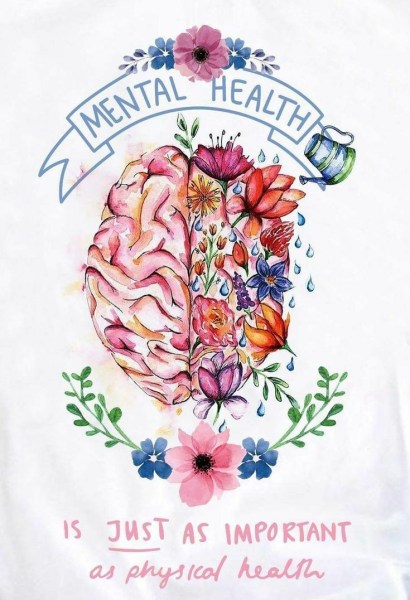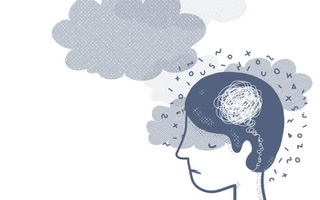
COVID-19 and Mental Health

The worst impact of the pandemic, apart from our country’s economy, has been on mental health. People’s mental health problems are either dismissed or they are forced to carry the ‘crazy’ label put on them by society. In India, there is little to no awareness about mental health. Our country’s mental health crisis is reflected by related statistics. For instance, there are only three psychiatrists for every one million people.  We see today’s youth endlessly working towards this goal, from organising public events aimed at raising mental health awareness online as well as offline to providing help to those who need it. However, a significant change in society’s collective attitude towards such issues is yet to be observed. 

Amid the COVID-19 pandemic, the stressors have increased tremendously, be it personal, professional or financial. Introduction of the novel coronavirus which has instantly put the entire world in lockdown and its consequences have caused severe damage to people’s mental health. Fear, anxiety, frustration is being faced by every single person affected by the pandemic. Isolation, quick adaptation to technology, routine disruption, loss of employment, increase in screen time, fear of the deadly disease, and many more factors have greatly contributed to an increase in mental health problems.

Without any further ado, let’s discuss some of the ways which you may find helpful in these difficult times:

  1. Meditation 

Since time unknown, meditation has been crowned as a way to relax your mind. From Buddha attaining enlightenment to Katy Perry finding inner peace, meditation has never let humanity down. Assuming a cross-legged sitting position and focusing on your breathing can do wonders for your mind and body. Resting your mind by freeing it from all thoughts and emotions can help you release stress and put your mind at ease. As it can be carried out without an instructor as well, it tops the list of stress-relieving methods in lockdown.

2. Maintain a journal

These days writing every day in your journal may not seem like the best idea because of the monotonous routine and lack of motivation but it will greatly help your mind. Bottling up your emotions and thoughts instead of expressing them can truly affect your greatest asset, your mind. So, pick up the journal collecting dust on your table and write. Remind yourself of the things that you are grateful for, write about everything that brings you joy and, most importantly, write about the events that upset you, the emotions blazing in your mind. 

3. Monitor and modify your routine

A healthy mind resides in a healthy body. One of the key ways to feel active and motivated is by getting 8 hours of sleep because nothing works better than losing yourself in the wonderland of dreams. Another is a proper, well-balanced diet which will provide you with the much-needed energy to win your daily battles. Recreational activities are also important for a healthy routine, you may take a walk, play an outdoor game (keeping in mind the coronavirus)  or stretch your legs with a good workout session. 

Having a positive mindset, trying new things, talking about your feelings with your loved ones, spending quality time with your family or your four-legged friends can be rejuvenating and will surely help you to release stress. Never hesitate to seek professional help as your mind needs just as much help as your body. 
CBSE Compartment Exams to be conducted by the end of September: BOARD to SC

Photo credit: Goolge images

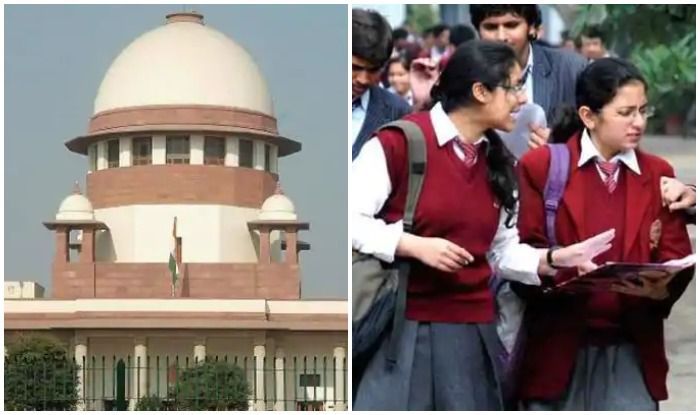
The Supreme Court on Friday issued notice to CBSE on petitions filed by Class 10 and 12 students, who are seeking cancellation of compartment exams, to be conducted for those who have failed or are seeking improvement in subjects they appeared.

The exams are scheduled to be conducted in the last week of September. The top court has also sought an explanation from CBSE regarding holding the exams amid COVID-19 pandemic.

The petition challenges the notification on the grounds that holding of these exams would be detrimental to the health of the students.

A three-judge Bench of the Supreme Court comprising Justices AM Khanwilkar, Dinesh Maheshwari, and Sanjiv Khanna considered the plea filed against CBSE’s decision to conduct compartment examinations for class 10 and 12.

“Without examination where do you stand. Is there any other methodology contemplated by CBSE,” the bench asked during the hearing conducted through video conferencing.

The petitioner argued, ” The students will ultimately come in the category of failed students since exams will not be able to be conducted by September and the students will not be able to apply for further studies. The main grievance in the matter is that the main exam and the CBSE have not yet asserted why the compartment exam cannot be cancelled.”

It has also been pointed out by the petitioners that the, “Admissions in Universities will close by the time the exams are conducted.”

Advocate Rupesh Kumar, arguing in favour of CBSE, said, “We have increased the centres for compartment exams to 1278. We have taken a decision that in a class where 40 students could sit, now only 12 will sit. We are taking all precautions.”

The counsel for the Central Board of Secondary Education (CBSE) said the board has increased the number of examination centres for compartment tests from 575 to 1,278.

The bench of the top court has dismissed the hearing on Friday and will be gathering on September 10 to continue hearing the case. 

GST and Federalism

The multiplicity of taxes at the state and central levels resulted in a complex indirect tax structure in the country that is ridden with hidden costs for trade and industry. It is to simplify this very indirect tax structure that the government has attempted several tax policy reforms at different points of time. This objective furthered the idea of ‘One Nation One Tax’ and the introduction of Goods and Services Tax (GST) into the financial system. The passing of GST is seen by many as a great leap forward towards achieving economic integration of the Country. GST is one indirect tax for the whole nation, which will make India one unified common market. It is a single tax on the supply of goods and services, from the manufacturer to the consumer. It is essentially tax only on value addition at each stage. The final consumer will thus bear only the GST charged by the last dealer in the supply chain, with set-off benefits at all the previous stages.

Many have opined that the GST would effectively be a death knell for federalism in the country. The main concerns in this regard are as follows:

  1. States could lose control over financial autonomy due to GST council being a constitutional body controlling taxpayers.
  2. Loss of revenue: the demonetization move resulted in loss of states revenue which needs to be compensated.
  3. Administrative issues: As to who would have control over taxpayers having less than Rs.1.50 crore annual revenue

The GST Council consists of Union Finance Minister (Chairman), Union Minister of State in charge Finance, and a Minister nominated by each State government. All decisions of the GST Council are made by 3/4th majority of the votes, the centre shall have 1/3rd of the votes and the states together have 2/3rd of the votes. Many critics of are apprehensive of this power of central government and worry that it might have an upper hand in many deliberations of the council.

However counter arguments to these criticisms suggest otherwise. With regard to loss of revenue, as far as loss of revenue to the states, Article 18 of the Act of 2016, provides for compensation to the States for loss for a period of five years. Administrative challenges can be overcome if the states receive revenue that they were receiving.

The Goods and Service Tax is among the most significant reforms since liberalization commenced in 1991. It embodies ‘one economic India’ which is expected to lead to a more productive economy. It was also brought in with an aim to lead to macroeconomic gains. The GST council serves as an example of mutual cooperation among the centre and the states irrespective of party affiliations. Despite scepticism, so far it does not appear the concept of cooperative federalism has been compromised because of GST. Many hope that it will be implemented in the same spirit here onwards as well for it could also be viewed as a leading example for the future of cooperative federalism as a whole.

The socioeconomic inclusion of rural India – a major challenge for modern India.

Development is a multi-dimensional phenomenon. Some of its major dimensions include: the level of economic growth, level of education, level of health services, degree of modernization, status of women, level of nutrition, quality of housing, distribution of goods and services, and access to communication. In India, the progress of socio-economic development among major states is not uniform. This study examines the existing variability of inter-state development and thereby identifying the indicators responsible for the diversity in development. Instead of studying the variability of a particular variable across states, a composite index based on several indicators has been developed using principal component analysis and states are arranged according to the indices derived using four broadly accepted components: (a) economic production and economic condition or in other words level of economic development; (b) common minimum needs; (c) health and health-related services and (d) communication. The findings of the analysis support the general perception about the states. The states in India are marked with wide disparity in socio-economic development. The factors, which are found out to be more important for the overall development process, relate to basic needs like education, availability of food, minimum purchasing power and facilities like safe drinking water, health care infrastructure, etc. It is also found that enrolment ratio cannot be raised unless minimum needs of the common people are satisfied. Therefore, true development requires government action to improve elementary education, safe drinking water facilities and health care, and to remove barriers against social minorities, especially women. The role of social development such as literacy (and particularly of female literacy) in promoting basic capabilities emerges as the prerequisite to overall development.

These results clearly emphasize the role of well-functioning public actions in improving the overall living conditions of the people. Although economic growth in the sense of expanding gross national product and other related variables is one of the most fundamental input to the overall development process, the basic objective of development should focus on the expansion of human capabilities which has been neglected for long in India.

By 2030, 40% of Indians will be urban residents. However, there will also be more than 5,000 small urban towns (50,000-100,000 persons each) and more than 50,000 developed rural towns (5,000-10,000 persons each) with similar income profiles, where aspirations are fast converging with those of urban India. The figure below illustrates urban-rural population distribution in India in 2005, 2018, and 2030 projected. Three critical “access” barriers currently constrain the aspirations of those living in rural areas in India. First, constrained physical connectivity ; second, lack of digital connectivity ; and third, limited financial inclusion. While incomes may have begun to rise in rural India, this may not translate into commensurate growth of productivity and inclusion, unless the urban-rural divides are reduced. Given the approximately 60% share of rural population in 2030, this is a critical imperative not only for the government, which serves its people, but also for businesses which are looking for new opportunities and new growth markets in India. A high priority is infrastructure development, both physical and digital, to enable rural dwellers to access the products and services matching their incomes, needs and aspirations. The government already has flagship programmes such as Digital India, which envisions transforming the country into a digitally empowered society and knowledge economy centred on key programme pillars, such as broadband connectivity and universal access to mobile connectivity, and professed roles, such as “faceless, paperless, cashless”. With sustained, efficient execution, such innovative programmes in digital and financial areas, along with the proposed improvement of physical infrastructure (road connectivity to nearby urban centres and reliable power supply to all rural households), will be key drivers to ensure inclusive growth in India, truly bridging urban-rural divides across multiple levels.

Various factors, such as the level of literacy, female education, nutritional standards, infant mortality, morbidity, employment, income distribution, public distribution system, political commitments etc., and their corresponding interactions, contribute to these striking variations among states inn the livelihood of common people. It may be mentioned that broad state-level comparison may not be able to capture fully the extent of diversities among various indicators characterizing several facets of development. Nevertheless, state-level indicators are of prime importance as far as the state is a crucial and political unit. A wide range of relevant fields of actions, including health and education, are constitutionally defined as ‘state subjects’, to be handled by the individual states rather than the central government, or as ‘concurrent subjects’, involving both state and central governments.

Healthy Human Resource and A Healthy Economy

Everyone is talking about GDP growth rate, national income, total debt, international economic transactions, fiscal deficits, production rate, raw materials and what not. But an economy is driven by its citizens, the population – who in actual are contributing each single moment for their economy. An individual can be an asset for an economy only when he or she is healthy.


Now, when one talks about health it not only includes physical health but mental health too. According to World Health Organization, Health is a state of complete physical, mental and social well-being and not merely the absence of disease or infirmity.


An individual contributes a lot in the economy. He works in fields, he is in the production department, he is the one building the infrastructure of an economy, he is the one undertaking all the financial transactions, he is the one who frames economic policies, he’s in the service sector and hence he is the backbone, the brain or simply the driver of an economy.


An economy can only function properly when its population is physically, mentally and socially fit. But in the present times, there are few economies who give emphasis to mental and social health of its working population. Nobody cares about the mental well being of an individual. Firms and economies just want their employees and the working population to achieve the desired goals before the deadline. Whether the individual coming to the office, to the factory, to the workplace is fine or not, he or she is happy or not, nobody cares about it.


The policy makers, or more particularly the employers and hirers must ponder upon the thought that a physically healthy and mentally happy individual will be in much better state to contribute more to the firm, to the economy.


Though, for the sake of earning money for a two square meal and a roof above head, even being in a bad mood, sad state , he or she will definitely do the work being assigned but still every rational thinker knows that an unhealthy person cannot contribute more than a healthy person.


Whether someone is unhealthy physically or mentally, he or she will really not be able to work properly and will certainly exhaust him or her even more.

An economy, a firm exists solely because of its working population, the Human Capital. And if that human capital is not fit, how could one say that an economy is fit.


That’s certainly a very big question to the employers, hirers, the firms and the economies.


According to the latest report on depression and anxiety, issued by the World Health Organization, the total estimated number of people living with depression worldwide increased by 18.4% between 2005 and 2015 to 322 million. A major share of this group is the working population itself. Hence, this is fact that certainly these people could not give their hundred percent to the work being assigned to them.


Talking about India will make the situation clearer. According to a study conducted by W. H. O., around 200 million in India may suffer from depression i.e. one out of every five people is not mentally well.


The reason for not being in good mental state could be work pressure, financial problems, family matters, personal matters, addiction to drugs or a bad habit, or hormonal imbalance sometimes.


Realizing the growth of increasing mental health problems among the working population due to number of reasons, firms and economies should take necessary steps including promotion of healthy working environment and separate interactive counseling classes in which individuals can speak their heart out and share their problems with either professionals or their own colleagues. This will help people to be more free and happier and arise out of the ocean of sadness, depression, loneliness.


It will help in building better personal relationships with the colleagues, with family, with friends and with everyone else.


Therefore, a happier and healthier brain will be in a much better state to build a prosperous and healthy economy.

Article by – Shishir Tripathi
Intern at Hariyali Foundation in collaboration with Educational News

Book Review of Me Before You

When I was recommended about this book by my friend, I simply thought it to be absurd that someone could wish to die in his own will! I was horrified and curious as to what all the matter was this about. But the thing I didn’t know at that time was, life can sometimes mess your life so bad, there is no solution either than just stop thinking about it..

Me Before You is a beautiful and meaningful book written by Jojo Moyes. Not gonna spoil it for you, don’t worry, but the concept written by her is really deep. Honestly, at first, I thought ,the book would turn out to be like a fairytale, with everything just happy…but as I kept reading, the story took a quite dramatic turn. The story is about a girl named Louisa, who is a really optimistic person, measures the distance through the number of footsteps she takes and works in a cafe. She has a boyfriend, a fitness trainer, Patrick.

Fun fact –  When the book was adapted into a movie, the role of Patrick was played by Matthew Lewis (yes! the one who played Neville Longbottom in Harry Potter!!)

Everything turns into a mess when she loses her job, where the story actually starts with the male lead – Will Traynor, an energetic and out going guy, until he met with a pedestrian accident after which he became a quadreplegic . When you read the book, you have so many mixed emotions that you can’t even describe it .It’s just there. I still remember myself, hugging my knees in the corner of my room, crying after reading the book.  Seriously, it took me 5 freaking days to balance my thoughts with my mother grumbling as to why  I was  crying over a book character ( it’s not just a book character!)

My heart did a backflip  after reading every page of the book. Addicted,that’s what I was, just had to know what happens next! The story also introduces us  to a new concept: death. Now, you might say, that we all know what is death, okay!  But…do we?

Now , not many of us know the Non – Profit society named Dignitas, in Switzerland, which offers death with dignity. Intially meaning, ‘assisted suicide’.

The method usually includes an oral dose of an antiemetic drug, followed by an overdose of pentobarbital which is given, dissolved in water, which initially tends to depress the central nervous system, making the person fall asleep. This proceeds to coma , making the person’s respiration slowdown, eventually resulting in a respiratory arrest. Dignitas was founded by Ludwig Minelli on 17 May, 1998. He was a Swiss lawyer  who had specialised in human rights law. The society works for the ones who suffer with terminal and mental illnesses.

Now death is a pretty sensitive and controversial topic.We live because of some ambitions.Fro some important people. For ourselves. For a better future. Everybody hopes for such things. But is the need broken when every important thing and people are snatched away from us? The answer is..we don’t know. It’s just one of the many things, which we simply don’t know.When we know that there is no hope to live, while everyday waking up, only wishing it to be over already, where your loved ones, have moved forward in their own lives while you still lay there. Where you feel like an outsider even when you are with the closest people you know. When everyone gazes at you with pity….

But you know what? He is happy. Happy that, even he had some happy moments. Some memories which he will cherish. Because memories can’t be changed. Don’t live life to the fullest. Live a life which is worth it.  This book teaches so many things in just a few lines, I myself was beyond amazed!

The conclusion? Well, just like William Henley ( a famous poet, don’t confuse him  with Will Traynor!) said ,’I am the master of my fate, I am the captain of my soul.’

Our thoughts, our actions, our influences, only they matter. One gets thousands of opinions throughout his life. But guess what? Only my opinion matters in my life,because I am going to take the decision.

Phew! That was a lot of philosophy, now wasn’t it? I was so inspired by the book, I literally called all of my friends and recommended, forced more like ,to read the book. ( Ya! call me annoying)

The ending of the book is..just! 

Lastly, the movie adaptation. The movie production put on a lot of hard work, trust me..but, I would still recommend the book more!

Source: Pinterest

The book is followed by a sequel, ‘After you’ published in 2015 proceeded by one sequel  ‘Still me’  which were not that famous but just as great!!!!

The order of the trilogy –

  1. Me Before You
  2. Still me

Happy readings!!

Note: This review was not written to offend anyone. 

TO RISE, START ADVERTISE.

For any business advertising is as important as oxygen for human beings. Many businessmen save money by not spending on advertising and marketing. It is just like loving one side that means you love someone but your are not telling or expressing . To move relationship ahead you have to express your feelings . similarly for engaging customers you have to express about your business through advertising. To sell you have to tell. Just by opening business and sitting in office and waiting for customers will not raise revenues. Spending on infrastructure can be optional spending on machinery can be optional but spending on advertising cannot be optional doesn’t matter whether it is B2B or B2C.

Now that you are convinced that advertising is an important requirement for any business. Now the question arises does more money means more results? and the answer is big NO. Money is one of the factor but not the only factor. Nobody remember how many ads you run. people remember the impression you made . your advertisement should be consisting of a relatable story triggering the emotions and giving a delightful surprise. Below I am sharing some tips to make an high engaging and successful ads campaign.

  1. Be different and generate recall value
  2. Be digital it’s more efficient and cost effective
  3. Don’t find, Be found
  4. Shift from outbound to inbound
  5. Preserve and nuture the data
  6. your content should either entertain or educate the viewer
  7. Build a good website and online reputation

My Brain Needs You, Pal!…

Linda used to study in a law college. She was an all-rounder. She was good in academics, good in sports, good in extracurricular activities, good in student’s council. She was very famous in her campus and everybody loved her. She had a lot of friends. One day, she was chilling in the canteen with friends. During the conversation, she told them that she is seeing a therapist(psychiatrist) and BANG! All her friends became silent. Everybody escaped from the canteen one by one. Linda couldn’t figure out what was going on. Looking for an answer, she went home.
Linda was going through extra stress and anxiety, that’s why she was taking the treatment.
The next day, Linda reached her friends and tried talking to them but nobody gave her a response. They walked out in front of her. Nobody was talking to her, she was left alone. She felt so bad as she wasn’t at all used to it. She was a talkative human and everybody loved her, but now she was left all alone. This went on for a few days and then Linda stopped coming to college and to her disgrace, nobody even blinked an eye. Then, on one worst day, everybody received the news that she killed herself. Now each of her so-called friends was feeling bad and mourning on social media. But it all remained with if’s and what-ifs!..
Everyone reading this must be feeling sad right now. But it’s the truth we all know. This happens with all of us, maybe with us or we act like this to others. We leave our friends and loved ones in the time when then need us the most. When I was at home, our old classmate joined our flat and within a day or two, my roommates threw him out of the flat. He was suffering from some mental illness and everybody got scared keeping him with them. The friend who was with us for 4 years was left alone when he was ill and later he was admitted. I felt very bad when I came back. Someone really close to me was going through such illness, so I knew it very well. If we have a fever or some physical disease, then people visit us asking for our health, the family takes us to the doctor in time. But when it’s about mental health, everybody tries to avoid it. The family try to hide it, friends stay away from us when they get to know and in this mess, treatment gets late and disease takes over the person. There are many mental conditions such as depression, mania, schizophrenia, and this can happen to anyone. Yes in very few cases, it is genetical but in most of the cases, it gets triggered because of real-life events. Most of the patients get treated well and win over the disease if handled well and within time. Now many will ask me, yes you’re right but how can we help them as we don’t know anything, then why should we take the blame later getting into it. So guys remember the time before the disease when this friend stood by your side in worst situations and now it should be your turn. I feel anyone will prefer helping them rather than mourning when they’re gone.
So what can you do? Just be there for them. These diseases don’t rise in a day, they do take time. We just need to keep an eye and observe our loved ones. Anxiety, stress, overthinking, lost attention in work, lost appetite could be the symptoms. If we could catch it early, then we will win for sure and if ignore it, then it might get fatal. We just need to be there for them, boost their confidence, keep them busy, surround them with positivity and positive thoughts. Meditation plays a magnificent role in conquering these diseases. Today it’s your friend, tomorrow it might be you. Control these diseases before they start controlling your loved ones. Make brain your friend, not the enemy. Take the pledge that you won’t ignore your mental health. The most important thing, let’s heal them with love and affection and not hatred. MENTAL HEALTH IS IMPORTANT, DON’T IGNORE, HEAL YOURSELF!…

Lalitha jewellery success story

From Rags To Riches : The Inspiring Journey Of Lalithaa Jewellery Owner  'Kiran Kumar' | Wirally
lalitha jewellery in Chennai

Lalitha jewellery is owned by Mr. KiranKumar. It was first founded and established in Madras (Chennai).within no time the Lalitha Jewelry had gained the trust of its customers and reached great heights amidst very tough competition of other famous jewelries. But we have to admit that there is nothing that comes straight into our hands. Whatever we have to achieve will come to us only if we work hard and smart. This is the same thing that happened in the ejection of Lalitha Jewelry and its founder Mr.KiranKumar.

Let us now know the history of Mr.KiranKumar and the birth of Lalitha Jewellery

Mr.KiranKumar belonged to a poor family where it was very tough to make their both ends meet. He first his gold business with his mothers bangles.hhe turned those bangles into earrings and went to Madras to sell them. He started doing this when he was seven years old. By the time he as 14, he sincerely decided to earn money as he cannot see his family in such a helpless situation. The situation was like that where his family can’t take food for at least 2 times a day. At the age of 14, Mr.KiranKumar decided to change his family’s fate and decided to do gold marketing. He is the only man from his family who does gold marketing. None of his family or his ancestors has neither relation with this field nor entered this field. The only reason why Mr.KiranKumar had chosen this field is that Nellore was and is very good at gold trading.

From Rags To Riches : The Inspiring Journey Of Lalithaa Jewellery Owner  'Kiran Kumar'
Mr.Kirankumar

Mr.KiranKumar first decided to learn gold retailing. So as part of that he first joined under a Goldsmith and learnt how a gold piece will be made into a nice designed structure and later there was a doubt for him that where do all these designed pieces go and slowly started learning and digged that deeper. After he knew that he knows something about gold trades he decided to trade the Gold. All this was happened when he was 14.

At the time his mother has four gold bangles each of twelve grams. He asked his mother for those bangles and his mother without saying a single word had given him those bangles as just to make their both ends meet. Mr.Kumar had turned those bangles into earrings of 65 grams and went to Madras to sell those. That was his first earnings and he loved the magic in Gold trading and slowly gained strength and confidence over that.

In this way within 1 year he had profit of 19 Lakhs in his pocket, he had 3 cars within less than a year but he said that those cars were not for his personal use but to travel madras from Nellore to sell the gold with him and take another gold from his dealers to make that into beautiful designs.

Mr.kiran is very genuine and very good at heart which made him success in this field. After Lalitha jewelry became wide, he released an advertisement as part of promotions, which says “daabbulu evariki oorike ravu” which became very famous and bought him more good name. That advertisement touched many hearts.

Mr.Kiran never does promotions with any celebrities but only he though gained popularity and won trust of public. He is very confident about his designs and prices. He made an advertisement that says if anyone wants to make the same design of theirs with another goldsmith or want to enquire price in another showrooms, they will never stop us. We can take a photo of jewelry which is not allowed in any other showrooms, and can enquire price. He guarantees that his showroom is only the one which provides the jewelry at lowest and reasonable prices with best quality of gold.

K-Dramas

Who doesn’t love a good K-Drama? Korean dramas or K-Dramas as they are fondly called, have been loved worldwide for a long time. More recently, its popularity has begun to reach greater heights because of Netflix, Viki, Viu, WeTv and other streaming services getting more and more dramas under their purview. The widespread access powered by such streaming services which offer subtitles in multiple languages has inevitably added to the rise in popularity.

A good laugh, a good cry, some nerve-wrecking moments, or a good dose of butterflies in your stomach, these dramas have it all. So, without further ado, let me introduce some classics and some underrated dramas that are worth a watch.

  • Hot Stove League- irrespective of whether or not you know anything about Baseball, this drama has a lot to offer. The story is well written, the character building is near perfect, it offers the kind of inspiration that we all need. At the end of the story, you would find yourself fully satisfied with every aspect and a certain fondness for each and every character. Looking for something to binge-watch? You know what to do. Cast- Namkoong Min, Park Eunbin. Genre- Sports. Where to watch- Viki app

  • Crash Landing on You- this drama is a gem. It has a powerful cast, great chemistry between the leads, and an impeccable soundtrack to go with it. While the episodes are on the longer side, there is never a dull moment in this one. This is a must watch for all romance freaks. Cast- Hyunbin, Son Yejin, Kim Junghyun, Seo Jihye. Genre- Romance. Where to watch- Netflix

  • Memorist- what happens when a detective has the unique ability to see all of a person’s memories upon touching them? This skill definitely comes in handy in his search to hunt down a serial killer. But the path isn’t as straight-forward as he’d like. If you’re looking for a thriller, Memorist is for you. Cast- Yoo Seungho, Lee Seyoung. Genre- Mystery, Fantasy. Where to watch- Viki

  • The King: The Eternal Monarch- if plot twists and the concept of time-travel interests you, this one is a must watch. Just when you’d think that you’ve got the hang of it, the writer drops yet another plot twist. While the build up of the story would seem a bit slow, each and every detail is well thought of and very well executed. Backed by a strong cast and great chemistry between the leads, this is one that you wouldn’t want to miss. Cast- Lee Minho, Kim Goeun, Woo Dohwan. Genre- Fantasy, Romance. Where to watch- Netflix

  • One More Happy Ending/Happy Once Again- this drama was released in 2016 and remains an underrated gem till date. This drama is full of fun and it uses a formula of portraying various love stories whilst keeping the story engaging simultaneously. If you’re a fan of ‘childhood friends turned lovers’ this one will not disappoint. Cast- Jang Nara, Kwon Yul, Jung Kyungho, Yoo Dain, Yoo Inna, Seo Inyoung. Genre- Romantic-Comedy. Where to watch- Netflix

Social Media- A Boon or Bane?

The most common sites nowadays in homes as well as at public spaces are people with their necks bent and eyes focused on the screen of their mobile phones. Though not the only but a major portion of the screen time is devoted to the social media applications like Facebook, WhatsApp or Instagram. The invention of social media is considered to be a blessing as it has enabled us to overcome the greatest barrier to communication- distance. We can now chat with our friends or relatives thousands of kilometers apart in a matter of seconds. But we often tend to overlook the vices associated with social media. It has been found in several studies that excess use of social media is linked with higher levels of anxiety and depression.

Focusing first on the brighter side, the apps like Instagram and Facebook have provided a platform for the unheard to speak. The marginalized and the minority section, whose views are often suppressed by the mainstream media, is able to mobilize the public opinion by using the social media. With family members moving apart nowadays due to jobs or studies, using these applications the people can still keep in touch without bearing the humungous bills of the telecom services. Also newer job opportunities have also accompanied with the social media, the most remarkable being that of the content creators. If nothing, social media has become the best pastime for people especially the younger generation (who get easily bored of anything except Instagram).

Now coming to the part which is less often appreciated adequately by people. The social media usage has significant adverse affects on our mental health and wellbeing. These apps have become platforms for social comparison, the people inculcate a feeling of inferiority complex seeing the ones who are better off in looks,wealth etc. Another stressor on social media is the “social currency” in terms of likes,comments and shares which have introduced a number game for judging the person. Seeing others being a part of an event or an opportunity also causes FOMO which is actual social anxiety of being missed out. The menace of online harassment has come into significance too.

The social media in itself is neither good nor bad, rather just a tool to communicate. The dark side of social media is actually nothing but the dark side of the humans. What is required is actually the audit of our social diet i.e. what we see on social media. The duality of appearance and reality should be kept in mind and we should rationally analyze the content we watch on these platforms. It is the same Facebook and Instagram that can tear you up, harming your mental health as well as lift you up, having an actual LOL! It’s upto us what we want to chose.

Drinking water, or soluble chemicals.

Water, you might have known it’s value, when your are thirsty but out of water. we nearly feel like to be gonna die. For, traditional Indians, you might known it’s value when you experience sudden cutoff of water supply ,in bathroom. All of us take this important thing for granted, but if once water wants to escape from us, the screams of 1.3 billion bangs the whole world. You may wonder, why only Indians scream …….ok, before you wanna know about it, also think ; Is your drinking water safe?, hey!..don’t tell that, i’m alright from the time i have born, no problem with drinking water.

Here, i just would like to bring up some most fundamental aspects of our life, i wanna recall we aren’t so much safe and being effected by things, but we never realize until they blasts a bomb in our life. One such is, drinking water; seems to be pure in color, no visible dust particles to our naked eye, but they have already been carrying invisible toxic substances with it, and ready to destroy us slowly after getting inside of us. Most of you might not care this, and stamps this as a boring story, but never forget; your taking some chemicals at every time you have a sip, and leaving your organs as a playground for the toxics that have gone inside you, along with the water you intake.

You better know the water sewage infrastructure in india, even some have been setup for namesake. So, the only option left for us to take care of ourselves. we cannot stop the flow of untreated chemicals and industrial waste into water. sometimes, There rises a campaigns and goes to sleep within no time.

Then, how to get a solution for this problem and to have a safe drinking water. The one thing is to setup water treatment plants by forming as a community, or to use water purifiers at home, leaving no space to compromise with it’s quality, Just even getting into debt; in long run saves you from unsolvable threats. But the bitter fact is, the cost of water purification is too high. But sadly we were pretending to believe the low level mechanisms and being fooled. One such example is, at rural areas or some public water suppliers , can get a 10 litres of water for just 2 rupees, whereas the premium water brands like tata provides the purified mineral water bottle of 1 litre for 20 rupees. This scenario can make us understand , how we are being pretended that low filtered water as mineral.The looters have just redefined the meaning of name itself.

we have been facing many health issues, one of the most important is, elders are facing problems regarding bone strength and losing immunity at very mid ages. This was an indirect effect of consuming water, because there is a clear picture of releasing pollutants from industries into water, but we confine ourself it might be because of age. This gonna definitely show impact on generations, if not resolved our life span keeps on reducing untill we open our eyes.

There is a huge need for communities to come forward and have awareness about the fundamental thing of our life, and come up with a feasible solutions.

Drugs: Dependency to Despondency

Today when you Google the definition of DRUGS, you come across a chemical, used as medicine, although illegal, taken by people to feel pleasant and excited feelings. And somewhere defined as stressbuster to deal with anxiety. Is it so? To answer it let’s look at an case;

    Some time back, a friend of Shruti died tragically young. He was a pillar of the community, and Shruti was honored to learn that he wanted her to play oboe [an instrument] at his memorial service which would be attended by hundreds of people. Although Shruti had performed in countless concerts filled with thousands of people, but the thought of performing at funeral of such an honored man was nerve cracking compounded with the fact she herself going to mourn for her friend. But in the end, she was able to gather up the courage to play beautifully and received dozens of compliments after performing. Her one friend asked about how she handled her nerves. She honestly told him that she just didn’t know and just hope for the best. In contrary to this, he said for such high pressure performances, he always uses beta blocker- a prescription medication for clinical anxiety.

 But certainly we wouldn’t even faulted Shruti if she had sought out for such prescription of drug when she learned about her friend request to perform at his funeral. It’s an exceptional situation and if some medication could help, wouldn’t be it better for all concerned. But if musicians routinely depend upon such for every performance where would it stop? Should we even prescribe such medications to students who have their studies and career pressure? What if a professor says he/she needs to take modafinil [a drug] to overcome stress and for pacing his/her career? Where will it going to end? One’s occasional boost might become chemical dependency in near future.

What if everyone was taking the pills to keep up their pace and the one who restrained to such, wouldn’t it be cheating to such person? Definitely, yes. The main problem youth today deals because of their prospective. They believe that drugs aren’t causing any harm rather they make them feel better but deep inside its true that their happiness for today will be their addiction tomorrow. Even if drugs with ‘no side effects’ are made, after sometime their primary usage purpose gonna become their side effects in form of dependency. You are going to take that pill for every task, that dependency itself is the side effect.

Imagine a scenario where there are no side effects associated with usage of drugs, cognitive and physical both, so we really improve our efficiency or we even work more than others. Then, Think of what we accomplish! If a person’s life becomes all work, no down time, no relaxation, no stress, no interactions, ever I’m not so sure that’s a life even worth living? It changes your whole personality and even disturbs routine with impacting your caliber. And you may not be even in position of realizing it. 

WHO WILL DECIDE THE IDEAL AGE

Many girls who are married off before they turn 18 or are forced into early marriages are made to leave school, depriving them of their right to education and future independence. Child brides are also more likely to experience domestic violence.
Because young girls who are married off are more likely to have children while still physically immature, they are at higher risk of dying from pregnancy and childbirth complications, and their babies have a reduced chance of survival too, according to the World Health Organization.


Child brides who have children may also be psychologically unprepared and ill-equipped to become mothers at such a young age. By robbing girls of a chance to learn, grow, and fully realize their potential, child marriage systematically disempowers them. It ensures that they remain dependent on others all their lives, strips them of their agency, makes them vulnerable to abuse, and can trap them in a cycle of poverty. In cultures that do not see girls and women as potential wage earners, they’re may be considered a financial burden to the family. In these cases, families living in poverty who have several children may arrange a marriage for their child to reduce their economic burden: One less daughter to take care of means one less mouth to feed and one less education to pay for. Girls may also married off to offset debts or settle conflicts, effectively acting as a substitute for money.
Both early teen marriage and dropping out of high school have historically been associated with a variety of negative outcomes, including higher poverty rates throughout life. Are these negative outcomes due to pre-existing differences, or do they represent the causal effect of marriage and schooling choices? The negative outcomes associated with early marriage and dropping out of high school have the potential to affect not only the individual making the decision but also her children and the rest of society. For example, a high divorce rate combined with low wages and a larger family size increases the number of children living in poverty and receiving state assistance. Prime minister Narendra Modi on the occasion of 74th Independence Day while addressing the nation, stated that a committee had been set up to reconsider the minimum age for marriage of girls. While every decision has its consequences, this too has its own. The change in law seems like a good initiative and would bring about change, but, not everything is all rainbows. The decision has split the government as for some; it sounds like a step to reduce malnutrition, control the population and increase education amongst women; for others, it gets the sums wrong. Some believe that it would help women to exercise legal powers incase of marriage below the age of 21. Others ween that this would increase the number of child marriages as girls getting married between the age group 18-21 would add to the number of child brides. Continuing the argument, it is also evident that premarital sex is just as much of a taboo as sex education in India. Thus, reconsidering the minimum age for marriage of girls is feared to deny unmarried pregnant teenagers to get proper healthcare facilities.

TO THE CLASS OF 2020


College Graduation is a huge milestone in anyone’s life. College graduation is one of life’s last clean transitions, a final passage from adolescence to adulthood that is predictable in ways other transitions rarely are. Relationships end with breakups or death, jobs often end with quitting or firing, but college is one of the only things in life that ends with a fresh start. Except when it doesn’t. College graduation is often marked by an adjustment period, as students leave the comforts of campus to find their way in the raw wilderness of the job market. But this year’s graduates are staggering into a world that is in some ways unrecognizable. But graduating in the midst of the coronavirus pandemic will have enduring implications on the Class of 2020: for their memories, their earning power, and their view of what it means to have a functional society. For these young adults, the pandemic represents not just a national crisis but also a defining moment.Even when colleges are trying their best to give students a memorable farewell, an event that they have looked forward to during their college years many don’t know if they will ever have a chance at bidding their crucial years a heartfelt goodbye. The end of college marks an important turn in the lives of students, who are finally eager to carve a place in the world. The farewell is an important milestone in this journey as everything culminates to this very day. Even before COVID-19, the Class of 2020 came of age at a time of fear and uncertainty. Born largely in 1997 and 1998—among the oldest of Gen Z—the Class of 2020. For the Class of 2020, COVID-19’s lasting impact may be determined by what happens next. If the rising cohort of young workers are left to fend for themselves, mass youth unemployment could lead to permanent disillusionment or widespread despair.


A forceful, effective response that invests in the rising generation of American talent could restore their faith in the system.
It’s not clear to the Class of 2020 how the pandemic will play out. They just know it will change their livesThe Class of 2020 hugged their closest friends and mourned their lost semester, but scattered back home without so much as a goodbye to many people they’d lived with for years. Acquaintances who laughed in hallways or shared inside jokes in seminars simply disappeared. Fraternities and sororities canceled their formals and philanthropy events, attempting Zoom happy hours that didn’t come close to the real thing. For some couples, casual hookups quickly escalated into long-distance relationships. Others quietly packed up their feelings for college crushes and left without saying a word. Instead of graduating into their future lives, many Class of 2020 seniors feel like they’ve gone backward. Graduating into a bad economy can affect everything from future earnings to long-term health and happiness. All of this—the forgone memories, the abrupt goodbyes, the lost opportunities—will stay with the Class of 2020 forever. They know that the pandemic will shape their futures, even if it’s not yet clear exactly how. The pandemic has marked the end of one phase for this unlucky cohort. The recovery could mark the beginning of another.