Reservation policy in India

It’s the matter of 1914, a question was raised in Madras Legislative Council about the Communal ratio of total number of registered graduates in Madras University. Then it had come to know that among 650 seats, 452 were Brahmins, 12 were Non-Brahmin Hindus and 74 belong to other communities. This the whole reason for the reservation policy in India to be active. Let us now know origin, causes of caste based reservation policy in India.

Introduction

The system of reservations in India comprises of affirmative action measures, taken up by the government to uplift the weaker sections of the society by getting them into government jobs and higher educational institutions. There are basically three categories of class of citizens which are recognised by the Constitution for the reservation. Those are Scheduled Caste (SC), Scheduled Tribe (ST) and Other Backward Classes (OBC). This reservation system is unique because India is a multi religious, multi linguistic country. That is why these reservations were needed to bring all communities to the same level.

Historical Background

In 1918, the Maharaja of Mysore have received a petition from the depressed class of people. To investigate that Maharaja appointed Miller Committee to know whether Non-Brahmin community has proper representation in his state services. This is where a positive thing had started to happen about depressed class and minorities.

In 1914 also, when 1st world War started, Britain was completely focusing on the war and they wanted Indians to help them in the war. So, as they wanted Indians to participate in war, they accepted long pending request of self governing institutions i.e. provincial assemblies and Central Legislative Assembly. This self governing institutions can also be states as Montague- Chelmsford Reform. This was added in The Government of India act in 1919 and on the other side, the discussion of minority communities was also going and there was a question about how to identify depressed class of citizen. For this, British Government appointed Simon Commission to assess the Indian society and suggest reforms. One of their recommendation was the need to safeguard the minorities and other socially, politically depressed class of people. The depressed classes demanded for a seperate electorate of election. But the commission did not accept that. Commission said that, seperate electorate is not possible but they would reserve them seats.

In 1923, government decided not to give grants to those aided schools that refused the admission of depressed class students. The depressed class under the leadership of Dr. Ambedkar demanded reserved seats for Untouchables in legislative bodies, special education concessions, and recruitment to government posts. To resolve these demands, the British government made a Round Table Conference in November 1930. But the first and second Round Table Conference was failed. McDonald, Prime Minister of British government, announced the communal award where the seperate representations were to be provided to Muslims, Sikhs, Indian Christians, Anglo-Indians, Europeans and Dalits Depressed Classes. Mahatma Gandhi was completely against for these reservations as those are are Britishers idea of divide and rule policy. But Ambedkar somehow wanted that as they have minimum benefits. So, after some agreements between Ambedkar and Mahatma Gandhi. According to this historic agreement the depressed class would get 147 seats in provincial councils instead of 71 promises in the Ramsay McDonald’s award and they would get 18% of the seats in Central Assembly also. The Poona Pact was finally stamped when the Government of India act 1935 where reservation of seats for depressed class was alloted. The Government of India act 1935 replaced the term ‘depressed class’ with Scheduled Class.

Even though seats in the legislature were reserved both for the ‘minority communities and for the depressed classes’, reservation in the public service was denied to the ‘depressed classes’, whereas the minority communities enjoyed reservation in the public services. Ambedkar became a member of Viceroy’s Executive Council as a minister for labour. He used his position in the Government to further the interests of the Depressed Classes. He demanded reservations not only in legislative seats but also in education and Government employment. His demand was accepted and this became the basis for the policy of India when it was framing the Constitution.

Debates in Constitutional Assembly

Constituent assembly came to existence in December 1946. Framers want to set up a welfare society where government not just protects from outside threats but also helps in social, economic development and they also wanted to give special protection for backward classes because of their past atrocities. Constituent Assembly had different committees for different areas.

According to Minority committee Report – Representation in the Legislature and the representation in proportion to their population, reservation in higher education institution and government jobs. A joint electorate was accepted. Reservation of seats for minorities based on religion was also not accepted by the Constituent Assembly. All these provisions were only temporary and if after ten years their position happens to be the same, then it is open to the Parliament either to renew it or abolish it.

But nothing like this happened even for today.

After Independence, there were several provisions made to abolish Untouchability, Titles, and also to protect educational and economic interests of the weak sections and in particular Schedules Casts and Schedules Tribes.

Representation in Services

Reservation of seats for SCs and STs in Lok Sabha and State legislatures for ten years was agreed upon. But the period has been extended from time to time. Three categories of people who deserved the benefits of Protective Discrimination: the backward class, the Scheduled castes and the Scheduled Tribes. Schedule caste and Scheduled tribes are already been defined in constitution. But the problem is that constitution does not have a proper explanation for Backward Class.

Article 15(4) & (5) talks about socially and educationally backward classes where as Article 16(4) talks about other backward classes.

Indira Sawhney V. Union of India

Supreme court in Indira Sawhney & Ors V. Union of India(1993) upheld the implementation of seperate reservation of other backward classes in Central government jobs, Ordered to exclude the creamy layer of other backward classes from enjoying reservation facilities, Ordered to restrict reservation within 50% limit, Declared seperate reservations for economically poor among forward classes as invalid.

This is how caste based reservations started in India. However, it has been clearly stated to abolish this reservation policy after 10 years. But it seems it not going to happen because these reservations became good topic for today’s politicians to gain votes.
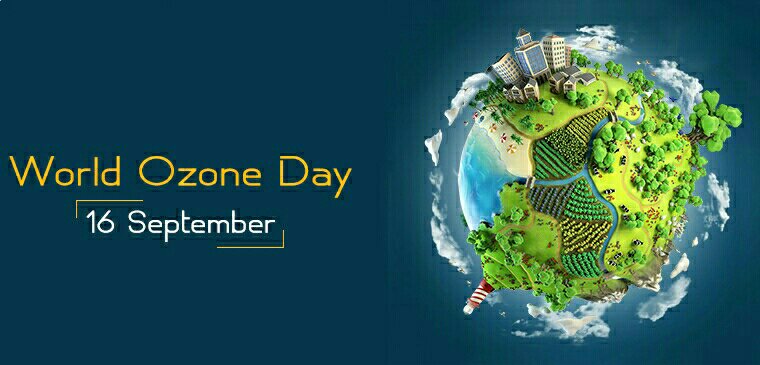
World Ozone Day 2020 – Ozone For Life!

There are problems that human beings should not interfere in the environment and this is also true. For our protection, all humans on earth have been placed in the middle of a protective shield which is being contaminated by humans nowadays. People may not know much about the ozone layer, but it acts as a protective shield for the Earth and the Environment and protects it from the sun’s dangerous ultraviolet rays. 

In this era of technology, man is killing everything that is hindering his progress. Similarly, for his comfort and convenience, man is determined to destroy the ozone layer which protects him from the dangerous ultraviolet rays emanating from the sun. The ozone layer that saved our lives has become a threat today due to the industrial activities that have taken place day after day.

What is Ozone after all?

Ozone is a light blue gas that is a compound of three atoms of oxygen (O3). The ozone layer is generally found between 10 km to 50 km above the ground level. This gas acts as a good filter for ultraviolet rays emanating from the Sun.

Danger from damage in ozone layer

The ozone layer is very important which protects us from the sun’s dangerous ultraviolet rays. If the ozone layer is damaged then all skin diseases can occur in humans.
Without the ozone layer, we cannot survive because these rays can cause cancer, damage to crops and threat to marine organisms and the ozone layer protects us from these ultraviolet rays. Another danger is the melting of the poles due to this. There is a large hole in ozone in Antarctica. The Antarctica region has large icebergs. If these icebergs melt, coastal areas can face many hazards, including flooding. Apart from this, heat will also increase, which will be harmful. Damage to the ozone layer also affects biological diversity and can destroy many crops. They have an effect on microorganisms. Apart from this, it also affects small plants in the sea, which can reduce the quantity of fish and other animals. 


History of World Ozone Day

Keeping in mind the importance of the ozone layer, work has been done to protect it from the last decade. But on January 23, 1995, the United Nations General Assembly passed a resolution to celebrate December 16 as International Ozone Day to bring awareness to people all over the world. At that time, the goal was to create an ozone friendly environment by 2010 across the world. Although the target is still far away, the world has done remarkable work in the direction of saving the ozone layer. 

The result of the exercise to protect the ozone layer is that today ozone-friendly fridges, coolers etc. have come in the market. To protect this layer it is necessary that foam mattresses are not used. Use of plastic should be minimized. Room fresheners and chemical perfumes should not be used and ozone-friendly refrigerators, air conditioners should be used only. Apart from this, the design of your house should be done in an ozone-friendly manner, using natural sources for light, air and energy. 

We have got this earth as an inheritance which we also have to give to the coming generation. We should take such a path that not only benefits us but also our upcoming generations can enjoy this very beautiful earth.

The Power of Communication.

Communication is a process of transferring information from one person to another. But is that the sole purpose of communication? Basically, NO. Communication has a broader concept. Communication helps you to grow as a person, to speak your heart out, to express what you feel, to persuade others, to heal. Just like the picture says that even if it is uncomfortable or uneasy one should communicate in order to find peace in your mind because if you keep things inside you all you it will only eat your soul and turn ugly or rather leave you overthinking. It helps you come out of your comfort zones.

Communication helps you solve so many things. In a fight between two people if they chose not to talk to each other and remain enemies they will remain that. But, on the contrary if they think of communicating their point of views with peace, they can end up retaining their friendship again. In a class if you choose to stay quiet and not ask a question because you feel you will sound dumb, maybe that doubt will remain with you forever and your decision to stay shut later proves to be the dumb one. If you keep things in your heart that will bother you continously thus causing stress. As mature adults we should not bring in our ego and not solve a conflict that is of no use instead talk our mind and solve things that can save a relationship.

Communication does not help us in human lives but also in the business life . In order to establish a good organisation one has to build a solid communication system, both Formal and Informal. A formal communication is the one that passes through well definite channels of communication throughout the organisation. An informal communication is the one which moves freely i.e. in all directions. If a leader or a manager has to lead it’s followers or subordinates he has to be confident enough to deliver his orders or requirements so that his followers listen to his orders and not take him for granted. On the other hand the informal communication builds up unity, integrity and solidarity among them and boosts up their morale. Grapevine is the name of the informal communication. And  managers can get feedback from their subordinates quickly on the plan and policies through grapevine.\

Not only verbal communication but non verbal communication is also useful and important. The power of expressions is irreplaceable. Gestures while communicating shows that you are confident enough to prove and state your point. The happy or a sad face of your loved one gives you a hint of their mood. A confused face of a student tells the teacher that he is in doubt even though he spoke nothing. The annoying face of a person tells that he is not liking something or a frowning face tells you that the person is tensed.

Finally, it is important for a person to communicate. Your mind is the most powerful speaker,your tongue just expresses it. If you see somebody struggling with their lives ask them to talk about it .Be a listener maybe you can help them in any way. Maybe you can make them smile.

A beautiful thing happens when we start paying attention to each other. It is by participating more in your relationship that you breathe life into it.”
― Steve Maraboli

Government related Schemes for Rural India.

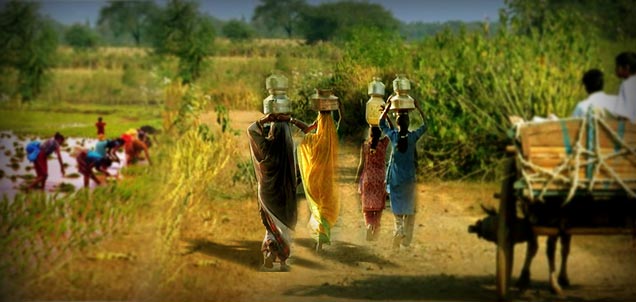
The rural sector is the heart and soul of the Indian economy. And the development of Rural India is the development of India. To enhance and make the rural economy progressive the Government of India has launched various schemes in favor of them.

The main aim of rural ministries is not to make profit out of them but for the welfare of the societies out there.These schemes are :

  1. Deen Dayal Upadhyay Grameen Kaushal Yojna: This is a placement linked skill development scheme for rural poor youth It was launched by on 25 September 2014 by Union Ministers Nitin Gadkari and Venkaiah Naidu on the occasion of 98th birth anniversary of Pandit Deendayal Upadhyaya.  It aims to target youth, under the age group of 15–35 years.A total of 52000 candidates have been skilled under this programme till 2014-15.

2. Roshni: Skill Development Scheme for Tribals: The Ministry of Rural Development on 7 June 2013 launched a new skill development scheme designed to offer employment to tribal youth in 24 Naxal -affected districts. The scheme, which is named Roshni is supposed to provide training and employment to an anticipated 50000 youth in the 10-35 years age group, for a period of three years.  As per the Ministry 50 per cent of the beneficiaries of the scheme will be women only.The scheme is designed in light of the Himayat project model, which was launched in Jammu and Kashmir has been implemented in Sukma, Chhattisgarh, and West Singhbhum, Jharkand, on a pilot basis over the last 18 months.

3. Swachchh Bharat Mission : The Prime Minister launched Swachh Bharat Mission on the birth anniversary of Mahatma Gandhi on 2nd October, 2014. The concept of Swachh Bharat Abhiyan is to pave access for every person to sanitation facilities including toilets, solid and liquid waste disposal systems, village cleanliness and safe and adequate drinking water supply. The programme is to be implemented by Ministry of Drinking Water and Sanitation.  An action plan has been drawn up for Swachh Bharat to become a reality by 2019, the 150th birth anniversary of Mahatma Gandhi.  The Mission aims to triple the growth percentage of toilet from present 3% to 10% by 2019.

4Sansad Adarsh Gram Yojna: This programme was launched by the Prime Minister Narendra Modi on the birth anniversary of Lok Nayak Jai Prakash Narayan on 11 October 2014. Ministry of Rural Development will be the supervising authority for this programme.  Under this programme each Member of Parliament will take the responsibility for developing physical and institutional infrastructure in three villages by 2019.

5. Heritage Development and Augmentation Yojna (HRIDAY):
This scheme was launched on the 21 January 2015 under the care of The Union Ministry of Urban Development.  Its aim is to preserve and rejuvenate the rich cultural heritage of the country.  In the initial phase of HRIDAY, 12 heritage cities have been identified which will be rejuvenated and developed. Union Government will provide 500 crore rupees to these 12 cities.

6. Mahatma Gandhi National Rural Employment Guarantee Scheme (MGNREGS): National Rural Employment Guarantee Act 2005, was launched on the 2nd Feb.2006. Now the new name of this scheme is “Mahatma Gandhi National Rural Employment Guarantee Act” (or, MGNREGA). This scheme is an Indian labour law and social security measure that aims to provide ‘right to work’ to the people falling Below Poverty Line. It guarantees 100 days employment in a year to the village people.

7. Aam Aadmi Bima Yojna: It was launched on october2, 2007.  It’s a social security scheme for rural households.  Under this scheme one member of the family is covered. The premium of Rs. 200 per person per annum is shared by the state and central government. V. The insured person need not to pay any premium if his/her age is between the 18 years to 59 years.

The period of Giant Insects.

Many types of insects exist in this world. The approximation being of around 900 thousand species of insects. But can you believe that one of them…..were giants once?

  • Arthropods

The etymology (origin of word) ‘Arthropod’ comes from the Greek words meaning “joint” and “foot”.  These insects elongated to the phylum of Euarthropoda. Okay,enough ofthe scientific explanations. Let’s get to our point. What makes these animals different. Well, these insects breathe through something called the spiracles. Spiracles are holes on the sides of the insects. From the inside,these holes are connected to the trachea holes which make the respiration process of every cell in the organism possible. Arthropods have this kind of breathing system or maybe similar. Alright ,till now we got no problems. But here’s when geology steps out in the frame of reference.

Photo by icon0

( Do observe closely to find the spiracles)

  • Geology

We humans have divided the history into small portions to make it easier and better to understand the concepts. One of the geological period,which was about 298 million years to somewhere around è58 million years. During this time,the atmosphere of our Earth was completely different from that of today.

But….why was it any different at all? Because ,it was a time when microbes were still evolving. The trees looked completely different. Where,the oxygen levels in the atmosphere was around thirty five percent. Yes,it was the Carboniferous Period.

Geologists say that this was the period when a lot of coal beds were formed i.e the fossil fuels. Now, why would have  this  happened? This was because,the microbes at that time did not have the specific enzymes in them to decompose the dead remains. So they stayed and with time,got buried under the layers and layers of soil over them. Now by layers and layers of soil you must’ve understood that this would’ve taken some millions of years. Why? Because,only to produce a single layer of soil,it takes roughly around a thousand years. Layers and layers of soil till they finally were converted into fossil fuels can just be left to our imagination.

 Photo by Alejandro Quintanar from Pexels

(Fossils)

Now ,the Carboniferous period has a lot of study to it. In fact  scientists out there are probably still exploring and discovering new factors and so much more. But we are not particularly that domain of this period,though the period was very interesting and fascinating. We are interested in the the insects of those times.

  • Giants

Were insects all magnanimous and large in that period of time. I hate to ruin it for you,but it was not so. The thing was,it is said the oxygen levels were very large in that period. Why so? Because the planet’s lands were literally green! Set aside the deserts of course. Or were they? 

This caused a lot of production of  oxygen in the atmosphere. Remember-These are all estimations which were discovered through various proofs collected,but the truth still remains a mystery to us!

So when we said about Arthropods,these insects were totally different from what they look like today. This is because nature has always had a crucial law,a law of adaptation. Right? So naturally they were different in 35% oxygen (then) compared to the 21% oxygen(now). As the levels were higher,the respiration ability probably increased as well. The trachea holes became bigger, eventually making the organism bigger as well. This made them have larger body parts and organs. For example,a specific type of dragonfly,actually grew wings of around 40 cm! Now,this might look like a small amount to you but it was pretty unusual and disturbing,that the insects which were around the length of our palm were once actually that to  our arms!

But suppose, what will happen if oxygen levels get increased to 35% today? Do you know how combustion happens? Yes, basically ‘the burning of oxygen’.  For first consequences,forest fires will drastically increase. How do they happen? When two branches rub against a tree,they create friction. Friction is the force which acts opposite to which force we apply. This friction makes fire. This is how campers light a fire through stones. Now that that the Oxygen levels are 35%, even the slightest rub will light a fire and the fire will spread very rapidly through the entire forest due to the same reason. Can you think of any other consequences? If the atmosphere did change into 35% in our future,will we evolve or adapt to the conditions too? List down your possible theories down below

Fact -Why is it that the spider legs never stick to the spider’s legs? This is because the spider legs  have tiny hairs on them. Even if the hairs stick to the webs,the spider can walk further. Also,not every web is sticky. The webs are altered with non sticky webs in which the spider walks on.

Bonus fact- Like liquid nitrogen,liquid oxygen also does exist! It’s just that the melting point of it is so low that it rarely occurs naturally.

Online mode of Education: Is it really advantageous to the Indian youth or there are any limitations too?

Article by – Shishir Tripathi

Intern at Hariyali Foundation
In collaboration with
Educational News

After the arrival of Corona Virus into the country after the months of February and March, educational institutions including schools and colleges were shut down and the normal teaching learning process was hampered. After, a certain time, the Teaching process again started through online mode and till now the same process is being followed.

Now, the question arises that the available mode of teaching is accessible to all the students across India or there are other students left who still are not connected with their respective educational institutions through the new mode of learning?

The normal classroom learning is not possible at present because of transmission of virus amongst the students and that will make the situation even worse than before. Therefore, lectures and notes to the students are given via the online mode with help of apps like Zoom, Google meet, Jio meet, Google Classroom and many more. These apps can only be accessed with the help of a Smartphone. Now, being a developing country, unequal distribution of wealth and resources is genuine in a country like India.

According to a survey by Central Board of Secondary Education (CBSE), at least 27% students do not have access to Smart phones, tablets or laptops for online classes. Such college and school students are facing a lot of problems in their studies

According to a real time progress tracker, 83% of households in India had electricity connection till 2018, and after some tome Modi government claimed that they have electrified India to 100% but everyone knows that laying wire lines, and transformers doesn’t mean that electricity reaches to the place.

Though the data is unavailable, there are villages still left waiting for electricity and hence in such remote areas it is so difficult for a student having a phone or any other electronic device and charging it properly for uninterrupted attendance in the online classes.

Now, there are sudden prolonged power cuts too which occur and can obstruct the power supply to electronic devices which can hamper the delivery of education through online mode from teachers and professors to the students and scholars. The all India average duration of power cuts was 5 hours and 28 minutes on May 2, 2019. And also, in villages sometimes the reason is all unknown to the people behind the sudden power cuts.

There is also a problem of slow speed in congested localities, small towns, villages and remote areas of the country. According to the Akamai Q1 2017 State of the Internet Report, the average internet connection speed in India is 6.5 Mbit/s and the average peak connection speed is 41.4 Mbit/s. Globally, India was ranked 89th out of 149 countries/regions by average internet connection speed and 97th by average peak connection speed. According to telecom industry experts, the slow bandwidth speed in India is due to the high cost of spectrum leading to Internet Service Providers (ISPs) not investing much into the spectrum. The growing number of telecom users and Smartphone users are also cited as one of the reasons for slow speed in the country.

Therefore, taking into consideration the present situation, the online mode of education is the best way possible to deliver knowledge to the students in these tough times of Corona. Also, the problems of unavailability of electronic devices and slow internet speed and proper supply of electricity to each and every household must be ensured so that the youth which is the future of the nation gets uninterrupted education and training through online mode.

Social Media Anxiety!…

Every one of you must have heard about anxiety or depression or overthinking. Then what’s this I’m talking about. Most of you have faced fear, anxiety or stress in real life but what if things happening in your virtual world affecting your real life. This is what we call social media anxiety.
We are so much cautious about our virtual world. We think 10 times before posting a photo or art. How people will receive it, how will they react, will I get enough likes, I hope these photos grab many comments. Such thoughts always brew in our mind. This peer pressure put us in some anxiety.
Now if you’re an introvert and chicken-hearted preservative person, then every little thing in the virtual world might affect you. Social media is filled with every variety of people introvert, shy, extrovert, extrovert, pervert, marketer and many more. Life is all good in this world till the day we face people of different thought process other than us. If we meet like-minded people, we feel safe and happy and if not anxiety begins to develop. There is another thing which matters here the most. How you deal with all the hatred, threats, scary messages and people. If you’re headstrong and master in ignoring this shit, then you’re at mental peace. If you’re an active overthinker and even if little mess happens in this world, it will totally take away your peace. You will try to run away from this, but you’ll fail. Then sooner or later, this anxiety will occupy the space in your real life. You will be always thinking about that particular incident on social media which is not even a part of the real world. You will lose your appetite. You won’t be able to concentrate on your work. You will always feel some burden on your head. This mess is nothing but social anxiety.
So how to deal with it? Chicken hearted persons and introverts should try not to take virtual shit in the real world. Just keep it there only. The second most important thing is to make yourself strong mentally. Handle all this drama keeping your head calm. Don’t let it form a chain of thoughts which exist nowhere but your head. It will trouble only you. So just avoid going deeper into things. Keep it simple. Even after taking all the care, some mess happens and it’s affecting your real life, then talk to your closed ones. Don’t hesitate to open up. Talk to them. Tell them what you feel, what is affecting you. This will make you feel you’re not alone. You will have someone with you. One more thing, don’t fear if you’re not wrong. Make time for meditation, keep yourself busy. Keep phone as a PART of your life only. Don’t make it your life. Your life is much bigger and better than that. Hold yourself. Focus on things which will make you grow as a person. Take criticism as a chance to improve yourself. Free your heart from self-created destructive thoughts. Make yourself a priority before anything in virtual world.

FREE TRADE AGREEMENTS

A free trade agreement(FTA) or treaty is a multinational agreement according to international law to form a free-trade area between the cooperating states. FTAs, a form of trade pacts, determine the tariffs and duties that countries impose on imports and exports with the goal of reducing or eliminating trade barriers, thus encouraging international trade.  Such agreements usually “center on a chapter providing for preferential tariff treatment”, but they also often “include clauses on trade facilitation and rule-making in areas such as investment, intellectual property, government procurement, technical standards and sanitary and phytosanitary issues”.

Important distinctions exist between customs unions and free-trade areas. Both types of trading bloc have internal arrangements which parties conclude in order to liberalize and facilitate trade among themselves. The crucial difference between customs unions and free-trade areas is their approach to third parties. While a customs union requires all parties to establish and maintain identical external tariffs with regard to trade with non-parties, parties to a free-trade area are not subject to such a requirement. Instead, they may establish and maintain whatever tariff regime applying to imports from non-parties as they deem necessary.  In a free-trade area without harmonized external tariffs, to eliminate the risk of trade deflection, parties will adopt a system of preferential rules of origin.

The General Agreement on Tariffs and Trade (GATT 1994) originally defined free-trade agreements to include only trade in goods.  An agreement with a similar purpose, i.e., to enhance liberalization of trade in services, is named under Article V of the General Agreement on Trade in Service (GATS) as an “economic integration agreement”.  However, in practice, the term is now widely used to refer to agreements covering not only goods but also services and even investment.

Misuse of FTA is to be controlled by Government of India :

The customs department will be keeping a close eye on imports of items such as mobiles, white goods, set-top boxes, agarbattis, cameras and other electronic products under a new verification mechanism that kicks in from September 21 to plug misuse of free trade agreements. Sources in the finance ministry said the new measures for administration of Rules of Origin under FTAs coming into force are expected to help curb the misuse of FTAs. The new mechanism requires importers to exercise due diligence before importing goods to ensure they satisfy the origin criterion for eligibility of duty concession under the FTA and declare this to the customs authorities.

Finance Minister Nirmala Sitharaman in the Budget this year had announced that undue claims of benefits under FTAs have posed a threat to the domestic industry and such imports require stringent checks. A new provision was introduced during the Budget session in February this year in the Customs Act for strict verification of rules of origin of imports under FTAs to ensure that FTA benefits are taken correctly. The rules for implementation of this provision were issued last month.

While India’s exports to FTA partner countries remain almost flat, imports rose rapidly. The trade deficit widened. In case of Asian countries, the merchandise trade gap has risen from $5 billion 2010, when the Asian FTA was implemented, to more than $22 billion now. This steep increase in trade deficit has become a serious cause of concern for the country.

Food from scratch…

Noodles

A 4000 year old bowl of noodles unearthed in China is the earliest example ever found of one of the world’s most popular foods. Noodles have been a staple food in many parts of the world for at least 2000 years. But who inverted the noodle? This is a hotly contested topic – with the Chinese , Italian and Arabs all staking a claim.

Ice cream

The first ice cream was probably made by chance when someone left some milk outside on a cold night and it froze!

Alexander the great enjoyed ice cream made with milk, fruit juice, honey and snow in the 4th century B.C. and the Roman emperor Nero ordered ice to ne brought from the mountains and combined it with fruit toppings. The Chinese also had a method of making ice creams and some believe that ice cream came to Europe from China.

It was Quintus Maximus, a roman general, who first wrote down a recipe for ice cream. Marco Polo brought the Chinese recipe to Venice after his visit to Peking. The king of England, Charles I is supposed to have offered his chef a handsome reward to keep his ice cream recipe a secret!

You favourite ice cream cone was invented by a pastry maker Ernest Hamwi in 1904, at the World Fair in St. Louis. He put a scoop of ice cream on his pastry when an ice cream seller in a neighbouring stall ran out of dishes- and it became an instant hit!

Chocolate

Cocoa, from which chocolate is made is said to have originated in the Amazon atleast 4000 years ago. The origins of chocolate can be traced back to the ancient Mayan and Aztec civilization in central America, who first enjoyed ‘chocolatel’, a much prized spicy drink made from roasted cocoa beans, the Aztecs believed that the cocoa tree was a gift from their God, Quetzalcoatl. According to legend, He had been banished by the other gods for giving the tree to mankind, but he promised to return to them one day.

The Spanish, led by Hernando Cortez, invaded Mexico in the 16th century. When the Aztecs saw Cortez, they believed their god had returned and welcomed him with a golden cup of chocolate! When Cortez returned to Spain in 1528, he loaded his galleons with cocoa beans and equipment for making the chocolate drink. Soon ‘chocolate’ became a fashionable drink enjoyed by the rich in Spain.

It was in 1847 that solid chocolate, as we know of today, was made by Fry and sons of Bristol by mixing sugar with cocoa powder and cocoa butter and your favourite treat was born.

Chewing gum

Thousands of years ago people chewed gum in it’s natural form. The most common ancient chewing gum was tree resin lumps, but people chewed various sweet grasses, leaves, grains and waxes also. The first commercial Chewing gum was made and sold in 1848 by John Bacon Curtis. He made a sticky, rubbery material from the spruce tree which could be chewed. In the 1860’s, Thomas Adams began selling chicle, a gum from the sapodilla tree of Mexico’s Yucatan desert.

Thank you for reading. Have a nice day!🌼

Petitioner Fails To Explain Any Reason For Leaving Husband

Let me not hesitate to begin by first and foremost stating that I very strongly feel that the time is ripe now for making many radical changes in our penal laws and treating woman on the same platform as man and as is repeatedly demanded most strenuously by many reputed woman organizations also not just in our country alone but all over the world! Just like adultery has been decriminalized unlike earlier when men alone was punishable for imprisonment of upto five years similarly laws must be so amended so as to treat women on par with men in all respects! There can be no denying or disputing it!

                         No doubt, there is now also a dire need to ensure that if a woman makes false accusations against any men then she is not allowed to get away scot free. She must also be made to pay just like men for her crime of making false accusations against any men whether he is her husband or a friend or a stranger! Not just this, I also very strongly feel that there must be a minimum of two years  imprisonment and maximum of five years imprisonment for anyone whether he/she is a man or a woman who makes false allegations against anyone without substantiating it due to which the reputation of that person affected on whom allegation is made suffers irreparably!  

                       To start with, in a latest, landmark and laudable judgment titled Babita and another Vs State of Haryana and others in CRWP-6765-2020 delivered on September 3, 2020 by Justice Manoj Bajaj of Punjab and Haryana High Court, a cost of Rs 25,000 has been imposed on a woman for failing to explain why she had left her husband against whom she had approached the Court apprehending threat to her life. She failed to give any sound and valid reason for leaving her husband and for apprehending threat to her life. This alone explains why the Punjab and Haryana High Court took strong exception to it and imposed a cost of Rs 25000 on her for doing so!    

                            At the outset, this noteworthy judgment begins by first and foremost pointing out in the opening para that, “By means of this writ petition, the petitioners have prayed for a writ of mandamus by way of directions to the official respondents to protect their life and liberty as they apprehend danger at the hands of private respondent Nos. 5 to 12.” 

                                  While elaborating on the facts of the case, it is then pointed out in the next para that, “Briefly, the facts as pleaded in the writ petition are that Babita (petitioner No. 1) was married to Manish (respondent No. 5) in the year 2008 and two children were born out of this wedlock. Petitioner No. 1 was dealt with cruelty by her husband and other members of her in-laws family. She gathered courage ten days back and left the matrimonial home with the help of petitioner No. 2. According to the pleadings, the petitioner No. 1 left the house as per her own will and is living at different places in the District Jhajjar. The petitioners apprehended that the private respondents would cause harm to them, therefore, they had given representations to official respondent Nos. 1 to 3 (Annexures P-1 to P-3) respectively. However, the representations have not been looked into so far and therefore, they have approached this Court for protection of their life and liberty.”

                         As it turned out, what is next illustrated in the new para of this significant judgment is this: “Learned counsel for the petitioners contend that the life of the petitioner No. 1 had become miserable in her matrimonial home and therefore, there were compelling circumstances for her to leave the company of her husband. It is pointed out that the private respondent Nos. 5 to 12 may cause harm to her and petitioner No. 2, who rendered his help. He prays that the appropriate directions be issued to the official respondents to provide protection to the petitioners.”

                             More significantly, Justice Manoj Bajaj without mincing any words took potshots at the way the petitions was drafted and said that, “After hearing learned counsel for the petitioners, this Court finds that the writ petition does not contain any pleading much less narration of a cause of action in favour of petitioner No. 2 for filing petition along with petitioner No. 1. Though the petition is verified by both the petitioners by appending their signatures, but no affidavit in support of the petition has been filed by petitioner No. 2. Apart from this, even in the representations submitted to the official respondents, petitioner No. 2 has not portrayed any grievance. Resultantly, this Court finds that the writ petition on behalf of petitioner No. 2 is without any valid cause of action and therefore, qua him, the petition is dismissed on this ground.”
                                 While not finding much substance in the claims made by petitioner No. 1, the Court then points out that, “Considering the pleadings and submissions of learned counsel, this Court finds that petitioner No. 1 also does not deserve any concession, particularly when she  has failed to explain any reason for leaving the company of her husband. Besides, the petitioner No. 1 has given the address of her matrimonial home in the petition, but has claimed that she is residing at different places in district Jhajjar.”

                    More damningly and most significantly, it is then pointed out by the Court in simple and straight language without mincing any words that, “During the course of hearing, it is not disputed by learned counsel that no complaint has ever been made by petitioner No. 1 either against the husband or any of the other family members of the in-laws. Admittedly, the marriage is 12 years old and the children are also residing with the father. It does not appeal to prudence that after leaving the matrimonial home, the petitioner No. 1 has not contacted her parents, but chose to live alone at District Jhajjar. Except for the bald allegation that respondent No. 5 treated the petitioner No. 1 with cruelty, no supportive material has been placed on record by her. This Court finds that not only the petition for protection is founded on frivolous grounds, but it also amounts to abuse of the process of law. Apparently, the petitioner has not approached the Court with clean hands and has deliberately suppressed the material facts, therefore, this Court finds that she deserves to be saddled with costs.”

                                      As a corollary, Justice Manoj Bajaj of the Punjab and Haryana High Court then finally concludes by observing directly and diligently that, “In view of the above, this Court does not find any reason to exercise the extra ordinary writ jurisdiction and the petition is dismissed with costs of Rs 25,000/- to be borne by petitioner No. 1. It is ordered that the costs be deposited in Bar Council of Punjab and Haryana, COVID-19 Relief Fund, within four weeks from today. Chief Judicial Magistrate, Rohtak shall ensure the recovery and deposits of the costs.”

                        To sum up, the long and short of this noteworthy judgment is that woman too now must be very cautious before approaching the Courts for relief in any particular case. It goes without saying that now woman must also ensure that she too just like men has approached the court with clean hands. She should no longer hope that like the past, she will immediately get an order in her favour just because she is a woman and normally it is seen that the courts always sympathizes with woman!

                         But times have changed now and the approach of the courts have also changed substantially! This latest verdict by none other than the Punjab and Haryana High Court is the biggest proof to substantiate this that a woman can no longer hope that she will promptly get relief from courts as courts now very carefully go deep into the concerned case and examine it from very close quarters and only after weighing the pros and cons pronounces its final decision! Now courts don’t hesitate to promptly impose court on the woman if it finds that there is no merit in her allegations, she just attempts to hoodwink the court and the precious time of the court has been wasted on utterly frivolous grounds having no merit at all!

                                So, without doubt, it is in the own best interest of a woman that she deeply examines all the allegations that she makes and finds it fully genuine and sustainable in any court. If she neglects here then she will have to cough up a huge amount as we see in this leading case.   There can be no denying it!

Sanjeev Sirohi, Advocate,

s/o Col BPS Sirohi,

A 82, Defence Enclave,

Sardhana Road, Kankerkhera,

Meerut – 250001, Uttar Pradesh

What’s holding you back?

Sometimes we feel the deep desire to change our life however we feel stuck. Feeling stuck might be painful but it’s the sign that confirms that you need to take a new way. It means that it’s time for something new. Whatever the direction you want to take or the dream you deeply wish to realize, it starts with the decision to move on. Only what you allow will continue.

To take action you have to understand what holds you back?

Excuses—which are often driven by fear, insecurity, or complacency—can hold you back.

Limiting beliefs, which can be influenced by an event or circumstance in your past that made you feel powerless, can also hinder your progress in life.

These beliefs exist on an unconscious level and they drive your every thought, word, and action. They are, in large part, what creates your reality. They’re also responsible for creating the discrepancy between what we say we want and what we actually do.

1) Visualize
Maybe you’re scared of failing or some other possibly negative outcome. The key is to stop focusing on the negative and visualize how to achieve your goal. Instead of being scared of failure, get excited about success. Your brain will automatically and systematically pursue whatever you get it to focus on. This is how constant negative thoughts often lead to negative results. Redirect your brain to push past your fear for success and achievement by focusing on the results you want.

2) Ask yourself
Ask yourself this simple question.  What is the worst possible result of whatever is scaring you? Be brutally honest. If you’re petrified with the fear of failing your driving test, the worst possible outcome is for you to fail. No big deal. You go back another day and keep trying until you succeed.  Imagining the worst-case scenario often bursts your fear bubble and empowers your ability to try.

3) Ignore the crowd
Many of us carry into to adulthood the fears of childhood. Thoughts like, “What if I make a mistake at the blackboard solving a problem in front of the entire class,” or, “What if I mess up while performing in the school dance performance?” These fears follow us through life and grow with us as we grow. These fears of being criticized by “the crowd” or “our peers” continue to affect us when we consider changing professions, going back to school for an advanced degree, or investing our life savings in a new business venture. Too often we decide it would be better never to sing in public than fall victim to the ridicule that might ensue. I encourage you to let your voice be heard. Put less value on the importance of other people’s opinions. Don’t allow the fear of the mob silence you or dissuade you from living your dreams. Like the oak tree, nature created you for expansion and expression — be bold.

The most powerful thing standing in your way of greater success is you. My advice is to get out of the way. Let things happen. Have courage. Take chances. Take risks. Be willing to fail. Be willing to be embarrassed. Be willing to go it alone. Don’t let your current self-image — one of safety and mediocrity keep you from experiencing greatness.

No one in the world who took the decision to make a bold life change had the certainty that he will be successful before he started to create a new life or a new project. If you do not take action, you can have the certainty you would stay stuck. Shift your perspective about uncertainty and shift your mindset.

The only way to face uncertainty is massive action and if you fail, it’ll be experience. This is also another perspective about failure. Perspective is everything.

Don’t let your fears taking over your soul desire to leave a life you he(art). Always remember that only successful people decide. Take action & small risks every day to make real your desire to write your new story. It’s time.

DBT-BIRAC is supporting Covid-19 vaccine development by facilitating establishment of r-VSV vaccine manufacturing platform for first time in India

Biotechnology Industry Research Assistance Council (BIRAC), set up by Department of Biotechnology (DBT), Government of India is supporting COVID-19 vaccine development by facilitating  the establishment of the r-VSV vaccine manufacturing platform for the first time in India under the National Biopharma Mission.

This support to establishing r-VSV vaccine manufacturing platform is being extended to Aurobindo Pharma Limited which is developing a vaccine for SARS COV-2 (COVID-19). This SARS COV-2 vaccine candidate is based on the company’s proprietary replication-competent, attenuated, recombinant vesicular stomatitis (VSV, VesiculoVax™) vaccine delivery platform.

Aurobindo is in the process of setting up a state-of-art manufacturing facility for viral vaccines which will be used to produce the COVID-19 vaccine and other viral vaccines.The plant will comply to global standards.

Commenting on the collaboration with Aurobindo, Dr Renu Swarup, Secretary, DBT and Chairperson, BIRAC said, “The partnership with Aurobindo is to serve the country’s need for a vaccine to fight this pandemic. The government is focussed on creating an ecosystem that nurtures and encourages new product innovation to address the most relevant issues to our society.”

About BIRAC:

Biotechnology Industry Research Assistance Council (BIRAC) is a not-for-profit Section 8, Schedule B, Public Sector Enterprise, set up by Department of Biotechnology (DBT), Government of India as an Interface Agency to strengthen and empower the emerging Biotech enterprise to undertake strategic research and innovation, addressing nationally relevant product development needs.

About National Biopharma Mission:

The Industry-Academia Collaborative Mission of Department of Biotechnology (DBT), Govt of India for accelerating discovery research to early development for Biopharmaceuticals approved by the Cabinet for a total cost US$ 250 million and 50% co-funded by the World Bank is being implemented at Biotechnology Industry Research Assistance Council (BIRAC). This program is dedicated to deliver affordable products to the nation with an aim to improve the health standards of India’s population. Vaccines, medical devices and diagnostics and biotherapeutics are few of its most important domains, besides, strengthening the clinical trial capacity and building technology transfer capabilities in the country.

Digital India Corporation observes Engineer’s Day

An Online Interaction of Visvesvaraya PhD Fellows working in the area of Artificial Intelligence (AI)& Analytics under Visvesvaraya PhD Scheme for Electronics & IT, with MD & CEO Digital India Corporation (DIC) and team was conducted on Sep 15, 2020.

Visvesvaraya PhD Scheme was initiated by Ministry of Electronics and Information Technology (MeitY) with the approval of Cabinet Committee on Economic Affairs (CCEA) in 2014 with an objective to enhance number of PhDs in ESDM & IT/ITES sectors. 908 full-time, 304 part-time PhD candidates and 158YFRFs are enrolled at 97 institutions including IITs, NITs, Central & State Universities etc. 170 PhD Candidates have submitted their theses through the PhD portal.

35 PhD fellows working in the area of AI were selected to present their research work. 11 PhD fellows presented their research work during the said interaction.Mr. Mayank Sharma and Mr. Pranshu Jain from IIT Delhi, Mr. Harsh Bhasin from JNU Delhi, Mr. Sayan Sikdar from NIT Arunachal Pradesh, Mr. Dharamsotu Bheekya from University of Hyderabad, Mr. K Narayana Rao from Andhra University College of Engineering, Visakhapatnam and Mr. Kailash Wamanrao kalare from Indian Institute of Information Technology, Design and Manufacturing, Jabalpur have presented their work in Machines Learning, Deep Learning, parallel computing and wireless sensor network research area.

Ms. Chamarty Anusha and Mr. D. Venkata Subbaiah from Andhra University College of Engineering Vishakhapatnam have presented their work on Object Detection and recognition of camera images from Machine Intelligent.

Mr. Narayan Changder from NIT Durgapur has presented his work on Novel Algorithms for Multi-Agents Coalition Structure Generation.

Ms. Kirti Kumar has presented her work on Automated Detection of Cyberbullying on Social Media.

The research work was highly appreciated by the MeitY officials.

The session concluded with encouraging and motivating words from MD & CEO, DIC, Mr. Abhishek Singh who appreciated the work being done in the area of AI & Analytics. Scholars at advance stages of their research were suggested to focus on the ways their results/technologies be applied in practical scenarios. They were also asked to reach out to DIC/MeitY regarding the issues faced by them while pursuing their research work in terms of computational capabilities; collaborations with ministries, departments, researchers & experts; access to right data etc.

India celebrates Engineer’s Day every year on September 15 as a tribute to the greatest Indian Engineer Bharat Ratna Sir Mokshagundam Visvesvaraya on his birthday. He was the engineering pioneer of India.Considering his outstanding contributions to the society, Government of India conferred ‘Bharat Ratna’ on this legend in the year 1955.

Garib Kalyan Rojgar Abhiyan

The Garib Kalyan Rojgar Abhiyaan (GKRA) is a 125-day Abhiyan launched by Hon’ble Prime Minister on 20th June, 2020 with a mission to address the issues of returnee migrant workers and similarly affected rural population by Covid-19 pandemic through a multi- pronged strategy of providing immediate employment & livelihood opportunities to the distressed, to saturate the villages with public infrastructure and creation of livelihood assets to boost the income generation activities and enhance long term livelihood opportunities by giving focus on 25 works in 116 selected districts across 6 States with a resource envelope of Rs 50,000 crore.

State-wise employment generated in persondays and quantum  of amount  spent  so far  under Garib Kalyan Rojgar Abhiyan’ is as below:

Implementation of MGNREGS during COVID-19 Pandemic

Mahatma Gandhi NREGS is a demand driven wage employment scheme. Every adult member of a household in a rural area, having job card (as per Mahatma Gandhi NREG Act), is eligible for a demand for a job under the scheme. There is no provision to register a Job card holder categorised as migrant labourers/ family in the job card in the scheme. A job card can be issued to a migrant labour/family as per the provision of the Act against a demand by the migrant labour/family. A total of 86,81,928 new job card during the current FY so far has been issued as compared to 64,95,823 new job card issued during the FY 2019-20. State-wise fund released/spent under Mahatma Gandhi National Rural Employment Guarantee Scheme (Mahatma Gandhi NREGS) from April 2020 to August, 2020 is at Annexure-I.

So far as enhancement of guaranteed days of employment is concerned, the Mahatma Gandhi NREGA envisages for providing 100 days of guaranteed wage employment in a financial year to each household in rural areas whose adult members volunteers to do unskilled manual work. In addition to this, there is a provision for additional 50 days of unskilled wage employment in a financial year in drought/natural calamity notified rural areas. As per Section 3(4) of the Mahatma Gandhi NREG Act, 2005, the State Governments may make provisions for providing additional days beyond the period guaranteed under the Act from their own funds.

State-wise release/expenditure under wage for Mahatma Gandhi NREGS for financial   years 2018-19, 2019-20 and 2020-21 (from April 2020 to August 2020 is at Annexure-II.

The details of household provided employment is at Annexure-III(a) and the details of persondays generated is at Annexure-III(b) between March-August 2020 and corresponding period in 2019.

As per section 6(1) of Mahatma Gandhi National Rural Employment Guarantee Act, 2005 (Mahatma Gandhi NREGA), the Central Government may, by notification, specify the wage rate for its beneficiaries. Accordingly, the Ministry of Rural Development notifies Mahatma Gandhi NREGA wage rate every year for States/UTs. To compensate the Mahatma Gandhi NREGA workers against inflation, the Ministry of Rural Development revises the wage rate every year based on change in Consumer Price Index for Agricultural Labour (CPI-AL) . The wage rate is made applicable from 1st April of each Financial Year. However, each State/UT can provide wage over and above the wage-rate notified by the Central Government. The wage rate for the States/UTs for the Financial Year 2020-21, notified on 23rd March, 2020 is at Annexure-IV.

The wage rate under Mahatma Gandhi NREGA is fixed in pursuance of section 6(1) of the Act. This department does not maintain minimum wage rate of different State centrally.

The Central Government, with active support of the State Governments, has so far been able to meet the demands of works with adequate funding. During current financial year, as on 10.09.2020, the Ministry has released Rs. 60,44,098.23 lakh till now to the States & UTs for implementation of Scheme. The details of the comparison of personday generated during the period between 2019 and 2020 is given below: