
Cyclone Tauktae

The Tropical Cyclone Tauktae has crossed Kerala, Karnataka, Goa, Mumbai. The cyclone made it way north towards Gujarat on Monday evening.


There were heavy rains along the regions covering the coastline of the Arabian Sea. The winds blew stronger and the rains were heavier today in Maharashtra. Even though many cities are still in lockdown and everyone is safely in their homes sheltered the cyclone has caused a few damages and also cost lives. The state of Maharashtra has also experienced heavy rainfall rains in Konkan, Mumbai, Palghar, Raigad and Thane regions on 17th of May that is Monday.


The Indian Meteorological Department or IMD had informed that Mumbai is not under the direct threat of the cyclone Tauktae. However, it was predicted to pass through the sea cost of Mumbai. The India Meteorological Department (IMD) is an agency of the Ministry of Earth Sciences of the Government of India. It is mainly responsible for meteorological observations, weather forecasting and studying the changes in the tectonic plates and prediction of earthquakes and other natural disasters.
The news channels showed pictures of the sea, the high tides, water getting accumulated on the roads causing the vehicles to get stuck, potholes getting filled with rain water and trees falling on the road. The power lines have been cut off in some areas for a certain period of time and issues in the internet connectivity is seen due to the cyclone.


15 fishermen who went to sea are found missing in Kozhikode. Kozhikode is also know as Calicut, a city in Kerala. The water level in many dams across Kerala increased immensely after heavy rains were seen. The Cyclone Warning Division of the Indian Meteorological Department (IMD) informed that the wind speed is expected to increase to 150-160 km per hour. Around 1.5 lakh people are being shifted from low lying coastal areas in Gujarat and 54 teams of the National Disaster Response Force (NDRF) and State Disaster Response Force (SDRF) have been deployed in Gujarat beforehand.
It is very important that we keep ourselves updated with the latest incoming news regarding the cyclone in order to keep ourselves braced and prepared for emergency situations like this.


Precautions to take when informed about a cyclone beforehand are given below:
Keep the mobile phones fully charged for emergency.
Keep in handy the emergency numbers of Disaster Management National / District / Region or Maharashtra Control Room contact information.
Do not keep the mobile phone on charging and use it simultaneously.
Make sure that torches or other emergency lights are in working condition.
It is important to keep food, especially medicines and other essential things stored in the house to avoid stepping outdoors unnecessarily.
Keep the important documents handy and keep them all together in a safe place.
The gas pipeline should be switched off when not needed.
Stay away from broken buildings and structures since they are more prone to damage.
Vehicles should be safely parked in the areas where there is less possibility of water getting accumulated.
INSEAD vs HBS

Institut Européen d’Administration des Affaires (INSEAD) and Harvard Business School (HBS) are two extremely famous management institutions among students seeking admission in management courses in foreign universities. Both are ranked among the top B-schools across the globe providing various opportunities in the field of management.

Let’s have a brief overview of the two.

INSEAD is a private university having campuses in France, Singapore and Dubai. It offers masters programs, doctoral programs, certificate program and executive education programs such as open programs, online programs etc.

HBS is a branch of Harvard University situated in Boston, Massachusetts. Apart from a two year MBA programs it offers doctoral programs, executive education programs and online certificate courses.

Considering the following points of difference one can decide upon a suitable option:

>Duration of MBA

INSEAD– It offers a 10 months MBA program. Admissions are made in two cycles in the month of January (which comes along a month summer break) and September.

HBS– It offers a full time two-year MBA program.

>GMAT score

INSEAD– Approximately 80% i.e. a score of 670-750 out of 800 is mandatory for admission and has one of the highest admissions acceptance rate.

HBS– 90% i.e. a score of 724 out of 800 is mandatory for admission. Selection process is way too selective compared to other B-schools making the admission acceptance rate low.

>Cost of MBA

INSEAD– The annual fees of a typical MBA program is 106,505 USD.

HBS– The annual charge is around 111,542 to 155,300 USD.

>Geographic diversity

INSEAD– The campuses of INSEAD are present across Europe, Asia, Middle East, and North America which brings in students of diverse backgrounds.

HBS– Since the institute is based in the USA the majority students are Americans.

>Scholarships

INSEAD-Two types of scholarships are provided: (a) Need-based i.e. financial needs and (b) Non need based i.e. based on merit, gender, profession, background

HBS– Need based scholarships, fellowships and student loans are available.

>Internships

INSEAD– Paid summer internships are available with salary around 300-15000 USD.

HBS– Paid internships of around 800 USD are available.

>Campus exchange

INSEAD– INSEAD has a widespread network making campus exchange convenient.

HBS– HBS has its only campus situated in Boston.

>Recruiters

INSEAD– 300+ recruiters

HBS– over 600 recruiters

>Base salary

INSEAD– Average salary offered is 105,900 USD.

HBS– Average salary offered is 150,000 USD.

>Career opportunities

INSEAD– Having global network especially across Europe and Asia INSEAD provides greater opportunities and exposure.

HBS– Job opportunities are more concentrated in the USA which makes it ideal for those seeking settlement in the USA.

The Flaws In Our Education System

Historically, the concept of education involved the sharing of knowledge and values between people. This form of education ensured that valuable knowledge was promulgated within a society, from one society to another, and from generation to generation. It focused on the importance of culture and taught skills needed to positively contribute to society through hands-on learning and observation. Children were given the freedom to explore on their own because this supported their natural ways of learning. Moreover, it bolstered unity as the teachers were always members of the same community that they were teaching. We would not be aware of countless facets of history, such as the Egyptian civilization, the Mesopotamian civilization, and the Hunter-gatherer culture if this form of education did not exist.   

So how did it all go wrong? 

The popularization of the standardized education system as we know it today, in which children are corralled into classes based on their age and study in institutions known as schools, can be traced back to the Industrial Revolution. Nowadays, it is suitably referred to as the “one shoe fits all approach to education” and the “factory model of education”. However, if we consider the prevailing socio-economic conditions of that time, creating a standardized education system was ineluctable and economically beneficial. 

Schools were tasked with transforming their attendees from students to efficient workers who would eventually increase the quantity and quality of the labour force. The need to encourage unique skills and individuality did not exist as students would grow up to do monotonous and regulated work. As Alvin Toffler put it “the whole idea of assembling masses of students (raw material) to be processed by teachers (workers) in a centrally located school (factory) was a stroke of industrial genius”. At the time, it was thought that the best way to produce efficient workers was through the teaching of certain subjects that curricula makers deemed “crucial” using the same method and pace for all students. Students were compelled to utilize rote learning and take graded exams that decided their “intelligence” and potential in life.   

The egregious problem arises when we notice that schools continue to espouse this myopic view on education even after over a hundred years. A hundred years ago, things like the radio, jet engines, helicopters, credit cards, car seat belts, personal computers, smartphones, and the internet did not exist. In a world that undergoes major transformations constantly, how can we be satisfied with this archaic and pernicious education system in the 21st century? 

In today’s world of modernity, complexity, fastidiousness, globalization, and innovation, the flaws of our education system are more conspicuous than ever. No two students are the same. This monolithic and iniquitous system neglects the fact that students have different skill-sets, they learn at different paces, they come from different backgrounds, and wish to pursue different careers in their lives. Undoubtedly, there are numerous instances in which students benefit from and even thrive in the current education system. There are also countless children that long to go to school but don’t have the opportunities or resources to do so. However, there are too many instances in which students, despite arduous effort, struggle in and are lobotomized by this sclerotic education system. They are made to feel inadequate. They are made to believe that they are “slow” and will always flounder.    

Students acquiescently regurgitate vast amounts of information on exams with minimal innovation. These exams, more often than not, test the memorization skills of students, rather than serve as a platform on which they can showcase their understanding of a concept. Students who do well in these exams have the hubristic belief that they are “winners” because society says so and those who don’t do well are humiliated and considered “losers” by society. While it is understood that learning requires the amassing and retention of information, any information that is not understood becomes an undigested burden. The misconception that good grades are the only path to success causes unnecessary pressure on students. 

The strictures imposed by this education system curtails creativity and originality. Concurrently, it encourages conformity, rigidity, and conventionality. It assiduously ignores essential modern-day lessons, such as financial literacy, life skills, mental health, critical thinking, empathy, compassion, collaboration, and countless others. This results in students feeling disconcerted when they face the precarious reality of after-school life. It provides students with a series of conclusions, rather than a way of thinking. 

To truly change this standardized educational system, we have to abandon the ostensible idea that it is still a product of logical necessity or scientific insight. The hunter-gatherers adapted their education system to their needs. The education system was modified to cater to the needs of the industrial revolution. Likewise, our education system must change too so that students can truly be prepared for the future. This will certainly alleviate any antipathy held by students towards education and will make education and learning synonymous again.

“Everybody is a genius. But if you judge a fish by its ability to climb a tree, it will live its whole life believing that it is stupid.”

Albert Einstein

Role of Community Radio for Development

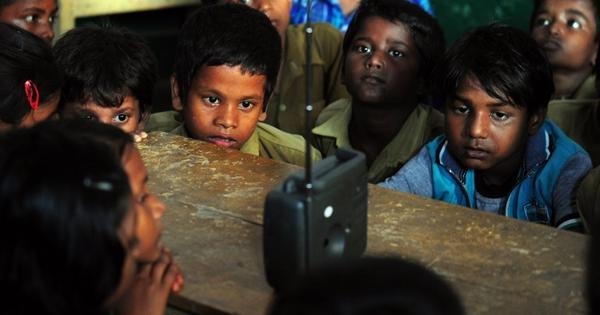
Community radio plays a important role for the development of the rural life. Community radio helps to avail utilities and amenities for various development aspects of our society like education, health, water and sanitation, protection from natural disasters, address social issues at the community level and connect rural population with the government. Community radio can facilitate the disadvantaged and vulnerable groups of the country by raising their voice, focusing their problems, expressing their modern updated ideas and thinking for the development of the whole nation. It can play a significant role for the rural development.

The main objective of this analysis is to explore the importance and effectiveness of community radio in especially remote rural areas. There can be no improvement of the country unless the villages or rural areas improved first. Unfortunately, the state of things there is as bad as possible. The people are extremely poor, living in wretched conditions. There are no proper arrangements for medical help, sanitary living and good education. There is no cultural atmosphere and nothing bright to inspire the people. So they drag on a miserable existence, more dead than alive. Community radio is a medium of helping the people of rural areas. It aims to enrich the livelihood of the local people, through the content that is created by the people and for the people of the community. As community radio prepares and broadcasts programmes for the rural particular community, so it can also be specified to a target population. The historical philosophy of community radio is to make use of this means as the voice of the disadvantaged group, the representative of exploited people and generally as a tool for progress and improvement.

Through community radio try to give proper education and facilities, improvement of agriculture and sanitary conditions and various other welfare activities.it will make life easy. Community radio is a non-profit radio station and its main aim is the wellbeing of the local level community people. It produces program for the people of any certain geographical area and also represent their culture and views, thoughts and ideas etc. The involvement of community members in many different ways that reflects the interest of the community it serves.

Community radio has been established mainly for local level rural population. Main target group of community radio are the general villagers who are the listeners of radio. Community radio will create awareness among the villagers. It has significant effect on the societal condition. People have to remember that community radio is for their permanent benefit.  In community radio the public are voluntarily participating and producing programmes for themselves for their own benefit. community radio is an instrument of power in changing the lives of women. The need of the hour is to educate the masses, create awareness and cater to the needs of the people at the grass-roots level. Community radios can help to empower and give a voice to the people.