How can you improve your English during Lockdown?

Business English Course in London


As Indian we’re mostly multi-lingual and almost 85 percent people know Hindi or use it to communicate but with globalization and with the arrival of big MNCs we’ve realized the importance of English. Even though we learn English in school, why aren’t we so confident while speaking? We learn a language and attain fluency in it only when we practice it in our day to day life but learning English is limited to school or coaching classes. Maybe you’re weak point is reading or you face problems with pronunciation or what so ever. I believe you could utilize your lockdown into being productive and overcoming your flaws by improving your English Language.

Here are some of the ways that you may try to get a better grasp of English Language:

  • Reading everyday-

Make it a habit to regularly read aloud a text for at least 15 minutes daily. You could either read a newspaper/ e-newspaper, begin with a simple book or read paragraphs in English online.


  • Listening to Music-

You could find different kinds of English music according to your genre. Try listening to them while looking at the lyrics. Start with slow English songs for better understanding.


  • Listen to Podcasts-

Podcasts are a great way to learn a language. You could listen to podcasts where two people are conversing, a monologue by a person or a story narration.

http://https://learnenglish.britishcouncil.org/general-english/podcasts


  • Refer dictionary-

I personally prefer online dictionaries as they also correct us with our pronunciation and for better understanding they use the word in a sentence as an example  for better understanding.

http://https://www.merriam-webster.com/


  • Learn by chatting-

In the world of social media we’re used to chatting online but most of the time we don’t talk in  English. There are Chatting apps available as  a simulator to learn English.

http://https://play.google.com/store/apps/details?id=com.yobimi.chatenglish&hl=en_IN&gl=US


  • Write-

Whenever you get time just start writing on any random topic. It doesn’t matter if there’s grammatical mistake or you’re unable to find exact words for the sentence. Pick up a random topic from google and start writing about it as per your understanding. Later on you can correct your mistakes my pasting the content on grammar checker apps and learn from your mistakes.


  • Duolingo-

This app is probably the best for learning any language. I highly recommend using it.

http://https://play.google.com/store/apps/details?id=com.duolingo


  • YouTube/Online course-

If you aren’t willing to pay for learning English, there are lots of options available online. One of them is YouTube where you’d find detailed explanations and better tips for English. Secondly, you can enroll for free online courses as well.


Economists from pre-classical to neo-classical era


Economics is a social science which studies interaction of people in markets. It is concerned with production, consumption, distribution and transfer of wealth from one individual or organization to another. It is a dynamic subject based on postulations and hypothesis. We have to modify its very aspects according to the situation in which it is applied. Classical, Keynesian and Neo-classical are regarded as the three major theories of economics. There were some notable pre-classical economists. 


Pre-classical economists:


William Petty: 

He is remembered for his contribution in the field of economic theory and is regarded as the founder of political economy and statistical method. His contribution to economics was his three most important theories namely- “The Treaties of taxes and contributions” -1662. “A track concerning money”- 1682 and “Discourses on political arithmetic”- 1660. 


John Law: (1671-1729) 

He is regarded as the man of practical affairs. He made important contribution to the theory of money. He made distinction between use value and market value of a commodity. He is regarded as the founder of subjected theory of value. Richard Cantillon: He was an economic thinker who wrote essay on “nature of commerce in general” which is regarded as the most systematic statement before Adam Smith’s Wealth of Nations. 


Sir David Hume: (1711-1776)

He was Philosopher, economist and was regarded as liberal mercantilist because of his advance economic theories. His work “Political discourses” collection of economic essays is regarded as most important. 


James Stuart: (1712-1780)

He was Chief English Mercantilist writer of 18th century. He wrote a book names “An enquiry into principles of political economy” – essay on science of domestic policy in free nations which focused mainly on aspects like population, agriculture, trade, industry, money, coin, interest, circulation, banks, exchange, public credit and taxes 


These were some important pre-classical economists who helped shape the foundation of other important economic theories. 


Classical economists: 

Adam Smith is regarded as the father of economics. His book “An enquiry into nature and causes of the wealth of nations (1776) is regarded as the very first book on classical economics. His concepts of supply side economics and supply side policies majorly focuses on the presence of invisible hand in markets. According to his theories markets can flourish without intervention from external authority which is government here. Invisible hand draws market forces into equilibrium. His theories very widely used before 1930s ‘The great economic’ depression. 

Other notable classical thinkers include – Jean Baptiste who propounded say’s law which states that supply creates its own demand (1803). David Ricardo who developed classical theory of comparative advantage in 1817, Labor theory of value and law of diminishing returns. Thomas Robert Malthus in 1798 wrote a book on “An essay on the principle of population”. John Stuart Mill propounded Utilitarianism in 1881. 


Keynesian economists: 

After 1930 John Maynard Keynes developed his economic theories which is regarded as Keynesian economics. His book on ‘The theory of employment, interest and money’ publish in 1936 was revolutionary. His theories mainly focuses on demand side economics. Government spending is critical factor to drive economy’s demand. Expansionary fiscal policy is regarded as main tool and was widely used after the great depression. Other Keynesian economists include: Dean Baker, Evsay domar, Wynne Godley and several other who found several new theories which gets its foundation from Keynesian economics. 


Neo- Classical economists: 

This theory focuses on supply and demand as driving forces behind production, pricing and consumption of goods and services. It emerged in 1900 to compete with other theories of classical economics.


SALE OF IMMOVABLE PROPERTY

What If Buyer/Seller Breaches Sale Agreement


Sale is the transfer of ownership for money consideration. Section 54 of the Transfer Of Property Act defines sales as a transfer of ownership in exchange for a price paid or promised to be paid.

The elements which are necessary to continue a sale as under :

  • Transfer of ownership
  • Money consideration

Parties of sale :

SELLER AND BUYER

Essentials for a valid sale are as follows :

  1. the parties i.e. the seller and the purchaser are competent
  2. the subject matter i.e. the property is in existence
  3. the money consideration i.e. the price has been fixed or referred
  4. the conveyance i.e. the transfer has been made as prescribed under the law.

Cancellation of sale deed :

A sale deed can be got cancelled, if the contract is affected by coercion, undue influence, fraud. An agreement to sell immovable property may also be void under section 29 of the Indian Contract Act, 1882.

If non-transferable property is transferred by a sale-deed, it is void and liable to be cancelled.

Seller’s duties and rights :

(BEFORE SALE )

  • to disclose material defects in the property or title, if any.
  • to produce the title-deeds for inspection.
  • to answer relevant questions as to title.
  • to execute conveyance.
  • to take care of the property and title-deeds.
  • to pay the outgoings.

(AFTER SALE)

  • to give possession to the buyer.
  • to covenant for title.
  • to deliver title-deeds on receipt of the price.

Buyer’s rights and duties :

(BEFORE SALE)

  • to disclose facts which materially increases the value of property.
  • to pay the price.

(AFTER SALE)

  • to bear the loss to property, if any.
  • to pay the outgoings.

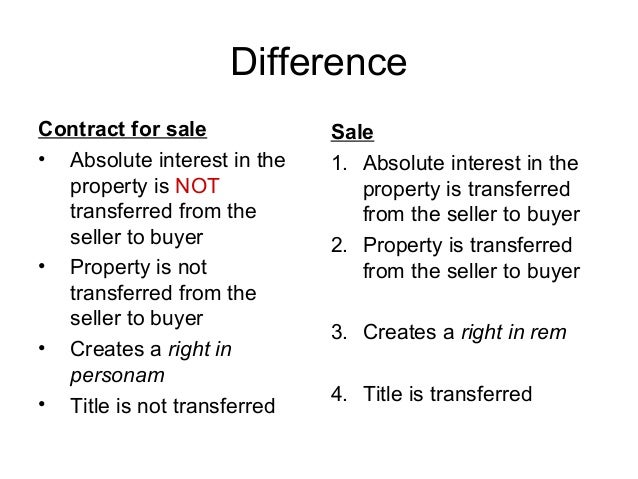
DIFFERENCE BETWEEN CONTRACT FOR SALE AND SALE :

Topic 9. Sale of immovable property


WHAT IS TRANSFER OF PROPERTY?

Rakesh Narula & Co. – Medium

Transfer of property means an act by which a living person conveys property in present or in future, to one or more other living persons (or to himself) and to transfer property is to perform such act.

ESSENTIALS OF A VALID TRANSFER :

In order to constitute a valid transfer of property, whether movable or immovable, under the Transfer Of Property Act :

  1. the property must be transferable
  2. the transfer must be competent to transfer
  3. the transferee must be competent to take the transfer
  4. the consideration or object of the transfer must be lawful
  5. the transfer must not be opposed to the nature of the interest affected thereby
  6. it must be in the manner and in the form required by the act if any.

WHAT PROPERTIES MAY NOT BE TRANSFERRED :

The general rule is that property of any kind may be transferred  but here are properties which cannot be transferred :-

  1. Spes Successionis
  2. Right of re-entry
  3. Easement
  4. Restricted interests
  5. Mere right to sue
  6. Public office
  7. Pensions
  8. Nature of Interests
  9. Un-transferable interests

PERSONS COMPETENT TO TRANSFER :

Every person competent to contract and entitled to transferable property or authorised to dispose of transferable property not his own, is competent to transfer such property either wholly or in part and either absolutely or conditionally, in the circumstances, to the extent and in the manner, allowed and prescribed by any law for the time being in force.

SECTION 11 OF THE CONTRACT ACT provides what persons are, and what persons are not competent to contract. Every person is competent to contract who is of the sound mind and is not disqualified from contracting by any law to which he is subject.


WHAT IS EVIDENCE?

The Evolution of Admissibility of Tape Recorded Statements As Evidence

Evidence means and includes-

  1. all statements which the court permits or requires to be made before it by witnesses, in relation to matters of fact under inquiry; such statements are called oral evidence;
  2. all documents; including electronic records, produced for the inspection of the court; such documents are called documentary evidence.

That means evidence can be in given in any form oral, documentary as well as electronic.

A document means anything which is a permanent record of the happening of a fact. Oral statements of a witnesses become evidence only when the right and opportunity is given to the opposite party to cross-examine, failing which they remain only bare statements.

The word ‘evidence’ in its relation to law includes all the legal means exclusive of mere arguments which tend to prove or disprove any fact the truth of which is submitted to judicial investigation.

Every case that comes before a court of law has a fact story behind it. Facts out of which cases arise keep happening in the ordinary course of life. The means by which facts are proved governed by the law of evidence. The function of the law of evidence is to lay down rules according to which the facts of a case can be proved or disproved before a court of law. The means which can be used to prove a fact are all controlled by the rules and principles laid down by the law of evidence.

The facts of the case will be proved by way of evidence act whether it is civil cases or criminal cases. It is the burden of proof which is different in both the cases like in Civil Cases burden of proof will be the balance of probability and in case of criminal cases the facts must be proved beyond all the reasonable doubts.

FOLLOWING ARE THE TYPES OF EVIDENCES :

  1. ORAL EVIDENCEHow to Introduce Court Exhibits Into Evidence at Trial – Legal Seagull
  2. DOCUMENTARY EVIDENCE
  3. PRIMARY EVIDENCE
  4. SECONDARY EVIDENCE
  5. REAL EVIDENCE
  6. HEARSAY EVIDENCE
  7. JUDICIAL EVIDENCE
  8. NON-JUDICIAL EVIDENCE
  9. DIRECT EVIDENCE
  10. INDIRECT EVIDENCE OR CIRCUMSTANTIAL EVIDENCE


The role of students in developing nation


 the ROLE OF STUDENTs IN BUILDING nation


It is a well-known fact that the youth of any country is a great asset. They are indeed the future of the country and represent it at every level. The role of youths in nation-building is more important than you might think. In other words, the intelligence and work of the youth will take the country on the pathway of success. As every citizen is equally responsible, the youth is too. They are the building blocks of a country.

Relation between ‘Student’ and ‘Nation’:

Previously, we have known that people can make their nation great with their thinking, dreaming, achieving. People are grown trees whereas students are seeds. A good seed gives a good tree, good tree gives good fruit. A student becomes a good citizen; a good citizen makes a better society.
The formula for great nation is “Good student–> virtuous society–>great nation”. A good student forms a virtuous society means which is graft-less, politically balanced, economically standard and stands on moral grounds. The nation with integrity stands forever.

The students are prospective heirs of nation. So they should be well equipped with sound moral, political and economical views. They are the pillars on which beautiful edifices will be built. Students must have these qualities- a) Desire to win b) Courage to do things c) Wisdom to understand and unravel the problems.

 The role of students in development of country

Students are vital organs of nation. They are future citizens, who can become “Nation’s most needed” categories i.e. producers, protectors, philosophers etc. Producers produce the needed items which may be related to food, electronic, engineering arenas etc. Protectors protect the nation. Philosophers guide the nation.

Apart from this, the student must play these acts of life to make the best nation.

1. Student as a Human Resource:

A nation for its existence basically needs food, cloth and shelter. Recently we have come to know that there is something left behind which is to be considered i.e. human resources. Every student must become a human resource to strengthen society and nation. Let us see the north-eastern countries which had turned into human resource countries.

A) Japan: It is a small country which may equal to two states of our country. It is a victim of “Little boy and Fat man”(Atomic bombs USA hurled on Hiroshima and Nagasaki) and lost 3.1 million people in Second World War. So many were laid on deathbed and lived devoid of organs. Even though, it is developed country because of its human resources who are maestros in making robots. Now Japan is international shop for robots.

B) China: It became supreme in the field of engineering. Recent inventions and masonry constructions shocked the world. Recent masonry constructions-A 36km Bay bridge on the sea, Tarmac road on Everest, Three Gorges dam etc. It became the factory of world. Nokia sets, Apple goods are manufactured here. It is just because their population turned into human resources.

2. Student as an Invigilator of Society:

Student must invigilate his environment. He must be active in every field. He should participate in politics also. According to Plato, “Education should be given up to 25 years at the elementary level and up to 35 years at the higher level. This is to cure mental malady by mental medicine. “If a student does not participate in every field, it will be turned into a river which has no flow. It will be house for algae, frogs and formidable insects.

The trend of Indian politics has turned into house politics. Indian democracy became ochlocracy and kleptocracy. A student must realize his onus to safeguard the nation. Ancient Greek model is an excellent model. Every young person must join the army. He has to do his service until 35 years. Then, he becomes a politician afterwards. When he retires, he becomes clergy. This is direct democracy. Student must know the possibilities and have influence on them.

3.Student as a Man of Erudition:

A student should get erudition through discipline. He should be helpful to the nation. He is one who can learn, challenge and achieve. A student must be a man of action rather than a dreamer. A student is young soldier who safeguards his nation. When he gets erudition, then only he can challenge ordeals. That is why IAS, IPS examinations are based on erudition.

4. Student as a Selfless Person:

Our nation became corrupted because of selfishness. There is no justice without graft. This should be revoked. For every innovation, real person behind it should be honored. A student must be selfless and teach and lead other students. This forms a group which can lead to a better society which gives best nation.

5.Student as a Bridge:

Student must be a bridge between present generation and past generation. He must take suggestions from pre-generation and guide the post generation. This will help to secure the knowledge and growth of nation.

Conclusion:

Leaders are not borne, but they are made. For this, student life is appropriate stage. Hitler, who harbored hatred towards Jews in his student life, made him notorious. The persons who had hard-working as weapon in their student life, they were turned into great personalities. Student is a vital organ for the development of society and nation. He has to incorporate all the above mentioned principles in life.

The Origins of the American Red Cross

The American Red Cross is a non-profit organization that provides emergency assistance, disaster relief, and disaster preparedness education in the United States. It is also referred to as The American National Red Cross.

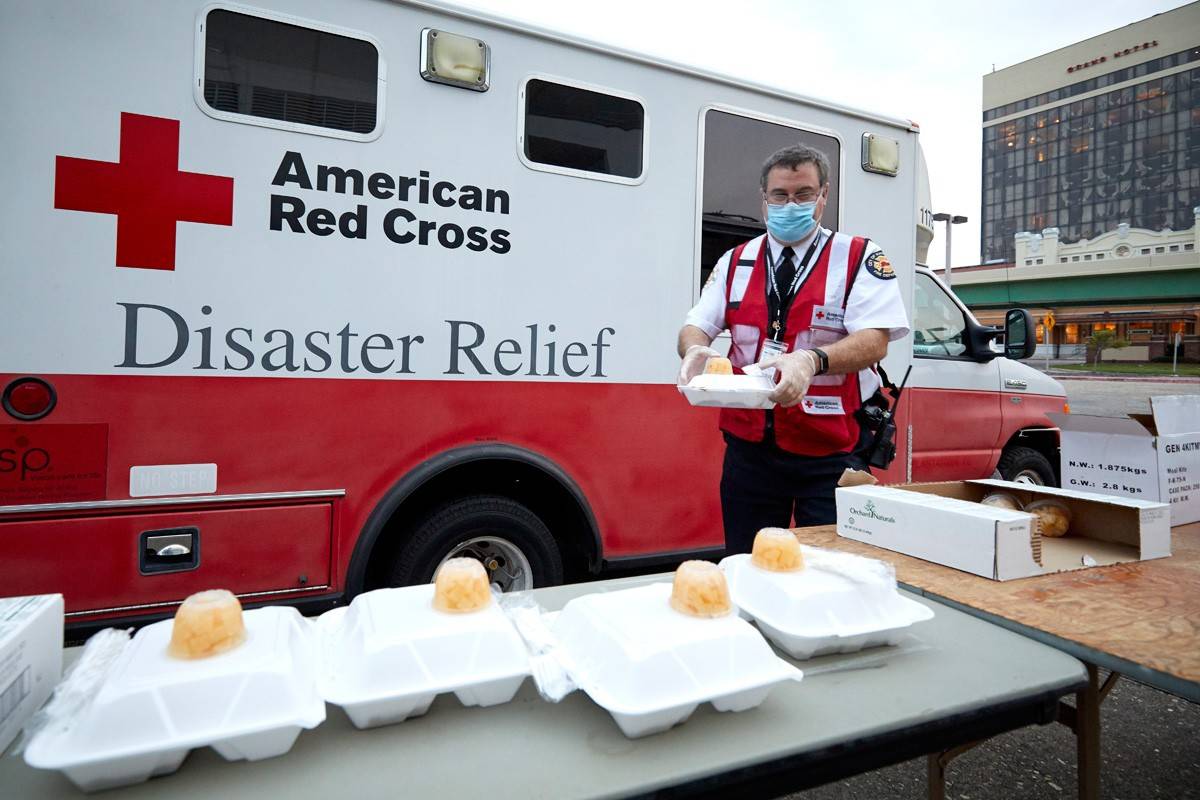
Thousands Still Fighting to Recover from 2020 DisastersIt was founded in 1881 by Clara Barton in Dansville, New York. Clara Barton was born in 1821 in North Oxford, Massachusetts. Her father, Capt. Stephen Barton was an army man himself and a progressive thinker. She was a self-taught American nurse who provided relief to soldiers in the Civil War. At a time where nursing and midwifery were not formally taught, she imparted her knowledge to aspiring nurses. Barton was also a noteworthy humanitarian worker, civil rights activist, and suffragette. She was inducted into the National Women’s Hall of Fame in 1973. Clara Barton - Wikipedia

Inspired by The Red Cross in Geneva, she founded the American Red Cross. She was also involved with the International Red Cross during the Franco-Prussian war.

Today, the American Red Cross is involved with several causes, such as blood drives, CPR training, and helping disaster-hit communities.

Cancellation of class XII CBSE board exams

A review meeting regarding the decision of CBSE board exams of class XII was held on Tuesday, June 1, 2021. In that meeting our Honorable Prime Minister, Mr. Narendra Modi has declared the decision to cancel exams due to the uncertain conditions of covid 19. And also he stressed that the safety and health of our students is important and the exams should not be the reason behind putting our youth at risk. It was also announced that Central Board of Secondary Education will take necessary steps in evaluating student’s results of class XII on a well defined objective criteria in a time bound manner. After hearing this, school students are happy and have trolled happy memes in social media platforms.

New Microsoft Surface Duo (2020): Is it worth the hype?

Many of you would have probably heard about Microsoft surface Duo already and discarded it as just another smartphone in the market which fancy features to attract buyers. You wouldn’t have considered it an innovation but just as another smartphone.  But when you view it through the technical lens, you will realize that this is the future. This post does not go deep into the exact specifications of the device, but answers the question of is it worth the hype. To check specifications, visit here.

What is Microsoft Surface Duo?

Microsoft Surface Duo front
The Microsoft Surface Duo- Front appearance.

For those of you who haven’t heard of it, surface duo is a foldable smartphone with two screens. The scope of foldable screens is not just limited to the smartphone industry. It can be used in many life changing devices ranging from the medical sector to military use. The possibilities are just endless.

In short, Microsoft Surface duo is a glimpse of the future!

So now back to the present. Let us go deeper into knowing the features, major pros, cons and more of the surface duo.

To start with, let me address the firsts. This is the first:

  • foldable phone from Microsoft
  • dual screen pocketable device
  • 360 degree hinge
  • razor slim

These are the feats achieved by just the release of the phone. I’ll tell you why it is genuinely being applauded, one word: Multitasking.

Multitasking

In this busy generation, world cannot function without multitasking. Many of us would’ve seen dual monitor setups being used to improve multitasking capabilities and to improve productivity. Instead of such bulky setups, Microsoft Surface Duo achieves all of this and still can fit into a pocket. Pretty great right.

You can now be chilling to the lyrics of your favorite song on one screen and going through your calendar for the next week. You can watch you video lectures on one screen and take notes in the other. The combinations are huge!

To support this sort of multitasking, Microsoft provides various modes to view the screens.

  • Single screen mode – where it can be used like any other normal smartphone
  • Tent mode – for 2 people watching simultaneously
  • Span mode and more

A Dual monitor setup

  • Surface Duo double screen
    The dual screens allow multitasking. Left screen with spotify, right screen with mail box opened. 
Is it worth the hype?

To be honest, the answer is disappointingly no, considering common users. Due to the dual screen, an extra layer of hand gestures are added the name of enhancements which only make it more complex. For one screen you have to remember to double tap to wake the screen, remember gestures for opening certain features, to switch apps between the two screens. All of it makes the user interface difficult.

All basic features that other phones have, like camera, speakers, battery performance are all second generation here. Some drawbacks observed are:

  • Confusing Software
  • Basic features- Second generation
  • No 5G
  • No headphone jack
  • No wireless charging
  • Camera and Speakers- Not so good for a high end phone
  • Expensive ($1500/INR 1.7Lakhs)
  • Battery drain due to dual screen

Hence it has many drags and hiccups as it is still in the research and developmental stage.

What to expect in the future?

Even though it suffers from major functionality issues, Microsoft took the big leap. It has set foot in a new field which requires more exploration. But it is sure that in the future all giant brands will release a range of foldable phones. And one more exciting news is that the Surface Duo 2 is said to be released this year. Hopefully the major drags of the previous version are rectified in Duo 2 and meanwhile all we can do is wait for the future of foldable phones unveil before us.

Unlock process to begin today in Madhya Pradesh and Uttar Pradesh

In Uttar Pradesh, the unlock process of Corona curfew will start in a phased manner from today across 61 districts. State government had yesterday decided to lift the covid curfew with certain guidelines but weekend covid curfew will continue to remain throughout the state. The covid curfew will continue in 14 districts that have more than 600 active cases.

In the remaining 61 districts, shops will be allowed to open with strict safety protocols from 7 am to 7 pm. Night curfew will continue in the whole state. Yesterday Sonbhadra, Deoria, Baghpat, Prayagraj, Bijnore and Moradabad were added to the earlier list due to the declining number of active cases in these districts.

However, there  are 14 districts where no relaxation has been permitted by the government. These are Meerut, Lucknow, Saharanpur, Varanasi, Ghaziabad, Gorakhpur, Muzaffarnagar, Bareilly, Gautam Buddh Nagar, Bulandshahr, Jhansi, Lakhimpur-Khiri, Jaunpur and Ghazipur. The Chief Minister said that if cases rise above 600 in any district the relaxation in corona curfew will end automatically.

After nearly two months of lock-down, Madhya Pradesh is being

Karnataka CM appreciates yeoman service rendered by staff nurses working with Covid patients

Karnataka Chief Minister B S Yediyurappa has appreciated the yeoman service rendered by staff nurses working with the Covid patients across the state. He held a virtual interaction with the staff nurses working in the district hospitals across the state yesterday. He acknowledged the valuable contribution of the nurses during this adverse situation by remaining away from their families for days together. AIR correspondent reports that there are 21,574 staff nurses working in various Government hospitals across the state.

Chief Minister asked the nurses on their working conditions and safety protocols being followed. He informed Santosh of Bidar medical college that the risk allowance given to health department staff will be extended to medical colleges staff too.

Waheeda of Wenlock hospital asked the Chief Minister to provide vaccine to their families too. Nurse Renuka Gugihaal who lost her husband recently was consoled by the Chief Minister. Shashikala of S N R hospital said that efforts should be made to infuse confidence in the Covid patients who are emotionally disturbed. Shwetha of Harihar general hospital said that the staff are disturbed by the incidents of deaths and agony of Covid patients and need counselling facilities.

Under Pradhan Mantri Gareeb Kalyan Bima Yojana the family of the deceased nurses is being paid 50 lakh rupees. The state government pays 8000 rupees Covid allowance to the nurses apart from the salary.

COVID-19 recovery rate rises to 97 % in Bihar

In Bihar, over six lakh 85 thousand people have so far recovered from Corona. State’s recovery rate has risen to 97 per cent, while the test positivity rate has declined to 1.10 per cent. Covid cases in all districts are less than one hundred cases except Patna.

The number of active cases is also decreasing and presently stands at 16 thousand 235. One thousand 113 fresh COVID cases were reported in the state during the last 24 hours and three thousand 196 people recovered yesterday. Over one crore four lakh 34 thousand people have been vaccinated in the state so far