Will G7’s “Build Back Better world” (B3W) help counter China’s “Belt and Road Initiative” (BRI)?

Lending hefty loans to financially unstable economies, China’s BRI policy tends to capture territories of the countries that are unable to pay the amount on the specified time bound. Srilanka is one such example and as per the experts, pakistan could be the next.

What is Belt & Road Initiative (BRI)?

China’s Belt & Road Initiative (BRI) scheme, launched in 2013 by XI jinping, involves development and investment initiative that would stretch from Asia to Europe and beyond it.
All together, more than hundred countries across the globe have signed an agreement with China to co-operate in BRI projects like Railways, ports, highways and various infrastructural projects. The countries that went against this had to face threats from China over other trade deals such as UK.

Few major priorities of this initiative are as:
1) Policy coordination
2) Infrastructure connectivity
3) Financial inclusion
4) Unrestricted trade
5) People-to-people bond.

Drawback of the loans provided by China:
1) Lack of transparency.
2) Poor environmental and labour standards
3) Coercive approach.

Although, G7 countries had come with a counter Scheme called Build Back Better World (B3W) to ensure that China’s monopoly over the smaller countries could be ended with what-so-ever it takes.

Before talking about B3W Initiative, let’s take a look at what is the G7 summit and why is it valued so high across the world.

What is G7?

It is a group of seven richest democracies of the world. It includes UK, Canada, France, Germany, Italy, Japan and the United States as its members. It was formerly known as G5 and G6.
G7 summit 2021 was held in Cornwall, UK from June 11th to June 13th.
This year’s main agenda of G7 summit was to talk about counter approach to China’s BRI initiative. The countries were searching for a better plan to surge China’s economic and military rise over the past 40 years and so finally this year’s G7 summit came with a better and effective plan.

What is B3W and how will it counter BRI?

Build back better world initiative calls for spending billions of dollars by 2035 to help developing countries in building railways, ports and other infrastructure projects. Government will collaborate with private sectors will adhering to climate standards and labour practices.
This initiative is strongly backed by United States president Joe Biden.
There wasn’t much details given yet and the plan seems to be underway now. Neither did they disclose the total spendings to be made by the year 2035 through this project. But one thing is sure that, this initiative will help many countries in getting a break free from China.

As far as India is concerned, India has always shown concern over China-Pakistan Economic Corridor (CPEC), a project of BRI which passes through the disputed territory of Pakistan Occupied Kashmir.
India has officially not reacted to the G7 countries’ latest plan, but it is expected to be a welcome news for New Delhi.

TFM: the family man (Indian series)

The family man

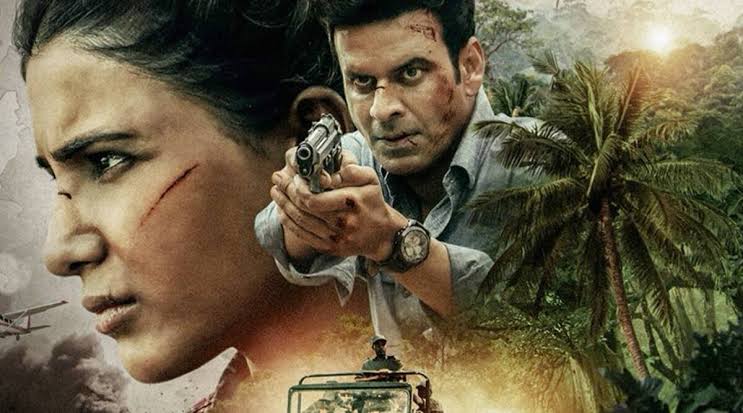
The Family Man is an Indian ‘espionage action thriller streaming television series’ on Amazon Prime Video created, directed, and produced by Raj Nidimoru and Krishna D.K. who also co-wrote the story and screenplay with Suman Kumar, with dialogue penned by Sumit Arora and Suman Kumar. The series features Manoj Bajpayee as Srikant Tiwari, a middle-class man secretly working as an intelligence officer for the Threat Analysis and Surveillance Cell (TASC), a fictitious branch of the National Investigation Agency. It also stars Priyamani, Sharad Kelkar, Neeraj Madhav, Sharib Hashmi, Dalip Tahil, Sunny Hinduja and Shreya Dhanwanthary. Samantha Akkineni was hired for the second season of the series making her foray into the digital medium.

And to be honest it’s one of the best series I’ve had ever watched. Manoj Bajpayee is one of the finest actor of all the time. His acting gives a example to our new generation actors and he’s the god of acting for those who wants to become a actor.

From his struggle to his success, he implied all those thing he was willing to. And he has many awards and was nominated for best acting award (national award) for Gangs of Wasseypur. Rather than this all the actors/actresses in TFM1 and TFM2 contributes a huge part to make a series a super hit series of all the time. As in,
Manoj Bajpayee
Priyamani
Samantha Akkineni
Sharib Hashmi
Neeraj Madhav
Pawan Chopra
Kishore Kumar G.
Sharad Kelkar
Devadarshini
Gul Panag
Shreya Dhanwanthary
Sundeep Kishan
Sanyukta Timsina
Sunny Hinduja
Abhay Verma
Shahab Ali
Ashlesha Thakur
Vedant Sinha
Aritro Rudraneil Banerjee.

All these actors/actresses had different roles and they had persued that particular Roel very well with pure perfection. And if you ask who is My favourite among these so I’ll obviously say Manoj Bajpayee. But rather than him I love the role and character of Sharib Hashmi. He had done his job very well and the way he acted was truly unconditional.

And one main point It is only and only streaming of Amazon prime. And if you ask me that ‘it’s a boring day’ what should we do then I’ll recommend you this series to watch both season one and two.

Unpredictable journey

Overview
Life is so unpredictable, no one knows what’s going to happen next. No one knows for much time you are here and what will be the reason for death and everything else. Life is unpredictable. When something unexpected does occur in your life, good or bad, it’s OK if it throws you off your game. If it’s favorable, bask in the excitement and joy at this unexpected event brought you. We have to enjoy the good things that happen and give them the time they deserve.
Similarly considering today’s situation all around no one even imagined that something big would happen and would change the entire life. Not only a particular place, or a country but every creature on this planet is suffering from one or the other thing. The whole world is facing this Coronavirus pandemic. India and several other countries are facing economic slowdown and several other problems. Each individual has been into something or the other, which in return affects their physical and mental health.
Whenever I interact with people, I always come to know about a lot of problems they face.
Problems Faced
Life is a journey, and the challenges you face, are obstacles that you have to overcome. They are what allow you to expand yourself, become more inclusive and more compassionate.
Every other person is suffering from a disease or serious mental health issues such as anxiety, and depression, etc.
In a book, I read that a little stress is necessary but the one with a lot of stress is not good for life. It may affect you in any way. It can impact your health, it can cause you a mental problem, and many other problems.
The major challenges we face in life can be the loss of something, or someone, Failure, Setbacks, Feeling lost, or out of control, etc. Remember all the problems you face are not problems, they are challenges that you have to overcome and become stronger and better.
Ways to a Good Healthy Life
It’s important to keep yourself healthy. Mental Health is equally important as being physically healthy. It has been seen that most people neglect Mental Health problems, which in turn becomes a lifetime depression or maybe sometimes it takes people’s life.
Life is short, as anything can happen anytime and you don’t have any clue what’s going to happen in the future. And, each and every person here has a purpose in life. It is certainly important to find that the purpose for which you are here. It might take some time to find it out, but it is necessary.
It is just that doing what makes you and your inner feel happy and makes you refreshing.
As said life is unpredictable and short and most importantly, you are here to find your meaning, your purpose for life.
And making yourself happy will provide you with lots of positivity and strength to do more and make you a strong and better person in life. You have to be who you are and do excel in whatever field you are in and remember you are here for a purpose which you have to find and fulfill no matter what.

Tuberculosis

Tuberculosis, MTB, or TB (short for tubercle bacillus) is a common, and in many cases lethal, infectious disease
caused by various strains of mycobacteria, usually Mycobacterium tuberculosis. Tuberculosis usually attacks the lungs but can also affect other parts of the body. It is spread through the air when people who have an active MTB
infection cough, sneeze, or otherwise transmit their saliva through the air. Most infections in humans result in an
asymptomatic, latent infection, and about one in ten latent infections eventually progress to active disease, which, if
left untreated, kills more than 50% of those infected.
The classic symptoms are a chronic cough with blood-tinged sputum, fever, night sweats, and weight loss (the last
giving rise to the formerly prevalent colloquial term “consumption”). Infection of other organs causes a wide range
of symptoms. Diagnosis relies on radiology (commonly chest X-rays), a tuberculin skin test, blood tests, as well as
microscopic examination and microbiological culture of bodily fluids. Treatment is difficult and requires long
courses of multiple antibiotics. Social contacts are also screened and treated if necessary. Antibiotic resistance is a
growing problem in (extensively) multi-drug-resistant tuberculosis. Prevention relies on screening programs and
vaccination, usually with Bacillus Calmette-Guérin vaccine.
One third of the world’s population is thought to have been infected with M. tuberculosis, and new infections occur at a rate of about one per second.In 2007 there were an estimated 13.7 million chronic active cases, and in 2010 8.8 million new cases, and 1.45 million deaths, mostly in developing countries. The absolute number of tuberculosis cases has been decreasing since 2006 and new cases since 2002. In addition, more people in the developing world contract tuberculosis because their immune systems are more likely to be compromised due to
higher rates of AIDS.

The distribution of tuberculosis is not uniform across the globe; about 80% of the
population in many Asian and African countries test positive in tuberculin tests, while only 5–10% of the U.S.
population test positive.

Risk factors
There are a number factors that make people more susceptible to TB infections. Worldwide the most important of these is HIV with co-infection present in about 13% of cases. This is a particular problem in Sub-Saharan Africa
where rates of HIV are high. Tuberculosis is closely linked to both overcrowding and malnutrition making it
one of the principal diseases of poverty.
Chronic lung disease is a risk factor with smoking more than 20
cigarettes a day increasing the risk by two to four times and silicosis increasing the risk about 30 fold. Other disease states that increase the risk of developing tuberculosis include alcoholism and diabetes mellitus (threefold increase). Certain medications such as corticosteroids and Infliximab (an anti-αTNF monoclonal antibody) are
becoming increasingly important risk factors, especially in the developed world.There is also a genetic susceptibility for which overall importance is still undefined.

Transmission
When people with active pulmonary TB cough, sneeze, speak, sing, or
spit, they expel infectious aerosol droplets 0.5 to 5 µm in diameter. A
single sneeze can release up to 40,000 droplets.[44] Each one of these
droplets may transmit the disease, since the infectious dose of
tuberculosis is very low and inhaling fewer than ten bacteria may cause
an infection.

Prevention
Tuberculosis prevention and control efforts primarily rely on the vaccination of infants and the detection and appropriate treatment of active cases.The World Health Organization has achieved some success with improved
treatment success and a small decrease in case numbers.
Vaccines
The only currently available vaccine as of 2021 is Bacillus Calmette-Guérin (BCG) which while effective against disseminated disease in childhood, confers inconsistent protection against pulmonary disease. It is the most
widely used vaccine worldwide with more than 90% of children vaccinated. However the immunity that it induces, decreases after about ten years. As tuberculosis is uncommon in most of Canada, the United Kingdom
and the United States, BCG is only administered to people at high risk. Part of the reason against the use of vaccine is that it makes the tuberculin skin test falsely positive and thus of no use in screening. A number of new vaccines are in development.
Public health
The World Health Organization (WHO) declared TB a global health emergency in 1993 and in 2006 the Stop TB Partnership developed a Global Plan to Stop Tuberculosis that aims to save 14 million lives between its launch and
2015. A number of targets that they have set are not likely to be achieved by 2015 due to the increase in HIV
associated tuberculosis and multi-drug resistant tuberculosis.
Treatment
Treatment for TB uses antibiotics to kill the bacteria. Effective TB treatment is difficult, due to the unusual structure and chemical composition of the mycobacterial cell wall, which makes many antibiotics ineffective and hinders the entry of drugs. The two antibiotics most commonly used are isoniazid and rifampicin and treatments can be
prolonged. Latent TB treatment usually uses a single antibiotic, while active TB disease is best treated with
combinations of several antibiotics, to reduce the risk of the bacteria developing antibiotic resistance. People with latent infections are treated to prevent them from progressing to active TB disease later in life.

On Article 32

The Indian Constitution endows every individual with certain fundamental rights. These rights grant every citizen equality regardless of the person’s race, caste, faith, place of birth, or gender. Articles 12 to 35 of the Constitution of India deal with these rights. The Indian Constitution provides certain remedies in case of violation of fundamental rights. Decision regarding the remedy is left to the discretion of the judiciary. Part III of the Indian Constitution deals with legal remedies. Legal remedies protect the fundamental rights against their violation. It gives individuals rights to seek remedies for violation of their fundamental rights.

The Indian Constitution also restricts the state from framing laws that violate fundamental rights. These fundamental rights are an important part of our Constitution. These rights have no value without the right to seek remedy against their violation. Without this right, other fundamental rights become meaningless. For this reason, it is referred to as the heart of our Constitution. Dr. Ambedkar calls it as the “spirit of the constitution and exceptionally heart of it”. Article 32 of the Constitution of India designates the Supreme Court as the protector and underwriter of the fundamental rights. The power to issue writs comes under the original jurisdiction of the Supreme Court. This enables an individual to move the Supreme Court directly for a remedy.

Article 32 and Scope of Article 32

Article 32 is a fundamental right that is entitled to every the citizen of the country by the Indian Constitution. It deals with remedies in case of violation of fundamental rights. This right enables an individual to move the Supreme Court to seek compensation. Article 32 is a remedial right and is not substantive. According to this article, the Supreme Court “shall have power to issue directions or orders or writs, including writs in the nature of habeas corpus, mandamus, prohibition, quo warranto and certiorari, whichever may be appropriate, for the enforcement of any of the rights conferred by this Part”. This right “shall not be suspended except as otherwise provided for by this Constitution”. Part III of the Constitution of India contains this article including other fundamental rights. Right to constitutional remedies is available only when there is a violation of fundamental right.

Right to constitutional remedy cannot be removed without a constitutional amendment. Article 32 can be suspended during an emergency and not otherwise. The Indian judiciary has played a significant role in protecting fundamental rights. The courts have used judicial review in an efficient manner in cases of violation of fundamental rights. The right to constitutional remedy cannot be suspended when the issue is related to Article 20 and 21. According to article 32, the Supreme Court “shall have the power to issue directions or orders or writs, including writs in the nature of habeas corpus, mandamus, prohibition, quo warranto and certiorari, whichever may be appropriate, for the enforcement of any of the rights conferred by this Part”. An individual can approach both the Supreme Court and the High Court for remedial action. The responsibility to protect the fundamental rights of citizens is assigned to the judiciary.

Article 32 gives the Supreme Court the power to issue orders, or writs in relation to violation of fundamental rights. The Supreme Court has the power to issue 5 kinds of writs. These are: Habeas Corpus, Mandamus, Certiorari, Writ of Prohibition, and Quo Warranto. Habeas Corpus is a writ related to personal liberty. This is issued in case of unlawful detainment. The meaning of habeas corpus is ‘produce the body’. When a person feels he has been imprisoned for no fault of his, he can file this petition. Mandamus is issued to a lower court by the higher court. It can also be issued to government officers or institutions. This writ is issued to ask the concerned person to perform a duty he has failed to perform. Certiorari is issued by a higher court directing the lower court to re-examine its decision. It is issued when the decision by a lower court violates natural justice. It is also issued in cases where procedure established by law has not been followed. The Writ of Prohibition is issued to prevent a lower court from proceeding in cases exceeding the jurisdiction of that particular court. Quo Warranto is issued to examine the legality of a position exercised by an official. It stops people from claiming positions that he is not entitled to hold. Public Interest Litigation is a distinctive jurisdiction taken over by the Supreme Court. A person can move the Supreme Court in issues concerning common interest. When there is a violation of fundamental right of an individual due to arbitrary laws or actions, he may move the the Supreme Court seeking a compensation. This article enables the court to relax the position of locus standi and allow any person to file a PIL petition. It is an expansion of the right to be heard. The burden of proving the common cause rests on the petitioner. This allowed any person file to PIL petition for the benefit of society. This is an exception to locus standi.

Article 32 contains four parts. The first clause guarantees the right to move the Supreme Court by appropriate proceedings. Here, “appropriate” does not refer to the procedure.The position that Article 32 guarantees remedy was confirmed in the case of Romesh Thappar vs State of Madras (1950). It refers to the purpose of the proceeding. In some cases, even postcard and telegram have been accepted as appropriate proceedings. Letters are also permitted. The second part endows the Supreme Court with the power to issue different writs. The Supreme Court can choose to issue any writ that is appropriate. The third clause allows the parliament to grant powers to lower courts to protect fundamental rights. The fourth clause talks about an exceptional situation. It mentions a situation of emergency during which this right cannot be enforced and remains suspended. This remedy is not available in cases where alternative remedy is present. The right to constitutional remedies is an urgent remedy. Except in cases of emergency, any law in conflict with the right or the Supreme Court’s power becomes void. The scope of Article 32 is limited and restricted as compared to Article 226. Unlike Article32, Article 226 is not a fundamental right. There is some difference between the jurisdictions of the Supreme Court and the High Court when it comes to issuing writs. The Supreme Court’s power of issuing writs is restricted to violation of fundamental rights. Whereas, the High Court can issue writs even if ordinary laws are violated. The area of the High Courts is wider compared to the Supreme Court in this regard. This power is, however, restricted by territorial jurisdiction. The Supreme Court’s power to issue writs extends to the whole of India. Article 32 is restricted to fundamental rights under Part III. Under Article 32, the Supreme Court does not deal with any other issues. The writs issued by the Supreme Court are powerful and strong instruments.

I

Portugal beats Hungary 3-0; Ronaldo scores twice

The defending champions Portugal will lock horns with Hungary in Euro 2020’s Group F match today at 9:30 pm IST. The first half remain goalless as Portugal missed atleast two close chances to score. Portugal has to deal with a difficult draw for its championship defence. Ronaldo missed a straight forward chance in 42nd minute as Portugal kept pushing Hungary in the first half.

84th minute: Portugal 1 | 0 Hungary

Portugal has finally cracked the Hungary roadblock. Rafa Silva’s delivery is diverted towards Raphael Guerreiro , whose attack ricochets past Gulacsi after ricocheting through numerous players.

90+2 minute: Portugal 3 | 0 Hungary


Cristiano Ronaldo adds another goal to his tally! The striker joins forces with Rafa Silva to create space in the Hungarian penalty area, then swerves around Gulacsi to score to make it 3-0! His 106th goal for Portugal and 11th at the Euros.

87th minute: Portugal 2 | 0 Hungary

Cristiano Ronaldo takes the initiative to make European Championship history. And he succeeds! He dispatches Gulacsi into the bottom corner, sending him the wrong way. Ronaldo becomes the first player to score in five consecutive Euro finals and the first to score in double figures at a European championship.

Tainted cities

Indian cities are faltering under multiple problems, including environmental issues that we must assert with. Most desperate of them all is the issue of air pollution. The quality of air that citizens are forced to breathe- especially in the heavily polluted cities- has a serious impact on our health and well-being.
World Health Organisation (WHO) study found that fourteen of the twenty world’s most polluted cities belonged to India. Kanpur, in Uttar Pradesh, emerged as the city with the highest PM2.5 level, standing at 173 (17 times higher than the limit set for safety). It is estimated that in 2016, over 9 lakh deaths were caused due to air pollution in India. Some other cities with high PM 2.5 levels include Faridabad, Varanasi, Gaya, Patna, Delhi, Lucknow and Agra. Delhi, as the capital of the country, too gained notorious reputation as a result of its severely poor air quality. In the past, there have been multiple instances where the presence of heavy smog in the national capital has led to the declaration of public health emergencies, flight cancellations, school closures and inevitable political acrimony.
The sources of air pollution are multiple. Vehicular emissions, crop burning, generation of dust- particularly from construction sites, depleting tree covers and poor waste management – all contribute towards the declining air quality. One of the problems with tackling air pollution solely at the city level is that several factors which contribute towards increasing pollution levels have their origins in the bordering sub-urban areas. In Delhi, for instance, one of the major factors responsible for its declining air quality is paddy straw burning in its neighbouring states.
Air pollution does not recognize geographical boundaries. Just as polluted air from rural areas travels into cities, cities too contribute towards rural pollution. Thus, it is critical for anti-pollution efforts to be coordinated across different levels. Urban-rural and inter-state responses are integral to crafting successful solutions. Fortunately, the Government of India (GoI) has responded to the air pollution epidemic with a nation-wide programme. This is likely to have very positive impact on the health of all citizens, especially city dwellers. The Air Quality Life Index indicates that if national standards with regard to air quality are met, life expectancy would go up by two years.
This is clearly what the National Clean Air Mission (CAM-INDIA) aims to achieve. It is a cross-sectoral initiative for air pollution mitigation launched by GoI involving Ministries of Transport, Power, Construction, Agriculture, Rural Development, Environment and the states. Along with a five-year action plan to curb air pollution, the Mission hopes to build a pan-India air quality monitoring network and heighten citizen awareness. Air quality can be significantly improved by cutting the use of solid fuel in households; using sustainable fuels can reduce air pollution levels by almost 40 percent. According to the 2011 Census, 16.6 crore households out of a total of 24.7 crore continued to rely on solid fuels (firewood, crop residue, dung and coal) for cooking. Hopefully, GoI’s Ujjwala scheme, which provides cooking gas to millions of poor households will substantially reduce solid fuel usage. Additionally, reducing emissions from thermal power plants, instituting strong emission standards for industries and introducing stronger vehicular emission standards also need to be effectively implemented. In this regard, state pollution control boards (PCBs) are adopting the Star Rating Programme. The programme rates industries on their fine particulate pollution emissions and enables the monitoring of industries’ pollution levels. Furthermore, in partnership with GoI, states are promoting an electric vehicle policy. Use of electrically powered buses, cars and two-wheelers are bound to have a positive qualitative effect on air quality in cities.
Certain policies and programmes focus specifically on cities- The National Clean Air Programme targets 102 polluted Indian cities and aims to reduce their PM2.5 levels by about one-third over the next five years. Steps are also being taken for upgradation to BS VI fuel from BS IV which is expected to reduce air pollution. Initial results are encouraging. The Environment Ministry reported a fall in the national annual average concentration of PM 2.5 from 134 micrograms per cubic metre in 2016 to 125 in 2017. For PM 10, the national annual average fell from 289 micrograms per cubic metre in 2017 to 268 in 2016. An action plan has also been readied for 94 cities which suffer from severe air pollution.
While steps are being taken to reduce air pollution at the national and state levels, cities could improve the national performance by introducing complementary initiatives. Firstly, the Clean India Campaign requires energetic implementation. Since dust and waste burning are major sources of PM, cities must ensure wall-to-wall paving of streets, the vacuum cleaning of roads, enforce bans on open solid waste burning and attempt to effectively recover methane from landfills.
Some state municipal acts make it mandatory for cities to prepare an annual environment status report. The main objective of such a report is to curate data which allows cities to take cognizance of where they stand in terms of environmental well-being, including the status of air pollution. The next step for cities should be to launch remedial steps as the annual report enables municipalities to assess the impact of their policies on a yearly basis. Sadly, while the reports have been prepared, not much action has been taken. This needs to change.
Many cities also carry out a decennial tree census’ which tells them what their tree population is. Depletion of tree cover in specific areas triggers a warning mechanism advising the city to replenish tree stock via fresh plantation. Another city-centric solution that municipalities should consider implementing is the incentivisation of the maintenance of roof-top gardens as well as, potted plants in balconies and kitchen gardens through suitable amendments in development control regulations.
While the issue of air pollution has managed to capture public imagination, the problem of growing question of growing population density in cities continues to be at best- an afterthought. High human density hinders the successful implementation of positive initiatives. The volume of polluting activities continue to multiply, as the space to counteract them physically shrinks. The question of decentralising urbanisation needs to be addressed in a meaningful way, for it holds the key to improving the quality of urban life.

Son of the soil

I think the farmer plays the same role for our country as the backbone for the human body.The problem is our farmers are suffering from many problems.Sometimes, many of them cannot even eat two times food a day, despite all the difficulties that they face, they play an important role accordingly. They are the country’s food producers.
Before the 1970s, India was not able to produce enough food to meet its needs.In other words, India was not self-sufficient in terms of food grains.We imported large quantities of food grains from overseas (mainly from the United States).This went well for some time but later USA started blackmailing us on business also threatened to completely stop the supply of food grains.Then Prime Minister Lal Bahadur Shastri accepted the challenge and gave the slogan “Jai Jawan, Jai Kisan” and took some drastic measures, which resulted in Green Revolution.Due to this we became self-reliant in the matter of food and even started as well.India has never looked back since then our farmers have never disappointed us, even though they are facing many problems.They are able to meet the demand of the growing population.
One of the biggest contributors to the Indian economy: Farmers contribute about 17% to the Indian economy.Even after that, they lived a life of poverty.If we are able to overcome various obstacles, there is a good chance that this percentage will improve.All farmers are self-servants, they are not dependent on any other source for employment.
We have come a long way since independence but there is still much to be done.I am sure, if we work honestly, we will be able to overcome the problems we are facing today and God will become as beautiful and prosperous to prepare our villages as Bollywood films.

Floral festival – a cultural tradition

Bathukamma is Telangana’s floral festival celebrated by the Hindu women of Telangana and neighbouring states in India. Every year this festival is celebrated as per Telugu version of Hindu calendar in the Bhadrapada Amavasya, also known as Mahalaya Amavasya, usually in September–October of Gregorian calendar. Bathukamma is celebrated for nine days during Durga Navratri. It starts on the day of Mahalaya Amavasya and the 9-day festivities will culminate on “Saddula Bathukamma” or “Pedda Bathukamma” festival on Ashwayuja Ashtami, popularly known as Durgashtami which is two days before Dussehra.
Bathukamma is followed by Boddemma, which is a 7-day festival. Boddemma festival that marks the ending of rainy season whereas Bathukamma festival indicates the beginning of winter season. Bathukamma represents cultural spirit of Telangana. Bathukamma is a beautiful flower stack, arranged with different unique seasonal flowers most of them with medicinal values, in seven concentric layers in the shape of temple gopuram. In Telugu, ‘Bathukamma’ means ‘Mother Goddess come Alive’ and Goddess Maha Gauri-‘Life Giver’ is worshipped in the form of Bathukamma – the patron goddess of womanhood, Maha Gauri Devi It is the festival for feminine felicitation. On this special occasion women dress up in the traditional sari combining it with jewels and other accessories. Preparation on first five days women will clean their courtyard, cow dung mixed with water is spread in the courtyard as a ground-base, decorate the ground-base with rangoli made of rice flour. For the first five days Batukamma is prepared with cow dung. Five small lumps in cone shape are arranged in the courtyard. Men in the house gather flowers from the wild plains like Celosia, Senna, Marigold, Chrysanthemum, Indian Lotus, Cucurbita leaves & flowers, Cucumis Sativus leaves & flowers, Memecylon edule, Tridax procumbens, Trachyspermum ammi, Katla, Teku Flowers, etc., which bloom in this season in various vibrant colors all across the uncultivated and barren plains of the region. Preparing a Bathukamma is a folk art. Women start preparing Bathukamma from the afternoon. They cut the flowers leaving the little length base, some dip Gunugu (Celosia) flowers in various vibrant colours, some scented and arrange them on a wide plate called Thambalam spread with big leaves, and stack them up in a conical mound, filling the cone with leaves and stems of the flower stalks, decorated with a Lotus or Pumpkin Flower on top of the stack along with Gouramma (a symbolic idol of Gowri made of turmeric). One interesting aspect of the preparation of the flower arrangement is that the arrangement usually floats in water for sometime, and the arrangement is not disassembled until it drowns in water.

THE SCIENCE OF BODY AND FOOD

  • The Science of Body and food
  • It’s really worth saying “Eat food as a medicine or you have to eat medicine as a food”. Ultimately this quote suggests , whatever we are going to feed to our body , it will ultimately affect our activities . Feeding our brains with good quality supplements would ensure longer lifetime and make us feel healthier . On the other hand , studies have revealed that eating junk food not only make us obese but also leads to various health issues like diabetes , respiratory problems , gastrointestinal problems , etc. It works by damaging the neurones present in brain . The reasearch studies showed that the life expectancy of the person eating more of Vegetables and healthy food is more as compared to that fed on junk food . Junk food adds on calories and fats to our body which ultimately becomes the house of diseases . Healthy lifestyle includes food , living habits and also our physical activity. Healthy lifestyle leads to healthy mindset that results in healthy ouput . Its very hard to obey healthy Lifestyle in such a competitive world , but still if one wants can achieve it simply by changing the way of eating and thinking . All that matters to our body is our eating, sleeping and thinking habits. Here are some of the living habits that would add benefits to our health –
  • -intake of 2-3 L water daily , -doing breakfast at time , -lunch should contain colorful food (veggies, salads )
  • -dinner should be light
  • -intake of fruits before lunch
  • -intake of salads before dinner
  • -fluid intake in the form of milk , shakes , juices once a day would keep the body healthy
  • -twenty minutes workout in morning includes yoga and meditation and warm up exercises.
  • – eight hours sleep is an essential part which should not be skipped
  • The other important thing related to food is tolerance . Some studies has revealed that overeating or less eating has also been found a reason adding to our health deterioration . Vitamins, minerals , amino acid, proteins , carbohydrates, fats are all the essential component of an healthy diet. There are many people that can’t tolerate wheat in diet due to wheat allergy , numerous of the people can’t have milk dude to lactose intolerance . But every problem has a solution , they have alternatives too . The main agenda in health maintenance is what to eat , how to eat , and it’s quality and quantity. It has been proved that eating more of spicy food can trigger stress and ultimately leads to depression . Spicy food takes more time to digest and is cancerous too. Our brain and stomach works in synchronisation . If the brain is in stressful conditions it would really impact our stomach due to which it has been found that the patients in stress have usually passed through gastrointestinal problems . Instead it’s not only about our stomach and brain , it’s a fact that our whole body works in synchronisation , the food we put in would affect the working of every part of the body . So , it’s really understood that prevention is better than cure . We actually knew that eating habits plays an important role in the development of our body. Eat live and live healthy , it has been found that the people living in rural areas are more active in their work as compared to the urban population , all makes difference is our eating habits that is the type of food . The people living in rural areas eat more of the raw and natural food , while the people living in city eat processed food just to save time . One scientific reaserch has proved that eating carbohydrates and Proteins have ultimately have effects on our emotions and thinking process , the type of food we eat can also trigger anger or make us feel down . It has been noticed that after drinking glucose or some fluid we feel hydrated while eating something full of fat and calories make us feel sleepy. Thus , the food we eat decides our health which in end decides the wealth , so in order to live a healthy and peaceful life one needs to eat and think healthy.

Privatization of Prison: A Perspective

One of the most formidable challenges which our criminal justice system is facing today is the overcrowding of prisons. This century has witnessed a significant growth in the number of offenders brought before the court. It has became almost impossible to deal with such an oversized population in the prison in result it has placed a colossal burden on prison authorities as well as the government that must finance the confinement of such a large number of prisoners.

Prison privatization basically connects governments in need of more prison capacity with private corporations capable of providing such capacity. Local, state, and central governments accept bids from private companies to run prisons, jails, and detention centers. Private enterprises compete in theory to submit the best bid. In practice, the business is dominated by two major corporations, competition is restricted. The successful bidder then takes complete responsibility for running a prison’s day-to-day operations, including employing personnel, disciplining inmates, stocking supplies, and delivering legally mandated programming, among other things. The government pays the corporation in exchange. Because the paid fee is often less than the cost per inmate in a public prison or detention center, public agencies are encouraged to participate into such contracts in order to save money on correctional expenditures. The firm also bears legal accountability in the event of legal or constitutional challenges by taking over operational tasks. Prison privatization debates usually revolve around three issues: cost, quality, and morality.

After collecting several data from sources like National Crime Records Bureau, Bureau of Justice Statistics, National Informatics Center, Penal Reform and Justice Association, everything indicates that private prisons are seen to provide solid advantages but also with some drawbacks. However, some drawbacks because the risk will grow as the cost reduction become more dominant. Private prisons must meet certain standards in creating the regulatory and accountability mechanisms which will eventually regulate their operations. Private prisons can help improvement of the entire prison system if they’re properly regulated and held accountable to the general public.

Talking about the situation in India even though there will be multiple problems in such a diverse country there is great scope in India for privatization of prisons, with the overcrowded prison system and the increase in number of cases. Therefore, there ought to be a dedicated committee formed by the govt. in order to look into the possibility of the plan for India and the absolute best models that can be constructed to make sure that even when privatized, prisons of India treat prisoners with care and provide them with a mandatory quality of life and fulfill their basic rights.