

President Ram Nath Kovind will lay the foundation stone of Dr Bhimrao Ambedkar cultural centre in Lucknow today. In last leg of his five day visit to Uttar Pradesh, he reached Lucknow yesterday and met a host of dignitaries in Rajbhawan.
Chief Minister Yogi Adityanath, Chief Justice of India NV Ramana, Justice MN Bhandari and other dignitaries attended the high tea organised at Rajbhawan yesterday evening.
Today after laying the foundation stone for Ambedkar culture centre in the morning president will return to New Delhi on a special flight. AIR correspondent reports that the proposed Ambedkar culture centre is being developed by culture ministry of state. The Cultural Centre will have a 750 seated auditorium, library, picture gallery, museum, multipurpose hall, dormitory, cafeteria, parking and other basic facilities.
State government will spend around rupees 45.04 crore on this project. The Ambedkar Cultural Centre will have a grand statue of Dr Bhimrao Ambedkar along with landscaping and will be spread over 3 acre government land opposite historic Aishbagh Idgah.
Month: June 2021
Dept of Fertilisers prepares action plan to make India Aatmanirbhar in Rock Phosphate
Department of Fertilisers is ready with an action plan to make India Aatmanirbhar in Rock Phosphate, the key raw material of DAP and NPK Fertlisers. Minister of State for Chemicals and Fertilisers Mansukh Mandaviya held a meeting yesterday with officials and stakeholders of Fertiliser industries to improve the availability of phosphatic fertilisers and to reduce the dependence on imports.
Rock Phosphate is the key raw material for DAP and NPK fertilisers and India is 90 per cent dependent on imports. Volatility in international prices affects domestic prices of fertilisers and hinders the progress and development of agriculture sector in the country.
In view of this, the Minister had a meeting with stakeholders to expedite the exploration and mining of available rock phosphate reserves in India. He directed to commercially exploit and ramp up the production in the existing 30 lakh MT of Phosphorite deposits which are available in Rajasthan, central part of peninsular India, Hirapur, Lalitpur, Mussoorie syncline and Cuddapah basin.
Discussion and planning with Department of Mining and Geological Survey of India is going on to expedite the exploration in the potential potassic ore resources in different parts of the country.
Central govt plans to develop rating system for MSMEs
Central government is planning to develop a system of financial ratings for upcoming micro, small and medium enterprises (MSMEs). Union Minister for MSMEs Nitin Gadkari said that this system of ratings will help banks to make better credit judgments for such borrowers.
The Union Minister was speaking at the launch of the Maharashtra chapter of Indian Bank’s business mentoring programme for MSMEs. Mr Gadkari informed that as per the draft plan, the system of ratings for MSMEs will depend on the annual turnover, goods and services tax (GST) records, income tax records, exports and the credentials of each company.
Mr Gadkari added that the Ministry of MSME is working to develop a portal as a single-point platform for all the services offered by the government for small businesses. The Minister also said that the Ministry of Road Transport and Highways expects the launch of flexible-fuel vehicles in India in the coming months and these, too, should offer financing opportunities for banks.
Centre announces stimulus package worth over Rs 6,28,993 crore to boost economy; focus on Health & Tourism sectors in fresh package
The Union Government has announced stimulus package of six lakh 28 thousand 993 crore rupees to boost economy during the fight against COVID-19 pandemic. Finance Minister Nirmala Sitharaman announced several economic relief measures amid COVID pandemic including eight economic relief measures, of which four are absolutely new and one is specific to health infrastructure. Addressing media in New Delhi, the Finance Minister announced 1.1 lakh crore rupee Loan Guarantee Scheme for COVID affected sectors. She said, of them 50 thousand crore rupees will be for health sector.
The scheme is aimed at upscaling medical infrastructure targeting unreserved areas. Ms. Sitharaman said that the guarantee cover will be for expansion and new projects related to medical infrastructure in cities other than eight metropolitan cities.
The Finance Minister also announced 1.5 lakh crore rupees for Emergency Credit Line Guarantee Scheme, ECLGS which was launched as part of Atmanirbhar Bharat Package in May, 2020.
In another relief measure, Ms. Sitharaman announced Credit Guarantee Scheme which is a new scheme to facilitate loans to 25 lakh people through Micro Finance Institutions, MFI.
In yet another decision related to reviving the tourism sector, Ms Sithraman announced financial support to more than 11 thousand Registered Tourist Guides and Travel and Tourism Stakeholders. The Finance Minister also announced free tourist visa to five lakh tourists.
The total financial implication over it will be 100 crore rupees. Ms Sitharaman announced extension of Atmanirbhar Bharat Rojgar Yojana from 30th of June, 2021 to 31st of March, 2022. Ms Sitharaman also informed about extension of Pradhan Mantri Garib Kalyan Anna Yojana, PMGKAY as announced earlier by the government.
SIMPLE FOODS TO BUILD IMMUNITY

| DESCRIPTION | 08:38 (0 minutes ago) |
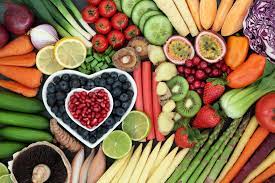
Nowadays we are changing to modern so that we are losing our old things and habits. The olden days we used to eat Ragi, wheat, pluses, cereals, grain, veggies and fruits. In modern days we are taking all these less and other items heavy. We should eat for our body it must get strength to fight with diseases so that olden days foods and medicines are the best. In olden days also there was diseases but now before curing one disease many diseases are coming line by line. So to cure this we need olden days food.
Ginger: This ginger helps to raise immunity in our body. It is very good throat infections and it kills all the viruses which enters through throat. While drinking hot tea mixed with crushed ginger it will kill all the infections in your throat if you don’t like to eat ginger mixed in food. We should use ginger everyday in everything so that it will be powerful and helpful for your body.
Papaya: In fruits this also a best fruit which helps human body function abundantly. That to country papaya is the best it will not be good as hybrid. All good this will be worst for kids even though try to eat country papaya. It is good in every thing. It really raises the immunity level. What is possible to eat near us and good in everything. “If we eat apple we can keep doctor away” this is same like that but only the country papaya.Turmeric: This the best medicine in food for all things we can use from our head to toe we can use turmeric. It’s a gift from god because it can cure what kind of thing as soon as possible. Turmeric we can use in milk and food. Turmeric is a best fighter against diseases this turmeric is used as powder in packets but the pure turmeric which is used in olden days it cures all things. Turmeric not only gives color but also taste and kills the any kind of diseases, injuries and bacteria.Almonds: We should eat at least four almonds daily. It is very helpful for body and brain. If we eat daily we could remember each and everything and our body remains healthy. Almonds we should soak in water night and in morning remove the outer cover and eat in empty stomach. Almonds also fights against viruses and diseases. It also burns fat.These are some of the immunity raising foods we eat without knowingly there is so much good things in each and everything

| THE FIRST WEALTH OF OUR LIFE IS OUR HEALTH | TO ENHANCE YOUR BODY REPLACE HEALTHY FOOD |
IMPORTANCE OF INTERNSHIPS
“Successful People are not gifted. They just work hard, then succeed on purpose” – G.K.Nelson.

In the initial years of college, we all will be living in a fantasy world where we are with a feeling that we have everything one could wish for. The reality hits us hard on the pre-placement phases of our college. At this point in time, we are obscure about our future. The situation can be handled with ease if we start to do an internship after the first year of our college. This could be either a remote one or a full-time one. Choose according to your convenience and college practices.
Sites for getting your first intern:
“Your big opportunity may be right next to where you are now” – Napoleon Hill.
There are a handful of trustworthy sites for choosing your intern from. Some of them are as follows:
- Internshala.
- Letsintern.
They have internships for various fields and experiences. Choose one which suits you the best. Never fall for internships that ask you for money. Even if it’s an unpaid internship but it could provide you a better experience then never hesitate to go for it. Most companies don’t expect much from an intern in the beginning. They look for the dedication and interest in the role assigned to you. They assist you well in the beginning so that you can move forward without any hurdles.
Perks of an Internship:
- They mold you from the scratch into something which you never expected.
- It provides you better clarity on the career path you need to choose from and the skillsets needed for the same.
- Most importantly you will get to know yourself better. In college, we would have a bunch of friends with whom we are comfortable playing around. In a workplace, this may or may not happen. But you will get adapted to the environment to deal with different kinds of people at an early stage which will for sure help you in the future.
- Some companies provide internship extension and full-time work opportunities for their interns based on their performance which will turn into a hassle-free process for both sides.
- In case if it’s a paid internship, you will realize the value of money you have been using in the past and this will make you utilize the economy better.
- During the internship, you will have to manage your college assignments, studies, and exams. Although the process seems to be hard in the beginning, once you master the multi-tasking and time management skills you are ready to face the real-time challenges of the world.
- In case if the internship domain did not excite you much then it’s also a good sign. You have neglected out an option at an early stage.
Nothing can be mastered at its best in the first attempt. Try hard, learn and unlearn to make the best out of it. Never have hesitation or fear to start again. As experts say you are not starting from scratch , you are starting with experience.
COUNTERING THE NEXT WAVE of covid -19
News
• State preparedness to manage the possible third wave of Covid-19 .
• Provides a real time analysis of data – few
suggestions and strategies for effective management
Delhi Administration’s policy responses .
• In January 2021 – first wave subsides – the need for hospitalisation of covid-19 patients fell drastically.
Delhi administration was using less than 20% of its bed capacity.
• In February 2021 – Delhi Government reduced the bed capacity to the level of just above 5,000
• In March 2021 – health system collapsed – increase in the number of covid-19 cases hit by the second wave of pandemic.
• In April 2021 – bed occupancy went from 33%
to over 90%
Government – increased its bed capacity – could not keep pace with the rise in covid
cases .
• In May 2021 – utilisation of government hospital beds went rapidly back to 30%
Many other areas in the country were experiencing a rise in cases.
Inference
• COVID-19 waves require the health infrastructure to be elastic .
• Demand for COVID-19-specific health infrastructure is spatially varied – health
capacity at a fixed location will not be sufficient.
• Conveys the difficulty that several administrations in the country face
Hard to increase the capacity in response to the kind of surge – in April 2021
Key health infrastructures don’t exist in all areas in our country
Real time analysis of data .
• 145 districts – accounted for 75% of the cases during the 1st wave – Same accounted
for up to 80% of cases during the 2nd wave.
Permanently at risk Districts – districts that were hit by the 1st wave, affected in the 2nd wave to a greater extent
Population size, density and mobility make them prone to rapid spread.
Need reserve capacity and resources to be expanded – prevent any risk associated
with possible 3rd wave
Suggestions
• Mobility framework – capacity to move healthcare facilities from one area to another
Identify what resources can be moved – based on mobility costs and supply elasticity.
• Policy innovations in three areas
Personnel management – Inducting trained final year medicine and nursing students – Rehiring of retired medical personnel – use
paramedical workers
Resources with high mobility costs need to be evenly distributed – ensure equity in access in poorly served areas
Spatial equity
Expanding the health infrastructure covering all regions
Providing accessibility through enhanced regional and area connectivity .
• Leads to sharing of resources within the country – reduces inaccessibility and
inequity.
• Efficiency of resource-sharing increases with the
area of coverage.
States or districts – benefits of resource sharing is larger – coordinate and build trust
among themselves.
• Greater institutional coordination for a long run is
necessary
Bodies such as the National Disaster Management Authority and the NITI Aayog could play a vital role.

AN ANLYSIS ON OVERALL GROWTH IN THE INDIAN ECONOMY [2020-2021]
![AN ANLYSIS ON OVERALL GROWTH IN THE INDIAN ECONOMY [2020-2021]](https://eduindex.org/wp-content/uploads/2021/06/1609833276_axhez7_istock_indian_economy_stocks_markets_915768_1605451970.jpg?w=700&h=1&crop=1)
The following research paper discuses about the various aspects of the Indian economy, GDP, Economic slowdown etc. The COVID-19 pandemic ensued global economic downturn, the most severe one since the Global Financial Crisis. The lockdowns and social distancing norms brought the already slowing global economy to a standstill. Global economic output estimated to fall by 3.5% in 2020 (IMF January 2021 estimates).Governments and national banks across the globe conveyed different arrangement instruments to help their economies, for example, bringing down strategy rates, quantitative facilitating measures, and so forth India received a four-column methodology of control, financial, monetary, and long haul underlying changes: Calibrated financial and money related help was given, padding the defenseless during the lockdown and boosting utilization and speculation.
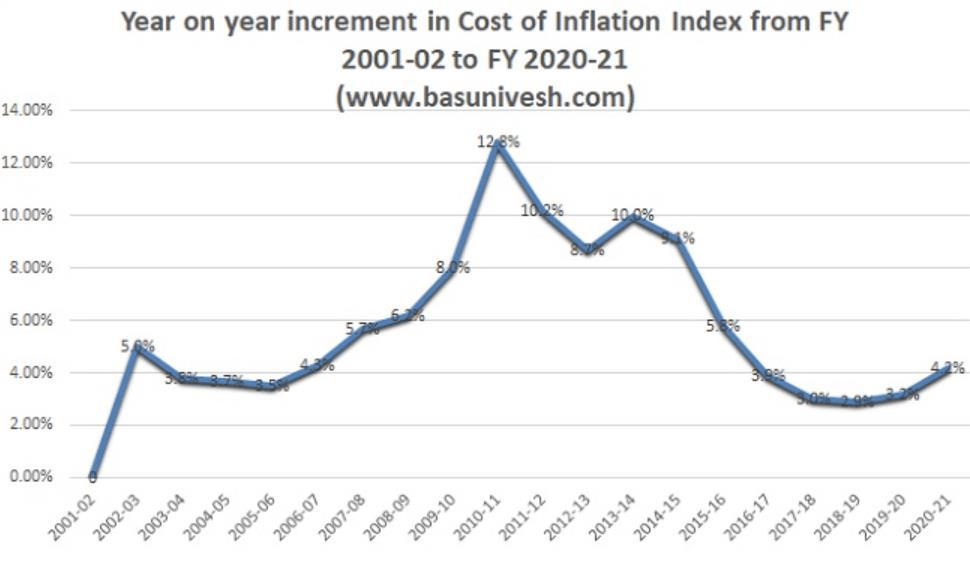
PRICES AND INFLATION
Sustainable Development and Climate Change
Voluntary National Review (VNR) presented to the United Nations High-Level Political Forum
(HLPF) on Sustainable Development . Limitation of SDGs is significant to any methodology pointed toward accomplishing the objectives under the 2030 Agenda. Sustainable advancement remains center to the improvement technique regardless of the remarkable COVID-19 pandemic emergency .Eight National Missions under National Action Plan on Climate Change (NAPCC) zeroed in on the targets of variation, relief and readiness on environment chances. India’s Nationally Determined Contributions (NDC) states that money is a basic empowering influence of environment change activity . The financing contemplations will subsequently stay basic particularly as the nation ventures up the objectives considerably .The objective of mutually preparing US$ 100 billion every year by 2020 for environment financing by the created nations has stayed tricky.
GDP
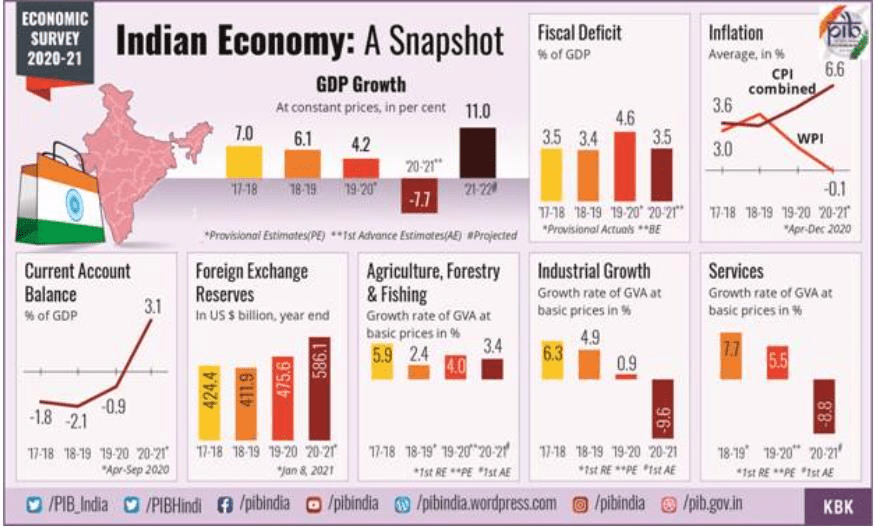
India’s real GDP has recorded a growth of 11 per cent in 2021-22 and the nominal GDP by 15.4 per cent- which has been the the highest since independence. The V-shaped economic recovery is supported by the initiation of a mega vaccination drives with the hopes of a robust recovery in the services sector and prospects for robust growth in consumption and investment. The Union Minister for Finance & Corporate Affairs, Nirmala Sitharaman presented the Economic Survey 2020-21 in Parliament, which stated that the rebound will be led by the low base and continued normalization in economic activities as the rollout of COVID-19 vaccines gathers traction. The fundamentals of the economy remain strong as gradual scaling back of lockdowns along with the astute support of Atmanirbhar.
Conclusion
India has evolved through the pandemic on the back of strong policy initiatives by the government, along with an optimistic outlook for economic recovery. India has administered ~4 million doses of COVID-19 vaccines in two weeks since January 16, 2021, becoming the fifth-largest inoculated country globally. India has become the world’s vaccine hub and extended support to 90+ countries seeking to stock up vaccines.
Since March 2020, early lockdown, health-infra ramp-up, incremental unlocking, blanket testing, social distancing, tailored fiscal stimulus (to reduce supply-side disruptions and revive demand) and structural reforms initiated by the government have helped restrict the fatality rate in India to 1.2%—one of the lowest in the world. India is emerging as the world’s fastest-growing major economy, with the IMF holding its growth forecasts as high as 6.8% for FY23. Also, the Economic Survey 2020-21 has drawn attention to the V-shaped economic growth—a testament to the burgeoning Indian economy and its intrinsic strength. India is not yet out of the danger of the pandemic. Social distancing continues to be the most effective tool to combat the pandemic as activity levels continue to rise in the economy boosted by the rapidly escalating inoculation drive in the country. Infrastructure to boost sectors to grow with unlocking of economy Terming investment in infrastructure “quintessential” to boost growth, the Economic Survey on Friday said post unlocking of the economy, infra sectors are poised for growth and construction of roads is expected to return to the high pace attained before COVID-19. The infrastructure sector will be the key to overall economic growth and macroeconomic stability, the Survey said emphasizing that the year after the crisis (2021-22) will require sustained and calibrated measures to facilitate the process of economic recovery and enable the economy to get back on its long term growth trajectory.
Significance Of Marriage As Social Institution

Abstract
Marriage is an institution that admits man and woman to family life. It is a stable relationship in which a man and a woman are socially permitted to live together without losing their status in the community. Marriage is not merely concerned with the couple; rather it affects the whole society and future generations. The responsibilities it entrusts a couple with are thus both heavy and delicate. In Hindu view, marriage is not a concession to human weakness, but a means for spiritual growth. Man and woman are soul mates who, through the institution of marriage, can direct the energy associated with their individual instincts and passion into the progress of their souls. Chaucer, the father of English poetry, has beautifully established a very noteworthy feature of the blissful state of marriage and husband-wife relation in his essay The Merchant’s Tale.
What is marriage?
Marriage is a socially approved relationship between man and woman that binds each other into a permanent, official relation of husband and wife. It is an important social institution that satisfies physical, social, psychological, cultural and economic needs of men and women. According to the ancient scripture marriage is regarded as a socio-religious duty constituted to attain three important aims of life the dharma (duty), rati (sensual pleasure) and praja (progeny).
Marriage as described in religions
Hinduism: Hindu regards marriage as a socio-religious duty of an individual.
Islam: As per Islam marriage is an obligatione. “Sunnah” which must be fulfils by every Muslim.
Christianity: In Christianity marriage is held crucial to life. It lays weight age on the establishment of a mutual relationship between husband and wife and on their duty to each other.
Key elements of marriage
Like family, marriage is also an important universal social institution which is found in almost all societies.
It is socially sanctioned relation where man and woman lives together, have sexual relation and produce children.
It is a permanent and enduring bond between husband and wife which is design to fulfil each other needs.
This relation is valid only when it has social approval without social approval it is illegitimate.
It is a relation between two individuals of opposite sex is based on customs, law, mutual rights and obligations.Marriage is an essential element to establish a family which further helps to protect and up bring the children. Without marriage family is incomplete.
It is an essential relation between men and women to continue the human race through procreation.
It is associated to the religious ceremony which provides it social identity and legitimacy.It regulates the sexual desire of men and women according to prescribed customs and laws.
It is identified as a new phase of life for the married couple.
It is the only a social institution where the sexual gratification is ensured along with social and cultural mechanism for the continuation of the family.
The offspring of the family born of marriage is only considered the legitimate which is very important in matter of inheritance and succession.
Mahadevi Varma
In the 1920s, a time when few Indian girls could dream of finishing school and being anything other than housewives and mothers, one-woman name Mahadevi Varma discovered a love of writing and went on to become one of the key figures in a new era of Hindi poetry.
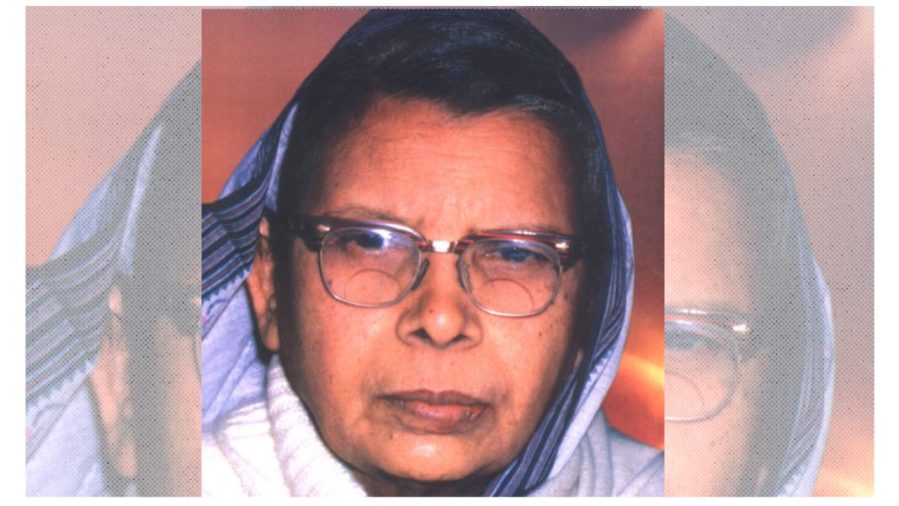
Mahadevi Varma best known as an outstanding Hindi poet, was a freedom fighter, woman’s activist and educationist from India. She is widely regarded as the “modern Meera”. She was a major poet of the Chhayavaad generation, a period of romanticism in Modern Hindi poetry ranging from 1914- 1938. With passage of time, her limited but outstanding prose has been recognised as unique in Hindi Literature. She was a prominent poet in Hindi Kavi sammelans (Gatherings of poets).
She was the Principal, and then the Vice Chancellor of Prayag Mahila Vidyapeeth, a woman’s residential college in Allahabad. She was awarded India’s highest literary award, for lifetime achievement, the Sahitya Akademi Fellowship in 1979, followed by the Jnanpith Award in 1982. She was the recipient of the Padma Vibhushan, India’s second-highest civilian award, in 1988.
Mahadevi Varma was deeply affected by Buddhism and also contributed to the Indian freedom movement. She even tried to become a Buddhist bhikshuni. Mahadevi was appointed as the first headmistress of Allahabad (Prayag) Mahila Vidyapeeth, which was started with a view to imparting cultural and literary education to girls through Hindi medium.
Later, she became the chancellor of the institute. Mahadevi is considered to be one of the four major poets of the Chhayavaadi school of the Hindi literature, others being Suryakant Tripathi ‘Nirala’, Jaishankar Prasad and Sumitranandan Pant. She was also a noted painter. She drew a number of illustrations for her poetic works like Hindi and Yama.
Many of her books are included in the syllabus for school children by CBSE. A few of these are; Neelkanth, which is about her experience with a peacock; Gaura, a story about a beautiful cow; Mere Bachpan Ke Din and Gillu, about her childhood memories; and also her poem Madhur Madhur Mere Deepak Jal. Mahadevi Varma studied the compositions of devout poets like Meera, Sur and Tulsi from childhood. This is the reason that these poets became his source of inspiration. Following are the major compositions of Mahadevi Varma – ‘Neehar’, ‘Neerja’, ‘Sandhyagit’, ‘Deepshikha’, ‘Yama’, ‘Movies of the past’, ‘Lines of Smriti’, ‘Links of series’ etc.
Mahadevi Verma received several awards for her poems which had a language that was original and lyrical, at the same time having profound meaning. She was able to paint a picture that was both colourful as well as had depths of philosophy in it.
HOW TO STAY MOTIVATED
Motivation is crucial; it fuels our drive to figure or achieve certain objectives. In pursuing your goal, you develop habits. Your habits then assist you remain disciplined to achieving your goals whether you are feeling love it or not. It enables you to stay consistent over time. Consistency ensures that your goals become your focus and motivation becomes just a way to an end.
Motivation is that the process that initiates, guides, and maintains goal-oriented behaviors.Therefore, it’s what causes you to act. Motivation involves the biological, emotional, social, and cognitive forces that activate behavior.
It is often done by setting goals!
A major source of motivation stems from setting goals the proper way that also include milestones. Milestones offer short-term markers on the route to achieving our goals.
If you’re feeling your motivation wane, revisit to the fundamentals and set clear and specific goals that are measurable and include milestones. Sometimes, we’d like to step back and appearance at just what it’s that we would like out of life.
another aspect are often eliminating the unwanted!
Staying motivated involves your ability to limit distractions. Television, Internet, cell phones, games, and excessive socializing count as distractions.
If you’re serious about your goals, then you’ve got to urge serious about just how you employ the time that you simply do have. Create blocks of your time where you opt to show everything off. This includes shutting down the smartphone, home phone, Internet, and anything which will interrupt you.
One more tip,face your fears!
Take out a sheet of paper and write down all of your fears. Then, write down why you’re scared of those things. Finally, create an excuse on why each of these reasons aren’t true. Reference past experiences where you’ve pulled through or accomplished something you didn’t think was possible at the time.
Yoga also helps to release positive endorphins into the body that help to stimulate the mind, helping to battle the strain hormones that prevalent within the mind and body.
Human beings love challenges, but as long as they’re within the optimal zone of difficulty. Tasks that are significantly below your current abilities are boring. Tasks that are significantly beyond your current abilities are discouraging. But tasks that are right the border of success and failure are incredibly motivating to our human brains. we would like nothing quite to master a skill just beyond our current horizon.
Look forward towards a life achieving your dream goal.

SECULARISM- IS IT JUST A THEORETICAL CONCEPT IN INDIA?
BY: VAIBHAVI MENON
“Preamble declares India to be a sovereign, socialist, secular and democratic republic.” With the Forty-second Amendment of the Constitution of India enacted in 1976, the Preamble to the Constitution asserted that India is a secular nation. This very line from the Preamble of India raises the question that is India really a secular country? Secularism is the principle of separation of the state from religious institutions. It allows no discrimination on the grounds of religion. People are allowed to practice any religion or choose not to practice any without getting judged or discriminated by others. However various instances in India have proved to be contradictory to this statement.
India is a diverse country with many religions cultures traditions values yet at times these aspects are not respected. Religious violence in India includes acts of violence by followers of one religious group against followers and institutions of another religious group, often in the form of rioting. Some of these examples range from Exodus of Kashmiri Hindus, Gujarat communal riots (1969), Anti-Sikh riots (1984), Religious involvement in North-East India militancy, Anti-Hindu violence to Violence against Muslims, Anti-Christian violence, Anti-atheist violence. India is characterized by more ethnic and religious groups than most other countries of the world. Aside from the much noted 2000-odd castes, there are eight “major” religions, 15-odd languages spoken in various dialects in 22 states and nine union territories, and a substantial number of tribes and sects. Three ethnic or religious conflicts have stood out of late: two occurred in the states of “Assam and Punjab; another, the more widely known Hindu-Muslim conflict, continues to persist. The Assam problem is primarily ethnic, the Punjab problem is based on both religious and regional conflicts, while the Hindu-Muslim problem is predominantly religious. It is easier to outline these problems than suggest what should be done about them. In a situation of mutual distrust, almost any solution will generate controversy. Still, three solutions seem plausible. First, further decentralization of power to states would be of considerable help. This would partly address the problems in Punjab and Assam, both of which have complained of the gap between the resources they are entitled to and the resources they actually process. Second, a conscious attempt needs to be made to improve the educational attainment and economic level is easily demonstrated of Muslims whose socio-economic backwardness is easily demonstrated. The Muslim elite could do much in this respect. Special educational privileges are constitutionally sanctioned but they ought to be worked on. Modern liberal, as opposed to religious, education would be of great help. The government, for its part, could allay the apprehensions of the Muslim community by better representing Muslims in the police and paramilitary forces. Third, the secular leaders, to the extent that they exist, must make a sustained effort to reintroduce and deepen secular, socioeconomic concern in democratic politics. Partisan communal leaders and communal electoral mobilization, both within and outside the communal parties, but particularly within the ruling party, should be exposed.
From the above information it can be understood that secularism can be taken as a theoretical concept until the mindset of people can change because in the end only we can bring a change and do something about it.
Organic Farming
Organic farming is an advanced and a practical type of horticulture that gives customers new regular ranch items. Natural cultivating works in syn-chronization with nature instead of against it. This goal is accomplished by utilizing strategies to improve crop yields without hurting the regular habitat just as the individuals who live and work in it. Natural agribusiness offers an exclusive mixture of climate agreeable practices, which require low outside sources of info, in this way adding to expanded food accessibility. Natural cultivating has an extremely sure impact particularly on winged creatures, creepy crawlies, weeds, untamed life, and soil verdure. Regular cultivating is capital escalated, which requires more manu-factured sources of info and energy when contrasted with information and work concentrated natural cultivating. Natural horticulture utilizes energy more capability than customary agri-culture. When contrasted with traditional agribusiness, natural cultivating produces practical food items, liberated from manufactured composts and pesticides. It likewise gives business openings and monetary advantages to neighborhood networks. The meth-ods used in natural cultivating are all the more exorbitant and work serious, however end up being more savvy over the long haul. Since natural agribusiness supplies more green-house gases in the dirt, the ranchers across the globe can address the atmosphere fiasco by changing to natural techniques. Furthermore, natural agribusiness can possibly address food security issues. Enough proof is accessible to demonstrate that natural harvests are a preferable wellspring of supplements over their comparing ordinary structures. Natural frameworks give higher creature invulnerability and expanded infection protection from plants, with 50 % less mycotoxins in yields and a diligent timeframe of realistic usability.
They have higher micronutrient content, and more conjugated fatty acids for better human health, including lower incidences of noncommunicable diseases. Organic agriculture merges modernism, custom, and science to manage the shared surroundings encouraging fair relationship and high quality of life for everyone involved.
The issue of Electric Vehicles and their sustainability

Tesla launched the Model-S in 2012, the luxury car was one of the more mainstream vehicles that accelerated the growth of electric vehicles. Some traditional cars manufacturers also followed the suit to compete with Tesla. Fast forward to a decade later, electric cars have become even more relevant and every major internal combustion engine manufacturer has an electric car model in their portfolio.
The rise of electric cars has been commendable with 75% growth rate and current sales north of 3 million units. But we have to look at the sustainability of electric vehicles realistically. Internal Combustion Engines cars have come a long way from 20 years back. Conventional cars are significantly more fuel-efficient and release less harmful gases to the environment. But still, they are incomparable to electric vehicle zero fuel emissions.
When we talk about electric vehicles, we also have to consider the whole infrastructure that is required to sustain that. The elephant in the room is the batteries. Battery technology has progressed a lot in the past decade but still, there are lots of limitations that have hindered the adaptability of EVs. One of the biggest issues that EVs face is the limited lifespan of batteries. The average lifespan of a typical EV battery is approximately 10 years depending upon the usage. In many EVs, the replacement of batteries is very difficult or almost impossible. Another problem is the case of recycling batteries. It’s not easy to recycle batteries and currently, electric vehicles have a very small percentage of market share. But as more and more people adopt EVs, there will be more EVs that will have to be scrapped and the proper disposal of batteries will be required. This can be a cause of environmental concerns as batteries will accumulate with no proper arrangement for its recycling.
Issues that will have to be addressed
The problem is much more than just battery technology. The power delivery and infrastructure also need to be developed to support the EVs. It’s going to be easier in urbanized areas with a small population, for instance Norway has been moderately successful in adopting EVs as a standard with plans to totally cease the sales of internal combustion engine vehicles by 2025. This target is going to be much more difficult in large countries with large populations and rural populations where distances between cities are larger. It also requires a considerable amount of capital resources to make the transition possible. Currently, traditional gas vehicles are still more viable, practical, and cheaper than EVs. This tells us that EV manufacturers and the government will require much more than subsidies to convince people to convert. EV manufacturers will also need to control the amount of energy that is required to produce a single EV, which is much more than a gas vehicle.
The extraction of lithium is also a contested issue and just as fossil fuels, the elements that are required to make batteries are non-renewable. Lithium can be extracted in a limited capacity and with more demand, it will become even more challenging to supply the raw materials required to build a battery. Building new battery production factories will also require a considerable amount of time and money. Until battery production facilities are not increased, supplying batteries will be a challenge and mass adoption will not be as fast as we would like it to be.
In conclusion, EVs are certainly the future, they are cheaper to operate and have zero emissions. But there are many other issues like infrastructure, battery supply, and proper disposal that would have to be addressed.
References:
LIFE OF A PRIVATE TUTOR

WHAT DOES A PRIVATE TUTOR DO?
A Private tutor first explains the concept of a topic or subject to the student. Later, he/ she prepares notes, composes and compiles all the important digestible materials related to the subject, types it digitally and finally sends it to his or her students in PDF or Word format. Sometimes the tutor narrates the basic notes online and offline to the students and tries to make it more lucid for them.
TODAY’S STUDENTS
The students’ community is the laziest group of people. They love joining a tutor or a tuition only basically to extract the notes and seldom shows interest to listen the vital basic concepts dealt in the running class. Sometimes joining some heavy weight teachers’ class is understood to be the status symbol. This becomes the matter of delicious discussion among the parents’ community. They share among them, where studies the son or daughter of Mrs X or Mrs Y.
PARENTS’ PLUNDER
Parents are the unique group of people. Once they admit their wards in any tutorial, they feel like bestowed with the salvation from all the responsibilities of their ward and forget the course, tutor and simply the fee to be paid at the end of the month. So, when the negotiated fee is demanded the hopeful teacher witnesses the grimacing faces of the parents as if some havoc loan has been demanded. Parents bargain with their trade and class as if they are green vegetable vendors and selling some products which must be haggled over. In this sluggish talk they forget one very vital thing that by showing such behaviour they destroy the very motivation of the tutor, who is actually taking charge of the pedagogical development of the child. Definitely, a motivation always gives birth to satisfactory results. If teacher will be deprived of his or her genuine demands, how will he develop fertile brain of a student and how will he sow the ‘Seeds of Future education’ in that soil.
Not only this, parents’ humiliating arguments over the matter of fee with a tutor honk in front of his/her ward. Raising a negligible weakness of the teacher, they create a big issue and try to deduct the amount of the fee to a big extent.
TUTORS’ TRAGEDY
PRIVATE TUTORS are the most helpless and humble community of the world. They love their self-respect more than their bread and butter. They maintain a dignified silence in all the turbulent matter even if they are shockingly annoyed by the parents. Private tutors are very strong in their will power. They mentally, physically, academically and to an extent financially make themselves ready to cope up with the demands of education in the upcoming situation of the existing world. They never give up and compose themselves with the fortification of all types of desired technique and tools to support their beloved students. Throughout the year, without taking leave or holiday, they try to negotiate their terms in best possible way in best possible time. In case they miss the class, they compensate it on some other day of the week. They also feel happy to sacrifice their happiness and give priority to the student’s education.
ROLE OF PRIVATE TUTOR
Maximum Schools run after finishing the syllabus within a very restricted time interval. It becomes very tough for the school teachers to handle all the textual question and queries successfully and satisfactorily in the class. Usually, they dump them on the wobbly solders of students’ army. Being traumatised with this unwanted pressure they start a “google search “and which eventually ends on the threshold of a private tutor.
Private tutors’ role starts here. They deal each and every question thoroughly, meticulously and deeply one after another. The take much toil to collect, organise, compose and supply information to the “soul’s satisfaction” of a student. Doing all these they actually give a big contribution to the today’s society and tomorrow’s world.
LET US BE TOGETHER TO BRING A VITAL CHANGE
Now the question arises that in spite of a round the clock support by these academic warriors, why does the condition of the private tutors so pathetic? Why are they dragged miles away from true recognition and respect? Why are they bound to lead an unrewarded, unprotected life in this happening, blooming world?
Although mushrooming of online teaching portals has given little chances to the few fresh and charming candidates after several rounds of performance appraisals but why do they hesitate to clean the sweaty faces of true academic front runners who still lag behind in touching the light.
In spite of bringing sunshine to all and sundry why are they bound to lead an unprogressive, unattended life?
Let’s put our collective effort to support, boost, encourage and motivate our real society changers, our own private tutors.
 Eduindex
You must be logged in to post a comment.