JET AIRWAYS ISSUE

• Factors that led to the issue:
 2015 – Jet acquired Air sahara – with huge price – led to huge loses.
 Competition from low budget airlines like Indigo, Go-air.
 Rising fuel prices.

• Debt – ₹8,000 crore to lessors, suppliers, pilots and oil companies.

• Lenders were searching for prospective buyers.

• Denied ₹400 crore as emergency fund – later
it was jet grounded.
• A Resolution Plan: rehabilitation plan for a
Corporate Debtor (CD) going in insolvency.
 Section 5 (26) of IBC 2016 – “Resolution plan means a plan proposed by resolution
applicant for insolvency resolution of the corporate debtor as a going concern in
accordance with Part II”
• Mandatory contents of the resolution plan:
Financial creditors and Operational creditors.
 Financial creditors: relationship with the entity is a pure financial contract – loan or a debt security.
 Operational creditors – liability from a transaction on operations.

• Committee of creditors (CoC) is set up – comprising of financial creditors.
 Appoint a resolution personal/ professional.

• Resolution personal
 Appointed by CoC
 Presents a resolution plan to the CoC
 CoC must approve a resolution plan.
 Resolution process must be
completed within 180 days – may be extended by a period of up to 90 days after NCLT’s approval.

Jet Airways Resolution Plan.

• Mumbai Bench of the NCLT has approved it.

• Resolution plan from a consortium.
 UAE-based businessman Murari Lal Jalan and U.K.- based Kalrock Capital. • Details
 Total claims – ₹15,432 crore
 Jalan-Kalrock consortium – to pay creditors & banks – ₹1,183 crore over a 5 period.
 First tranche of ₹280 crore – paid in cash after 180 days of the new promoters taking ownership of the jet airline.

 Second instalment of ₹195 crore – paid in next 730 days.
 Balance – paid through a mix of cash, proceeds generated from the sale of assets and annual cash flows generated by airline.
 Stock the distribution
 Banks – 9.5%
 Consortium – 89.79%
 Employees – 0.5%
 Public shareholding – 0.21% • Challenge – Getting the slots back for the jet airlines is going to be difficult and expensive.

Airways

Implementation of Nanotechnology with DNA

Abstract:

DNA (Deoxyribonucleic acid) is the molecule that stores and transmits genetic information for the development, functioning, growth and reproduction of all living organisms and many viruses. It possesses remarkable binding specificity, thermodynamic stability and can be created with infinite choice of sequences that bind to their complementary nitrogenous bases (namely adenine (A), cytosine (C), guanine (G) or thymine (T)). It is structurally well defined on the nanometre scale and has a persistence length of 50 nanometres under conventional conditions. It can be rapidly synthesized and modified using automated methods. The field of DNA nanotechnology uses its information to assemble structural motifs and connects them together. This field has a significant impact on nanoscience and nanotechnology, and controls molecular self-assembly. Here, we summarize the approaches that are used to assemble DNA nanostructures and examine their emerging applications in areas such as biophysics, diagnostics, nanoparticle and protein assembly.

Introduction:

Nanotechnology is the purist’s approach to biomolecular engineering. This field aims to create molecular structures and devices through the exclusive use of DNA as an engineering material1. The well-characterized nature of DNA base pairing provides an easy means to control DNA interactions. The success of DNA nanotechnology comes from three key ingredients: 1) our quantitative understanding of DNA thermodynamics, which makes it possible to predict how single-stranded DNA molecules fold and interact with one another, 2) the rapidly falling cost and increasing quality of DNA synthesis, and 3) the focus on cell-free settings, where designed reaction pathways can proceed without interference from DNA and RNA processing enzymes that might be encountered in cells. DNA nanotechnology has long been motivated by the goal of building ‘smart therapeutics’, drug delivery systems, tools for molecular biology and other devices that could interact with or operate within living cells. Such applications play to the obvious strengths of nucleic acid nanostructures and devices, particularly their small size, biocompatibility and straightforward manner in which they could be programmed to interact with cellular nucleic acids through hybridization.

Cell-free DNA nanotechnology

To operate reliably in complex, wet environments, living organisms use sensory receptors to detect changes in that environment, motors and actuators to adapt to the environment, computational control circuits to convert sensor information into motor activity, and structural elements that protect and organize these components. Intriguingly, cell-free DNA nanotechnology has made progress towards the construction of most of the functional components — both structures and dynamic devices — required for creating molecular ‘robots’ that can emulate some of the behavioural complexity observed in biology.

DNA nanotechnology in lysates and fixed cells

Cellular conditions are considerably different from that of cell-free experiments. The presence of nucleic-acid-binding proteins, including DNases and RNases, may interfere with device performance, and cellular environments are highly structured, which inhibits the free diffusion of exogenously delivered nucleic acids. Cell lysates, serum and fixed cells provide reaction environments that each capture some of the complexity of live cells and enable testing and optimization of nucleic acid devices in well-controlled conditions.3

CONCLUSION:

DNA-based therapeutics and diagnostics are set apart from more established approaches because of their capacity to respond to the surrounding environment. Molecular logic and conditional (un)hiding of drug moieties could decrease side effects and increase specificity. Even the relatively simple one- or two-input systems built so far have resulted in increased specificity and performance, and could be further improved with more complex multi-input logic. Diagnostic and therapeutic decisions are routinely based on the analysis of panels of multiple molecular markers, be they proteins, RNA, DNA, lipids, sugars or metabolites. For example, immunologists must often consider large numbers of cell surface proteins to delineate all of the various cell types in a blood sample. Gene expression classifiers that reliably distinguish different tissues and disease states are typically built on measurements of tens or hundreds of different RNA species. Given the success of dynamic DNA nanotechnology in scaling up the size and reliability of molecular circuits in cell-free settings, it is intriguing to think that DNA ‘biocomputers’ could eventually perform complex diagnostic tasks based on the analysis of tens of molecular markers directly in living organisms.

REFERENCES:

Seeman, N. C. & Belcher, A. M. Emulating biology: building nanostructures from the bottom up. Proc. Natl Acad. Sci. USA 99, 6451–6455 (2002).
Chen, J. H. & Seeman, N. C. Synthesis from DNA of a molecule with the connectivity of a cube. Nature 350, 631–633 (1991).
Fu, T. J. & Seeman, N. C. DNA double-crossover molecules. Biochemistry 32, 3211–3220 (1993).

THE STARTUP STORY

The new era has ushered in a lot of modernization and technology. This has brought drastic changes to our lifestyle, resources and social conventions. Gone are the days when business had very narrow options, too many restrictions, was very risky, and people with billion-dollar ideas and great potential had to leave their entrepreneurial dreams due to lack of finance, support and funding. Doing business is still risky and markets are still volatile, but today’s smart minds are able to implement their mind-boggling and zealous plans to brick, stone and mighty structures, thanks to the foundation base here – venture capital firms, angel investors, government organizations and policies, and big multinationals in search of innovative technologies to modify the good old operating procedures of their voluminous businesses.

The startup culture in India has taken highway speed and numerous new ideas are turning into success stories every year. A reason for this may be the support that today’s budding entrepreneurs are receiving, the belief and motivation that they can be first generation innovators and the comfort of investments that they secure (though comfort is a euphemized word here; in reality, these enthusiastic people are made to go through tedious processes of convincing their investors to load fuel into their new models (why not! Putting money into their powerful plans is a matter of high trust and equal risk), and public outreach is a different process altogether, very unpredictable and inestimable). In the big picture, we realize how these people thought ahead of time and converted their simple ideas into stupendous businesses, caught the eyes of the public and commercialized their offerings. A large part of their hugely positive reviews can be credited to their excellent market research, reaching out to the right target audience, personalizing and customizing their products and services according to the trends in town and customer needs, revamping their strategies and product range, efficient marketing and social skills. The best part of many of these good startups is that they either innovated into a booming sector, thought out of the box or renovated an existing product or service in the market in a much better way. A large online presence of these companies has also contributed to their connectivity with the consumer directly, resulting in better camaraderie, companies understanding the expectations of their customer and delivering better with time. Technological tools have hugely impacted the way these companies work, which is where local and small-scale ideas are getting the big push to enter a bigger world of opportunities and development.

India has been having its own league of startup unicorns and soonicorns in the recent years. Unicorns are privately held startup organizations with a market value of over 1 billion dollars. India is slowly but strongly transforming into a motivating tech startup ecosystem. The last year of COVID-19 pandemic was expected to be a big disaster in the corporate arena, but entrepreneurs have made huge transitions in their strategies and have played on big risks to make up for an unforeseen, unpredicted situation. Last year rather witnessed the addition of many unicorns into the elite startup club. These companies are mostly active through online mode, including startups in online pharmacies, social media platforms, e-commerce websites, digital and computer technology, digital education apps, online banking and fintech, cryptocurrency, stock market trading, enterprise tech, online dating sites and other technology sectors. They have paced smart, swift and risky to turn an unprecedented lockdown situation conducive to their way and have made an intelligent entry into India’s booming startup hub. A recent report in financial newspaper Business Line suggests 35 soonicorns – soon to turn unicorns are to bag the unicorn title by the end of this year. These companies are establishing their hold into fintech, edtech, healthtech, foodtech, agritech, SaaS, logistics, digital gaming and e-grocery sectors.

The new world is revamping the face of entrepreneurship, paving the way towards digitalization and those identifying niches and turning them into opportunities in this sector have made it well and big. This is a fair opportunity for those brainiacs who have it in them, the ideas and potential to make a change, a place for themselves in this highly competitive and demanding world, and are actively seeking for the experienced bigwigs and believers to power their brave shot.

SAVOURING FOOD WITH ALL THE SENSES

It’s quite enthralling to watch Detective Charles Boyle’s character from the famous comedy show Brooklyn Nine-Nine defining his love for ‘genuinely satisfying’ food with the help of his gifted sensory characteristics and his incredible ability to rate the overall acceptability and rank of a restaurant’s special food dish. Truly, the art of rating a food item based on various sensory parameters like taste, smell, flavour, aroma, mouthfeel and numerous other qualities which make up a food connoisseur’s review of what how good and proper dish is, is delicate as well as intriguing. This also covers identifying the aspects and suggesting near-exact methods used to prepare the dish to perfection. The amount of a particular ingredient in the food item, the time for which it was cooked, if it was cooked in the right temperature and heat, if the procedure or recipe of the item was perfectly followed, whether and if yes, what innovation was added to the dish, whether that enhanced the sensory appeal of the dish, and if yes, what particular characteristic of the added component elevates the overall score of the complete dish, how different spices blend in together to bring out a pleasant taste to the dish, how their quantity affects the palatability of food, and oodles of other intricate but important factors that come into play when we ‘sense’ a dish. Identifying and judging all these complex parameters, separating each parameter and combining different flavours that generate one bite of the food is extremely arduous. This is when sensory evaluation experts come into existence. These members are highly trained till they develop consistent and accurate results of the sensory aspects of any food item. They are expected to rate a new food product to estimate how general public’s sensory appeal to the product might be. Their ratings and scores are also helpful to spot loopholes in a food item’s recipe, design or product packaging and improve them to get a good acceptability score. Why is sensory evaluation such an important part for consumer foods? A lot goes into a dish from when a product idea is conceived in the kitchen to its design, creation and finally large-scale production for commercial consumption. Thus, its sensory properties are critical in establishing its potential and continued success, apart from brand and product acceptance and outreach in the market. A sensory panel performs objective tests for the evaluation of sensory attributes of a food item.

What is sensory evaluation?

According to an article in Nature journal, ‘Sensory evaluation is a science that measures, analyses, and interprets the reactions of people to products as perceived by the senses.’ Another article in Elsevier defines it as ‘a systematic study of human response to physico-chemical properties which make it possible to obtain information about the sensitivity of human sense and about the four dimensions of sensory perception, that are, quantitative, qualitative, temporal and hedonic dimensions.’ A sensory panel performs objective tests for the evaluation of sensory attributes of a food item. These include discriminative, descriptive, scoring, preference, sensitivity tests. Qualitative tests are based on aroma, appearance, flavour, oral texture, geometry, fat content characteristics, while quantitative tests follow descriptive panels to measure a product’s sensory characteristics and are preferential and acceptance-based.

Thus, a sensory panel is trained to be intelligent and serious, possess discriminative stimuli, express sensory perceptions verbally, work as team and be flexible and memorize sensory information. Sensory perception of a product throws light on its important but unnoticed characteristics which go a long way to make its place in the market and be liked and sought after by the common consumer for its special and peculiar attributes.

Corruption

Corruption refers to a form of criminal activity or dishonesty. It refers to an evil act by an individual or a group. Most noteworthy, this act compromises the rights and privileges of others. Furthermore, Corruption primarily includes activities like bribery or embezzlement. However, Corruption can take place in many ways. Most probably, people in positions of authority are susceptible to Corruption. Corruption certainly reflects greedy and selfish behavior.

Methods of Corruption

First of all, Bribery is the most common method of Corruption. Bribery involves the improper use of favours and gifts in exchange for personal gain. Furthermore, the types of favours are diverse. Above all, the favours include money, gifts, company shares, sexual favours, employment, entertainment, and political benefits. Also, personal gain can be – giving preferential treatment and overlooking crime.Embezzlement refers to the act of withholding assets for the purpose of theft. Furthermore, it takes place by one or more individuals who were entrusted with these assets. Above all, embezzlement is a type of financial fraud.The graft is a global form of Corruption. Most noteworthy, it refers to the illegal use of a politician’s authority for personal gain. Furthermore, a popular way for the graft is misdirecting public funds for the benefit of politicians.Extortion is another major method of Corruption. It means to obtain property, money or services illegally. Above all, this obtainment takes place by coercing individuals or organizations. Hence, Extortion is quite similar to blackmail.Favouritism and nepotism is quite an old form of Corruption still in usage. This refers to a person favouring one’s own relatives and friends to jobs. This is certainly a very unfair practice. This is because many deserving candidates fail to get jobs.Abuse of discretion is another method of Corruption. Here, a person misuses one’s power and authority. An example can be a judge unjustly dismissing a criminal’s case.Finally, influence peddling is the last method here. This refers to illegally using one’s influence with the government or other authorized individuals. Furthermore, it takes place in order to obtain preferential treatment or favour.

Ways of stopping corruption

One important way of preventing Corruption is to give a better salary in a government job. Many government employees receive pretty low salaries. Therefore, they resort to bribery to meet their expenses. So, government employees should receive higher salaries. Consequently, high salaries would reduce their motivation and resolve to engage in bribery.Increasing the number of workers can be another suitable way of curbing Corruption. In many government offices, the workload is very high. This provides an opportunity to slow down the work by government employees. Consequently, these employees then indulge in bribery in return for faster delivery of work. Hence, this opportunity to bribe can be removed by bringing in more employees in government offices.

Tough laws are very important for stopping Corruption. Above all, strict punishments need to be meted out to guilty individuals. Furthermore, there should be an efficient and quick implementation of strict laws.

Applying cameras in workplaces is an excellent way to prevent corruption. Above all, many individuals would refrain from indulging in Corruption due to fear of being caught. Furthermore, these individuals would have otherwise engaged in Corruption.

The government must make sure to keep inflation low. Due to the rise in prices, many people feel their incomes to be too low. Consequently, this increases Corruption among the masses. Businessmen raise prices to sell their stock of goods at higher prices. Furthermore, the politician supports them due to the benefits they receive.

To sum it up, Corruption is a great evil of society. This evil should be quickly eliminated from society. Corruption is the poison that has penetrated the minds of many individuals these days. Hopefully, with consistent political and social efforts, we can get rid of Corruption.

A 100 year battle

This started about a century ago, in the early 1900s. During that time Israel-Palestine was under the Ottoman Empire. The place was diverse with a majority of Arabs and Christians and a minority of Jews. At that time, the Jews and Palestinians wanted their own country. After World War 1, the Ottoman Empire collapsed and British took control over
Palestine. But then many conflicts between Arabs and Palestinians began and as the conflicts started to worsen, the UN took action divide British Palestine into Israel for the Jews, Palestine for the Arabs and Jerusalem was an international site as it was important for the Jews, Arabs and Christians. But the Arabs weren’t satisfied with this and
decided to declare war on Israel. This was the Arab – Israeli war (1946 –1949).

There were many consequences of this war. One was the destruction and loss of life, there was loss of life of soldiers and even innocent people. Israel won the war and took over some parts of Palestine. Due to this, some of the Palestinians were expelled from their homes. Israel conquered most of the territory except the West Bank and Gaza in Egypt. After this war there were prolonged conflicts between Israel and Palestine. Israel had won many of the wars and occupied the Palestinian territory in the West Bank and Gaza. This is when it became an Israeli – Palestinian struggle. The recent Gaza conflicts where a violent extremist group of Palestinians situated in Gaza known as HAMAS declared war on Israel. This war had bombs and other machinery due to which many people lost their lives and their homes. In the future the condition can get worse or better, so we shall just hope for the best. People in these battles have shown various colors from both the sides, the countries have played their parts in the violence and havoc in todays world. People including toddlers have been pulled into the vicious cycle of battle between both the places for their nationalistic issues.

First Indian to earn ‘A’ standard Olympic quota

Sajan Prakash created history by becoming the first Indian ever to clear the ‘A’ standard of international swimming, clocking 1:56.38 minutes in the 200m butterfly. Eventually, heads to the Tokyo Olympics as the first Indian to make it to successive Games.

It wasn’t the fastest of races, which meant Sajan had to push himself to set the pace, with Israeli Marc Hinawi as a marker. The Indian was right behind Czech swimmer Lunak Sebastien in Lane 4 at the first turn, which he completed in 25.99s. Sajan would take the lead at 100m, clocking 29.57s on the return, and finish with identical, consistent splits of 30.41s in the second half.


27-year-old, Sajan Prakash from Kerala won gold which is his second in two weeks. After coming agonisingly close to slashing ‘A’ at Belgrade, Serbia, last week. Coach Pradeep Kumar said, “He was spending 19 seconds and 52 metres underwater over four laps, and we focussed on speeding his pace and gaining 80 centimetres in all to breach the ‘A’ Cut.”

Born in Idukki in the shadow of the tallest peak in the Western Ghats – the Anamudi mountains – Sajan swam under coach Saju Sebastien at Neyveli (Tamil Nadu) before heading off to his friend Pradeep Kumar. He would also work in a training stint in Thailand on a FINA scholarship, and was seen as the most consistent performer since his Rio Games outing. The pandemic saw him head to Dubai where he worked in an indoor pool, silently chipping away the seconds.


Former Asiad medallist Virdhawal Khade explained Butterfly is considered the hardest strokes. While Khade reckons said the Butterfly relies on strong shoulders, it is all in the kick that Sajan scores. He further contunied “Even now, he’s not the most dominant guys. But he works hardest and helps young swimmers and is generous with his help. It’s his time now to become the alpha of Indian swimming and lead the others. If youngsters ever needed someone to look up to, there’s none better than this nice guy. Sajan’s put a smile on everyone’s face in Indian swimming,”.

Benefits of Eating Chewing Gum

Everyone is fond of chewing gums for their taste, keeps you active, and stays away from mouth odor. Some people keep chewing to get rid of laziness but there are talks that chewing gums are harmful and lead to many health hazards. Many research studies have proved the benefits of chewing gums and how it helps in building your metabolic functions. Here are some true facts on the health benefits of chewing gums.

Builds your memory power – Chewing gum does a great job as far as your brain function is concerned. The sugar-free gum when consumed can easily enhance your memory power and makes you active. The flow of blood to your brain is improved and helps in boosting your brain skills.

Lowers ear pain – For ear pain, chewing gums are found to be a great reliever. Especially when you are flying or moving to high altitudes, you suffer ear pain. Chewing gum can release air from your ear and lower your ear pain.

Decreases anxiety – Along with stress, chewing gum also handles anxiety. It can easily bring down your anxiety level by enhancing oxygen flow to your brain.

Reduces Fat Face – The fat accumulated around your face can result in a fat face. Chewing gum can reduce fats on the cheeks and the chin area by burning the fat content.

Relieves you from stress – Chewing gum does an excellent job of reducing stress. We have seen many stress releasing methods but the most simple and instant relief is achieved in the chewing gums. It increases oxygen flow in the brain and releases tension in nerves. Cortisol is the stress hormone that is well reduced in the blood.

Relieves Constipation – Constipation problems occur due to disturbance in bowel movements or hard in passing stools. Chewing gum can very well resolve this problem. The extra saliva secreted helps in soothing the bowel movement and also lubricates your intestines.

Boosts your energy level – To find the best energy booster then go for chewing gums. They can reboot your energy and makes you active. Chewing gums can improve your blood flow and supplies enough oxygen to the brain.

Reduces Weight – Chewing gums can reduce your hunger pangs and prevent unnecessary eating. It can make you feel less hungry and aids in weight reduction. Avoid chewing gum with a high sugar content if you look for weight loss.

Earthquakes

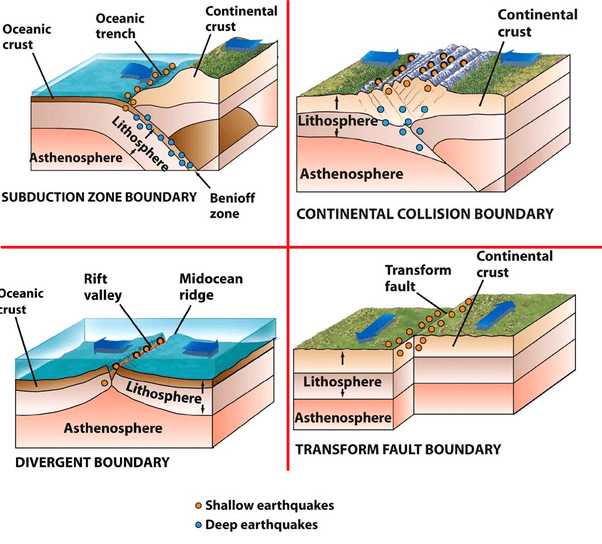
Earthquake, any sudden shaking of the ground caused by the passage of seismic waves through Earths’s rocks. Seismic waves are produce when some form of energy stored in Earth’s crust is suddenly released, usually when masses of rock straining against one another suddenly fracture and “slip.” Earthquakes occur most often along geologic faults, narrow zones where rock masses move in relation to one another

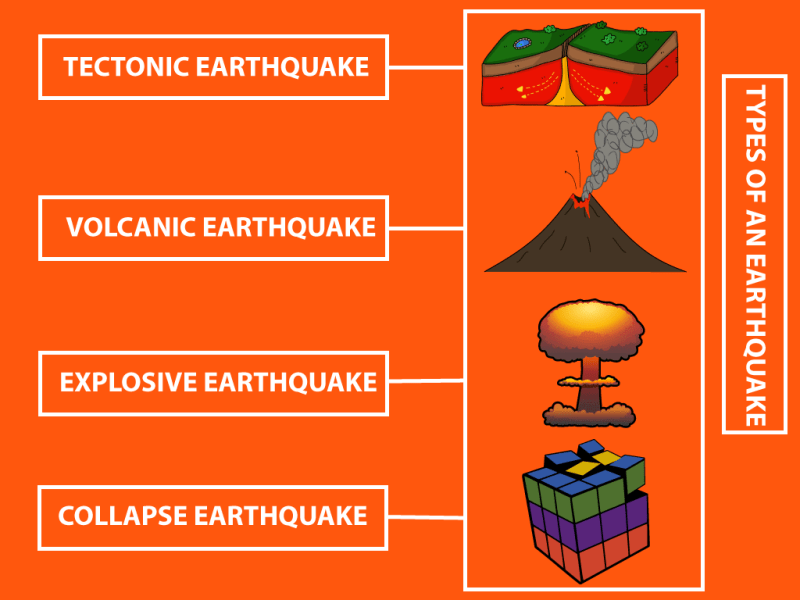
  • tectonic earthquake is one that occurs when the earth’s crust breaks due to geological forces on rocks and adjoining plates that cause physical and chemical changes.
  • volcanic earthquake is any earthquake that results from tectonic forces which occur in conjunction with volcanic activity.
  • collapse earthquake are small earthquakes in underground caverns and mines that are caused by seismic waves produced from the explosion of rock on the surface.
  • An explosion earthquake is an earthquake that is the result of the detonation of a nuclear and/or chemical device.

Seismic waves is of three types-primary waves,secondary waves and surface wave.

Of the body waves, the primary waves has the higher speed of propagation and so reaches a seismic recording station faster than the secondary, or S, wave. P waves, also called compressional or longitudinal waves, give the transmitting medium whether liquid, solid, or gas a back-and-forth motion in the direction of the path of propagation, thus stretching or compressing the medium as the wave passes any one point in a manner similar to that of sound waves in air.

P waves can travel in all three medius.S waves can only travel in solid medium.

Two common surface waves are Love waves (L wave) and Rayleigh waves (R wave). The L-waves are the slowest among the earthquake waves and are recorded last on the seismograph.
Of the four seismic waves, most of the shaking and damage from an earthquake is due to the Rayleigh
wave (R-wave).

Earthquakes can occur due to human activity or natural reason like volcano,tsunami etc.

5 HINDU GODS AND YOGA POSTURES YOU NEED TO KNOW

BRAHMA

The first deity of the Hindu trinity, Lord Brahma, is that the god of creation. The trinity being, Brahma, Vishnu, and Shiva. Brahma contains the whole cosmos and every one of its creatures.

Brahma-Hindu god – Hinduism says that point is cyclical. this is often because all creation within the Universe exists a few times then dies. In short, Brahma reminds us of the cycle of birth and death.

The cycle of creation and death is constant and ceaseless. We are born from Brahma then return to Brahma.

One of the prayers to mention before your meal is:

“This food came from Brahma.I am about to eat Brahma.I will return to Brahma”

Indeed, these prayers help to remind us of the impermanence of life. As the god of Creation, Brahma also symbolizes the mind and intellect. This is often because he’s the source of all knowledge necessary for the Universe.

You’ll find Brahma depicted with four faces. The four faces symbolize the completeness of his knowledge. Brahma also has four hands that every represent a facet of the human personality. this often minds, intellect, ego, and consciousness.

Brahma is the god of:

  • Creation
  • Intellect
  • Mind

YOGA POSTURE: BRAHMA MUDRA
Although Brahma Mudra may be a sitting posture that’s practiced before pranayama. So it also helps improve focus and releases negative energies. In yoga, Mudras (hand and body gestures) affect the flow of vital force energy (prana) throughout the body. they assist calm the mind and energize the body.

Brahma mudraBrahma is that the name of the Hindu creator god. the interpretation in Sanskrit is “divine,” “sacred,” or “Supreme Spirit”. Place both hands into fists with the fingers wrapped around the thumbs. The palms face skyward, and both hands pressed together at the knuckles. The hands then rest against the pubis.

VISHNU

The second deity of the Hindu trinity, Vishnu is that the Preserver (of life). He sustains life through his adherence to principle, order, righteousness, and truth. Vishnu’s responsibility is order and balance. He encourages his devotees to point out kindness and compassion to all or any creatures.

Vishnu is depicted with four arms, which represent his omnipotence and omnipresence.

This Hindu deity may be a more esoteric god as compared to those that rule over the wildlife since. he’s liable for the divine essence that pervades the Universe.

It is common to ascertain Vishnu seated upon a coiled snake. This symbolizes the power to stay asleep within the face of fear or worry.

Vishnu is that the god of:

  • Support
  • Order
  • Balance

YOGA POSTURE: VRIKSHASANA
Vrikshasana (tree pose) requires a pointy mental focus. This focus directs and concentrates the mind. And who doesn’t need a mind that has the facility of concentration?

Balancing on one foot requires keeping your eyes on one specific spot.

Vrikshasana || Tree Pose

Balancing yoga postures assists you to direct your energy inward. Keep your eyes focused on a focus – your Drishti. Your Drishti enables you to specialize in staying even keel. Vishnu can maintain peacefulness and steadfastness within the face of fear. When practicing Vrikshasana, you build self-trust by overcoming the fear of falling. Rather than that specialize in tipping over, this posture requires you to only specialize in maintaining balance.

SHIVA

The final deity of the Hindu trinity is Shiva, also referred to as The Destroyer – the destroyer of all our “bad” habits. As you travel throughout India, you’ll see many lingams that represent Shiva. Shiva protects his followers from greed, lust, and anger. He guards them against illusion and ignorance. These are the forces that substitute the way of divine enlightenment.

He is also considered to be liable for death, destroying to bring rebirth and new life. Hindus often call upon Shiva before a ritual with this mantra.

“Om Namah Shivaya”

So this invocation destroys bad energy in physical and energetic space. Shiva is usually depicted with a serpent around his neck, which represents Kundalini, or life energy.

Shiva is that the god of:

  • Destruction
  • Renewal
  • Death

YOGA POSTURE: NATARAJASANA
Natarajasana may be a pose representing the deity in one of his most beloved forms. The word Natarajasana comes from two words: nata, meaning acrobat, and raja, meaning king.

Shiva, depicted as Nataraj, is usually shown dancing to represent this meaning.

Natarajasana || Dancer pose

This dance is ever fluctuating and changing. This expression symbolizes the dynamic cultural expression of life. As in life, the external posture could also be filled with movement and far wobbling once we practice, it requires a still, calm mind to remain balanced. Evoke the cyclical nature of Shiva by adding Natarajasana into your practice.

GANESH (OR GANESHA)

Recognized for his elephant head, Ganesh of the foremost prevalent and best-known deities. (Also referred to as Ganesha.) Ganesh is Shiva’s firstborn son. His large, elephantine head symbolizes the wisdom and knowledge that he bestows upon his seekers. He grants luck to those that offer him, delicious sweets. He is the ruler of astrology, mantra (sound), and yoga and is related to the humanities and sciences.

It is especially common to wish to Ganesha before any significant venture like a marriage or a replacement project because he removes obstacles to success and luck.

Some myths and stories explain how Ganesha came to possess an elephant head. Still, it’s thought that the humorous image stills the rational mind and its doubts. Therefore, in meditation, we practice looking beyond outer appearances and forms.

Ganesh is that the god of:

  • Removing obstacles
  • Wisdom
  • Good Fortune

YOGA POSTURE: VIRABHADRASANA II
Warrior two on the mountain there are a couple of yoga poses that embody Ganesha’s resilient strength and fearlessness. one among these postures is Virabhadrasana or Warrior II.

A yoga posture like Warrior II emphasizes a connection to the basis chakra.

The expansive, stable qualities of Warrior 2 make it the right posture to represent Ganesha’s immense strength. Before embarking on your day or an adventure, you’ll want to practice this pose inspired by one of the foremost well-known Hindu gods.

HANUMAN

Another easily distinguishable Hindu god is Hanuman, the deity depicted as a monkey. Hanuman represents the perfect devotee of the gods. Meditate on Hanuman as a logo of strength, perseverance, and devotion. To embody Hanuman is to embody absolute love and dedication. Yoga is usually considered the practice of having the ability to regulate one’s mind. Since the five senses are the gateway to the mind, Hanuman is that the god of sensory control.

His attributes are often related to extraordinary strength, as long as he believes within the cause!

Hanuman is usually called upon in times of trouble. He teaches us about the unlimited power that lies within the human heart. When we direct our energies to god, as shown within the epic tale Ramayana, anything is feasible.

Hanuman is that the god of:

  • Perseverance
  • Dedication
  • Commitment

YOGA POSTURE: HANUMANASANA
Known as ‘the splits’ Hanumanasana is one posture that needs tons of dedication and therefore the patience of a saint to master.

The monkey god Hanuman represents devotion, selfless service, dedication, and indomitable willpower. The physical posture, Hanumanasana, represents his ability to leap great distances. During the battle between Rama and Ravana within the Ramayana, Hanuman jumped from India to Lanka to comfort Sita.

In the story, he brought Sita a hoop from Rama to remind her of the love that they had for her. Hanuman was so loyal towards Rama, that when offered a gift for his bravery and dedication to Rama and Sita. He asked only to be ready to still serve them. As you practice Hanumanasana, visualize yourself, closing the space between yourself and your goals.


FUN OF ELDER SIBLING.

With liberty, comes responsibility.

These words are well said by the person who knew the real meaning and would have gone through the responsibilities of being elder.

One ponders, when the word ‘ELDER’ comes to the mind, and associates it with wisdom, liberty and responsibilities.

Siblings Day clipart - Brother, Sibling, Cartoon, transparent clip art

Parents expect their elder child to be more wise than younger one, scolds him or her more than younger child for they know that the elder child can understand and is wise enough to differentiate between everything, whether it be vice over virtues or good over evil. But the fact cannot be denied that they love the elder child more than younger child. There is a sudden fun of being elder sibling at home, for we know the weakness of younger brother or sister and can move him or her or rule over him or scold him whenever we like. Apart from all these, being elder, we have to fight for him, protect him and help him in every phase of his life alike Balarama did for Lord Krishna, Lord Rama did for Laxman or Raavan did for her sister. Each example depicts the patience and wisdom of elder sibling.

Being elder, it is our responsibility to guide the younger one on right path, open doors of success from him, leaving behind all the fights or hatreds.

Money material or fame should not intervene the blood relationships.

Every mother wants both of the child to be together forever.

Markha Valley – Ladakh’s Gem

Introduction

The barren but enchanting landscapes of Ladakh have many enthralling places to trek but arguably the best of them is the Markha Valley situated on the river of the same name. The Markha River is a tributary of the Zanskar river, who is the first major tributary of the great Indus River. It lies within the Hemis National Park just on the outskirts of the capital, Leh and the valley is the largest in the Union Territory. The River starts at the junction of Langtang and Nimaling with the villages along the river valley including Skyu, Hangkar, Rumbak, Yurutse and Markha.

The Route

Markha Valley is one of the most popular trekking routes in Ladakh. Leh is the starting point of this trek. The valley is accessible near Spituk in the west which is generally the starting point of the trek and Gongmaru La pass near Hemis, where the trek ends. There are many tiny hamlets present throughout the valley. The villages in the valley have preserved monasteries, temples and ruined forts. The Tacha Gompa is the most important Buddhist monastery in Markha Valley.

Views of the Heights

Kang Yatze
Stok Kangri

As the trail goes through Hemis National Park, all it’s cherished fauna, mountain sheep, rabbits and even snow leopards can be spotted. The majestic K2 Peak, Stok Kangri and the Kang Yatze peaks are visible from the valley. Even the region of Tibet is visible on a clear day.

https://www.trekthehimalayas.com/Markha-Valley-Trek/

https://wikitravel.org/en/Markha_Valley_Trek

Steam : PLATFORM THAT CHANGED PC GAMING FOREVER

Steam is a digital marketplace and is owned by Valve Corporation. Valve Corporation was formed by ex-Microsoft employees and after launching critically acclaimed games like Half-Life and Counter-Strike, they set out their eyes on retailing software through the internet.  

History of Steam

Steam was launched as a standalone software client in September 2003 as a channel to provide automatic updates for their games.  It pioneered the digital distribution of the software. Before video games used to be physically owned and any kind of updates and patches were very cumbersome to implement.  As owning music CDs became obsolete similarly owning games in physical media became a rare thing. As internet speeds increased, this meant that downloading games over the internet became easier, and having a single library where the users can access all their purchases has now become the norm.

Later it expanded to provide software by third-party developers to become a full-fledged distribution platform. The developer of Steam is Valve Corporation.  As of today, it is one of the most profitable privately owned corporations in the world.

Steam’s business model is very similar to the model that Apple uses in its app store. It operates a commission-based business model. Steam takes a percentage cut from all the sales made on its platform (30%)

How Steam grew from its initial years?

During In its initial years, Steam provided a freemium model.  It offered its games for a free-to-play model. It helped Steam to reach a wider audience and increase its growth.

Steam has benefited a lot with its network effect. As more and more game publishers and smaller indie game developers joined the platform. Steam increased its titles library. New developers got a medium to publish their games without the hassles and cost of hosting and maintaining the games. With the help of free games and new value units being added all the time, new users joined the platform at an ever-increasing rate as well.  Now consumers could access their whole game library in a single place. Thus benefiting both these sides of the core interaction.

Currently Steam has 100 million monthly active users and over 30,000+ games listed on its platform.

In the initial years Steam solved its chicken and egg problem by providing free games and free demos of games. The strategy of seeding by providing free updates and discounts that were not available in physical media helped Steam to become a viable option. The Same strategy is also followed by the Fortnite developer and Steam rival Epic Games Store which was launched in 2018. It gives away a free game every week. This has helped Epic to get a significant foothold in the market dominated by Steam. Even though Epic games store lacks in the number of feature layers that Steam provides. Valve had realized that its user base is a very valuable asset. To increase the engagement in the platform it added community forums. Where fellow users could discuss and help each other with any topic. Steam also introduced many new features including statistics tracking system and friend list. Now Steam was shaping up like a social media platform over its core interaction as a mere platform.

In 2008 Steam introduced a filtering system. That helps users to better find their desired product. Now the catalog could be browsed according to the genre. In 2012 Steam introduced Steam Guard.  This included two-factor authentications to curb frauds and also launched its mobile app. In 2012 Steam introduced Steam Guard.  This included two-factor authentications to curb frauds and also launched its mobile app. In 2016 Valve introduced the support for VR headsets. It collaborated with HTC to introduce the Vive headset.  Later extending support for Oculus Rift.

Present and Future

Recently Steam launched a new VR title, Half-life: Alyx with the introduction of its new VR headsets. It’s one of the best virtual reality applications to date and the game received critical acclaim from reviewers and users alike. Valve is again trying a paradigm shift for pushing Virtual Reality to the mainstream and so far they have been successful in it.

Steam was one of the first digital marketplaces and they are continually working on improving their platforms. Even with new competitors, Steam has been a relevant force for over 15 years. New technological ventures and platforms can learn a lot from Valve with its drive to be innovative and ambitious in its approach.

References:

CLUES FROM METEORITE TO EARTH’S MANTLE

News

• Meteorite fell near the town of Kamargaon in Assam in the year 2015 .

• Studying this meteorite and its minerals – may give new clues about the Earth’s lower mantle.

Meteorite

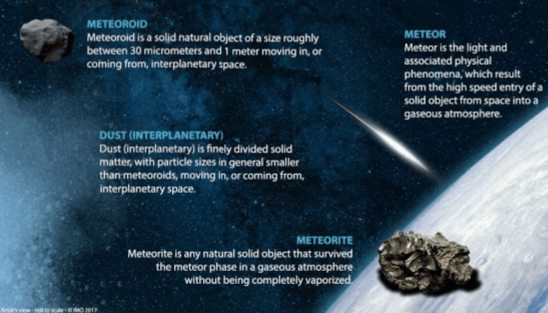
Meteoroids – space rocks that range in size from dust grains to small asteroids.
 Pieces of larger bodies that have been broken – from comets, asteroids, Moon and other planets.
 Rocky, metallic, or combinations of rock and metal.

Meteors – meteoroids that enter Earth’s or another planet’s atmosphere, at high speed and burn up.

Meteorite – if meteoroid survives its trip through the atmosphere and hits the ground.

Asteroids

• Rocky, airless remains – left
over from the early formation of our solar system – 4.6 billion years ago.

• Sometimes called minor planets

• Small, rocky objects that orbit the sun.

• Much smaller than planets. • Most of them live in the main asteroid belt.

Trojans – asteroids that exist behind Jupiter.

Near Earth Objects – Asteroids that come close
to Earth.

Main Asteroid belt

• Region between the orbits of Mars and Jupiter.

• Contains between 1.1 and 1.9 million asteroids larger than 1 kilometer in diameter. • Reason for existence of such large numbers of rocky bodies
 Gravity of newly formed Jupiter – caused the small bodies to collide with one
another, fragmenting them.

Source of image – http://www.imo.net