What Is Zen Buddhism?

Zen Buddhism is a Japanese school of philosophy that is said to have evolved from Mahayana Buddhism. It is more centred on meditation and intuition, and it is seen as a lifestyle rather than a fixed form of prayer or religion. 

The term “Zen” is the Japanese rendering of the Chinese word “Ch’an,” which means “meditation.” Around the eighth century, Ch’an arrived in Japan and became known as “Zen.” Though Zen Buddhism made its way to Japan via China, but it’s true home is India. Today, the term “Zen” is more often used in the West.

For many individuals from East Asian cultures, Zen is particularly essential in helping families show their continuing love and respect for their ancestors—departed family members who are in the afterlife awaiting rebirth.

CHARACTERISTICS OF ZEN BUDDHISM

Zen Buddhism is a simple, determined, uncompromising, to-the-point, meditation-based Buddhism that is uninterested in theological subtleties. Zen, which does not rely on scripture, dogma, or ritual, is validated by personal experience and is passed down ineffably from teacher to pupil, hand in hand, via rigorous, intimate practice.

Though Zen accepts – at least in part – the legitimacy of traditional Buddhist scriptures, it has developed its own writings over time. Much of ancient Zen literature is based on legendary stories of the great masters, and is liberally flavoured with Taoism, Confucianism, and Chinese poetry, as well as written in casual language studded with Chinese folk sayings and street slang. 

One of the most key characteristics of Zen Buddhism is Zazen or Zen meditation. Zen meditation’s objective is to control one’s attention. It is also referred to as a technique of “thinking about not thinking.” In zazen, practitioners sit on a cushion in a structured pose with a straight back, eyes half open, and legs crossed onto the opposite thigh in what is known as the full-lotus position.

HOW TO PRACTICE ZEN MEDITATION 

  1. Keeping an eye on one’s breath – During zazen (sitting meditation), meditators should adopt a comfortable position such as the Burmese, half-lotus, or Seiza pose. Sitting on a cushioned mat or cushion is preferable, although sitting in a chair is also fine. The focus of awareness focuses on a specific object of meditation, most commonly the breath and how it travels in and out of the abdominal area. 
  1. Stillness of mind – This type of meditation does not rely on a single point of focus, such as the breath. Meditation students are taught to let thoughts pass through their brains without judgement or rejection. This is known as shikantaza, or “simply sitting” in Japanese. This Zen Buddhist meditation technique is performed without the need of an object of concentration, attachments, or contents.
  1. Intensive group meditation – Committed meditators conduct intensive group meditation on a regular basis in meditation centres or temples. This is known as sesshin in Japanese. During this stage of intense meditation, practitioners dedicate the majority of their time seated. Each class lasts approximately 30 to 50 minutes and is interspersed with walking meditation, brief breaks, and meals. 

Finally, Zen Buddhism provides practitioners with means to mend their minds and hearts while also connecting with the world. Many practitioners nowadays turn to Zen in search of mental clarity and peacefulness through meditation. Zen, like other schools of Buddhism, begins with the recognition that humans suffer, and it offers a remedy to this suffering by realising the interconnection of all creatures and learning to live in accordance with this reality.  

Black Holes: What are they exactly?

Don’t be fooled by the name: a black hole isn’t just empty space. Rather, it’s a vast amount of matter compressed into a small space – imagine a star 10 times more massive than the Sun crammed into a sphere the size of New York City. As a result, nothing, not even light, can escape the gravitational field. NASA instruments have created a fresh picture of these strange objects in recent years, which are considered by many to be the most fascinating entities in space.

For millennia, people have imagined an object in space that is so big and thick that light cannot escape it. Einstein’s theory of general relativity, which proved that when a large star dies, it leaves behind a small, dense remnant core, is most famous for predicting black holes. The equations demonstrated that if the core’s mass is greater than three times that of the Sun, gravity will override all other forces, resulting in a black hole.

Telescopes that detect x-rays, light, or other forms of electromagnetic radiation cannot directly observe black holes. However, we can deduce the existence of black holes and study them by observing their effects on adjacent matter. If a black hole passes through a cloud of interstellar matter, for example, it will accrete matter. If a normal star approaches close enough to a black hole, a similar scenario can occur. In this situation, as it pushes the star closer to itself, the black hole has the potential to break it apart. As the attracted matter speeds up and warms up, x-rays are emitted into space. Moreover, recent discoveries provide compelling evidence that black holes have a profound impact on their surroundings, generating intense gamma ray bursts, eating neighboring stars, and playing a large role in the creation of new stars in some locations while halting it in others.

The death of a star and the beginning of a black hole

The remnants of a massive star that dies in a supernova explosion form the majority of black holes in our universe. (Smaller stars decay into dense neutron stars, which lack the mass to confine light.) It can be demonstrated theoretically that no force can protect a star from collapsing under the force of gravity if the entire mass of the star is great enough (about three times the mass of the Sun). However, something unexpected happens when the star collapses. As the star’s surface approaches an imaginary surface known as the “event horizon,” time on the star slows in comparison to time measured by observers far away. When the surface of the star reaches the event horizon, time stops and the star can no longer collapse – it is merely a frozen entity in space.

Collisions between stars can produce even larger black holes. The strong, transient flashes of light known as gamma ray bursts were first spotted by NASA’s Swift telescope shortly after its launch in December 2004. After collecting data from the event’s “afterglow” with Chandra and NASA’s Hubble Space Telescope, researchers concluded that enormous explosions can occur when a black hole and a neutron star meet, forming another black hole.

The sheer size of black holes

Although the basic formation process is well studied and documented, one persistent mystery in black hole research is that they appear to exist on two dramatically different scales. On one hand, there are innumerable black holes formed by the collapse of huge stars. These “stellar mass” black holes are 10 to 24 times as massive as the Sun and can be found all around the Universe. When another star gets close enough to the black hole’s gravity, some of the matter around it is snared, causing x-rays to be emitted. The majority of galactic black holes, however, are extremely difficult to detect. Models estimate that there are as many as ten million to a billion such black holes in the Milky Way alone, based on the number of stars massive enough to form them.

The “supermassive” black holes, which are millions, if not billions, of times as massive as the Sun, are on the other extreme of the size range. Supermassive black holes, according to astronomers, are found at the centre of nearly all major galaxies, including our own Milky Way. Astronomers can spot them by observing the effects they have on neighboring stars and gas.

Astronomers have long held the belief that no mid-sized black holes exist, but r ecent data from Chandra, XMM-Newton, and Hubble, on the other hand, strengthens the case for the existence of mid-sized black holes. A chain reaction of star collisions in compact star clusters leads to the production of extremely massive stars, which eventually collapse to generate intermediate-mass black holes, according to one theory. After then, the star clusters descend to the galaxy’s centre, where the intermediate-mass black holes merge to produce a supermassive black hole.

Be it a baby black-hole or a giant one, these fantastic freely occurring galactic phenomena are still something that modern science needs to understand completely. The fact is that most fascinating things of science take the most time to completely grasp.

HATE CRIMES

When faced with a crisis, individuals typically revert to a terrible human trait: protecting their own while looking for a scapegoat to blame for the problem. The pandemic increased interpersonal and individual-level prejudice in a variety of circumstances, from discriminatory views toward racial, ethnic, and religious minority groups to verbal threats and physical assaults directed against them. Physical attacks and verbal abuse against LGBT community, Asian-Americans, Muslims who are frequently blamed as carriers, are now commonplace.

Hate crimes are crimes often motivated by prejudice or hatred towards specific groups of people. To be classified as a hate crime, the act must meet two criteria: first, it must be a criminal offense, and second, it must be motivated by bias. Hate crimes are acts of violence committed with the intent of injuring or intimidating someone based on their race, ethnicity, national origin, religion or sexual orientation. Hate crimes may also target people with disabilities. Hate crimes also appear to be more common in societies that are undergoing rapid social change and emerging groups, which may be culturally dissimilar, are seen as a threat to the status quo. Threats, property damage, assault, murder, and any other criminal offense motivated by prejudice are examples of hate crimes. Individuals from specific groups are not the only ones who are victims of hate crimes. Hate crimes can target people or property that are just affiliated with – or even considered to be a member of – a group that shares a recognized characteristic, such as human rights defenders, community centers, or houses of worship.

Hate crimes, unlike other sorts of crimes, have a far-reaching impact on both the immediate victim and others like them. They not only take lives and wreak havoc on families, but they also traumatize the communities where they occur. These activities create distrust and terror among communities, prohibiting them from participating in community life or cooperating with local law enforcement in investigating and preventing crimes. So, it’s extremely important for the authorities to find a way to stop these hate crimes.

Combating Hate Crimes

  • Recognize and condemn all instances of violent hate crimes. Government officials and public figures should send clear and consistent reminders that violent offenses motivated by bias and intolerance will be fully investigated and prosecuted to the full extent of the law.
  • Acknowledging the particular damage caused by hate crimes, authorities should introduce laws that create specific offenses or increases punishments for violent crimes committed on the basis of the victim’s race, religion, ethnicity, sexual orientation, gender, gender identity, mental or physical disabilities, or other similar status.
  • Governments should make sure that people who commit hate crimes face legal consequences of their action.
  • Official monitoring and public reporting systems should be maintained by governments to give reliable data for informed policy decisions to address violent hate crimes.
  • Official anti-discrimination and human rights organizations should have the responsibility to supervise, report, and help victims of hate crimes.
  • Governments should support and strengthen international bodies with anti-discrimination objectives.
  • To minimize fear and support victims, governments should conduct outreach and education activities to communities and civil society groups.

HIBISCUS FLOWER (Hibiscus rosa-sinensis)

Hibiscus is a genus of flowering plants in the family Malvaceae. The genus is quite large, comprising several hundred species that are native to warm temperate, subtropical and tropical regions throughout the world.

Hibiscus Flower

Scientific name: Hibiscus
Family: Malvaceae
Kingdom: Plantae
Order: Malvales
Subfamily: Malvoideae

Colors: Orange, Yellow, Red, Pink, and Multicolor. Purple and white forms are less common.
Height: 7 feet tall

The Parts of a Hibiscus Flower

✓Pistil
✓Petal
✓Stamen
✓Leaf
✓Stem
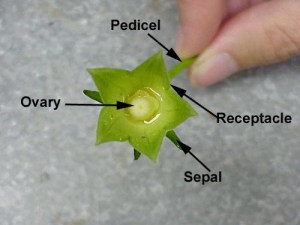
✓Receptacle
✓Sepal
✓Bract
✓Thalamus
✓Bracteole
✓Pedicel
✓Perianth

PISTIL:

The Pistil is the female reproductive part of a plant. The pistil is made up of the ovary where seeds develop, the stigma that catches pollen and the style that is the tube between the stigma and ovary. The female reproductive organ of a flower is Gynoecium or Pistil. Each member is carpel.

PETAL:

Petals are modified leaves that surround the reproductive parts of flowers. Innermost accessory whorl of flower is corolla. Each member is called Petal.

STAMEN:

The Stamen is the pollen-producing reproductive organ of a flower. Collectively the stamens form the androecium. Male organ of a flower is androecium. Each member is Stamen.

LEAF:

Hibiscus leaves are simple, alternate, auriculate and have ovate stipules. Leaves are between 7 and 15 centimeters long.

STEM:

Hibiscus (Hibiscus rosa-sinensis) is a distinctive shrub valued for its shiny, deep green foliage and huge, exotic blooms. Propagate a new hibiscus by planting stem cuttings in the spring.

RECEPTACLE:

The Receptacle is the point on the stem to which the other structures attach.

SEPAL:

Sepals are small green petal-like structures that cover the petals before they emerge. Outermost whorl of flower is calyx. Each member is called Sepal.

BRACT:

Subtending leaf or leaf like structure of any flower is called Bract.

THALAMUS:

The part of the flower on which other floral parts are attached.

BRACTEOLE:

A Smaller bract present on the side of pedicel is called Bracteole or Bractlet.
A whorl of bracteoles at the base of calyx is called epicalyx.

PEDICEL:

Stalk of the flower. Flower is pedicellate or sessile depending upon presence or absence. The flowers with a short, rudimentary pedicel are called subsessile flowers.

PERIANTH (perigonium):

Undifferentiated calyx and corolla. Individual members are called tepal.

Benefits of Hibiscus flowers

✓The flowers and other parts of the plant are used to make medicine.

✓People use hibiscus for high blood pressure, high cholesterol, to increase the production of breast milk, and many other conditions, but there is no good scientific evidence to support most of these uses.

✓Most early research shows that drinking hibiscus tea for 2-6 weeks decreases blood pressure by a small amount in people with normal or high blood pressure.

✓May Help Lower Blood Pressure.

✓May Help Lower Blood Fat Levels.

✓May Boost Liver Health.

✓Make your hair look healthy and lustrous.

Age discrimination

What is age discrimination?
This is when you are treated differently because of your age in one of the situations that are covered by the Equality Act.

The Equality Act has some exceptions. For example, students are not protected from age discrimination at school.

The treatment could be a one-off action or as a result of a rule or policy based on age. It doesn’t have to be intentional to be unlawful.

There are some circumstances when being treated differently due to age is lawful, explained below.

What the Equality Act says about age discrimination
The Equality Act 2010 says that you must not be discriminated against because:

you are (or are not) a certain age or in a certain age group
someone thinks you are (or are not) a specific age or age group, this is known as discrimination by perception
you are connected to someone of a specific age or age group, this is known as discrimination by association
Age groups can be quite wide (for example, ‘people under 50’ or ‘under 18s’). They can also be quite specific (for example, ‘people in their mid-40s’). Terms such as ‘young person’ and ‘youthful’ or ‘elderly’ and ‘pensioner’ can also indicate an age group.

Different types of age discrimination
There are four main types of age discrimination.

Direct discrimination
This happens when someone treats you worse than another person in a similar situation because of your age. For example:

your employer refuses to allow you to do a training course because she thinks you are ‘too old’, but allows younger colleagues to do the training.
Direct age discrimination is permitted provided that the organisation or employer can show that there is a good reason for the discrimination.

This is known as objective justification. For example:

you are 17 and apply for a job on a construction site. The building company refuses to employ under-18s on that site because accident statistics show that it can be dangerous for them. The company’s treatment of you is probably justified
a guest house owner charges twice her normal rates for people under 21. She hopes it will deter young people from booking because a few have caused damage recently. A more appropriate alternative would be to ask for a deposit. It is unlikely that the guest house can justify charging the increased rates
Indirect discrimination
Indirect discrimination happens when an organisation has a particular policy or way of working that applies to everyone but which puts people of your age group at a disadvantage. For example:

you are 22 and you find you are not eligible to be promoted because your employer has a policy that only workers with a post graduate qualification (such as a Masters) can be promoted. Although this applies to everyone it disadvantages people of your age because they are less likely to have that qualification
an optician allows customers to pay for their glasses by instalments, provided they are in employment. This could indirectly discriminate against older people, who are less likely to be working
Like direct age discrimination, indirect age discrimination can be permitted if the organisation or employer is able to show that there is a good reason for the policy. This is known as objective justification.

Harassment
Harassment occurs when someone makes you feel humiliated, offended or degraded. For example:

during a training session at work, the trainer keeps commenting how slow an older employee is at learning how to use a new software package because of his age. The employee finds this distressing. This could be considered harassment related to age
Harassment can never be justified. However, if an organisation or employer can show it did everything it could to prevent people who work for it from behaving like that, you will not be able to make a claim for harassment against it, although you could make a claim against the harasser.

Victimisation
This is when you are treated badly because you have made a complaint of age discrimination under the Equality Act. It can also occur if you are supporting someone who has made a complaint of age discrimination. For example:

your colleague complains of being called a ‘wrinkly’ at work. You help them complain to your manager. Your manager treats you badly as a result of getting involved

How Avatar became timeless series

Avatar is an American animated series which first aired in 2005. Avatar: The Last Airbender series was created by Micheal Dante DiMartino and Bryan Konietzto. It used to air on Nickelodeon. The show was targeted towards kids but today it has a fanbase comprising of not just kids but adults as well. It’s fandom has been growing and is quite active.
Last year, ATLA was released on Netflix and broke one of the major Netflix record.
By appearing on Netflix’s chart for 60 consecutive days, The Last Airbender set a record of becoming the show with the longest consecutive run on streamer’s top 10 TV series chart.

https://www.newsweek.com/avatar-last-airbender-show-netflix-chart-top-10-record-1519004

This show has an IMDb rating of 9.3/10, 97% Rotten Tomatoes and 9/10 TV.com ratings. These ratings are enough to prove what a great show ATLA has been. It’s last episode aired 13 years ago, still ATLA’s fanbase is continuously growing. This is because it is much more than a regular kid’s show.
The story takes place in a world which is divided into four nations: water tribe, earth kingdom, fire nation and air nomads. Avatar, the master of all four elements is the only hope for peace. The 61 episode series is divided into three seasons referred to as ‘Books’ and each book deals with avatar’s journey in mastering a single element.
What makes this series so great is the theme and it’s characters. Every single character is explored thoroughly and given relatable backstory and character development. Zuko’s redemption throughout the series is probably the best redemption arc ever.
The themes it covers are really mature. War, genocide, class inequalities, colonialization, identity crisis, gender inequality, etc. are some of the prominent themes of the series.
The world building done in this show is phenomenal. In the first 10 minutes of episode 1, the whole world of avatar is explained. Throughout the series, and especially in season 2, world exploration is done very correctly.
The depiction of cultural diversity is done flawlessly. Each nation is inspired from a different culture and the way they all are depicted make the avatar world relatable and believable.
The lessons and morals that it teaches can be easily applied to our lives. Lessons like not letting your past affect your present, choosing your own destiny etc. are really inspirational.
The animation it uses is traditional and is inspired by anime. Even though it is quite an old show, the animation is way ahead of it’s time and can be considered as good as all the modern animations. ‘The Last Agni Kai’ a fight sequence, is phenomenal both in terms of animation and music and probably the best fight of the series. The music and ost are really good which make the scenes more impactful.
Overall, Avatar: the last airbender is one of the greatest show of all times and has become timeless. There are two types of people- 1. those who love ATLA and 2. those who have not watched avatar. So go ahead and give this masterpiece a try. It is a must watch!!!
https://www.polygon.com/animation-cartoons/2020/5/15/21260461/avatar-the-last-airbender-netflix-best-episodes-characters-animation

Different types of Digital Marketing media

Digital marketing refers to advertising delivered through digital channels such as search engines, websites, social media, email, and mobile apps. Using these online media channels, digital marketing is the method by which companies endorse goods, services, and brands.

Nowadays, Digital Marketing is the most commonly used way of advertising and promoting goods and services and for good reason. Social Media has completely changed the A-Zs of Advertising. Digital Marketing offers it all- from insights into the customer’s engagement with the post, decrease in costs compared to traditional ways of marketing (tv, radio ads, billboards) and the ‘trend’ and ‘viral’ factor which, once taken advantage of, can help boost the sales of the company by a huge margin. Targeted emails and personalised ads to the target audience according to their taste and preferences compared to one ad designed for the general public (published in newspapers or played on tv/radio) is much more efficient and effective.

Moreover, as social media platforms gain more popularity and attracts more and more people, it guarantees more reach and views for the digital content/media, making it more efficient than traditional means.

There are three major types of digital media channels which are Owned, Paid and Earned media.

Owned media channel is controlled by the brand itself. For example, Instagram account of Netflix India. All the media shared on this channel is owned and developed by the company itself which is why it is not trusted and considered credible. There are no guarantees that it will attract consumers because communication from the company about its own products is not trustworthy.

However, some of its benefits include- It gives control over the content consumed and shared with the target audience. It is cost efficient because the company does not have to pay a third party to do the same. It is a long-term plan since its not based on time duration-based contract with any third party and it is not feedback or word of mouth that dies down with time.

Paid media channel is controlled by a third party who is paid to share content for the company. For example, Ads on Instagram, paid searches on google etc. This channel is in demand as social media platforms become business friendly day by day and this also gives control as the company approves and knows what is being shared and consumed by its target audience.

Some of its challenges are- This channel has a declining response rate as consumers are becoming more aware of such tactics and do not trust paid sources. Moreover, it has poor credibility because the third party is being paid to publish catchy and engaging content and it does not say anything about the quality of the product or service.

Earned media channel is the channel controlled by the customers. For example, Word of mouth, recommendations to friends and family, Trends and buzz etc. All media and feedback shared by customers publicly which can be positive or negative. The main benefit is that this channel is the most credible because these are the genuine feedbacks from customers who have used the product or service. If positive, it can also boost sales and increase market share by attracting new customers due to word of mouth. However, it does not give the company any control as it can be negative and damaging to the company’s reputation in that case.

Doctors’ Day: A Day for the Life Savers

Doctors are said to be next to God. They save the lives of people, risking their own many a times. This day is a tribute to all the doctors and healthcare workers.

Every year the Indian Medical Association (IMA) celebrates 1st July as National Doctors’ Day on the birth and death anniversary of Bengal’s former Chief Minister, Dr. Bidhan Chandra Roy, to commemorate his contributions in the medical field to serve humanity. He took birth on 1st July 1882 and died on the same day in 1991. The day was first recognized in the year 1991.

National Doctors’ Day is dedicated to the doctors who serve to save the lives of people sacrificing their own. It is to recognize the contributions, efforts, and sacrifices the doctors make for the community and mankind. This year’s theme for National Doctors’ Day is “Save The Saviours”.

Coronavirus is contagious and life-taking, yet doctors are making all efforts to save the lives of the infected. Many doctors lost their life battle to save others. Especially now, when the pandemic has taken a toll on the lives of people, doctors have constantly worked day and night without break to save the lives of the patient. Their consistent attempts have saved the lives of many.

The doctors have been working 24*7 in that Personal Protective Equipment or as we know it as PPE kits; fully covered all day long without any complaint of heat, without water or food for as long hours as 17-18 hours at least; without any complaint of hunger or thirst, just to save the lives of people suffering from the deadly coronavirus. The continuous wearing of masks scars their ears and cheeks. The doctors sacrifice a lot for patients.

The pandemic made us understand more about the importance and dedication of doctors and health workers in our lives. Many of the retired doctors and nurses got trained and returned to work to treat the patients of COVID-19. The doctors and nurses working for treating the COVID-19 patients are not able to meet their families, for preventing the spread of it. They stay away from their kids and family just so that the patients can return to their families healthy and safe. Many doctors themselves suffering from coronavirus sacrificed their lives by giving up on hospitals beds for other patients when there were crisis for beds in hospitals.

Honorable Prime Minister of India, Narendra Modi, even mentioned doctors’ day and emphasized the role and exceptional contribution of doctors to save the lives of people in this pandemic. He also said that the doctors’ love for medicine is their love for humanity and with this power of love the doctors are taking care of us. He even congratulated and appreciated the efforts of doctors through his tweet saying, “On Doctors’ Day, my greetings to all the doctors. India’s strides in the world of medicine are commendable and have contributed to making our planet healthier.”

Doctors’ Day is for us to make out some time and appreciate the efforts and contributions of doctors. Thank them for their sacrifices and selfless services.

All you should Know about political theory.

Know about Political Theory

As Human beings, we live in a society and society includes groups and institutions. Every institution serves a specific purpose. For specific purposes, we need some rules and regulations. That called politics.

For understanding Political Theory, we divide it into two terms and understand one by one.

Political and Theory.

First, we discuss what is political.

What is political

The Term ‘political ‘ refers to something applicable to a polity, that is ‘ public’, as distinguished from private or something applicable to a limited numbers of persons.

The terms ‘ polity’, ‘ politics’, and ‘ political’ are derived from the Greek word ‘ polis’ which stood for ancient Greek city-state.

In the present- day society the scope of politics is not regarded to be so comprehensive. Today we draw a distinction between public and private spheres of human life, and confine the usage of the term ‘ politics’ to the institutions and activities falling I the public domain.

 The term ‘theory’ stands for systematic knowledge.

This, ‘political theory’ refers to a systematic knowledge of political phenomena.

 Political theory is concerned with three types of statements –

  • Empirical statement – which is based on observation, through sense- experience alone, that is the experience gained through sight, sound, smell, taste and touch of the concrete phenomena.
  • Logical statement –  which is based on reasoning
  • Evaluation – which is based on value judgment.

The political theory includes both political science and political philosophy.

 Political science , relies only on empirical and logical statements.

NATURE OF POLITICAL THEORY

George Catlin observed : “The theory itself is divided into political science and political philosophy.”

 In short, Catlin proceeds to identify the nature of political theory by pointing to its two important components- political science and political philosophy.

Andrew Hacker – “ Every political scientist plays a double role. He is part scientist and part philosopher.

SCOPE OF POLITICAL THEORY

  1. One point of its focus is the study of political concepts and it’s method of study. For this purpose, the normative -philosophical method is regarded to be suitable .
  2. Another point of it’s the focus is the study of political institutions and behaviour. For this purpose, the descriptive-scientific method is regarded to be suitable.

DEBATES ON THE DECLINE OF POLITICAL THEORY

The political theory seems to decline in the mid-twentieth due to questions started to raised by the exponents of new political science.

There were two major causes of the decline of political theory :

  1.  The rise of positivism led to the craze for science.
  2. The prevalence of political ideologies culminating in Marxism.

It is now widely held that political science, like other social and natural sciences, enables us to strengthen our means but we will have to resort to political philosophy to determine our ends.

Means and ends are interdependent. Hence , political science and political philosophy play complementary roles in our social life.

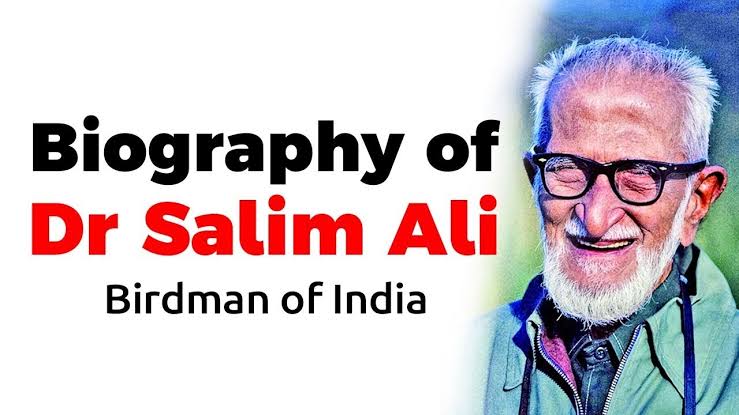
Dr. Salim Ali (1896-1987)

Dr.Salim Ali (1896-1987)🦜🕊:

Salim Moizuddin Abdul Ali (November 12, 1896- July 27,1987) was an Indian ornithology and naturalist. Known as the “🇮🇳birdman of India🇮🇳”, Salim Ali was among the first Indias to contact systematic bird survey across India and his bird books helped develop ornithology. He became the key figure behind the Bombay Natural History society after 1947 and used his personal influence to garner government support for the organization,create the Bharatpur bird sanctuary ( Keoladeo National Park) and prevent the destruction of what is now the silent valley National Park. He was awarded Indian’s second highest Civilian honour ,the padam vibhushan in 1976.

Early life❕❣❕:

Salim Ali was born into a sulaimani Bohra Muslim family of bommey, the ninth and youngest child. His father Moizuddin died when he was an one year old and his mother Zeenat-un-nissa died when he was three. The children were brought up by his maternal uncle Amiruddin Tyabji,and childness aunt, Hamida Begum ,in a middle-class household in Khetwadi, Mumbai. Another uncle was abbas Tybji,well known Indian freedom fighter. Salim was introduced to the series study of birds by W.S. Millard, secretary of the Bombay Natural History Society (,BNHS), who identified unusually coloured Sparrow that young Salim had shot for sport with is tough airgum. Millard identified it as a yellow-throated Sparrow,and showed Salim around the society’s collection of stuffed birds . Millard lent Salim a few books including Eha’s common birds of Bombay, encourage d Salim to make a collection of birds and co-operation offered to train him in skinning and preservation. Millard also introduced young Salim to (later sir) Norman Boyd Kinnear,the first paid curator at all BNHs, who later provide help from the British Museum. In his autobiography, The Fall of Sparrow Ali notes the yellow -throated Sparrow event as the Turning point of his life that let him into ornithology,an unusual career choice, especially for an Indian in those days. His early interest was in books on hunting in India and he became interested in sport -shooting , encourage d by the hunting interests of his foster-father Amiruddin. Shooting contests we’re often held in the neighbourhood in which he grew and among his playmates was Iskandar Mirza, a distant cousin who was a particularly good marksman and who went on in later life to become the first president of Pakistan.

Burma and Germany🦜🕊 :

Salim Ali's early education was at St. Xavier's college, Mumbai. Following a difficult first year in college,he dropped out and went to Tavoy,Burma(Tenasserim) to took after the family's wolfram (Tungstem) mining (tungsten was used in armour plating and valuable during the war) and timber interests there. The forest surrounding this area provided an opportunity for Ali to hone his naturalist (and hunting) skills. He also made acquaintance with J C Hopwood and Berthold Ribbentrop who were with Forest Service in Burma.

Other contribution🐦🦅:

⭐Dr. Ali had considerable influence in conservation related issues in post- Independence India especially through Prime Ministers Jawaharlal Nehru and Indira Gandhi was herself a keen birdwatcher, influence by Ali's bird book (a copy of the book of Indian Birds was gifted to her in 1942 by her father Nehru who was in Dehra Dun jail while she herself was imprisoned in Naini Jain and by the Gandhian birdwatcher Horace Alexander. Ali influenced the designation of the Bharatpur Bird Sanctuary and in decision in decisions that save the Silent Valley National Park. One of Ali's later interventions at Bharatpur involved the exclusion of cattle and graziers from the sanctuary and this was to prove costly and resulted in ecological changes that led to a deciline in the numbers of many species of waterbirds.

Dr. Ali was a frequent visitor to the Doon school where he was an engaging and perusuasive advocate of ornithology to successive generation of pupils. As a consequence,he was considered to be part of the Dosco fraternity and became one of the very few people to be made an honorary member of The Doon School Old Boys Society.

Personal views🐦🦅:

⭐Salim Ali held may views that were contrary to the mainstream ideas of his time. A question that he asked frequently was about the collection of bird specimens particularly in later life when he became known for his conversation related activism. Although once a fan of shikar(hunting) literature,Ali held strong views on hunting but upheld the collection of bird specimens for scientific study. He held the view that the practice of wildlife conservation needed to the practical and not grounded in philosophies like ahimsa. He suggested that his fundamental religious sentiment had hindered the growth of bird study in India.

In the early 1960s the national bird of India was under consideration and Salim Ali was intent that it should be the endangered Great Indian Bustard , however this proposal was over-ruled in favour of the Indian peafowl.

HOW DISRUPTIVE TECHNOLOGY WILL BE TAKING OVER OUR LIVES

Disruptive Technology is recognized to be an innovation that creates a new market for consumers industries or businesses to operate in an efficient and progressive direction. This technology sweeps away the standard system of habits and replaces with ways that are superior. The reason why it’s important to inculcate disruptive technology is because it increases growth opportunities to companies, provides better and cheaper products to the consumers and helps to adapt new trends in the current world There are new forms of disruptive technology which are being discovered daily. Some examples -:

Artificial Intelligence–   It is an area of computer science that mainly emphasizes in the building of smart and intelligent machines which have the capability of doing tasks which are usually done by humans.

  • Examples–   Siri (Apple), Alexa (Amazon), Cortana (Microsoft), Google Now and so on.
  • 3D Printing – it is a process of creating three dimensional solid objects. This particular type of printing is done by creating layer by layers on an object to obtain the result. 
  • Examples- Homes, Prosthetic limbs and other body parts, edible 3D printing, Manufacturing.
  • Advanced Virtual Reality it is a stimulation which is computer generated in which a person can interact within the artificial three-dimensional environment which creates a virtual reality and can be experienced by using electronic devices.
  • Examples- flight stimulators, games, geographical studies, surgeries.
  • Drone Technology- Originally designed for the defence and aerospace industry, drones have made their way into the mainstream because of the increased degree of protection and performance they offer. Drones include a navigation system, GPS, sensors, high quality cameras, programmable controllers, and tools for autonomous drones.

Disruptive technology is considered to be an innovation that significantly make an effort to alter the way that consumers, industries, or businesses operate in the world today. Disruptive technology attempts to sweep away the systems or the habits which have been a part of the world since a long time and it replaces because it has attributes that are recognizably superior to conventional systems.

We tend to think that there is still time for Disruptive technology to take over the world but it has already started to make a huge place in human lives in the simplest things which exists in the current world which we forget like facial recognition, voice assistants, smartphones, maps and directions. Therefore, there is a possibility that disruptive technology will be taking over lives.

Difference between a Data Analyst and a Business Analyst

In this blog, we are going to see the difference between a Business Analyst and a Data Analyst. 4 main things differtiate a Business Analyst from a Data Analyst in a team. They are Responsibility, Qualification, Skills and Salary. Let’s start off with responsibility.

Responsibilities:

First let’s look at the Business Analyst’s responsibilities. A business analyst works a lot with the clients to understand what they need and what the problem they are having. They are going to work with the managers and try to figure out how an idea is going to work within their team. They next thing they do is, using current data to outline a problem. They are going to go in and actually look at the data and then understand what the client is wanting so that they can describe to the  team what they are trying to solve and what they are looking for. The next thing they are going to do is outline and communicate what the client actually wants the team to do. After that a business analyst can only do all the analysis around that and then hands it off to either the programming team or Data analyst to look into this further and actually solve the problem. The Data Analyst is going to actually work with the programming teams that collect and analyse the data and so the difference between these two is a business analyst typically going to work mostly with the clients and the managers while the Data Analyst is going to work with the programming side. The next thing a Data Analyst is going to do is using pre-existing data to solve a problem and so the business analyst is going to bring the problem and define the problem and bring that to the programming team and the Data Analysts work with developers to actually solve the problem and figure out a solution. Then they have to create reports and dashboards and visually present the analytical findings to the team and that’s basically the part of any Data Analyst job.

Qualifications:

The qualifications for a Data Analyst and a Business Analyst are pretty similar. For a Business Analyst, a person must have a Bachelor’s degree in Business and Administration/ Finance/ Economics or something that is business related. Sometimes one may need a Master’s degree. For the most part, the business analysts mostly have MBA’s. Data Analysts typically don’t have MBA’s. For a Data Analyst, one must have a Bachelor’s degree and that’s typically in something like Computer Science/ Statistics/ Mathematics/ Economics or Finance. They is a lot of overlap between the Business Analyst and the Data Analyst.

Skills:

Business Analyst:

  • SQL
  • MS Access
  • Excel
  • Communication skills
  • Presentation skills
  • People skills

Data Analyst:

  • SQL
  • R/ Python
  • TABLEAu/ Power BI
  • Data Modeling
  • SAS/ SPSS
  • Excel
  • AWS/ Azure

Salary:

Business Analyst:

  • Entry level: 35k – 50k
  • Mid level: 50k – 75k
  • Senior level- 75k – 95k

Data Analyst:

  • Entry level: 45k – 60k
  • Mid level: 65k – 85k
  • Senior level- 85k – 110k

Data Analyst gets a little bit more salary on an average than a Business Analyst. This is because in small companies and at times in big companies, Data Analysts are asked to communicate with clients and in those cases there isn’t even necessary for a Business Analysts.

William Faulkner’s ‘The Sound and the Fury’

The Sound and the Fury is 1929 novel by the American author William Faulkner. Faulkner is widely renowned for his experimentation of the narrative technique called ‘stream of consciousness’. William James in his Principles of Psychology describes it as ‘the unbroken flow of perceptions, memories, thoughts and feelings in the waking mind’. In this narrative technique, the narrator seemingly rants about thoughts and introspections that flows through their mind. The novel is a true testament to this narrative.

The book follows the story of the Compson family who are slowly losing their way in the an postbellum (post-war) American South. The Composn family used to be wealthy and mighty in their olden days, but unlike their ancestors, the current members of the family cannot seem to command the power they once held. The story is divided into four parts. The first part takes place on April seventh 1928 and is narrated by Benjy Compson, the mentally challenged youngest son of the family. The second part takes place eighteen years prior on June second, 1910. It is narrated by the oldest son Quentin who is a student at Harvard. The third part takes place a day before the first part, on April sixth 1928. It is narrated by the headstrong third son Jason Compson. The final part takes place a day after the first part, on April eighth 1928. It is narrated by a seemingly omniscient narrator who records the observations of Dilsey, the family’s loyal black servant.

“Clocks slay time… time is dead as long as it is being clicked off by little wheels; only when the clock stops does time come to life.”

– William Faulkner

The story is fragmented and is narrated in a non-chronological manner. Most of the story has been uncovered based on audience’s interpretation to try and form a coherent narrative of the same. The story narrates the three Compson brothers’ seeming obsession over their sister Caddy, who surprisingly does not narrate any portion of the novel. Despite not having her own narrative, it is clear that Caddy has influenced her brothers and holds a strong presence throughout the novel. Growing up with an incompetent and absent-minded father, Caddy assumes charge of her brothers. This sense of control continues to grow and she proves that she is capable of making her own way in life. Her family disapproves of her promiscuity and banishes her after she gets pregnant out of wedlock.

The first part, narrated by Benjy is the most convoluted of all. It gives a glimpse of what his thoughts and records his accounts on how people around him treat him. His memories are interconnected and they create a domino effect as they are triggered by senses like smell or touch. For instance, a sensation that he experiences in the present triggers a memory of similar sensation in the past. Caddy is the only one who treated Benjy as a normal being and he misses her. They both share a strong emotional bond and lot of his memories are associated to her. The second narrator Quentin has a similar strong bond with Caddy. Being the older brother, he is overprotective of her and even hints of incestual jealousy over her. Quentin is also deeply disturbed by his sister’s promiscuity which is unlike the ‘Southern morals’. He is intelligent and his narration is crudely interspersed with philosophy and existential questioning. The narrator of the third part Jason is strongly against Caddy. He is petty and resentful and blames everyone else around him for his misfortunes. He blames Caddy for the loss of his job which was promised to him by her ex-husband. He is headstrong and clings desperately to the old power that the Compson family once held. He obtains this feeling by controlling his family including Caddy’s child. The narrator of the fourth part Dilsey is the only objective narrator in the family. Despite being a black woman in a post-slavery abolishment era, she serves the Compson family loyally and seems to be the only one holding the family together. Although the family bosses her around, she’s content and dedicated to the work she does and is the only ‘sane’ one among the rest.  

The Sound and the Fury is definitely worth a read to understand the complexities of a non-chronological narrative. It is impossible to be explained through a conventional synopsis as it only scratches the surface of the true depth of the novel. It is riddled with symbolisms and open-ended plotlines that motivates the readers to think for themselves. The realistic aspect of the novel also makes the characters more endearing to the readers. It is easily one of Faulkner’s best.

Reference Links:

Who Says You Have To Get Out Of Your Comfort Zone?

I love my comfort zone. To me, that’s where the real magic happens.

In my comfort zone, I have my family, friends, work, music, books, movies, bike, gym, park, you name it. Everything I love.

And from that place of safety, I’m more open to trying new things and take risks.

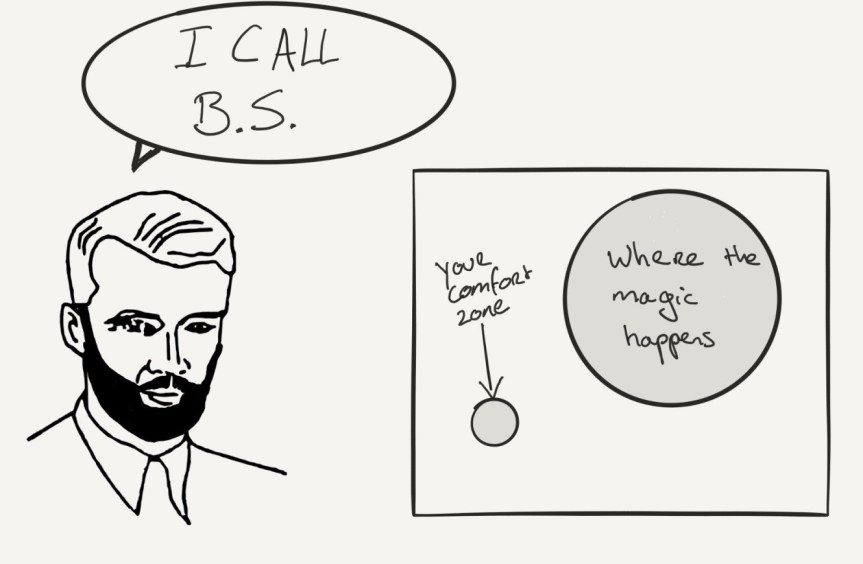
I’ve never believed the idea of that stupid little drawing. You know what I’m talking about, right?

  • “Your comfort zone.” A little circle.
  • “Where the magic happens.” A big circle that stands for the promise of success.

As if “magic” only happens when you step outside your comfort zone; that’s ridiculous. And while we’re at it; why pretend as if your comfort zone is bad? It’s this little pathetic circle displayed against the bigger “magical” circle.

Sure, I’m all about pushing yourself, trying new things, moving forward, growing, etc. But in contrast to many popular self-help people, I don’t believe the comfort zone is a bad thing.

Call me a pessimist. Call me a stoic. But more than anything, I’m merely a practical person.

And practically speaking, you don’t even want to make a huge leap outside your comfort zone. In fact, I believe in the slow road to “magic.”

Where’s The Magic People Talk About?

I’ve found that I do my best work when I don’t worry about money, finding new friends, getting familiar with a new environment, and anything else that is related to always moving around.

But don’t get me wrong. I’m not saying I prefer to stay put. Stagnation is a death sentence to me.

I believe that there are different phases to life. Sometimes, you take it easy, work on your skills, your character — you invest in yourself.

And sometimes, you just go out there and take a chance. Life’s too short to be a wimp.

But those two things are interconnected. If you don’t work on yourself, and if you lack self-confidence, you will never take a risk.

For years I wanted to do what I’m doing now. But instead of jumping out of my comfort zone (which was scary), I slowly took on new and bigger challenges.

First, I got two degrees in business. Then, I started a business together with my father. That was in 2010. And after two years of working on that business for six or seven days a week, I started doing freelance marketing work.

Again, after a few years of freelancing and starting (and failing) other businesses on my own, I took a job at a research advisory firm because I wanted to know how it is to work for a major corporation.

And after doing that for a year and a half, I finally decided to write and talk about productivity, career, and entrepreneurship on the internet.

By then, I‘d been doing the things I write about for more than 10 years. And yet, I don’t have all the answers—I just share the stuff I’ve learned.

So it would be ridiculous if I would join people who scream: “If you want to be successful, all you have to do is step outside your comfort zone. NOW!”

Well, have you ever stepped outside your comfort zone? Even just a little bit counts. And what did you find? A leprechaun with a bag of money?

That comfort zone shit is just a story. It might motivate some people, but you don’t have to believe it if you don’t want to. It’s just like when people claim you have to wake up early if you want to be successful. Says who?

I believe this: If you step outside your comfort zone, there’s only more work waiting for you. It’s not fancy at all. There’s no magic involved. Just blood, sweat, and tears.

Work Your Way Up From A Place Of Comfort

I think that most people who read these type of articles want to achieve something. Maybe you want to quit your job, start a business, grow your business, become an artist, publish a book, whatever.

And you probably also know that it’s not easy. So why do you make things even harder for yourself by doing shit that makes you very uncomfortable?

Instead, start from the very bottom. Build a strong foundation. Get comfortable before you do scary stuff.

“How does that foundation look like?”

If you want to live stress-free, you need enough money in your savings account so you can live and eat for six months in case things go south—see it as a fail-safe system. Again, that’s my practical mind speaking for me.

Make some calculations and figure your what that number is for you. And don’t even think about taking a risk before you have that money on your savings account.

Also, build a skill set that’s worth something. One of the reasons I don’t care about money is because I trust my ability to find work. Even when I go broke tomorrow, I’ll find a way to get work the next day. I’ve invested years and hundreds of thousands of dollars in my education.

The question is: What’s your skill? How can you add value to the world? What problems can you solve?

Other things that complete your foundation:

  1. Family. If you don’t have a family, create one.
  2. Friends. You can’t be friends with everyone. Stick to a few people who also stick to you.
  3. Yourself. Consciously improve your body and mind. Go to bed a little stronger and wiser every night.

Lastly, don’t try to be something you’re not. If you’re an introvert, don’t pretend that you can work in a boiler room. If you’re an extrovert, don’t pretend you can work in solitude.

Stay close to yourself—there’s no point in pushing yourself so badly that your life becomes miserable.

In the end, we all need comfort: It’s one of our basic needs as human beings. But we also need growth. So whatever you do, don’t stay in your comfort zone for too long.

Try to keep moving forward every day: Even if it’s just a tiny step. No magic. Just effort.

ANGER-A MAN’S WORST ENEMY

If you are patient in one moment of anger, you will escape 100 days of sorrow

Chinese proverb

Anger, also known as wrath or rage, is an intense emotional state involving a strong uncomfortable and non-cooperative response to a perceived provocation, hurt or threat.

A person experiencing anger will often experience physical effects, like an increased vital sign, elevated pressure level, and increased levels of adrenaline and noradrenaline. Some view anger as an emotion that triggers a component of the fight or flight response. Anger becomes the predominant feeling behaviorally, cognitively, and physiologically when an individual makes the conscious option to take action to instantly stop the threatening behavior of another outside force. the country term originally comes from the term anger of the Germanic language.

Anger can have many physical and mental consequences. The external expression of anger is found in facial expressions, visual communication, physiological responses, and every now and then public acts of aggression. Facial expressions can range from inward angling of the eyebrows to a full frown. While most of these who experience anger explain its arousal as a result of “what went on to them”, psychologists show that an angry person can fine be mistaken because anger causes a loss in self-monitoring capacity and objective observability.
Modern psychologists view anger as a standard, natural, and mature emotion experienced by virtually all humans now and then, and as something that has functional value for survival. Uncontrolled anger can, however, negatively affect personal or social well-being and impact negatively on those around them. While many philosophers and writers have warned against the spontaneous and uncontrolled fits of anger, there has been disagreement over the intrinsic value of anger. the problem of handling anger has been written about since the days of the earliest philosophers, but modern psychologists, in contrast to earlier writers, have also discovered the possible harmful effects of suppressing anger.

PHYSICAL EFFECTS OF ANGER

Anger triggers the body’s ‘fight or flight’ response. Other emotions that trigger this response include fear, excitement, and anxiety. The adrenal glands flood the body with stress hormones, like adrenaline and cortisol. The brain shunts blood off from the gut and towards the muscles, in preparation for exercise. Heart rate, pressure, and respiration increase, the vital sign rises and therefore the skin perspires. The mind is sharpened and focused.

HEART PROBLEMS WITH ANGER

The constant flood of stress chemicals and associated metabolic changes that go with ongoing unmanaged anger can eventually cause harm to many different systems of the body.

Some of the short and long-term health problems that have been linked to unmanaged anger include:

  • headache
  • digestion problems, such as abdominal pain
  • insomnia
  • increased anxiety
  • depression
  • high blood pressure
  • skin problems, such as eczema
  • heart attack
  • stroke

Anger doesn’t solve anything, it builds nothing, but it can destroy everythinng

Lawrence Douglas Wilder

EXPRESSING ANGER IN HEALTHY WAYS

If you’re feeling out of control, walk-off from matters temporarily, until you calm down.

Recognize and accept the emotion as normal and a part of life.

Try to pinpoint the precise reasons why you are feeling angry.

Once you have got identified the matter, consider springing up with different strategies for a way to remedy true.

Do something physical, like going for a run or playing sport.

Talk to someone you trust about how you’re feeling.

HOW TO DEAL WITH ARGUMENTS

When you have argued, it’s easy to remain angry or upset with the opposite person. If you do not resolve an argument with someone you see often, it is often an uncomfortable experience.

Talking to the person about your disagreement may or might not help. If you are doing approach them, ensure it’s in an exceedingly helpful way. Stay calm and communicate openly and honestly.

If the person can be violent or abusive, it should be best to not approach them directly. you may refer to them over the phone to determine if they’re hospitable finding an answer to the argument if you’re feeling safe to try and do so. it’d be helpful to ask someone to be there with you, to allow you support after you make the decision and afterward.

Try and tell the person how you are feeling as a result of their opinion, but avoid trying to inform them how they feel. it’s possible to comply with disagree. you’ll need somebody else to assist you to resolve the disagreement. you’ll ask a trusted person to act as a go-between and facilitate your both get another view on the argument.