Charles Robert Darwin was an English Naturalist, born on February 12,1809 in Shrewsbury, England whose Scientific theory of evolution by natural selection became the foundation of modern evolutionary studies. An affable Country gentleman, Darwin at first shocked religious Victorian Society by suggesting that animals and humans shared a common ancestry. However, his non-religious biology appealed to the rising class of professional scientists, and by the time of his death evolutionary imagery had spread through all of science, literature and politics.
DARWIN’S JOURNEY THROUGH EVOLUTIONARY THEORIES:-
The belief that God had created mankind in his own image and likeness were shed by most western scientists until the middle of the 19th century when they thought that all the creatures of the planet had been conceived by a divine force that is until Charles Darwin arrived. Some researchers were already talking about an evolution of the species but the British Naturalist was the first to explain with evidence how evolution might occur by natural selection.
Darwin’s theory radically changed biology offering a new explanation of the origin of Human Beings. It also made him one of the most influential scientists and intellectuals in history but to get there he had to make an extraordinary journey, fighting all the odds before hundreds of experiments and spend 20 years of his life refining all his ideas. In 1831, when Darwin was 22 years old and studying at the University of Cambridge was invited as a Naturalist to a great expedition. He boarded the HMS BEAGLE and spent almost five years travelling several continents starting in South America from which he brought back dozens of life specimens illustrations and fossils. These fossils gave him one of the first clues about evolution, for example observing the remains of a Milodon– a giant animal similar to the sloth. He thought that those similarities were probably not a coincidence, there had to be some kind of link.
When he stopped at the Galapagos Island, Darwin also observed some giant tortoises which lived in nearby islands but showed unique physical characteristics in each island. In the humid areas where vegetation was abundant the turtles had a short neck and a dome-shaped shell whereas in the islands with a drier environment they had a saddle like shell along neck but he couldn’t explain that difference. Upon his return Darwin spent time observing how animal breeders and guards crossbred animals of species to create new varieties. For that creation to be successful the artificial selection made by man was key. Darwin realized that the natural world probably made the same kind of selection but he couldn’t explain how it happened until he read the work of Thomas Robert Malthus, a British intellectual from the 18th century. In an essay on demography, Malthus said that as the population in Europe was growing at one point it would increase much more than the food supplies available and that would cause a fight for survival. This idea helped Darwin explain how evolution works in nature. There is a struggle for survival in which the strongest individual is not necessarily the survivor instead it’s the one which best adapts to the environment where it lives. If a living being has any trait that helps them to survive it will be more successful at the reproduction. Those which don’t adapt will die without descendants. The creatures with the most success in reproducing, past their traits- their lineage and so on until these variations end up becoming a new species. That’s why the differences between the Galapagos Tortoises were a product of evolution.
Italy progress to the semi-finals of Euro 2020 with an excellent 2-1 victory over Belgium, in a game full of chances. Barella and Insigne got the scoresheet for Italy, both producing superb finishes to fire Italy 2-0 ahead, but Lukaku pulled one back just before the break from penalty spot.
Belgium then pushed forward in search of goals in second half, with Lukaku going closest, but his effort was brilliantly blocked on the line by Spinazzola. The Italian defence then used all of their experience to stand firm and hold the win.
In the pic (Leonardo Bonucci and Giorgio Chiellini of Italy celebrate after defeating Belgium 2-1 in the quarters to set up a semi-final clash against Spain)
Visit the link below and have a look at the highlights of the match:
China and Japan India and Byzantium traveling culture and history vector geisha and samurai men and women Taj Mahal and torii gate capitol building and Great wall landmarks and heritage nationalities.
Culture and history is the main building block of our lifes
The Culture is the characteristics and knowledge of a particular group of people, encompassing language, religion, cuisine, social habits, music and arts.
The word “culture” derives from a French term, which in turn derives from the Latin “colere,” which means to tend to the earth and grow, or cultivation and nurture
History is the study of life in society in the past, in all its aspect, in relation to present developments and future hopes. It is the story of man in time, an inquiry into the past based on evidence.
As with any scholarly approach that boasts of being “new” when it bursts onto the scene, new cultural history was fairly well established as one among many ways of thinking about history by the twenty-first century. This is not to say that new cultural historians enjoyed the unanimous esteem of their more traditional colleagues, for the field still managed to draw the fire of critics from the left and the right who believed that after twenty years this approach still represented a mere “trend.” One could agree with Peter Novick that this attests to the fragmentation of the historical profession into a plethora of specializations that no longer cohered around shared principles and whose denizens had little common ground for discussion. Yet much has changed in cultural history since its heyday in the 1980s.
When new cultural history was actually “new” it provided innovations both in terms of the topics considered worthy of historical attention and in terms of the ways of theorizing such topics within their respective contexts. It is nevertheless apparent that a good portion of what was marketed in 2000 as “cultural history” reflected more of the topical rather than theoretical innovations entailed by this approach. In fact, some of these works even read more like conventional social histories with a few obligatory nods to one of many privileged theorists.
To some extent this state of affairs reflects the success of this approach in the academy and the willingness of historians to combine methodologies in a creative and eclectic manner. On the other hand, though, one might argue that cultural history lost much of its edge by becoming subsumed into a more or less nonreflective historical establishment. Some historians see less fragmentation than the cooptation of erstwhile radical approaches back into a surprisingly resilient mainstream.
“Whatever possibilities become evident,” notes Patrick Joyce, “something is needed to shake the hold of a history which continually reproduces itself, in the process sucking the erstwhile heterodox into its consensus, in much the way that ‘cultural history’ is slowly but surely becoming routinized as more methodology, yet one more subdiscipline in the house of history.” Joyce’s observation is astute, yet one wonders whether a historical approach that could successfully resist such cooptation is possible and, even if it were, whether it would still merit the name “history.” It seems evident that what makes history “history” has little to do with methodologies and innovations that are unique to it, and perhaps a more thoroughgoing interdisciplinarity would discourage the domestication of future innovations into mere additions to the mansion of conventional history.
A set up where two or more parties engaged in exchange of goods, services and information is called a market.
In economics, the term market refers to the shops for one commodity or a set of commodities. For example a market for rice, a market for cloth, a market for electronics goods, etc.,
Two classification of Markets. Theyare
✓The product market
✓The factor market
Other classification of Markets
✓On the Basis of Geographic Location ✓On the Basis of Time ✓On the Basis of Nature of Transaction ✓On the Basis of Regulation ✓On the Basis of Nature of Competition
On the Basis of Geographic Location
Local Markets
In such a market the buyers and sellers are limited to the local region or area. They usually sell perishable goods of daily use since the transportation of such goods can be expensive.
Regional Markets
These markets cover a wider are than local markets like a district, or a cluster of few smaller states.
National Market
This is when the demand for the good is limited to one specific country. Or the government may not allow the trade of such goods outside national boundaries.
International Market
When the demand for the product is international and the goods are also traded internationally in bulk quantities, we call it as an international market.
On the Basis of Time
Very Short Period Market
This is when the supply of the goods is fixed, and so it cannot be changed instantaneously. Say for example the market for flowers, vegetables, fruits etc. The price of goods will depend on demand.
Short Period Market
The market is slightly longer than the previous one. Here the supply can be slightly adjusted.
Long Period Market
Here the supply can be changed easily by scaling production. So it can change according to the demand of the market. So the market will determine its equilibrium price in time.
On the Basis of Nature of Transaction
Spot Market
This is where spot transactions occur, that is the money is paid immediately. There is no system of credit.
Future Market
This is where the transactions are credit transactions. There is a promise to pay the consideration sometime in the future.
On the Basis of Regulation
Regulated Market
In such a market there is some oversight by appropriate government authorities. This is to ensure there are no unfair trade practices in the market. Such markets may refer to a product or even a group of products. For example, the stock market is a highly regulated market.
Unregulated Market
This is an absolutely free market. There is no oversight or regulation, the market forces decide everything.
On the Basis of Nature of Competition
Monopoly
Monopoly refers to a market structure in which there is a single producer or seller that has a control on the entire market. This single seller deals in the products that have no close substitutes.
Monopolistic Competition
The term monopolistic competition was given by Prof Edward H. Chamberlin of Harvard University in 1933 in his book Theory of Monopolistic competition.
The term monopolistic competition represents the combination of monopoly and perfect competition. Monopolistic competition refers to a market situation in which there are a large number of buyers and sellers of products. However, the product of each seller is different in one aspect or the other.
Oligopoly
The term oligopoly has been derived from two Greek words, Oligoi means few and poly means control. Therefore, oligopoly refers to a market form in which there are few sellers dealing either in homogeneous or differentiated products.
Pardon A pardon is a decision by the government or the executive branch to relieve a person of culpability for an alleged crime or other legal offence as though the act never happened.
Why do you need a pardon? Individuals may be awarded pardons if they have proved that they have “paid their debt to society” or are otherwise deemed deserving. Pardons are occasionally granted to people who were unfairly convicted or allege to have been wrongfully convicted. Pardons are sometimes viewed as a means of combatting corruption, allowing a specific authority to bypass a broken legal procedure in order to release someone who has been wrongfully condemned. The President of India has the right to give pardons, reprieves, respites, or remissions of punishment, as well as to suspend, remit, or commute the sentence of any person convicted of any offence if the sentence is a death sentence, according to Article 72 of the Constitution.
There are five main types of pardons that are legally required. 1. Pardoning someone means entirely absolving them of their wrongdoing and allowing them to go free. The pardoned felon will be treated as if he or she were a regular citizen. 2. Commutation refers to the process of changing the sort of punishment meted out to the guilty into a less severe one, such as a death sentence being commuted to a life term. 3. A guilty person is granted a reprieve from the execution of a punishment, usually a death sentence, to allow him time to ask for a Presidential Pardon or other legal remedy to show his innocence or effective rehabilitation. 4. Respite refers to a reduction in the severity or amount of a criminal’s sentence due to unusual circumstances such as pregnancy, mental illness, or other factors. 5. Remission refers to lowering the severity of a penalty without affecting its nature, such as decreasing a twenty-year sentence to ten years of hard incarceration.
Art. 72 specifies the kind of cases that can be made.
1. In all circumstances where the punishment or sentence is imposed by a court martial; 2. in all cases where the penalty or sentence is imposed for a violation of any law relating to an issue over which the Union’s executive power has jurisdiction; 3. in all cases when the sentence is a death sentence.
The Pardoning Power’s Characteristics • The question is whether the President’s power to grant pardon is absolute or if it must be utilised on the suggestion of the Council of Ministers. • The president’s power to pardon is limited. The Council of Ministers advises it. • The constitution does not address this issue, yet it is a practical reality. • Furthermore, there is no process under the constitution for challenging the constitutionality of decisions made by the President or governors exercising mercy power. • However, in the Epuru Sudhakar case, the Supreme Court created a tiny window for judicial review of the President’s and governors’ pardon powers in order to rule out any arbitrariness. • The court has previously decided that it retains the power of judicial review even when the matter is solely vested in the Executive by the Constitution.
Conclusions The pardoning power is based on the consideration of the public interest and is to be used for the public good. In circumstances of wrongful conviction or miscarriage of justice, a pardon may be very helpful in preventing an innocent person from being punished. The prospect of being pardoned serves as an incentive for the criminal to conduct well in jail, and thus aids in the resolution of the prison discipline problem.
Introduction A Muslim’s property can be devolved in a variety of ways. Property can be transferred inter vivos (gifted) or through testamentary dispositions under Muslim law (will). A disposition inter vivos is unconstrained in terms of quantum, and a Muslim can gift his entire estate during his lifetime, but only one-third of the total estate can be bequeathed by will. A gift, as a transfer of property, is traditionally controlled by the Transfer of Property Act of 1882. Gift’s Definition and Meaning A gift is a transfer of property ownership from one live person to another living person for no monetary payment. Gifts are referred to as ‘Hiba’ in Islamic law. To be more specific, the term “gift” has a broad connotation and refers to all types of non-monetary transfers of ownership. The term ‘Hiba,’ on the other hand, has a limited meaning. It is primarily transmitted inter vivos, or between living individuals.
Characteristics of a Hiba Following an examination of the definitions and meanings, the following notable elements of Hiba emerge:
1. Hiba is a property transfer that occurs as a result of the parties’ actions rather than by operation of law. It means that any property transfer made by a court of law or any transfer of ownership made under Islamic law will not be considered Hiba. 2. A living Muslim can willingly transfer ownership of any property to another living individual under Hiba. As a result, it is an inter vivos transfer. 3. The transferor conveys absolute ownership of the property to the transferee, who receives full title to the property. Under Islamic law, the notion of Hiba is opposed to conditions, restrictions, or partial rights in a bestowed property. 4. Hiba goes into effect right away and takes away the transferor’s control and ownership of the property. Furthermore, because the property is instantly transferred to the transferee, it must exist at the time of the gift. The phrase “void” refers to a donation made for a future property. 5. A Hiba is a property transfer that takes place without any consideration. A transfer of property is not a gift if the transferor receives something of value in return or exchange.
Donor Competency: Capacity and Authority The person who declares a donation is referred to as a donor. To make a gift, a person must be competent. A competent donor is any Muslim, male or female, married or single, who has reached the age of majority and is of sound mind. The age of majority for the purpose of making a gift is 18 years old, or 21 years old if he is under a certificated guardian.
Gift Types Hiba-il-iwaz Hiba ba Shart ul Iwaz
Hiba-il-iwaz Hiba refers to a gift, while iwaz refers to a consideration in Islamic law. As a result, hiba-il-iwaz refers to a present offered in exchange for a previously provided consideration. There is no system in place under any of the laws that provides for a reward for a gift. However, there is a gift-exchange system in Muslim law. Hiba-ba-Shart-ul-Iwaz It refers to a gift that is given with the expectation of a return. In this situation, the donee does not pay the consideration of his own volition; rather, it is paid since it is a necessary requirement.
The following are the requirements for a valid Hiba-ba-Shart-ul-Iwaz:
1.First and foremost, the transfer of ownership is crucial; it is revocable until the iwaz is paid. 2.Second, once the iwaz is paid, it is no longer reversible. 3.Finally, when an Iwaz transaction is finalised, it takes on the character of a sale.
Conclusion The concept of gifting is a long-standing tradition that dates back to our forefathers. When considering the 1882 Transfer of Property Act, the terms “Hiba” and “gift” have various meanings. Hiba is controlled by Islamic law. So, as we’ve established in this paper, there are three requirements for a legitimate gift:
The donor makes a gift declaration. The donee’s acceptance of the gift. The donor’s transfer of ownership and the donee’s acceptance of it. The donor’s purpose to transmit the property must be genuine.
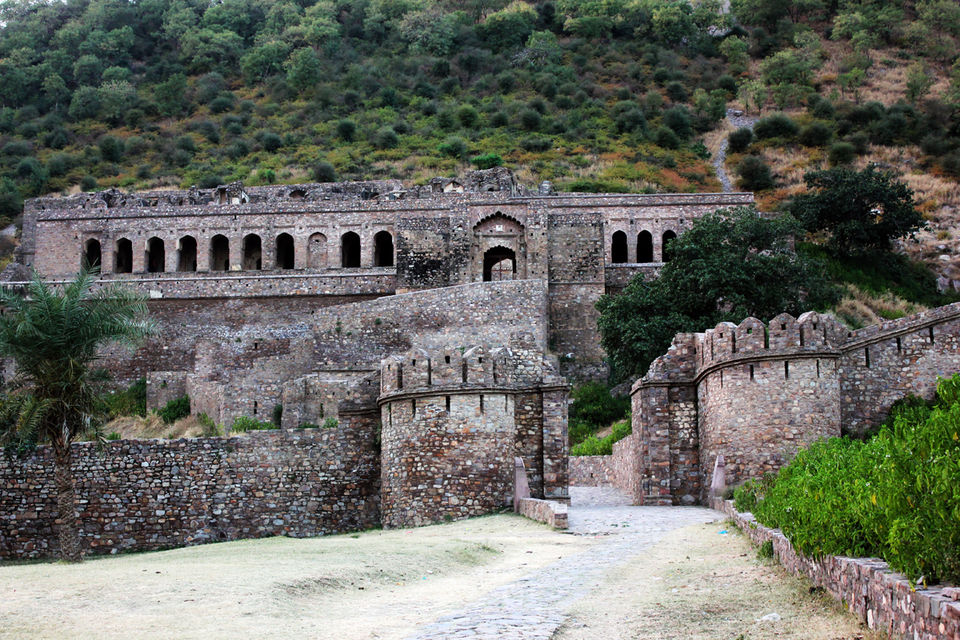
Bhangarh Fort is known as the most haunted place in India, and perhaps the greatest unsolved mystery. There is no doubting the fact that anything associated with the supernatural attracts a huge amount of attention and the deserted city of Bhangarh cashes in on that very idea. The many haunted stories of Bhangarh Fort have transformed it into a bucket list destination of sorts.
Curious travellers come in order to experience cheap thrills and while some go back disappointed, others simply cannot have enough of the suspense associated with the story of the Bhangarh Fort. If you happen to be one of those inquisitive travellers, it is imperative for you to visit this place and find out for yourself.
Is the Bhangarh Fort haunted? Here is the story of Bhangarh:
Most people are of the belief that Bhangarh Fort is haunted and there is no dearth of tales that help in amplifying the mystery that is Bhangarh. Venturing into the fort after sunset is nothing short of an act of bravery as it is supposed to be a centre for paranormal activity and the Archaelogical Survey of India therefore has prohibited people from visiting the Bhangarh Fort at night.
Of the many Bhangarh stories that the locals like to indulge in, the most popular is that of Emperor Madho Singh who built the city after attaining the approval of Guru Balu Nath, an ascetic who used to meditate there. The saint gave his approval on the condition that the shadow of the Emperor’s palace should never fall on his retreat.
If in case it did, the city would crumble into ruins. Once the construction was completed, the retreat of Guru Balu was unfortunately shadowed by the palace. Having incurred the saint’s wrath, Bhangarh immediately transformed into a cursed city and could never be rebuilt as no structures ever managed to survive in it. It is interesting to note that the tomb of Guru Balu Nath can still be found among the ruins.
mysterious!
Another Legend of Haunted Bhangarh Fort:
Another Bhangarh Fort story pertains to Princess Ratnavati. According to legends, her beauty was nonpareil and stories of her surpassing physical attractiveness even transcended kingdoms and borders. When she turned eighteen, suitors from several states asked for her hand in marriage. Of all these suitors was a sorcerer named Singhia who was aware of the fact that he was no match for the princess. However, he decided to entice her with the magical powers he possessed.
He was lucky enough to see Princess Ratnavati’s mistress in the market and enchanted the oil she was purchasing with black magic. He was of the hope that the princess would surrender herself to him upon touching the oil. However, his attempt was futile as Ratnavati witnessed his trick and poured the oil on the ground which then morphed into a rock, rolled towards the magician and crushed him.
Rani Ratnavati
Before dying, Singhia cursed the city of Bhangarh to death and as a result, it never witnessed any rebirths. Moreover, in the battle between Ajabgarh and Bhangarh, princess Ratnavati was killed, thus adding more weight to his malediction. Hopes, however, never die as several locals are of the belief that she has returned in a different form and will ultimately come back to end the unfortunate spell on Bhangarh.
While Bhangarh fort story has been rubbished by scientists, nothing stops the villagers from believing that it is a sanctuary for ghosts. People have supposedly often heard noises that are unaccounted for. The locals claim to have heard women screaming and crying, bangles breaking and strange music emerging from the fort. There have been instances where a special perfume was emanating from the Bhangarh Fort along with ghostly shadows and inexplicable lights. Some people have felt the strange sensation of being followed and even slapped by an invisible entity. It is believed that if a person enters the fort after sunset, he/she will never ever come out of it. The doors are therefore always locked after dusk and entry into the Bhangarh Fort at night is absolutely forbidden. Are all of the Bhangarh Fort stories factual or just strange pieces of fiction? Is the Bhangarh Fort really haunted? Nobody can say. Ghost hunters perhaps can.
The world of anime has ruled everyone amidst various age group. In this article we are about to about look after best alternatives to the one of the best website of anime world ‘Kissanime’. Kissanime has won the race of anime world websites among its other competitors .But as of now it is currently shutdown due to various reasons like increasing popularity and overcrowding of website .
9 Animation
. The page is stream-lined with the latest movies and series on the set of their release. A major advantage of this website is the availability of the subtitles.
Anime Watcher
It can be accessed by both children and people with nil computer knowledge thus making itself an user friendly webpage. HD quality is an extra advantage on this site.
Interfaced A-Z
This site has an exclusive collection of comic books. This page also offers videos to stream on high quality. Rating and voting system to the cartoons and anime series is available on this website.
Gogo Anime
It is a superlative site which is safe to watch. It makes the user aware of the current on air series . Your favorite or wished animes can be downloaded.
Anime Lab
This site displays a normal design along with dubbed versions. It is a safe page and does not require and registration or login.
Kim’s cartoons
It is similar to the ‘Kissanime’ but it requires Log in or to Register. All the video contents of this website is of HD quality.
Kissmanga
This website also requires a login from the users but a safe site to use. It offers a different kinds of anime to their users. Is has a collection of new and popular series.
Study finds topological materials could boost the efficiency of thermoelectric devices.
What if you could run your air conditioner not on conventional electricity, but on the sun’s heat during a warm summer’s day? With advancements in thermoelectric technology, this sustainable solution might one day become a reality.
Thermoelectric devices are made from materials that can convert a temperature difference into electricity, without requiring any moving parts — a quality that makes thermoelectrics a potentially appealing source of electricity. The phenomenon is reversible: If electricity is applied to a thermoelectric device, it can produce a temperature difference. Today, thermoelectric devices are used for relatively low-power applications, such as powering small sensors along oil pipelines, backing up batteries on space probes, and cooling minifridges.
But scientists are hoping to design more powerful thermoelectric devices that will harvest heat — produced as a byproduct of industrial processes and combustion engines — and turn that otherwise wasted heat into electricity. However, the efficiency of thermoelectric devices, or the amount of energy they are able to produce, is currently limited.
Now researchers at MIT have discovered a way to increase that efficiency threefold, using “topological” materials, which have unique electronic properties. While past work has suggested that topological materials may serve as efficient thermoelectric systems, there has been little understanding as to how electrons in such topological materials would travel in response to temperature differences in order to produce a thermoelectric effect.
In a paper published this week in the Proceedings of the National Academy of Sciences, the MIT researchers identify the underlying property that makes certain topological materials a potentially more efficient thermoelectric material, compared to existing devices.
“We’ve found we can push the boundaries of this nanostructured material in a way that makes topological materials a good thermoelectric material, more so than conventional semiconductors like silicon,” says Te-Huan Liu, a postdoc in MIT’s Department of Mechanical Engineering. “In the end, this could be a clean-energy way to help us use a heat source to generate electricity, which will lessen our release of carbon dioxide.”
A path freely traveled
When a thermoelectric material is exposed to a temperature gradient — for example, one end is heated, while the other is cooled — electrons in that material start to flow from the hot end to the cold end, generating an electric current. The larger the temperature difference, the more electric current is produced, and the more power is generated. The amount of energy that can be generated depends on the particular transport properties of the electrons in a given material.
Scientists have observed that some topological materials can be made into efficient thermoelectric devices through nanostructuring, a technique scientists use to synthesize a material by patterning its features at the scale of nanometers. Scientists have thought that topological materials’ thermoelectric advantage comes from a reduced thermal conductivity in their nanostructures. But it is unclear how this enhancement in efficiency connects with the material’s inherent, topological properties.
To try and answer this question, Liu and his colleagues studied the thermoelectric performance of tin telluride, a topological material that is known to be a good thermoelectric material. The electrons in tin telluride also exhibit peculiar properties that mimic a class of topological materials known as Dirac materials.
The team aimed to understand the effect of nanostructuring on tin telluride’s thermoelectric performance, by simulating the way electrons travel through the material. To characterize electron transport, scientists often use a measurement called the “mean free path,” or the average distance an electron with a given energy would freely travel within a material before being scattered by various objects or defects in that material.
Nanostructured materials resemble a patchwork of tiny crystals, each with borders, known as grain boundaries, that separate one crystal from another. When electrons encounter these boundaries, they tend to scatter in various ways. Electrons with long mean free paths will scatter strongly, like bullets ricocheting off a wall, while electrons with shorter mean free paths are much less affected.
In their simulations, the researchers found that tin telluride’s electron characteristics have a significant impact on their mean free paths. They plotted tin telluride’s range of electron energies against the associated mean free paths, and found the resulting graph looked very different than those for most conventional semiconductors. Specifically, for tin telluride and possibly other topological materials, the results suggest that electrons with higher energy have a shorter mean free path, while lower-energy electrons usually possess a longer mean free path.
The team then looked at how these electron properties affect tin telluride’s thermoelectric performance, by essentially summing up the thermoelectric contributions from electrons with different energies and mean free paths. It turns out that the material’s ability to conduct electricity, or generate a flow of electrons, under a temperature gradient, is largely dependent on the electron energy.
Specifically, they found that lower-energy electrons tend to have a negative impact on the generation of a voltage difference, and therefore electric current. These low-energy electrons also have longer mean free paths, meaning they can be scattered by grain boundaries more intensively than higher-energy electrons.
Sizing down
Going one step further in their simulations, the team played with the size of tin telluride’s individual grains to see whether this had any effect on the flow of electrons under a temperature gradient. They found that when they decreased the diameter of an average grain to about 10 nanometers, bringing its boundaries closer together, they observed an increased contribution from higher-energy electrons.
That is, with smaller grain sizes, higher-energy electrons contribute much more to the material’s electrical conduction than lower-energy electrons, as they have shorter mean free paths and are less likely to scatter against grain boundaries. This results in a larger voltage difference that can be generated.
What’s more, the researchers found that decreasing tin telluride’s average grain size to about 10 nanometers produced three times the amount of electricity that the material would have produced with larger grains.
Liu says that while the results are based on simulations, researchers can achieve similar performance by synthesizing tin telluride and other topological materials, and adjusting their grain size using a nanostructuring technique. Other researchers have suggested that shrinking a material’s grain size might increase its thermoelectric performance, but Liu says they have mostly assumed that the ideal size would be much larger than 10 nanometers.
“In our simulations, we found we can shrink a topological material’s grain size much more than previously thought, and based on this concept, we can increase its efficiency,” Liu says.
Tin telluride is just one example of many topological materials that have yet to be explored. If researchers can determine the ideal grain size for each of these materials, Liu says topological materials may soon be a viable, more efficient alternative to producing clean energy.
“I think topological materials are very good for thermoelectric materials, and our results show this is a very promising material for future applications,” Liu says.
This research was supported in part by the Solid-State Solar Thermal Energy Conversion Center, an Energy Frontier Research Center of U.S. Department of Energy; and the Defense Advanced Research Projects Agency (DARPA).
The lemon and ginger detox drink and cucumber and mint combo are very effective for weight loss because they help aid in the digestive process
Exercises and weight training are of paramount importance for a healthy lifestyle along with detox liquids. Though a good diet is imperative for weight loss, it is essential you include detox drinks to make it more effective. Detox drinks are excellent for digestion. If the drinks are aiding in digestion that means they are also helping in the weight loss journey. Detox as the name suggests, it helps in flushing out the toxins from the body thereby promoting metabolism and makes the body toxin-free. Here is the list of such drinks which one can prepare at ease
1. Lemon and ginger detox drink – This is a wonder drink for people who want to lose their weight. Squeeze half a lemon in a glass of lukewarm water and add an inch of grated ginger. Drink this every morning and check your weight after 1-2 months. Ginger contains gingerol which is known to prevent stomach problems and aid digestion. Lemons are not only rich in Vitamin C but also antioxidants which prevent the production of free radicals in the body. When this drink is combined with exercises it can work wonder. 2. Cinnamon and honey – This is made by mixing a spoonful of honey and half a tablespoon of cinnamon in a glass of warm water. A dash of fresh lime can help in the fat burning process. Cinnamon is known to curb cravings while honey aids metabolism. Consuming honey and cinnamon on a regular basis can boost your immune system and protect you from foreign bacteria and viruses. Both the ingredients are a rich source of antioxidants and have anti-bacterial properties. It can help to improve the digestive system and fight various stomach related ailments 3. Cucumber and mint – This mixture not only helps in flushing out toxins from the body, but is also good to taste. Cucumber and mint when added to water are a good combination for digestion. Take a large pitcher and add a few cucumber slices along with fresh mint leaves. Let it infuse for some time and keep drinking from it the entire day. Cucumber contains antioxidants which help fight free radicals and due to its hydrating effect it aids in the removal of toxins from the body. 4. Green tea – This is a calorie-free drink and enriched with catechins and anti- oxidants that suppresses the production of free radicals in the body. 5. Cranberry juice – It is known to be a natural diuretic and can help in flushing out excess water. It also contains anthocyanin a powerful antioxidant which helps combating certain infections, diseases and helps in managing cholesterol levels. It is known for helping in avoiding urinary tract infections.
These are the drinks which can help to flush out the toxins from our body and make it toxin- free and revitalize with energy.
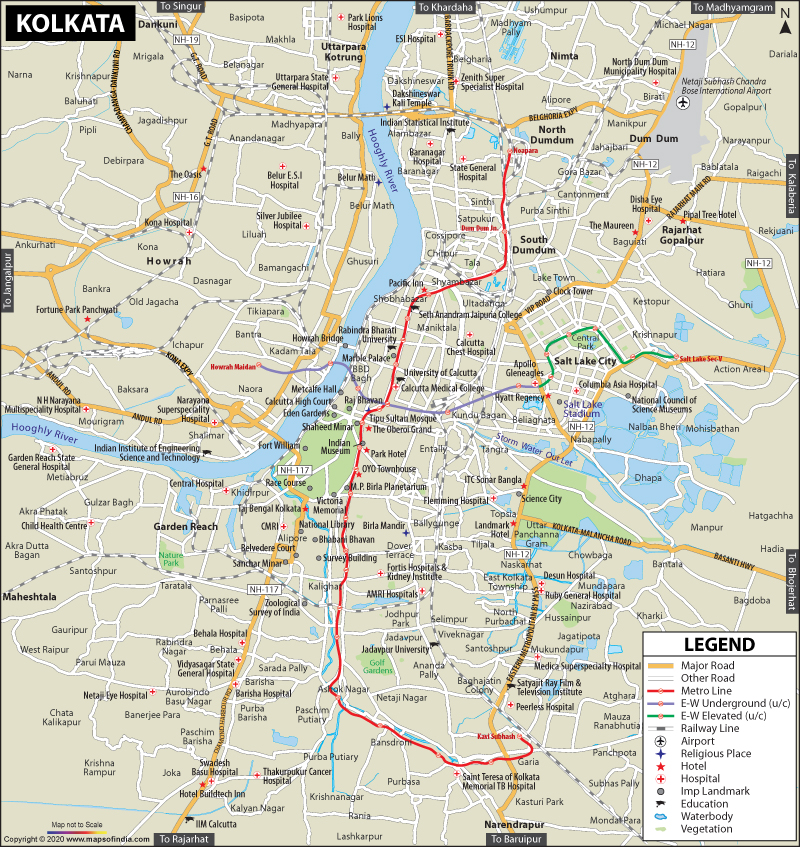
Kolkata, this city has a lot of names to be called whether it be Bengali Kalikata or formerly called Calcutta, capital of British India. It is the capital of West Bengal. It has earned the nickname ‘city of joy’ for its soulful embodiment of culture, love, mystery, respect, enthusiasm and definitely some amazing sweet delicacies. Kolkata, as it is now referred to as, is a city that upholds a perfect juxtaposition between the old world and the modern one. The city is centered on the east bank of the Hugli (Hooghly) River, once the main channel of the Ganges (Ganga) River, about 96 miles (154 km) upstream from the head of the Bay of Bengal; there the port city developed as a point of transshipment from water to land and from river to sea. A city of commerce, transport, and manufacture, Kolkata is the dominant urban Centre of eastern India.
History
The former name of the city has been anglicized version of the Bengali name Kalikata. The beliefs says that, Kalikata is derived from the Bengali word Kalikshetra, meaning “Ground of (the goddess) Kali.” Some say the city’s name derives from the location of its original settlement on the bank of a canal (khal). A third opinion traces it to the Bengali words for lime (calcium oxide; kali) and burnt shell (kata), since the area was noted for the manufacture of shell lime. In 2001 the government of West Bengal officially changed the name of the city to Kolkata. The history of Kolkata as a British settlement, known to the British as Calcutta, dates from the establishment of a trading post there by Job Charnock, an agent of the English East India Company, in 1690.
The history of Kolkata as a British settlement, known to the British as Calcutta, dates from the establishment of a trading post there by Job Charnock, an agent of the English East India Company, in 1690.
The Struggle for Independence
With the spread of education and westernization, began the phase of ‘Renaissance’ in Bengal. Many social reform movements were carried out, and the growing intellectual population started understanding the meaning of freedom and the city became the centre of Indian Independence struggle. All the tensions led to the transfer of the capital of British India to Delhi. Even after the transfer, Kolkata remained a major hub for trade and independence struggle.
Modern Kolkata
Kolkata is the main business, commercial and financial hub of eastern India. Kolkata witnessed an economic decline from the late sixties till the late nineties. The city’s economic fortunes turned the tide as the economic liberalization in India during the early nineties reached Kolkata during late nineties. Kolkata is a multicultural, cosmopolitan city. Apart from the diversity of India, the cultures represented are that of the Europeans (Including Germans, Armenians, and others), and other Asians (Including Chinese, Sinhalese, and Tibetans).
Since 1977, a “Left Front” coalition of communist and Marxist parties has continuously ruled the state. This is reflected in street names and memorials in the city. For example there are streets like Lenin Sarani, Ho Chi Minh Sarani, etc.. The Left Front regained control of the Municipal Corporation of Kolkata from the Trinamul Congress in the 2005 civic elections.
The Top 5 Things To Do And See In Kolkata
Kolkata, formerly known as Calcutta, is the educational, commercial and cultural center of the Eastern part of India, and is the third most populous metropolitan city of India. Kolkata is a pioneer in the field of drama, arts, theatre and literature with several nobel laureates contributing to the Kolkata culture. Here, we explore the best local and cultural sights and activities.
The Marble Palace
It was built by a Bengali Merchant Raja Rajendra Mullick, whose family still reside here. With a Neoclassical style, this incredible building is made up of 26 varieties of Italian marbles. It is one of the most elegant and conserved houses in the city.
Science City
Kolkata’s science city works on the agenda that “one is never too old to learn”, with one of the finest science centers in India, established by the National Council of Science Museum. Science City encourages learning in the most entertaining manner; with interactive exhibits, 3D theatre experiences and a hi-tech motion stimulator, Science City is one of the most frequently visited sites in Kolkata and a favorite place for people of all ages.
Wildlife trek in Sundarbans
The Sundarban National Park is a delightful treat for all the travelers who love adventure and wildlife. Declared a UNESCO World Heritage site, the Sundarbans is the world’s largest mangrove belt, translating to ‘beautiful forest’ in Bengali. With a skillful and knowledgeable guide, Sundarbans trekking gives travelers one of the most memorable times of their lives, closely connected them to the natural habitat of the untamed.
Mother Teresa House
“Hearts to love and hands to serve,” said Mother Teresa, and to this day people from all around the world visit the Missionaries of Charity to give love with nothing in return but a peaceful mind and a happy heart. The Mother Teresa House is a must-visit for learning the ideologies and taking a closer look at how Mother Teresa lived.
South Park Street Cemetry
As peculiar as it might sound, the South Park Street Cemetery, is a burial ground well known for being a pleasant spot for a relaxing stroll. Although at times a little eerie, with grand Gothic-style tombs adorned with pillars, and facades of burial tombs engraved with Hindu symbols, Park Street Cemetery offers beautiful scenery and a sense of history and intrigue, perfect for spending a unique afternoon.
Some Unexplored Places to visit near Kolkata
Subhash Sarovar- Subhash Sarovar makes to our list of Kolkata unexplored places which is apt for all those people who want to be in a peaceful surrounding for some time. The pristine lake surrounded by verdant greenery and chirping of birds, makes this place perfect for the solitude lovers.
Nipponzan Myohoji- This is a Japanese Buddhist temple which is not known to many yet. There are statues of Buddha and pillars with lions on the temple. People visit this temple to meditate and find inner peace.
Jetty by the Hooghly- This jetty was once a part of the Army base camp from where their freight would load and unload. The place is calm and quiet, where you can only hear the sound of the River and birds chirping around.
Jessop Factory- One of the Kolkata’s unexplored places, Jessop Factory once was a lively place where workers would come every day to earn their wages. However, the factory was shut down several years ago. It is said, one can still hear the sound of machines in the factory at night, while there is no worker in there.
Baguran Jalpai- Baguran Jalpai is one of the unexplored places near Kolkata where you can reach in just four hours from the city. The golden sandy beach here, surrounded by Casuarina trees is a perfect place if you want to unwind. The sunset here is something you must witness.
Mithun Bhat, born in Bhopal, could buy 2 houses within a month, Bentley, Ferrari and paid all his debts. But previously, he worked with salary under the minimum wage. So, how could he earn so much money only in a month? He tells us his story.
“I worked at pizza delivery service for a year. I was prior a collage student and did a part time job in a restaurant. I did it to support my study. In the second year of study I was close to be expelled since I could not pay the tuition. At the time, I had to take a loan. I could finally paid my tuition, but I had no money to pay the monthly installments to the bank. Honestly, studying and working all at once was beyond my endurance, and eventually, I was expelled from campus a week before the end of school year. That was the beginning of the darkest days of my life. My father lost his job and my family didn’t know how to survive. Could you imagine how hopeless I felt? I had no decent work and no education, and my father lost his job. I could do nothing to help them.
One night, I was delivering a pizza to the last location. A guy opened the door. He was with his friends, and while he was paying the pizza, I heard their discussion about where would they invest Rs. 2,000,000 they earned 10 minutes ago. I just made a glance and saw a sort of graph and figures on the laptop screen. The guy opening the door gave me Rs. 1,000 but the price was only Rs. 600. He told me to keep the change.
I was absolutely surprised and after I got back home, I took my laptop and tried to recall about their discussion. After 5 minutes, I remembered that they told about online trading. On the Broker website I found the graphs and figures I saw at the guy’s laptop.
After reading all information about the broker and watching tutorial videos, I opened a demo account where I got virtual money. I quickly understood what I had to do, it was very easy. I earned some money after my very first transaction. Then I thought… I did not lose anything, so I decided to open a real account and deposited my last money there. At the morning, I woke up and saw that I earned Rs. 30,654 over that night. After 2 weeks I could paid my debts off, bought a car, and I could help my father while he was searching for a new job and pay his expenses for the next few months. 2 weeks later, I already had 2 houses in the suburb. And all I did without leaving my home and getting higher education.
That’s my luck. It would never happen if I did not meet the rich guy while delivering the pizza. I know there are a lot of people having not good times like me, that’s why I tell you: if you want to live without any problem, I can tell you how to earn money with Trading Resource. It is very easy if you would try it.
Yoga is an ancient art that connects the mind and body. It is an exercise that we perform by balancing the elements of our bodies. In addition, it helps us meditate and relax.
Moreover, yoga helps us keep control of our bodies as well as mind. It is a great channel for releasing our stress and anxiety. Yoga gained popularity gradually and is now spread in all regions of the world. It unites people in harmony and peace.
Yoga essentially originated in the subcontinent of India. It has been around since ancient times and was performed by yogis. The term yoga has been derived from a Sanskrit word which translates to basically union and discipline.
In the earlier days, the followers of Hinduism, Buddhism, Jainism practiced it. Slowly, it found its way in Western countries. Ever since people from all over the world perform yoga to relax their minds and keep their bodies fit.
This popularity of yoga, India became known for yoga worldwide. People all over the world have started to realize the benefits of yoga.
Benefits of Yoga
Yoga has numerous benefits if we look at it closely. You will get relief when you practice it regularly. As it keeps away the ailments from our mind and body. In addition, when we practice several asanas and postures, it strengthens our body and gives us a feeling of well-being and healthiness. Furthermore, yoga helps in sharpening our mind and improving our intelligence. We can achieve a higher level of concentration through yoga and also learn how to steady our emotions. In addition, you can develop self-discipline and self-awareness from yoga if practiced regularly.
21st of June is celebrated as International Day of Yoga where people are made aware of the benefits of yoga. Yoga is a great gift to mankind which helps us keep better and maintain our health. You also develop a higher patience level when you practice yoga which also helps in keeping the negative thoughts away. You get great mental clarity and better understanding.
In short, yoga has several benefits. Everyone must practice it to keep their health maintained and also benefit from it. It is the secret to living a healthy and long life without the use of any artificial means like medicines or any other shortcuts of any kind.
• Department of Revenue – Ministry of Finance of the Indian Government.
• Origin – 1956.
• Enforcement Unit – Department of Economic Affairs. Exchange Control Laws violations under the Foreign Exchange Regulation Act, 1947.
• Shifted – Department of Revenue for administration in 1960.
• Renamed – Enforcement Directorate in 1957. • Composition – persons who are appointed through direct recruitment.
• Directorate – officers from across different investigating agencies on deputation Customs & Central Excise, Income tax, Police etc.
• Headquarters in New Delhi.
• Regional offices all over the country.
• Headed by the Director of Enforcement.
• Major functions: Investigating violations of Foreign Exchange Management Act (FEMA) laws and provisions. Investigating offences of Prevention of Money Laundering Act, 2002 (PMLA) laws and provisions. Processing cases of fugitive/s from India under the Fugitive Economic Offenders Act, 2018. Adjudicating show cause notices issued under the repealed FERA (Foreign Exchange Regulation Act, 1973). Sponsoring cases of Preventive Detention under the Conservation of Foreign Exchange and Prevention of Smuggling Activities Act, 1974 (COFEPOSA) with respect to FEMA violations and also Rendering cooperation to foreign countries in matters related to money laundering and restoration of assets under the PMLA provisions.
• A survey-based economic indicator designed to provide a timely insight into business conditions.
• Widely used To anticipate changing economic trends in official data such as GDP. An alternative measure to official data about economic performance and business conditions. Used by financial and corporate professionals to better understand economies and markets, and to uncover opportunities.
• Compiled and produced globally by IHS Markit – for more than 40 economies worldwide. • Originally compiled for manufacturing sector only – later extended to include sectors – services, construction and retail. Manufacturing PMI .
• A survey-based economic indicator designed to provide a timely insight into changing business conditions in the goods-producing sector.
• Weighted average of five indices
New orders
Output
Employment
Suppliers’ delivery times
Inventories of goods purchases.
News
• India’s manufacturing output shrank in June according to this article.
• PMI in May was 50.8.
• June – slid to 48.1.
• Companies are least optimistic and continue to shed jobs.
• Buying levels – falling at a greater pace.
• Weak demand reduction in production requirements.
• COVID-19 restrictions – curtailed international demand for Indian goods.
• Strict containment measures – negatively impacted demand and led to the contractions in factory orders, production, exports and quantities of purchases.
• Capital goods – worst-affected area in June.
• Output of Capital goods declined at a steep rate due to a sharp fall in sales.
• Falling new orders, business closures and the COVID-19 crisis triggered a reduction in output among Indian manufacturers.
• Growth of new orders, production, exports and input purchasing was interrupted in June lockdown.

























 Eduindex
You must be logged in to post a comment.