Veteran writer- Lyricist Javed Akhtar trolled for inventing neutral words for Gender equality
By Sapnanil konwar, 11th July, 2021
India is facing gender equality since ancient times. Many women can’t work because of patriarchy mindset of Indian society. Indian poet javed akhter who is big advocate for gender equality tried to invent tow gender neutral word . He tweeted “In any speech article or conversation to give equal respect to both the genders we constantly say and write he / she and Him or her . Why can’t we invent two words like for he/she – HESH and for him/ her – SHIM. “ Many people Retweeted trolling him for mentioning about only two gender . Undoubtedly Twitter can be a strong platform to discuss evil norms of Indian society but changing he/she or him/her won’t minimize problem although it creats an environment to discuss gender equality.
A Sole Proprietorship also referred to as a Sole Trader, is an unincorporated business that has just one owner who pays Personal Income Tax on profits earned from the business
It is the easiest type of business to establish or take apart, due to less restrictions. As such, these types of businesses are very popular among Sole Owners of Businesses, Self-Contractors and Consultants.
Partnership
A Partnership is an arrangement between two or more people to oversee business operations and share its profits and liabilities. In a general partnership company, all members share both profits and liabilities.
There may be tax benefits to a partnership compared to a corporation. Usually, Professionals like doctors and lawyers form a limited liability Partnership
Multi National Corporation (MNC)
A Multi National Corporation (MNC) is usually a large corporation incorporated in one country which produces or sells goods or services in various countries. These corporations are large in size and all their worldwide activities are centrally controlled by the parent companies
Major Tasks performed by an MNC
i) Importing and exporting goods and services
ii) Making significant investments in a foreign country
iii) Buying and selling licenses in foreign markets
iv) Engaging in contract manufacturing that is permitting a local manufacturer in a foreign country to produce its products
v) Opening manufacturing facilities or assembly operations in foreign countries
The cause of rape includes military conquest, socioeconomics, anger, power, sadism, traits, ethical standards, laws, and evolutionary pressures that lend some explanation to the causes of sexual violence. No single facet explains the thought process of perpetrator for rape of a particular individual as the underlying motives of the rapist can have many sides.
Many people consider sexual aggression as a masculine identity characteristic of manhood. In many male groups it is significantly correlated to the desire to be held higher in esteem among male peers. Sexually aggressive behaviour among young men has been correlated with gang or group as well as having other delinquent peers.
People’s obsession with sex often leads to rape. There have been instances where people rape their own mother, sister, minors, infants, old and aged women, women suffering from unsoundness of mind, women in comma or those hospitalized with severe ailments.
Men’s desire to control women. More men are tend to boast about their sexual encounters equating them with conquests. People believe that sex requires a man to be aggressive, he feels superior and in control. Husbands rape their wives and seek to justify it as a means of punishment to her or to put her in her place or simply to vent out their frustrations. All those people who believe that woman cannot take no for an answer and force sex to punish or avenge. People rape their girlfriends, live-in partners, friends and acquaintances.
Lack Of Sex Education. Many adolescent boys have an urge to explore. A skewed sex ratio, lack of accessibility and negligible interaction with people of the opposite gender play havoc on impressionable minds now fed with easy access to porn. There are item numbers where the woman is projected as no more than an object of desire. This causes women to be viewed as commodities, meant to be consumed and ravished. Sexually obsessed perpetrators don’t even consider women as human beings but as an object that can be violated with impunity.
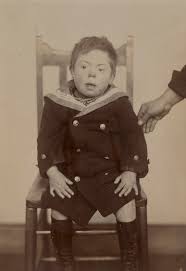
Down Syndrome or Down’s Syndrome also known as Trisomy 21 is a genetic disorder caused by the presence of all or part of a third copy of chromosome 21. The presence of this extra genetic material causes the developmental changes and physical features of Down Syndrome. The parents of the affected individual are usually genetically normal. The probability increases from less than 0.1% in 20 year old mothers to 3% in those of age 45. The extra chromosome occurs due to the non-disjunction of chromosomes that is the failure of one or more pairs of homologous chromosomes or sister chromatids to separate normally during nuclear division. Down syndrome can be identified during pregnancy by prenatal screening followed by diagnostic testing or after birth by direct observation and genetic testing.
Down Syndrome is one of the most common chromosome abnormalities in human. It occurs in about 1 in 1000 babies born each year. In 2015, Down syndrome was present in 5.4 million individuals globally and resulted in 27000 deaths, down from 43000 deaths in 1990. It is named after British Doctor John Langdon Down who fully described this syndrome. Down syndrome varies in severity among individuals, causing lifelong intellectual disability and developmental delays. It’s the most common genetic chromosomal disorder and cause of learning disabilities in children. It also commonly causes other medical abnormalities, including heart and gastrointestinal disorders.
SYMPTOMS:-
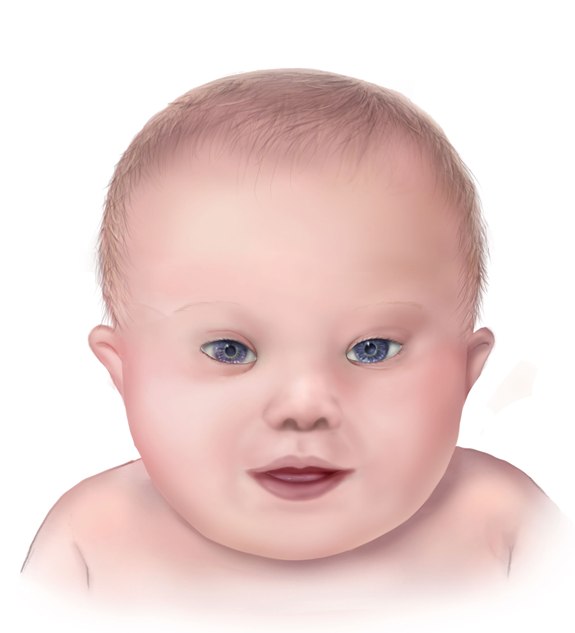
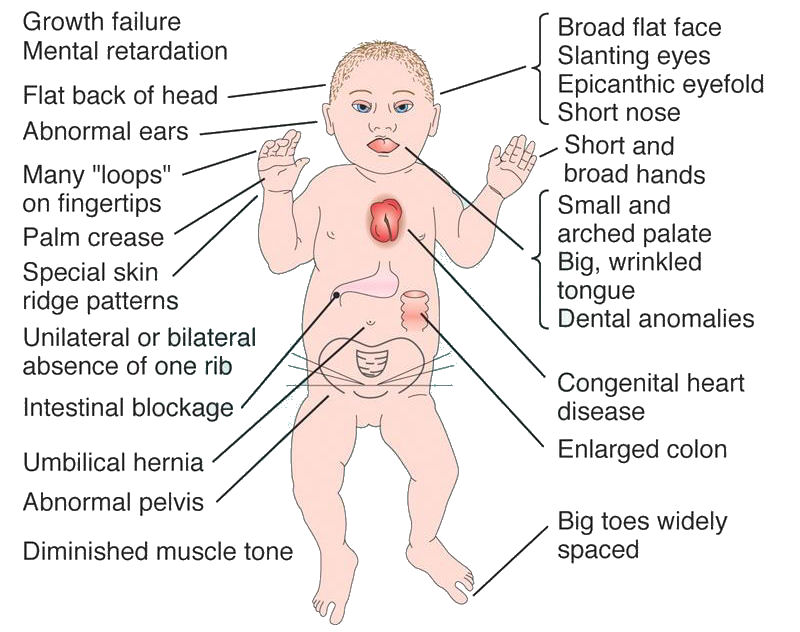
Each person with Down syndrome is an individual- intellectual and developmental problems may be mild, moderate or severe. Some people are healthy while others have significant health problems such as serious heart defects. Children and adults with Down syndrome have distinct facial features. Some of the common features include:-
flattened face.
small head.
short neck.
protruding tongue.
upward slanting eye lids(palpebral fissures).
unusually shaped or small ears.
poor muscle tone.
broad, short hands with a single crease in the palm.
short height.
relatively short fingers and small hands and feet.
CAUSES:-
Human cells normally contain 23 pairs of chromosomes. One chromosome in each pair comes from the father and the other from mother. Down syndrome results when abnormal cell division involving chromosome 21 occurs. Any one of the three genetic variations discussed below can cause Down syndrome:-
Trisomy 21- about 95% of the time, Down syndrome is caused by trisomy 21. The person has three copies of chromosome 21, instead of the usual two copies, in all cells. This is caused by abnormal cell division during the development of the sperm cell or the egg cell.
Mosaic Down syndrome- very rare. The person has only some cells with an extra copy of chromosome 21. This mosaic of normal and abnormal cells is caused by abnormal cell division after fertilization.
Translocation Down syndrome- occurs when a portion of chromosome 21 becomes attached (translocated) onto another chromosome, before or at conception. These children have two copies of chromosome 21 as usual but they also have additional genetic material from chromosome 21 attached to another chromosome.
COMPLICATIONS FACED BY PEOPLE SUFFERING FROM DOWN SYNDROME:-
Heart defects- about half of the children with down syndrome are born with some type of congenital heart defect.
Gastrointestinal defects(GID)- includes abnormalities of the intestine, esophagus, trachea and anus.
Immune disorders- people with Down syndrome are at increased risk of developing autoimmune disorders.
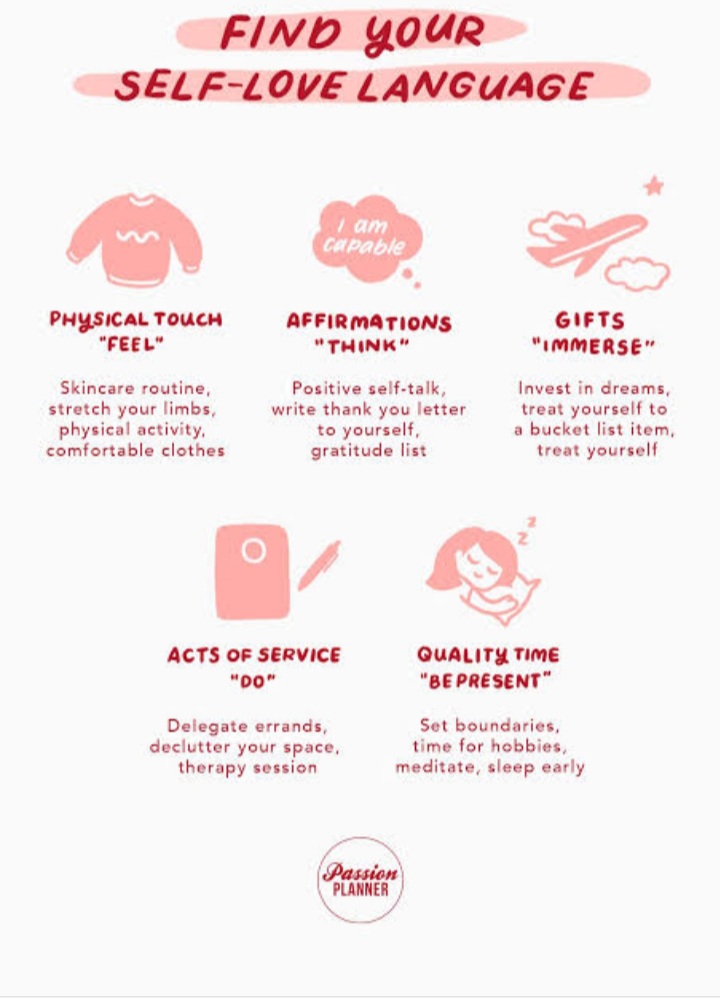
When you think of the term love languages, the first thing that may come to mind is relationships and romance. But finding your self- love language is actually an important factor in your self care routine. Here are some helpful tips .
Before delving into self- love languages,let’s know about where this concept from. In 1992, Dr. Gary champan wrote a book called The Five languages. In the book ,he discusses five different ways to express love with your partner. They include words of affirimation,acts of service, receiving gifts, quality time and physical touch.
Champan notes that discovering your love language can help you communicate and better connect. With your love! He also adds that everyone expresses and recieves love differently , so it’s important to understand your love language.
1. Quality Time :
If your love language is quality time, you adore just being together with the person you love .A perfect day would be hanging out with your loved ones and simply enjoying the moment. Why not apply this to your self care routine? Be mindful of how you spend time with yourself. Give yourself the undivided attention that you would want from someone else.
Self- love Ideas for Quality Time :
* practice mindfulness.
* spend a day at the coffee shop.
* Do a gudied meditation exercise.
* sign up for a yoga class.
* Enjoy the sunset.
* Go for a drive.
* start a garden.
*Go on a solo- trip to a dreamy destination.
* Read a chapter of a new book before bed.
* paint a picture.
* Treat yourself to dinner at your favorite restaurant.
* Listen to your favorite album on repeat.
* stargaze.
* watch a meaningful movie.
* sit on your porch.
* Go on a nature hike.
2. Words of Affirmation :
Sometimes, it’s nice to just hear the words,”I love you” or ” you did a great job”, If words of affirimation is your love language,you feel happiest when someone expresses their affection in words. Similarly ,you should speak loving to youself.At times, we can be our own worst critics. Replacing negative self- talk with kind words is a powerful way to show yourself love.
Self -love ideas for words of affirimation:
* Recite daily positive affirmations
* stick encouragingnotes on your fridge.
* write yourself a loving letter.
* keep a gratitude jar.
* Remind yourself of your dreams by making a vision board.
* Be aware of how people in your life speak to you.
* Talk about your passions with others.
* Forgive yourself for past mistakes.
*Give yourself a compliment.
* write a list of things you’ve accomplished this year.
3.Receiving Gifts:
When it comes to this love language,it’s the thought behind the gift that counts. You love the idea that someone bought or made a gift with just you in mind. If receiving gifts is your love language ,you truly appreciate when people listen to your interests and passions.
Let’s say that you adore all things music. You’d probably feel emotional if your loved ones suprised you with tickets to your favorite artist’s concert. Another thing that would mean the world to you is if they made you a personalized playlist! Overall, small gifts make you feel special because someone you love thought about you
Self-love Ideas for Receiving Gifts:
* Treat yourself to a small gift from yore fav shop.
* Buy a ticket to see a local show or movie.
* Invest in your hobbies and passions.
* Decorate your workspace with positive knickknacks.
* create a scrapbook of memories & mementos.
* Make yourself a self care kit.
* start a DIY project just for fun.
4. Physical Touch :
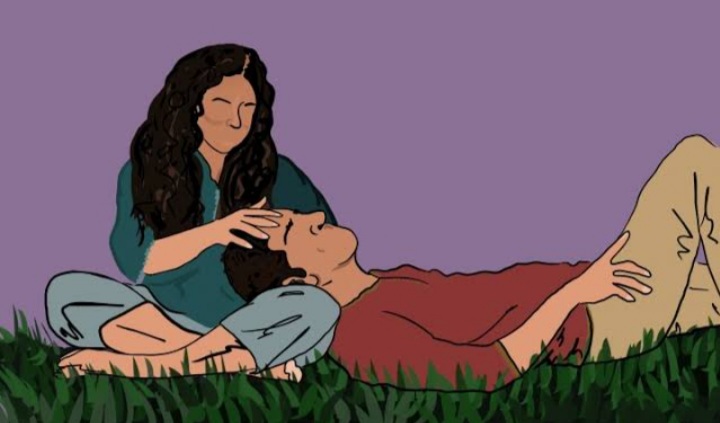
If physical touch is your love language,a hug from someone you care about can make your wholeday. Showing affection through physical touch calms you down and makes you happiest. When it comes to self care , take the steps you need to feel more in tune with your body. Doing so well bring you a sense of calm.
Self-love ideas for physical Touch:
* cook yourself a healthy dinner.
* Get some fresh air
* Light your favorite candle.
* work on your skincare routine.
* sign up for a fitness class.
* Enjoy a cup of tea.
* Drink a glass of water
* play with makeup.
* Go to the gym.
5. Acts of service :
On to the final self- love language _ acts of service! When I took Dr.chapman’s quiz,I was’nt too surprised that this was my personal love language.At the end of the day ,this love language is all about showing the people in your life you care.
Self-love Ideas for Acts of service:
* check off your to-do list.
* Donate to a local charity.
* Learn how to set boundaries and say no to things that drain your energy.
Warren Edward Buffett was born on August 30, 1930, to his mother Leila and father Howard, a stockbroker-turned-Congressman. The second oldest, he had two sisters and displayed an amazing aptitude for both money and business at a very early age. Acquaintances recount his uncanny ability to calculate columns of numbers off the top of his head
While other children his age were playing hopscotch and jacks, Warren was making money. At only six years old, Buffett purchased six-packs of Coca-Cola from his grandfather’s grocery store for 25 cents and resold each of the bottles for a nickel, pocketing a 5-cent profit. Five years later, Buffett took his first step into the world of high finance.
Find your passion
At eleven years old, he purchased three shares of Cities Service Preference at $38 per share for both himself and his older sister Doris. Shortly after buying the stock, it fell to just over $27 per share. A frightened but resilient Warren held his shares until they rebounded to $40. He promptly sold them—a mistake he would soon come to regret. Cities Service shot up to $200.1 The experience taught him one of the basic lessons of investing: Patience is a virtue.
Warren buffet
Warren buffet rules for success
1. Find your passion
If anyone can find their passion, they can achieve success in whatever work they want.
2. Hire well
The three things in hiring to people you look for are integrity, intelligence and energy. And you should always look for first ‘integrity’ if you don’t have integrity you cannot have any of two other things in you
3. Don’t care what others think
Many people gonna tell you that why are you doing this and judge you but not caring what others think is key to success so follow your heart
4.Read, read, read
Read many books as you can because reading makes your mind clear and sharp.. Warren wuffet started reading when he was 7 years old
5. Save margin of safety
” Be greedy when everyone is fearful, and be fearful when everyone is greedy” Warren waffet once said this before investing in stock market try to save some margin of safety
6.Have a competitive advantage
In the world of competition you have to be competitive and take it as a advantage
7. Schedule for your personality
He don’t like to have things all packed for hour n hour. He also said in his one of the interview that ‘ I really get to do what I like to do, the way I wanted to do with the people we choose to around that are terrific. I’ve got everything I wanted and it’s fortunate’
8.Always be competitive
Somebody always after you but you have to ahead of them. You always wanna be in the move. When you got really great business but the danger would always there but you have to be comptitive in order to get what you want
9. Unconditional love
The best advice he received from his father that whatever you do in life and the people in your life give them unconditional love.
Today, 11th July has been recognized as World Population Day and the main significance of this day is to draw attention to the alarming global population issues. Among the 195 countries in the entire world, China tops the list recording the highest population and further India stands in the second position.
The day was established by the United Nations Development Programme in 1989 and was suggested by Dr. K.C.Zachariah in which the population reaches Five Billion when he worked as Sr Demographer at World Bank. On this day one should not only seek to raise awareness about the world population but also gives importance to issues like family planning, gender equality, poverty, maternal health, and human rights.
The increasing population has always been a matter of concern. At the beginning of the 1800s, the recorded population was 1 billion. Then, at the beginning of the 2000s, the population recorded was around 6 billion. As of 2019, the world population recorded is 767.35 Crores. The massive rate at which the population is increasing is very distressing. With the increase in the number of human beings, the resources to sustain human life has come to a downfall. The natural resources available are limited while their consumption is increasing every year. If this continues increasing at the same rate, the day isn’t away when everyone here would be doomed.
Individuals always advocate through words and suggest the required steps to be taken to control the increasing population but very few carry out various programs at their institution or organizational levels to make people aware of the consequences this would lead to us if not controlled. In India, most of the remote area’s population aren’t even aware of basic human rights, educating them about various policies and family planning strategies can turn out to be beneficial. If we get a close look at the stats in India, the birth rate is increasing rapidly stating 51 births each min(as of 2020) and death rates decreasing comparatively to around 19 deaths each min(as of 2020). Taking this into consideration, reproductive health of woman is a matter of concern too. Maternal health affects adversely due to multiple rebirths and if one’s sexually active with multiple partners makes her more vulnerable to deadly diseases like vaginal and cervical cancer.
While the media/ press only surges on the count of the world population, leaders, small organizations, institutions should hold hands together to create and spread awareness about reproductive health issues and advocate their voices for the basic human rights of every individual. It’s also my request to the government to come forward with effective policies and schemes to control the population. And the concern is so widespread that the results won’t show up immediately, everyone has to be patient whilst these measures become effective. But if not controlled now, human life should get prepared for some adverse repercussions.
You Can’t Live an Indian Life without a saree – 4 different saree you should know about!!
City Of Joy – Kolkata yes we are now talking about the tant saree which is famous in all over West Bengal. It is originally made from Bengal cotton handloom, it is also known as taant, tat, taat . This saree is not only worn by west Bengals but also women in Bangladesh is also fond of tant saree. This saree is has a speciality as it is light as airy texture and very suitable for the warm weather. These saree has a thick border and decorative pallu and is decorated by floral pattern.
BACKGROUND–
The word “Tant” indicate the handloom in Bengal that are used weave cotton garments like saree, dhoti and other garments. the background of this saree took place in the 15th century in shantipur.
The art gave wave during the Mughal rule 16th – 18th century when it became an extreme favourite among Muslim and jamdani weaving. This beautiful art continued during the British rule and decades before independence. After the partition of Bengal in 1947, many weavers from Bangladesh migrated to India and started living in neighbouring town shantipur, now it became a new home for Tangail weavers of Bangladesh. today both Bengalis and Bangladeshi weaver are well known for the varieties of tant saree.
WEAVING TECHNIQUE–
A massive quantity of cotton threads comes from the mill are first washed to remove any chemicals, dried in the sun, bleached and again dried.
Then they are put in boiling water which contains colour to dye them.
After this, they are then starched and processed some more times to make then stronger and subtler. The threads are wound on bamboo drums for weaving.
Every saree has a design on its border, pallu and body . These design made by the artist on a soft card sheet by perforating them which are then put up from the loom.
The simplest saree takes about 10- 12 hours to weave, and saree which have complex design takes 5-6 days to get complete.
State Of Jewels – Gujarat, which is famous for bandhani work derived from the Hindi/Sanskrit word “ bandhna” and “bandha”, which means tying or to tie. Traditionally in India tie and dye art known as bandhani. According to the design and motifs each pattern has its special significance.
BACKGROUND –
It is an ancient practice done by people. People used the technique of picking the cloth with fingernails and tying before dying, this was first found in Indus valley civilization, back to 4000 B.C. even the Buddhist painting, and Ajanta caves have bandhani design in it.
MAKING PROCESS –
Here the selection of cloth plays an important role. The artist starts with the unbleached white fabric.
Then they have block printing design in other words it is senticels for printing on saree they give impressing by designed blocked on saree
Later they grab some amount of cloth and tie with thread tightly, they also use some kinds of pebbles, motis , stones to give design to the saree.
Then they dip the cloth into normal water to soak the saree so that colour can easily stick to the cloth.
After this, they put the saree in the boiling water which contains salt and colour.
Again they put the saree in the cold water and at last they dry the saree. And after untying you will find beautiful designs on saree.
State of Caves – Maharashtra. Every bride in Maharashtra dream to wear paithani saree at her wedding, one of the most beautiful saree in India. Paithani gives the reflection of rich Marathi culture and tradition. Paithani is woven with very fine silk which makes them one of the richest saree in India.
BACKGROUND –
Paithani is extracted more than the 2000 year back from statvahana dynasty. it is said that paithani is originated from the city called pratishan now it is known as paithan. At that time paithan was the centre of silk and zari ( gold yarn) and they even exported cotton and silk to the roman empire. So this is how paithani gots its name.
MAKING PROCESS –
At first pallu or padar of paithani is weaved it is either woven either with zari work or silk warp. Traditionally zari work has silver coated with wash gold. Pallu is designed with akruti, asawali, banddimore etc.
Next step is to weave its body. The body has bordered on the edges which are handwoven by gold and silver zari. As the border is made by gold zari body also has floral design and zari work is done.
After all the zari work is done, it is polished with a mixture of water and gum to give saree a stiff texture. They also used methi and jaggery used in the mixture.
They use various colours of bana and tana to get colours of the paithani saree. Tana bana means a mixture of two colours to give a single colour. ex- blue bana and red tana will give a shade of purple. This is how colour is given to paithani. After this, a perfect paithani is made.
State Of Temples – Tamil Nadu, kanjeevaram got its name from a village Kanchipuram. This saree owns thick fabric and dark shades of colours mixed with hints of gold. Women in India love to wear saree during festivals, weddings, occasion and celebrations then kanjeevaram is the best outfit to look classy.
BACKGROUND –
The history of kanjeevaram silk saree started from Hindu mythology. It is said that Kanchi silk weaver is descendants of sage Makanda, who was considered to be the best weaver. It is considered that two weaving communities from Andhra Pradesh, the devangas and the saligars came to Kanchipuram. As we know the city is full of temples and weaver cleverly used temples’ architecture in kanjeevaram saree to give details.
MAKING PROCESS –
Mulberry silk is used to weave Kanjeevaram saree and the gold, silver zari which is used in the edges of the saree comes from Gujarat.
Silk threads then dipped into rice water and dried under the sun to make the texture of silk thick and stiff.
This silk thread is interlocked within a thin silver wire and woven
with the help of golden thread to complete the process.
To weave this fabric a wrap frame is used which has approx of 60 holes, in which there are 240 threads in the warp and 250 to 3000 threads in the weft.
Saree is popular for vibrant colour and impressive designs which borrowed from designs of temples.
Usually, weaver weaves pallu and body separately and they are pretty different from each other and later than are interlocked by pinti which is a zig-zag pattern where pallu meets the body of the saree. This is how a kanjeevaram saree is made.
Water is the precious gift of nature to humankind and millions of other species living on the earth.
Tamil Nadu constitutes 4% of India’s land area and is inhabited by 6% of India’s population, but has only 2.5% percent of India’s water resources. More than 95% of the surface water and 80% of the ground water have already been put into use.
Multipurpose River Valley Projects
Multipurpose river valley projects are basically designed for the development of irrigation for agriculture and hydropower generation. However, they are used for many other purposes as well.
Mettur Dam
The Mettur Dam was constructed in a gorge, where river Cauvery enters the plains. It is one of the oldest dam in India. It provides irrigation to Salem, Erode, Karur, Tiruchirapalli, Thanjavur, Tiruvarur and Nagapattinam districts farmlands.
Bhavani Sagar Dam
The Bhavani Sagar Dam is located 80 km away from Coimbatore city in the district of Erode. It has been constructed across the river Bhavani. This dam is one of the biggest earthen dams in the country.
Amaravathi Dam
The Amaravathi dam is situated 25 km away from Udumalpet in Tirupur district. The dam has been constructed across the river Amaravathi, a tributary of Cauvery. The dam was built primarily for irrigation and flood control. A small Hydropower station has also been installed recently.
Krishnagiri Dam
Krishnagiri dam is situated at a distance of 7 km from Krishnagiri towards Dharmapuri.
Sathanur Dam
Sathanur Dam was constructed across the river Thenpennai in Chengam taluk. It is in the midst of Chennakesava hills. It irrigates the land in Thandrampet and Tiruvannamalai blocks. There is also a large crocodile farm and a fish grotto. Parks are maintained inside the dam for tourists and the gardens are used by the film industry.
Mullaperiyar Dam
Mullaperiyar dam was built by the British administration in 1895. It has been constructed on the Periyar river, which originates from Thekkady hills of Kerala. The dam was built mainly for watering the farming land of Tamil Nadu, which is perennially drought-prone.
Vaigai Dam
This dam built across the river Vaigai near Andipatti. The dam with a height of 111 feet can store water up to 71 feet. It is a located 7 km from Andipatti and 70 km from Madurai. This dam was opened on 21 January, 1959.
Manimuthar Dam
Manimuthar dam is located about 47 km from Tirunelveli.
The Papanasam Dam
It is also known as Karaiyar dam and is located about 49 km away from Tirunelveli and Thoothukudi districts.
Parampikulam Aliyar Project
It is a joint venture of Tamil Nadu and Kerala states. It envisages the construction of seven interconnected reservoirs by harnessing the water of seven rivers, which include major rivers of Parampikulam and Aliyar.
Parappalar project is located near Ottanchatram. Its storage capacity is 167 million cubic feet of water. It is about 75 km from Madurai and is in Palani taluk.
Water Resource Management
Water resource management is the activity of planning, developing, distributing and managing the optimum use of water resources. The demand for water in Tamil Nadu is increasing at a fast rate both due to increasing population and also due to larger per capita needs triggered by economic growth. Demands from other sectors such as domestic and industries have been growing significantly. The state is heavily dependent on monsoon rains. Since the state is entirely dependent on rains for recharging its water resources, monsoon failures lead to acute water scarcity and severe droughts. So, it is important to save water for us and the future generation.
Gandhi is an important figure in India’s national movement. A phase of our national movement is called the Gandhian Phase. Nation is defined as a people sharing a common language, history and culture and having a sense of belonging to their common identity. The idea of nation was combined with the nation of the state. It developed where the people of one nation were suppose to live in one state. Nationalism has 2 versions: Premordial and Modernist.
Premordial versions means is the the original versions of nationalism in which the nation has a common language, culture, ethics and history. The modernist version however they treat people like a particular territory and sharing its civic amenities despite loving different ethic on regular affinities.
Gandhi ji was one of the nationalist who was the leader of many movements. He helped us to get independence. He believed in non- violence. He lead many movements in his opposition to the British rule like Satyagraha, Dandi March, Khilafat Movement, the non-cooperation movement. For Mahatma Gandhi, nationalist was based on understanding what was required for people to be free. He was not a socialist but, in common with the socialists, he believed that capitalism could never solve the problem of unemployment and the mental dullness is produced. Gamdhi ji also fought against the practices of sati, child marriage, oppressions of widow, ‘pardah’ and fueled emancipation of women.
Gandhi ji on Communal Liberty
India is a land of diversity. Populated by heterogeneous people of multifarious languages, religion, castes and creeds. Inspite of such diversities of character, there is always an underlying unity among them since time immemorial. The fact also remains that there is always a threat to narrow communal feelings. In modern India, gandhi was one of the greatest champions and communal unity. He lived his whole lofe striving for it, ensuring it, stood firmly by itand finally sacrificed his life in the pursuit of his communal unity. For Gandhi the life of communal unity was even greater than swaraj. None of the political leaders or religious priests were as devotedly concerned about communal unity as Gandhi ji was. Gandhi ji saw truth, love, compassion and service enlisted in all religions, which led him to accord equal respects to all faiths. All religion insist on equality of human race and developing a harmonious relationship with the entirety of creation. Any violation of the principle of equality gives way to conflict and violation. Gnadhiji regarded Islam as a religion of peace in the same sense as Christanity, Buddhism and Hinduism. No doubt, there are differences in the degree. He said in this regard that he knew the passages that could be quoted from the holy Quran to the contrary. Hindu and Muslim has often raised a great challenge before India became secular. Without unity between Hindu and Muslim no certain progress can be made by the nation tenet that ‘unity is strength’ is not merely a copy book maxim but a rule of life. Hindu-Muslim unity means not only unity betwwen Hindus and Muslims but betwwen all these who believe India to be their home, no matter to what faith they belong. Gandhi ji did not fully succeed in Hindu-Muslim unity . Some writers felt that Gandhi ji locked a historocal perspective. He did not take into the account that held that religion with its dagma, tradition, customs, rituals and historical memories has on the minds of men and women in the pre modern society. Gandhi assigned only a derination role to the cultural factors. He did not grasp the deeper social and cultural roots of the hindu-muslims conflict. Gamdhi placed the entire blame for the communal problem on the British. He thought that hindu-muslim was essentially religious amd missed the social aspect of the problems. Gandhi always emphasized upon the necessity of openness of mind for the unity and harmony of the society. It was not a question of failure or success. Gandhi realised that the only alternative to violence coercion, retribution and chaos was restoration of society among the misguided individual to counter Frenzy and indictiveness, gandhi sought rehabilitation of balanced social interrogation among the masses to reslove to put the cause of nation above all denominated prejudices. Today, India is a secular nation. Democracy is mature, muslims have got equal rights and opportunities and are more secure in India than in any other country. The credit goes to the founding father of contribution and Mahatma Gandhi.
Indian Women cricketer Harleen Deol pulled off a stunning catch to dismiss Amy Jones in the first T20 against on Friday (9th July 2021), that acrobatic effort from Harleen Deol won the hearts of fans and Cricket lover all over the globe.
Harleen was fielding at long off and Amy Jones tried to clear the fences off Shikha Pandey’s delivery, everyone thought that the ball would sail over the fence for maximum but Harleen Deol timed her jump in the air to perfection and managed it to keep it inside the boundary and drived back to hold onto it.
Every single person watching that catch knows that she had broken the barrier between men’s and women’s cricket . Though India women’s lost the match to England women’s, but everyone appreciated that effort of Harleen, even England cricket team appreciate that efforts in their twitter.
Banking in India in the mdern sense originated in the last decades of the 18th century . The first banks were Bank of Hindustan (1770-1829) and the General Bank of India established 1786. The largest bank and the oldest still in existence, is tge State bank of India, which originated in the Bank of Calcutta in June 1806 , which almost immediately became the bank of Bengal. This was one of the three presidency banks , the other two being The Bank of Bombay and The bank of Madras , all three of which were established under charters from the British East India Company. The three banks merged in 1921 to form the Imperial Bank of India , which , upon India’s independence became the State Bank of India in 1955. For many years the presidency banks acted as quasi-central banks , as did their successors until the reserve Bank of India was established in 1935 .
Reserve bank of India (RBI)
The Reserve Bank of India is India’s central banking institution, which controls the monetary policy of the Indian rupee. It commenced its operations on 1 April 1935 during the British Rule in accordance with the provisions of the Reserve Bank of India Act,1934 and in 1949 it was nationalized.The central office of the Reserve Bank was initially established in Calcutta but was permanently moved to Mumbai in 1937. The central office is where the Governor sits and where policies are formulated. Sir CD Deshmukh is the first Governor of RBI. The RBI has four zonal offices at Chennai, Delhi, Kolkata, Mumbai and 20 regional offices mostly located in the state capitals and 11 sub-offices. Reserve Bank of India Act,1934 is the legislative act under which the Reserve Bank of India was formed. This act along with the Comapnies Act, which was amended in 1936, were meant to provide a framework for the supervision of banking firms in india.
Scheduled and non-scheduled banks
Scheduled banks in India refer to those banks which have been included in the second schedule of Reserve Bank of India Act, 1934. Banks not under this schedule are called non-scheduled banks. In other words, Banks with a reserve capital of less than 5 lakh rupees qualify as non-scheduled banks. Unlike scheduled Banks , they are not entitled to borrow from the RBI for normal banking purposes, except, in emergency or ‘abnormal circumstances’. Coastal local Area Bank Ltd. (Vijayawasa,AP), Capital Local Area Bank Ltd. (Phagwara, Punjab), Krishna Bhima Samrudhi Local Area Bank Ltd. (Mehbubnagar, Telangana), Subhadra Local Area Bank Ltd. (Kolhapur, Maharashtra) are the only non-scheduled banks in India.
Scheduled banks are further internally classified into commercial banks and cooperative banks.
Public Sector Banks
Public sector banks (PSBs) are banks where a majority state (ie., more than 50%) is held by a government . The shares of these banks are listed on stock exchange. There are a total of 21 PSBs in India and State Bank of India group.
In 1969, the Indira-Gandhi headed government nationalised 14 major commercial banks ( Allahabad Bank , Bank of Baroda , Bank of India , Bank of Maharashtra , Canara Bank , Central Bank of India , Dena Bank , Indian Bank , Indian Overseas Bank , Punjab and Sindh Bank , Punjab National Bank, Sindicate Bank , UCO Bank , United Bank of India)
In 1980 , a further 6 banks were nationalised (Andhra Bank , Cooperation Bank , New Bank of India , Oriental Bank of Commerce, Punjab and Sindh Bank , Vijay Bank )
IDBI Bank is an Indian government-owned financial service company, formarly known as industrial Development Bank of India , headquartered in Mumbai , India .It was established in 1964 and nationalised in year 2005 .
Private Sector Banks
The ‘Private- Sector’ banks are baks where greater parts of share or equity are not held by the government but by private shareholders . There are many Indian and Foreign Banks in India . HDFC Bank , ICICI Bank , Axis Bank , Kotak Mahindra Bank , Yes Bank , IDFC Bank , RBL Bank , Federal Bank , City Union Bank are the major private banks in India.
Regional Rural Banks
Regional Rural Banks were formed on October 2,1975 upon the recommendations of M. Narsimham working group during the tenure of Indira Gandhi’s government. The object behind the formation of RRBs was to serve large unserve population of rural areas and promoting financial inclusions . They have been created with a view to serve primarily the rural areas of India with basic banking and financial services. However, RRBs may have branches set up for urban operations and their area of operation may include urban areas too.
CooperativeBanks
The cooperative banks are furtger classified into:
State cooperative banks: These are small financial institutions which are governed by regulations like Banking Regulations Act , 1949 and Banking Laws Cooperative Socities Act ,1965 . At present there are about 33 state cooperative banks of which 19 are scheduled.
Urban/ Central cooperative banks: The term urban cooperative banks (UCB) refers to primary cooperative banks located in urban and semi-urban areas . These banks till 1996 , were allowed to lend money only for non-agricultural purposes. This distinction does not hold today . They essentially lent to small borrowers abd business . There are about 2,104 UCBs of which 56 were scheduled Banks. About 79 percent of these are located in 5states- Andhra Pradesh, Gujarat, Karnataka, Maharashtra and Tamil Nadu .
Primary credit Socities: Primary Credit Societies or primary agricultural credit society (PACs) is a basic unit and smallest cooperative credit institutions in India. It works on the grassroot level (Gram panchayat and village level ) . It virtually function like banks , but whose net worth is less than Rs. 1 lakh; who are not members of the payment system and to whom deposit insurance is not extended .
I’ve seen many people say ‘fitness is my passion’ but have never tried doing yoga. Why? Did you know that yoga is one of the most relaxing and fun way to be fit? Every Asana, every movement builds up the strength in your muscles and relaxes your mind and body. Yoga helps build flexibility and strength. When you hold a pose for a long time, you realize that your balance has also improved which surely gives you the confidence to continue practicing yoga for a healthier life. It is said that yoga is derived from the Sanskrit word “yuji” which means union. In simple terms, it’s the union of your body, mind and soul. Oh also, an Asana is a body posture which starts with simple poses but with time and experience, it can get more complex and interesting. In this article, I’ll mainly be talking about Surya Namaskar/ Sun Salutation. Surya Namaskar is a powerful force in practicing yoga. It consists of 12 yoga poses. It has a very positive impact on the mind and body, it’s also a great cardiovascular workout. There are many benefits of practicing this workout, it mainly helps with stimulating the nervous system, helps in flexibility, is an amazing solution to weight loss and improves cognitive functioning.
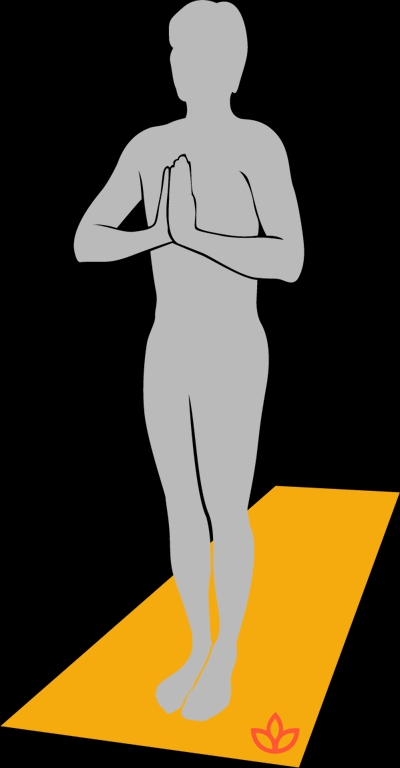
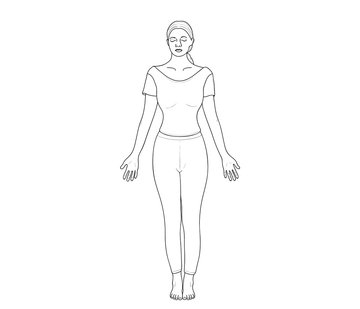
1) Pranamasana / Prayer pose : Stand at the edge of your mat while keeping your foot together. As you inhale, lift both of your arms from the sides and while exhaling, bring your palms together and form a praying position.
2) Hastauttanasana / Raised arms pose : The main purpose of this pose is to stretch your entire body so to do that you must breathe in, lift your arms up and then take it back while keeping your biceps close to the ears.
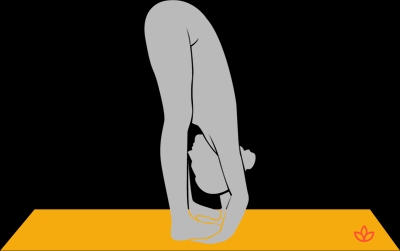
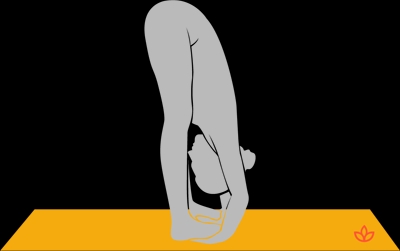
3) Hastapadasana / Standing forward bend : While breathing out, bend forward from gbe waist but remember to keep the spine intact. After exhaling completely, bring your hands down and place them next to your feet.
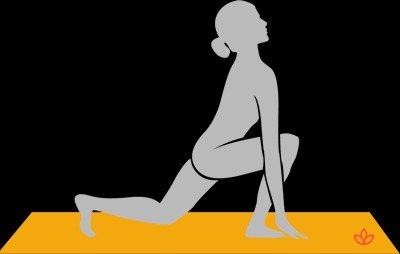
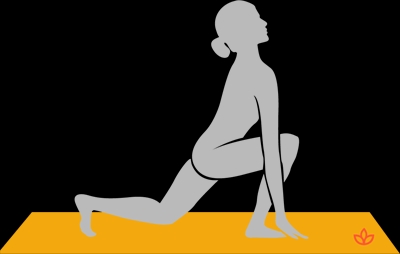
4) Ashwa Sanchalanasana / Equestrian pose : Push your right leg back but make sure to push it as far as you can and bring the right knee to the floor and look up but also keep in mind that the left foot is in between your palms.
5) Chaturanga Dandasana / Stick pose : in and take the left leg back and bring the whole body to make a straight line.
6) Ashtanga Namaskara / Salute with eight joints : Exhale while bringing your knees down to the floor, take your hips slightly back and slide forward. Make sure your two hands, two feet, two knees, chest and chin are on the floor.
7) Bhujangasana / Cobra pose : For this pose, slide forward and raise your chest up to form a cobra pose. It’s advisable to keep your elbows bent and keep your shoulders away from your ears and look up the ceiling.
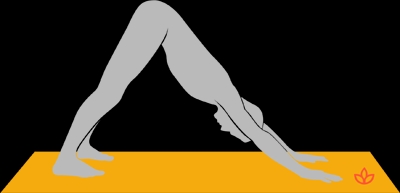
8) Adho Mukha Svanasana / Downward facing dog pose : The inverted ‘V’ pose. Breathe out and lift your hips and the tailbone to make an inverted ‘V’. If it’s possible, try keeping your heels on the ground.
9) Ashwa Sanchalanasana / Equestrian pose : Push your right leg back but make sure to push it as far as you can and bring the right knee to the floor and look up but also keep in mind that the left foot is in between your palms.
10) Hastapadasana / Standing forward bend : While breathing out, bend forward from the waist but remember to keep the spine intact. After exhaling completely, bring your hands down and place them next to your feet.
11) Hastauttanasana / Raised arms pose : The main purpose of this pose is to stretch your entire body so to do that you must breathe in, lift your arms up and then take it back while keeping your biceps close to the ears.
12) Tadasana / Mountain pose : While exhaling, straighten your body and bring your arms down. Observing the sensations taking place in your body is the key point to master this pose.
Therefore, this completes Set 1. While doing Surya Namaskar, make sure to do 2 sets. For the second set, start with the left leg and bring the right foot forward in step 10. The main purpose of doing yoga is to make sure you relax and enjoy this form of exercise. Always give yourself and your body enough time to adapt to this method and never rush into anything.
Years after leaving those precious school days behind, you still gush over the idea of having a popular, cool classmate having a crush on you or a warm and caring senior as your friend.
Of course, your school days can’t come back but you can watch these dramas and feel happy about the good memories you made. Here, is the list of Top 10 Highschool K-dramas that you’ll love:
1) Sassy Go-Go (2015):
Taking place at a prestigious boarding school, this drama depicts high school life in South Korea where students are taught to compete and climb over their competitors.
One day, an unfortunate incident creates a crisis for the school’s dance club and a group of elite students. They must overcome their differences and work together in order to prove others wrong. It starred Jung Eun-Ji, Lee Won-Keun, Chae Soo-Bin, Cha Haek-Yon, Ji-Soo as the main cast.
2) A-Teen(2018):
This K-drama was a sequel made for the K-drama “Seventeen”. A production of Naver Subsidiaries, it starred Shin Yae-Eun, Lee Na-Eun, Shin Seung-Ho, Kim Dong-Hee, and Kim So-Hyun.
In A-Teen, two characters shared the same name “Ha-Na” embark on a journey of self-discovery as they turn 18. Do Ha-Na may be ordinary, but she’s outgoing and confident.
Meanwhile, Kim Ha-Na is the school’s most favored student and yet she’s insecure on the inside. This is a story about six friends and how they deal with their teenage years. A worth it Teenage sympathetic romance drama.
3) Moment Of Eighteen(2019):
At eighteen, Choi Jun-Woo has solidified his position as a perpetual loner. Unable to adequately express his emotions, he often comes across as unsympathetic and aloof, when in reality, that couldn’t be further from the truth.
Underneath his lonely exterior lies a cute, goofy young man who just needs the right people around to bring this side more often. When Jun Woo transfers schools, he meets Yoo Soo Bin, a top student who has spent her entire life being controlled by her overbearing mother.
Suffocated under her mother’s care, Soo Bin spends most of her life dreaming of the day she becomes an independent woman. Meanwhile, Ma Hwi Young, seems like the perfect gentleman.
Strong on the outside, Hwi Young seems like he has it all, but on the inside, he’s just a timid eighteen-year-old boy trying to find his place in the world. Each student has their own set of struggles but when they come together, they find their lives slowly begin to change. “Moment of Eighteen” is a 2019 Viki Original directed drama directed by Sim Na-Yeon.
4) Love Alarm(2019):
Love Alarm is a streaming television series starring Kim So Hyun, Jung Ga-Ram, and Song Kang. It is based on the Daum Webtoon of the same name written by Chon Kye-Yong.
The drama is based on a futuristic app that alerts you when someone within a ten minutes radius harbors a crush on you. While this cutting-edge technology sounds exciting, heartbreaks are bound to arise as feelings start to get exposed.
Injecting technology into romance would make for the most intense love triangle ever. You’d be spilt between rooting for Hwang Sun-Oh, the school’s most popular transfer student who’s go-getter, and Lee Hye-Hyeong, who’s quiet and shy but never fails to look out for Jo-Jo.
5) The Heirs (2013):
The world at your feet and the weight of the world at your shoulders, children of the super-elite class bear the burden of success as they are being groomed of the success as they are being groomed as heirs to their family business empires despite only being in high school.
“Heirs: He Who Wears The Crown Must Bear Its Weight” or commonly known as “The Heirs”, is a 2013 south Korean starring the hottest actors working today. It is directed by Knag Shin Yo.
6) Who Are You: School 2015 (2015):
“Who Are You: School 2015” also known as “Love Generation” in Japan is a television series, starring Kim So-Hyun, Nam Joo-Hyuk, and Yook Jung-Sae.
This drama is a 2015 version of KBS2’s “School” series, this young adult drama focuses on an 18-year old female high school student who has her life turned upside down overnight and the honest, touching situations that the students encounter.
7) Dream High(2011):
“Dream High” is one of those K-dramas whose cast mostly consisted of K-pop idols. It starred 2PM’s Ok Taec-Yeon and Jang Woo-Young, IU, T-ara’s Ham Eun-Jung, and Kim So0-Hyun.
The drama follows six school classmates at a performing arts high school as they strive to become successful K-pop stars while also navigating through the trials of teenage life.
8) Extraordinary You (2019):
Dan Oh, a high school girl who is an only child from a wealthy family, has congenital heart disease. One day, she wonders why her memory keeps disappearing.
She finally realizes that she is a character in the cartoon and decides to find her real life and love. Meanwhile, a character who doesn’t even has its name, Seuli high school’s student number 13, lives like the background of the other character, but his life slowly changes after meeting Dan-Oh.
They begin their mysterious adventure to find out the secret of the romance cartoon world, and they try to get their independent lives back.
9) Boys Over Flowers (2009):
Jan Di is an average girl whose family owns a dry-cleaning store located near the luxurious and well-known Shin Hwa High School. After saving a boy from jumping off the roof of Shin Hwa High School, Jan Di is admitted into the school on a swimming scholarship.
At school, Jan Di tries to avoid confrontation with the four richest and most spoiled boys known as the F4, because she knows what happens to those that stand up against them. However, when Jan Di’s friend, Oh Min Ji, accidentally gets ice cream on the F4 leader’s shoes, she is forced to declare war on the leader of the F4, Goo Joon Pyo.
What will happen, though, when she falls in love with someone from the F4 and Goo Joon Pyo starts developing feelings for her, too? Will the love triangle disrupt the F4 and change their lives forever?
“Boys Over Flowers” is one of the biggest Korean drama hits of our time, sweeping ratings and awards across Asia in 2009 and 2010.
10) True Beauty(2020):
Based on a webtoon of the same name, it starred Cha Eun-Woo, Moon Ga-Young, Hwang In-Youp, and Park Yoo-Naa. This drama was one of the most famous K-Dramas of 2020 and still is in the hype. It centers on a high school girl, who after being bullied and discriminated against because of being perceived as ugly, masters the art of makeup to transform herself into a gorgeous person. It was a smash hit after it was released. The drama enthralled the audience as it had a riveting love triangle which was worth the attention. The creator expressed it was a dream come true to see her work turned into a drama.
K-dramas are not must about Romance or love triangles. It focuses on much more issues like family, friendship, trust. If you want to spend some quality time in this hectic period, you should definitely try these K-Dramas. You don’t know what waits for you in the K-Drama World.
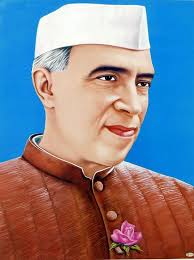
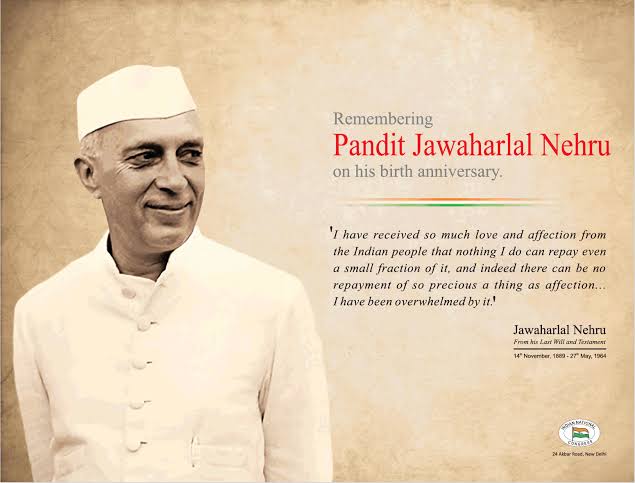
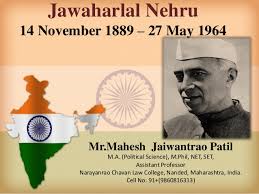
🌟Born in a wealthy, aristocratic Kashmir Brahmin family as the only son of Pandit Motilal Nehru, a flourishing law practitioner in Allahabad, Uttar Pradesh (UP), Jawaharlal received the best of education first in India and later in England where he attended at Harrow and Trinity colleges, Cambridge.Later still, he qualified as a barrister at the Inner Temple. After completing his higher studies Jawaharlal returned to India in 1912. Being a highly cultivated and sensitive individual, he was more interested in public affairs affairs rather than in practising law, specially so since his father was already deeply involved in Congress politics. In 1916,at the of 27,he was married to Kamala, daughter of Jawaharlal Kaul, another distinguished Kashmiri Brahmin descendant. After marriage,the couple went to Europe for their honeymoon. Soon a daughter was born to them, Indira Priyadharshini, who was to become India’s third prime Minister in 1967. Nehru’s family life was short-lived. As her husband plunged into politics and was hailed by the British in 1921, kamala also started participating in public life. Constant travel and rigiorous schedule made her I’ll and she had to spend several months in Switzerland for treatment. She returned to India in 1928, and again engaged herself in public life, often with her husband. When her health deteriorated,she had to go to Switzerland once again. But this time the journey was fatal. She succumbed to her illness on 28 February 1936,when Nehru was only 47 and Indira just 19. Nehru did not marry again. His life was totally dedicated to the National cause and to bring up his only daughter.
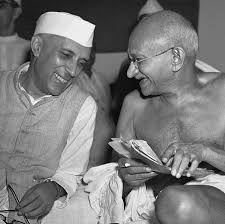
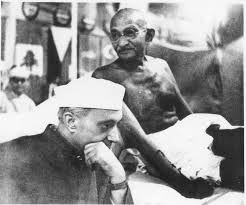
🌟Nehru’s political initiation took placeat his father’s home ‘Anandbhavan’ itself. Many Senior politicians visited Anadhabavan to hold discussions with Motilal Nehru. The young Jawaharlal got acquainted with many of them. He also came to have glimpses into the prevailing political situation. Later, he became more active in UP politics. The defining moment of Nehru’s political career came soon when he met Gandhiji in 1919. Gandhiji had already become a prominent leader of the nationalist movement. They got attracted to each other instantly. The occasion also was right. In Amristar, Punjab, the British troops had opened fire on a unarmed crowd on 13, April 1919 killing and wounding thousands of men and women. The whole nation was shocked. Innumerable protest meetings were held all over the country. Jawaharlal was among the leaders who organized protests. In the 1920 session of the Indian National Congress, Gandhiji put forward the idea of non-cooperation. Though there were differences of opinion on this novel political weapon, Nehru staunchly backed the idea. After coming into code contact with Gandhiji Tere was no respite for Nehru. In 1927, there were widespread demonstrations ad strikes against the Simon Commession sent to India by the British Government to study Constitutional reforms in the country. Jawaharlal who led the protests in Allahabad was beaten by the police. The opposition to the Simon Commession wa not only in respect of it’s terms of reference but aso to the fact that the commission had no Indian as a member. Nehru was asked to prepare an alternative ‘constitutio’ for India. This Nehru himself was elected as the President of ye Congress at the Lahore session. It as a rare honour for the young leader, for the previous session in 1928 was presided over by his father Motilal Nehru. It was also in this session that the Congress declared that complete independence was it’s avowed goal. The car the famous salt ‘satyagraha’ whereby Gandhiji exhorted people to extract salt from see water violating British ban on it. Nehru was arrested along with so many others for participating in the salt agitation. It was a series of agitations and jail terms that followed. The grand finale was the Quit India Movement when Gandhiji asked Britain and to leave India and let the Indians take over the country’s governance. Again, all the leaders including Nehru was arrested and jailed. Altogether Jawaharlal had to spend a period of more than decade and a half in British Indian jails on various occasions.
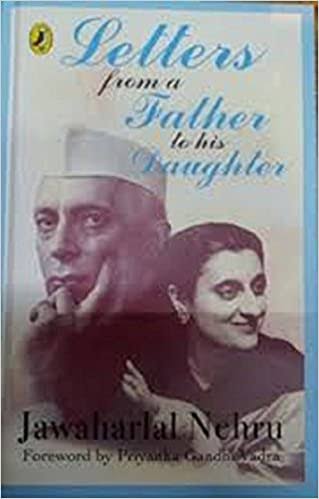
🌟But such harsh measures could not silence the man. Instead it brought to light another brilliant quality of the multifaceted personality – the writer in Nehru. He wrote some of the most historically reliable and literature- wise brilliant books during his prison days. ‘Dicovery of India’, ‘Glimpses of World History’, ‘Letters to His Daughter’, ‘An Autobiography’, Etc. are some of them. They are considered literary masterpiece in English language, and are in good demand even now.
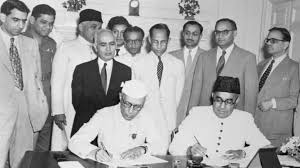
🌟By the end of the Second World war, Britain had recognized the need for settling the questions of India’s demand for Independence. The labour Government that came to power after the war sent in 1946 a Cabinet Mission under sir Stafford Crips to negotiate with Indian leaders on issues connected with the transfer of power. They spent weeks in India talking with political leaders of various shades. Nehru played a prominent role in these discussions as he had been once again elected President of the Congress Party. The talks were practically inconclusive as the two main political parties, the Indian National Congress and the Muslim League, could not agree to any formula put farward. Finally as a prelude to transfer of power Britain set up an interim Indian Government under the premiership of Jawaharlal Nehru. Though the Muslim League did not join at the beginning, they joined The Cabinet at a later stage, effectively making it a coalition ministry. The relationship of the two parties had been very complex and often antagonistic. British Government was partly responsible for their mutual hatred and suspicion. In their anxiety to prolong their rule in India, they had tacitly encouraged communal division between Hindus and Muslims, the dominant segments of the India’s population. As the political agitations for Independence intensified and on the British departure became imminent, the meetinggrounds between the divided political foes became unbridgeable. British solution was division of the country into India and Pakistan a state to be newly carved out in the Indian subcontinent. Like his mentor, Mahatma Gandhi, Jawaharlal Nehru was also dead opposed to the idea of country’s partition. But the brief experience in the interim Cabinet with Muslim League during 1946 – 1947 convinced him that the partition could not be avoided. Vital portfolios were shared by rival parties and there were bickering almost daily on the decision-making process and on the allotment of funds to various administrative and development activities. The overcome this running agony and to make the administration a creative smooth affair, partition of the country was agreed upon. India became free on 15, August 1947 after Pakistan was granted freedom a day earlier. Jawaharlal Nehru was sworn in as the first prime Minister of free India when the clock struck the midnight hour that day. He was 58.
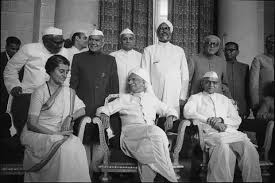
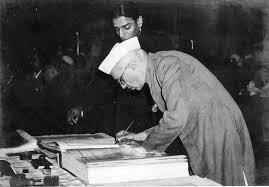
🌟As the Prime Minister of free India, Nehru’s task was stupendous. There was the immediate problem of communal mayhem and whole- scale slaughter following mass migration between the two countries. More vital was the agenda for long term development of the country. Congress Party had laid down broad outlines of National priorities. But it had to be drafted into policies and put into implementation. It was the towering personality of Jawaharlal Nehru that saved the situation. Mahatma Gandhi had already proclaimed him to be his political heir, and Nehru had a clear vision about the future of the country. He was an idealist ,but not a prisoner of ideologies. He was a top class intellectual,but he always respected the opinion of others of that decisions of national importance were made after due consultations.
🌟Nehru envisaged a planned developed for the country. With this in view, he formed planning commission which was entrusted with the preparation of the First Five Year Plan. Though the first plan was a modest one, as the years passed the plans grew in size and ambition. One can stay with certainty that whatever growth the development India attained during the fifties and sixties had their origin in Nehru’s ideas on planned progress. Nehurvian developmental vision guided this vast country in it’s tryst with destiny.
🌟Probably, Nehru’s more basic contribution was in the field of social and political developmenrs. India inherited a diversified and layered society and polity. Tendencies for internal feud and dissensions wre aplenty. Nehru’s inclusive Vision and policy of accommodation held this immense country together and helped it to evolve into a vibrant secular democracy. He remained accessible to everyone irrespective of religion, caste, region, language or other differences.
🌟Nehru’s achievement on the international arena was no less great. The post-war world was divided into a pro-socialist bloc of the contries under the USSR and a pro-capitalist bloc under the USA. In this divided world Nehru took an independent stand. Dubbed as non-alignment,the policy attracted many newly emergent, Independence countries of Asia, Africa and Latin America. A third bloc of nations soon got organized under the banner of Non-Alignment. Nehru was regarded a leader of the Non-Alignment Movement (NAM) along with President Nasser of Egypt, President Sukarno of Indonesia and President Tito of Yugoslavia. Peaceful coexistence was the pillar of his foreign policy. Non-Alignment policy helped India and other third World countries to exert an influence out of proportion to their Military or economic strength.
🌟At the domestic front, Jawaharlal showed great insight on Developmental priorities. He knew that heavy industries like steel, cement, ship building, locomotives, fertilizer, machine tools, etc. we’re the backbones for any meaningful industrialization. If heavy industries were not founded on strong basis, other industries would not follow. A similar principal was followed in the case of development of science and technology. The Council of Scientific Industrial Research (CSIR) was started as a nodal agency for promoting institutional level research efforts in various fields. As a result, some of the world class research laboratories grew up in the country. Steps were taken to establish atomic research centres and space research centres. University Grants Commission was founded for rapid expansion of higher education facilities in the country. Nehru Paid equal attention to the flowering of human talents in social sciences, arts and literature. Various national level councils such as Indian Council for Historical Research (ICHR), Indian Council for Social Science Research (ICSSR), etc. were set up to encourage pursuits of quality studies in social sciences. Various academic such as kendra Sathiya Academy, Lalith Kala Academy, National Book Trust, Children’s Books Trust, etc. also owe their existence to Nehru’s deep concern for the cultural, artistic and intellectual development of the people of this vast country.
🌟Jawaharlal travelled widely both within the country and outside. In India there would be hardly a town or village where he had no visited at least once. Also, he carried India’s message across the world by visiting almost all important countries. In USA and the USSR, India’s leader was given reception that stunned even the host countries. For example,it was reported that when he visited New York in 1949, the welcome received by him was comparable only yo that received by General Mac Arthur, the 5- starred homecoming hero of the Pacific War.
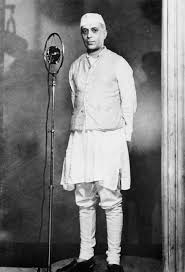
🌟Nehru was a man of the masses. He was in his element when he moved with them or addressed them. He drew inspiration,even ideas from the lives of ordinary, faceless common people. For him they represented real India.
🌟A fairly long period of 16 years as head of the Government of a cast country with nearly one-sixth of world’s population should have been exhaustive and tiring for any leader. Yet, Nehru remained a relentless fighter for peace and development. However, in the summer of 1964 while he was on a hectic tour of the Himalayan districts, Jawaharlal fell ill. He was in the hospital for less than two weeks. Aged 75 ,he breathed his last peacefully on 27 May 1964 and bade good bye to his beloved people. As a token a affection to the departed leader, the ashes for his mortal body were apportioned and taken to various rivers and seacoasts across the country for immersion. Even in death, the titanic leader wanted to remain united with his country and it’s people. A simple mausoleum on the banks of the river Yamuna in Delhi was erected to preserve part of his mortal remains. It is apply named ‘Shantivan’, the adobe of peace or rather ‘peaceful woods’.
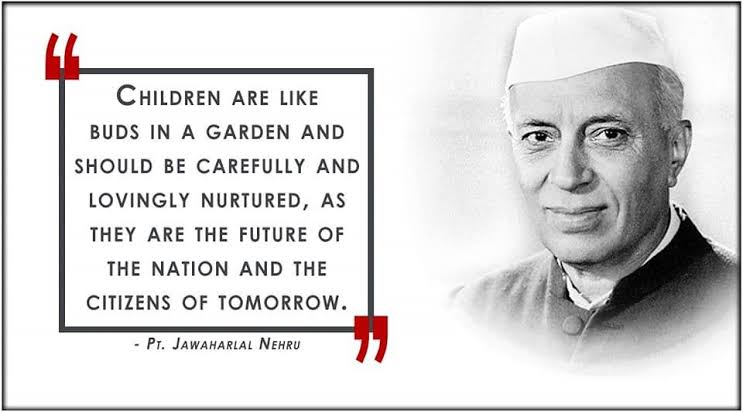
🌹Jawaharlal Nehru will be remembered by posterity as one of the greatest statemen that India has produced. His place in historyis assured as the supreme architect of modern India🌹.




























 Eduindex News
You must be logged in to post a comment.