FATHER OF THE NATION

“The best way to find yourself is to lose yourself in the service of others.” – Mahatma Gandhi
Meetali soni
The father of the nation is Mahatma Gandhi . The full of Mahatma Gandhi is Mohan Das Karamchand Gandhi. He was born October 2, 1869, Porbandar,Gujarat , India—died January 30, 1948, Delhi.Every year on 2 October, Gandhi Jayanti is observed. This year the day marks the 151st birth anniversary. He was a Indian lawyer, politician, social activist, and writer who became the leader of the nationalist movement against the British rule of India. Mohandas Karamchand Gandhi was known to his many followers as Mahatma, or “the great-souled one.Gandhi was the distinguished leader of the Indian independence movement in British-ruled India. Mahatma Gandhi is also called the Father of the Nation or “Bapu”.Mohandas Karamchand Gandhi or Mahatma Gandhi was a renowned freedom activist and an authoritative or powerful political leader who had played an important role in India’s struggle for Independence against the British rule of India. His father name is karamchand Gandhi . His mother name is Putlibai Gandhi. At the age of 13, Mahatma Gandhi was married to Kasturba which is an arranged marriage. His nationality is INDIAN .They had four sons of Harilal Gandhi, Manilal Gandhi, Ramdas Gandhi and Devdas Gandhi. He was a writer also .In South Africa for about 20 years, Mahatma Gandhi protested against injustices and racial discrimination using the non-violent method of protests. His simplistic lifestyle won him, admirers, both in India and the outside world. His father-in-law was Dewan or Chief Minister of Porbandar, the capital of a small principality in Western British India (Now Gujarat State). Mahatma Gandhi was the son of his father’s fourth wife Putlibai, who belonged to a Vaishnava family.When Gandhi was 9 years old he went to a local school at Rajkot and studied the basics of arithmetic, history, geography, and languages. At the age of 11, he went to a high school in Rajkot. Because of his wedding, at least about one year, his studies were disturbed and later he joined and completed his schooling.He joined Samaldas college in Bhavnagar in 1888 at Gujarat. Later, one of his family friend Mavji Dave Joshi to pursue further studies i.e. law in London. Gandhiji was not satisfied with the studies at Samaldas College and so he became excited by the London proposal and managed to convince his mother and wife that he will not touch non-veg, wine, or women.In May, 1893 he went to South Africa to work as a lawyer. There he had the first-hand experience of racial discrimination when he was thrown out of the first-class apartment of the train despite holding the first-class ticket because it was reserved for white people only and no Indian or black was allowed to travel in the first class. This incident had a serious effect on him and he decided to protest against racial discrimination.In 1915, Gandhiji returned to India permanently and joined the Indian National Congress with Gopal Krishna Gokhale as his mentor.Gandhi’s first major achievement was in 1918 when he led the Champaran and Kheda agitations of Bihar and Gujarat. He also led Non-Cooperation Movement, Civil Disobedience Movement, Swaraj, and Quit-India movement against the British government.

“First they ignore you, then they laugh at you, then they fight with you, then you win.” – Mahatma Gandhi.

Gandhi was a prolific writer.Hind Swaraj, published in Gujarati in 1909. Gandhi also wrote his autobiography, The Story of My Experiments with Truth.In 1930, Gandhi was named the Man of the Year by Time’s Magazine. In 2011, Time magazine named Gandhi as one of the top 25 political icons of all time.

“Happiness is when what you think, what you say, and what you do are in harmony.” – Mahatma Gandhi.

HE IS THE ONLY MAM WHO IS RESPONSIBLE FOR OUR FREEDOM .

Faith is not something to grasp, it is a state to grow into.” – Mahatma Gandhi.

FATHER OF THE NATION

“The best way to find yourself is to lose yourself in the service of others.” – Mahatma Gandhi
Meetali soni
The father of the nation is Mahatma Gandhi . The full of Mahatma Gandhi is Mohan Das Karamchand Gandhi. He was born October 2, 1869, Porbandar,Gujarat , India—died January 30, 1948, Delhi.Every year on 2 October, Gandhi Jayanti is observed. This year the day marks the 151st birth anniversary. He was a Indian lawyer, politician, social activist, and writer who became the leader of the nationalist movement against the British rule of India. Mohandas Karamchand Gandhi was known to his many followers as Mahatma, or “the great-souled one.Gandhi was the distinguished leader of the Indian independence movement in British-ruled India. Mahatma Gandhi is also called the Father of the Nation or “Bapu”.Mohandas Karamchand Gandhi or Mahatma Gandhi was a renowned freedom activist and an authoritative or powerful political leader who had played an important role in India’s struggle for Independence against the British rule of India. His father name is karamchand Gandhi . His mother name is Putlibai Gandhi. At the age of 13, Mahatma Gandhi was married to Kasturba which is an arranged marriage. His nationality is INDIAN .They had four sons of Harilal Gandhi, Manilal Gandhi, Ramdas Gandhi and Devdas Gandhi. He was a writer also .In South Africa for about 20 years, Mahatma Gandhi protested against injustices and racial discrimination using the non-violent method of protests. His simplistic lifestyle won him, admirers, both in India and the outside world. His father-in-law was Dewan or Chief Minister of Porbandar, the capital of a small principality in Western British India (Now Gujarat State). Mahatma Gandhi was the son of his father’s fourth wife Putlibai, who belonged to a Vaishnava family.When Gandhi was 9 years old he went to a local school at Rajkot and studied the basics of arithmetic, history, geography, and languages. At the age of 11, he went to a high school in Rajkot. Because of his wedding, at least about one year, his studies were disturbed and later he joined and completed his schooling.He joined Samaldas college in Bhavnagar in 1888 at Gujarat. Later, one of his family friend Mavji Dave Joshi to pursue further studies i.e. law in London. Gandhiji was not satisfied with the studies at Samaldas College and so he became excited by the London proposal and managed to convince his mother and wife that he will not touch non-veg, wine, or women.In May, 1893 he went to South Africa to work as a lawyer. There he had the first-hand experience of racial discrimination when he was thrown out of the first-class apartment of the train despite holding the first-class ticket because it was reserved for white people only and no Indian or black was allowed to travel in the first class. This incident had a serious effect on him and he decided to protest against racial discrimination.In 1915, Gandhiji returned to India permanently and joined the Indian National Congress with Gopal Krishna Gokhale as his mentor.Gandhi’s first major achievement was in 1918 when he led the Champaran and Kheda agitations of Bihar and Gujarat. He also led Non-Cooperation Movement, Civil Disobedience Movement, Swaraj, and Quit-India movement against the British government.

“First they ignore you, then they laugh at you, then they fight with you, then you win.” – Mahatma Gandhi.

Gandhi was a prolific writer.Hind Swaraj, published in Gujarati in 1909. Gandhi also wrote his autobiography, The Story of My Experiments with Truth.In 1930, Gandhi was named the Man of the Year by Time’s Magazine. In 2011, Time magazine named Gandhi as one of the top 25 political icons of all time.

“Happiness is when what you think, what you say, and what you do are in harmony.” – Mahatma Gandhi.

HE IS THE ONLY MAM WHO IS RESPONSIBLE FOR OUR FREEDOM .

Faith is not something to grasp, it is a state to grow into.” – Mahatma Gandhi.

VOLCANOES

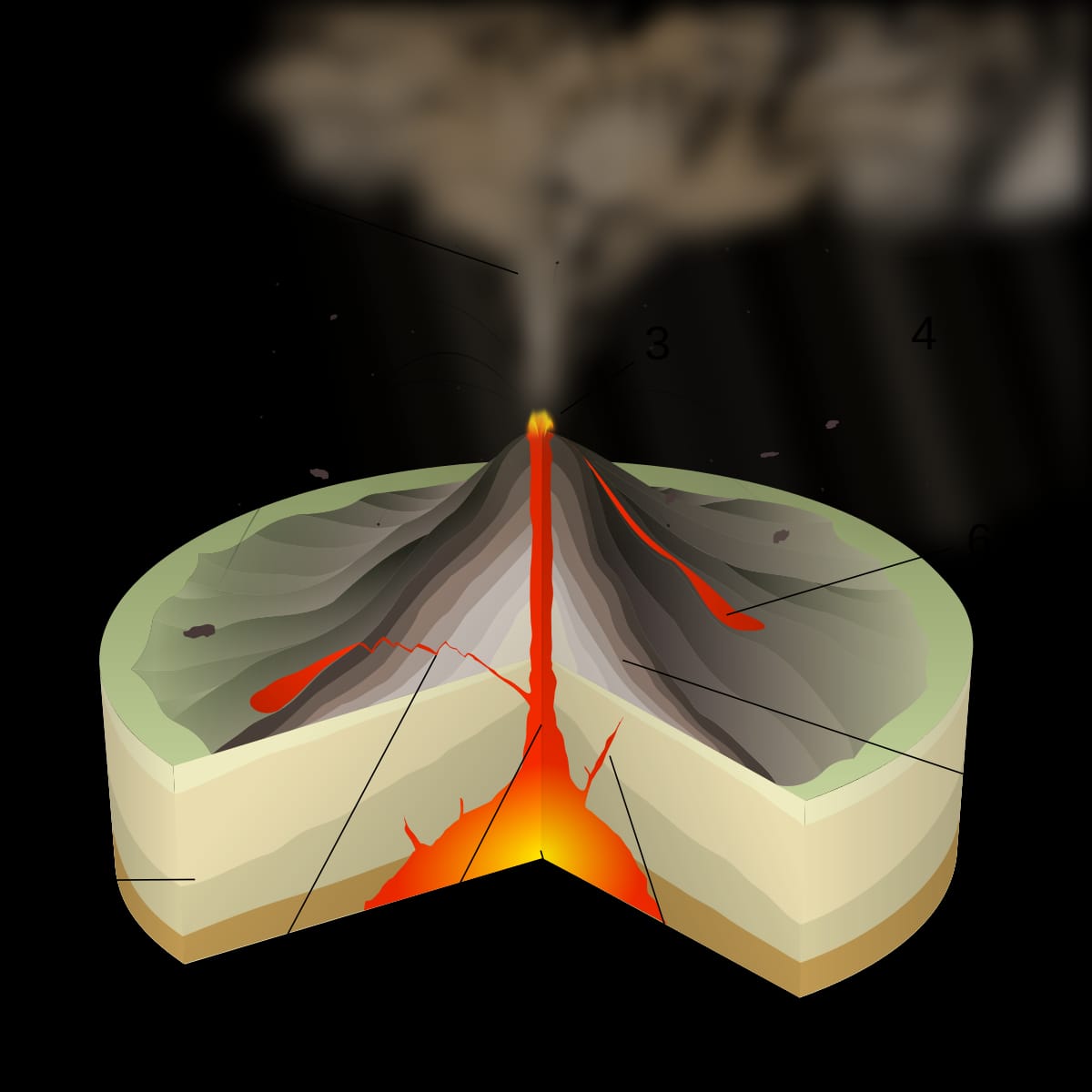
A volcano is a vent or an opening on the surface of the Earth crust, through which hot solid, liquid and gaseous materials (Magma) erupt out to the surface from the Earth’s interior. Magma rises up and ejects on the surface as Lava. Volcanoes are also formed when plates move apart.

Volcanoes generally have the following major components. They are

Magma chamber – a large pool of liquid rock found beneath the surface of the Earth.

Vents – an opening serving as an outlet for air, smoke, fumes, magma etc.

Volcanic cone – a landform built by the magma ejected from the vent in the shape of a cone.

Crater – a bowl shaped depression found at the top of the volcano through which the magma flows out.

Based on the periodicity of eruptions, volcanoes are classified into
✓Active volcano
✓Dormant volcano
✓Extinct volcano

Active Volcano

Active volcanoes are those which constantly eject volcanic lava, gases and fragmented materials. eg. Mount St. Helens in the United States.

Dormant Volcano

Volcanoes that do not show any sign of volcanic activity for a long period of time are known as dormant volcanoes. Sometimes there may be a sudden explosion which may cause unimaginable loss to life and property eg. Mt. Fuji, Japan

Extinct Volcano

When a volcano permanently stops its volcanic activity, then it is called as extinct or dead volcano eg. Mt. Kilimanjaro, Tanzania.

Volcanoes can also be classified based on their structure and composition as composite volcano, shield volcano and dome volcano

Composite Volcano

Composite volcano, also known as strata volcano, is a conical volcano built by many layers of hardened lava, pumice and volcanic ash. These are commonly found in the Pacific Ocean Eg. Mt. Fuji, Japan

Volcanic Dome

A lava dome or volcanic dome is roughly a circular mound formed due to the slow ejection of viscous lava from a volcano. As the lava is rich in silica with intense viscosity, it is prevented from flowing far from its vent. Eg. Paricutin, Mexico

Shield Volcano

Shield volcanoes are formed by intense viscous lava.
These are shallow depositions with gently sloping sides. Hence the lava flows out in all directions to create a shield. Eg. Mauna Loa, Hawaii

VOLCANOES

A volcano is a vent or an opening on the surface of the Earth crust, through which hot solid, liquid and gaseous materials (Magma) erupt out to the surface from the Earth’s interior. Magma rises up and ejects on the surface as Lava. Volcanoes are also formed when plates move apart.

Volcanoes generally have the following major components. They are

Magma chamber – a large pool of liquid rock found beneath the surface of the Earth.

Vents – an opening serving as an outlet for air, smoke, fumes, magma etc.

Volcanic cone – a landform built by the magma ejected from the vent in the shape of a cone.

Crater – a bowl shaped depression found at the top of the volcano through which the magma flows out.

Based on the periodicity of eruptions, volcanoes are classified into
✓Active volcano
✓Dormant volcano
✓Extinct volcano

Active Volcano

Active volcanoes are those which constantly eject volcanic lava, gases and fragmented materials. eg. Mount St. Helens in the United States.

Dormant Volcano

Volcanoes that do not show any sign of volcanic activity for a long period of time are known as dormant volcanoes. Sometimes there may be a sudden explosion which may cause unimaginable loss to life and property eg. Mt. Fuji, Japan

Extinct Volcano

When a volcano permanently stops its volcanic activity, then it is called as extinct or dead volcano eg. Mt. Kilimanjaro, Tanzania.

Volcanoes can also be classified based on their structure and composition as composite volcano, shield volcano and dome volcano

Composite Volcano

Composite volcano, also known as strata volcano, is a conical volcano built by many layers of hardened lava, pumice and volcanic ash. These are commonly found in the Pacific Ocean Eg. Mt. Fuji, Japan

Volcanic Dome

A lava dome or volcanic dome is roughly a circular mound formed due to the slow ejection of viscous lava from a volcano. As the lava is rich in silica with intense viscosity, it is prevented from flowing far from its vent. Eg. Paricutin, Mexico

Shield Volcano

Shield volcanoes are formed by intense viscous lava.
These are shallow depositions with gently sloping sides. Hence the lava flows out in all directions to create a shield. Eg. Mauna Loa, Hawaii

About NABARD

Beginning and VISION

The significance of institutional credit in boosting provincial economy has been obvious to the Government of India directly from its beginning phases of preparation. In this manner, the Reserve Bank of India (RBI) at the demand of the Government of India, established a Committee to Review the Arrangements For Institutional Credit for Agriculture and Rural Development (CRAFICARD) to investigate these exceptionally basic viewpoints. The Committee was framed on 30 March 1979, under the Chairmanship of Shri B. Sivaraman, previous individual from Planning Commission, Government of India.

The Committee’s between time report, submitted on 28 November 1979, illustrated the requirement for another hierarchical gadget for giving full focus, intense course and directed concentration toward acknowledge related issues connected for country improvement. Its suggestion was arrangement of an exceptional advancement monetary foundation which would address these goals and arrangement of National Bank for Agriculture and Rural Development (NABARD) was endorsed by the Parliament through Act 61 of 1981.

NABARD appeared on 12 July 1982 by moving the agrarian credit elements of RBI and renegotiate elements of the then Agricultural Refinance and Development Corporation (ARDC). It was committed to the help of the country by the late Prime Minister Smt. Indira Gandhi on 05 November 1982. Set up with an underlying capital of Rs.100 crore, its settled up capital remained at Rs.14,080 crore as on 31 March 2020. Resulting to the amendment in the structure of divide capital among Government of India and RBI, NABARD today is completely possessed by Government of India.

VISION

Improvement Bank of the Nation for Fostering Rural Prosperity.

MISSION

Advance maintainable and evenhanded agribusiness and rustic improvement through participative monetary and non-monetary intercessions, advancements, innovation and institutional improvement for getting thriving.

About NABARD

Beginning and VISION

The significance of institutional credit in boosting provincial economy has been obvious to the Government of India directly from its beginning phases of preparation. In this manner, the Reserve Bank of India (RBI) at the demand of the Government of India, established a Committee to Review the Arrangements For Institutional Credit for Agriculture and Rural Development (CRAFICARD) to investigate these exceptionally basic viewpoints. The Committee was framed on 30 March 1979, under the Chairmanship of Shri B. Sivaraman, previous individual from Planning Commission, Government of India.

The Committee’s between time report, submitted on 28 November 1979, illustrated the requirement for another hierarchical gadget for giving full focus, intense course and directed concentration toward acknowledge related issues connected for country improvement. Its suggestion was arrangement of an exceptional advancement monetary foundation which would address these goals and arrangement of National Bank for Agriculture and Rural Development (NABARD) was endorsed by the Parliament through Act 61 of 1981.

NABARD appeared on 12 July 1982 by moving the agrarian credit elements of RBI and renegotiate elements of the then Agricultural Refinance and Development Corporation (ARDC). It was committed to the help of the country by the late Prime Minister Smt. Indira Gandhi on 05 November 1982. Set up with an underlying capital of Rs.100 crore, its settled up capital remained at Rs.14,080 crore as on 31 March 2020. Resulting to the amendment in the structure of divide capital among Government of India and RBI, NABARD today is completely possessed by Government of India.

VISION

Improvement Bank of the Nation for Fostering Rural Prosperity.

MISSION

Advance maintainable and evenhanded agribusiness and rustic improvement through participative monetary and non-monetary intercessions, advancements, innovation and institutional improvement for getting thriving.

The Man Who Knew Infinity.

Jeremy Irons and Dev Patel in The Man Who Knew Infinity (2015)

An exquisite bit of writing of a story worth retelling and revisited again and again. The story of the mathematician Srinivasa Ramanujam, the unschooled genius who became a Fellow of the Royal Society, and who has still left us unsolved riddles. “An equation for me,” he declared, “has no meaning unless it expresses a thought of God.” He has been the subject of many books and treatises.
The one book to read about him is “The Man Who Knew Infinity” by Robert Kanigel. Simon Singh also writes much about him in “Fermat’s Last Theorem”. Then of course there is the movie with Dave Patel as Ramanujam. Patel doesn’t let his refined good looks get in the way. He pulls it off. Devika Bhise plays a Brahmin girl from Tirichurapalli to Mylapore seamlessly.

The movie basically talks about that nothing is impossible if you have the ability to do it .
And a little faith always becomes the greatest of light in the darkest hour of life.
He lived for just 33 years, still he did what it takes a generation to do it
He did not have any formal good education, he did not have a supporting financial condition, he did not have motivating souls around.Still, he loved his love for mathematics, his zeal for mathematics, made him cross all barriers of life.
The man who knew infinity was called so because his love for mathematics had no boundaries. He gave the whole mathematics fraternity a new dimension and left behind useful conclusions which are being used as a base for new findings. I have been highly impressed by his work and being a citizen of this nation I will surely do my part by teaching Maths to the needy and understanding the importance of this subject in my life. Let every second of 22nd December be celebrated by preaching and organising events in the memory of one of the greatest mathematician of all time.

The Man Who Knew Infinity.

Jeremy Irons and Dev Patel in The Man Who Knew Infinity (2015)

An exquisite bit of writing of a story worth retelling and revisited again and again. The story of the mathematician Srinivasa Ramanujam, the unschooled genius who became a Fellow of the Royal Society, and who has still left us unsolved riddles. “An equation for me,” he declared, “has no meaning unless it expresses a thought of God.” He has been the subject of many books and treatises.
The one book to read about him is “The Man Who Knew Infinity” by Robert Kanigel. Simon Singh also writes much about him in “Fermat’s Last Theorem”. Then of course there is the movie with Dave Patel as Ramanujam. Patel doesn’t let his refined good looks get in the way. He pulls it off. Devika Bhise plays a Brahmin girl from Tirichurapalli to Mylapore seamlessly.

The movie basically talks about that nothing is impossible if you have the ability to do it .
And a little faith always becomes the greatest of light in the darkest hour of life.
He lived for just 33 years, still he did what it takes a generation to do it
He did not have any formal good education, he did not have a supporting financial condition, he did not have motivating souls around.Still, he loved his love for mathematics, his zeal for mathematics, made him cross all barriers of life.
The man who knew infinity was called so because his love for mathematics had no boundaries. He gave the whole mathematics fraternity a new dimension and left behind useful conclusions which are being used as a base for new findings. I have been highly impressed by his work and being a citizen of this nation I will surely do my part by teaching Maths to the needy and understanding the importance of this subject in my life. Let every second of 22nd December be celebrated by preaching and organising events in the memory of one of the greatest mathematician of all time.

|Political parties and Party system in India|

Political parties are voluntary associations for organised groups of individuals who share the same political views and who try to gain political power through constitutional means and who decide to work for promoting the national interest. 

There are four types of political parties in the modern democratic states : Reactionary parties which cling to the old social economic and political institutions, conservative parties which believe in the status quo, liberal parties which aim at reforming the existing institutions and radical parties which aim at establishing a new order by overthrowing the existing institutions.

Characteristics of party system in India:

Multi party system- The continental size of the country, the diversifying character of Indian society, the adoption of Universal adult franchise, the particular type of political process and other factors have given rise to a large number of political parties. In fact, India has the largest number of political parties in the world.

One dominant party system- In spite of the multi party system the political scene in India was dominated for a long time by the Congress, hence Rajni Kothari an eminent political analyst prefers to call the Indian party system as “one party dominance system” or the “Congress system”.

Lack of clear ideology- Except the BJP and two Communist Parties (CPI and CPM), all the parties do not have a clear cut ideology. They are ideologically closer to each other. They have a close resemblance in their policies and programmes.  Almost every party advocates democracy, secularism, socialism and Gandhism.

Personality cult- Quite often, the parties are organised around an eminent leader who becomes more important than the party and its ideology. Parties are known by their leaders rather than by their manifesto. It is a fact that the popularity of Congress was mainly due to the leadership of Nehru, Indira Gandhi and Rajiv Gandhi.

Based on traditional factors- In the western countries, political parties are formed on the basis of socio-economic and political programmes. On the other hand, a large number of parties in India are formed on the basis of religion, caste , language , culture , race and so on. 

Emergence of Regional parties- Another significant feature of Indian party system is the emergence of a large number of Regional parties and their growing role. They have become the ruling parties in various states like BJD in Odisha, Akali Dal in Punjab and so on.

Factions and defections- Factionalism, defections, splits, mergers, fragmentation, polarization and so on have been an important aspect of the functioning of political parties in India. The passion for power and material considerations have made politicians leave their party and join other party or start a new party.

Lack of effective opposition- An effective opposition is very essential for the successful operation of the parliamentary democracy prevalent in India. It checks the autocratic tendencies of the ruling party and provides an alternative government. However, in the last 50 years an effective, strong, organised and viable natural or position could never emerge except in flashes.

|Political parties and Party system in India|

Political parties are voluntary associations for organised groups of individuals who share the same political views and who try to gain political power through constitutional means and who decide to work for promoting the national interest. 

There are four types of political parties in the modern democratic states : Reactionary parties which cling to the old social economic and political institutions, conservative parties which believe in the status quo, liberal parties which aim at reforming the existing institutions and radical parties which aim at establishing a new order by overthrowing the existing institutions.

Characteristics of party system in India:

Multi party system- The continental size of the country, the diversifying character of Indian society, the adoption of Universal adult franchise, the particular type of political process and other factors have given rise to a large number of political parties. In fact, India has the largest number of political parties in the world.

One dominant party system- In spite of the multi party system the political scene in India was dominated for a long time by the Congress, hence Rajni Kothari an eminent political analyst prefers to call the Indian party system as “one party dominance system” or the “Congress system”.

Lack of clear ideology- Except the BJP and two Communist Parties (CPI and CPM), all the parties do not have a clear cut ideology. They are ideologically closer to each other. They have a close resemblance in their policies and programmes.  Almost every party advocates democracy, secularism, socialism and Gandhism.

Personality cult- Quite often, the parties are organised around an eminent leader who becomes more important than the party and its ideology. Parties are known by their leaders rather than by their manifesto. It is a fact that the popularity of Congress was mainly due to the leadership of Nehru, Indira Gandhi and Rajiv Gandhi.

Based on traditional factors- In the western countries, political parties are formed on the basis of socio-economic and political programmes. On the other hand, a large number of parties in India are formed on the basis of religion, caste , language , culture , race and so on. 

Emergence of Regional parties- Another significant feature of Indian party system is the emergence of a large number of Regional parties and their growing role. They have become the ruling parties in various states like BJD in Odisha, Akali Dal in Punjab and so on.

Factions and defections- Factionalism, defections, splits, mergers, fragmentation, polarization and so on have been an important aspect of the functioning of political parties in India. The passion for power and material considerations have made politicians leave their party and join other party or start a new party.

Lack of effective opposition- An effective opposition is very essential for the successful operation of the parliamentary democracy prevalent in India. It checks the autocratic tendencies of the ruling party and provides an alternative government. However, in the last 50 years an effective, strong, organised and viable natural or position could never emerge except in flashes.

Trials of a more precise and comfortable MRI to identify early breast cancer begins in the United Kingdom.

A new, more convenient method of detecting breast cancer has begun testing in the United Kingdom, with the potential to identify tumors at an earlier stage.

At some time in their life, one in every eight British women will be diagnosed with breast cancer. Because malignancies and fibrous tissue both show up as solid white regions on X-ray, mammograms are less effective in younger women whose breasts contain denser, fibrous tissue and less fat because cancers and fibrous tissue both appear as solid white areas on X-ray.

Mammograms may miss malignancies in postmenopausal women with thick breast tissue, who are also more likely to acquire breast cancer in the first place.

Women with a dubious lump may be given an ultrasound scan or a biopsy, and if the diagnosis is still unclear, they may be directed for DCE-MRI, which detects the development of new blood vessels supporting tumors. However, in women with early-stage malignancies, they may not be visible, leading to false comfort.

Multiparametric MRI was first created to evaluate liver disorders without the need for a painful biopsy, and it is now widely utilized in Europe and the United States.

It works similarly to traditional MRI in that it utilizes high magnetic fields and radio waves to excite protons in the tissue, then exploits variations in the time it takes for them to settle to generate a “map” of the various tissues in the breast. Multiparametric MRI, on the other hand, allows an even more comprehensive map to be generated by merging pictures created by multiple MR pulses and sequences.

A scan of healthy breasts with multiparametric MRI. Photograph courtesy of Perspectum Diagnostics

“We believe that if we differentiate the tissue rather than looking at the blood vessels around the tumor, we should be able to spot not only tumors in dense breasts but potentially tumors that aren’t seen on mammograms,” said Prof Sally Collins, a consultant obstetrician and medical lead for women’s health at Oxford-based Perspectum Diagnostics, who herself recently received treatment for breast cancer.

“We’re also working to improve the scanning experience for patients. “Mammograms are awful because they squish your breast on this plate, which is undignified and unpleasant, and MRIs are much worse because you have to lie face down with your boobs dangling in this coil and your arms raised over your head for ages,” Collins added.

“We’re attempting to make it such that women may be fully dressed, respectable, and comfortable while being scanned, which is critical for the patient journey to cancer diagnosis.”

The prospectus has received ethical clearance to enroll 1,030 women in the study, including 10 women who have been diagnosed with breast cancer and 30 to 40 healthy women who are presently being scanned, to see if the technology can properly map their breast tissue while laying on their backs. It is estimated that the study would take two years to complete.

“It will never replace regular mammography screening for postmenopausal women, but we think it will enhance the diagnosis route for women with thick breasts or premenopausal women who are at extremely high risk of breast cancer, eliminating the need for repeated tests,” Collins said.

Trials of a more precise and comfortable MRI to identify early breast cancer begins in the United Kingdom.

A new, more convenient method of detecting breast cancer has begun testing in the United Kingdom, with the potential to identify tumors at an earlier stage.

At some time in their life, one in every eight British women will be diagnosed with breast cancer. Because malignancies and fibrous tissue both show up as solid white regions on X-ray, mammograms are less effective in younger women whose breasts contain denser, fibrous tissue and less fat because cancers and fibrous tissue both appear as solid white areas on X-ray.

Mammograms may miss malignancies in postmenopausal women with thick breast tissue, who are also more likely to acquire breast cancer in the first place.

Women with a dubious lump may be given an ultrasound scan or a biopsy, and if the diagnosis is still unclear, they may be directed for DCE-MRI, which detects the development of new blood vessels supporting tumors. However, in women with early-stage malignancies, they may not be visible, leading to false comfort.

Multiparametric MRI was first created to evaluate liver disorders without the need for a painful biopsy, and it is now widely utilized in Europe and the United States.

It works similarly to traditional MRI in that it utilizes high magnetic fields and radio waves to excite protons in the tissue, then exploits variations in the time it takes for them to settle to generate a “map” of the various tissues in the breast. Multiparametric MRI, on the other hand, allows an even more comprehensive map to be generated by merging pictures created by multiple MR pulses and sequences.

A scan of healthy breasts with multiparametric MRI. Photograph courtesy of Perspectum Diagnostics

“We believe that if we differentiate the tissue rather than looking at the blood vessels around the tumor, we should be able to spot not only tumors in dense breasts but potentially tumors that aren’t seen on mammograms,” said Prof Sally Collins, a consultant obstetrician and medical lead for women’s health at Oxford-based Perspectum Diagnostics, who herself recently received treatment for breast cancer.

“We’re also working to improve the scanning experience for patients. “Mammograms are awful because they squish your breast on this plate, which is undignified and unpleasant, and MRIs are much worse because you have to lie face down with your boobs dangling in this coil and your arms raised over your head for ages,” Collins added.

“We’re attempting to make it such that women may be fully dressed, respectable, and comfortable while being scanned, which is critical for the patient journey to cancer diagnosis.”

The prospectus has received ethical clearance to enroll 1,030 women in the study, including 10 women who have been diagnosed with breast cancer and 30 to 40 healthy women who are presently being scanned, to see if the technology can properly map their breast tissue while laying on their backs. It is estimated that the study would take two years to complete.

“It will never replace regular mammography screening for postmenopausal women, but we think it will enhance the diagnosis route for women with thick breasts or premenopausal women who are at extremely high risk of breast cancer, eliminating the need for repeated tests,” Collins said.

Compelling A Married Woman To Live In Her Parental Home Amounts To Cruelty

While displaying zero tolerance towards act of cruelty against women, the Madhya Pradesh High Court has just recently on June 22, 2021 in a learned, laudable, latest and landmark judgment titled Amar Singh Vs Smt Vimla minced just no words to observe that compelling a married woman to live in her parental home after marriage amounts to cruelty and that for this reason, it cannot be said that she was living separately without reasonable reason. To ensure that women is protected from being harassed, humiliated and harangued by her husband and his relatives, it is imperative that Courts speak out firmly in favour of women where she is compelled to stay at her parental home without any cogent reason whatsoever! It must be apprised here that this significant development came from a Single Judge Bench of Justice GS Ahluwalia who was dealing with a criminal revision petition challenging the Family Court’s order directing the husband to pay Rs 7,000/- per month to wife under Section 125 CrPC. 

To start with, a Single Judge Bench of Justice GS Ahluwalia of Madhya Pradesh High Court who has authored this cogent, commendable, composed and convincing judgment sets the ball rolling through video conferencing by first and foremost observing that, “This criminal revision under Section 397/401 of Cr.P.C. r/w Section 19(4) of Family Court Act has been filed against the order dated 10/10/2020 passed by Principal Judge, Family Court Guna in case MJC No.72/2018, by which the application filed by the respondent under Section 125 of Cr.P.C. has been allowed and the applicant has been directed to pay Rs.7,000/- per month from the date of the order.”
While elaborating on the facts of the case, the Bench then puts forth that, “The necessary facts for disposal of present revision in short are that, the respondent filed an application under Section 125 of Cr.P.C. on the ground that she got married to the applicant on 25/05/2013 in accordance of Hindu Rites and Rituals. Since, the applicant and her in-laws were not satisfied with the dowry, therefore, they used to beat her, harass her for demand of a four wheeler and cash amount. About seven months prior to filing of the application i.e. in the month of September, 2017, the respondent was ousted from her matrimonial house and thereafter, she is residing in her parental home. In the meanwhile, neither the applicant came to take her back nor made any efforts to look after her. The respondent is on the verge of starvation. Her father is poor and is not in position to bear her expenses and accordingly, it was prayed that for meeting out necessary expenses, the applicant be directed to pay Rs.15,000/- per month by way of maintenance amount. It was further pleaded that the applicant belongs to a rich family and is having 50 bigha of agriculture land with two tube wells. The applicant has cattles, tractor and other agriculture equipments. He has a house and accordingly, the yearly income of the applicant is Rs. 50,00,000/-.”
Furthermore, the Bench then points out that, “The applicant filed his reply to the application filed under Section 125 of Cr.P.C. He admitted that he got married to the respondent on 25/05/2013. It was claimed that since, both the parties are poor and since they were not in a position to bear the expenses of marriage and therefore, the marriage was performed in Sammelan. The marriage was performed without any dowry. The allegation of harassment due to non fulfillment of demand of four wheeler and cash amount was denied. It was also denied that the respondent was ousted from her matrimonial house about seven months prior to the filing of application. It was pleaded that for the first time the respondent had resided in her matrimonial house for a period of four days and during this period her behavior towards her in-laws was cruel. It was further pleaded that the respondent never allowed the applicant to consummate the marriage and she was continuously challenging the potency of the applicant in the society. The respondent is an expert in stitching and is also running beauty parlor and earning rupees thirty to forty thousand per month. She is maintaining her parents out of her own income that is why the parents of the respondent are not permitting her to come to her matrimonial home. It was further pleaded that in fact the parents of the respondent are insisting that the applicant should reside in the parental home of the respondent as Gharjamai. When the applicant refused to do so, then a false criminal case under Section 498-A of IPC was instituted against the applicant and his family members. Later on the applicant and his family members were acquitted. It was further denied that the applicant is having any agriculture land, house, two tube wells, tractor and agricultural equipments. He also denied that he had any cattles, it was also denied that yearly income of the applicant is Rs.50,00,000/-. It was further pleaded that the applicant is a student and is working on a part time basis in a shop from where he is getting Rs.2,000/- per month and apart from that, the applicant has no source of income. It was further pleaded that after the marriage, when the applicant went to the parental home of the respondent to take her back, then for half an hour, the respondent and her family members did not open the door and thereafter, they insisted that the respondent should be permitted to reside in her parental home for next 8 to 10 days. Accordingly, the applicant came back from the door of the parental home of the respondent. Thereafter, the applicant again went to the parental home of the respondent to take her back. However, although the respondent was 4 permitted to come back to her matrimonial home but the applicant was disrespected. Whenever the applicant informed the parents of the respondent about her cruel behavior then every time they replied that if the applicant wants to leave the respondent then he can do so but he has to pay an amount of Rs.15 to 20 Lacs. In reply several allegations were made against the respondent and her parents about cruel behavior.”
Going ahead, the Bench then points out that, “The respondent in support of her case examined herself. In cross-examination, she admitted that the applicant was acquitted for offence under Section 498-A of IPC. However, she denied that the marriage was performed without any dowry. She further admitted the suggestion given by the applicant that the applicant and his mother did not like the food prepared by the respondent. It was further denied that she did not allow the applicant to consummate marriage. She further denied that the applicant was detained in her parental home. She further denied that the applicant is a land less laborer. She further accepted that the marriage has not been consummated so far. She Further denied that she is doing the work of stitching or beauty parlor. She further denied that she is running a beauty parlor in the name of Sunena beauty parlor and Sunena Ladies Tailor. She further denied that she is earning Rupees 30 to 40 thousand per month. She further denied that the applicant is doing a part time job in a shop on monthly income of Rs.2,000/-. The respondent examined her father Kedari as P.W.2.”
On the contrary, the Bench then also brought out in the next para that, “The applicant examined himself in his defence and apart from alleging the allegations of cruelty by the respondent and her parents, it was claimed by the respondent that he does not have any property or land or agriculture equipments. He also denied that the respondent was ever harassed for demand of four wheeler and an amount of ten lacs. He further claimed that the marriage has not been consummated however, he denied that because of non consummation of marriage, he had started beating the respondent.”
To put things in perspective, the Bench then after considering the version of both the sides goes on to point out that, “The Court below after considering the totality of the facts and circumstances of the case, came to a conclusion that it cannot be said that the respondent is residing separately without any reasonable reason. It was further held that the applicant is an able bodied person and certain allegations have been made by the applicant, which have not been proved by him. It was also found that the respondent is not doing any work and she is unable to maintain herself.”
Frankly speaking, the Bench then holds in the next para that, “So far as the question of quantum of maintenance amount is concerned, it was held that according to the respondent, the applicant is having 12 bigha of land whereas his father is having 38 bighas of land. He is the only son of his parents. Kedari P.W.2 has also claimed that the applicant is having forty to fifty bigha of land.”
As against what is stated above, the Bench then brings out in the next para that, “On the contrary, it was the claim of the applicant that he is a student and is working as a part time job in a shop from where he is earning Rs.2,000/- per month.”
Interestingly enough, the Bench then envisages in the next para that, “The Court below after considering the evidence came to a conclusion that although, the respondent has failed to prove that the applicant is having any agriculture land but from the pleadings as well as evidence of the parties, it appears that the applicant belongs to a financially sound family and accordingly, he is in a position of maintaining the respondent. Accordingly, an amount of Rs.7,000/- has been awarded by way of monthly maintenance.”
As we see, the Bench then goes on to add in the next para that, “Challenging the order passed by the Court below, it is submitted by the counsel for the applicant since the applicant was acquitted for offence under Section 498-A of IPC, therefore, the Court below has committed material illegality by holding that the respondent is residing separately because of reasonable reason. It is further submitted that the respondent has failed to prove the monthly income of the applicant, therefore, the maintenance amount of Rs.7,000/- per month is on higher side. None for the respondent though served.”
It cannot be glossed over that the Bench then observes in the next para that, “It is true that the applicant has been acquitted for offence under Section 498-A of IPC. However, it is equally true that the applicant had leveled serious allegations against the respondent and her parents. However, the applicant did not file even a single document to show that he had ever lodged any report regarding the illegal confinement or mal-treatment by the respondent her parents. Leveling serious allegations and failing to prove the same, may also amount to cruelty. Undisputedly the marriage between parties could not be consummated. On one hand the applicant has claimed that the respondent is defaming him in the society by alleging that he is impotent but he did not bring any evidence on record to show that he is not impotent. Further, the applicant had leveled a false allegation that the respondent is running a beauty parlor as well as a stitching center. He did not even file the photographs of the shops.”
What’s more, the Bench then further most significantly holds in the next para that, “Under these circumstances, this Court of the considered opinion that after having leveled serious allegations against her and her parents and having failed to prove the same, it cannot be said that the respondent is residing separately without any reasonable reason. Furthermore, it is not the case of the applicant that he had ever tried to take the respondent back from her parental home. Thus, it is also clear that the applicant has deserted the respondent and he cannot take advantage of his own wrong. Further, compelling a married women to live in her parental home, is also a cruelty. Accordingly, it is held that it cannot be said that the respondent is residing separately without any reasonable reason.”
Be it noted, the Bench then also makes it clear in the next para that, “Thus, if the husband is healthy and is an able bodied person, then he is under legal obligation to support his wife. It is the claim of the applicant that he is working on a part time basis in a shop and is earning Rs.2,000/- per month. The applicant has not examined owner of the shop in support of his claim. The applicant has also not examined his father to establish that the applicant does not belongs to a financially sound family. The applicant has not filed any document to show that he is a student. Under these circumstances, this Court is of the considered opinion that since the applicant is a healthy and able bodied person therefore, he cannot run away from his legal obligation to support the respondent.”
While citing the relevant case law, the Bench then holds that, “So far as the question of quantum of maintenance is concerned, the Supreme Court in the case of Jasbir Kaur Sehgal v. Distt. Judge, Dehradun reported in (1997) 7 SCC 7 has held as under:- 
“8. The wife has no fixed abode of residence. She says she is living in a Gurdwara with her eldest daughter for safety. On the other hand the husband has sufficient income and a house to himself. The wife has not claimed any litigation expenses in this appeal. She is aggrieved only because of the paltry amount of maintenance fixed by the courts. No set formula can be laid for fixing the amount of maintenance. It has, in the very nature of things, to depend on the facts and circumstances of each case. Some scope for leverage can, however, be always there. The court has to consider the status of the parties, their respective needs, the capacity of the husband to pay having regard to his reasonable expenses for his own maintenance and of those he is obliged under the law and statutory but involuntary payments or deductions. The amount of maintenance fixed for the wife should be such as she can live in reasonable comfort considering her status and the mode of life she was used to when she lived with her husband and also that she does not feel handicapped in the prosecution of her case. At the same time, the amount so fixed cannot be excessive or extortionate. In the circumstances of the present case we fix maintenance pendente lite at the rate of Rs 5000 per month payable by the respondent-husband to the appellant-wife.””
In addition, the Bench then states in the next para that, “The Supreme Court in the case of Chaturbhuj v. Sita Bai reported in (2008) 2 SCC 316 has held as under:- 
“6. The object of the maintenance proceedings is not to punish a person for his past neglect, but to prevent vagrancy by compelling those who can provide support to those who are unable to support themselves and who have a moral claim to support. The phrase “unable to maintain herself” in the instant case would mean that means available to the deserted wife while she was living with her husband and would not take within itself the efforts made by the wife after desertion to survive somehow. Section 125 CrPC is a measure of social justice and is specially enacted to protect women and children and as noted by this Court in Captain Ramesh Chander Kaushal v. Veena Kaushal [(1978) 4 SCC 70 : 1978 SCC (Cri) 508 : AIR 1978 SC 1807] falls within constitutional sweep of Article 15(3) reinforced by Article 39 of the Constitution of India. It is meant to achieve a social purpose. The object is to prevent vagrancy and destitution. It provides a speedy remedy for the supply of food, clothing and shelter to the deserted wife. It gives effect to fundamental rights and natural duties of a man to maintain his wife, children and parents when they are unable to maintain themselves. The aforesaid position was highlighted in Savitaben Somabhai Bhatiya v. State of Gujarat [(2005) 3 SCC 636 : 2005 SCC (Cri) 787 : (2005) 2 Supreme 503].””
Quite significantly, the Bench then also points out that, “Thus, it is clear that the applicant has made every effort to suppress his income as well as the financial condition of his family. It is well established principle of law that a wife is entitled to enjoy the same status, which she would have enjoyed in her matrimonial house. The Wife cannot be compelled to leave the life of rectitude.”
While rejecting the contention of the counsel of the applicant that the Trial Court should not have awarded maintenance from the date of application, the Bench then while citing a recent, remarkable and relevant case law holds that, “The Supreme Court in the case of Rajnesh v. Neha reported in (2021) 2 SCC 324 has laid down guide lines for determining the quantum of maintenance and has held as under:- 
“113. It has therefore become necessary to issue directions to bring about uniformity and consistency in the orders passed by all courts, by directing that maintenance be awarded from the date on which the application was made before the court concerned. The right to claim maintenance must date back to the date of filing the application, since the period during which the maintenance proceedings remained pending is not within the control of the applicant.””
As a corollary, the Bench then holds in the next para that, “Accordingly, this Court is of the considered opinion that Court below did not commit any mistake by awarding the maintenance from the date of the application. Consequently, the order dated 10/10/2020 passed by Principal Judge, Family Court Guna in case MJC No.72/2018 is hereby affirmed.”
Finally, the Bench then holds in the last para that, “It appears that by order dated 06/02/2019, Court had below awarded an amount of Rs.3,000/- by way of interim maintenance. Accordingly, it is directed that the amount paid by the applicant by way of interim maintenance is liable to be adjust in the arrears of maintenance amount. With aforesaid observation, this petition is hereby dismissed.”
In essence, this brief, brilliant, balanced and bold judgment by a Single Judge Bench of Justice GS Ahluwalia of Madhya Pradesh High Court leaves no room of doubt that compelling a married woman to live in her parental home amounts to cruelty. It is the bounden duty of the husband to keep his wife with her. If the husband compels a married women to live in her parental home then he is guilty of cruelty and shall be accordingly held liable!
Sanjeev Sirohi


VALUE OF SPORTS

Education and literacy are important. Rather inevitable. One who is not educated and learned is compared to an animal. But is education, academics, and studying throughout the day without any extracurricular a good pattern to follow? Is it good for your body and the amazing, powerful brain that you carry within? The answer is an obvious ‘no’.

The organs, bones, and tissues that the human body is composed of require at least amount of physical exercise for them to function properly.

Therefore, it can be rightly concluded that the role of sports, just like education and academics cannot be ignored.

Let us first delve into the value and importance of sports in life to get a better understanding of the topic.

  1. Health Purposes –   Indulging in some type of sports, prevents the fat from accumulating thereby resulting in the continuous and smooth working of the heart. Also, when a person plays some sport, he/she is physically toned and comes out as more confident. Alongside, physically active people are more healthy sexually at later stages of their lives.
  2. Pass-time –  Not only are sports beneficial for the health, but also they can prove to be a great pass time and a source of recreation. Just imagine the physical tension and stiffness after a long study session. Playing some sport releases this tension and makes one more active with a positive and solid mindset for later work. 
  3. Team spirit and generosity – If a person plays sports that involve multiple players or playing in a team such as football, basketball, cricket, and volleyball, he develops team spirit and a sense of unity. The formation of ever-lasting bonds takes place and generosity is developed.
  4. Concentration and focus –  These are key qualities required by a sportsperson. Even if you are a rookie to a sport, then albeit slowly, but you will develop concentration and focus which will prove to be helpful not just for that particular sport but also in other spheres of life.
  5. Discipline- Acting out in a proper and well-structured way is an essential requirement of every sport. One gets to learn and live a disciplined life when one indulges in the field of sports.

But what will you do if you have a busy schedule and are not able to take out time to go out for a game of football or the lawn tennis stadium is too far from your home?

Well, these are simple techniques to stay in shape despite any sort of hurdle that may come.

  1. Stretching –  If you have a desk job and spend a great amount of time on the computer or just sitting scrolling through files of different sorts, take out time to get up and stretch your limbs. For eyes, simply rub your hands until warm and put on your eyes, and experience the soothing effect that comes along.
  2. Walking up and down the stairs –  If the facility of stairs is available at your accommodation, take out time to walk up and down, for this is a great way to exercise your body and shed some weight.
  3. Walking; simple walking –  Taking simple walks at your terrace or a nearby park can also prove helpful and also be beneficial for the working of the heart.

VALUE OF SPORTS

Education and literacy are important. Rather inevitable. One who is not educated and learned is compared to an animal. But is education, academics, and studying throughout the day without any extracurricular a good pattern to follow? Is it good for your body and the amazing, powerful brain that you carry within? The answer is an obvious ‘no’.

The organs, bones, and tissues that the human body is composed of require at least amount of physical exercise for them to function properly.

Therefore, it can be rightly concluded that the role of sports, just like education and academics cannot be ignored.

Let us first delve into the value and importance of sports in life to get a better understanding of the topic.

  1. Health Purposes –   Indulging in some type of sports, prevents the fat from accumulating thereby resulting in the continuous and smooth working of the heart. Also, when a person plays some sport, he/she is physically toned and comes out as more confident. Alongside, physically active people are more healthy sexually at later stages of their lives.
  2. Pass-time –  Not only are sports beneficial for the health, but also they can prove to be a great pass time and a source of recreation. Just imagine the physical tension and stiffness after a long study session. Playing some sport releases this tension and makes one more active with a positive and solid mindset for later work. 
  3. Team spirit and generosity – If a person plays sports that involve multiple players or playing in a team such as football, basketball, cricket, and volleyball, he develops team spirit and a sense of unity. The formation of ever-lasting bonds takes place and generosity is developed.
  4. Concentration and focus –  These are key qualities required by a sportsperson. Even if you are a rookie to a sport, then albeit slowly, but you will develop concentration and focus which will prove to be helpful not just for that particular sport but also in other spheres of life.
  5. Discipline- Acting out in a proper and well-structured way is an essential requirement of every sport. One gets to learn and live a disciplined life when one indulges in the field of sports.

But what will you do if you have a busy schedule and are not able to take out time to go out for a game of football or the lawn tennis stadium is too far from your home?

Well, these are simple techniques to stay in shape despite any sort of hurdle that may come.

  1. Stretching –  If you have a desk job and spend a great amount of time on the computer or just sitting scrolling through files of different sorts, take out time to get up and stretch your limbs. For eyes, simply rub your hands until warm and put on your eyes, and experience the soothing effect that comes along.
  2. Walking up and down the stairs –  If the facility of stairs is available at your accommodation, take out time to walk up and down, for this is a great way to exercise your body and shed some weight.
  3. Walking; simple walking –  Taking simple walks at your terrace or a nearby park can also prove helpful and also be beneficial for the working of the heart.