(i) Introduction– Different substance affects the body in different ways, but all psychoactive drugs have chemical effects on the human body as well. The short-term effects that occur in drug users depend on the quantity they use and also whether it is mixed with any other mind-altering substances. Drugs have serious effects on the human body. It affects the thinking, mood, energy level, and also behavior of the person and sometimes also makes the human unconscious for several days and even further.
(ii) Physical harm from drug use:- Durg use can lead to risky and or out-of-character behavior. When affected by drug:
• One is more likely to have an accident wherever you are.
• One can commit sexual assault or other violent act.
• One may find unable to sleep, think, remember and solve the problem.
Drugs can also result in long-term health problems that include:
• harm to organs and systems of our body such as throat, stomach, lungs, liver, heart, brain, pancreas, and nervous system, etc.
• May cause cancer or other serious illness.
(iii) Addiction of drugs- All drugs cocaine, marijuana affects the brain. The brain reward circuit is a part of the limbic system. Drugs target this system causing a large amount of dopamine release, this flood of dopamine cause a high intoxication in the brain again and again and also from time to time. Although initial drug use may not be voluntary drugs. But continuous intoxication of the drugs makes the human body addicted to them which may affect the health of that particular person badly. And the addition can also become a cause of murder, robbery cases, etc.
Different drugs, different effects:- The three main types are depressants, hallucinogens, and stimulants.
• Depressants- It slowdowns or depress the functions of the nervous system. They slow down the massage going to and from the brain. In small quantities, depressants can cause a feel relaxed and less inhibited. In large quantities, it can cause vomiting, unconsciousness, or even death.
• hallucinogens- Distort one’s sense of reality. You can see or feel or hear things that are not real, or see things in a distorted way. Other effects include emotional and psychological euphoria, panic, upset, or nausea. Keta mine, LSD, PCP, magic mushrooms, and cannabis are some examples of hallucinogens.
• Stimulants- Stimulate the central nervous system. They speed up massaging to and from the brain, which makes one feel more alter and confident. This can cause an increase to heart rate, blood pressure, and body temperature.
(iv) Conclusion:- Our body executes a natural cycle. And if we disturb this cycle, then it abruptly affects the working of the body. Taking drugs may sound cool for a while, but can cause serious illness for a lifetime. It can also lead to the death of an individual. Resisting these drugs at parties and celebrations is warned. Especially youth shouldn’t engage themselves in such activities which lead to the massive destruction of the one’s precious life.
(i) Introduction– Different substance affects the body in different ways, but all psychoactive drugs have chemical effects on the human body as well. The short-term effects that occur in drug users depend on the quantity they use and also whether it is mixed with any other mind-altering substances. Drugs have serious effects on the human body. It affects the thinking, mood, energy level, and also behavior of the person and sometimes also makes the human unconscious for several days and even further.
(ii) Physical harm from drug use:- Durg use can lead to risky and or out-of-character behavior. When affected by drug:
• One is more likely to have an accident wherever you are.
• One can commit sexual assault or other violent act.
• One may find unable to sleep, think, remember and solve the problem.
Drugs can also result in long-term health problems that include:
• harm to organs and systems of our body such as throat, stomach, lungs, liver, heart, brain, pancreas, and nervous system, etc.
• May cause cancer or other serious illness.
(iii) Addiction of drugs- All drugs cocaine, marijuana affects the brain. The brain reward circuit is a part of the limbic system. Drugs target this system causing a large amount of dopamine release, this flood of dopamine cause a high intoxication in the brain again and again and also from time to time. Although initial drug use may not be voluntary drugs. But continuous intoxication of the drugs makes the human body addicted to them which may affect the health of that particular person badly. And the addition can also become a cause of murder, robbery cases, etc.
Different drugs, different effects:- The three main types are depressants, hallucinogens, and stimulants.
• Depressants- It slowdowns or depress the functions of the nervous system. They slow down the massage going to and from the brain. In small quantities, depressants can cause a feel relaxed and less inhibited. In large quantities, it can cause vomiting, unconsciousness, or even death.
• hallucinogens- Distort one’s sense of reality. You can see or feel or hear things that are not real, or see things in a distorted way. Other effects include emotional and psychological euphoria, panic, upset, or nausea. Keta mine, LSD, PCP, magic mushrooms, and cannabis are some examples of hallucinogens.
• Stimulants- Stimulate the central nervous system. They speed up massaging to and from the brain, which makes one feel more alter and confident. This can cause an increase to heart rate, blood pressure, and body temperature.
(iv) Conclusion:- Our body executes a natural cycle. And if we disturb this cycle, then it abruptly affects the working of the body. Taking drugs may sound cool for a while, but can cause serious illness for a lifetime. It can also lead to the death of an individual. Resisting these drugs at parties and celebrations is warned. Especially youth shouldn’t engage themselves in such activities which lead to the massive destruction of the one’s precious life.
We have often heard about the word PTSD which is abbreviated as posttraumatic stress disorder. According to WHO, Posttraumatic stress disorder is a psychiatric disorder that may occur in individuals who have experienced or witnessed a distressing event such as a natural disaster , an accident ,maybe a war or rape or have been threatened with death, sexual assault or serious injury. In 1980,the American psychiatric association added PTSD to the third edition of its Diagnostic and Statistical Manual of Mental Disorder(DSM-III)
This kind of stress disorder can affect those people who have personally experienced such trauma which may have affected their mental health in an adverse manner. It can occur in the friends or family members of those who have went through such traumatic event.
What causes PTSD?
When you experiences a tough moment, your nervous system reacts with the fight-or-flight response. Your heart start beating faster and your blood pressure starts rising along your muscles getting tighten, increase your strength and reaction speed .Once the body feels the danger is passed your nervous system calms your body, lowering your heart and blood pressure, recovers to its normal state.
Signs and symptoms of PTSD
PTSD symptoms differ from person to person because everyone’s nervous system and level for stress tolerance can be different. Most likely to develop posttraumatic stress disorder symptom in the hours or days following a traumatic event. It can even take year before they appear. People having such disorder get triggered by something that reminds them of their original traumatic event, such as noise or an image, a word or even a smell.
While everyone experiencing PTSD differently, there are primarily three types of symptoms which are following
1.Re-experiencing the traumatic event through bad memories, flashback and nightmares
2.Avoidance and numbing , such as avoiding those thing which reminds you of the trauma, feeling emotionally numb and detached from others
3.Hyperarousal which includes sleeping problems, constantly getting irritated, anger issues, self destructive or reckless behaviour
Curative Measures for PTSD
There is no definite care for PTSD ,but there are many types of treatment available that can lessen the symptoms. Also there are various therapy techniques, as well as evidence shows right medication can be beneficial for people struggling with symptoms of PTSD.
These treatment method are used to minimize, or even eliminate, distressing symptoms that people with Posttraumatic Stress Disorder often experience.
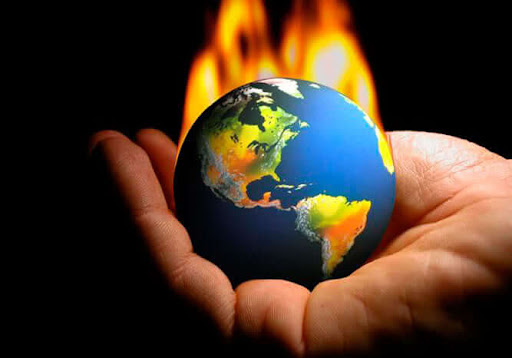
Climate change” and “global warming” are often used interchangeably but have distinct meanings. Similarly, the terms "weather" and "climate" are sometimes confused, though they refer to events with broadly different spatial- and timescales.
Global warming is the long-term heating of Earth’s climate system observed since the pre-industrial period (between 1850 and 1900) due to human activities, primarily fossil fuel burning, which increases heat-trapping greenhouse gas levels in Earth’s atmosphere. The term is frequently used interchangeably with the term climate change, though the latter refers to both human- and naturally produced warming and the effects it has on our planet. It is most commonly measured as the average increase in Earth’s global surface temperature.
Since the pre-industrial period, human activities are estimated to have increased Earth’s global average temperature by about 1 degree Celsius (1.8 degrees Fahrenheit), a number that is currently increasing by 0.2 degrees Celsius (0.36 degrees Fahrenheit) per decade. Most of the current warming trend is extremely likely (greater than 95 percent probability) the result of human activity since the 1950s and is proceeding at an unprecedented rate over decades to millennia.
Changes observed in Earth’s climate since the early 20th century are primarily driven by human activities, particularly fossil fuel burning, which increases heat-trapping greenhouse gas levels in Earth’s atmosphere, raising Earth’s average surface temperature. These human-produced temperature increases are commonly referred to as global warming. Natural processes can also contribute to climate change, including internal variability (e.g., cyclical ocean patterns like El Niño, La Niña and the Pacific Decadal Oscillation) and external forcings (e.g., volcanic activity, changes in the Sun’s energy output, variations in Earth’s orbit).
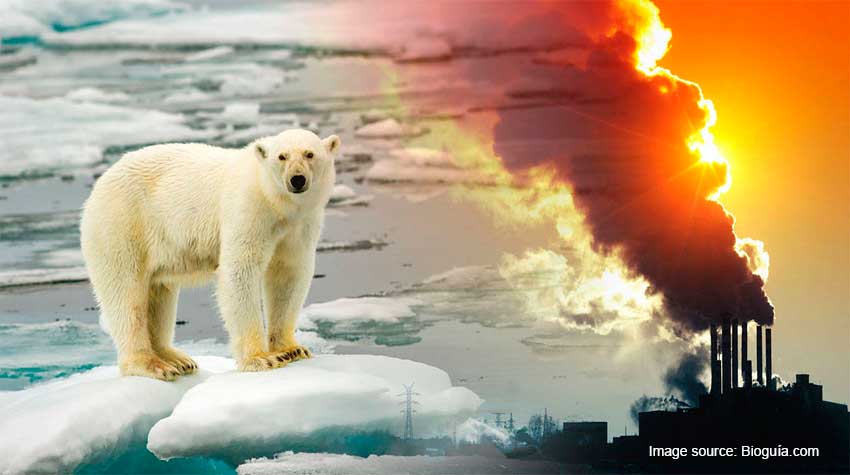
Scientists use observations from the ground, air and space, along with theoretical models, to monitor and study past, present and future climate change. Climate data records provide evidence of climate change key indicators, such as global land and ocean temperature increases; rising sea levels; ice loss at Earth’s poles and in mountain glaciers; frequency and severity changes in extreme weather such as hurricanes, heat waves, wildfires, droughts, floods and precipitation; and cloud and vegetation cover changes, to name but a few.
Climate change is a long-term change in the average weather patterns that have come to define Earth’s local, regional and global climates. These changes have a broad range of observed effects that are synonymous with the term.
Since the Industrial Revolution, the global annual temperature has increased in total by a little more than 1 degree Celsius, or about 2 degrees Fahrenheit. Between 1880—the year that accurate recordkeeping began—and 1980, it rose on average by 0.07 degrees Celsius (0.13 degrees Fahrenheit) every 10 years. Since 1981, however, the rate of increase has more than doubled: For the last 40 years, we’ve seen the global annual temperature rise by 0.18 degrees Celsius, or 0.32 degrees Fahrenheit, per decade.
The result? A planet that has never been hotter. Nine of the 10 warmest years since 1880 have occurred since 2005—and the 5 warmest years on record have all occurred since 2015. Climate change deniers have argued that there has been a “pause” or a “slowdown” in rising global temperatures, but numerous studies, including a 2018 paper published in the journal Environmental Research Letters, have disproved this claim. The impacts of global warming are already harming people around the world.
Now climate scientists have concluded that we must limit global warming to 1.5 degrees Celsius by 2040 if we are to avoid a future in which everyday life around the world is marked by its worst, most devastating effects: the extreme droughts, wildfires, floods, tropical storms, and other disasters that we refer to collectively as climate change. These effects are felt by all people in one way or another but are experienced most acutely by the underprivileged, the economically marginalized, and people of color, for whom climate change is often a key driver of poverty, displacement, hunger, and social unrest.
Global warming occurs when carbon dioxide (CO2) and other air pollutants collect in the atmosphere and absorb sunlight and solar radiation that have bounced off the earth’s surface. Normally this radiation would escape into space, but these pollutants, which can last for years to centuries in the atmosphere, trap the heat and cause the planet to get hotter. These heat-trapping pollutants—specifically carbon dioxide, methane, nitrous oxide, water vapor, and synthetic fluorinated gases—are known as greenhouse gases, and their impact is called the greenhouse effect.
In 2015, for example, scientists concluded that a lengthy drought in California—the state’s worst water shortage in 1,200 years—had been intensified by 15 to 20 percent by global warming. They also said the odds of similar droughts happening in the future had roughly doubled over the past century. And in 2016, the National Academies of Science, Engineering, and Medicine announced that we can now confidently attribute some extreme weather events, like heat waves, droughts, and heavy precipitation, directly to climate change.
The earth’s ocean temperatures are getting warmer, too—which means that tropical storms can pick up more energy. In other words, global warming has the ability to turn a category 3 storm into a more dangerous category 4 storm. In fact, scientists have found that the frequency of North Atlantic hurricanes has increased since the early 1980s, as has the number of storms that reach categories 4 and 5. The 2020 Atlantic hurricane season included a record-breaking 30 tropical storms, 6 major hurricanes, and 13 hurricanes altogether. With increased intensity come increased damage and death. The United States saw an unprecedented 22 weather and climate disasters that caused at least a billion dollars’ worth of damage in 2020, but 2017 was the costliest on record and among the deadliest as well: Taken together, that year's tropical storms (including Hurricanes Harvey, Irma, and Maria) caused nearly $300 billion in damage and led to more than 3,300 fatalities.
Global warming can be controlled by Replacing one regular light bulb with a compact fluorescent light bulb will save 150 pounds of carbon dioxide a year. Walk, bike, carpool or take mass transit more often. You'll save one pound of carbon dioxide for every mile you don't drive! You can save 2,400 pounds of carbon dioxide per year by recycling just half of your household waste. A single tree will absorb one ton of carbon dioxide over its lifetime.
We have often heard about the word PTSD which is abbreviated as posttraumatic stress disorder. According to WHO, Posttraumatic stress disorder is a psychiatric disorder that may occur in individuals who have experienced or witnessed a distressing event such as a natural disaster , an accident ,maybe a war or rape or have been threatened with death, sexual assault or serious injury. In 1980,the American psychiatric association added PTSD to the third edition of its Diagnostic and Statistical Manual of Mental Disorder(DSM-III)
This kind of stress disorder can affect those people who have personally experienced such trauma which may have affected their mental health in an adverse manner. It can occur in the friends or family members of those who have went through such traumatic event.
What causes PTSD?
When you experiences a tough moment, your nervous system reacts with the fight-or-flight response. Your heart start beating faster and your blood pressure starts rising along your muscles getting tighten, increase your strength and reaction speed .Once the body feels the danger is passed your nervous system calms your body, lowering your heart and blood pressure, recovers to its normal state.
Signs and symptoms of PTSD
PTSD symptoms differ from person to person because everyone’s nervous system and level for stress tolerance can be different. Most likely to develop posttraumatic stress disorder symptom in the hours or days following a traumatic event. It can even take year before they appear. People having such disorder get triggered by something that reminds them of their original traumatic event, such as noise or an image, a word or even a smell.
While everyone experiencing PTSD differently, there are primarily three types of symptoms which are following
1.Re-experiencing the traumatic event through bad memories, flashback and nightmares
2.Avoidance and numbing , such as avoiding those thing which reminds you of the trauma, feeling emotionally numb and detached from others
3.Hyperarousal which includes sleeping problems, constantly getting irritated, anger issues, self destructive or reckless behaviour
Curative Measures for PTSD
There is no definite care for PTSD ,but there are many types of treatment available that can lessen the symptoms. Also there are various therapy techniques, as well as evidence shows right medication can be beneficial for people struggling with symptoms of PTSD.
These treatment method are used to minimize, or even eliminate, distressing symptoms that people with Posttraumatic Stress Disorder often experience.
Climate change” and “global warming” are often used interchangeably but have distinct meanings. Similarly, the terms "weather" and "climate" are sometimes confused, though they refer to events with broadly different spatial- and timescales.
Global warming is the long-term heating of Earth’s climate system observed since the pre-industrial period (between 1850 and 1900) due to human activities, primarily fossil fuel burning, which increases heat-trapping greenhouse gas levels in Earth’s atmosphere. The term is frequently used interchangeably with the term climate change, though the latter refers to both human- and naturally produced warming and the effects it has on our planet. It is most commonly measured as the average increase in Earth’s global surface temperature.
Since the pre-industrial period, human activities are estimated to have increased Earth’s global average temperature by about 1 degree Celsius (1.8 degrees Fahrenheit), a number that is currently increasing by 0.2 degrees Celsius (0.36 degrees Fahrenheit) per decade. Most of the current warming trend is extremely likely (greater than 95 percent probability) the result of human activity since the 1950s and is proceeding at an unprecedented rate over decades to millennia.
Changes observed in Earth’s climate since the early 20th century are primarily driven by human activities, particularly fossil fuel burning, which increases heat-trapping greenhouse gas levels in Earth’s atmosphere, raising Earth’s average surface temperature. These human-produced temperature increases are commonly referred to as global warming. Natural processes can also contribute to climate change, including internal variability (e.g., cyclical ocean patterns like El Niño, La Niña and the Pacific Decadal Oscillation) and external forcings (e.g., volcanic activity, changes in the Sun’s energy output, variations in Earth’s orbit).
Scientists use observations from the ground, air and space, along with theoretical models, to monitor and study past, present and future climate change. Climate data records provide evidence of climate change key indicators, such as global land and ocean temperature increases; rising sea levels; ice loss at Earth’s poles and in mountain glaciers; frequency and severity changes in extreme weather such as hurricanes, heat waves, wildfires, droughts, floods and precipitation; and cloud and vegetation cover changes, to name but a few.
Climate change is a long-term change in the average weather patterns that have come to define Earth’s local, regional and global climates. These changes have a broad range of observed effects that are synonymous with the term.
Since the Industrial Revolution, the global annual temperature has increased in total by a little more than 1 degree Celsius, or about 2 degrees Fahrenheit. Between 1880—the year that accurate recordkeeping began—and 1980, it rose on average by 0.07 degrees Celsius (0.13 degrees Fahrenheit) every 10 years. Since 1981, however, the rate of increase has more than doubled: For the last 40 years, we’ve seen the global annual temperature rise by 0.18 degrees Celsius, or 0.32 degrees Fahrenheit, per decade.
The result? A planet that has never been hotter. Nine of the 10 warmest years since 1880 have occurred since 2005—and the 5 warmest years on record have all occurred since 2015. Climate change deniers have argued that there has been a “pause” or a “slowdown” in rising global temperatures, but numerous studies, including a 2018 paper published in the journal Environmental Research Letters, have disproved this claim. The impacts of global warming are already harming people around the world.
Now climate scientists have concluded that we must limit global warming to 1.5 degrees Celsius by 2040 if we are to avoid a future in which everyday life around the world is marked by its worst, most devastating effects: the extreme droughts, wildfires, floods, tropical storms, and other disasters that we refer to collectively as climate change. These effects are felt by all people in one way or another but are experienced most acutely by the underprivileged, the economically marginalized, and people of color, for whom climate change is often a key driver of poverty, displacement, hunger, and social unrest.
Global warming occurs when carbon dioxide (CO2) and other air pollutants collect in the atmosphere and absorb sunlight and solar radiation that have bounced off the earth’s surface. Normally this radiation would escape into space, but these pollutants, which can last for years to centuries in the atmosphere, trap the heat and cause the planet to get hotter. These heat-trapping pollutants—specifically carbon dioxide, methane, nitrous oxide, water vapor, and synthetic fluorinated gases—are known as greenhouse gases, and their impact is called the greenhouse effect.
In 2015, for example, scientists concluded that a lengthy drought in California—the state’s worst water shortage in 1,200 years—had been intensified by 15 to 20 percent by global warming. They also said the odds of similar droughts happening in the future had roughly doubled over the past century. And in 2016, the National Academies of Science, Engineering, and Medicine announced that we can now confidently attribute some extreme weather events, like heat waves, droughts, and heavy precipitation, directly to climate change.
The earth’s ocean temperatures are getting warmer, too—which means that tropical storms can pick up more energy. In other words, global warming has the ability to turn a category 3 storm into a more dangerous category 4 storm. In fact, scientists have found that the frequency of North Atlantic hurricanes has increased since the early 1980s, as has the number of storms that reach categories 4 and 5. The 2020 Atlantic hurricane season included a record-breaking 30 tropical storms, 6 major hurricanes, and 13 hurricanes altogether. With increased intensity come increased damage and death. The United States saw an unprecedented 22 weather and climate disasters that caused at least a billion dollars’ worth of damage in 2020, but 2017 was the costliest on record and among the deadliest as well: Taken together, that year's tropical storms (including Hurricanes Harvey, Irma, and Maria) caused nearly $300 billion in damage and led to more than 3,300 fatalities.
Global warming can be controlled by Replacing one regular light bulb with a compact fluorescent light bulb will save 150 pounds of carbon dioxide a year. Walk, bike, carpool or take mass transit more often. You'll save one pound of carbon dioxide for every mile you don't drive! You can save 2,400 pounds of carbon dioxide per year by recycling just half of your household waste. A single tree will absorb one ton of carbon dioxide over its lifetime.
The Atlantic Charter was a joint statement published by the United States and the United Kingdom during World War II (1939–45) that laid forth a vision for the postwar world. It set forth a wide set of objectives of U.S and British war such as:-
1. the desire for no territorial changes without the consent of the peoples affected.
2. They believed that every people had the right to select their own type of government and that those who had been stripped of their sovereign rights and self-governance should have them restored.
3. They would work to ensure that all states had equitable access to commerce and raw commodities.
4. They aimed to enhance labor standards, economic growth, and social security by promoting global collaboration.
5. They would seek a peace in which all countries could live peacefully inside their borders, without fear or want, after the “Nazi tyranny” (Germany) was destroyed.
Now, u must be wondering about why we are discussing the year-old charter now. That is because recently, The President of the United States and the Prime Minister of the United Kingdom have signed a revised version of the 80-year-old Atlantic Charter.
This revised version is a 604-word declaration which is an attempt to lay out a grand vision for global relations in the twenty-first century, much like the original charter was a declaration of a Western commitment to democracy and territorial integrity just months before the United States entered World War II. It’s a declaration of principles, a pledge that the United Kingdom and the United States will work together to meet the challenges of their time. It also emphasizes climate change and the need of biodiversity preservation. With references to new technology, cyberspace, and global development that is sustainable.
It urges Western partners to fight electoral meddling, particularly through misinformation and other harmful activities. In a technology era, it rates the risks to democratic states. It also declared that that the North Atlantic Treaty Organization (NATO) will remain a nuclear alliance as long as nuclear weapons exist.
Now, what will this new version of Atlantic charter holds the opportunity for India. Comparing the old and new version of Atlantic charter, the previous Atlantic Charter alienated Indian nationalism from the West, but the new Charter, as well as the rebooting of western institutions, could pave the way for a fruitful period of India’s collaboration with the US and its allies.
In 1941, the United Kingdom maintained that the charter’s self-determination concept did not apply to India. However, the inclusion of India and South Africa, as well as Australia and South Korea (as guests) at the G-7 meeting in 2021, demonstrates the urgent need to broaden the West’s base in dealing with global issues. Furthermore, The present Anglo-American initiative to formalize western talks with India is long overdue.
The Indian Prime Minister, who is participating in the G-7 meeting from afar, has the chance to demonstrate a commitment to both addressing views of decreasing democratic freedoms in India and offering genuine partnership with western democracies on global issues.
The Atlantic Charter was a joint statement published by the United States and the United Kingdom during World War II (1939–45) that laid forth a vision for the postwar world. It set forth a wide set of objectives of U.S and British war such as:-
1. the desire for no territorial changes without the consent of the peoples affected.
2. They believed that every people had the right to select their own type of government and that those who had been stripped of their sovereign rights and self-governance should have them restored.
3. They would work to ensure that all states had equitable access to commerce and raw commodities.
4. They aimed to enhance labor standards, economic growth, and social security by promoting global collaboration.
5. They would seek a peace in which all countries could live peacefully inside their borders, without fear or want, after the “Nazi tyranny” (Germany) was destroyed.
Now, u must be wondering about why we are discussing the year-old charter now. That is because recently, The President of the United States and the Prime Minister of the United Kingdom have signed a revised version of the 80-year-old Atlantic Charter.
This revised version is a 604-word declaration which is an attempt to lay out a grand vision for global relations in the twenty-first century, much like the original charter was a declaration of a Western commitment to democracy and territorial integrity just months before the United States entered World War II. It’s a declaration of principles, a pledge that the United Kingdom and the United States will work together to meet the challenges of their time. It also emphasizes climate change and the need of biodiversity preservation. With references to new technology, cyberspace, and global development that is sustainable.
It urges Western partners to fight electoral meddling, particularly through misinformation and other harmful activities. In a technology era, it rates the risks to democratic states. It also declared that that the North Atlantic Treaty Organization (NATO) will remain a nuclear alliance as long as nuclear weapons exist.
Now, what will this new version of Atlantic charter holds the opportunity for India. Comparing the old and new version of Atlantic charter, the previous Atlantic Charter alienated Indian nationalism from the West, but the new Charter, as well as the rebooting of western institutions, could pave the way for a fruitful period of India’s collaboration with the US and its allies.
In 1941, the United Kingdom maintained that the charter’s self-determination concept did not apply to India. However, the inclusion of India and South Africa, as well as Australia and South Korea (as guests) at the G-7 meeting in 2021, demonstrates the urgent need to broaden the West’s base in dealing with global issues. Furthermore, The present Anglo-American initiative to formalize western talks with India is long overdue.
The Indian Prime Minister, who is participating in the G-7 meeting from afar, has the chance to demonstrate a commitment to both addressing views of decreasing democratic freedoms in India and offering genuine partnership with western democracies on global issues.
Photography is nothing less than an art form of absolute purity. Silent poetry with the moments captured in an image is photography. The most memorable and beautiful way to remember the special things in life with full clarity. Photos are a way of preserving the best memories and moments for eternity. Photos are the permanent reminder of the past. Never get forgotten. They will always be alive. The past, the memories, everything is hidden in the photos. Hidden but so transparent in emotions. All the feelings just in a single place. They get old but are unforgettable. But on the bright side, photos are a way of expressing your emotions in a completely different and innovative way.
Photography is not just work, it is a passion filled with excitement and hope. It is a specific but not so specific piece of art. It can be done in various forms with no boundaries. There’s nothing to dislike in photography. It’s just another way to showcase talent of immense beauty. Everything, every moment can be captured and kept for the rest of your life. Photos have the finest texture and the most amazing depiction of a thing. It feels like it’s real. Photographers have the ability and power to make a photo so great that it magnifies the moment. They are able to drastically change the outcome of an image by using various equipment for high quality and definition. Every small detail is shown through photos. It gives pleasure to experience and relive the moments in life through photos.
Photos are not just a piece of paper or a file occupying a little space in your mobile or camera roll. They are an explicit version of your life in brief. The small moments to the big memories, all are stored in a single place for you to look after decades and enjoy living in the moment again. Photography depicts the vulnerability of the photographers through their art. Photographers use photography as a medium for creative expressions. They pour their heart out in the photos. They are artists of very fine quality and beauty in its purest form. The beauty and creativity can not be ignored by any living heart in this world. Embrace moments and capture them in real time with photography.
Photography is nothing less than an art form of absolute purity. Silent poetry with the moments captured in an image is photography. The most memorable and beautiful way to remember the special things in life with full clarity. Photos are a way of preserving the best memories and moments for eternity. Photos are the permanent reminder of the past. Never get forgotten. They will always be alive. The past, the memories, everything is hidden in the photos. Hidden but so transparent in emotions. All the feelings just in a single place. They get old but are unforgettable. But on the bright side, photos are a way of expressing your emotions in a completely different and innovative way.
Photography is not just work, it is a passion filled with excitement and hope. It is a specific but not so specific piece of art. It can be done in various forms with no boundaries. There’s nothing to dislike in photography. It’s just another way to showcase talent of immense beauty. Everything, every moment can be captured and kept for the rest of your life. Photos have the finest texture and the most amazing depiction of a thing. It feels like it’s real. Photographers have the ability and power to make a photo so great that it magnifies the moment. They are able to drastically change the outcome of an image by using various equipment for high quality and definition. Every small detail is shown through photos. It gives pleasure to experience and relive the moments in life through photos.
Photos are not just a piece of paper or a file occupying a little space in your mobile or camera roll. They are an explicit version of your life in brief. The small moments to the big memories, all are stored in a single place for you to look after decades and enjoy living in the moment again. Photography depicts the vulnerability of the photographers through their art. Photographers use photography as a medium for creative expressions. They pour their heart out in the photos. They are artists of very fine quality and beauty in its purest form. The beauty and creativity can not be ignored by any living heart in this world. Embrace moments and capture them in real time with photography.
It is a type of malicious software or malware classified as a spyware.
It is designed to gain access to devices, without the knowledge of users, and gather personal information and relay it back to whoever it is that is using the software to spy.
Pegasus has been developed by the Israeli firm NSO Group that was set up in 2010.
The earliest version of Pegasus discovered, which was captured by researchers in 2016, infected phones through what is called spear-phishing – text messages or emails that trick a target into clicking on a malicious link.
Since then, however, NSO’s attack capabilities have become more advanced. Pegasus infections can be achieved through so-called “zero-click” attacks, which do not require any interaction from the phone’s owner in order to succeed.
These will often exploit “zero-day” vulnerabilities, which are flaws or bugs in an operating system that the mobile phone’s manufacturer does not yet know about and so has not been able to fix.
What are the types of cyber attacks?
Malware: It is short for malicious software, refers to any kind of software that is designed to cause damage to a single computer, server, or computer network. Ransomware, Spy ware, Worms, viruses, and Trojans are all varieties of malware.
Phishing: It is the method of trying to gather personal information using deceptive e-mails and websites.
Denial of Service attacks: A Denial-of-Service (DoS) attack is an attack meant to shut down a machine or network, making it inaccessible to its intended users. DoS attacks accomplish this by flooding the target with traffic, or sending it information that triggers a crash.
Man-in-the-middle (MitM) attacks: Also known as eavesdropping attacks, occur when attackers insert themselves into a two-party transaction. Once the attackers interrupt the traffic, they can filter and steal data.
SQL Injection: SQL stands for Structured Query Language, a programming language used to communicate with databases. Many of the servers that store critical data for websites and services use SQL to manage the data in their databases. A SQL injection attack specifically targets such kinds of servers, using malicious code to get the server to divulge information it normally wouldn’t.
Cross-Site Scripting (XSS): Similar to an SQL injection attack, this attack also involves injecting malicious code into a website, but in this case the website itself is not being attacked. Instead the malicious code the attacker has injected, only runs in the user’s browser when they visit the attacked website, and it goes after the visitor directly, not the website.
Social Engineering: It is an attack that relies on human interaction to trick users into breaking security procedures in order to gain sensitive information that is typically protected.
What are the initiatives taken by the government to tackle the issue of cyber attacks?
Cyber Surakshit Bharat Initiative: It was launched in 2018 with an aim to spread awareness about cybercrime and building capacity for safety measures for Chief Information Security Officers (CISOs) and frontline IT staff across all government departments.
National Cyber security Coordination Centre (NCCC): In 2017, the NCCC was developed to scan internet traffic and communication metadata (which are little snippets of information hidden inside each communication) coming into the country to detect real-time cyber threats.
Cyber Swachhta Kendra: In 2017, this platform was introduced for internet users to clean their computers and devices by wiping out viruses and malware.
Indian Cyber Crime Coordination Centre (I4C): I4C was recently inaugurated by the government.
National Cyber Crime Reporting Portal has also been launched pan India.
Computer Emergency Response Team – India (CERT-IN): It is the nodal agency which deals with cybersecurity threats like hacking and phishing.
Laws in India related to Cyber Security
Information Technology Act, 2000.
Personal Data Protection Bill, 2019.
International Telecommunication Union (ITU): It is a specialized agency within the United Nations which plays a leading role in the standardization and development of telecommunications and cyber security issues.
It is a type of malicious software or malware classified as a spyware.
It is designed to gain access to devices, without the knowledge of users, and gather personal information and relay it back to whoever it is that is using the software to spy.
Pegasus has been developed by the Israeli firm NSO Group that was set up in 2010.
The earliest version of Pegasus discovered, which was captured by researchers in 2016, infected phones through what is called spear-phishing – text messages or emails that trick a target into clicking on a malicious link.
Since then, however, NSO’s attack capabilities have become more advanced. Pegasus infections can be achieved through so-called “zero-click” attacks, which do not require any interaction from the phone’s owner in order to succeed.
These will often exploit “zero-day” vulnerabilities, which are flaws or bugs in an operating system that the mobile phone’s manufacturer does not yet know about and so has not been able to fix.
What are the types of cyber attacks?
Malware: It is short for malicious software, refers to any kind of software that is designed to cause damage to a single computer, server, or computer network. Ransomware, Spy ware, Worms, viruses, and Trojans are all varieties of malware.
Phishing: It is the method of trying to gather personal information using deceptive e-mails and websites.
Denial of Service attacks: A Denial-of-Service (DoS) attack is an attack meant to shut down a machine or network, making it inaccessible to its intended users. DoS attacks accomplish this by flooding the target with traffic, or sending it information that triggers a crash.
Man-in-the-middle (MitM) attacks: Also known as eavesdropping attacks, occur when attackers insert themselves into a two-party transaction. Once the attackers interrupt the traffic, they can filter and steal data.
SQL Injection: SQL stands for Structured Query Language, a programming language used to communicate with databases. Many of the servers that store critical data for websites and services use SQL to manage the data in their databases. A SQL injection attack specifically targets such kinds of servers, using malicious code to get the server to divulge information it normally wouldn’t.
Cross-Site Scripting (XSS): Similar to an SQL injection attack, this attack also involves injecting malicious code into a website, but in this case the website itself is not being attacked. Instead the malicious code the attacker has injected, only runs in the user’s browser when they visit the attacked website, and it goes after the visitor directly, not the website.
Social Engineering: It is an attack that relies on human interaction to trick users into breaking security procedures in order to gain sensitive information that is typically protected.
What are the initiatives taken by the government to tackle the issue of cyber attacks?
Cyber Surakshit Bharat Initiative: It was launched in 2018 with an aim to spread awareness about cybercrime and building capacity for safety measures for Chief Information Security Officers (CISOs) and frontline IT staff across all government departments.
National Cyber security Coordination Centre (NCCC): In 2017, the NCCC was developed to scan internet traffic and communication metadata (which are little snippets of information hidden inside each communication) coming into the country to detect real-time cyber threats.
Cyber Swachhta Kendra: In 2017, this platform was introduced for internet users to clean their computers and devices by wiping out viruses and malware.
Indian Cyber Crime Coordination Centre (I4C): I4C was recently inaugurated by the government.
National Cyber Crime Reporting Portal has also been launched pan India.
Computer Emergency Response Team – India (CERT-IN): It is the nodal agency which deals with cybersecurity threats like hacking and phishing.
Laws in India related to Cyber Security
Information Technology Act, 2000.
Personal Data Protection Bill, 2019.
International Telecommunication Union (ITU): It is a specialized agency within the United Nations which plays a leading role in the standardization and development of telecommunications and cyber security issues.
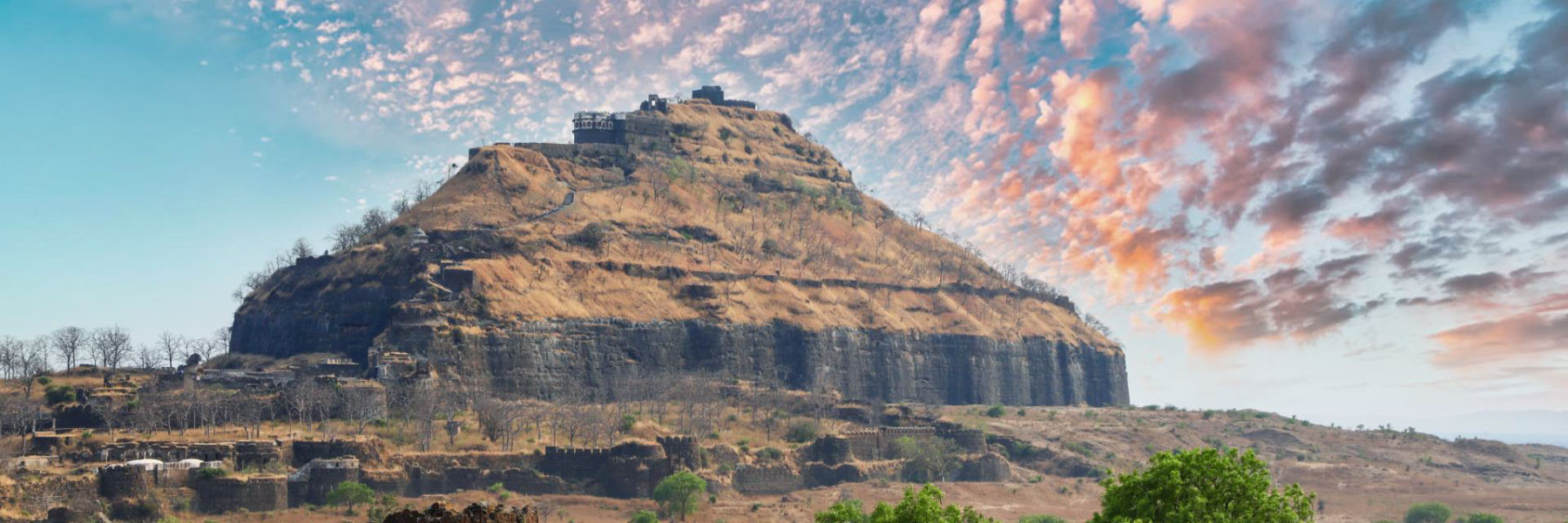
Daulatabad “The City of Fortune” also called as Devgiri. Daulatabad was built in 1187 by Yadava Dynasty. Later Muhammad Tughlak renamed it as “Daulatabad : the city of fortune”. Just 15 km away from main city of Aurangabad, Daulatabad Fort is located. Often known as one of the “Seven Wonders of Maharashtra”, Daulatabad fort is the best example of powerful architecture. It’s built on a 200m high conical hill, surrounded by the greenery with architecture beauty and protection from enemies. The view after hiking about 700 odd steps up to the top is mesmerising, fascinating and irreplaceable. If you like trekking then you must visit Daulatabad Fort, reaching the top is the most challenging part for every trekker. The one more reason to visit Daulatabad Fort is “Chand Minar” also called as Tower of the Moon located near the Fort.
Timing = 8am to 6pm
2. Bibi ka Maqbara
Bibi ka Maqbara (Tomb of Rabia) has similar architecture like “Taj Mahal”. A symbol of love and remembrance Bibi ka Maqbara is a beautiful place to visit in Aurangabad. Maqbara has a Charbagh styled garden and it sits pretty right in centre with the surrounding structure, having a water pool and 61 fountains. Located just 3km away from main city.
Timing = 8am to 8pm.
3. Jayakwadi Dam
The largest irrigation dam in Maharashtra and one of the largest earthen dams in Asia, the fascinating Jayakwadi dam is located on Godavari river at site of Jayakwadi village in Paithan taluka of Aurangabad. Watching the dam will make you feel like you are watching a real ocean with no end. Also visit the bird sanctuary near it and don’t forgot to buy famous “Paithani” for your lovely ladies from Paithan.
Timing = 10am to 6pm
4. Ajanta Caves
Located from just 107km away from Aurangabad, Ajanta caves is the most attractive place for foreign tourist’s. A group of around 32 Buddhist caves that are carved out of rocks, these caves date back to the 2nd century and is considered as the most brilliant form of ancient Indian art. Since 1983, Ajanta caves has been declared a UNESCO World Heritage Site. On the walls of caves there are paintings which recounts the life of Lord Buddha. From the architecture, shape, and form of the caves, it is pretty sure that the ancient Buddhist monks used these caves for studying, living and worship purposes. The murals, paintings, and carvings on the wall reveal many unknown facts about the way of living, the cultures and tradition.
Timings: 8 AM to 5 PM
5. Ellora Caves
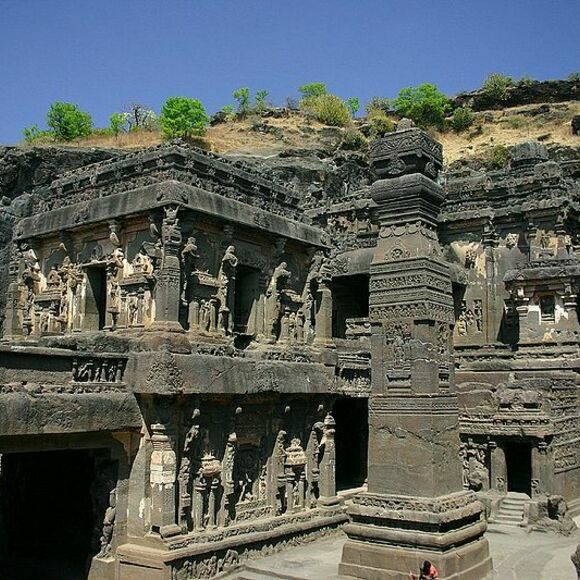
Another famous tourist place to visit near Aurangabad is Ellora caves, the another powerful example of Indian architecture. Located around 29 km from the city. This chain of caves were built by the Rashtrakuta dynasty of the Buddhist clan and Yadav group of the Jains. A must visit UNESCO World Heritage site in Maharashtra, this series of caves also showcases the perfection and epitome of the pre historic times of the Indian culture. There are all 34 caves of which, 12 are Buddhist, 17 Hindu and 5 Jain.
Daulatabad “The City of Fortune” also called as Devgiri. Daulatabad was built in 1187 by Yadava Dynasty. Later Muhammad Tughlak renamed it as “Daulatabad : the city of fortune”. Just 15 km away from main city of Aurangabad, Daulatabad Fort is located. Often known as one of the “Seven Wonders of Maharashtra”, Daulatabad fort is the best example of powerful architecture. It’s built on a 200m high conical hill, surrounded by the greenery with architecture beauty and protection from enemies. The view after hiking about 700 odd steps up to the top is mesmerising, fascinating and irreplaceable. If you like trekking then you must visit Daulatabad Fort, reaching the top is the most challenging part for every trekker. The one more reason to visit Daulatabad Fort is “Chand Minar” also called as Tower of the Moon located near the Fort.
Timing = 8am to 6pm
2. Bibi ka Maqbara
Bibi ka Maqbara (Tomb of Rabia) has similar architecture like “Taj Mahal”. A symbol of love and remembrance Bibi ka Maqbara is a beautiful place to visit in Aurangabad. Maqbara has a Charbagh styled garden and it sits pretty right in centre with the surrounding structure, having a water pool and 61 fountains. Located just 3km away from main city.
Timing = 8am to 8pm.
3. Jayakwadi Dam
The largest irrigation dam in Maharashtra and one of the largest earthen dams in Asia, the fascinating Jayakwadi dam is located on Godavari river at site of Jayakwadi village in Paithan taluka of Aurangabad. Watching the dam will make you feel like you are watching a real ocean with no end. Also visit the bird sanctuary near it and don’t forgot to buy famous “Paithani” for your lovely ladies from Paithan.
Timing = 10am to 6pm
4. Ajanta Caves
Located from just 107km away from Aurangabad, Ajanta caves is the most attractive place for foreign tourist’s. A group of around 32 Buddhist caves that are carved out of rocks, these caves date back to the 2nd century and is considered as the most brilliant form of ancient Indian art. Since 1983, Ajanta caves has been declared a UNESCO World Heritage Site. On the walls of caves there are paintings which recounts the life of Lord Buddha. From the architecture, shape, and form of the caves, it is pretty sure that the ancient Buddhist monks used these caves for studying, living and worship purposes. The murals, paintings, and carvings on the wall reveal many unknown facts about the way of living, the cultures and tradition.
Timings: 8 AM to 5 PM
5. Ellora Caves
Another famous tourist place to visit near Aurangabad is Ellora caves, the another powerful example of Indian architecture. Located around 29 km from the city. This chain of caves were built by the Rashtrakuta dynasty of the Buddhist clan and Yadav group of the Jains. A must visit UNESCO World Heritage site in Maharashtra, this series of caves also showcases the perfection and epitome of the pre historic times of the Indian culture. There are all 34 caves of which, 12 are Buddhist, 17 Hindu and 5 Jain.
I have been thinking about this movie for the past several days since watching it which is probably the sign of a good movie.
ABOUT THE MOVIE:
Then Came You is a 2018 American movie directed by Peter Hutchings and written by Fergal Rock. It is romantic comedy-drama. The movie is a about a spirited girl who brings life force to an uncertain male. The movie follows how Skye Aitken the terminally ill girl having a desire to enjoy her life before she dies. She develops friendship with Calvin Lewis a young man working as a baggage handler at the airport and also a college drop-out, whose doctor thinks he has a hypochondriac, though Calvin denies it.
THE PLOT:
The young man in need of a new start is Calvin Lewis, a shy, sad young boy. He is a college drop out working as a luggage handler along with his father and his brother. He is so obsessed with death that he keeps journal of his possible symptoms and attends a cancer patient support group even though he had no cancer. There he meets free spirit and dying Skye who enlist him to help fulfill her final wishes which she has dubbed her To Die List, because “Bucket List” is not cute enough. Skye has the kind of fatal disease we see only in movies, looking completely fine with her cute wigs and filled with energy. This all lasted until Skye collapse at a dramatic moment. she has to get Calvin to help her with her list of supposed-to-be-adorable rule-breakers like shoplifting and vandalism and a few things healthy people have time to wait for, like having sex with the guy she had a crush on before she got sick. This provides an opportunity for a montage with Skye and Calvin performing Shakespeare in a park, fencing, spray-painting a building, wearing funny outfits at a sidewalk stand selling fried chicken and tacos, and behind the wheel of a fire truck, none of which is close to being as charming as it intends. One of the items on her list is “help a sad case,” so she pushes Calvin to come clean about not having cancer and ask out Izzy, the flight attendant he has a crush on from afar. Just to make sure we have not had enough reminders about how Calvin is wasting his chance at life while a dying Skye is filling the time she has left with adventure, Calvin works at the airport but has never been on a plane.
This movie builds the emotional attachment you have to the characters until you start to truly feel what they are going through. It also has a great message about living and life. It’s not your usual vapid teen romance comedy but is relatable to any age. I fell in love with Skye’s spirit and strength. The spirit and actions of Skye will make us to believe that she will get better and stay alive but it is not possible. The more she express her happinees outside the more the pain she is bearing from inside. Calvin who was waiting for a new start has finally met a person like Skye with whom he felt how life can be more interesting and enjoyable. Skye was the reason for Calvin to date with Izzy. In the middle of all crisis she also thought about Calvin’s happiness. It was another great performance by Maisie Williams who I believe will be one of our premier actresses in the future. Asa Butterfield, remember him from Sex Education. Overall definitely a must watch for when you are looking to sit and chill instead of getting hyped up watching an action movie.















 Eduindex
You must be logged in to post a comment.