Words and expressions that barely existed 10 years prior are presently essential for our regular language, as hoodlums utilize new advancements to submit cyberattacks against governments, organizations and people. These violations know no boundaries, either physical or virtual, cause genuine mischief and posture genuine dangers to casualties around the world.
Cybercrime is advancing at an amazingly high speed, with recent fads continually arising. Cybercriminals are turning out to be more spry, abusing new advances with lightning speed, fitting their assaults utilizing new strategies, and helping out one another in manners we have not seen previously. Complex criminal organizations work across the world, planning multifaceted assaults surprisingly fast. Police should in this manner stay up with new advancements, to comprehend the conceivable outcomes they make for hoodlums and how they can be utilized as apparatuses for battling cybercrime.
There are numerous protection concerns encompassing Cybercrime when classified data is caught or revealed, legally or something else. Globally, both legislative and non-state entertainers take part in cybercrimes, including secret activities, monetary burglary, and other cross-line wrongdoings. Cybercrimes crossing worldwide boundaries and including the activities of no less than one country state are now and then alluded to as cyberwarfare. Warren Buffet portrays Cybercrime as the “number one issue with mankind.Computer extortion is any untrustworthy distortion of reality expected to let another to do or shun accomplishing something which causes misfortune. In this specific circumstance, the misrepresentation will bring about acquiring an advantage by:
Changing in an unapproved way. This requires minimal specialized ability and is a typical type of robbery by workers modifying the information before section or entering bogus information, or by entering unapproved directions or utilizing unapproved measures; Changing, obliterating, stifling, or taking yield, as a rule to hide unapproved exchanges. This is hard to distinguish , Changing or erasing put away information Government authorities and data innovation security experts have archived a huge expansion in Internet issues and worker examines since mid 2001. There is a developing worry among government offices like the Federal Bureau of Investigations (FBI) and the Central Intelligence Agency (CIA) that such interruptions are important for a coordinated exertion by cyberterrorist unfamiliar insight administrations, or different gatherings to plan potential security openings in basic frameworks. A cyberterrorist is somebody who threatens or forces an administration or an association to propel their political or social destinations by dispatching a PC based assault against computers, organizations, or the data put away on them.
Cyberterrorism, as a rule, can be characterized as a demonstration of psychological warfare submitted using the internet or PC assets (Parker 1983). Thusly, a basic publicity piece on the Internet that there will be bomb assaults during special times of year can be viewed as cyberterrorism. There are additionally hacking exercises coordinated towards people, families, coordinated by bunches inside networks, having a tendency to cause dread among individuals, exhibit power, gathering data important for demolishing people groups’ lives, burglaries, extorting, and so on.
Words and expressions that barely existed 10 years prior are presently essential for our regular language, as hoodlums utilize new advancements to submit cyberattacks against governments, organizations and people. These violations know no boundaries, either physical or virtual, cause genuine mischief and posture genuine dangers to casualties around the world.
Cybercrime is advancing at an amazingly high speed, with recent fads continually arising. Cybercriminals are turning out to be more spry, abusing new advances with lightning speed, fitting their assaults utilizing new strategies, and helping out one another in manners we have not seen previously. Complex criminal organizations work across the world, planning multifaceted assaults surprisingly fast. Police should in this manner stay up with new advancements, to comprehend the conceivable outcomes they make for hoodlums and how they can be utilized as apparatuses for battling cybercrime.
There are numerous protection concerns encompassing Cybercrime when classified data is caught or revealed, legally or something else. Globally, both legislative and non-state entertainers take part in cybercrimes, including secret activities, monetary burglary, and other cross-line wrongdoings. Cybercrimes crossing worldwide boundaries and including the activities of no less than one country state are now and then alluded to as cyberwarfare. Warren Buffet portrays Cybercrime as the “number one issue with mankind.Computer extortion is any untrustworthy distortion of reality expected to let another to do or shun accomplishing something which causes misfortune. In this specific circumstance, the misrepresentation will bring about acquiring an advantage by:
Changing in an unapproved way. This requires minimal specialized ability and is a typical type of robbery by workers modifying the information before section or entering bogus information, or by entering unapproved directions or utilizing unapproved measures; Changing, obliterating, stifling, or taking yield, as a rule to hide unapproved exchanges. This is hard to distinguish , Changing or erasing put away information Government authorities and data innovation security experts have archived a huge expansion in Internet issues and worker examines since mid 2001. There is a developing worry among government offices like the Federal Bureau of Investigations (FBI) and the Central Intelligence Agency (CIA) that such interruptions are important for a coordinated exertion by cyberterrorist unfamiliar insight administrations, or different gatherings to plan potential security openings in basic frameworks. A cyberterrorist is somebody who threatens or forces an administration or an association to propel their political or social destinations by dispatching a PC based assault against computers, organizations, or the data put away on them.
Cyberterrorism, as a rule, can be characterized as a demonstration of psychological warfare submitted using the internet or PC assets (Parker 1983). Thusly, a basic publicity piece on the Internet that there will be bomb assaults during special times of year can be viewed as cyberterrorism. There are additionally hacking exercises coordinated towards people, families, coordinated by bunches inside networks, having a tendency to cause dread among individuals, exhibit power, gathering data important for demolishing people groups’ lives, burglaries, extorting, and so on.
This is a Biblical quotation. The full quotation reads: “Man shall not live by bread alone; but by every word that proceedeth of the mouth of God”. Food is necessary to exist but mere existence cannot be the be-all and end-all of life. We eat in order to live but life is a means and not an end itself. Bread is like a staff and support to help us reach our destination. Man does not live simply to eat and drink. Eat, drink and be merry cannot be the aim and objective of life. We share the need of food and shelter with all other animals. But man is the crown of creation. God has created man in his own image. His intellectual and spiritual capacities and capabilities are limitless. There cannot be more majestic, wonderful, awe-inspiring and valuable thing than man in the whole creation. He signifies the ultimate in creation. Then, how can he be satisfied with mere bread?
Man is an intellectual being. His intelligence urges him to probe the mysteries of nature, To conquer the elements, reach to the moon and planets and go beyond them. It wants to unravel the mystery of life, death and creation. It inspires and stimulates him to evolve higher and higher and still higher till perfection is achieved. His Hunger for knowledge and thirst for enlightenment know no bounds. Even the sky is not the limit for him. His spiritual, ethical, aesthetic, social, cultural and technological urges are two strong to be resisted. He wants to create wonderful, fantastic and very beautiful things. He dreams of making a perfect example. Satisfaction, in ordinary sense, is not his cup of tea. It belongs to animals and beasts.
Had he being satisfied with the gratification of his senses alone, there would not have been such great religions, literature, piece of wonderful art, cultures ever reaching to greater heights and so wonderful technological, scientific and industrial advancements. He could have then not planted his foot on the moon or probed Mars and sent flying machines far beyond the planets. Today he is master of all that he surveys only because of these deep urges to reveal the secrets of nature and spirit. No doubt, man was at first a savage animal like all other animals. Then he lived in caves, under trees, covered himself with barks and leaves and satisfied his hunger by eating flesh of the animals. But is was just a beginning Of the long and triumphant march- a march from savagery to civilization, culture and great spiritual heights.
Obviously, Bread is important but not all important. Bread sustains us, but the purpose of life is far higher, nobler, subtle, refined and wonderful. Life becomes worthy of its name when it is dedicated to nobler aims, activities, achievements and struggles. Man is by nature a dreamer, an idealist and prophet. He wants to translate his dreams into a reality. He does not treat life as an empty dream. It is not a walking shadow or a poor player signifying nothing. He is ready to lose his life to discover its real meaning, to lace it with a nobler purpose and significance. Life of man anticipates all these and much more. Food, shelter, clothing are a mere Staff and man never wants to turn them into a crutch. He knows the difference between a mere tool and the higher goals it is meant to serve. He can never be satisfied with a good length of life but believes in quality, in its meaningfulness and which is why there is so much struggle, efforts, exertion and sweat. Man search for the truth, the ultimate reality leads him to higher and higher steps of evolution. He knows how to live but still better he knows how to die. He eats to live but never lives to eat.
We all are well aware of the different conflicts in our minds. They arrive like impatient thunderstorms, one right after the other. The times when there’s isn’t any hope to hold onto, we may thrive by words that might explain our mental states. Although, we often fail to do so and start drowning ourselves into the darkest depths of nothingness.
One thing that never gets old in such situations is writing down your rough thoughts somewhere away from the eyes of anyone, and reading it later at a better stage or when you start feeling yourself again.
WAYS TO CLEAR YOUR MIND
In a generation where social status depicts one’s nature and affects their state of mind, we often find ourselves getting lost in the world which we created for others to see us like. We should be capable of creating a difference between what’s imaginary and real, that not only helps us stay sane but provides a boundary to the inevitable confusions.
When we invariably replay a situation and can’t stop thinking about it, or think how we messed up; the more we delve into it the more that situation seems to tighten the blank spaces in our mind and start congesting it.
It’s normal to get stuck in the past and have a lot many things playing in your mind at the same time, our mind has a tendency to work funnily.
Instead of putting yourself in a self-inflicting pain, try performing the enlisted activities which will probably distract the course of your mind for the time being:
reconnect with an old friend
play and spend time with your pet
don’t force yourself to be productive
go easy on yourself and do some pampering
cook yourself an elaborate meal
watch youtube, movies and listen to an upbeat music
take a long drive to nowhere
take a walk in nature
go out with a friend and hangout
SELF VALIDATION
We are forced to put ourselves in a position where it’s tough to concentrate on peace of mind, by comparing ourselves to the person who is superior to us. But we need to understand the concept of self-satisfaction and being content in what we already have.
We should stop comparing ourselves to others because we are unaware of the life that they have behind the scenes, or away from the eyes of the world. It’s natural to get inferiority complexes but that shouldn’t mess with one’s mind.
The positive motivation or the rush and drag to push ourselves to a better position is healthy, but if it makes one sulk and questions their existence then it won’t take long into turning toxic and harmful for the mental peace.
You have had enough of the taunts and opinions that society has for you, you don’t have to necessarily add yours to it too. If not others, make yourself so focused and proud in what you do that even your conflictions think twice to reoccur in your mind.
“Be who you are and say what you feel, because those who mind don’t matter, and those who matter don’t mind.” ― Bernard M. Baruch
This is a Biblical quotation. The full quotation reads: “Man shall not live by bread alone; but by every word that proceedeth of the mouth of God”. Food is necessary to exist but mere existence cannot be the be-all and end-all of life. We eat in order to live but life is a means and not an end itself. Bread is like a staff and support to help us reach our destination. Man does not live simply to eat and drink. Eat, drink and be merry cannot be the aim and objective of life. We share the need of food and shelter with all other animals. But man is the crown of creation. God has created man in his own image. His intellectual and spiritual capacities and capabilities are limitless. There cannot be more majestic, wonderful, awe-inspiring and valuable thing than man in the whole creation. He signifies the ultimate in creation. Then, how can he be satisfied with mere bread?
Man is an intellectual being. His intelligence urges him to probe the mysteries of nature, To conquer the elements, reach to the moon and planets and go beyond them. It wants to unravel the mystery of life, death and creation. It inspires and stimulates him to evolve higher and higher and still higher till perfection is achieved. His Hunger for knowledge and thirst for enlightenment know no bounds. Even the sky is not the limit for him. His spiritual, ethical, aesthetic, social, cultural and technological urges are two strong to be resisted. He wants to create wonderful, fantastic and very beautiful things. He dreams of making a perfect example. Satisfaction, in ordinary sense, is not his cup of tea. It belongs to animals and beasts.
Had he being satisfied with the gratification of his senses alone, there would not have been such great religions, literature, piece of wonderful art, cultures ever reaching to greater heights and so wonderful technological, scientific and industrial advancements. He could have then not planted his foot on the moon or probed Mars and sent flying machines far beyond the planets. Today he is master of all that he surveys only because of these deep urges to reveal the secrets of nature and spirit. No doubt, man was at first a savage animal like all other animals. Then he lived in caves, under trees, covered himself with barks and leaves and satisfied his hunger by eating flesh of the animals. But is was just a beginning Of the long and triumphant march- a march from savagery to civilization, culture and great spiritual heights.
Obviously, Bread is important but not all important. Bread sustains us, but the purpose of life is far higher, nobler, subtle, refined and wonderful. Life becomes worthy of its name when it is dedicated to nobler aims, activities, achievements and struggles. Man is by nature a dreamer, an idealist and prophet. He wants to translate his dreams into a reality. He does not treat life as an empty dream. It is not a walking shadow or a poor player signifying nothing. He is ready to lose his life to discover its real meaning, to lace it with a nobler purpose and significance. Life of man anticipates all these and much more. Food, shelter, clothing are a mere Staff and man never wants to turn them into a crutch. He knows the difference between a mere tool and the higher goals it is meant to serve. He can never be satisfied with a good length of life but believes in quality, in its meaningfulness and which is why there is so much struggle, efforts, exertion and sweat. Man search for the truth, the ultimate reality leads him to higher and higher steps of evolution. He knows how to live but still better he knows how to die. He eats to live but never lives to eat.
Every morning won’t be complete without a cup tea right? Many people can’t do their work without a cup pf tea. Tea gives us refreshness and make us active. Though many like coffee, there are people who love tea too. The reason for me to talk about tea is nothing but today’s topic revolves around tea. Let me tell you an essay written by Eric Arthur Blair about a cup of tea.
Eric Arthur Blair, known by his pename George Orwell, was an English Novelist, journalist and a critic. He opposed totalitarianism and supported democratic socialism. He is best known for the Allegorical novella ‘Animal farm” and the dystopian novel “Nineteen Eighty Four”. He wrote an essay about ‘A nice cup of tea’ and it was published in London Evening Standards in 1946. It is about the discussion of the art of making tea. He states ten rules to be followed while making tea. Let me tell you about his essay.
Eric Arthur Blair (George Orwell)
The author said that there are no cookery books that has the preparation of tea as a recepie. Countries like Eire, NewZealand and Australia which has tea as a part of civilization. He says that Chinese tea has virtues but there is no much stimulation in it. So the author prefers Indian or Ceylonese tea.
The first rule is that one should prefer Indian or Ceylonese tea. One does not feel wiser or more optimistic after drinking it. ‘A nice cup of tea’ literally means Indian tea.
Second rule is that tea should be made in small quantities in a tea pot. The teapot should be made of China or earthenware. Silver and birtannia ware tea pots produce inferior tea and enamel parts are worse. In the army, the tea is made in a big cauldron, tastes of grease and whitewash.
Thirdly, the pot should be warmed beforehand rather than placing it with water in it.
Fourthly, the tea should be strong. He states that one strong cup of tea is better than twenty weak ones. All tea lovers not only love a strong tea but like it a little longer with each year that passes.
Fifthly, the tea should be put straight into the pot. Don’t use strainers or muslin bags to imprison the tea. One can swallow tea-leaves in considerable quantities without ill effect and if the tea is not loose in the pot it never infuses properly.
Sixthly, one should take teapot to the kettle and no other way about. The water should be boiling at the time, one should keep it on the flame while pouring it.
Seventhly, after making the tea, one should stir it, or better give it a good shake allowing the leaves to settle.
Eighthly, one should drink it out in a cylindrical type of cup rather than a shallow type of cup. The shallow cup will have the tea half cold before one starts, drinking it.
Ninthly, one should pour the cream off the milk before using it for tea. Milk with cream gives a sickly taste.
Tenthly, one should pour tea into the cup first and then add milk. By pouring the tea first, one can regulate the amount of milk to be added to the tea. He also says that one should drink tea without adding sugar. Adding sugar, destroys the taste of the tea. He also asks the question to the tea lovers, How can you call yourself a tea lover if you destroy the flavour of your tea by adding sugar into it? He also says that adding sugar is similar to drinking a hot water.
The points said by him are quite controversiable. But try to drink a cup of tea without sugar for a fortnight, and you will never ruin your tea by adding sugar to it. Think about yourself guys. This essay is quite interesting. I like this essay and how about you guys?
Every morning won’t be complete without a cup tea right? Many people can’t do their work without a cup pf tea. Tea gives us refreshness and make us active. Though many like coffee, there are people who love tea too. The reason for me to talk about tea is nothing but today’s topic revolves around tea. Let me tell you an essay written by Eric Arthur Blair about a cup of tea.
Eric Arthur Blair, known by his pename George Orwell, was an English Novelist, journalist and a critic. He opposed totalitarianism and supported democratic socialism. He is best known for the Allegorical novella ‘Animal farm” and the dystopian novel “Nineteen Eighty Four”. He wrote an essay about ‘A nice cup of tea’ and it was published in London Evening Standards in 1946. It is about the discussion of the art of making tea. He states ten rules to be followed while making tea. Let me tell you about his essay.
Eric Arthur Blair (George Orwell)
The author said that there are no cookery books that has the preparation of tea as a recepie. Countries like Eire, NewZealand and Australia which has tea as a part of civilization. He says that Chinese tea has virtues but there is no much stimulation in it. So the author prefers Indian or Ceylonese tea.
The first rule is that one should prefer Indian or Ceylonese tea. One does not feel wiser or more optimistic after drinking it. ‘A nice cup of tea’ literally means Indian tea.
Second rule is that tea should be made in small quantities in a tea pot. The teapot should be made of China or earthenware. Silver and birtannia ware tea pots produce inferior tea and enamel parts are worse. In the army, the tea is made in a big cauldron, tastes of grease and whitewash.
Thirdly, the pot should be warmed beforehand rather than placing it with water in it.
Fourthly, the tea should be strong. He states that one strong cup of tea is better than twenty weak ones. All tea lovers not only love a strong tea but like it a little longer with each year that passes.
Fifthly, the tea should be put straight into the pot. Don’t use strainers or muslin bags to imprison the tea. One can swallow tea-leaves in considerable quantities without ill effect and if the tea is not loose in the pot it never infuses properly.
Sixthly, one should take teapot to the kettle and no other way about. The water should be boiling at the time, one should keep it on the flame while pouring it.
Seventhly, after making the tea, one should stir it, or better give it a good shake allowing the leaves to settle.
Eighthly, one should drink it out in a cylindrical type of cup rather than a shallow type of cup. The shallow cup will have the tea half cold before one starts, drinking it.
Ninthly, one should pour the cream off the milk before using it for tea. Milk with cream gives a sickly taste.
Tenthly, one should pour tea into the cup first and then add milk. By pouring the tea first, one can regulate the amount of milk to be added to the tea. He also says that one should drink tea without adding sugar. Adding sugar, destroys the taste of the tea. He also asks the question to the tea lovers, How can you call yourself a tea lover if you destroy the flavour of your tea by adding sugar into it? He also says that adding sugar is similar to drinking a hot water.
The points said by him are quite controversiable. But try to drink a cup of tea without sugar for a fortnight, and you will never ruin your tea by adding sugar to it. Think about yourself guys. This essay is quite interesting. I like this essay and how about you guys?
Ahalya, Tara, Mandodari, and Sita, while Draupadi and Kunti from the Mahabharata. Sita and Kunti are often replaced by each other according to people’s beliefs.
These five women were born in Kanya Rashi or the constellation of Virgo. The word ‘Kanya’ is used to denote a woman who is a ‘Virgin’. These women were the symbol of “Purity” and were considered the Eternal Virgins group despite being married.
Virgin women were supposed to have great powers of ‘Tapa’. So, all these women, despite being married, had the power of Tapa. These panchakanya are ones who owned their virginity and could revive it. The panchakanya’s were so pure that even through the fire they could pass unharmed.
Ahalya
The Bala Kanda of the Ramayana mentions that Brahma molds Ahalya out of pure creative energy. Brahma created her out of the water as the most beautiful woman in order to break the pride of Urvashi, the foremost celestial nymph. Brahma places her in the care of Gautama rishi until she reaches puberty. When that time arrives, the sage returns Ahalya to Brahma, who, impressed by Gautama’s sexual restraint and asceticism, bestows her upon him. Indra, who believes that the best women are meant for him, resents Ahalya’s marriage to the forest-dwelling ascetic.
In another tale, it is said Ahalya is created from the ashes of the sacrificial fire by the Saptarishi (seven seers) and gifted to sage Gautama.
The king of the gods, Indra, was infatuated with her beauty and comes disguised as Gautama when the sage was away, and requests to have physical relationships with Ahalya. In some versions, Ahalya sees through his disguise but still complies out of “curiosity” and because her husband would neglect his matrimonial duties. In later versions, Ahalya falls prey to Indra’s trickery and does not recognize him. In all narratives, Ahalya and her lover Indra are cursed by Gautama. Gautama then curses Ahalya to remain invisible to all beings for thousands of years, fast by subsisting only on-air, suffer and sleep in ashes and be tormented by guilt. Nevertheless, he assures her that her sin will be expiated once she extends her hospitality to Rama, who will visit the ashram. Thereafter, Gautama abandons the ashram and goes to the Himalayas to practice asceticism. Indra was cursed to be castrated or be covered by a thousand vulvae that ultimately turn into a thousand eyes.
The Ayodhya prince Rama, with his brother Lakshmana and their guru, the sage Vishvamitra pass Gautama’s desolate ashram while travelling to King Janaka’s court in Mithila. As they near the ashram, Vishvamitra recounts the tale of Ahalya’s curse and instructs Rama to save Ahalya. Ahalya is said to have been touched by Rama’s feet and rises from her stone state to human form and goes to her abode, the Gautama’s hermitage.
Tara
Tara was the wife of the monkey king Bali who was presumed dead after a battle with a demon after which she married his twin brother Sugriva according to the custom of the time. The lack of the description of formal marriage suggests that Tara’s relationship to Sugriva is neither widow re-marriage nor polyandry, but simply appropriation by Sugriva. In the references of the coronation of Sugriva as king, Angada is also described as the heir-apparent crown prince, while Tara is mentioned as Sugriva’s wife. The Adhyatma Ramayana declares that Sugriva acquires Tara.
It turns out that Bali isn’t killed in reality. When Bali returned, he was livid and abducted Sugriva’s first wife, Ruma, as revenge. As battle lines between the brothers were drawn, wise Tara counseled her first husband to return Ruma to his brother. Tara said Sugriva had not snatched her but married her legitimately only because Bali’s death had been confirmed. Tara, the mother of Bali’s son Angad, finally managed to wrest a promise from him that he would not kill his own brother. The brothers fought a duel in which Bali was killed by Sugriva’s mentor Rama. Sugriva was crowned king of the kingdom of Kishkindha. As dowager queen, Tara diplomatically left the question of the ascension of her son to the throne for his stepfather to resolve. She knew well that the guilt-ridden uncle Sugriva would not deny her son his right to the throne.
In his dying breath, Bali reconciles with Sugriva and instructs him to follow Tara’s wise counsel in all matters.
While all was well with the king and his lustful nature got the best of him and he eventually ignored his promise to Rama to help him win Sita back. Lakshaman was livid to find Sugriva had backtracked on his words. He entered Sugriva’s personal chambers to bring upon his wrath on the king but Queen Tara very diplomatically pacified the prince.
Thus she was instrumental in saving the king from the wrath of the Lakshmana and brought coherence in the Rama camp to fight the great war to avenge Sita.
Mandodari
Mandodari is the daughter of Mayasura, the king of the Asuras, who are god-like demons. He rescued a beautiful girl child from the well. He and his, wife, Hema, adopted her and named her Mandodari. She was taught aspects of architecture by King Mayasura. He taught Mandodari about the various landforms of Bharatvarsh which were Swarga (heavenly plateaus), Bhoomi (plains) and Patala (underworld). When she turned fifteen, he started involving her in his projects and eventually met Ravana when he came to seek her counsel.
Valmiki’s Ramayana describes Mandodari as a very beautiful, pious and noblewoman whose appearance once led Hanumana to mistake her for Sita. She was known to be extremely patient with Ravana’s attitude towards women, but always questioning his actions and rebuking his choices.
Despite Ravana’s faults, Mandodari loved him and was proud of his strength. She was aware of Ravana’s weakness towards women. A righteouswoman, Mandodari tried to lead Ravana to righteousness, but Ravana ignored her advice.
Draupadi
Draupadi is also referred to as Panchali (meaning one from the kingdom of Panchala), Yajnaseni (meaning one born from a Yajna or fire-sacrifice), Mahabhaaratii (great wife of the five descendants of Bharata) and Sairandhri (an expert maid, her assumed name during her second exile in which she worked as Virat kingdom’s queen Sudeshna’s hair-stylist).
Panchali is the Dharma Pathini of the Pancha Pandavas. The concept behind her marrying five people is that she is the Shakthi Roopa of the five devas, Dharma – Yudhishthira, Vayu – Bheema, Indra – Arjun, Nakul and Sahadev – Ashwini Kumaras.
No woman ever faced the trials and tribulations that Draupadi faced in her life. Even after being born out of the fire to Drupada, even if she had heroic husbands, she had to undergo Vastra harana, exile, Agnata. Post-war she was faced to watch her entire clan being killed.
Kunti
She is one true Matriarch of the Saga of Mahabharata. Kunti or Pritha was the daughter of Shurasena and the foster daughter of his cousin Kuntibhoja. She is the sister of Vasudeva. She was married to King Pandu of Hastinapur and was the mother of Karna and the first three Pandava brothers Yudhishthira, Bhima, Arjuna. She was the paternal aunt of Krishna, Balarama, and Subhadra. She was the stepmother or foster mother of Nakula and Sahadeva.
Kunti’s marital life was also unusual. Having chosen Pandu as her husband in a svayamvara ceremony, she never had a child by Pandu. Her husband had received a curse from the sage Kimdama that he would die on having intercourse with his wife because he had shot the sage with an arrow when he was copulating with his wife in the guise of a deer. Deeply hurt by the turn of events, Pandu decided to retire into the forest and live the life of renunciation. Kunti accompanied him. She invoked her boons for herself and Madri and had 3 children of her own and two for Madri. Pandu dies unable to abstain.
Ahalya, Tara, Mandodari, and Sita, while Draupadi and Kunti from the Mahabharata. Sita and Kunti are often replaced by each other according to people’s beliefs.
These five women were born in Kanya Rashi or the constellation of Virgo. The word ‘Kanya’ is used to denote a woman who is a ‘Virgin’. These women were the symbol of “Purity” and were considered the Eternal Virgins group despite being married.
Virgin women were supposed to have great powers of ‘Tapa’. So, all these women, despite being married, had the power of Tapa. These panchakanya are ones who owned their virginity and could revive it. The panchakanya’s were so pure that even through the fire they could pass unharmed.
Ahalya
The Bala Kanda of the Ramayana mentions that Brahma molds Ahalya out of pure creative energy. Brahma created her out of the water as the most beautiful woman in order to break the pride of Urvashi, the foremost celestial nymph. Brahma places her in the care of Gautama rishi until she reaches puberty. When that time arrives, the sage returns Ahalya to Brahma, who, impressed by Gautama’s sexual restraint and asceticism, bestows her upon him. Indra, who believes that the best women are meant for him, resents Ahalya’s marriage to the forest-dwelling ascetic.
In another tale, it is said Ahalya is created from the ashes of the sacrificial fire by the Saptarishi (seven seers) and gifted to sage Gautama.
The king of the gods, Indra, was infatuated with her beauty and comes disguised as Gautama when the sage was away, and requests to have physical relationships with Ahalya. In some versions, Ahalya sees through his disguise but still complies out of “curiosity” and because her husband would neglect his matrimonial duties. In later versions, Ahalya falls prey to Indra’s trickery and does not recognize him. In all narratives, Ahalya and her lover Indra are cursed by Gautama. Gautama then curses Ahalya to remain invisible to all beings for thousands of years, fast by subsisting only on-air, suffer and sleep in ashes and be tormented by guilt. Nevertheless, he assures her that her sin will be expiated once she extends her hospitality to Rama, who will visit the ashram. Thereafter, Gautama abandons the ashram and goes to the Himalayas to practice asceticism. Indra was cursed to be castrated or be covered by a thousand vulvae that ultimately turn into a thousand eyes.
The Ayodhya prince Rama, with his brother Lakshmana and their guru, the sage Vishvamitra pass Gautama’s desolate ashram while travelling to King Janaka’s court in Mithila. As they near the ashram, Vishvamitra recounts the tale of Ahalya’s curse and instructs Rama to save Ahalya. Ahalya is said to have been touched by Rama’s feet and rises from her stone state to human form and goes to her abode, the Gautama’s hermitage.
Tara
Tara was the wife of the monkey king Bali who was presumed dead after a battle with a demon after which she married his twin brother Sugriva according to the custom of the time. The lack of the description of formal marriage suggests that Tara’s relationship to Sugriva is neither widow re-marriage nor polyandry, but simply appropriation by Sugriva. In the references of the coronation of Sugriva as king, Angada is also described as the heir-apparent crown prince, while Tara is mentioned as Sugriva’s wife. The Adhyatma Ramayana declares that Sugriva acquires Tara.
It turns out that Bali isn’t killed in reality. When Bali returned, he was livid and abducted Sugriva’s first wife, Ruma, as revenge. As battle lines between the brothers were drawn, wise Tara counseled her first husband to return Ruma to his brother. Tara said Sugriva had not snatched her but married her legitimately only because Bali’s death had been confirmed. Tara, the mother of Bali’s son Angad, finally managed to wrest a promise from him that he would not kill his own brother. The brothers fought a duel in which Bali was killed by Sugriva’s mentor Rama. Sugriva was crowned king of the kingdom of Kishkindha. As dowager queen, Tara diplomatically left the question of the ascension of her son to the throne for his stepfather to resolve. She knew well that the guilt-ridden uncle Sugriva would not deny her son his right to the throne.
In his dying breath, Bali reconciles with Sugriva and instructs him to follow Tara’s wise counsel in all matters.
While all was well with the king and his lustful nature got the best of him and he eventually ignored his promise to Rama to help him win Sita back. Lakshaman was livid to find Sugriva had backtracked on his words. He entered Sugriva’s personal chambers to bring upon his wrath on the king but Queen Tara very diplomatically pacified the prince.
Thus she was instrumental in saving the king from the wrath of the Lakshmana and brought coherence in the Rama camp to fight the great war to avenge Sita.
Mandodari
Mandodari is the daughter of Mayasura, the king of the Asuras, who are god-like demons. He rescued a beautiful girl child from the well. He and his, wife, Hema, adopted her and named her Mandodari. She was taught aspects of architecture by King Mayasura. He taught Mandodari about the various landforms of Bharatvarsh which were Swarga (heavenly plateaus), Bhoomi (plains) and Patala (underworld). When she turned fifteen, he started involving her in his projects and eventually met Ravana when he came to seek her counsel.
Valmiki’s Ramayana describes Mandodari as a very beautiful, pious and noblewoman whose appearance once led Hanumana to mistake her for Sita. She was known to be extremely patient with Ravana’s attitude towards women, but always questioning his actions and rebuking his choices.
Despite Ravana’s faults, Mandodari loved him and was proud of his strength. She was aware of Ravana’s weakness towards women. A righteouswoman, Mandodari tried to lead Ravana to righteousness, but Ravana ignored her advice.
Draupadi
Draupadi is also referred to as Panchali (meaning one from the kingdom of Panchala), Yajnaseni (meaning one born from a Yajna or fire-sacrifice), Mahabhaaratii (great wife of the five descendants of Bharata) and Sairandhri (an expert maid, her assumed name during her second exile in which she worked as Virat kingdom’s queen Sudeshna’s hair-stylist).
Panchali is the Dharma Pathini of the Pancha Pandavas. The concept behind her marrying five people is that she is the Shakthi Roopa of the five devas, Dharma – Yudhishthira, Vayu – Bheema, Indra – Arjun, Nakul and Sahadev – Ashwini Kumaras.
No woman ever faced the trials and tribulations that Draupadi faced in her life. Even after being born out of the fire to Drupada, even if she had heroic husbands, she had to undergo Vastra harana, exile, Agnata. Post-war she was faced to watch her entire clan being killed.
Kunti
She is one true Matriarch of the Saga of Mahabharata. Kunti or Pritha was the daughter of Shurasena and the foster daughter of his cousin Kuntibhoja. She is the sister of Vasudeva. She was married to King Pandu of Hastinapur and was the mother of Karna and the first three Pandava brothers Yudhishthira, Bhima, Arjuna. She was the paternal aunt of Krishna, Balarama, and Subhadra. She was the stepmother or foster mother of Nakula and Sahadeva.
Kunti’s marital life was also unusual. Having chosen Pandu as her husband in a svayamvara ceremony, she never had a child by Pandu. Her husband had received a curse from the sage Kimdama that he would die on having intercourse with his wife because he had shot the sage with an arrow when he was copulating with his wife in the guise of a deer. Deeply hurt by the turn of events, Pandu decided to retire into the forest and live the life of renunciation. Kunti accompanied him. She invoked her boons for herself and Madri and had 3 children of her own and two for Madri. Pandu dies unable to abstain.
How good are the relationships that you have with your colleagues?
According to the Gallup organization, people who have a best friend at work are seven times more likely to be engaged in their jobs. But it doesn’t have to be a “BFF.” Gallup found that people who simply have a good friend in the workplace are more likely to be happy. What’s more, good work relationships are linked to better customer engagement and increased profit.
In this article, you’ll learn why it’s important to have good working relationships, how to build and maintain them, and even find ways to work with people that you don’t get on with.
Why Have Good Work Relationships?
Human beings are naturally social creatures. And when you consider that we spend one-third of our lives at work, it’s clear that good relationships with colleagues will make our jobs more enjoyable.
The more comfortable co-workers are around one other, the more confident they’ll feel voicing opinions, brainstorming, and going along with new ideas, for example. This level of teamwork is essential to embrace change, create, and innovate. And when people see the successes of working together in this way, group morale and productivity soars.
Good work relationships also give you freedom. Instead of spending time and energy dealing with negative relationships, you can, instead, focus on opportunities – from winning new business to focusing on personal development.
And having a strong professional circle will also help you to develop your career, opening up opportunities that otherwise might pass you by.
Defining a Good Relationship:
A good work relationship requires trust, respect, self-awareness, inclusion, and open communication. Let’s explore each of these characteristics.
•Trust: when you trust your team members, you can be open and honest in your thoughts and actions. And you don’t have to waste time or energy “watching your back.”
•Respect: teams working together with mutual respect value one another’s input, and find solutions based on collective insight, wisdom, and creativity.
•Self-awareness: This means taking responsibility for your words and actions, and not letting your own negative emotions impact the people around you.
•Inclusion: don’t just accept diverse people and opinions, but welcome them! For instance, when your colleagues offer different opinions from yours, factor their insights and perspective – or “cultural add” – into your decision-making.
•Open communication: all good relationships depend on open, honest communication. Whether you’re sending emails or IMs, or meeting face-to-face or on video calls, the more effectively you communicate with those around you, the better you’ll connect.
Which Work Relationships Are Important?
Although you should try to build and maintain good working relationships with everyone, some deserve extra attention. Like the relationship between a boss and employee. Gallup found that a manager alone can account for up to 70 percent of a team’s engagement.
Regular one-on-ones let managers build relationships with employees. At these catch ups, you can show how an individual’s work fits with the organization’s “bigger picture,” understand their strengths, and help them identify areas to develop.
You can also explore managing upwards, to analyze how your own manager prefers to work, anticipate their needs, and adapt your approach for a smoother relationship.
You’ll also benefit from developing good work relationships with key stakeholders. These are the people who have a stake in your success or failure, such as customers, suppliers, and your team. Forming a bond with them will help you to ensure that your projects – and career – stay on track. A Stakeholder Analysis helps you to identify who these people are so you can devote time to building these partnerships.
How to Build Good Work Relationships:
As you’ll know from your oldest friends, building close connections with people can take time. But there are also steps you can take today to get on better with your colleagues.
1.Identify Your Relationship Needs:
Do you know what you need from others? And do you know what they need from you? Understanding these needs can be instrumental in building better relationships.
2.Develop Your People Skills:
Good relationships start with good people skills. Take our quiz How Good Are Your People Skills? to test how well you collaborate, communicate, and deal with conflict. The quiz will also point you toward useful tools to improve any weak areas.
3.Focus on Your EI:
Emotional intelligence (EI) is your ability to recognize your own emotions, and better understand what they’re telling you. By developing your EI, you’ll become more adept at identifying and handling the emotions and needs of others.
4.Practice Mindful Listening:
People respond better to those who truly listen to what they have to say. By practicing mindful listening , you’ll talk less and understand more. And you’ll quickly become known as trustworthy.
5.Schedule Time to Build Relationships:
If possible, you could ask a colleague out for a quick cup of coffee. Or give a “one-minute kindness” by commenting on a co-worker’s LinkedIn post you enjoyed reading. These little interactions take time but lay the groundwork for strong relationships.
6.Manage Your Boundaries:
Make time, but not too much! Sometimes, a work relationship can impair productivity, especially when a friend or colleague begins to monopolize your time. It’s important to set your boundaries and manage how much time you devote to social interactions at work.
7.Appreciate Others:
Everyone, from your boss to the intern, wants to feel that their work is appreciated. So, genuinely compliment the people around you when they do something well. Praise and recognition will open the door to great work relationships.
8.Be Positive:
Focus on being positive. Positivity is contagious and people gravitate to those that make them feel good.
9.Avoid Gossiping:
Office politics and gossip can ruin workplace relationships. If you’re experiencing conflict with someone in your group, talk to them directly about the problem. Gossiping with other colleagues will only exacerbate the situation, accelerating mistrust and animosity.
Handling Difficult Work Relationships:
Sometimes, you’ll have to work with someone you don’t get on with. With the rise of virtual workspaces, many colleagues are benefiting from some time apart. But even communicating virtually can cause misunderstandings or tension.
While it’s natural to avoid people who cause friction, it’s not always feasible or for the good of your team. So, here are a few tactics to mend or maintain a professional relationship.
1.Reflect on your positive history: If a good relationship has taken a turn for the worse after an incident, research shows that reflecting on positive experiences with a co-worker can strengthen a broken bond. Another option is to use an impartial mediator to bridge the divide and find a quick resolution.
2.Look to yourself: When we feel negative about someone, we can become impatient, get angry, and demotivate others. And others can direct those negative behaviors back at us. The Betari Box can help to break this cycle of conflict, stopping these harmful attitudes and behaviors in their tracks.
3.Find mutually beneficial goals: Have you considered that a difficult relationship might be due to a power imbalance? You can use professor John Eldred’s power strategies model to identify any conflicting goals or power imbalances, and devise a method to communicate better and improve your relationship.
How good are the relationships that you have with your colleagues?
According to the Gallup organization, people who have a best friend at work are seven times more likely to be engaged in their jobs. But it doesn’t have to be a “BFF.” Gallup found that people who simply have a good friend in the workplace are more likely to be happy. What’s more, good work relationships are linked to better customer engagement and increased profit.
In this article, you’ll learn why it’s important to have good working relationships, how to build and maintain them, and even find ways to work with people that you don’t get on with.
Why Have Good Work Relationships?
Human beings are naturally social creatures. And when you consider that we spend one-third of our lives at work, it’s clear that good relationships with colleagues will make our jobs more enjoyable.
The more comfortable co-workers are around one other, the more confident they’ll feel voicing opinions, brainstorming, and going along with new ideas, for example. This level of teamwork is essential to embrace change, create, and innovate. And when people see the successes of working together in this way, group morale and productivity soars.
Good work relationships also give you freedom. Instead of spending time and energy dealing with negative relationships, you can, instead, focus on opportunities – from winning new business to focusing on personal development.
And having a strong professional circle will also help you to develop your career, opening up opportunities that otherwise might pass you by.
Defining a Good Relationship:
A good work relationship requires trust, respect, self-awareness, inclusion, and open communication. Let’s explore each of these characteristics.
•Trust: when you trust your team members, you can be open and honest in your thoughts and actions. And you don’t have to waste time or energy “watching your back.”
•Respect: teams working together with mutual respect value one another’s input, and find solutions based on collective insight, wisdom, and creativity.
•Self-awareness: This means taking responsibility for your words and actions, and not letting your own negative emotions impact the people around you.
•Inclusion: don’t just accept diverse people and opinions, but welcome them! For instance, when your colleagues offer different opinions from yours, factor their insights and perspective – or “cultural add” – into your decision-making.
•Open communication: all good relationships depend on open, honest communication. Whether you’re sending emails or IMs, or meeting face-to-face or on video calls, the more effectively you communicate with those around you, the better you’ll connect.
Which Work Relationships Are Important?
Although you should try to build and maintain good working relationships with everyone, some deserve extra attention. Like the relationship between a boss and employee. Gallup found that a manager alone can account for up to 70 percent of a team’s engagement.
Regular one-on-ones let managers build relationships with employees. At these catch ups, you can show how an individual’s work fits with the organization’s “bigger picture,” understand their strengths, and help them identify areas to develop.
You can also explore managing upwards, to analyze how your own manager prefers to work, anticipate their needs, and adapt your approach for a smoother relationship.
You’ll also benefit from developing good work relationships with key stakeholders. These are the people who have a stake in your success or failure, such as customers, suppliers, and your team. Forming a bond with them will help you to ensure that your projects – and career – stay on track. A Stakeholder Analysis helps you to identify who these people are so you can devote time to building these partnerships.
How to Build Good Work Relationships:
As you’ll know from your oldest friends, building close connections with people can take time. But there are also steps you can take today to get on better with your colleagues.
1.Identify Your Relationship Needs:
Do you know what you need from others? And do you know what they need from you? Understanding these needs can be instrumental in building better relationships.
2.Develop Your People Skills:
Good relationships start with good people skills. Take our quiz How Good Are Your People Skills? to test how well you collaborate, communicate, and deal with conflict. The quiz will also point you toward useful tools to improve any weak areas.
3.Focus on Your EI:
Emotional intelligence (EI) is your ability to recognize your own emotions, and better understand what they’re telling you. By developing your EI, you’ll become more adept at identifying and handling the emotions and needs of others.
4.Practice Mindful Listening:
People respond better to those who truly listen to what they have to say. By practicing mindful listening , you’ll talk less and understand more. And you’ll quickly become known as trustworthy.
5.Schedule Time to Build Relationships:
If possible, you could ask a colleague out for a quick cup of coffee. Or give a “one-minute kindness” by commenting on a co-worker’s LinkedIn post you enjoyed reading. These little interactions take time but lay the groundwork for strong relationships.
6.Manage Your Boundaries:
Make time, but not too much! Sometimes, a work relationship can impair productivity, especially when a friend or colleague begins to monopolize your time. It’s important to set your boundaries and manage how much time you devote to social interactions at work.
7.Appreciate Others:
Everyone, from your boss to the intern, wants to feel that their work is appreciated. So, genuinely compliment the people around you when they do something well. Praise and recognition will open the door to great work relationships.
8.Be Positive:
Focus on being positive. Positivity is contagious and people gravitate to those that make them feel good.
9.Avoid Gossiping:
Office politics and gossip can ruin workplace relationships. If you’re experiencing conflict with someone in your group, talk to them directly about the problem. Gossiping with other colleagues will only exacerbate the situation, accelerating mistrust and animosity.
Handling Difficult Work Relationships:
Sometimes, you’ll have to work with someone you don’t get on with. With the rise of virtual workspaces, many colleagues are benefiting from some time apart. But even communicating virtually can cause misunderstandings or tension.
While it’s natural to avoid people who cause friction, it’s not always feasible or for the good of your team. So, here are a few tactics to mend or maintain a professional relationship.
1.Reflect on your positive history: If a good relationship has taken a turn for the worse after an incident, research shows that reflecting on positive experiences with a co-worker can strengthen a broken bond. Another option is to use an impartial mediator to bridge the divide and find a quick resolution.
2.Look to yourself: When we feel negative about someone, we can become impatient, get angry, and demotivate others. And others can direct those negative behaviors back at us. The Betari Box can help to break this cycle of conflict, stopping these harmful attitudes and behaviors in their tracks.
3.Find mutually beneficial goals: Have you considered that a difficult relationship might be due to a power imbalance? You can use professor John Eldred’s power strategies model to identify any conflicting goals or power imbalances, and devise a method to communicate better and improve your relationship.
When we talk about “Time Travel” movies, the 1985’s classic Back to the future has its place reserved at the top. And with good reason—considered one of the best films ever made, this sci-fi flick paved the way for several other time travel films that followed. Also, the classic Bill & Ted’s Excellent Adventure has reserved a place in our hearts forever. But there are countless other great time travel flicks that deserve our attention too. So, here is a list of 10 movies based on Time Travel that you should add on to your watch list right now.
1. The Terminator and Terminator 2: Judgement Day
Terminator1 and 2 are really quite different movies. In the first sequel, Arnie—the terminator starring Arnold Schwarzenegger, acts as the bad guy. He’s sent back in time by a machine overlord to kill a woman who will give birth to a child that will lead the human resistance to victory. It’s a dark and weird story; a classic action film made on a stringent budget. The second, in contrast, is a big-budget, featuring perhaps the greatest special effects in movie history relative to their time. Here, Arnie, now a blockbuster star, demanded to play the good guy: He’s still a robot, but he’s defending the key kid from the icy, and more advanced, T-1000 robot.
2. Donnie Darko
You’ll probably never look at rabbits as some cute animal after you see this. The cult classic follows a troubled, sleepwalking teenager who barely escapes a jet engine crashing into his room. But after the accident, he has several visions of a creepy, black, giant rabbit; Frank, who claims to be from the future and reveals that the world will end soon.
3. Looper
Looper marked Johnson’s first swoop into the sci-fi genre, and he did so with vigor, offers a twisty time-travel story rooted in character foremost. The film takes the presupposition of, “What would you do if you went back in time and met your younger self?” and spins it on its head, adding in terrifically tense action sequences and heady moral quandaries for good measure.
4. Interstellar
The thrilling scenes and thought-provoking plot will blow to be fair. This one feels more like a sci-fi space movie, but it has some time travel elements too. Set in the year 2067, where humanity is struggling to survive,Interstellar tells the story of a group of volunteers who travel through a wormhole near Saturn, hoping to find a safer world in a distant galaxy. The star-studded cast includes Matthew McConaughey, Anne Hathaway, Jessica Chastain and Matt Damon.
5. Groundhog Day
This classic starring Star Bill Murray and directed by Harold Ramis has our hearts. Philosophical along with comedy and humour is always a win-win. Murray reportedly wanted the film to be more philosophical, while Ramis was always pushing the comedy. But it’s the push-and-pull between these two ideas that makes Groundhog Day a stone-cold classic. It’s hilarious, featuring some of Murray’s best comedic moments, but it’s also profoundly sad. The film doesn’t disregard the inherent loneliness of the premise—being stuck in the same day repeatedly.
6. 12 Monkeys
Nearly four decades after a deadly virus gets released, destroying nearly all of humankind, James Cole (Bruce Willis), a criminal from the future, is chosen to travel back in time and help scientists create a cure. The movie also stars Madeleine Stowe, Brad Pitt and Christopher Plummer.
7. Primer
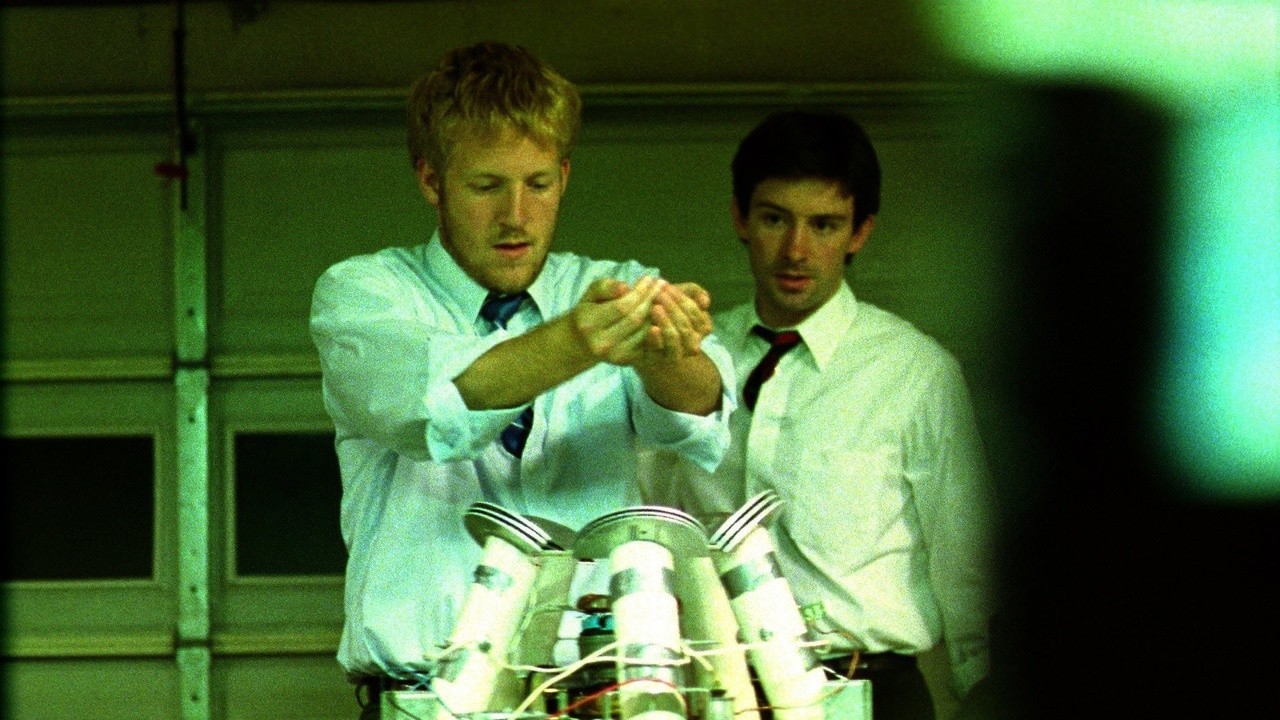
Although this film was made on a small budget (just $7,000), Primer is one of the smartest and most thought-provoking time travel films you’ll ever see. Two engineers, Aaron (Shane Carruth) and Abe (David Sullivan), accidentally invent a time machine, causing them to experiment with a technology that allows humans to time travel. However, it’s only a matter of time before they realize the consequences of their actions.
8. About Time
About Time is certainly the most emotional entry on this list. The time-travel genre offers the opportunity to wax philosophical about death and regret, and About Time seizes it uniquely by focusing on a very earnest relationship between a father and a son. The romantic comedy portion between Domhnall Gleeson and Rachel McAdams is the hook, but the relationship between time-traveling father and son Gleeson and Bill Nighy is this film’s tear-jerking heart.
When we talk about “Time Travel” movies, the 1985’s classic Back to the future has its place reserved at the top. And with good reason—considered one of the best films ever made, this sci-fi flick paved the way for several other time travel films that followed. Also, the classic Bill & Ted’s Excellent Adventure has reserved a place in our hearts forever. But there are countless other great time travel flicks that deserve our attention too. So, here is a list of 10 movies based on Time Travel that you should add on to your watch list right now.
1. The Terminator and Terminator 2: Judgement Day
Terminator1 and 2 are really quite different movies. In the first sequel, Arnie—the terminator starring Arnold Schwarzenegger, acts as the bad guy. He’s sent back in time by a machine overlord to kill a woman who will give birth to a child that will lead the human resistance to victory. It’s a dark and weird story; a classic action film made on a stringent budget. The second, in contrast, is a big-budget, featuring perhaps the greatest special effects in movie history relative to their time. Here, Arnie, now a blockbuster star, demanded to play the good guy: He’s still a robot, but he’s defending the key kid from the icy, and more advanced, T-1000 robot.
2. Donnie Darko
You’ll probably never look at rabbits as some cute animal after you see this. The cult classic follows a troubled, sleepwalking teenager who barely escapes a jet engine crashing into his room. But after the accident, he has several visions of a creepy, black, giant rabbit; Frank, who claims to be from the future and reveals that the world will end soon.
3. Looper
Looper marked Johnson’s first swoop into the sci-fi genre, and he did so with vigor, offers a twisty time-travel story rooted in character foremost. The film takes the presupposition of, “What would you do if you went back in time and met your younger self?” and spins it on its head, adding in terrifically tense action sequences and heady moral quandaries for good measure.
4. Interstellar
The thrilling scenes and thought-provoking plot will blow to be fair. This one feels more like a sci-fi space movie, but it has some time travel elements too. Set in the year 2067, where humanity is struggling to survive,Interstellar tells the story of a group of volunteers who travel through a wormhole near Saturn, hoping to find a safer world in a distant galaxy. The star-studded cast includes Matthew McConaughey, Anne Hathaway, Jessica Chastain and Matt Damon.
5. Groundhog Day
This classic starring Star Bill Murray and directed by Harold Ramis has our hearts. Philosophical along with comedy and humour is always a win-win. Murray reportedly wanted the film to be more philosophical, while Ramis was always pushing the comedy. But it’s the push-and-pull between these two ideas that makes Groundhog Day a stone-cold classic. It’s hilarious, featuring some of Murray’s best comedic moments, but it’s also profoundly sad. The film doesn’t disregard the inherent loneliness of the premise—being stuck in the same day repeatedly.
6. 12 Monkeys
Nearly four decades after a deadly virus gets released, destroying nearly all of humankind, James Cole (Bruce Willis), a criminal from the future, is chosen to travel back in time and help scientists create a cure. The movie also stars Madeleine Stowe, Brad Pitt and Christopher Plummer.
7. Primer
Although this film was made on a small budget (just $7,000), Primer is one of the smartest and most thought-provoking time travel films you’ll ever see. Two engineers, Aaron (Shane Carruth) and Abe (David Sullivan), accidentally invent a time machine, causing them to experiment with a technology that allows humans to time travel. However, it’s only a matter of time before they realize the consequences of their actions.
8. About Time
About Time is certainly the most emotional entry on this list. The time-travel genre offers the opportunity to wax philosophical about death and regret, and About Time seizes it uniquely by focusing on a very earnest relationship between a father and a son. The romantic comedy portion between Domhnall Gleeson and Rachel McAdams is the hook, but the relationship between time-traveling father and son Gleeson and Bill Nighy is this film’s tear-jerking heart.
On 27th July, 1880, the Battle of Maiwand was fought between nation soldiers and also Afghan army, during the Second Anglo-Afghan War. during this battle, the Afghan forces, headed by Mohammad Ayub Khan, turned triumphant against Brits army.
2000 Fiji George Speight on July 27th.
The Rebel coup leader George Speight who led the coup to overthrow Fiji’s democratically elected government in May by taking Fiji’s Indian Prime Minister, Mahendra Chaudhry, and members of his multi-racial government hostage for 8 weeks has been arrested and can possibly face treason charges. He was found guilty of treason and is currently serving a term of captivity for his role within the overthrow of the constitutional government.
On 27th July, 1880, the Battle of Maiwand was fought between nation soldiers and also Afghan army, during the Second Anglo-Afghan War. during this battle, the Afghan forces, headed by Mohammad Ayub Khan, turned triumphant against Brits army.
2000 Fiji George Speight on July 27th.
The Rebel coup leader George Speight who led the coup to overthrow Fiji’s democratically elected government in May by taking Fiji’s Indian Prime Minister, Mahendra Chaudhry, and members of his multi-racial government hostage for 8 weeks has been arrested and can possibly face treason charges. He was found guilty of treason and is currently serving a term of captivity for his role within the overthrow of the constitutional government.

















 Eduindex
You must be logged in to post a comment.