Effectiveness of YOGA

As you all know that the origin of the yoga is Ancient India . Yoga is a Sanskrit word , which means UNION . From ancient time to modern time , yoga is an important health benefactor . WHO also have agreed that yoga have a very good effect on human health .Yoga is the best way for self care . It gives benefits to all ages people , from children to old aged person . United Nation had acknowledged   21st June as the “World Yoga Day” .WHO also comes up with a 2018 – 2030 Yoga Practice plan for all the people from every country . Several researches are conducted to know the effectiveness of yoga & expectedly everyone have given positive feedback about it .Yoga enriches the mental & physical health & helps to flourish the spirituality .
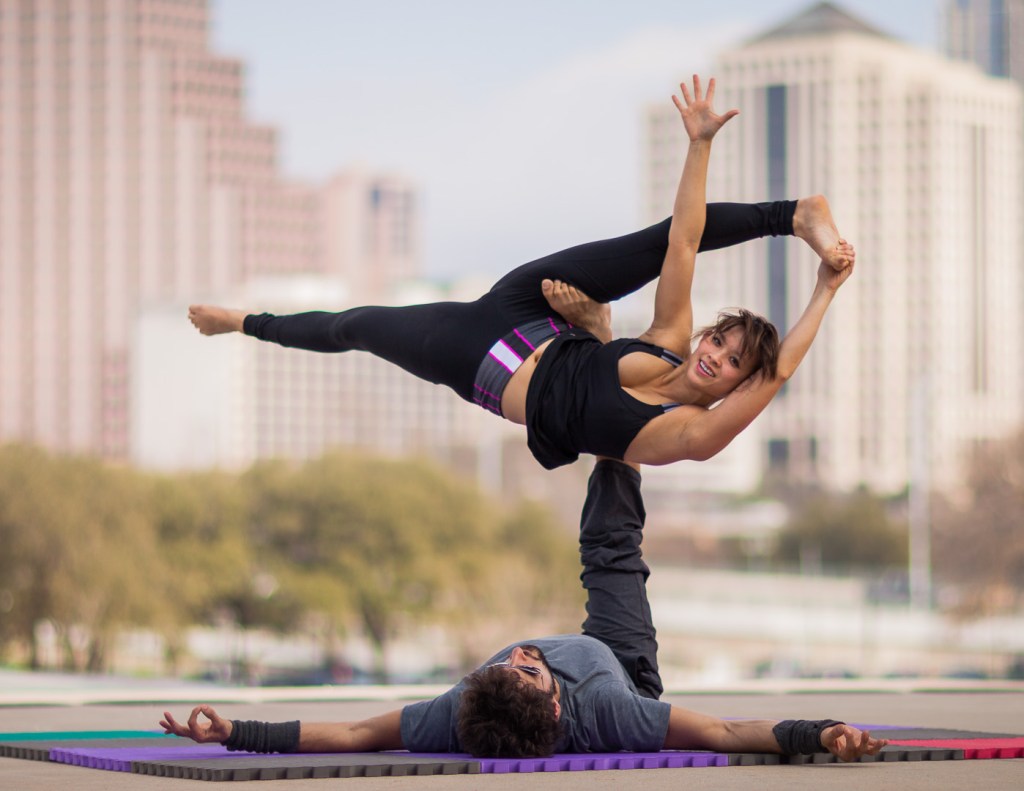
Jen

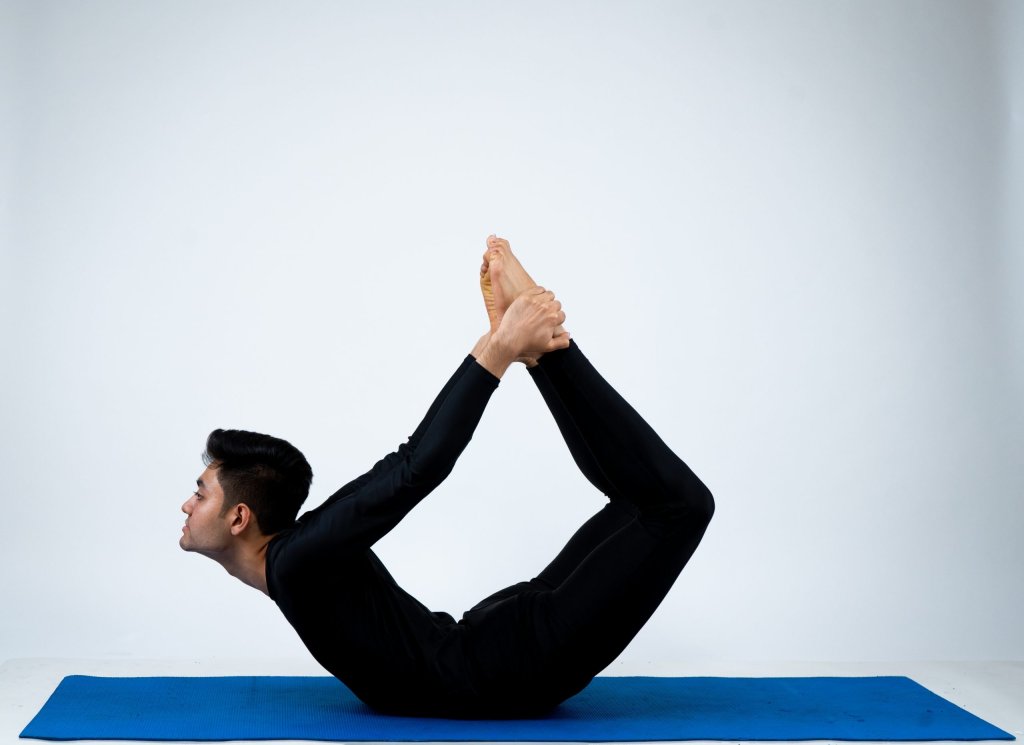
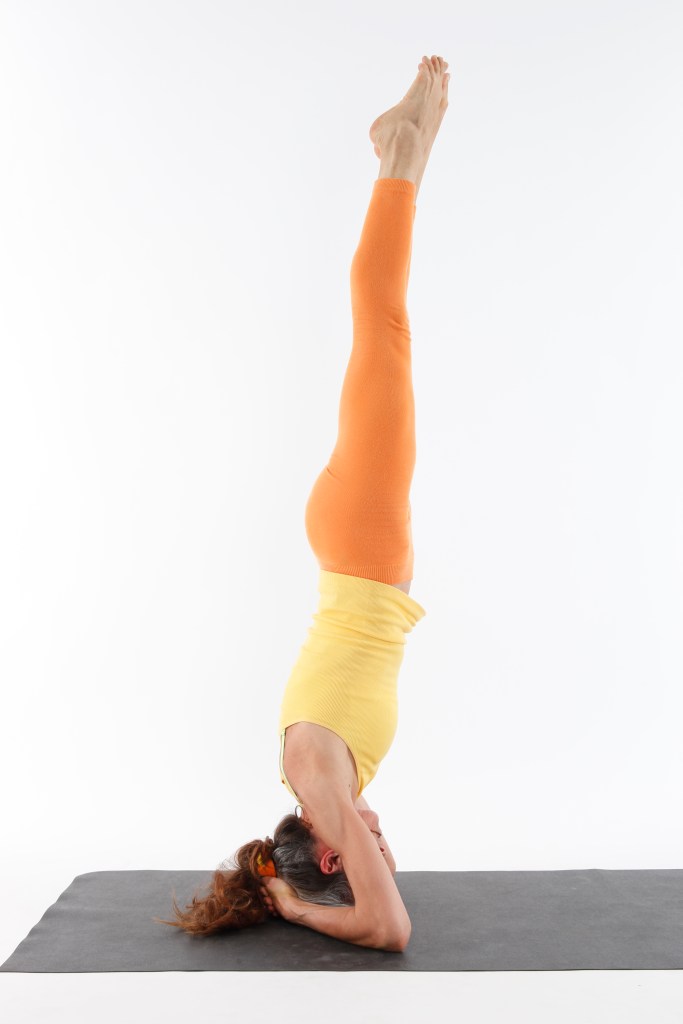
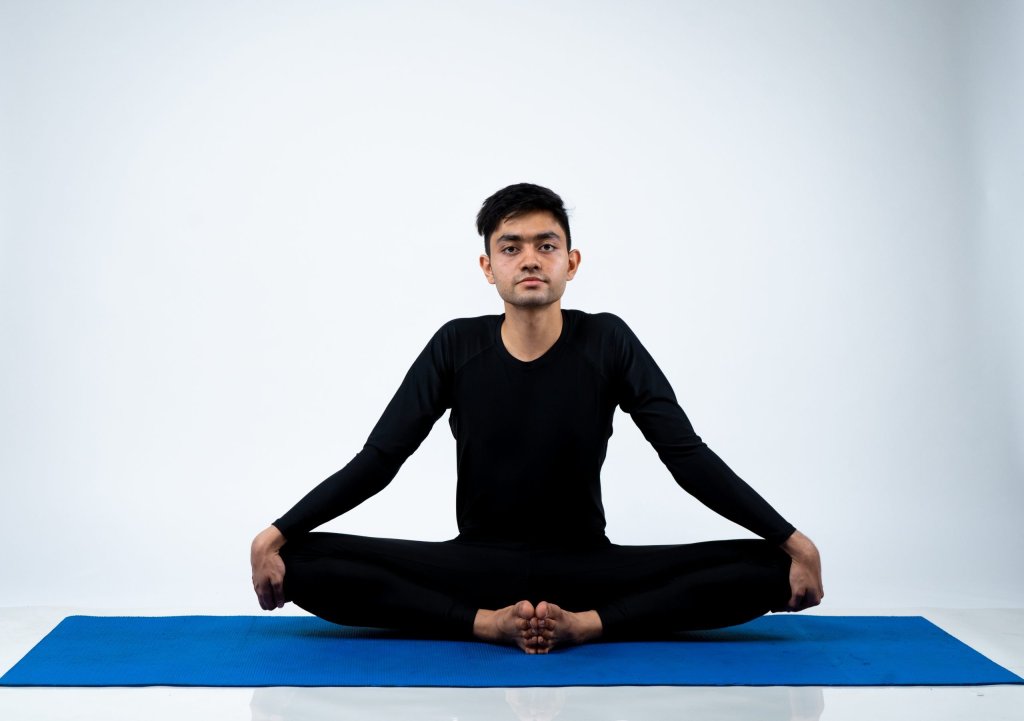
Various types of Yoga : There are some yoga  asana are below —-   Adho Mukha Shavasanan or Downward-Facing Dog pose ; Adho Mukha Virakhaasana or Yoga Handstand ; Bhadrasana or Cobbler’s pose ;Makarasana or Crocodile pose ;Padmasana or sitting pose(The most common meditational yoga pose) ; Shirshasana or Headstand pose ;Gomukhashasana or cow faces pose ; Dhanurasana  or Bow Posture ; Sukhasana or Easy Posture yoga ; Naukasana  or Boat Posture & many other yoga are there .
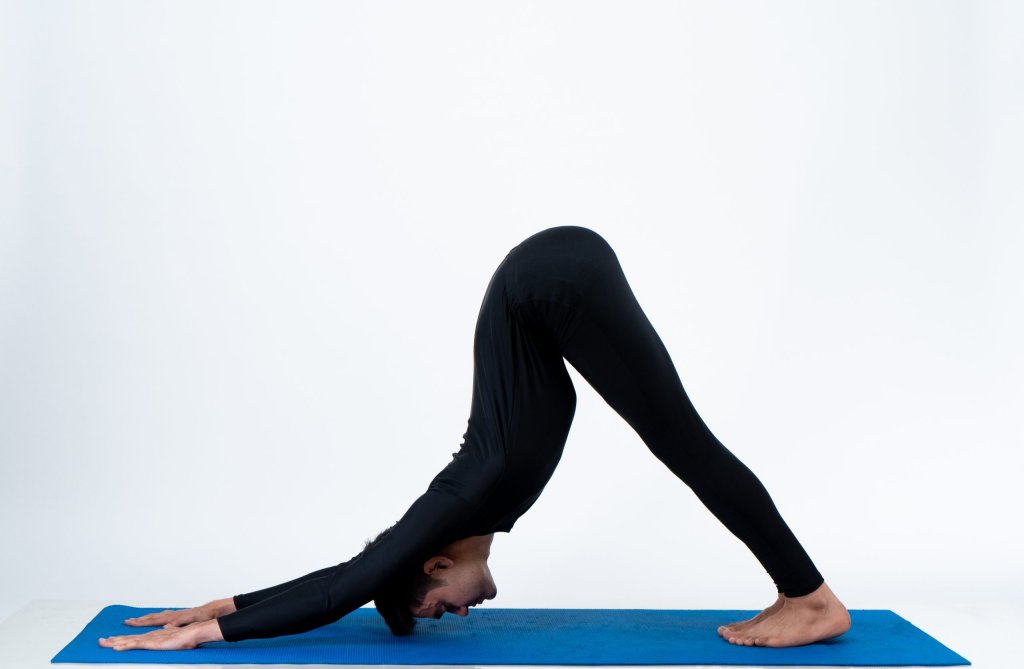
Adho Mukha Shavasanan or Downward-Facing Dog
Adho Mukha Virakhaasana or Yoga Handstand
Dhanurasana  or Bow Posture
Padmasana or sitting pose
Shirshasana or Headstand pose
Bhadrasana or Cobbler’s pose

Yoga Time : There is no particular time for yoga .But there are some asana which have a particular time to conduct ,like Surya asana which should be conducted at dawn when the sun rises . Starting the day with yoga practice give you immense energy & healthy fresh mind to start a work .You can also do yoga for 5 to 20 min when you are exhausted or in sour mood .That will helps you with your tiredness & lift up your mood . Doing weight losing yoga after dinner or, lunch will keep you fit.

Effectiveness of Yoga :                                                                                                                                                                          1) ’Downward Dog’ yoga make your body relax from head to toe .                                                                                             2) ’Tree Pose’ yoga helps you to stabilize .It balances your body & increase flexibility & strength .                                                         3) ‘Cat cow Pose’ helps in back pain & it improve mobility .                                                                                                                 4) According to Johnas Hopkin’s review paper on yoga ,yoga is very much effective in Arthritis .                          5) ‘Downward Dog Pose’ works for the protection of human heart health .                                                                    6) Many researches show that ‘Legs up the wall’ yoga & many other yoga helps in insomnia & let you sleep better .                                                                                                                                                                                   7) yoga improves mental health & makes you energetic with a bright good mood .                                                       8) ‘Corpse Pose’ or, ‘Ssvasana’ helps in hyper tension & stress relief which improves your mental health . 9) Yoga helps to improve anxiety problems . It also fight against PTSD (Post Traumatic Stress Disorder) . 10) A research in 2015 showed that , yoga works against chronic inflammation , which prevents the heart problems .                                                                                                                                                                       11) Yoga also works effectively for high blood pressure patients . Yoga helps to reduce bad LDL Cholesterols in blood & lowers the high bold pressure .                                                                                                                12)It also works on depression .Yoga lowers the level of Cortisol with & prevents our mind from being depressed.                                                                                                                                                                                              13) Yoga not only do the above works .It also effective for other body organ or, parts . Yoga also works on our respiratory systems , digestive systems ,Reproductive systems ,Blood circulation ,Mussel growth , Nervous systems etc. Every yoga has its own effectiveness in every parts of our body .So we should practices those yoga which we needs for our benefits .

ANDROID

Android is a mobile system operating system based on the modified version of Linux kernel and other open source software which mainly designed for the touchscreen device such as smartphone, tablet etc. Android is developed by the Open Handset Alliance and commercially sponsored by Google.

History:

Android Inc. was founded in Palo Alto California, in October 2003 by Andy Rubin, Rich Miner, Nick  Sears and Chris white. The early intention of the company were to develop n advance operating system for digital cameras, and this was the basis of its pitch to investors in April 2004. peculation about Google’s intention to enter the mobile communications market continued to build through December 2006. An early prototype had a close resemblance to a BlackBerry phone, with no touchscreen and a physical QWERTY keyboard, but the arrival of 2007’s Apple iPhone meant that Android “had to go back to the drawing board”. Google later changed its Android specification documents to state that “Touchscreens will be supported”, although “the Product was designed with the presence of discrete physical buttons as an assumption, therefore a touchscreen cannot completely replace physical buttons”.

Feature:

Interface: Android’s default user interface is mainly based on direct manipulation, using touch inputs that loosely correspond to real-world actions, like swiping, tapping, pinching, and reverse pinching to manipulate on-screen objects, along with a virtual keyboard. Game controllers and full-size physical keyboards are supported via Bluetooth or USB.

Home Screen: Android devices boot to the home screen, the primary navigation and information “hub” on Android devices, analogous to the desktop found on personal computers. Android home screens are typically made up of app icons and widgets; app icons launch the associated app, whereas widgets display live, auto-updating content, such as a weather forecast, the user’s email inbox, or a news tickers directly on the home screen.

Status Bar: Along the top of the screen is a status bar, showing information about the device and its connectivity. This status bar can be pulled (swiped) down from to reveal a notification screen where apps display important information or updates, as well as quick access to system controls and toggles such as display brightness, connectivity settings (WiFi, Bluetooth, cellular data), audio mode, and flashlight. Vendors may implement extended settings such as the ability to adjust the flashlight brightness.

Notification: Notifications are “short, timely, and relevant information about your app when it’s not in use”, and when tapped, users are directed to a screen inside the app relating to the notification. Beginning with Android 4.1 “Jelly Bean”, “expandable notifications” allow the user to tap an icon on the notification in order for it to expand and display more information and possible app actions right from the notification.

App List: An “All Apps” screen lists all installed applications, with the ability for users to drag an app from the list onto the home screen. A recent screen lets users switch between recently used apps. The list may appear side-by-side or overlapping, depending on Android version.

File manager: Since Android 6 Marshmallow, a minimalistic file manager codenamed Documents UI is part of the operating system’s core, and based on the file selector. It is only accessible through the storage menu in the system settings.

WORLD’S MOST BIZARRE & OUTRÉ CREATURES

The animal realm is as ruthless as it is compassionate, as peculiar as it beautiful, as fascinating as it is perplexing. As a result of the fierce competition, species have evolved some of the most bizarre, incredible, and odd defense mechanisms. Below are a few instances of these one-of-a-kind creatures.

HORNED LIZARD

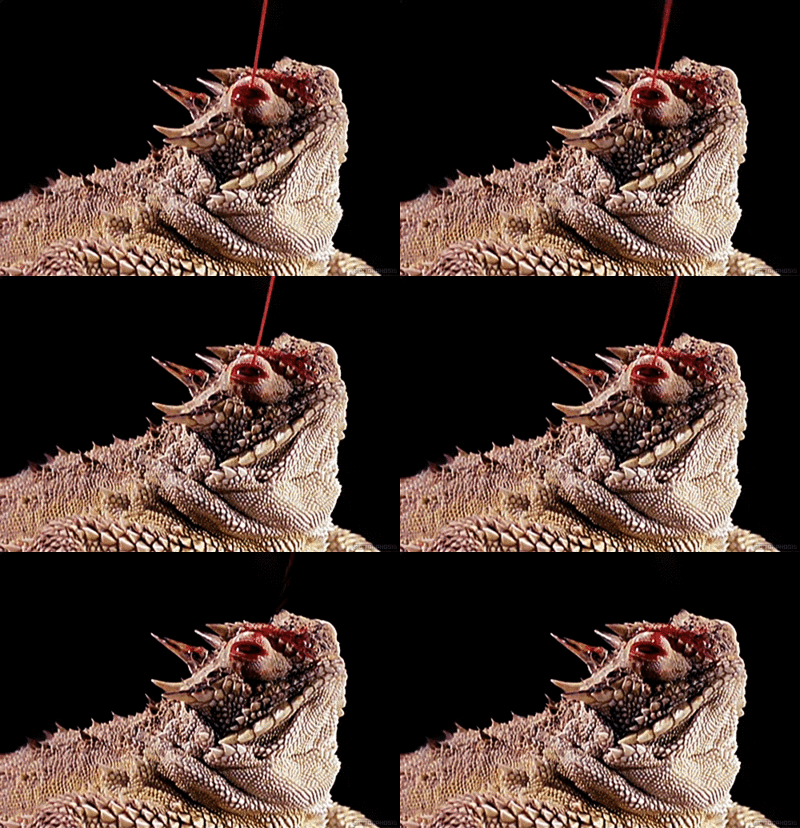
A number of predators prey on desert horned lizards in North America. As an unusual survival tactic, blood is pumped into their ocular sinuses, the tissues beneath their eyes. When a horned lizard is confronted by a predator, it will, as a defensive weapon, spew blood from its flooded sinuses and eye sockets. As a result, the predator usually becomes scared and flees. The lizard uses this approach to clean foreign particles from the surface of its eyes. It has the ability to strike a four-feet-long blood stream.  this process can be repeated multiple times in a short span of time if essential.

green basilisk lizard

Famed for its exceptional ability to run on water, this unique lizard is ‘The green basilisk lizard’  also referred to as a plumed or double-crested basilisk. Green basilisks can be found in Central America’s tropical rain forests, from southern Mexico to Panama. They spend a lot of time in the woods and are seldom far from a waterway. When startled, they fall from the tree into the water and dash through the water at a rate of about 5 feet per second.

Long toes on its back foot, together with skin fringes that unfurl in the water and enhance the surface area, are what allows them to perform this incredible feat. They strike their wide feet into the water with power and immediately rotate their legs, generating a tiny air pocket that saves them from sinking as long as they remain going. They can travel up to 15 feet along the surface as a result of this. The basilisk uses its incredible swimming abilities to stay airborne until gravity finally catches up with it. Green basilisks, members of the iguana family, grow to a height of about 2 feet, including their long, whip-like tail.

Male seahorses

Male seahorses (and their near cousins) are the only male animals in the animal kingdom that can become pregnant and give birth to children. Male seahorses carry the eggs but do not produce them. The female seahorse places her eggs into the male’s pouch after the male and female have spent time mating. After that, the male fertilizes the eggs in the pouch.  Their pouch gives oxygen and nourishment to the maturing eggs while also regulating temperature, blood circulation, and salinity. Male seahorses normally carry their eggs for 2 to 4 weeks, depending on the species and can give birth to 100 to 1,000 babies.

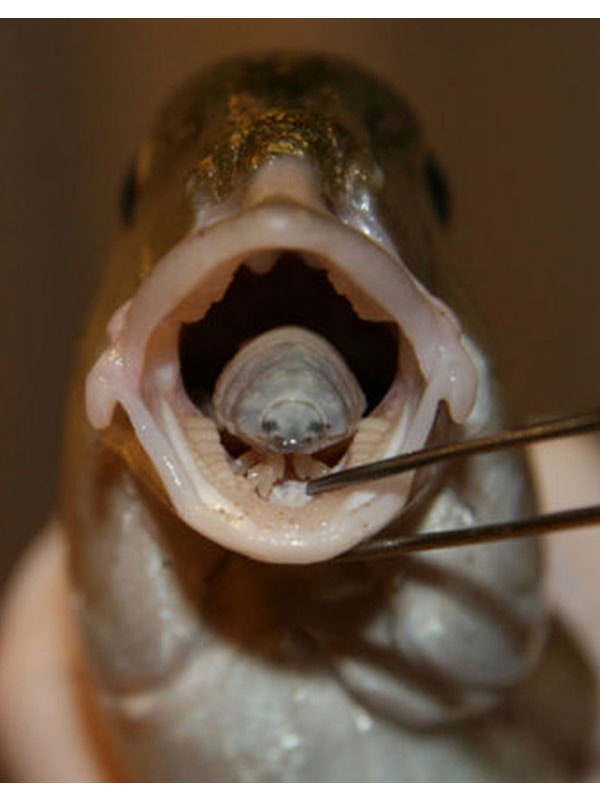
Cymothoa exigua

Cymothoa exigua is a parasitic isopod that is born male but can change sex later in life. The parasites penetrate a host fish’s gills and establish a stronghold to grow. The female then crawls out of the gills and latches onto the fish’s tongue. This is where things start to go horribly wrong. It penetrates the tongue and begins sucking blood as a source of nutrition, progressively getting larger and larger until it inhabits a huge portion of the mouth. It doesn’t drink enough to kill the fish, but she drinks enough that the parasite’s tongue dries away and falls off, putting the parasite as a faux in its stead. The fish lives on, with the infiltrator ingesting whatever the host consumes.

TERMITES

In the rainforests of French Guiana, a termite species appears to take selflessness to a new level by growing sacks of dangerous blue liquid that they blow up on their enemies in a suicidal deed of self-sacrifice. Neocapritermes taracua’s “explosive backpacks” are filled with blue crystals secreted over the course of their life by a specialized pair of glands on their abdomens. Older workers carry the heaviest and most dangerous backpacks.

France moves India to amber list from red

France has decided to remove India from the red list to amber as COVID cases decreased in India. The French government has classified amber-listed countries as nations where there is active circulation of the virus in controlled proportions, without further spread. After this news, VFS centres in Delhi and Mumbai have now opened and are accepting all visa categories. Also for kids, there won’t be any quarantine mandate in France.

Protocols to be followed

1) Fully vaccinated travellers holding a valid C-type Schengen visa for 3-5 years, can travel without any restriction to France. But the travellers must be vaccinated with any EMA-approved vaccines, which are Pfizer/ Comirnaty, Moderna, AstraZeneca/Vaxzevria/Covishield.

2) Passengers must travel after seven days of getting their second vaccine shot.

3) Travellers need to have proof of vaccination status. They must also have a attest statement saying they don’t have any infection symptoms.

4) The restriction will be applicable to unvaccinated travellers as well as those vaccinated with unapproved (yet) vaccines including Covaxin.

5) Those with ‘talent passports’, (students and researchers), fall under the list of compelling reasons. So they are allowed to travel to France. But they need to show their negative PCR test not older than 72 hours. A negative antigen test, not older than 48 hours before departure, is also acceptable.

NOISE IN ANALOG COMMUNICATION SYSTEMS

INTRODUCTION:
In any communication system, during the transmission of the signal or while receiving the signal, some unwanted signal gets introduced into the communication, making it unpleasant for the receiver, and questioning the quality of the communication. Such a disturbance is called as Noise.

Most common examples of noise are −
 Hiss sound in radio receivers

 Buzz sound amidst of telephone conversations

 Flicker in television receivers, etc

TYPES OF NOISE:
The classification of noise is done depending on the type of the source, the effect it shows or the relation it has with the receiver, etc. There are two main ways in which noise is produced. One is through some external source while the other is created by an internal source, within the receiver section.
External Source:
This noise is produced by the external sources, which may occur in the medium or channel of communication usually. This noise cannot be completely eliminated. The best way is to avoid the noise from affecting the signal.

Most common examples of this type of noise are
 Atmospheric noise (due to irregularities in the atmosphere).  Extra-terrestrial noise, such as solar noise and cosmic noise.  Industrial noise.
Internal Source:
This noise is produced by the receiver components while functioning. The components in the circuits, due to continuous functioning, may produce few types of noise. This noise is quantifiable. A proper receiver design may lower the effect of this internal noise.
Examples:
Most common examples of this type of noise are
 Thermal agitation noise (Johnson noise or Electrical noise)  Shot noise (due to the random movement of electrons and holes)  Transit-time noise (during transition)  Miscellaneous noise is another type of noise which includes flicker, resistance effect and mixer generated noise, etc.
Effects of Noise:
Noise is an inconvenient feature, which affects the system performance. Following are the effects of noise.
Noise limits the operating range of the systems:
Noise indirectly places a limit on the weakest signal that can be amplified by an amplifier. The oscillator in the mixer circuit may limit its frequency because of noise. A system’s operation depends on the operation of its circuits. Noise limits the smallest signal that a receiver is capable of processing.
Noise affects the sensitivity of receivers:
Sensitivity is the minimum amount of input signal necessary to obtain the specified quality output. Noise affects the sensitivity of a receiver system, which eventually affects the output.

ADOLF HITLER

Adolf Hilter was a German politician and leader of the Nazi Party (National Socialist German Workers Party). In 1993, Hilter rose to power as the chancellor of Germany and became the leader in the year 1934. From 1933-1945, under his dictatorship, Hitler initiated World war II and invaded Poland on September 1, 1939. Hilter was also involved in military operations and was responsible for the Holocaust, where six million Jews and another five million non-combatants died. 

Adolf Hilter: Early Life, Family and Education

Adolf Hitler was born on April 20, 1898, to a Christian family as Adolphus Hitler in Braunau am Inn, a town in Austria-Hungary (now Austria). Adolf Hitler was the fourth child born to the couple Alios Hitler and his wife Klara Polzl (Alios’s third wife). Hitler died on April 30, 1945, at the age of 56 years by shooting himself. Hitler lived with Alios’s children from the second marriage in the same house. When Hitler was three years old, his family moved to Germany where he acquired lower Bavarian dialect instead of Austrian German. 

In 1984, Hitler’s family moved to Austria and Hitler attended a state-owned primary school in Fischlham, Austria. Hitler’s father was very strict and beat him up on several occasions. In 1897, after the failure at Hatfield (where Hitler’s father farmed and kept bees), the family moved to Lambach. In 1898, Hitler’s family permanently moved to Leonding and in the 1900s, Hitler’s younger brother died of measles.

Hitler’s father Alois became successful in the customs bureau and wanted Hitler to follow him. However, Hitler was of the opposite view and wanted to become an Artist, which his father Alois dismissed. In September 1900, Alois sent Hitler to Realschule (secondary school in Germany). Hitler in Mein Kampf stated that he rebelled his father’s decision of sending him to Realschule in Linz and did poor in school hoping that his father would look at his grades and would allow him to follow his passion

Like other Austrian Germans, Hitler too was of the German nationalist ideas and would sing “Deutschlandlied” (National Anthem of Germany) instead of  Austrian Imperial anthem.

After his father’s sudden demise on January 3, 2020, Hitler did poor at school and his mother allowed him to leave the school. In September 1904, Hitler enrolled himself at Realschule in Steyr, where his performance improved. In 1905, Hitler passed the repeat of the final examination and left secondary school.

In 1907, Hitler moved to Vienna to study Fine Arts at the Academy of Fine Arts Vienna but was rejected twice. The director of the Academy of Fine Arts Vienna advised Hitler to apply to the  School of Architecture but he couldn’t do so as he didn’t finish his Senior Secondary schooling. 

On December 21, 1907, at the age of 47, Hitler’s mother died of breast cancer. In 1909, 20 years old Hitler ran out of money and spent his life in homeless shelters and a men’s dormitory. He survived by selling his paintings of Vienna. 

Hitler was exposed to racism for the first time in his life in Vienna. Hitler in his book Mein Kampf states that he became anti-Semite (hostility or prejudice or discrimination against Jews) in Vienna while his friends disagree. August Kubizek (Hitler’s friend), claimed that Hitler was a “confirmed anti-Semite” before he left Linz. 

In 1913, Hitler upon receiving the final part of his father’s estate moved to Munich, Germany. On February 5, 1914, Hitler was conscripted into  Austro-Hungarian Army and travelled to Salzburg but was declared unfit for service and returned to Munich. However, Hitler later stated that he didn’t want to serve the Austro-Hungarian Empire due to the mixture of races in the army. 

Adolf Hitler: Personal Life

Hitler dedicated his entire life to his political mission and the nation. In 1929, Hitler met his lover, Eva Braun and married her on April 29, 1945, (a day before the couple committed suicide). In September 1931, Hitler’s half-niece, Geli Raubal, took her own life with Hitler’s gun at his Munich apartment. This gave rise to several rumours that Geli was in a romantic relationship with Hitler and her death was a source of deep, lasting pain. In June 1960, Paula Hitler (younger sister of Hitler), the last living member of his immediate family died. 

Adolf Hitler in World War I

When World War I started in August 1914, Hitler voluntarily joined the Bavarian Army. However, as per a report by Bavarian authorities in 1924, Hitler’s service was an administrative error as he was an Austrian citizen. Hitler was posted to the Bavarian Reserve Infantry Regiment 16. He served as a dispatch runner on the Western Front in France and Belgium and spent half of his time at the regimental headquarters behind the front lines. Hitler was present during the First Battle of Ypres, the Battle of the Somme, the Battle of Arras, and the Battle of Passchendaele and was wounded at the Somme. 

In 1914, Hitler was also awarded the Iron Cross (Second Class) for bravery and in 1918, received Iron Cross (First Class) upon the recommendation of Lieutenant Hugo Gutmann. On May 18, 1918, Hitler received the  Black Wound Badge. While rendering his service at headquarters, Hitler drew cartoons for an army newspaper. 

In October 1916, Hitler was injured during the Battle of the Somme and was wounded in the left thigh. He spent rest two months in the Hospital at Beelitz and returned to the regiment on March 5, 1917. On October 15, 1918, in a mustard gas attack, Hitler became temporarily blind and was admitted in the hospital at Pasewalk.