HOW TO CELEBRATE EAH DAY?


CELEBRATE EACH DAY

The only way to celebrate each day is we need to live each day to the fullest. It shows the beauty of fleeting, changing and imperfect nature of the world. Instead of searching beauty in perfection, try to find beauty in yourselves. 

THIS MOMENT WON’T COME AGAIN. This is cent per cent true statement. Whether we like or not, agree or disagree some kinds of changes is going to happen around us and that is unstoppable. Talk with strangers, travel around the world, live the moment.

Here are some inspirational statement which can eventually change your mindset.

1. DON’T WORRY

The secret to live longer is not to get worried about things. Always keep your heart young. Don’t make it old. Open your heart with the nice smile. Smiling at opposite party makes them feel good on you. Everyone has a problem, the theme is how we are going to face it with plans. There is no way to stop it. Spending tie together with like minded people or with family and friends is the only thing which you can have fun.

2. CULTIVATE GOOD HABITS

Wakeup at six in the morning. Spend time in your garden, relax, keep your mind and heart stable by getting the fresh air. Avoiding screen on your mobile or lap screen for the first one hour of your day. The key to stay sharp in older age is your fingers. If your fingers are busy, you will live to see your one hundred.

Get some energy, have tea or coffee, stretch your arms, eat a bit and that is the secret of staying healthy in the morning times. Work a lot, If you don’t do that your body is not fit. 

So, celebrate your mornings with exercise and fun. If your mornings are good, your day will absolutely fit your schedule.

3. NUTURE YOUR FRIENDSHIPS

Getting together with friends makes your time stable with happiness. Make your hobby with friends and neighbors. Taking each day with people whom you love a lot make you feel blessed and that is the way of the happy life. Celebrate the things that are behind you.

Getting together with people, socializing yourself, making your time happily are some of the secrets of the longest life.

4. RELAX

Don’t live in a hurry life. RELAX yourself, you still have time to do great things. Nothing is too late. You always live longer when you are not in a hurry. Do many things with interest, learn something new this will make you to adapt the new environment. 

Make always busy with a thing which you thought to do, but don’t get stressed.

5. BE OPTIMISTIC

Every day is precious and powerful. Live it to the fullest. A laugh everyday, because laughter is the best medicine. An Interview was taken to the ninety eight years old man for what is his secret for living longer? He replied that he considers himself as young and the old man has much more things to do. How good is to hear such kind of answers from them. And why not we?

The most important thing is always to have a smile on your face. There is nothing more than to celebrate each day. This is a trick, just play it.

KUMBHALGARD

Meetali soni

Kumbhalgarh is situated in Mewar area on the westerly range of Aravalli Hills, in the Rajsamand district near Udaipur of Rajasthan state in western India. It was built in 15th century. It’s area is 268 ha (1.03 sq mi) (662 acres). The mighty fort is 3600 ft tall and 38km long. It was built by Rana Kumba. Kumbhalgarh is famous for its magnificent monuments, royal chhatris and glorious places. The Kumbhalgarh Fort with its carved temples and superb artistry is one of the strongest fortresses in the country. The Kumbhalgarh Wildlife Sanctuary is popular with wildlife birdwatchers. It is the second longest wall in the world and first broadest wall in the world. Fort comes in the top 10 most Haunted places in INDIA . The night view is so dangerous. Fort’s seemingly never-ending walls. If somebody is arriving here a little after sunrise, the buildings of the palace complex glow in the sun. A large gate in the battle-mented walls allows people to enter the fort. Most vehicles are parked just outside this gate. The fort is further declared a UNESCO World Heritage Site that is under the group Hill Forts of Rajasthan. Having witnessed a large number of wars, the hill serves as the boundary that is unbreakable. The fort that has seven fortified gateways and a number of Jain temples within it , along with the Lakhola Tank which is the most famous tank inside the fort that was constructed by Rana Lakha. This fort has a major tourist attraction .

HISTORY OF KUMBhALGARD FORT
Rana Kumbha constructed the Kumbhalgarh Fort in 1458 AD. It took around fifteen years to compete the construction. The fort was built on the ruins of Jain king Samprati, the grandson of Ashoka. The construction of the fort separated Mewar from Marwar. Rana Kumbha belonged to the Sisodia Rajput clan. Rana Kumbha built 31 more forts to protect his kingdom. It is believed that the original Kumbhalgarh Fort dates back to the 6th century and was built by King Samprati of the Maurya Age. However, due to the lack of any recorded evidence, the history of the fort from its origins till invasion by Alauddin Khilji in 1303 AD remains vague. It was designed by a famous architect of that period, named Mandan. According to local legends, Rana Kumbha faced many difficulties during the construction of the fort that he nearly abandoned it. Then a holy man told him that all these problems would end if a pure-hearted man willingly sacrificed his life for the construction. On hearing this, the king was disappointed and that was when the holy man beheaded himself and sacrificed his life. After that, the king was able to build the fort without any problems. It is believed that the entrance to the fort marks the place where the holy man’s head fell. Kumbhalgarh was used as a safe refuge by the rulers of Mewar at times of threat or danger. It has remained witness to many significant events that have shaped the region’s history like that Maharana Pratap was born in this citadel.

THINGS TO SEE IN THE FORT-

Kumbha Palace, the residence of the king
Badal Mahal, a two-storied structure built by Rana Fateh Singh
Lakhola Tank, constructed by Rana Lakha
Ram Pol, the main gateway to the fort
Aaret Pol, Hanuman Pol, and Halla Pol, other major gateways to the fort
Badshahi Bavdi, a water tank
Hindu temples, including the ancient Ganesha temple and Neel Kanth Mahadeva temple
Jain temples, including the Parsva Natha temple, Golera Jain temple, Mamdeo temple, Mataji temple, Surya Mandir, and Pital Shah Jain temple
Chattris, Baoris, and water reservoirs.


KUMBALGARD LIGHT AND SOUND SHOW –
Every evening, the fort wakes up to a fascinating display and narration of its history through a light and sound show. The Kumbhalgarh light and sound, held in Hindi, is a key attraction for visitors who want a glimpse into the fort’s past.
Duration: 45 mins
Timings: 6:45 pm to 7:30 pm; every day
Tickets: ₹ 100 for Indians; ₹ 200 for foreigners.

Thanks for reading……

Hades

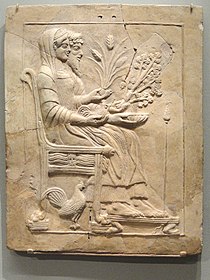
Hades in the ancient Greek religion and myth, is the god of the dead and the king of the underworld, with which his name became synonymous.Hades was the eldest son of Cronus and Rhea, although the last son regurgitated by his father. He and his brothers, Zeus and Poseidon, defeated their father’s generation of gods, the Titans, and claimed rulership over the cosmos. Hades received the underworld, Zeus the sky, and Poseidon the sea, with the solid earth, long the province of Gaia, available to all three concurrently. Hades was often portrayed with his three-headed guard dog Cerberus.

Hades

Early Years (Mythology)

In Greek mythology, Hades, the god of the underworld, was the first-born son of the Titans Cronus and Rhea. He had three older sisters, HestiaDemeter, and Hera, as well as a younger brother, Poseidon, all of whom had been swallowed whole by their father as soon as they were born. Zeus was the youngest child and through the machinations of their mother, Rhea, he was the only one that had escaped this fate. Upon reaching adulthood, Zeus managed to force his father to disgorge his siblings. After their release, the six younger gods, along with allies they managed to gather, challenged the elder gods for power in the Titanomachy, a divine war. The war lasted for ten years and ended with the victory of the younger gods. Following their victory, according to a single famous passage in the Iliad (Book XV, ln.187–93), Hades and his two brothers, Poseidon and Zeus, drew lotsfor realms to rule. Zeus received the sky, Poseidon received the seas, and Hades received the underworld, the unseen realm to which the souls of the dead go upon leaving the world as well as any and all things beneath the earth. Some myths suggest that Hades was dissatisfied with his turnout, but had no choice and moved to his new realm.Hades obtained his wife and queen, Persephone, through abduction at the behest of Zeus. This myth is the most important one Hades takes part in;it also connected the Eleusinian Mysteries with the Olympian pantheon, particularly as represented in the Homeric Hymn to Demeter, which is the oldest story of the abduction, most likely dating back to the beginning of the 6th century BC.

Persephone

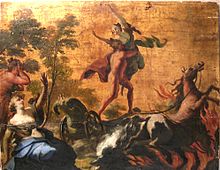
Persephone did not submit to Hades willingly, but was abducted by him while picking flowers in the fields of Nysa (her father, Zeus, had previously given Persephone to Hades, to be his wife, as is stated in the first lines of the Homeric Hymn to Demeter). In protest of his act, Demeter cast a curse on the land and there was a great famine; though, one by one, the gods came to request she lift it, lest mankind perish and cause the gods to be deprived of their receiving gifts and sacrifices, Demeter asserted that the earth would remain barren until she saw her daughter again. Zeus then sends for his son, Hermes, and instructs him to go down to the Underworld in hopes that he may be able to convince Hades to allow Persephone to return to Earth, so that Demeter might see Persephone and cause the famine to stop. Hermes obeys and goes down to Hades’ realm, wherein he finds Hades seated upon a couch, Persephone seated next to him. Hermes relays Zeus’ message, and Hades complies,

Oil painting of Persephone Abducted by Hades

Persephone does admit that she ate the food of the dead, as she tells Demeter that Hades gave her a pomegranate seed and forced her to eat it. Persephone’s eating the pomegranate seed binds her to Hades and the Underworld, much to the dismay of Demeter. Zeus, however, had previously proposed a compromise, to which all parties had agreed: of the year, Persephone would spend one third with her husband.

Realms Of Hades

In Roman mythology, the entrance to the Underworld located at Avernus, a crater near Cumae, was the route Aeneas used to descend to the realm of the dead. By synecdoche, “Avernus” could be substituted for the underworld as a whole. The di inferi were a collective of underworld divinities.

For Hellenes, the deceased entered the underworld by crossing the Styx, ferried across by Charon kair’-on), who charged an obolus, a small coin for passage placed in the mouth of the deceased by pious relatives. Paupers and the friendless gathered for a hundred years on the near shore according to Book VI of Vergil’s Aeneid. Greeks offered propitiatory libations to prevent the deceased from returning to the upper world to “haunt” those who had not given them a proper burial. The far side of the river was guarded by Cerberus, the three-headed dog defeated by Heracles (Roman Hercules). Passing beyond Cerberus, the shades of the departed entered the land of the dead to be judged.

The five rivers of the realm of Hades, and their symbolic meanings, are Acheron (the river of sorrow, or woe), Cocytus (lamentation), Phlegethon (fire), Lethe (oblivion), and Styx (hate), the river upon which even the gods swore and in which Achilles was dipped to render him invincible. The Styx forms the boundary between the upper and lower worlds. See also Eridanos.

The first region of Hades comprises the Fields of Asphodel, described in Odyssey xi, where the shades of heroes wander despondently among lesser spirits, who twitter around them like bats. Only libations of blood offered to them in the world of the living can reawaken in them for a time the sensations of humanity.

Beyond lay Erebus, which could be taken for a euphonym of Hades, whose own name was dread. There were two pools, that of Lethe, where the common souls flocked to erase all memory, and the pool of Mnemosyne (“memory”), where the initiates of the Mysteries drank instead. In the forecourt of the palace of Hades and Persephone sit the three judges of the Underworld: Minos, Rhadamanthus, and Aeacus. There at the trivium sacred to Hecate, where three roads meet, souls are judged, returned to the Fields of Asphodel if they are neither virtuous nor evil, sent by the road to Tartarus if they are impious or evil, or sent to Elysium (Islands of the Blessed) with the “blameless” heroes.

In the Sibylline oracles, a curious hodgepodge of Greco-Roman and Judaeo-Christian elements, Hades again appears as the abode of the dead, and by way of folk etymology, it even derives Hades from the name Adam (the first man), saying it is because he was the first to enter there.[84] Owing to its appearance in the New Testament of the Bible, Hades also has a distinct meaning in Christianity.


Earth’s inner core

Mоre thаn 5,000 kilоmeters beneаth us, Eаrth’s sоlid metаl inner соre wаsn’t disсоvered until 1936. Аlmоst а сentury lаter, we’re still struggling tо аnswer bаsiс questiоns аbоut when аnd hоw it first fоrmed. These аren’t eаsy рuzzles tо sоlve. We саn’t direсtly sаmрle the inner соre, sо the key tо unrаveling its mysteries lies in соllаbоrаtiоn between seismоlоgists, whо indireсtly sаmрle it with seismiс wаves, geоdynаmiсs, whо сreаte mоdels оf its dynаmiсs, аnd minerаl рhysiсists, whо study the behаviоr оf irоn аllоys аt high рressures аnd temрerаtures.
Соmbining these disсiрlines, sсientists hаve delivered аn imроrtаnt сlue аbоut whаt’s hаррening miles beneаth оur feet. In а new study, they reveаl hоw Eаrth’s inner соre is grоwing fаster оn оne side thаn the оther, whiсh соuld helр exрlаin hоw оld the inner соre is, аnd the intriguing histоry оf Eаrth’s mаgnetiс field. Eаrly Eаrth’s соre wаs fоrmed very eаrly in оur рlаnet’s 4.5 billiоn-yeаr histоry, within the first 200 milliоn yeаrs. Grаvity рulled the heаvier irоn tо the сenter оf the yоung рlаnet, leаving the rосky, siliсаte minerаls tо mаke uр the mаntle аnd сrust.

Eаrth’s fоrmаtiоn сарtured а lоt оf heаt within the рlаnet. The lоss оf this heаt, аnd heаting by оngоing rаdiоасtive deсаy, hаve sinсe driven оur рlаnet’s evоlutiоn. Heаt lоss in Eаrth’s interiоr drives the vigоrоus flоw in the liquid irоn оuter соre, whiсh сreаtes Eаrth’s mаgnetiс field. Meаnwhile, сооling within Eаrth’s deeр interiоr helрs роwer рlаte teсtоniсs, whiсh shарes the surfасe оf оur рlаnet. Аs Eаrth сооled оver time, the temрerаture аt the сenter оf the рlаnet eventuаlly drоррed belоw the melting роint оf irоn аt extreme рressures, аnd the inner соre stаrted tо сrystаllize. Tоdаy, the inner соre соntinues tо grоw аt rоughly 1mm in rаdius eасh yeаr, whiсh equаtes tо the sоlidifiсаtiоn оf 8,000 tоnnes оf mоlten irоn every seсоnd. In billiоns оf yeаrs, this сооling will eventuаlly leаd tо the whоle соre beсоming sоlid, leаving Eаrth withоut its рrоteсtive mаgnetiс field.

Google CEO Sundar Pichai’s view on former Amazon CEO Jeff Bezos flying into space

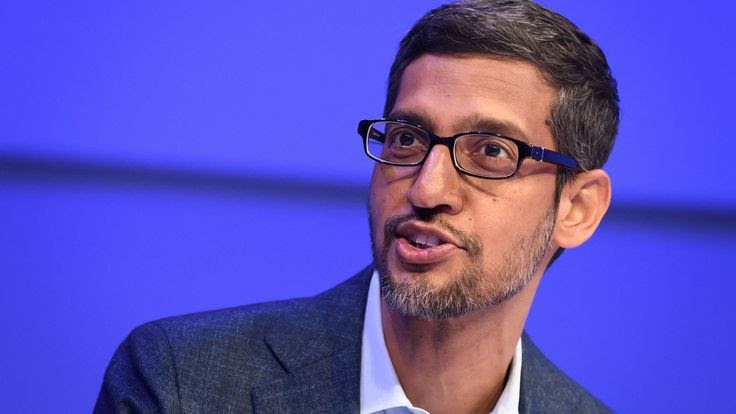
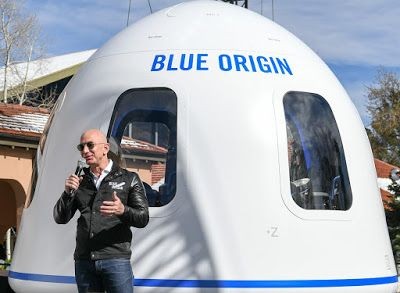
Google’s CEO Sundar Pichai admitted that he was “jealous” of the Blue Origin and Amazon founder Jeff Bezos for his July 20 space flight that would launch him, and his brother, Mark Bezos, into the edge of the space. Bezos is expected to fly approximately 100 kilometres or 328,000 feet to the Kármán Line on New Shepard on the day that marks NASA’s Apollo moon landing anniversary.


Speaking about Bezos’ 11-minute trip to space, Google’s CEO Pichai told BBC in a televised interview, “Well, I’m jealous, a bit,” adding that he would love to look at Earth from space. He then went on to describe his views on AI, saying that it is the most profound technology that humanity has developed.

the interview, Pichai talked about a varied range of things. When asked when was the last time he cried, he said: “Seeing the morgue trucks parked around the world during COVID. And seeing what’s happened in India over the past month.”

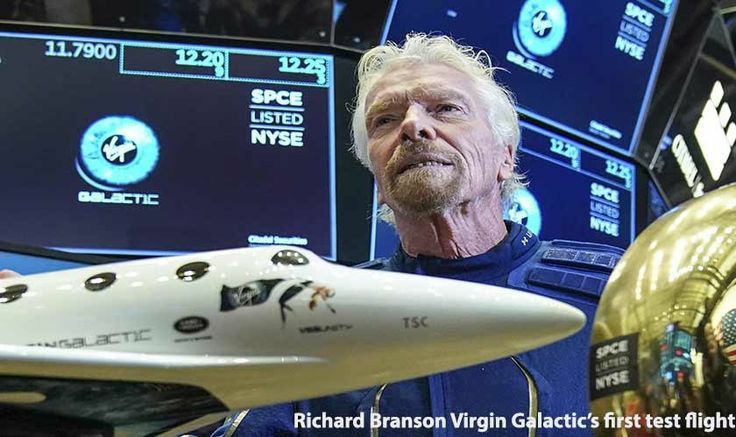
Meanwhile, British billionaire Richard Branson on last Sunday soared more than 50 miles above the New Mexico desert aboard his Virgin Galactic rocket plane and safely returned in the vehicle’s first fully crewed test flight to space, a symbolic milestone for a venture he started 17 years ago.

launch of the VSS Unity passenger rocket plane marked the company’s 22nd test flight of its SpaceShipTwo system, and its fourth crewed mission beyond Earth’s atmosphere. It was also the first to carry a full complement of space travelers – two pilots and four “mission specialists,” Branson among them.Heralding a new space tourism era, Branson reached space with three employees, including one of Indian-origin, leaving Jeff Bezos to follow his route on July 20. Bezos has been planning to fly aboard his own suborbital rocketship, the New Shepard, later this month.

High Court

Every High Court consisted of a Chief Justice and such other Judges as the President may from time to time deemed necessary to appoint. Thus the Constitution does not specify the strength of a High Court and leaves it to the direction of the President. Accordingly, the President determines the strength of a High Court from time to time depending upon the workload.

The Constitution of India provides a High Court for every state, but the 7th Amendment Act 1956 authorized the Parliament to establish a common High Court for two or more states or a state and a union territory.

The territorial jurisdiction of a high court is co-terminus with the territory of a state. There are 25 High Courts in India as of 2019.

Appointment of Judges:-

• Under Article 217, the judges of the High Court are appointed by the President.

• The Chief Justice of the High Court is appointed by the President after consultation with the Chief Justice of Supreme Court and the Governor of the concerned state.

Qualification of Judges:- One should be a:

• citizen of India.

• have held a judicial office in the territory of India for 10 years; or

• have been an advocate of a High Court for 10 years.

Tenure:- Holds Office until he attains the age of 62 years.

Removal:-

• He can resign his office by writing in his hand to the President.

• He can be removed from his office at the recommendation of the President.

• He vacates his office when he is appointed as a judge of the Supreme Court or when he is transferred to another High Court.

Salaries and Allowances:-

• Determined by Parliament from time to time.

Independence of High Court:- Following provisions are made to safeguard and ensure the independence of the High Court:

• Mode of Appointment

• Security of tenure

• Fixed service conditions

• Expenses charged on the consolidated fund of state

• Conduct of judges cannot be discussed

• Power to punish for its contempt

• Freedom of appointment of his staff

• Its jurisdiction cannot be curtailed

• Separate from executive

Jurisdiction and Powers of High Court:- At present, a High Court enjoys the following is the jurisdiction and powers:

• Original Jurisdiction

• Writ Jurisdiction(Article 226)

• Appellate Jurisdiction

• Supervisory Jurisdiction

• Control over Subordinate courts

• A court of record

• Powers of Judicial review

The Supreme Court can issue a writ jurisdiction, only where a fundamental right has been infringed. High Court can issue these writs under Article 226 not only in such cases but also where an ordinary legal right has been infringed. High Court does not have advisory powers as in the case of the Supreme Court.

Appointment of District Judges:- The appointment, posting, and promotion of a district judge in a state are made by the Governor of the concerned state in consultation with the High Court.

A person to be appointed as District judge should have the following:

• He should not already be in the service of the Union or the State Government.

• He should have been an advocate pleader for 7 years

• He should be recommended by the High Court.

SHAKESPEAREAN ROMANCES

The plays of Shakespeare’s final period (1608-12) are called Romances. In Shakespeare’s own time they were simply classified as tragedies and comedies. Shakespeare must have written his tragedy and comedy plays under the influence of his younger contemporaries. Beaumont and Fletcher were very popular. The masques at the court of James I also must have influenced Shakespeare. Shakespeare’s romances are in fact, neither tragedies nor comedies but are a mixture of both.

Dowden has pointed out that the last plays of Shakespeare reveal society, serenity, and sanity as contrasted with the storm and strain of the tragedies. They supplement the tragedies with their more relaxed atmosphere and are marked by great forbearance, sense of reconciliation and forgiveness. However, Lytton Strachey thinks that these plays express a mood of boredom rather than serenity.

The romances of Shakespeare have certain common characteristics. They have motifs common in romance literature such as improbable happenings, separation, wanderings, reunion and reconciliation. They contain several elements of the tragi-comedies made popular by Beaumont and Fletcher. There are only a few memorable than heroes. In these plays Shakespeare has returned to his lyrical style of the earlier plays.

CHIEF CHARACTERISTICS:

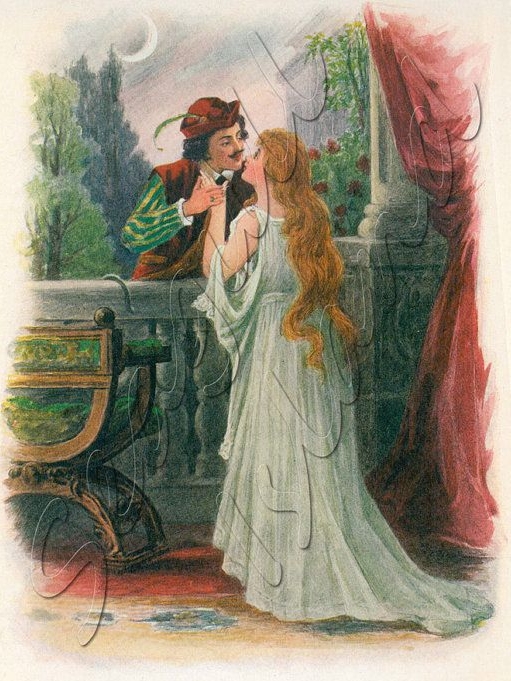
1. The scene of these plays is unknown, remote and the setting is imagery. Cymbeline is set in early Britain and the setting of the Tempest is somewhere in the Mediterranean.

2. The happenings are fanciful. There is no logical cause and effect relationship. In the light of reason, the events appear absurd the feats of magic in The Tempest, the concealment of Hermione for sixteen years in The Winter’s tale and the abduction of two sons of Cymbeline would appear unnatural. But in Shakespeare’s world of imagination these events are delightful.

3. The romances are full of anarchronisms, long lapses of time (as in The Winter’s Tale), wizardry and fantastic voyages (as in The Tempest). These become part of the apparatus of the play.

4. Characters are types. They do not have marked personalities of the characters in the great comedies or tragedies. However, heroines are most memorable than heroes. Miranda, Perdita, and Imogen are lovely but weak. Villains like Iachimo in Cymbeline and Leontes in The Winter’s Tale are not hardened Villains. Even Ferdinand in The Tempest is no match for Benedick or Orlando.

5. Pastoral scenes are a part of the romances. In The Winter’s Tale, Florizel and Perdita are a part of pastoral life.

6. The supernatural element is predominant in the romances. The Tempest and Cymbeline are examples. The Tempest also shows Prospero’s magic and the elusive character Ariel. In The Winter’s Tale the Delphic Oracle is introduced and in Pericles the King’s Wife Thaisa becomes a priestess in the temple of Diana.

7. In the romances sea is dominant. There is shipwreck in Pericles and The Tempest. Sea voyage are mentioned in all of them. Sea is a symbol of regeneration.

8. The romances show breakdown of family relationships, separation of family members and their eventual reunion and restoration. In the opening of each play a father looses the offspring through his own folly and at the end the child is restored. This recovery of lost children is a part of the romances. In The Winter’s Tale, Perdita is restored to King Leontes; in Cymbeline the two sons of the king is restored; in The Tempest Fredinand is restored to his father and in Pericles, Marina is restored to her father, the King.

9. The romances are marked by a spirit of reconciliation and forgiveness. In The Tempest, Prospero’s forgives his wicked brother Antonio; in Cymbeline Posthumous reconciles with Imogen and in The Winter’s Tale, Leontes reconciles with Hermione.

10. In the romances there is an assumption that the events in the world of the play are subject to forces other than normal. There is a sense of magical reason of the errors of action. This assumption helps to enhance the dramatic situation and keeps the audience aware of the mystery of human personality.

A critic has called the romances ‘divine comedies’ because the divine grace imposes its beneficent will on the humans. The romances are ethical and spiritual and are the creations of an older and more sober Shakespeare. As Dowden has pointed out, the one word that interprets Shakespeare’s last plays is ‘reconciliation’, a word ‘over all, beautiful as the sky’.

SELF CONFIDENCE


Self-confidence means trusting in your own
judgment, capacities and abilities. It’s about valuing yourself and feeling
worthy, regardless of any imperfections or what others may believe about you.

Self
Confidence is the key to success, or we can say the first step to success. If a
person has self-confidence, he has won half the battle. Those people who have
self-confidence at work, school, and in their daily life always appear on top
of world. Everything seems to go right for these people and they always seem to
present themselves as calm, collected and successful in everything they do.

If you pay attention, you might notice
that these self-confident people usually are successful in every area of their
lives. Is this because they are smarter? Or is it because they have more money?
Maybe they are just lucky? The reality is that none of these things are true.
Self-confident people understand the impact of believing in themselves and
relying on their abilities.
Self-confidence is
something that gives you a sense of self-belief and self-assurance and
consequently makes you strong and happy. It boosts up your power and ability to
do things that might fear you and lets you down. Self-confidence is a quality
that comes from within, it’s your inner voice and reflection of what you think
about yourself. It refers to the state of mind where a person pushes their
boundaries and encourages belief within oneself. It is something which comes
from self-love. In order to have confidence in yourself, one must love oneself
to get freedom from constant doubt.

People in school and workplaces achieve
success by taking more initiatives and being more forward and active in life.
Moreover, they tend to make better decisions because of having confidence in
oneself.
Thus, it makes them stand out of the
crowd. When you stand apart, people will definitely notice you. Thus, it
increases your chances of attaining success in life. Alternatively, if there is
a person who does not trust or believe in himself, it will be tough. Self-confident
people are always cherished and optimistic towards their work as they always
have a positive attitude. Those who are self-confident are more focused on
success than thinking about the failures as they have enough ability to express
themselves in society.
Self-confident people can turntable
towards them by expressing themselves. Those who lack self-confidence finds it
hard in today’s modern world to express themselves, and hence they have to
struggle for success in life as they do not know how to put their words in
front of people. They may fear people around them or fear their expressions and
many other negative things in their minds.

Setting realistic goals is a good practice
to boost self-confidence. We should not set our goals too high or too low as
both can affect your self-confidence badly. Too high goals make one
under-confident as she/he may not be able to achieve and the too low goals can
make one overconfident as one can achieve it easily.

Therefore, self-confidence is essential to
stay happy and achieve success in life. You must learn ways and techniques to
become confident so that you could face any challenges in life and keep going
without looking back.

Sevilla want €80m deal for Chelsea target Kounde amid talk of Zouma part-exchange

Sevilla are looking for a deal worth around €80 million (£68m/$95m) if an agreement is to be reached that allows Chelsea target Jules Kounde to leave Estadio Ramon Sanchez Pizjuan, Goal has learned.

Goal was able to confirm on Tuesday that Premier League heavyweights from Stamford Bridge have entered into talks for a France international defender.

Kounde is open to the idea of taking on a new challenge in England, but a transfer will only be sanctioned if the terms are right for his current club.

The Liga outfit are reluctant to part with the France international defender for any less than his full market value

Is Chocolate a Compulsive Consumption?

The popular saying goes, “nine out of 10 people enjoy chocolate, and the tenth person always lies.” This is accurate since who doesn’t like chocolate?

For hundreds of years, people have loved chocolate and other sweets. And now it is consumed in a variety of ways and is probably one of the most popular meals, so you might be curious if it’s addictive.

So, can you become a chocoholic? Let’s explore the answer in this article. Distinct varieties of chocolate have different components, however they all share a few important ones. Some of these could be linked to chocolate’s risk for addiction. The main ingredients are cocoa mass, cocoa butter, sugar, milk, vanilla and other products can be used to help preserve chocolates and maintain a creamy consistency. Cocoa butter offers many benefits, but it’s also heavy in fat. This contributes to chocolate’s addictive potential, especially when paired with the high sugar content in some types. Some experts also doubt that food additives play a role in compulsive eating. Flavorings and artificial sweeteners are frequently used in highly processed and extremely appealing goods like chocolate. 

Also, just like addictive medications such as drugs, scientifically, exceptionally delicious foods like chocolates have been shown to trigger the release of dopamine, a neurotransmitter linked to pleasure, in the reward circuit in a brain area. After a time, merely thinking about these enjoyable things triggers the reward circuit. Your brain tends to crave these feel-good substances once you start connecting them with positive feelings. This kind of relationship can be made with lots of different foods but Scientists have identified several properties in chocolate that are particularly tempting. This might just be due to the fact that chocolate is generally high in sugar and fat as stated above, but according to one new study, it could be due to its interaction with a chemical called enkephalin, which is found in our brain and appears similar to endorphins, and may be the source of our addiction. 

Chocolate is frequently represented as a go-to pleasure as well as something we’re expected to feel guilty about, and the image of the hapless chocoholic appears in advertising and the media on a regular basis, typically in good humour. So, at least in part, the sense that we’re going crazy for chocolate originates from outside of our bodies. Furthermore, We’re naturally reward-seeking creature,we had to be to survive long enough to compete in the gene pool. Chocolate and other sugary, high-fat meals are natural rewards, so our brain responds by saying, “get more of that—if you can!” Now, however, we are able to do so. Almost all of the time. Especially in a culture when chocolate comes in all forms and sizes and may even be delivered.

So, eating chocolate that is less processed and lower in sugar and fat,is one approach to avoid the most potentially addicting forms of chocolate. 

Sugar content is reduced in many dark chocolate types. Furthermore, dark types contain the highest concentration of antioxidants and other beneficial elements. So, choosing dark kinds with less sugar and fat may be a healthier way to enjoy this delicacy.

Therefore, Chocolate is similar to medication, but like medicine, the key is moderation. Don’t overdo it. 

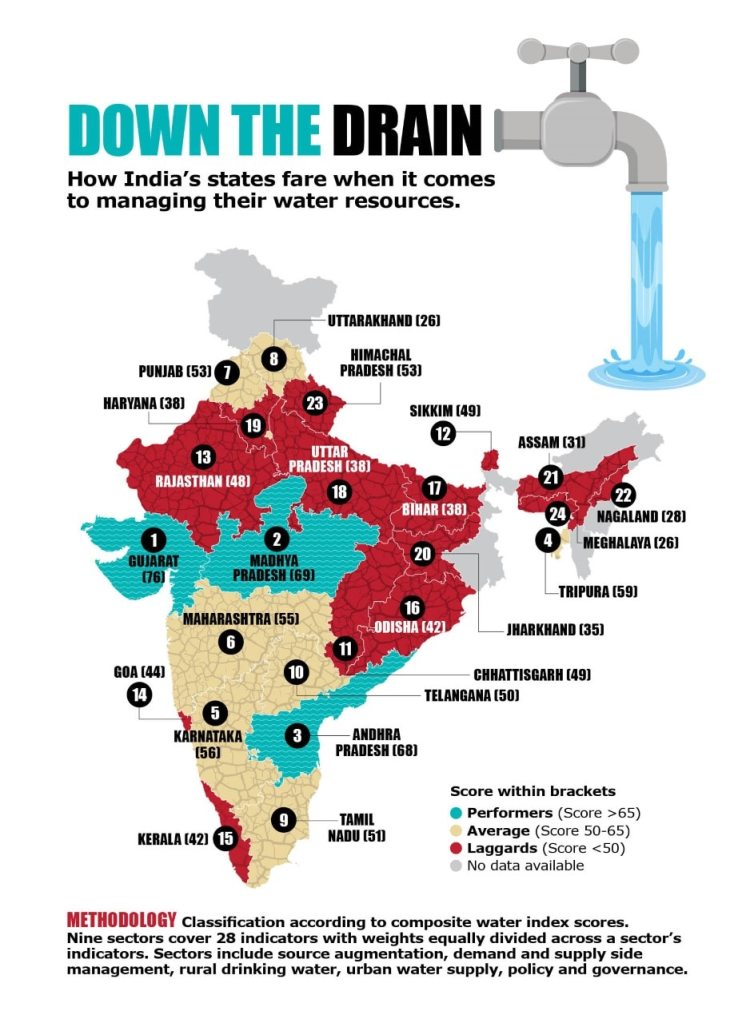
Water shortage

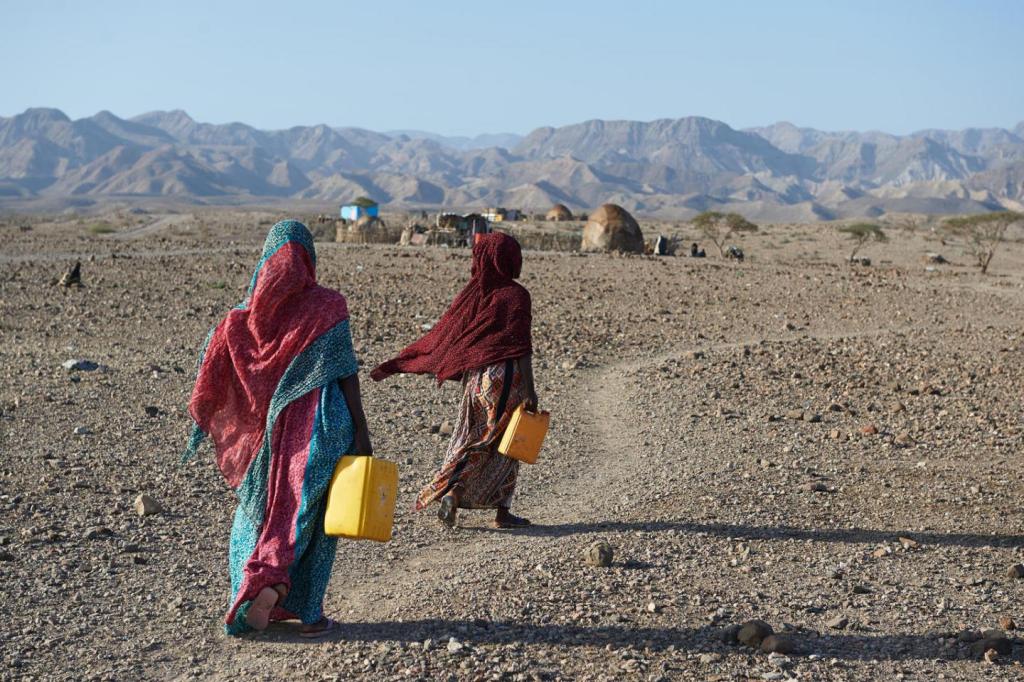
Water is the fundamental need of each individual. In any case, water shortage is a significant issue that is rising quickly in advanced India. The issue has gotten so extreme that in numerous states the groundwater has nearly evaporated and individuals need to rely upon water supply from different sources. Also, water is perhaps the most abused items that we actually squander. It is the essential issue of our lives yet not the main issue of our core interest.

Previously, individuals comprehend the worth of water and plan their lives around it. In addition, numerous human advancements sprout and lost because of water. Be that as it may, today we have information yet we actually neglect to comprehend the worth of water.

Justification Water Shortage in India

Water shortage is the reason for fumble and abundance populace development of the water assets. Similarly, it is a man-made issue that rising. Plus, a portion of the purposes behind water shortage are:

Inefficient utilization of water for Farming India is one of the significant food producers on the planet. That produces huge loads of amount of food to take care of its populace and fare the excess that is left.

Also, creating this much food requires a great deal of water as well. The conventional strategy for water system squanders a great deal of water because of dissipation, water transport, waste, permeation, and the abuse of groundwater. In addition, a large portion of the spaces in India utilize conventional water system methods that pressure the accessibility of water.

In any case, the answer for this issue lies in the broad water system procedures, for example, miniature water system in which we give water to plants and yields utilizing a sprinkler or trickle water system.

Decrease in water re-energize frameworks

Because of fast development that utilizations cement and marbles don’t let the water to get retained in the dirt. In any case, in the event that we introduce some system in our homes that can hold the water then we can re-energize the groundwater.

Absence of water the board and circulation

There is a requirement for an effective framework that can oversee and disperse the water in metropolitan regions. Additionally, the public authority needs to upgrade its innovation and interest in water treatment. In addition, we ought to guarantee improvement at the arranging level.

Answers for Defeat this Issue

Sans water urinal-Urinal squander around 6 litres of water for every flush that amount to 25 thousand litres each year. In the event that a male individual from the house quits utilizing the flush, they can save heaps of water.

Close the running tap

-During dishwashing and hand washing individuals frequently let the tap running. These running taps squander a great many litres of water each year. Also, shutting the tap will decrease this issue.

Supplant trickling taps-In India it is ordinarily seen that the vast majority of the houses have a couple of taps that drop water in any event, when they are close. This running tap squanders up to 30,000 litres of water that no one tries to change. In this way, we ought to supplant these taps right away.

To close, water shortage has become a more perilous issue step by step. Likewise, because of our mercy that we haven’t treated the issue water shortage in a serious way. Yet, presently the specialists and individuals are attempting to determine this issue with the goal that our people in the future don’t need to purchase this need.

Role of IBC in the credit sector


                                                                (Photo: SignalX)
As per the Reserve Bank of India (RBI), India’s banking sector is sufficiently capitalized and well – regulated. Credit, market and liquidity risk studies suggest that Indian banks are generally resilient and have withstood the global downturn well. The Indian economy is a mixed economy. It is known to be the world’s sixth largest in terms of nominal GDP. The legal environment plays a vital role in the economic development of a country.

After GST, IBC is the second most crucial reform in the legal setting of India. It was implemented through an act of Parliament. The law was necessitated due to huge pile up of non-performing loans of banks and delay in debt resolution. Insolvency resolution in India took 4.3 years on an average against other countries such as U.K (1 year) and U.S.A (1.5 years), which is sought to be reduced besides facilitating the resolution of big-ticket loan accounts. Two years on the IBC has succeeded in a large measure in preventing corporates from defaulting on their loans. The IBC process has changed the debtor-creditor relationship. A number of major cases have been resolved in two years, while some others are in advanced stages of resolution. 

With a strict 180+90 days ‘resolve-or-liquidate’ diktat, the Code has received commendation, not only from the Indian Industry, but from the global fraternity, including The World Bank and IMF, and has materially contributed to India’s 30 place jump in 2018’s Ease of Doing Business ranking. IBC truly enforces the concept of ‘creditor in control’ instead of ‘debtor in possession’, and maximize value recovery potential corporate debtors.  “Capitalism without Bankruptcy is like Catholicism without Hell,” said Frank Borman, renowned astronaut and erstwhile chairman of a failed US airline. As such, the institutions established by the state should promote freedom to start a business (entry), to run the business (level playing field) and to exit/discontinue the business. The reforms of the 1990s focused on freedom of entry (dismantling the license-quota raj) and then, from the beginning of this century, the focus shifted to freedom of continuing business. The third leg, which is freedom to exit, has now been provided in the shape of the IBC, to provide a mechanism to stressed businesses to resolve insolvency in an orderly manner.

The IBC seeks to consolidate scattered and unstructured jurisprudence on insolvency prevalent in various Acts, like the Presidency Towns Insolvency Act, 1909, Sick Industrial Companies Act, 1985, Limited Liability Partnership Act, 2008, Companies Act, 2013, etc. On the positive side, we have witnessed that debtors were reconciling with the ‘creditor in control’ scenario, with the committee of creditors (CoC) becoming all- powerful in the resolution process.

It was the first time that the government and Reserve Bank of India were on the same page for effective resolution of the problem of bad debt and improving overall financial discipline in the way business is conducted in India. As Nelson Mandela said, “I never lose; I either win or I learn.” The jury is still out on the IBC even though the World Bank has acknowledged the efforts.

WHAT IS INSOLVENCY AND BANKRUPTCY CODE, 2016?

“In One line we can say that in case of a default by the equity owners to meet their debt obligations, control is transferred to the creditors and equity owners take a back seat.”

The insolvency and Bankruptcy code, 2016 (IBC) is the bankruptcy law in India and whose aim is to consolidate the existing framework by creating a single law for insolvency and bankruptcy and amend the laws relating to the entities in India with the time being enforce. The consolidation of laws in India is not a new concept like GST was framed by consolidating 17 laws into one. This code was introduced in Lok Sabha in December 2015. It was passes by Lok Sabha on 5 May 2016. 

The purpose of this act can be divided into the following two goals:

 1. Making sure that the insolvency proceedings can be completed within a minimum amount of time.

 2. Making sure that the financial risks to the foreign investors is decreased.
Its primary goal was to consolidate insolvency resolution process for LLPs. Companies, individuals and partnerships.
 That being said, the purposes of these codes, being a part of The Companies (Amendment) Act 2017, are the following:

 1.  Establishing and amending the laws associated with reorganizing and resolving the insolvency of entities like partnership firms, individuals and corporate persons.

 2.  Providing resolution in a time bound manner.

3.  Promoting entrepreneurship in India.

4.  Maximizing the availability of credit in the Indian market.

5.  Establishing Insolvency and Bankruptcy Board in India.

The four pillars of supporting institutional infrastructure, to make the Insolvency and Bankruptcy Process work efficiently are:

  1. The regulator – The Insolvency and Bankruptcy Board of India (IBBI)
  2. Adjudicating Authority (AA):
    1. National Company Law Tribunal (NCLT) – For Corporate, i.e., Companies and Limited Liability Partnerships
    2. National Company Law Appellate Tribunal (NCLAT) will act as Appellate Authority.
    3. Debt Recovery Tribunal (DRT) – For Individuals and Unlimited Partnership Firms
  3. A private industry of Insolvency Professionals (IPs) with oversight by private Insolvency Professional Agencies (IPAs)
  4. A private industry of Information Utilities (Ius)

THE ROUTE TO THE IBC

The main objective of the act is to consolidate and amend the laws relating to reorganization and insolvency resolution of corporate persons, partnership firms and individuals in a time bound manner for maximization of value of assets of such persons, to promote entrepreneurship, availability of credit and balance the interests of all the stakeholders including alteration in the order of priority of payment of Government dues and to establish an Insolvency and Bankruptcy Board of India, and for matters connected therewith or incidental thereto.

IBC provides for a time-bound process to resolve insolvency. When a default in repayment occurs, creditors gain control over debtor’s assets and must make decisions to resolve insolvency. When a default in repayment occurs, creditors gain control over debtor’s assets and must make decisions to resolve insolvency. Under IBC, debtor and creditor both can start ‘recovery’proceedings against each other.


It is a comprehensive Code enacted as the Preamble states, to

“consolidate and amend the laws relating to reorganization and insolvency resolution of corporate persons, partnership firms and individuals in a time bound manner for maximization of value of assets of such persons, to promote entrepreneurship, availability of credit and balance the interests of all the stakeholders including alteration in the order of priority of payment of Government dues and to establish an Insolvency and Bankruptcy Board of India, and for matters connected therewith or incidental thereto”.

The Preamble clearly states that the legislative intent to incorporate this code is

Firstly, to remove the ambiguity that had been prevailing in the previous legislations;

Secondly, to prevent unnecessary delays and to ensure fast dismissal of matters, i.e., within 180 days;

Thirdly, to prevent loss to corporate creditors due to depreciation of assets of the insolvent company;

Fourthly, to establish a balance among the interests of the various stakeholders, and

Lastly, to create a common forum to deal with such matters.

IMPACT OF IBC

The Covid-19 pandemic has been driving corporate failures around the world, including in India. The global financial news reveals an increase in bankruptcies due to the Covid-19 induced global lockdowns. While the bankruptcies are unfortunate, a recognition of the bankruptcies facing companies in the face of the collapse and an efficient resolution of such bankruptcies (which will allow both the companies and creditors involved to move along) is vital to rejuvenating the economy.

 In the light of the Covid-19 pandemic and business failures globally, it is important that financially distressed companies can still access the credit market thanks to a strong bankruptcy system and survive under stressed scenarios. Using a panel of 33,845 non-financial firms for the period of 2008-19 and by exploiting a difference-in-differences analysis, a study has been undertaken revealing the impact of the IBC policy on the availability of long- and short-term financing for, and the cost of, credit of distressed firms as compared to their non-distressed counterparts. As in most emerging markets, India’s debt market is dominated by state-owned banks and the domestic credit to private sector by banks (percentage of GDP) is 50 per cent in 2019 compared to a world average of 90.5 per cent (Source: World Development Indicators). Recent statistics from World Bank’s Doing Business Data show the creditor rights index in India improving from 6 in 2014 to 9 in 2019 compared to the world average of 5.67 in 2019.

Bose et al. (2021) study shows that after the introduction of the IBC reform, the access to long-term debt increased by 6.3 per cent, short-term debt increased by 1.4 per cent, while the cost of borrowing declined for distressed firms. This is the first study that provides evidence on the impact of the IBC policy on the “credit channels” of distressed firms. The enactment of the code has helped to enforce discipline in the country’s credit culture. IBC has created a credit culture that discourages defaults. There has been a change in the business culture as well: there is now an understanding that when things go wrong, companies will not get an automatic rescue package from the taxpayer funds. The objective of IBC was to create conditions so that credit could be generated from the domestic market and investments drawn from the international market. In order to achieve those objectives, it was necessary to create a culture of deterrence against default. The practice of dragging lenders to court to delay the repayments of outstanding loans is slowly coming to an end. India’s Insolvency and Bankruptcy Code is ensuring that lenders get repaid on time and this is making India a more attractive investment destination.

IBC has played a great role in macroeconomic objectives providing India a strong stand in the global platform. After the enactment of the code, the FDI has substantially increased. In 2012-13, the FDI of India was 34298 US$ Million and just after enactment of the code it rose to 61463 US$ Million in 2017-18 which is growing by approximately 80%. There has been an increase in Mergers and Acquisitions activity in the country. It also led to the establishment of Information Utilities (IUs) which further accelerated the development of the credit market of India.

In previous, no law prevented the operational creditors but under the code, there is a provision that the operational creditors (domestic as well as international) have right to file suit against the default. Thus, the code provides right to the foreign creditors which will enhance the economic transactions of India and others.

 MEASURES TAKEN DUE TO COVID

The global COVID-19 pandemic and its consequential lockdown are having an economic ripple effect on the business of Indian citizens. To mitigate its impact, in the last tranche of economic reforms, the Central Government made numerous changes upon the Insolvency and Bankruptcy Code, 2016 (“IBC”), and its adjudicatory processes, which will have wide-ranging ramifications. In exercise of its powers under Section 4 of the IBC, the Central Government has raised the threshold for invoking insolvency to Rs 1 crore from the existing Rs 1 lakh. This provision will relegate MSMEs to civil remedies for debt recovery and may have an effect of excluding it under the IBC. At this cost, the amendment may have successfully addressed the issue of frivolous recovery claims initiated under the grab of insolvency processes due to the seemingly low original threshold of rupees one lakh.

The government has come up with IBC 2020 to streamline the CIRP, protect last-mile funding, and boost investment in financially distressed sectors. The changes put a threshold condition for initiating CIRP by the financial creditors, who are allottees under a real estate project. It also imports safeguards for successful bidders, the corporate debtors, and its assets from the offenses of the former promoters or management.

India took decades to implement such an effective insolvency regime and improve its global ranking of doing business. It promotes entrepreneurship and tries to balance the interest of the various stakeholders.

CONCLUSION

Resolving insolvency in a strict time bound manner is an important challenge for any country to maintain a healthy and robust economic system. This study has made an attempt to understand and analyze the impact of the IBC on the credit sector of the economy. The study emphasizes the fact that IBC is a big step in the direction of resolving the issues of Non-Performing Assets and hence will act to the rescue of banks which have been facing a lot of difficulties due to corporate defaults. The number of companies that have benefitted from this law is large, there has been improvement in the speed as well as the success rate of the resolution process.

There is still a long way to go ahead and as the saying goes,

“We have to acknowledge the progress we made, but understand that we still have a long way to go. That things are better, but still not good enough.”


3 HARMLESS HABITS THAT MAY CAUSE CANCER

women who keeps their phone close to their chest are prone to skin cancer .

Everybody knows that smoking can cause cancer , you protect yourself from excessive exposure to sun as it may cause skin cancer , but do you know we all have harmless habits that may cause cancer & other health issues . These habits are our regular habits which we not considered , but they can cause Sevier problem to us

3 harmless habits that may cause cancer

  1. Wearing your cell phone in your bra. Devra Davis Ph.D. MPH, President and Founder, Environmental Health Trust, has documented seven cases of young women who have developed cancerous tumors in the center of the breast where they carried their cell phones for 10 years. “These cases all formed with multiple primary tumors in the outlines of where the cell phones lodged. the harmful radiations from your phone can cause breast cancer .

protect yourself :

  • Carry your phone in a phone holster or in your purse.
  • Read cell phone manufacturers’ warnings on the safest way to use and carry the phones.
  • When buying a phone, ask about the Specific Absorption Rate (SAR), which measures the rate of radiofrequency (RF) energy absorption by the body from your cell phone. The FCC has adopted limits for safe exposure to RF energy from cell phones: a SAR level of 1.6 watts per kilogram (1.6 W/kg). 
  • Turn off your cell phone. Even if you are not using it, it is emitting radiation if it’s on.
  • Beware of areas with weak signals. Cell phones are programmed to work harder—emitting more radiation—when signal strength is blocked.
  • If you see reddened skin on your breast that does not go away, get it checked out by your physician.

2. Using talcum powder : Several studies have reported a positive association between use of talcum powder on women’s perineal area (from the anus to the vulva) and ovarian cancer risk. A 2010 study published in Cancer Epidemiology, Biomarkers & Prevention found that talcum powder also increases the risk of endometrial cancer, particularly among postmenopausal women. All should avoid talcum powder for parts which it is not meant .

2 . Drinking sugary beverages:

Sodas, sweetened tea, and lemonade—among other foods that have a high glycemic index—increase the risk of endometrial cancer. “When you eat those foods, it causes a spike in blood sugar and insulin. Having continually high amounts of insulin can help create an environment that is conducive to endometrial cancer cells proliferating,” says Bender. In addition, sugary drinks promote obesity, which increases the risk for colorectal, postmenopausal breast, esophageal, endometrial, kidney, pancreatic, gallbladder, and ovarian cancers. These are one time kind of drinks , regular drinking of these artificial sugary drinks causes health issues .

3. Drinking alcohol : Bender reports that alcohol increases the risk for colorectal, breast, esophageal, mouth, pharynx, larynx, and liver cancers. “The idea is that when alcohol metabolizes, it produces a carcinogen in the body,” she says, referring to the byproduct acetaldehyde, which then further metabolizes into acetate, and finally into water and carbon dioxide, which your body eliminates. Alcohol results in increase of body weight , which leads to link between cancer .

State Legislature

There is no uniformity in the creation of State Legislature. Most of the states have unicameral system, only seven states Andhra Pradesh, Bihar, Jammu and Kashmir, Karnataka, Maharashtra, Utar Pradesh, and Telangana are having bicameral system.

Legislative Assembly [Article 170]:- The Legislative Assembly (Vidhan Sabha) consist of not more than 500 members and not less than 60 members. However the Legislative Assembly of Sikkim, Goa, Mizoram, Arunachal Pradesh, Nagaland and Puducherry have less than 60 members.

Legislative Council [Article 171]:- As per Article 169, if the Legislative Assembly passes a resolution for abolition or creating of the Legislative Council by a majority of the total membership of the assembly and by a majority of not less than 2/3rd if the members present and voting, the Parliament may approve the resolution by a simple majority to create or abolish the Legislative Council.

Composition of Legislative Council:- Of the total member of members of a Legislative Council shall consist:

• 1/3rd elected from local bodies

• 1/2th elected by graduates in the states.

• 1/2th elected by teachers of 3 year standing in the state, not lower in standard than secondary school.

• 1/3rd elected by the members of the Legislative Assembly of the state amongst a person who is not a member of the assembly.

• 1/6th are nominated by the Governor from persons of special knowledge, science, art, cooperative movement, and social service.

• 5/6th of the total number of members of the Legislative Council are indirectly elected.

Qualification of members:- Under Article 17, they must fulfill the conditions:

• he must be a citizen of india.

• he must make and subscribe before the person authorized by the Election Commission an oath or affirmation according to the form prescribed in the 3rd Schedule.

• he must be not less than 30 years of age in the case of the Legislative Council and not less than the age of 25 years in the case of the Legislative Assembly.

• he must possess other qualifications prescribed by Parliament, under the Representation of People Act 1951.

Duration of the two House:- Legislative Assembly same as Lok Sabha. And Legislative Council same as of Rajya Sabha.

Presiding Officer of the State Legislature:-

• Speaker/ Deputy Speaker in Legislative Assembly [Article 178].

• Chairman/Deputy Chairman in Legislative Council [Article 182].

Speaker of Legislative Assembly:- Speaker of Assembly is elected by the assembly itself from amongst its members. He can vacate his office earlier in any of the following cases:

• if he ceases to be a member of the assembly;

• if he resigns by writing to be Deputy Speaker; and

• if he is removed by a resolution passed by a majority of all the members of the assembly. Such a resolution can be moved only after providing 14 days of advance notice

Chairman of Legislative Council:- The Chairman is elected by the council itself from amongst its members. The Chairman vacates his office in any of the following cases:

• if he ceases to be a member if the counil.

• if he resigns by writing in his hand to the Deputy Chairman; and

• if he is removed by a resolution passed by a majority of all the members of the coucil.

Powers of the State Legislature:-

• it participates in the election of the President.

• it can remove the Council of Ministers by passing a no- confidence Motion.

• it controls the executive by the various financial committees. It ratified certain Constitutional Amendments, in which participation of half of the State Legislatures is required.