Things to do in your 20s

Photo by Helena Lopes on Pexels.com

This is the time when you start becoming more independent and truly begin the journey of self- discovery. A time for many big decisions and experiences and certainly is one of the most important phases of your life. Here are few things that one must learn to make the most of this period in life

LEARN FINANCES

Financial education is one of the most important subjects but yet ignored by many young adults. The sooner you start saving, investing and managing, the sooner you will learn and see the results. Since you are young, you don’t really have much to lose, this will help you practice without lasting consequences and will give you a leg up in regards to your peers and provides you with experience. So start planning for the future.

MAKE MISTAKES

Do not fear making mistakes, take the risk, take the chance. Our mistakes are what helps us grow and learn. So, for your 20s, embrace the idea that you will make mistakes and lots of them! But always learn the lesson that it has taught you, or else it would be an effort in vain. These lessons must be the push on your journey towards a better self.

LEARN HEALTHY HABITS

In 20s, health is at its peak, so this creates an illusion for many young adults that they can eat junk and drink anything for pleasure, but these choices have severe long-term consequences on body. So, this time of your life is a good opportunity to establish life-long healthy habits.

Consider your diet, learn to cook, and find a way of exercising that works best for you. Starting early on to build a healthy foundation is likely to improve your well-being significantly and will be one of the best investments for future.

TRAVEL

Even if you are short on your budget, travel your city and neighboring towns, because traveling can add value to your life. When you travel, you learn how to adapt to new situations, it takes you out of our comfort zone and allows you to test yourself. You learn to live with people, often without a common cultural ground or language. It gives a new perspective about life and boosts confidence.

HOW TO FILE A PATENT IN INDIA?

If any one have created or invented a process, product or service that can be defined as an original invention, then it is important to get it patented because it helps to safeguard ones invention.  It can protect any product, design or process that meets certain specifications according to its originality, practicality, suitability, and utility.  In most cases, a patent can protect an invention for up to 20 years. This time period starts soon as you file your patent.  The first and foremost thing that a person must do for getting a patent is to file a formal application of Patent at patent office. 

However, patent registrations are not applicable for all inventions because the invention should satisfy specific criteria to obtain a patent in India. So, let us know about who can file a patent and what types of inventions get patented in a clear way.

WHO CAN FILE FOR A PATENT ?

A patent registration application for an invention can be made by the people either alone or jointly. Most of the patents were applied by the true inventor or the assignee of first inventor and sometimes it can also be applied by the representative of the deceased true and first inventor assignee. In the case of a proprietorship firm, the application should be made in the proprietors’ name and if it is a partnership firm, then the names of all personally responsible partners must be included in the patent application. Most importantly the applicant is required to disclose the name, address, and nationality of the true and first inventor.

WHAT CAN BE PATENTED?

The Patent Act states that for an invention to be patentable, the invention must be a new product or process that involves an inventive step and can be used in the industry. For an invention to obtain patent registration, it should be technical and the invention should possess utility so that it can be used either in industry or market. The invention must possess novelty i.e the specified invention should not published in India or elsewhere priorly. These all should be cross checked before filing the patent application in India.

PATENT APPLICATION PROCEDURE:

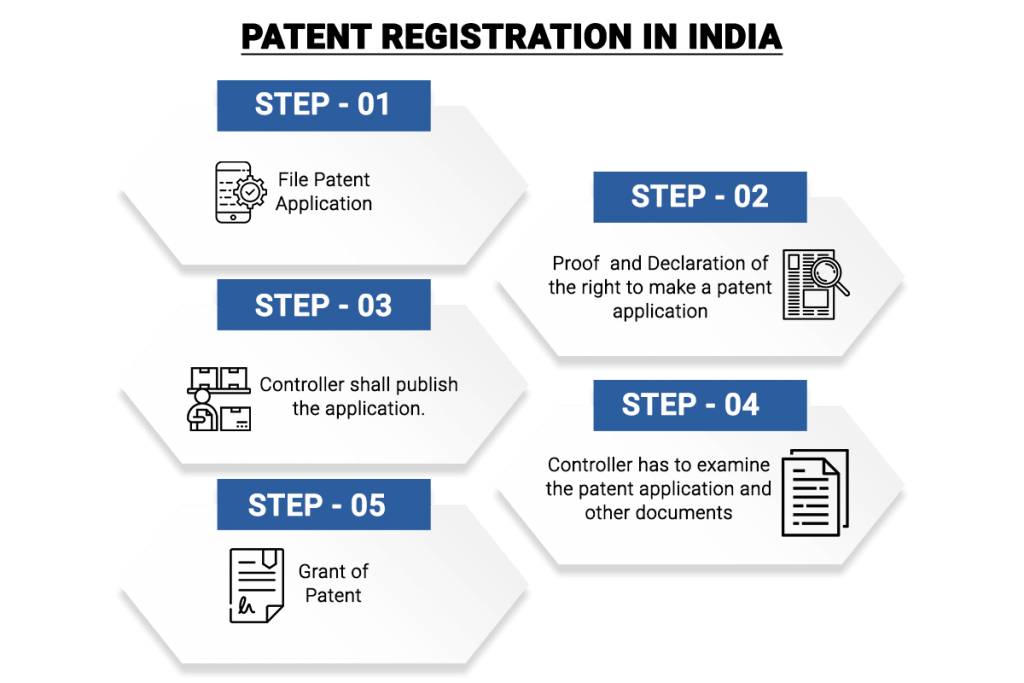
Step 1 – PATENTABILITY OPINION:

Before you begin the patent registration process, you need to check if your invention is patentable. This means that you need to check if another individual has filed a patent for a similar technology for which you are filing. Performing an in-depth patentability search helps you to understand whether you have a chance of getting a patent for your invention or not.

Step 2 – DRAFTING & FILING THE PATENT APPLICATION:

After successfully completing the first step, you can begin the patent application process. Indian applicants need to fill Indian Patent Application Form 1 and along with that you need to provide a Form 2 mandatorily for specifying the type of patent where you can choose between a provisional and complete patent application, based on the stage of invention. This means that if your invention is still under testing then, you need to apply for a provisional patent application where you can get a period of 12 months to complete the invention and can file for a complete patent.

You need to pay special attention when you are drafting your patent application and should include clauses like usability and outcome of the invention in detail. It is also necessary to include the intention to get license on the invention while drafting the patent application and be meticulous in including all the clauses that prevent the competition from others who use same technology.

Step 3 – PUBLISHING THE PATENT APPLICATION :

After submitting all the documents, the patent application is safely secured by the Indian Patent Office and applied patent is then published in an official patent journal after a period of 18 months approximately. However, inventors who wish to have their patent application published before this 18 month period can submit Form 9 (form that requests for early publication) so that the application can be published in official patent journal within 1 month of making request.

Step 4 – EXAMINING THE PATENT APPLICATION:

Before granting the patent, the patent application needs to be examined thoroughly. As per rules of the patent application process in India, applied patent should examined based on the merits of the invention and described in the patent specification form. Unlike the publication process, this is not an automatic process and the applicant needs to make a request to examine their patent application by submitting Form 18 because the patent office queues the application form for examination only after a formal request for examination is made.

When the application lands on the examiner’s desk, it is scrutinized according to the Patent Act and underlying rules along with that the examiner also searches for similar technologies to ensure the invention satisfies patentability criteria or not. After reviewing the application, the first examination report is submitted. The examiner lists his objections in detail which can further extend the application process by another 6- 9 months.

Step 5 – DECISION TO GRANT PATENT:

Once the examiner finds no objections in the patent application, he grants the patent and then the patent is then published in the official patent gazette.

Step 6 – RENEWING THE PATENT:

The patent holder also needs to renew his patent by paying an annual renewal fee. In India, it is possible to renew your patent for a period of 20 years at maximum, from the date the patent was first filed.

OVERVIEW OF PATENT PROCEDURE

CONCLUSION:

Finally, the patent filing process is long and complex, one must remember its importance in the long run. The entire process can take anywhere in between 3-5 years. However, This process is created with the intention of ensuring that the inventor gets credit for his invention and also ensures that no other individual can claim rights over the invention. The legal rights that an inventor earn through patent can prevent competitors from using the invention for financial benefits. In any wrong case the related true inventor of invention can also sue on such individuals and claim compensation for using invention without their approval.

So, guys this is the procedure to file a patent in India and I have tried my level best to make you understand about the patent procedure

WHAT IS THE NEED OF PROTECTING INTELLECTUAL PROPERTY RIGHTS

Protecting intellectual property is essential to remain profitable because intellectual property of a company prevent others from infringement of their own products and innovations. Particularly, protecting IP’s are relevant in today’s competitive market. Intellectual properties can cover a wide range of topics such as brand name, logos, services, processes etc.. of a company. An organisation is bound to face losses when these concepts are used without their permission. Let me explain you about the importance of protecting intellectual property with a case study.

CASE STUDY:

YOU ARE NOT BAJAJ:

A Hyderabad food retain chain, Urban Food Mart, India pvt.ltd has told by the Bombay high court to stop using the name ” BAJAJ SUPER MARKET ” for its business. The justice has passed an interim order on Feb 5th, 2021. Retaining urban food mart using the name of Bajaj and has directed into remove all signatures i.e use of marks on shopping bags, cartons, parking material etc… with in 3 weeks.

Bajaj electricals sued urban food mart saying that it had been using the name Bajaj continuously and extensively since 1961.

In the above case study we can clearly identify that Hyderabad related food retain chain has violated the term Trademark in IPR by copying the name of Bajaj electronics with out it’s permission. As I mentioned in previous articles also, Intellectual property highlights the important assets of an entrepreneur, Intellectual property rights is the collective term for creations of the mind which can be used for the commercial good will.

Almost every company in this technical world has undeniably benefited from the internet, which allows goods, services, and marketing messages to reach a large audience at a low cost – but it has also raised the risk of intellectual property infringements. This ultimately makes the protection of Intellectual Property as one of the most important things in today’s business world.

Most of the entrepreneurs because of having lack of knowledge in intellectual properties ignore important steps that they have to take for protecting their IP assets later which results into loss for their company. So a proper attention should be given for protecting IPR of a company by both management and employees. It will be good for the company, if it nominate a manager who takes the responsibility for understanding and protecting IP rights.

LIFE CYCLE OF INTELLECTUAL PROPERTY(IP):

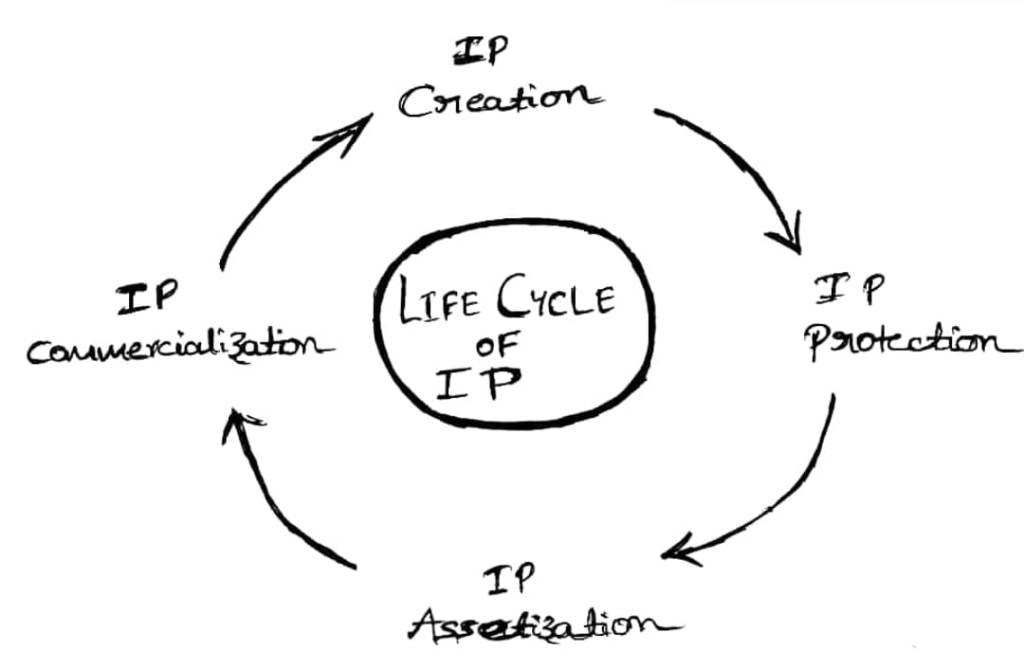
Protecting IP assets at the right time will always maximize the value of business. Now let us see the life cycle of intellectual properties in the following picture.

IP CREATION: Creation of IP enables innovators and inventors to identify and develop the potential research works in various fields.

IP PROTECTION: It enables in getting ownership rights and overall control on IP of a firm.

IP ASSETIZATION: Facilitates the development of IP based products of a company.

IP COMMERCIALIZATION: It enables business to make revenue and helps in expanding the market of the company.

HOW TO PROTECT INTELLECTUAL PROPERTIES:

The following are the five tips that every entrepreneur or owner of a firm must keep in mind for protecting IPR are as follows:

1 APPLY FOR PATENTS, COPY RIGHTS, TRADEMARKS:

Companies can protect their core management and their research & development activities through intellectual property rights and registrations. They also have a better bargaining position for cross-licensing and counterclaims. Intellectual property rights and registrations also allow a corporation to obstruct competing goods, determine new entrants, and pave the way for future market share via technological advancements. Intellectual property rights come in a variety of forms, such as Patents (used to protect technical information), Copyrights ( used to protect original artistic expressions of text, drawings etc..) and Trademarks (used to protect logos, brand names etc..). Each one of these must be applied in prior to protect the companies rights in order to sue if a third party infringes. 

2 SECURE YOUR INTELLECTUAL PROPERTY BOTH PHYSICALLY & DIGITALLY :

Companies must protect their IP in both Physical and digital protection and should maintain high security where sensitive data is stored, whether it is in the server farm or it is in the paper form. Keep track on the person who has the keys. Use passwords and limit employee access to important databases.

3 AVOID JOINT OWNERSHIP FOR INTELLECTUAL PROPERTY RIGHTS:

Make an effort to escape joint intellectual property rights. It is always beneficial for you to have control of your rights. In the long run, joint ownership of such rights can cause confusion and legal issues threatening the security of these assets, causing harm to all parties involved.

4 GET EXACTLY-MATCHING DOMAIN NAMES:

An exact-match domain name is one of the best intellectual property protection strategies for trademarks and copyrights (that you already own). Though it can be a bit expensive but it will help you in the long-term benefits.

5 KEEP YOUR IDEA A SECRET UNTIL YOU HAVE FILED A PATENT APPLICATION:

Make sure that you never share your idea with anyone before you have protected the same. This is because the other person might file for a patent before you and gain ownership rights over it. There is an old maxim that says “a secret shared is not a secret anymore”. So, don’t share the total information about the idea or invention with anyone and keep it as a confidential matter.

ECONOMICS BEHIND INTELLECTUAL PROPERTY RIGHTS

In todays world several companies use the Intellectual Property Rights (IPR) to protect their new inventions and company secrets. IPR are the legal rights granted by government to encourage innovation and creative output by ensuring that creators reap the benefits for their inventions or works. Intellectual property rights include several forms such as patents, trade secrets, copyrights, trademarks, or geographical indications (GIs).

World intellectual property organization(WIPO) defines IPR as a creation of mind inventions, literacy, artistic works and symbols, names, images and designs used in commerce. When a company hold its physical properties with out any IPR then those properties are considered as tangible where as IPR possessed properties are considered as Intangible. Intellectual property is essentially needed for a private nature belong to either through a natured person or legal person( Companies, Institutions). IPR can be own, bought and sold, rented , protected and infringed upon by others.

EVALUTION OF IPR IN INDIA:

Intellectual Property Rights (IPR) in India was imported from the west through the Indian Trade and Merchandise Marks Act 1884 which was considered as the first Indian Law on IPR. The first Indian Patent Law was enacted in 1856 followed by a series of Acts being passed. There is an Indian Patents and Designs Act in 1911 and Indian Copyright Act in 1914 is the first enacted copy write act in India. Later after getting independence the Comprehensive Copyright Act was enacted in the year of 1957 to consolidate the laws related to copyrights in India.

In 1948, the Indian Government appointed the committee to review the prevailing Patents and Designs legislation. In 1957, Government appointed to revise the Patent Law in order to balance the constitutional guarantee of economic and social justice enshrined in the preamble of the constitution. The report submitted by the committee outlined the policy behind the Indian Patent system. After the revision of previous acts on patents, a new patent act was released in the year of 1970 which process the patents only for food, agrochemicals, alloys, drugs and fixed 7 years term for food, drug and 14 years for others with having compulsory license provisions.

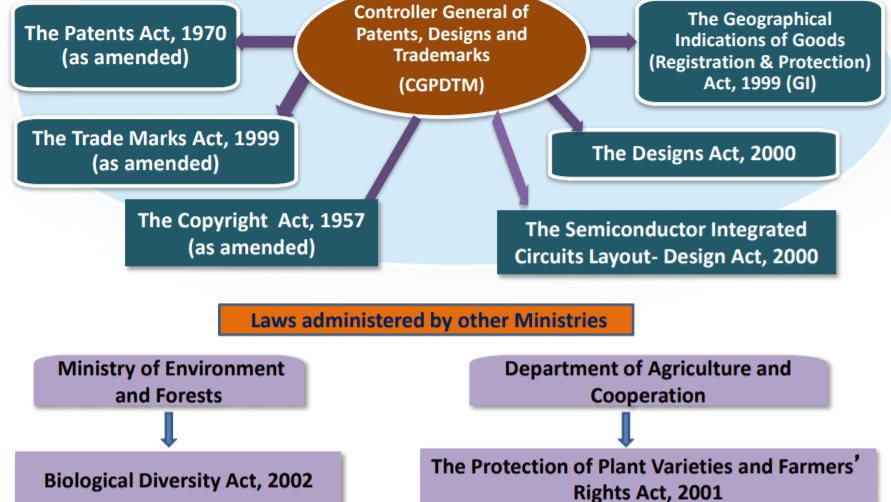
IPR LAWS ADMINISTERED BY OFFICE CGPDTM

EVALUTION OF INTERNATIONAL PERSPECTIVE OF IPR:

Every country has some relationship with other foreign countries in the form of trading, such as imports and exports. The foundation of International Intellectual Property Protection was created in the 19th century in the view of protection of Industrial Property which was created at Paris Convention in the year of 1883 regarding the terms of Patents, Trade Marks and Industrial designs that were granted protection at that convention. In 1998, India also became a member of the Paris Convention. In 1886, International Copyright Act was passed.

The Paris Convention marked the beginning of the International Trade Marks Protection laws and introduced the concept of a well known mark. In 1960 the World Intellectual Property Organization was created which governs the Paris and Berne Convention. In 1977 World Trade Organization (WTO) was created and become an important international organization for the development and understanding the IPR. This WTO was the successor to the General Agreement on Tariffs and Trade(GATT).

The importance of intellectual property in India is well established under statutory, administrative and judicial levels with an agreement made with World Trade Organization (WTO). This Agreement concentrates on Trade Related Aspects of Intellectual Property Rights (TRIPS) which came into force from 1st January 1995. It lays down the minimum standards for protection and enforcement of intellectual property rights in member countries which are required to promote effective and adequate protection of intellectual property rights with a view to reducing distortions and impediments to international trade.

The IPR scene in India has undergone a dramatical change since 1995 with the creation of various tools of Intellectual Property which shows compatibility with TRIPS.

ECONOMICAL PERSPECTIVE OF IPR IN DEVELOPING COUNTRIES :

Intellectual property rights have a great importance in the growth of a country. Intellectual property law differs from county to country. In many developed countries, the strict enforcement of the IPR has a huge contribution to economic growth. IPR promotes innovation which leads to the economic growth. Nowadays every business in the world is looking for the creation of Innovations.

So, protecting those new innovations has become necessary for companies these days. Not only protecting the new inventions of the company but also established companies should also protect their company names also in order to avoid duplicates in the market. Some big companies sell their names in exchange of huge amount in exchange of huge amount of money. Intellectual property rights have a great influence on the financial improvement of a nation. Different country governments face a complex choices on how to design an IP system in the best way to serve their policy objectives.

As India is one of the fastest growing countries, innovation became the first priority to most of the startup companies and as well as established firms including Government firms. Significance of IPR gives a competitive edge in the market for a company and also protects from hackers and pirates. Developing countries went along with the TRIPS agreement for a variety of reasons, ranging from the hope of additional access to agricultural and apparel markets in rich nations, to an expectation that stronger IPR would encourage additional technology transfer and innovation.

From business perspective IPR helps to create a strong brand identity and obtain valuable competitive intelligence. Along with these they help in making revenue through licenses. The main flexibility that is obtained through IPR is freedom of operating. After the introduction of TRIPS the market in India started changing vastly and the act started to provide space for operation and opportunities to companies and innovations. The private sector has started investing in research and development. Finally, The intellectual property right development plays a crucial role on economy for the development of business in a country.

TERMS OF INTELLECTUAL PROPERTY RIGHTS

INTELLECTUAL PROPERTY RIGHTS:

Intellectual Property is an intangible property, which is a product of human intellect, capital, labour, etc. such as artistic creations, literary works, inventions and so forth. It is intangible because it cannot be identified with the help of its physical characteristics.

Intellectual property is an asset by which one can own their business identity, technology, works of authorship, logo, slogans and many other practical expression of the ideas that drives the business forward. Intellectual property plays a vital role at all levels of your business.

To safeguard the interest of the creators, intellectual property rights are introduced which give them the right over their property and prevents others from using it in an illegal way. There are several terms in intellectual property rights, they are described clearly in the following paras:

TERMS OF INTELLECTUAL PROPERTY RIGHTS:

COPYRIGHT:

Copyright is a legal IPR term used to describe the rights that creators have over their literary and artistic works. Works covered by copyright range from books, music, paintings, sculpture, and films, to computer programs, databases, advertisements, maps, and technical drawings. Copyright provides the owner with exclusive rights to use, display, copy, exhibit, modify and distribute the work.

PATENT:

A patent is an intellectual property right which is exclusively related for an invention and grant rights on that invention. The invention may be a product or a process that provides in general for a new way of doing something, or offers a new technical solution to a problem. To get a patent, technical information about the invention must be disclosed to the public in a patent application. There are different types of patents are existed they are:

  • Utility patents: These are the most common form of patents to protect physical inventions, chemicals and processes.
  • Design patents: These patents protect the unique form, appearance or design of an item.
  • Plant patents: These patents protect the development of a new variety of plant through an asexual reproduction in a controlled setting.

TRADEMARK:

A trademark is a sign capable of distinguishing the goods or services of one enterprise from those of other enterprises. Trademarks are protected by intellectual property rights. In simple words trademarks are those things that make up your brand with having certain phrases, logos, unique words, and graphic design elements can be trademarked. Trademarks defend against confusion or dilution of the brand in the marketplace. Trademarks have to be distinctive in order to gain protection. The mark’s that are associated with business denotes its strength, which plays a vital role for defending the piracies.

GEOGRAPHICAL INDICATIONS:

A geographical indication (GI) is a sign used on products that have a specific geographical origin and possess qualities or a reputation that are due to that origin. In order to function as a GI, a sign must identify a product as originating in a given place. A geographical indication is often related to industrial property, which adverts referring to a country or to a place, situated for the origin of that product. This geographical indication not only refers to where the product was made, but more importantly, it identifies the product’s special characteristics which are the result of the products origin. Using the place name where the product was made.

INDUSTRIAL DESIGN:

Industrial design is also a term in intellectual property. It is a process of design applied to products that are to be manufactured by mass production. It can be applied to a wide variety of factors like, materials, production processes, business strategy and prevailing social research activities, commercial or aesthetic attitudes.

As per the Indian law, under the design act 2000, Industrial design protection is a type of intellectual property right that gives the exclusive right to make, sell and use articles that embody the protected design to the selected people only.

TRADE SECRETS:

Trade secrets are intellectual property (IP) rights on confidential information which may be sold or licensed. In general, to qualify as a trade secret, the information must lie in commercially valuable because it is secret and should be known only to a limited group of persons and also it should be subjected to a reasonable steps taken by the rightful holder of the information to keep it secret, including the use of confidentiality agreements for business partners and employees.

The unauthorized acquisition or use or disclosure of such secret information is referred as an unfair practice and considered as violation of the trade secret protection.

So, These are some of the terms that are related to Intellectual property rights. Which are useful and necessary for any type of organization or firm to protect their new inventions, logos, artistic works etc… from their competitors.

INNOVATION MANAGEMENT: TYPES OF INNOVATION

In today’s constantly changing business environment, new opportunities and challenges arise every day which are often driven through digitalization. As a result various market forces like knowledge as business capital, the Information and Communication technologies, Internet of things and of course due to digitalization every organization seeks a competitive advantage. To master over the resulting challenges and get benefited from the opportunities, we must have a systematic and well managed Innovation. That is why now a days innovation has become a core focus area for high performing organizations to ensure long-term survival by making the desired revenue and goals.

WHAT IS AN INNOVATION?

According to Peter Drucker innovation the specific function for entrepreneurship whether in an existing business or a public service institution or a new venture started by a lone individual in family kitchen. Innovation is the means by which the entrepreneur either creates new wealth producing resources or endows existing resources with enhanced potential for creating wealth.

WHAT IS INNOVATION MANAGEMENT ?

Innovation management involves the process of managing an organization’s innovation procedure, starting from the initial stage of ideation to its final stage of successful implementation. It encompasses the decisions, activities and practices of devising and implementing an innovation strategy. These decisions, practices and actions are aimed at achieving a certain target – to generate an idea, product or a service that is of sizeable business value.

According to Gartner, innovation management is a structured process of generating, capturing, discussing and improving, organizing, evaluating and prioritizing valuable insight or alternative thinking that would otherwise not have emerged through normal processes.

The innovation management process necessitates the use of certain management tools that assist in bringing both managers and other entities on a common platform and get them to move towards a common goal. These innovation management tools can look simple but are most effective in reality. Such management tools are considered as brainstorming sessions, planning and finally prototyping. Let’s discuss about various types of innovation which helps in the growth of business.

TYPES OF INNOVATION:

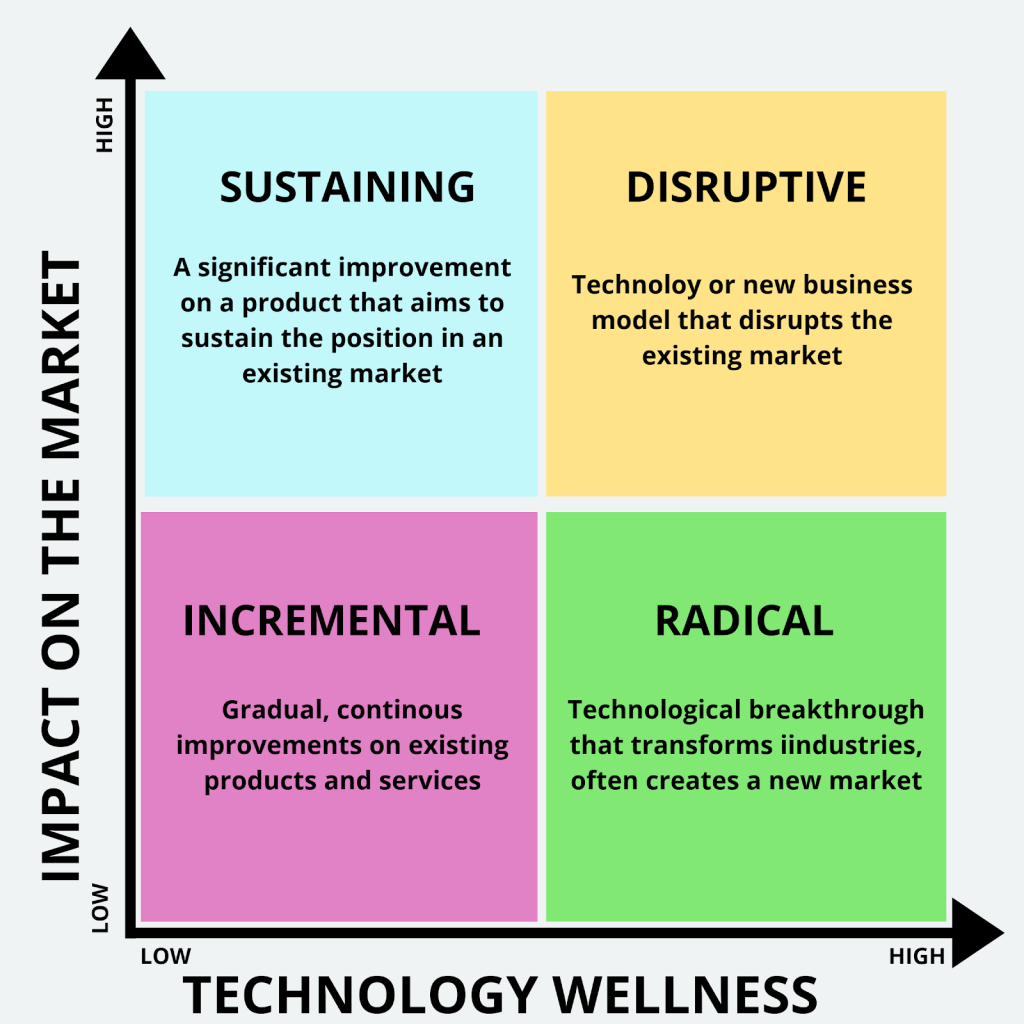
INCREMENTAL INNOVATION: The overwhelming majority of innovations are incremental in nature. Incremental innovation is nothing but improvement or adding new features or characteristics to already existed product which brings a large-scale organisational change. Incremental innovation is arguably the most accessible form of innovation, as it can often be performed without requiring huge budgets, a large team or a reorientation of the business’s strategy.

LED LIGHTBULB (Example of Incremental Innovation)

Incremental innovation doesn’t change it’s original dominant design. Incremental innovation will have less financial risks because this innovation doesn’t bring a new product or services into market rather it just modifies already existed product. This innovation can build a strong customer relationships and improves the product longevity in the market and most importantly incremental innovation is the best strategy to get a quick win in the competitive market.

The best example of incremental innovation is, The most famous E-commerce site COCO COLA, CADBURY etc…

DISRUPTIVE INNOVATION: Disruptive innovation is a theory that refers to a concept, product, or a service that creates a new value of network either by entering an existing market or by creating a completely new market. Moreover disruptive innovation refers to innovations by using new technologies that make expensive or sophisticated products and services accessible and more affordable to a broader market.

Disruptive innovation requires enabling technology with an innovative business model for building a coherent network value. One of the key features of disruptive innovation is that it modifies the process of evaluating the company and helps in the provision of better services with its new modification brought in the industry. It improves and modernize a lot of processes of a company, which further benefits the company a lot.

Examples of disruptive innovation are TESLA MOTORS, YOU TUBE, SKYPE etc…

SUSTAINING INNOVATION: Sustaining innovation is the opposite of disruptive innovation as it exists in the current market and instead of creating new value networks, it improves and grows the existing ones by satisfying the needs of a customer. Just like incremental innovation, the products that perform sustaining innovation is slightly made better with every iteration by reducing defects.

A sustaining innovation targets the high-end customers with its better performance than previously available one. The established competitors always win the battles when they operate sustaining technology efficiently. This strategy entails making a better product that can sell for higher profit margins to their best customers.

Examples of sustaining innovation are, IBM, TOYOTA etc..

RADICAL INNOVATIONS: Radical innovation is rare. It has similar characteristics to disruptive innovation but it is different in a way that it simultaneously uses revolutionary technology and a new business model.  Radical innovation solves global problems and addresses needs completely in a new way. This type of innovation completely transforms the market, or even the entire economy .

Technological innovations, such as personal computer and the internet are examples of radical innovations that have transformed the way the entire world functions and communicates. These disruptive innovations provide our society with a platform to build on top of which leads to highly accelerated economic growth where as radical innovation destroys or supplants an existing business model and blows up with something that is entirely new to the market. This types of innovation typically require a lot of time and technological development before they’re ready for the mainstream markets.

Examples of Radical innovation are, I PHONE, NETFLIX, INTERNET etc..

Aim of education

Abstract

The aim of education is important to know how would education will help an individual in their lifespan.

Aim means the objectives of a plan which are going to meet by the action. Aim of education can be said to be the objective or goals of education which meet the interest of an individual and lead the society towards development.

Importance of aim of education in society:

Intellectual Achievement: To provide students with academic knowledge and skills in order to prepare them for post-secondary education or the workforce. This has been the most agreed upon aim of education. Most parents want their children to reach high standards in math, English, history, and science.

Prosocial Values: To train students for responsible citizenship and prepare them for adulthood through socializing them in the norms and values of society. Teachers, who symbolize authority to the child, emphasize the values of a democratic society, such as patriotism, obedience, honesty, cooperation, competitiveness, and moral responsibility.

Economic Competitiveness (social efficiency): To provide students with skills and knowledge needed to be competitive in a global economy; become an effective and efficient workforce; and prepare workers with values and socialization needed in the workplace through developing attitudes such as punctuality, cooperation, and following rules.

Personal Growth: To help students find self-fulfillment, personal relevance, clarification of personal values, communication and self-expression skills, and development of effective learning styles. Student interests and feelings are emphasized. The curriculum is created collaboratively between teachers and students to help students reach their potential.

Socialization and Culture: To impart culture to students through great ideas of western culture, such as works of art, literary classics, and basic skills so that they are literate and cultured citizens and can participate intelligently in American society. Schools are places where students from diverse language and cultural backgrounds learn English and learn about American traditions, holidays, historical figures, geography, and democracy.

Social Change: To help students become productive citizens that are capable of changing the social order through emphasis on social issues and solving social problems. Students are provided with the knowledge and skills to improve society and are given opportunities to see themselves as both individuals and contributing to the group and the larger society. They are encouraged to participate in community service or service learning, so that they become reflective and responsive about the needs and problems in their community. The purpose of education is to advance social mobility, rather than perpetuate the status quo.

Equal Educational Opportunity: To ensure that all students have a free education, common curriculum, opportunities for diverse students to attend the same school, and equality of financial expenditure in a given locality. There is clear evidence that certain groups in American society are denied equal opportunity economically, socially, and educationally. It is essential that all children, regardless of race, ethnic background, gender, religion, socioeconomic level, or language, receive a quality education. A balance between diversity and unity is needed in schools.

Problem Solving: To teach students how to learn through the development of thinking, research, and study skills so that they become excellent problem solvers and creative thinkers who are capable of dealing with change. The rapidity of change today, technological advances, and the explosion of information require that students develop tools for lifelong learning.

Factors which affects the aim of education in society

1.Nature of Reality.

Aims of education have direct relationship with the prevailing philosophy of life. The philosophy of life at a certain time is influenced by the views of eminent thinkers and schools of philosophy.

According to the idealistic view, the aim of education should be self-realisation or unfolding of what is potential within the child. According to the naturalistic view-point, self- expression or self-gratification should be the aim of education. The pragmatists think that education should aim at enabling the individual “to control his environment and fulfill his possibilities.”

2.  Human Nature

Educational aims have often been decided keeping in view one or the other element which comprises human nature. Idealists regard ‘unfolding the divine in child and man’ as the aim. To naturalists, the aim of education is ‘self-expression.’

3. Political Ideologies and Individual-State Relationship.

Political ideologies influence the aims of education. Under a totalitarian system, the aims of education will be much different from those under a democratic political system. Under the former, the system of education becomes stereotyped and education takes the form of indoctrination. School and text-books must promote the ideology of the State.

Under the latter (democratic), the individual enjoys freedom and free play. The goal of education is the good man who is to be educated for a life of freedom. Education aims at developing the full personality of each individual, irrespective of caste, creed, class or religion.

4. Socio-Economic Problems.

Socio-economic problems of a country also determine the aims of education. For example, the Indian Education Commission (1964-66) put emphasis on “increasing productivity’ as one of the national objectives of education.”

5. Exploration of Knowledge.

Exploration of knowledge is a potent factor in determining aims of education. With the advancement of scientific and technical knowledge, education all over the world has become science-education

Conclusion

The aim of education should be holistic development of the individual. An individual is the foundation of the nation. It is important that their education must be according to their needs and interests. 

Reference.

The placenta

I don’t know about all you but I have always found the female body very fascinating, anyways a placenta is an organ attached to the lining of the womb that delivers oxygen and nutrients to the growing baby. The placenta is crucial to keeping your baby alive and well during pregnancy. 

Structure and function

The placenta is a large organ that develops during pregnancy. It is attached to the wall of the uterus, usually at the top or side. The umbilical cord connects the placenta to your baby. Blood from the mother passes through the placenta, filtering oxygen, glucose and other nutrients to your baby via the umbilical cord. The placenta also filters out substances that could be harmful to your baby and removes carbon dioxide and waste products from your baby’s blood. The placenta produces a number of hormones that are needed during pregnancy, such as lactogen, estrogen and progesterone. It keeps the mother’s blood separate from the baby’s blood to protect the baby against infections. Towards the end of the pregnancy, the placenta passes on antibodies to protect the baby after birth.

Location of the placenta

The placenta often develops low in the womb but moves to the side or up as the womb stretches. The position of the placenta will be checked at your 18-week ultrasound. The placenta is expelled from your body after the birth, usually about 5 to 30 minutes after your baby is born. After the baby is born you will continue to have mild contractions. You will have to give one more push to deliver the placenta. Sometimes your abdomen will be massaged or you will be given an injection of oxytocin and the umbilical cord will be gently pulled to help deliver the placenta.

If you have a c section, the doctor will remove the placenta at the same time. It is important that the whole placenta comes out after pregnancy. If any fragments of the placenta stay inside, they will have to be surgically removed to prevent bleeding and infection

Options for placenta after birth

Options for the placenta after the birth

In some cultures, families bury the placenta in a special place.

There is also a rare practice, known as placentophagy, in which women cook and eat the placenta. Some commercial service providers will offer to turn your placenta into capsules for you to swallow.

However, these practices should be treated with caution since there is no regulation in Australia either of these products or the providers of placenta pills.

Recent research shows there are no known health benefits from eating the placenta, but there may be a risk of infection from poor production standards.

Cardiac Arrest

Cardiac arrest, sometimes called sudden cardiac arrest, means that your heart suddenly stops beating. This cuts off blood flow to the brain and other organs. It’s an emergency and is deadly if not treated immediately. Call 911 right away!

What exactly happens

Your heart has an electrical system that keeps it beating regularly. Cardiac arrest can strike if the electrical signals go haywire and cause an irregular heartbeat, or arrhythmia. There are different types of arrhythmias, and most aren’t dangerous. One called ventricular fibrillation triggers cardiac arrest the most. If this happens, the heart can’t pump enough blood to your body. That’s life-threatening within minutes.

Symptoms

Cardiac arrest is quick and drastic: You suddenly collapse, lose consciousness, have no pulse, and aren’t breathing. Right before it happens, you could be very tired, dizzy, weak, short of breath, or sick to your stomach. You may pass out or have chest pain. But not always. Cardiac arrest can happen with no warning signs at all.

What causes cardiac arrest

  • Major blood loss or severe lack of oxygen
  • Intense exercise, if you have heart problems
  • Too high levels of potassium or magnesium, which could lead to a deadly heart rhythm
  • Your genes. You may inherit certain arrhythmias or a tendency to get them.
  • Changes to your heart’s structure. For instance, an enlarged heart or changes caused by an infection.

But one thing to note is that a cardiac arrest is not a heart attack, a heart attack is where the blood flow to the heart stops whereas in cardiac arrest the heart stops. sometimes heart attacks can trigger a cardiac arrest.

Super Cup ⚽⚽🥅

According to recent rumours the Champions of Copa America and Euro Cup can face each other in a super Cup . two teams defeated the likes of Brazil and England within a span of 24 hours last weekend. With Argentina’s victory, Lionel Messi brought an end to his trophy drought on an international stage while Italy won their Euro title for the first time after 53 years. Angel Di Maria’s lone goal proved too good for Brazil helping them clinch their first continental crown in 28 years while England vs Italy entered a penalty shootout after 120 minutes of top-flight football.

Italy had beaten England on penalties to win the Euro 2020 campaignArgentina defeated Brazil to lift the Copa America 2021, Lionel Messi’s first international triumphThe two teams could lock horns in a one-off Super Cup match
Football fans celebrated a Super Sunday as the world witnessed two big sporting showdowns take place within a span of 24 hours. First Argentina defeated Brazil in the Copa America final as Lionel Messi lifted his first major international trophy. Then, Italy edged favourites England in a penalty shootout at Wembley to be crowned Euro 2020 winners. But, how about a Super Cup battle between Argentina and Italy?

As per Barca Blaugranes, CONMEBOL, South America’s footballing body, has requested its European counterpart, UEFA, to hold a one-off Super Cup match between the winners of this year’s Copa America and European Championship. While UEFA hasn’t yet commented on the matter, such a match-up wouldn’t be a first in the history of international football.

Messi magic

Both the Copa America 2021 and Euro 2020 campaigns were special. While it was the first time ever that Messi had won an international trophy wearing the Argentina shirt, Italy had even failed to qualify in the 2018 FIFA World Cup.


Messi ended the Copa America campaign as the player with the most number of goals and assists. He was deservedly named the Player of the tournament, having played the most influential role in the team’s triumph.

Giorgio Chiellini’s Italy

FEMALE FOETICIDE

Female foeticide is the process of finding out the sex of the foetus before the birth, if the foetus turns to be a girl, then the mother must undergo with abortion. Although this is all illegal but till it is practice in many parts of Indian. By the side of this there are some people who practice female infanticide that means killing the girl child after she is born. This leads to the decline in the ratio of boy is to girl in our country. This decline in the sex ratio means that we are taking away the human rights of girls not only this we are the reason behind not giving them rights to live.

This practice needs to be banned before it is too late as both boys and girls have equal right to live. In order to prevent their rights, we need to forbid the practice of dowry system, child marriage which are practiced from long time.

Despite of having a strong Prenatal Diagnostic Techniques Act, it is a high time to strengthen this law, since the number of cases regarding female foeticide are still not less. Preference of boy child or having the first child as boy has became the tradition in every Indian household especially in rural areas. Many parents also give more importance to the boy child, thinking of that he will be their backbone after they get aged and will take care them during their old age. But the reality is, once boys reach the age of manhood and starts to earn wealth and gets all the facilities, they soon forget their parents and leaves them and gets settle with their wives and kids to live an independent life.

Now the time has changed, today we can witness many temples specifically build in the names of women. In Tamil Nadu, these temples are knowns as ‘amman’ temple, ‘ammavaru’ temple is called in Telegu belt whereas in Kerala these temples are know as ‘bagawathi’ and so on in many parts of India. There are many festivals on specifically for female goddess like Navratri which is celebrated of 9 days and nights in the name in Goddess Durga.

But we can still taste the bitter truth, when it comes to bearing a girl child or when a family gets to know that their daughter-in-law is pregnant, they soon conduct or follows the superstitious activity and ask only boy child should be born. I still do not understand this dirty logic behind this.  

After 73 years of Independence, living in 2ist century it’s our responsibility, not to encourage such dirty practice.

Indira Gandhi, Kalpana Chawla, Saina Nehwal and many more are the females who made their parents and India proud. It just we need to give them their right and see what magic they do.

To abolish this practice government also launched campaign “save the girl child”.

At last, but not the least, boy or girl they are God’s creation, accept what he gives. Never ever destroy at the stage of development itself, you never know she can be another Mother Teresa, Kalpana Chawla and give you a chance to be proud of her. Do not forget betiya ghar ki Lakshmi hoti hai (girls are consider as Goddess of wealth).

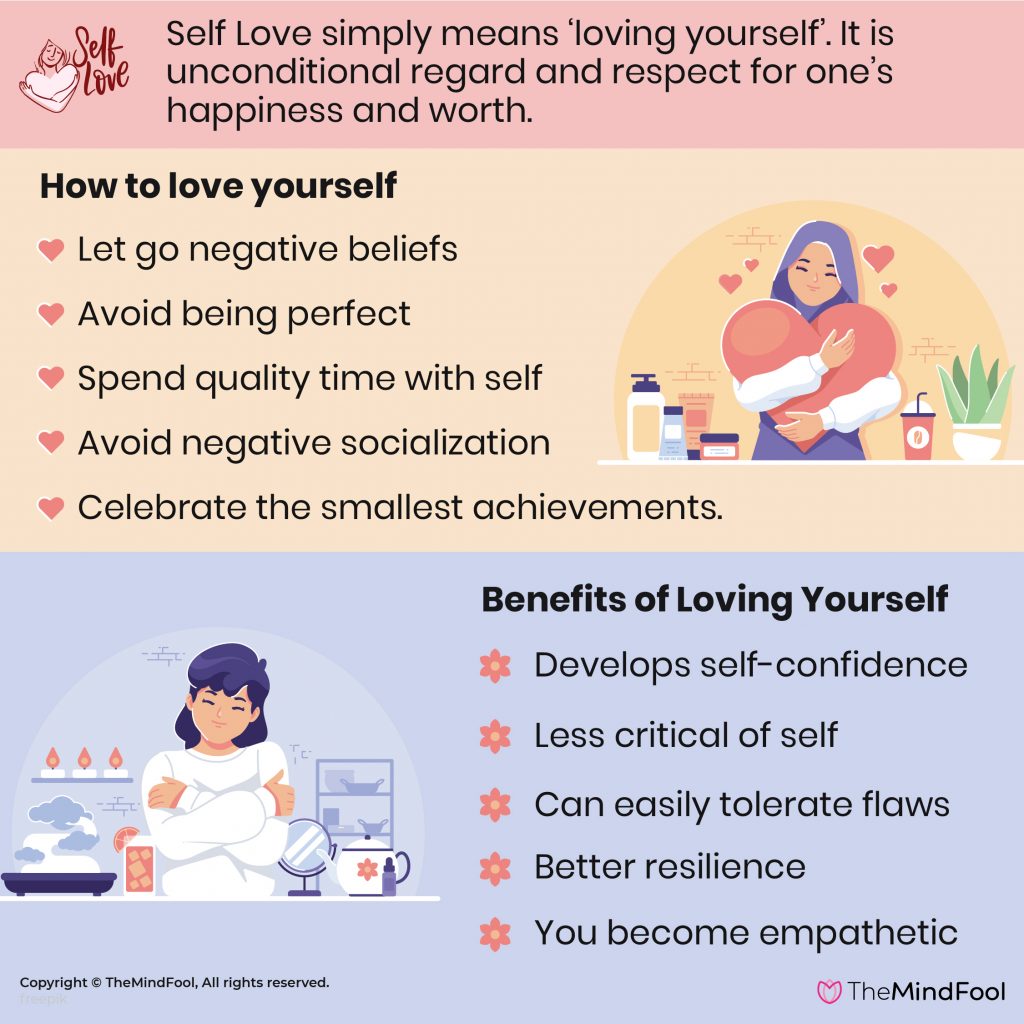
Love Yourself Like Your Life Depends on It

The book is about essayist Kamal Ravikant who shares his own encounters to the peruse and attempt to demonstrate that self esteem can have an effect in their life.

Not at all like the other book it’s difficult clarifies the significance of confidence yet in addition gives us tips and step which could be accustomed to get that training. He begins his story by presenting himself and dim period of his life when his life was hopeless and he didn’t had any desire to manage his life. Then, at that point he clarifies how he began rehearsing self esteem and how it changed his life. Further he gives a few stages for rehearsing confidence and guarantee us that it tends to be distinct advantage in your life. He likewise utilizes a few accounts of different people groups to clarifies his words and make them look more significant. The lone thing which make this book not the same as the others is simply the tips and steps to rehearse love. So in the event that they neglect to affect your life than the book simply worth zero yet in the event that it tackle job for you it would be a distinct advantage.

On the off chance that you were unable to stand to peruse the book I can give you the tips and steps which are:

Mental circle This progression clarify us that what ever you reconsider and again you start in accepting that and that is the means by which begin to understand that you love yourself. So the essayist demand us to consistently think and utter that I love myself.

A reflection Contemplation intends to bring the showed over and over that you love yourself and delivery the negative educated from the brain. Here are a few guidelines which can be utilized for contemplation :

Directions

Stage 1: Put on music. Something alleviating, delicate, ideally instrumental. A piece you have positive relationship with.

Stage 2: Sit with back against divider or window. Cross legs or stretch them out, whatever feels normal.

Stage 3: Close eyes. Grin gradually. Envision a light emission immersing your head from a higher place.

Stage 4: Take in, say to yourself to you, I love myself. Gradually. Be delicate with yourself.

Stage 5: Inhale out and alongside it, whatever emerges. Any contemplations, feelings, sentiments, recollections, fears, trusts, wants. Or on the other hand nothing. Inhale it out. No judgment, no connection to anything. Be caring to yourself.

Stage 6: Rehash 4 and 5 until the music closes. (At the point when your consideration meanders, notice it and grin. Grin at maybe it’s a kid doing what a youngster does. Also, with that grin, get back to your breath. Stage 4, stage 5. Brain meanders, notice, grin generous, get back to stage 4, stage 5).

Stage 7: When music closes, open your eyes gradually. Grin. Do it from the back to front. This is your time. This is absolutely yours.

One Inquiry To finish the pattern of confidence we need to pose our self an extremely straightforward inquiry that is “In the event that I cherished myself really and profoundly, how might I manage my life than?

Till now I have not begun rehearsing the means for self esteem gave in the book can’t give a total survey over them like were they valuable for me all not. So hang tight for quite a while I would compose another blog on the effect of the gaining from this book in my life.

Cardiopulmonary Resuscitation (CPR)

Cardiopulmonary Resuscitation commonly known as CPR is an emergency lifesaving procedure performed when the heart stops beating. Immediate CPR can double or triple chances of survival after cardiac arrest. We have seen someone do CPR in movies or maybe in real life too but knowledge of proper CPR is extremely essential because it can save someone’s life. If we go more into detail CPR varies in different people based on their age but this is the basic method of CPR.

Step 1. Call 911

First, check the scene for factors that could put you in danger, such as traffic, fire, or falling masonry. Next, check the person. Do they need help? Tap their shoulder and shout, “Are you OK?” If they are not responding, call 911 or ask a bystander to call 911 before performing CPR.

Step 2. Place the person on their back and open their airway

Place the person carefully on their back and kneel beside their chest. Tilt their head back slightly by lifting their chin. Open their mouth and check for any obstruction, such as food or vomit. Remove any obstruction if it is loose. If it is not loose, trying to grasp it may push it farther into the airway.

Step 3. Check for breathing

Place your ear next the person’s mouth and listen for no more than 10 seconds. If you do not hear breathing, or you only hear occasional gasps, begin CPR. If someone is unconscious but still breathing, do not perform CPR.

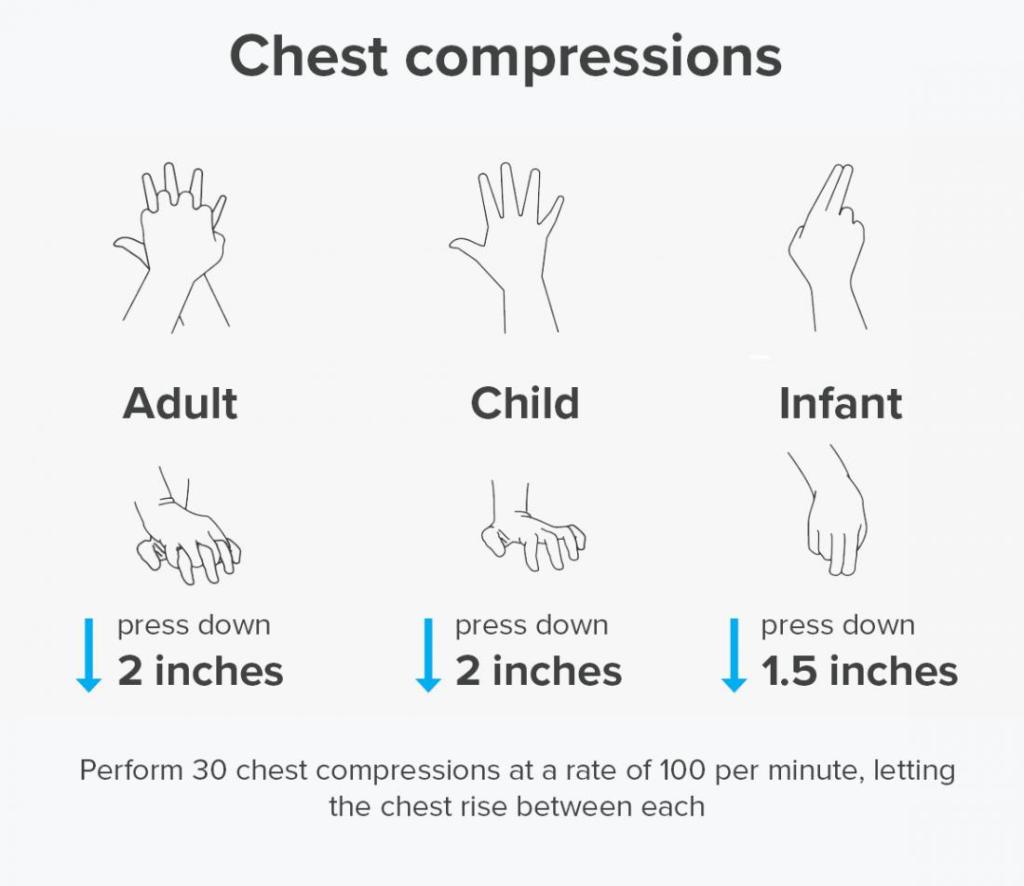
Step 4. Perform 30 chest compressions

Place one of your hands on top of the other and clasp them together. With the heel of the hands and straight elbows, push hard and fast in the center of the chest, slightly below the nipples. Push at least 2 inches deep. Compress their chest at a rate of least 100 times per minute. Let the chest rise fully between compressions.

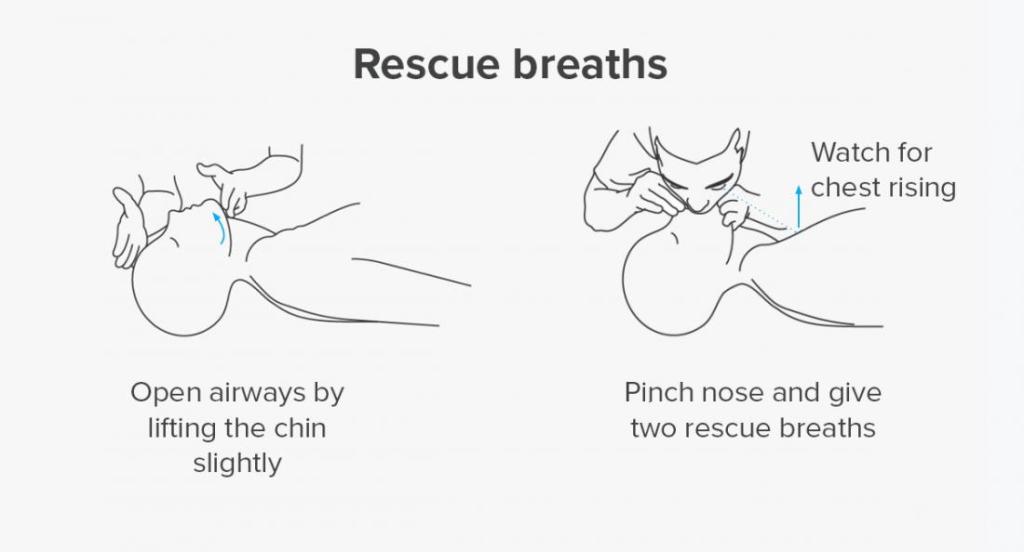
Step 5. Perform two rescue breaths

Making sure their mouth is clear, tilt their head back slightly and lift their chin. Pinch their nose shut, place your mouth fully over theirs, and blow to make their chest rise. If their chest does not rise with the first breath, retilt their head. If their chest still does not rise with a second breath, the person might be choking.

Step 6. Repeat

Repeat the cycle of 30 chest compressions and two rescue breaths until the person starts breathing or help arrives.