CRED : THE KING OF INDIAN STARTUP

CRED HAS BECOME ONE AMONGST THE MOST SYNONYMOUS
STARTUPS IN INDIA. IT IS A FINANCIAL TECHNOLOGY COMPANY,
STARTED IN 2018. IT HELPS IN CREDIT CARD PAYMENTS THROUGH
ITS APP FOR WHICH THE CUSTOMER GETS REWARDED. WITHIN LESS
THAN 4 YEARS IT HAS BECOME THE SECOND MOST-FASTESTGROWING STARTUP IN INDIA.
KUNAL SHAH, THE FOUNDER OF CRED, AN INDIAN ENTREPRENEUR
AND CAPITALIST WAS BORN IN A MIDDLE CLASS FAMILY AND HAD
TO GO THROUGH INNUMERABLE FINANCIAL ISSUES. INSPITE OF
NUMEROUS BARRIERS AND HURDLES IN THE PATH OF HIS SUCCESS,
HE CONTINUED TO WORK HARD AND TODAY, HE IS ONE OF THE

QUOTES HOLD A BUNDLE OF KNOWLEDGE AND EXPERIENCE. SO
HERE ARE FEW MORE FROM THE MASTER OF SECOND MOSTFASTEST-GROWING STARTUP IN INDIA:
“AS A PRODUCT, IF YOU TRY TO BECOME EVERYTHING TO EVERYONE
BEFORE YOU BECOME SOMETHING TO SOMEONE, YOU END UP
BECOMING NOTHING FOR NO ONE”
“ONLY GOOD USE OF MONEY IS TO BUY TIME. TIME TO INVEST IN
KNOWLEDGE, HEALTH AND RELATIONSHIP.”
“EXPERIENCE IS A CURSE IF NOT KEPT CURRENT”
“YOU ARE A SLAVE TO THOSE WHO REVOKE A REACTION OUT OF
YOU”

Smiling can trick your brain into happiness

Ever had someone tell you to cheer up and smile? It’s probably not the most welcomed advice, especially when you’re feeling sick, tired or just plain down in the dumps. But there’s actually good reason to turn that frown upside down, corny as it sounds. Science has shown that the mere act of smiling can lift your mood, lower stress, boost your immune system and possibly even prolong your life.
It’s a pretty backwards idea, isn’t it? Happiness is what makes us smile; how can the reverse also be true? The fact is, as Dr. Isha Gupta a neurologist from IGEA Brain and Spine explains, a smile spurs a chemical reaction in the brain, releasing certain hormones including dopamine and serotonin. “Dopamine increases our feelings of happiness. Serotonin release is associated with reduced stress. Low levels of serotonin are associated with depression and aggression,” says Dr. Gupta. “Low levels of dopamine are also associated with depression.”
Fake It Till You Make It
In other words, smiling can trick your brain into believing you’re happy which can then spur actual feelings of happiness. But it doesn’t end there. Dr. Murray Grossan, an ENT-otolaryngologist in Los Angeles points to the science of psychoneuroimmunology (the study of how the brain is connected to the immune system), asserting that it has been shown “over and over again” that depression weakens your immune system, while happiness on the other hand has been shown to boost our body’s resistance. “What’s crazy is that just the physical act of smiling can make a difference in building your immunity,” says Dr. Grossan. “When you smile, the brain sees the muscle [activity] and assumes that humor is happening.”
In a sense, the brain is a sucker for a grin. It doesn’t bother to sort out whether you’re smiling because you’re genuinely joyous, or because you’re just pretending.
“Even forcing a fake smile can legitimately reduce stress and lower your heart rate,” adds Dr. Sivan Finkel, a cosmetic dentist at NYC’s The Dental Parlour. “A study performed by a group at the University of Cardiff in Wales found that people who could not frown due to botox injections were happier on average than those who could frown.”
And there are plenty more studies out there to make you smile (or at least, serve as reference for why you should). Researchers at the University of Kansas published findings that smiling helps reduce the body’s response to stress and lower heart rate in tense situations; another study linked smiling to lower blood pressure, while yet another suggests that smiling leads to longevity. Studies aside, there are plenty of living, breathing, smiling humans who can testify to the fact that looking the part of happy helps them get through the day.

“Smiling absolutely changes the way I think and feel,” says Jaime Pfeffer, a success coach and meditation instructor based in Florida. “My husband and I purposely spend 60 seconds every morning smiling to supercharge our mood. It’s part of our morning routine. If something goes awry during the day, I usually use smiling to quickly shift my mood. It only take 10 to 15 seconds for it to make a difference for me now. It helps me to feel less stressed, transform my mood quickly and put things in a different perspective.”
Pfeffer adds that she recommends smiling to all her clients, particularly when they’re dealing with long days or tedious work. “One of my clients last week told me smiling for 30 seconds at a time a few times per day helps him stay upbeat when doing sales calls. He said the task can get old after a while, but the smiling helps him stay more energized and avoid burnout.” A smile’s contagion is so potent, that we may even be able to catch one from ourselves. Dr. Ritzo recommends smiling at yourself in the mirror, an act she says not only triggers our mirror neurons, but can also help us calm down and re-center if we’re feeling low or anxious.

It turns out there’s solid evidence that smiling can do us a world of good. Since researching this piece I’ve been conducting my own little smile experiments. I tried smiling when I tensed up in traffic yesterday, and again during a rigorous workout and then today when I woke up with a headache. I found that it feels completely incongruous to smile when I’m tense or tired, and there’s a strange sense of departing a comfort zone. But I have to admit, instantly I was calmer, less upset and, maybe just ever so slightly for a second, smiling made me feel happy.

HOW TO STUDY EFFECTIVELY AS A STUDENT

Education is important for all of us and it is our right to take education but today’s education system makes our study problematic and even student find it difficult to study their subjects.

Our teachers, parents only told us to study but they never told us How?

But there is always a real practical approch to do anything that you want to do and for study effectively it can also apply.

1. Adopt a study schedule

Every student studies many subjects in the school. For effective learning, we should know how to achieve more in less time and with lesser effort. It can be done by adopting a study schedule. When we make a schedule. We mentally prepare how to achieve it. It removes the uncertainty as to what we need to or not to do.

● Points to remember while making a study schedule

° Study schedule should be flexible to add and subtract some uncertain work to it which arises in day to day life.

° you should make it in such a way that it leaves. Some time in between for relaxation.

° personal preferences must be kept in mind while making a study plan

° you should always resolve to follow the schedule strictly then only you will have the maximum benefit from the study plan.

° Study schedule should include provision for homework, revision and some time for making notes.

° You should also have separate study plan for school days and holidays.

2. Make Notes

Note making is the most important skill leading to greater success in exams, but it is not enough to just make notes.

° Notes must be clear and understandable, they should be written in such a way that a glance should enable you to recall the entire subject

° Good notes are simple, well organized and easy to understand

3. Mind Mapping

Mind mapping involves visual images and other graphics details to make a deeper impression.

Because you know the fact that mind learn easily from images, songs, symbols, sounds and shapes.

Through mind mapping you can learn whole chapter or entire subject on one page.

4. How to Make Mind Map

Make mind maps on your own. Write the main topic in the middle. Add a branch extending out from the centre for each important point and add the details. Use abbreviations to learn it easily.

5. Look, Memorize, Write and Check Technique

Study a topic for some time and then close the book and write down what you remember. Now check your work with the book. Repeat this practise until you have most of the work correct and then move on to the next topic. Practice this technique on each topic twice atleast.

6. Revision- Important part of the effective study plan

It is the most important part but many students leave it as it is not important or procrastinate it for long time

° Prepare a revision plan for all the subjects.

° Keep a checklist for the all the chapters that you studied

° Do not exceed your revision time and break up the available time into study sessions and breaks.

FASHION TODAY VS 20 YEARS AGO


FASHION TODAY VS 20 YEARS AGO

Fashion has changed a great deal over the past three centuries. As history changes it seems that fashion in some aspect changes with it to adapt to the era. Even today fashion continues to change as the years go on. Looking at fashion even 20 years ago we can see a difference from what we see in our everyday lives.

 

HISTORY OF FASHION

Fashion history is the history of people. People have loved clothing fashion for thousands of years. From the early days of Egypt to the day clothes have become the expression of who we are. Throughout history, drawings, documents and other archaeological finds have also revealed fashion worn by people in various ancient civilizations.

The Greeks were wearing clothes in different styles from their eastern neighbors. Both women and men were usually wearing thick woolen long dresses.

The ancient Egyptians were typically dressed in light cotton clothing; Women were wearing long, ready-made clothes. With the Romans becoming dominant over time, the Romans began to be known as the most important example of style and fashion at the same time.

 The sixties and seventies are great transitional periods in fashion. Women wearing trousers has seen more and more accepted. The clothes became shorter and looser. 80’s brought great fashion trends and different hairstyles for both men and women.

As time went by from the twentieth century to the twenty-first, fashion continued to change every year, and today still changing.


FASHION NOW

Fashions come into vogue and then go out because man loves change, variety and novelty. With the change in the mood of man, change in styles, manners, conduct and way of life also come about.Fashions are infectious as well and spread rapidly like wildfire, especially among young men and women in big towns and cities.

Youth is more fashion-conscious because they represent life in terms of energy, courage, expectations, potentialities, power, and vigour. They want to look smart, up- to-date, charming and fresh in their dress, etiquette, styles of shoes, and hair-do, etc. They want to enjoy every moment of life and are full of unlimited zeal and appetite for it.

Fashions can also be abused as well and become harmful when turned into an obsession. Then they mean waste of time, energy, and money. It is better to be a little out of fashion than to be in fashion at the cost of one’s conscience and discretion.

Fashions are also influenced by glossy, colourful and eye-catching textile advertisements, fashion shows, propaganda of fashion and dress designers, articles in the fashion magazines and foreign visitors.

Films and cable T.V. are a great source of fashions and quick changes in trends. Fashions are liquid and changeable like weather. Till recently, bell-bottoms, midis, minis and maxis were quite in fashion and now they are out of fashion. Again tight-bottoms, skirt-tops, salwar-kamiz and saris are in fashion.

Fashion designing and technology is now an established branch of human knowledge, science and practice. It provides employment and business to millions of people throughout the world and there has been a huge investment in the fashion industry. Expert fashion-designers, technologists, tailors and drapers are busy day and night to cater to the needs of the fashion-conscious in society. They not only cater to the tastes of the people but also create taste and fashion and thereby earn huge profits.

 Fashion-consciousness is a healthy sign as it appeals and pleases people, promotes togetherness, social interaction and enlivens the environment. It is misconceived to link fashion with immorality. But it would be certainly foolish to spend extravagantly on the latest fads and to run after them at the expense of valuable time, energy and resources.

Social influences are probably the strongest influences on the Fashion trend. Many music stars strongly influence Fashion choice. For example, wearing hoodies became famous due to rap musicians. Furthermore, movie and television actors create a big impact on Fashion. Many youngsters love to emulate the Fashion sense of their favourite celebrity.

It is good to be fashionable but it is better to be simple and dignified because simplicity with dignity is the best and evergreen fashion.


 

Why English? How it plays a major role in our lives?!!

English is a Global language that helps us communicate with each other regardless of where we are! There are billions of people in over 49 countries who speak English. When we talk about the importance of English some people may get bored because it is an ancient topic that we discuss often. We talk in English to express our ideas and thoughts with people of our country and other countries. Nowadays, English has been a very common language that influences our daily lives other than our mother tongue.

Pencils Watercolor Brush And Wood On White Background Word English Stock  Photo - Download Image Now - iStock

English plays a major role in our daily life. It is an essential language to be learned in this fast growing world. Ever since our childhood, our parents and teachers says often that English plays a vital role in our future. We want to improve our communication skills to shine in our lives. Nowadays, the Internet and social media play a huge role in promoting English as communicative language. This is the reason why non-English speaking countries make them learn better English.

Learn English Word Cloud Concept Stock Photo, Picture And Royalty Free  Image. Image 64154147.

ENGLISH IN BUSINESS

In business, the vitality of the English language is more important. It can often be called as business language. This is the basic reason why the companies hire people with good English and communication skills. This reduces their high pressure and makes a better future for their colleagues and themselves. There is always a preference for the people who are good in English personnel at global level. If you want to shine as a business analyst, consultant, social media analyst, etc., learn better. English to establish yourself in your fields.

ENGLISH IN EDUCATION

The importance of English in education, it makes people open their minds and establish their thoughts as words and make them a better person. Learning English appropriately and master in non-lingual subjects (Economics, Commerce, History etc.,) make them blossom in their respective fields. Students working hard to go abroad for higher studies or research, the ability to read and write English is a must. If a person could not communicate or write well in English, the percentage of selecting them will be very low.

The only thing to be worried is that we Indians make common mistakes that makes it more difficult.

WHY IMPORTANT?!

Learn English word cloud collage, ... | Stock vector | Colourbox

English is essential not only for getting a job, studying abroad, and so on. We should not be material or goal-oriented but we should think more, how English improves our ability and communicative skills. Communicative skills and the ability to do so will determine the success and failure of life and other deeds.

Learning English is not that difficult and any interested people can learn it better to improve their standard of living. Though learning a new language is a bit hard, we should pull ourselves together to learn better. Those who moves forward to learn English being very interested in it, are the ones who communicate with major people across the world without fear. English helps in improving your confidence level to some extent. English has become the one to develop the personality of an individual. So, learn English; shine bright!!

THE ENGLISH IS NOBODY’S SPECIAL PROPERTY. IT IS THE PROPERTY OF IMAGINATION: IT IS THE PROPERTY OF LANGUAGE ITSELF.

DEREK WALCOTT

Paris Facts

Paris, the capital of France, is located in the north-central portion of the country. It constitutes one of the départements of the Île-de-France administrative region and is France’s most important centre of commerce and culture. The city is home to the Eiffel Tower, one of the world’s premier tourist attractions, which opened to the public on May 15, 1889. Paris, city and capital of France, situated in the north-central part of the country. People were living on the site of the present-day city, located along the Seine River some 233 miles (375 km) upstream from the river’s mouth on the English Channel (La Manche), by about 7600 BCE. The modern city has spread from the island (the Île de la Cité) and far beyond both banks of the Seine. Paris occupies a central position in the rich agricultural region known as the Paris Basin, and it constitutes one of eight départements of the Île-de-France administrative region. It is by far the country’s most important centre of commerce and culture. Area city, 41 square miles (105 square km); metropolitan area, 890 square miles (2,300 square km). Pop. (2012) city, 2,265,886; (2015 est.) urban agglomeration, 10,858,000.

Character of the city
For centuries Paris has been one of the world’s most important and attractive cities. It is appreciated for the opportunities it offers for business and commerce, for study, for culture, and for entertainment; its gastronomy, haute couture, painting, literature, and intellectual community especially enjoy an enviable reputation. Its sobriquet “the City of Light” (“la Ville Lumière”), earned during the Enlightenment, remains appropriate, for Paris has retained its importance as a centre for education and intellectual pursuits. Paris’s site at a crossroads of both water and land routes significant not only to France but also to Europe has had a continuing influence on its growth. Under Roman administration, in the 1st century BCE, the original site on the Île de la Cité was designated the capital of the Parisii tribe and territory. The Frankish king Clovis I had taken Paris from the Gauls by 494 CE and later made his capital there. Under Hugh Capet (ruled 987–996) and the Capetian dynasty the preeminence of Paris was firmly established, and Paris became the political and cultural hub as modern France took shape. France has long been a highly centralized country, and Paris has come to be identified with a powerful central state, drawing to itself much of the talent and vitality of the provinces.

Climate of Paris
In its location on the western side of Europe and in a plain relatively close to the sea, Paris benefits from the balmy influences of the Gulf Stream and has a fairly temperate climate. The weather can be very changeable, however, especially in winter and spring, when the wind can be sharp and cold. The annual average temperature is in the lower 50s F (roughly 12 °C); the July average is in the upper 60s F (about 19 °C), and the January average is in the upper 30s F (about 3 °C). The temperature drops below freezing for about a month each year, and snow falls on approximately half of those days. The city has taken measures to decrease air pollution, and a system of water purification has made tap water safe for drinking.
City layout
Over the centuries, as Paris expanded outward from the Île de la Cité, various walls were built to enclose parts of the city. After the Roman town on the Left Bank was sacked by barbarians in the 3rd century CE, the fire-blackened stones were freighted across to the Île de la Cité, where a defensive wall was constructed. Neglected in times of peace, it was rebuilt several times over the course of the centuries. The earliest of the bridges to the Left Bank, the Petit Pont (Little Bridge), which has been rebuilt several times, was guarded by a fortified gate, the Petit Châtelet (châtelet meaning a small castle or fortress). The bridge to the Right Bank, the Pont au Change (Exchange Bridge), was guarded by the Grand Châtelet, which served as a fort, prison, torture chamber, and morgue until it was demolished in 1801.

Around the Eiffel Tower
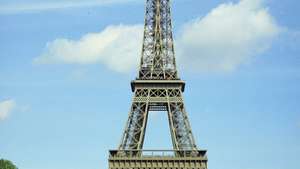
Back within the city limits, south of Place Charles de Gaulle, is the Chaillot Palace (Palais de Chaillot). Standing on a rise on the Right Bank of the Seine, where the river begins its southwestward curve, the palace is an impressive spot from which to view what is arguably the most recognized symbol of Paris, the Eiffel Tower. The palace, which dates from the International Exposition of 1937, replaced the Trocadéro Palace, a structure left over from the 1878 International Exposition. It is made up of two separate pavilions, from each of which extends a curved wing. Several museums, including the Museum of Mankind, the Naval Museum, the Museum of French Monuments, and the Cinema Museum, are located there. Under the terrace that separates the two sections are the National Theatre of Chaillot and a small hall that serves as a motion-picture house of the national film library.
The terrace, which is lined by statues, gives a splendid view across Paris. The slope descending to the river has been made into a terraced park, the centre of which is alive with fountains, cascades, and pools. The Trocadéro Aquarium (Cinéaqua) is a few steps away in the park. From the bottom of the slope the five-arched Jena Bridge (Pont d’Iéna) leads across the river. It was built for Napoleon I in 1813 to commemorate his victory at the Battle of Jena in 1806.
On the Left Bank rises the Eiffel Tower itself, an unclad metal truss tower designed by Gustave Eiffel. The tower was built for the International Exposition of 1889, against the strident opposition of national figures who thought it unsafe or ugly or both. When the exposition concession expired in 1909, the 984-foot (300-metre) tower was to have been demolished, but its value as an antenna for radio transmission saved it. Additions made for television transmission added about 79 feet (24 metres) to the height. From the topmost of the three platforms, the view extends for more than 40 miles (64 km). From the 2-acre (0.8-hectare) base of the tower, the Champ-de-Mars (Field of Mars), an immense field, stretches to the Military Academy (École Militaire), which was built from 1769 to 1772 and later became the site of the War College (École Supérieure de Guerre). The Champ-de-Mars, which originally served as the school’s parade ground, was the scene of two vast rallies during the French Revolution: the Festival of the Federation (1790) and the Festival of the Supreme Being (1794). From 1798 there were annual national expositions of crafts and manufactures, which were followed by world’s fairs between 1855 and 1900. Behind the Military Academy stands the headquarters of UNESCO (United Nations Educational, Scientific and Cultural Organization). The building, erected in 1958, was designed by an international trio of architects and decorated by artists of member nations.

Everything has a beauty.

Beauty is an essential part of our lives even though we don’t always realise it. Beautiful in looks and quality is that special thing that make us wonder and fall in love with people and things.
Sometimes people are beautiful not in looks, not in what they say, just in what they are.
Everything has a beauty but not everyone sees it.

What if we have a jasmine, beside a beautiful rose, will you still look for the beauty, when the the smell of the jasmine blows?

What we hear a cuckoo singing, beside a beautiful peacock, will you still look for the beauty, when the voice of the cuckoo evoke?

ACID ATTACK IN INDIA

Acid Attacks in India is a gruesome act which almost finishes the lives of survivors. But the IPC in the year 2013 got amended. And now we have strict laws against acid attackers.

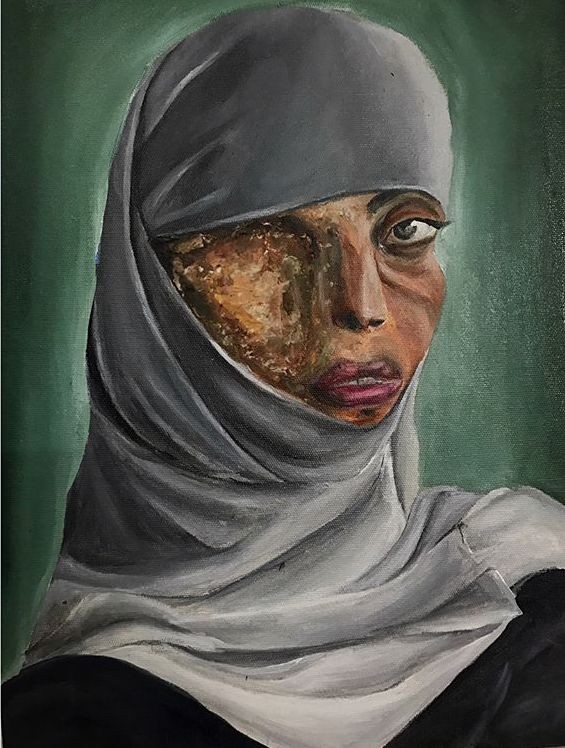
An acid attack is a very dangerous incident. This does not only happens in India but also happens in foreign countries. According to a survey most of the acid attacks have been reported in UK and Bangladesh. An Acid attack causes a serious threat to the body parts resulting in the deformation of the face, limbs & legs and it’s been observed that most acid attacks are targeted at the face of victims. Acid attack is a heinous crime. It makes the life of the survivor miserable. There are many motives for acid attacks. In India, the cause of such gravity offence happens due to love issues, rejections, sexual abuse, dowry, extra-marital reason, cruelty, ego and the list of reasons go on. This form of crime happens as a form of Revenge against women. Acid Attack is a gruesome act which is horrible in nature and has lethal consequences on the lives of victims. This kind of incident makes the life of the acid attack survivors tough and way more miserable. The victims go through a lot of pain mentally and physically. Often it’s seen, the victims don’t get social acceptance post the crime. This leads to psychological disorders in them. It creates a negative impact on the lives of women. The after-effect of an acid attack depends upon the concentration of acid thrown. Body part gets decomposed like the skull, lip, skin, face, lose of eyesight, cause of deafness, hairs & teeth are destroyed and the skin also shrinks. Sometimes the victims don’t even survive. It especially happens to women who are the victims. They often isolate themselves after such incidents. The crime against them creates post-traumatic effects. There has been an increasing rate of acid attack incidents all over the world. The Government is opening rehabilitation centres to such victims to overcome the horrible assault against them. Many NGOs have stepped forward against this social issue by creating awareness among people.
In my point of view, there should be strict regulations regarding the sale and purchase of acids in shops. The acids which are used in acid attacks are very easily available and also its cheap. The easy access to such acids should be strictly regulated.
Acid attack is seen as a very common issue in India. But deforming someone’s face or neck or the entire body is an attempt to kill. The lawmakers should make special laws for acid attack cases and the victims or else they should amend the IPC. In IPC section Section 326 deals with the acid attackers. But its scope is really narrow and it is not comprehensive in nature. Section 326 of the IPC does not exactly chalks out the facts but it’s also very shady. The punishment to the criminals is also not defined in this section neither the penalties and fines. But depending upon the seriousness of the offence I feel the acid laws in India should be treated seriously. ‌Till now there was no specific law relating to acid attacks in India. But After the famous landmark case of LAXMI VS. UNION OF INDIA 2013, the acid laws are strictly taken into consideration and IPC got amended. Under Section 326A and 326B of IPC it was held that acid attack is a crime in India! The Code of Criminal Procedure Under Sec 357A and 357B got amended too!

Being an acid attacker victim is not easy! Starting a life from the beginning is not easy! Often it’s seen the victims do not get social recognition after such incidents. This is a big NO!! to such unhealthy hospitality. We should support and love the survivors for their courage!

Some successful entrepreneurs of recent time

Developing and Managing a business is called Entrepreneurship. The goal of the business is to gain profit. The entrepreneur should be innovative enough to make his/her business become a success. He/She should be having qualities of a good leader to execute the team work efficiently. This journey also comes with many risks.

Entrepreneurship includes start-ups and small business. Entrepreneurship creates jobs and helps in developing economy. Entrepreneurship does not have a specific path to follow. The path differs to for every aspiring entrepreneur according to their goals and their present conditions.

India has seen many of such successful entrepreneurs from a very long period. Here are some of the entrepreneurs of the recent times who managed to swim through the ocean and grab the trophy of success:

  1. RITESH AGARWAL (OYO ROOMS) : Ritesh Agarwal, founder of OYO Rooms was born in Odisha. He qualified the Thiel fellowship which was for entrepreneurs of age below 20. Ritesh founded OYO-On your own hotels and homes in 2013 and at the age of 22 he became a millionaire. The concept of OYO was inspired by Airbnb, a US based company. OYO headquarters is in Gurugram and the company has expanded to Malaysia and USA and 80 other countries.
  2. SHRADHA SHARMA ( YOUR STORY) : Your story was started in 2008 by Shradha Sharma. She Used to work at CNBC TV18 as a journalist before she decided to take this venture of start-up. Your story publishes stories of success of different people through their blog. The blog is published in 12 Indian languages. Now the net worth of the company is estimated to be $678K. More than 40,000 success stories have been published in the blog and has more than 10 million readers per month.
  3. BHAVISH AGARWAL ( OLA CABS) : Bhavish Agarwal was born in Punjab. He was a student of IIT Bombay and started his career by working in Microsoft. A Bad experience during one of his rented drive, gave him Idea of starting the car renting company. Ola cabs stared partnering with taxi drivers. They gave the comfort of booking the cars through mobile phones through the app to the customer. They also started partnering with auto drivers as well. Now the Net worth of the company is estimated to be $6.5 billion. Now Ola is renting e-bikes which aims bring revolution.
  4. KUNAL SHAH ( CRED) : CRED was started in 2018 by Kunal shah, Who is also known for starting the company freecharge. CRED is a app mostly for mobiles which helps the members to manage their credit cards in one place. Kunal Shah is a founder of tech company without engineering background . The company got funding before its execution. And it has a huge market as now.

The opportunities for an entrepreneur in India is very high and still growing. India is considered as a good investment destination. A report from pricwwaterhouseCoppers says that 2219 multinational companies emerge from India till 2024. A favorable environment for the business persons is developing in India. Along with government programs, private funds are also increasing in India and hopes to see much more successful entrepreneurs in future.

Easy and simple ways to improve English at home

English is a globally accepted language spoken world-wide thus, acquiring significance in learning. People speaking fluent and correct English are treated with more respect in our country. It is recognised as a standard in corporate world. This language is easy to learn but requires practice to reach a good level of understanding. It has become important to know English if a person wants to interact with officials or even common people since it reflects the standard of a person in these times. It can also be learnt to speak without knowing to write for those who joined in late for the purpose.

Some useful tips to improve English and speak it confidently are:-

  1. Reading English Newspaper

This is a very useful tip and easy for those who have a habit of reading newspapers daily. You can learn more quickly this way. What all is needed to read your local language newspaper as usual and then read the English newspaper. Since the news is same in all languages’ newspapers of an area, you will read the same articles in both languages and earn an understanding of how the ideas, opinions, etc are presented in the English. Make it a daily habit and results will soon be out. You can choose magazines or journals instead, as per your preferences.

2. Watching English movies

They will help you understand the way of speech. The fluency will improve gradually when you will watch their movements carefully of how they react and respond in the English movies. Prefer watching those having subtitles so as to know what is actually being said. It is better not to assume things. There are many English shows also which are good to improve your English. They are preferred more since you get familiar with the characters and the story easily. Also, their speech is much clear and slow as compared to the movies.

3. Listening English Songs

There are many melodious as well as fun songs on the platform to enjoy and learn English without any hard work. Music is always known to destress the mind and refresh the mood. Songs are a source of pleasure and can help improve fluency in English as you keep listening them. Monitor their lyrics and you will get better understanding soon.

Photo by Anete Lusina on Pexels.com

4. Read Books

Books extend the knowledge to great levels and what can be a better way to improve your English while reading interesting stories and insightful texts. They are available online as well.

5. Talk with Friends/ Practice in front of mirror

Friends are always supportive. Start talking in English with your friends. It is the best way as they will not make fun of you if you make a mistake, instead they will guide you or correct you at times. You can practice speech in front of mirror. This way you will also be able to administer your body language while speaking which plays an important role during presentations or even during normal interactions. Speaking in front of mirror will also prepare you for public speech i.e., speaking in front of an audience. You will improve quick with daily practices.

6. Go for online apps and YouTube

Search for relevant apps and videos on the virtual platform to get a good insight into the language, along with following the above steps.

10 Best Places to visit in Goa

Goa is a state on India’s southwest coast that is part of the Konkan area, which is separated from the Deccan highlands by the Western Ghats.

Some places you must visit if you are visiting Goa are –

Calangute Beach

Calangute Beach, also known as the “Queen of Beaches” in Goa, caters to a wide range of tourists, from nature lovers to thrill seekers to party animals. This beach is the largest and most popular in North Goa, serving as a sanctuary for nature lovers in particular.

Roam at Tito’s Street

Tito’s Street is one of the greatest nightclubs in town. Tito’s Street, named for the street on which it is located, is a popular nightclub that draws large audiences due to its great location and excellent service. The place has two levels: the bottom level is a dance floor with distinct dancing areas for couples, while the top-level allows patrons to relax and observe the action below while eating and drinking.

Anjuna Beach

The southern and northern ends of Anjuna beach, which stretch along the golden shoreline, provide a variety of activities. While the southern end has a rocky outcropping, the northern end offers water activities such as bungee jumping, rough banana rides, and more. Goa’s “multidimensional entertainment hub” is Anjuna Beach. Anjuna beach offers magnificent views and a photo opportunity at sunrise and sunset. The unmatched vista is created by the mix of white sand and dazzling blue water.

Dudhsagar Waterfalls

The Dudhsagar Waterfalls, located on the Goa-Karnataka border, are a must-see attraction in India. On the Mandovi River, the four-tiered waterfall formation is one of the highest in India. From a height of almost 1017 feet, the white water flows down a practically vertical mountain wall.

Fort Aguada

Fort Aguada, another Portuguese legacy, has stood sternly on the beach facing the Arabian Sea since 1612 when it was built to offer protection against invading Dutch and Marathas. It was a magnificent ancient fort at the time, with the potential to house 79 cannons and other defensive weaponry. It was one of the Portuguese’s most cherished assets. Today, it serves as a popular Goa tourist attraction, separating Sinquerium Beach from Candolim Beach.

Grand Island

The heaven of Goan water sports is Grand Island. From diving to snorkeling to fishing, there is much to do here. Scuba diving is the most popular activity in Goa since it allows for so much underwater exploration. There are shipwrecks as well as some reefs can be discovered here. Divers love the “Suzy” wreck and the “Davy Jones Locker,” as well as Serge City, Bounty Rock, and Turbo Tunnel. 

Sinquerim Beach

Sinquerim Beach is located north of Goa’s renowned beaches, such as Calangute, Baga, and Candolim, and has a beautiful beachfront. Sinquerim’s waters are ideal for a relaxing swim. The renowned Sunburn Festival, held each year in December, is one of Sinquerim Beach’s main attractions. The Aguada Fort, which is located right close to the beach, is another popular site. 

Vagator Beach

Tourists and travel enthusiasts may have a once-in-a-lifetime experience at Vagator Beach in Goa. It is located on the far northern outskirts of Bardez Taluka, on the other side of the Chapora River, which originates in Morjim, Pernem. Anjuna, one of Goa’s oldest tourist attractions, is located to the south of Vagator Beach.

Sunburn Goa

Sunburn Goa is an annual electronic dance music event hosted in Goa that is described as Asia’s largest gathering of its type. The event lasts three days and is jam-packed with incredible performances by some of the world’s most well-known DJs.

Dona Paula Beach

The Dona Paula Beach, a tiny beach with a terrible past involving love and suicide, is the best location to visit in Goa. In terms of water sports and sightseeing, it has a lot to offer. Tourists go to the jetty close to the beach because of the beautiful view of the Arabian Sea it provides. The sad legend says that the spirit of Dona Paula rises from the water at night, wearing just a pearl necklace, looking for her love. On the beach, she is thought to have committed suicide.

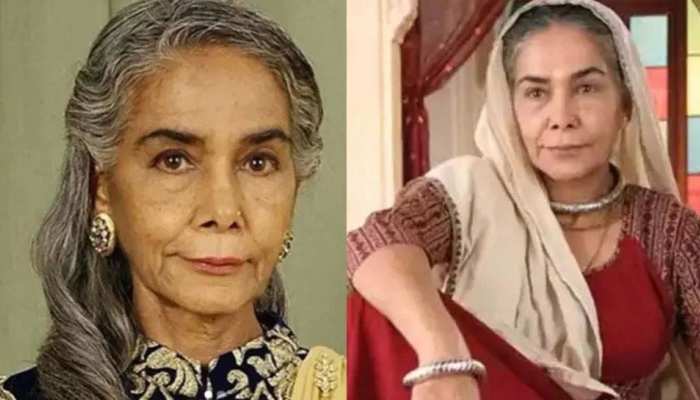
Surekha Sikri Passes Away

Veteran actor Surekha Sikri passed away today at the age of 75 due to cardiac arrest.

Surekha first appeared on the silver screen in the 1978 film Kissa Kursi Ka. From there on, she went on to gain acclaim for her roles in films like Govind Nihalani’s Tamas, Shyam Benegal’s Mammo and Sardari Begum. In the 90s, she prominently featured in television shows like Banegi Apni Baat and Just Mohabbat.

It was her time at TV show Balika Vadhu that made her a household name amongst the masses. She played the role named Kalyani Devi who rules with an iron fist but gradually softens up towards the protagonist Anandi.

The 2018 film Badhaai Ho, for which she also won a National Award, had fans applauding her time on the screen. The Amit Sharma film had her playing the role of a women who comes from an orthodox background but is ready to embrace the new world.

She was last seen in the Netflix anthology Ghost Stories where she starred alongside Janhvi Kapoor in the Zoya Akhtar directorial. Sikri played a bed-ridden patient who is lost in her world.

Many Bollywood celebrities paid tribute to the late actor. Many TV actor including Sidharth Shukla, Sushant Singh, Avika Gor, remembered Surekha on social media. Her manager said that “Three-time national award winning actress, Surekha Sikri has passed away following a cardiac arrest earlier this morning at the age of 75. She had been suffering from complications arising from a second brain stroke. She was surrounded by family and her caregivers. The family asks for privacy at this time. Om Sai Ram.”

Class in Mahasweta Devi’s ‘Rudali’

Mahasweta Devi is a Bengali writer and activist who is known for her strikingly social and poignant stories. She wrote several works ranging from novels and plays to essays and short stories. Her most notable works include Hajar Churashir Maa, Rudali, Aranyer Adhikar etc. She has received highest literary merits in India like Jnanpith Award and Padma Vibhushan. As an activist, she has also worked towards the empowerment and rights of tribal people from West Bengal, Bihar, Madhya Pradesh, and Chhattisgarh.

Rudali is a thought-provoking short story that deals with the underlying class and caste issues prevalent in India. Originally written in Bengali, it follows a raw narrative that depicts the struggles of the subaltern in a vastly power-imbalanced society. Rudali follows the story of Sanichari who labours hard all her life to make ends meet. The story begins by establishing her caste and how despite being the majority, the Ganjus and Dushads live in desperate poverty. They work as cheap labourers for the ‘Malik Mahajan’ who are the wealthy landlords and money lenders of the village. After losing her in-laws and her husband, she works hard to sustain for her son. But after his marriage, he slowly deteriorates due to tuberculosis and eventually after his death, his wife leaves, leaving Sanichari to look after their new born son. Later after he runs away from home, Sanichari finds an unlikely partnership with Bhikni, an old friend.

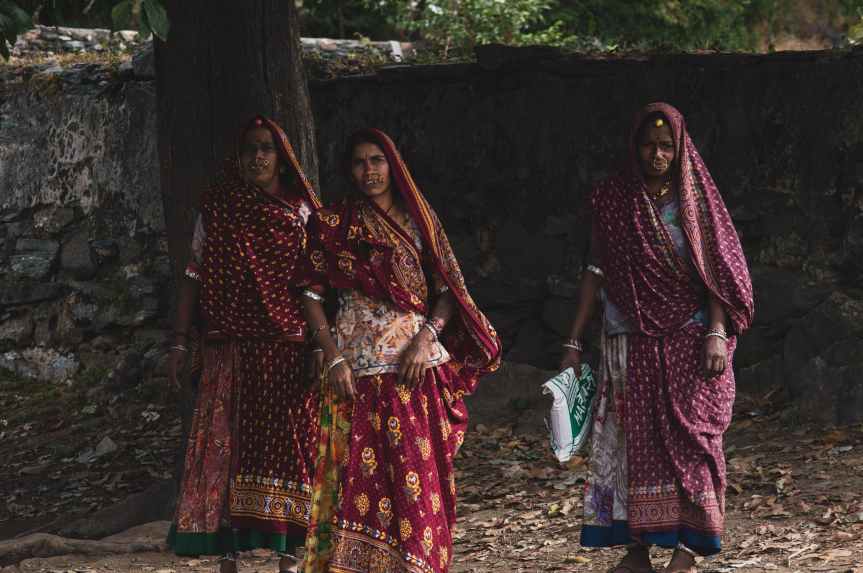
The two women forge a strong companionship and together they play a cunning game of getting back at their exploiters. ‘Rudali’ refers to a particular Rajasthani culture wherein women of lower castes are hired as professional mourners by the upper-class to mourn the deaths of their family members. The two women build a business together, harnessing this profession to get jobs to local lower-caste women who have been exploited and ostracised and exploited by the society. In no time, the upper-class people try to one up each other even in funerals and even go as far as purposefully killing themselves or the elders to hold grand funerals.

Entitled by the power of money, Devi reinforces the fact that people in power compromise morality to maintain their position through the shenanigans of the upper-class folks who are known as the ‘Malik Mahajan’. Historically, they were Rajput soldiers who pillaged and killed innocent tribes and conquered these lands. And then, Dulan says that “From century to century, their holdings and power increased. Even now, they take possession of land…” (Devi 73) They built up their power over the tribes and the lower caste through violence and debt traps. They spend lavishly on funerals to ‘uphold honour’ and ‘raise prestige’ by extracting money from the poor. Their greed for more lessens their humanity even with respect to their own kind. In this society, the rich are constantly rich while the poor are perpetually poor.

Where the privileged are divided amongst themselves due to greed for more, the powerless, though diverse, are united in their struggles against the elite. In Rudali, the lower caste and the shunned women look out for one another due to their shared resistance against the Malik Mahajan. Mahasweta Devi narrates this story of oppression without overtly emotionalising it and yet, it affects the readers in such a way that it provokes these emotions within us. To bring out maximum impact, she portrays reality as it is in all of its rawness which makes us question the power play prevalent in the society.

Anxiety

Anxiety is a mental disorder characterized by feelings of worry, strong enough to interfere with one’s daily activities.

It is normal to be anxious for something new, but if it sees you have it every day interfering in your daily lifestyle, then there is a warning bell of you having anxiety disorders.

Types of anxiety disorders:

  • Panic disorder: Experiencing panic attacks at an unexpected time.
  • Phobia: Excessive fear for specific things.
  • Social anxiety disorder: Fear of being judging by others in a social situation.
  • Separation anxiety disorder : Fear of been away from loved ones.
  • Illness anxiety disorder: The anxiety of their health.
  • Post-traumatic stress disorder: Having anxiety after a traumatic situation. 
  • Obsessive-compulsive disorder: Having irrational thoughts that lead to repeat a behavior or actions.

Symptoms of anxiety :

  • Increased heart rate 
  • Difficulty falling asleep
  • Rapid breathing
  • Restlessness
  • Trouble concentrating 

An anxiety attack:

It’s a feeling of overwhelming apprehension, worry, distress, or fear.

Symptoms of an Anxiety attack:

  • Feeling dizzy or faint
  • Shortness of breath
  • Fear 
  • Numbness or tingling
  • Sweating
  • Distress

Causes of Anxiety :

The reason for anxiety is not specific, but it may be genetic and environmental factors or brain chemistry.

Treatment for anxiety:

  • Self Treatment : It contains stress management, exercise, relaxation techniques, etc.
  • Counselling : It mostly refers to psychotherapy or a combination of therapies.
  • Medications : Intake of medicines is preferred after doctor advice.

Manifestation and the 369 method

The entire universe is conspiring to give you everything you want!

Abraham Hicks

The new fast-moving world indeed changes with every passing second, but along with its fast pace, the craze to access and achieve everything within a blink of an eye has found its place in the new modern world. With the growing network of TikTok’s and YouTube videos, the idea of manifesting your goals has taken over the lives of people around the globe. ‘Manifesting’ out of its traditional Cambridge dictionary explanation of to show something clearly, through signs or actions has now gained this broad meaning of practising inspirational thoughts to make them real. As the pandemic trapped us in a literal digital bubble, confined to our homes, “achieving things’” had a newfound meaning: to achieve is to manifest. During the year 2020, the google search logs showed a record surge in keyword Manifest. Google searches for the same were more than 669 per cent that year. Manifesting was the new addition to the bandwagon of crystals, essential oils and meditation.  While compared to its contemporaries, manifestation routines have gained widespread popularity due to the zero-cost investment and quick, miraculous effects.  

Manifesting in simple terms is making something you want to happen by simply believing it will happen. What forms the base of manifestations is the law of attraction, which states that we attract what we focus on. There are several manifestation methods that you can find online, the vision board method, gratitude journal, two cup method etc. But the basic idea that it depends largely upon is the positive mindset a person has towards achieving a goal and a feeling of gratitude for all that he has already. One of the treading manifestation methods that were made famous by tiktokers was the 3,6,9 Method. 

The 369 manifestation method is said to be inspired by Nikolas Tesla’s numerology obsession. He believed that the numbers 3, 6 and 9 had a unique connection to the universe. Numerology experts believe the numbers three, six and nine stands for positive energy nurturing and fulfilment.  It is a method of manifesting your goals by writing them down in a journal or a paper three times in the morning, six times in the evening and nine times before you sleep. To manifest a goal using this method, you’ll have to pen down your intention throughout the day. You start by writing your affirmation (the vision you want to manifest) three times in the morning in your journal/paper. During this time, visualise what you would feel, what would you do once you achieve what you are manifesting. In the afternoon, write your affirmation six times and express gratitude for whatever you already have. At night, before you wind up for the day, write your affirmation nine times and visualise the whole scenario and imagine what you might feel when you achieve your goal. 

This technique helps you visualise your goal and bring about a positive change in how you look at your desires. The major takeaways from manifestation techniques are the importance of expressing gratitude and a positive outlook. So trust the process and believe in it until it manifests for you, for you become what you attract!