14 years since their last meeting in a Copa America final, Brazil are set to face Argentina in the final of the 2021 Copa America, in a clash of the titans on Saturday at the Maracana in Rio de Janeiro.
The Selecao come into this game after an unbeaten run in the group stage which they had continued into the knockout stage as well. After their free-flowing play in the opening matches, Brazil have shown grit and determination to their game in the two 1-0 wins against Chile and Peru, in the quarterfinals and semi-finals, respectively.
GAME CHANGERS
NEYMAR
As seen in the previous group stage games, most of the Brazilian attacks have to go through Neymar, and that is not a surprise at all. The Paris Saint-Germain forward is one of the best players in the world and can break open defence at will with his silky footwork and goalscoring abilities.
With two goals and three assists in the campaign, Brazil’s talisman is in superb form and Tite will hope that he continues to do the same, while also expecting the continuation of the support offered by his fellow attackers Lucas Paqueta, Richarlison, and Gabriel Jesus.
LIONEL MESSI
This tournament might well be Lionel Messi’s last chance at winning a Copa America title and the mercurial forward will look to pounce upon every opportunity that arises in the game against Brazil and has been unstoppable in the tournament.
The mercurial magician is topping the charts in both goals and assists, four and five, respectively, and will be Scaloni’s primary weapon in opening up a resolute Brazilian defence. Striker Lautaro Martinez also has had a tremendous Copa campaign and the manager will hope that the Inter Milan striker continuous his rich goalscoring form.
PREDICTION
With both squads having filled with a plethora of talent and having a near-identical run into the final, it is difficult to pick a winner out of the blue and proclaim them as the champions of the 2021 Copa America.
Brazil will want their attacking superstars to finish the job, while also banking on their resolute defence while Argentina will depend on the magic of arguably the best player in the world, hence, FootTheBall says, Brazil 1-1 Argentina, Brazil win on penalties.
Ocean acidification is defined as a drop in the pH of the ocean over time, largely due to the uptake of carbon dioxide (CO2) from the atmosphere. Defining it simply, as we all know human activities releases CO2 into the atmosphere which leads to atmospheric warming and climate change. The seas absorb around a third to half of the CO2 produced by human activities. While this serves to slow atmospheric warming and climate change, it also has a direct chemical impact on seawater, which we refer to as ocean acidification.
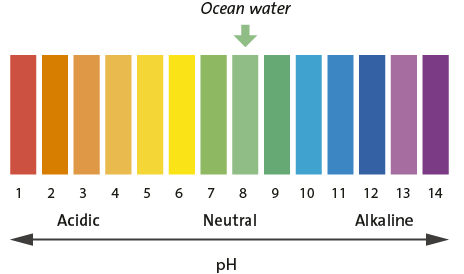
pH as mentioned above is frequently used to describe ocean acidification. The pH scale measures acidity and alkalinity. A pH of less than 7 is acidic, whereas a pH of higher than 7 is alkaline, or basic.
Currently, the average pH of ocean water is 8.1. Because the pH scale is logarithmic, a one-point change in concentration corresponds to a tenfold change in concentration. Carbon dioxide (CO2) levels in the atmosphere have been rising for more than 200 years, or since the industrial revolution, mainly to the combustion of fossil fuels and changes in land use. The ocean absorbs roughly 30% of the CO2 that is emitted into the atmosphere, and as atmospheric CO2 levels rise, so do ocean CO2 levels.
As a consequence, the median pH of ocean surface waters has dropped somewhat, from 8.2 to 8.1. This translates to a 26% increase in ocean acidity, which is about 10 times quicker than any other period in the previous 55 million years.
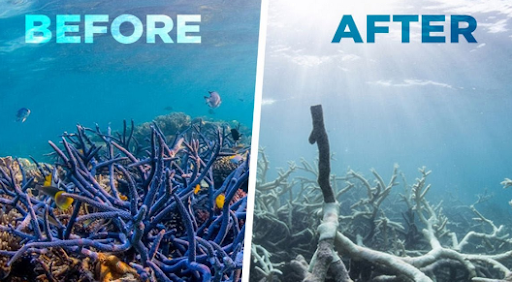
But now, the question arises why the seawater becomes acidic. So to answer this we must understand that When co2 is consumed by seawater, it triggers a chain of chemical processes that result in an increase in hydrogen ion concentration. As a result of this rise, saltwater becomes more acidic and carbonate ions become less prevalent. Carbonate ions are essential mainly for marine shells and carol skeletons because these ions are the building components of it. Reduced carbonate ions can make it difficult for calcifying animals including oysters, sea urchins, shallow water corals, deep sea corals, and calcareous plankton to develop and maintain shells and other calcium carbonate structures.
Due to such increased acidification, whole world’s seas especially coastal estuaries and rivers, are being affected by ocean acidification and it eventually affects the ocean chemistry because In more acidic environments, certain fish’s ability to detect predators is harmed. And when these creatures feel threatened, the entire food web feel threatened as well.
Taking the future world in view, due to the increase in atmospheric co2 , it will have a direct impact on the degree of future ocean acidification. So if, current greenhouse gas emissions continue, ocean acidity might rise by 0.4 units by the end of the century. However, Ocean acidification will not be consistent throughout the planet. Polar waters and upwelling zones, which are frequently located along continents’ west coastlines, are predicted to acidify more quickly than temperate or tropical regions. Depending on the environment, the pH will vary substantially.
Therefore, While the ultimate answer to lessen the ocean acidification is to reduce global greenhouse gas emissions. It can be done by adopting certain difficult decisions and activities which can help us prepare for the negative impacts of ocean acidification. On a smaller scale, Water quality improvements, Development of fisheries management methods that are sustainable, New technology implementation such as development of aquaculture industry and protecting Marine ecosystems that are very fragile and endangered may assist marine ecosystems adapt better with changing environmental circumstances by mitigating the negative impacts of other local factors.
Many people are of the opinion that music often connects people of various ages and cultures. I highly disagree with this opinion as every individual is different and feels forced if asked to do something that they do not like.
To embark on, there are many forms of music and different people have different choices some people like slow songs whereas, others like songs that are fast. Cultural difference and language are one of the main reasons of people having clash of choices. For an instance, if we compare people of Punjab and people of Bengal, most of the resident of Punjab listen to Punjabi songs whereas people living in Bengal cannot understand them. Therefore, it creates a wedge between them and drives them further away.
Furthermore, age has a significant impact on the choice of songs. People of various age groups like different songs. For example, people who are old mostly like to listen to old songs or religious songs whereas, the young generation likes to listen to latest songs. Very young children who are under the age of eight might also have different opinion, they often like to listen to poems or songs that are related to cartoons. Hence, it becomes difficult for people different ages to bond over music and it results in keeping them away.
According to me the statement is completely wrong as music does not bring people together but, creates distance between them due to conflict of choices.
To encapsulate people should not consider music as a factor that brings people together as the significant difference in choices results in quite the opposite.
The energy crises has shown that for sustainable development in energy sector we must conserve the non-renewable conventional resources from its rapid depletion and replace them by non-polluting, renewable sources which are environmentally clean.
Efforts are made to develop new sources of energy which is called non-conventional sources of energy. It would provide greater initiative to local people who could assess their needs and resources and plan a strategy that could be useful to them.
Solar Energy
Solar energy is the energy obtained from the sun. The sun gives out vast amount of light and heat. It is only a little less than half ( 47%) of solar energy which falls on the atmosphere reaches the earth’s surface. If we could use just a small part of this energy it would fulfill all the country’s need for power. Solar energy has advantages and also certain limitations.
Solar Energy Devices
The energy from the sun can be harnessed to provide power. The various devices used for harnessing sun’s energy are called solar energy devices.
Solar Panel
Arrangement of many solar cells side by side connected to each other is called solar panel. The capacity to provide electric current is much increased in the solar panel. But the process of manufacture is very expensive.
Solar Cooker
It consist of an insulated metal box or wooden box which painted from inside so as to absorb maximum solar radiations. A thick glass sheet forms the cover over the box. The reflector is the plane mirror which is attached to the box. The food is cooked by energy radiated by the sun.
Advantages of Solar Energy
✓It is available in abundance in our country and is free of cost. ✓It is a renewable source of energy. ✓It can be used for generating electricity or heat. ✓It does not cause pollution.
Biogas
Biogas is the mixture of methane (nearly 75%), hydrogen sulphide, carbon dioxide and hydrogen. It is produced by the decomposition of animal wastes (cow dung) and plant wastes in the absence of oxygen. It is also commonly called as ‘Gobar gas’ since the starting material used is cow dung which means gobar in Hindi.
Uses of biogas
✓It is used as fuel for cooking. ✓It is used to run motors and pump sets. ✓It is used to generate electricity.
Advantages of biogas
✓It burns without smoke and therefore causes less pollution. ✓An excellent way to get rid of organic wastes like bio-waste and sewage material. ✓Left over slurry is a good manure rich in nitrogen and phosphorus. ✓It is safe and convenient to use. ✓It can reduce the amount of greenhouse gases emitted.
Shale gas
Shale refers to the soft finely stratified sedimentary rock that is formed from the compaction of small old rocks containing mud and minerals – such as quartz and calcite, trapped beneath earth’s surface. These rocks contain fossil fuels like oil and gas in their pores.
Environmental concerns of shale gas
✓Shale drilling could affect groundwater reserves, which can contaminate the drinking water resources and also affect the fertility of the soil. ✓Million gallons of water is needed to break and release the shale gas, which inturn can affect the water table.
Wind Energy
The Kinetic energy possessed by the wind is due to its high speed, that can be converted into mechanical power by wind turbines. The rotatory motion of wind mill produces wind energy. It can be used for generating electricity, run water pumps, flour mills, draw water from wells etc.,
Windmill
Windmill is a machine that converts the energy of wind into rotational energy by broad blade attached to the rotating axis. When the blowing air strikes the blades of the windmill, it exerts force and causes the blades to rotate. The rotational movement of the blades operate the generator and the electricity is produced. The energy output from each windmill is coupled together to get electricity on a commercial scale.
Advantages of Wind energy
✓Wind energy is free, eco – friendly, renewable source of energy. ✓It does not cause pollution. ✓Expenses on periodic maintenance is when compared to the other power sources.
Water Energy
Earth’s surface is covered with nearly 71% of water. Harnessing the energy from the flowing water can be used to produce electricity. The technique to harness the water energy is called Hydropower.
The electrical energy is derived from water flow, water falling from a height. Hilly areas are suitable for this purpose where there is continous flow of water in large amounts falling from high slopes. It does not cause environmental pollution or waste generation.
Hydropower plants converts the kinetic energy of flowing water into electricity. This is called hydroelectricity.
Tidal Energy
Tidal energy is the energy obtained from the movement of water due to ocean tides. Tides are the rise and fall of sea levels caused by the combined effects of the gravitational forces exerted on the oceans of the earth.
A tidal stream is a fast flowing body of water created by tides. Turbines are placed in tidal streams. When the tides hit the turbine, the turbine rotates and converts the tidal energy into electric energy.
Advantages of tidal energy
✓Tidal energy does not produce any pollution. ✓It does not use any fuel and does not produce any waste. ✓Tides are predictable, so tidal energy can be produced at any time.
Unemployment is India’s serious predicament. Millions of educated people are without a job. Even skilled and professional like engineers and technicians are collecting unemployment benefits. A horde of labourers who search jobs every day. If we neglect this problem then it will become the reason for the doom of the nation.
There are various types of unemployment. The most common unemployment that is found in India are seasonal unemployment, under unemployment and disguised unemployment.
There are many causes which have led the country to this state of unemployment in India. The first cause is the enormous increase in population. According to UNICEF 67,385 babies are born in India, that’s one sixth of the world’s child births. This means excess in the supply of labor than its demand ultimate leading to jobless population.
In addition is the low purchasing power of the people. It means the people have low income and wages but the prices are sky-high. Consequently the people are not capable to buy. This leads to retrenchment of labour leading to unemployment.
The biggest cause of unemployment among the educated is the flawed system of education. Graduates and post graduates are being turned out every year. They demand ‘white collar jobs’. They loathe work involving physical labour. But the situation has become so drastic that highly educated are ready to do menial jobs.
Another cause is the industrial bashfulness of our country. Pace of economic development is slow. Therefore, our industries cannot provide employment to the increasing numbers. Apart from all these, a large portion of the population is engaged in the agricultural sector which only provides employment in harvest or plantation time.
Unemployment is becoming a serious problem. It is major economic and social problem. Unless this problem is solved, even political freedom would become meaningless. It brings starvation and misery. It encourages dishonesty and corruption. It, thus, produces antisocial elements.
But this problem cannot be solved so easily. It can be solved only if the government and public make a determined effort. The government is taking many steps. Family planning is the first measure. People should lean to limit the number of children to two. Some of the scheme issued by the government are IRDP (Integrated Rural Development Programme), JawaharRozgarYojana, Employment Assurance Scheme, Training for self-Employment. Secondly, the system of education is also being overhauled. Those fit for technical education should be sent for training in respective fields. There should be more emphasis on vocational and technical training and accordingly the curriculum should be altered in schools and universities. The government is trying to set up industries based on agriculture. It is trying to set up cottage industries like carpet-making, mat-making, soap-making and many more to provide employment to the needy.
To conclude, the problem of unemployment in India has reached a critical stage and it has persisted for long. But the government and other authorities have taken the responsibility and working on it. Also, to completely tackle the issue of unemployment we have to find the solution of the main issue that is the enormous population of India. Together we can overcome this hurdle.
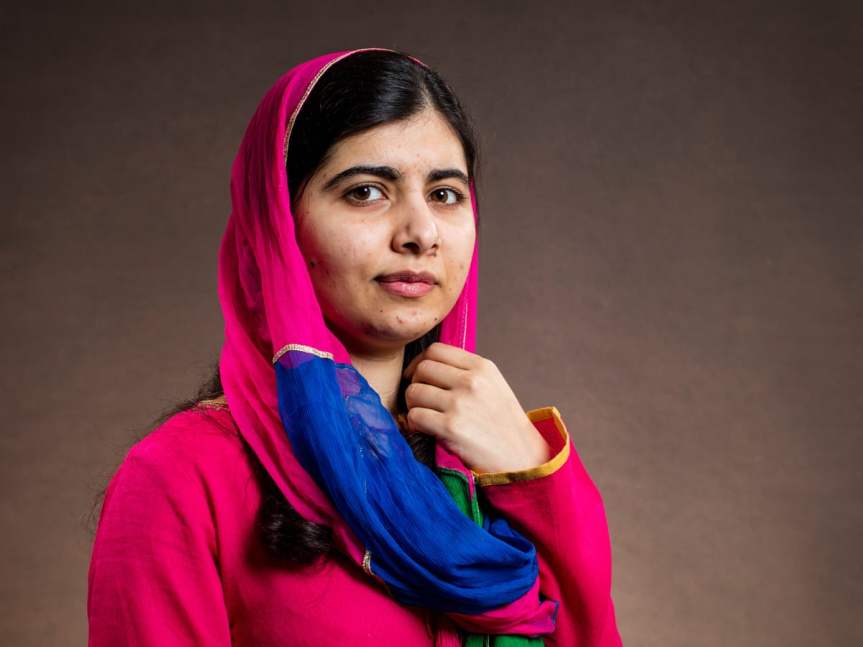
“We realize the importance of our voices only when we are silenced.” Malala Yousafzai, a teenager known throughout Pakistan for her advocacy on women’s education and women’s rights. Standing up for women’s progress can be a risky business in countries like Afghanistan and Pakistan where vicious Islamic extremists have a strong foothold. She has publicly spoken for women education was shot in the head by the Taliban, in an attempt to silence her. She survived.
This near to death experience gave her a voice which could not be supressed and that progressed to her earning the Noble Prize when she was just 17, she has been continuing to fight for female education and her global scale has been increasing ever since. In Malala’s gripping book she tells a story of faith, hope and bravery.
Circumstances which brought her to the front of an international scene on female education are heart-wrenching and tragic, that involved Taliban taking over Pakistan, being forbidden to attend school because of her being a girl and was asked to stay at home and being shot in the head by the deadliest terrorist group in the world back in 2012. These are the situations which many would not be able to sail through, most would abandon and drown will fighting for what is right. But she did not budge. She kept a fierce front and continued to advocate for education for girl’s and women. After going through hell, her voice is stronger than ever and is also supported globally.
Overview–
In the first half of the book, she describes the history of Pakistan, her family’s ancestors and Swat, which is the northern region of Pakistan where she used to live as a kid. She shares anecdotes about her childhood, her family. She gives the reader a glimpse of Pakistan through a women’s approach. Malala’s father founded the local school which she attended growing up, from a young age, she demonstrated strong character and soon began to ask her father why were women being treated so poorly in Pakistan. In response, he told Malala about Afghanistan, where the Taliban burned schools for young girls and forced them to wear full burkas. Her father’s goal was to make her understand that the poor treatment of women in Pakistan was actually not that bad, when he compared to the way women were treated in Afghanistan. This book is almost about her father, Ziauddin, who is a teacher, headmaster and a local activist. He is the dominant influence in Malala’s life and has been consecutively criticized for encouraging his intelligent child to be outspoken in a dangerous environment. According to Malala’s perspective, her father feels guilt and felt responsible for what had happened to her, but also is proud of her bravery and accomplishments. Ziauddin is a very progressive man in Western terms and considering where he belongs from. Her father is the leader of the local environmental movement, champion of girls’ education, woman’s rights advocate He has challenged the Taliban repeatedly at many public events. In one of the most memorable scenes from the book, Taliban mullah who was a local who was accompanied by village leaders, pay an evening call on the Yousafzai home to demand that Ziauddin needs to stop educating girls. Her dad not only pushes them back, but he also he kicks them out of the house. Malala carefully sees that her father speaks out in support of his ideals. she is heavily influenced by the conduct of her parents. She learns her father’s ideals and develops with her own impressive smartness, talent, bravery and determination. Malala’s fierce advocacy on behalf of girls’ education and women’s right is clear and forthright as her father’s. When the Taliban threats finally had shut down her school, she tells the journalists that: “They cannot stop me. I will get my education if it’s at home, school or some other place.” She has a mind of her own. She has her own voice as well. She conveys with humour, that her father is a romantic and idealistic man and her mother, is an illiterate Pashtun woman, who keeps the family grounded. It will be very interesting to see how, as she grows older, Malala will inculcate the strong and different models presented by her parents. This book has raised many questions, In the year 2012, one of her impactful speeches led to a group of Taliban militants stopping her school bus on the way back home and shooting her in the head. Thankfully, Malala survived although she had to flee from her country her home and now lives in the United Kingdom continuing her fight for women’s right to education and their rights.
Final Thoughts:
this book should be used around the world to teach the importance of education and what impact it can make. It is an extremely powerful book. Malala is someone we can all get inspired from. When you are reading this book, you will easily forget that she was just a child when most of these unfortunate events happened. This book is a fast read. It is suitable for people who are specialists in the region and ordinary people who are seeking to improve their knowledge of Pakistan, but will be especially engaging for those who are interested in the story of this inspiring young woman, whose life goals and contributions to the global community are just beginning. She used her misery and her tragic past to build a cause that matters and helps to solve the problems she sees as pressing. The fight is still going on and its needs our undivided attention.
The Constitution of India provides for a parliamentary system of government or Cabinet form of government modelled on the British pattern, the council of ministers headed by the prime minister is the real executive authority.
Salient Features of Cabinet form of government
•Dual executive: There are two executives – the real executive and the Nominal executive.
•Nominal executive is the head of state (president)
•Real executive is the head of government (Prime minister)
•The party with the greatest representation forms the government
•Dual Membership – ministers are members of both legislature and executive
•Collective Responsibility- PM and his council of ministers are collectively responsible to the Loksabha
The word Cabinet has not been mentioned anywhere in the constitution except in Article 352. Instead, the constitution gave detailed provisions regarding Council of ministers
•Art 74
◆There shall be a Council of Ministers with the Prime Minister at the head to aid and advise the President who shall, in the exercise of his functions, act in accordance with such advice
◆The advice tendered by Ministers to the President shall not be inquired into in any court
●Art 75
Appointment: The Prime Minister shall be appointed by the President and the other Ministers shall be appointed by the President on the advice of the Prime Minister
A person who is not a member of either House of Parliament can also be appointed as a minister. But, within 6 months, he must become a member of either House of Parliament, otherwise, he ceases to be a minister
EXAMPLE : Recent example of Uttarakhand CM
Strength: The total number of ministers, including the Prime Minister, in the Council of Ministers shall not exceed 15% of the total strength of the LokSabha. This provision was added by the 91st Amendment Act of 2003
Tenure: The ministers shall hold office during the pleasure of the President
Collective responsibility: The council of ministers shall be collectively responsible to the LokSabha
Every minister shall have the right to speak and take part in the proceedings of either House, any joint sitting of the Houses and any Committee of Parliament of which he may be named a member. But he shall not be entitled to vote.
Composition of the Council of ministers:
●The council of ministers consists of three categories of ministers are
1. Cabinet ministers
2.Ministers of state
3. Deputy ministers
The difference between them lies in their respective ranks, emoluments, and political importance
Cabinet ministers head the important ministries of the Central government like home, defence, finance, external affairs, and they play an important role in deciding policies.
Ministers of state are attached to cabinet ministers and they work under the guidance of cabinet ministers. However, MoS can also be given independent charge of the Ministry. They are not members of the cabinet and do not attend the cabinet meetings unless specially invited.
Deputy Ministers-Next in rank are the deputy ministers. They are not given independent charge of ministries but are attached to the cabinet ministers or ministers of state and assist them in their administrative, political, and parliamentary duties. They are not members of the cabinet and do not attend cabinet meetings.
parliamentary secretaries- They are the members of the last category of the council of ministers. They have no department under their control. They are attached to the senior ministers and assist them in the discharge of their parliamentary duties.
According to the Transaction of Business rules (1961), Prime Minister can constitute cabinet committees for smooth functioning of business of the government.
At present there are 8 Cabinet committees
•Cabinet Committee on Political Affairs
•Cabinet Committee on Economic Affairs
•Cabinet committee on Appointments
•Cabinet Committee on Security
•Cabinet Committee on Parliamentary Affairs
•Cabinet Committee on Accommodation
•Cabinet committee on Investment
•Cabinet committee on Employment and skill development
Cabinet secretariat:
The Cabinet Secretariat facilitates smooth transaction of business in Ministries/ Departments through enforcement of Transaction of Business Rules, 1961. The Secretariat assists in decision-making in Government by ensuring Inter-Ministerial coordination. Cabinet Secretariat also provide secretarial assistance to Cabinet committees
The COVID-19 pandemic and lockdowns has negatively affected most people’s mental health for more than a year now and it does not look like it’s going to end any time soon.
Young adults have experienced a number of problems due to the pandemic, such as closing of universities and loss of income. A recent research showed that during the pandemic, a larger than average share of young adults, aged 18 to 24, reported sleep disruptions, symptoms of anxiety and/or depression.
The pandemic took a huge toll on young children who were confined to their rooms, attending online classes for many hours every day with barely any breaks, at an age where they are supposed to be out playing with their friends and socializing with other kids their age.
Throughout the pandemic, many people across the world have experienced job loss or income cuts, resulting in them finding a hard time to provide for their families. The limitations of working from home led to longer working hours everyday and even work on the weekends.
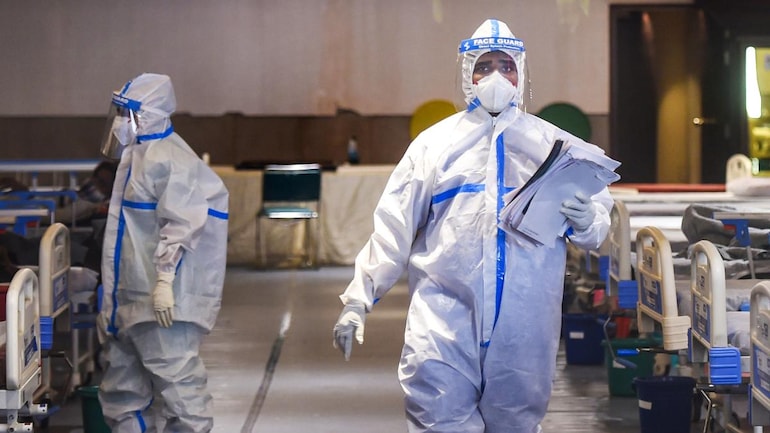
Many essential workers face a number of challenges, including high risk of coming in contact with the coronavirus than people working in other fields. Compared to nonessential workers, essential workers are more likely to get anxiety or depressive disorder.
A study also found that 18% of individuals who received a COVID-19 diagnosis were later diagnosed with a mental health disorder. Older adults who are more vulnerable to severe illness from coronavirus and have experienced increased levels of anxiety and depression during the pandemic.
As of June 2020, 13% of Americans reported starting substance use as a way of coping with stress related to COVID-19. According to the 2021 report of the United Nations Office on Drugs and Crime (UNODC), around 275 million people used drugs worldwide last year during COVID-19 pandemic, up by 22% from 2010.
Human beings are social organisms and the sudden social isolation forced into us by the pandemic is one of the main, if not the main, reason for mental health disorder and it is now needed more than ever to be able to talk about one’s mental health to others normally and to provide help and support to each other in these trying times.
Regardless of age, the pandemic has affected all of us, physically and mentally. While we are stuck in our homes indefinitely, the frequent thought comes to our mind, ‘What am I doing with my life?’, ‘How much longer is this going to last?’. Therefore, as policymakers and world leaders continue to discuss further actions to reduce the burdens of the COVID-19 pandemic, it should be important to consider the increased need for mental health and substance use services.
Music has always been an important part of Indian life. The range of musical phenomenon in India extends from simple melodies to what is one of the most well- developed “systems” of classical music in the world. There are references to various string and wind instruments, as well as several kinds of drums and cymbals, in the Vedas. Music has a place of primacy in Indian culture: in traditional aesthetics, music is often allegorised as ‘the food of the soul’. It symbolises India’sremarkable diversity in cultural, linguistic and religious terms and embodies the historical tides that have shaped its contemporary pluralism. India’s vastness and diversity, Indian Music encompass numerous genres, multiple varieties and forms which include classical music, folk, rock, and pop.
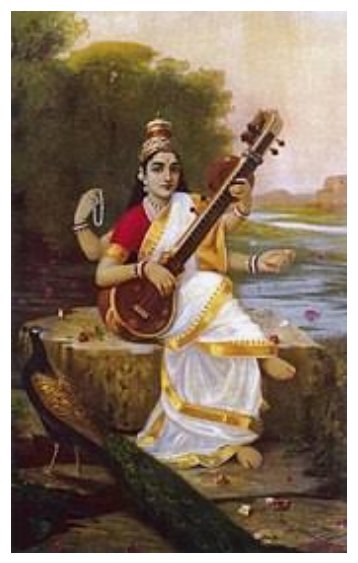
Goddess Saraswati is the Indian Goddess of Music.
Desi culture (from the Sanskrit desa, ‘land’ or ‘country’) is prominent across the world today and has had an ‘exotic’ allure for centuries, from its cultural domination of China and Southeast Asia (from 1stC BCE) to its ascent in the ‘Oriental’ imaginary of the ‘West’, culminating in the New Age movement (late 20thC CE). Since the mid-20thC, there has been a great deal of interaction between Indian music and the West and Hindustani music, in particular, emerged as the fundamental archetype of ‘Eastern’ tradition in the ‘World Music’ phenomenon.
By the 16th century, the classical music of the Indian subcontinent eventually had split into two traditions: Hindustani (North Indian classical music) and Carnatic (South Indian classical music). However, the two systems tended to share more common features rather than differ from one other entirely
Indian classical music has two foundational elements: raga (melody) and tala (rhythm). The raga—or raag—forms a melodic structure, while the tala measures the time cycle.
Unlike the chords and polyphonic compositions of Western Classical music, Indian music consists of permanent improvisations which are based on around six thousand ragas with a set of fixed rules.
Indian raga is built on a certain thaat mode which corresponds to the scales of Western music, for example, Bilawal thaat is equivalent to the major scale.
India has over a billion people and hundreds of dialects and languages spread across the seventh largest country in the world, but there is still an undeniable “sound” that makes Indian music unmistakable.
Indian music typically contains no harmony, can be completely improvised, and is rarely written down. So how do Indian musicians manage to play together? In this segment, we’ll learn about rhythmic patterns called taal, music unique to certain communities and even times of the year, and if deep-rooted musical traditions can continue as India undergoes fast-paced growth and modernization.
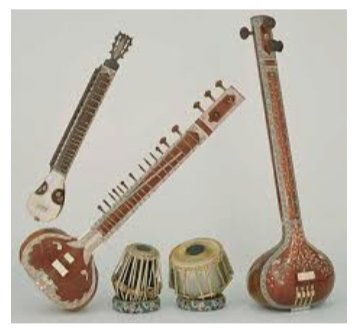
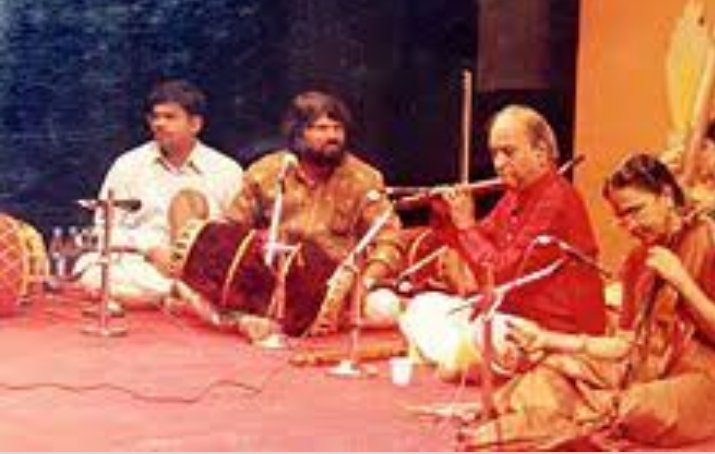
Hindustani instumental Music: Alongside Ravi Shankar himself,Nikhil BanerjeeandVilayat Khanare the best-known sitarists ofthe post-Independence years, responsible for innovationsin sitar design and exponents of a singingstyle of playing calledgayaki angwhich each seemsto have developed independently. Performers such as these have made Hindustani music a primary colour on the world music palette. For those that find the sitar’s incessant buzzing hard to take, thebansuri(bamboo flute) is a first-rate alternative introductory instrument, especially in the hands ofHariprasad Chaurasia,Ronu MajumdarorG.S. Sachdev. And so, too, is thesarod, an instrument which has a star equivalent to Ravi Shankar in the veteranAli Akbar Khan, a towering figure who provided the West with Hindustani music’s first major concert recitals and first long-playing record.
Karnatic: (Carnatic, Karnatak) music was once the musical language of the entire subcontinent, grounded in Hinduism and boasting a history and mythology thousands of years old as the articulation of Dravidian culture.Its tenets, once passed on only orally, were codified in Vedic literature between 4000 and 1000 BC, long before Western classical music was even in its infancy. One of the four main Vedic texts, theSama Veda, is the basis for all that followed. The music and the faith which inspired it have remained inseparable. Visitors to the vast temples of south India are much more likely to encounter music than they would be in the north. It’s usually the piercing sound of thenagaswaram(shawm) and thetavil(barrel drum). More thanlikely it accompanies flaming torches and a ceremonialprocession of the temple deity.
Vocal Music: More than any other classical genre,dhrupadis regarded as a sacred art – an act of devotionand meditation rather than entertainment. It isan ancient and austere form which ranks as theHindustani system’s oldest vocal music genre stillperformed. Traditionally, dhrupad is performed only by men, accompanied bytanpuraand thepakhawaj barrel drum. Nowadays it is most often set in atalaof twelve beats calledchautal. A dhrupad lyric (usually in a medieval literary form of Hindi called Braj Bhasha) may be pure panegyric, praising a Hindu deity or local royalty, or it may dwell on noble or heroic themes. The twist is that this most Hindu of vocal genres is dominated by Muslims.
Thebhajanis the most popular form of Hindu devotional composition in north India. Lyrically, bhajans eulogize a particular deity and frequently retell episodes from the Hindu scriptures. In the South, bhajans tend to retain their original Hindustani raga but are set in Karnatic talas, as the Karnatic violinistV.V. Subrahmanyam’s exquisite recordings for the Gramophone Company of India show.
FolkMusic in India is often described asdesi(ordeshi), meaning “of the country”, to distinguish it from art music, known asmarga(meaning “chaste” and, by extension, classical). Desi, a catchall term, also embraces folk theatre and popular music of many colours. While there is extraordinary folk music to be found all over India, there are three areas where it is particularly rich and easy to access as a visitor – Rajasthan, Kerala and Bengal, where the Bauls are the inspirational music providers. Rajasthani groups and Baul musicians are popular performers on the world music circuit.
The harvest is celebrated in every culture and in the Punjab it gave rise tobhangra, a folk dance which, in its British commercial form, has transmogrified into a form of Asian pop. Following on from the crossover success of bhangra,dandiya, a new folk-based genre, has emerged as a new phenomenon with a club-based following in India.
Film music: Bollywood Indianfilms often succeed because of their songs. Stars get stereotyped and rarely find roles outside, say, romantic lead, swashbuckler, comic light relief, baddie and so on. What’s more, these highly paid actors and actresses lip-synch to pre-recorded songs sung by vocal superstars such as Lata Mangeshkar andS.P. Balasurahmaniam, off-camera. After these superstars,Kavita Krishnamurthy,Alka YagnikandUdit Narayanare among the crowd-pulling names.
The leading trio which dominated the Hindi cinema for over thirty years wereMukesh(1923–76),Mohammed Rafi(1924–80) and Lata Mangeshkar (b. 1929). Dreamy strings provide the lush backings, an Indianized account of Hollywood strings, but bursting with touches that could only come from the subcontinent. The Los Angeles of the Indian film industry isMumbai, the decolonialized Bombay, hence the common shorthandBollywood– a film industry in-joke that stuck and went international.
East- WestFusions All stories are approximations and East–West fusions didn’t entirely begin with The Beatles. India exerted influences on Western classical music over the course of the entire twentieth century. The ideas that India planted ranged from the philosophical and religious to the organizational (melody and rhythmicality) and organological (the use of Indian instruments).
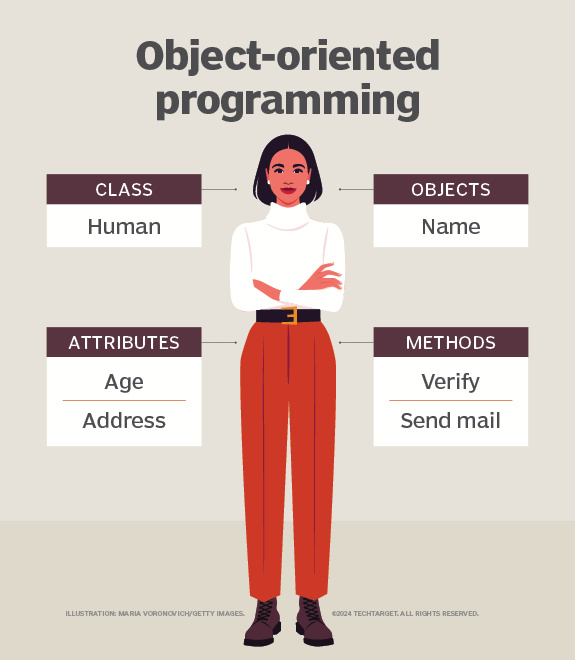
Object-oriented programming (OOP) is a fundamental programming paradigm used by nearly every developer at some point in their career. OOP is the most popular programming paradigm and is taught as the standard way to code for most of a programmers educational career. OOP focuses on the objects that developers want to manipulate rather than the logic required to manipulate them. This approach to programming is well-suited for programs that are large, complex and actively updated or maintained.
Example
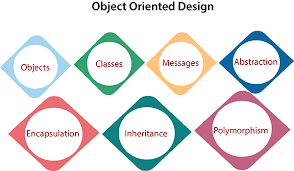
Following are the Basic Concepts Of OOP
Objects
Classes
Data Encapsulation
Data Abstraction
Inheritance
Polymorphism
Message Passing
Dynamic Binding
1. Object
•Objects are the basic run-time entities in the object-oriented system. •They may represent a person, a place, a bank account, a table of data etc. •They may also represent user-defined data such as vectors, time and lists. •Programming problem is analyzed in terms of objects and the nature of communication between them. •Objects take up space in the memory and have an associated address •Each object contains data and code to manipulate the data
2. Class
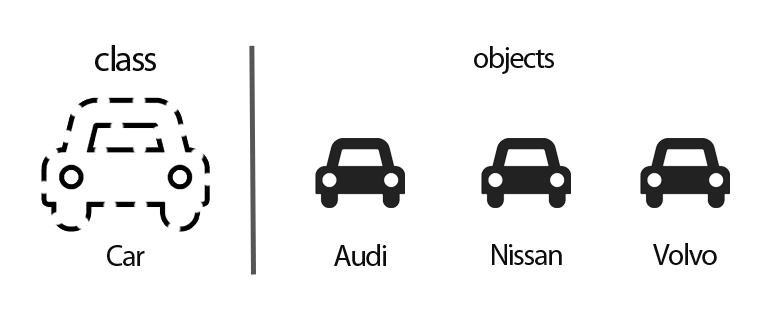
•Class is defined as an abstract data type characterized by a set of properties (attributes and functions) common to its objects •Class is a user defined data type for object •Objects are the variables of the type class •Thus class is a group of objects of similar type •e.g. Mango, apple, pineapple, orange are objects of class Fruit •Class is defined first and then objects are created of the type class
3. Data Encapsulation
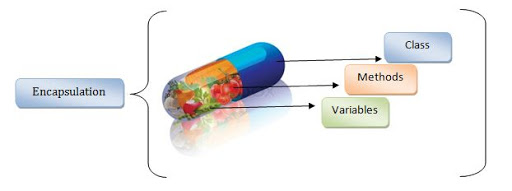
•The fundamental idea behind OOP approach is to combine the data and functions operate on that data, into a single unit •The wrapping up of data and functions into a single unit (called class) is known as encapsulation •The data is not accessible to the outside world •The encapsulation (protection) of Data from direct access by outside functions in a program is called Data hiding or Information hiding
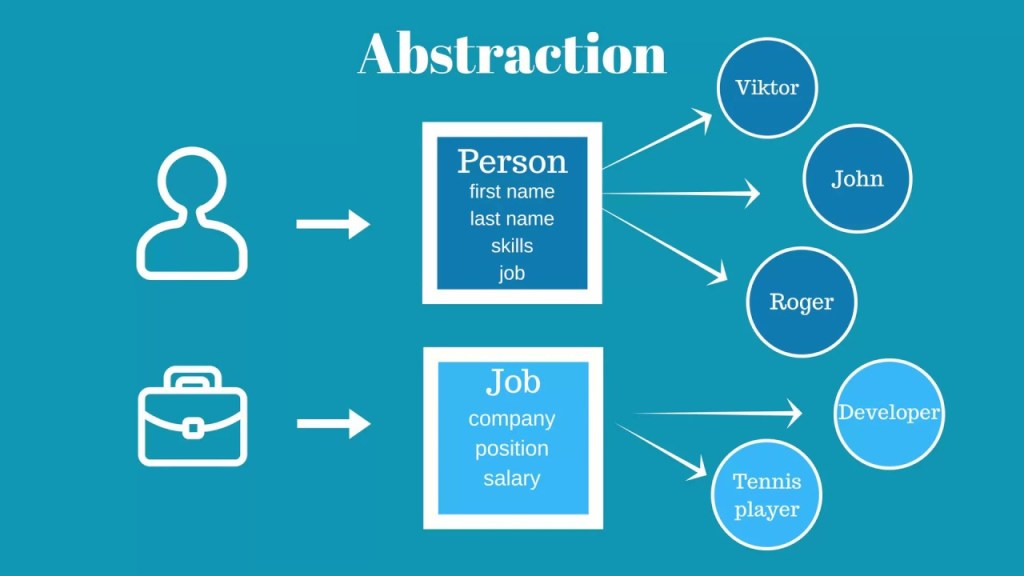
4. Data Abstraction
•Abstraction refers to the act of representing essential features without details •Abstraction is also defined as hiding an implementation details from user •Classes use the concept of data abstraction and hence they are also known as Abstract Data Types (ADT) •Classes are defined as a list of abstract attributes such as size, weight, cost, and function to operate on these attributes
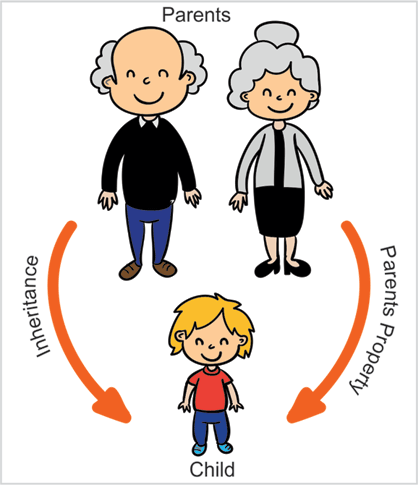
5. Inheritance
•Inheritance is the process by which objects of one class acquire the properties of objects of another class •In OOP, the concept of inheritance provides the idea of reusability •Reusability allows to add additional features to an existing class without modifying it •It is possible by defining a new class from the existing class •The new class will have combined features of both the classes •The mechanism of deriving a new class from existing class is called as Inheritance
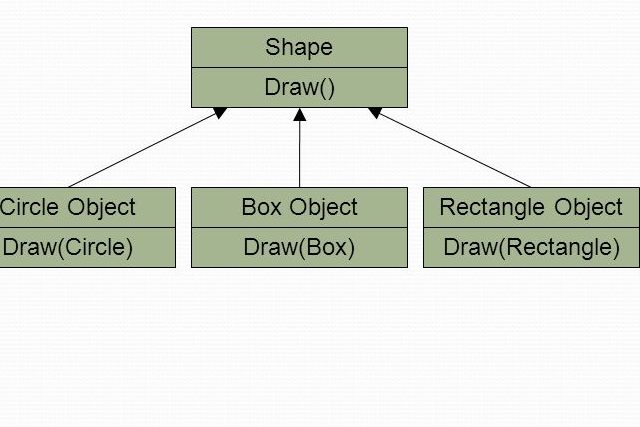
6. Polymorphism
•Polymorphism means the ability to take more than one form •An operation may exhibit different behavior in different instances and this behavior depends upon the types of data used in the operation •Polymorphism can be implemented using function overloading, function overriding and operator overloading •It allows the objects with different internal structures to share the same external interface
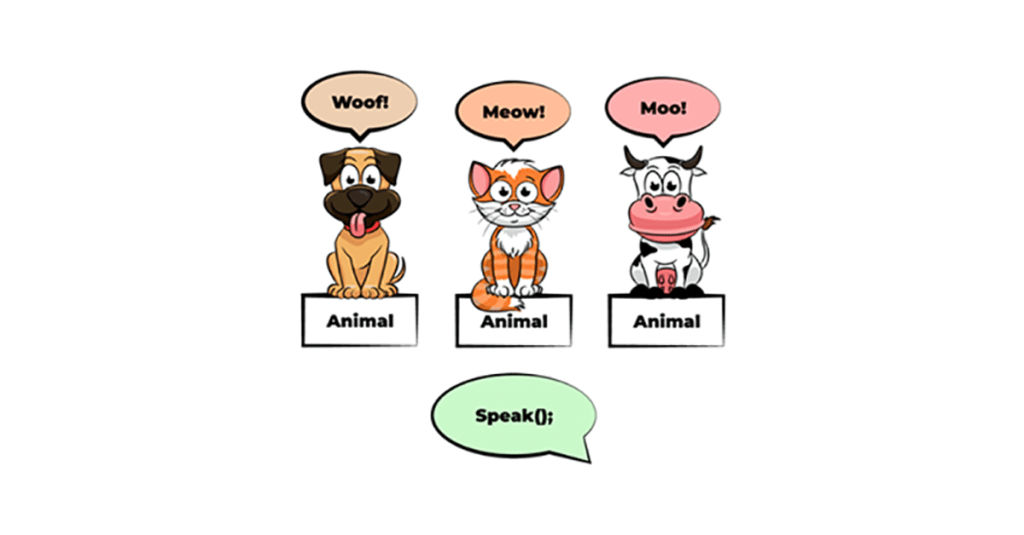
In the above example all animals are performing the same task of speaking but it is different for every animal.
7. Message Passing
•The Objects communicate with one another by sending and receiving information (Messages) •A message for an object is a request for execution of a function •Message passing involves specifying the name of the object, the name of the function and the information to be sent
8. Dynamic Binding
•Dynamic binding means that the code associated with a given function call is not known until run-time. •The code to be executed is selected at the run-time •The same function executes different code dynamically depending on data entered at run-time •It is associated with polymorphism and inheritance. •A function call associated with a polymorphic reference depends on the dynamic type of that reference.
When we talk about development, education is the major factor and has a direct or indirect influence on other factors as well. “Our education system rests on the pillars of accessibility, affordability and quality,” quotes our Late ex- President Pranab Mukherjee.
Unemployment is a phenomenon that occurs when a person who is actively searching for employment is unable to find work. A widespread phenomenon which came into existence is educated unemployment or graduate unemployment. A college graduate actively is not able to seek job due to lack of opportunity is termed as graduate unemployment.
In recent times this problem has come to assume a frightening level. A variety of factors including a large population and the defects in the educational system as well as the inability to provide a diversified and vibrant economy can be considered to be the prime reasons for the problem of educated unemployment.
In India, present scenario is that parents are putting lots of money for their child education and dreams their child as a person with successful career and same is the dream of child But reality turns to frustration out of unemployment.
The root of the unemployment begins at the systematic and policy making level. The policies making and their implementation should be incompatibility to the citizens of the state. The people of the nation should be the beneficiaries of these policies, but the case differs at the grass root level. The people in rural areas, which are approx 70% of our total population, have no or least access to such policies. One the causes of graduate unemployment are the quality of education which passes after three to four year of college, employers look for people who have learned how to learn, and have gained substantial communication skills as well as critical thinking abilities. Graduates are not meeting employer’s needs.
“An educated mind with an empty stomach and ample of time doing nothing but cursing the system, is more harmful for an individual or the society than any other problem.”
India is a country having 1.21 billion population and 66% of this population are under the age of 35 (Census 2011). Due to the increased education level in the recent years, the modern youth is well-educated and possess a good degree like B.Tech, B.E., MBA, MBBS, Ph.D. etc. Hence, a major workforce of our country is seeking for a well-paid job in their respective fields. But due to limited access to skill based education and drop in the financial market; it’s hard for them to get a desired job and this entire scenario creates “Educated Unemployment”.
The problem arises when a degree holder is not getting a skilled job due to not being skilled during their degree course. Due to this problem India lacks in skilled labour. According to a survey,“90% of the educated youth is unemployable due to lack of skills i.e. 60% due to lack of communication skills, 25% due to lack of analytical skills, 5% due to lack of knowledge in their respective field”.
Consequences of educated unemployment:
“One year of unemployment reduces the life expectancy by five years”, states a report.
Frustration, anxiety, stress, depression are the common behaviors of an educated unemployed. They are filled up with the rage against the society that has made them develop low self-esteem and fell like they are not among the productive members of the society. To take revenge against the system they indulge in wrong ways of earning money like robbery, chain snatching, rapes, violence, kidnapping, and murders etc. Studies tell that due to the higher rates of educated employment crime rates are drastically increasing day by day. Terrorism, drug trafficking, anti-social groups are the other hazardous outcomes of educated unemployment.
How to solve the problem of educated unemployment:
If we talk about reforms and solution of the unemployment plight about India, multiple technical and vocational institutions should be the establishment in the country and the significance of vocational courses to be instilled in the mind of people and efforts to break the taboo about their job insecurity. A campaign to present and promote more educational fields except engineering and medical should be recited to the people in the rural areas. The higher education like post graduation and PHD courses should be promoted to divide the job opportunity. Pradhan Mantri Kaushal Vikas Yojana, Swarnajayanti Gram Swarozgar Yojana, Mahatma Gandhi national rural employment guarantee act and several other should be promoted and implemented efficiently throughout the country.
Conclusion:
Economy and employment are the backbones of any state, the regular reforms and policy making should always be considered for the enshrouded growth. With the population which I possess, carrying youngsters as liabilities whereas they should be the support and help the nation go further ahead is an enormous devastating thought.
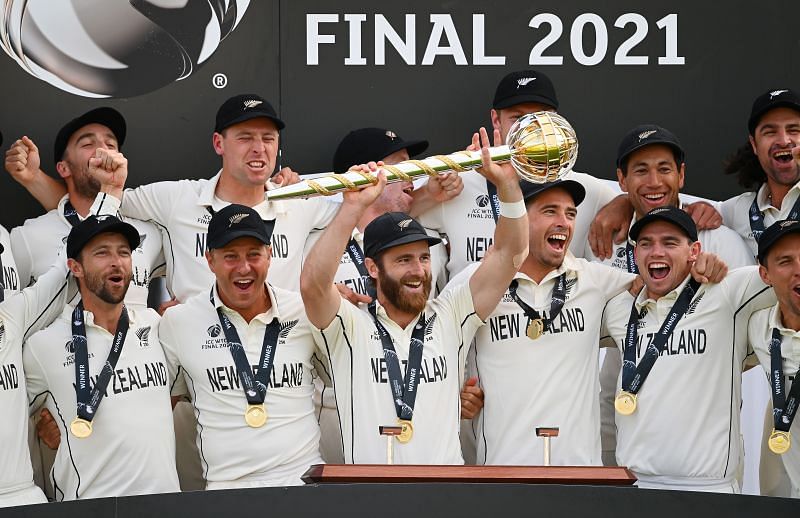
The longest form of cricket i.e., Test cricket was started in 1877. The first test match was played between England and Australia in Melbourne Cricket Ground (MCG) in Australia. Australian team emerged as the winner of the first test. This was a timeless test match it means that no specific number of days is fixed for playing and play will not stop until there is any result. The five days test cricket that we are familiar with was first played in 1985. From 1877 to 2021 we do not have a champion team in test cricket. It was in 2019 when ICC decided to conduct a World Test Championship to decide the first test champion among the test playing nations. It was in 2021 that the first Test Championship final was played between New Zealand team and the Indian side and New Zealand become the first Test Champions by defeating India.
Now it the time to start the next edition of WTC and ICC has announced the schedule of next WTC which will happen from 2021 to 2023. This edition of the WTC will start with the starting of the test series of England VS India in England in August. Australia, Bangladesh, England, India, New Zealand, Pakistan, South Africa, Sri Lanka, West Indies. Each team will play only six series. Out of the six series three will be home series and three will be away series for each team. Afghanistan, Ireland, Zimbabwe are teams that are full test playing members of the ICC but will not take part in WTC 2021-2023. The total number of matches each team will play is given below.
VS
India
Australia
England
New Zealand
Bangladesh
South Africa
Pakistan
Sri Lanka
West Indies
India
4
5
2
2
3
3
Australia
4
5
3
2
2
2
England
5
5
3
3
3
3
New Zealand
2
3
2
2
2
2
Bangladesh
2
2
2
2
2
2
South Africa
3
3
3
2
2
2
Pakistan
2
3
2
2
2
2
Sri Lanka
3
2
2
2
2
2
West Indies
2
3
2
2
2
2
Fixture of series of each team in WTC 2021-23
Teams
Away
Home
India
VS
England, South Africa, Bangladesh
New Zealand, Sri Lanka, Australia
Australia
VS
India, Pakistan, Sri Lanka
England, West Indies, South Africa
England
VS
Australia, West Indies, Pakistan
New Zealand, India, South Africa
New Zealand
VS
India, Pakistan, England
Bangladesh, South Africa, Sri Lanka
Bangladesh
VS
New Zealand, South Africa, West Indies
India, Pakistan, Sri Lanka
South Africa
VS
New Zealand, England, Australia
India, West Indies, Bangladesh
Pakistan
VS
West Indies, Bangladesh, Sri Lanka
Australia, New Zealand, England
Sri Lanka
VS
Bangladesh, India, New Zealand
Australia, Sri Lanka, West Indies
West Indies
VS
South Africa, Sri Lanka, Australia
Pakistan, England, Bangladesh
Away and home series of each team in WTC 21-23
This year point system is different from the first edition. This time each match will be worth of 12 points. A win would be of worth 12 points, a tie and draw would be of 6 and 4 points respectively and lose would be no points. Point will be deducted from the overall point as penalty if the over rate is behind the required over rate after every match. One point will get deducted for each over it was behind. The top two teams of the points table will qualify for the final schedule to be played in 2023 and dates are to be announced.
WhatsApp to implement traceability of messages and those messages will be sent from India to users in other markets. The same rules would apply to other messaging apps that use encryption such as Signal or Telegram and they have to adhere the rules which the government has set as a criteria for the new IT rules, as notified on February 25. On may 25, WhatsApp which is owned by Facebook moved to Delhi high court to file a case against the new IT rules as it was a threat to social media intermediaries
NEW IT RULES:
The new rules of WhatsApp undermines the privacy and security provided by end to end encryption. It shall enable the identification of the first originator of the information on its resource as may be required by judicial order. Another such problematic rule is traceability.
PROBLEMS OF NEW RULES:
Traceability, is a threat to WhatsApp and its people because in order to trace one message , it has to trace all messages which leads to lack of privacy and WhatsApp are against it. WhatsApp quoted that “traceability violates human rights” and also added “innocent people would get caught up in investigation, or even go to jail, for sharing content that later becomes problematic in the eyes of government ,even if they not mean to harm by sharing the content in the first place”.
INDIA’S RESPONSE:
Electronics and IT minister Ravi Shankar said the government , ” is committed to ensure the right to privacy to all the citizens but at the same time it is also the responsibility of the government to ensure the law and order and ensure national security”. There was a difference in opinion between the netizens and the government as a result social media is flooded with debate about these new rules and every other individual raising their voices to prove their point.
DEBATE:
Union Of India vs Antony Clement Rubin was one of the prominent cases where the questions related to traceability was discussed. Later on , supreme court took over the case but there was no technical solutions on tracing.
FINAL DECISION:
Social media such as Facebook, Google and WhatsApp have finally agreed to comply with the Indian government’s new IT rules. Initially Twitter didn’t say anything and failed to comply with the rules. But the government asked social media giants, “stop beating around the bush and comply with laws. Later on twitter also agreed to comply with the rules.
Facebook owned WhatsApp, claimed that the Centre’s rules for intermediaries put end-to-end encryption and its benefits at risk.
Little about fats, its types, saturated fats, unsaturated fats, good fats bad fats, foods to avoid, food to take.
There are fats in almost each food item though there are fats which are bad fats and are not good for your health but there are also some fats which are good fats which are essential for our body and are healthy. But also, any kind of fat when taken into excess are not good for your health wither good fat or bad fat.
There are fats which are saturated, unsaturated and trans-fat.
Unsaturated fat
Unsaturated fats are good fats which are essential part of our daily healthy life which are very important they reduce risk to various diseases like heart disease etc. Unsaturated fats can also replace saturated fats (which are bad fat)
Unsaturated fats are essential for our body which is good fats, healthy fats, dietary fat.
Unsaturated fats ensure the proper functioning of our body and brain.
Unsaturated fats or essential fats also helps in the absorption of Vitamins like Vitamin A, Vitamin D, Vitamin E, and Vitamin K.
Dietary fats prevent hormonal imbalance.
Low fat/ No fat diets affect our overall health, and hair health.
Mood swings.
Law fat/ No fat diets also causes hormonal imbalances causing mood swings.
For an average adult, good fats should constitute no more than 20%-30% of their diet in a day.
Bad fats
LDL (low-density lipoprotein), sometimes called “bad” cholesterol, makes up most of your body’s cholesterol. High levels of LDL cholesterol raise your risk for heart disease and stroke.
The liver then flushes it from the body. High levels of HDL cholesterol can lower your risk for heart disease and stroke.)
Can cause inflammation (a localized physical condition in which part of the body becomes reddened, swollen, hot, and often painful, especially as a reaction to injury or infection:), heart disease and type 2 disabilities. Powered by Oxford Dictionaries
Food items to avoid
Fried foods.
Avoid eating commercially baked goods like: cookies cakes.
Avoid eating packaged foods if it has hydrogenated refined oil/ vegetable oil in its ingredients.
Saturated fats
Saturated fats are not as harmful as trans fat but if taken in excess will not be a good choice to make but eat in moderation.
Saturated fats are also considered unhealthy and can cause problem.
Its sources
Butter, cheese, cream, red meat, ice-cream
Are major sources of saturated fat.
Good and healthy fats
Unsaturated fats are good for our health.
PUFA, MUFA, Omega-3 and Omega-6 are essential for our body.
Unsaturated fats are good for our overall health, Cholesterol and heart health.
Food items
Nuts and seeds which also increases metabolism rated which will future burn more fat from our body.
Include walnuts, peanuts, almonds, chia seeds, flax seeds, sunflower, pumpkin seeds in your daily diet.
Ghee aids digestion keeps the joints healthy, boost immunity and memory.
Use only hydrogenated cold pressed oil for cooking: use peanut oil, sunflower oil, sesame oil, canola oil, olive oil.
Yogurt is a good source of healthy fats, calcium and protein (natural yogurt is good) . If you buy from market buy full fat natural yogurt.
Dark chocolates use with cocoa content of above 70% loaded with good f
























 Eduindex
You must be logged in to post a comment.