

What is age discrimination?
This is when you are treated differently because of your age in one of the situations that are covered by the Equality Act.
The Equality Act has some exceptions. For example, students are not protected from age discrimination at school.
The treatment could be a one-off action or as a result of a rule or policy based on age. It doesn’t have to be intentional to be unlawful.
There are some circumstances when being treated differently due to age is lawful, explained below.
What the Equality Act says about age discrimination
The Equality Act 2010 says that you must not be discriminated against because:
you are (or are not) a certain age or in a certain age group
someone thinks you are (or are not) a specific age or age group, this is known as discrimination by perception
you are connected to someone of a specific age or age group, this is known as discrimination by association
Age groups can be quite wide (for example, ‘people under 50’ or ‘under 18s’). They can also be quite specific (for example, ‘people in their mid-40s’). Terms such as ‘young person’ and ‘youthful’ or ‘elderly’ and ‘pensioner’ can also indicate an age group.
Different types of age discrimination
There are four main types of age discrimination.
Direct discrimination
This happens when someone treats you worse than another person in a similar situation because of your age. For example:
your employer refuses to allow you to do a training course because she thinks you are ‘too old’, but allows younger colleagues to do the training.
Direct age discrimination is permitted provided that the organisation or employer can show that there is a good reason for the discrimination.
This is known as objective justification. For example:
you are 17 and apply for a job on a construction site. The building company refuses to employ under-18s on that site because accident statistics show that it can be dangerous for them. The company’s treatment of you is probably justified
a guest house owner charges twice her normal rates for people under 21. She hopes it will deter young people from booking because a few have caused damage recently. A more appropriate alternative would be to ask for a deposit. It is unlikely that the guest house can justify charging the increased rates
Indirect discrimination
Indirect discrimination happens when an organisation has a particular policy or way of working that applies to everyone but which puts people of your age group at a disadvantage. For example:
you are 22 and you find you are not eligible to be promoted because your employer has a policy that only workers with a post graduate qualification (such as a Masters) can be promoted. Although this applies to everyone it disadvantages people of your age because they are less likely to have that qualification
an optician allows customers to pay for their glasses by instalments, provided they are in employment. This could indirectly discriminate against older people, who are less likely to be working
Like direct age discrimination, indirect age discrimination can be permitted if the organisation or employer is able to show that there is a good reason for the policy. This is known as objective justification.
Harassment
Harassment occurs when someone makes you feel humiliated, offended or degraded. For example:
during a training session at work, the trainer keeps commenting how slow an older employee is at learning how to use a new software package because of his age. The employee finds this distressing. This could be considered harassment related to age
Harassment can never be justified. However, if an organisation or employer can show it did everything it could to prevent people who work for it from behaving like that, you will not be able to make a claim for harassment against it, although you could make a claim against the harasser.
Victimisation
This is when you are treated badly because you have made a complaint of age discrimination under the Equality Act. It can also occur if you are supporting someone who has made a complaint of age discrimination. For example:
your colleague complains of being called a ‘wrinkly’ at work. You help them complain to your manager. Your manager treats you badly as a result of getting involved
Month: July 2021
How Avatar became timeless series
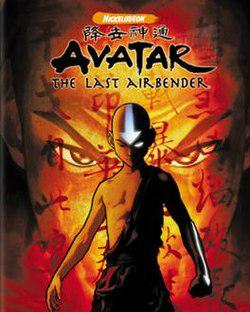
Avatar is an American animated series which first aired in 2005. Avatar: The Last Airbender series was created by Micheal Dante DiMartino and Bryan Konietzto. It used to air on Nickelodeon. The show was targeted towards kids but today it has a fanbase comprising of not just kids but adults as well. It’s fandom has been growing and is quite active.
Last year, ATLA was released on Netflix and broke one of the major Netflix record.
By appearing on Netflix’s chart for 60 consecutive days, The Last Airbender set a record of becoming the show with the longest consecutive run on streamer’s top 10 TV series chart.
https://www.newsweek.com/avatar-last-airbender-show-netflix-chart-top-10-record-1519004
This show has an IMDb rating of 9.3/10, 97% Rotten Tomatoes and 9/10 TV.com ratings. These ratings are enough to prove what a great show ATLA has been. It’s last episode aired 13 years ago, still ATLA’s fanbase is continuously growing. This is because it is much more than a regular kid’s show.
The story takes place in a world which is divided into four nations: water tribe, earth kingdom, fire nation and air nomads. Avatar, the master of all four elements is the only hope for peace. The 61 episode series is divided into three seasons referred to as ‘Books’ and each book deals with avatar’s journey in mastering a single element.
What makes this series so great is the theme and it’s characters. Every single character is explored thoroughly and given relatable backstory and character development. Zuko’s redemption throughout the series is probably the best redemption arc ever.
The themes it covers are really mature. War, genocide, class inequalities, colonialization, identity crisis, gender inequality, etc. are some of the prominent themes of the series.
The world building done in this show is phenomenal. In the first 10 minutes of episode 1, the whole world of avatar is explained. Throughout the series, and especially in season 2, world exploration is done very correctly.
The depiction of cultural diversity is done flawlessly. Each nation is inspired from a different culture and the way they all are depicted make the avatar world relatable and believable.
The lessons and morals that it teaches can be easily applied to our lives. Lessons like not letting your past affect your present, choosing your own destiny etc. are really inspirational.
The animation it uses is traditional and is inspired by anime. Even though it is quite an old show, the animation is way ahead of it’s time and can be considered as good as all the modern animations. ‘The Last Agni Kai’ a fight sequence, is phenomenal both in terms of animation and music and probably the best fight of the series. The music and ost are really good which make the scenes more impactful.
Overall, Avatar: the last airbender is one of the greatest show of all times and has become timeless. There are two types of people- 1. those who love ATLA and 2. those who have not watched avatar. So go ahead and give this masterpiece a try. It is a must watch!!!
https://www.polygon.com/animation-cartoons/2020/5/15/21260461/avatar-the-last-airbender-netflix-best-episodes-characters-animation
Different types of Digital Marketing media

Digital marketing refers to advertising delivered through digital channels such as search engines, websites, social media, email, and mobile apps. Using these online media channels, digital marketing is the method by which companies endorse goods, services, and brands.
Nowadays, Digital Marketing is the most commonly used way of advertising and promoting goods and services and for good reason. Social Media has completely changed the A-Zs of Advertising. Digital Marketing offers it all- from insights into the customer’s engagement with the post, decrease in costs compared to traditional ways of marketing (tv, radio ads, billboards) and the ‘trend’ and ‘viral’ factor which, once taken advantage of, can help boost the sales of the company by a huge margin. Targeted emails and personalised ads to the target audience according to their taste and preferences compared to one ad designed for the general public (published in newspapers or played on tv/radio) is much more efficient and effective.
Moreover, as social media platforms gain more popularity and attracts more and more people, it guarantees more reach and views for the digital content/media, making it more efficient than traditional means.
There are three major types of digital media channels which are Owned, Paid and Earned media.
Owned media channel is controlled by the brand itself. For example, Instagram account of Netflix India. All the media shared on this channel is owned and developed by the company itself which is why it is not trusted and considered credible. There are no guarantees that it will attract consumers because communication from the company about its own products is not trustworthy.
However, some of its benefits include- It gives control over the content consumed and shared with the target audience. It is cost efficient because the company does not have to pay a third party to do the same. It is a long-term plan since its not based on time duration-based contract with any third party and it is not feedback or word of mouth that dies down with time.
Paid media channel is controlled by a third party who is paid to share content for the company. For example, Ads on Instagram, paid searches on google etc. This channel is in demand as social media platforms become business friendly day by day and this also gives control as the company approves and knows what is being shared and consumed by its target audience.
Some of its challenges are- This channel has a declining response rate as consumers are becoming more aware of such tactics and do not trust paid sources. Moreover, it has poor credibility because the third party is being paid to publish catchy and engaging content and it does not say anything about the quality of the product or service.
Earned media channel is the channel controlled by the customers. For example, Word of mouth, recommendations to friends and family, Trends and buzz etc. All media and feedback shared by customers publicly which can be positive or negative. The main benefit is that this channel is the most credible because these are the genuine feedbacks from customers who have used the product or service. If positive, it can also boost sales and increase market share by attracting new customers due to word of mouth. However, it does not give the company any control as it can be negative and damaging to the company’s reputation in that case.
Doctors’ Day: A Day for the Life Savers

Doctors are said to be next to God. They save the lives of people, risking their own many a times. This day is a tribute to all the doctors and healthcare workers.
Every year the Indian Medical Association (IMA) celebrates 1st July as National Doctors’ Day on the birth and death anniversary of Bengal’s former Chief Minister, Dr. Bidhan Chandra Roy, to commemorate his contributions in the medical field to serve humanity. He took birth on 1st July 1882 and died on the same day in 1991. The day was first recognized in the year 1991.
National Doctors’ Day is dedicated to the doctors who serve to save the lives of people sacrificing their own. It is to recognize the contributions, efforts, and sacrifices the doctors make for the community and mankind. This year’s theme for National Doctors’ Day is “Save The Saviours”.
Coronavirus is contagious and life-taking, yet doctors are making all efforts to save the lives of the infected. Many doctors lost their life battle to save others. Especially now, when the pandemic has taken a toll on the lives of people, doctors have constantly worked day and night without break to save the lives of the patient. Their consistent attempts have saved the lives of many.
The doctors have been working 24*7 in that Personal Protective Equipment or as we know it as PPE kits; fully covered all day long without any complaint of heat, without water or food for as long hours as 17-18 hours at least; without any complaint of hunger or thirst, just to save the lives of people suffering from the deadly coronavirus. The continuous wearing of masks scars their ears and cheeks. The doctors sacrifice a lot for patients.
The pandemic made us understand more about the importance and dedication of doctors and health workers in our lives. Many of the retired doctors and nurses got trained and returned to work to treat the patients of COVID-19. The doctors and nurses working for treating the COVID-19 patients are not able to meet their families, for preventing the spread of it. They stay away from their kids and family just so that the patients can return to their families healthy and safe. Many doctors themselves suffering from coronavirus sacrificed their lives by giving up on hospitals beds for other patients when there were crisis for beds in hospitals.
Honorable Prime Minister of India, Narendra Modi, even mentioned doctors’ day and emphasized the role and exceptional contribution of doctors to save the lives of people in this pandemic. He also said that the doctors’ love for medicine is their love for humanity and with this power of love the doctors are taking care of us. He even congratulated and appreciated the efforts of doctors through his tweet saying, “On Doctors’ Day, my greetings to all the doctors. India’s strides in the world of medicine are commendable and have contributed to making our planet healthier.”
Doctors’ Day is for us to make out some time and appreciate the efforts and contributions of doctors. Thank them for their sacrifices and selfless services.
All you should Know about political theory.
Know about Political Theory
As Human beings, we live in a society and society includes groups and institutions. Every institution serves a specific purpose. For specific purposes, we need some rules and regulations. That called politics.
For understanding Political Theory, we divide it into two terms and understand one by one.
Political and Theory.
First, we discuss what is political.
What is political
The Term ‘political ‘ refers to something applicable to a polity, that is ‘ public’, as distinguished from private or something applicable to a limited numbers of persons.
The terms ‘ polity’, ‘ politics’, and ‘ political’ are derived from the Greek word ‘ polis’ which stood for ancient Greek city-state.
In the present- day society the scope of politics is not regarded to be so comprehensive. Today we draw a distinction between public and private spheres of human life, and confine the usage of the term ‘ politics’ to the institutions and activities falling I the public domain.
The term ‘theory’ stands for systematic knowledge.
This, ‘political theory’ refers to a systematic knowledge of political phenomena.
Political theory is concerned with three types of statements –
- Empirical statement – which is based on observation, through sense- experience alone, that is the experience gained through sight, sound, smell, taste and touch of the concrete phenomena.
- Logical statement – which is based on reasoning
- Evaluation – which is based on value judgment.
The political theory includes both political science and political philosophy.
Political science , relies only on empirical and logical statements.
NATURE OF POLITICAL THEORY
George Catlin observed : “The theory itself is divided into political science and political philosophy.”
In short, Catlin proceeds to identify the nature of political theory by pointing to its two important components- political science and political philosophy.
Andrew Hacker – “ Every political scientist plays a double role. He is part scientist and part philosopher.
SCOPE OF POLITICAL THEORY
- One point of its focus is the study of political concepts and it’s method of study. For this purpose, the normative -philosophical method is regarded to be suitable .
- Another point of it’s the focus is the study of political institutions and behaviour. For this purpose, the descriptive-scientific method is regarded to be suitable.
DEBATES ON THE DECLINE OF POLITICAL THEORY
The political theory seems to decline in the mid-twentieth due to questions started to raised by the exponents of new political science.
There were two major causes of the decline of political theory :
- The rise of positivism led to the craze for science.
- The prevalence of political ideologies culminating in Marxism.
It is now widely held that political science, like other social and natural sciences, enables us to strengthen our means but we will have to resort to political philosophy to determine our ends.
Means and ends are interdependent. Hence , political science and political philosophy play complementary roles in our social life.
Dr. Salim Ali (1896-1987)
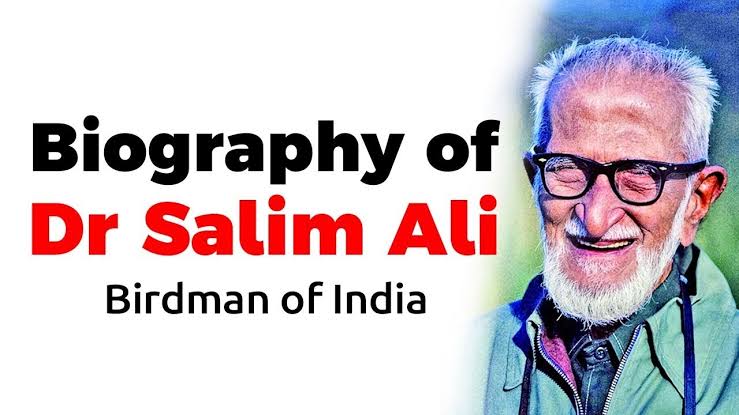
Dr.Salim Ali (1896-1987)🦜🕊:

Salim Moizuddin Abdul Ali (November 12, 1896- July 27,1987) was an Indian ornithology and naturalist. Known as the “🇮🇳birdman of India🇮🇳”, Salim Ali was among the first Indias to contact systematic bird survey across India and his bird books helped develop ornithology. He became the key figure behind the Bombay Natural History society after 1947 and used his personal influence to garner government support for the organization,create the Bharatpur bird sanctuary ( Keoladeo National Park) and prevent the destruction of what is now the silent valley National Park. He was awarded Indian’s second highest Civilian honour ,the padam vibhushan in 1976.
Early life❕❣❕:


Salim Ali was born into a sulaimani Bohra Muslim family of bommey, the ninth and youngest child. His father Moizuddin died when he was an one year old and his mother Zeenat-un-nissa died when he was three. The children were brought up by his maternal uncle Amiruddin Tyabji,and childness aunt, Hamida Begum ,in a middle-class household in Khetwadi, Mumbai. Another uncle was abbas Tybji,well known Indian freedom fighter. Salim was introduced to the series study of birds by W.S. Millard, secretary of the Bombay Natural History Society (,BNHS), who identified unusually coloured Sparrow that young Salim had shot for sport with is tough airgum. Millard identified it as a yellow-throated Sparrow,and showed Salim around the society’s collection of stuffed birds . Millard lent Salim a few books including Eha’s common birds of Bombay, encourage d Salim to make a collection of birds and co-operation offered to train him in skinning and preservation. Millard also introduced young Salim to (later sir) Norman Boyd Kinnear,the first paid curator at all BNHs, who later provide help from the British Museum. In his autobiography, The Fall of Sparrow Ali notes the yellow -throated Sparrow event as the Turning point of his life that let him into ornithology,an unusual career choice, especially for an Indian in those days. His early interest was in books on hunting in India and he became interested in sport -shooting , encourage d by the hunting interests of his foster-father Amiruddin. Shooting contests we’re often held in the neighbourhood in which he grew and among his playmates was Iskandar Mirza, a distant cousin who was a particularly good marksman and who went on in later life to become the first president of Pakistan.
Burma and Germany🦜🕊 :

Salim Ali's early education was at St. Xavier's college, Mumbai. Following a difficult first year in college,he dropped out and went to Tavoy,Burma(Tenasserim) to took after the family's wolfram (Tungstem) mining (tungsten was used in armour plating and valuable during the war) and timber interests there. The forest surrounding this area provided an opportunity for Ali to hone his naturalist (and hunting) skills. He also made acquaintance with J C Hopwood and Berthold Ribbentrop who were with Forest Service in Burma.
Other contribution🐦🦅:


⭐Dr. Ali had considerable influence in conservation related issues in post- Independence India especially through Prime Ministers Jawaharlal Nehru and Indira Gandhi was herself a keen birdwatcher, influence by Ali's bird book (a copy of the book of Indian Birds was gifted to her in 1942 by her father Nehru who was in Dehra Dun jail while she herself was imprisoned in Naini Jain and by the Gandhian birdwatcher Horace Alexander. Ali influenced the designation of the Bharatpur Bird Sanctuary and in decision in decisions that save the Silent Valley National Park. One of Ali's later interventions at Bharatpur involved the exclusion of cattle and graziers from the sanctuary and this was to prove costly and resulted in ecological changes that led to a deciline in the numbers of many species of waterbirds.


⭐Dr. Ali was a frequent visitor to the Doon school where he was an engaging and perusuasive advocate of ornithology to successive generation of pupils. As a consequence,he was considered to be part of the Dosco fraternity and became one of the very few people to be made an honorary member of The Doon School Old Boys Society.
Personal views🐦🦅:


⭐Salim Ali held may views that were contrary to the mainstream ideas of his time. A question that he asked frequently was about the collection of bird specimens particularly in later life when he became known for his conversation related activism. Although once a fan of shikar(hunting) literature,Ali held strong views on hunting but upheld the collection of bird specimens for scientific study. He held the view that the practice of wildlife conservation needed to the practical and not grounded in philosophies like ahimsa. He suggested that his fundamental religious sentiment had hindered the growth of bird study in India.


⭐In the early 1960s the national bird of India was under consideration and Salim Ali was intent that it should be the endangered Great Indian Bustard , however this proposal was over-ruled in favour of the Indian peafowl.


HOW DISRUPTIVE TECHNOLOGY WILL BE TAKING OVER OUR LIVES
Disruptive Technology is recognized to be an innovation that creates a new market for consumers industries or businesses to operate in an efficient and progressive direction. This technology sweeps away the standard system of habits and replaces with ways that are superior. The reason why it’s important to inculcate disruptive technology is because it increases growth opportunities to companies, provides better and cheaper products to the consumers and helps to adapt new trends in the current world There are new forms of disruptive technology which are being discovered daily. Some examples -:
Artificial Intelligence– It is an area of computer science that mainly emphasizes in the building of smart and intelligent machines which have the capability of doing tasks which are usually done by humans.
- Examples– Siri (Apple), Alexa (Amazon), Cortana (Microsoft), Google Now and so on.
- 3D Printing – it is a process of creating three dimensional solid objects. This particular type of printing is done by creating layer by layers on an object to obtain the result.
- Examples- Homes, Prosthetic limbs and other body parts, edible 3D printing, Manufacturing.
- Advanced Virtual Reality– it is a stimulation which is computer generated in which a person can interact within the artificial three-dimensional environment which creates a virtual reality and can be experienced by using electronic devices.
- Examples- flight stimulators, games, geographical studies, surgeries.
- Drone Technology- Originally designed for the defence and aerospace industry, drones have made their way into the mainstream because of the increased degree of protection and performance they offer. Drones include a navigation system, GPS, sensors, high quality cameras, programmable controllers, and tools for autonomous drones.
Disruptive technology is considered to be an innovation that significantly make an effort to alter the way that consumers, industries, or businesses operate in the world today. Disruptive technology attempts to sweep away the systems or the habits which have been a part of the world since a long time and it replaces because it has attributes that are recognizably superior to conventional systems.
We tend to think that there is still time for Disruptive technology to take over the world but it has already started to make a huge place in human lives in the simplest things which exists in the current world which we forget like facial recognition, voice assistants, smartphones, maps and directions. Therefore, there is a possibility that disruptive technology will be taking over lives.
Difference between a Data Analyst and a Business Analyst
In this blog, we are going to see the difference between a Business Analyst and a Data Analyst. 4 main things differtiate a Business Analyst from a Data Analyst in a team. They are Responsibility, Qualification, Skills and Salary. Let’s start off with responsibility.
Responsibilities:
First let’s look at the Business Analyst’s responsibilities. A business analyst works a lot with the clients to understand what they need and what the problem they are having. They are going to work with the managers and try to figure out how an idea is going to work within their team. They next thing they do is, using current data to outline a problem. They are going to go in and actually look at the data and then understand what the client is wanting so that they can describe to the team what they are trying to solve and what they are looking for. The next thing they are going to do is outline and communicate what the client actually wants the team to do. After that a business analyst can only do all the analysis around that and then hands it off to either the programming team or Data analyst to look into this further and actually solve the problem. The Data Analyst is going to actually work with the programming teams that collect and analyse the data and so the difference between these two is a business analyst typically going to work mostly with the clients and the managers while the Data Analyst is going to work with the programming side. The next thing a Data Analyst is going to do is using pre-existing data to solve a problem and so the business analyst is going to bring the problem and define the problem and bring that to the programming team and the Data Analysts work with developers to actually solve the problem and figure out a solution. Then they have to create reports and dashboards and visually present the analytical findings to the team and that’s basically the part of any Data Analyst job.
Qualifications:
The qualifications for a Data Analyst and a Business Analyst are pretty similar. For a Business Analyst, a person must have a Bachelor’s degree in Business and Administration/ Finance/ Economics or something that is business related. Sometimes one may need a Master’s degree. For the most part, the business analysts mostly have MBA’s. Data Analysts typically don’t have MBA’s. For a Data Analyst, one must have a Bachelor’s degree and that’s typically in something like Computer Science/ Statistics/ Mathematics/ Economics or Finance. They is a lot of overlap between the Business Analyst and the Data Analyst.
Skills:
Business Analyst:
- SQL
- MS Access
- Excel
- Communication skills
- Presentation skills
- People skills
Data Analyst:
- SQL
- R/ Python
- TABLEAu/ Power BI
- Data Modeling
- SAS/ SPSS
- Excel
- AWS/ Azure
Salary:
Business Analyst:
- Entry level: 35k – 50k
- Mid level: 50k – 75k
- Senior level- 75k – 95k
Data Analyst:
- Entry level: 45k – 60k
- Mid level: 65k – 85k
- Senior level- 85k – 110k
Data Analyst gets a little bit more salary on an average than a Business Analyst. This is because in small companies and at times in big companies, Data Analysts are asked to communicate with clients and in those cases there isn’t even necessary for a Business Analysts.
William Faulkner’s ‘The Sound and the Fury’


The Sound and the Fury is 1929 novel by the American author William Faulkner. Faulkner is widely renowned for his experimentation of the narrative technique called ‘stream of consciousness’. William James in his Principles of Psychology describes it as ‘the unbroken flow of perceptions, memories, thoughts and feelings in the waking mind’. In this narrative technique, the narrator seemingly rants about thoughts and introspections that flows through their mind. The novel is a true testament to this narrative.
The book follows the story of the Compson family who are slowly losing their way in the an postbellum (post-war) American South. The Composn family used to be wealthy and mighty in their olden days, but unlike their ancestors, the current members of the family cannot seem to command the power they once held. The story is divided into four parts. The first part takes place on April seventh 1928 and is narrated by Benjy Compson, the mentally challenged youngest son of the family. The second part takes place eighteen years prior on June second, 1910. It is narrated by the oldest son Quentin who is a student at Harvard. The third part takes place a day before the first part, on April sixth 1928. It is narrated by the headstrong third son Jason Compson. The final part takes place a day after the first part, on April eighth 1928. It is narrated by a seemingly omniscient narrator who records the observations of Dilsey, the family’s loyal black servant.
“Clocks slay time… time is dead as long as it is being clicked off by little wheels; only when the clock stops does time come to life.”
– William Faulkner
The story is fragmented and is narrated in a non-chronological manner. Most of the story has been uncovered based on audience’s interpretation to try and form a coherent narrative of the same. The story narrates the three Compson brothers’ seeming obsession over their sister Caddy, who surprisingly does not narrate any portion of the novel. Despite not having her own narrative, it is clear that Caddy has influenced her brothers and holds a strong presence throughout the novel. Growing up with an incompetent and absent-minded father, Caddy assumes charge of her brothers. This sense of control continues to grow and she proves that she is capable of making her own way in life. Her family disapproves of her promiscuity and banishes her after she gets pregnant out of wedlock.
The first part, narrated by Benjy is the most convoluted of all. It gives a glimpse of what his thoughts and records his accounts on how people around him treat him. His memories are interconnected and they create a domino effect as they are triggered by senses like smell or touch. For instance, a sensation that he experiences in the present triggers a memory of similar sensation in the past. Caddy is the only one who treated Benjy as a normal being and he misses her. They both share a strong emotional bond and lot of his memories are associated to her. The second narrator Quentin has a similar strong bond with Caddy. Being the older brother, he is overprotective of her and even hints of incestual jealousy over her. Quentin is also deeply disturbed by his sister’s promiscuity which is unlike the ‘Southern morals’. He is intelligent and his narration is crudely interspersed with philosophy and existential questioning. The narrator of the third part Jason is strongly against Caddy. He is petty and resentful and blames everyone else around him for his misfortunes. He blames Caddy for the loss of his job which was promised to him by her ex-husband. He is headstrong and clings desperately to the old power that the Compson family once held. He obtains this feeling by controlling his family including Caddy’s child. The narrator of the fourth part Dilsey is the only objective narrator in the family. Despite being a black woman in a post-slavery abolishment era, she serves the Compson family loyally and seems to be the only one holding the family together. Although the family bosses her around, she’s content and dedicated to the work she does and is the only ‘sane’ one among the rest.
The Sound and the Fury is definitely worth a read to understand the complexities of a non-chronological narrative. It is impossible to be explained through a conventional synopsis as it only scratches the surface of the true depth of the novel. It is riddled with symbolisms and open-ended plotlines that motivates the readers to think for themselves. The realistic aspect of the novel also makes the characters more endearing to the readers. It is easily one of Faulkner’s best.
Reference Links:
Who Says You Have To Get Out Of Your Comfort Zone?

I love my comfort zone. To me, that’s where the real magic happens.
In my comfort zone, I have my family, friends, work, music, books, movies, bike, gym, park, you name it. Everything I love.
And from that place of safety, I’m more open to trying new things and take risks.
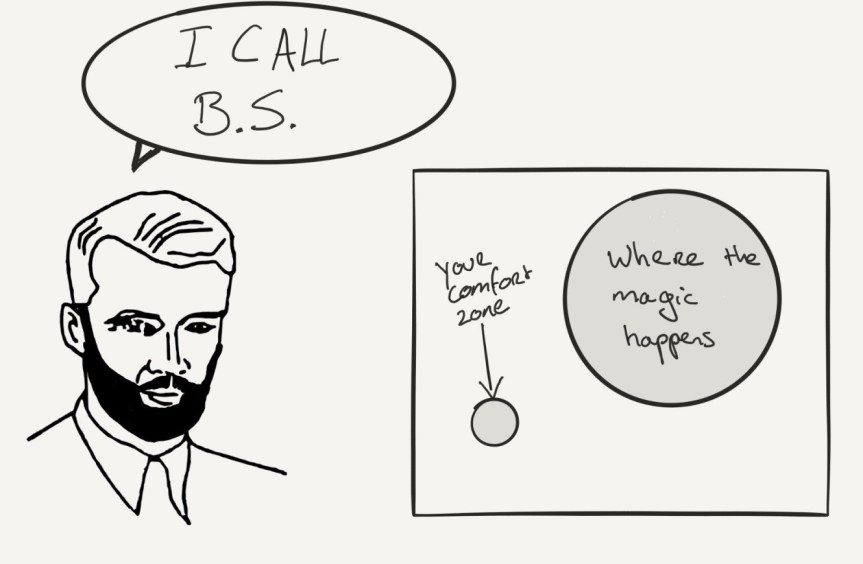
I’ve never believed the idea of that stupid little drawing. You know what I’m talking about, right?
- “Your comfort zone.” A little circle.
- “Where the magic happens.” A big circle that stands for the promise of success.
As if “magic” only happens when you step outside your comfort zone; that’s ridiculous. And while we’re at it; why pretend as if your comfort zone is bad? It’s this little pathetic circle displayed against the bigger “magical” circle.
Sure, I’m all about pushing yourself, trying new things, moving forward, growing, etc. But in contrast to many popular self-help people, I don’t believe the comfort zone is a bad thing.
Call me a pessimist. Call me a stoic. But more than anything, I’m merely a practical person.
And practically speaking, you don’t even want to make a huge leap outside your comfort zone. In fact, I believe in the slow road to “magic.”
Where’s The Magic People Talk About?
I’ve found that I do my best work when I don’t worry about money, finding new friends, getting familiar with a new environment, and anything else that is related to always moving around.
But don’t get me wrong. I’m not saying I prefer to stay put. Stagnation is a death sentence to me.
I believe that there are different phases to life. Sometimes, you take it easy, work on your skills, your character — you invest in yourself.
And sometimes, you just go out there and take a chance. Life’s too short to be a wimp.
But those two things are interconnected. If you don’t work on yourself, and if you lack self-confidence, you will never take a risk.
For years I wanted to do what I’m doing now. But instead of jumping out of my comfort zone (which was scary), I slowly took on new and bigger challenges.
First, I got two degrees in business. Then, I started a business together with my father. That was in 2010. And after two years of working on that business for six or seven days a week, I started doing freelance marketing work.
Again, after a few years of freelancing and starting (and failing) other businesses on my own, I took a job at a research advisory firm because I wanted to know how it is to work for a major corporation.
And after doing that for a year and a half, I finally decided to write and talk about productivity, career, and entrepreneurship on the internet.
By then, I‘d been doing the things I write about for more than 10 years. And yet, I don’t have all the answers—I just share the stuff I’ve learned.
So it would be ridiculous if I would join people who scream: “If you want to be successful, all you have to do is step outside your comfort zone. NOW!”
Well, have you ever stepped outside your comfort zone? Even just a little bit counts. And what did you find? A leprechaun with a bag of money?
That comfort zone shit is just a story. It might motivate some people, but you don’t have to believe it if you don’t want to. It’s just like when people claim you have to wake up early if you want to be successful. Says who?
I believe this: If you step outside your comfort zone, there’s only more work waiting for you. It’s not fancy at all. There’s no magic involved. Just blood, sweat, and tears.
Work Your Way Up From A Place Of Comfort
I think that most people who read these type of articles want to achieve something. Maybe you want to quit your job, start a business, grow your business, become an artist, publish a book, whatever.
And you probably also know that it’s not easy. So why do you make things even harder for yourself by doing shit that makes you very uncomfortable?
Instead, start from the very bottom. Build a strong foundation. Get comfortable before you do scary stuff.
“How does that foundation look like?”
If you want to live stress-free, you need enough money in your savings account so you can live and eat for six months in case things go south—see it as a fail-safe system. Again, that’s my practical mind speaking for me.
Make some calculations and figure your what that number is for you. And don’t even think about taking a risk before you have that money on your savings account.
Also, build a skill set that’s worth something. One of the reasons I don’t care about money is because I trust my ability to find work. Even when I go broke tomorrow, I’ll find a way to get work the next day. I’ve invested years and hundreds of thousands of dollars in my education.
The question is: What’s your skill? How can you add value to the world? What problems can you solve?
Other things that complete your foundation:
- Family. If you don’t have a family, create one.
- Friends. You can’t be friends with everyone. Stick to a few people who also stick to you.
- Yourself. Consciously improve your body and mind. Go to bed a little stronger and wiser every night.
Lastly, don’t try to be something you’re not. If you’re an introvert, don’t pretend that you can work in a boiler room. If you’re an extrovert, don’t pretend you can work in solitude.
Stay close to yourself—there’s no point in pushing yourself so badly that your life becomes miserable.
In the end, we all need comfort: It’s one of our basic needs as human beings. But we also need growth. So whatever you do, don’t stay in your comfort zone for too long.
Try to keep moving forward every day: Even if it’s just a tiny step. No magic. Just effort.
ANGER-A MAN’S WORST ENEMY

If you are patient in one moment of anger, you will escape 100 days of sorrow
Chinese proverb
Anger, also known as wrath or rage, is an intense emotional state involving a strong uncomfortable and non-cooperative response to a perceived provocation, hurt or threat.
A person experiencing anger will often experience physical effects, like an increased vital sign, elevated pressure level, and increased levels of adrenaline and noradrenaline. Some view anger as an emotion that triggers a component of the fight or flight response. Anger becomes the predominant feeling behaviorally, cognitively, and physiologically when an individual makes the conscious option to take action to instantly stop the threatening behavior of another outside force. the country term originally comes from the term anger of the Germanic language.
Anger can have many physical and mental consequences. The external expression of anger is found in facial expressions, visual communication, physiological responses, and every now and then public acts of aggression. Facial expressions can range from inward angling of the eyebrows to a full frown. While most of these who experience anger explain its arousal as a result of “what went on to them”, psychologists show that an angry person can fine be mistaken because anger causes a loss in self-monitoring capacity and objective observability.
Modern psychologists view anger as a standard, natural, and mature emotion experienced by virtually all humans now and then, and as something that has functional value for survival. Uncontrolled anger can, however, negatively affect personal or social well-being and impact negatively on those around them. While many philosophers and writers have warned against the spontaneous and uncontrolled fits of anger, there has been disagreement over the intrinsic value of anger. the problem of handling anger has been written about since the days of the earliest philosophers, but modern psychologists, in contrast to earlier writers, have also discovered the possible harmful effects of suppressing anger.
PHYSICAL EFFECTS OF ANGER
Anger triggers the body’s ‘fight or flight’ response. Other emotions that trigger this response include fear, excitement, and anxiety. The adrenal glands flood the body with stress hormones, like adrenaline and cortisol. The brain shunts blood off from the gut and towards the muscles, in preparation for exercise. Heart rate, pressure, and respiration increase, the vital sign rises and therefore the skin perspires. The mind is sharpened and focused.
HEART PROBLEMS WITH ANGER
The constant flood of stress chemicals and associated metabolic changes that go with ongoing unmanaged anger can eventually cause harm to many different systems of the body.
Some of the short and long-term health problems that have been linked to unmanaged anger include:
- headache
- digestion problems, such as abdominal pain
- insomnia
- increased anxiety
- depression
- high blood pressure
- skin problems, such as eczema
- heart attack
- stroke
Anger doesn’t solve anything, it builds nothing, but it can destroy everythinng
Lawrence Douglas Wilder

EXPRESSING ANGER IN HEALTHY WAYS
If you’re feeling out of control, walk-off from matters temporarily, until you calm down.
Recognize and accept the emotion as normal and a part of life.
Try to pinpoint the precise reasons why you are feeling angry.
Once you have got identified the matter, consider springing up with different strategies for a way to remedy true.
Do something physical, like going for a run or playing sport.
Talk to someone you trust about how you’re feeling.
HOW TO DEAL WITH ARGUMENTS
When you have argued, it’s easy to remain angry or upset with the opposite person. If you do not resolve an argument with someone you see often, it is often an uncomfortable experience.
Talking to the person about your disagreement may or might not help. If you are doing approach them, ensure it’s in an exceedingly helpful way. Stay calm and communicate openly and honestly.
If the person can be violent or abusive, it should be best to not approach them directly. you may refer to them over the phone to determine if they’re hospitable finding an answer to the argument if you’re feeling safe to try and do so. it’d be helpful to ask someone to be there with you, to allow you support after you make the decision and afterward.
Try and tell the person how you are feeling as a result of their opinion, but avoid trying to inform them how they feel. it’s possible to comply with disagree. you’ll need somebody else to assist you to resolve the disagreement. you’ll ask a trusted person to act as a go-between and facilitate your both get another view on the argument.

Bali – A Dream Destination
Bali is the only Hindu-majority province in Muslim-majority Indonesia, with 86.9% of the population adhering to Balinese Hinduism. Bali is a province of Indonesia and the westernmost of the Lesser Sunda Islands. In east of Java and waste lombok , there is a few smaller neighbouring islands, notably Nusa Penida, Nusa Lembongan, and Nusa Ceningan. The town of Ubud is known as Bali’s cultural center. The provincial capital, Denpasar, is the most populous city in the Lesser Sunda Islands and the second-largest, after Makassar, in Eastern Indonesia.
Scince the 1980’sIndonesia’s main tourist destination, with a significant rise in tourism. Tourism-related business makes up 80% of its economy. Bali is renowned for its highly developed arts, including traditional and modern dance, sculpture, painting, leather, metalworking, and music. Bali is part of the Coral Triangle, the area with the highest biodiversity of marine species especially fish and turtles. In this area alone, over 500 reef-building coral species can be found.
Why Bali is dream destination for all?
Bali has a ‘One-of-a-kind-wildlife’. Bali also has some most complex sites in the world. Beyond stunning beaches and magical temples, Bali has virtually every kind of natural beauty. Glorious mountainous areas with lush greenery, scenic lakes, gorgeous waterfalls, iconic rice fields, flower gardens, gushing sacred rivers and secret canyons all make up the island’s landscape.
Many people visit it for those mesmerizing beach places, exotic landscape and animals are also point of attraction. You can climb mountains, meet landscapes and swim a ocean life all together.
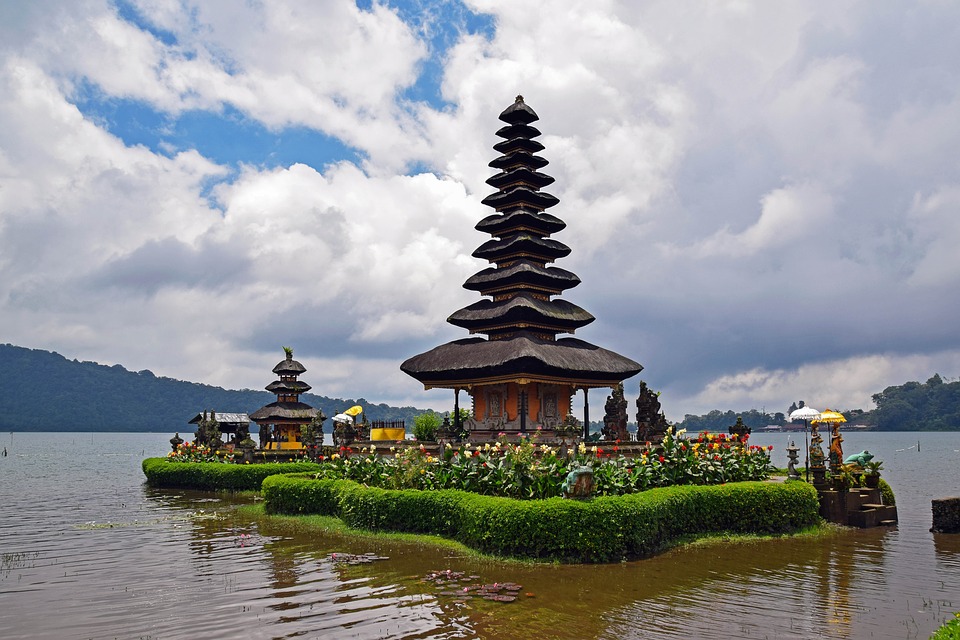
Is Bali cheap or expensive?
A visit to the island of Bali is essential part of any visit to Indonesia and must not be missed, but it would be wise to plan a separate budget for this portion of your trip. Bali is already the most expensive tourist destination in Indonesia and is slowly becoming more expensive as tourists discover more of Bali, but cheap food and accommodation are still widely available if you don’t mind basic accommodations, stick to your budget, and bargain respectfully for prices.The easiest way to save money is to leave the more popular destinations and head to the smaller towns and villages where tourists are still less frequent and you will save greatly on accommodations and food.
Why people say that Bail is cheap?
We usually hear about how low the prices are in Asia. Bali is one of the part of Asia. To make that day as real as possible, I found real restaurants and hotels. The prices are from real menus and stores can be found online. Besides that, Bali is extremely cheap because daily expenses are way lower than in other countries. Meals, hotels rooms, shopping, transport fees, and every other expense are all much cheaper. After reaching bail,it costs around $80 dollars per day to live a great life in Bali (as experiment says).

Top 5 must visit places in Bali :-
1. Handara Golf Course Gate
The iconic gate to a pathway to serenity has also become one of the hottest spots for Instagram posts lovers. Aside from the already gigantic exotic traditional Balinese gate, pamper your eyes and decorate your pictures with an amazing green surrounding and the silhouettes of green hills as your backdrop. With its beautiful green scenery and peaceful ambiance, it is no wonder people visiting Bali would squeeze this into their itinerary. If you are looking for a couple photoshoot then that’s your ultimate destination.

2. Ubud :-
Ubud is the ultimate place to enjoy various traditional performances, from the notorious Kecak fire dance to local youths practicing their gamelan in the town hall. The surrounding Ubud District’s rainforest and terraced rice paddies, dotted with Hindu temples and shrines, are among Bali’s most famous landscapes. You can caught various surprise anywhere from the Royal Palace to public places and restaurants.


3. The Bali Swing :-
The Bali Swing is getting all the hype nowadays with people visiting just for the visitors nowadays. Be sure to visit at the right time because the hype with this spot and the stunning view attracts many visitors. Several different swings varying heights overlook a beautiful palm tree valley with a river. This gives out the real Balinese jungle ambiance that’ll mesmerized your heart. It is also important to click the right time for visti and best to check on the weather and best to go in the golden hours of the evening or early mornings with the soft light for the best picture effect.

4. Tirta Ganga Water Palace :-
Famous for its lavish water garden, Tirta Gangga has become one of the destinations that attract many aesthetic enthusiasts to come and take pictures in. This is the most visited picture spot in Bail. The mystical ambiance of serenity from the traditional Balinese architecture will surely make impact in your soul. It is located in the village of Ababi, an approximate 75 km east of Denpasar.



5. Kelingking Beach Nusa Penida :-
Bali has its fair share of stunning beaches and is even popular around the world because of these natural beauties. Kelingking Beach, however, brings it all up to a whole new level. You can also view the hidden beach of Kelingking in between these cliffs and only accessible through this climb then continuing down a short yet very steep descend through some stairs provided.As Bali’s most breathtaking places to visit, Kelingking Beach definitely deserves a spot on your must-do-list in Bali. The cliffs are steep and lack of maximum safety, but it is still a safe hike if you are careful of your steps. The sceneries on the viewpoint are out of this world with a view looking down to the clear blue waters and the obvious shape of the cliffs as a T-Rex.


After visiting all those places we must say Bail is worthy to be a ‘Dream Destination’. It’s actually incredible Bail, Indonesia.
Through His Eyes
After an interview with a group of rapists, some interesting facts came out about how these rapists “choose” their victims.
• The first thing they always notice in their victim is the “hairstyle”. They probably go after the women whose hair is tied in a ponytail, braid, or bun. Since these hairdos will make it easy for them to grab.
They usually go behind women who have long hair.
• The second thing they look at is the clothing style. They’ll follow women whose apparel will be simple for them to remove.
It is also seen that they usually carry scissors around to cut clothing.
• They focus on those ladies who are occupied on a call or searching for something through their purse because such women can be easily overpowered during such situations as they are distracted.

• They are bound to attack in the early
mornings between 5:00 am to 8:30 am as there wouldn’t be anyone to help around.
• They also mentioned the place where they can easily attack their victims. Parking lots, garages, restrooms are most common among them.
• These rapists don’t for the most part carry a weapon with them because rape carries a 3-5 years sentence whereas, rape with a weapon carries a 15-20 years sentence.
• They mentioned that they don’t go after women who carry umbrellas or any other comparable object as it can be utilised from distance.
These are some common things found through the interview which will always help you to stay aware.
How to be aware or save yourself?
• Always carry a pepper spray with you
• Pinch the assailant in some sensitive parts very hard such as under the arms, inner thighs.
• After this, always go for the groin!
It’ll be extremely painful for them.
• You can also grab his fingers and twist them as much as you can.
• Always be aware of your surroundings especially when you notice some odd behavior.
Programming languages that you must learn! [Part 1]
[By Bhoomika Saini]

Each programming language is designed for a specific purpose and has its relative merits and demerits. Also, the answer to the most useful programming language to learn is subjective and depends on your familiarity with coding.
Below, I’ve listed some of the Most Useful Programming Languages you can learn right now!
- PYTHON
Python language developed by Guido van Rossum. It was first released in 1991. It is one of the best programming language to learn which supports multiple systems and platforms.
It is one of the best coding language to learn that allows you to scale even the most complex applications with ease. It is used in Web and Internet Development, Scientific and Numeric applications, Desktop GUIs, Business applications. It is widely used in AI and Machine Learning space. Python is considered one of the easiest programming languages to learn!
2. JAVA
James Gosling primarily designed Java at Sun Microsystems in the year 1996. Java offers APIs for different activities like Database connection, networking, XML parsing, utilities, etc.
It is one of the best programming language to learn that has large number of open source libraries. Memory management in Java is quite expensive! Learning Java is simple and easy. Java mostly used for developing Android apps, web apps, and Big data.
3. C++
C++ is a programming language that was developed by Bjarne Stroustrup in 1983.It is a popular language, and thus, there are many compilers and libraries. Other programming languages like C, C#, and Java have very similar syntax to C++, make it easy to learn for everyone who knows C++.
It is one of the popular coding languages which has no garbage collector running in the background. C++ program can’t support garbage collection or Dynamic Memory Allocation. C++ is widely used in Game Development, Advance Computations, and Graphics Compilers.

4. JAVASCRIPT
JavaScript was earlier called Live Script when it first shipped in with Netscape Navigator 2.0 in September 1995. Later, it was renamed as a JavaScript.
JavaScript is one of the best coding language to learn which is relatively simple to learn. It is one of the best programming language to learn which can work smoothly with other languages and can be used in a huge variety of applications. JavaScript only allows single inheritance, so multiple inheritances are not possible. JavaScript usage include web/mobile app development, game development, and desktop app development.
5. SWIFT
Apple developed Swift in 2014 for Linux and Mac applications.
An open-source programming language that is easy to learn, Swift supports almost everything from the programming language Objective-C. Swift requires fewer coding skills compared with other programming languages, and it can be used with IBM Swift Sandbox and IBM Bluemix. Swift is used in popular iOS apps like WordPress, Mozilla Firefox, SoundCloud, and even in the game Flappy Bird.
5. GO
Go was developed by Google in 2007 for APIs and web applications. Go has recently become one of the fastest-growing programming languages due to its simplicity, as well as its ability to handle multicore and networked systems and massive codebases.
Go, also known as Golang, was created to meet the needs of programmers working on large projects. It has gained popularity among many large IT companies thanks to its simple and modern structure and syntax familiarity. Companies using Go as their programming language include Google, Uber, Twitch, Dropbox, among many others. Go is also gaining in popularity among data scientists because of its agility and performance.
JOHN D ROCKEFELLER SUCCESS STORY
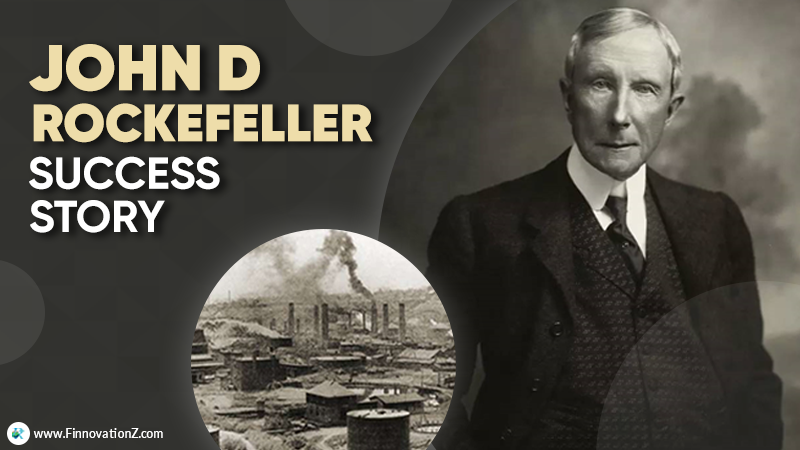
John D. Rockefeller was born July 8, 1839, in Richford, New York, about midway between Binghamton and Ithaca. His father, William Avery Rockefeller, was a “pitch man” — a “doctor” who claimed he could cure cancers and charged up to $25 a treatment. He was gone for months at a time traveling around the West from town to town and would return to wherever the family was living with substantial sums of cash. His mother, Eliza Davison Rockefeller, was very religious and very disciplined. She taught John to work, to save, and to give to charities.
From 1852 Rockefeller attended Owego Academy in Owego, New York, where the family had moved in 1851. Rockefeller excelled at mental arithmetic and was able to solve difficult arithmetic problems in his head — a talent that would be very useful to him throughout his business career. In other subjects Rockefeller was an average student but the quality of the education was very high.
In 1853, the Rockefellers moved to Cleveland, Ohio, and John attended high school from 1853 to 1855. He was very good at math and was on the debating team. The school encouraged public speaking and even though Rockefeller was only average, it was a skill that would prove to useful to him.
Early Business Career: 1855-1863
In the spring of 1855 Rockefeller spent 10 weeks at Folsom’s Commercial College — a “chain College” — where he learned single- and double-entry bookkeeping, penmanship, commercial history, mercantile customs, banking, and exchange. From his father he had learned how to draw up notes and other business papers. His father was very meticulous in matters of business and believed in the sacredness of contracts.
In August of 1855, at the age of 16, Rockefeller began looking for work in Cleveland as a bookkeeper or clerk. Business was bad in Cleveland at the time and Rockefeller had problems finding a job. He was always neatly dressed in a dark suit and black tie. Cleveland was not a large city in 1855 and Rockefeller could easily visit every business in under a week’s time. He returned to many businesses three times. Finally, on September 26, 1855, he got a job as an assistant bookkeeper with Hewitt & Tuttle, commission merchants and produce shippers.
Rockefeller soon impressed his employers with his seriousness and diligence. He was very exacting and scrupulously honest. For example, he would not write out a false bill of lading under any circumstances. He went to great lengths to collect overdue accounts. He was pleasant, persistent, and patient, and he got the company’s money from the delinquents.
During the Civil War their business expanded rapidly. Grain prices went up and so did their commissions. Most of their selling was done on commission, so Clark & Rockefeller took no risks from price fluctuations. Rockefeller’s style was very precise and calculated. He was not a gambler but a planner. He avoided speculation and refused to make advances or loans.
Rockefeller was extremely hard working. He traveled extensively, drumming up business throughout Ohio, and then would go to the banks and borrow large sums of money to handle the shipments. This aggressive style built the business up every year.
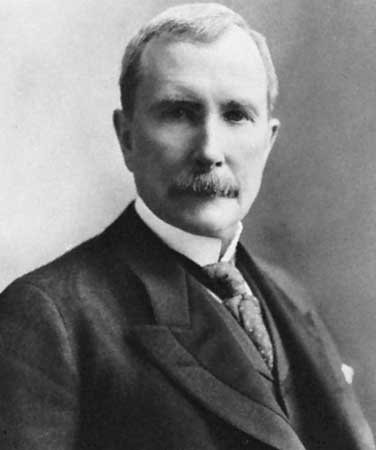
However, by the early 1860s, Rockefeller realized that the future of the commission merchant business in Cleveland was going to be limited. He had become convinced that the railroads were going to become the primary means of transportation for agricultural commodities. This would be to the disadvantage of Cleveland, because its position as an important Lake Erie port was its primary transportation advantage. He saw that the rising grain output of the Midwest and the Northwest of J. J. Hill would change the nature of the business for good. The huge elevators on Lake Michigan and the flour-millers of Minneapolis would be the dominant players in the business. Rockefeller came to believe that the future of Cleveland lay in the collection and shipment of raw industrial materials — not agricultural commodities. This would allow Cleveland to exploit its geographical advantages — mid-way between the Eastern seaboard and Chicago — and accessible to both rail and water transportation. He saw his chance in 1863 —
Rockefeller Exits: 1892-1897
During 1891-92 all the evidence suggests that Rockefeller had a partial nervous breakdown from overwork. He lost all of his hair, including his eyebrows, and suffered from ill health in the early 1890s.
During this period Rockefeller’s wealth had increased to such an extent that his major problem was what to do with it all. He solved this problem by hiring Frederick T. Gates in September of 1891 as a full-time manager of his fortune. By this time, Rockefeller was literally inundated with appeals from individuals and charities for funds. Gates not only removed this burden; he also oversaw all of Rockefeller’s investments, which were becoming huge in their own right. For example, by 1897 Rockefeller owned large holdings of the Missabe iron range in Minnesota, a railroad to carry the ore to Lake Superior, and a fleet of huge ore-carrying lake steamers. In 1901 Rockefeller sold his iron ore-related business to J.P. Morgan for $80,000,000 with an estimated profit of at least $50,000,000 — a huge fortune in its own right, but it was just one of his investments. Morgan added the Rockefeller properties to the U.S. Steel Corporation.
By 1896, Rockefeller stopped going to his office daily and in 1897 he retired, at the age of 58. He took part in some management activity until 1899 but none to speak of thereafter. John Archbold ran Standard Oil from the mid-1890s onward. Archbold disliked prominence and asked Rockefeller to remain as the nominal president of Standard. Not publicly announcing his retirement was a great mistake on Rockefeller’s part. Rockefeller had resisted the temptation to exploit the Standard’s near-monopoly position by raising prices “too” much. Although Rockefeller’s pricing policies did result in some “monopoly profits” for the Standard, they were fairly mild. Not so Archbold. He raised prices aggressively, and the dividends rolled in. The consequence was that Rockefeller got all the blame for the policies even though he had almost no further role in management.
Retirement and Philanthropy
From the mid-1890s until his death in 1937, Rockefeller’s activities were philanthropic. Rockefeller’s fortune peaked in 1912 at almost $900,000,000, but by that time he had already given away hundreds of millions of dollars. His son, John D. Rockefeller, Jr. in 1897 joined Gates in the full time management of the fortune.
The University of Chicago — which Rockefeller was largely responsible for creating — alone received $75,000,000 by 1932.
He set up, at the urging of his son, the Rockefeller Institute for Medical Research (now Rockefeller University) and his gifts to it totaled $50,000,000 by the 1930s.
He founded the General Education Board in 1903 (later the Rockefeller Foundation). The General Education Board helped to establish high schools throughout the South by providing free professional advice on improving instruction and education. The effort was a cooperative one, and local money was used to build the high schools. In 1919, Rockefeller donated $50,000,000 to the Board to raise academic salaries, which were very low in the wake of WWI.
The Rockefeller Foundation was officially established in 1913 and Rockefeller transferred $235,000,000 to it by 1929.
In 1909, Rockefeller established the Rockefeller Sanitary Commission which was largely responsible for eradicating hookworm in the South by 1927.
When Rockefeller died, on May 23, 1937, his estate totaled only $26,410,837. He had given most of his property to his philanthropies and to his son and other heirs.
Rockefeller was a Schumpeteran entrepreneur. He clearly changed “the stream of the allocation of resources over time by introducing new departures into the flow of economic life” by creating the modern oil industry.
Last, but not least, he set the standard for philanthropy. Just the eradication of hookworm in the South alone would merit his place as one of the great humanitarians of the 20th Century. But his reputation was so sullied that he never received the credit that he was due for this great act on behalf of humankind.
“Don’t be afraid to give up the good to go for the great.”
 Eduindex
You must be logged in to post a comment.