Bhimrao Ramji Ambedkar, (born April 14, 1891, Mhow, India—died December 6, 1956, New Delhi), leader of the Dalits (Scheduled Castes; formerly called untouchables) and law minister of the government of India (1947–51).
Born of a Dalit Mahar family of western India, he was as a boy humiliated by his high-caste schoolfellows. His father was an officer in the Indian army. Awarded a scholarship by the Gaekwar (ruler) of Baroda (now Vadodara), he studied at universities in the United States, Britain, and Germany. He entered the Baroda Public Service at the Gaekwar’s request, but, again ill-treated by his high-caste colleagues, he turned to legal practice and to teaching. He soon established his leadership among Dalits, founded several journals on their behalf, and succeeded in obtaining special representation for them in the legislative councils of the government. Contesting Mahatma Gandhi’s claim to speak for Dalits (or Harijans, as Gandhi called them), he wrote What Congress and Gandhi Have Done to the Untouchables (1945).
In 1947 Ambedkar became the law minister of the government of India. He took a leading part in the framing of the Indian constitution, outlawing discrimination against untouchables, and skillfully helped to steer it through the assembly. He resigned in 1951, disappointed at his lack of influence in the government. In October 1956, in despair because of the perpetuation of untouchability in Hindu doctrine, he renounced Hinduism and became a Buddhist, together with about 200,000 fellow Dalits, at a ceremony in Nagpur. Ambedkar’s book The Buddha and His Dhamma appeared posthumously in 1957, and it was republished as The Buddha and His Dhamma: A Critical Edition in 2011, edited, introduced, and annotated by Aakash Singh Rathore and Ajay Verma.
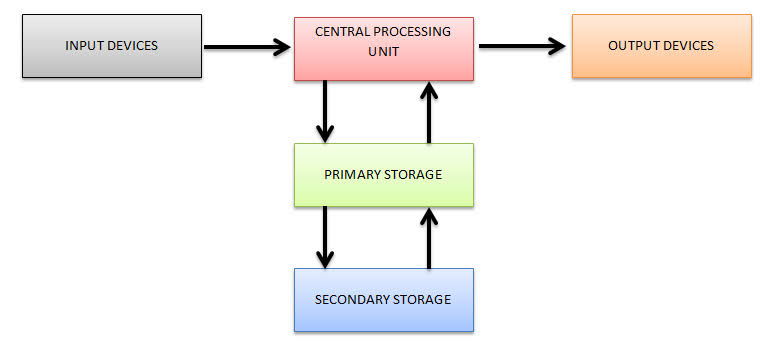
Input devicesallows the user to enter the program and data and send it to the processing unit. The common input devices are keyboard, mouse and scanners.
The processor ,more formally known as thr central processing unit (CPU), has the electronic circuitry that manipulates input data into the information as required. The central processing unit actually executes computer instructions.
Memory from which the CPU fetches the instructions and data is called main memory. It is also called as primary memory and is volatile in nature.
Output devices show the processed data – information – thr result of processing. The devices are normally a monitor and printers.
Storage usually means secondary storage, which stores data and programs. Here the data and programs are permanently stored for future use.
The hardware devices attached to the computer are called peripheral equipment. Peripheral equipment includes all input, output and secondary storage devices.
Input devicesallows the user to enter the program and data and send it to the processing unit. The common input devices are keyboard, mouse and scanners.
The processor ,more formally known as thr central processing unit (CPU), has the electronic circuitry that manipulates input data into the information as required. The central processing unit actually executes computer instructions.
Memory from which the CPU fetches the instructions and data is called main memory. It is also called as primary memory and is volatile in nature.
Output devices show the processed data – information – thr result of processing. The devices are normally a monitor and printers.
Storage usually means secondary storage, which stores data and programs. Here the data and programs are permanently stored for future use.
The hardware devices attached to the computer are called peripheral equipment. Peripheral equipment includes all input, output and secondary storage devices.
American Robotics’ autonomous drone has been certified by the Federal Aviation Administration, making it the first federally licensed drone on the market.
Drones that operate independently are a significant technical advancement. Not for domestic use because safety is still an issue, but this could boost productivity in a variety of industries because it’s nearly impossible to have someone operate multiple drones from day to night all of the time.
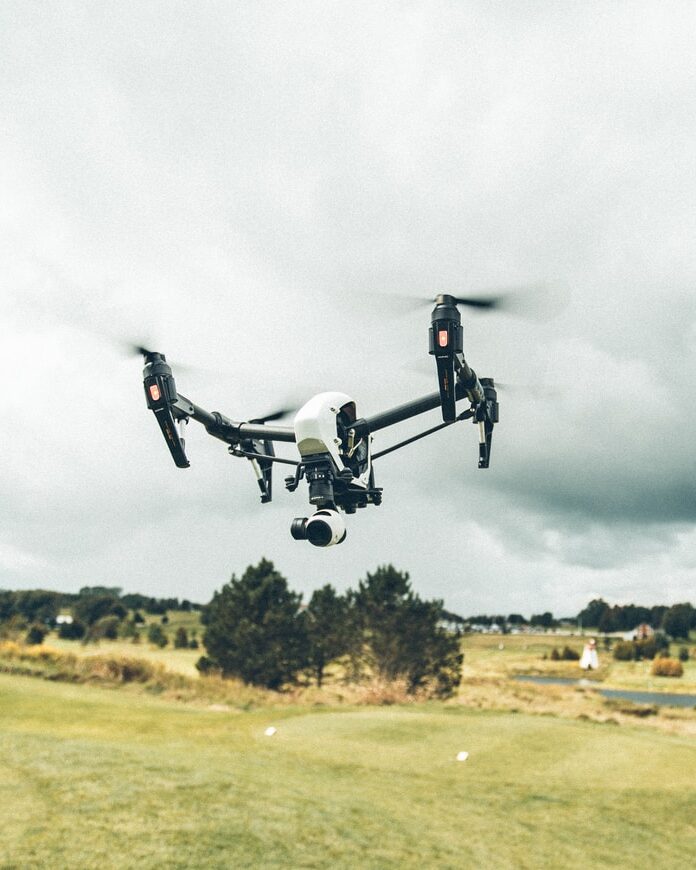
The autonomous drone is a fully integrated system that automates everything from landing to charging to data processing, making it an all-in-one solution.
Scout, the AI-powered autonomous drone, Soutbase, the weatherproof charging, and edge computing station, and Scoutview, the fleet management, and analytics software, are the solution’s three key components.
The Scout base is where the Scout is charged and data is processed. Scoutview allows businesses to monitor and communicate with drones without the need for a human operator.
The drone is equipped with visual, multispectral, and infrared cameras, making data collection quick and straightforward. The acquired data may be accessed instantaneously in real-time. The Scout systems will be able to perform missions independently after the installation is complete, collecting, processing, and analyzing data.
Demands for Autonomous Drones and the Market
Drones that can be used for commercial purposes have a huge market. Its TAM is expected to be worth 100 billion dollars (total addressable market). Drones might thus be utilized in a variety of areas, including industry, agriculture, and defense.
It might be used in industrial markets for asset inspection, tracking, security, and safety. It may be used for weed identification, disease detection, plant counting, research, harvest planning, and harvest timing in the agricultural market.
You’re in luck if you’re seeking surveillance and reconnaissance in the defense industry! As a consequence, these markets and sectors may use autonomous drones to perform work in broad fields that are difficult to analyze swiftly by people. It also makes data collection easier thanks to its integrated software and solutions.
Ondas has bought the Software Defined Radio platform for Mission Critical IoT applications. To manage thousands of connected devices over long distances,
Ondas provides a choice of trustworthy and secure broadband networks. With the help of Ondas’ high-bandwidth network, American Robotic’s autonomous drones will be able to send and receive long-range data, with thousands of drones continually gathering and processing high-resolution data.
This, we believe, is the way industrial data will be collected in the future. The combined company can provide the ultimate autonomous drone with unrivaled capabilities that can boost production in a variety of sectors.
American Robotics’ autonomous drone has been certified by the Federal Aviation Administration, making it the first federally licensed drone on the market.
Drones that operate independently are a significant technical advancement. Not for domestic use because safety is still an issue, but this could boost productivity in a variety of industries because it’s nearly impossible to have someone operate multiple drones from day to night all of the time.
The autonomous drone is a fully integrated system that automates everything from landing to charging to data processing, making it an all-in-one solution.
Scout, the AI-powered autonomous drone, Soutbase, the weatherproof charging, and edge computing station, and Scoutview, the fleet management, and analytics software, are the solution’s three key components.
The Scout base is where the Scout is charged and data is processed. Scoutview allows businesses to monitor and communicate with drones without the need for a human operator.
The drone is equipped with visual, multispectral, and infrared cameras, making data collection quick and straightforward. The acquired data may be accessed instantaneously in real-time. The Scout systems will be able to perform missions independently after the installation is complete, collecting, processing, and analyzing data.
Demands for Autonomous Drones and the Market
Drones that can be used for commercial purposes have a huge market. Its TAM is expected to be worth 100 billion dollars (total addressable market). Drones might thus be utilized in a variety of areas, including industry, agriculture, and defense.
It might be used in industrial markets for asset inspection, tracking, security, and safety. It may be used for weed identification, disease detection, plant counting, research, harvest planning, and harvest timing in the agricultural market.
You’re in luck if you’re seeking surveillance and reconnaissance in the defense industry! As a consequence, these markets and sectors may use autonomous drones to perform work in broad fields that are difficult to analyze swiftly by people. It also makes data collection easier thanks to its integrated software and solutions.
Ondas has bought the Software Defined Radio platform for Mission Critical IoT applications. To manage thousands of connected devices over long distances,
Ondas provides a choice of trustworthy and secure broadband networks. With the help of Ondas’ high-bandwidth network, American Robotic’s autonomous drones will be able to send and receive long-range data, with thousands of drones continually gathering and processing high-resolution data.
This, we believe, is the way industrial data will be collected in the future. The combined company can provide the ultimate autonomous drone with unrivaled capabilities that can boost production in a variety of sectors.
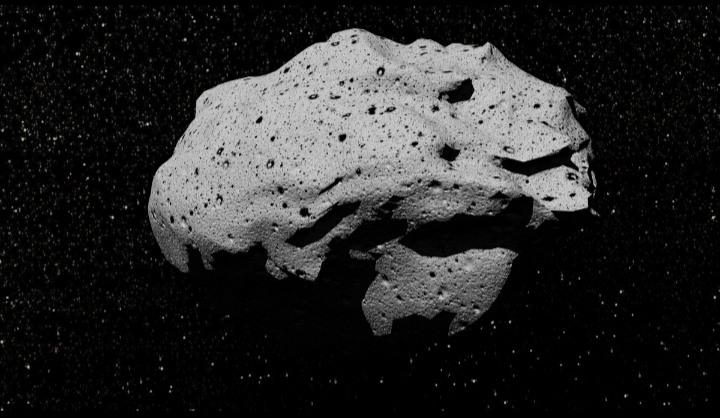
Asteroids are small, atmosphere-less rocky objects orbiting the Sun. Here are 10 things that you might not know about these planet-like celestial bodies that can crash into the Earth and create havoc.
10 Things You Need to Know about Asteroids:
They were Created at the Same Time as the Earth:
Many astronomers believe that asteroids are rocky leftovers from the formation of the Solar System 4.6 billion years ago. One theory is that after the Big Bang, dust particles came together to form celestial objects through a process called accretion – smaller objects came together with other small objects, creating larger space rocks. Some of these celestial rocks were able to grow large enough to develop their own gravity and became planets. Many others were held back from getting together by Jupiter’s gravitation force. These became asteroids.
Because they revolve around the Sun like planets do, asteroids are also sometimes called planetoids or minor planets.
Most are Found in One Area:
Of the millions of asteroids that inhabit our solar system, a majority can be found in a region between the orbits of Mars and Jupiter. This region is called the Asteroid Belt.
3.A Very Lonely Area:
Imagining the Asteroid Belt as in the movies – a small strip of space littered with huge rocks intent on mowing down your space ship?
Well, imagine again because the Asteroid Belt is nothing like that. In fact it is a very lonely place for an asteroid. Astronomers estimate that the average distance between two asteroids in the asteroid belt is about 600,000 miles (966,000 km). This is about 2.5 times the distance between the Earth and the Moon. That is a lot of space between two neighboring asteroids!
Not all of Them Reside in the Belt:
While most of the known asteroids live in the Asteroid Belt, there are many that orbit the Sun outside this belt. For example, Trojan Asteroids, named after the Trojan Wars in Greek Mythology, follow the orbits of a planet. Jupiter has two clusters of Trojans following its orbit around the Sun – the one ahead of the planet is called the Greek Camp and the one behind is known as the Trojan Camp.
In 2010, scientists discovered the first Trojan Asteroid, 2010 TK7, that follows the Earth’s orbit.
Asteroids that are pushed close to the Earth’s orbit are known as Near Earth Asteroids.
They Come in Different Sizes:
Asteroids can measure anywhere between a few feet to several hundred miles in diameter. The largest asteroid known to man, Ceres, is about 590 miles (950 km) in diameter.
Astronomers estimate that if all the asteroids in the Solar System were put together, the size of the resulting rock will be much smaller than our Moon!
And Yet, some Asteroids have Moons:
About 150 Asteroids are known today to have one or more moons orbiting them. The most famous of these is Dactyl, a small moon orbiting Ida, an Asteroid Belt asteroid.
7.They can be Classified According to their Composition:
Most Asteroids fall into one of three groups based on their composition: C, S and M types. The composition is determined by how far the asteroid was from the Sun during the time of its formation.
About two-thirds of all asteroids are thought to be C type asteroids. These asteroids are very dark, with an average albedo of about 0.06 and are thought to have a similar composition as the Sun. They can be found in the outer regions of the Asteroid Belt
S type asteroids are considerably brighter with an average albedo of 0.16. These asteroids are usually found in the inner regions of the Asteroid Belt and are composed of iron and magnesuim silicates.
M type asteroids can be found in the middle of the Asteroid Belt and are much brighter than an average albedo of 0.19. These are mostly composed of Iron.
8.This makes Asteroids Attractive to Miners:
Asteroid mining? That is no longer in the realm of science fiction. Asteroids are rich sources of metals like Iron, Platinum and Titanium, metals that humans use daily to build and create things. In addition, scientists believe that water present on the surface of these asteroids could be broken down and used as fuel for space vehicles.
While asteroid mining hasn’t started yet, many companies around the world have started exploring the idea seriously.
9.Close Encounters of the Asteroid Kind:
The Earth’s atmosphere acts as a shield protecting us from meteoroids and other objects that populate space. When a meteoroid enters the atmosphere, it usually burns up before hitting the surface of the Earth. If any part of the meteoroid survives and hits the surface of the Earth, it is called a meteorite.
What are Meteor Showers?
Sometimes however larger space objects collide with the Earth’s atmopshere and impact the surface of the Earth. Scientists have identified about 100 sites on Earth that may have been impacted by a large asteroid or comet.
While no humans have been killed due to a meteorite in recent history, there is some worry among the scientific community about the possiblity of a large asteroid impact and the effect it may have on human life.
An Asteroid may have Killed the Dinosaurs:
In fact, there is a theory prevalent among the scientific community that it was an asteroid that wiped out the dinosaurs. Many scientists believe that the epicenter of the mass extinction of the dinosaurs lies in the Chicxulub Crater, an impact crater that was discovered under the Yucatán Peninsula in Mexico.
Asteroids are small, atmosphere-less rocky objects orbiting the Sun. Here are 10 things that you might not know about these planet-like celestial bodies that can crash into the Earth and create havoc.
10 Things You Need to Know about Asteroids:
They were Created at the Same Time as the Earth:
Many astronomers believe that asteroids are rocky leftovers from the formation of the Solar System 4.6 billion years ago. One theory is that after the Big Bang, dust particles came together to form celestial objects through a process called accretion – smaller objects came together with other small objects, creating larger space rocks. Some of these celestial rocks were able to grow large enough to develop their own gravity and became planets. Many others were held back from getting together by Jupiter’s gravitation force. These became asteroids.
Because they revolve around the Sun like planets do, asteroids are also sometimes called planetoids or minor planets.
Most are Found in One Area:
Of the millions of asteroids that inhabit our solar system, a majority can be found in a region between the orbits of Mars and Jupiter. This region is called the Asteroid Belt.
3.A Very Lonely Area:
Imagining the Asteroid Belt as in the movies – a small strip of space littered with huge rocks intent on mowing down your space ship?
Well, imagine again because the Asteroid Belt is nothing like that. In fact it is a very lonely place for an asteroid. Astronomers estimate that the average distance between two asteroids in the asteroid belt is about 600,000 miles (966,000 km). This is about 2.5 times the distance between the Earth and the Moon. That is a lot of space between two neighboring asteroids!
Not all of Them Reside in the Belt:
While most of the known asteroids live in the Asteroid Belt, there are many that orbit the Sun outside this belt. For example, Trojan Asteroids, named after the Trojan Wars in Greek Mythology, follow the orbits of a planet. Jupiter has two clusters of Trojans following its orbit around the Sun – the one ahead of the planet is called the Greek Camp and the one behind is known as the Trojan Camp.
In 2010, scientists discovered the first Trojan Asteroid, 2010 TK7, that follows the Earth’s orbit.
Asteroids that are pushed close to the Earth’s orbit are known as Near Earth Asteroids.
They Come in Different Sizes:
Asteroids can measure anywhere between a few feet to several hundred miles in diameter. The largest asteroid known to man, Ceres, is about 590 miles (950 km) in diameter.
Astronomers estimate that if all the asteroids in the Solar System were put together, the size of the resulting rock will be much smaller than our Moon!
And Yet, some Asteroids have Moons:
About 150 Asteroids are known today to have one or more moons orbiting them. The most famous of these is Dactyl, a small moon orbiting Ida, an Asteroid Belt asteroid.
7.They can be Classified According to their Composition:
Most Asteroids fall into one of three groups based on their composition: C, S and M types. The composition is determined by how far the asteroid was from the Sun during the time of its formation.
About two-thirds of all asteroids are thought to be C type asteroids. These asteroids are very dark, with an average albedo of about 0.06 and are thought to have a similar composition as the Sun. They can be found in the outer regions of the Asteroid Belt
S type asteroids are considerably brighter with an average albedo of 0.16. These asteroids are usually found in the inner regions of the Asteroid Belt and are composed of iron and magnesuim silicates.
M type asteroids can be found in the middle of the Asteroid Belt and are much brighter than an average albedo of 0.19. These are mostly composed of Iron.
8.This makes Asteroids Attractive to Miners:
Asteroid mining? That is no longer in the realm of science fiction. Asteroids are rich sources of metals like Iron, Platinum and Titanium, metals that humans use daily to build and create things. In addition, scientists believe that water present on the surface of these asteroids could be broken down and used as fuel for space vehicles.
While asteroid mining hasn’t started yet, many companies around the world have started exploring the idea seriously.
9.Close Encounters of the Asteroid Kind:
The Earth’s atmosphere acts as a shield protecting us from meteoroids and other objects that populate space. When a meteoroid enters the atmosphere, it usually burns up before hitting the surface of the Earth. If any part of the meteoroid survives and hits the surface of the Earth, it is called a meteorite.
What are Meteor Showers?
Sometimes however larger space objects collide with the Earth’s atmopshere and impact the surface of the Earth. Scientists have identified about 100 sites on Earth that may have been impacted by a large asteroid or comet.
While no humans have been killed due to a meteorite in recent history, there is some worry among the scientific community about the possiblity of a large asteroid impact and the effect it may have on human life.
An Asteroid may have Killed the Dinosaurs:
In fact, there is a theory prevalent among the scientific community that it was an asteroid that wiped out the dinosaurs. Many scientists believe that the epicenter of the mass extinction of the dinosaurs lies in the Chicxulub Crater, an impact crater that was discovered under the Yucatán Peninsula in Mexico.
Before you begin writing, follow these guidelines to help you prepare and understand the case study:
Read and Examine the Case Thoroughly
Take notes, highlight relevant facts, underline key problems.
Focus Your Analysis
Identify two to five key problems.
Why do they exist?
How do they impact the organization?
Who is responsible for them?
Uncover Possible Solutions/Changes Needed
Review course readings, discussions, outside research, your experience.
Select the Best Solution
Consider strong supporting evidence, pros, and cons. Is this solution realistic?
Drafting the Case
Once you have gathered the necessary information, a draft of your analysis should include these general sections, but these may differ depending on your assignment directions or your specific case study:
Introduction
Identify the key problems and issues in the case study.
Formulate and include a thesis statement, summarizing the outcome of your analysis in 1–2 sentences.
Background
Set the scene: background information, relevant facts, and the most important issues.
Demonstrate that you have researched the problems in this case study.
Evaluation of the Case
Outline the various pieces of the case study that you are focusing on.
Evaluate these pieces by discussing what is working and what is not working.
State why these parts of the case study are or are not working well.
Proposed Solution/Changes
Provide specific and realistic solution(s) or changes needed.
Explain why this solution was chosen.
Support this solution with solid evidence, such as:
Concepts from class (text readings, discussions, lectures)
Outside research
Personal experience (anecdotes)
Recommendations
Determine and discuss specific strategies for accomplishing the proposed solution.
If applicable, recommend further action to resolve some of the issues.
What should be done and who should do it?
Finalizing the Case
After you have composed the first draft of your case study analysis, read through it to check for any gaps or inconsistencies in content or structure:
Before you begin writing, follow these guidelines to help you prepare and understand the case study:
Read and Examine the Case Thoroughly
Take notes, highlight relevant facts, underline key problems.
Focus Your Analysis
Identify two to five key problems.
Why do they exist?
How do they impact the organization?
Who is responsible for them?
Uncover Possible Solutions/Changes Needed
Review course readings, discussions, outside research, your experience.
Select the Best Solution
Consider strong supporting evidence, pros, and cons. Is this solution realistic?
Drafting the Case
Once you have gathered the necessary information, a draft of your analysis should include these general sections, but these may differ depending on your assignment directions or your specific case study:
Introduction
Identify the key problems and issues in the case study.
Formulate and include a thesis statement, summarizing the outcome of your analysis in 1–2 sentences.
Background
Set the scene: background information, relevant facts, and the most important issues.
Demonstrate that you have researched the problems in this case study.
Evaluation of the Case
Outline the various pieces of the case study that you are focusing on.
Evaluate these pieces by discussing what is working and what is not working.
State why these parts of the case study are or are not working well.
Proposed Solution/Changes
Provide specific and realistic solution(s) or changes needed.
Explain why this solution was chosen.
Support this solution with solid evidence, such as:
Concepts from class (text readings, discussions, lectures)
Outside research
Personal experience (anecdotes)
Recommendations
Determine and discuss specific strategies for accomplishing the proposed solution.
If applicable, recommend further action to resolve some of the issues.
What should be done and who should do it?
Finalizing the Case
After you have composed the first draft of your case study analysis, read through it to check for any gaps or inconsistencies in content or structure:
When we communicate with our family, friends, relatives or even strangers in a casual set up, it is called Informal communication. This includes exchange of casual words- views or opinions, ideas or other interactions where the intention is only to know the person or acquire some knowledge. It is not meant for formal expression or behaviour.
It is important that we communicate effectively even if we are in an informal set up. It gives an impact and creates an impression in the mind of the other person about you. Good communication helps you enhance your growth as an individual. There is some framework you would work upon in order to be a good communicator.
It is important that your message reaches the intended person the way you mean it.There are some behavioural patterns to be followed when you interact with somebody regardless of the person’s age or gender.The most important thing to keep in mind is to respect them.
Never use rude words with anyone. Always be calm and speak softly. Nobody likes a person who is aggressive and harsh in his/her behaviour.
Whenever you are talking with somebody, give that person the time to complete his point. Listen carefully to what the other person is trying to convey through his words to you.
Never jump in between a conversation or disturb/stop somebody in-between. Let them complete and then you speak.
Keep your lines precise and avoid useless informationor words which may lengthenthe message and the real meaning gets lost.
Avoid jargon so as to make the message understandable. Also, speak only what is necessary. Speaking out unnecessary stuff may get your real message lost in the conversation.
Your body language should go with what you are conveying to the speaker/listener. The other person should not feel you are trying to dominate him/her.
Don’t be too loud with your body language when you are speaking and express your alertness through your body language while listening to somebody. It will assure the person of interaction from your side.
The way you address the other person is important in deciding the response you will get from him/her. It is also thecase of a formal discussion orconversation.
It is all upto you that how well you express yourself in front of others, the similar response you will get! Also, you should take into consideration whom are you talking with. This simply focus on the personality or behaviour of the person you are trying to communicate.
It is often a problem that people don’t know how to start a conversation with a stranger or a high official person. Making new friends is included in this. Since English as a language is preferred all across , the basics you can start with is to address the person saying hello, with a smile or in the formal manner(good morning) as the case may be. Initiate with what you want to say, with clarity of thought. Don’t mix up your words and make sure the person is listening to you and is interested in continuing the talk. There needs to be some common topics to make up a friend otherwise you won’t get expected response.
The way you address should be in accordance with the personality of the person; whether he/she accept frank behaviour or likes to talk about information, entertainment, etc. All such aspects help ending up with an engaging conversation. There might be people who don’t like talking much. In that situation, you avoid it and let them have their space.
When we communicate with our family, friends, relatives or even strangers in a casual set up, it is called Informal communication. This includes exchange of casual words- views or opinions, ideas or other interactions where the intention is only to know the person or acquire some knowledge. It is not meant for formal expression or behaviour.
It is important that we communicate effectively even if we are in an informal set up. It gives an impact and creates an impression in the mind of the other person about you. Good communication helps you enhance your growth as an individual. There is some framework you would work upon in order to be a good communicator.
It is important that your message reaches the intended person the way you mean it.There are some behavioural patterns to be followed when you interact with somebody regardless of the person’s age or gender.The most important thing to keep in mind is to respect them.
Never use rude words with anyone. Always be calm and speak softly. Nobody likes a person who is aggressive and harsh in his/her behaviour.
Whenever you are talking with somebody, give that person the time to complete his point. Listen carefully to what the other person is trying to convey through his words to you.
Never jump in between a conversation or disturb/stop somebody in-between. Let them complete and then you speak.
Keep your lines precise and avoid useless informationor words which may lengthenthe message and the real meaning gets lost.
Avoid jargon so as to make the message understandable. Also, speak only what is necessary. Speaking out unnecessary stuff may get your real message lost in the conversation.
Your body language should go with what you are conveying to the speaker/listener. The other person should not feel you are trying to dominate him/her.
Don’t be too loud with your body language when you are speaking and express your alertness through your body language while listening to somebody. It will assure the person of interaction from your side.
The way you address the other person is important in deciding the response you will get from him/her. It is also thecase of a formal discussion orconversation.
It is all upto you that how well you express yourself in front of others, the similar response you will get! Also, you should take into consideration whom are you talking with. This simply focus on the personality or behaviour of the person you are trying to communicate.
It is often a problem that people don’t know how to start a conversation with a stranger or a high official person. Making new friends is included in this. Since English as a language is preferred all across , the basics you can start with is to address the person saying hello, with a smile or in the formal manner(good morning) as the case may be. Initiate with what you want to say, with clarity of thought. Don’t mix up your words and make sure the person is listening to you and is interested in continuing the talk. There needs to be some common topics to make up a friend otherwise you won’t get expected response.
The way you address should be in accordance with the personality of the person; whether he/she accept frank behaviour or likes to talk about information, entertainment, etc. All such aspects help ending up with an engaging conversation. There might be people who don’t like talking much. In that situation, you avoid it and let them have their space.
Here is the part-2 of this article, in part-1, we have seen some interesting facts about some states in India. In this article, we are going to see some facts about rest of the states.
Telangana
Do you know once a Indian ruler was the world’s richest person in the world. He is Osman Ali Khan Bahadur, the last ruler of Nizam. In 1937, the time magazine featured Mir Osman Ali Khan Bahadur in there cover page as the world’s richest person. His estimated net worth is $2 billion in 1940, as of now $236 billion.
Karnataka
Do you know that 5 rivers flow in a single district in Karnataka. Vijayapura district in Karnataka witness flow of five rivers through it, they are Krishan, Doni, Bhima, Ghataprabha and Malaprabha. This district is also known as land of five rivers.
Haryana
Several historic battles like Mahabharata were fought in Haryana. Haryana is the home land for Indus and Vedic civilizations.
Punjab
According to the world records, The Golden Temple in Amritsar is the most visited place. The golden temple is located in Punjab. As by its name, it is really made of gold. This is the most popular tourist attraction in Punjab.
Odisha
In Odisha, you can find some of the oldest rocks in the world. The old rocks are about 3 Billion years ago. Our earth is believed to 4.5 Billion years old.
Sikkim
Each and every state in India have there own official language. Every state in India, have up to 1 or 2 official language. But Sikkim is the only state in India which 11 official languages.
Arunachal Pradesh
Do you known earlier Arunachal pradesh was a union territory, but later on 20th February it become a independent state.
Manipur
It is believed that the sport polo has originated in Manipur and was spread in the western countries by the Britishers during the colonial rule.
West Bengal
Have you ever wondered West Bengal is located at east but called as West Bengal? The answer is when India got its independence, the Bengal region was partitioned, the western part went to India and the eastern part went to Pakistan(Now Bangladesh). That’s why it is called West Bengal.
Chattisgarh
In Chattisgarh, motorcycle ambulances are used to save people life in the remote villages where ambulances cannot reach. So far it has saved about 200 pregnant women.
Bihar
Nalanda University is one of the world’s oldest university is located at Bihar. It was established in 5th century and it was functioned between 5th to 13th century. However it was destroyed in during some battles.
Tripura
Do you know 91 percent of the land in Tripura is under Cultivation? Rice is the crop of Tripura.
Meghalaya
Mawsnyram is the place located in Meghalaya, which receives highest amount of rainfall on this planet. The average rainfall here is 11,871mm.
Jharkhand
The state Jharkhand is rich in minerals such as iron ore, coal, mica, and limestone. It accounts for 40 percent of the total minerals found in India.
Nagaland
Nagaland is the only state in India to register population decline from 2001 to 2011 by 0.46 percent.
Himachal Pradesh
There is a village in Himachal Pradesh, which is called village of taboos. You cannot touch anything in there villages without there permission. If you touch anything without there permission then you have to pay fine to them.
Goa
Portuguese ruled Goa for more than 450 years. The rule of ended on 17th December 1971, by the invasion of Indian army.
Here is the part-2 of this article, in part-1, we have seen some interesting facts about some states in India. In this article, we are going to see some facts about rest of the states.
Telangana
Do you know once a Indian ruler was the world’s richest person in the world. He is Osman Ali Khan Bahadur, the last ruler of Nizam. In 1937, the time magazine featured Mir Osman Ali Khan Bahadur in there cover page as the world’s richest person. His estimated net worth is $2 billion in 1940, as of now $236 billion.
Karnataka
Do you know that 5 rivers flow in a single district in Karnataka. Vijayapura district in Karnataka witness flow of five rivers through it, they are Krishan, Doni, Bhima, Ghataprabha and Malaprabha. This district is also known as land of five rivers.
Haryana
Several historic battles like Mahabharata were fought in Haryana. Haryana is the home land for Indus and Vedic civilizations.
Punjab
According to the world records, The Golden Temple in Amritsar is the most visited place. The golden temple is located in Punjab. As by its name, it is really made of gold. This is the most popular tourist attraction in Punjab.
Odisha
In Odisha, you can find some of the oldest rocks in the world. The old rocks are about 3 Billion years ago. Our earth is believed to 4.5 Billion years old.
Sikkim
Each and every state in India have there own official language. Every state in India, have up to 1 or 2 official language. But Sikkim is the only state in India which 11 official languages.
Arunachal Pradesh
Do you known earlier Arunachal pradesh was a union territory, but later on 20th February it become a independent state.
Manipur
It is believed that the sport polo has originated in Manipur and was spread in the western countries by the Britishers during the colonial rule.
West Bengal
Have you ever wondered West Bengal is located at east but called as West Bengal? The answer is when India got its independence, the Bengal region was partitioned, the western part went to India and the eastern part went to Pakistan(Now Bangladesh). That’s why it is called West Bengal.
Chattisgarh
In Chattisgarh, motorcycle ambulances are used to save people life in the remote villages where ambulances cannot reach. So far it has saved about 200 pregnant women.
Bihar
Nalanda University is one of the world’s oldest university is located at Bihar. It was established in 5th century and it was functioned between 5th to 13th century. However it was destroyed in during some battles.
Tripura
Do you know 91 percent of the land in Tripura is under Cultivation? Rice is the crop of Tripura.
Meghalaya
Mawsnyram is the place located in Meghalaya, which receives highest amount of rainfall on this planet. The average rainfall here is 11,871mm.
Jharkhand
The state Jharkhand is rich in minerals such as iron ore, coal, mica, and limestone. It accounts for 40 percent of the total minerals found in India.
Nagaland
Nagaland is the only state in India to register population decline from 2001 to 2011 by 0.46 percent.
Himachal Pradesh
There is a village in Himachal Pradesh, which is called village of taboos. You cannot touch anything in there villages without there permission. If you touch anything without there permission then you have to pay fine to them.
Goa
Portuguese ruled Goa for more than 450 years. The rule of ended on 17th December 1971, by the invasion of Indian army.
The plant world is an immense store of active chemical compounds. Nearly half = the medicines we use today are herbal in origin, and a quarter contains plant extracts or active chemicals taken directly from plants. Many more are yet to be discovered, recorded and researched; only a few thousand have been studied. Across the globe, the hunt will always be on to find species that could form the bases of new medicines. Humans have always used plants to ease their pains. They imbued them with magical powers and then gradually learnt to identify their properties. We can now enjoy the benefits of herbal medicines because, over thousands of years, our ancestors discovered which plants were medicinally beneficial and which were highly toxic.
Thousands of years ago, the ancient Egyptians discovered simple ways to extract and use the active ingredients within plants. Egyptian papyrus manuscripts from 2000 B.C. record the use of perfumes and fine oils, and aromatic oils and gums in the embalming process.
In ancient Greece in the 5th and the 4th centuries BC, Hippocrates, the father of medicine, was already recommending asparagus and garlic for their diuretic qualities, poppy as a way of inducing sleep and willow leaves to relieve pain and fever. In the 1st century AD, another Greek doctor, Dioscorides, established the first collection of medicinal plants. His treatise on the subject was translated into Arabic and Persian. Centuries later, his work was also used by the Muslim scholars who influenced great universities of the period, particularly at Montpellier, Europe’s most famous centre for the study of botany.
As a result of trade with Africa and Asia, the Western world’s store of herbal medicines was enriched by the inclusion of camphor, cinnamon, ginger, ginseng, nutmeg, sandalwood, turmeric and henna. For a long time, however, the use of both local plants and those with more distant origins was based on more or less fanciful beliefs. Throughout the Middle Ages herbal medicine consisted of a mixture of magic, superstition and empirical observation. From the Renaissance onwards, scientists and their scientific studies, discoveries and inventions came to the fore, rejecting alchemists’ elixirs and other magical remedies. Local plants were carefully collected and widely used to make infusions, decoctions and ointments. These plants make up the major part of the traditional cures that we have inherited.
Chandan or sandalwood sticks.
History behind Nature’s Medicines:
In the late 1700s, Carl Wilheim Scheele, a gifted Swedish chemist, obtained tartaric acid from grapes, citric acid from lemons and malic acid from apples. The techniques that he and his contemporaries used led to the isolation of the first purified compounds from plants that could be used as drugs. First came the isolation of morphine from the opium poppy in 1803, then caffeine from coffee beans in 1819, quinine from cinchona bark and colchicines from meadow saffron both in 1820 and atropine from deadly nightshade in 1835.
Image Source -google.
One tree that generated considerable interest among scientists was the willow. In the early 1800s, chemists from Germany, Italy and France began the search for the compounds responsible for the acclaimed pain-relieving effects of its bark. In 1828, the German pharmacist, Johann Buchner, was the first to obtain salicin, the major compound in a pure form. In 1838, the Italian chemist, Raffaele Piria also obtained salicylic acid from the bark by various chemical processes. But these early compounds caused blisters in the mouth, and stomach upsets when ingested. In 1853, a French chemist, Charles Frederic Gerhardt, synthesised a modified form of salicylic acid-acetylsalicylic acid. But still it wasn’t further modified form developed for more than 40 years until a German chemist, Felix Hoffman, working for Bayer, rediscovered Gerhardt’s compound. Hoffman gave it to his father who suffered from arthritis and reported the beneficial effects.
Bayer decided to market the acetylsalicylic acid as a new drug for pain relief and patented the compound acetylsalicylic acid in 1899. At last from the willow, the first modern drug was born and, with 12000 tons of aspirin sold every year throughout the world, it has kept its number one position.
From the 1930s onwards, advances in chemistry have made it much easier to reproduce the active ingredients in plants. But plants will continue to have a medicinal importance in their own right. Their active constituents may be slightly modified to improve their efficiency or to reduce their undesirable effects, but they are still vital for the treatment of disorders such as cancers and heart diseases or as a means of combating malaria. And they remain the essence of herbal medicine-an area that has still not been fully understood and explored.












 Eduindex
You must be logged in to post a comment.