Panchayati Raj – A Brief

The term Panchayati Raj in India signifies the system of rural local self-government. It has been established in all the states of India by the Acts of the state legislatures to build democracy at the grass-root level. It is entrusted with rural development. It was constitutionalized through the 73rd Constitutional Amendment Act of 1992.

Evolution- 

BALWANT 

RAI MEHTA COMMITTEE-  In January 1957, the Government of India appointed a committee to examine the working of the Community Development Programme (1952) and the National Extension Service (1953) and to suggest measures for their better working. The chairman of this committee was Balwant Rai G Mehta. The committee submitted its report in 1957 and recommended the establishment of the scheme of democratic decentralization which ultimately came to be known as Panchayati Raj.

Rajasthan was the first state to establish Panchayati Raj. The scheme was inaugurated by the prime minister on October 2, 1959, in Nagaur District. Andhra Pradesh succeeded Rajasthan, which also adopted the system in 1959. Thereafter, most of the states adopted the system.

Though most of the states created Panchayati raj institutions by the mid-1960s. There were differences among states concerning the number of tiers, the relative position of Samiti and Parishad, their tenure, composition, functions, finances, and so on. For example. Rajasthan adopted the three-tier system while Tamil Nadu adopted the two-tier system. Further, in the Rajasthan- Andhra Pradesh Pattern, panchayat Samiti was powerful as the block was the unit of planning and development, while in the Maharashtra-Gujarat pattern, Zila Parishad was powerful as the district was the unit of planning and development.

Ashok Mehta Committee-  In December 1977, the Janata Government appointed a committee on Panchayati raj institutions under the chairmanship of Ashok Mehta. It submitted its report in August 1978 and made 132 recommendations to revive and strengthen the declining Panchayati raj system in the country.

73rd Amendment Act of 1992 –  This act has added a new Part- IX to the Constitution of India. This part is entitled ‘The Panchayats’ and consists of provisions from articles 243 to 243 O . In addition, the act has also added a new Eleventh Schedule to the constitution. This schedule contains 29 functional items of the panchayats. 

The act has given a practical shape to Article 40 of the constitution which says that “ The state shall take steps to organize village panchayats and endow them with such powers and authority as may be necessary to enable them to function as units of self-government”. This article forms a part of Directive Principles of State Policy.

The basic features discussed in the act are – Gram Sabha, Three- Tier system, Election of Members and Chairpersons, Duration of panchayats, Reservation of seats, Disqualifications, State Election Commission, Powers and Functions, Finances, and Audit of Accounts.

Drawbacks –  

  1. Unscientific distribution of functions.
  2. Incompatible relation between the three tiers.
  3. Inadequate Finance.
  4. Lack of conceptual clarity
  5. Lack of cordial relations between officials and people.

Sources – Google, Wikipedia, Quora
Digital Marketing

 what is digital marketing 

At a high level, digital marketing refers to advertising delivered through digital channels such as search engines, websites, social media, email, and mobile apps. Using these online media channels, digital marketing is the method by which companies endorse goods, services, and brands.

Digital marketing can be broadly broken into 7 main categories including: Search Engine Optimization, Pay-per-Click, Social Media Marketing, Content Marketing, Email Marketing, Mobile Marketing, Marketing Analytics.

These are some of the basic digital marketing methods businesses use in the industry.
  • SEO.
  • Content Marketing.
  • Website design and website optimisation.
  • Social media advertising.
  • Social media management.
  • Pay-per-click advertising.
  • Email marketing.

The average salary for a Digital Marketing beginner level / fresher is about Rs 3.0 Lacs to 4.0 Lacs per annum. This will depend on various other factors like skills, organization, and city of work.

Top 10 Digital Marketers in India List 2021 Updated
  • Bhanu Garg ( Digital Marketers in India ) …
  • Pradeep Chopra. …
  • Sorav Jain. …
  • Aditya Gupta. …
  • Prateek Shah. …
  • JitendraVaswani. …
  • Prasant Naidu. …
  • Himanshu Arora.
Top 6 Marketers In The World You Should Follow
  • Seth Godin. “Seth Godin may be the ultimate entrepreneur for the Information Age” Mary Kuntz wrote in Business Week. …
  • Gary Vaynerchuk. Gary Vaynerchuk isn’t only a marketer, he builds big businesses. …
  • Neil Patel. …
  • Larry Kim. …
  • Jon Loomer. …
  • Brian Dean.


Raigad Fort

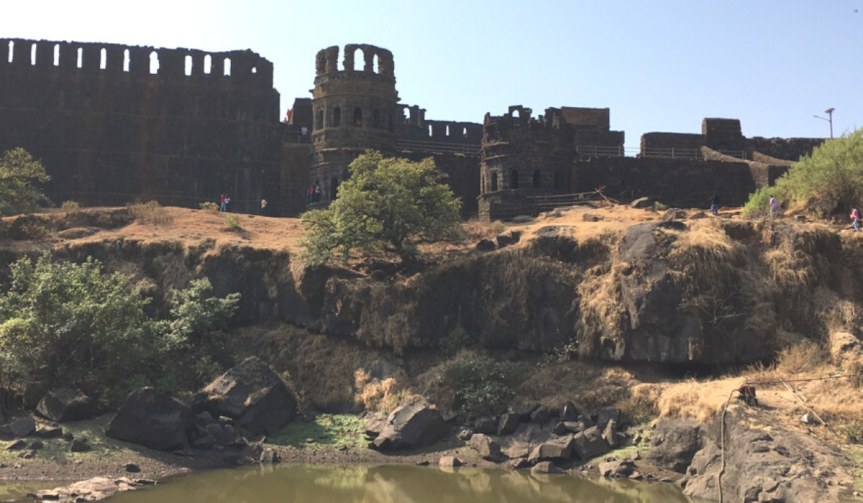
Raigard fort is the strongest fort situated in Raigad district of Maharashtra. Raigad was built by Chatrapati Shivaji Maharaj and later turned into the capital of Maratha Empire after he was crowned the king. The fort was named Rairi by Chandraraoji More. It was then expanded and refurbished into a huge and strong fort. Shivaji Maharaj renamed it Raigad. Raigad and the villages surrounding it were considered extremely important. Panchad village lies beneath the fort is the start to the climb of Raigad. When Raigad was captured by Aurangzeb, he named it as Islamgad. But the name was for short period until Maratha Empire recaptured it.

Raigad is well-engineered and strong. The chief architect of Raigad Hiroji Indulkar. It was mainly built of wood. The main palace contains a queens chamber, six other chambers with private restrooms. Raigad fort has ruins of a market that was convenient for the horse riders. Maha Darwaja is the only way pathway to the fort. This Darwaja used to be closed after sunsets. Bastions on the sides of the door are huge to about 60-70 feet in height. An artificial lake called Ganga Sagar Lake can be seen from the fort. Mena Darwaja was the second entrance which was private for the women in the fort. This entrance was lead to the queens chamber. Palkhi Darwaja was used by the king and the guards. It is believed that there were granaries.

The fort also has an execution place Takmak Tok. It is a cliff where the prisoners pushed off for wrongdoings. Where the market was situated, statue of Shivaji Maharaj was built followed by Jadhishwar Mandir, temple in devotion to Lord Jadhishwar and his own Samadhi and Waghya’s, his dog. Samadhi of Jijabai, Shivaji Maharaj’s mother is is placed in the village of Panchad. Other tourist attraction can be seen in Raigad like Nane Darwaja, Hatti Talav. Raigad is a popular tourist spot because of its spectacular view of Sahyadri Hills.

Story of Harkini is well known, even today. A film was made based on her story. The importance of this name in Maratha Empire is her courage and unconditional mother’s love. Hirkini was a woman from a nearby village who used to come to sell milk. Gates used to close after sunset and one day was locked inside the fort. She heard her son cry after dusk she could not resist herself and climbed the dangerous cliff for her child. She was awarded by Shivaji Maharaj after he saw repeat the same feat. This award was in honor of her courage and bravery that she showed. To climb a steep cliff like the one of Raigad fort was not easy. She could not have done it if it wasn’t for the sake her liitle one.

The strong Raigad fort was destroyed by cannons in 1818. This fort was later handed over to the British East India Company on 9th May, 1818. Though, the structure may not be of the same sound but the history of courage of Martha Empire is reflected in its tall standing. It is a must visit to Raigad to witness the authenticity of the rich empire.

We can’t completely grasp Google’s time crystal discovery since it is so large.

Forget about Fuchsia and Google Search. Researchers from Google, Stanford, Princeton and other institutions could have discovered a computer breakthrough so significant we can’t completely grasp it yet. Even Google scientists aren’t convinced whether their time crystal finding is correct. However, if the report is correct, Google may be one of the first corporations to provide the globe with a critical technical improvement in the future. Quantum computers, which can tackle difficult problems with amazing speed and power using technologies that have yet to be created, will require time crystals as a building component.

What is a quantum computer?

Google isn’t the only business working on quantum computers, and these devices continue to make headlines daily. Quantum computers won’t be able to reach your phone, and they won’t be able to play games with you. Even if they did, Nintendo’s future systems will be completely devoid of the latest computing technologies.

According to The Next Web, we intend to use quantum computers to solve difficult issues. Warp drives, for example, might allow for rapid interstellar travel. And medical technologies capable of curing almost every ailment.

Earlier this year, Google teamed up with Michael Pea for a quantum computing demonstration at I/O 2021:

Quantum computers, on the other hand, are extremely difficult to create, maintain, and even operate. That’s where Google’s time crystals may be useful. Qubits, or quantum computer bits, are now used in quantum computers. When these qubits are seen, they behave differently than when they are left alone. It’s because of this that measuring qubit states is challenging. Because of this instability, using a quantum computer is difficult. That’s when time crystals enter the picture.

Google’s time crystals

The time crystal idea, first proposed in 2012, is a new phase of matter. According to The Next Web, time crystals defy one of Sir Isaac Newton’s renowned principles. “An object at rest tends to stay at rest, and an object in motion tends to stay in motion,” according to Newton’s first law of motion.

There’s something called high entropy in our cosmos (disorder). Energy transfers constantly cause something to happen. When there are no processes, entropy is constant, but it increases when they are present. However, this is not the case with time crystals. Even when employed in a process, they can preserve entropy.

The Next Web gives a fantastic analogy with snowflakes to explain Google’s time crystals. Because the atoms are organized in precise ways, they have distinct patterns. Snow falls, melts, water evaporates, and ultimately turns back as snow. All of these processes entail energy transfers. A time crystal is analogous to a snowflake that can switch between two configurations without consuming or wasting energy. Time crystals can have their cake and eat it too, and they can do it indefinitely.

What does it mean for you and me?

The time crystals that Google uses do not belong to Google. Even the Google crew is unsure if they were developed by them. The study is only available in pre-print form while it is being peer-reviewed.

However, if Google can figure out how to build them, next-generation quantum computers may include time crystals. These computers might be built by anyone. They’d also bring quantum coherence to a region where there’s a lot of decoherence — the restless qubits we talked about before.

Even yet, the development of quantum computers based on time crystals is still in its infancy. Google may have demonstrated that time crystals aren’t simply a theory, but it hasn’t built any.

To develop warp drives or uncover “universally effective cancer therapies,” we may require decades of quantum computing research to produce quantum computers with time crystals. And it will take decades to fully comprehend quantum computers and time crystals. This is the URL to Google’s paper. Furthermore, Quanta Magazine provides a comprehensive overview of Google’s findings, replete with a time crystal animation.

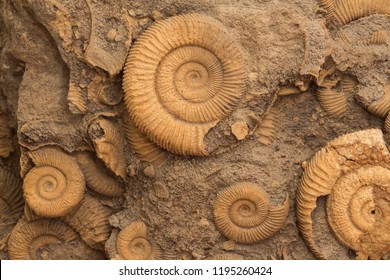
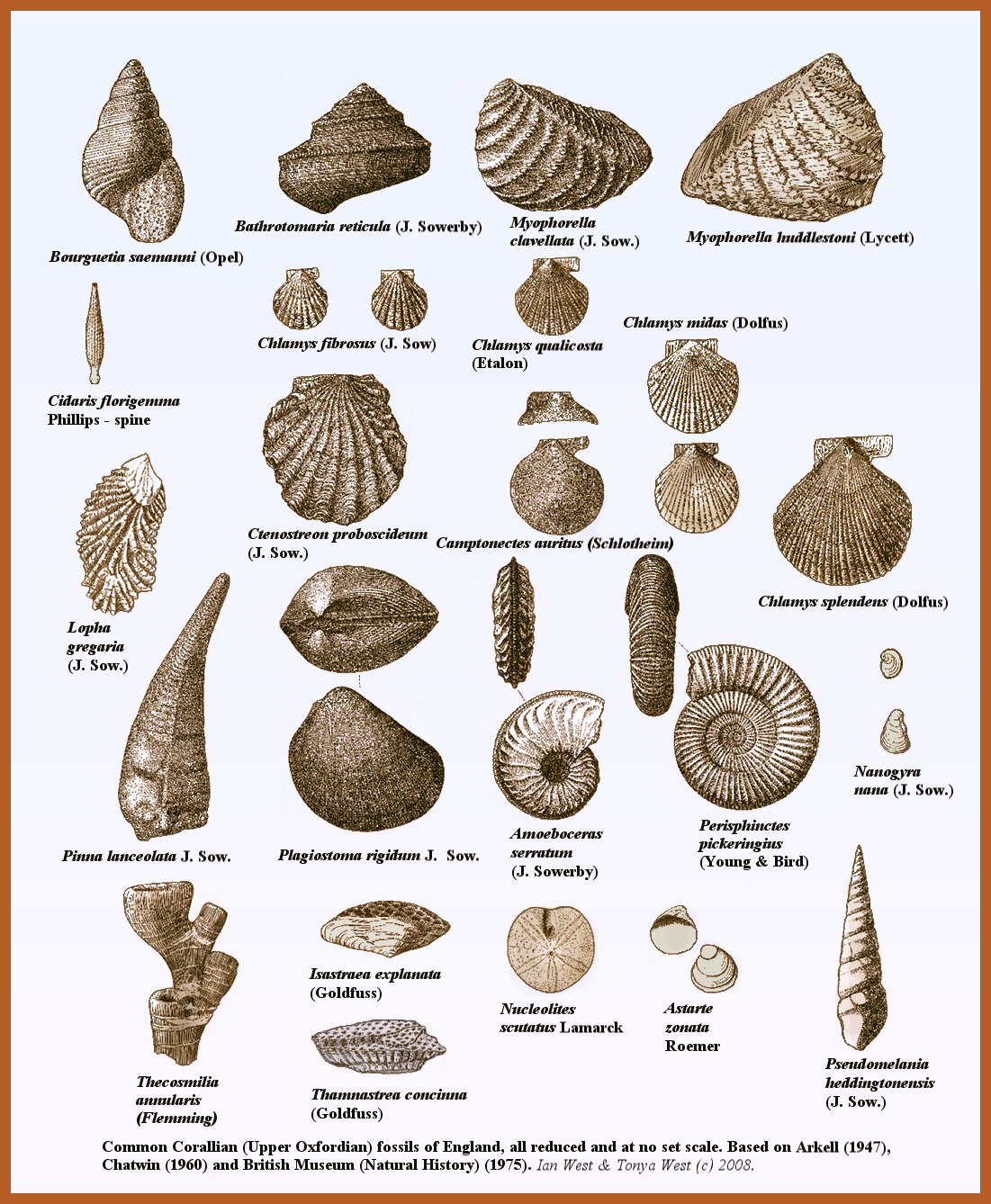
The science of fossil shells is the first step towards the study of the earth.

Fossil fuels are made from decomposing plants and animals. These fuels are found in the earth’s crust and contain carbon and hydrogen, which can be burned for energy.

Coal, oil and natural gas are examples of fossil fuels. This is a nonrenewable energy source whose extraction often damages the environment.

More than 50 percent of a piece of coal’s weight must be from fossilized plants. Oil is originally found as a solid material between layers of sedimentary rock, like shale.

This material is heated in order to produce the thick oil that can be used to make gasoline. Natural gas is usually found in pockets above oil deposits.

It can also be found in sedimentary rock layers that don’t contain oil. Natural gas is primarily made up of methane. 

According to the National Academies of Sciences, 81 percent of the total energy used in the United States comes from coal, oil, and natural gas.

This is the energy that is used to heat and provide electricity to homes and businesses and to run cars and factories.

Unfortunately, fossil fuels are a nonrenewable resource and waiting millions of years for new coal, oil, and natural gas deposits to form is not a realistic solution.

Fossil fuels are also responsible for almost three-fourths of the emissions from human activities in the last 20 years.

Now, scientist and engineers have been looking for ways to reduce our dependence on fossil fuels and to make burning these fuels cleaner and healthier for the environment.

Fossil fuels are compound mixtures made of fossilized plant and animal remnants from millions of years ago.

The creation of fossil fuels—either oil, natural gas, or coal—from these fossils is determined by the type of fossil, the amount of heat, and the amount of pressure.

FOSSIL FUELS FORM :

After millions of years underground, the compounds that make up plankton and plants turn into fossil fuel. Plankton decomposes into natural gas and oil, while plants become coal.

Today, humans extract these resources through coal mining and the drilling of oil and gas wells on land and offshore.

WOMEN Importance

TOPIC: ROLE OF WOMEN EMPOWERMENT RURAL IN INDIA

Women’s empowerment is the process of empowering women. It may be defined in several ways, including accepting women’s viewpoints or making an effort to seek them, raising the status of women through education, awareness, literacy, and training

Educating women results in promoting self respect and also helps in raising the status of women. An educated woman will be aware of her rights. She can fight against social evils such as domestic violence, dowry demand, low wages etc.

Is voodoo practices still exist ?

Voodoo is animism or spiritism. That is, all aspects of the natural world are seen as having spiritual identity immune to physical death. Animism includes belief in a person’s spirit surviving the death of the body. Ancestors’ ‘spirits’ are called upon for inspiration, protection or other influences over the material world. The roots of voodoo in the Americas come from the Fon, Ewe, and Yoruba people of Africa.. The word vodún is the Fon-Ewe word for spirit.

where does it all started to know that we have to travel back to our old ages where they believed they could summon god or demon . we cant fully deny the truth there are some proof that they actually summoned the god or demon with sacrifices .Although its origins are not completely clear, the Voodoo doll originated in people of present-day Benin. The Voodoo religion was created in slave quarters in Haiti and Louisiana, when the faiths of various peoples began to intermingle.

The ceremony begins with a Roman Catholic prayer. Then three drummers begin to play syncopated rhythms. The attendees begin to dance around a tree in the center of the yard, moving faster and harder with the rising pulse of the beat. The priest draws sacred symbols in the dust with cornmeal, and rum is poured on the ground to honor the spirits.

One woman falls to the ground, convulsing for a moment before she is helped back to her feet. She resumes the dance, moving differently now, and continues dancing for hours. It is perhaps no longer she who is dancing: She is in a trance, apparently possessed by Erzuli, the great mother spirit.

It is an honor to be entered and “ridden” by a Loa, or spirit. In Haiti these rituals are commonplace: Voodoo is the dominant religion.

“One common saying is that Haitians are 70 percent Catholic, 30 percent Protestant, and 100 percent voodoo,” said Lynne Warberg, a photographer who has documented Haitian voodoo for over a decade.

In April 2003 an executive decree by then president Jean-Bertrand Aristide sanctioned voodoo as an officially recognized religion.

“It is a religion in the same way Judaism or Christianity is,” said Bob Corbett, professor emeritus of philosophy at Webster University in St. Louis, Missouri. “Voodoo doesn’t have a sacred text, a church, or a hierarchical structure of leaders, but it is very similar culturally.”

Today an estimated 60 million people practice voodoo worldwide has this became a fashion , does they really know how to do it, is still a big doubt…..

WOMEN EMPOWERMENT

Women’s empowerment is the process of empowering women. It may be defined in several ways, including accepting women’s viewpoints or making an effort to seek them, raising the status of women through education, awareness, literacy, and training. 

The World’s most remote places

Have you ever felt that you have no access to top class facilities? Are you always cribbing about things you don’t have? If yes, then you must surely check out these places, that are the most remote in the entire world.

From the highest settlement on Earth to the coldest, some people spend their entire lives detached from the mainland. Let’s take a look at the measures they take to survive in the most remote of locations. The world’s most remote populated island, Tristan da Cunha sits in the middle of the Atlantic Ocean. 1,750 miles from Cape Town, Edinburgh of the Seven Seas, the only settlement on the island, is home to less than 300 permanent residents.

Even though the island has a harbor, any large yachts or vessels have to anchor a distance from the coast. Local ferries operate as frequently as they can to and from the island, but with the weather only good enough 70 days a year, reaching the extreme location is difficult. All the residents have access to modern-day amenities including a hospital that offers dental treatment and minor operations, as well as a grocery shop and post office, where the island produces its very own stamps. 

Open Monday to Friday, the local supermarket provides essential produce for the villagers. However, goods need to be ordered months in advance of the arrival of the incoming ships so many islanders grow their own crops and rear their own stock so as not to rely on the supermarket.

If you think this is the most remote island wait till you hear about the next one.

Next we have an island locate near the United States. The northernmost community in the United States, Utqiagvik feels completely cut off from the world. With no roads connecting it to other settlements, the dirt roads that do exist lead just a few miles outside the main town. The city is built upon a layer of permafrost that’s up to 1,300 feet deep in some places, making life hard for the permanent population of around 4,000 residents. The warm season has an average high of just 35.6°F, and the winter lasts for 160 days a year, with more than two months spent in complete darkness.

If we step to explore there will be many such places completely disconnected from the world. Hence, we must be happy about the amenities and facilities we have.

BOOK REVIEW: OLIVER TWIST

Oliver Twist is a great book written by Charles Dickens. This book has an interesting plot and timeless appeal. The story revolves around an orphan name Oliver Twist, whose mother died giving birth to him.

As an Social reformer, Charles Dickens spread light on the prevalent social issue. The issue class difference, exploitation of the poor and of child labour. The rich remained rich and snobbish, while the poor suffered. The society would determine the fate of the people. There were no scopes for the poor to rise and prosper.

This even look on the sordid lives of the criminals and the criminal practice of the Victorian Era. This book review of Oliver Twist contains a summary of the plot as well as thoughts on the overall novel.

Oliver Twist  was born in a workhouse but his mother was died when Oliver was very little. This young man grew up in an orphanage where he got his name. A gentle man named Mr. Bumble took him away from the orphanage and put him to work. At the workhouse, his job was to pick and weave oakum. Child labour was not uncommon back in that time, so it wasn’t too surprising to see him and other orphans working all day for the benefit of the ruling class with receiving little to no pay, extorted, overworked and starving.  Oliver was nine years of age at that time. Later he was sold to a coffin maker named Mr. Sowerberry as an apprentice by Mr. Bumble later on.  Mrs. Sowerberry had a dominating and manipulative personality and Oliver wasn’t shown affection or care by her even though he was a mere child, he was only seen as the house help. But he tried to fled from there but he was caught by Mr. Sowerberry and got punished by him. After arriving in London, he met the ‘Artful Dodger’. He happens to be part of a young boys’ pickpocket gang led by, Fagin, an aged criminal.  Oliver’s trusting and innocent nature failed find any of his actions dishonest.  He was taken to Fagin by the pickpocket. Fagin is a complex character; even though he’s a criminal, he empathizes and nurtures the young kids while training them to become expert pickpockets.  Oliver stayed with the pick pocketer because he didn’t aware about what they are doing but when he understand what are they doing that time he left the place. From an old man called Mr. Bronlow, Bates and Dodger steal a handkerchief. When he noticed, however, young Oliver caught his eye and he suspected him of theft.  Trying to run away out of fright, he got caught and taken to the magistrate. But seeing his innocent face and nature, Mr. Brownlow doubted the fact that it was him who was the thief.  The owner of the bookshop where the incident of theft took place, cleared the confusion as he explained that it wasn’t Oliver who was the thief. Fagin, fearing that Oliver might disclose their wrongdoings to the police, wanted Oliver back in his lair.  So, when Oliver was sent on a duty to pay for the books, Nancy and Bill Sikes – both working alongside Fagin, put on a successful act to capture and bring him back. To re-involve Oliver in criminal activities, Sikes planned a burglary and threatened to take his life unless he cooperates.  He was then taken to a house, asked to open the lock of the main door before being pushed into a small window to enter the house. By this description reader can understand about Oliver identity when a mysterious man named monk appears.

Edward Leeford was the father of Monks and Oliver. He fell in love with Agnes, Oliver’s mother, after he had separated from Monks’ mother.  Later on, Mrs. Rose Mayliewas revealed to be Agnes’ sister thus being Oliver’s aunt.  Nancy, being protective of Oliver, went on to meet them at the London Bridge and told everything to Mrs. Rose Maylie and Mr. Brownlow about Monks’ plan and gave them an idea on how to save Oliver from Fagin, Monks and Sikes’ hand. Later on, the news of Nancy’s murder spread across London and Sikes along with the criminal coach Fagin were wanted for their crimes. Fagin got arrested and sentenced to death by execution. Mr. Brownlow confronted Monks about his plot against Oliver and decided to give him a second chance.  When asked, Oliver happily agrees to give Monks half of his inheritance. Oliver Twist was adopted by Mr. Brownlow and was given love and care as well as a promise to live a proper life.  Dodger was convicted with a punishment of transportation to Australia, Charlie Bates became an honest citizen and Noah became a semi-professional police informer.

In this book review, we would like to conclude that Oliver Twist is a true Dickens classic. The social novel – ‘Oliver Twist’ was one of Dickens’ early writings where he satirizes the hypocrisies of his time. The story shows how strong of an influence environment can have on a person’s life and how it is possible to overlook and overcome these influences.  

“MARCO POLO” Biography

“Marco Polo” was an Italian Merchant he was born in presumably Venice, the Republic of Venice in 1254. His father’s name was Niccolo Polo and mother’s name was Nicole Anna Defuseh. His father was a Merchant.

In 1271 he along with his father and uncle maffeo Polo commenced expedition to Asia they traveled the Persia and Tartary. In 1274, after traveling for the three years, they reached Cathay, Northern China. In 1275 he was chosen to be the official representative of Emperor Kublai Khan and joined the king on various missions, for which he travelled extensively all over China in 1280 he travelled to many parts of the Asian continent and he was subsequently appointed as the governor of one of the Kublai Khan’s cities. In 1292, Kublai Khan got his daughter, Princess Cocachin married. Polo travelled along with the wedding party to Persia in a ship and they stopped in Borneo, Sumatra and Ceylon, among other places. In 1295, after the death of Kublai Khan the previous year, 24 years after he had set on a voyage to china, he returned to Venice with a vast collection of fine jewels, riches and treasures. On October 9, 1298, the Battle of Curzola between Venice and Genie commenced and during this time he was captured and imprisoned for several months. During his time in jail he Shayad accounts of his travel experiences and expeditions with a fellow inmate, Rustichello da Pisa, who later authored the book “The Travels of Marco Polo”. In August 1299, he was released from prison, after which he traveled to his home in Venice, where his family had settled in a big bungalow he settledown in Venice and went on to become one of the affluent merchant’s in the city, who granted loans to other travelers who wished to go out on expeditions. In 1300, the book “The Travels of Marco Polo” was released; the book becomes an instant bestseller and made him one of the most famous figures in Venice published in 1962, the book “Invisible cities”, written by Italo Calvino was based on the cities Marco Polo climbed to have visited and also his experiences in China. The airport of Venice is named the Venice Marco Polo Airport, in his honor. In 1300, he wedded Donata Badoer. The couple had three daughters together, Fantina, Bellela and Moreta. He died in Venice, the Republic of Venice on 8 January, 1324, at the age of 69-70. “MY HEART BEATS AS MUCH AS I CAN BREATHE”.

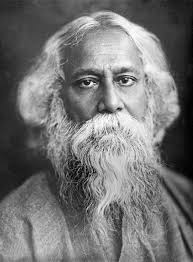
“RABINDRANATH TAGORE” Biography

“Rabindranath Tagore” was a famous Bengali polymath who reshaped Bengali literature and music. Rabindranath Tagore was born in 7 May, 1861 at the city of Kolkata No. 6 Dwarkanath Tagore Jorasanko, Thakur Bari. His father was Devendranath Tagore And mother was Sarada Devi. He was the youngest of his parents’ 14 children. He was the Bengali Brahman by birth and his nickname was “Rab” or “Rabi”.

Tagore wrote his first poem when he was only eight years old. In 1877 when he was 16 Tagore published his first large poetry collection. In 1878, Tagore went to London. He enrolled at Public School in Brighton England he wanted to become a barrister letter he studied at University College London but in 1880 after Tagore did not do well in school his father called him back for London. His wife name is Mrinalini Devi. He got married on 9th December 1883 at the age of 22 he had five children in 1890 Tagore began managing his family’s estates in Shelidah. In 1898, Tagore’s wife and children joined him there. Tagore travelled across the vast estate. He was a poet, novelist, theorist, painter, music composer and a true Indian. And Bengali by Hart author of Gitanjali for which he become the first non European to win the Nobel Prize in Literature. In 1930 Tagore wrote around 2,230 songs 2,500 paintings and drawings. Tagore wrote the national anthems of India and Bangladesh Sri Lanka National Anthem is based on a Bengali song originally written by Tagore. In 1938, poet writer and humanitarian Rabindranath Tagore was the first Indian to be awarded the Nobel Prize for literature and he played a key role In The Renaissance of modern India Tagore is most widely known for his poetry but he was also and accomplished author of novels short stories plays and articles he took an active interest in a widespread range of social cultural and artistic endeavours he has been described as one of the first 28 centuries Global man he died at August 7 1941 in Kolkata India at the age of 80.

Bluebottle Jellyfish

The blue bottle jellyfish, also known as the Portuguese man-of-war, is not actually a jellyfish, but a collection of organisms living together in a colony, called a siphonophore. The blue bottle jellyfish is composed of four separate organisms, each with a different job for the colony.

The major shape of the jellyfish comes from the first organism, making up a float called the pneumatophore. This beautiful blue-purple shape is where the jellyfish gets its name.

The second organism makes up the tentacles, responsible for capturing prey.

The third and fourth organisms make up the digestive system and the reproductive system.

Habitat

Imagine going on a tropical beach vacation to Florida. The soft white sand nearly burns your feet, but the ocean tide is just a few steps away. However, as you near the water you see warning signs for jellyfish and most people aren’t going in the water. Disappointed, a life guard informs you that there have been sightings of the blue bottle jellyfish in the area and advises you to stay out of the water.

Just like many people, the blue bottle jellyfish enjoys the warm tropical waters around the equator. It lives in the Atlantic, Indian and Pacific oceans, floating near the surface of the water.

It’s a common sight in Australia and can also be found along the coasts of India, the Caribbean and even the coasts of Florida. Sometimes gathering in groups of up to 1000 individuals, these organisms are passive and can be seen floating on or just below the ocean surface.

Adaptations

A blue bottle jellyfish is soft, without many defenses against larger, jawed predators. To survive the competition in warm, tropical seas, the blue bottle jellyfish has evolved several adaptations, or physical traits that help it survive.

Bluebottle and minor jellyfish sting

Stings by bluebottle jellyfish are the most common in Australia. These can cause intense pain and sores in the areas of skin which have been in contact with the jellyfish tentacles. The pain usually decreases or stops after 1–2 hours and the sores may fade after a few days. You may also have a rash or redness in the area which was stung.

Sting treatment

  • Wash the sting site with sea water and remove any tentacles.
  • Immerse the sting or run hot water on the skin for 20 minutes. Make sure the hot water will not burn the person. It should be as hot as they can tolerate — around 45 degrees Celsius. The person can also have a hot shower.
  • If there is no hot water, an ice pack may help to relieve the pain.

Jellyfish sting prevention

  • Some things you can do to help prevent jellyfish stings are:
  • Avoid swimming in the sea when warning signs about jellyfish are displayed.
  • Don’t touch any jellyfish in the water or on the beach.
  • Wear a full-body Lycra wetsuit and waterproof footwear

MEANING OF REAL PATRIOTISM

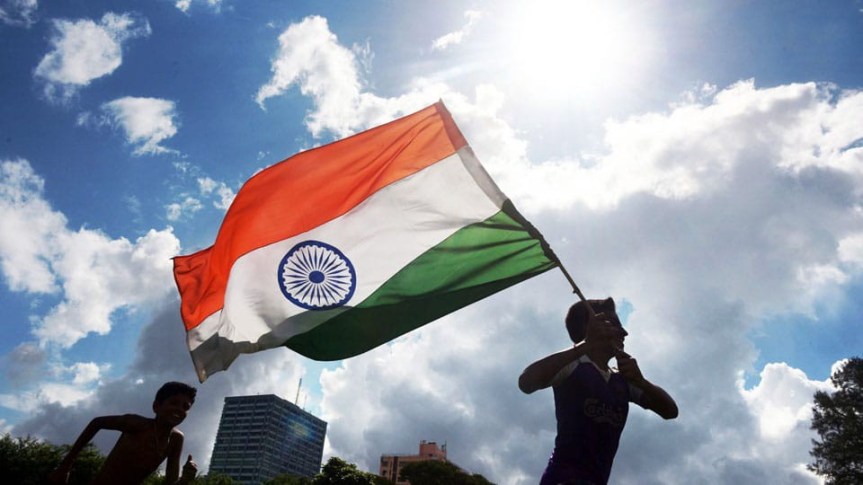
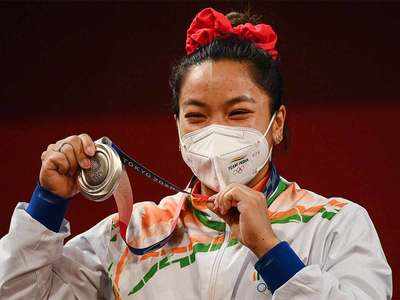
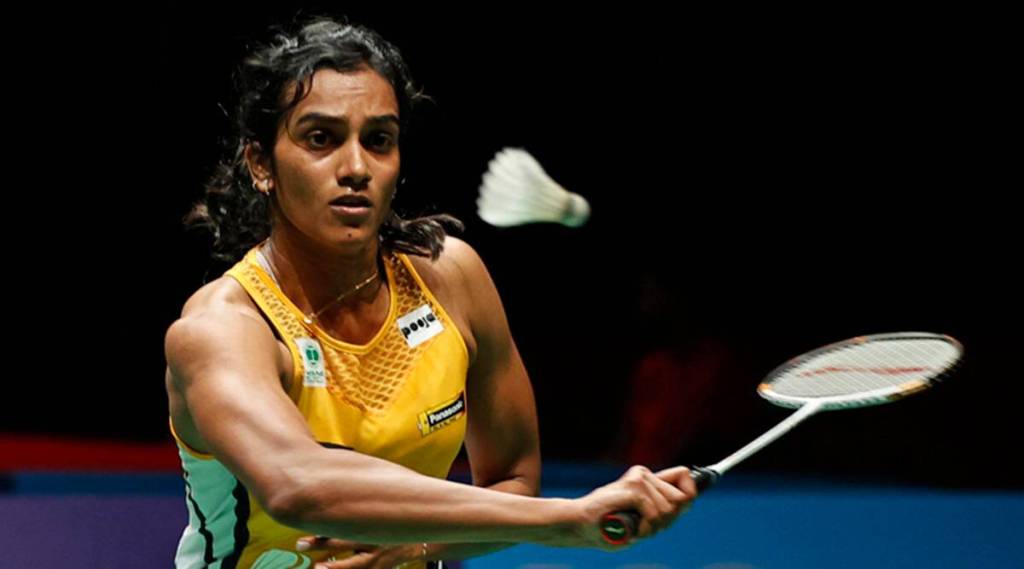
On July 24, 2021 Mirabai Chanu brought silver to India, in weightlifting in Tokyo Olympics 2021. Again on August 1 2021 PV Sindhu brought Bronze to India in Badminton. Again on August 01 2021 Indian Hockey team defeated England by 3-1. Isn't that a proud moment for all Indians. Of course it is.
There are so many facts on which every Indian can be proud. India is rich in historic and cultural heritage. India has many achievements in the fields of sports, science, culture, natural beauty and many more. India has innumerable achievements in defense, in democracy, in dealing with neighborhood problems, helping other small nations, maintaining international relations.
No doubt India is one of the most developing nations, emerging worldwide as a force to reckon with. And we are all very proud of it.
Who doesn't love his country? Of course everyone does.
We celebrate 15th August as our independence day, 26th January as our republic day, 2nd October as Gandhi Jayanti and many more days which are dedicated to the country, to show the feeling of patriotism and love towards our Nation. But is celebrating these festivals the only way to show our patriotism? Or to feel patriotic?
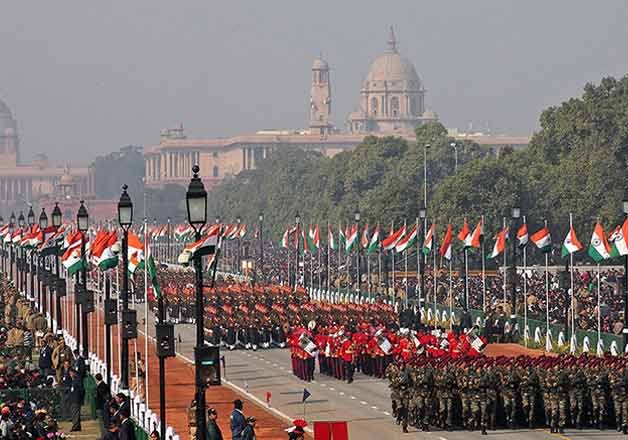
Every year on independence day a huge and long parade marches from Rashtra Pati Bhawan to India Gate in New Delhi, where the President receives the salute from the parade. All the three defence teams Army, Navy and Air Force show it's glory and strength.
Whenever the PM addresses the nation he makes us count on the finger all developments , progress and improvements the nation has done under their government. Everyone in this country either wants to be an IAS, IPS or wants to join the Army, Navy and Air force to serve the nation, to develop the nation. This is where they feel that they are patriots.
Is the circumference of patriotism limited to this point of view? Is this the only thing which makes a person a real patriot?
It is said that criticism forces you to become a better version of yourself. For success, working on our weak points is required. I also believe that when you love someone, you try to figure out it's flaws and weak points and start improving on them because you want to see it become better to be successful.
The above mentioned case is with the nation too. Of course it's true that nobody is perfect and so is the nation. Even the most developed nations may be weak in some fields, but they might not impact the country's development and hence they are a developed nation.
Loving a country, being a patriot doesn't mean that one can ignore it's flaws, one cannot listen to anything against it. One cannot be a patriot by always praising the nation.
A real patriot is one who listens to the criticism and tries to improve the condition such that no one can criticize again. He is the one who points out the flaw, tries to make society aware about it and tries to fix it.
Development happens step by step in an order. The first and foremost fact is that a nation is made up of society. Society is made up of every individual. Hence what's important is the development of the individual which will automatically lead to the development of the nation.
Indian society and Indian culture is weak in many aspects whether Indians and Indian society accepts it or not. It doesn't matter how much India achieved fame and name all over the world, as long as we have poverty, illiteracy, unemployment, poor standard of living, and backward thinking of society.
The ideological disputes, the disputes over religion, discrimination between the sections of society, these are all hurting our nation. Who says "I am an Indian, I have no religion"? Very few people. Everybody takes pride in being an upper class brahman, a devotee of Shiva, a follower of Ambedkar. Everybody is proud of their caste and religion. Does patriotism exist here?
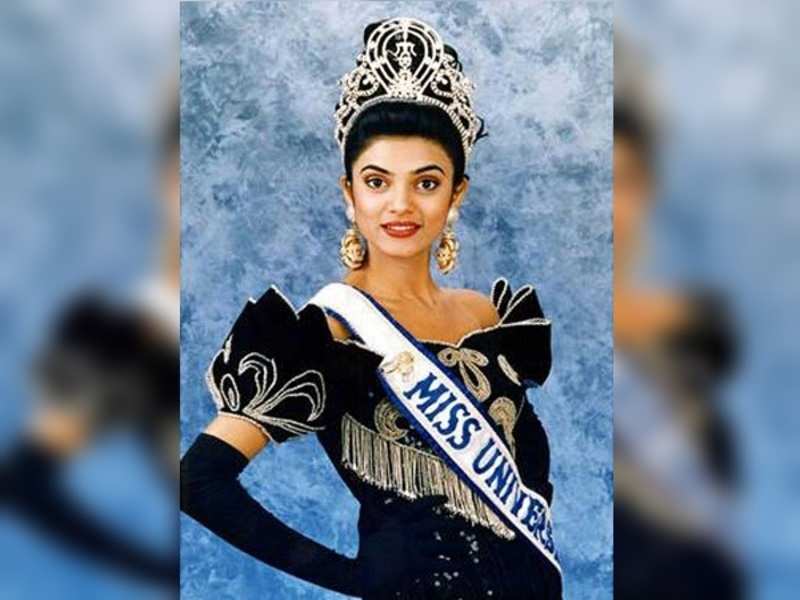
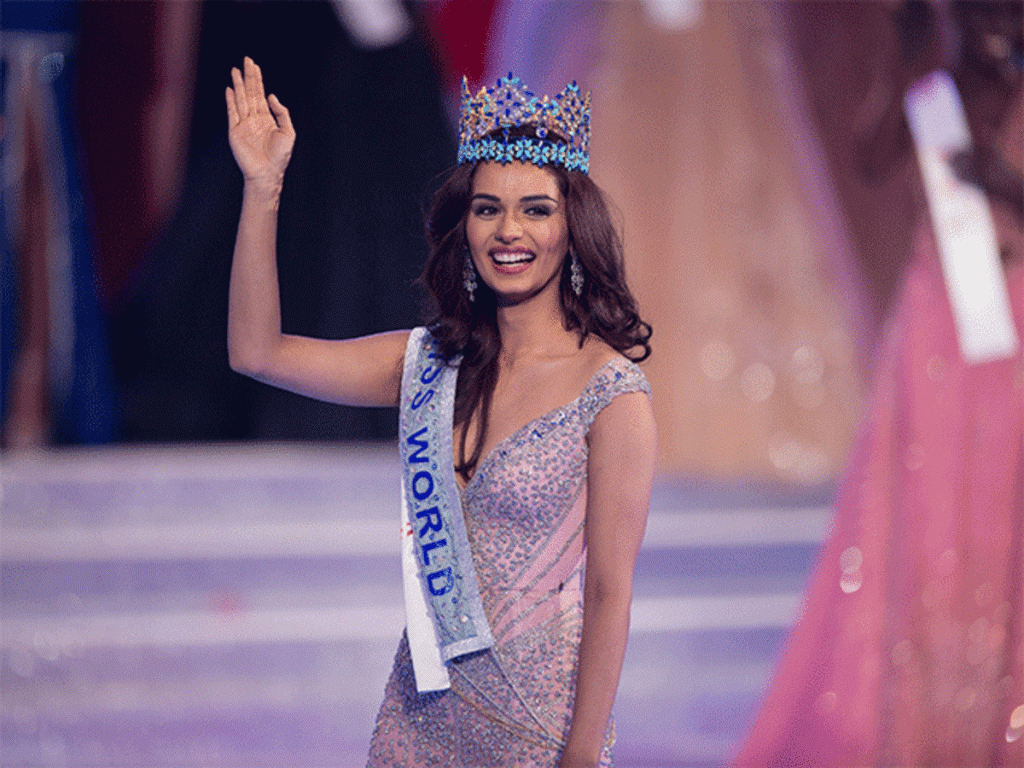
When Manushi Chillar, Sushmita Sen, Priyanka Chopra win the title of Miss world and Miss Universe, everyone becomes a patriot. When Mary Kom, Geeta phogat Mirabai Chanu, Sania Nehwal, PV Sindhu, Vishwanathan Anand bring trophies and medals to the nation, everyone becomes a patriot to take credit. No doubt it's a moment to be proud but you cannot be a true patriot if you can't see other factors in which the nation is weak.
It's not easy to be a real patriot by looking at the shortcomings of a nation, and working on it. It's easy to be a patriot but it's not that easy to be a real and genuine patriot. Patriotism doesn't mean only appreciation of the nation in front of others. It's the one that determines how much you accept the real situation of the country and how much evil you can remove from its roots.