Why the disintegration of Soviet Union was surprising?


This image has an empty alt attribute; its file name is 5b7d768185600a3f34768170.png

Pictorial representation of USSR disintegration

Before we start on the topic here is a fun fact the Soviet Union covered the one-sixth portion of the whole world.

The Soviet Union, a group of 15 republican factions, broke up overnight and it was such a big break that even today after 30 years its tremors are being felt.

How the Soviet Union, which influenced the history, economy, ideology and technology of the 20th century, was torn apart in one night. Born of the Communist Revolution of Russia in 1917, people of at least 100 nationalities lived in the Soviet Union and they owned one-sixth of the earth. An empire that defeated Hitler, waged a cold war with America and took part in a nuclear race. Also played a role in the Vietnam and Cuban revolutions.

The empire that sent the first satellite into space and also the first man. His name was Yuri Gagarin. The Soviet Union also remained at the forefront of sports, dance, cinema, literature, art and science. Archie Brown, professor at Oxford University and an expert on Soviet policies, says, ‘The speed with which the Soviet Union broke up in a single night was astonishing to everyone.’

Many other experts, including Brown, consider many reasons responsible for the disintegration of the Soviet Union. That disintegration, which happened on a Christmas night in 1991.
This image has an empty alt attribute; its file name is _93065528_39d67826-2542-4d69-8f6e-ed15a4d65656.jpg

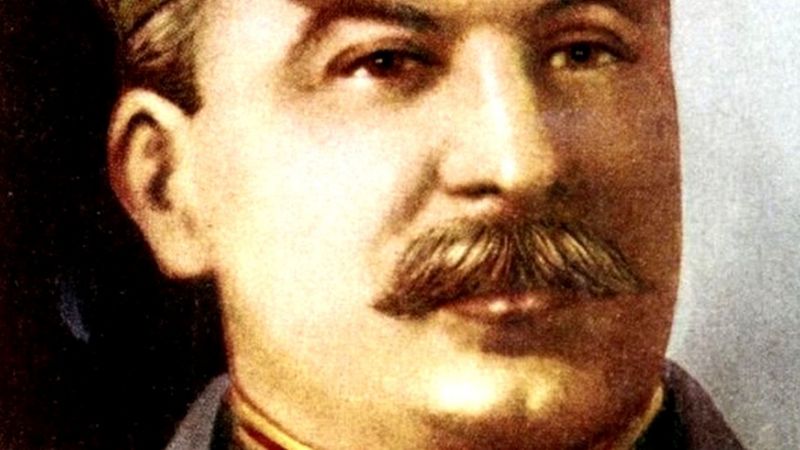
Joseph Vissarionovich Stalin

1. Dictatorship and Centralized Governance:

The Soviet Union was formed in 1917. When the Bolshevik Revolution took place and the Russian Empire was abolished by ousting Tsar Nicholas II from power. In 1922, under the leadership of Lenin, far-flung states were merged into Russia and the USSR was officially established, headed by Vladimir Lenin. It was obvious that it would not be easy to control such a complex and diverse country.

The Soviet Union tried to become a democracy by breaking away from the Tsar’s dictatorship. But eventually dictatorship was established, with Stalin being the most prominent dictator. Later on, a kind of parliament was formed, which was called Supreme Soviet, but all the decisions were taken by the Communist Party. From choosing the head of the country, every decision was taken by a small committee of the party, which was called the Politburo.

From the time of Stalin, the party’s control over politics, economy and common life went on. Opponents were sent to Gulag. Gulag, where people were tortured. Lakhs of people died in Gulag.

2. ‘Hellish’ Bureaucracy:

Dictatorship and centralized rule also led to an extensive bureaucracy in the Soviet Union, whose control extended to every corner of society. That is, you have to go through the process of paper, stamp and identification for everything. Oxford professor Archie Brown says, this bureaucracy made the Soviet Union a difficult country.

This image has an empty alt attribute; its file name is image-13.jpeg

Karl Marx

3. Failing Economy:

The economy of the Soviet Union was inspired by the principles of Karl Marx, who considered the resources of production, distribution and exchange to be the property of society. The economy ran on the basis of five year plans. Most of the population of the Soviet Union was employed in industry and agriculture.

But despite this, the Soviet Union lagged behind America in the economy. And in the 1980s, the GDP of the Soviet Union fell to half that of the United States.

4. Best Education:

Education initiation in the Soviet Union was excellent and millions of people were educated. Gradually, the restrictions on external connections were reduced and people began to know about the world. Gradually it happened that social groups of better educated people started being formed which became influential. He became an advocate of Gorbachoff’s economic reforms, which were announced in the nineties.

Gorbachoff’s Reforms:

According to Brown, although the reasons for the disintegration of the Soviet Union were many, the most important reason was Gorbachev himself. His coming to power was a big deal in itself. He came to power to change the Soviet system, that is, he was about to dig his own grave. When he became the General Secretary of the Communist Party in 1985, he began a reform program because of a poor economy and an inefficient political structure.

He started two policies named perestroika (reducing government control) and glasnost. Gorbachoff felt that this would benefit the private sector. Innovation will increase and later on foreign investment will also be in the Soviet Union. He gave the workers the right to strike so that they could demand better wages and working conditions.

Under Glasnost, there was an attempt to adopt openness and transparency. The ban on books by authors such as Solzhenitsyn and George Orwell was lifted. Political prisoners were released and newspapers were encouraged to criticize the government’s policies.

Elections were attempted for the first time and the Communist Party was involved in it:

As a result, people queued up to buy more ration. Prices started rising and people started getting upset with Gorbachoff’s rule. Gorbachev resigned on the night of 25 December of the same year, and the next day the document was signed, separating all parts of the Soviet Union.

Archie Brown says, ‘It did not happen that the economic and political crisis led to liberalization and democracy started.’ According to him it was all the opposite. Due to liberalization and democratization, the system reached a period of crisis and the Soviet Union broke up. They say that if Gorbachoff’s economic reforms had not taken place, then perhaps the Soviet Union would still exist today.
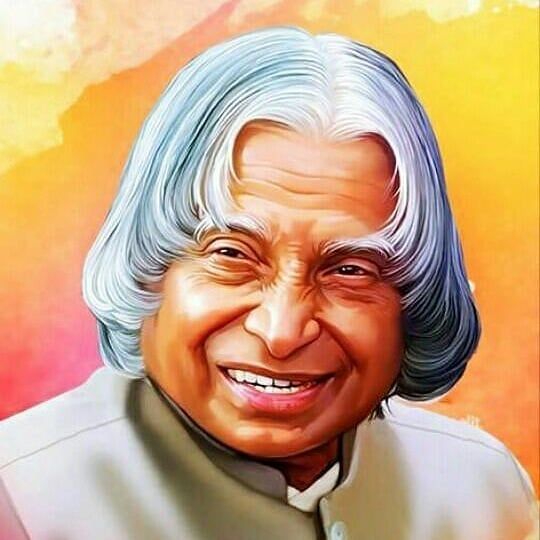
A.P.J. Abdul Kalam Biography: Early Life, Education, Career, Books, Awards and More


This image has an empty alt attribute; its file name is apj.jpg

Our Missile Man

Dr. A.P.J. Abdul Kalam was an Indian scientist and politician who played a leading role in the development of India’s missile and nuclear weapons programs. Come, through this article, Dr. A.P.J. Let us study about Abdul Kalam’s early life, career, education, awards, etc.

Dr. A.P.J. Abdul Kalam’s involvement in nuclear energy in India earned him the title “Missile Man of India”. Due to his contribution, the Government of India honored him with the highest civilian award.

Let us tell you that the Union Information and Broadcasting Minister Prakash Javadekar on 9 February 2020 in New Delhi, Dr. APJ. The first look of Abdul Kalam’s biopic was released. The title of the movie is A.P.J. Abdul Kalam: The Missile Man (APJ Abdul Kalam: The Missile Man).

Dr. A.P.J. Abdul Kalam was born on 15 October 1931. His birth anniversary is celebrated as World Students Day. He was the President of India from 2002 to 2007. He was honored with several prestigious awards including the “Bharat Ratna”, India’s highest civilian honor in 1997. He was born in Dhanushkodi, Rameswaram, Tamil Nadu and studied physics and aerospace engineering.

Name: Avul Pakir Jainulabdeen Abdul Kalam (Dr. APJ Abdul Kalam)
Nationality: Indian
Occupation: Engineer, Scientist, Writer, Professor, Politician
Born: 15-Oct-1931
Place of Birth: Dhanushkodi, Rameswaram, Tamil Nadu, India
Died: 27 July 2015, Shillong, Meghalaya, India
Famous As: Dr. A.P.J. Abdul Kalam was the President from 2002 to 2007

Dr. A.P.J. Abdul Kalam was elected President in the year 2002 against Lakshmi Sehgal. Before becoming the President of India, he worked as an aerospace engineer with the Indian Space Research Organization (ISRO) and the Defense Research and Development Organization (DRDO).

He was nicknamed the ‘Missile Man of India’ for his important role in the country’s space programme, launch vehicle and ballistic missile technology development. In addition, in 1998, he also contributed significantly to India’s Pokhran-II nuclear tests.

Do you know that Dr. A.P.J. Abdul Kalam started his career as a scientist in which Aeronautical Development Establishment of Defense Research and Development Organization (DRDO)? He also served as a project director of India’s first indigenous Satellite Launch Vehicle (SLV-III) at ISRO.

In the 1990s, he served as the Chief Scientific Adviser to the Prime Minister before becoming the President of India in 2002. Come now, through this article, Dr. A.P.J. Let us study in detail about Abdul Kalam.

Family history and early life:

Dr. A.P.J. Abdul Kalam was born on 15 October 1931 in Rameswaram in a Tamil Muslim family. His father’s name was Jainulabdeen, who was a sailor. His mother’s name was Aseemma and she was a housewife. These were a total of five siblings, three elder brothers and one elder sister.

His eldest sister named Asim Zohra and three elder brothers, namely Qasim Mohammad, Mustafa Kamal, Mohd Muthu Meera Lebai Marikayar. He was close to his family and always helped them, although he remained a bachelor all his life.

Abdul Kalam’s ancestors were wealthy merchants and landowners with many properties and large tracts of land. They traded groceries between the mainland and the island and to and from Sri Lanka, and ferrying pilgrims from the mainland to Pamban Island. So, his family came to be known as “Mara Kalam Iyakkivar” (wooden boatman) and later as “Marakier”.

But by the 1920s, his family’s businesses failed and by the time Abdul Kalam was born, he was struggling with poverty. To help the family, Kalam started selling newspapers at an early age.

During his school days, he was normal in studies, but was always ready and ready to learn new things. He wanted to learn things and used to concentrate on his studies for hours. His main interest was in mathematics.

He completed his matriculation from Schwartz Higher Secondary School, Ramanathapuram, Tamil Nadu and later joined St. Joseph’s College and graduated in Physics in 1954. In 1955 he moved to Madras from where he studied Aerospace at the Institute of Technology. His dream of taking engineering education was to become a fighter pilot, but he secured ninth position in the examination, while the IAF had declared only eight results. So he could not succeed in that.

Education and career:

After completing his graduation in the year 1960, Dr. A.P.J. Abdul Kalam joined the Aeronautical Development Establishment of the Defense Research and Development Organization as a scientist.

He also worked with renowned scientist Vikram Sarabhai as part of the committee of INCOSPAR (National Committee of India). He started his career by designing a small hovercraft in DRDO. Early in his career, he designed a small helicopter for the Indian Army. From 1963 to 1964, Dr. A.P.J. Abdul Kalam visited Defense Goddard Space Flight Center in Greenbelt, Maryland, Wallops Flight Efficiency on the East Coast of Virginia and NASA’s Langley Research Center in Hampton, Virginia.

He started working independently on an expandable rocket project at DRDO in 1965. He was not very satisfied with his work in DRDO and was happy when he got transfer orders to ISRO in 1969. There he served as the Project Director of SLV-III. In July 1980, his team was successful in placing the Rohini satellite near Earth’s orbit. It is India’s first indigenously designed and built satellite launch vehicle.

Abdul Kalam received the approval of the government in 1969 and expanded the program to include more engineers. In the 1970s, he made an effort to develop the Polar Satellite Launch Vehicle (PSLV) so that India could launch its Indian Remote Sensing (IRS) satellite into Sun-Synchronous orbit, the PSLV project was successful and on 20 September On 1993, it was launched for the first time.

Dr Kalam’s efforts in the development of projects of SLV-3 and Polar SLV from the year 1970 to 1990 proved to be quite successful. Dr Kalam directed Project Valiant and Project Devil which aimed to develop ballistic missiles using the technology of the SLV programme, which was also successful.

An Indian Defense Ministry managed by DRDO along with other government organizations launched the Integrated Guided Missile Development Program (IGMDP) in the early 1980s. Abdul Kalam was asked to lead the project and hence he returned to DRDO as the Chief Executive Officer of IGMDP. Due to his instructions, it was successful to make other missiles like Agni missile, Prithvi.

Under the leadership of Abdul Kalam, the project of IGMDP proved successful by producing missiles like the first Prithvi missile in 1988 and then Agni missile in 1989. Due to his contribution, he is known as the “Missile Man of India”. He served as Secretary, Defense Research and Development Organization from July 1992 to December 1999, and was also the Chief Scientific Advisor to the Prime Minister.

Dr. Kalam played an important technical and political role in the Pokhran II nuclear test during this period and the then Prime Minister Atal Bihari Vajpayee declared India a full-fledged nuclear state.

Did you know that in 1998, Abdul Kalam ji along with cardiologist Dr. Soma Raju developed a low cost coronary stent? Which was later named as “Kalam-Raju Stent”. Apart from this, both these people also designed tablet PC for health care in rural areas which was named “Kalam-Raju Tablet”.

Term as President of India (2002 to 2007):

  • On 10 June 2002, the National Democratic Alliance (NDA) government elected Dr. A.P.J. Abdul Kalam’s name was proposed to the Leader of the Opposition, Congress President Sonia Gandhi.
  • Dr. A.P.J. Abdul Kalam served as the President of India from 25 July 2002 to 25 July 2007. He was the first single and scientist to live in Rashtrapati Bhavan.
  • Do you know that he got around 922,884 votes in the presidential election and won the election by defeating Laxmi Sehgal of the opposition?
  • KR Narayanan was followed by Dr. A.P.J. Abdul Kalam became the 11th President of India.
  • He was the third President of India to receive the Bharat Ratna, the highest civilian award. Prior to this, Dr. Sarvepalli Radhakrishnan was conferred this honor in the year 1954 and Dr. Zakir Hussain in the year 1963.
  • Dr. A.P.J. Abdul Kalam was also known as People’s President.
  • According to him, the most difficult decision taken by him as President was to sign the bill of Office of Profit.
  • During his five-year tenure, he remained committed to his vision of transforming India into a developed nation.
  • However, he was also criticized as a President for his inaction to decide the fate of the mercy petitions of 20 out of 21 people, including Afzal Guru, a Kashmiri terrorist who was convicted for the December 2001 Parliament attacks had gone.
  • He decided not to contest the presidential election again in 2007 and stepped down as President on 25 July 2007.

The demise of great personality:

On 27 July 2015, Dr. A.P.J. Abdul Kalam was delivering a lecture at IIM Shillong, where he suffered a heart attack and his condition became critical, therefore, he was shifted to Bethany Hospital, where he later died of a cardiac arrest. His last words to Shrijan Pal Singh were “Funny guy! Are you doing well?”

On 30 July 2015, Dr. A.P.J. Abdul Kalam’s last rites took place near his ancestral village Rameshwaram. Did you know that around 350,000 people attended Kalam’s funeral rites, including the Prime Minister of India, the Governor of Tamil Nadu and the Chief Ministers of Karnataka, Kerala and Andhra Pradesh?

Awards and Achievements:

  • In 1981, Dr. A.P.J. Abdul Kalam was awarded the Padma Bhushan by the Government of India.
    In 1990, was awarded the Padma Vibhushan.
  • In 1997, was awarded the highest civilian award like Bharat Ratna.
  • In 1998, was awarded the Veer Savarkar Award.
    In 2000, Alvaras Research Centre, Chennai presented him with Ramanujan Award.
  • In 2007, Britain was awarded the King Charles II Medal by the Royal Society.
  • In 2008, he was awarded the Doctor of Engineering (Honoris Causa) degree from Nanyang Technical University, Singapore.
  • In 2009, awarded the Hoover Medal by the ASME Foundation of America
  • In 2010, the University of Waterloo honored Dr. Kalam with a Doctor of Engineering.
  • In 2011, he became an honorary member of the IEEE.
  • In 2013, he was awarded the Von Braun Prize by the National Space Society.
  • In 2014, he was awarded the Doctor of Science degree by the University of Edinburgh, UK.
  • Dr. Kalam was the recipient of honorary doctorates from about 40 universities.
  • In 2015, the United Nations recognized Dr. Kalam’s birthday as “World Students’ Day”.


The Fall of Wall Of Berlin


This image has an empty alt attribute; its file name is fencing.jpg

East German soldiers building the wall of Berlin

After the end of World War II, the city of Berlin had become a peculiar situation. It was transformed into an island-like city, which was occupied by four countries. Each country divided Berlin into its own sectors. These four countries were the Soviet Union, America, Britain and France. In 1948, efforts began to bring into existence a separate country, West Germany, and Stalin had objections to it. Stalin cut off the parts of West Berlin adjoining his sector from West Germany in revenge.

This image has an empty alt attribute; its file name is fencing-2.jpg

The Berlin Wall began with barbed fences and was replaced by concrete structures.

Things became such that West Berlin became a permanent neck bone for the surrounding areas of East Germany, and things changed dramatically in the blink of an eye on August 13, 1961.

The Wall of Berlin:

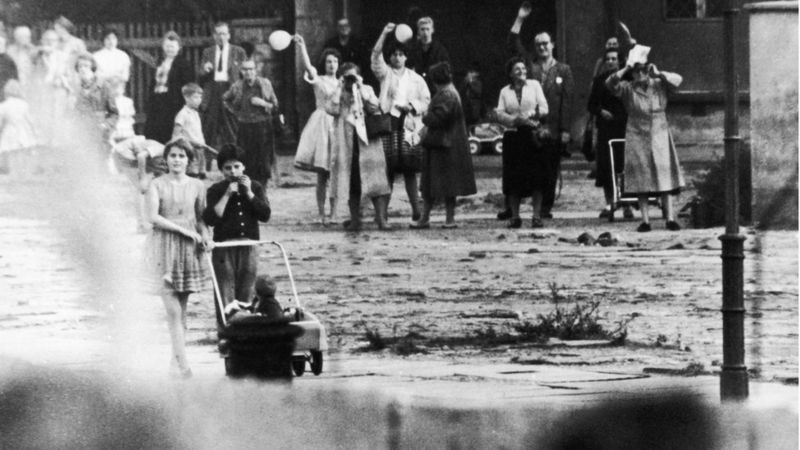
It was one o’clock in the morning, when the border police and armed forces of East Germany were deployed along the borders of the Soviet sector. On the other side in front of them were the police of America, Britain, France and West Berlin. Large-scale barbed wire installation began on the East German side, concrete poles erected in a hurry. Even the pre-existing lampposts were also being used for siege.

Four days later, regardless of West Germany, construction of a more permanent concrete structure was started in East Germany. This was the Berlin Wall. One issue was also the exodus from East Germany to the West. Every sixth person from East Germany went to West Germany and this exodus took place via Berlin.

This image has an empty alt attribute; its file name is padosi-1.jpg

This wall suddenly separated the people who were neighbours till yesterday

Escape from East Germany:

After 1958, the years of the communist administration began to rise in view of the way doctors, professors and engineers were leaving East Germany and going west. A policy of strictness and leniency at the same time had failed to deter people from leaving East Germany. It was also agreed between the four countries running Berlin that the borders of the areas under their control in the city would be kept open.

But this condition was only facilitating the exodus from East Germany. In May 1960, East Germany’s notorious intelligence police was formed, but this too was able to catch only one in five people who fled.

This image has an empty alt attribute; its file name is people.jpg

In July 1961, Nikita Khrushchev accepted the request of East German leaders Walter Ulbricht to allow the construction of the wall dividing Berlin

Siege of Berlin:

The result of the meeting was that in late July, the Soviet Union approved plans to build the Berlin Wall. The plan to build the wall was kept secret so as not to cause a stampede among those who wanted to leave East Germany. The Soviet Union made the decision just a day after President Kennedy’s speech on July 26, 1961. Khrushchev, through the Soviet Union’s ambassador to East Germany, sent Walter Ulbricht a message of siege through the barbed fence of Berlin.

The message was clear, this work must in any case be completed before the end of the peace agreement. In reality, the leaders of the Soviet Union were rekindling the same diplomatic crisis that they had laid in November 1958.

This image has an empty alt attribute; its file name is kennedy.jpg

US President Kennedy made it clear in his speech that he was ready to go to war for the protection of West Berlin.

What happened in 1958:

The Soviet Union at that time told the Western powers to agree to a peace deal or to evacuate West Berlin. Then the Western powers were forced to recognize East Germany as an independent country under this peace agreement and the German Democratic Republic came into existence. It had all three roads, railways and air traffic.

Kennedy made it clear in his speech that he was ready to go to the extent of war to save West Berlin, but he remained silent on the issue of East Berlin. And that’s what happened as expected. The communists got complete freedom in their area. However, the world saw East Germany as a puppet country of the Soviet Union. Upon gaining sovereignty, East Germany gained control of the routes connecting West Berlin to West Germany.

It had all three roads, railways and air traffic. Kennedy made it clear in his speech that he was ready to go to the extent of war to save West Berlin, but he remained silent on the issue of East Berlin. And that’s what happened as expected. The communists got complete freedom in their area.

Implementing the plan:

After this ‘Operation Pink’ started. Work began on the plan for the siege of West Berlin in a very secret way. Many top government officials were kept unaware of this plan. It is said that only 60 people in East Germany knew that something like this was going to happen. Erik Honecker, who held the number two position in the East Germany Communist Party, was also one of them. A decade later, he became the leader of East Germany.

This work was to start on Saturday night and be completed by Sunday morning. The Communist Party had bitter memories of the June 17, 1953 attack. On 24 July, the party’s security department calculated that 27,000 people would need to be employed and 500 tons of barbed wire would be required.

This image has an empty alt attribute; its file name is tank.jpg

The Soviet Union and East Germany deployed tanks to support the siege of Berlin.

An uncertain choice:

Iron barbed wire was gradually transported from the border areas to the capital. Tanks were deployed in the name of security arrangements to carry out the siege work with barbed fences. The secrecy was maintained in such a way that the western powers did not even notice it. Although the CIA and the British intelligence agency had expressed its possibility in the past.

The West German intelligence organization had informed Chancellor Konrad Adenauer about this plan. So much was certain that the Western countries knew that the siege of West Berlin was an option and East Germany was working on this plan. But they were not sure about its date.

This image has an empty alt attribute; its file name is don-know.jpg

West German Chancellor Konrad Adenauer also warned about the importance of West Berlin to the Communist regime of East Germany.

‘Operation Pink’ :

According to a document from the East German intelligence agency Stasi, “The most important lesson of the successful operation of August 13 is to keep an operation undercover. It is as effective as a successful attack on the enemy at the right place at the right time.” .

On August 1, Khrushchev and Walter had a lengthy phone conversation that Moscow had released a few years earlier. After some light talk in the beginning, the two talked about the security issue of West Berlin and the plan for the wall.

On August 12, Walter ordered the implementation of this plan. Work on ‘Operation Pink’ had started. John F. Kennedy later said, “A wall is not a great thing, but a better alternative than a battle.”

Money management

Abstract

Money management helps one to control expenses and save the money for other purposes. Money management is a healthy habit. In this article we are going to know why money management is important and how it affects the different classes of society. 

Introduction

Earlier our ancestors usually said if we spent our money on unnecessary Mata laxmi ( Devi of wealth) would leave your house. They basically advise the next generation to manage the money. Today the words might change but the habit of managing money is considered a good habit. 

Nowadays the rich become richer and the poor become poorer. The reason could be many of this situation but the factor affect the all reason is money management 

Our society divided into three part basically: 

  • High or luxury class – This class has a luxurious lifestyle. They are mainly tycoons, businessmen, ministers , doctors and high ranking government officials. 
  • Middle class- This class has a normal lifestyle. They have to earn to feed themselves and get education and pay taxes. They are mainly teachers, low ranking government officials, professors and monthly paid workers.
  • Low class- This class usually wagers who work on a daily basis for their daily bread butter.

Here the point should be noted that high class people live their life without any financial difficulties. Lower class know that they have to work and eat on a daily basis but the middle class people have to pay tax, need to work hard to reach high class and couldn’t complain when they compare their lives to the lower class.  

For this, Money management is a way to make a balance point. 

What is money management? 

Money management is a science as well as an art of organising money to fulfil the needs of an individual or group. The process includes spending, investing and budgeting the capital. 

Importance of money management

We always get advice that watch over the expenditure, don’t buy unnecessary things, do investment, prepare a budget of your expenses and save money on a regular basis. 

  • To get the future goal

We all have some major goals in our life. That goal needs a large amount of money to complete. A higher class person’s major goals could be buying more firms or luxurious items. A lower class and  a middle class person have different goals such as building a home, children’s marriages and their own lifetime security. A lower class person could not put such efforts but a middle class person has to put efforts to make an image in society. They borrow the money from legal and illegal methods to match the status of higher class. It leads them to the grave of loan. Money management can help all the classes to reach their goals. If they watch over their expenses and save money on a regular basis they could attain their future goals. 

  • Managing risk

Money management also gives support to managing the risk. Life is unpredictable. We don’t know what could be next. So it is important that we have enough savings to manage that risk. 

  • Help in saving

Money management also helps in saving money for the future. When you make a budget of your expenses, you get an idea where you spent more and less. You try to find an alternative and reduce your expenditure. That you know how much and from where you can save the money.

  • Bring more opportunities

Good opportunities need a good amount of money. As we know today every skill furnishing classes are so expensive. In the competence world we need to learn new skills everyday. If We want to grab opportunities we need to be financially strong. Money  management helps us to bring more opportunities to reach our goals.

Many times we think about how the rich become richer and the poor become poorer. Do they have their own bank or government supporting them? Are rich people not giving the appropriate amount of wages? Is it because of unequal distribution of resources? 

The answer of all is a live example- Dheerubhai ambani. His father was a middle class person but he built an emperor for his sons. He made it possible because he knew the management of money. He invests, saves and expands his money by analysing, rethinking and with a backup plan. After him his son mukesh ambani and his son also follow the same path. In their case we can say children learn managing the art of money from their family. 

Poor or lower class people thought that only higher education can help their child to become rich or upgrade their living standard. But when the child is not introduced to the term management how could they learn financial management? 

The middle class people have knowledge about money management but they never implicate such terms in their lives. They are dependent on loans for their further needs. 

So it is important that schools need to involve such subjects which could make a brief understanding of money management at primary to higher levels of education. There should be some activities in the curriculum which provoke the student to learn money management. Most of the well educated people don’t know the basic rules of investment. They don’t know because they never get a chance to do so. It is a high to make awareness among the people about the money management. 

The Revolt of 1857 – The first spark towards Independence


This image has an empty alt attribute; its file name is 1857.jpg

New Delhi:
The revolt of 1857 was a major and important event against the British rule. This revolution started from Meerut on May 10, 1857, which gradually spread to places like Kanpur, Bareilly, Jhansi, Delhi, Awadh etc. The revolution started as a military rebellion, but over time its form changed into a mass rebellion against the British power, which was called India’s first war of independence. come on
On this anniversary of the first war of independence, let’s know the special things related to it…

During the first half of the 19th century, the East India Company had occupied large parts of India. As the influence of British rule on India increased, discontent against British rule spread among the Indian people. One hundred years after the Battle of Plassey, discontent against the oppressive and unjust rule of the British Raj began to flare up in the form of rebellion which shook the foundations of British rule in India. Talking about the freedom struggle of 1857, before that many incidents had happened in different parts of the country. For example, towards the end of the 18th century, there had been the Sanyasi movement in North Bengal and the Chunar movement in Bihar and Bengal. The mid-19th century saw a number of peasant movements, notably the Moplah peasants of Malabar and the Faraizi movement by the Muslim farmers of Bengal.

The first five decades of the 19th century saw several tribal revolts such as the Bhils in Madhya Pradesh, the Santhals in Bihar and the Gonds and Khonds tribes in Odisha. But the sphere of influence of all these movements was very limited i.e. they were local in nature. The first organized rebellion that broke out against the British was in 1857. Initially it flared up as a revolt of the sepoys but later it became a mass revolution.

Causes of Rebellion:

Political Reasons: The main political reason for the revolt of 1857 was the ‘prohibition of adoption’ or ‘grab policy’ of the British government. It was the expansionist policy of the British which was the brainchild of the Governor General of British India, Lord Dalhousie. The Governor Generals of the Company made many rules for the purpose of annexing the Indian states to the British Empire. For example, when a king was childless, his kingdom became a part of the British Empire.

Social and Religious Reasons: There was resentment among a large section of the society about the rapidly spreading western civilization in India. In 1850 the British Government changed the Hindu Succession Law and now only a Hindu who adopted the Christian religion could be entitled to the property of his ancestors. Apart from this, missionaries were given the freedom to convert all over India. People felt that the British government wanted to make the Indian people Christian. Dissatisfaction arose in the minds of the people in the Indian society on abolishing some of the practices which had been going on for centuries, such as the practice of Sati.

Economic Reasons: There was discontent among the peasant and landlord classes due to heavy taxes and strict rules for collection of revenue. Many of these were unable to meet the tax demand of the British government and were unable to repay the loans of the moneylenders, which ultimately led to the loss of their ancestral land. A large number of sepoys were related to these farmers and hence they were also affected by the sufferings of the farmers.

After the Industrial Revolution in England, the Indian market was flooded with products made in Britain. India’s local textile industry was particularly devastated by this. The handicrafts industry of India could not compete with the cheap machine made goods of Britain. India became a supplier of raw materials and a consumer of goods made in Britain. Those who depended on royal patronage for their livelihood, all became unemployed. So there was a lot of anger in them against the British.

Military Reasons: The British army in India had more than 87% Indian soldiers. They were considered inferior in comparison to the British soldiers. Indian soldiers of the same rank were paid less than the European soldiers. Apart from this, Indian soldier could not get promotion above the rank of Subedar. Apart from this, the condition of Indian soldiers was badly affected after the expansion of British rule in India. They had to serve far away from their homes.

The upper community of Awadh was recruited in the Bengal Army. According to their religious beliefs, it was forbidden for them to cross the ocean (Kalapani). They suspected from Lord Canning’s rule that the British government was bent on making them kitchens. The Nawab’s army was disbanded after the annexation of Awadh. His soldiers became unemployed and became the staunch enemy of the British rule.

Immediate Causes: One of the immediate causes of the Revolt of 1857 was the rumor that the cartridge shell of the 1853 rifle was coated with the fat of pigs and cows. This rumor was hurting the sentiments of people of both Hindu and Muslim religions. These rifles were part of the 1853 rifle arsenal.

Mangal Pandey and his contribution:


I know you all have been waiting to see this name as many of us from the early classes associate the Revolt of 1857 with the name Mangal Pandey. On March 29, 1857 AD, a soldier named Mangal Pandey revolted against his officers in ‘Barrackpore Cantonment’, but British military officers easily controlled this military rebellion and along with his battalion ’34 N. I.’ disbanded. 3 L.C. on 24th April In Parade Meerut, 85 out of 90 cavalrymen refused to take fresh cartridges. These 85 horsemen were given 5 years imprisonment by court martial for disobeying orders. The ‘open rebellion’ began between 5 and 6 pm on Sunday, May 10. First foot detachment ’20 NI.’ The rebellion started in AD, followed by ‘3 L.C.’ The rebellion also spread in These rebels opened fire on their officers. ‘Hearse’ was shot by Mangal Pandey, while ‘Afsar Bagh’ was murdered. Mangal Pandey was hanged on 8 April. On 9 May, 85 soldiers in Meerut who refused to use the new rifle were sentenced to nine years in prison.

Spread of Rebellion:

After this incident, the fire of rebellion broke out in Meerut Cantonment. The Meerut Rebellion on 9 May marked the beginning of the War of 1857. In Meerut, Indian soldiers killed British officers and ransacked the prison. On 10 May they proceeded for Delhi. Reaching Delhi on 11 May, the revolutionary soldiers of Meerut occupied Delhi on 12 May. These soldiers declared the Mughal emperor Bahadur Shah II as the emperor of Delhi. Soon the rebellion spread to Lucknow, Allahabad, Kanpur, Bareilly, Banaras, Bihar and Jhansi also. The British first captured Delhi by calling an army from Punjab. On September 21, 1857 AD, the British recaptured Delhi, but ‘John Nicholson’ was killed in the struggle and Lieutenant ‘Hudson’ deceived Bahadur Shah II’s two sons ‘Mirj Mughal’ and ‘Mirz Khwaja Sultan’ and a The grandson ‘Mirza Abu Bakr’ was shot. The rebellion started in Lucknow on June 4, 1857. The British Resident ‘Henry Lawrence’ died after the siege of the British residency by the revolutionary soldiers here. Havelock and Outram tried hard to suppress Lucknow, but they were unsuccessful. Finally, Colin Campwell, with the support of the Gurkha regiment, captured the city in March, 1858 AD. By the way, the effect of the revolution here lasted till September.

Crushing the Rebellion:

The war of 1857 lasted for more than a year. It was crushed in the middle of 1858. On July 8, 1858, fourteen months after the rebellion broke out in Meerut, Canning finally announced that the rebellion had been completely suppressed.

Reasons for the failure of Rebellion:

  1. Limited Movement: However, in a short span of time the movement reached many parts of the country but it did not have any effect on a large part of the country. This was especially true in the Doab region. The provinces of the south took no part in it. Important rulers like Scindia, Holkar, Rana of Jodhpur and others did not support the rebellion.
  2. Lack of Effective leadership: There was lack of effective leadership for the rebellion. There is no doubt about the bravery of Nana Saheb, Tantya Tope and Rani Lakshmi Bai but they could not give effective leadership to the movement. Apart from this, the rebels lacked experience, organization ability and the power to work together. The rebel revolutionaries lacked concrete goals and clear plans. He was also not sure what to do and what not to do in the next moment. They were moving forward only out of emotion and circumstance. Bahadur Shah Zafar and Nana Saheb were a skilled organizer, but they lacked the ability of military leadership, while the English army had skilled generals like Lawrence Brothers, Nicholson, Havelock, Outram and Edward.
  3. Limited resources: The rebels had neither numbers nor money. On the contrary, the British army had a large number of soldiers, money and weapons, on the basis of which they were successful in suppressing the rebellion.
  4. Was not the part of middle class: The ‘educated class’ remained completely indifferent to this revolt of 1857. The merchants and the educated class had also prayed for the success of the British by holding meetings in Calcutta and Bombay. If this class had infused enthusiasm among the people through its writings and speeches, then undoubtedly the result of this rebellion of revolution would have been different.

Consequences of Rebellion:

After the rebellion ended, in 1858 AD, the British Parliament passed a law ending the existence of the East India Company, and now the full right of rule over India came in the hands of Queen Victoria. In England, under the Act of 1858, an ‘Indian Secretary of State’ was arranged, for whose assistance a ‘consultation council’ of 15 members was formed. Of these 15 members, arrangements were made to appoint 8 by the government and 7 by the ‘Court of High Courts’.

ATOMIC HABITS

Atomic habits are a very broad and effective guide to how to create good habits, break bad ones, and get a better 1 percent daily. I don’t believe you will find a book that will be more effective on the subject of habits and improvement.

If you have a problem changing your habits, the problem is not you. Problem with your system.

Bad habits repeat themselves not because you do not want to change but because you have the wrong plan to change. This is one of the key philosophies of Atomic Habits: You do not go up to the level of your goals. You fall at the level of your systems. In this book, you will find a proven track record that can take you to higher ground.

James Clear, one of the world’s leading practitioners in the field of ethics, is known for his ability to dispel complex issues of simple behavior that can easily be applied to everyday life and work. Here, he uses the most proven ideas from biology, psychology, and neuroscience to create an easy-to-understand guide to making good habits inevitable and bad habits inevitable.

Along the way, students will be inspired and entertained with true stories about Olympic gold medalists, award-winning artists, business leaders, life-saving doctors, and astronomers who have used the science of small practices to master their art and vault at the top of their field.

Atomic habits will rebuild your thinking of progress and success and give you the tools and strategies you need to change your habits – whether you’re a team looking to win a title, an organization hoping to redefine the industry, or just someone who wants to quit smoking, lose weight, reduce stress, and achieve lasting success always.

Law of Attraction – A way to attract your success towards you

This image has an empty alt attribute; its file name is law-of-attraction.jpg

Friends, you must have heard this dialogue from the movie “Om Shanti Om”, “अगर किसी चीज़ को दिल से चाहो तो सारी कायनात उसे तुमसे मिलाने में लग जाती है”. This is called the Law of Attraction as a principle. This principle states that your thoughts become reality, thoughts become things. For example: If you think that you have a lot of money, if you work hard to earn it through a right way, then you will really have a lot of money, if you think that I will always live in poverty, then this also becomes true.

I sincerely hope that you want to try the Law of Attraction and so are interested to know in detail. I believe that nothing in life happens by chance, every little thing is related to each other. So, if you are reading this, then surely some good change is going to happen in your life.

Believe me, if you take information about it with full faith and try to implement it in life, then everything in your life will be meaningful whose dreams you have been dreaming till now.

What is the Law of Attraction:

Law of Attraction Definition– From each of your thoughts an energy flows through which meets the cosmic energy spread in the universe. When both the frequencies meet together, then your idea becomes true in front of you.

This Law of Attraction dictates every person, event, situation and success in your life that you always think about and believe that it will happen.

What is the psychology behind this law?

The Law of Attraction It is a collection of our beliefs and our mental perceptions. Based on this, you can attract more of what you want in your life.

People who believe in the Law of Attraction tend to be highly focused in their lives. Because they know that every single thought of theirs is shaping their future.
Although some people do not agree with this. But the principle of the Law of Attraction is that it works so much for the one who believes in it.

Let me explain it to you by giving an example. Has it ever happened that even before doing any work, you felt that it would not be successful? Tried a lot to make that work successful but failed. Your mind is the most magnetic force in this world.

If something is not feeling right in the depths of your mind, then it will be exactly like that. As our conscience believes, it attracts the same circumstances or things.

This image has an empty alt attribute; its file name is 4b931d1f4a00716341d8c4a2ee68b708.jpg

History of Law of attraction:

If you look in the pages of history, you will find that Indian sages have been using it for centuries.

Nevertheless, the principles of attraction were first mentioned in a book by writer Helena Blavatsky in 1877. In 1886, author Prentice Mulford first clarified the principles of the Laws of Attraction.

However, many scholars, psychologists and spiritual masters believe that it has existed since the beginning of the world. That’s what I believe too.

If you study all the religious texts or history deeply in search of evidence, you will find that all the great kings, saints or religious gurus used the Law of Attraction in their lives to achieve their goals. had achieved.

Books on the Law of Attraction:

By the way, there are many books in the market which have been written on the topic of Law of Attraction. But the most popular book is Rahasya [The Secret].
The author of this book has met great people of the world and based on their experiences [law of attraction] has been written in a very simple and detailed manner.

He also has a movie called Rahasya [The Secret] which you can watch on YouTube.

How to use the Law of Attraction:

As soon as the frequency of the radio goes to the right channel, its voice starts to be heard clearly, similarly if the frequency of our thoughts and feelings is found, then that thought of yours can change your life.

To match these two frequencies, you should keep repeating these thoughts in your mind. Try not to just repeat the thoughts in your mind, but try to feel how you will feel when that idea of ​​yours becomes true. Things comes out better when you write it on an notebook whether be it rough or fair ideas should come out on paper as clear as possible.

For example, if you want to buy a car, then you should not have such feelings with that car that you do not know whether it will happen or not. Such negative thoughts are harmful.

So, you should have complete faith in your thoughts and feelings. Because faith and unbelief cannot work together. You must have complete faith in yourself. If you have faith and belief in yourself and your dream also you are working for it day and night then I suppose that nothing in this world or in the other worlds could stop you in pursuing them. So, good luck to those fellas who are going to try this concept in their real lives and someday they will achieve their dream.


Pareto Principle: A hack to success


This image has an empty alt attribute; its file name is 2.jpg

80/20 Rule – Vilfredo Pareto was a renowned economist of Italy. Once while he was still studying, he was reading articles on wealth distribution and income in England in 1897. Then he came to know a unique thing, that the occupied land and money of England are in the hands of only a few people. Not only this, he was also surprised to know that only 20% of the people own the entire land of England.

The economist’s curiosity increased as soon as this fact came to the fore, and he studied it very deeply and found out from research, that this principle proved to be true not only about other countries and other times, but absolutely true about things other than money.

This image has an empty alt attribute; its file name is pareto-principle.png

This rule states that any work in which we give maximum labor, 80% of the work gives us a good result of 20% of the labor. Whereas, on the contrary, 20% of actions give a person 80% good results i.e. achievement of the goal.

It will be clear from just a small example suppose, in a garden, if 80% of peas are cultivated in a garden, only 20% of pea pods are coming out. In this way this principle was formulated, it is also called Pareto Principle or abbreviated 80-20 principle. It is scientifically applicable to other things as well. Such as business, relationship, studies and health.

Where can we apply Pareto/ 80-20 Principle?

  • From study point of view: – It is generally seen that some students read the entire text material completely. When their exams are near. Even after reading everything, he could not remember a single question very well. he leaves after spoiling the paper.
  • Schedule Your Study Time: – Another thing a student can do is use the 80-20 principle. The first student studies from morning till evening during the examination to fix the proper time of study. Which is absolutely wrong. On the other hand, if we talk about the other students, he gets up at the appointed time and studies in a planned manner. So that his entire attention gets focused towards studies. Apart from other activities are also included in his daily routine. Even after the examination, he does not bring any kind of change in his routine. So that he gets good marks in the examination.

How To Apply Pareto Principle:

First of all, a person should decide the time, which work should be completed at what time. For this, you have to make a list, prepare this list for only 1 week, pay attention to the activities of a week, then you will know that as well as be surprised, you will get only 20% in the routine that went 80 percent of the planned routine. The activity itself is yielding good results.

Now your second task will be that you will reduce 80% of the tasks from your routine, and 20% will be oriented towards the tasks giving successful results, so that you can get 80% good results.

This image has an empty alt attribute; its file name is pareto-analysis.jpg

Advantages of Pareto Principle:

1) If you want to become a successful businessman, then to achieve this goal, under 80-20 rule, first of all, give priority to those tasks, so that your business can reach heights.

2) By applying this rule in student life also, the student can achieve his goal. For this you should study with special attention on selected important topics by staying in discipline at a planned time. This will focus the person, as well as The goal will be achieved.

3) Apart from studies, money, relationships are also very important for a person. It is very important to give importance to loved ones along with work. Using the 80-20 Rule, you will find that a successful person gives enough time to his close relatives, who stand like a rock in their sorrow and happiness.

4) It is not that you follow the 80-20 rule only to achieve a particular goal, you can also use it to make your routine effective, for this you will have to give special time to the work that you need Get better results.

Conclusion:

In this way you must have understood, how far Pareto’s 80-20 rule is meaningful in making a person successful. How it can give a person great success in a short period of time. Not only this, it is also very effective in achieving you any goal. Whether it is business, education and relationships, everyone’s only goal is to make a person successful.

Sometimes success is not achieved even after putting a lot of effort, the reason behind this is that the person does not have any effective plan of his own, he wants to be successful only with the help of labor. Whereas for success, a person has to make various changes from time to time. Only then the person gets success. In order to be successful, a person should work in a phased manner with planning and diligence. This is only possible through an 80-20 principal.

India's biggest conman: Natwarlal


This image has an empty alt attribute; its file name is natwarlal-thief.jpg

Mithilesh Kumar Srivastava Aka Natwarlal

You must have heard the name of Natwarlal, but do you know this name, which has become the synonym of vicious thugs, was first used for whom. The real name of that thug was Mithilesh Kumar Srivastava who was born in Siwan district of Bihar. Even Tata, Birla, Ambani were not saved from their fraud. He sold the Taj Mahal, Red Fort, Rashtrapati Bhavan and even the Parliament House along with its 545 sitting MPs. That too not once but many times.

He was such a thug who became a legend in his lifetime due to his exploits of thugs. A thug whose village people take pride in fact that he was born in his village. A thug whom thugs across the country considers as their ideal. The name of this thug was Natwarlal which later came to be used for every vicious thug.

Natwarlal was born in the year 1912 in the village of Bangra, which comes under Siwan district of Bihar. Before becoming a thug, he was a lawyer. Natwarlal cheated hundreds of people of crores of rupees during his lifetime and had more than 50 fake names. He was also adept at forging signatures of famous people. He had duped big industrialists whose list included the names of Tata, Birla and Ambani.

This image has an empty alt attribute; its file name is images

Natwarlal stole lakhs of rupees from shopkeepers by giving fake cheques and demand drafts. More than 100 cases were registered against him and the police of 8 states were behind him. He was also caught and sentenced to 113 years in jail but no jail in the country could stop Natwarlal. He managed to escape 8 times from the different jails of the country.

When he last escaped from the prison in 1966, he was 84 years old and used to walk in a wheelchair. He was brought from Kanpur jail to AIIMS Hospital in New Delhi for treatment under police supervision. Natwarlal was last seen on 24 June 1996 and after that police could never catch him.

The way Natwarlal’s life remained mysterious, his death was also mysterious. In 2009, Natwarlal’s lawyer filed an application in the court to quash more than 100 cases pending against him as he died on 25 July 2009. However Natwarlal’s brother Ganga prasad Srivastava says that Natwarlal died in 1996 and was cremated in Ranchi.

A film based on Mithilesh Kumar Srivastava’s life ‘Raja Natwarlal’ was also made in which Paresh Rawal and Emraan Hashmi worked. In 2004, Aaj Tak aired several episodes based on Natwarlal’s life in its crime show ‘Jurm’.

Operation Thunderbolt : The Time When MOSSAD showed the World their power…


This image has an empty alt attribute; its file name is entebbe.jpg

Entebbe Airport at Uganda witnessed Operation Thunderbolt

Every Indian will remember the surgical strike our ARMY did on the terrorists hiding in Pakistan in 2016, we supported that move as it was a retaliation to the URI terrorist attack where they killed our soldiers in their sleep. What a coward move! But did you know, Israel did the same thing but on a bigger level way before it was cool.

On 27th June, 1976, the Air France Airbus A300 jet airliner took off from the Tel Aviv airport, Israel with over 240 passengers and crew members to reach their destination Paris. The flight made a stopover at the Athens airport, Greece, in order to refuel their aircraft.

This image has an empty alt attribute; its file name is mossad-1.jpg

Israeli Intelligence Agency

The flight was now supposed to move to Paris but till now it was Hijacked by Wilfred Böse and his helper female comrade, they had teamed up with two members of a breakaway faction of the Popular Front for the Liberation of Palestine. After hijacking the flight, they changed it’s route and landed to Benghazi airport, Libya.

But at that time Libya was used to provide crude oil to many countries so, due to international pressure they would not be able to provide any assistance to the hijackers. Also, Israel was close to Libya so there was threat on the hijackers to get attacked by Israeli army and might end up losing in their mission.

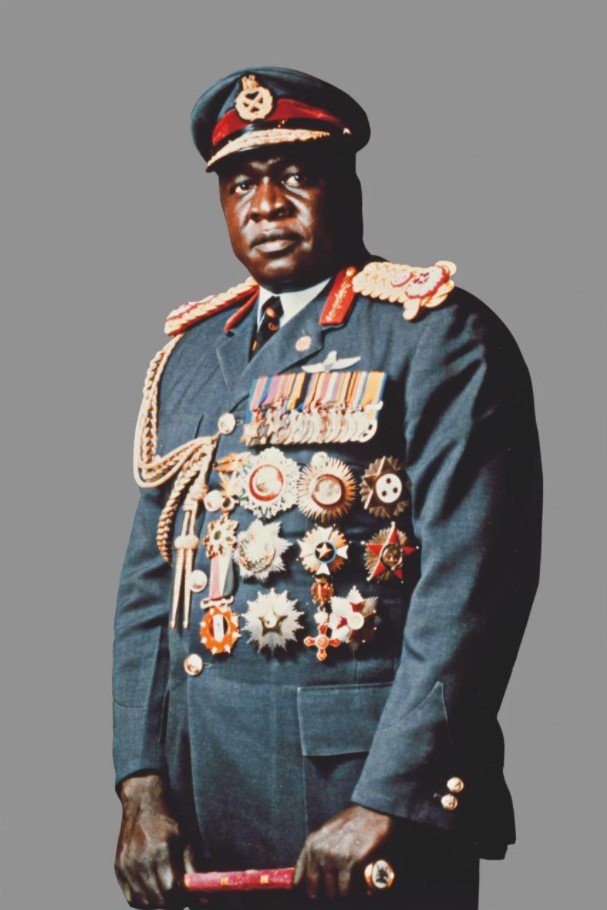
So, they compelled the pilots to take off from Benghazi and make their way to Entebbe Airport at Uganda. At that time Uganda was under the rule of dictator, Idi Amin. He was known for his cruelty, people were used to call him “Butcher Of Uganda” for his brutality, and it is believed that some 300,000 people were killed and countless others tortured during his presidency.

This image has an empty alt attribute; its file name is idi-amin.jpg

Ugandan Dictator : Idi Amin

The hijackers reached the Entebbe Airport without any harm. After landing there, they kept all the hostages into the Old Terminal of the airport, which was 2 Km away from the runway. There they separated Jewish hostages from others. But then the hijackers committed a mistake, they released the hostages which belonged to other countries or non-Jewish.

MOSSAD contacted them and recovered every piece of information which proved to be deadly against the commandeers. on 3rd July afternoon a force of more than 200 Israeli soldiers took off, bound for Entebbe. They took 5 Hercules aircrafts with them out of which 3 were filled with commandos 4th one was empty to carry the freed hostages with them and last aircraft contained signal jammers, communication system to make sure all teams stay connected and medical staff to ensure the safety of every person on-board.

It was the touchdown time at the Entebbe Airport at 1am midnight, the soldiers got off the famous Idi Amin black Mercedes in which he was used to travel. But few months ago he changed it to white. And the Ugandan soldiers spotted the difference and started firing at the planes. At this time the Israeli commandos burst out at the Ugandan army like death.

This image has an empty alt attribute; its file name is entebbe2.jpg

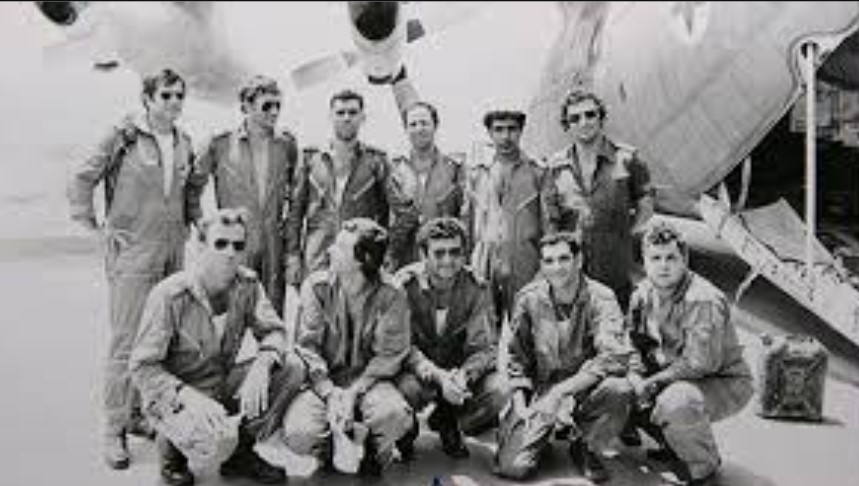
Israeli Commandos

There is an old proverb ” Fortune favours the brave”, the same happened in this case, Israeli commandos fought with complete bravery and managed to release all the hostages without any casualty of any hostage. But they suffered a crucial person of the operation, Yonatan Netanyahu, the leader of the Operation Thunderbolt. During the return from Uganda, Netanyahu was making sure that every person gets on-board safely, but at the same time he was shot by a Ugandan soldier at the back and due to heavy blood loss, Israel lost their brave soldier in mid-flight.

This image has an empty alt attribute; its file name is hero-1.jpg

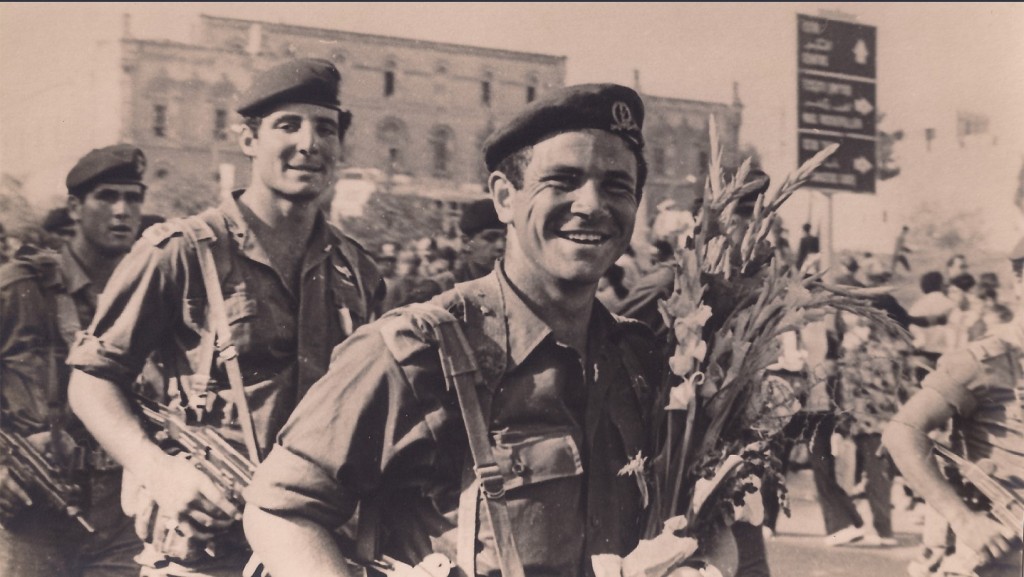
Yonatan Netanyahu(with bouquet)

When Idi Amin got to know that this much happened behind his back. Dora Bloch(Israeli-American) was unknowingly left behind because due to bad medical condition she has to be hospitalised immediately. Idi Amin to rage with anger, dragged her out of the hospital and shot her dead in front of whole crowd.

These were two heavy losses which Israel faced in this fearless operation and made the world realise that if any country tries to fight them, they would have to think twice before making a move.

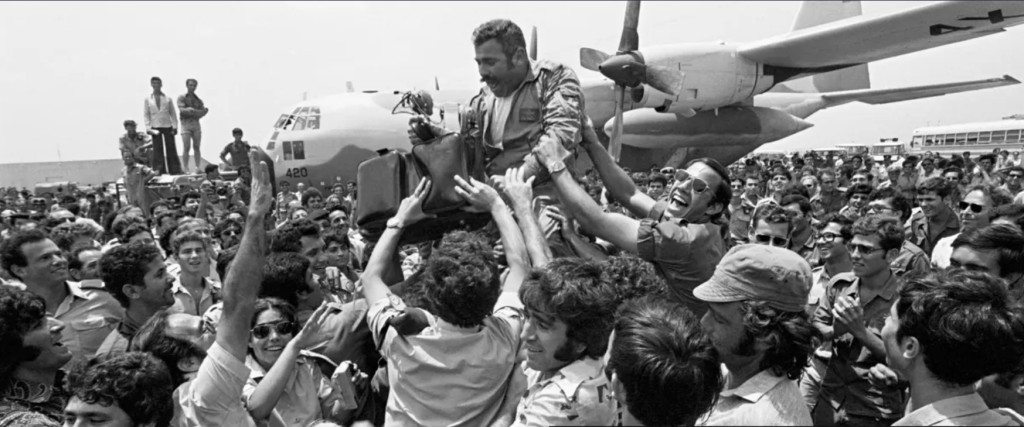
After this tedious and tiresome operation, when the soldiers finally returned to their motherland, they were warmly welcomed by the people of Israel and their family members.

This image has an empty alt attribute; its file name is welcome-1.jpg

Soldiers being welcomed by their countrymen

Pegasus Spyware – Is it a curse to privacy ?

What is the work of Pegasus and What is its origin?

Pegasus owned by a NSO group- a private foundation, which many leading countries believe that it is the most powerful spyware ever created, it was coded to infiltrate into the smartphones of target users, be it IOS or Android, and it converts personal devices into surveillance devices. It is the main product of NSO group which was founded by Niv Carmi, Shalev Hulio and Omri Lavie. It is a Herzliya based company located near Tel Aviv, Israel which was founded in 2010, it is a subsidiary of Q Cyber Technologies group of companies.

What is the actual meaning of a Spyware?

Let’s get this straight, in simple words, a spyware is the term given to a category of software which aims to steal personal or organisational data/information without the consent of host. Once a spyware is successfully installed, it starts sending the data from that computer/mobile in the background to a third-party which is controlling this spyware. This third-party can be any government or The NSO group itself.

Pegasus can bypass your phone’s security and install malware that grants complete access to your device. It can access every message you’ve ever sent and received, every photo, video and email, can turn on your microphone, even when you’re not using a phone call, just record what you’re doing in the room. It can turn on your camera, and is also able to record what’s on your screen, can access your GPS, it can monitor your location. And it is able do all of this without you ever knowing.

So if you think that you are using online chatting apps like WhatsApp owned by Facebook or Signal owned by Moxie Marlinspike and Brian Acton which are famous for end-to-end encryption but this gets meaningless once Pegasus is on your phone. It is virtually undetectable which makes it even more lethal.

History of Pegasus software :

  • To begin with the brief history of Pegasus, in 2016 the Canadian Cybersecurity Organisation The Citizen Lab encountered it’s first case on the smartphone of Human Right activist Ahmed Mansoor.
  • In addition, in September 2018 The Citizen Lab published a report identifying 45 countries in which Pegasus was being used.
  • Furthermore, in the year 2019 WhatsApp exposed that journalists and Human Rights Activists in India were under surveillance by operators using Pegasus.
  • The latest case of this spyware is found India in July 2021, The Pegasus Project revealed that various governments used the software to spy on government officials, opposition politicians and many more eminent faces. Some records state that Indian government used the software to spy on around 300 people between 2019 and 2021.
This image has an empty alt attribute; its file name is nso.jpg

Is spying legal in India?

The laws governing surveillance in India are The Telegraph Act, 1885 which indicates about the interception of calls and The Information Technology Act, 2000, it deals with the interception of data. Under both the laws, only government, under certain circumstances, is allowed to conduct surveillance. Moreover, hacking in India is illegal under IT Act.

Is there any solution to save us from this cyber attack havoc ?

Many Cybersecurity experts state that a phone infiltrated by Pegasus might not be able to recover completely, some traces can be found even after a strong factory reset.

Although they have introduced some preventive measures to save oneself from getting hitched with this software.

Open links only from trusted websites, contacts and sources while using your device.

Please make sure that your device is fully upgraded with the latest patches and system/app updates.

Keep your device safe by limiting physical access. This can be done by applying pin, password, biometric locking and face-locking facility.

Also avoid using open Wi-fi or hotspot as the host may steal your data from the network connection. Try using VPN to prevent this condition while using Wi-fi or hotspots it is a safer option to prevent your information.

Do have a backup of your credentials and important documents, if in case your device is lost, stolen or broken you will never lack from your data.


World Peace

 Globalization and international organisations have deepened the connection between the countries worldwide. Today, a number of countries are nuclear equipped, hence it is extremely  important to maintain world peace and harmony and avoid any circumstance of war. With the growth of globalization and technological developments, the security threats are also becoming more and more complex. Therefore today, peace requires wider cooperation from the people.

Many famous personalities have contributed to the idea of world peace. Martin Luther King and Nelson Mandela are two famous personalities who stood against inequality using peaceful resistance. Martin Luther King had emphasized the message of equality and brotherhood among everyone, in his popular speech “I have a Dream”. Mahatma Gandhi is revered as the non-violent and peaceful leader. 

After the end of the cold war era in the 1990s, the world has grown to be more harmonious and peaceful. War leads to loss of life and has a long lasting impact on the people of the country. It is important to maintain this peace and prevent any kind of conflict. Peace talks, mutual negotiation and discussion should be used as a measure of conflict resolution as far as possible to avoid the painful consequences of war. 

With the active participation of international organisations, cooperative relations have been built and wars are considered unacceptable. The United Nations (UN) found in 1945 had played a significant role in initiating peaceful measures to resolve conflicts between the countries.

World peace does not mean absence of violence. A mere absence of violence is negative peace. Positive peace includes people of different countries interacting in a cooperative way. It also includes socio-economic justice and equality along with development of tolerance, friendship and understanding between the nations. 

In order to avoid conflicts, it is important to give equal representation to different regions or countries in the international organisations. This can avoid the chances of one country being oppressed, so that the situation of war does not arise. The economically weaker countries should not be exploited and distribution of resources should be allocated in the proper manner. 

Peaceful relations between the countries can promote globalization in a beneficial way, people can interact freely, exchange their culture, and it also helps to boost tourism. With peaceful relations, the world can fight the unfair practices together and bring improvements in the issues related to human rights and climate change. 

As Mahatma Gandhi had said “An eye for an eye ends up making the whole world blind “. Hence it is important to avoid the situation of war as well as maintain a peaceful world community.


Heart Disease

Cardiovascular disease (CVD) is associated with disease of the heart and blood vessels. Coronary heart Disease (CHD) is the most common form and is caused by deposition of cholesterol in the blood vessels.

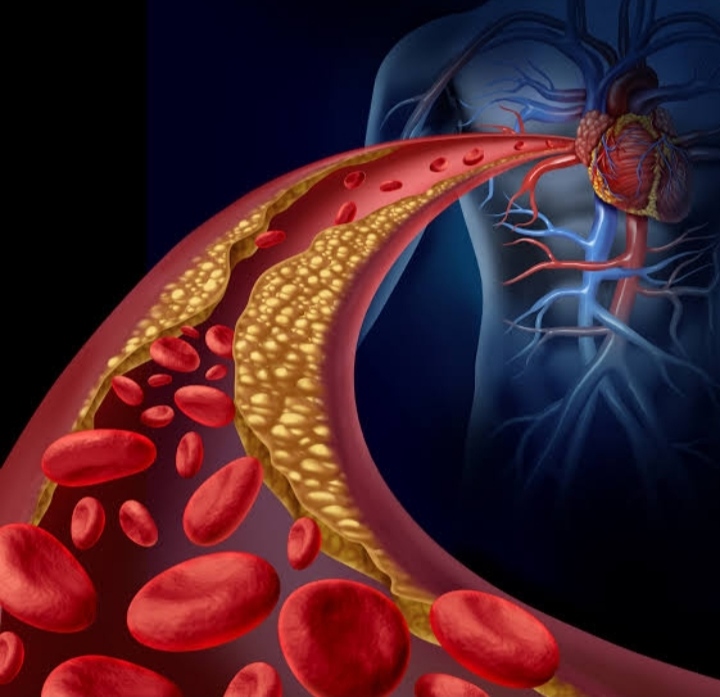
It usually develops slowly over many years beginning from childhood, they may form a fatty streak to a fibrous complicated plaque. It leads to the narrowing of blood vessels leading to atherosclerosis in the large and medium sized arteries that supply the heart muscle with oxygen. It leads to sudden ischemia ( deficient blood supply to heart muscle) and myocardial infarction ( death of heart muscle tissue).

Risk factors:

Hypercholesterolemia ( High blood cholesterol) and high blood pressure ( Hypertension) are the major causes and contributing factors for heart disease and if untreated may cause severe damage to brain, kidney and eventually lead to stroke.

Causes:

Heredity (family history), diet rich in saturated fat and cholesterol, obesity, increasing age, cigarette smoking, emotional stress, sedentary lifestyle, excessive alcohol consumption and physical inactivity are some of the causes.

Symptoms:

Shortness of breath, headache, tiredness, dizziness, chest pain, swelling of leg, and gastrointestinal disturbances.

Prevention and control of Heart Disease

Diet Management:

Reduction in the intake of calories, low saturated fat and cholesterol rich food, low carbohydrates and common salt are some of the dietary modifications. Diet rich in polyunsaturated fatty acids (PUFA) is essential. Increase in the intake of fibre diet, fruits and vegetables, protein, minerals and vitamin are required.

Physical Activity:

Regular exercise, walking and yoga are essential for body weight maintenance.

Addictive substance avoidance:

Alcohol consumption and smoking are to be avoided.

Skilling the youth of India

The success of any endeavour is an interplay of capital, collaboration, regulatory mechanisms and, most importantly, the scientific and technological know-how, put simply, skills.

In India, many initiatives have been undertaken in the skills sector by governments in the last decade. However, outcomes are still elusive. According to the UNDP’s Human Development Report-2020, only 21.1 per cent of the labour force was skilled in the period 2010-2019 in India.

This dismal result is due to lack of cohesion within policy actions, absence of holistic approach and working in silos. Therefore, if India wants to reap the demographic advantage, it needs to fix the challenges pertaining to skill development in India.

What are the issues with Skill development?

  • Piecemeal Approach: The piecemeal approach to skilling can be seen in this year’s Budget which has allocated ₹3,000 crore to realign the National Apprenticeship Training scheme but has restricted it to only engineering stream and not to other science and arts streams.
  • Overburdened Responsibility: Phase III of Pradhan Mantri Kaushal Vikas Yojana, launched to impart skills development to over 8 lakh persons in 2020-21.
    • However, it suffers from excessive reliance on the District Skills Development Committees, chaired by District Collectors, who would not be able to prioritise this role, given their other assignments.
  • Discontinuity in Policy Process: The National Skill Development Agency (NSDA), created in 2013 for resolving the inter-ministerial and inter-departmental issues and eliminating duplicates of efforts of the Centre.
    • However, it has been now subsumed as part of the National Council for Vocational Training (NCVT).
    • This reflects not only discontinuity in the policy process, but also some obfuscation among policy makers.
  • Humongous Number of New Entrants: According to a 2019 study by the National Skills Development Corporation (NSDC), 7 crore additional people in the working-age of 15-59 years are expected to enter the labour force by 2023.
    • Given the sheer magnitude of youth to be skilled, it is paramount that the policy efforts are adequate in all respects.
  • Employers’ Unwillingness: India’s joblessness issue is not only a skills problem, it is representative of the lack of appetite of industrialists and SMEs for recruiting.
    • Due to limited access to credit because of Banks’ NPAs, investment rate has declined and thus has a negative impact on job creation.

What is the way forward?

  • Ending Separation Between Education & Skills: There is a need to end the artificial separation of the education system into formal and vocational shall end with such enabling frameworks allowing seamless integration.
    • In this context, the New Education Policy (NEP) 2020 envisaged a right policy as it emphasises on integration of vocational and formal education both at school and higher education levels.
    • The NEP also proposed a pilot ‘hub-n-spoke’ model with the conceptual framework of ITI becoming a ‘Hub’ for providing VET related training and exposure to students of adjoining 5-7 schools.
  • Skills survey: Surveys can be conducted to find the exact skill requirements from the employers.
    • Analysis of such surveys would help in designing course structures of the training programs and thus standardized course curriculum or training delivery systems can be developed.
  • Enhanced Expenditure on Education and Training: In the long run, Skill India will also not be enough if government expenditures in education remain low and if, therefore, the ground isn’t prepared for proper training.
    • In this case, the proposal of NEP to enhance public expenditure on education to 6% of GDP is a step in the right direction.
  • Imbibing International Success Models: India needs to learn from technical and vocational training/education models in China, Germany, Japan, Brazil, and Singapore, who had similar challenges in the past, along with learning from its own experiences to adopt a comprehensive model that can bridge the skill gaps and ensure employability of youths.

Conclusion:

To truly live in an Atmanirbhar Bharat, all the skilling efforts need to be brought under one platform and to be executed with full efficiency. A sturdy institutional framework with practical and real pathways to change course between mainstream and vocational programmes needs to be put in place.

I FOUND YOU

Friendship is not about being inseparable, it is being separated but still nothing changes. When we spend time with friends we didn’t know that we are making memories we just thought we were having fun.

Missing our friend keeps us awake more than a tea or a coffee. If I write a single word for every time I think of you, I’m sure I would complete writing a book. Being your friend was the best choice I have ever made.

Friendship is the most unplanned thing on the face of this marble called earth. Life is full of surprises and one of them is finding the one best friend for you, in the most unexpected manner, and I found it.

A best friend can be found in unexpected places. Sometimes we go out in search of something and finally end up with what we are supposed to have. That is how I got you in my life.

A friend comes to you just at the right time, the time you never thought. Friendship is very hard to define, it is not something you learn in school or college but if you haven’t learnt the meaning of friendship, then you really haven’t learnt anything.

Life is partly what we make it, and partly what it is made by the friend we choose. The future belongs to those who believe in the beauty of friendship. Find a person who challenge and inspire you, spend a lot of time with them, and it will change your life…